



Abstract
Do military alliances foster aggressive behavior in allies to the point of undermining the security goal of the alliance? Like others, we find that alliance commitments may cause moral hazard because allies do not fully internalize the costs of actions that can lead to war. But unlike others, we show that the effect of moral hazard can improve security. Moral hazard can be the driving force behind generating deterrence and avoiding costly conflict. Aggressors may refrain from initiating crises if their target enjoys additional resources from its ally and so is more willing to fight back. So rather than incurring costs, moral hazard may be the very key to deterring potential aggressors and minimizing the risk of conflict. This behavior allows alliance partners to capture a “deterrence surplus,” which are the gains from avoiding conflict.
Do military alliances cause allies to act so aggressively that their behavior undermines the security goal of the alliance? If so, then leaders may be cautious about joining an alliance, doing so only if they can select safe alliance partners or design the terms of the treaty in a way that captures the deterrence benefits while managing the dangers of overaggression. We show that while alliance commitments may cause alliance partners to behave aggressively, under some conditions the added aggressiveness actually enhances deterrence. From this perspective, the effectiveness of an alliance is related both to the structure and to the content of the treaty.
This view stands in contrast to the standard explanation that the content of an alliance agreement is designed to balance the benefit of deterring an enemy against the risk of emboldening an ally (Fearon 1997; Snyder 1997; Yuen 2009). Our approach builds on existing models of alliance formation (Morrow 1994; Smith 1995) but adds intra-alliance contracting over the benefits from successful deterrence. Specifically, avoiding a conflict that they otherwise might expect creates a surplus equal to the foregone cost of war, which may be divided among alliance partners.
To facilitate an understanding of the intuition, we suggest that military alliances share many similarities with standard insurance contracts. Much as an auto insurance policy stipulates how much a policy holder will receive if he or she is in an accident, an alliance agreement likewise often describes how much aid an ally will provide to the attacked party if there is a war. For example, the 1656 Treaty of Defensive Alliance between Brandenburg and France enumerates precisely the amount and form of aid each ally would provide to the other if it was attacked: Brandenburg pledged 2,400 men and 600 horses to France while France promised 5,000 men, 1,200 horses, and artillery to Brandenburg. In the 1893 Franco-Russian alliance, France promised to supply 1.3 million troops and Russia pledged to contribute 700,000 to 800,000 troops in a conflict against Germany. 1
Furthermore, in an insurance contract, the size of the insurance premium the insured pays usually depends on the amount of risk being indemnified by the insurance provider: the more risk for the insurer, the higher the premium. Our explanation of the content of alliance commitments likewise ties the level of support to the amount of security risk alliance partners face. That is, leaders of threatened countries may look to team up with each other, and the amount of support they promise one another may depend on the amount of threat each faces. However, insurance against risk carries with it the potential problem of moral hazard, which occurs when the guarantee of indemnity distorts the insured's behavior because the insurance policy insulates her from the risks of her actions (Pauly 1968, 1974; Shavell 1979). Just as insured motorists may exercise less caution in their driving, states insured by alliance treaties have an incentive to behave more aggressively in negotiating with other states.
Generally, scholars of alliances take the position that moral hazard creates potentially harmful effects. Most notably, Snyder (1984, 1997) and Christensen and Snyder (1990) claim that alliances “embolden” state leaders to “entrap” unwilling allies in wars that they would prefer to avoid. Yuen (2009) shows that moral hazard increases allied states’ level of aggression in crisis bargaining, and this added aggression may heighten the risk of war or affect the bargaining settlements. As a result of the potential harmful effects of moral hazard, scholars argue that leaders may either avoid alliances, screen alliance partners based on their likelihood of behaving recklessly, or attempt to design treaties carefully so as to balance their dueling goals of deterring external threats while restraining alliance partners (Snyder 1984, 1997; Jervis 1994; Zagare and Kilgour 2003, 2006; Yuen 2009).
A more subtle side effect of moral hazard, however, is that states may be attracted to alliances because the tendency of an ally to behave aggressively actually enhances deterrence. The possibility that an allied state will negotiate aggressively may cause third-party adversaries to refrain from initiating a crisis. Likewise, a defensive alliance might make an alliance partner more willing to retaliate if challenged because it benefits from its ally’s support in war; this may cause a prospective adversary to be reluctant to initiate a challenge targeting the alliance partner (Smith 1995).
In cases where moral hazard advances the deterrence objective of an alliance, there is little cost to entrapment, because the third-party adversary calibrates its hostility toward the allies based on its expectation about its likelihood of winning a conflict if the target of its challenge does not capitulate. The combination of added resources from an ally and the increased willingness of the target to fight back encourages the third party to refrain from initiating violence. When encouraging an alliance partner to fight back if it is attacked enhances deterrence, then the goal of the contract is to induce a maximal amount of moral hazard so as to deter potential aggressors to such an extent that the risk of conflict is negligible. In this case, allies are not called upon to expend costly resources in support of their partners, as no conflict occurs. Thus, a priori, it seems equally likely that moral hazard will deter would-be challenges or increase the likelihood of conflict. Therefore, an important challenge for a theory of alliances is to identify the conditions under which moral hazard serves the deterrence purpose of the alliance rather than causing harmful effects that undermine the alliance’s objective.
In conceptualizing alliances as insurance contracts, our approach differs from other theories of alliance formation. The literature on this topic is diverse, from the theory of alliances as producers of the public good of security (Olson and Zeckhauser 1966; Sandler 1993; Sandler and Hartley 2001) to the idea that states take advantage of the free-rider problem inherent in alliance maintenance to reduce incentives among prospective allies to compete over a disputed good (Garfinkel 2004). These theories pay little attention to the effects of moral hazard on states’ behavior, however. In contrast, our approach considers how and when moral hazard impacts the effectiveness of an alliance and dictates its content and structure.
Our approach also differs from previous theories in that we make fewer assumptions about the political relationship between the alliance partners. For instance, scholars have shown that one motivation for alliance formation is that alliances can be used as signals to establish commitment to extended deterrence (Morrow 1994; Huth 1991; Smith 1995, 1998; Fearon 1997). Many of these studies also assume defenders intrinsically value the security of their ally. While signaling and commitment problems are important to alliance theory, we abstract away from signaling and commitment problems, because these effects are well established in the literature. Our approach enables us to focus on the effect of moral hazard on deterrence and intra-alliance bargaining when commitments are credible. Additionally, we do not require that prospective allies value one another’s security to motivate the formation of their alliance. 2
Our theory also relates to the literature on moral hazard in crises. The problem of moral hazard in international relations has a long tradition. Many scholars have observed that committing aid to another state may cause that state to behave more aggressively than it otherwise would (Snyder 1984, 1997; Jervis 1994; Fearon 1997; Crawford 2001, 2003). This effect occurs not only in alliances and extended deterrence agreements but humanitarian intervention as well. Crawford (2005), for instance, argues that humanitarian intervention may incite unintended rebellions, and Kuperman (2008) provides evidence from Bosnia and Kosovo to show that humanitarian intervention can cause citizen rebellions that trigger retaliation by the state.
While many scholars have highlighted the dangers of moral hazards in commitments and intervention, scholarship has pointed out that intervention can be calibrated to balance the costs of moral hazard with the benefit of increased security (Wagner 2005). In this vein, Snyder (1997) argues that flexibility and ambiguity in alliances often reflect the intention of one or more countries to restrain an alliance partner because of fears of entrapment. Zagare and Kilgour (2003, 2006) create a formal model to capture the deterrence-versus-restraint phenomenon in alliances, finding a pooling equilibrium in mixed strategies in which an ally creates some uncertainty about whether it will intervene on the behalf of its alliance partner in a conflict. The authors interpret this equilibrium behavior as a kind of ambiguous alliance designed to restrain overly aggressive behavior, although they do not model the alliance formation stage. And in her model of third-party intervention with moral hazard, Yuen (2009) shows that alliances not only can strike a balance between deterrence and an ally’s overaggression but, when the ally’s costs for fighting are sufficiently high, the alliance can actually induce the ally to make small concessions to the challenger to avoid conflict. These models, however do not capture the potential benefits of moral hazard. For example, Zagare and Kilgour (2006) do not include contracting over the terms of the alliance prior to the initial moves by the protégé or the challenger. In their model, the defender decides whether to support the protégé after the protégé decides whether to concede to a demand. They show that in equilibrium randomization by the defender can emerge when there is learning about the types of the other players. This illustrates that randomization or “ambiguity’’ can mitigate the costs of emboldening. But these approaches are silent on the possibility of structuring alliances in a manner that uses emboldenment (or moral hazard) as a means to deter aggression by challengers and thus avoid the costs of supporting a protégé.
Also missing from the literature is a theory that explicitly formalizes the negotiating environment in which prospective allies, anticipating that moral hazard may both enhance deterrence and provoke aggression, bargain over the terms of their alliance. The theory offered by Snyder (1997) comes closest to what we have in mind. In his theory, prospective allies bargain over the terms of aid and the distribution of benefits of the alliance. A country’s bargaining power grows as the ratio of its valuation of the alliance to its valuation of its alternative options decreases. Bargaining power is also affected by a country’s relative valuation of the alliance compared to the valuations by its prospective allies. Relative valuation is determined by three factors: (1) the level of threat each ally faces from a prospective adversary, (2) how much each ally expects to gain from the other’s aid, and (3) the cost each ally pays for sacrificing some autonomy by joining the alliance. Moreover, a country’s bargaining power depends on its value of remaining unaligned or allying with another country. A country’s bargaining power matters because different countries have different fears and, therefore, desire different alliance structures. If a country’s predominant concern is that its alliance partner will entrap it in a war, then it will use its bargaining power to insist on a flexible or ambiguous alliance. On the other hand, if it is primarily worried about its ally abandoning it if conflict occurs, then it will negotiate for a firm and unambiguous alliance.
In our approach, alliance partners negotiate with one another directly about the content of the alliance, and some of Snyder’s ideas related to bargaining power are also relevant in our model. However, rather than negotiate over the relative flexibility or transparency of an alliance agreement, the alliance partners in our model bargain specifically over how much assistance they are willing to transfer to one another, as well as the division of the deterrence surplus created by forming a successful alliance. This is an important piece of the puzzle because prospective allies seem to care about the terms of the alliance: the level of their obligation to their allies and of the aid they will receive in return are directly relevant to the likelihood that deterrence will succeed. Moreover, if concerns about moral hazard can be satisfied by striking a deal on just the right level of assistance with just the right alliance partner, then mechanisms designed to restrain alliance partners are not always required even when entrapment fears prevail. This approach should be contrasted with existing work (e.g., Zagare and Kilgour 2006) that limits the choice of the defender to a decision of whether or not to offer a prescribed level of support after a conflict has begun.
Another advantage of our theory is that it avoids the criticisms leveled by Rauchhaus (2005, 2009) and others against scholars who have misunderstood or misused the concept of moral hazard. Rauchhaus’s main criticism is directed toward studies that invoke moral hazard as an explanation for the outbreak of conflict without justifying why the adversary would not back down as a result of a more aggressive rebel group or ally. We agree with this point, and our model demonstrates that this is precisely the mechanism by which deterrence is achieved. In response to Wagner's (2005) concern that many studies blame overinsurance for conflict, we show that, under certain conditions, overinsurance enhances deterrence rather than causing conflict. 3
In what follows we provide a model of alliance formation where the presence of security threats and the cost of fighting create incentives to form agreements of “mutual-help” in the case of war. We close by considering an extension in which alliance contracts involve transfers that actually change warfighting and the probability of victory. Although the logic behind the analysis of this extension is consistent with the baseline model, it is easier in this case to generate alliances. Here their characteristics depend on the technology governing military transfers.
Model
Consider a world with three countries, a challenger and two potential targets. With probability
If the challenger makes a threat, on the other hand, the target country can choose to resist the threat and fight to keep the status quo, or capitulate and give in to the challenger’s threat. If the target fights the dispute is settled by war. The challenger wins a war against target

Crisis game
We imbed this crisis game into a larger ex ante bargaining game in which the two potential targets can make an agreement regarding the amount of aid they will provide to each other if one is engaged in war. Discussion of the bargaining game follows our discussion of the alliances.
In general, the agreement (or alliance) will constitute a transfer from one target (say,
We are interested in settings in which war is possible in the absence of alliances. This requires that with positive probability
Given an agreement,
The two target countries in our model reach an agreement by bargaining over the levels of support
A standard representation of this game form involves nature first randomizing over the costs faced by states
Aside from the costs to fighting there are two types of exogenous random variables in this game. The first is whether failure to reach an agreement in any period will result in another chance to negotiate or whether the states will be confronted by a challenger without formalizing a treaty, and the second is whether a crisis will involve state
Results
To analyze the incentives that the countries face in the bargaining phase of the game, we begin by analyzing the crisis subforms taking the alliance agreement as fixed. Given a pair of agreements

Perfect Bayesian equilibrium, or more precisely sequential rationality, implies that if
Importantly, both allies are (weakly) better off if deterrence is achieved. The target in the crisis is never challenged, and the ally never has to follow through on its agreement to transfer resources because war does not happen. How these various security possibilities work out and how the incentives they create for prospective alliance partners shape behavior are at the center of our theory of alliance agreements. We break up the analysis into three natural cases. First, we consider settings in which there exist treaties that are deterrent for both
Large Targets
We start by considering the case where the targets can form alliance agreements that change the behavior of the challenger in some circumstances. For our purpose, the term large means that the alliance decisions of a target can influence the threat decision of the challenger.
7
The case of two large targets corresponds to the case where there are agreements that are deterrent for both players. In particular, consider the case where

hold for both targets. Under these conditions, if the challenger believes that the target will definitely choose war if faced with a threat, the challenger will choose to keep the status quo. On the other hand, the second inequality states that the challenger will find aggression worthwhile if the target does not have an alliance agreement because the odds that the target will choose to fight are sufficiently small. Thus, under the null treaty, the challenger would threaten either target. This is a situation where the challenger is potentially deterrable.
In this situation there exist treaties,

all types of country
In the case of two large targets the equilibrium set has a stark structure.
In this scenario, the targets get their maximal possible payoff, because they do not receive a challenge and do not need to transfer resources to each other or to the challenger. Thus, the agreement generates a deterrence surplus, because the target countries save the expected expense of being challenged, which include either conceding the stakes or fighting a costly war.
To complete our analysis, we show that agreements that are deterrent for both targets are reached without delay.
These two lemmas pin down what is possible in equilibrium. By adding a constructive argument of existence we can establish the following result for alliance agreements between large states.
Proof
The second part of the result follows from the lemmas. To establish existence, consider the strategy profile in which crisis bargaining follows the form described earlier, and at any history in which
Small Targets
Next we consider the case where it is more advantageous for the challenger to fight either target when it has an alliance. That is, we assume that

where
An essential fact for small targets is that the null treaty
In other words every treaty that makes one country better off makes the other country worse off relative to the null treaty. Why is this true? The argument relies on the standard interpretation of moral hazard. Any treaty other than
A feature of a perfect Bayesian equilibrium to the alternating-offers bargaining game is that a weak participation or individual rationality constraint must be satisfied in equilibrium. If
It is instructive to contrast the situation where there are two large states with the case of two small states. With the latter, the only effect of an alliance is that it increases the probability of war through moral hazard, which is detrimental for both parties. In contrast, we saw that with two large states, an alliance agreement deters the challenger from making a threat, which stops war altogether. This generated a deterrence surplus, a source of “rents” from contracting that are directly accrued by the target when the challenger changes its decision from “threaten” to “accept the status quo.” From these results, it is clear that if both states are small, having an alliance does not deter the challenger, which means there is no increase in the total welfare of the targets, and hence, no value of having an alliance at all. We now explore the intermediate case where it is possible to distort how the challenger interacts with one state but not the other.
One Large and One Small Target
Consider the situation where 1 is large enough so that if
We begin the analysis of this mixed case by showing that in every perfect Bayesian equilibrium the large country ends up with a deterrent agreement.
From this lemma we see that the gains from an alliance for the large country are always captured. The question that remains is how these gains might be distributed. To answer this question it is sufficient to fix
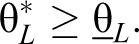

as the maximal transfer to s that

This agreement results in the alliance that we compactly write as the vector,
The game structure of alternating offers with the risk of breakdown has been well studied and our analysis consists mostly of showing that our particular application satisfies a known set of sufficient conditions for existence and uniqueness of equilibria. The results will hold when
Equilibrium conditions in the bargaining game involve finding offers that are maximal for the proposer and minimally acceptable for the target that will get to propose in the next round (if it is reached). Accordingly, we need to be able to refer to an offer that makes a player indifferent to another offer that is accepted one period later. Let


then there is an essentially 8 unique perfect Bayesian equilibrium to the alliance agreement game.
Although the sufficient condition for the lemma may be quite difficult to verify, the result is useful; our next proposition will use the result to provide a sufficient condition with an immediate substantive interpretation of when
And country s accepts any proposal such that


From the corollary, we may use the implicit function theorem to obtain comparative statics on the equilibrium transfers to the small state. To do so, we write the two indifference conditions as the following system of equations:


where the individual terms are given by

In the discussion that follows, we will refer to the system (5) and (6) as
Before we find the comparative statics for solutions to this system, it is instructive to think about the equilibrium conditions. We see from the corollary that an equilibrium is characterized by a pair of indifference conditions. As second proposer, s needs to be indifferent between accepting the offer that is made by the first proposer or rejecting it, and L needs to be indifferent between accepting and rejecting the offer that s would make if it got the chance in the next round of bargaining. This indifference, of course, hinges on the offers that each player would make in the next round if they rejected their partner’s offer in the current round. The amount of support that
In contrast, the indifference condition for L, equation (5), is less ambiguous. For
We now apply the implicit function theorem to analyze the comparative statics. Importantly, we must capture both direct and indirect effects of the parameters of interest. For example, a change in the parameter
We focus on the comparative statics on
We pause to interpret the comparative statics. In equilibrium we should see the level of support offered to the state that is actually likely to wind up fighting respond negatively to the odds that either target would win in conflict. So as either party gets stronger relative to the challenger the magnitude of the promise to the state that is likely to fight will go down. Moreover, how the alliance terms respond to the relative risk that either party will be involved in a conflict is complicated. There is a monotonic effect if the other parameters are held fixed, but variation in several parameters can yield nonmonotonic results. This last point suggests that attempts to correlate risk of crisis and alliance terms need to be nuanced.
Let us consider how a calibrated version of this model might explain the 1893 Franco-Russian alliance. The setting of the alliance corresponds to our analysis in several ways. First, France and Russia had little in common except for a shared threat in the Triple Alliance. Second, our characterization of an alliance between a small target and a large target bears some similarities to the Franco-Russian alliance. Russia felt vulnerable after Germany refused to renew the German-Russian Reinsurance Treaty in 1890. It turned to France to gain security from Germany. The Russians were satisfied that the existence of a nominal alliance with France was sufficient to deter Germany from attacking Russia (Snyder 1997, 116). However, neither France nor Russia believed an alliance would be as effective at preventing war between France and Germany. France’s insecurity led it to insist on specific promises of military assistance in the agreement. Russia worried about moral hazard; they feared the alliance agreement could lead to war between France and Germany over Alsace-Lorraine. Third, there was extensive bargaining over the terms of the alliance, with France pushing aggressively for Germany to be named the primary threat to the alliance, for a mutual promise to mobilize immediately and simultaneously against Germany, and for a specific amount of military support to be committed by each alliance member. In the event of a conflict against Germany, France promised to dedicate 1.3 million troops and Russia committed to contribute 700,000 to 800,000 troops, which was approximately half of Russia’s fighting force (Snyder 1997, 117).
According to Snyder (1997), the final agreement is puzzling because the treaty terms, when everything from troop commitments to conditionality are taken into account, favored France in spite of the fact that it was at greater risk from Germany and appeared to need the alliance more than Russia. The comparative statics for our small-large target case may provide some guidance. Since Russia could easily gain security through its alliance with France, there was little contention over what France would supply to Russia in the event of a conflict between Germany and Russia. The main point of negotiation was the amount Russia would commit to supply to France given that there remained a risk of a war between Germany and France after the alliance was signed. Germany was stronger than Russia and France in pairwise comparisons, and its relative share of military resources was growing (Snyder 1997, 110). Germany’s growing military strength likely reflected a corresponding increase in the probability it would win a conflict with either France or Russia. The comparative statics, therefore, suggest that Russia’s promise of assistance to France was positively associated with Germany’s rising relative strength.
The comparative statics also provide some additional insight about how the treaty terms may have responded to the the relative risk that France and Russia would be involved in a conflict with Germany. Because France was at greater risk of being involved in a conflict and Germany was more likely to win, the amount Russia had to pay France to get a treaty were relatively high. Thus, our analysis helps explain why the Franco-Russian alliance favored France in spite of the fact that France appeared to be in greater need of the alliance. Russia needed the alliance to get deterrence, but because its security was achievable through the alliance and France remained insecure, Russia needed to make sizable promises to France and those promises were large due to Germany’s relative strength advantages and the greater risk faced by France.
Alliances that Change the Probability of Victory
Up to this point, we have treated alliance agreements as a cost-sharing measure. This is a natural approach if we think of alliances as obligating countries to share the burden of war. Our analysis shows that even when an alliance between two potential targets does not change the payoffs to the challenger directly, the resulting changes in the targets’ incentives and actions can change the challenger’s incentives to make a threat. In other words, by distorting the behavior of target countries, alliances can distort the behavior of attackers even when the alliance does not directly alter the payoffs of the attacker.
We might, however, think that alliances enhance alliance partners’ strength relative to the challenger by aggregating capabilities. In this case, agreements change the incentives the target and the challenger. A modeling strategy for alliances that have this effect has an alliance agreement
Much of the intuition from the case in which an alliance only affects the targets’ costs of war extend here. The concept of a “large” country in the “paying costs” model translates here to the case where it is possible to increase the probability that
The natural extension of our concept of small countries involves the assumption that
Thus, in the case of two small countries, a treaty is possible in equilibrium. In particular, contrasted with the first model, 1 and 2 now bargain over treaties in which a treaty

An immediate observation is that in the case where
We are left with the case where the technology of war makes the probability of winning increase at a faster rate than the cost of transfers to the ally. Here, small countries will have an incentive to increase their collective payoffs by supporting each other during fighting. For example, consider a
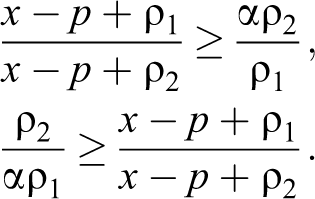
Now a set of alliances that are Pareto superior to the trivial treaty exists. For example, alliances with
Conclusion
By viewing security alliances as a form of decentralized insurance and focusing on alliance commitments in which aid may cause moral hazard, we make four key findings. First, when two large countries are threatened, they form alliances that exhibit what international relations scholars might call threat balancing. Each side commits to aid the other to a degree that the challenger is deterred from escalating a dispute. Second, the ability of large states to manipulate the incentives of the challenger by making allies more aggressive is a key element to explaining how security commitments arise. In contrast, an alliance of two small country targets fails to deter the challenger, with the result that moral hazard increases the incidence of war and the alliance serves to redistribute the war’s costs from the party at war to its ally. But since the cost of war is completely internalized by the target who is not at war, these social welfare–decreasing agreements cannot arise in equilibrium.
Third, when analyzing the asymmetric alliance case, we see that alliance agreements always generate private benefits through deterrence for the large country. The formation of an alliance in this environment then turns on the bargaining between the now-safe large country and the still-threatened small country regarding how much of this benefit will be returned in the form of transfers to the small country. Finally, we see that when the risk of a crisis is severe, that is, when
This article has sought to explain why countries form alliances and what terms they choose when they do so. Our analysis employed a basic agreement structure in which allies exchange security guarantees, which represents a foundational class of alliances agreements in international relations. Although empirically alliance agreements take many forms, the basic environment examined here addresses fundamental questions concerning the role of moral hazard in producing deterrence and thus in alliance formation. As suggested by the empirical evidence, a more complete understanding of the role of alliances in international politics will require further investigation into why and what kind of agreements are written in this basic environment.
Footnotes
Appendix
Declaration of Conflicting Interests
The author(s) declared no potential conflicts of interest with respect to the research, authorship, and/or publication of this article.
Funding
The author(s) received no financial support for the research, authorship, and/or publication of this article.