



Abstract
Sexual violence is believed to be widespread during war. Yet empirical evidence concerning its prevalence is often limited. Victims, out of feelings of shame or fear, underreport this form of violence. We tackle this problem by administering a list experiment in a representative survey in Sri Lanka, which is only recently recovering from an ethnic civil war between Sinhalese and Tamils. This unobtrusive method reveals that around 13 percent of the Sri Lankan population has personally experienced sexual assault during the war—a prevalence ten times higher than elicited by direct questioning. We also identify vulnerable groups: Tamils who have collaborated with rebel groups and the male-displaced population suspected of collaboration with the Liberation Tigers of Tamil Eelam. Our experimental evidence thus lends support to reports on the asymmetric use of sexual violence by government forces, qualifies conventional wisdom on sexual violence during war, and has important implications for policy.
Sexual violence is believed to be a widespread consequence of war and has been documented to varying degrees in armed conflicts around the globe (e.g., Butler, Gluch, and Mitchell 2007; Cohen 2013a, 2013b; Cohen, Green, and Wood 2013; Cohen and Nordås 2014; Green 2004; Leiby 2009a, 2009b; Plümper and Neumeyer 2006; Wood 2006, 2009, 2014; Koos 2017). Several detailed qualitative case studies, nongovernmental organization (NGO) reports, and quantitative large-N cross-national data collections (e.g., the Social Violence in Armed Conflict data set by Cohen and Nordås 2014) have contributed greatly to our understanding of this particular form of violence. Despite this progress in recent years, the problem of underreporting remains a critical challenge in the study of sexual violence during war.
Due to its delicate nature, many victims of sexual violence remain silent about their experiences. Rape and other instances of “sexual assault” are often followed by feelings of shame, guilt, or fear of stigmatization on part of the victim. This problem is exacerbated in traditional social contexts with rigid cultural norms concerning sexuality and gender roles. In addition, reporting personal experiences of sexual assault can be dangerous in (post)conflict situations when perpetrators hold political power and victims must fear further repression. These concerns lead to underreporting of sexual violence in conflict environments. As a result, our knowledge about the exact prevalence of this type of violence remains limited, and adequate policy recommendations are difficult to make.
In this article, we attempt to tackle this problem and expand our insights into sexual violence with the help of a survey experiment. In particular, we turn to an unobtrusive method known as “list experiment” that has been shown to effectively elicit attitudes and behaviors that are fraught with problems of social desirability bias, shame, or fear of repression (Kuklinski, Cobb, and Gilens 1997; Corstange 2009; Blair and Imai 2012; Glynn 2013). Instead of confronting respondents with a direct question, list experiments indirectly infer respondents’ responses to a sensitive topic. This is achieved by randomizing respondents into treatment and control groups and presenting them different lists of survey items including the sensitive item of interest. Evidence concerning the sensitive topic is then inferred from differences in responses between treatment and control units. Recent successful applications of list experiments include general social scientific problems such as racial prejudice (Berinsky 1999; Kuklinski, Cobb, and Gilens 1997), attitudes toward immigration (Janus 2010), voter turnout (Holbrook and Krosnick 2010), or vote buying (Gonzalez-Ocantos et al. 2012), as well as more specific problems related to armed conflict, for example, civilians’ feelings of safety (Jayasuriya and Gibson 2013) or their support for combatants (Blair, Imai, and Lyall 2014). We aim to leverage the methodological promise of list experiments to reveal the scope, distribution, and determinants of sexual violence during war. Whereas “wartime sexual violence” in a narrow sense refers to conflict-related sexual violence committed by armed groups (e.g., Cohen 2013a; Wood 2009), we adopt a broader view that also includes civilian sexual violence committed by intimate partners, acquaintances, and strangers during the time of war (e.g., Goldstein 2001).
We administered the list experiment in a representative survey of the general population in postconflict Sri Lanka. Sri Lanka has only recently recovered from a fierce ethnic civil war between the Sinhalese state majority and the Liberation Tigers of Tamil Eelam (LTTE), the rebel groups of the Tamil minority. According to estimates, this civil war has resulted in around 100,000 casualties and 800,000 internally displaced people over a period of twenty-six years (Glatz 2014; Patterson 2013; United Nations [UN] 2011). Although Sri Lanka is not a paradigmatic case, it is well suited for the study of wartime sexual violence in general and our proposed method in particular. First, there is some discrepancy between initial scholarly accounts that have described sexual violence in Sri Lanka as neither widespread nor systematic (e.g., Wood 2006, 332; Wood 2008) and reports by NGOs (Amnesty International 2002; Human Rights Watch [HRW] 2013) as well as quantitative coding efforts based on these reports (e.g., Cohen and Nordås 2014) that have documented massive sexual violence, particularly toward the end of the war. Second, sexual violence in Sri Lanka has been described as asymmetric and mainly perpetrated by government forces (Amnesty International 1999, 2002; HRW 2013, 29, 34; International Truth and Justice Project Sri Lanka 2015; Peel et al. 2000; Sooka 2014; United Nations Human Rights Council [UN HRC] 2015; Wood 2009). This contrasts with the bulk of the previous literature that has focused on insurgent-perpetrated violence and poses a special challenge because the Sri Lankan government has little interest in investigating its own crimes. Third, and importantly, uncovering a wide prevalence of wartime sexual violence in a context that is not a priori known for it provides a strong case for the fruitfulness of our approach utilizing a list experiment.
The contribution of this article is therefore at least threefold. First, we apply an experimental method to solve a difficult methodological problem in the microstudy of violent conflict. Second, we provide new evidence on the prevalence and distribution of sexual violence during war for the case of postconflict Sri Lanka. Based on an unobtrusive survey method administered to a representative sample of 1,800 respondents, our results reveal that around 13 percent of the Sri Lankan population has personally experienced sexual assault during the time of war—a prevalence that is ten times higher than could be elicited by direct questioning. Next to its intrinsic substantive value, this finding thus corroborates the usefulness of our experimental approach in overcoming the problem of underreporting wartime sexual violence. Third, and importantly, by identifying vulnerable groups of wartime sexual violence in Sri Lanka, our experimental evidence also qualifies conventional wisdom and has important implications for policy.
We find that members of the Tamil minority who have collaborated with rebel groups are among the most vulnerable groups. According to our estimates based on indirect questioning, half (53%) of all Tamils who themselves or whose family members have assisted rebel groups were subjected to sexual assault during the war. This finding lends empirical support to previous reports on the systematic use of sexual violence by government forces against members of the Tamil community thought to be collaborators of the LTTE rebels (Amnesty International 1999, 2002; HRW 2013, 29, 34; International Truth and Justice Project Sri Lanka 2015; Peel et al. 2000; Sooka 2014; UN HRC 2015; Wood 2009). This asymmetric use of sexual violence may also partly explain victims’ reluctance to report their experiences in the Sri Lankan context, where they are likely not only to encounter institutional hurdles in the legal system but also to face severe risks of reprisal and further repression by the government.
Another high-risk group we identify is the male displaced population. Almost a third (29%) of male respondents who had to flee report experiences of sexual violence in our list experiment. This result further corroborates the notion that sexual violence was used as a form of torture in the pursuit to eradicate members of the LTTE, where Sri Lankan security forces screened people fleeing the war zone and detained them for questioning. Our estimate is close to the figure for Tamil male patients reported in Peel et al. (2000) who found that 21 percent of them had experienced sexual violence while kept in detention by government forces. This particular result is also important because it calls into question entrenched gender stereotypes which view men first and foremost as perpetrators and women as the most vulnerable and main victims of war-related sexual violence (cf. Cohen 2013b; Oosterhoff, Zwanikken, and Ketting 2004; Russell 2007; Plümper and Neumeyer 2006). Although incidents of sexual violence against men and boys have been reported in several conflicts, males usually remain silent victims and are generally not given much consideration in policies to counter sexual violence. Instead, NGOs and government programs overwhelmingly and almost exclusively concentrate on female victims of sexual violence (Linos 2009; Stemple 2009). One recent review found that of 4,076 NGOs concerned with wartime sexual violence, only 3 percent mentioned male victims in their materials (DelZotto and Jones 2002). Our study suggests that this one-sided focus may have harmful consequences because it excludes a part of the survivors of sexual violence from the needed medical, psychological, and legal assistance.
Background: Sexual Violence during the War in Sri Lanka
Although earlier accounts believed its prevalence to be relatively low and unsystematic in the Sri Lankan context (Wood 2006, 332), recent reports indicate that segments of the Sri Lankan population have been widely and systematically subjected to sexual violence during the war (see HRW 2013; UN HRC 2015). The use of sexual violence has been described as highly asymmetric (Wood 2006, 2009), as there are no reports that the LTTE perpetrated this kind of violence (UN HRC 2015, 117). Information from different sources suggests that perpetrators of sexual violence risked harsh punishments by the LTTE (UN HRC 2015, 117). In contrast, a systematic use of sexual violence by government forces against ethnic Tamils and Tamil-speaking Muslims, particularly during the last years and after the end of the war, has been documented (Amnesty International 1999, 2002; HRW 2013, 29, 34; International Truth and Justice Project Sri Lanka 2015; Peel et al. 2000; Sooka 2014; UN HRC 2015; Wood 2009).
According to several sources, sexual violence occurred toward women, men, and children in detention, at checkpoints, or in situations of interrogation based on the suspicion that either the victim or their family members were collaborators of the LTTE (HRW 2013, 1; Peel et al. 2000; Wood 2006, 213, 2009, 145). Other victims were abducted or picked up for questioning by army members in displacement camps or during flight from the conflict area during the last months of the conflict (HRW 2013, 6-7; UN 2011; UN HRC 2015, 117, 120). The sexual violence inflicted has taken various forms such as rape, also with objects, groping, kicking, or squeezing of genitals; insertion of sharp objects into genitals; biting and scratches to breasts and other parts of body; burning of sensitive areas; application of chili powder on or into genitals; electric shocks; and piercing of male genitals (Amnesty International 2002; HRW 2013; UN HRC 2015, 118; Wood 2009, 145). The occurrence of such sexual violence in detention appears to have been so widespread that HRW (2013, 36) has concluded that “there appears to be no category of Tamil who, once taken into custody, is immune from rape and other sexual violence.”
Yet, since sexual violence is characterized by shame and stigmatization, particularly in traditional cultural contexts like Sri Lanka, the extent of sexual abuse during the war and its final stages is described as highly underreported (UN 2011, 44). In general, sexual violence is an extremely sensitive matter, and incidents are often not reported due to the shame involved (Peel et al. 2000). Particularly in Tamil society, sexual violence places female victims in an extremely difficult position as it violates highly valued notions of chastity and virginity before marriage (Perera 1998). The fear of social stigmatization following such events, as well as the fear of reprisals from perpetrators, has kept both male and female rape victims silent in the Sri Lankan context (HRW 2013). Reporting sexual violence also involves a serious risk of reprisal against family members of the victim (UN HRC 2015, 117). Coupled with institutional hurdles in the legal system blocking effective reporting and investigating rape cases, many victims have not reported these violations. Furthermore, scholars have refrained from collecting this kind of data in the Sri Lankan context due to safety, ethical, and feasibility concerns. Aiming at examining women in internal displacement camps, Swiss and Jennings (2006) refused to conduct a survey on sexual violence in Sri Lanka because of the high risk posed to the respondents.
The existing reports on sexual violence have relied on interviews and testimonies of victims both in Sri Lanka and of refugees, individuals with information about such incidents, analyses of medical reports, rulings of the Supreme Court in fundamental rights cases, and reports by investigative commissions set up by the government (Amnesty International 2002; HRW 2013; Peel et al. 2000; UN 2011; UN HRC 2015). Some of these bodies faced government access restrictions while conducting their research, forcing them to investigate the matter undercover or from abroad based on testimonies and reports (HRW 2013; UN 2011; UN HRC 2015). As a result, caution should be taken with regard to existing numbers on sexual violence as the studies may be consciously or unconsciously selective (Sivakumaran 2010, 261). Due to the lack of representative data, both the conditions under which sexual violence has taken place and its true extent remain uncertain at best.
Data and Methods
The List Experiment
Obtaining accurate estimates of sexual violence is a difficult enterprise, and the literature has produced several methodological advances concerning research designs, operationalizations, and question wordings to deal with this difficulty (e.g., Fisher 2009). We propose to tackle the challenge of underreporting sexual violence during the war in Sri Lanka by employing a list experiment. In a list experiment, also known as the item count technique, respondents are randomly assigned to either treatment or control group and then presented a list of several survey items (Kuklinski, Cobb, and Gilens 1997; Corstange 2009; Blair and Imai 2012; Glynn 2013). Whereas the control group only receives a number of control items, the treatment group additionally receives the sensitive item along with control items. All respondents are then asked to count the number of items that apply to them or with which they agree. Inferences on the sensitive item are then drawn from a comparison of the responses between treatment and control group without the respondents having to disclose their choice of items. Since randomization ensures that treatment and control units are the same on all observable and unobservable characteristics, any difference in response must be attributed to the sensitive item. For example, let us say the treatment group on average affirms 2.73 items on the list (including the sensitive item) and that the control group only affirms 2.51. The difference is 0.22, thus indicating that 22 percent of the respondents agree with the sensitive item.
In the present study on sexual violence during the war in Sri Lanka, we asked the following question (the Sinhala and Tamil language versions of the question are documented in Online Appendix): Now we would like to ask you some more questions about what happened during the war. Please refer to the following list and tell me how many of these experiences happened to you during the war. Please don’t tell me which specific statements you believe to be true, only how many. “I won money in a lottery or competition.” “I was involved in an accident.” “I received help from a stranger.”
The list shown to the treatment group also included this sensitive item: “I was personally sexually assaulted.”
Our reasoning behind this indirect question format is that victims of sexual violence understand the anonymity granted by it in the interview situation. Since respondents do not have to say openly whether the sensitive item applies and the interviewer has no way of knowing, victims are less likely to underreport their experience due to feelings of shame or fear of legal consequences.
The extent to which the issue of sexual violence is fraught with these concerns can also be quantified. This is achieved by comparing the answers of the list experiment to the answers to direct survey items, which we also included in the questionnaire. The direct questions on sexual violence were part of an item battery capturing various direct war experiences. The introduction to the item battery read: “During the period of war, from 1983 to 2009, which of the following things did you personally directly experience, see or witness with your own eyes and ears, directed at you, your family, or community?” The answers to the items “You becoming sexually assaulted” and “Other persons being sexually assaulted” were coded 1 for “yes” and 0 for “no.” The list experiment and the direct questions were part of different sections in the questionnaire with five questions/item batteries between them, so that any priming effects are unlikely. As recommended, we asked the direct question after the list experiment (e.g., Eady 2018). Importantly for the purpose of the present article, while 20.9 percent of respondents refused to provide answers for these direct questions, all respondents answered to the list experiment. Please see Online Appendix for more detail on randomization, sample balance, and a test for no design effect.
Next to establishing more credible estimates of the prevalence of experiences of sexual violence, the list experiment also allows us to identify especially vulnerable groups by looking at differences in response behavior across subgroups. Recently developed statistical methods also allow us to include the answers of list experiments in multiple regression models (Blair and Imai 2012; Imai 2011).
As a caveat, it should be noted that the measure used to capture sexual violence remains quite general and thus follows a definition that is much broader than the frequently used legal definition of the International Criminal Court (2000) that includes rape, sexual slavery, forced pregnancy, and forced sterilization or abortion. Similar to Wood (2009) and the Sexual Violence in Armed Conflict data set (Cohen and Nordås 2014), it also captures other behaviors of physical violence such as sexual mutilation and sexual torture, and similar to Leiby (2009a), it also includes experiences that do not involve direct physical violence such as sexual humiliation and sexual coercion. In addition, our list experiment is silent about the perpetrators of the act of sexual violence. Thus, while it clearly refers to experiences that “happened during the war,” it is not restricted to conflict-related sexual violence committed by armed groups. It is likely to also elicit experiences of sexual violence committed by intimate partners, acquaintances, and strangers.
In addition, sexual assault may have a different meanings to different individuals in different contexts and languages (Leiby 2009a). In order to ensure comparability within the sample, we developed and (re-)translated the survey questions together with local researchers who were proficient in both Sinhalese and Tamil and conducted a pretest to assess the adequacy of the measures (see next section). Still we cannot be sure what exactly respondents have in mind when they report experiences of sexual violence and the rather general wording of the measure limits our ability to differentiate among different types of sexual violence. To put this more positively, however, our study relies on an inclusive definition of sexual violence, which allows us to establish a low-threshold baseline of the prevalence of sexual violence during the war in Sri Lanka.
The Survey
The list experiment was embedded in a representative survey of the Sri Lankan population in the first half of 2016 and thus roughly seven years after the conflict between the Sri Lankan state and the LTTE had officially ended. It is important to stress that the survey focused on general topics of social cohesion and political participation in postconflict Sri Lanka. And while it included several items on war-related experiences, it was not primarily concerned with experiences of sexual violence per se (which also explains the limitation of not being able to disaggregate specific forms of sexual violence).
The survey was administered through face-to-face interviews in both the Sinhala and Tamil languages and across all twenty-five districts of Sri Lanka, including the Tamil-dominated Northern province as well as the ethnically mixed Eastern province which lay “at the heart of the post-independence conflict” (International Crisis Group Asia 2008, i). Respondents were sampled using multistage stratified random sample with oversampling of Tamils to guarantee reliable estimates for this important ethnic minority group in the context of the Sri Lankan conflict. The final data set contains N = 1,800 valid interviews of respondents in private households with age eighteen or older. Please consult Online Appendix for further details on questionnaire construction, pretesting, survey administration, and research ethics.
Next to the list experiment, the survey included additional information on key respondent characteristics. Besides the standard sociodemographics gender, age, and education, we obtained information on respondents’ ethnic identity and region of living. We also asked respondents whether they had been displaced during the war and whether they were a member of the army or other military group as well as whether they assisted such a group during the war. Item nonresponse was not an issue for any of these variables. Only N = 5 respondents or 0.2 percent did not provide answers regarding their level of education. Full question wordings are documented in Table A3 in the Online Appendix. Table A4 in the Online Appendix compares our sample to the official 2012 Housing and Population Census of the Sri Lankan Department of Census and Statistics and shows that our sample provides a good representation of the Sri Lankan population.
Results
The Prevalence of Sexual Violence during the War in Sri Lanka
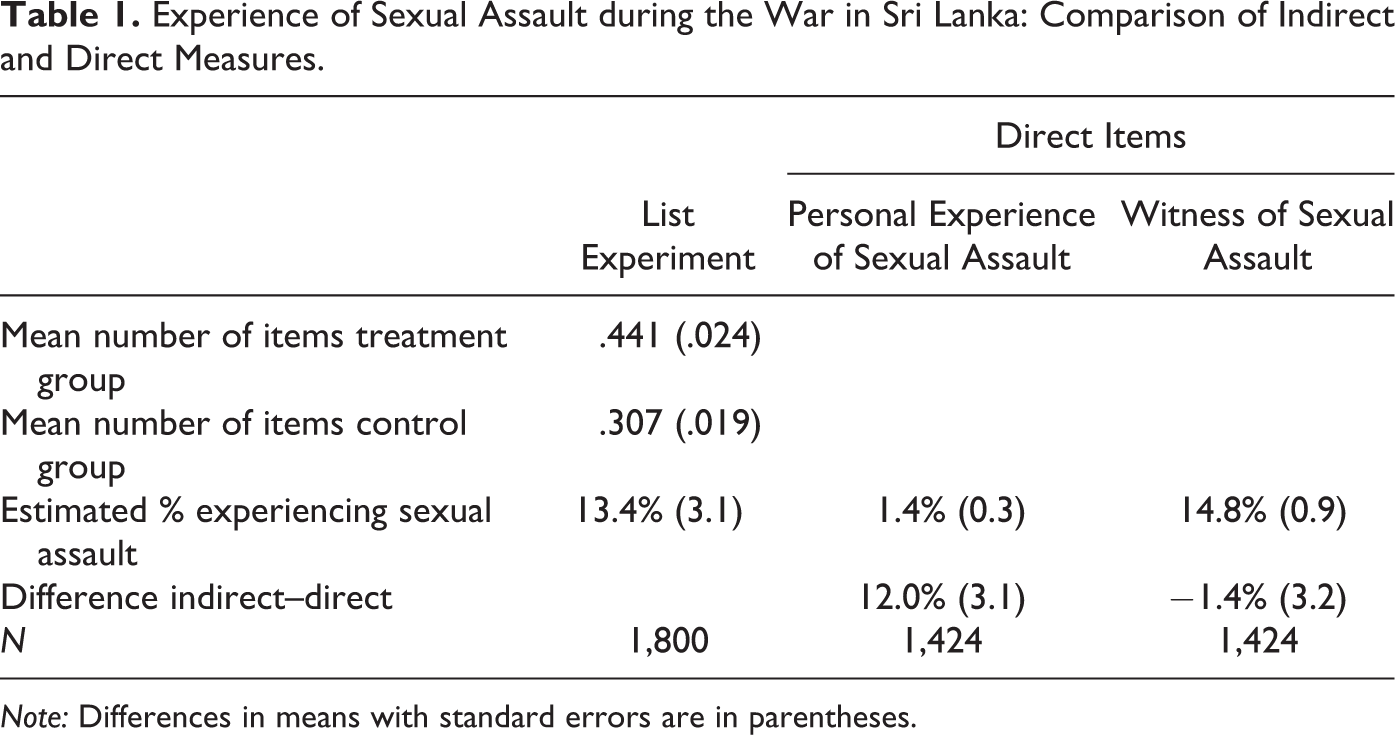
We start our analysis by comparing the result of our list experiment with direct measures of experience of sexual violence and report the following (Table 1). While the treatment group affirmed an average of 0.44 (SE = ±.02) list items, the control group did so for only 0.31 (±.02). This results in an estimated difference in means of 13.4 (±3.1) percent of the sample that experienced personal sexual assault during the time of war. Given the delicate nature of this experience, it is not surprising to see that this unobtrusive measure yields a higher share of victims than a direct question item, where only 1.4 (±.3) percent of respondents admit to a personal experience of sexual violence. But the magnitude of this difference is striking: the list experiment revealed a prevalence that is ten times higher than a direct question. The difference between the indirect and the direct question can be interpreted as the level of “shame.” A significant difference of 12 (±3.1) percentage points indicates a considerable degree of social shame associated with admitting to the experience of sexual assault.
Experience of Sexual Assault during the War in Sri Lanka: Comparison of Indirect and Direct Measures.
Note: Differences in means with standard errors are in parentheses.
Interestingly, asking respondents directly whether they had witnessed the sexual assault of other persons yields an estimate close to the indirect question. In total, 14.8 (±0.9) percent report to have witnessed such sexual violence during the war. The difference between indirect and direct questioning is small and insignificant. Restricting the analysis to the sample where valid answers to both indirect and direct measures are available (N = 1,424) yields an average item count of 0.47 (±.03) and 0.32 (±.02) for treatment and control, respectively. This amounts to an estimate of 14.9 (±3.6) percent of respondents who are victims of sexual violence, a number almost identical with the second direct measurement. This finding could suggest that asking about witnessing sexual assault of others may in fact be a better strategy to gauge levels of sexual violence (cf. Leiby 2009a). But this interpretation would only be valid if this tendency were consistent across subgroups, which it is not (see Table A3 in the Online Appendix).
One issue worth considering is the problem of survivorship bias in our estimate of the prevalence of sexual violence during war. 1 What if those who were killed experienced higher levels of sexual violence than the surviving population from which we sampled? Clearly, an estimate in the current population may be more relevant for policy (e.g., for the provision of medical, psychological, and legal assistance to victims), but for the more general purposes of documentation and research, an assessment of this potential bias is important. Although reliable information on both the number of casualties and the extent of sexual violence is missing (the latter, of course, motivating our research), we are able to derive logical bounds on the size of the survivorship bias (see Online Appendix for a description of this logic).
Figure 1 illustrates the possible survivorship bias by showing how the total prevalence of sexual assault on the y-axis changes as the hypothetical prevalence among those killed changes from 0 (the logical lower bound: no killed person experienced sexual violence) to 1 (the logical upper bound: every killed person experienced sexual violence) on the x-axis. We provide this relationship for three plausible estimates of the casualties in the Sri Lankan conflict: the UN estimates around 100,000 deaths, with around 40,000 in the final government initiative (UN 2011). The UCDP sets its best estimate to 653,726 casualties (with a low estimate of 59,193 and a high estimate of 75,601). To get an upper bound of the true prevalence, we concentrate on the 100,000 deaths estimate. As the graph shows, if we assume that all killed Sri Lankans were sexually assaulted roughly at rates of the population in the Eastern province (.36, see next section), the true prevalence would be roughly 0.1 percentage points higher than our estimate in the list experiment (13.5 vs. 13.4 percent). If we assume the logical upper bound, where every killed Sri Lankan experience sexual violence during the war, we would obtain a true prevalence of about 13.8 percent, which is 0.4 percentage points higher than our estimate based on our sample of the surviving population. We should note that the potential survivorship bias is thus well within the margin of sampling error of our estimate elicited through the list experiment.
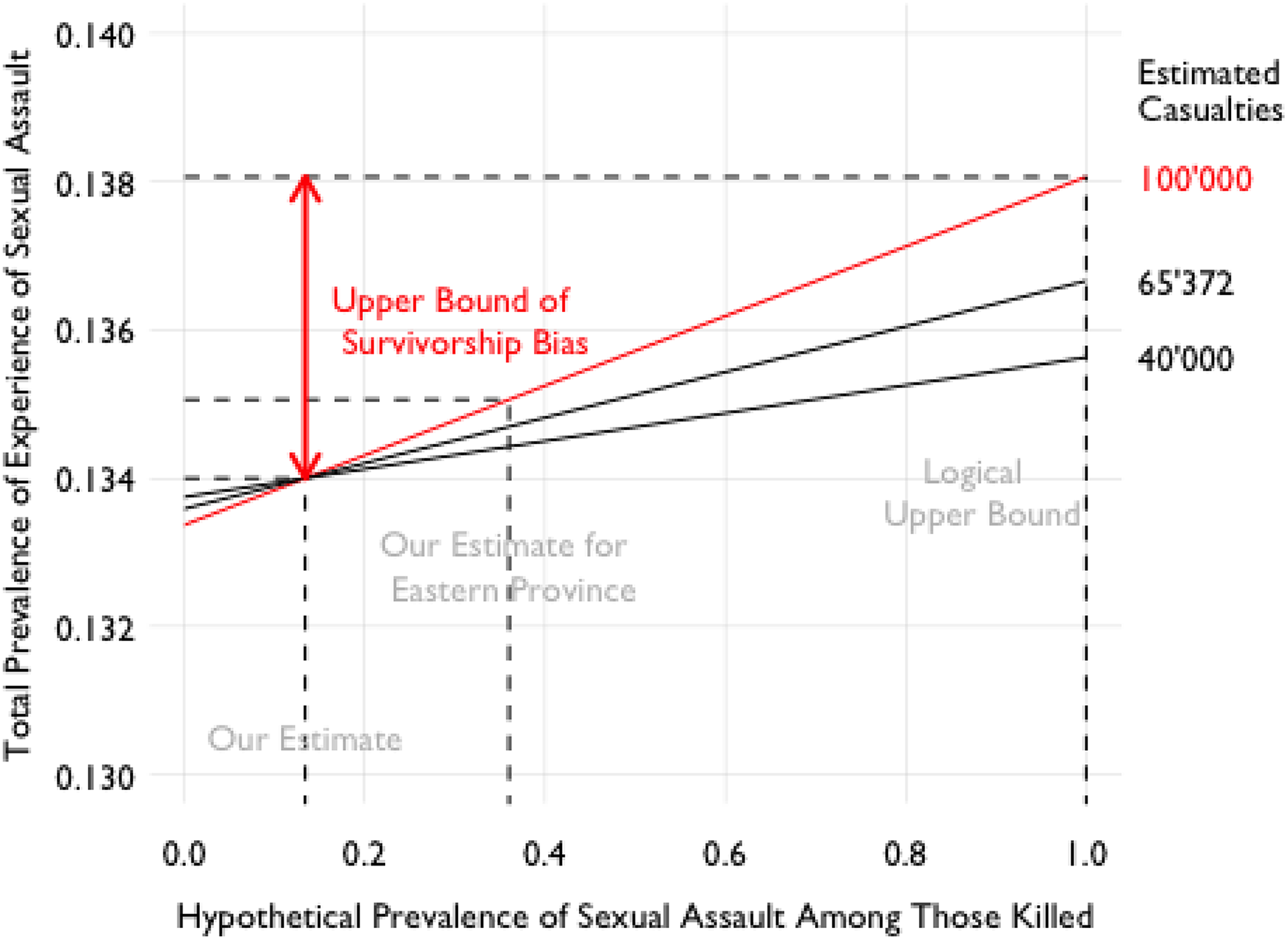
Assessing the survivorship bias in experience of sexual violence during war.
Highly Vulnerable Groups of Sexual Violence during the War in Sri Lanka: A Subgroup Analysis
The list experiment also allows us to identify especially vulnerable groups of sexual violence during war. Figure 2 presents subgroup specific mean differences in the indirect and direct questions of experience of sexual assault. This analysis reveals that different segments of the population not only differ in their experience of sexual violence during war but, importantly, also in their propensity to openly admit to such an experience. This result underscores the potential value of using an unobtrusive method such as the list experiment in the study of this delicate topic.
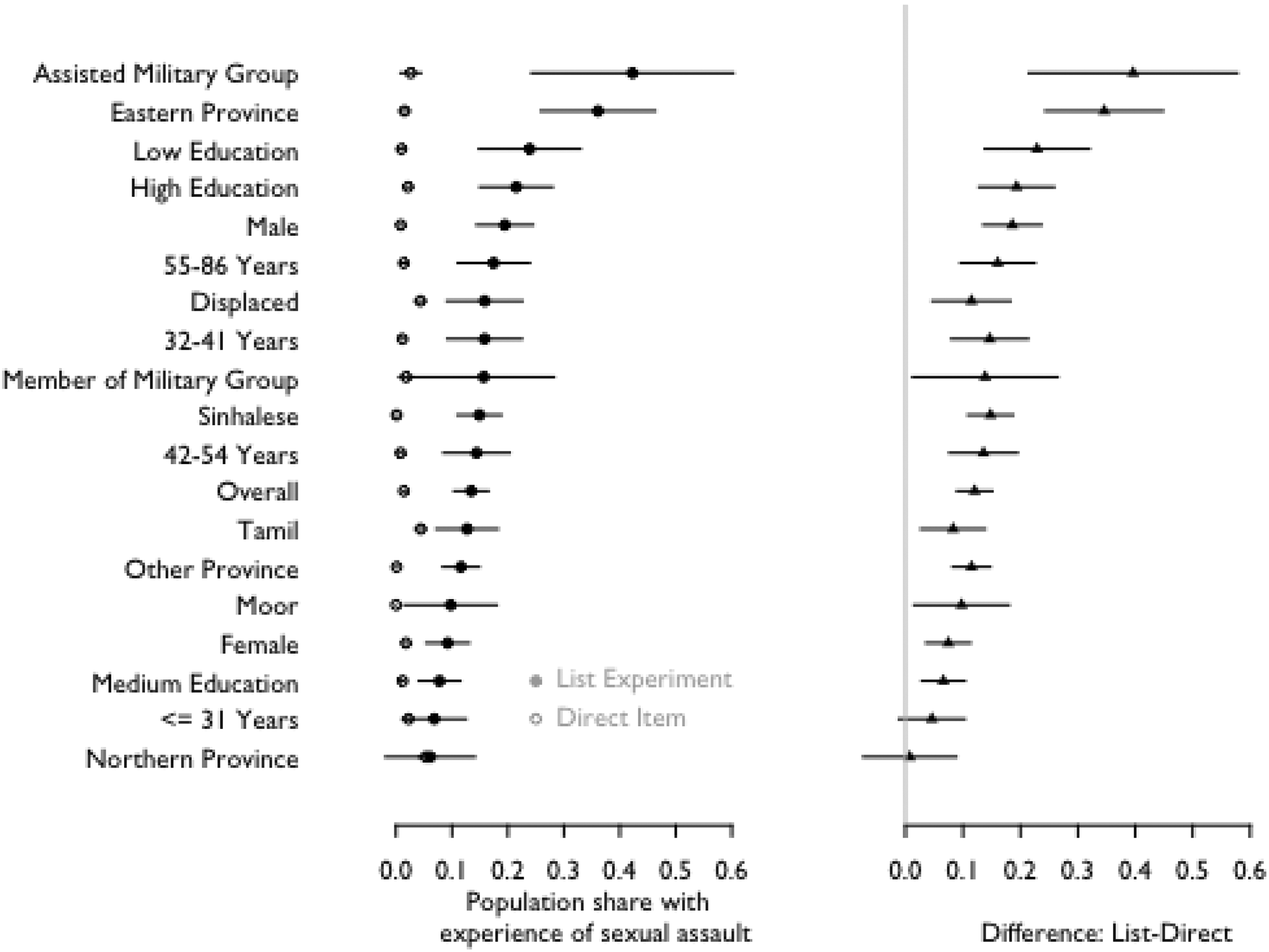
Personal experience of sexual assault during war: comparison of direct and indirect measures across subgroups. Subgroups are sorted in decreasing order of the indirect measure. Full results are also documented in Table A3 in the Online Appendix.
Previous reports on the asymmetric nature of wartime sexual violence in Sri Lanka suggest that the Tamil ethnic minority was at greater risk of this form of abuse than the Sinhalese majority (Wood 2006, 2009; UN HRC 2015, 117). When asked directly about personal experience of sexual violence, Tamil respondents are indeed more likely to report such experiences than members of other ethnic groups (the vast majority of which are Sinhalese respondents 2 ): compare 4.4 (±0.7) percent to just 0.1 (±0.1) percent, which corresponds to as little as N = 19 and N = 1 respondents, respectively. But the list experiment reveals that in fact both groups do not differ much in their victimization (13 [±6] and 15 [±4] percent) and that Sinhalese are less likely to admit their experience in a direct question (although this difference is not statistically significant). However, Tamils report to have witnessed sexual assault on others with a far greater probability than Sinhalese (see Table A3 in the Online Appendix). The 43 (±2) percent of Tamil respondents who have witnessed sexual assault are a clear indication of the widespread prevalence of this form violence during the Sri Lankan civil war.
Despite its mixed composition, with almost equal one-third shares of Sri Lankan Tamils, Moors, and Sinhalese, the LTTE declared the Eastern province part of the “traditional Tamil homeland” (Uyangoda 2005, 30). During the war, the East was affected by some of the worst levels of violence (International Crisis Group Asia 2008). This was not limited to fighting between government forces and the LTTE but also involved sporadic clashes between the Tamil and Muslim population (O’Sullivan 1997, 113). Further, the Eastern province was not under exclusive control by either of the conflict parties but rather under partial control of the government combined with “pockets” of LTTE-controlled areas (O’Sullivan 1997, 104; Stokke 2006, 1023). Tensions rose even more in the last years of the war following the split between the Eastern rebel leader, Karuna, and the LTTE in 2004, leading to a wave of violence between the two factions in the LTTE mainly in the province (Uyangoda 2005, 4).
According to the indirect questioning, inhabitants of the Eastern province more than three times as likely to have suffered from personal sexual violence as respondents from the Northern province or other regions of Sri Lanka (compare 36 [±10] to 6 [±8] and 12 [±3] percent, respectively). Although due to the small sample size (N = 216 in our sample are from the Eastern province) there is considerable inferential uncertainty attached to this population share, this fact would have been obscured in a direct question format, either asking about personal experience or generalized experience of sexual violence, which does not reveal any regional differences. Consequently, we also find that people in the Eastern province are far more reluctant to openly speak about their personal experience, with the difference between the indirect and direct question of personal sexual assault being 35 (±10) percentage points.
The Sri Lankan civil war left more than 800,000 people internally displaced (Glatz 2014; Patterson 2013; UN 2011). We find that displacement is related to a higher probability of generalized experience of sexual violence. Forty-four (±2) percent of all respondents or N = 202 of N = 459 who were displaced during the war report having witnessed sexual violence inflicted on other persons than themselves (see Table A3 in the Online Appendix). While this again is a clear sign of the widespread prevalence of sexual violence, we find little difference between the internally displaced and the overall population in the indirect question (where the displaced were personally victimized with a probability of around 16 [±7] percent) and the level of shame of admitting this experience in an interview situation.
We find a similar pattern for respondents who, during the war, served as members of the state army or another military group (i.e., the LTTE). Since only about 7 percent of all respondents (N = 119) say they have been active combatants, the estimates have considerable inferential uncertainty. But the data still suggest that while active members of the army or military groups have a far higher generalized experience of sexual violence than the civil population (compare 32 [±4] to 13 [±1] percent), the level of personal victimization is roughly the same, regardless of whether we look at the list experiment or the direct question item.
In contrast, the Sri Lankans who were not active members but who have assisted either the state army or rebel military groups during the war (around 5 percent or N = 82 respondents) clearly faced the highest risk of being sexually assaulted. While this group has witnessed sexual violence afflicted to others at about the same rate as combatants (36 [±6] percent), they report to have themselves been victims of sexual violence with a probability of 42 (±18) percent. Notwithstanding the high level of estimation uncertainty, this is striking evidence that would have been missed by a direct question on personal victimization where only 3 (±2) percent of collaborators report to have been sexually assaulted.
Finally, while we do not find any striking patterns concerning the sociodemographics of age and education, we report on a surprising finding concerning the gendered nature of wartime sexual violence in Sri Lanka. Whereas in direct questions 1.8 (±.4) percent of female respondents admit to being victims of sexual violence and 19 (±1) percent report having witnessed sexual violence inflicted on others, male respondents only report personal experience with a probability of 0.8 (±0.3) percent and generalized experience with 9 (±1) percent. This stands in stark contrast to the result of our list experiment, which reveals that while 9 (±4) percent of Sri Lankan women experienced sexual violence during the war, Sri Lankan men had double the risk of being sexually assaulted. In the unobtrusive question, almost 20 (±5) percent of male respondents reveal a personal experience of sexual violence directed against them. And the difference of 19 (±5) percent when compared to the direct question items is important evidence of the social taboo surrounding sexual violence against men. We will return to this point in more detail in the following sections.
Determinants of Sexual Violence during the War in Sri Lanka: Multivariate Regression Results
While the results in the previous section demonstrate important subgroup differences in the experience of sexual violence, several of these characteristics are closely interrelated. For instance, the Tamil population suffered more from displacement than the Sinhalese majority (62 vs. 8 percent in our sample). To separate these factors, we now turn to a more systematic analysis of individual risk factors using multivariate regression. In order to relate our analysis to the existing literature on wartime sexual violence, we briefly discuss explanatory approaches within the context of the Sri Lankan case before presenting our results. Since our list experiment focuses on the experiences of individual victims, whereas most recent theoretical accounts have concentrated on the characteristics and motives of the perpetrating armed groups or individual soldiers, we are not in the position to directly test causal claims currently discussed. What our analysis of risk factors can provide to the theoretical discussion is indirect supporting evidence and a perspective on the extent of the victimization of certain segments of the population.
Explanations for Sexual Violence during War
Whereas classic theories explain sexual violence during war with reference to an increase in opportunity or its use as a strategic weapon, more recent work has focused on the institutions, ideologies, and culture of armed organizations (see Wood [2014] and Koos [2017] for recent reviews and critical discussion). From the opportunity perspective, sexual violence is less regulated during war due to the collapse of law and order, decreasing the cost of such behavior and increasing its likelihood (Cohen 2013a, 462; Kirby 2012). However, the argument is only partially supported by cross-national evidence (Cohen 2013a), and a consensus in the literature holds that instability and insecurity cannot explain variation in sexual violence during war (Wood 2014; Koos 2017).
The second classic view is that wartime sexual violence follows a strategic purpose and serves specific instrumental functions (Wood 2006, 2008; Cohen 2013a). Strategic sexual violence differs from opportunistic sexual violence in the sense that it is “ordered” by commanders (Cohen, Green, and Wood 2013; Wood 2014) and often combined with other forms of torture (Oosterhoff, Zwanikken, and Ketting 2004). In the Sri Lankan context, NGOs have reported such sexual torture aiming to coerce confessions, degrade suspects, and discourage broader Tamil involvement with the LTTE (HRW 2013, 1). But the view of sexual violence as a “weapon of war,” too, leaves important variation unexplained (Elbert et al. 2013; Leiby 2009a).
In light of this variation, newer research has turned the focus to institutions and norms of armed groups to explain the prevalence of sexual violence. A number of scholars argue for a persistent “principal–agent problem” between commanders and soldiers (Butler, Gluch, and Mitchell 2007; Butler and Jones 2016; Hoover Green 2016; Leiby 2009b; Wood 2009). Sexual violence may thus reflect the breakdown of chains of command and discipline rather than orders by commanders (Eriksson Baaz and Stern 2013). In the case of Sri Lanka, studies have documented such disorder among Sri Lankan army troops in the North where army commanders have stated that their troops have gone out of control and engaged in destructive behavior as well as random rape and torture (Nordstrom 2004, 71, 72). Within some armed groups, sexual violence is simply tolerated by commanders and should therefore be considered a “practice” rather than a strategy (Cohen, Green, and Wood 2013; Wood 2013, 2014). The toleration of sexual violence can be a way to compensate for the lack of financial or other benefits (Eriksson Baaz and Stern 2009, 2013), to relieve frustration among combatants, to conceal a lack of internal group cohesion (Eriksson Baaz and Stern 2013, 77), or to promote the socialization of combatants (Cohen 2013a, 2017).
In direct contrast, commanders may also decide to ban sexual violence for normative, strategic, or practical reasons (Wood 2006, 328). Among other things, armed groups may prohibit sexual violence because it is counterproductive, if they rely on the support of civilians. Further, they may have social norms prohibiting some sorts of violence and promoting others, have allies who are against sexual violence, or have a high proportion of female combatants (Wood 2006). In the case of Sri Lanka, Wood (2006, 2009) has observed that, although the LTTE perpetrated significant levels of other types of violence, the LTTE rarely engaged in sexual violence. Wood (2009, 148, 149) argues that the LTTE did not refrain from engaging in sexual violence due to a general restraint in the use of violence against civilians but due to the existence of strong social norms prohibiting sexual relations between unmarried individuals and across castes. The leadership’s ban of sexual violence was enforced top-down through the organization’s strict internal discipline and well-functioning information flows between operational units and the high levels of command. Further, the group enforced a strict, “puritanical code of conduct” among its cadre, which, when violated, led to harsh punishments such as death or expulsion (Wood 2009, 151).
Because our survey experiment focuses on the experience of the victims rather than the perpetrators or the structure of armed groups, we are not able to directly test these theoretical arguments. However, we are able to indirectly infer whether there indeed is evidence for asymmetric sexual violence as suggested by previous accounts and whether it may have been used as a strategy by state actors against collaborators of the LTTE. If this indeed were the case, we would expect to see a higher risk of sexual assault among Tamils who actively assisted a military group during the war.
Next to conflict-related sexual violence in the narrow sense (i.e., committed by armed forces), sexual violence during war may also be viewed as the continuation of gender-based violence committed by intimate partners, acquaintances, or strangers during time of peace (Wood 2014; Butler and Jones 2016). In times of crisis, women’s exposure to sexual violence often escalates following the breakdown of security and social structures (Plümper and Neumeyer 2006; World Bank et al. 2009, 479). This is not only due to the growth in opportunity but to assert patriarchal gender relations where sexual violence serves the goal of maintaining the inferior status of women (Solangon and Patel 2012, 427; Wood 2006, 325).
This situation is particularly critical during displacement. Large-scale displacement rips communities apart and weakens social controls among displaced civilians (Wood 2006, 321). Further, people living in temporary settlements or IDP camps face many risks. Such camps are often characterized by poverty, unemployment, alcoholism, and domestic violence and sexual abuse (Swiss and Jennings 2006, 2). Among those who are displaced, refugee women often face some of the greatest physical and sexual risks, as they cannot protect themselves in the same way as men (United Nations High Commissioner for Refugees 2013, 5; Women’s Commission for Refugee Women and Children 2006, 3).
Specifically for Sri Lanka, Swiss and Jennings (2006, 2) report that women in displacement camps are extremely vulnerable, also to sexual violence. Among other things, the insufficient level of security provided by temporary shelters and involuntary physical exposure due to a lack of adequate sanitary facilities raised the risk of sexual violence against displaced women (UN 2011, 18, 45). Due to family separation, many women were left alone and without male relatives, further increasing their vulnerability (UN 2011, 41, 45). Some sources report that, in order to survive, women in some cases were forced to perform sexual acts in exchange for food, shelter, or assistance in camps (UN 2011, 45). Based on our survey experiment, we look into the notion of a gendered risk due to displacement and evaluate whether women who were displaced during the war have a particularly high risk of having experienced sexual violence during war.
Regression Results
We ran both simple OLS models, which are easier to interpret and more robust but do not satisfy range restrictions in the dependent variable, and more adequate binomial logistic models estimated with MLE as suggested by Imai (2011) and Blair and Imai (2012). To save space, we do not report on the equations for the control items. We would like to stress that these models cannot identify causal relations but are better viewed as descriptive tools. Nonetheless, we believe that from a policy standpoint, any found relations are still “real” in the sense that even if respondent characteristics do not “cause” greater risk of being sexually assaulted, they still yield valid inferences in terms of predictive risk factors.
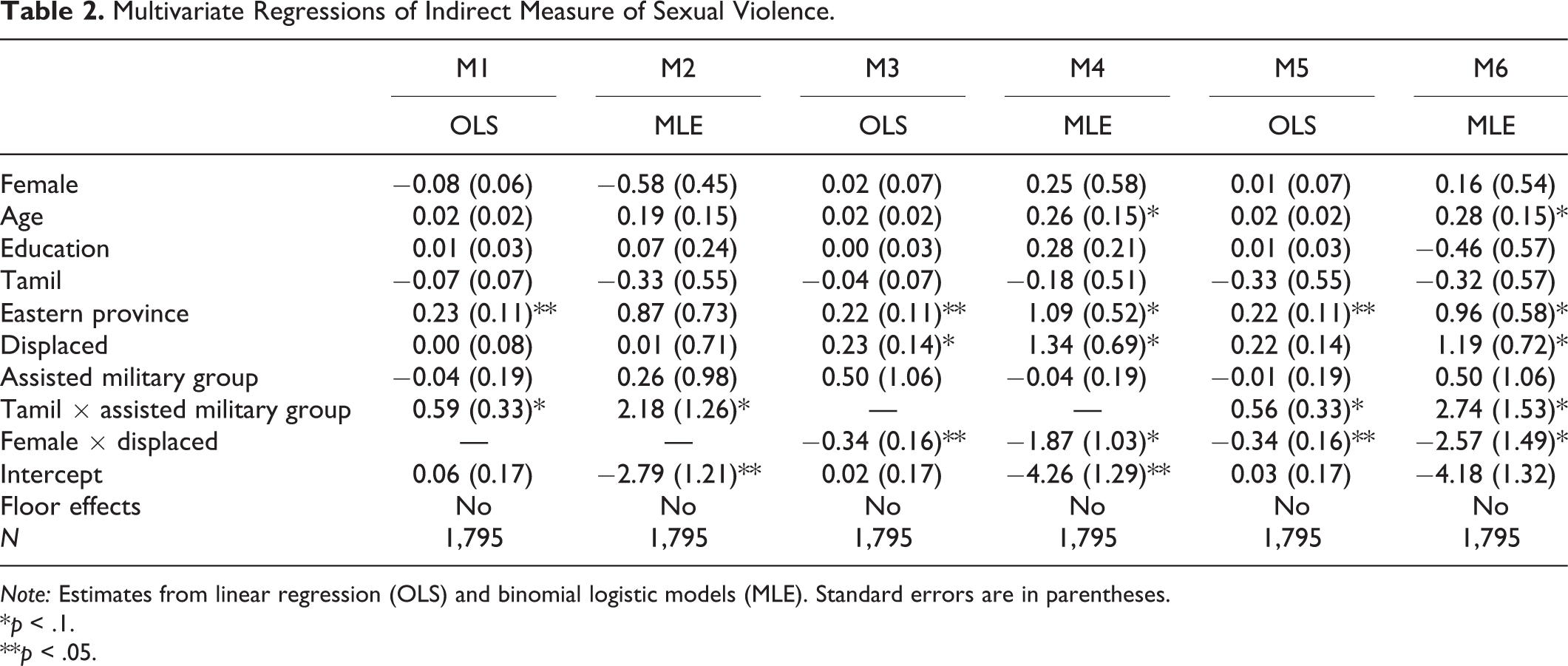
Model 1 in Table 2 regresses the personal experience of sexual assault on respondent’s role during the war, that is, whether they were a collaborator of military group associated with the LTTE. To be able to make this inference—which we were not able to ask due to the still difficult political situation in Sri Lanka—we interact this variable with Tamil ethnicity. The results suggest, that absent any active role (and controlling for basic demographics as well as Eastern region and displacement), Tamils and Sinhalese do not differ in their experience of sexual violence as revealed through the list experiment. Moreover, we find no statistically significant effects for members or collaborators of the Sri Lankan state army. In contrast, Tamil collaborators have a significantly higher risk of having experienced sexual violence than collaborators of the state army (β = 0.59, SE = 0.33, p < .1). This pattern holds when estimating a more appropriate binomial logistic model (model 2: β = 2.18, SE = 1.26, p < .1). In the Online Appendix, we further assesses the robustness of this result to the violation of the no liars assumption, by accommodating the possibility of floor effects in answers to the list experiment (Blair and Imai 2012).
Multivariate Regressions of Indirect Measure of Sexual Violence.
Note: Estimates from linear regression (OLS) and binomial logistic models (MLE). Standard errors are in parentheses.
*p < .1.
**p < .05.
Figure 3 shows the predicted probabilities of experiencing sexual violence by ethnicity and assistance of military groups. These predictions are based on model 4 in Table 2 and give a sense of the substantive effect sizes along with their inferential uncertainties (simulated 90 percent confidence intervals, based on 10,000 draws). We find that Tamils who collaborated with the LTTE have a probability of 52 percent of having experienced sexual violence; although due to the small sample size (N = 48), this estimate is fraught with considerable uncertainty (90 percent CI [16, 88]). Other supporters of military groups such as the Sri Lankan army have a lower predicted probability of 20 [3, 56] percent. The difference between these two groups is 32 [−02, 67] percentage points, and while the confidence interval includes zero, the probability that this difference is indeed greater than zero is still 94 percent. 3 In contrast, the risk of sexual violence is about the same for Tamils and other ethnicities that did not assist military groups (11 [2, 30] and 14 [4, 35], respectively, with a difference of −3 [−14, 6]). Comparing Tamils that did assist the LTTE with Tamils that did not yields a statistically highly reliable difference of 41 [9, 73] percentage points, which is greater than zero with a probability of 99 percent. Taken together, this evidence lends support to the notion that state actors perpetrated sexual violence asymmetrically and strategically against collaborators of the LTTE.
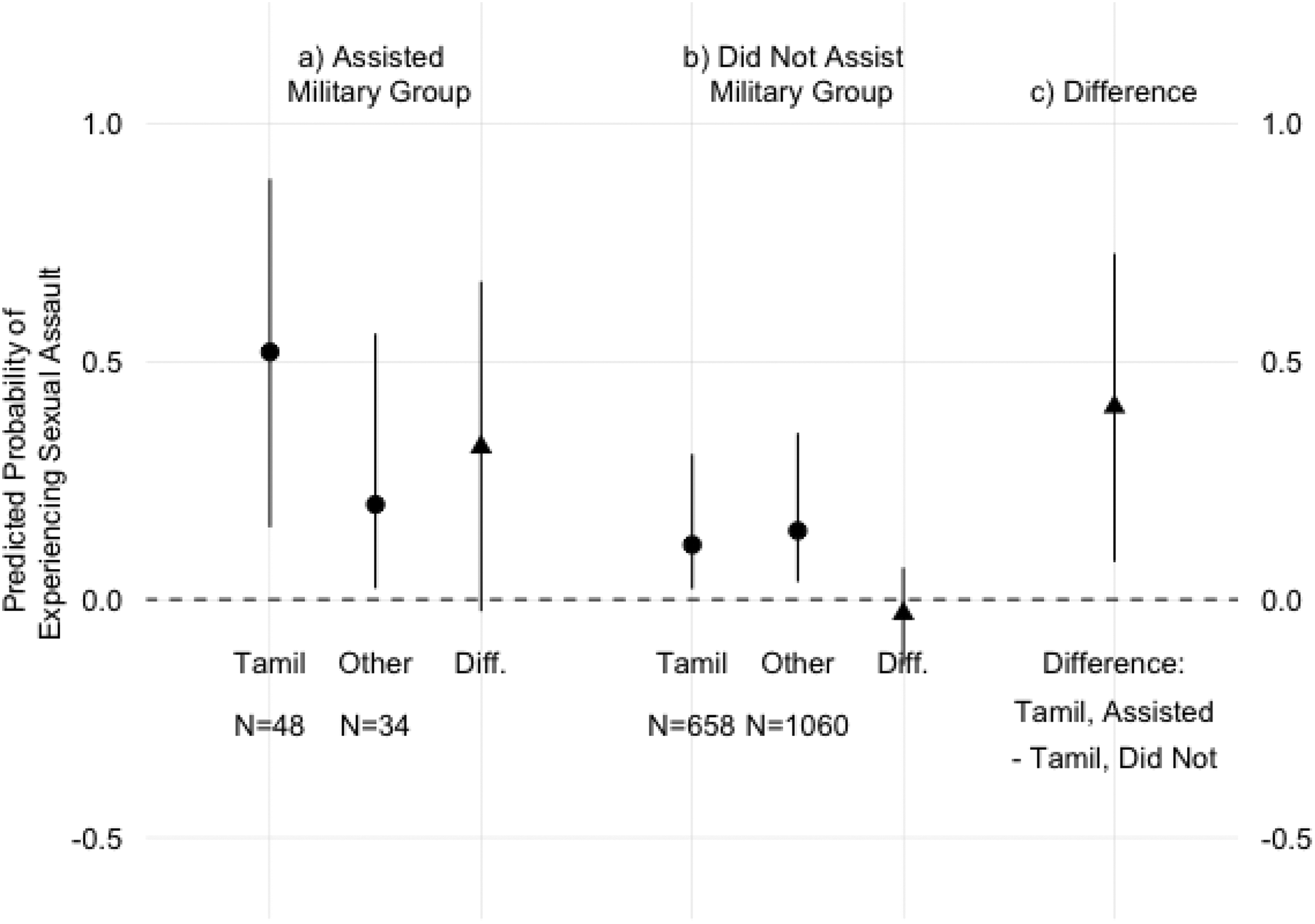
Predicted probabilities of personal experience of sexual assault by ethnic group and military group collaboration during the Sri Lankan civil war, along with simulated 90 percent confidence intervals, based on model 2 in Table 2.
In model 3 in Table 2, we interact the displacement variable with respondents’ gender to capture the gender-specific risk of being sexually assaulted. The result suggests that among the population that was not displaced during the war—and holding sociodemographics, ethnicity, and region constant—there are no visible gender differences in the personal experience of sexual violence as captured by the list experiment. Displacement, in turn, increases the risk of experiencing sexual violence. Surprisingly, however, and this echoes the result in the previous section, women who suffered from displacement have a significantly lower probability of experiencing sexual assault than displaced men ( = −.34, SE = 0.16, p < .05). This pattern remains robust when switching to binomial logistic regression estimated with MLE (model 4: β = −1.87, SE = 1.03, p < .01) and when adjusting for potential floor effects in the answering pattern of the list experiment (see model 2 in Table A6 in the Online Appendix).
Figure 4 shows the predicted probabilities of experiencing sexual violence by gender and displacement during the war (along with simulated 90 percent confidence intervals). While among those who were not displaced, women (14 [4, 35]) have a slightly higher probability of experiencing sexual violence than men (12 [3, 31]), this difference is not reliable (2 [−8, 13]). However, among the displaced, men have a three times higher probability of experiencing sexual violence, namely, 31 [9, 64]. This risk of experiencing of sexual violence is considerably lower for displaced women (10 [2, 30]) with a difference of −20 [−45, −3] percentage points. The probability that this difference is smaller than zero is 98 percent. Comparing the probability of being victimized for Sri Lankan men who have been forced to flee to men who were not displaced during the conflict produces a difference of 19 [8, 72] percentage points that is greater than zero with a probability of 97 percent.
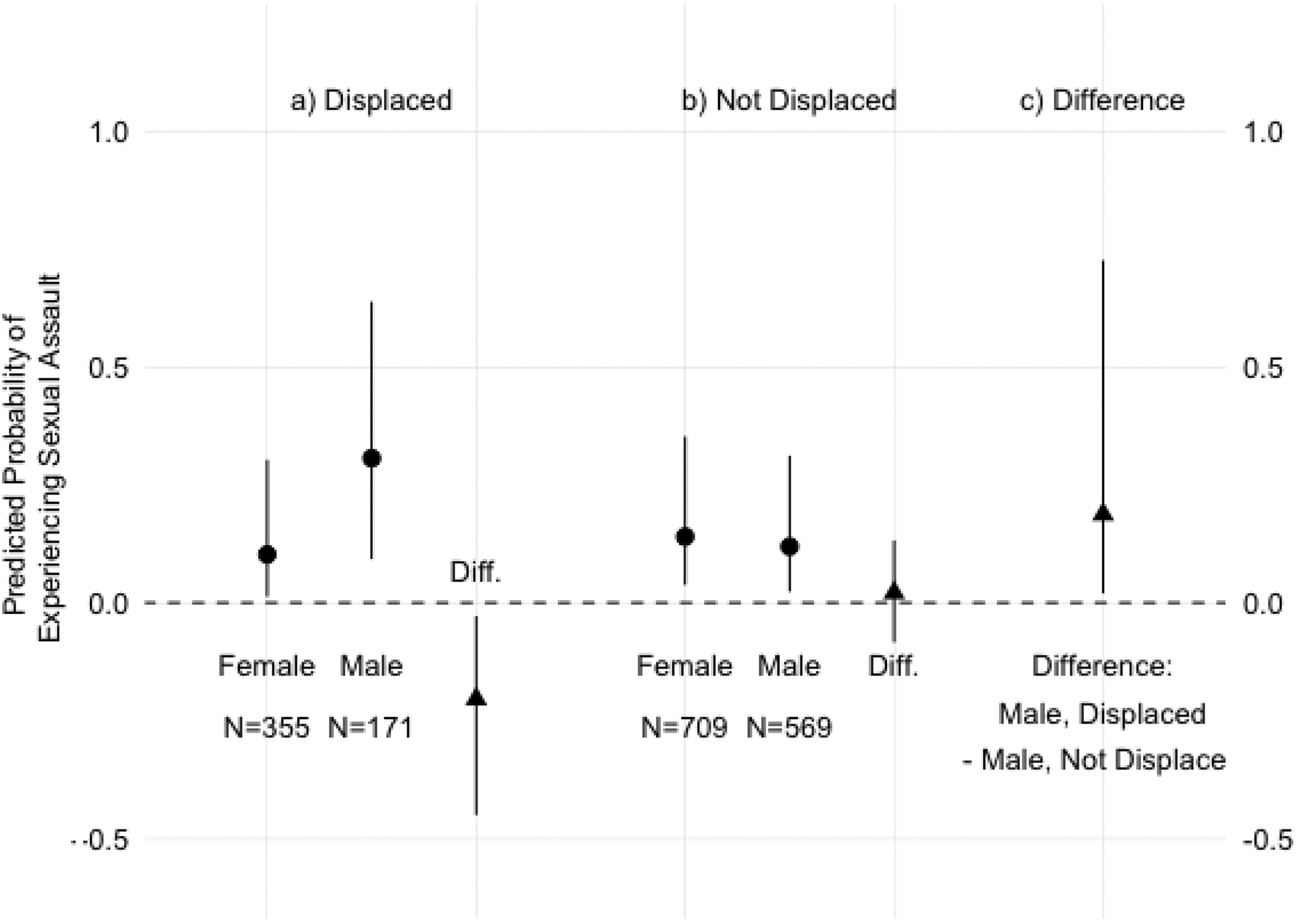
Predicted probabilities of personal experience of sexual assault by gender and displacement during the Sri Lankan civil war, along with simulated 90 percent confidence intervals, based on model 4 in Table 2.
Discussion and Conclusion
Based on a list experiment, our study exposes two main patterns of sexual violence during the war in Sri Lanka: first, collaborators of military groups associated with the LTTE have a markedly higher probability of having personal experienced sexual violence. This finding corroborates previous qualitative accounts on the asymmetric and strategic use of sexual violence to coerce confessions, degrade suspects, and discourage broader Tamil involvement with the LTTE (HRW 2013, 1; Woods 2006, 2009). This result is delicate because the perpetrating side now holds political power in Sri Lanka and has no interest in the investigation of these crimes. At the same time, it demonstrates the methodological value of our list experiment: this finding would not have appeared in a regression model using direct questions as dependent variable (see Tables A7 and A8 in the Online Appendix).
Second, we find that men who suffered from displacement have a significantly higher probability of experiencing sexual assault than displaced women. This result runs counter to conventional perceptions. One objection could be that men have a different understanding than women and refer to different experiences as sexual assault, explaining the higher reported rates of sexual violence among men in our experiment. But if this was indeed the case, then this overreporting of sexual violence should also be reflected in the responses to the direct question item, which is not the case. In addition, the most detailed qualitative report on wartime sexual violence in Sri Lanka that we are aware of (HRW 2013) conducted in-depth interviews and checked the medical records of seventy-five victims (thirty-four male and forty-one female). The report found very similar accounts of sexual assault across both genders. Importantly, men also experienced rape and by no means at lower rates than women. Different understandings of the term “sexual assault” are therefore not a sufficient explanation for our finding.
Instead, this result also points to the notion that sexual violence during the war in Sri Lanka was a form of torture in the pursuit to eradicate members of the LTTE. Government forces screened people fleeing the war zone and detained them for questioning. This also affected persons who had nothing to do with the LTTE and/or were not even Tamil (which also explains why both risk factors survive in a joint regression model, see models 5 und 6 in Table 2). And while this happened to both men and women, it is not surprising that men (who are more likely to be combatants and/or politically active than women) were targeted at higher rates and suspected of being LTTE rebels or collaborators. For instance, a recurring pattern in the report mentioned above is that male Sri Lankans who fled the country were arrested upon their return under the suspicion that they had ties to the LTTE abroad (HRW 2013).
Other accounts also document significant levels of sexual violence against male victims during and after the end of the Sri Lankan civil war (e.g., Freedom from Torture 2011; HRW 2013; Peel et al. 2000; de Mel, Peiris, and Gomez 2013; UN HRC 2015). The 2015 report by the UN HRC indicates that men were as likely as women victims of sexual violence committed by the Sri Lankan security forces (UN HRC 2015, 117). Peel et al. (2000) examined medical records of all male Sri Lankans in detention who were referred to the Medical Foundation for the Care of Victims of Torture between 1997 and 1998. According to their estimate, 20 percent of the men had experienced sexual violence during detention.
Sexual violence against men has remained largely undocumented for a long time, resulting in a tendency to relegate the issue to a “footnote” (Linos 2009; Oosterhoff, Zwanikken, and Ketting 2004, 68; Russell 2007; United Nations Office for the Coordination of Humanitarian Affairs 2008, 5). Furthermore, sexual violence toward men is not always recognized as such. In her study of the Peruvian Truth and Reconciliation Commission, Leiby (2009a) found that men’s sexual torture often was coded as torture, whereas women’s experiences of this kind were coded as sexual violence. It is only in recent years that sexual violence against men has received some attention in media reports and scientific studies (Carlson 1997, 2006; Christian et al. 2011; Oosterhoff, Zwanikken, and Ketting 2004; Sivakumaran 2010). Newer evidence reveals sexual violence against men in more than twenty-five conflicts (United Nations Office for the Coordination of Humanitarian Affairs [UN OCHA] 2008), and it is now believed to be prevalent in all violent conflicts in which sexual violence occurs (Sivakumaran 2007).
Whereas all types of sexual violence are subject to underreporting, men are believed to be even less likely than women to report this kind of violence (Bastick, Grimm, and Kunz 2007; Sivakumaran 2007, 255; World Health Organization [WHO] 2002, 155). As a result, male victims are underrepresented in existing statistics (Apperley 2015; Russell 2007). Several factors explain the reluctance of males to report such events. Next to general feelings of shame, this includes strong cultural and legal impediments associated with conceptions of masculine identity and homosexuality (Sivakumaran 2007, 255; WHO 2002, 155). Sexual violence inflicted by other males “emasculate, feminize, or homosexualize” male victims (Solangon and Patel 2012, 427, 428) and challenge their masculine identity through the inability to resist the sexual abuse and to cope with the consequences of the attack in a “masculine” manner (Zawati 2007). Criminalization of homosexuality is another factor that prevents male victims to report such incidents. In countries where homosexuality is illegal, as in Sri Lanka, survivors may face prosecution under the assumption that they have engaged in consensual homosexual activity (Hennessy and Gerry 2012; de Mel, Peiris, and Gomez 2013).
Research and effective policy on sexual violence during war is severely limited by victims’ tendency to remain silent and to underreport their personal experiences of sexual assault. We have demonstrated the utility of list experiments to uncover the prevalence, vulnerable groups, and mechanisms of sexual violence in the case of postconflict Sri Lanka. Importantly, our experimental evidence calls into question common misperceptions and, consequently, has important implications for policy. Widespread gender stereotypes that view men as perpetrators and women as the most vulnerable victims of war-related sexual violence have led to a situation where NGOs and government programs almost exclusively focus on female victims (DelZotto and Jones 2002; Stemple 2009). Our study shows that this policy is misguided and has harmful consequences for the silent victims of sexual violence during war.
On a final note, we want to stress that this study is not without limitations. The instrument used to measure sexual violence was kept quite general and could refer to a wide range of quite different experiences. This limits our ability to differentiate among different types and situational contexts of sexual violence. In particular, it remains silent about the perpetrators. Leveraging the methodological potential of list experiments for these more detailed questions and applying this unobtrusive questioning method in contexts beyond Sri Lanka thus seem logical next steps in the study of sexual violence during war.
Supplemental Material
Supplemental Material, Replication_Files_Silent_Victims - The Silent Victims of Sexual Violence during War: Evidence from a List Experiment in Sri Lanka
Supplemental Material, Replication_Files_Silent_Victims for The Silent Victims of Sexual Violence during War: Evidence from a List Experiment in Sri Lanka by Richard Traunmüller, Sara Kijewski and Markus Freitag in Journal of Conflict Resolution
Supplemental Material
Supplemental Material, Supplemental_Online_Appendix_Silent_Victims - The Silent Victims of Sexual Violence during War: Evidence from a List Experiment in Sri Lanka
Supplemental Material, Supplemental_Online_Appendix_Silent_Victims for The Silent Victims of Sexual Violence during War: Evidence from a List Experiment in Sri Lanka by Richard Traunmüller, Sara Kijewski and Markus Freitag in Journal of Conflict Resolution
Footnotes
Authors’ Note
Previous versions of this article were presented at the 2017 EPSA Annual Conference in Milan and the 2018 USAID Workshop on SEA Monitoring Methods in Washington, DC. Replications materials and supporting information are documented on the journals and our own websites.
Acknowledgments
The authors would like to thank the two anonymous reviewers, the editor of Journal of Conflict Resolution, and Adam Scharpf and Belén González for their many thoughtful, constructive, and helpful suggestions. We would also like to thank Janina Beiser-McGrath, Dara K. Cohen, Ragnhild Nordås, Michelle D. Jurkovich, and Michael Gilligan for interesting discussions.
Declaration of Conflicting Interests
The author(s) declared no potential conflicts of interest with respect to the research, authorship, and/or publication of this article.
Funding
The author(s) received no financial support for the research, authorship, and/or publication of this article.
Supplemental Material
Supplemental material for this article is available online.
Notes
References
Supplementary Material
Please find the following supplemental material available below.
For Open Access articles published under a Creative Commons License, all supplemental material carries the same license as the article it is associated with.
For non-Open Access articles published, all supplemental material carries a non-exclusive license, and permission requests for re-use of supplemental material or any part of supplemental material shall be sent directly to the copyright owner as specified in the copyright notice associated with the article.
