




Abstract
A bargaining framework and a measure of conflict polarization are developed from two elements: (i) hatred-based negative externalities experienced by the parties to the conflict, and (ii) penalties the parties impose on their delegated negotiators when concessions are made in the bargaining process. The framework establishes agreement and disagreement regions and it is shown that a necessary condition for a negotiated solution is the adoption of a dual policy that combines dissociative political and military strategies. This analytical approach is applied first to polarized conflicts generally and then to the specific case of the internal conflict in Colombia between that country’s government and the FARC guerrilla group. The model provides a rationale for the complex dynamic of Colombia’s current peace process, which has involved a preliminary agreement and its subsequent rejection in a national referendum. Our analysis highlights the successful dissociative political-military strategy followed by the negotiators that enabled them to reach the agreement and the negotiators’ underestimation of the hatred levels that led the majority of the Colombian society represented in the referendum to vote the agreement down because they considered the concessions made by the government too generous to be acceptable.
Introduction
Peace talks, disarmament discussions (to decommission terrorist groups), political transitions and many other negotiation-related processes take place in highly polarized environments. The parties involved in these processes often prefer to let them stagnate into a deadlock or break down altogether, implying that they are willing to assume the costs of failing to reach an agreement.
There is an abundant literature based on game theory that attempts to explain the trade-off between conflict and cooperation and the conditions for an agreement/disagreement. Examples of such studies are the classic conflict and cooperation analyses by Hirshleifer (1991), Skaperdas (1992) and the bargaining approaches of Anderlini & Felli (2001), Crawford (1982), Fernandez & Glazer (1989) and Haller & Holden (1990). However, none of these works consider the roles played by negative sentiments like hatred or envy and the resulting polarization in either the breakdown of a negotiation process or the emergence of an equilibrium without cooperation.
To fill this gap, we propose a modified version of the classic Nash demand game in which negotiators delegated by the parties to the game conduct a bargaining process in a polarized environment. This polarization results from the hatred each party feels for the other, a sentiment they transfer to their respective negotiators by means of penalties imposed on the latter for any concessions made during the bargaining.
The outcomes of this polarized negotiation are characterized using a four-region graph based on the values taken by two parameters: (i) the level of polarization in the conflict (the product of the parties’ hatred levels), and (ii) the cost of the conflict (the difference in the size of the surplus between a situation of peace and a situation of war). The graph thus contains two agreement regions and two breakdown regions. This setup provides a rich analytical framework for the theoretical evaluation of different policies that could potentially achieve a negotiated solution in a polarized conflict. It will be shown that the four-region analysis leads to two main conclusions. First, a proper evaluation of strategies aimed at resolving a polarized conflict should include the most accurate possible identification of the conflict’s starting point, that is, the stalemate region where the bargaining process is initially stuck. Crucial to this correct identification are good estimates of both the polarization level and the conflict cost. Second, a necessary condition for reaching an agreement in a polarized conflict is the implementation, ideally by both parties, of a dual policy consisting of a dissociative mixture of a political strategy affecting the polarization level (rhetoric or ‘words’) and a military strategy influencing the conflict cost (‘facts’). Any policy not built around this dissociation will fail to bring about a resolution of the conflict. As for the characteristics of the agreement itself, we will show that there is a continuum of Pareto efficient negotiating solutions constituting an interval whose minimum and maximum equilibrium shares depend on the level of hatred of the parties. When the conflict cost is positive, these hatred levels, mediated by penalties, build a sort of commitment device for negotiators and thus ultimately constitute a source of bargaining power. The negotiator most likely to obtain the largest share in an agreement is the one who incurs the biggest penalty.
The proposed four-region framework is also useful for describing and evaluating peace initiatives adopted in real situations. Excellent examples of this are the various negotiation processes that have attempted to settle the internal armed conflict in Colombia, which only in recent years has made major advances towards a peaceful solution. This decades-long conflict between the guerrillas – primarily the group known as the Revolutionary Armed Forces of Colombia (FARC) – and the Colombian government has been highly polarized from the very beginning. This polarization is clearly evident in the many intransigent postures and inconclusive negotiations that have long prevented the achievement of a lasting solution.
We will therefore use our theoretical framework to assess three Colombian government policies adopted at different times in an attempt to solve the conflict. Two of them – the Demilitarized Zone plan and the Democratic Security policy – are past initiatives that failed while the third is the current Peace Process, launched in 2012. We conclude that this last policy succeeded in reaching a preliminary agreement in August 2016 because of the parties’ willingness to combine open dialogue conducted in moderate rhetoric with an active military strategy. We also find that the rejection of this agreement in the September 2016 referendum can also be explained by our model. More specifically, our analysis suggests that the negotiators understated the hatred level of the median voter, misleading the government into making concessions to the FARC that went beyond the maximum the majority of the Colombian society represented in the referendum were prepared to tolerate.
The present study contributes to the growing literature in political economy devoted to the theoretical relationship between polarization and the incidence and intensity of conflicts (see Esteban & Ray, 1994, 1999, 2008, 2011; Esteban & Schneider, 2008). 1 These works use a notion of social polarization based on concepts of alienation and intergroup antagonism that resembles the concept of hatred or envy underlying our conflict polarization measure. The authors’ polarization metric affects non-linearly either the intensity or the incidence of the conflict, which is reminiscent of our results on polarization and the occurrence of a negotiation breakdown. Despite the similarities, however, their approach and the one presented here differ in two crucial aspects. Whereas they model the conflict scenario as a rent-seeking contest, we model the peace scenario as a distributive bargaining problem. Moreover, their results do not depend on the level of antagonism but do on the size of each interest group, contrasting with our framework in which the hatred levels are crucial in characterizing the relationship between polarization and conflict incidence.
As for studies specifically on the Colombian case, our analysis is also related to the relatively recent literature taking a game-theoretic approach to the search for a peaceful resolution. This research generally models solutions in terms of classical games comparing the economic benefits/costs of maintaining the conflict versus reaching an agreement (Gorbaneff & Jacome, 2000; Zambrano & Zuleta, 2017). Other articles have examined the circumstances under which Colombian society can continue to survive the conflict and its costs, and the determinants of the transfer that would be required to reach an agreement (Salazar & Castillo, 2001; Zuleta, Villaveces & Andonova, 2013). Although these models describe various characteristics of the conflict, they neither account formally for the polarized environment nor consider the latter’s crucial role in the failure of previous peacemaking efforts.
The remainder of this article is organized as follows. Section 2 proposes a model of bargaining under polarization, analyzing the main properties of its equilibrium and its implications for conflicts in general; Section 3 applies the model to the conflict in Colombia by analyzing the dynamic behind some relevant peacemaking attempts; and Section 4 presents a summary of our main conclusions. All the technical proofs are collected in the Online appendix.
A model of negotiation under polarization
In this section we develop a general model of a static distributive bargaining game between two delegated negotiators, each one representing one of the two parties to a conflict. Since both parties exhibit a hatred-based externality, each subjects his or her own negotiator to negative pressure proportional to the gain obtained by the other party’s negotiator. This pressure takes the form of a penalty imposed for ceding any part of the good in dispute. From these penalties we derive a measure of the conflict’s polarization level.
The bargaining game
The proposed game is based on the classic Nash demand game (Nash, 1953). The players are negotiators A and B, each representing one of the two parties as they attempt to resolve an ongoing conflict by means of a bargaining process modelled as the distribution between them of a pie of size π. The pie can be thought of as a set of economic and political claims in dispute measured in a common unit. Each negotiator simultaneously demands a share of the pie expressed by a number
Polarization in this context of delegated negotiation is modelled through externalities and penalties as follows. We assume that the two parties represented by the negotiators each experience a negative externality – a kind of envy or hatred – to the extent they are made better off by the surplus they obtain and worse off by the share of the pie captured by their counterpart. 2 We also assume that each party transfers (completely or partially) the externality they experience to their negotiator. This transfer takes the form of a penalty proportional to the concessions made by each negotiator to their counterpart, which are interpreted by the parties as a betrayal of their fundamental principles.
In the case of an agreement, these assumptions are captured by the payoff function for negotiator i given by
In order to obtain feasible solutions, we assume that
The first definition expresses the conflict cost as the difference in the size of the surplus between a situation of peace and a situation of war.
Definition 1:
The second definition, based upon our notions of externalities and penalties, proposes a polarization metric in the context of a negotiation.
Definition 2:
Polarization is typically defined as a division into two groups with sharply contrasting sets of opinions and beliefs, which have both causes and consequences. Our proposed polarization metric is related to this definition. Regarding causes, we posit that a plausible source of polarization is the negative sentiments such as hatred or envy arising from ideological, religious, historical or ethnic issues. This approach does not imply that these sentiments are a necessary condition for polarization but rather that they may be a reasonable sufficient condition. As for consequences, we assert that a concrete manifestation of sharply contrasting opinions in the context of a bargaining situation is exemplified by positions that are very difficult to reconcile through an agreement. We show formally that in the classical situation in which conflict cost is positive, negative sentiments and penalties result in negotiators taking more polarized positions as they introduce a source of aggressiveness additional to the one arising from the zero-sum nature of the Nash demand game. In fact, if the parties’ hatred levels are sufficiently high, the result may be a disagreement.
The equilibrium
Let

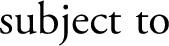



where
The following proposition characterizes the set of agreements
Proposition 3: Consider the following conditions: (C1)

where


and
Thus, there are two cases in which the outcome of the negotiation is an agreement. The first case arises if the level of polarization is moderate and the cost of the conflict is positive. This scenario is intuitive because when the size of the pie in a situation of peace exceeds its size in a situation of war (
The second agreement case emerges when the polarization level is sufficiently high and the conflict cost is negative. In contrast to the first case, this scenario is much less intuitive because when polarization is sufficiently high (
When there is an agreement and the cost of conflict is positive (i.e. condition C1 in Proposition 3 holds), the own penalty λ a negotiator incurs is a source of bargaining power. In fact, the negotiator who is more likely to obtain the largest fraction of the pie in a possible agreement is the one who gets the largest penalty, that is, the one with the largest value of λ.
6
Thus, although a high
From Proposition 3, it follows that an agreement will exist if the equilibrium interval characterized there is non-empty, that is, if

which thus constitutes a necessary condition for a negotiated solution. We can therefore perform the following comparative statics exercises over the agreement equilibria. If condition C1 in Proposition 3 holds, it is clear from (7) that any increase in
Alternatively, if condition C2 in Proposition 3 holds, it follows from inequality (7) that increases in
The next result follows directly from Proposition 3.
Corollary 4: If either

Another important property of the game is that the existence of an agreement is not guaranteed. This property is stated in the following proposition.
Proposition 5: Consider the following conditions: (C3)
This statement implies that there are two cases in which bargaining powers become incompatible and the negotiation breaks down. The first case arises if the polarization level is moderate and conflict cost is negative. This disagreement scenario is intuitive because as long as both negotiators incur sufficiently low penalties and the polarization level is thus sufficiently low (
The second negotiation breakdown case emerges if the polarization level is sufficiently high and conflict cost is positive. This novel scenario is particularly interesting because it occurs despite the fact that the size of the pie in a situation of peace exceeds that for a situation of war (
An alternative explanation for the negotiation breakdown can be derived from Equation (5). It is easily shown that if either one of conditions C3 or C4 in Proposition 5 holds, then

Thus, if either the polarization level is very high or conflict cost is negative (but not both), the positions taken by the negotiators become so extreme that even the sum of their minimum equilibrium positions is higher than the surplus at stake. As a result, no agreement is possible.
The interpretation behind some of the negotiation outcomes described above can be improved by adopting the following two definitions. The first one defines a measure of the total welfare involved in a possible agreement:
Definition 6:
The second definition is the measure of the total welfare involved in a disagreement:
Definition 7:
Based on these two definitions we establish the following equivalence between the conditions for an agreement/disagreement:
Corollary 8: The condition
Given this equivalence, we can then restate the results of Propositions 3 and 5 as follows. Although the presence of externalities and penalties modifies the original Nash demand game, the conditions for an agreement/disagreement in a negotiation conducted in a polarized environment can be rewritten in terms of the classic condition comparing the total agreement payoff
We may therefore conclude that despite the apparent contradiction between the two agreement scenarios characterized in Proposition 3, the two in fact share the same underlying economic rationale once we incorporate the agreement and conflict payoffs modified by polarization. According to Corollary 8 the condition
Similarly, in the case of the two disagreement scenarios in Proposition 5, the economic rationale behind both of them can be reconciled by using the converse of Corollary 8: the condition that
Implications for a general conflict solution
Our analysis has established that depending on the values taken by parameters Four-region framework
The four-region framework can be applied to the general problem of conflict solution. This approach is a normative analysis that prescribes which class of policies and strategies could be successful in attaining an agreement. Taking the disagreement regions (I and III) as the two possible starting points of a negotiation process that has yet to arrive at an agreement, the analysis then attempts to determine what changes in the
Disagreement in region I
If the starting point is a stalemate in this region, the conflict can converge to either of the two agreement region targets but the combination of policies that will have to be applied will be different for each one.
Policy A: convergence from region I to region IV. To improve the chances of moving the conflict to agreement region IV, the policy adopted should combine two elements: (i) military strategies that maintain a high-intensity war (to keep
Policy B: convergence from region I to region II. To improve the chances of moving the conflict to agreement region II, the policy adopted should be a mix of: (i) military strategies that mitigate the destructive effects of the conflict, reducing it to a low-intensity war (to reduce
Disagreement in region III
If the starting point is a stalemate in this region, the conflict can again converge Succesful policies to move the conflict from a stalemate to an agreement region
Policy C: convergence from region III to region IV. To improve the chances of moving the conflict to agreement region IV, the policy adopted should combine two elements: (i) military strategies that increase the intensity of the conflict so that it becomes a very destructive war (to increase
Policy D: convergence from region III to region II. To improve the chances of moving the conflict to region II, the policy adopted should be a mix of: (i) military strategies that maintain the conflict at a low intensity level (to keep
The foregoing suggests that a successful policy must always combine military and political strategies in a dissociated manner such that ‘words’ and ‘facts’ are in some sense contradictory. Otherwise, with rhetoric and military actions working in the same direction the conflict may simply evolve from one type of disagreement to another. In colloquial terms, and making an analogy between a polarized conflict and a dogfight, we can group and describe the four above policies as follows.
Policies A and C: Move the conflict towards a fight in which the dogs bite more than they bark.
Policies B and D: Move the conflict towards a fight in which the dogs bark more than they bite.
Note that from an ethical viewpoint, policies B and D may be superior in that under them, the costs of the conflict in terms of human casualties may turn out to be lower than under policies A and C. This should be true in general since the latter two policies involve maintaining a high-intensity war whereas the former two entail more passive military strategies that lead the disagreement scenario to a relatively low-intensity armed conflict.
Nevertheless, if policies B and D were, in fact, adopted by the negotiators, they might be difficult to sustain as they would likely strike the parties they represent as contradictory and barely credible. For instance, policy B would imply maintaining a highly belligerent rhetoric in order to sustain a high level of polarization. It seems reasonable to suspect that menacing words by the negotiators in this type of communication strategy would quickly become empty threats if peace talks were simultaneously being conducted. Perhaps the only real chance of success for this policy would be to publicly break off the peace process while in reality continuing it in the form of private discussions.
Application to the Colombian conflict
We now apply our four-region framework to the particular problem of solving the Colombian conflict. A descriptive analysis is presented examining why two different plans adopted in the past, previous to the current peace process, failed to result in an agreement and why the current peace process has so far been only partially successful.
Since unlike the previous section we are now studying a real conflict, we must first determine for each of the earlier plans the actual starting region. We then identify the changes that subsequently occurred in each case in the
The previous negotiation initiatives
The two earlier plans pursued by Colombian government in the hope of solving the conflict were (i) the Demilitarized Zone (DZ), and (ii) Democratic Security (DS). In each case, we examine the reasons behind its failure.
Demilitarized Zone
This plan was part of a round of peace talks between the President Pastrana’s administration (1998–2002) and the FARC held in the late 1990s. The guerrilla group demanded as a condition the creation of a demilitarized zone (DZ) without a ceasefire. The government accepted the condition, creating a DZ covering about 42,000 km2.
At the time of the plan, the conflict had already become a high-intensity war with both sides displaying great destructive power. It had also reached a very high level of polarization, mainly because (i) FARC had intensified the use of very unpopular practices such as kidnapping, extortion and drug trafficking, and (ii) paramilitary groups had entered the conflict and were employing similar tactics (Ortiz, 2002). We thus conjecture that before implementation of DZ, the conflict was in region I.
Our analysis is that the DZ policy failed because it was unable to dissociate rhetoric from facts. The facts were that the strategy brought about a lowering of the intensity of the conflict reflected in a reduction of hostilities on both sides, allowing both parties to increase their gross conflict payoffs
Despite this optimism and the agreement by the two sides in mid-1999 on a complicated agenda containing 47 points, none of them were ever discussed. The negotiations focused on achieving a ceasefire and a prisoner exchange, but only on the latter was a narrow and partial agreement arrived at. The process finally collapsed in 2002 due to the lack of progress. In the context of our framework, this breakdown is explained by the joint decrease of both the
Democratic Security
This policy, adopted by the Colombian government under President Uribe (2002–10), was aimed at ending the conflict by military means.
8
We begin our analysis of this military strategy with a Past and current attempts to reach an agreement in the Colombian conflict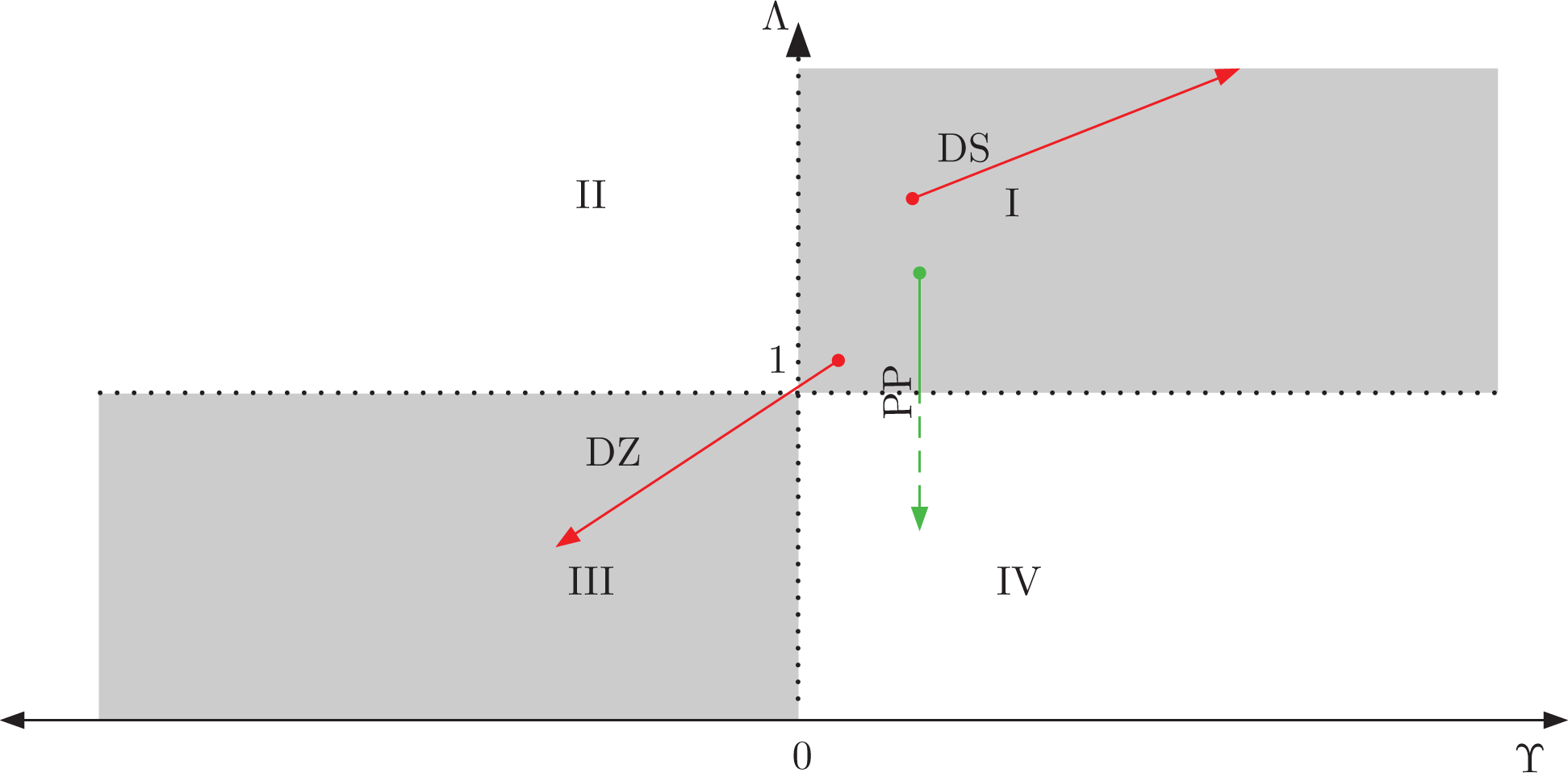
This political shift is an additional element that may have affected the global polarization level of the conflict in that it probably exacerbated the ideological differences between the two sides, confronting the ultra-left guerrilla group with a more conservative administration. The change can be expressed in our model as an increase in the FARC’s
We therefore conjecture that the failure of the earlier DZ plan led to an increase in both parameters
Regarding the DS itself, we would argue that it failed because it was not able to properly dissociate rhetoric from facts. The facts were that in the first stage of the government’s strategy much damage was done to FARC’s military capacity, resulting in serious losses for the group both economically and politically (its main leaders ending up either captured or dead). But in the second stage, the guerrillas were able to reorganize militarily and inflict heavy losses both in infrastructure and human life. On balance, we conclude that DS further increased the conflict’s military intensity, implying that both parties either held down or lowered their respective gross conflict payoffs
The joint increase in both
The current peace process
President Santos (2010–18), the successor to Uribe, partially maintained the DS military policy but also initiated a peace process (PP) with FARC in Havana (2012–16). FARC agreed to take part in the process but without surrendering its arms until all of the points to be negotiated had been implemented. This dual approach on the part of the two sides meant in practice the coexistence of two apparently contradictory strategies: (i) an attempt to reach an agreement on a peaceful solution of the conflict, and (ii) a military strategy that, if successful, would condition the PP dynamic, and if not, would allow the two parties to maximize the benefits or minimize the losses of an insoluble armed conflict.
During much of the PP negotiation, the process enjoyed the support of the Colombian people. This positive atmosphere surrounding the negotiations drew strength from the re-election of Santos to a second term (2014–18). In this favourable context, both sides finally arrived at the August 2016 Havana agreement, which resulted in a definitive bilateral ceasefire. Although the accord was ratified by the guerrilla group at a conference of FARC delegates, it was rejected by Colombians in a nationwide referendum held in September 2016.
In the context of the proposed model, our assessment is that contrary to previous peace initiatives, the preliminary success of PP can be explained mainly by the apparently contradictory nature of the dual approach pursued by FARC and the Colombian government during the final few years of the open conflict. This dual approach consisted of the right dissociative combination of peace talks (‘words’) with an active military strategy (‘facts’) on the part of both parties. Regarding the facts, the military strategy implied keeping the intensity level of the conflict high and total gross conflict payoff (
It would appear that by 2016 the negotiators for the two sides felt they had arrived at the right mix of words and facts that would keep
As was already noted, however, the preliminary agreement was not ratified by the Colombian population in the September 2016 referendum. Our analysis is that this rejection occurred because the negotiators underestimated the hatred level of the median voter and therefore also the conflict polarization level that indeed was manifested in the referendum. In terms of our framework, the efforts in rhetoric were insufficient to reduce the polarization
This conclusion is backed by two pieces of evidence. First, in the run-up to the referendum all the polls predicted the Havana agreement would be approved. In terms of our model, this suggests that the government estimated the hatred level
The second piece of evidence concerns the terms of the preliminary agreement and the benefits they conferred on the FARC. The Havana talks embraced a diverse range of issues grouped into five major items: (i) agricultural development, (ii) political participation, (iii) solution of the drug problem, (iv) justice, truth and reparations, and (v) the end of the conflict. 9 According to the agreement, the FARC would receive significant benefits such as a special status for the guerrilla leaders amounting to a partial amnesty, the right for the leaders to participate in politics and implicit sentence reductions for crimes committed such as kidnapping and drug trafficking. We may reasonably suspect that the sectors of Colombian society most opposed to the peace process considered these benefits to be excessive concessions by the government, prompting them to turn out for the referendum in greater numbers than those with more moderate views, thus ensuring the agreement was rejected.
The available data on the referendum results broken down geographically are consistent with our conclusions. The ‘Yes’ vote (i.e. ratifying the agreement) was concentrated in municipalities with the highest rates of conflict-related violence, which were also the most rural ones located furthest from the main urban centres (Herreño & Muñoz, 2016).
10
Interestingly, these same municipalities were those that had voted most heavily to re-elect President Santos in 2014 (Fergusson & Molina, 2016). In terms of our model we interpret these data to mean that the municipalities most likely to ratify the agreement were those that displayed the following two characteristics: (i) higher conflict cost (because of lower value of conflict payoff V), reflecting greater negative human and economic impacts of the guerrilla war and therefore also greater potential benefits of a peace agreement (Herreño & Muñoz, 2016), and (ii) lower hatred levels (lower
As for the ‘No’ vote, it was concentrated in municipalities where government authority and business activity are strongest (Herreño & Muñoz, 2016). These were the areas where the re-election of Santos was most closely contested. In terms of our model, these data can be interpreted to mean that the municipalities most likely to reject the agreement were those that displayed the following two characteristics: (i) lower conflict cost (due to higher conflict payoff V), reflecting less negative human and economic impacts of the guerrilla war due to their higher degree of urbanization and greater distance from conflict zones, and (ii) higher hatred levels (higher
The referendum results also suggest that sectors apparently exhibiting higher hatred levels were also those where the mobilization of support for the No vote was greatest. Turnout across the country was lower than the polls had predicted (Herreño & Muñoz, 2016; Fergusson & Molina, 2016; CERAC, 2017) but the decline in participation was most significant in areas where a high Yes vote was expected (Fergusson & Molina, 2016). Also, according to various analysts the better campaign run by those opposed to the agreement and their greater awareness of the terms of the agreement together explain the No side’s better turnout and thus their referendum victory, albeit by a very slim margin (50.23% vs. 49.76%) (García, 2016).
In addition, we may conjecture that the Santos government proved unable to carry out an effective referendum campaign strategy. For example, the president’s public statement to the effect that if the agreement was not ratified the conflict would shift from the countryside to the cities could have been seen as a provocation by the largely urban opponents of the agreement, thus exacerbating the polarization level and reinforcing these voters’ determination to go to the polls. Also, Santos did little to get the resources of the government bureaucracy and the pro-government political parties behind the effort to promote a high turnout among Yes voters (Fergusson & Molina, 2016; Botero, 2017).
We end our analysis of the PP with an illustration of its dynamic using the following numerical example with our theoretical model. Assume that from the median voter’s perspective, the negotiators believed they faced a bargaining process in which the surplus if peace was achieved was
In terms of our four-region framework, this numerical example suggests that despite the efforts in rhetoric to reduce the polarization level, when the preliminary Havana agreement was reached by negotiators the conflict was not in region IV where
Concluding remarks
This article proposed a model of delegated distributive negotiation for resolving conflicts in which the parties to it feel hatred for each other. Using this sentiment-type externality, a measure of conflict polarization was constructed from the penalties imposed by the parties on their respective delegated negotiators when either of them makes concessions to their counterpart. We showed that incorporating polarization adds an important dimension to the characterization of bargaining processes and their solution, resulting in a more elaborate approach than one based solely on the conventional cost–benefit trade-off between maintaining or ending a conflict.
This richer analysis predicts that in a polarized dispute, four regions may emerge, two of agreement and two of disagreement, depending non-monotonically on the polarization level and the cost of the conflict. The non-monotonicity property implies that a prerequisite for achieving a negotiated solution is the implementation, ideally by both parties, of contradictory mixed negotiation policies combining rhetoric aimed at modifying hatred and polarization levels with military strategies for modifying the costs of an ongoing conflict. Policies that do not so dissociate rhetoric with military strategy are doomed to failure and will keep the conflict going without a definitive peaceful resolution.
This four-region framework was applied to the case of the long-running internal conflict between the government of Colombia and the FARC guerrilla group. It was shown that past attempts to find a solution to the conflict such as the Demilitarized Zone plan and the Democratic Security policy failed because they were unable to separate rhetoric from military action.
By contrast, the same analysis suggests that the current peace process has so far been partially successful because the agreement reached in Havana was the result of conversations that were properly counterbalanced by active military strategies. However, the negative outcome of the subsequent referendum implies that the negotiators underestimated the hatred level of the median voter. In fact, the significant benefits obtained by the FARC in the Havana agreement were considered by the sectors of Colombian society most contrary to the peace process as unacceptable government concessions, prompting them to turn out for the referendum in larger numbers than the more moderate sectors.
Supplementary material
Supplemental Material, JPR892675_appendix - Bargaining under polarization: The case of the Colombian armed conflict
Supplemental Material, JPR892675_appendix for Bargaining under polarization: The case of the Colombian armed conflict by Sigifredo Laengle, Gino Loyola and David Tobón-Orozco in Journal of Peace Research
Footnotes

Acknowledgments
We would like to thank two anonymous reviewers and Scott Gates (editor) for their comments, which improved this work significantly. We are also grateful to Carlos Vasco for his valuable research assistance, to Kenneth Rivkin for his excellent English proofreading and editing, and to Cristopher Mardones for his assistance in drawing the figures.
Notes
References
Supplementary Material
Please find the following supplemental material available below.
For Open Access articles published under a Creative Commons License, all supplemental material carries the same license as the article it is associated with.
For non-Open Access articles published, all supplemental material carries a non-exclusive license, and permission requests for re-use of supplemental material or any part of supplemental material shall be sent directly to the copyright owner as specified in the copyright notice associated with the article.
