



Abstract
Drawing on a survey of migrants in 12 cities across four major urbanising areas in China, this paper analyses rural migrants’ intention for permanent urban settlement. We focus on one sizeable but often overlooked group of rural migrants, that is, the self-employed. Our hypothesis is that the self-employed migrants tend to have stronger intention for permanent urban settlement since they are usually more ingrained in urban economy and society. The empirical evidence supports our hypothesis. Moreover, the social and economic choices made by the self-employed migrants are consistent with their expressed intentions: they are more likely to migrate with spouses and to live with their family members, more likely to have a plan for house purchase in cities; they are also more integrated into urban society in terms of learning local dialects and making friends with local permanent residents.
Introduction
With the fastest-growing economy in the world, China is currently experiencing a drive to urbanise. Sustainable urbanisation is particularly necessary in China due to institutional limitations historically placed on rural–urban labour mobility and family migration. Although economic reforms since the late 1970s have gradually loosened these restrictions, the labour-mobility component of China’s Household Registration System (henceforth the Hukou system) has not been fundamentally reformed, and remains an obstacle to permanent rural–urban migration (Chan and Buckingham, 2008). Farmers who move to cities are usually still treated as second-class citizens, even when they find productive employment. Rural migrant workers face a continued lack of access to the social-security benefits, public housing, and urban public education available to those officially classified as ‘urban residents’ under the Hukou system (Fan, 2002, 2008; Huang and Jiang, 2009; Wang, 2004; Wang et al., 2010).
China’s 2000 National Population Census indicated that at the start of this century there were already 121 million migrants (defined as individuals who had migrated for at least six months of the previous year) in China, of which 90 million were found in urban areas and 88.4 million had rural origins (NBS, 2002). The demand for migrant labour rose further after the early 2000s, especially after China’s accession to the World Trade Organization. According to the National Bureau of Statistics, the number of migrants in China had reached 221 million by 2010, of which 174 million (78.7%) were from the countryside. The increasing labour shortage since 2004 (Cai and Chan, 2009) has led central and local governments to develop reform policies that encourage permanent and family migration. In 2012, the central government renewed its modest reform efforts by publishing new rules for migrants applying for Hukou in all of China’s cities except the largest 40 (State Council, 2012). Local governments in coastal cities, particularly those in the Pearl River Delta and the Yangtze River Delta, which receive a large volume of migrants, are now more proactively installing Hukou-reform packages (see e.g. Dongguan Municipal Government, 2011). However, these experimental local reforms tend only to award urban Hukou to those deemed worthy. For example, the government of the coastal province of Guangdong began in mid-2010 to experiment with a Hukou-reform package known as the ‘Credit Accumulation System’, which required migrants to earn 60 ‘points’ to qualify for Hukou in Dongguan, Shenzhen, Huizhou, and Zhongshan. Education and skills, years of work, social-insurance payments, and even good deeds such as giving blood were taken into consideration. Moreover, the criteria for urban Hukou eligibility are sometimes particularly difficult for migrants to meet (Business Week, 2012). For example, most self-employed migrants have received relatively little education, and lack the specialised skills that cities seek to attract. China’s social-insurance system provides few, if any, opportunities for self-employed migrants to pay social insurance. As a result, most are insufficiently qualified to obtain urban Hukou.
In general, the demand for urban citizenship or permanent residency among migrant workers has increased with China’s rapid rate of urbanisation. Despite the state’s efforts to award permanent residency to more migrant workers, its progress has been limited. Crucially, local governments are unwilling to pay for migrants to receive the public services associated with urban Hukou.
Although self-employed migrants comprise approximately one fifth of China’s rural migrant population, they have received little attention from either researchers or Hukou-policy reformers (Chan and Buckingham, 2008). Self-employed migrants differ considerably from wage-earning migrants in their working lives, livelihood management, family arrangements, and urban permanent settlement intentions. Yet, self-employed migrants in Chinese cities, potentially the most dynamic and entrepreneurial migrant group in the country, have not only gained little research attention, but have also been seriously discriminated against in terms of public-service delivery (Knight and Yueh, 2004).
To fill the gaps in both research and public-policy debate, this study draws on a large sample of migrants from 12 cities in four major urbanising areas in China to empirically determine whether self-employed migrants are more intent than their wage-earning counterparts on settling permanently in China’s cities, and whether their social and economic choices are consistent with their expressed settlement intention, paying close attention to the endogeneity issue. We find self-employed migrants are more intent than wage-earning migrants on permanent urban settlement. Self-employed migrants are more involved with urban economy and society, having found specific market niches in cities. On average, self-employed migrants earn higher incomes despite their poorer education. They are more likely to migrate with their spouses, to live with family members, and to purchase houses in cities. They also integrate more fully with urban society by learning local dialects and making local friends. Our findings not only contribute to academic understanding of the life circumstances of China’s more entrepreneurial self-employed migrants, but have important policy implications in terms of targeting Hukou reforms.
The remainder of this paper proceeds as follows. The next section provides a conceptual analysis and literature review of urban settlement intention and self-employment. The following section introduces our survey and its methodology, with attention to the potential endogeneity of our regressions. We then present our main empirical results, and the final section concludes the study.
Permanent urban settlement intention and self-employment in China
With China’s fast growth and urbanisation over the past two decades, rural people have gained much greater freedom to move between cities and their homes. However, the constraints of China’s Hukou system ensure that most rural-to-urban migration is still circular. Rural migrants without urban Hukou, even those who have worked and lived in cities for years, are still denied permanent urban-residency rights and the Hukou-associated social benefits (Chan and Buckingham, 2008; Chan and Zhang, 1999; Deng and Gustafsson, 2006; Wang and Zuo, 1997; Zhang, 2010).
As a result, the growing body of literature on China’s internal migration (De Brauw and Rozelle, 2008; Hare, 1999; Lu and Song, 2006; Ma, 2001; Wang and Zuo, 1997; Zhao, 1999, 2002; Zhu, 2002) has focused exclusively on temporary migration. Many studies have revealed that most members of this floating population are disadvantaged by temporary housing arrangements and low-quality living conditions; they often live separately from their family members, take up unstable, low-paid jobs with unfavourable working conditions, and have limited access to schooling and social welfare (e.g. Fan, 2002; Shen, 2002; Tan, 2003; Zhu, 2003). Many scholars consider the Hukou system to be the major cause of the difficulties faced by the floating population in China’s cities, as individuals lacking Hukou status are not entitled to urban ‘citizenship’ and the related privileges of urban life (e.g. Fan, 2002; Solinger, 1999; Tan, 2003).
The literature on migration suggests that while the proportion of temporary migrants in China is unusually high, this phenomenon is not unique to China. In fact, the prevalence of circular migration in some developing countries has long been acknowledged in the scholarship on migration. In Indonesia, the widespread incidence and socioeconomic significance of circular migration and commuting from rural to urban areas were identified in the 1970s, and the tempo of this kind of migration greatly increased in the following two decades (Hugo, 1978, 1997). Citing two sets of migration data from Bangkok in the 1970s and 1980s, Goldstein (1993) suggested that the majority of the migration during this period was temporary.
Scholars also hold different views of temporary or return migration. Neo-classical economists usually attribute return migration to unfulfilled income expectations (Cassarino, 2004; Todaro, 1969), or to the failure of the industrial sector to provide migrants with stable, good-quality working conditions (Browning, 1971; Nelson, 1976). Proponents of the new economics of labour migration argue that return/temporary migration is just one component of the migration process, which occurs once a migrant’s objectives, such as saving money, have been met in the destination country or city (Cassarino, 2004; Stark, 1996).
However, China differs from many other developing countries in two respects that encourage permanent urban migration among rural labourers. First, as many new jobs have been created in China’s cities over the past two decades, rural labourers generally have very good urban job prospects as either waged or self-employed workers. Therefore, urbanisation in China favours the permanent relocation of the population from rural to urban areas, as well as an employment shift from rural agricultural sectors to the primarily urban manufacturing and service sectors. As migrants can expect to earn reasonable incomes in China’s cities, their intention to migrate permanently should theoretically be much greater than that of migrants in developing countries where few decent jobs are available. Second, the allocation of agricultural and residential land to almost every rural household in China implies that rural migrants can always opt to return if they cannot find high-quality urban employment. This is also in sharp contrast to the situation in many other developing countries, where the members of large, landless rural populations choose to shelter in urban slums and take up low-quality, low-paid, and usually self-employed jobs. Therefore, if most rural migration in China is only temporary, and migrants express little intention to settle permanently in cities, we can infer that many rural citizens are being prevented from entering into city life by institutional constraints such as the lack of Hukou-related public services (including education for children) and/or high urban living costs (such as housing prices). It is thus crucial for the Chinese government to gradually remove the Hukou system and its related institutional constraints, and to provide rural migrants with job security and public-service equality to facilitate their permanent urban settlement.
Not surprisingly, due to the institutional constraints limiting permanent rural–urban migration in China, only a few studies of this issue have been undertaken. Cai and Wang (2008) and Zhu and Chen (2010) evaluated the intention of rural migrants to become permanent urban residents with questions such as ‘Are you willing to settle down in a city?’ Using data from the 2001 Chinese Urban Labor Survey, Connelly et al. (2009) investigated the determinants of permanent urban settlement, with migrants’ length of stay and their decision whether to reside in the same city as their spouses or children as proxies for permanent settlement. Hu et al. (2011) defined permanent migrants as those who have obtained Lanyin (‘blue-stamp’) Hukou or formal urban Hukou, and/or purchased houses in cities. They showed that permanent migrants, unlike their circularly migrating counterparts, tend to stay within their home provinces, and are more likely to have stable jobs and high incomes. Hu et al. (2011) also found that experienced and well-educated migrants are more likely to settle permanently in cities, and that the relationship between age and the probability of permanent migration is inversely U-shaped. However, this analysis was not based on a well-defined measurement of the subjective intention to permanently migrate, and neither did the authors explore the correlation between migrants’ expressed intentions and such aspects of their observed behaviour as social integration, family-member living arrangements, and housing choices.
The lack of scholarly attention paid to China’s self-employed migrants is surprising, because the rise of self-employment is probably one of the most significant employment trends in urbanising China. During the 1980s and the 1990s, as rural migrants were heavily discriminated against in the formal sectors of urban society, many entered non-state-owned, informal sectors or became self-employed (Li and Siu, 1997; Wang and Zuo, 1997). Accompanying the boom in China’s urban economy in the early 2000s was a huge increase in the numbers of urban and rural traders, merchants, and small and medium-sized businesses run by individuals or households (Yueh, 2009). Nevertheless, neither the determinants of self-employment in urban China nor the livelihood management of self-employed migrants have received adequate attention in the literature.
The role of self-employment in fostering entrepreneurship and development makes this area of enquiry particularly important. The connection between self-employment and development has received considerable attention from scholars, who have found that increasing self-employment often parallels the rise of informal forms of employment in developing economies (Mazumdar, 1983; Portes et al., 1989). Some scholars view self-employment as part of a less productive informal sector that serves as a coping mechanism for uneducated, unskilled workers and/or those who cannot obtain formal employment (Gong and Van Soest, 2002; Tokman, 1992). Some even consider the rise of self-employment to reflect the failure of development, viewing it as a last resort for labourers who cannot find jobs in the formal sector (Todaro, 1986).
However, many development economists have emphasised the importance of a strong self-employment sector to a country’s overall development, as well as its provision of employment to rural residents (Blau, 1985). Self-employment was described by Schumpeter (1943: 132) as the ‘prime mover of economic growth’, and by De Soto (1989: 243) as ‘the foundation of development’. Essentially, this line of argument states that self-employment can significantly increase workers’ incomes and capital assets and improve overall standards of living as new enterprises grow into medium-sized and large businesses (Henley, 2004). As explained earlier, the situation in China is very different from that in other developing countries in Latin America, South Asia and Southeast Asia, where jobs in the urban formal sectors are scarce, and where migrants are usually forced into low-end, informal self-employment. Yet even as China’s Hukou reforms proceed, and more rural migrants choose urban self-employment, self-employed migrants continue to receive little or no attention from either policy makers or researchers. Using data from an extensive survey of migrants from the Chinese countryside, we attempt to fill the above-mentioned gap by examining the permanent-settlement intentions of self-employed migrants in Chinese cities.
Scholars have elucidated the relationship between migrants’ employment status and settlement intentions (Yue et al., 2010). Self-employment makes it easier for migrants to stay in their chosen cities (Bonacich, 1973; Van Tubergen, 2005; Waldinger et al., 1990). It may also increase the inclination to settle in cities, for the following reasons. First, self-employment is often regarded as a means of avoiding marginalisation in the labour market. Second, the self-employed tend to be more involved with the social and economic lives of cities (e.g. Blume et al., 2003; Constant and Zimmermann, 2005). Third, as the self-employed must make larger initial investments than wage-earners, self-employed migrants are usually less mobile than their wage-earning counterparts, and the optimal duration of their stay in cities is longer (Mesnard, 2004). Fourth, those who choose to become self-employed are usually more entrepreneurial: a quality that may be further enhanced by the self-employment experience. This helps the self-employed to obtain higher incomes, which further strengthens their urban permanent settlement intentions (Douglas and Shepherd, 2002). Given China’s urbanisation model and rapid job creation, one would expect self-employed migrants in China to be more fully integrated with urban society, to receive higher incomes, and to be more able and willing to seek permanent urban settlement.
Using an instrumental-variables (IV) approach, this paper aims to identify the causal relationship between self-employment and the intention to settle permanently in cities. Our hypothesis is that self-employed people have stronger permanent urban settlement intentions, and thus more actively integrate themselves into city life. They also have higher incomes, which equip them better to settle permanently in cities.
Our research has important theoretical implications for research into the role of self-employment in development. The Chinese case suggests that self-employment is far from a last resort for migrant labourers in cities; rather, it is a step up on the development ladder, and potentially a source of urban entrepreneurship. Of course, over-generalisation should be avoided due to the specificities of China’s development model and institutional set-up, which are discussed in a later section.
There is already a large body of empirical literature on migrants in China. Some scholars have argued that ‘temporary’Hukou status prevents migrants from qualifying for many of the welfare benefits provided by the government, including subsidised housing and public education, even if these migrants have lived and worked in China’s cities for years (e.g. Chan, 1994, 1996; Cheng and Selden, 1994). There is also considerable literature on the effects of the Hukou system on migration patterns and migrants’ socioeconomic attainment, marginalisation and assimilation, and housing conditions (e.g. Fan, 2008; Huang and Clark, 2002; Jacka, 2006; Solinger, 1999; Wang et al., 2010; Wu, 2006). However, research on self-employed migrants is very limited. Self-employment has been used as an independent variable in a few studies of Chinese migrants’ job mobility and satisfaction, but the issue of endogeneity has rarely been fully addressed (Knight and Yueh, 2004; Yueh, 2009). Drawing on existing literature on the determinants of self-employment as an occupational choice, we used two instruments for our key independent variable, self-employment status. We aimed thereby to establish causality from employment type to urban permanent settlement intention, as well as to other measures of settlement behaviour.
Data, variables, and methodology
Data and key variables
Survey and data
To complement our conceptual analysis, we conducted an empirical analysis of migrants’ urban permanent settlement intentions and behaviour. In 2009, we surveyed a large number of migrants in 12 cities across four major urbanised regions of China: the Yangtze River Delta (Shanghai Municipality, Jiangsu and Zhejiang Province), the Pearl River Delta (Guangdong Province), the Chengdu-Chongqing region (Sichuan Province and Chongqing Municipality), and the Bohai Bay Area (Beijing Municipality, Tianjin Municipality, Hebei and Shandong Province) (Figure 1). 1 We randomly selected one megalopolis (with an urban population greater than two million), one large city (500,000–2 million inhabitants), and one small to medium-sized city (< 500,000 inhabitants) in each of the four urbanised regions. Due to the huge number of migrants in the megalopolis, we sampled from only one randomly selected urban district in this region, but used all of the districts in the large and small to medium-sized cities as our sampling frame. Next, we randomly selected 200 migrants from each city (giving a total of 2400 migrants) using registration lists provided either by the local Public Security Bureau or by the local government migrant administrative agency. 2 We defined migrants as individuals whose Hukou was not registered in the city in which they lived at the time of the survey, and who had been absent from their Hukou-registration locations for more than three days. 3 We used the survey to collect information on demography, employment, income, housing, health, social networks, and so on.
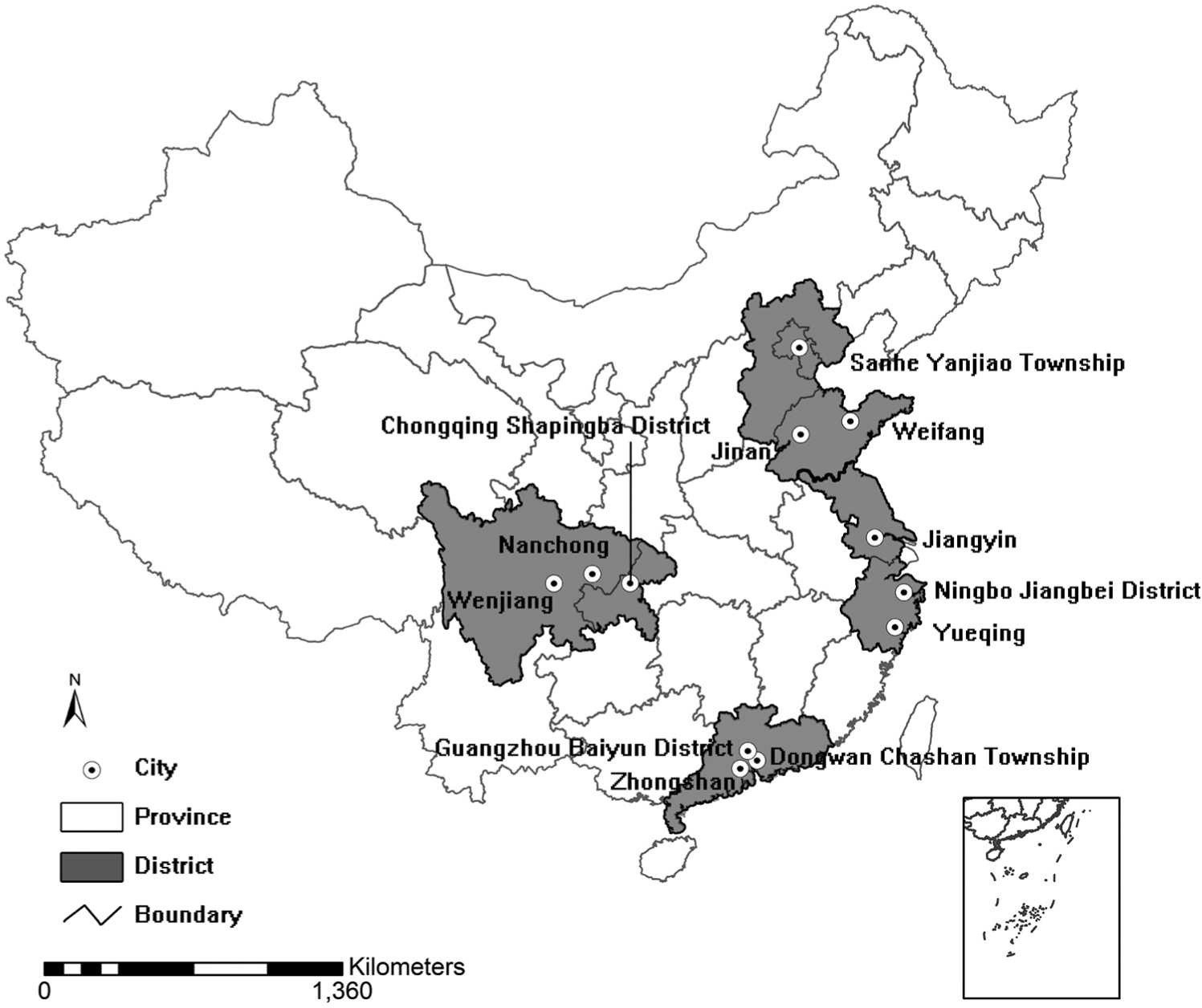
12-Sample Cities for Migrant Survey in 2009.
The resulting sample comprised 2365 individual migrants from 31 provinces and municipalities across China. The provinces of Sichuan, Shandong, Anhui, Henan, and Hubei were the top five origins of migration. We next excluded 352 migrants with urban origins, to target migrants from the countryside. As the key explanatory variable was respondents’ employment status (self-employed/employed), we excluded an additional 66 respondents without jobs at the time of interview. This gave a sample of 1947 observations across 12 cities. Of the sampled migrants, 19.6% were self-employed, and these individuals were evenly distributed among the four areas, which was quite consistent with national statistics.
Measures of urban permanent settlement intention
To evaluate the respondents’ intention to settle permanently in China’s cities, we first asked the following generalised question: ‘In the long term, do you plan to settle down in a city or to go back to your hometown?’ In previous studies, respondents have been asked such questions as: ‘Are you willing to stay in the city?’ and ‘Do you plan to settle down in the city?’; however, our question was phrased to elicit more accurate responses. The respondents were given the following three options: ‘settle in a city if possible’, ‘go back to my hometown’, and ‘undecided’. Only a small number (65) of respondents chose the option ‘undecided’, and as these individuals were evidently not determined to settle in a city, we recoded the answers as follows: ‘1’ if the respondents expressed the intention to settle in a city, and ‘0’ otherwise. This resulted in 1028 observations (51.74%) reflecting respondents who firmly intended to settle in cities.
We also used indirect behavioural measurements to further explore the respondents’ real intention to settle permanently in cities. First, the existing literature has shown that people who migrate with their spouses or live with their family members after migration are more likely to settle in cities. We coded two dummy variables accordingly: one indicating whether the respondent’s spouse lived or worked in the same city as the respondent (‘yes’ = 1, ‘no’ = 0), and the other indicating whether the respondent lived with his/her family members (‘with family members’ = 1; ‘with colleagues/fellow villagers/friends/strangers/others’ = 0). Second, people who plan to purchase houses in cities are more likely to seek permanent urban settlement. We thus coded another dummy variable indicating whether the respondent planned to buy a house in a city in the future (‘yes’ = 1; ‘no’ = 0).
In addition to settlement intentions and housing plans, the extent of migrants’ urban social integration is an important determinant of their full and permanent migration (Fan, 2002, 2008; Zhu and Chen, 2010). Research has shown that new migrants are usually inactive participants in urban communities and neighbourhoods (Brett, 1982; Carlisle-Frank, 1992; Wu, 2012), and that the Chinese system typically excludes migrants from community development (Xu, 2008). We measured the efforts made by migrants to integrate into urban community life. Migrants who are more willing to make friends with permanent local residents and learn local dialects are usually more eager to stay in cities. We used two questions to measure the respondents’ social integration. First, we asked each respondent whether he/she is willing to make friends with permanent local residents. An answer of ‘yes’ was coded as 1, and 0 otherwise. The second question was designed to determine how well the respondents speak or understand local dialects. This was coded as a binary variable indicating the extent of each respondent’s understanding of the local dialect (‘can speak’/‘cannot speak but can understand’ = 1; ‘can understand only a little’/‘cannot understand’ = 0).
We also used respondents’ income as an independent variable, measured as each respondent’s average monthly non-agricultural income over the past 12 months. We hypothesised that self-employed people on average earn more in cities, and that migrants with larger urban incomes are usually better equipped to remain in cities, thus, they are likely to choose permanent urban settlement.
Key explanatory variable: Self-employment
Our key independent variable was employment type (self-employed versus wage-earning). The respondents were asked the following question: ‘In terms of duration, what was your main non-agricultural job type over the past 12 months?’ Five options were given: ‘employed by an enterprise or a private firm’; ‘employed by a government agency or public-service unit’; ‘running one’s own family business’ (Getihu); ‘running a private firm or partnership firm with hired employees’ (private entrepreneurship, Siying Qiyezhu); and ‘other’. We defined the respondents in the first two categories as waged workers, and those in the third and fourth categories as self-employed. The status of those who chose option 5 was determined according to specific job descriptions. For example, we defined a labour contractor who hires employees for construction work as self-employed. Ultimately, this gave us a sample of 427 self-employed respondents (18.05% of the full sample). 4
As self-employed migrants usually find urban market niches to fill, they tend to be more integrated with urban economy and society. Therefore, we hypothesised that self-employed migrants are more determined than wage-earning migrants to migrate permanently, and thus also more likely to migrate with their spouses and/or to live with their family members. Given China’s restricted labour market and strong employment generation, we hypothesised further that self-employed migrants have higher average incomes than their waged counterparts. As self-employed migrants are usually more entrepreneurial, they are expected to take greater risks and thus to enjoy larger incomes (Evans and Jovanovic, 1989; Mohapatra et al., 2007).
Control variables
We also included a vector of control variables that may affect migrants’ willingness to settle in a city. Following the literature, we divided the potential determinants of permanent-settlement intentions into a comprehensive three categories: personal characteristics and human capital; social capital; and migration history and location.
Personal characteristics and human capital
These factors include age, gender, education level, and marital status. Scholars have paid intensive attention to individual characteristics that affect migrants’ decisions on whether to settle in cities or to return home. Within an individual-migration framework, individual characteristics that express net earning possibilities in the destination cities should have a positive effect on permanent settlement after migration (Stark et al., 1997). As greater earnings correlate with higher levels of education, which are usually possessed by men, male migrants and better-educated migrants are more likely to remain in their chosen cities permanently. To account for the non-linear effects of age and education, we characterised these two variables as categorical variables. There is little academic consensus on the effects of marital status. Thadani and Todaro (1984) suggested that marriage is an important factor motivating migration, whereas Dustmann and Kirchkamp (2002) argued that being married reduces the likelihood of permanent stay. As suggested by Murphy (1999), we also included two binary variables indicating whether the respondent is a Communist Party member and whether he/she is a village cadre.
Social capital
The number of family members and friends in the host city will affect a migrant’s settlement intentions, as proximity to friends and family can facilitate urban settlement. To avoid the endogeneity that may arise from friends and family members’ deciding to come to a city after the respondent’s move, we used the number of friends and family members before the respondent’s arrival as a key control variable, reflecting the effects of social network on settlement intention. Following common practice in the literature on social capital, we further divided this variable into two factors: strong relationships (measured by the number of relatives in the city) and weak relationships (measured by the number of friends in the city).
Migration history and location
Migrants’ intention to settle permanently in cities may also be affected by their migration experience, such as the length of time since the respondent left his/her hometown, the number of provinces he/she has visited, and whether he/she has migrated beyond his/her home province. Yang (2009) provided evidence that permanent migrants are more likely than their circularly migrating counterparts to move to cities within their home provinces. Intra-province migration causes less psychological stress, and is often less expensive (Chan and Buckingham, 2008). Hu et al. (2011) showed that people with greater migration experience are more likely to be permanent urban residents. We used city-related dummies in all of our regressions to help control for unobserved time-invariant city-specific factors such as local Hukou-reform policies.
Baseline model and IV approach
We needed to empirically test the effects of self-employment status on permanent settlement intention and various related behavioural measures. As described in the section on data and key variables, most of our dependent variables were binary, except the migrant-income variable. The baseline model for the continuous dependent variable (average monthly non-agricultural income) was the following city-related fixed-effect ordinary least squares (OLS) model:
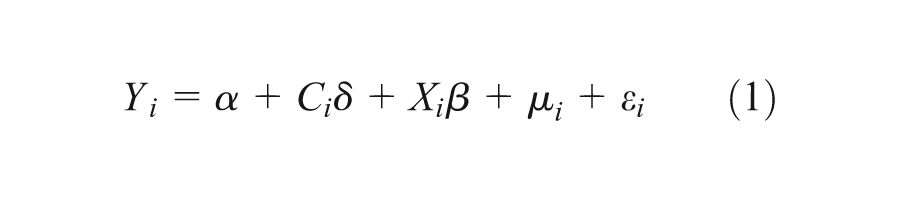
where
For the six binary dependent variables, we used the following single-equation linear-probability model as a baseline:
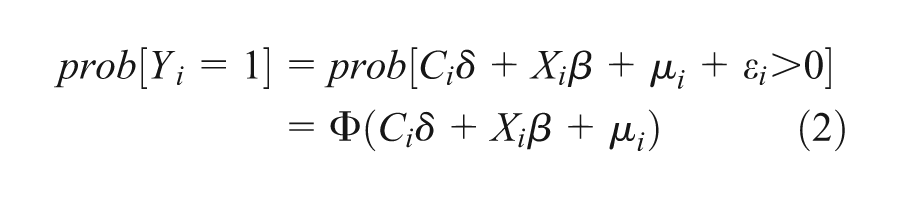
where
However, it may be risky to generalise from the OLS and single-equation Probit estimations above, due to the potential endogeneity arising from omitted variables and reverse causality. A consistent estimate of
We thus adopted an instrumental-variables approach to identify the causal relationship between self-employment and permanent urban settlement intention. The instrumental variable had to be exogenous to the dependent variable and have a significant effect on the suspected endogenous explanatory variables (Wooldridge, 2002). We used two instrumental variables. IV1, a dummy variable indicating whether the respondent was self-employed before migration, reflected the respondents’ rural employment history. IV2 was a dummy variable characterising the respondent’s family class background according to class/profession types set by the Communist Party in the 1950s: landlords, capitalists, or small proprietors.
Both instruments can be plausibly claimed to be exogenous to the dependent variables. However, the instrumental variables must also satisfy the exclusion restriction, that is, they affect the instrumental variables only through the respondents’ self-employment status. It appears that employment history affects occupational choices. This is particularly true in the case of the self-employed, who generally require both sector-specific knowledge and interpersonal business skills. Family background is also significant. Dunn and Holtz-Eakin (2000) found that the personal financial assets of young men have a statistically significant but quantitatively modest effect on these individuals’ transition to self-employment. Their parents’ capital has a far larger influence. However, the strongest influence exerted by parents is not financial but based on human capital, that is, intergenerational correlation. The literature on the effects of family and social networks on labour-market outcomes focuses mainly on how social and family connections increase employment opportunities and earnings (Ioannides and Loury, 2004; Jackson, 2008). In our case, the variable indicating family class background (categorised as ‘landlord, capitalist or small proprietor’ by the Communist Party in the 1950s) arguably served this end. We estimated the two-stage least-squares (2SLS) IV regression with the following model specifications: 5
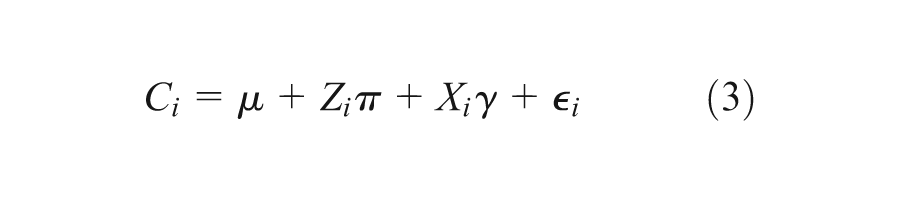
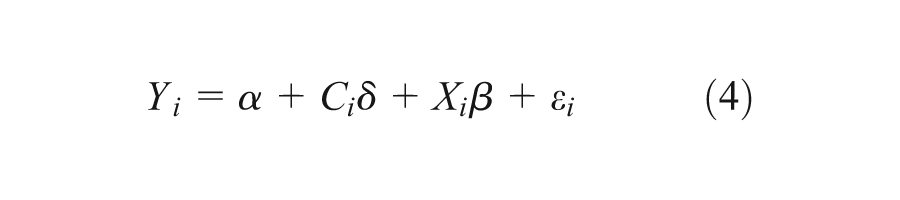
where
Descriptive statistics and regression results
Descriptive statistics
The descriptive statistics are presented in Table 1. The sample included slightly more male (56.68%) than female respondents. Most of the interviewees were aged between 21 and 40 (66.97%), were married (63.25%), and had at least a middle-school education (78.64%). More than 35% had been migrants in excess of 10 years; another 30% for between six and 10 years; and one third for between two and five years. The term ‘temporary migrant’ seems no longer to fit the profile of many migrants in Chinese cities. To generate a better comparison between self-employed migrants and employed migrants, the descriptive statistics for these two subsamples are also provided in Table 1.
Descriptive statistics for key variables.

Table 1 shows that approximately half of the migrants surveyed intended to settle permanently in cities, and about half reported migrating with their spouses or living with their family members. The average monthly income of the respondents was RMB1634 in 2008, compared with a national average income among Chinese migrants of RMB1942 in 2009 (National Population and Family Planning Commission, 2010). On average, self-employed migrants had significantly higher monthly incomes: CNY2401, compared with CNY1447 for wage-earners. The behavioural measurements indicated that the self-employed were also significantly more likely to migrate with their spouses and to live with their family members (more than 80% of the self-employed migrants reported living with their family members or migrating to the same cities as their spouses; the equivalent figure for wage-earning migrants was slightly over 40%). In terms of social integration, the self-employed were more likely to make friends with permanent local residents and learn local dialects.
Approximately 19.6% of the respondents were self-employed. There were more men (56.7%) than women in our sample, at a ratio slightly higher than China’s national average, according to the 1% National Population Sample Survey carried out in 2005. Male migrants and married migrants were found to be more likely to be self-employed. Interestingly, the self-employed migrants were on average older, and had lower levels of formal education, presumably because younger and better-educated migrants have greater access to wage-paying jobs. The self-employed migrants also had better social networks, as represented by the number of friends and relatives in their chosen cities prior to their arrival. In terms of the migration experience, the self-employed migrants were on average found to have spent more time in cities, and to have visited more cities, than the wage-earning migrants. The proportion of self-employed migrants with the class origins of ‘landlord, capitalist, or small proprietor’ was almost twice that of the wage earners, and the respondents’ past experience of being self-employed was found to have an important bearing on their self-employment status today.
Regression analysis
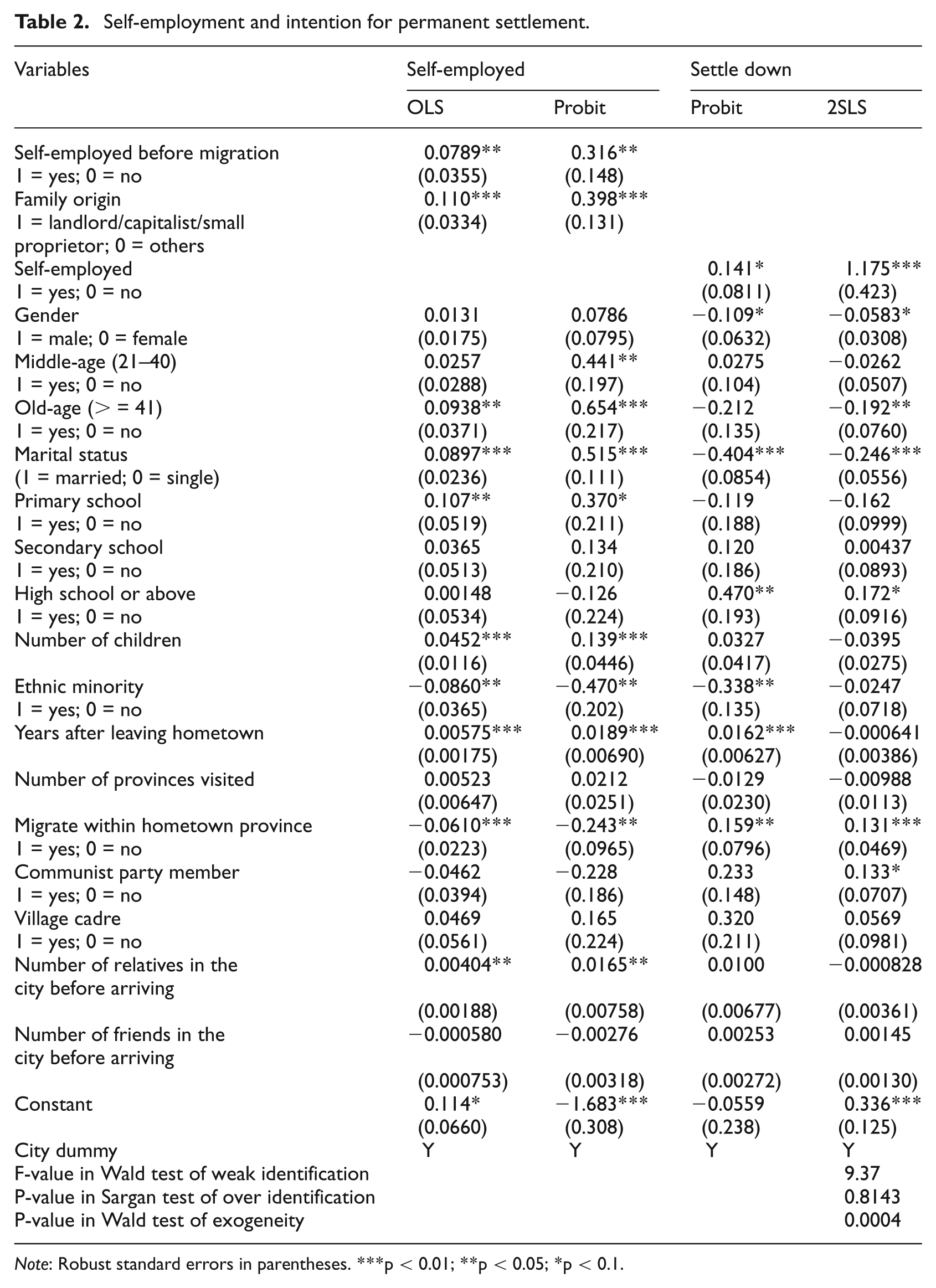
As discussed previously, an instrumental-variables approach was used to eliminate the problem of endogeneity. The validity of the IVs depended on their capacity to accurately predict self-employment. The first and second columns of Table 2 display the results of the first-stage regressions, based on a linear-probability model and a Probit model, which were used to evaluate the probability of self-employment. The coefficients of both instrumental variables were significant. The results of joint F tests also confirmed their strength as IVs.
Self-employment and intention for permanent settlement.
Note: Robust standard errors in parentheses. ***p < 0.01; **p < 0.05; *p < 0.1.
As indicated in Table 2, respondents who were self-employed before migrating, and those with the class origins of landlord, capitalist, or small proprietor, were more likely to be self-employed. In general, the men were more likely to be self-employed, probably because they were less risk-averse. Married migrants and older migrants were more likely to be self-employed than their unmarried and younger counterparts, but members of ethnic minorities were less likely to choose self-employment. Migrants who had spent more time away from their hometowns are more likely to be self-employed, but the probability is lower among those who have migrated to cities in their home provinces. The number of relatives in the chosen city had a positive influence on the decision to become self-employed, but the number of friends did not have this effect. We found that a significant proportion of the self-employed migrants had become self-employed only after they had accumulated some wealth and built good social networks during years of wage-earning work in the manufacturing and service sectors. In an urban village in Dongguan City, Guangdong Province, we met a self-employed migrant running a small supermarket for migrant workers, who described working at a nearby factory on arriving in Dongguan; only after his wife joined him five years later did the couple decide to start their own business. They were able to rent the shop front with the financial help of two relatives in the same city. Many of their customers are employees of the same factory at which the shop-owner used to work.
After the first-stage regressions, we proceeded with the single-eq5 model and the second stage of the 2SLS model. We used the Hausman test to determine the endogeneity of the potential endogenous regressor, self-employment status. All of the results rejected the null hypothesis that self-employment is exogenous, suggesting that the single-equation models are biased. Therefore, we focused on the 2SLS regressions. All of the models passed the over-identification tests, lending some support to the validity of our instrumental variables. Our fieldwork in the 12 cities also indicated that in many cases self-employed migrants had either run their own businesses in the countryside before migration, or were part of families that had owned their own businesses for generations.
The results shown in columns 3 and 4 of Table 2 suggest that self-employed migrants were significantly more likely to express the intention to settle permanently in cities than the employed. Older migrants and married migrants are less likely to report permanent-settlement intentions. Younger migrants and unmarried migrants were usually more eager to remain in cities, as well as being far more aware of their rights as urban citizens. Older migrants and married migrants found it more difficult to obtain work in cities, due respectively to age and the need to return to their families, which reduced their inclination to settle permanently in urban areas. Consistent with our hypothesis, we found that education level (in years) seemed to be positively associated with one’s willingness to settle, suggesting that human-capital accumulation increased the possibility of permanent urban settlement. Not surprisingly, intra-province migrants were more inclined than inter-province migrants to settle permanently in cities, because they faced less institutional discrimination in cities in their own provinces. We found that in every case the Hukou-qualification policies discriminated in particular against migrants from other cities and provinces.
With regard to family-migration living arrangements, Table 3 shows that the self-employed migrants were more likely to move with their spouses and live with their family members. They were also more likely to plan to purchase houses in cities. One female migrant selling vegetables on the street in Guangzhou City explained that she worked alongside her husband, who was responsible for fetching the stall’s goods from a distant wholesale market every morning. The couple rented a cheap apartment in an urban village nearby, but hoped in the future to purchase a better-quality apartment in Guangzhou. However, given China’s ever-rising housing prices, this could well be a dream for such low-income families.
Self-employment and family living arrangements.

Note: Robust standard errors in parentheses. ***p < 0.01; **p < 0.05; *p < 0.1.
As we expected, female migrants and married migrants were more likely to be accompanied by spouses during migration, and more likely to live with family members. However, the married migrants seemed to have weaker settlement intentions. These seemingly contradictory findings may reflect the stringent constraints imposed by the Hukou system on permanent family migration. We also found house-purchasing plans (and the willingness to make local friends and the ability to speak local dialects) to be negatively correlated with the number of children in the family. The lack of equal education rights for the children of migrants in cities may play a role here. One interviewee had migrated from Anhui to Ningbo City, Zhejiang Province, where he became a street cobbler. He told us that although he had three children at home, it would be far too expensive to bring them to Ningbo, even if only for their primary-school education. Therefore, his wife had to stay in their home village to take care of the children’s education.
It is not surprising that migrants in the middle age group (21–40 years old) were the most likely to plan to buy houses in cities. Younger migrants were more financially constrained, and older migrants are less inclined to make such a large investment. Again, the coefficients for education are all significant and positive. People who migrate within their home provinces are less likely to move with their spouses and live with family members. This outcome is due to the overlap between intra-province migrants and circularly moving migrants, as short migration distances allow them to return home frequently. Lastly, only strong relationships (relatives living in the city prior to migration) was an important positive predictor of family arrangements; weak relationships (friends living in the city) has a positive but insignificant effect.
With regard to social integration (Table 4), the self-employed migrants in general reported that they were more willing to make friends with permanent local residents and to communicate in local dialects. Similarly, education enhanced migrants’ desire for social integration, but those with a larger social network of relatives had less incentive to make local friends. Age was negatively associated with the ability to learn a new dialect. The probability that a respondent had mastered the local dialect also increased with the length of time that he/she had been away from home, and was higher among intra-province than inter-province migrants.
Self-employment, society integration and income.

Note: Robust standard errors in parentheses. ***p < 0.01; **p < 0.05; *p < 0.1.
Finally, we carried out regressions on monthly income (log transformed). As shown in the last column of Table 3, the average income earned by the self-employed migrants was almost twice of that of the wage-earning migrants, after controlling for an array of individual and household characteristics. Middle-aged, well-educated, male migrants earned significantly more, on average, than younger and older, less well-educated, and female migrants. Migration experience also matters. The time spent as a migrant and the number of provinces visited are both positively related to earnings, suggesting that migrants’ incomes increase with the duration of their stay in cities, and as they become more experienced in the process of migration. A restaurant owner in Guangzhou City described his migration experience as follows:
I come from Hunan Province and have lived in Guangzhou with my wife for more than a decade. Our restaurant now hires more than 10 workers and we earn around CNY10,000 per month. However, we do not feel at home here, because the local government does not care about us. Our children had to go to a low-quality private school rather than the urban public school. We were told that the nearby urban public school had no more places, even though central-government policy states that urban public schools should not reject students from migrant families. We tried to apply for Hukou here, but they told us that we would have to pay for social insurance for at least three years to be considered. However, there is no scheme that allows self-employed migrants like us to pay. We will have to return to Hunan one day.
In sum, the Chinese self-employed migrants in our sample were significantly more determined to settle permanently in cities than their wage-earning counterparts, whether their settlement intentions were measured using a direct question about future migration plans or a series of indirect behavioural indicators. Social networks and human-capital accumulation also play important roles in increasing migrants’ willingness to settle in cities. Married migrants, female migrants, and migrants with children all expressed a weaker intention to settle in cities, because the Hukou system imposes particularly strong constraints on permanent family migration.
Conclusion
The role of self-employment in development has been long debated in the literature. Our research indicates that at least in China self-employment is far from a last resort for migrant labourers in cities; rather, it is a step up on the development ladder, and potentially a source of urban entrepreneurship. We also found that the self-employed migrants are the most willing and the most capable of all of China’s migrants to migrate permanently and settle down in cities.
China’s rural–urban labour-mobility pattern differs from that of many other developing countries. The country has a massive floating population whose members are employed primarily in the urban manufacturing and service sectors, but have little opportunity to settle permanently in China’s cities. In many other developing countries, permanent migration and family migration are central to urbanisation. According to China’s national statistics during the early 2000s (NBS, 2002), only 7% of rural–urban migrants had moved with their families, and the overwhelming majority of rural migrants lacked urban Hukou. Separated from their families, migrant workers are unable to tap into the urban network of government benefits, and often live in collective dormitories or cheap housing in urban villages.
Over the past decade, rural migrants have responded to China’s rapid increase in urbanisation and the changes in its urban labour-market conditions by adjusting their migration and settlement strategies. According to the most recent survey (NBS, 2010), 78.7% of China’s internal migrants have rural origins, and half have lived in cities for more than three years. More than 60% of the country’s rural migrants move with at least some of their family members. In other words, family migration in China is much more frequent today than it was a decade ago. We provide further empirical evidence that family migration is an especially prominent phenomenon among self-employed migrants. Not only did these respondents express greater determination to settle permanently in cities, but they had made explicit behavioural choices consistent with their migration intentions.
Since the late 1990s, the responsibility for urban Hukou registration has rested with local rather than central government. Many local governments have taken measures to eliminate the distinction between rural and urban Hukou within their respective jurisdictions, and have responded to growing labour shortage by implementing various Hukou-reform packages. However, insufficient reform has been made to facilitate permanent family migration for the 200 million rural citizens who have lived and worked in China’s cities for years. At present, local authorities usually grant urban Hukou only to those who are rich enough to purchase a house, those who are well educated, and/or those who are the immediate family of existing urban citizens. In practice, the criteria for registration are usually so high that urban Hukou is far beyond the reach of most rural migrants. The Communique of the recently concluded Third Plenum of the Communist Party of China’s 18th Central Committee has called for Hukou control to be lifted in all small cities and towns, eased in medium-sized cities, and even gradually reduced in large cities, in an orderly way; however, stringent restrictions on urban Hukou registration remain in the largest cities. 6 As many small and medium-sized migrant-receiving cities in China have already set high entry barriers for rural migrants from inland China seeking urban Hukou, it is unclear how the central government will impose and finance Hukou reforms at a local level.
As this paper shows, China’s Hukou system is particularly disadvantageous for self-employed migrants. With relatively low levels of education and a lack of access to designated social-insurance schemes, it is very difficult for most self-employed migrants to fulfil the criteria set by local government for obtaining urban Hukou. Therefore, the government should not only lower the Hukou-registration requirements for all rural migrants, but design Hukou-reform policies that do not discriminate against the most entrepreneurial group of migrants in urban China: the self-employed. For example, removing the social insurance payment condition would help self-employed migrants to obtain urban Hukou. Moreover, without urban Hukou, migrants are not entitled to participate in urban public-housing schemes. This issue could be addressed effectively by the government’s allowing urban/suburban farmers in migrant-receiving cities to legally build rental housing for migrants. The results of our fieldwork in China’s four major urbanising areas indicate that a large proportion of self-employed migrants live in illegally built housing in urban/suburban villages. If the government were to develop land reforms encouraging (sub)urban villagers to invest in better-quality housing and infrastructure, the consequent increase in the quality and supply of housing would make it much easier for hundreds of millions of Chinese migrants, including the self-employed, to settle permanently in China’s cities.
Footnotes
Acknowledgements
We want to acknowledge generous financial support from the British SPF fund, the Ford Foundation, the Fundamental Research Funds for the Central Universities and the Research Funds of Renmin University of China for our fieldwork in the past several years. All faults are our own.
Funding
This research was funded by the British SPF fund, the Ford Foundation, the Fundamental Research Funds for the Central Universities and the Research Funds of Renmin University of China.