




Abstract
This study addresses the dearth of research in the victim–offender (V-O) overlap literature regarding the context in which incident-level abuse occurs. With a national sample of 589 young adults (age 18–32), 9.2% reported 2,015 daily conflicts (73% involving abuse) through digital diaries over a 6-week period. Using individual conflicts as our unit of analysis, we estimated multilevel models to explore both the nature of the individual conflicts and the characteristics of the parties in the conflict. We explored what distinguishes routine nonabusive conflicts from conflicts that involve abuse. We also examined the predictors of abusive conflicts and the V-O overlap. The nature of the incidents and proximities of the parties to the conflict were associated with the presence of abuse in conflicts and the V-O overlap. How young adults manage conflicts played a role in whether the dispute escalated to include abusive behaviors, especially mutual abuse.
Keywords
Introduction
For decades, studies on criminal victimization and offending have demonstrated that those with a victimization history and those with a crime offending history are not necessarily distinct groups (Gottfredson, 1981; Lauritsen & Laub, 2007). A well-established finding in the field of criminology is the victim–offender (V-O) overlap (Berg & Mulford, 2020; Jennings et al., 2012), linking individuals reporting both offending and victimization across multiple conflicts including delinquency, homicide, and other violent crime (Jennings et al., 2012). This finding holds up across time, place, and subgroups (Beckley et al., 2018; Berg & Mulford, 2020; Jennings et al., 2010; Kushner et al., 2020). Although most disputes do not lead to abusive behavior or violence (Gould, 2003), most homicides and assaults emerge from verbal disputes which escalate to identity contests and bilateral physical abuse (Cooney, 1998; Tedeschi & Felson, 1994). Furthermore, mechanisms of conflict management, available to those in a dispute, may generate or inhibit abusive behavior. Knowing if people experience (and how they tend to handle) nonabusive disputes may clarify how abusive outcomes tend to develop from routine disputes and why the same people are involved in the V-O overlap (Felson, 1984; Gambetta, 2009; S. Phillips & Cooney, 2005).
In this article, we explore the V-O overlap using what for this field is an innovative approach—employing daily digital diaries (i.e., daily text message prompts to complete a short survey through an app that study participants downloaded at the outset), addressing a gap in the literature exploring the nature of interpersonal disputes that lead to abuse and the V-O overlap. A few studies have addressed the problem of recall and telescoping of past abusive behavior through studies of daily intimate partner violence exposure. For example, Shorey and colleagues sent daily emails with links to college women to ask about daily dating violence perpetration via daily online surveys (Shorey et al., 2014), as did Sheehan and colleagues, (Sheehan & Lau-Barraco, 2019). Only one study examined victimization and perpetration through daily measures, but this dating violence study focused on only young women (ages 16–19) recruited as a convenience sample in one city (Matson et al., 2016, 2020). The current analyses draw on a broad national sample, allowing for an assessment of differences in the V-O overlap by race/ethnicity with just under half of the study sample were people of color. Whereas many of the prior studies on the V-O overlap focus on separate forms of abuse, such as intimate partner abuse (Reingle, Staras, et al., 2012; Tillyer & Wright, 2014), a key feature of this article is that we examine the nature of a full range of conflicts that are characterized by mutual abuse (i.e., the V-O overlap, across intimate, familial, coworker and other relationship types for young adults).
For this study, we used the term “tense conflict” (“conflict” for short) to capture a broad set interpersonal encounters involving interaction when people were arguing, yelling, or saying or doing hurtful things. Our study includes a broad set of conflicts, some involving physical, sexual, or verbal/emotional forms of abuse and some involving no such forms of abuse. For this study, we use the term “abuse” to include physical forms of abuse (e.g., various forms of assault), sexual forms of abuse (e.g., forced sexual intercourse), and verbal/emotional forms of abuse (e.g., being insulted or otherwise confronted aggressively).
The extant research in the V-O overlap literature is limited by traditional measurement of abuse, which often relies on participant recall over aggregated periods of time of several months or longer (Muftić et al., 2015; Tillyer & Wright, 2014; Zimmerman et al., 2017). We collected data from a national sample of 589 young adult (18–32 years old) on a daily basis through digital diaries over a 6-week period. Importantly, we examined the nature of the individual conflicts as our main unit of analysis, as opposed to the more typical approach of examining the individuals as the unit of analyses, with the result that the sample of conflicts (n = 2,015) exceeds the sample of individuals (n = 589). In other words, we captured reports of more than one conflict per person. Using multilevel modeling, we examine simultaneously the features of the conflict and the characteristics of the individuals involved in the conflict.
Overlap of Victimization and Offending
Although the V-O overlap is persistent across populations and social locations (Jennings et al., 2012; Lauritsen & Laub, 2007), the foundations and etiology of this phenomenon are not fully understood. Questions remain about the mechanisms that account for the relationship between victimization and offending (Lauritsen & Laub, 2007). Wolfgang argued that those who experience victimization often provoke crime through their own criminal behavior (Wolfgang, 1958), but certain other contextual features deserve attention. For example, Sampson and Lauritsen suggested that the closeness of the relationship between those with a victimization history and those with an offending history in certain high-risk neighborhoods can give rise to the overlap (Sampson & Lauritsen, 1990).
Predictors of the V-O Overlap
Efforts have also been made to understand the phenomenon in terms of its demographic profile and background characteristics (Sampson & Lauritsen, 1990). Using survey and official data, Hindelang and colleagues demonstrated that sociodemographic characteristics of those with a victimization history mirrored those with a history of offending (Hindelang et al., 1978; Piquero et al., 2005), including gender, age, and race/ethnicity (Muftić et al., 2015; Tillyer & Wright, 2014). That is, those who are both victims and perpetrators tend to be male, young, a person of color, unemployed, and urban residents. In a study in 30 countries, victimization and offending as outcomes shared many of the same factors (e.g., violent attitudes, drug/alcohol use, and demographics; Posick, 2013), and each strongly predicts the other across different cultural contexts (Posick & Gould, 2015). Findings regarding gender have been mixed. Gender has not distinguished the V-O overlap in some studies (Muftić et al., 2015; Reingle, Jennings, & Maldonado-Molina, 2012; Tillyer & Wright, 2014), but was a significant characteristic in two nationally representative studies (Kushner, 2020; Taylor et al., 2019). Background factors such as substance use have also been implicated in the V-O overlap (Klevens et al., 2002; Reingle, Staras, et al., 2012).
Research has also found that anger may be related to increasing the likelihood of the V-O overlap (Kimonis et al., 2011; Reid & Sullivan, 2012) and attitudes, such as adapting an honor code that being disrespected must be met with violence, may be related to the V-O overlap (Posick, 2013). Being victimized may produce strong feelings of strain, frustration, and anger that are managed through abusive reactions (R. Agnew et al., 2002). This form of reaction following the dictates of an “honor code”; that is, that being disrespected must be met with abusive behavior; conversely, not retaliating may be seen as a sign of weakness, leading to repeat victimization (Jacobs & Wright, 2006). Following an “honor code” may serve as self-protection (E. Anderson, 1999), although it may also increase risk of victimization (Stewart et al., 2006) and violent offending (Berg & Loeber, 2011; Posick, 2013).
An understudied area of the V-O overlap is the context of the abuse. Our minds are never isolated from the world around us, that is, the context of a situation shapes the processes in the brain, from visual perception to social interactions (Ibañez & Manes, 2012). The specific meaning of an object, emotion, or social event depends on context and context may be evident or subtle, real or imagined, conscious or unconscious (Baez et al., 2018). Moreover, scant research has investigated the content of the conflict, whether it was a continuing conflict, if it happened in cyber space or in-person in a private or public location, and who instigated the conflict. Also, research suggests that the relationship between the reporter and the counterpart (such as intimate relationship) could affect the V-O overlap (Spivey & Nodeland, 2020).
Finally, limited attention has been paid in the V-O overlap literature to how people manage conflicts. The ability to cope effectively within conflicts is a critical social skill (Miller et al., 1986), which can be lacking in varying degrees for the different parties to a conflict. How people express their grievances and how they handle other people’s protests about apparent norm violations affects whether their conflicts tend to escalate to violent acts (Felson, 2004; Pruitt, 1998). Conflict management is a potentially missing link in studying the V-O overlap (Felson et al., 2018). Knowing how people generally handle conflict in disputes may be key to understanding why the same people often rotate between the roles of victim and offender and how abuse tends to develop from routine disputes (Felson, 1984). Also, there is evidence of cross-situational consistency in conflict management strategies (Furman & Buhrmester, 1992; Taylor et al., 2019). Conflict management strategies thus appear to represent general interactional tendencies during hostile exchanges (Miller et al., 1986) and may help explain the overlap.
The Current Study, Theoretical Frameworks, and Research Questions
In this study, we use data from a national cohort of young adults who completed digital diaries on a daily basis to track the extent of individual conflicts they were involved with that were abusive (victimization, offending, or both) or not abusive, controlling for the characteristics of the conflict and the individuals involved in the conflicts. We examine the overlap of victimization and offending of an abusive nature among young adults (18–32 years old) in a range of relationships (intimate, familial, coworker, and other relationship types). We draw upon theory and extant research to investigate risk factors for abuse of any kind (victimization, offending, or both) compared with no abuse in conflicts, and for those involved in an abusive relationship, we compare those with a history of both victimization and offending to those who only have a victimization history or only an offending history.
Our first research question (RQ1) is whether the context of abuse at the incident level of the conflict, including features of the actual incident and the parties involved in the incident, will be related to (1a) the presence of abuse and (1b) the overlap of both victimization and offending.
That is, we anticipate that some of the following incident type variables will be related to the presence of abuse in the conflict and the V-O overlap: the content of the conflict, if it was a continuing conflict, if the conflict happened in cyber space or in-person (in a private or public location). We anticipate that at least some of the following variables related to the parties in the conflict will be related to the presence of abuse in the conflict and the V-O overlap: Who instigated the conflict, who the counter party was in the conflict (coworker, family member, romantic partner or other), whether this was a recurring counter party and background characteristics of the respondent. We will also explore respondents’ emotions and fatigue experienced during the day of the conflict, and past day use of alcohol and/or illegal drugs.
Our second research question (RQ2) is whether the conflict management strategies of young adults will be related to (2a) the presence of abuse in the conflict and (2b) the V-O overlap as seen in prior research (Taylor et al., 2019). RQ2 also draws on psychological theories of aggression focused on the determinants and consequences of interpersonal conflict (Tedeschi & Felson, 1994). Here, we explore the role of conflict management strategies in affecting whether some conflicts turn abusive.
Our third research question (RQ3) is whether the adoption of an honor code perspective will be related to (3a) the presence of abuse in the conflict and (3b) the V-O overlap. RQ3 draws on strain theory to help explain the V-O overlap, in that being victimized is related to frustration, anger, and potentially abusive reactions (R. Agnew et al., 2002), especially when coupled with following an “honor code,” which may increase risk for victimization and violent offending.
Method
Participants
The sample was drawn from the online AmeriSpeak panel to participate in the Interpersonal Conflict and Resolution (iCOR) study. Participants were 589 (368 women and 221 men) general population young adults from the ages of 18 to 32 years (mean age = 27). More than half were White, non-Hispanic (57%), 18% were Hispanic, 12% were Black, non-Hispanic, 6% were Asian, non-Hispanic, and the remaining participants were from multiple or other racial/ethnic groups. The median income of the participants was US$37,500, with a third of the sample (33.3%) earning <US$30,000 per year, 23.4% at US$30,000 to US$49,999, 30.4% at US$50,000 to US$99,999,. and 12.9% earning a US$100,000 or more annually. Nearly half (48%) of the participants were either married or living with a partner.
Procedures
From 2016 to 2017, NORC conducted the first wave of the original iCOR study, with a total of 2,286 respondents. AmeriSpeak® reached out to previous iCOR participants with invitations to take part in this new study. These invitations included general background information about the study and informed consent. Funded and operated by NORC at the University of Chicago, AmeriSpeak® is a probability-based panel designed to be representative of the U.S. household population. Randomly selected U.S. households are sampled using area probability and address-based sampling, with a known, nonzero probability of selection from the NORC National Frame. These sampled households are then contacted by U.S. mail, telephone, and face-to-face interviewers. The panel provides sample coverage of 97% of the U.S. household population.
Data were collected through MetricWire, a third-party mobile app, which was used to host the project survey. Once respondents had provided consent and confirmed an email address for the study, they were sent emails inviting them to download the app and register for this daily diary study. Once the study period began in November 2018, respondents were asked to respond to 3-min daily surveys which they were prompted by email and text messages to complete daily for three 2-week periods, with 2-week breaks in between each of these three survey periods. The full study period was, therefore, composed of a 6-week period of daily survey responses plus 4 total weeks of survey breaks, for a total of 10 weeks. A respondent who completed all surveys submitted 42 daily surveys.
Respondents were provided with monetary incentives to encourage continued participation in the daily surveys. Respondents were compensated the equivalent of US$1.50 per daily survey in the first period, US$3.00 per daily survey in the second period, and US$4 per daily survey in the third period. A respondent who completed all 42 daily surveys would, therefore, be compensated with the equivalent of US$119 at the conclusion of the study. Of the 2,286 respondents in the original iCOR study, a random sample of 1,994 received invites for participation in iCOR EMA. About 40% of those invited (n = 780) responded to the invitation, 773 consented to take part in the new study, 592 downloaded the daily survey, and 589 ultimately participated in data collection. We found no statistically significant differences between our 589 study participants and the original 2,286 iCOR participants on gender, income, employment, education, and whether the respondent was living with a partner. We did find statistically significant differences on race/ethnicity and age. Our 589 study participants were more likely to be White, non-Hispanic (57% in the current sample vs. 51%) and less likely to be Black, non-Hispanic (12% vs. 17%) compared with the original sample of iCOR study participants (χ2 = 9.97, df = 3, p = .019). Also, given the passage of time, our 589 study participants were more likely to be older (M= 28) compared with the original sample of iCOR study participants (M = 26; T = 3.1, p = .004). The differences between the two samples on race/ethnicity and age while statistically significant are small, and both are included in our models as covariates, thus holding constant any differences for assessing our substantive predictors of interest (e.g., conflict management strategies).
Measures
For each daily survey, participants were asked several questions about the past day. At the top of the survey, “past day” was defined as either time since the person answered the previous day’s survey, or the past 24 hr if they had not answered the survey from the previous day.
Conflict
Every respondent was first asked whether they had a significant interpersonal conflict since yesterday. Introductory language sets the stage: “Tension or disagreement between people is common. Sometimes people argue, yell, or say or do hurtful things. We are asking today about any of these kinds of situations, which we will call ‘tense conflicts.’ Thinking about your own experiences, please try to recall tense conflicts even if one party did not say anything or react. Also, think about tense conflicts whether or not they included any physical or sexual threats or misconduct.” This introduction was followed by this question, “Did you have any interpersonal interaction in the past day that involved tense disagreement, misunderstanding, quarreling, fight, or conflict in (any of) your interactions?” An indicator variable for each daily response was coded 1 for “conflict” and 0 for “no conflict.” If respondents selected “Yes,” they were asked if they had experienced “more than one tense conflict in the past day.” Respondents reporting multiple conflicts in a given day were asked to “focus on the most recent conflict in the past day” when answering a number of follow-up questions. These follow-up items included the relationship with the counterpart in the conflict, the main issue of the conflict, and whether abuse was involved. Those respondents reporting no tense conflicts in the past day advanced to questions relating to their mood, level of fatigue, and alcohol and drug use during the past day.
Abuse Victimization
Respondents who reported a conflict were asked if the conflict involved them being threatened aggressively (shouted at, insulted, threatened, or otherwise confronted aggressively), sexually harassed (unwelcome sexual advances, requests for sexual favors, direct or indirect threats or bribes for sexual activity, sexual comments or jokes, unwelcome touching, unwelcome displays of materials with sexually illicit or graphic content), sexually assaulted (sexual contact or behavior that occurred without their explicit consent to include forced sexual intercourse, forcible sodomy, incest, fondling, and attempted rape), physically assaulted (shoved, grabbed, scratched, bitten, slapped, punched, or kicked), or threatened or attacked with an object or a weapon. An indicator variable for abuse victimization was coded 1 for at least one act of abuse victimization that day and 0 for no abuse victimization.
Abuse Offending/Perpetration Behavior
For those who experienced a conflict, they were asked whether the conflict involved them doing any of the inverse of the same above listed items under victimization. An indicator variable for abuse offending was coded 1 for at least one act of abuse offending that day and 0 for no abuse offending that day.
Both Abuse Victimization and Offending
We defined a dichotomous variable based on whether they experienced and perpetrated at least one of the above victimization and offending items. An indicator variable for abuse victimization and offending was coded 1 for any abuse victimization and offending that day and 0 for no experience of victimization and offending.
Details of Conflict
If respondents reported a conflict at the start of the daily survey, they were also asked a range of questions about the conflict. First, respondents were asked to describe their relationship with the counterpart in the conflict (e.g., family, coworker, romantic partner, and other [e.g., friend or stranger]). Second, respondents were asked whether the conflict was new or an ongoing/recurring conflict and queried about the content of the conflict (covering family matters, money, politics, rude/disrespectful behavior, work issues, and other topics). The study measure of content was grouped into five categories in the multivariable models because of small cell counts. With respondents selecting “all that apply,” the five categories included: (a) family matters; (b) money and money and family matters; (c) work issues, work issues and money, and politics; (d) rude/disrespectful behavior; and (e) other topics. Third, respondents were asked whether the conflict took place in a private or public location and whether it took place in-person, online/over the phone, or both in-person and online/over the phone. Fourth, respondents were asked who instigated the conflict (the respondent, the counterpart, or both).
Conflict Management Strategies
Measures of this construct were based on interpersonal conflict research (Felson, 1992; S. Phillips & Cooney, 2005; Steadman, 1982). For each conflict, the respondent was asked “How did you deal with this conflict?” The respondent was given the following response options: give in to [the counterpart’s] perspective/wishes (submission), try to reach a common understanding (negotiation), try to avoid this conflict (avoidance), ignore or give them the silent treatment (ignore), explain your position (justification), seek out help from others, whether friends or strangers, to address the dispute with [the counterpart] (help-seeking). Each of these six strategies was represented by an indicator variable coded 1 if the strategy was endorsed and 0 if the respondent did not report that response option.
Emotions
On each survey day, respondents were asked if they felt each of the following 10 feelings in the past day: angry, hostile, irritable, happy, joyful, pleased, unhappy, frustrated, worried, and anxious (Spielberger, 1988). Due to small cell sizes, three measures of emotion were combined into one combined indicator representing the feelings happy, joyful, and pleased.
Fatigue
On each survey day, participants were asked how fatigued they have felt in the past day. This was a continuous variable (0–10 scale) assessing fatigue in the past day (respondents were reminded that the “past day” meant the time since a response to the previous days’ survey or, for nonrespondents to the previous day’s survey, in the past 24 hr).
Substance Use
On each survey day, participants were asked if in the past day they had consumed alcohol (coded 1 for yes and 0 for no) and/or any illicit drugs or any prescription medication that was not prescribed to [the respondent] personally, or was prescribed to [the respondent] in a different dosage (coded 1 for yes and 0 for no). We created a variable for any substance use (coded 1 for any substance use and 0 for none).
Honor Code
At the end of the daily data collection, respondents’ endorsement of the honor code was measured once using a six-item mean scale (Stewart et al., 2006). Given that this attitude is seen as an enduring trait and not subject to change over a short 6-week period, this question was asked just once. Respondents were asked to what extent they agreed or disagreed statements such as “When someone disrespects you, it is important that you use physical force or aggression to teach him or her not to disrespect you,” and “People will take advantage of you if you don’t let them know how tough you are.” Responses ranged from 0 for “strongly disagree” to 3 for “strongly agree”; across the six items, the scale ranged from 0 to 18. Cronbach’s alpha scores were .70 and .74 for men and women, respectively.
Background Variables
We collected information on the respondent’s age (a continuous variable), an indicator of respondent biological sex (coded 1 for male and 0 for female respondents); and race/ethnicity (White, non-Hispanic; Black, non-Hispanic; and Hispanic; with all other racial/ethnic groups categorized under “Other”). We also included a three-level measure of relationship status (single, living together, and living apart). Household income was measured as an 18-level categorical measure ranging from <US$5,000 to US$200,000 or more and was recoded as the midpoint of each US$5,000 increment and treated as a continuous measure.
Analysis Plan
First, post-stratification weights were applied to align our national results with households across the Unites States based on U.S. Census data. We used listwise deletion of missing data (<2% of the sample is missing data on the outcome measures and covariates). Following univariate analyses (Table 1), we conducted bivariate analyses on the overlap of victimization and offending compared with conflict without abuse (Table 2). Next, we conducted multivariable analyses in R 4.0.2. In our data, clustering occurs due to administering surveys to the same set of participants regularly for 10 weeks (with breaks). The days/conflicts on which surveys were administered are treated as the Level 1 variables (lowest level), and the individual respondents are treated as the Level 2 variables, reflecting naturally occurring clusters in the data. Therefore, we needed to account for the intra-cluster correlation. To appropriately address this issue in our analyses, we have fit hierarchical mixed-effects models (Hedeker, 2003). By doing so, we explicitly model the two sources of variation in the response (across Level 2 and across Level 1 within Level 2). First, we used a hierarchical mixed-effect binary logistic regression model (see Table 3) for respondents involved in abuse of any kind (victimization, offending, or both) compared with no abuse. Second, we estimated a hierarchical mixed-effects multinomial logistic regression model (see Table 4) for respondents involved in an abusive relationship, comparing those with a victimization and offending history to those who only have a victimization history or only an offending history. A multinomial logistic regression model is an extension of the binary logistic regression model, where the dependent variable has more than two categories (J. S. Long, 1997). Multinomial regression modeling is also the approach used by other researchers studying the V-O overlap (Jennings et al., 2010). For each model, an adjusted odds ratio >1 indicates increasing log odds of being in that group compared with the reference group.
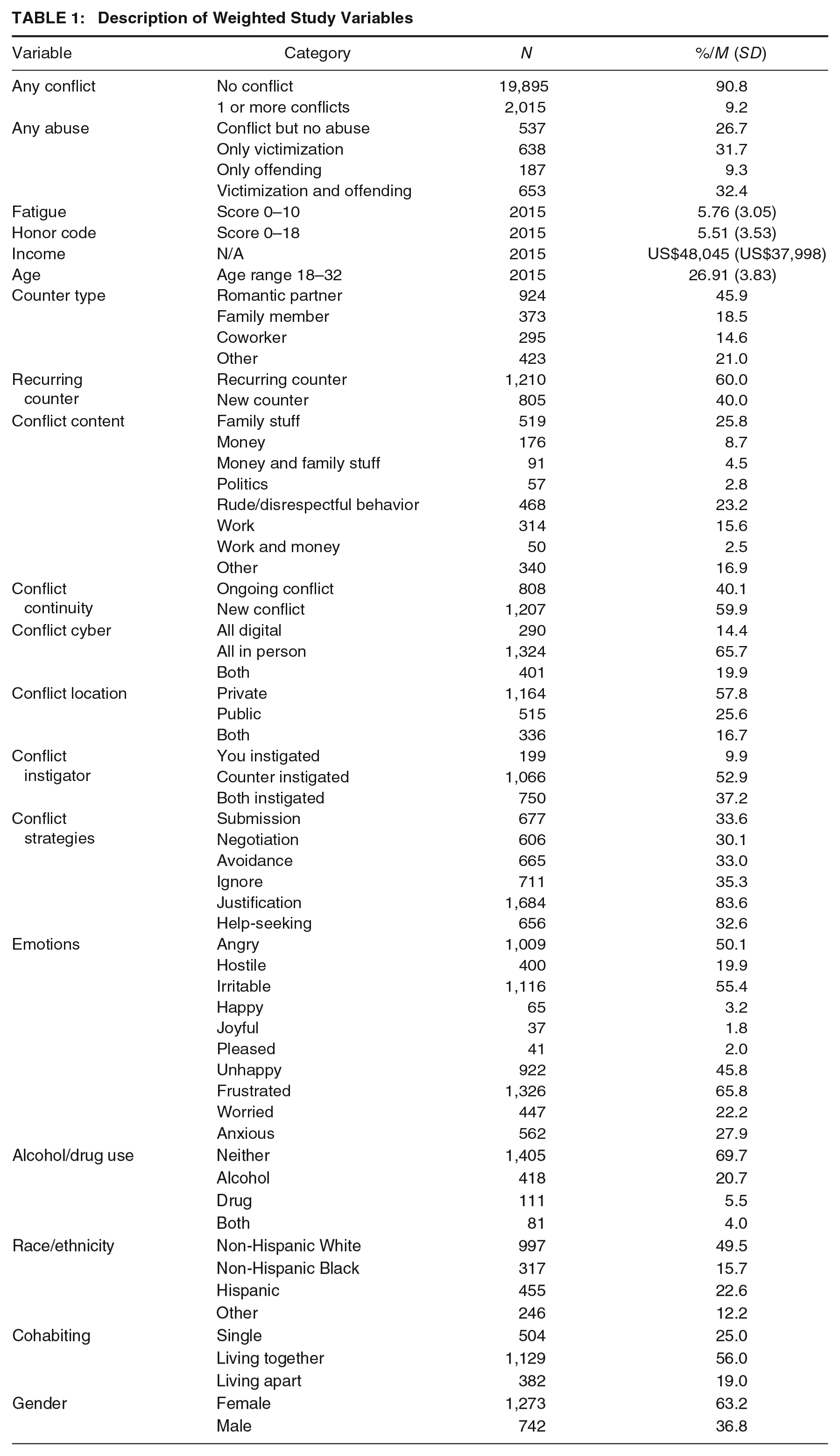
Description of Weighted Study Variables
Bivariate Results of Victimization/Offending Compared with Conflict Without Abuse

Note. Alcohol and other drug is what AOD.
Logistic Regression Comparing Cases of Abuse Compared With No Abuse (n = 1,985 Conflicts)
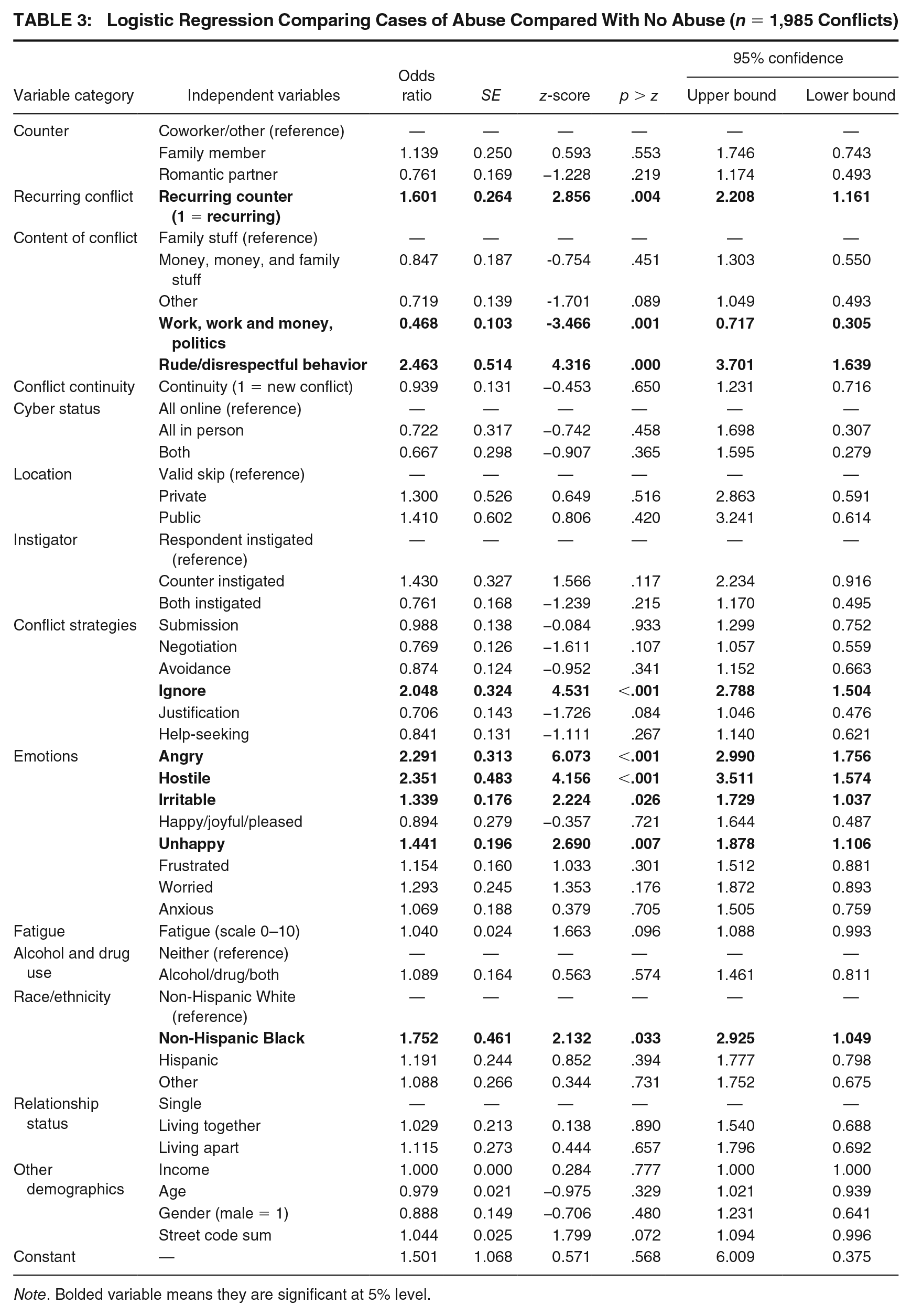
Note. Bolded variable means they are significant at 5% level.
Mixed Effects Regression: Victim/Offender Overlap to Sole Offenders (N = 1,985 Conflicts)
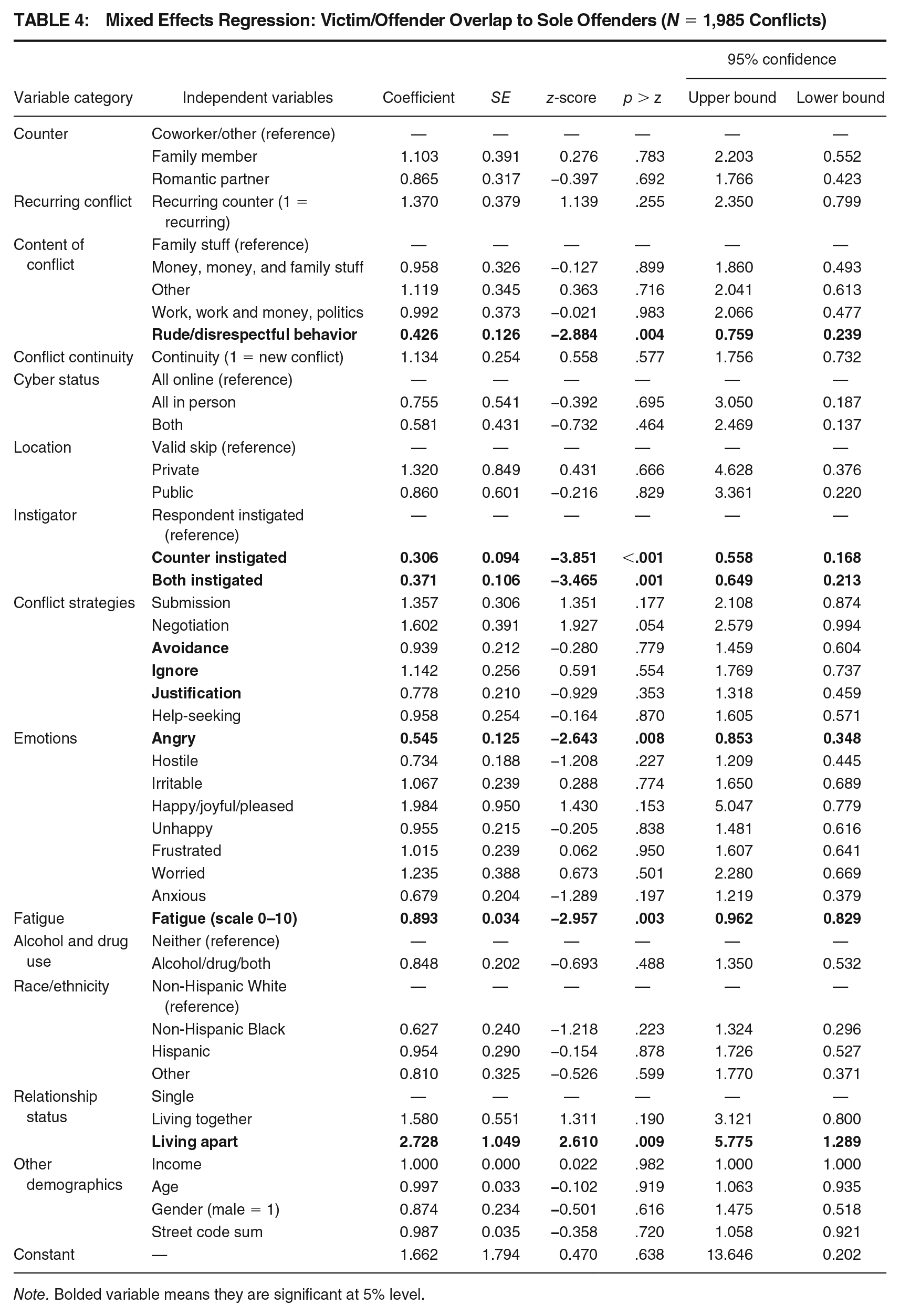
Note. Bolded variable means they are significant at 5% level.
Results
Of the 589 study participants, 463 had completed at least 85% of the daily surveys and completed the study in full, with Period 1 (first 2 weeks of study) response rate sitting at 91.1%, Period 2 (second 2-week period) at 89.7%, and Period 3 (third 2-week period) at 87.0%. For the 6-week study period involving daily data collection (42 collections), of the 24,738 possible completed daily surveys we had 21,910 responses (88.6% of the 24,738). Of the 21,910 responses (see Table 1), 19,895 (90.8%) did not involve any daily reported conflict (9.2% or 2,015 daily reports involved some form of daily conflict). As seen in Table 1, the majority (1,478 or 73.3%) of the 2,015 daily reported conflicts involved some form of abuse (6.7% overall or 1,478/ 21,910) with 537 of these conflicts involving no abuse. Of the 1,478 abusive conflicts (see Table 1), the largest group of 653 involved both victimization and offending (44.2%), followed by 638 (43.2%) where victimization was only experienced by our young adult participants, and 187 (12.7%) were offending only.
Weighted bivariate results on the overlap of victimization and offending compared with conflict without abuse for some key variables are presented in Table 2. For example, examining the form of their relationship with the counterpart in the conflict, respondents who had a conflict with a coworker were most likely to have a conflict that did not involve any abuse offending or victimization (37.6%); for conflicts with coworkers that involved abuse, respondents were most likely to be a person with an abuse victimization-only history (35.6%), followed by both victimization and offending history (22.7%), but were least likely to report that they were the only person offending in the abusive conflict (4.1%). By contrast, the group of respondents reporting themselves to be the sole person offending in a conflict (n = 187) were most likely to be those in a conflict with a romantic partner (n = 110 or 58.8% [this percentage not shown in table]) compared with those conflicts with family members (n = 35 or 18.7%), other counterparts (n = 30 or 16%), or coworkers (n=12 or 6.4%). Respondents reporting that their conflict involved mutual abuse (n = 653)—that is, they reported themselves as both the victim in the conflict but also as someone perpetrating in that same conflict—were most likely to be those in a conflict with romantic partners (n = 302 or 46.2%), followed by family members (n = 144 or 22.1%), other relationships (n = 140 or 21.4%), and coworkers (n = 67 or 10.3%). Respondents reporting that they were the sole person who was a victim in a conflict (n = 638) were also most likely to be those in a conflict with romantic partners (n = 265 or 41.5%), followed by some “other” relationship (n = 159 or 24.9%), family members (n = 109 or 17.1%) and coworkers (n = 105 or 16.5%). Each of these bivariate relationships was explored further in the multivariate models.
Predictors of Abusive Conflicts
Table 3 presents the hierarchical mixed-effects binary logistic regression model comparing cases of abuse compared with no abuse. Several of the independent variables’ relationship with the dependent variable of abuse versus no abuse were statistically significant. Respondents involved in a recurring conflict with the identified counterpart were more likely to report that there were abusive behaviors (adjusted odds ratio = 1.60, p = .004) compared with those involved in the first conflict with this counterpart.
When the content of the conflict was “Rude or Disrespectful Behavior” (adjusted odds ratio = 2.46, p < .001) compared with “family stuff,” the conflict was more likely to involve abuse but the opposite was true when “politics,” ‘work’ or “work and money” topics were the subject of the conflict (adjusted odds ratio = 0.47, p = .001). Conflicts in which the respondent attempted to manage the conflict by ignoring the counterpart were more likely to involve abuse (adjusted odds ratio = 2.05, p < .001). Respondents reporting more anger (adjusted odds ratio = 2.29, p < .001), greater hostility (adjusted odds ratio = 2.35, p < .001), more irritability (adjusted odds ratio = 1.34, p = .026) or greater unhappiness (adjusted odds ratio = 1.44, p = .007) over the course of the day of the conflict were all more likely to report that the conflict involved abusive behavior. Respondents who are Black, non-Hispanic (adjusted odds ratio = 1.75, p = .033) were more likely to describe their conflicts as involving abuse.
Predictors of the V-O Overlap
Tables 4 and 5 present the hierarchical mixed-effects multinomial logistic regression model—limited to those respondents who reported any conflict that involved any abusive behavior—comparing those who reported conflicts in which they were both victims and offenders to those who self-reported as the sole victim or the sole offender in abusive conflicts. The multinomial model was estimated with mutually abusive conflicts (V-O overlap) as the reference category. Effects are thus presented first for conflicts in which the respondent self-reported as the sole offender (Tables 4 and 5), and second for conflicts in which the respondent self-reported as the sole victim (Tables 4 and 5), in both cases compared with conflicts with mutual abuse.
Mixed Effects Regression: Victim/Offender Overlap to Sole Victimization (n = 1,985 Conflicts)
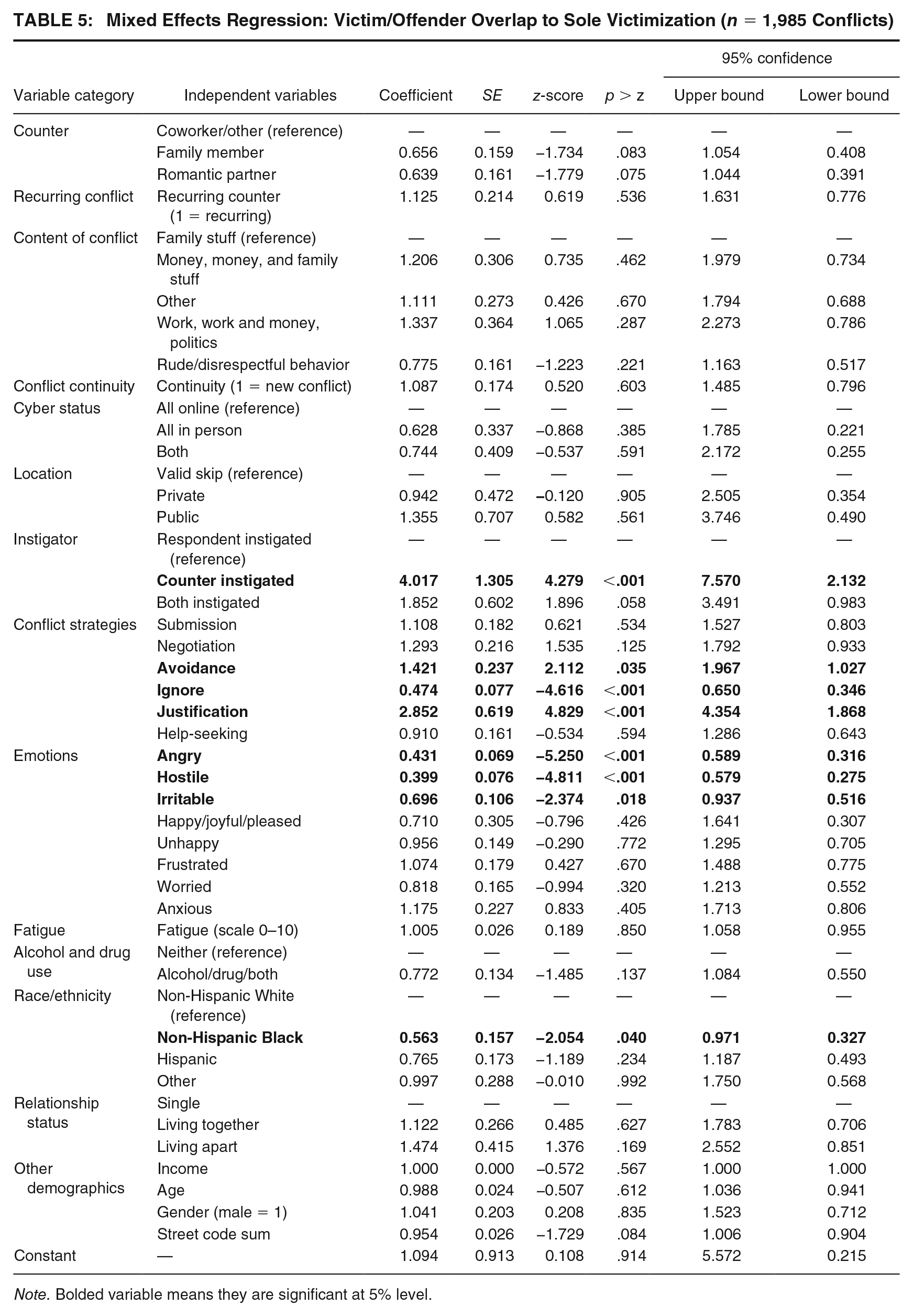
Note. Bolded variable means they are significant at 5% level.
In a dispute about “rude and disrespectful behavior” (risk ratio (RR) ratio = 0.43, p = .004) compared with “family stuff,” the respondent was less likely to report that they were the sole abusive offender in the conflict, that is, respondents were more likely to report that the conflict involved mutually abusive behavior (V-O overlap), when the topic was “rude and disrespectful behavior.” When the respondent felt that the counterpart was the instigator of the conflict (RR ratio = 0.31, p < .001) or that both the respondent and the counterpart were responsible for instigating the conflict (RR ratio = 0.37, p = .001), the respondent was less likely to report that they were the sole offender in the conflict, compared with reporting that the conflict involved mutually abusive behavior (V-O overlap). When the respondent had tried to negotiate with their counterpart to manage the conflict, the respondent was more likely to report that they themselves were the sole offender in terms of abusive behavior (RR ratio = 1.60, p = .05), rather than reporting mutually abusive behavior (V-O overlap). Respondents reporting greater levels of anger over the past day on which they reported a conflict were less likely to see themselves as the sole offender in terms of abusive behavior (RR ratio = 0.55, p = .008), compared with reporting that the conflict involved mutually abusive behavior (V-O overlap). Those reporting greater fatigue during the day of the conflict were less likely to report that they were the sole offender in the conflict (RR ratio = 0.89, p = .003), compared with reporting that the conflict was mutually abusive (V-O overlap). Respondents who reported that they were living apart from their significant other were more likely to report that they were the sole offender in the conflict (RR ratio = 2.73, p =.009), compared with reporting that the conflict was mutually abusive (V-O overlap).
Next, we present the significant predictors of conflicts in which the respondent self-reported as the sole victim (Tables 4 and 5), compared with conflicts with mutually abusive behavior. When the respondent felt that the counterpart was the instigator of the conflict (RR ratio = 4.02, p < .001), the respondent was more likely to report that they were the sole victim in the conflict, compared with reporting that the conflict involved mutually abusive behavior (V-O overlap). When the respondent sought to manage the conflict by avoiding their counterpart, the respondent was more likely to report that they themselves were the sole victim of abusive behavior (RR ratio = 1.42, p = .035), rather than reporting mutually abusive behavior (V-O overlap). When they tried to ignore their counterpart to manage the conflict, the respondent was less likely to report that they themselves were the sole victim in terms of abusive behavior (RR ratio = 0.47, p < .001). Furthermore, when the respondent tried to justify their actions to their counterpart as part of their conflict management strategy, the respondent was more likely to report that they themselves were the sole victim in terms of abusive behavior (RR ratio = 2.85, p < .001), rather than reporting mutually abusive behavior (V-O overlap). Respondents reporting greater levels of anger (RR ratio = 0.43, p < .001), hostility (RR ratio = 0.39, p < .001), and irritability (RR ratio = 0.70, p = .018) over the past day on which they reported a conflict were less likely to see themselves as the sole victim in terms of abusive behavior, compared with reporting that the conflict involved mutually abusive behavior (V-O overlap). Respondents who were Black, non-Hispanic were less likely to see themselves as the sole victim (RR ratio = 0.56, p = .04) compared with reporting that the conflict involved mutually abusive behavior (V-O overlap).
Discussion
This study addresses the dearth of research on the context of abuse at the incident level of conflicts in the V-O overlap literature. On a daily basis, interpersonal conflict is not all that rare. That a majority of our daily abusive conflicts involved both victimization and offending is consistent with earlier research based on longer periods of follow-up (Jennings et al., 2010; Muftić et al., 2015; Reingle, Staras, et al., 2012; Tillyer & Wright, 2014).
This study revealed important descriptive information about these conflicts. That is, that most of the abusive conflicts characterized by a V-O overlap involved romantic partners and/or a recurring counterpart and/or a continuing conflict, grew out of the perception of rude or disrespectful behavior, and occurred in-person in a private location. Moreover, young adults reporting a V-O overlap in their conflicts tended to believe that the counterpart had instigated the conflict. In these types of abusive conflicts, young adults were likely to try to manage the conflict by ignoring or avoiding the conflict overall.
RQ1 was that contextual factors would predict the presence of abuse in conflicts as well as the V-O overlap. First, we observed that some characteristics of the incident were related to abuse and the V-O overlap. The content of the conflict was important and related to the increased odds of abuse occurring and the V-O overlap. Young adults involved in a recurring conflict with the same counterpart were more likely to be involved in abuse compared with those in conflicts with new counterparts. Proximity can provide an opportunity and context that may feed into more frequent conflicts and potential abuse (Cross & Campbell, 2012), whereas young adults may practice self-restraint in more distant professional settings/relationships (Winstok, 2008).
We also found that the respondents’ emotions experienced during the conflict were related to abuse, aligning with prior research that emotions such as anger and fear are related to aggression (C. A. Anderson & Bushman, 2002). In addition, those exhibiting the emotions of being angry, hostile, irritable or unhappy during the day of the conflict were all more likely to be involved in abuse (anger was also associated with the V-O overlap). This suggests that emotions such as feelings of hostility and irritation are correlated with being the aggressor or being involved in mutual abuse; those feelings may fuel conflicts, or young adults may come away feeling “fired up.” Whereas those young adults who are not seeing themselves as offenders were less likely to report those sorts of feelings. These results stand in contrast to long-standing research in the area of intimate partner abuse that views abuse as being motivated by power and control—not anger, hostility, or irritation (Dobash & Dobash, 1979; Walton-Moss et al., 2005).
We also observed some difference by race/ethnicity. First, respondents who are Black, non-Hispanic were more likely to describe their conflicts as involving abuse. This finding links with research that ethnicity is associated with crime. Those who identify as a Black person are more likely to live in a neighborhood where persistent structural disadvantages provide a greater opportunity for and involvement in various forms of interpersonal abuse/crime (Krivo & Peterson, 1996; Sampson et al., 2018; Sampson & Wilson, 1995; Wilson, 2012). That is, macrosocial patterns of residential inequality by race/ethnicity often give rise to the social isolation and concentration of the disadvantaged, which, in turn, leads to structural barriers and behavioral adaptations that undermine social organization and hence the control of crime and violence (Sampson et al., 2018).
Second, we found that respondents who identify as a Black person were less likely to see themselves as the sole victim and more likely to report that the conflict involved mutually abusive behavior (V-O overlap), extending prior V-O overlap research on the role of race/ethnicity (Muftić et al., 2015; Tillyer & Wright, 2014). This finding ties into the result that those who identify as a Black person have a higher likelihood of being associated with both victimization and offending. Black persons are considerably more likely to be victims of violence than White persons (LaFree et al., 2010; Lauritsen & Heimer, 2010; Light & Ulmer, 2016; J. A. Phillips, 2002), and violent offending is greater among those who identify as a Black person compared with a White person (Cooper & Smith, 2011). It is also important to note that a majority of the V-O dyads are intra-racial, with those who offend often selecting victims of the same race/ethnicity (Morgan & Truman, 2020). Given the higher probability of someone who is a Black, non-Hispanic person being a victim and that most V-O dyads are intra-racial, it also increases the likelihood of the perpetrator of the offense also being a Black, non-Hispanic person and heightening the chances of a greater likelihood of the V-O overlap occurring for someone who is a Black, non-Hispanic person.
Consistent with RQ2, we found that how young adults manage conflicts plays a role in whether the dispute escalates into abuse, especially mutual abuse. First, when the study participant ignored the counterpart in a conflict, abusive behavior was more likely, especially mutual abuse. Although we might have expected that ignoring a problem would de-escalate a conflict, it does not. Perhaps ignoring the conflict is seen as a thin veil for passive-aggressive behavior carried out by a counterpart and leads to retaliation for the victim not taking the issues raised by the counterpart as serious. Research based on U.S. samples (other cultural patterns may vary) suggests that passive-aggressive behavior is not a constructive way to manage conflict (J. E. Long et al., 2008; Weingart et al., 2015).
Finally, we ended up not finding support for RQ3 that the adoption of an honor code would be related to the presence of abuse in conflicts and to escalation to mutually abusive behaviors as seen in the prior literature (Taylor et al., 2019). This “honor code” that being disrespected must be met with abusive behavior might be more salient among gang members or those involved in the justice system (Thrasher & Handfield, 2018) as opposed to a more general population like in our study; alternatively, our study finding may just be an anomaly.
Limitations
As with all self-report survey studies, our respondents could suffer from recall and social desirability biases, although this form of online survey measurement is common and has been shown to generate reliable and valid estimates of risky behaviors (Thornberry & Krohn, 2000). Although in some ways, strength of the study was that we had a national general population sample, our study likely did not include more high-risk individuals or members of the military and our results might look different if they were included (e.g., following a “honor code” might have been more relevant among more high-risk individuals). Our study relies on the survey results of a single reporter and results could have been different if we collected data from their counterparts in the conflict. Although we have many waves of longitudinal data, our study starts at one point in time in our respondents’ lives and we do not know which came first, victimization or offending. Therefore, our ability to determine the causal order of the V-O overlap is limited. Finally, as with other V-O overlap studies (Reingle, Staras, et al., 2012; Tillyer & Wright, 2014), we treated different forms of abuse with an equal weight so that weapon use counted the same as slapping. Future studies will need to explore additional measurement constructions for assessing frequency and intensity of abuse.
Implications and Conclusions
Our more granular examination of abusive interpersonal conflicts has implications for abuse prevention and victim service providers. Some victim service providers are not configured to address victims who are also offenders or might face legislation that excludes offenders from receiving assistance (Trulson, 2005). Victim service providers may need to consider serving this large subgroup of victims who are also offenders make greater in-roads to preventing abuse and avoiding such blanket exclusions (Muftić et al., 2015). Our findings regarding the V-O overlap suggest the need for tailored rehabilitative services for clients who have not only been exposed to physical violence but also may have been perpetrators (Jennings et al., 2010). Our results on differences by ethnicity (those who identify as Black, non-Hispanic were more likely to be in abusive and mutually abusive conflicts) also suggest that culturally appropriate services and interventions, aligned to the social and cultural world of specific ethnic groups (Kreuter et al., 2003), could be particularly useful. For example, culturally appropriate and trauma-informed victims services (V. Agnew, 1998) that convey relevance to African American culture and history when working with those who identify as a Black person, who have been victims of crime, and who also have histories of offending, could potentially be effective.
Victim service providers, counselors, and related prevention specialists will also need to consider the individual conflicts that young women and men engage in and how characteristics of those conflicts can lead to a greater likelihood of abuse emerging in these conflicts. Prevention specialists can warn young adults that recurring conflicts hold a greater potential for abuse. Young people can also be advised on the role of some problematic conflict management strategies (Rahim, 1983). Strategies such as ignoring the counterpart or “negotiating” with the counterpart (Pruitt, 1983) in a conflict might seem like effective ways to de-escalate a conflict but our data suggest that is not the case. At a minimum, some of the other strategies we assessed such as help-seeking did not make the situation worse.
Researchers should also consider exploring in the future if our findings hold up studying earlier developmental periods (e.g, early adolescence), and assess if some of our identified risk factors would have even greater utility being addressed through multisector primary prevention efforts with a younger population (Watson-Thompson et al., 2020). For example, program developers could focus on a number of the factors that we identified as associated with abuse and mutual abuse which are potentially malleable (e.g., conflict management strategies as well as managing/controlling certain emotions). Such research and associated prevention programming could not only prove pivotal in addressing abuse in early adolescence but also prove to be protective for these same individuals later in life (Widom & Osborn, 2021).
In conclusion, our study is one of the few in the V-O overlap literature to explore and observe the importance of looking at the nature of individual conflicts. Our results suggest that features of these conflicts hold clues to whether abuse will be present in these conflicts and whether some of these conflicts will be of the most complex nature; that is, involve people who are both victims and offenders. Also, how people involved in the conflict manage them makes a difference in whether one-way or mutual abuse appears in these conflicts. Our study demonstrates the utlitity of digital daily diaries over a 6-week period for researchers studying conflict and abuse. Such an approach can now be expanded over longer periods of time with both general and high risk populations and possibly involve the counterparts in the conflict in the research as well. Also, counselors working with couples in mutually abusive relationships might also consider having the clients track their behavior with a digitial diary (Piasecki et al., 2007). Such daily diary data could provide greater clarity on the nature and frequency of abuse in this relationship to help guide clinical recommendations.
Footnotes
Author’s Note:
We would like to thank Carolina Milesi for management of the project and her expertise with digital diary data collections and Mateusz Borowiecki for helping the authors with data analysis. We also thank Kelly Pudelek, Stephanie Jwo, and Maria Bohri for significant contributions to implementing data collection. This research was funded by the National Institute of Justice (Grant No. 2017-VF-GX-0103), Office of Justice Programs, U.S. Department of Justice. Points of views in this document are those of the authors and do not necessarily represent the official position or policies of the U.S. Department of Justice or any other organization.
