



Abstract
With the growing number of opioid-related deaths, many local governments are assembling collaborations with the goal of providing timely and tangible responses to the overdose epidemic. Although the purpose of such collaborations is to bring multi-sector stakeholders together to provide policy recommendations, the inclusion of organizations with divergent interests and differing levels of power can open the collaboration to capture by special interests. In this article, we use a mixed-method design to: a) investigate the network structure of a collaboration and b) identify the managerial strategies used to facilitate participation by diverse actors within a cross-sector task force convened to regulate sober living facilities.
Introduction
The United States is in the midst of a deadly health crisis commonly referred to as the overdose epidemic. Opioids are highly addictive pain relievers that can cause life-threatening overdoses when misused. Since 1999, the CDC estimates that more than one million people have died from drug overdoses (Centers for Disease Control and Prevention [CDC], 2023). In 2021 alone, 106,699 people died from drug overdoses, 75% of which involved opioids (CDC, 2023). This high mortality rate is comparable to other major health epidemics, like the HIV/AIDS epidemic (Williams & Bisaga, 2016).
With a dramatic increase in individuals using harmful substances, attention to sober living facilities (also called sober homes or recovery residences) is also rising. Sober living facilities are group residences intended to provide a safe place for those looking to transition out of substance use treatment. However, limited oversight of these facilities can invite opportunities for negligence, fraud, coercion, or even death (Federal Bureau of Investigation, 2018; Seville et al., 2017). Some local government agencies are responding by forming cross-sector task forces aimed at regulating sober living facilities and ultimately saving the lives of their residents. Examples of these collaborations include the California Sober Living and Recovery Task Force (2022) established by the City of Mission Viejo in 2022 and the Palm Beach (Florida) Sober Homes Task Force (2017), the subject of this paper, established by the County of Palm Beach in 2016.
In recent years, cross-sector collaborations, and specifically task forces, have become common responses to community crises and health epidemics (Kapucu & Hu, 2016; McGuire et al., 2010; Varda et al., 2012). The Merriam-Webster dictionary defines a task force as “a temporary grouping under one leader for the purpose of accomplishing a definite objective” (para.1). Thus, task forces can be types of interagency, interprofessional, or intersectoral responses to community problems. They have been arranged on a variety of issues, including restoring ecosystems (Heikkila & Gerlak, 2016), containing the spread of diseases (Moynihan, 2005), and coordinating responses to health epidemics such as HIV/AIDS (Moyer, 2013). Because task forces can help respond to complex health problems, local governments are beginning to adopt this approach to respond to the overdose epidemic.
Despite a growing literature on collaborative governance, task forces remain understudied in the public administration literature. Although not all task forces include non-government actors and may be considered collaborative governance structures, a growing number of local governments are using more collaborative options. Examples of these include the Sea Level Rise Task Force (Miami-Dade County, 2016), the COVID Recovery Task Force (City of Albany, 2021), and the Palm Beach Sober Homes Task Force (2017), the case for this paper. Despite its increased use in practice, the range of conceptualizations of collaborations (Huxham, 1996; Huxham et al., 2000) and collaborative governance (Ansell & Gash, 2008) has led to various understandings of how and in which circumstances collaborations become collaborative governance structures (Ansell & Gash, 2008; Bianchi et al., 2021; Emerson et al., 2012; Stout & Keast, 2021), which may or may not include task forces. This article adds to this scholarship by exploring collaborative task forces as a potential type of collaborative governance structure.
Applying the collaborative governance framework to task force structures, however, can have limitations. Scholars of collaborative governance argue that members should have equal power within these structures in order to promote a true sense of collaboration (Emerson et al., 2012). Yet, there are exceptions to the principle of equal distribution, as inter-organizational cooperation is subject to power struggles embedded in collaborative governance structures (Ansell & Gash, 2008; Johnston & Finegood, 2015). Despite the important work on power dynamics in collaborative governance, previous research offers little insight into how specific interests can control discourse in collaborative governance meetings and exercise disproportionate influence on policy-making in task force settings. More importantly, questions remain on how public administrators can mitigate powerful influences that may impede productive discourse within collaborative structures.
Focusing on these gaps in the literature, this article asks: 1) In what ways do powerful organizations influence discourse within collaborative governance networks; and 2) What strategies can facilitate or inhibit powerful interests from controlling discourse in collaborative governance settings? The study is based on the Palm Beach Sober Homes Task Force (PBTF) in Palm Beach County, Florida: this case represents a nexus of the overdose crisis and an exemplar of cross-sector task force collaboration. The study uses a mixed-method design that quantitatively analyzes the network structure of a task force collaboration through descriptive social network analysis and valued exponential graph modeling (ERGM) and qualitatively analyzes strategies put in place to manage private sector overrepresentation in the task force. The study’s findings show that discourse within the task force was suspectable to disproportionate control by powerful private interests. The influence of powerful organizations, however, was less prevalent here due to governance strategies that were put in place to prevent power imbalances and to encourage the mixing of public and nonprofit collaborators.
The study is distinctive in its examinaton of a collaboration that took active steps to reduce power imbalances. Its results underscore the importance of being cognizant of power dynamics and suggest that this collaboration would have been less equitable had these strategies not been implemented. This analysis also contributes to public administration literature by highlighting the key role that local public administrators can play in tackling wicked issues associated with the overdose epidemic.
Besides its theoretical contributions, the article makes two methodological contributions. First, it utilizes discourse network analysis (DNA), a less utilized social network analysis methodology in public administration compared to political science and public policy (see Leifeld, 2013a, 2020; Muller, 2015). Second, the article captures interactions within the collaborative network in its natural setting as it extracts observed data from task force meeting agendas, minutes, handouts, and recordings. This differs from many other studies of collaborative governance that gather data on networks through methods like surveys (Berardo et al., 2020).
Literature Review
Collaborative Governance and Power Dynamics
Collaborative governance is an emerging framework in public administration that deviates from the traditional Weberian model of public service delivery by favoring consensus building and active collaboration among a diverse set of public and non-public stakeholders (Ansell & Gash, 2008; Bevir, 2011; Johnston & Finegood, 2015). While there is no standard definition, descriptions of collaborative governance commonly emphasize the boundary-spanning and goal-directed nature of cross-sector collaborations to achieve public purposes (Emerson et al., 2012). Unlike other forms of cross-sector cooperation that are more hierarchical in nature (e.g., advisory councils and public-private partnerships), collaborative governance is distinguished by including a diverse group of actors in public policy decision-making (Ansell & Gash, 2008; Bryson et al., 2015).
Two main schools of thought explore why local governments participate in collaborative governance, focusing either on the growing complexities of social problems (Bryson et al., 2015; Cooper et al., 2006) or on government failure to resolve problems on its own (Ansell & Gash, 2008; Bryson et al., 2015). Policy approaches to a single issue, such as substance use disorder, are increasingly becoming interconnected with other issues, including access to healthcare, economic opportunities, and housing. Such problems become what Rittel and Webber (1973) described as “wicked” problems, which have no definitive or immediate answers and require solutions that span multiple sectors. Therefore, collaborative governance may be particularly useful when public agencies attempt to address health issues that cross organizational boundaries and public, private, and nonprofit sectors (Shortell et al., 2002; Teutsch & Fielding, 2013).
Alternatively, the drive for increased public efficiency as a result of the New Public Management reform movement has led to a “hollowing of the state” (Milward & Provan, 2000; Richards & Smith, 2002). The “hollow state” refers to a rise in private entities providing public services in the hopes that market-oriented strategies will reduce costs. However, as a consequence of increased privatization, government agency control over service delivery is reduced, and accountability issues are heightened. In order to reconcile the traditional mode of public service delivery with increasingly market-oriented solutions, collaborations with non-government entities became a viable option for public organizations wishing to tackle difficult community problems.
Even though collaborations are becoming more accepted, they are not a “silver bullet” to solving all complex social problems (see Dunn-Cavely & Sutter, 2009; Van der Heijden, 2013 for discussion). There are several instances of collaborative failures, inconsistent results, or lack of effectiveness (Bryson et al., 2015; Johnston & Finegood, 2015). Scholars cite a range of issues related to why collaborations fail. They include having inadequate administrative capacity (Andrews & Entwistle, 2010; Varda et al., 2012) or ill-defined purposes for collaborating (Hill & Lynn, 2003; Shortell et al., 2002), excluding important stakeholders (Ansell & Gash, 2008), and only symbolically seeking policy advice (Bevir, 2011). Another commonly cited, yet understudied concern is the effect of power dynamics or group overrepresentation within the collaborative network (Hafer et al., 2022; Purdy, 2012; Ran & Qi, 2018).
Although the influence of power has been widely acknowledged as an issue within collaborations (Huxham et al., 2000; Provan & Milward, 2001), structural characteristics of collaborations, including shared governance, lack of formal hierarchies, and mutual dependencies, create distinct challenges in evaluating and addressing power dynamics (Bryson et al., 2006; Huxham et al., 2000). Scholars in public administration and organizational sciences, however, have made significant advances in identifying the sources of power and factors influencing power within collaborations. Specifically, Hardy and Phillips (1998) developed a framework to examine the benefits and costs associated with collaborations by examining three factors—authority (i.e., who can make decisions), resource control (i.e., which organizations are dependent on others for resources), and discursive legitimacy (i.e., who can speak on behalf of an organization or an issue).
Purdy (2012) expanded on these factors, identifying them as sources of power within collaborations, and added three arenas for power—participants, process, and content. Building on these studies, Ran and Qi (2019) developed a set of propositions about the complex relationship between power and trust within collaborations. Although differences exist, all three of these studies stress the importance of examining who is controlling discourse as well as the ideas presented in collaborative settings.
Other scholars have used different conceptualizations of power. Drawing on structuration theory (Crosby & Bryson, 2005), family resemblance concepts (Hafer et al., 2022), and the contingency framework (Ran & Qi, 2018), scholars have examined the different ways that power can be understood within collaborations. While differences exist on how power is conceptualized and the factors influencing power in this context, researchers agree that power in collaborations is multidimensional and complex (Hafer et al., 2022; Purdy, 2012) and that power imbalances need to be addressed within collaborative governance (Huxham et al., 2000; Provan & Milward, 2001; Purdy, 2012; Ran & Qi, 2018, 2019; Stout & Keast, 2021).
Even as scholars of collaborative governance recognize that power imbalances can be problems, they do not agree on how the imbalances should be addressed. Some, for example, advocate for diverse stakeholder participation at all stages of the decision-making process (Andrews & Entwistle, 2010; Ansell & Gash, 2008). Yet, though encouraging organizations to reduce or eliminate barriers for underrepresented and less powerful groups to participate (Ansell & Gash, 2008; Varda et al., 2012), most observers acknowledge that organizational interests are unlikely to be equally served hin a collaborative structure (Hawkes & Buse, 2011; Johnston & Finegood, 2015). This indicates a propensity for powerful groups to control the collaborative process by becoming central actors if unchecked by other members of the collaboration.
Power asymmetry can be particularly concerning within collaborations because unequal participation can lead to the manipulation of policies that benefit or harm particular segments of the community. Clegg and Hardy (1999) note: “[We] cannot ignore the façade of ‘trust’ and the rhetoric of ‘collaboration’ used to promote vested interest through manipulation and capitulation by weaker partners” (p. 679). Although not intended to manipulate the process, the very nature of collaborating with partners of unequal power can invite opportunities to capture or coopt the outcomes of the collaboration (O’Toole et al., 2005).
Policy capture (also referred to as regulatory capture) is a concept originating from the regulatory literature. It is defined as the process in which “special interests affect state intervention in any of its forms” (Dal Bó, 2006, p. 203). While regulatory capture typically occurs at the level of agency rulemaking, policy capture can take place in the agenda-setting phase of the policy process (Kingdon, 2011; Moe, 1995; Peters, 2018). Policy capture is typically observed in areas in which non-governmental organizations or groups (often from the private sector) are involved in the public policy-making process. The activities of such participants can include overt strategies such as lobbying or more covert strategies like political corruption or framing, distorting, and disseminating information in their favor (Gurran & Phibbas, 2015). Although policy capture is not typically studied in collaborative governance settings, there is potential for its emergence when non-governmental actors are included in collaborations to share their knowledge and expertise with public agencies and ultimately to influence state interventions. In the task force setting, for instance, policy capture may be linked to task force’s charge to craft policy recommendations that might become public policy. Particular interests may intervene in task forces in order to shape policy recommendations in their favor.
Combining elements from regulatory and policy capture and from collaborative governance, we analyze which organizations are disproportionately influencing discourse about the content of the collaboration (Gurran & Phibbas, 2015; Leifeld, 2020; Purdy, 2012).
Within collaborative settings, meetings between stakeholders become the central avenue to influence decisions. Ideally, all decisions would be made through consensus, thereby producing solutions that are acceptable to all members (Brisbois & de Loë, 2016; Innes & Booher, 2010). Such an expectation, however, does not take into account discursive power dynamics. Discursive power is the ability of specific members in a collaboration to influence and manipulate discourse by controlling how meanings are developed and how information is presented (Levy & Newell, 2005; Purdy, 2012). Discursive power is important to consider because there is a tendency for more powerful actors to control discourse within collaborations and thereby influence the consensus process in their favor (Brisbois & de Loë, 2016). This then would might reflect policy capture if organizing public agents, whether to minimize conflict or for other reasons, are not able to protect the public’s interest (Singleton, 2000). Thus, policy capture would occur if powerful interests control discourse and are left unchecked by other members of the collaboration.
Including powerful interests, such as substance use treatment providers, is a common practice in health collaborations (Johnston & Finegood, 2015). Thus, the discursive influence of particular interests may have direct effects on what interventions are recommended, which population(s) benefit(s) from intervention, and who provides services. Understanding the potential for manipulation by private providers, then, is of particular interest here. We ask in what ways do powerful organizations influence discurse win collaborative governance networks?
Network Structure and Policy Recommendations
Homophily is a concept in the network literature that refers to the tendency for actors with similar characteristics to form connections with each other (Kadushin, 2012). In social network scholarship, homophily provides an explanation for why organizations with similar characteristics tend to collaborate with each other (McPherson et al., 1987). Homophily states that organizations form ties, or connections, on the basis of similar attributes. Thus, homophily on the basis of sector would take place if organizations from the same sector (private, nonprofit, or government) were more inclined to collaborate among themselves.
Sector homophily is an important factor to consider when evaluating power dynamics in collaborations. Homophily could decrease the likelihood that diverse perspectives are heard and potentially lead to the overrepresentation of specific interests. Since homophily can also operate at the periphery of a network, it is not a measure of network influence per se. Homophily becomes particularly salient, however, when sets of actors take central positions in the collaborative network. Thus, strong homophily effect may be a reasonable predictor that diverse perspectives would be suppressed in task force policy recommendations. Likewise, a strong mixing effect (heterophily) might produce the expectation that policy recommendations would include diverse perspectives. These network concepts closely align with Purdy’s (2012) suggestion to evaluate power dynamics within collaborations by measuring the frequency and content in which actors are participating in everyday interactions. They also align with Huxham and Vangen’s (2005) micro-level perspective on power, which sees interpersonal relationships as a tool to influence members and the agenda within a collaboration. By using the network concepts of homophily and mixing, we can see the frequency with which power is shared (mixing) or controlled (homophily) by certain sectors and organizations.
The role, influence, and levels of control of private sector interests in health collaborations are a top concern for many healthcare practitioners. Private healthcare providers can play a particularly powerful role within collaborations because they not only deliver healthcare services to individuals but also make money from these services. Within a pay-for-service arrangement, motivations can exist to continually cycle clients through services, thereby securing continuous revenue streams. These motivations can translate into a collaborative governance setting, where such actors attempt to influence policies that prioritize their business over the health of the target population.
The literature on private sector participation in collaborations suggests that tie formations can occur as a way to help their businesses by enhancing organizational efficiency, improving legitimacy, acquiring knowledge, or limiting resource dependency (Kumar & Nti, 1998; Rondinelli & London, 2003). While private sector organizations can have altruistic reasons for participating in collaborations (Babiak & Thibault, 2009), they can also be motivated by strategic concerns, such as applying resources for competitive advantage (e.g., Barney, 1991).This strategic interest can be particularly concerning in collaborative structures as substantive representation (i.e., who is influencing the outcomes) varies significantly across the governance structure, with some research suggesting that organizational allegiance in some cases can outweigh the mission of the collaboration (Koski et al., 2018; Siddiki et al., 2015). Using the policy capture lens (Dal Bó, 2006), private sector organizations may review the costs and benefits of attempting to influence collaborative outcomes. Since the financial incentives of private sector healthcare organizations can be threatened by burdensome regulatory practices, they have an incentive to collaborate with other private sector organizations in order to ensure that market efficiency is not undermined in the protection of the public interest.
When considering the potential motivations for power abuse within collaborations, public agencies may play important roles. Although collaborative governance values the equal participation of all stakeholders, scholars also recognize that there are instances in which equal power is not preferred (Brisbois & de Loë, 2016; Ran & Qi, 2018). In fact, Brisbois and de Loë (2016) suggest that successful collaborations do more than establish equal participation; they account for the broader socioeconomic and political power relationships that underpin collaborative relationships.
To adjust for potential power dynamics, some scholars argue that collaborations should expand the role and power of public agencies in such settings (Weir et al., 2009). Specifically, Purdy (2012) and Ran and Qi (2019) suggested that government organizations have different sources of power within a collaborative structure, and they can use this power to address potential power imbalances. According to Purdy (2012), government agencies are more likely to understand power from a legal authoritative perspective, in line with their role in society. By building on this role within a collaborative setting and allowing government agencies to establish and enforce processes and rules, it may encourage reciprocity (i.e., mixing of ideas) and decrease the likelihood of opportunistic behaviors (Ran & Qi, 2019). This recommendation assumes that public agencies would act as unbiased brokering agents, given that their overall interest within collaborative settings should be to protect the greater public good. Capture theory, of course, challenges this assumption and suggests that public agencies might consider the costs and benefits of their actions and their overall impact on maintaining positions of power (Levine & Forrence, 1990). Thus, public sector organizations, whether to remain in power or to protect the greater public good, would likely interact with other sectors within collaborative settings.
Depending on the role of public agencies within collaborations, this brokering role also may be filled by nonprofits. In more traditional policymaking avenues, only a small percentage of nonprofit organizations dedicate resources to advocacy efforts (Almog-Bar & Schmid, 2014; Child & Grønbjerg, 2007; Nicholson-Crotty, 2007). While differences exist among types of organizations (see Child & Grønbjerg, 2007), this can limit the ability of nonprofits to participate in and influence public policy in their favor.
Alternatively, collaborations represent a distinctive opportunity for nonprofits to participate in the policymaking process in a seemingly equal fashion with private interests if power dynamics are considered. According to Purdy (2012), nonprofit organizations tend to understand power in terms of discursive legitimacy and values, while private organizations tend to focus more on resource power. When left unchecked, these sources of power can bleed into collaborations, causing power imbalances (Purdy, 2012; Ran & Qi, 2019). In order to increase their sources of power within collaborations, nonprofits may interact with other sectors to influence discourse and decisions. Examples of such actions are cited by Purdy (2012), who found that some non-governmental organizations aligned themselves with hydro-plant owners in a collaboration organized to address the licensing of hydro-plant dams. Purdy (2012) found that this increased representation and discursive legitimacy on issues that were important to the nonprofits, thereby increasing their influence within the collaboration.
Strategies to Prevent Discursive Control
While the first half of the study, focuses on analyzing the influence of powerful organizations on network structures, the second half explores the strategies used to prevent powerful interests from controlling discourse in collaborative settings. Despite a general recognition that powerful interests are more likely to be served within collaborations (Agranoff & McGuire, 2001; Bogason & Musso, 2006; Hawkes & Buse, 2011; Johnston & Finegood, 2015; Varda et al., 2012), little research examines the nature, processes, and variables contributing to or mitigating abuses of power (Agranoff & McGuire, 2001; Bryson et al., 2015).
Moreover, there are concerns about whether public administrators and other facilitators of collaborations can mitigate abuses of power within highly vulnerable health fields like substance use services (MacGregor et al., 2014). Collaborative governance approaches typically produce policy recommendations that have a strong likelihood of being adopted. This makes understanding the potential for manipulation especially relevant, given the nature and consequences of collaborating around the overdose crisis.
Although the literature on stakeholder manipulation within collaborations is extensive, most strategies center around the ability to move stakeholders away from their own self-interest in support of the overall collaborative mission (Quick & Feldman, 2011; Varda et al., 2012). But how do collaborations bolster a collective mission strong enough to divert self-interest? To guide the qualitative exploration of collaborative governance strategies in task forces, we ask: what strategies can facilitate or inhibit powerful interests from controlling discourse in collaborative governance settings?
Research Design
Case Study Selection
This article uses a single, explanatory case study approach (Yin, 2017) to analyze the study site, the Palm Beach Sober Homes Task Force (PBTF). PBTF was a task force convened in 2016 by the State Attorney in Palm Beach County to craft policy language and policy recommendations to regulate sober living facilities. PBTF was chosen because it represents a critical case (Yin, 2017), and it has outlier characteristics that make it useful for building and testing theory related to collaborative governance. This collaboration and its associated members have been credited with helping to pass legislation aimed at improving oversight of sober living facilities (Lopez, 2020; Schecter & Seville, 2017) and has become a model for other county governments looking to regulate such facilities in their jurisdictions (Rodriguez, 2017; Saavedra, 2018). Therefore, this case can provide meaningful insight into the structures and processes within the collaboration that potentially led to this success.
Study Context
Located on the southeast coast of Florida in the Miami Metropolitan Area, Palm Beach County was home to over 1,398,757 residents in 2016 (U.S. Census Bureau, 2016a), making it one of the three most populated counties in Florida at the time. Palm Beach County also was considered to be one of the wealthier counties in Florida, with a median household income of $55,277 in 2016, higher than the state’s median household income ($50,860) (U.S. Census Bureau, 2016b). While many coastal counties in Florida are near beaches, Palm Beach County is distinguished by its housing units. In 2016, Palm Beach had 674,975 housing units (U.S. Census Bureau, 2016c). Many of these units were large, single-family homes, which meant that sober living facilities could capitalize on the extra space and “luxury” lifestyle present within Palm Beach County to attract out-of-state residents. These facilities could charge a premium for having services near the beach, which created a lucrative, billion-dollar drug treatment industry in the area (Seville et al., 2017). Although many facilities in the County offered needed services, some facilities were encouraging substance use in order to continue collecting insurance benefits, warranting government intervention (Seville et al., 2017).
The increased presence of sober living and treatment facilities indirectly contributed to the number of drug overdose deaths within the County. In 2016, the annual age-adjusted death rate (AADR) from drug overdoses in Palm Beach County was 54.8 per 100,000 (Florida Department of Health, 2016), notably higher than the State AADR of 25.0 per 100,000 (Florida Department of Health, 2016) and the national AADR (19.8 per 100,000) (Hedegaard et al., 2017). The increased overdoses in Palm Beach County the state escalated concerns of residents and local government officials who were interested in regulating this industry.
Before the task force was formed, local government oversight of sober living facilities was limited due to federal laws like the Americans with Disabilities Act (ADA) and the Fair Housing Act (FHA). In response to the growing epidemic and previously unsuccessful attempts at passing legislation to address this issue, the Florida House of Representatives asked the Office of the State Attorney in Palm Beach County, Florida, to coordinate the PBTF in 2016 with the goal of reforming the sober living industry (PBTF, 2017). The State Attorney was chosen to lead this initiative because he had successfully led another task force in 2010 that reformed the pain clinic industry, another lucrative business in Florida. PBTF was convened by a local government agency not only to address a growing problem within the county but also to build political support against a powerful industry. As such, it contained members from all sectors with a specific focus on including the treatment and sober living industry in the process. Yet, there were growing tensions between the profit-focused treatment industry, which wanted to limit regulation, and local public servants and nonprofits advocating for more accountability and regulation (Alvarez, 2017), producing a complex environment in which to establish a cross-sector collaboration.
The task force met from July 12, 2016 through December 21, 2016 to create a set of policy recommendations to be considered during the 2017 legislative session. PBTF completed its mandate by presenting policy recommendations to the Florida legislature on January 1, 2017 in a report entitled, “Identification of Problems in the Substance Abuse Treatment and Recovery Residence Industries with Recommended Changes to Existing Laws and Regulations” (PBTF, 2017). This analysis uses the discourse in these meetings to understand the influence of different organizations on the creation of the task force report.
Drawing on policy networks scholarship, this study follows the methodological approach of Discourse Network Analysis (DNA), which provides a blueprint for examining how the discourse of policy actors (in this case, task force members) can influence policy outcomes (Leifeld, 2020). Although there is always concern that decisions are made without the knowledge of collaborators, this task force operated under the Florida Sunshine Law, which meant that all decisions, suggestions, and policy solutions had to be made in task force meetings or communicated to the State Attorney’s Office to be brought up and discussed during these meetings. In addition, four meetings were dedicated to reviewing the final report line by line, thereby allowing members to have a influence on the final set of recommendations produced by this process.
Network Data
DNA employs content analysis to create a policy discourse network (Leifeld, 2013a). DNA has been used to study the influence of various organizations on policy debates, including the pension system (Leifeld, 2013a) and alcohol pricing (Fergie et al., 2019). In DNA, actors are connected to each other through stated policy preferences. Policy preferences are statements in which actors agree or disagree with a suggested policy alternative (Leifeld, 2013a, 2017). Articulation of a policy preference is important because such statements seek to move the decisionmaker in a specific direction and ultimately shape final policy recommendations (Leifeld, 2013a).
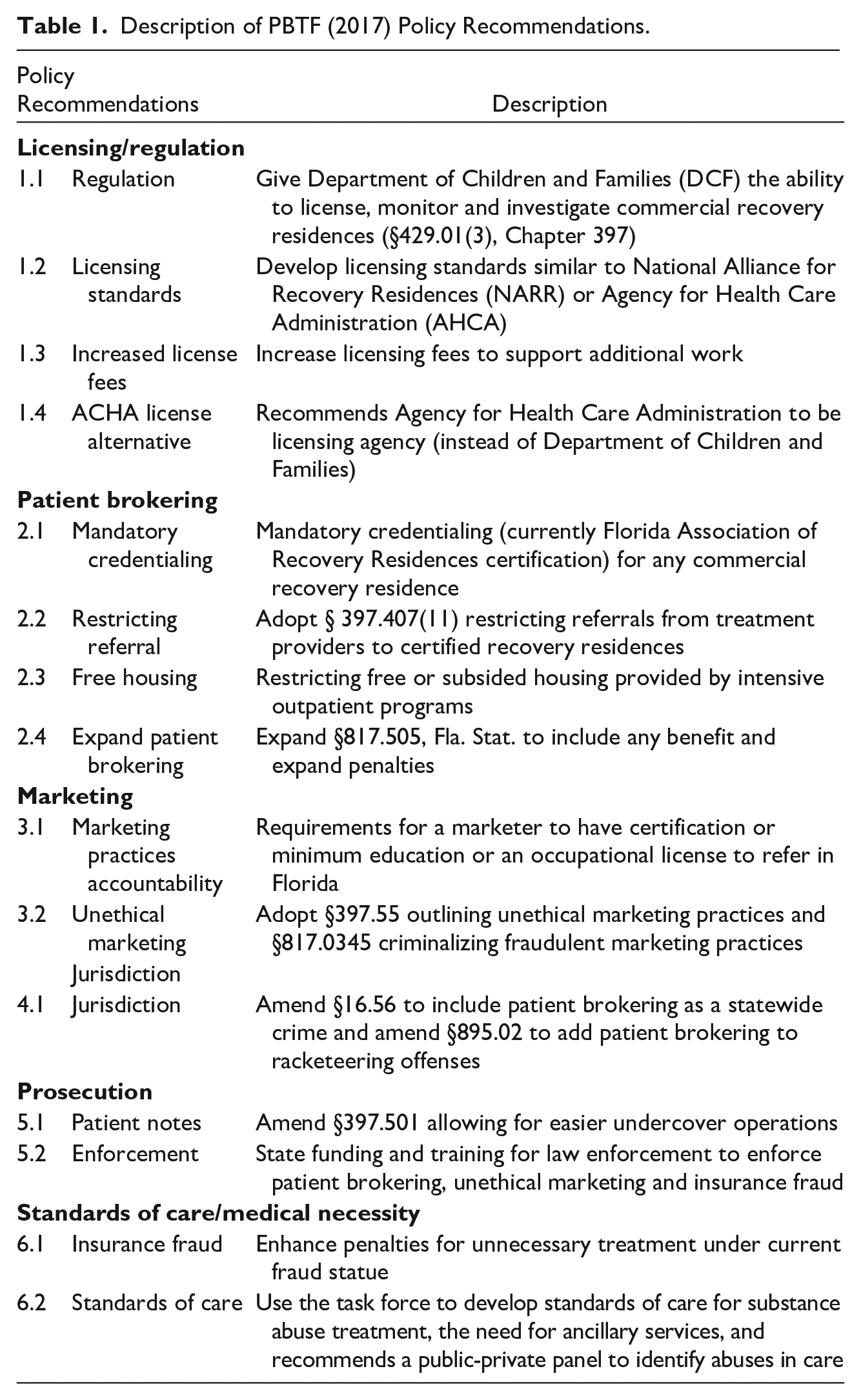
Here we used PBTF final policy recommendations (n = 15) (2017) as the policy preferences. As Table 1 shows, we grouped these recommendations into six categories: licensing/regulation, patient brokering, marketing, jurisdiction, prosecution, and standards of care/medical necessity.
Description of PBTF (2017) Policy Recommendations.
To build a policy discourse network, we collected PBTF meeting data, including meeting minutes, audio recordings, handouts, and agendas that were publicly available on the State Attorney’s website (http://www.sa15.state.fl.us). There were 12 face-to-face meetings; we examined materials from 11 meetings due to a missing meeting recording. Each meeting lasted about three hours; they were held at the West Palm Beach Police Department and were open to the public. Public viewers ranged from 10 to 25 members and included mostly representatives of private treatment facilities not included in the task force. We transcribed meeting audio recordings verbatim using Temi (www.Temi.com) and checked the transcriptions for accuracy. We uploaded the meeting transcriptions to the Discourse Network Analyzer software for analysis (Leifeld, 2013b).
Following the DNA process, we coded three variables: organization, policy preferences, and agreement. First, we identified the speaker’s organization within the transcriptions. The moderator identified speakers by first or last name in the recordings and transcripts. These were then cross-referenced with the meeting minutes that showed task force members and their respective organizations. We also manually matched voices by listening to member introductions at the beginning of each meeting. We cross-referenced the names the moderator mentioned with the names and affiliations in the meeting minutes to identify the members’ organizations. We were able to identify 97% of the speakers and their organizations using these methods. Second, policy preferences were identified, which included statements made in relation to the 15 final policy recommendations (Table 1). Agreement included a dichotomous variable indicating whether the speaker supported the policy preference.
This process yielded 326 policy statements. Statements were coded three separate times. The first coding iteration created a base network, and the second and third added details and confirmed results. Relying on the DNA method (Leifeld, 2013a), we used keyword searches to ensure no statements were missed. Finally, we blind-coded 10% of the statements for reliability. The two coders had 100% agreement.
We conceptualized the original network as a two-mode network with organizations connected to policy preferences. We transformed this initial network into a one-mode network since two-mode networks 1) have limited analysis techniques and are rarely analyzed without transformations (Opsahl, 2013), and 2) provide limited information on how organizations influence each other (Leifeld, 2013a). We transformed the network by connecting two organizations that provided feedback on the same policy preference at the same meeting. The network excludes the State Attorney’s Office, the agency coordinating the PBTF, which was attached to each policy preference at every meeting. In DNA, it is often necessary to account for random noise that is a result of one organization facilitating the network (Leifeld, 2013a). This can inflate the network and produce inaccurate inferences (Leifeld, 2013a). We also left out isolated influence (i.e., when only one organization in the network provided feedback on a policy preference). This resulted in one organization (the Attorney General) being excluded from the network for one policy statement.
Quantitative Analysis
To analyze the network data, we used valued exponential random graph modeling (ERGM). Binary ERGMs recently have become more common in analyzing cooperative interactions between actors in areas of public policy and administration (e.g., Ki et al., 2020). Similarly, valued ERGMs are a newer but growing method used to study policy networks (Scott, 2016). While a binary ERGM is appropriate to test the existence of a tie, valued ERGMs provide an analysis of the strength of the interaction. Valued ERGM tests the number of interactionsin the PBTF network. We used the Statnet package in R and the ergm.count extension with a Poisson-reference (Krivitsky, 2012) to perform valued ERGMs.
To account for transitivity and model degeneration (Goodreau et al., 2008), we employed transitive weights (transitiveweights). For the valued ERGM, it is also necessary to control for zero-inflation (nonzero), which accounts for distributions that are inflated relative to the Poisson because of two actors’ tendency to interact multiple times (Krivitsky, 2012).
For the sector attribute, we coded organizations into three categories—public, private, and nonprofit. If the organization was governmental (e.g., a municipality, Department of Health), we coded it as a public organization. We cross-referenced private and nonprofit organizations with their websites and GuideStar, a service that reports on U.S. nonprofit companies, to determine their appropriate sector. If the organization indicated it was a nonprofit or civic organization, accepted donations and had a profile on GuideStar, we coded it as nonprofit. We considered an organization without such a profile as private.
Previous studies have found that organizational size may be a factor in tie formation (Zhao & Oh, 2021). Thus, we included two variables to account for size-related relationships based on Damanpour’s (1992) conceptualization of organizational size: number of employees and size of assets. For this variable, we collected the number of employees for nonprofits through the United States Internal Revenue Service (IRS) 990 forms completed by nonprofit organizations and available on GuideStar. Although an accurate number of employees is difficult to tap for private organizations, a range of employees was often available on the organization’s website (e.g., 25 plus employees to serve clients) or mentioned during the task force meetings. Thus, we created an ordinal variable: 1 (under 19 employees), 2 (20–49), and 3 (50 and more). We captured the size of assets through the number of office locations mentioned on organizational websites.
Qualitative Analysis
We used qualitative analysis to answer the second research question, which seeks to identify strategies that facilitated or inhibited powerful interests from controlling discourse in this collaborative governance setting. We exported the data into the computer-assisted qualitative data analysis software NVivo to identify prominent recurring themes. Following recommended qualitative coding practices (Saldaña, 2013), the qualitative coding process involved three stages: (1) pre-coding, during which we identified significant passages; (2) first cycle coding, in which we initially coded the data; and (3) second cycle coding, which consisted of synthesizing, integrating, and reorganizing the themes. This process resulted in two factors that facilitated and four factors that hindered disproportionate sector influence. In addition, we used DNA graphs and an inductive method called grounded visualizations to triangulate and supplement network data with qualitative data (Martinez et al., 2003). This method links data visualizations to text or sound data to provide context and meaning to the visualizations.
Findings
Quantitative Results
Figure 1 is a visual representation of the task force network. In total, 35 organizations participated in the network. Government agencies (n = 8) included local government organizations, fire rescue, and healthcare agencies. Private sector organizations (n = 19) made up more than half of participating organizations and included sober living facilities, treatment/mental health facilities, and lawyers’ offices representing clients impacted by these issues. Nonprofits (n = 8) were medical licensing agencies, trade associations, civic and residential associations, and nonprofit community service agencies. Our analysis revealed 14 isolate (non-connected) organizations, including eight public, four private, and two nonprofit organizations. These organizations rarely attended meetings and, when present, had little to no interaction with others. Hence, they were excluded from the analysis.
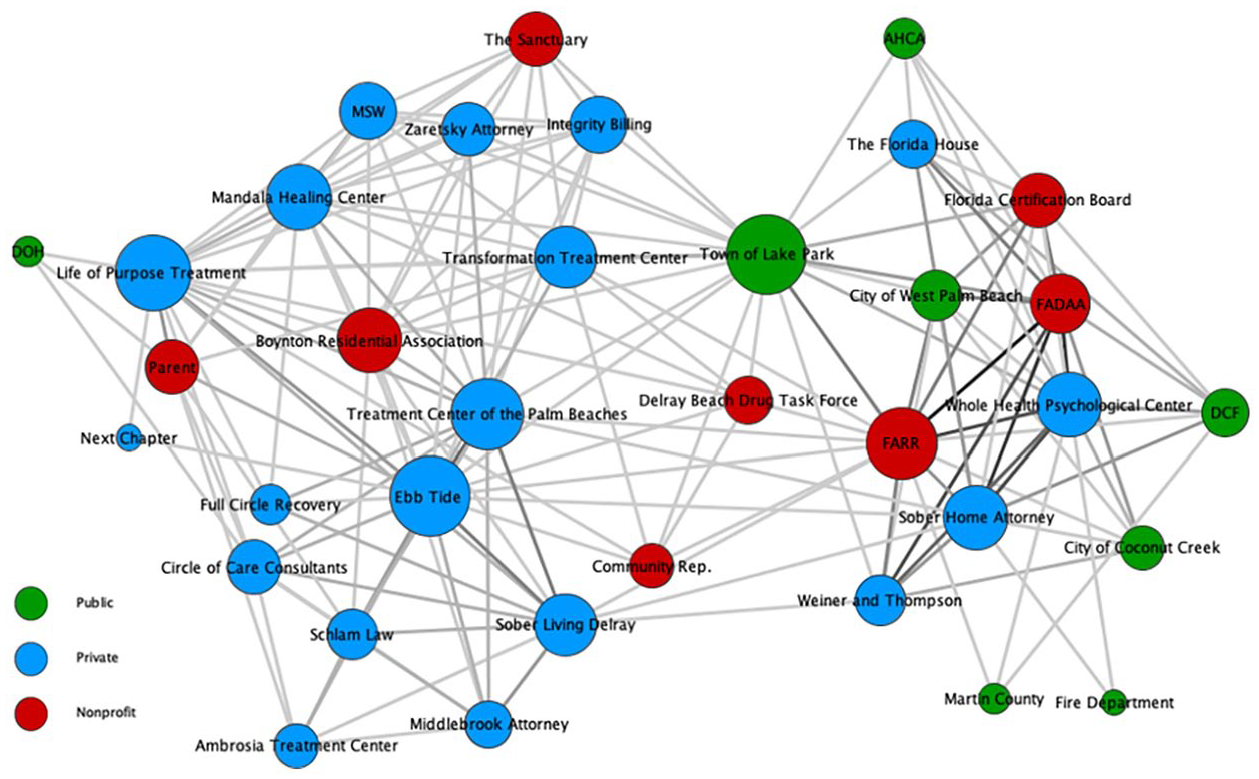
Palm Beach Sober Homes Task Force Policy Preferences Network.
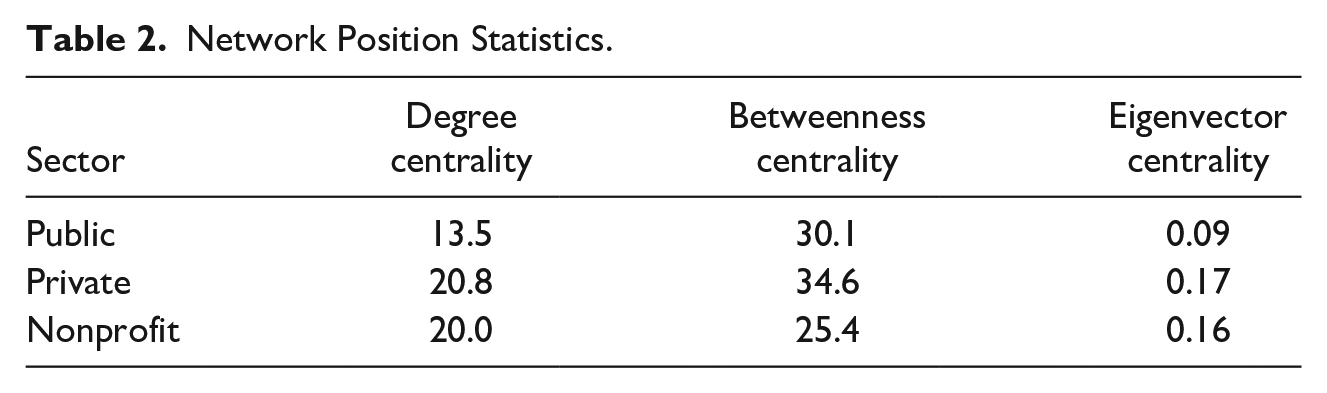
As Figure 1 shows, private sector organizations are dispersed across the network with active participation surrounding nonprofit organizations. This is consistent with the network position statistics (Table 2), which indicate that private sector organizations had the highest degree, betweenness, and eigenvector centrality. Centrality measures quantify how influential an organization is within the network, with degree centrality tapping the most active organizations with the most connections (Wasserman & Faust, 2008), betweenness centrality organizations that have “interpersonal influence” based on their position between other actors in the network (Wasserman & Faust, 2008, p. 189), and eigenvector centrality organizations that are connected to central organizations (Ruhnau, 2000). Perhaps surprisingly, public sector organizations had comparable betweenness centrality, and nonprofit organizations had comparable degree centrality. Public sector organizations were mostly on the edges of the network, which is of note because the three proposed regulatory agencies—the Department of Health (DOH), DCF (Department of Children and Families (DCF), and Agency for Healthcare Administration (AHCA)—had limited degree centrality and were on opposites sides of the network. Of the two active municipalities, with the Town of Lake Park appeared to play a brokering role connecting several private organizations to government and nonprofit organizations. Nonprofits also appeared to be evenly dispersed throughout the network, with certification and trade agencies like the Florida Association of Recovery Residences (FARR) and the Florida Alcohol & Drug Abuse Association (FADAA) displaying strong ties with each other and with private sector interests.
Network Position Statistics.
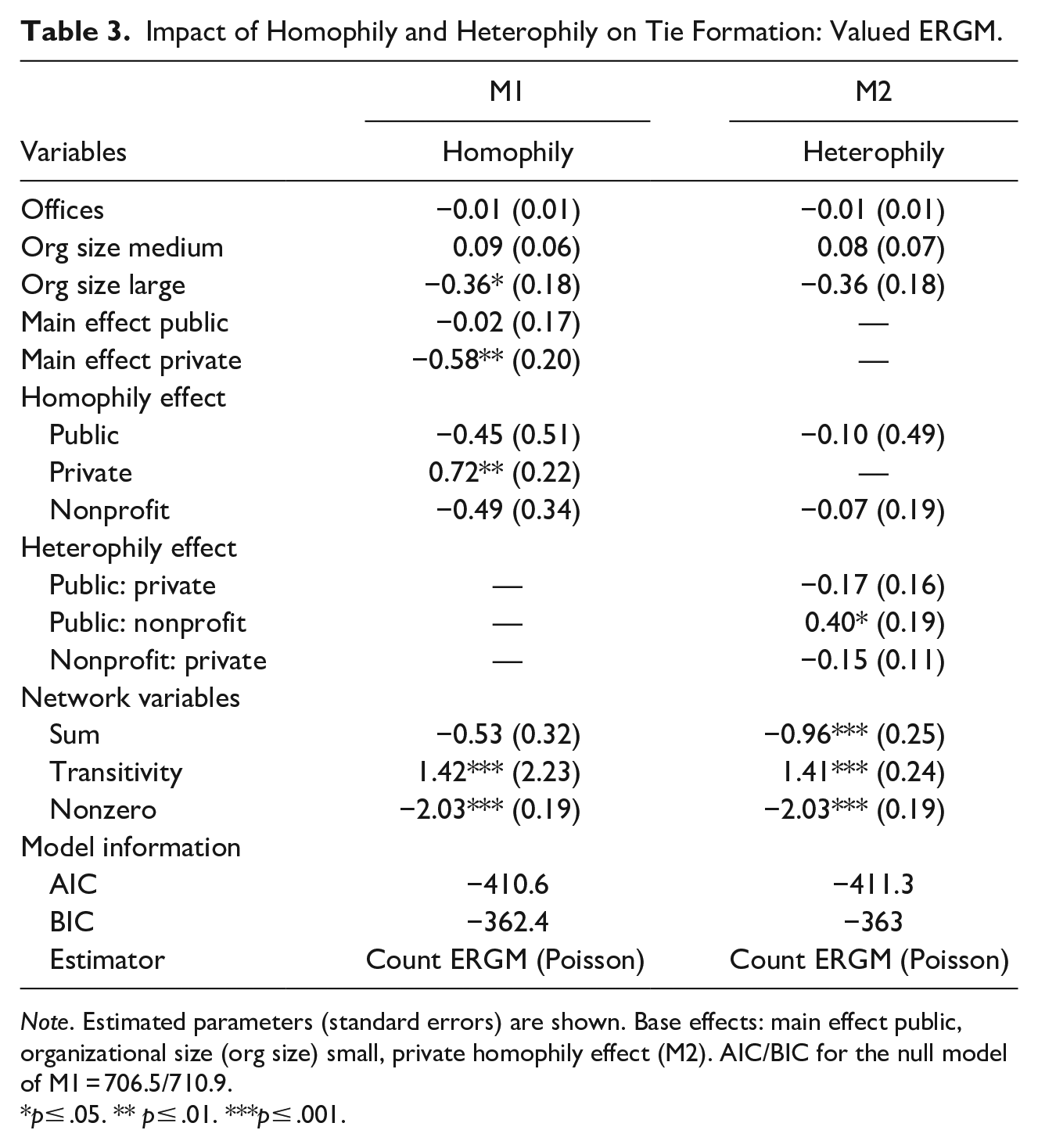
The results of the valued ERGMs appear in Table 3. Model 1 contains the estimates of the strength of tie formation in the PBTF network (i.e., the number of times organizations together provide feedback on a policy recommendation). Model 1 shows that homophilous ties (nodematch) between private sector organizations are positive and significant drivers of tie formation in the network, consistent with Hypothesis 1. Even though private sector organizations are 56% (exp(−0.58) = 0.56) less likely to participate in the network, they are 2 times (exp(0.72) = 2.05) more likely to provide feedback on the same policy preference at the same meeting.
Impact of Homophily and Heterophily on Tie Formation: Valued ERGM.
Note. Estimated parameters (standard errors) are shown. Base effects: main effect public, organizational size (org size) small, private homophily effect (M2). AIC/BIC for the null model of M1 = 706.5/710.9.
p≤ .05. ** p≤ .01. ***p≤ .001.
Model 2 examines the heterophily (nodemix) effect of public and nonprofit organizations in the network. In partial support of Hypothesis 2, public and nonprofit organizations were 1.49 times (exp(0.40) = 1.49) more likely to provide feedback on the same policy preference at the same meeting. Given that nonprofits were more likely to influence the same policy, it may have been necessary for public and nonprofit organizations to connect with each other in order for their perspectives to be heard. If public organizations were connecting with private ones, it might have shown a potential to negotiate with (prevent private capture) or negotiate for (appease private agencies) them. Instead, public and nonprofit organizations were more likely to influence the same policies, potentially indicating an effort to hear/solicit alternative views on less contentious policies. Due to model degeneration, however, the main effect for sector was not included in Model 2. Thus, results for Model 2 may depend on the frequency of interaction.
Several conceptual and network controls also were statistically significant. Of note, organizational size was negative and significant in Model 1. Although insignificant in Model 2, this may indicate that larger organizations tend to take more passive roles in the network; participating only when a policy recommendation directly threatens their organization. Transitivity (included to account for model degeneration) and nonzero (used to account for zero inflation) were also significant. Appendix A contains analyses of goodness of fit for the models.
Qualitative Results
Based on the ERGM results, the PBTF’s structure appears to be susceptible to disproportionate influence by private sector interests. Part of this susceptibility comes from the inclusion of a large number of private sector interests in the task force. This was intentional and, in fact, a direct response to legislative stalemate. During a task force meeting, the State Attorney’s Office justified this action: [We’re] trying to achieve a coalition to change some of these things and do it in a way that everybody . . .. including the sober home industry, including the sober home [owners], uh, the treatment provider industry, including the insurance industry and everybody gets behind, because if we go in there and say, “We want to close them down.” Dead on arrival.
The State Attorney’s Office, the coordinating agency, and even sober living representatives acknowledged the political power of sober living facilities and the potential of using the task force to continue market capture or to shut down these facilities. Because of this recognition and the need to include organizations with various amounts of power within the task force, PBTF consciously implemented strategies that sought to promote intersectoral collaboration. In the rest of the section, we discuss strategies that made the task force susceptible to disproportionate influence and strategies that were implemented to facilitate diverse participation.
One strategy that increased the potential for disproportionate sector influence was selective policy participation. Figure 2 shows a two-mode version of the PBTF network. . In this network, private sector organizations are clustered around three policy topics: expand patient brokering, free housing, and regulation. All three of these policy topics affect the way sober living and treatment facilities interact with each other and with their clients. Because of this, large portions of the meetings were dedicated to these policies, leaving less time for or attention to other policy topics like jurisdiction and prosecution policies. Although some of these policy topics expand the potential for government oversight, the lack of attention to jurisdiction and prosecution policies provides little legal power for government agencies to enforce these recommendations.
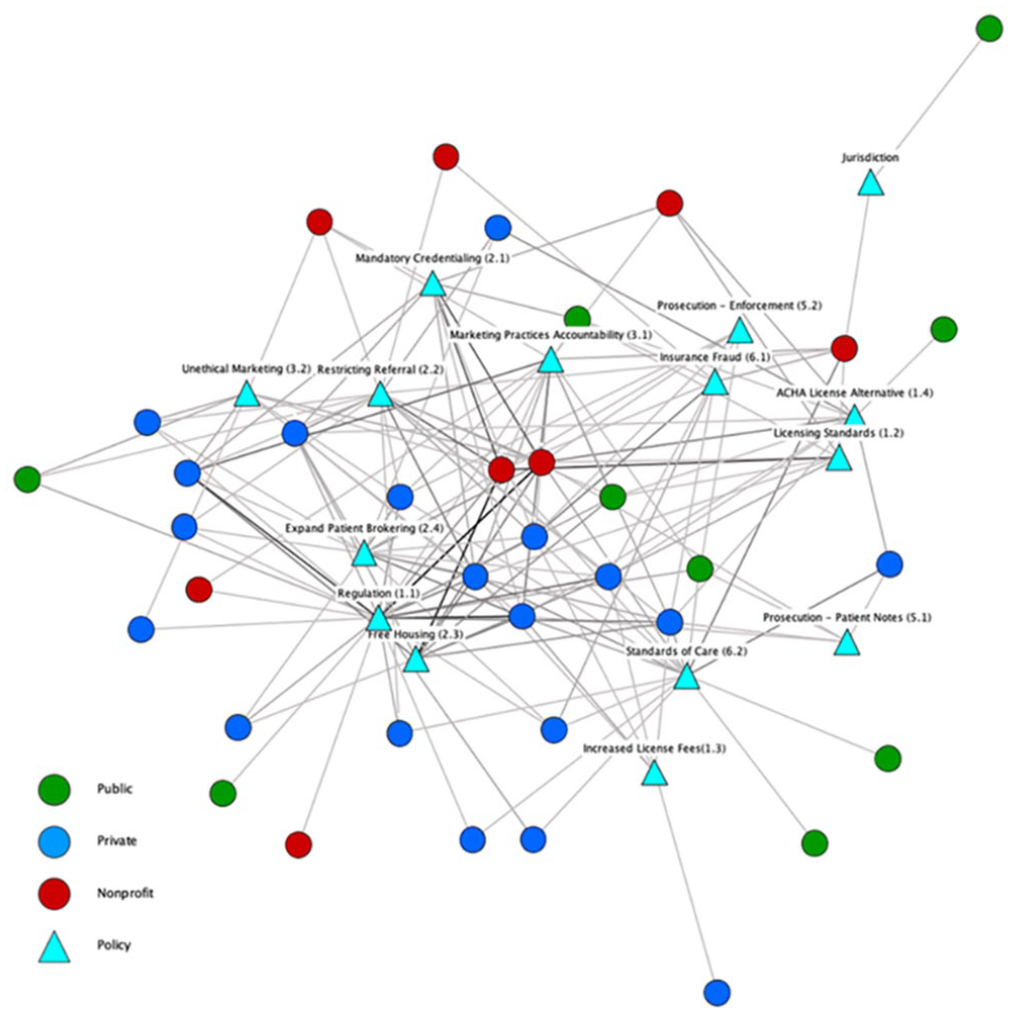
Two-Mode Network of PBTF Advisory Network.
In Figure 3, we analyzed policy preference frequency, examining levels of agreement and disagreement among participants on each policy preference. Although private sector coordination took place on topics dealing with patient brokering and regulation, there was limited evidence of polarization. In fact, many private sector organizations wanted stricter policies as barriers to market entry. One sober living provider stated: [We] have to be handled from a legislative and regulation standpoint, which is actually great for the good providers. We would gleefully [laughing] [accept stricter regulations] if you started eliminating bad providers because of that, [they] harm our business.
On the other hand, a smaller provider raised concern over regulations stating: “If we’re imposing on good places because of what the bad places are doing, that they’ll have to spend more money. We’re throwing our system into a kilter because they try to keep their prices at a place where an average person can continue their recovery.”
This suggests that such organizations were using the collaboration in a similar way as think tanks and lobbyists—to frame policy issues and recommendations in ways that further their desired results (Gurran & Phibbs, 2015).
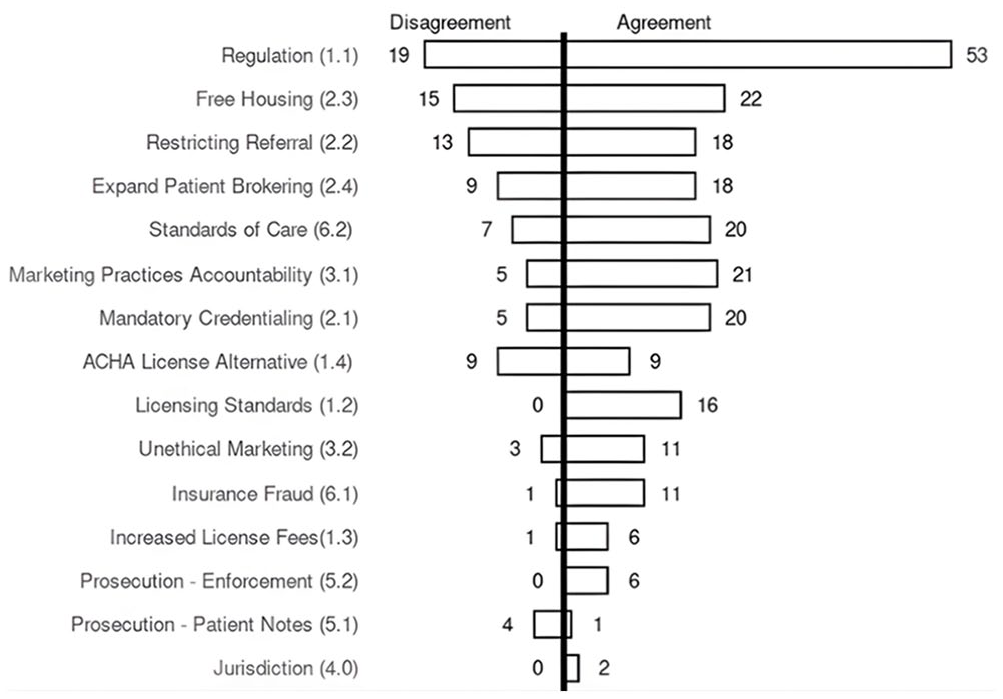
Policy Preference Agreement and Disagreement by Frequency and Topic.
Another strategy influencing disproportionate sector influence was limited interagency collaboration between public sector organizations during the task force meetings. As mentioned earlier, the three regulatory agencies – DOH, DCF, and AHCA – were on opposite sides of the network, providing limited influence in the network. Although their representatives often were present and the agencies were main topics of discussion throughout the meetings, these organizations served in a limited capacity in the collaboration, primarily providing one-way communication about their organization. Many municipalities also attended meetings but did not participate in the network. This may indicate that important and knowledgeable perspectives were missing during the meetings. This is notable since the Department of Health typically is a leader in health collaborations (see Provan & Kenis, 2008).
Despite the fact that private sector organizations played a significant role in this network, the PBTF and the facilitating agency, the State Attorney’s Office, took several steps to maintain productive discourse. Table 4 presents strategies that were implemented to facilitate diverse participation within the task force.
PBTF Strategies to Mitigate Sector Dominance.
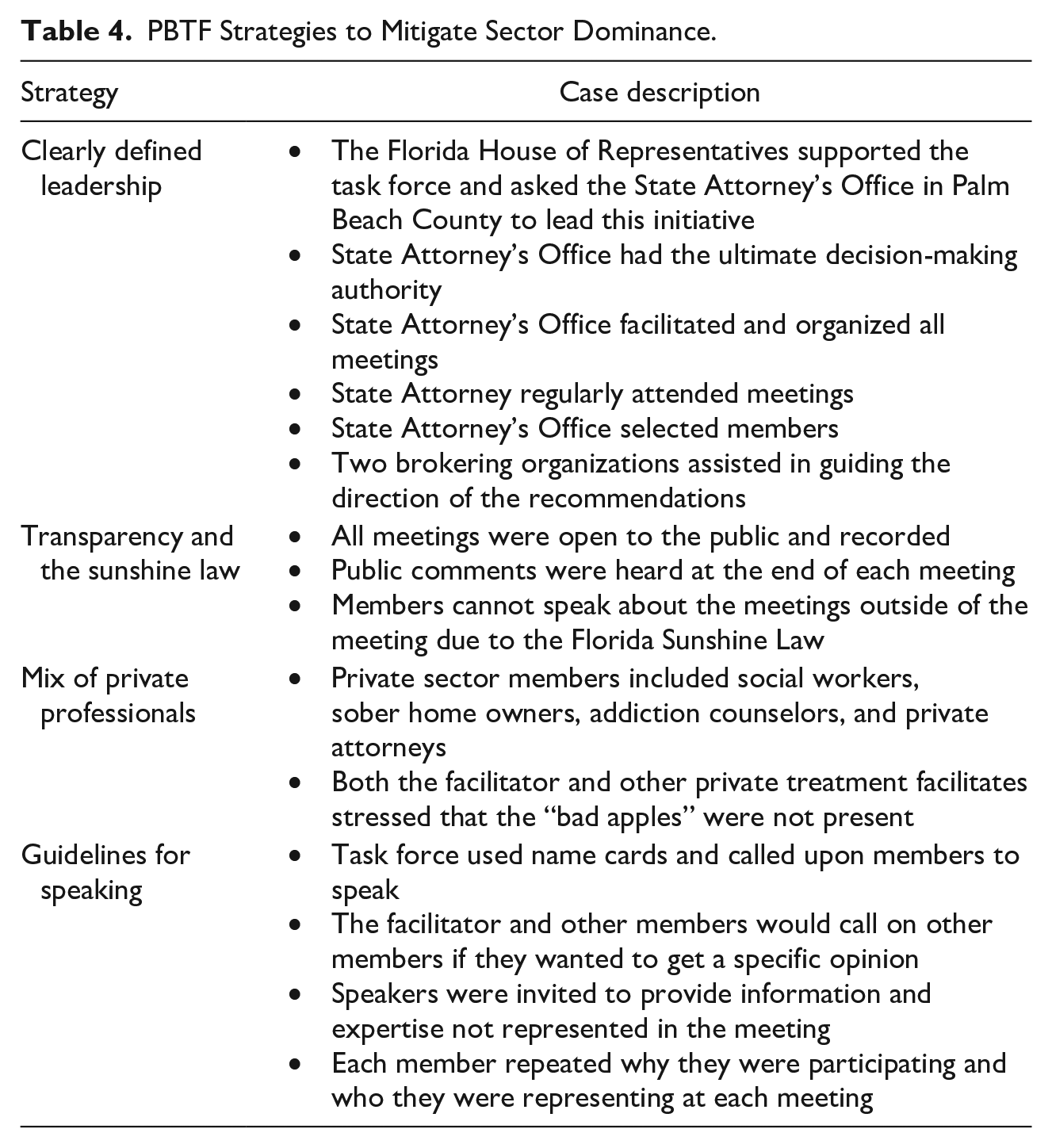
Clearly defined leadership from the State Attorney’s Office was a central strategy for preventing disproportionate sector influence. Staff from the Office facilitated task force meetings, set the agenda, took meeting notes, and organized guest speakers. While leadership is an established strategy in collaborative governance (Ansell & Gash, 2008; Bryson et al., 2015), the extent of the State Attorney’s Office’s dedication to the Task Force was notable and extended beyond Provan and Kenis’ (2008) lead organization type. Specifically, the State Attorney for Palm Beach County was a regular attendee at task force meetings. He also lobbied for funds from the Florida House of Representatives to support administration of these meetings. Finally, the State Attorney’s Office hired a full-time prosecutor to attend meetings and follow up tips on abuses within sober living facilities.
Leadership did not end there. Two additional organizations played important brokering roles within the network. Figure 4 shows the important role that the Town of Lake Park and FARR played in the network. A municipal attorney for the Town of Lake Park routinely provided feedback on how to translate issues brought up in the task force into legislation, while FARR representatives provided realistic advice on how to use licensing and regulation standards to improve the sober living industry and protect vulnerable populations. Both of these actors used their roles in the network to amplify voices and opinions that otherwise may not have been included.
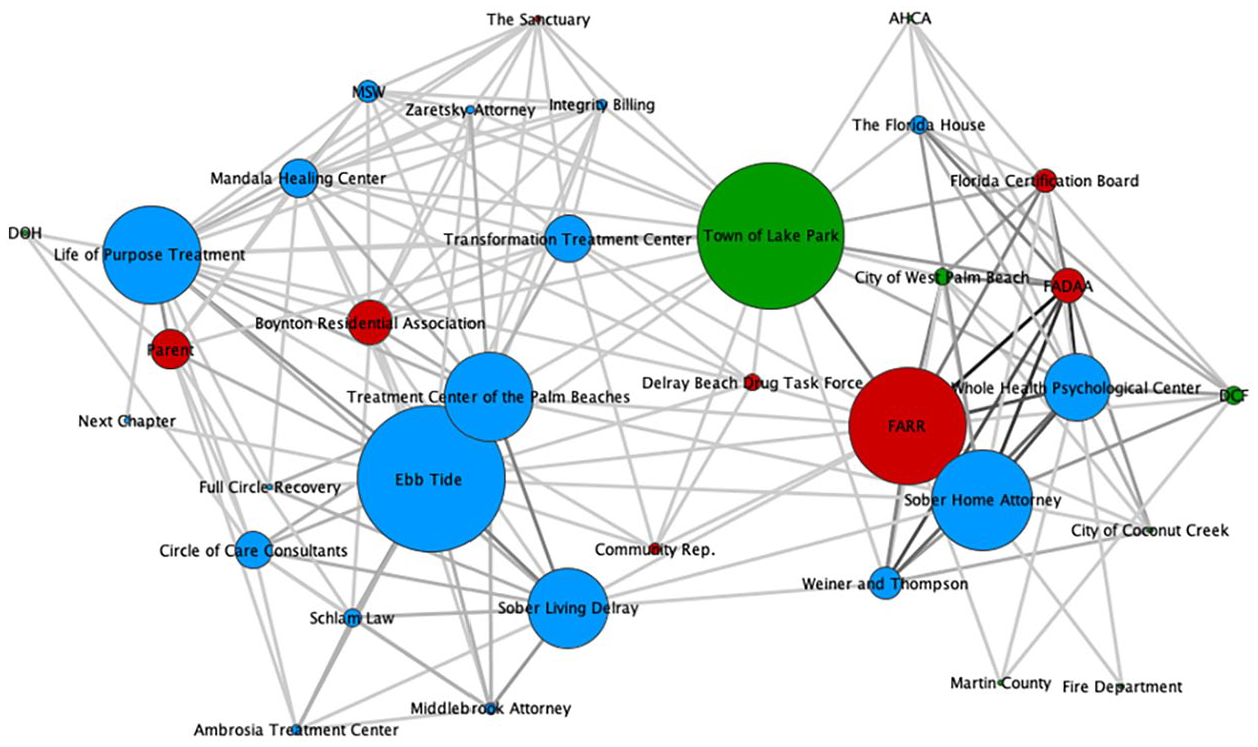
Betweenness Centrality of PBTF Advisory Network.
An illustration is when the Task Force was discussing policy preference 1.3, licensing standards. The representative from FARR listened to concerns from both sober living facilities and the community about a lack of unified standards that sober living facilities can, or should, adhere to. He then synthesized these concerns and developed draft language to insert into the recommendations.
In the task force, these organizations not only played the steering and brokering role described by Ansell and Gash (2008) and Agranoff and McGuire (2001) but also provided counterarguments. These counter-opinions spurred discussion and offered encouragement for sober living facilities that may have felt attacked or practitioners that may have believed they were helpless in changing the system. Thus the PBTF’s structure established formal and informal leadership, which assisted in guiding and steering task force meetings to include not only powerful but also less powerful perspectives.
The very nature of the State Attorney’s Office leading the task force set a tone for transparency. Before each meeting, a staff member from the State Attorney’s Office informed all participants and observers about the Florida Sunshine Law, which prohibits any organization serving in a public capacity from speaking about issues related to the task force outside the meeting. All suggestions, feedback, and recommendations had to be made during face-to-face task force meetings. Not only did this ease management and coordination, but it also allowed the public access to the decisions made at task force meetings. A member of the State Attorney’s Office explained: “We believe that technically we could survive a challenge to this not being sunshine, but we want the public to know about what we're doing here. We want the Post [Palm Beach Post newspaper] and the Sun Sentinel [newspaper] and . . . anybody else, uh, to know, talk to their friends, write about it, um, send us their tips.”
In addition, members of the public were invited to attend all meetings, and the facilitator included public members by having them introduce themselves at the start of the meeting and invited them to speak at the end.
The State Attorney’s office also recruited a mix of different private sector professionals to participate in the Task Force. Figure 5 provides a cluster analysis of the PBTF network by sector and industry. Although sober living facilities were well represented, attorneys, substance use counselors, and doctors also served on the Task Force. The different kinds of professionals contributed different perspectives. The cluster analysis also shows that most of the Task Force had a mix of sectors and industries represented. A smaller cluster in the network shows an overrepresentation of private sector interests but a mix of industry perspectives. The facilitator also mentioned that the sober living facilities included in the Task Force were not “bad actors.” This emphasizes the importance of who is included in collaborations (Emerson et al., 2012) and knowing the potential motives of providers.
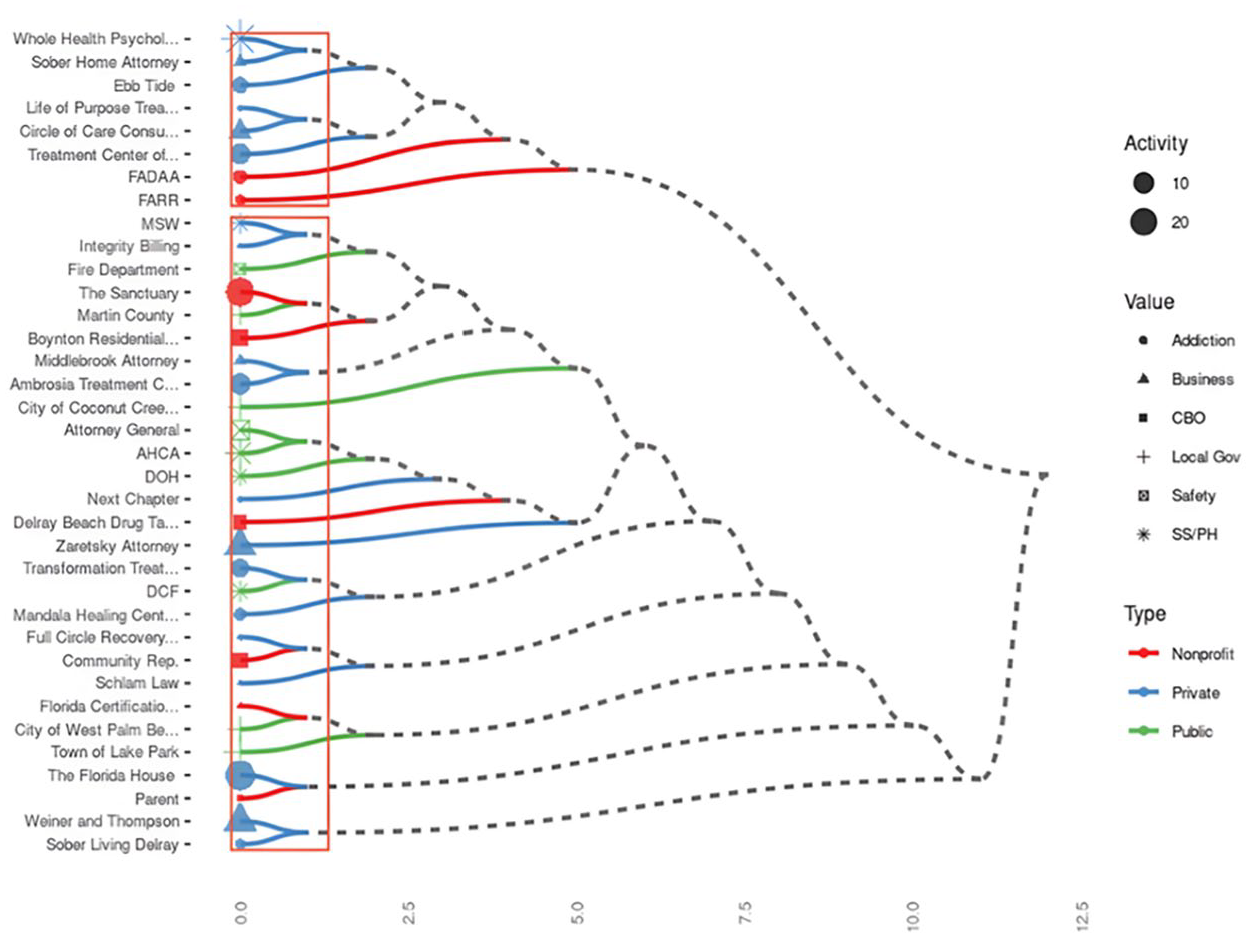
Cluster Analysis of PBTF.
Finally, the Task Force initiated strict guidelines for speaking. To assist with democratic communication, organizations would reposition their name cards on the side when they wanted to speak. These guidelines prevented the loudest and most talkative organizations from controlling meetings. In addition, the moderator from the State Attorney’s Office commonly called upon organizational representatives that were quiet during the meeting. This often was the case for nonprofits representing community interests whose feedback was solicited at the end of many meetings.
Discussion
The findings from this study show that the collaborative governance structure of the PBTF was susceptible to disproportionate sector influence. The ERGM results show that private sector interests are overrepresented in this network, which may indicate a potential ability to manipulate meanings and guide solutions in their favor. Our findings speak to the regulatory capture literature that suggests for there to be policy capture in the network, other members (public and nonprofits) also would need to submit to private interests over agency or public concern (Gurran & Phibbas, 2015; Singleton, 2000). In the PBTF, we saw public and nonprofit organizations selectively choose which policies to influence, suggesting that they tried to maximize their influence instead of arguing with private sector organizations.
Within collaborative governance structures, one ideally would like to see all members providing feedback on all policy recommendations, a heterophily effect with all sectors (i.e., equal participation). However, this may not be a realistic expectation. Our findings show that even though there was an overrepresentation of private sector interests, discursive control by one sector was less prevalent due to the mixing impact of public and nonprofit participation. The qualitative results support this claim, showing two actors (the Town of Lake Park and FARR) as important steering agents, attempting not to control discourse but to encourage and facilitate speaking by other nonprofit and public actors. Consistent with the literature on policy capture (e.g., Gurran & Phibbis, 2015), most public agencies took a passive role in the network, appearing to work on this issue while not providing substantial feedback. This made the network structure susceptible and underscored the significant roles that a few public and nonprofit agencies played in preventing policy capture in the network.
In addition, the facilitating agency implemented several governance strategies to prevent powerful actors from manipulating the collaborative process. Although this did not prevent private sector organizations from taking significant positions, it did allow for nonprofit organizations to be dispersed throughout the network, as shown in Figures 1 and 5. This is consistent with a growing body of literature that suggests network governance structures characterized by diversity rather than homophily tend to produce outcomes better aligned with public policy objectives (Andrews & Entwistle, 2010; Ansell & Gash, 2008). The PBTF is an important case to study because it was able to mitigate disproportionate private sector interest and uphold the goals of collaborative governance—to produce policy recommendations that reflected stakeholder knowledge and were acceptable to all members (Innes & Booher, 2010). Ultimately, the work of PBTF resulted in county- and state-wide adoption of the task force recommendations, with other states looking to implement similar policy recommendations in their jurisdictions.
The results from both the quantitative and qualitative parts of the analysis suggest that organizations facilitating collaborative governance structures need to be aware of potential threats to policy discourse. This study contributes to emerging research that recommends measuring the extent of participation in a collaboration (Koski et al., 2018) and offers an alternative way to measure disproportional sector influence. It is only when one starts to examine the potential of different sectors to either “gang up” in (homophily) or facilitate discussion (heterophily) that one can make sure that diverse perspectives are included in policymaking—a primary goal of collaborative governance. This requires acknowledging the existing socioeconomic power dynamics present within these structures (Brisbois & de Loë, 2016) and implementing strategies that actively prevent disproportionate sector influence. Simply put, it is not a realistic expectation that all members will participate equally in collaboration (see Ran & Qi, 2018), but it is possible to manage power imbalances by pursuing strategies (Purdy, 2012; Ran & Qi, 2019) like the ones suggested here.
This study makes several contributions to collaborative governance scholarship. Although not the first to examine sector homophily, the study is one of the first to do so in a task force setting (an understudied type of collaborative governance) and in a collaboration around the overdose epidemic (an understudied topic in collaboration literature). Much of the task force literature is descriptive in nature (e.g., Agranoff & McGuire, 2001; Berthod et al., 2017) and does not use a collaborative governance framework. This is the same for collaborations around the overdose epidemic (see Yatsco et al., 2020).
In addition, this study provided a connection between an actual collaboration and policy recommendations to identify the extent of influence that powerful private healthcare providers had in the process. This is critical for several reasons. First, scholarship on collaboration is dominated by work relying on survey and other self-report methods (Berardo et al., 2020) instead of observable data. Second, scholars warn about abuses by private healthcare providers in collaborations (Varda et al., 2012), but little research attempts to measure their influence or to provide strategies to address it. Finally, this article advances theory on how public agencies can successfully prevent and overcome the threatof interest group authority in complex health collaborations.
Conclusion
Building on the strengths and limitations of this study, we recommend four major directions for future research. First, there is a need for multiple case studies on power dynamics in joint task forces as collaborative governance structures in the policyprocess. This work focused on PBTF; its findings may be transferrable and may assist researchers, public agencies, task forces, or other collaborations in search of solutions to local health crises. It is important to acknowledge that due to the nature and purpose of the task force, there was an underlying theoretical assumption that nonprofits and public organizations may be better stewards of collaborations. This may not be the case for different collaborations with different purposes.
Additionally, there were limitations in how we measured disproportionate sector influence. Due to limitations in the data, we used only undirected ties in the task force network and could not assess their reciprocity, in- and out-degree, and other network features. We also focused only on disproportionate influence across sectors but not within sectors. Our analysis also may be limted by the fact that some nonprofit organizations (e.g., FADDA) are trade organizations that represent both for-profit and non-profit interests. Moreover, while we controlled for organizational size in the quantitative models, the final policy recommendations appear to favor better-resourced providers. Future research could examine power dynamics across fields, professions, and organizational size, as well as the directionality of power dynamics over time to overcome these limitations.
Furthermore, there is always a concern in collaborations that decisions are made inconspicuously without the knowledge or influence of collaborators. Although protections such as the Floraida Sunshine Law and line-by-line feedback requests helped ensure that members’ knowledge and expertise only were shared in Task Force meetings, there is always a chance that we did not fully capture the context influencing policy recommendations and outcomes. Future research could use direct observations of task force meetings and conduct interviews and/or focus groups to provide a deeper analysis of the role of a facilitating agency and to better understand factors affecting collaborations. Finally, future research should seek not only to connect the input structures and strategies for managing sector influence with the output policy recommendations but also to examine to their subsequent adoption, implementation, and their ultimate impact on public health crises.
We believe this article adds to the extant literature on power dynamics in collaborative governance structures. It is our hope that researchers, public agencies, and other health collaborations will continue to refine these results and improve the way task forces and health collaborations are implemented in local communities. Successful collaborations can change the way communities respond to complex health issues and ultimately save lives. We hope this article can continue to move this field forward in pursuit of this mission.
Supplemental Material
sj-docx-1-aas-10.1177_00953997241235102 – Supplemental material for Using Collaborative Governance to Regulate Sober Living Facilities: Structures and Strategies for Mitigating the Influence of Powerful Actors in Multi-Sectoral Networks
Supplemental material, sj-docx-1-aas-10.1177_00953997241235102 for Using Collaborative Governance to Regulate Sober Living Facilities: Structures and Strategies for Mitigating the Influence of Powerful Actors in Multi-Sectoral Networks by Kaila Witkowski, Travis A. Whetsell and N. Emel Ganapati in Administration & Society
Footnotes
Data Availability Statement (DAS)
Data is available upon request.
Declaration of Conflicting Interests
The author(s) declared no potential conflicts of interest with respect to the research, authorship, and/or publication of this article.
Funding
The author(s) disclosed receipt of the following financial support for the research, authorship, and/or publication of this article: This research was supported by the Doctoral Acquisition Fellowship and the Dissertation Year Fellowship from the University Graduate School at Florida International University.

Supplemental Material
Supplemental material for this article is available online.
Author Biographies
References
Supplementary Material
Please find the following supplemental material available below.
For Open Access articles published under a Creative Commons License, all supplemental material carries the same license as the article it is associated with.
For non-Open Access articles published, all supplemental material carries a non-exclusive license, and permission requests for re-use of supplemental material or any part of supplemental material shall be sent directly to the copyright owner as specified in the copyright notice associated with the article.
