



Abstract
Psychology prioritizes students’ professional or career development by including it as one of the five undergraduate learning goals. Faculty advisors are critical to that development but likely feel less prepared for the role. Departments face challenges assessing associated student learning outcomes. We introduce an instrument programs can use to evaluate outcomes and advisors can use to measure students’ advising needs, perceptions, and preferences. We share results from an undergraduate sample (N = 91) to illustrate potential data and uses. For example, these students viewed faculty as knowledgeable career advisors and expressed confidence in their major selection but simultaneously reported feeling unprepared for postgraduation life and thought the major was not highly marketable. We offer specific recommendations for using such data to promote professional development.
Psychology faculty face increasing pressure in the current educational and economic climate to provide high-quality advising and to assess career development and advising learning outcomes. Students seek career advising as they encounter stark headlines about college graduates’ unemployment and underemployment (Abel & Deitz, 2015; Picchi, 2016; Reuters, 2013) and cope with tuition increases and declining student aid. From books such as Is College Worth It? (Bennett & Wilezol, 2013) to research reports such as Hard Times that tout specific college majors’ marketability or lack thereof (Carnevale & Cheah, 2013), students receive the message that future employment is critical to address early in their education. This urgency can spread to academic advising when students want to declare a major earlier, take only classes that “count,” or find the fastest path to graduation.
Faculty members confront the same headlines and the resulting concerned students. Furthermore, professors face declining state support at public institutions, increased pressures for accountability and assessment, and even calls for evaluating institutions based on graduates’ starting salaries (Legislation, 2013). Within this environment, instructors in liberal arts programs such as psychology may encounter more questions about career options and outcomes than professional programs (e.g., accounting) with narrower but clearer vocational paths. In fact, the Association of American Colleges and Universities (2013) introduced an “employer–educator compact” with national survey data that defend the marketability of liberal arts education as transcending content and producing knowledge and skills applicable across diverse fields. But do students and parents embrace such ideas, or do they want a definitive set of job options for the major and an advisor-prescribed list of courses to take? What about professors? Are they prepared to help students translate psychology and its skills into employment and graduate school arenas?
Effective Psychology Advising: Assets and Obstacles
Knowledge, Resources, and Assessment Expertise
Psychology is more prepared than many disciplines to address advising challenges. Psychology has been a leader in calls for measurable learning outcomes and their effective and accurate assessment. Moreover, the American Psychological Association (2013) has established career or professional development as a major learning goal for baccalaureate psychology education. The goal includes specific outcomes, such as developing career-related skills (e.g., managing a project, using feedback effectively), and plans for a postdegree life.
Another strength psychology brings is a demonstrated commitment to student development. Departments have attempted many systematic strategies to provide quality advising. These include orientation courses (Rajecki & Lauer, 2007), peer advising courses (Seegmiller, 2003), individual faculty advising or peer advising (Nelson & Johnson, 1997), involving alumni (Lawson, 2018), technology-based services (e.g., websites, online programs; Appleby, 2011; Golding, Lippert, & Malik, 2018), specific orientation to the major courses (Landrum, Shoemaker, & Davis, 2003), and stand-alone courses in professional development for psychology majors (Ciarocco, 2018). Psychology professors have also authored books on the major and career options (e.g., Landrum & Davis, 2013; Morgan & Korschgen, 2014).
Lack of Formal Training and Knowledge
Despite these assets, psychology faculty members face challenges when advising and assessing related outcomes. One potential obstacle is lack of training, knowledge, or commitment to advising, particularly as it relates to careers. As Halonen and Dunn (2018) discussed, many professors pursued graduate school immediately after college and never experienced a bachelor’s level job search. As content experts in their disciplines, professors also often receive little training in teaching, let alone advising or career development. Academic advising professionals, however, describe career advising as integral to advising overall (Hughey, Burton Nelson, Damminger, & McCalla-Wriggens, 2009). Students also may see professors as their best or most accessible vocational resource. For example, Fouad and colleagues (2006) discovered in one investigation that only about half (51.2%) of surveyed students knew individual vocational counseling services were available through their campus career center. To whom, then, will students turn with career concerns, and what will be the results when they do?
Conflicts With Time and Student Priorities and Preferences
Beyond lack of knowledge, professors face competing priorities for time, along with advising goals and perceptions that conflict with students. Milem, Berger, and Dey (2000) reported that during the previous two decades, faculty members started allocating more time to research and teaching and less to advising. Institutional reward structures likely reinforce those behaviors. Instructors in one survey reported significant differences in the value department chairs placed on advising compared to deans or senior administrators (Allen & Smith, 2008). More recently, Hughes (2014) also argued that the professor’s perspective on advising can be as an intrusive burden on instructional and scholarly responsibilities.
Students, by contrast, indicate advising is a high priority for them, but they have assigned it very low satisfaction ratings (Hale, Graham, & Johnson, 2009). Psychology majors specifically have endorsed greater program satisfaction when they have a high degree of personal interaction with faculty in contexts such as advising (Stoloff, Curtis, Rodgers, Brewster, & McCarthy, 2012), but students have also rated career advising quality as generally inferior to that focused on academic issues or courses (Rajecki & Lauer, 2007). Perceived pressure to determine a clear career trajectory from their college major may contribute to harsher student perceptions of career advising. Students often want answers, but in general, faculty and even professional advisers are not trained to offer prescriptive mentoring. This situation sets up another potential challenge for professors with career advising. Research supports developmental, or nondirect, advising approaches that help students learn to make their own professionally related decisions, citing evidence for student and advisor preference (e.g., Allen & Smith, 2008; O’Banion, 1994; Winston & Sandor, 1984). However, we also know that some students want straightforward advice and to be told what to do (the direct or prescriptive approach; Hale et al. 2009), and Alexitch (1997) noted that the direct advising model could be especially appropriate for the topic of career advising. We need to learn more about this potential conflict between faculty and students.
Accurate Assessment
A final potential obstacle to faculty advising is effective outcome assessment. Professional and career development may be an American Psychological Association (APA, 2013) learning goal, but programs likely find measuring students’ achievement of these outcomes more difficult than assessing their research or critical thinking skills. Developmental outcomes by their very nature change over time. When should they be assessed, and how should a “desirable” outcome be defined at different points in students’ educational journeys? Students also receive advising from many sources—faculty, fellow students, alums, and campus advising or career centers. Thus, linking outcomes to department efforts may be particularly challenging.
Given current pressures in higher education, the rapidly evolving job market, and the state of the advising literature, important gaps in our knowledge become apparent. Much of the information is dated (Finney, Snell, & Sebby, 1989), understandably institution-specific (e.g., Ogletree, 1999), and focused on students’ knowledge or perceptions around one specific issue such as an introduction to the major course or the graduate school admission process (e.g., Landrum et al., 2003). We need updated and additional information about (a) students’ advising and career development needs and preferences and (b) the effectiveness of current advising practices in terms of student and APA learning outcomes. We cannot gather such data without providing programs with good assessment instruments and illustrating their use. Thus, we designed the current study to develop and administer a new assessment tool to enhance our understanding of advising preferences and practices. We wanted to contribute a measurement tool that psychology departments might use, with or without customizing for their unique purposes, to identify their students’ needs, to improve advising services, and to assess professional development outcomes. Although the instrument includes items related to academic and career advising, we emphasize career advising here due to its unique challenges and close link to the field’s professional development outcomes. We also provide data from one student sample to illustrate potential results and uses of this tool. Our goal was to create an instrument that can be widely used and serve multiple purposes—from assessing program outcomes to facilitating individual student–faculty advising interactions.
Method
Participants
Participants were 132 psychology and/or human development majors at a public, midsize, Midwestern university (18.6% of the total population of these majors at the institution). Given the research goals, we only used data from the 91 psychology majors for this article. They included 15 (16.5%) men and 76 (83.5%) women. They could provide multiple racial/ethnic backgrounds, and 90 (98.9%) indicated Caucasian/White, and 6 students selected other groups. These statistics are consistent with the demographics of the major at this institution. As declared majors, students were predominantly juniors and seniors (3.3% first years, 9.9% sophomores, 48.4% juniors, 37.4% seniors, and 1.1% other). Most had started at this school, but 42.9% were transfer students. Mean grade point average was 3.37 (SD = .47).
Procedure
Declared psychology and human development majors on the university’s e-mail distribution list received a recruitment e-mail. We explained the purpose of this institutional review board–approved study and included a direct link to the anonymous Qualtrics-based survey (Qualtrics, Provo, UT). To maintain anonymity, no signature was required. Students viewed a consent form and had to indicate their understanding and agreement before they could access the survey.
Survey
The survey consisted of 56 self-report items of various types (e.g., multiple choice, check all that apply) developed by the authors. In many instances, a single “item” had multiple embedded questions, such as asking participants to rate the likelihood of seeking faculty advising for each of eight different potential issues. We anticipated about a 15-min completion time. Interested readers should contact the first author for a copy of the full survey.
Background data (13 items)
The first portion of the instrument collected basic demographics (age, gender, and race/ethnicity). It also included questions about academic and/or life experiences hypothesized to relate to advising access or perceptions (e.g., transfer student status, length of time in major and confidence in choice, and hours of work for wages/week).
Needs assessment (10 items)
This section focused on advising and career development needs. As examples, students shared information about postgraduation goals and rated their graduate school/workplace marketability and readiness. They also replied to questions about career topics such as having an up-to-date resume and perceived confidence in interview skills.
Outcome assessment (2 items)
These items related to professional development learning objectives. Students rated the degree to which their experiences within the major had assisted them in (a) identifying specific career options with their degree and (b) understanding how to use their psychology knowledge and skills in the workplace.
Advising implementation and evaluation (15 items)
Sample questions from this section included asking participants to report on their frequency of use, reasons for use, and level of satisfaction with services from academic advising, faculty advisors, and career services. Participants also rated their confidence in specific offices (e.g., career services) or individuals (i.e., faculty advisor) to provide certain services (e.g., assist with major course selection or with resume creation).
Advising-related preferences, stresses, and obstacles (16 items)
This section contained, for example, items on preferred level of directness in advising style (see Table 1 for specific questions). The second author took the lead in developing these items based on a review of several existing measures (e.g., Winston & Sander, 1984).
Preference for Direct and Nondirective Advising Styles.
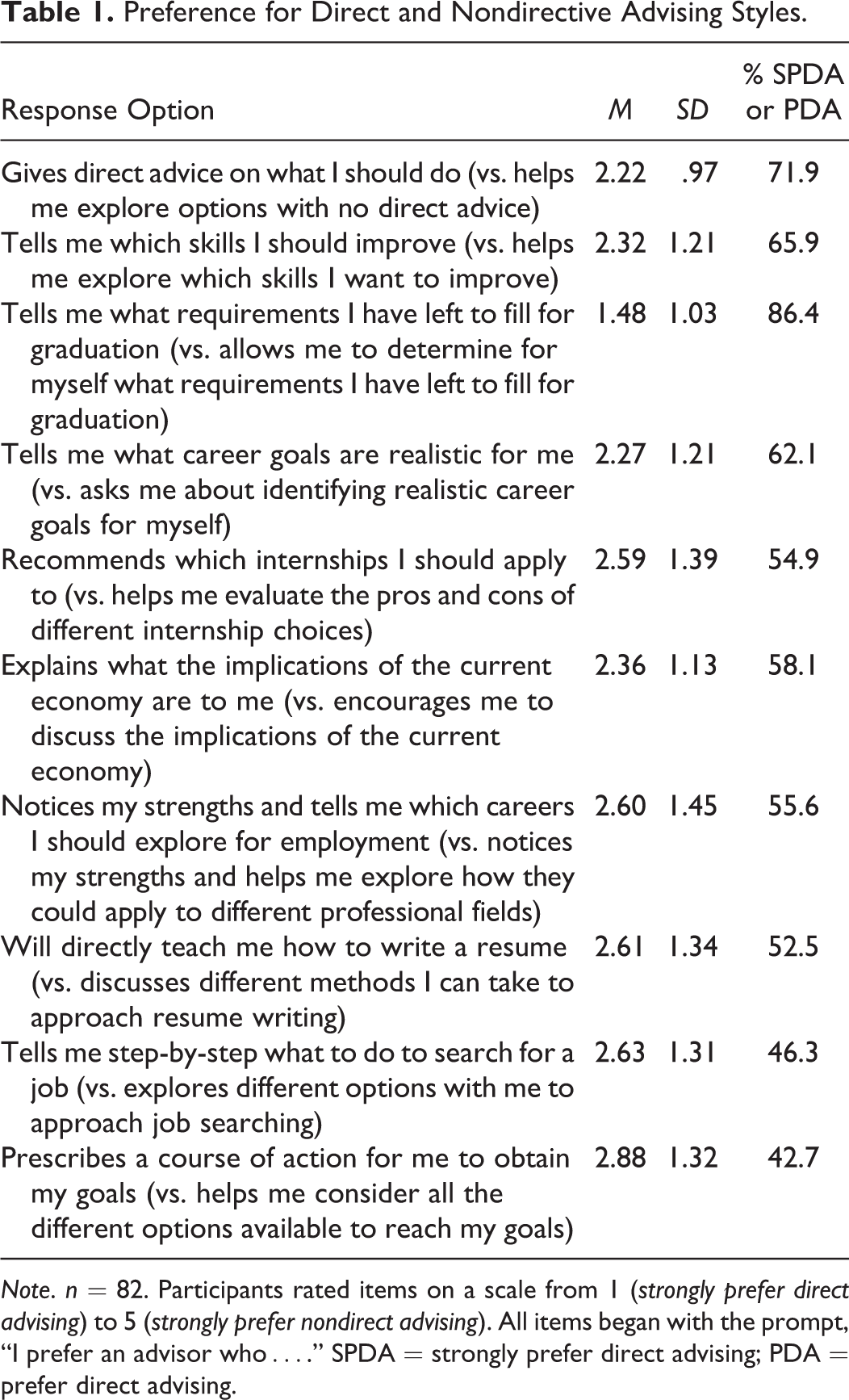
Note. n = 82. Participants rated items on a scale from 1 (strongly prefer direct advising) to 5 (strongly prefer nondirect advising). All items began with the prompt, “I prefer an advisor who….” SPDA = strongly prefer direct advising; PDA = prefer direct advising.
Results
We organized results around the three major uses we see for the instrument by departments or individual instructors: student needs assessment, learning outcome assessment, and implementation and evaluation of advising services. We focus here on findings related to career advising specifically, and these results will ultimately be used to describe specific uses of the instrument.
Student Needs Assessment
Most respondents (n = 90) were certain (14.4%) or very certain (74.4%) about their choice of a psychology major and rated their degree as marketable, although not highly so (very unmarketable, 3.3%; unmarketable, 8.8%; a little unmarketable, 9.9%; a little marketable, 34.1%; marketable, 37.4%; and very marketable, 6.6%). Most expected to go to graduate school immediately (49.4%) or after 1–2 years (29.9%), but 29.9% were focused on direct movement into the workforce (n = 87). A majority (61.4%) hoped to work in human services with far fewer expressing interest in other areas (business 2.3%, education 10.2%, law 1.1%, medical 4.5%, other 12.5%, and undecided 8.0%; n = 88). In terms of job search or work readiness, fewer than one third viewed themselves as “prepared” or “very prepared” for postgraduation plans (very unprepared 6.9%, unprepared 11.5%, somewhat unprepared 21.8%, somewhat prepared 32.2%, prepared 20.7%, and very prepared 6.9%; n = 87). Close to half (46.0%) had no employment or volunteer experience related to their career goal (n = 87), and only 18.2% said they had completed an internship (n = 88). Similarly, a sizable minority had no resume (26.0%) or had not updated one in more than 6 months (16.3%). Only 39.0% felt confident or very confident in their interviewing skills.
Learning Outcome Assessment
Most students agreed or strongly agreed that their experiences in the major including classes, advising, and psychology club activities had helped them to (a) understand how knowledge and skills from the major could be used in the workplace and (b) identify some realistic career options for graduates with the major (see Table 2). When including students who “somewhat agreed” with those statements, the percentages increased to 79.8% and 85.2%, respectively. The correlation between number of advising contacts and agreement with these learning outcome items was not significant, but reported length of advising meetings was significantly correlated with understanding the use of major in the workplace, r(71) = .24, p < .05, and ability to identify career options, r(71) = .24, p < .05. The degree to which students perceived meeting length as sufficient also significantly correlated with understanding uses of the major, r(71) = .41, p < .001, and with identifying job possibilities, r(71) = .38, p < .01.
Student Perceptions of Faculty Advisors and Advising Outcomes.
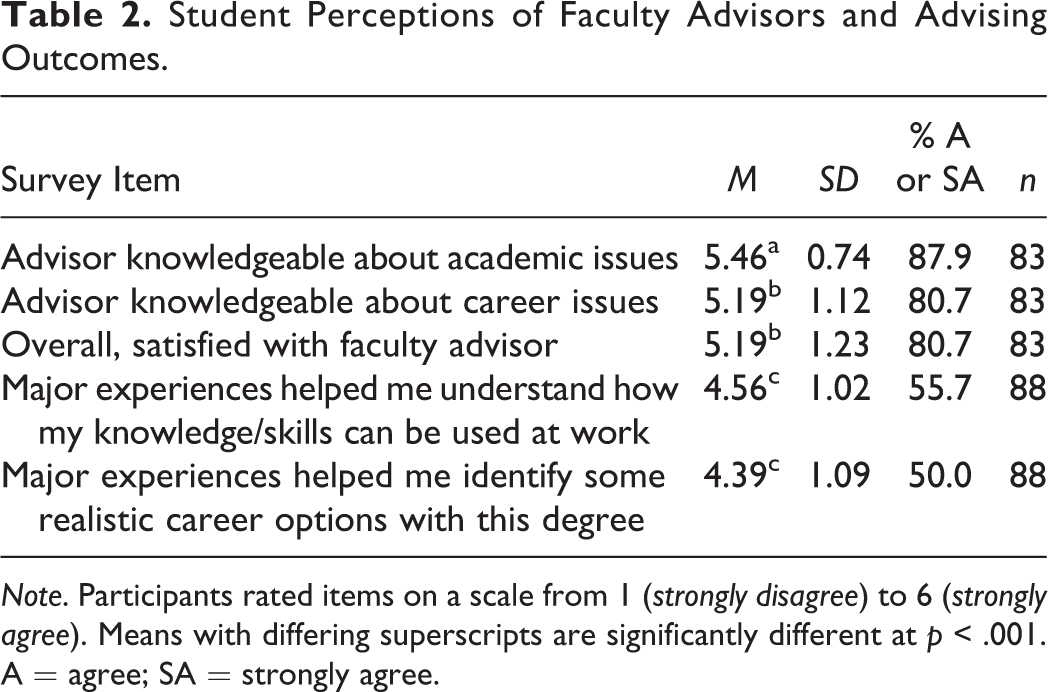
Note. Participants rated items on a scale from 1 (strongly disagree) to 6 (strongly agree). Means with differing superscripts are significantly different at p < .001. A = agree; SA = strongly agree.
Implementation and Evaluation of Advising Services
Students reported using many advising resources, but they indicated more frequent contact with faculty advisors than with academic advising or career services in the last year (see Table 3). They had the least frequent contact with career services, and respondents also indicated they were not likely to visit that office in the future. When asked about specific assistance, the percentage of students who had already used or were “very likely” to seek help at career services in the future ranged from 4.9% (finding a summer job) to 23.1% (writing a resume).
Student Use of Various Advising Resources in the Last 12 Months.
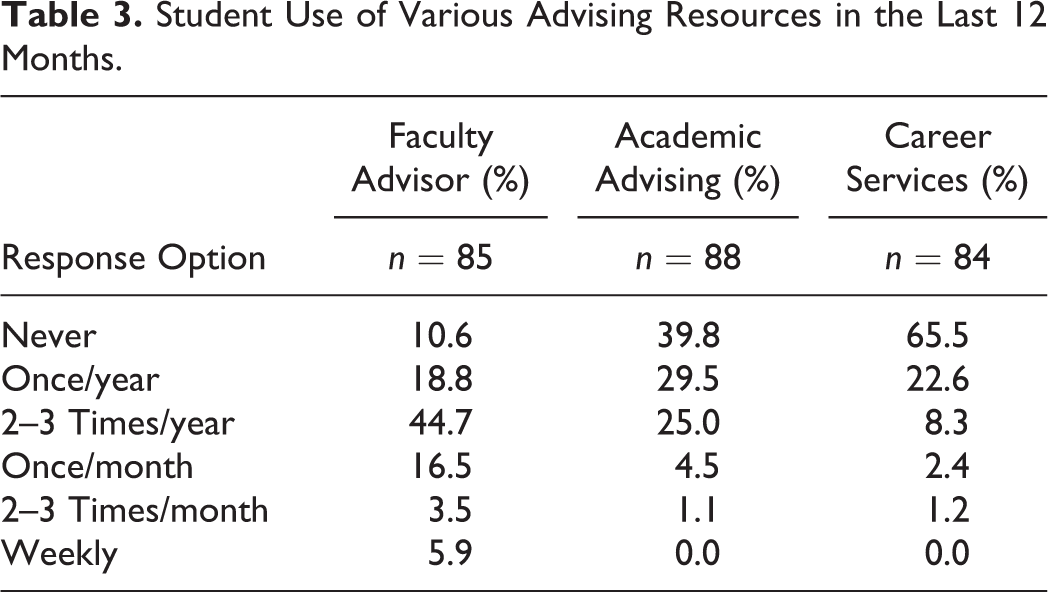
Although respondents saw faculty advisors more, there was considerable variability in purpose: select general education courses (23.1%), select major courses (65.9%), select a different major (23.1%), review progress toward graduation (61.5%), and discuss career options (46.2%). They expressed a high degree of satisfaction with their advisor (see Table 2) and believed he or she could provide services from answering questions about general academic policies to discussing internships and other individualized learning opportunities (see Table 4). The mean level of confidence expressed was higher for faculty advisors than for academic advising on four of the six dimensions rated (see Table 4). Variables most strongly associated with overall satisfaction with faculty advisors included the student’s belief that the advisor was knowledgeable about career issues, r(83) = .82, p < .001, and the degree to which advising meetings were rated as being sufficient length, r(70) = .76, p < .001.
Student Confidence in Academic Advising Office and Faculty Advising Services.
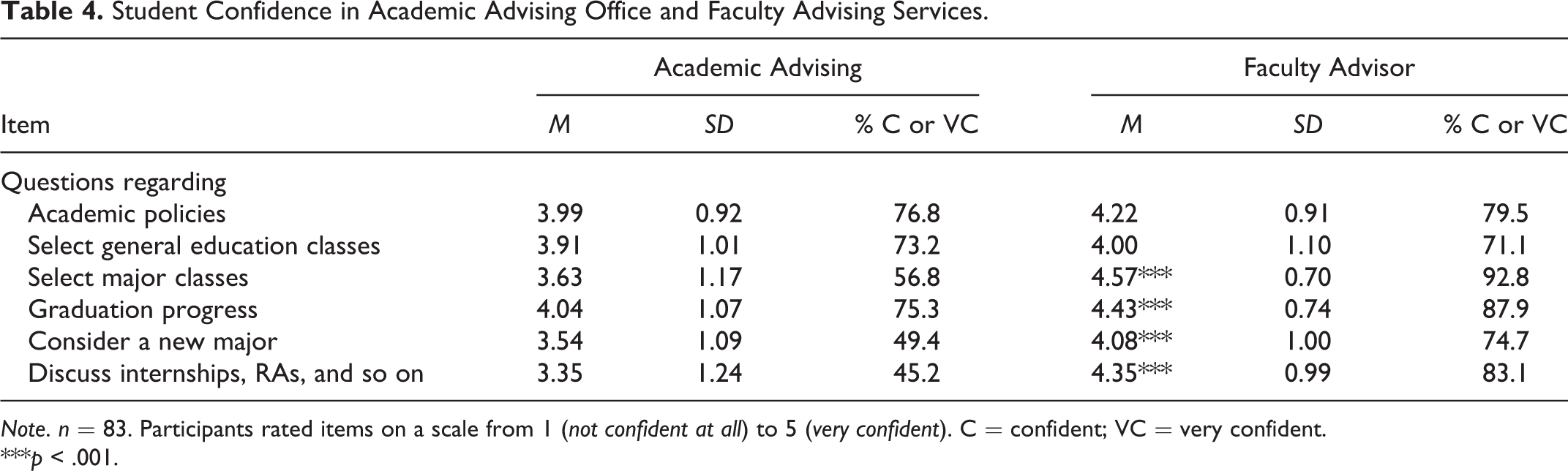
Note. n = 83. Participants rated items on a scale from 1 (not confident at all) to 5 (very confident). C = confident; VC = very confident.
***p < .001.
Students also identified advising preferences and obstacles. They typically preferred a more direct advising style to a developmental or nondirective one, but the degree of preference varied by content area (see Table 1). In contrast to previous research, there were no items for which the combination of “prefer” and “strongly prefer” a developmental advising style reached 50% or higher. Furthermore, students’ responses to how well prepared they felt for their postgraduation plans significantly correlated with advising style preference. The less prepared students felt, the more they desired a direct advising style, r(81) = −.34, p < .01. This is particularly true for the following topics: job search process, r(79) = −.32, p < .01; choosing internships, r(81) = −.24, p < .05; identifying realistic career goals, r(81) = −.27, p < .05; and identifying a course of action to obtain goals, r(81) = −.36, p < .01.
When asked about specific advising barriers, participants selected the following (could check more than one): scheduling/time (41.8%), not knowing how advisors can help (16.5%), past unhelpful contacts (12.1%), feeling nervous/intimidated (11.0%), seeing no reason to meet with an advisor (11.0%), not knowing how to set up a meeting (2.2%), and not knowing their advisor’s identity (1.1%). Although fewer students saw scheduling as an obstacle with career services (29.7%), they more frequently reported other barriers to visiting that office (e.g., not knowing how they can help, 37.4%; seeing no reason to meet with them, 23.1%; and not knowing how to set up a meeting, 20.9%).
Discussion
Taken together, the results from this institution paint a challenging and often conflicting picture. Students expressed clear needs related to APA’s (2013) professional development learning outcomes. They did not see themselves as prepared for a postgraduation life; many did not have relevant experience or even a current resume, and although they were confident in their choice of major, they did not view it as highly marketable. However, in terms of outcome assessment, the majority viewed their psychology major experiences as helpful to understanding workplace skills and knowledge and to identifying possible career paths. When examining the use and evaluation of advising services, they also expressed great confidence in faculty advisors to provide career advising and were least likely to visit career services, a finding that stands in contrast to what the literature would suggest about faculty advisor preparation, time investment, and expertise (see Schwartz et al., 2018). In another potential conflict, students, particularly those who perceived themselves as unprepared, tended to prefer a direct advising style when the literature would suggest faculty members endorse more developmental approaches. Interestingly, students reported more satisfaction with faculty advising not only when they perceived advisors as knowledgeable but also when they believed meeting length was sufficient. In terms of obstacles, participants indicated the major barrier to advising services was scheduling.
Although the survey results conflict in many ways, they point to the potential value of departments engaging in this type of assessment and of the measurement tool itself. Faculty members can use the information to identify student needs, raise issues for discussion with advisees (e.g., direct vs. development advising styles), plan data-based advising strategies, and thereby improve student experiences and achievement of APA learning outcomes. We include potential examples below.
Data suggest professors could invite career services’ staff into class to introduce themselves and their services. Participants were least likely to use the career advising office, and they cited not knowing how the staff could help as one reason. Departments might also request career services run workshops specifically for psychology majors in areas where data indicate lack of preparation, such as resume writing or interviewing in this sample.
Professors can also respond directly to survey results when it comes to their own interventions. For instance, these students viewed faculty members as knowledgeable career advisors. Faculty could, as appropriate, either embrace that perspective or be explicit with students about their limitations and make appropriate referrals. They could also directly ask students about whether they felt they had received sufficient advising time, given how important time perceptions were to advisee satisfaction in this sample. In fact, department chairs could help their advisors by administering this instrument to all majors and sharing aggregate findings. Simply knowing, for instance, that the largest percentage of students endorsed seeing their advisors for course selection or graduation progress purposes, and that undecided students were particularly likely to want a more direct advising style, could promote productive advisor–advisee dialogue. Departments could set an expectation that advising is more than choosing classes or counting requirements, activities that likely do not require a PhD. Individual advisors could also review the developmental versus direct advising survey items with their advisees to identify students’ preferences and share their own. Professors would not need to change their approach in response to such discussion, but openly sharing perspectives on advising style and definition (e.g., not mere course selection) could decrease possible frustration for both parties.
We believe survey data could help to reduce advising barriers and to inform department-level interventions as well. As one example, because scheduling was identified as an obstacle in this sample, professors might actively explore different scheduling methods (e.g., Outlook Calendar) and advising modalities (e.g., Skype). To respond to student concerns about lack of professional life preparation and the marketability of their major, departments could include alumni employment rates and graduates’ first job titles on websites, blogs, newsletters, or Twitter feeds. They could also increase advertisement of internships or promote the value of volunteer work or paid employment for accumulating relevant experience and skills. To address competing demands for faculty time as an advising barrier, departments could consider reusable podcasts or YouTube videos on common informational topics (e.g., job interview preparation). With any of these suggestions, faculty and departments would want to be cognizant of relevant literature on web friendliness or technology and advising (Robbins, 2012).
Although this is not an exhaustive list of examples, we hope they provide a glimpse into just how helpful this instrument could be in establishing student needs and responding in a data-based manner. We assert the measure can be useful as a research tool for collecting data across colleges and universities, but we want to emphasize that institution-specific results may actually be more helpful to advisors reading this article than generalizable themes. Faculty members will want to know the obstacles their students face in accessing advising services as well as the specifically identified professional development needs of the individuals at their institution. Furthermore, norms could be challenging to establish given variability across schools in advising quality, emphasis, and resources (e.g., having only faculty advisors at a small college vs. having nonfaculty professional advisors for each department at large, public institutions). Student demographics and regional economics/issues also provide generalizability challenges. For instance, places with substantial first-generation enrollments may understandably find higher preferences for directive advising. Student interests and needs may also be shaped by funding or need for specific career options in certain geographic areas (e.g., locations with strong funding for in-home autism services or with substantial elderly populations and services). That may be why the literature includes many publications focused on advising interventions at specific colleges and universities (e.g., Ogletree, 1999).
Although we are emphasizing assessment and subsequent interventions at the institution and department levels, psychology as a field also needs to understand common professional development concerns for undergraduates. At present, the literature includes some recommendations for improving advising (and not only career advising) that have been or could be used across institutions (e.g., peer advising, orientation to the major courses). Glennen and Vowell (1995) also suggest clarifying the faculty advisor role by including expectations in the department’s mission statement and by overtly valuing advising, perhaps through evaluations or awards. We must maintain an open discussion in the field about career advising if we are to provide faculty with a range of approaches to meet students’ professional development needs. Such strategies for the field as a whole will likely begin, however, as data-informed intervention attempts at specific schools.
Limitations and Future Research Directions
The study does have some clear limitations. We had a small, nondiverse, high-achieving sample from one institution, which calls into question generalizability. We also used a new instrument based on student self-report. That said, the gender and racial/ethnic composition of the sample is consistent with that of the school’s psychology majors, and 91 students is a substantial response when considered within the context of the total number of majors. We would also assert that a key goal of this research was to develop and pilot a new assessment tool that may be used most to generate college- or university-specific findings. We would expect, for example, that student advising perceptions, practices, and needs would differ at least in some ways between a large, elite, private institution in a major urban area when compared to a midsize, public comprehensive institution in a small city. We believe replication on different campuses is important to assess instrument quality and identify potential generalizable themes for psychology majors, but the greatest value of the measure may remain with institution-specific needs and outcome assessment.
We recommend that future research include outcome assessment that goes beyond current students’ self-report. For example, some departments have used alumni surveys to explore graduates’ evaluation of career advising sources and types of career-related information (Lunneborg, 1986; Ogletree, 1999; Ware, 1986). Departments can also use more direct measures such as reviewing job placement rates from their school’s first-destination surveys, coding students’ resumes for completeness and quality, examining annual internship placement rates, or creating a database of intern supervisor evaluation forms as an indicator of students’ professional skills. Faculty advisors could also serve as learning outcome evaluators by documenting specific interactions in or the content of advising meetings (White & Schulenberg, 2012).
Finally, faculty members should be included as research participants. We can surmise what professors would say when asked about their expertise in career advising, but we should have evidence. Departments can also plan better professional development strategies if they can directly compare the advising perspectives of their own students and faculty. Data can also inform individual advising interactions. For example, if students and professors answer questions about preferred advising style (e.g., direct vs. nondirect), advisors could use the results to start discussions with individual advisees about different approaches and their merits.
Conclusion
As we noted previously, psychology departments already face pressure to meet student learning outcomes for professional development. We believe that pressure will only increase within current social, political, and economic environments. We also feel we serve the field best by using its strengths, such as research and evaluation, to meet such challenges. We have presented data that speak to potential conflicts and concerns with regard to student career development, but we have also suggested an evidence-based approach to addressing those issues as a field and at an institution level. We hope these data and the assessment tool will help psychology departments not only to promote undergraduate career development but also to evaluate the outcome of their efforts.
Footnotes
Acknowledgment
The authors thank Ryan C. Martin, PhD, for his many contributions to this project. The authors and Martin presented a preliminary version of the research at the annual conference of the Midwestern Psychological Association in Chicago, IL (May 2013). Freis and Arrowood were undergraduate student researchers at UW-Green Bay when the project began.
Declaration of Conflicting Interests
The authors declared no potential conflicts of interest with respect to the research, authorship, and/or publication of this article.
Funding
The authors received no financial support for the research, authorship, and/or publication of this article.