



Abstract
Prior to high stakes examinations, teachers may engage in instructional practices to encourage their students to prepare well for their exams, including the use of ‘fear appeals’. The current study examined whether academic buoyancy played a role in student appraisals of fear appeals as threatening or challenging. High school students (N = 770) preparing for high-stakes mathematics exams in England completed self-report measures of the frequency with which their teacher used fear appeals, how they appraised those fear appeals, and their academic buoyancy. In line with prediction, students appraised fear appeals as more threatening and challenging as the frequency of fear appeal use increased. When fear appeals were used more frequently, a challenge appraisal was more likely when academic buoyancy was higher. Although a threat appraisal was less likely when academic buoyancy was higher, the protective influence diminished when fear appeals were used more frequently. Educational implications are discussed.
Students in many countries take formal examinations towards the end of their schooling. These exams are typically ‘high-stakes’, in that the outcome of these exams can influence future employment and/or educational opportunities. Furthermore, results from high-stakes testing are increasingly being used to judge school effectiveness, and can be linked to performance related pay and tenure for teachers (Hanushek & Raymond, 2005; Koretz & Hamilton, 2006). Students in England, Wales, and Northern Ireland, for example, are required to sit exams (General Certificate of Education, GCSEs) at the end of their 11th year of compulsory schooling. Students typically study for ten GCSEs in a range of subjects including mathematics and English. GCSEs are graded from A* (the highest) to G (the lowest). Students must typically achieve a grade C or above, especially in mathematics and English, to access further educational pathways or enter employment. Therefore, these exams can, and do, have significant consequences for their future life trajectories. Students’ exam results also have important consequences for schools, who are ranked in national league tables on the basis of their GCSE results.
Fear appeals used prior to high-stakes examinations
Students can respond to academic pressures, including high-stakes exams, in a number of ways. These can include striving to achieve (Martin & Marsh, 2003) through to increased fear of failure, or test anxiety (e.g. Putwain, 2009). Indeed, some students report feeling worried about their exams at least six to eight weeks prior to sitting them (Locker & Cropley, 2004). This may be because, prior to these important exams, teachers begin using instructional practices that they hope will motivate their students to prepare well for their exams (Locker & Cropley, 2004; Putwain & Roberts, 2012). Teachers may, for example, discuss with their students the value and importance of the exams in relation to the students’ future life trajectories. In line with the health psychology literature, such messages have been labelled ‘fear appeals’ (Putwain & Roberts, 2009).
In educational settings, fear appeals can be described as motivational messages that highlight the negative consequences of failure along with the courses of action that may increase the likelihood of failure (Putwain & Roberts, 2009). Fear appeals may also be accompanied by efficacy statements relating to how failure can be avoided by adopting an alternative course of action (Putwain, Remedios, & Symes, 2014; Sprinkle et al., 2006). Fear appeals typically emphasize the timing of exams (exam reminders) or the consequences of exams (consequence reminders) (Putwain, 2009; Putwain & Roberts, 2009), and teachers have been found to endorse the use of both types of fear appeals in relation to important exams (Putwain & Roberts, 2012). Furthermore, students in English secondary schools report that their teachers use both exam and consequence reminders (Putwain & Roberts, 2009; Putwain & Symes, 2014), albeit with varying frequency. For example, students perceive their teachers as using more fear appeals overall, and more consequence reminders in particular, in subjects with ‘higher stakes’, such as mathematics, compared with ‘lower stakes’ subjects such as drama (Putwain, Remedios, & Symes, 2014).
Whilst some teachers may regard fear appeals as a necessary tool to highlight the importance of examinations to their students, previous research has linked their use to a number of negative study behaviours and outcomes. For example, students who report their teachers using fear appeals more frequently are also likely to report lower intrinsic motivation, higher test anxiety, and achieve lower grades on tests and examinations (Putwain & Remedios, 2014; Putwain & Symes, 2011a, 2011b). Furthermore, it has been found that the more frequently teachers use fear appeals (consequence reminders specifically), the more likely these messages are to be appraised as worrying or ‘threatening’ (Putwain & Best, 2011; Putwain et al., 2014). Conversely, however, it has also been reported that the more frequently teachers use fear appeals (exam reminders specifically), the more likely students are to appraise these messages as motivating or ‘challenging’ (Putwain et al., 2014).
The above findings suggest that there are differences in the way that fear appeals are appraised, depending on their focus and level of use. Whether fear appeals are appraised as threatening or challenging is important, since it may influence the relationship between frequency of fear appeal use and the negative academic outcomes described above. For example, the more threatening fear appeals are perceived to be, the more strongly they are related to test anxiety and reduced exam performance (Putwain & Roberts, 2009; Putwain & Symes, 2011b). Although the impact of a challenge appraisal on student outcomes has yet to be explored directly, there is reason to believe these motivational appraisals may be linked to more positive outcomes. Previous research has shown that greater teacher use of exam reminders can lead to improved exam performance through student adoption of adaptive goals (Putwain & Symes, 2011b). Considering the potential implications of challenge and threat appraisals, understanding the conditions under which these appraisals are more or less likely is vital.
Academic buoyancy
One factor that may potentially play a role in the relationship between perceived frequency of fear appeal use and level of threat and challenge appraisals is academic buoyancy. Academic buoyancy is the ability to withstand and respond successfully to the types of challenges and setbacks associated with routine school life, such as competing deadlines, examination pressure, and poor grades (Martin & Marsh, 2008a). Academic buoyancy is distinct from academic resilience, which can be defined as ‘a student's capacity to overcome acute or chronic adversities that are seen as major assaults on educational processes’ (Martin & Marsh, 2009, p. 353). Academic buoyancy is relevant to the majority of students and is relevant to everyday academic challenges such as a one-off bad grade, whereas academic resilience is relevant to a minority of students (e.g. school refusers) and is relevant to more extreme, adverse experiences such as a prolonged period of poor performance (Martin & Marsh, 2009). The distinction between the two concepts has been demonstrated empirically. For example, buoyancy correlates more strongly with low-level negative outcomes such as academic anxiety, uncertain control, and failure avoidance, whereas resilience correlates more strongly with more severe negative outcomes such as disengagement from schooling (Martin, 2013).
Academic buoyancy is positively related to a range of adaptive educational outcomes including enjoyment of school, class participation, academic self-efficacy, planning, persistence, control, and low academic and test anxiety (Martin, 2013; Martin, Colmar, Davey, & Marsh, 2010; Martin & Marsh, 2008a; Putwain, Connors, Symes, & Douglas-Osborn, 2012; Putwain & Daly, 2013). It seems likely, then, that when presented with messages such as fear appeals, which highlight examination pressure, managing deadlines and the consequences of failure, more buoyant students will draw on beliefs that they can positively manage and respond to these pressures. Accordingly, we expect that when fear appeals are used prior to a high-stakes examination, highly buoyant students would be more likely to appraise them as challenging and less likely to appraise them as threatening, than students low in academic buoyancy.
Aim of the current study
The aim of this study was to examine how buoyancy might moderate the relationship between fear appeals, used prior to a high-stakes examination, and their appraisal as challenging and threatening. When fear appeals are used more frequently by the classroom teacher we would anticipate that students find them more challenging and more threatening. However, the nature of that relationship could change depending on the students' academic buoyancy. Students who are highly buoyant would be expected to respond more positively as fear appeals are used more frequently, and a challenge appraisal would be more likely. Conversely, a threat appraisal would be less likely in highly buoyant students as fear appeals are used more frequently. That is, academic buoyancy is predicted to play an enabling (higher challenge) and protective (lower threat) role in the appraisal of fear appeals. With this in mind, the hypothesis of this study is that students high in academic buoyancy will appraise fear appeals as more challenging and less threatening, particularly when they are used more frequently, than students low in academic buoyancy.
Method
Participants
Data were collected from 770 secondary school students clustered in 32 classes (N = 24.06 students per class), from three coeducational secondary schools in a cross-sectional design. Participants (male = 354, female = 416) were in their final two years of compulsory secondary education (Years 10 = 321, Year 11 = 449) with a mean age of 15.3 years (SD = 0.51) and following the programme of study leading to the high-stakes examination in General Certificate of Secondary Education mathematics. The ethnic heritage of participants was predominantly Caucasian (N = 735) with small numbers of students from Asian (N = 7), Afro–Caribbean (N = 1), other (N = 14), and mixed heritage (N = 13) backgrounds.
Measures
Descriptive statistics for academic buoyancy and fear appeals (N = 770).
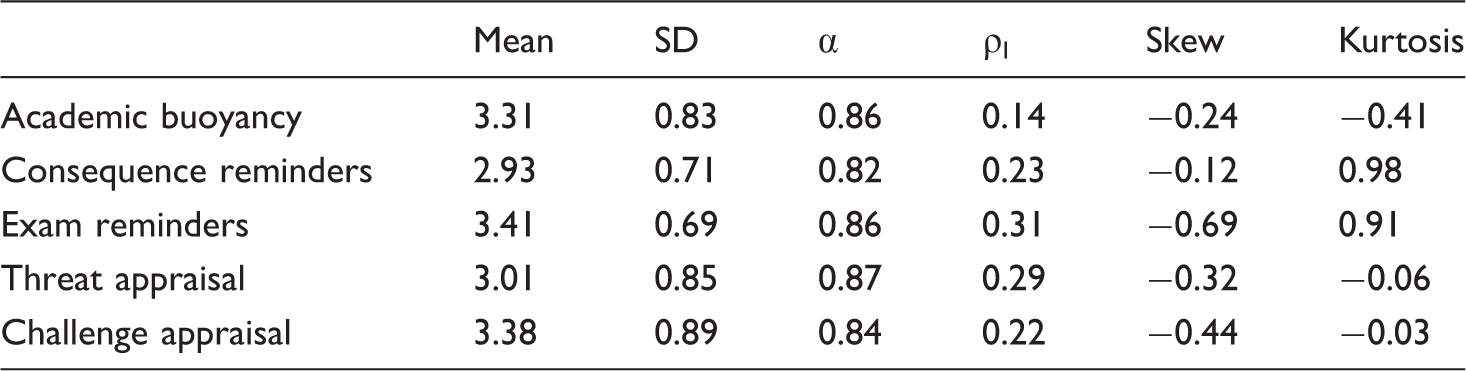
The frequency (consequences and exam reminders) and appraisal (challenge and threat) of fear appeals in mathematics lessons were measured using the 14-item revised Teacher's Use of Fear Appeals Questionnaire (Putwain & Symes, 2014). All items were adapted to specifically refer to mathematics. The frequency of consequence reminders and exam reminders were measured with three items each (e.g. ‘How often does your teacher tell you that you will find it difficult to get a good job if you fail GCSE mathematics?’ for consequence reminders and ‘How often does your teacher tell you that your mathematics GCSE exam is getting nearer?’ for exam reminders). The appraisal of fear appeals as threatening or challenging was measured using four items each (e.g. ‘Do you feel worried when your teacher tells you that mathematics GCSE is important in order to get a good job?’ for a threat appraisal and ‘Do you feel motivated to work hard when your teacher tells you that your mathematics GCSE exam is getting nearer?’ for a challenge appraisal). Participants responded to items using a five-point scale (5 = strongly agree, 3 = neither, 1 = strongly disagree). A higher score using this metric indicates consequence and exam reminders were used more frequently (for the frequency of consequences and exams items) and were appraised as more threatening and/ or challenging (for the appraisal items). Previous research using this scale has found data to show excellent construct validity, divergent and convergent validity, and reliability (Putwain & Symes, 2014; Putwain et al. 2014). The internal reliability of all four scales in the present study (see Table 1) were good (Cronbach's α ≥ 0.80).
Procedure
Schools that were participating in a project designed to examine the motivational climate in students prior to their high-stakes GCSE examinations were invited to participate in this phase of the project via a written letter. Three schools replied and institutional consent was provided by the head teacher. Individual written consent was sought from participating students and passive consent from parents via advertising the project in the school newsletter. Participants were also offered the right to withdraw their data retrospectively via their class teacher. No students took up this option. Self-report data were collected in a single session during a period of the school timetable used for administrative and pastoral purposes, referred to as form period, by the students' regular form tutor. Thus data were not necessarily collected in the presence of the students' regular mathematics teacher. The form tutor was supplied with an instruction sheet that explained the aims of the research, ethical issues (e.g. right to withdraw data), and other administrative issues (e.g. that questions were not part of a test, that there were no correct answers, and so on).
Results
Preliminary analyses
Missing data were observed in 5.82% of cases and represented 2.12% of variables. Patterns of missing data did not co-vary with any other observed variables and so missing data were imputed using the expectation maximization algorithm in SPSS v.22 (Little's Test, p > 0.05). Descriptive statistics are reported in Table 1. All scales showed good internal reliability coefficients (Cronbach's α ≥ 0.80) and were normally distributed within acceptable limits (skewness and kurtosis ± 1). Intraclass correlation coefficients (ρI) were estimated from ‘empty’ multilevel models (i.e. with no predictors) using maximum likelihood in SPSS v.22. Fourteen percent of the variance in academic buoyancy, 23% to 31% of the variance in consequence and exam reminders, and 22% to 29% of the variance in the appraisal of fear appeals was attributable to the class level. Subsequent analyses should, therefore, take into account the multilevel structure of the data (Heck & Thomas, 2009).
Bivariate correlations for academic buoyancy and fear appeals (N = 770).
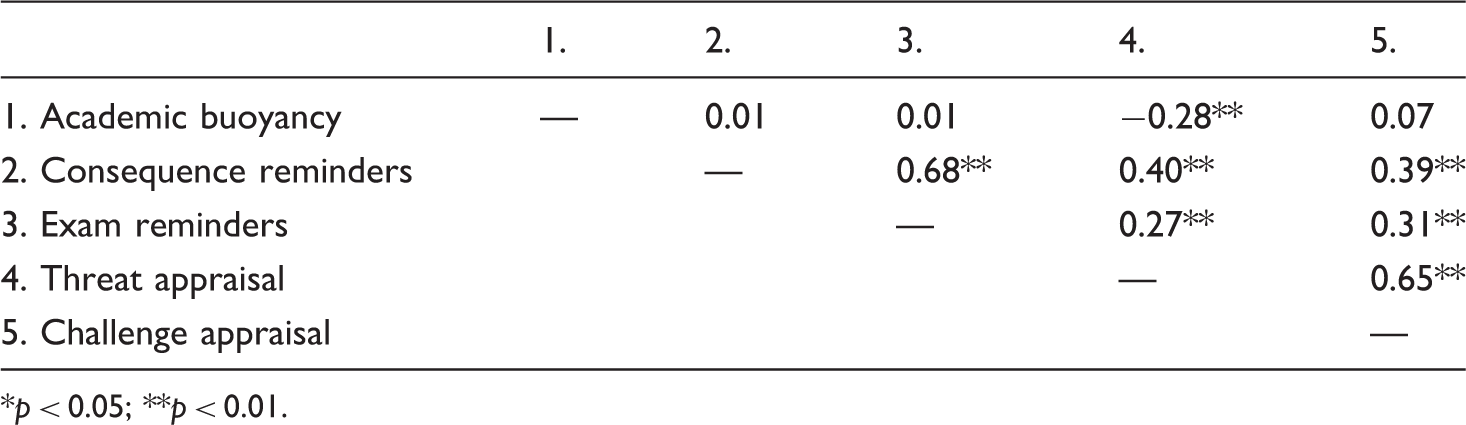
*p < 0.05;
p < 0.01.
Multilevel modelling approach
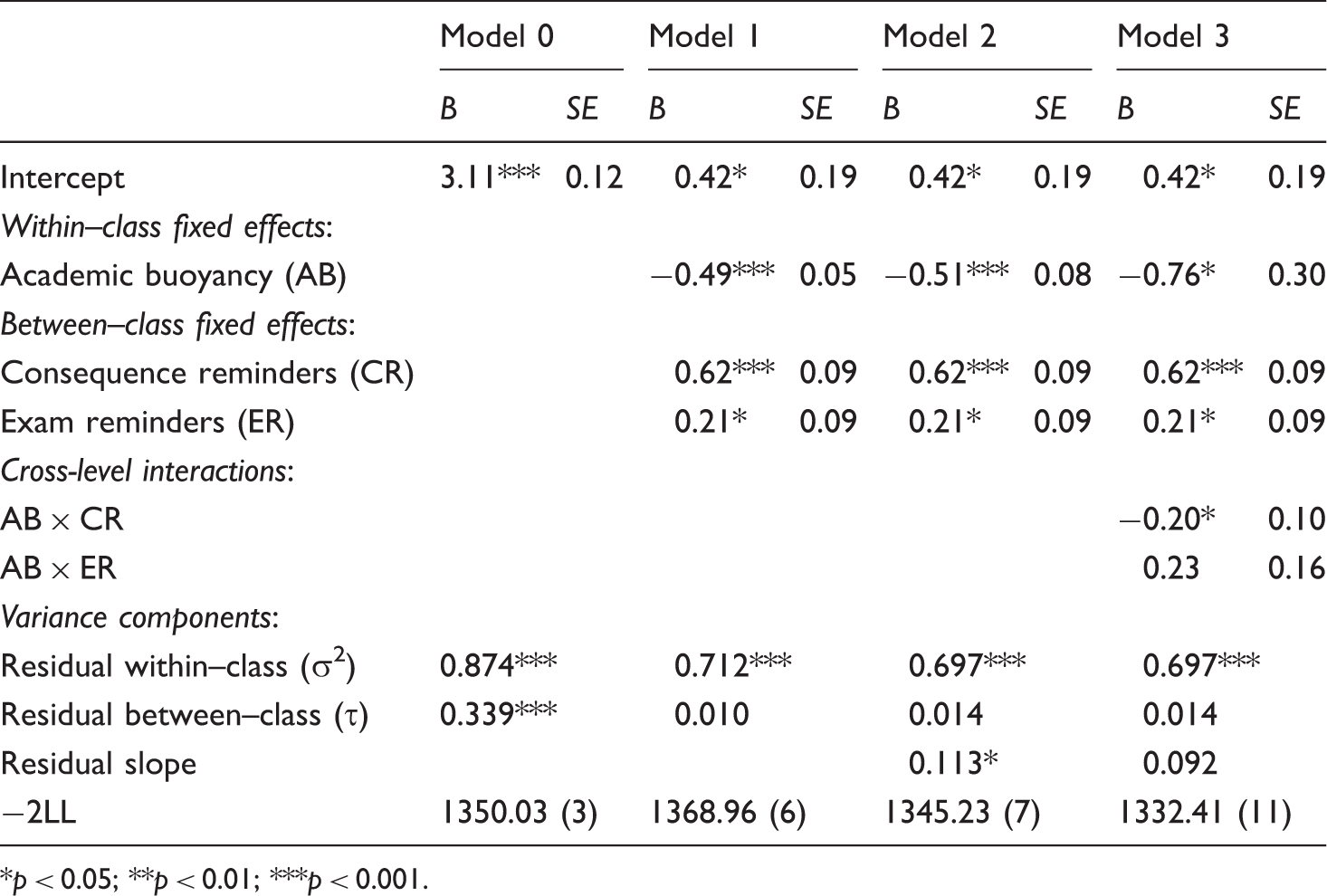
Threat and challenge appraisals were analysed in separate random-intercept multilevel regression analyses estimated using maximum likelihood in SPSS v.22. Model 0 contained no predictors and portioned variance into between (τ) and within-class (σ2) components. Model 1 added group-mean centred academic buoyancy as an individual-level fixed effect and consequence reminders and exam reminders as between-level fixed effects in random-intercept models. Model 2 added random-slopes to examine whether further variance in the relationships between consequence/ exam reminders and threat/challenge appraisal was explained by academic buoyancy. Model 3 examined cross-level interactions between consequence/exam reminders and academic buoyancy in random intercepts and slopes models. Models were compared using the change in the −2 log likelihood (−2LL) statistic (Δ−2LL) where the number of model parameters (shown in parentheses) correspond to a χ2 distribution. A reduction in the −2LL statistic indicates a better fitting model. The reduction in variance, at individual and class levels, in each subsequent model was calculated as a measure of local effect size (see Peugh, 2009).
Multilevel modelling of threat appraisal
The multilevel regression model to predict threat appraisal from academic buoyancy and the frequency of consequence and exam reminders.
p < 0.05;
**p < 0.01;
p < 0.001.
The cross-level interaction between consequence reminders and academic buoyancy was followed with simple slope analyses between consequence reminders and perceived threat at different levels of academic buoyancy (±1SD). The simple slope at high (+1SD) academic buoyancy (B = 0.76, SE = 0.10, p < 0.001) was stronger than at low (−1SD) academic buoyancy (B = 0.55, SE = 010, p < 0.001). Figure 1 demonstrates that students high in academic buoyancy appraise consequence reminders as less threatening than students low in academic buoyancy, the difference is largest when consequence reminders are used less frequently. There is a diminishing return of buoyancy when consequence reminders are used more frequently.
The cross-level interaction between academic buoyancy (within-class) and the frequency of consequence reminders (between-class) for a threat appraisal.
Multilevel modelling of challenge appraisal
The multilevel regression model to predict challenge appraisal from academic buoyancy and the frequency of consequence and exam reminders.

p < 0.05;
p < 0.01;
p < 0.001.
The cross-level interaction between consequence reminders and academic buoyancy was followed with simple slope analyses between consequence reminders and perceived challenge at different levels of academic buoyancy ( ± 1SD). The simple slope at high ( + 1SD) academic buoyancy (B = 0.40, SE = 0.11, p < 0.001) was stronger than at low (− 1SD) academic buoyancy (B = 0.11, SE = 0.09, p > 0.05). Figure 2 demonstrates that highly buoyant students were more likely to appraise more frequent consequence reminders as a challenge than those low in buoyancy.
The cross-level interaction between academic buoyancy (within-class) and the frequency of consequence reminders (between-class) for a challenge appraisal.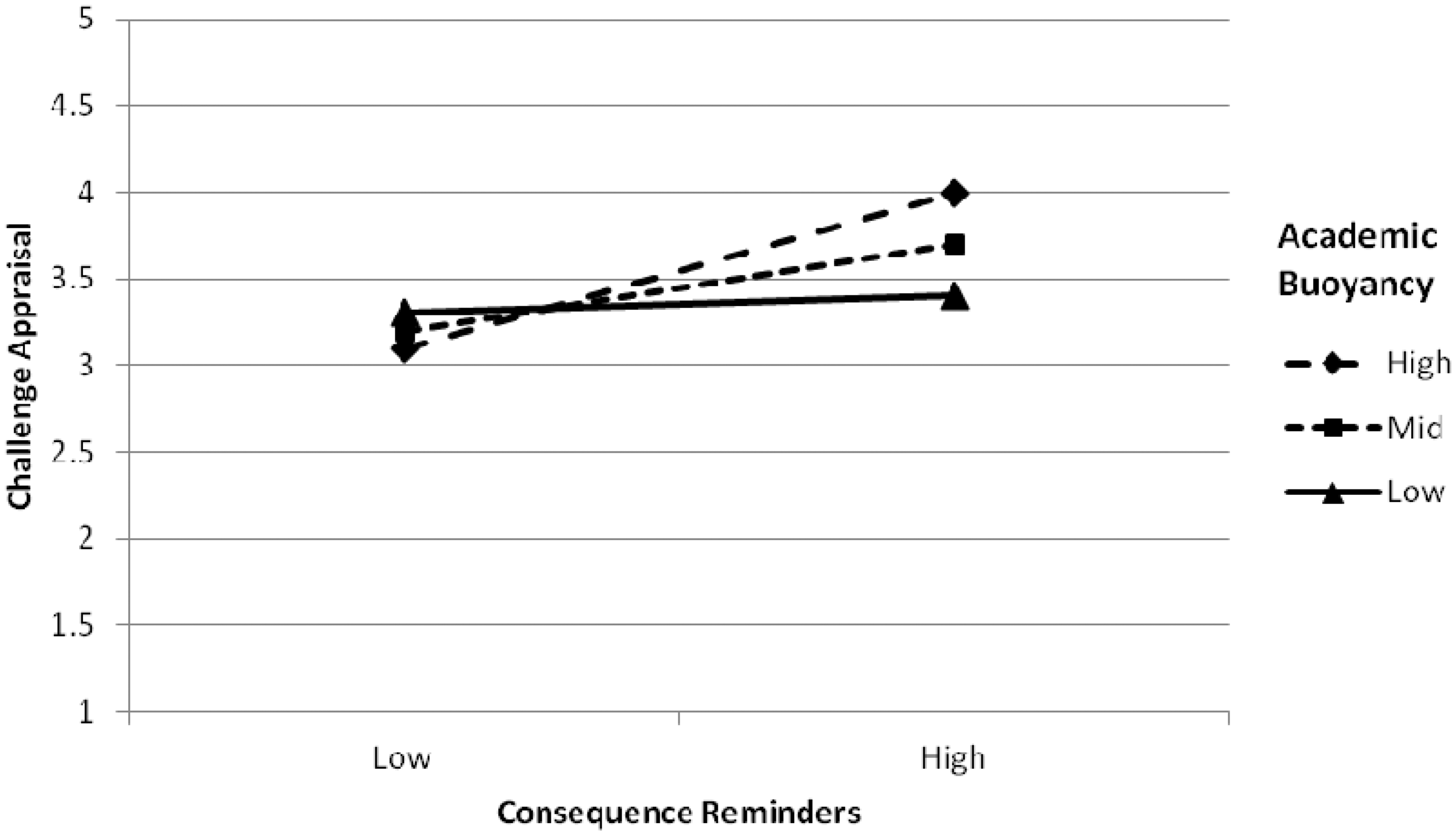
Discussion
The use of high-stakes testing has been linked to a number of undesirable educational outcomes, including increased test anxiety in students (Putwain, 2009) and the adoption of teacher practices such as ‘teaching to the test’ (Zimmerman & Dibenedetto, 2008). Another instructional practice that may result from an increased emphasis on testing is the use of fear appeals to convey the value of exams to students (Putwain & Roberts, 2012; Putwain & Symes, 2014). It is theorized that such messages are used in the hope of inducing a ‘fear of failure’ that will consequently motivate students to prepare well for their exams. Recent research, however, has suggested that different students may interpret fear appeals differently (Putwain & Symes, 2014). Some students may appraise these messages as challenging, whilst others may appraise them as threatening. Furthermore, both types of appraisal are more likely the more frequently fear appeals are used (Putwain et al., 2014). The current study aimed to extend the extant literature by examining whether academic buoyancy moderates the relationship between frequency of fear appeal use, and their appraisal as threatening or challenging. It was hypothesized that students higher in academic buoyancy would be more likely to appraise fear appeals as challenging, and less likely to appraise them as threatening, than students with lower academic buoyancy, especially when used more frequently.
The findings from this study offered partial support for the hypothesis. The appraisal of fear appeals as threatening was more likely in classrooms where consequence and exam reminders were used more frequently. Fear appeals were appraised as more threatening, irrespective of how often they were used, by students with low buoyancy. However, academic buoyancy only seemed to have a moderating effect on the appraisal of consequence reminders, and this effect was strongest when frequency of use was low. This suggests that there is a diminishing impact of buoyancy on threat appraisal. This could be because as frequency of use increases, the student is no longer dealing with a one-off ‘typical’ set back, but may perhaps be dealing with a more sustained, adverse situation and therefore they need to draw on another set of skills (e.g. resilience), rather than buoyancy, to cope with the situation. Another interpretation could be that persistent use of fear appeals leads students to feel unsupported by their teachers, which can have an impact on their anxiety (Hoferichter, Raufelder, & Eid, 2014) and achievement (Chen, 2008). This in turn may make a threat appraisal more likely.
The appraisal of fear appeals as challenging was more likely in classrooms where consequence and exam reminders were used more frequently. Although buoyancy was not related to challenge appraisals directly, it did moderate the magnitude of the relationship between consequence reminders and a challenge appraisal. In line with predictions, this effect was largest when frequency of use was high. When frequency of use was low, it could be argued that the classroom climate does not present a ‘set back’ to students, and thus, buoyancy does not offer an advantage. However, as the use increases, students higher in buoyancy may be able to draw on their beliefs that they can deal with pressure, and therefore are more likely to make a challenge appraisal.
The findings from this study have some important implications. Firstly, if teachers are using fear appeals as a motivational tool, then they might consider using them alongside instructional strategies to boost students' academic buoyancy. This may increase the likelihood that their messages are appraised as intended (i.e. as motivating), and may also make a threat appraisal less likely as frequency of use increases. Secondly, even if student buoyancy is high, teachers should be cautious about using fear appeals too often (especially consequence reminders) as the positive effect of buoyancy on threat appraisals diminishes as fear appeal use increases. There is an important role here for school psychologists in identifying those individuals and groups who are most vulnerable to threat appraisals, and in advising, or working with teachers to ensure that students are able to meet the challenges posed by high-stakes tests in the most adaptive ways. In terms of fear appeals, this might include alerting teachers to the possibility that different students might interpret messages intended to motivate them in different ways. There could be more beneficial ways of communicating the value and worth of high-stakes tests to those individuals and groups who do not believe they are capable of responding well to the pressures of high-stakes testing and therefore likely to respond negatively to fear appeals (i.e. with more test anxiety and lower intrinsic motivation).
Limitations and directions for future research
It may be that academic resilience is needed to help students deal with a sustained exposure to fear appeals, and this is something that future research should examine. It would also be important to examine buoyancy and appraisal of fear appeals over time to see whether a threat and/or challenge appraisal can influence subsequent buoyancy, or whether the impact of buoyancy changes over time. Furthermore, research regarding the use of fear appeals prior to high-stakes examinations has been conducted almost exclusively within the UK. It is not possible to ascertain the extent to which the findings presented here and in other studies generalize to other educational contexts. Research in other countries and jurisdictions is an important next step to understanding more about the use and impact of fear appeals used prior to high stakes examinations.
Conclusion
The findings presented here contribute to the nascent literature examining individual differences in the appraisal of fear appeals. Students who are high in academic buoyancy respond more positively to fear appeals. They appraise them as more challenging and less threatening, although this influence on threat appraisals diminishes when teachers use fear appeals more frequently. It may be beneficial to use fear appeals sparingly with those students who do not perceive themselves to be good at performing under pressure, alongside considering ways to build their buoyancy.
Footnotes
Author biographies
References
Supplementary Material
Please find the following supplemental material available below.
For Open Access articles published under a Creative Commons License, all supplemental material carries the same license as the article it is associated with.
For non-Open Access articles published, all supplemental material carries a non-exclusive license, and permission requests for re-use of supplemental material or any part of supplemental material shall be sent directly to the copyright owner as specified in the copyright notice associated with the article.
