



Abstract
Many studies have examined significant factors associated with school delinquency among adolescents, including relationship violence, property damage, and other serious threats to students’ safety. However, students’ coping behaviors after being victims of or witnesses to violence and other forms of delinquency have not been thoroughly examined. This study contributes to the existing body of knowledge by identifying significant factors at the individual, family, and school levels that affect 226 Caribbean students’ actual reporting of school delinquency to school personnel. The data for this study were obtained from the Caribbean Youth Violence Survey, which studied middle and high school students in five Caribbean countries. The findings of hierarchical multiple regression analyses indicated that female students were more likely than male students to report delinquent behaviors. Family cohesion and family disorganization significantly decreased students’ reporting behaviors after they experienced or witnessed school delinquency. On the other hand, school bonding significantly increased students’ reporting behaviors. This paper concludes with practical implications and future research agendas for developing a comprehensive mechanism to address the dynamics of multidimensional factors that influence students’ active coping behaviors for dealing with school delinquency.
Introduction
Youth violence and delinquency in schools is a worldwide problem. In recent years, this problem has become more prevalent in Caribbean countries, negatively affecting the development and health of these countries’ youth (United Nations Development Programme, 2012). The Caribbean Youth Health Survey (n = 15,695) found that 24.2% of male students (age 16–18) and 11.8% of female students (age 16–18) reported gang involvement (Ohene, Ireland, & Blum, 2005). Furthermore, the Trinidad and Tobago Youth Survey (n = 2,206) showed that about 7.7% of school-age youth reported being gang associates; 6.8% reported former gang affiliation; and 6.2% reported current gang affiliation (Katz & Fox, 2010). This high prevalence of youth delinquency requires further study for interventionists to better understand how students in Caribbean countries react to peers’ delinquent behaviors, including violence that they experience or witness.
School delinquency is defined as “acts against persons or property in school that disrupt the educational processes of teaching and learning processes” (Jenkins, 1995, p. 221). Specifically, school delinquency includes school crime, such as violence; the use or distribution of alcohol and drugs; and school misconduct, such as destroying school property (Jenkins, 1995). Unfortunately, school delinquency is rarely observed or recognized by teachers and school staff members (Craig, Pepler, & Atlas, 2000; Eliot, Cornell, Gregory, & Fan, 2010), and victims of school delinquency are underreported and often unidentified (Yablon, 2017). Furthermore, many students who observe school delinquency are reluctant to intervene in or report this occurrence to adults (Cowie & Olafsson, 2000).
Better methods for detecting and intervening in school delinquency are essential to promoting safe school environments for students (Yablon, 2017). Reports from student victims and witnesses can be more effective in identifying patterns and perpetrators of school delinquency than gathering information from identified perpetrators of school delinquency (Yablon, 2017). For this reason, recent research has focused on identifying specific conditions that encourage students to report their witnessing or direct experiences of violent incidents in their schools (Eliot et al., 2010; Pozzoli, Gini, & Vieno, 2012; Syvertsen, Flanagan, & Stout, 2009; Williams & Cornell, 2006). However, the majority of prior studies in this vein have examined students’ willingness or intention to report school delinquency in order to predict students’ reporting behaviors (Connell, Barbieri, & Reingle Gonzalez, 2015; Syvertsen et al., 2009; Wilson-Simmons, Dash, Tehranifar, O’donnell, & Stueve, 2006). Although students’ perceived willingness to report school delinquency might be a good proxy for the actual reporting of school delinquency, a certain gap exists between willingness to report and actual reporting. Subsequent research must examine which factors contribute to students’ actual reporting behaviors regarding school delinquency.
Most existing studies of adolescent delinquency target adolescent populations in developed countries such as the United States. These studies suggested that students’ coping behaviors in reaction to victimization or witnessing school delinquency were influenced by various risk and protective factors at the individual, family, and school levels. However, these studies tend to examine the effect of a particular domain such as a school-level factor on students’ coping, rather than addressing multiple domains comprehensively (e.g. Connell et al., 2015; Eliot et al., 2010). We have attempted to fill the gap by identifying multidimensional factors at the individual, family, and school levels that encourage or discourage students’ actual reports to adults when those students are exposed to victimized or witness school delinquency. Moreover, we look beyond developed countries by assessing delinquency reporting in schools in Caribbean countries. Although some studies have focused on Caribbean countries and examined the prevalence of school violence (Ohene et al., 2005) and the risk and protective factors affecting youth violence or gang involvement (Blum & Ireland, 2004; Katz, Maguire, & Choate, 2011; Maguire & Fishbein, 2016; Maguire, Wells, & Katz, 2011), these studies did not analyze how students in Caribbean countries respond to delinquent behaviors at school (Gentle-Genitty et al., 2017).
This study examines the major factors that affect Caribbean students’ reporting (or not) of school delinquency. Because individuals’ behaviors are impacted by the environmental contexts in which they live and interact (Bronfenbrenner & Morris, 1998), this study utilizes an ecological approach that considers the joint contributions of individual, family, and school factors on students’ reporting behaviors regarding school delinquency. Our study will offer new insights into factors affecting students’ coping behaviors regarding school delinquency and suggest useful, practical implications for families, schools, and communities as they work to prevent and reduce school delinquency.
Literature review
Individual factors
Students’ individual characteristics impact their likelihood of reporting school delinquency to adults. Earlier studies have consistently reported that girls are more likely than boys to report school violence that targeted them or which they witnessed (Eliot et al., 2010; Fry et al., 2014; Williams & Cornell, 2006). More than boys, girls tend to view seeking help from school or authorities as the best strategy for stopping peer aggression and bullying (Hunter, Boyle, & Warden, 2004). Girls also are more likely than boys to intervene in episodes of school delinquency (e.g. bullying, peer aggression, and friends’ risk-taking behavior) by reporting perpetrators to school staff or giving direct help (Fry et al., 2014; Oh & Hazler, 2009; Syvertsen et al., 2009). This is possibly because, as one study showed, boys tend to believe that seeking help is not manly or socially acceptable (Hunter et al., 2004).
Several studies have also suggested that the likelihood of reporting school delinquency to adults is associated with students’ age. The literature on school bullying consistently shows that older students are less likely than younger students to seek help or intervene in bullying (Pozzoli & Gini, 2010; Syvertsen et al., 2009; Williams & Cornell, 2006). As students grow older, they become more reluctant to seek help from teachers or other adults against bullies (Oliver & Candappa, 2007). They are also less likely to help victims of bullying and more likely to remain as passive bystanders (Pozzoli & Gini, 2010). A developmental perspective explains these findings: older youth tend to pursue independence, which can lead to passive coping behaviors in school delinquency (Eliot et al., 2010).
Other research has shown that members of ethnic minority groups are often reluctant to seek help in risk situations at school (Eliot et al., 2010; Fry et al., 2014). Minority students tend to receive discrimination and such experiences can build a sense of mistrust toward school authorities and disengagement from school activities (Nickerson, Helms, & Terrell, 1994). Eliot et al.’s (2010) study sampled 7318 U.S. high school students found that black students were less willing than students of any other racial/ethnic group to seek help from adults at school for bullying and threats of violence (Eliot et al., 2010). However, the effect of ethnicity/race found in this study might differ in Caribbean countries, given African Caribbean people are a majority in many Caribbean societies. Even though there is a lack of evidence regarding the impact of race on reporting behaviors in Caribbean countries, we hypothesize that non-black students who might be minority groups in Caribbean schools might be less likely than black students to report school violence and delinquency to adults in schools.
Family factors
Although the majority of studies have discussed family factors that influence students’ aggressive behaviors or victimization at school (Higuita-Gutiérrez & Cardona-Arias, 2017; Holt, Kaufman Kantor, & Finkelhor, 2008; Low & Espelage, 2013), little is known about the family factors that promote students’ active coping behaviors when they experience or witnesses school delinquency. Because youth are more likely to reveal their problems occurring at school to a parent before reporting to a teacher (Offrey & Rinaldi, 2017), it is especially important to determine which family factors contribute to students’ coping behaviors after they have witnessed or experienced school delinquency.
The extensive literature on child–parent attachments has consistently shown that a child in a securely attached relationship with their primary caregiver is likely to develop self-confidence, a key trait for overcoming life challenges, including risks at school (Fallon & Bowles, 2001). Emotional and instrumental support from parents can mitigate the negative impact of school violence on children and enhance children’s social competence, which in turn increases their active coping behaviors in response to school violence (Li et al., 2015). One qualitative study showed that adolescents who did not have close relationships with their parents were less likely to reveal sexual assault immediately or voluntarily (Fehler-Cabral & Campbell, 2013). Other empirical studies found that parental support and higher levels of family functioning increased student victims’ likelihood of reporting of dating violence (Hedge, Sianko, & McDonell, 2017) as well as the likelihood of bystander students’ defending victims of bullying and school violence (Li et al., 2015; Rigby & Johnson, 2006).
In addition, family disorganization – which includes exposure to violence in the family – might impact students’ likelihood of seeking help for or reporting instances of school delinquency. Research on school bullying has shown that bullies may learn violent behaviors they witnessed at home and perpetuate these behaviors toward their peers to achieve their goals (Smokowski & Kopasz, 2005). Similarly, a child’s exposure to violence can legitimize their own use of violence in conflict situations (Eriksson & Mazerolle, 2015). Thus, we hypothesize that students raised in disorganized families are less likely to report school violence and delinquency.
School factors
School factors include risk and protective factors which affect students’ reporting behavior regarding school delinquency. The first factor is school bonding, which designates students’ attachment to teachers, school personnel, and peers. School bonding is a multidimensional concept that includes students’ attachment to, commitment to, involvement in, and beliefs about their schools (Gentle-Genitty et al., 2017). School bonding can be positively associated with students’ reporting behavior (Gentle-Genitty et al., 2017). Despite the lack of studies examining the direct relationship between students’ school bonding and reporting behavior, some studies suggest that school factors are associated with students’ coping behaviors towards school violence. For example, having trusting relationships with adults in school can be a primary factor in predicting a student’s willingness to seek help (Eliot et al., 2010; Syvertsen et al., 2009; Yablon, 2017). Many empirical studies have shown that students who perceived that teachers and school staff cared about their issues and supported them were both more likely to seek help in response to bullying and other threats at school (Eliot et al., 2010; Oliver & Candappa, 2007) and more willing to intervene against school violence (Connell et al., 2015). Through instructional and supportive interactions with their teachers, students can learn how to treat their peers and what their responsibility and role are in confronting school-based issues (Syvertsen et al., 2009).
Additionally, students’ likelihood of reporting school delinquency is associated with school environments (Connell et al., 2015). The literature on school violence has consistently demonstrated that unsafe school environments reduce students’ likelihood of actively intervening in and addressing school delinquency (Bandyopadhyay, Cornell, & Konold, 2009; Eliot et al., 2010; Huitsing, Snijders, Van Duijn, & Veenstra, 2014; Syvertsen et al., 2009; Williams & Cornell, 2006). For example, students who perceive that their school is tolerant of bullying issues are less likely to seek help when they are bullied (Williams & Cornell, 2006). As a result, we can assume that an unsafe and violent school environment is a risk factor that reduces students’ likelihood of reporting school delinquency.
Substantial research suggests that youth tend to act in accordance with the group norms that are shared by their peers (Barhight, Hubbard, Grassetti, & Morrow, 2017). Students are more likely to engage in delinquent behaviors when peers participate in the same delinquent behaviors, such as violence (Espelage, Holt, & Henkel, 2003) or drug use (Hampson, Andrews, & Barckley, 2008). Although most research on peer norms has focused on problematic behaviors (Kim & Fletcher, 2018; Voisin & Neilands, 2010), some research has suggested that peer norms and expectations can also promote positive behaviors, such as reporting behaviors or active intervention when witnessing bullying (Pozzoli et al., 2012). We hypothesize that students who have a close relationship with risk-seeking peers will tend to view school delinquency as acceptable and will be less likely to intervene in or report delinquent behaviors by peers.
Current study
Several gaps in the existing literature underline the importance of our study. Past research on students’ reporting and help-seeking behaviors has focused predominately on a particular type of school delinquency (i.e. bullying) instead of multiple forms of school delinquency (Li et al., 2015; Nickerson, Mele, & Princiotta, 2008; Oh & Hazler, 2009; Pozzoli & Gini, 2010). Examining the effects of a particular form of school delinquency in isolation does not fully capture students’ coping behaviors when dealing with risks or threats at school. In addition, the literature on school delinquency has focused mainly on a single domain that influences students’ reporting behaviors. Few studies have examined the effects of multidimensional factors on students’ strategies for coping with school delinquency. Thus, while our findings are preliminary, this study provides an important contribution by exploring the effect of each level (viz. individual, family, and school) on students’ actual reporting behaviors regarding school delinquency.
This study poses three central research questions: (1) Do individual factors predict students’ reporting behavior regarding school delinquency? (2) Do family factors predict students’ reporting behavior regarding school delinquency? (3) Do school factors predict students’ reporting behavior regarding school delinquency?
Methods
Participant and procedure
We used survey data collected from students aged from 11 to 19 years old in five members of the Caribbean Community (CARICOM): Antigua and Barbuda, St. Kitts and Nevis, Saint Lucia, Jamaica, and Trinidad and Tobago. Participants were recruited as part of the Youth-on-Youth Violence Project, which was funded by the Kingdom of Spain. This project was primarily aimed at assessing incidents of school violence and delinquency and identifying the risk and protective factors from students’ perspectives. The detailed procedures for data collection have been described elsewhere (Gentle-Genitty et al., 2017). To collect the data, each country was asked to select specific schools known to be at high risk for violence and gang activities. Next, principals in the selected schools were requested to identify approximately 10% of their student populations by considering a proportion of gender in the schools. Student surveys were pilot tested initially with students in Jamaica and then modified for final use in the five selected CARICOM countries. The finalized surveys were distributed to participants during the summer of 2014. The surveys contained a set of questionnaires that assessed the prevalence of youth violence in the areas of engagement, victimization, witnessing, and reporting. The surveys also included a wide range of questionnaires that measured risk and protective factors in the individual, family, and school domains.
From a total of 512 students completing the surveys, we intentionally selected students aged from 11 to 16 years old to focus on coping behaviors of school delinquency among students who are in the early and middle stages of adolescence. We also choose students who reported experiencing at least one type of victimization and/or witnessing various delinquent behaviors. Thus, the final analytical sample for the present study included 226 students. This sample selection was necessary to identify significant factors associated with reporting school delinquency to school personnel among students who directly or indirectly experience school delinquency. Specific types of school delinquency investigated included (1) weapon carrying, (2) fighting or wounding other students, (3) gang recruitment, (4) gang fights, (5) drug use, (6) drug sales, (7) alcohol use, (8) marijuana use, (9) marijuana sales, (10) sexual harassment, (11) bullying, (12) theft from classrooms, (13) theft or robbery by students, and (14) graffiti/defacing of school property.
Measures
Student surveys included a variety of questionnaires that measured students’ self-reported delinquent behaviors and perceptions of individual, family, and school characteristics. An initial factor analysis was conducted to identify risks and protective factors in multiple domains. The major variables analyzed in this study are presented below:
School delinquency report
Students’ delinquency report was a dummy variable that indicated whether students reported school delinquency to school personnel. To measure this dependent variable, we used a self-reporting assessment tool designed to comprehensively assess students’ experience of the 14 types of school delinquency described above. Students were asked to check “yes” if they reported any types of school delinquency listed above to school personnel, respectively (yes = 1, no = 0). We summed up all the items and then coded 1 if the students’ summing score was 1 or greater, indicating that they had at least one actual report of school delinquency. Otherwise, we coded 0, indicating that they had no actual report.
Individual factors
The following student demographic characteristics were measured and included in the final analysis: age, gender, and ethnicity. Age was categorized as either 11–13 years (reference) or 14–16 years. Gender was categorized as female and male (reference), and ethnicity as black and other (reference). In addition, Students’ status of victim and/or witness was included in the analysis to control for the confounding effects of different experiences of school delinquency. Victimization was dummy coded 1 for students who reported being victimized by at least one type of school delinquency. The same procedure was used to measure the status of witness (witness = 1, non-witness = 0).
Family factors
Two family factors were primary concerns in this study: family disorganization and family cohesion.
Family disorganization is broadly defined as family members’ undesirable characteristics and dysfunctional problems. Specific characteristics of family disorganization include family violence, mental illness, substance abuse, and criminality of family members (Becoña et al., 2012). Accordingly, family disorganization was measured by the following three items rated on a five-point Likert scale: (1) I lived with someone who was a problem drinker or abused drugs; (2) I had a family member go to jail or prison; and (3) I had a member of my family who thought of or attempted suicide. Higher scores represent higher levels of family disorganization (Cronbach’s alpha = .63)
Family cohesion refers to the extent of students’ perceived emotional bonding and support from their family members. This variable was measured by six items rated on a five-point Likert scale (Cronbach’s alpha = .74). Higher scores show stronger perceptions of students regarding their family cohesion. Sample items included “I felt my family loved me or thought I was important” and “I was praised by my family for doing the right thing.”
School factors
School factors examined include school bonding, peer risk involvement, and violent school environments.
School bonding is defined as students’ perceptions of strong bonds to their schools. This concept was measured by the short version of the Perception of School Social Bonding instrument developed by Gentle-Genitty et al. (2017). The scale includes 10 items that measure the four dimensions of school bonding rated on a five-point Likert scale: attachment (two items), commitment (two items), involvement (two items), and belief (four items). Cronbach’s alpha for this scale was .70, and higher scores indicate stronger perceptions of school bonding. Sample items included “I felt that I got along with my teachers (attachment).”; “I tried to do my best in my school (commitment)”; “I participated in or served as a leader in positive school activities (involvement)”; and “I knew the punishment for breaking a school rule (belief).”
Peer risk involvement is defined as the extent to which students have close friends who have engaged in nine risk behaviors (e.g. school suspension, carrying guns or other weapons, selling drugs, gang involvement, etc.) within their schools. Students were asked to rate all the items on a five-point Likert scale, with higher scores indicating a higher number of close friends who participated in at-risk school behaviors (Cronbach’s alpha = .91).
An unsafe school environment was assessed by four items that asked students about their degree of exposure to gang violence within their schools. All items were rated on a five-point Liker scale, and Cronbach’s alpha was .73. Higher scores indicated more frequent exposure of students to gang-related activities within their schools, which could be used as a proxy for unsafe school environments. Sample items included “gangs were a problem in my school” and “I was able to list five or more incidents of gang activity in my school.”
Data analysis
Bivariate statistics were used to document the percentage of students who fell into a particular category (e.g. students’ socio-demographic factors or the percentage of students reporting school delinquency). Logistic regressions were used as multivariate analyses to determine whether respondents’ individual, family, or school factors were related to their actual reporting behavior using Stata 15.0.
Before conducting the logistic regression analysis, we conducted data diagnostics to assess the nature of the data. We first checked outliers, multicollinearity, and missing values. Outliers, including extreme high values, were not found in our interest variables. We assessed multicollinearity using the variance inflation factor (VIF) to ensure unbiased estimates and did not detect serious multicollinearity (VIF Range: 1.03–1.45). We found that 14% of the cases (n = 31) had missing values. Multiple imputations by chained equations (MICE) in Stata were used to handle the missing data (Royston, 2004). The MICE process produced 50 complete datasets, and the coefficients and standard errors from these datasets were pooled to yield a final single set of estimates. R2s and log-likelihoods were not available with multiple imputation modules in Stata. However, we provided an F test value and confirmed that all models were statistically significant. A sensitivity analysis was conducted to compare the results of the logit models with the original dataset with the imputed datasets. The results showed that no substantial differences were observed among them.
Another factor considered was that the students were grouped within schools, which may violate the assumption of independence; 241 students were clustered in nine schools. To address this issue, first we calculated the intraclass correlation coefficient (ICC) to check the cluster effect at the school level, and we found an ICC of .008, showing that observations in the same schools were not closely correlated. However, we estimated all logit models using robust standard errors clustered at the school level, using Stata’s vce (cluster) command. This command generates robust, unbiased standard errors in the context of clustered data by generalizing the Huber/White/sandwich estimate of variance to account for clustering errors (Lokshin & Sajaia, 2004).
Results
Sample characteristics by student gender, % or Mean (SD).
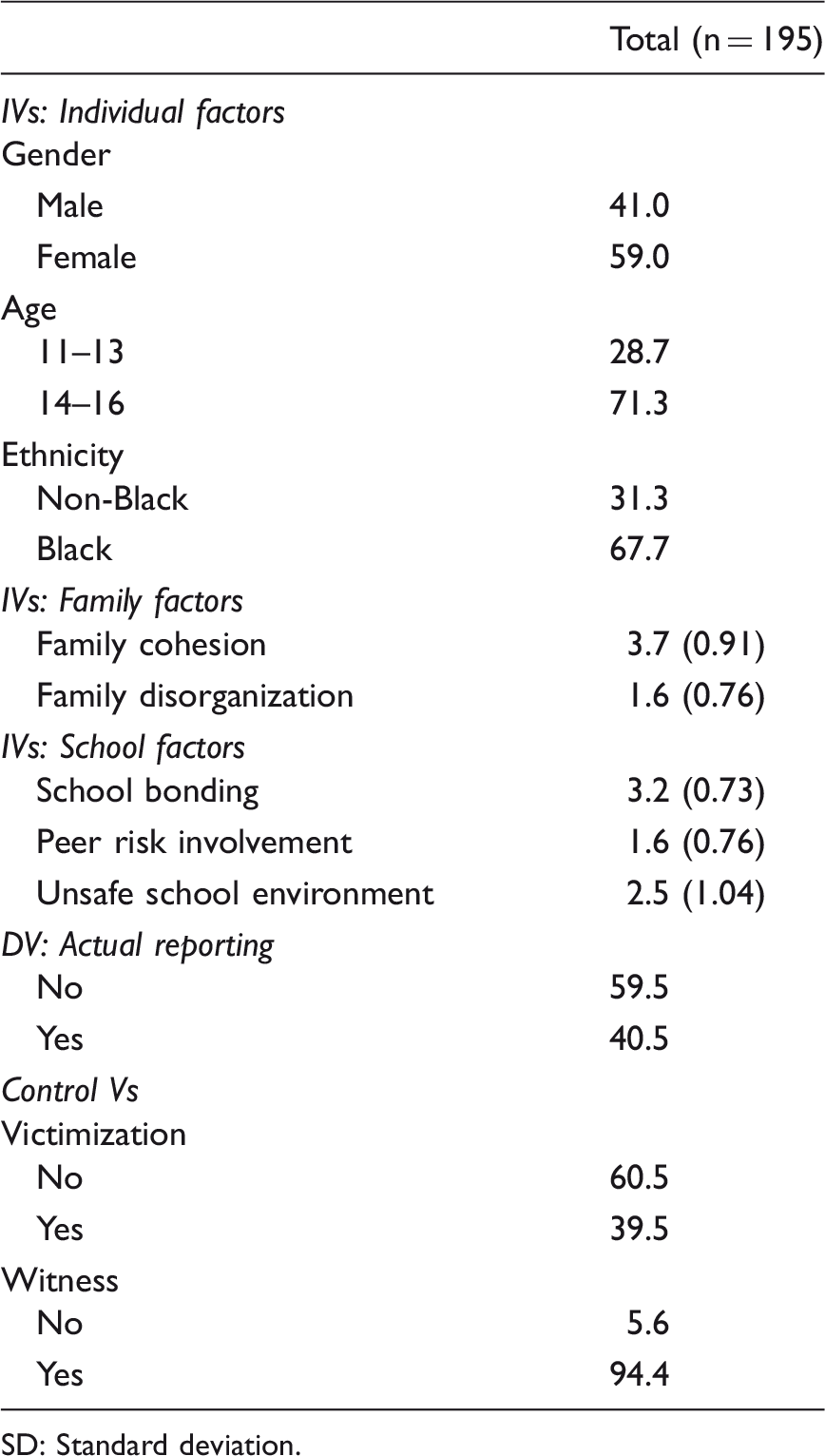
SD: Standard deviation.
About sixty percent of students indicated that they did not report incidents of school delinquency to school adults after experiencing or witnessing them. Approximately 40% of students reported that they were victimized by at least one type of school delinquency out of the 14 types listed in the survey. The majority of students (94.4%) reported that they witnessed at least one type of school delinquency.
Logistic regression predicting students’ reporting behavior of school delinquency (n = 226).
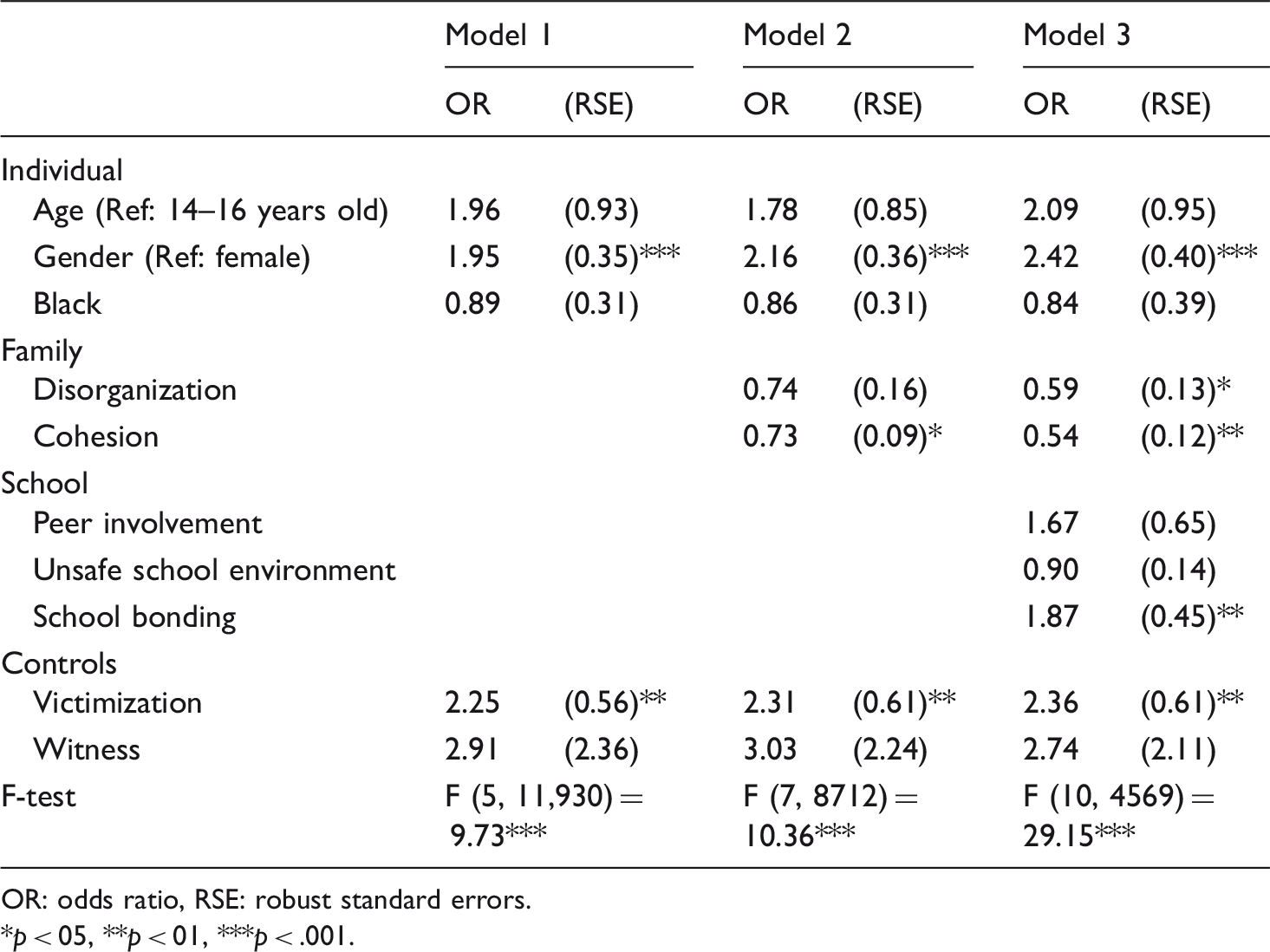
OR: odds ratio, RSE: robust standard errors.
p < 05, **p < 01, ***p < .001.
Discussion
Key findings
Our study investigated multidimensional factors at the individual, family, and school levels affecting Caribbean students’ reporting behavior regarding school delinquency. Overall, our findings suggest that multiple levels of students’ environment can influence their actual reports of school delinquency. In addition, our study suggests that multidimensional factors might reinforce, intersect with, and/or interact with one another in affecting students’ reporting behavior.
Our first research question was whether individual factors had a specific association with students’ reporting behavior regarding school delinquency. Of the individual factors assessed, gender was the only significant factor. In accordance with previous studies (Eliot et al., 2010; Fry et al., 2014; Williams & Cornell, 2006), we found that female students who experienced or witnessed school delinquency were more likely than male students to report this delinquency to school staff. This discrepancy might be explained by the different socialization processes of boys and girls (Kochenderfer-Ladd & Skinner, 2002). Male students tend to be reluctant to report school delinquency to adults because they think doing so is not manly according to gender-based norms (Hunter et al., 2004). These findings might be explained by another study’s finding that female adolescents’ developmental characteristics include communicating more openly and actively to resolve relationship conflict than male adolescents (Syvertsen et al., 2009). Our study highlights the value of developing this research further with an examination of gender’s impact on the individual factors predicting students’ reporting behavior. However, our findings also showed that age and ethnicity were not associated with students’ coping behaviors toward school delinquency. This contrasting finding might be due to the limited range of the students’ age. We only included students aged 11–16 years old, in other words, the early and middle stages of adolescence. Students of this age group might share relatively similar developmental characteristics by comparison with students in late adolescence. Such similarities among students in early and middle adolescence might lead to similar coping behaviors towards school delinquency. In addition, our findings indicated that ethnicity was not a significant factor in students’ reporting behavior regarding school delinquency. Some other studies conducted in Caribbean countries found no significant differences in delinquent behaviors between ethnic groups (e.g. Katz et al., 2011). Perhaps in the Caribbean context, unlike in the US context, ethnicity may not be directly related to students’ delinquency and its coping behaviors. However, there may be a possibility that ethnicity intersects with other individual characteristics such as age, gender, and socioeconomic status. Thus, more studies are needed to further investigate this complex and dynamic relationship based on the intersectionality perspective.
Our second research question was whether family factors had a specific association with students’ reporting behavior regarding school delinquency. Interestingly, our findings showed that students who had strong family cohesion were less likely to report school delinquency to school staff. This result contradicts earlier studies that suggest that a strong family relationship facilitates students’ active coping behaviors, including reporting school violence and threats to school staff (Li et al., 2015). Emotional and instrumental support from families mitigates students’ negative emotions and help them to deal more actively with adverse circumstances at school including school violence (Li et al., 2015). It is possible that students who have strong relationships with parents and other family members report their school issues to family first, or to family only, rather than to school staff.
Our results also showed that family disorganization was a significant predictor of a student’s reporting behavior regarding school delinquency in the final model. It is a longstanding assumption that family violence issues, such as domestic violence and child mistreatment, can increase students’ exposure to school and community violence and/or exacerbate the negative impact of this violence on students’ outcomes (Buka, Stichick, Birdthistle, & Earls, 2001). In other words, students might be less able or willing to report the school delinquency that they experience or witness when they face a double jeopardy situation caused by family violence issues.
In addition, the impact of family disorganization was most significant when school factors were added to the model. Through correlation analysis, we found that family disorganization was positively correlated with peer risk involvement (r = .343, p < .05). That is, students who have been exposed to violence and crime at home are more likely to have peers who engage in risk behaviors. This result may imply that family factors interact with school factors in influencing students’ reporting behaviors. Considering that few studies have examined the effect of family contexts on students’ reporting of school delinquency, this result provides an important contribution to understanding the effect of family factors on school delinquency: it highlights the need to strengthen family engagement in school and integrate these components in prevention programs for school delinquency.
Our third research question was whether school factors had a specific association with students’ reporting behaviors regarding school delinquency. As hypothesized, our results indicate that students with greater school bonding exhibited significantly more reporting behaviors when they experienced or witnessed school delinquency. As a growing body of research has confirmed, a student’s strong bond to school is associated with better health and better academic achievements (Bjerregaard & Cochran, 2012; Rovis, Bezinovic, & Basic, 2015). Attachment to teachers, involvement in and commitment to school activities, and the perception of clear and consistent norms at school all strengthen students’ bonds to their school, a key factor in students’ willingness to report their difficulties (including bullying) to school staff (Yablon, 2010). In contrast, peer risk involvement and an unsafe school environment did not predict students’ reporting behaviors in our model. We interpret this discrepancy to mean that protective factors (i.e. school bonding) play a stronger role than risk factors (i.e. peer risk involvement and unsafe school environment) in students’ reporting behaviors regarding school delinquency.
Implications
Consistent with a person-in-environmental perspective, our findings highlight the fact that addressing a single-level approach is not enough to promote students’ reporting behaviors regarding school delinquency. Future interventions should consider how family, school, and community environments can individually and collectively promote students’ active and healthy coping with threats at school and further discuss how to collaborate to make safe school environments (Wilson-Simmons et al., 2006).
Our results also suggest that intervention programs must consider how differences in the socialization of female and male students contribute to their reactions against school delinquency. In Caribbean society, boys are raised to be “macho,” express a tough exterior, fend for themselves, and engage in socialization activities that prove they are strong and indeed male (Gentle-Genitty et al., 2017). These socialized behaviors might explain why male Caribbean students are less likely to report school delinquency to adults. Thus, it is necessary for school practitioners to distinguish how male and female students cope differently with school delinquency, and to create interventions that increase active coping behaviors among male students in particular.
In addition, family disorganization was significantly associated with students’ reporting behavior. Considering the high prevalence of family violence in Caribbean society, school-based interventions focused on family violence might be helpful in identifying violent families and strengthening students’ appropriate coping behaviors (Crosson-Tower, 2003). Crosson-Tower (2003) argued that school educators and professionals can play an important role in addressing family violence issues because of their day-to-day interactions with and easy access to students. This study also suggested that various school-based programs could help prevent and resolve family violence issues. For example, it would be beneficial to provide students with opportunities to strengthen their problem-solving and self-protection skills (Crosson-Tower, 2003). In addition, schools can offer families programs and resources that enhance their ability to nurture their children’s development and well-being. Specific programs for families may include parenting programs to enhance parents’ knowledge of child development; after-school care programs to reduce parenting responsibilities; and referrals to community resources to improve economic, health, and social outcomes for children.
Our findings build on Crosson-Tower’s (2003) claims by identifying school bonding as a high-impact intervention for promoting positive coping behaviors in reaction to school delinquency. Interventions that provide students with opportunities and skills for school involvement should also increase their teacher attachment and school commitment. Furthermore, many studies have shown the importance of academic competence in school involvement (Catalano, Oesterle, Fleming, & Hawkins, 2004; Cunningham, 2007). This means that interventions that increase students’ motivations for academic achievement might also increase both their active involvement in school activities and their active coping strategies for school delinquency (Cunningham, 2007). A major reason that Caribbean schools and communities provide few interventions to improve student development is a lack of resources (United Nations Development Programme, 2012). Creating environments with opportunities for students to meaningfully participate in school activities offers a particularly cost-effective intervention because promoting students’ school bonding also supports the development of behaviors that promote academic and social success and helps students feel physically and emotionally safe in school.
Perhaps the most general finding of this study is that multidimensional factors at the individual, family, and school levels all simultaneously influence students’ reporting behaviors. Strong partnerships between students, families, schools, and communities must be created and maintained to provide comprehensive, multi-level programs that effectively reduce school delinquency. The Safe Schools/Healthy Students initiative, a federally funded program in the United States to address school violence through school–community partnerships, is an excellent model of how a school–community partnership can effectively reduce school delinquency. Safe Schools/Healthy Students brings together a variety of stakeholders to comprehensively intervene in school violence, particularly in the following areas: safe school environments; drug prevention; students’ behavioral, social, and emotional development; early childhood development; and school connections with families and communities (Modzeleski et al., 2012).
Limitations and suggestions for future studies
Our findings should be carefully interpreted in light of their limitations. Perhaps the most salient is that our data on students’ actual reporting behavior measured the reporting behaviors of both student victims and student witnesses. Thus, positive responses included both victims’ help-seeking behaviors in response to school delinquency and witnesses’ intervening behaviors when faced with school delinquency. Combining these two types of responses perhaps yielded different findings from those we would have obtained by measuring the two response groups separately. However, we assumed that the two combined categories of responses will have similar characteristics because they are both coping behaviors designed to elicit help from adult school staff. To reduce the possibility of error, we have controlled victim experiences or witness experiences in all the models. Although there are limitations to this measurement, it is important to point out that our result, which measures actual reporting behavior, provides a significant contribution to the literature on school violence as a preliminary study. Future studies should address reporting behaviors with separate samples (i.e. student victim and student witness).
Another limitation of our analysis stems from the measure of the school delinquency reports we analyzed. We measured students’ coping behaviors in response to multiple types of school delinquency such as bullying, drug use, and weapon carrying. Even though measuring multiple types of school delinquency provides sufficient information to understand students’ coping behavior, we must recognize that students’ reactions toward school delinquency might differ depending on the level of seriousness, duration, and relevancy of the delinquency. A validated scale regarding reporting behaviors, including specific contexts of school delinquency, could provide more significant and accurate results.
This study was based on student participants’ self-reported retrospective responses. Self-reported responses possibly include response errors stemming from recall bias and social desirability. Future studies need to include multiple informants, including family, teachers, and official school reports, to more accurately measure students’ coping behaviors. Furthermore, students’ reporting behaviors were measured by binary outcomes (e.g. “yes” or “no”) without specific time frame. This measurement might not fully capture all pertinent details of students’ complex coping processes. Future studies should examine students’ reporting behaviors in situational contexts by examining the time frame, types, influence, and severity of different cases of school delinquency.
Finally, even though individual-, family-, and community- level factors interact in their effects on students’ reporting behavior of school delinquency, our study did not take into account such complex dynamics. Future studies should examine the complex interaction effects of these multidimensional factors on students’ reporting behavior of school delinquency. In addition, future studies should employ rigorous research designs to further examine which multidimensional factors play major roles in predicting students’ reporting behavior of school delinquency.
Footnotes
Declaration of conflicting interests
The author(s) declared no potential conflicts of interest with respect to the research, authorship, and/or publication of this article.
Funding
The author(s) disclosed receipt of the following financial support for the research, authorship and/or publication of this article: The authors would like to thank CARICOM and Spain for providing the funding to assess youth and youth violence in five Caribbean countries.
