



Abstract
Harmonious family relationships are integral to well-being. Given that family relationships are fundamentally interdependent, parents’ well-being may be shaped not only by satisfaction with their own relationships with their family members but also by their perceptions of their family members’ relationships with each other. This study examines how parents’ mental health is shaped by satisfaction with (their perceptions of) the relationships among their children (i.e., perceived children–sibling relationships) and between their spouses and their children (i.e., perceived spouse–child relationships). Analyses using HILDA survey data (N = 43,913 person-years) suggest that parents’ satisfaction with their children’s relationships with each other and their spouse’s relationship with their children are indeed associated with better mental health, primarily through their roles in shaping satisfaction with parent–child and spousal relationships, respectively. Parent–child and spouse–child relationship satisfaction are especially important to mothers’ mental health. Findings contribute to family systems research and offer practical implications for promoting family well-being.
Keywords
Extensive research has established that family relationships play crucial roles in psychological well-being. The bulk of this research has focused on spousal relationships and parent–child relationships, and it suggests that positive aspects of both the spousal relationship and the parent–child relationship are associated with better mental health (see Umberson & Thomeer, 2020). Few studies have examined how parents’ mental health is affected by feelings toward family relationships in which they are not directly involved, such as the relationships among their children, or the relationship between their spouse and their children. Theoretically, however, family relationships are fundamentally linked and interdependent (Cox & Paley, 1997; Elder et al., 2003; Minuchin, 1974). Therefore, not only parents’ own relationships with family members but also their perceptions of family members’ relationships with each other should have the potential to shape psychological well-being. This is likely especially true in today’s increasingly intensive parenting culture where parents—particularly mothers—are made to feel responsible for every aspect of the family environment in which they raise their children (Hays, 1996; Nomaguchi & Milkie, 2020). In this context, feelings about the quality of not only one’s own relationship with one’s children, but also the relationship between one’s partner and one’s children, as well the sibling relationships among one’s children, may influence parents’ mental health. As parenting expectations have intensified over time, scholars have called for more research on how new forms of parental strain and reward affect well-being (Nomaguchi & Milkie, 2020). Responding to this call, I suggest that positive and negative feelings about the relationships among one’s children and about the relationships between one’s spouse and one’s children are understudied forms of parental reward and strain that may be linked to parents’ mental health.
More specifically, in this paper, I use nationally representative Australian panel data from married heterosexual parents to examine how mental health is shaped by satisfaction with the perceived relationships among one’s children (i.e., children–sibling relationships) and the perceived relationships between one’s spouse and one’s children (i.e., spouse–child relationships) (Hypotheses 1a and 1b, respectively). I also examine how satisfaction with one’s own relationships with one’s children plays a role in the link between satisfaction with perceived children–sibling relationships and mental health (Hypothesis 2a) and how satisfaction with one’s own relationship with one’s spouse plays a role in the link between satisfaction with perceived spouse-child relationships and mental health (Hypothesis 2b). Lastly, I examine whether these associations differ for mothers and fathers (Hypothesis 3). This paper contributes to literature on family systems theory and parental well-being and has practical implications for improving mental health interventions that target the entire family unit.
Background
Satisfaction With Perceived Relationships Among Family Members
Family systems theory emphasizes the interdependence of family ties (Cox & Paley, 1997) and suggests that individuals’ well-being can be affected by family relationships that do not directly involve them but instead occur between other family members. Given many scholars’ contention that perceptions matter more to family processes than actual behaviors (e.g., Nomaguchi et al., 2017; Stevens et al., 2006; Young et al., 2014), whatever role the quality of other family members’ relationships plays in one’s own well-being may be due in large part to how one perceives the quality of those relationships (rather than how the other family members themselves directly experience those relationships). Thus, people likely experience better well-being when they think their family members get along with each other, but little research has tested this empirically. More specifically, I expect that parents’ satisfaction with the perceived relationship quality among their children, as well as between their spouse and their children, shapes parents' own mental health.
Perceived Children–Sibling Relationships
Empirical evidence of how parents’ satisfaction with their children’s sibling relationships may shape parents’ own mental health is surprisingly limited. Scholars have commonly suggested, however, that sibling conflict is stressful for parents (Conger et al., 2009; McHale et al., 2016). Although spending time with one’s children is usually emotionally beneficial for parents (Musick et al., 2016), these benefits may be impeded by the perception of relational distance or distress among children. If children do not get along well, time with children may feel less like leisure or play and more like childcare, a comparatively less pleasurable experience for parents (Offer, 2014). Relatedly, having to manage children’s opposing preferences, mediate sibling conflicts, or comfort children with hurt feelings may create a greater sense of parental burden, which in turn is associated with greater depression and anxiety (Russell et al., 2020).
Perceiving more conflictual or emotionally reactive sibling relationships may also impede parents’ well-being by undermining feelings of parental competence and self-efficacy (Albanese et al., 2019; Coleman & Karraker, 2000). Indeed, instilling positive sibling bonds is commonly viewed as part of what being a good parent involves, as suggested by the strong cultural norms cautioning parents to treat their children equally so as not to induce rivalry or conflict (Suitor et al., 2008), and the extensive popular parenting literature on how to promote positive sibling bonds (e.g., Gallagher, 2020; Lee, 2020; Markham, 2017). As one family therapist’s blog cautions parents, “Making sure the kids are getting along is probably one of the biggest challenges you will face as a parent” (Gallagher, 2020). To the extent that this great challenge also comes with great rewards, parents may experience better mental health when they feel like their children do get along; conversely, parents may feel more stress, self-blame, worry, and sadness when they perceive that their children do not get along. As such, I hypothesize: Satisfaction with the perceived relationships among one’s children (i.e., children-sibling relationships) will be associated with better mental health (H1a).
Perceived Spouse–Child Relationships
In the context of the present study’s focus on married parents, parents’ impressions of their spouses’ relationships with their shared children may also play a role in their well-being. Although few studies examine this directly, theoretically related literature suggests that during the transition to parenthood, mothers’ dissatisfaction with fathers’ postpartum parental involvement is associated with greater maternal depression (Biehle & Mickelson, 2012) and perceiving greater dissimilarity in parenting styles is associated with worse postpartum mental health for both mothers and fathers (Don et al., 2013). This past research is insightful for the purposes of the current study to the extent that perceptions of a spouse’s parental involvement and similarity in parenting style remain salient to parents’ mental health beyond the postpartum period and are closely related to satisfaction with perceived spouse–child relationships. Studies outside the transition-to-parenthood literature also suggest that for mothers, perceiving greater engagement from fathers is associated with lower parenting-related stress (Coley & Schindler, 2008; Nomaguchi et al., 2017); these studies focused only on mothers, however, and did not examine effects on broader mental health (e.g., depression). More tangentially related research indicates that perceiving a spouse’s paid work as interfering with family life is associated with greater distress for both mothers and fathers (Young et al., 2014), suggesting that perceptions of spouses’ family involvement (which may involve evaluations of spouse–child relationship quality) can shape parents’ own well-being.
Taken altogether, past literature offers at least some insight into how parents’ mental health may be influenced by not only their own bonds with their children, but also by their feelings about their partners’ bonds with their children. Guided by these insights, I hypothesize: Satisfaction with the perceived relationships between one’s spouse and one’s children (i.e., spouse-child relationships) will be associated with better mental health (H1b).
Impression Spillover: Implications for Mediation
Although parents’ perceptions of their family members’ relationships with each other may shape parents’ mental health directly, they may also shape parents’ mental health indirectly by shaping how parents feel about their own relationships with those family members. Rooted in a family systems framework (Cox & Paley, 1997), the impression spillover hypothesis suggests that one’s feelings about a relationship between other individuals can transfer into feelings about one’s own direct relationships with one or more of those individuals (Kincaid, 2022). As its name implies, impression spillover is similar to the family systems’ concept of “spillover,” or the transfer of feelings between one’s own direct family relationships (Almeida et al., 1999; Erel & Burman, 1995). However, impression spillover focuses instead on how perceptions of the relationships between other family members shape feelings about one’s own relationships with those members. For example, a classic spillover approach would suggest that a mother’s feelings about her relationship with her husband would shape how she feels about her relationships with her children. While the two approaches are not mutually exclusive, an impression spillover approach would instead suggest that a mother’s feelings about the relationships among her children would shape how she feels about her (own) relationships with her children.
The basic logic underlying the impression spillover hypothesis assumes that: (1) people care how their family members treat each other (not just how their family members treat them) and (2) people easily blur their conscious or subconscious lines around family roles/relationships. For instance, if parents care how their family members treat each other, then they will consciously or subconsciously view maintaining “good” sibling relationships (i.e., being a “good” sibling) as part of their children’s responsibility in maintaining “good” parent-child relationships (i.e., being a “good” son/daughter/child) 1 . Perceiving that one’s children treat each other poorly can thus easily transfer into negative feelings toward one’s own relationships with one’s children, such as disappointment, frustration, and dissatisfaction. Past research suggests that the quality of parent–child relationships is, in turn, associated with parents’ well-being (Hong et al., 2021; Nomaguchi, 2012; Reczek & Zhang, 2016). Thus, parent–child relationship satisfaction may act as a mechanism linking satisfaction with perceived children–sibling relationships to parents’ mental health. Put simply, I expect that when people are happy with how their children get along with each other, they will be happier with their own relationships with their children, and when they are happier with their own relationships with their children, they will be happier overall. More formally, I hypothesize: Parent-child relationship satisfaction will help mediate the effect of children-sibling relationship satisfaction on parents’ mental health (H2a).
An impression spillover approach would also suggest that married parents’ negative feelings about each other’s relationships with their children will bleed into negative feelings about their direct relationship with each other. Similar to the example discussed above, if parents care how their family members treat each other, then they will consciously or subconsciously view their spouse’s ability to maintain “good” relationships with their children (i.e., being a “good” parent) as part of their spouse’s responsibility in maintaining a “good” marriage (i.e., being a “good” spouse). If parents perceive that their spouse is unsupportive of, unfair to, or unkind toward one or more of their children, their negative feelings about their spouse’s relationship with their children should therefore diffuse into more general dissatisfaction with their spousal relationship.
In support of this idea, a few studies suggest that satisfaction with the perceived relationships between one’s spouse and one’s children influences marital quality (Galovan et al., 2014; Kincaid, 2022; Pedersen, 2017). Marital quality, in turn, is a key predictor of mental health (e.g., Kiecolt-Glaser & Wilson, 2017; Proulx et al., 2007). While spousal conflict and strain predict depression (e.g., Choi & Marks, 2008; Gilligan et al., 2017), positive feelings about one’s marriage predict better psychological well-being (Kamp Dush & Amato, 2005; Kamp Dush et al., 2008). Spousal relationship satisfaction may therefore serve as a key mechanism linking satisfaction with perceived spouse–child relationships to parents’ mental health. Put simply, I expect that when people are happy with their spouse’s relationships with their children, they will be happier with their spousal relationship, and when they are happier with their spousal relationship, they will be happier overall. More formally, I hypothesize: Spousal relationship satisfaction will help mediate the effect of spouse-child relationship satisfaction on parents’ mental health (H2b).
Gendered Parenting Norms: Implications for Moderation
Gender plays a crucial role in shaping parenting experiences, and as such, may moderate some of the associations described above. Given that mothers face greater cultural pressure to find emotional fulfillment in childrearing (Hays, 1996), their feelings about their relationships with their children may have stronger implications for their well-being. Indeed, past studies of older parents and adult children suggest that perceiving negative treatment from one’s children is associated with anger among mothers but not fathers (Milkie et al., 2008) and parental dissatisfaction with one’s children is associated with more distress for mothers than fathers (Reczek & Zhang, 2016). Furthermore, compared to fathers, mothers spend more time with their children and are more likely to be present when their spouse spends time with their children (Craig et al., 2014; Mattingly & Bianchi, 2003). These gender differences suggest that mothers may be more attuned to their children’s relationships with each other and their spouse’s relationships with their children. Mothers may also be more emotionally invested in fostering harmonious children–sibling and spouse–child relationships, as suggested by their roles in kin-keeping, planning and organizing family events, and encouraging bonding activities (Leach & Braithwaite, 1996; Seery & Crowley, 2000). Thus, I hypothesize: Satisfaction with relationships involving one’s children (i.e., parent–child relationships, perceived children-sibling relationships, and perceived spouse–child relationships) will have a greater association with mental health for mothers than fathers (H3).
Method
Data
Data come from the Household, Income and Labour Dynamics in Australia (HILDA) Survey. HILDA is a nationally representative Australian panel survey that began in 2001 and currently has 20 waves (for more detail see Summerfield et al., 2018). Data were collected at both the household and individual level using a combination of self-completion questionnaires and face-to-face or telephone interviews. The household response rate (66%) and individual response rate (92%) for Wave 1 are comparable to similar panel studies (Wooden et al., 2002). Wave 1 gathered data from 13,969 individuals across 7,682 households.
Descriptive Statistics by Respondent Gender (N = 43,913).
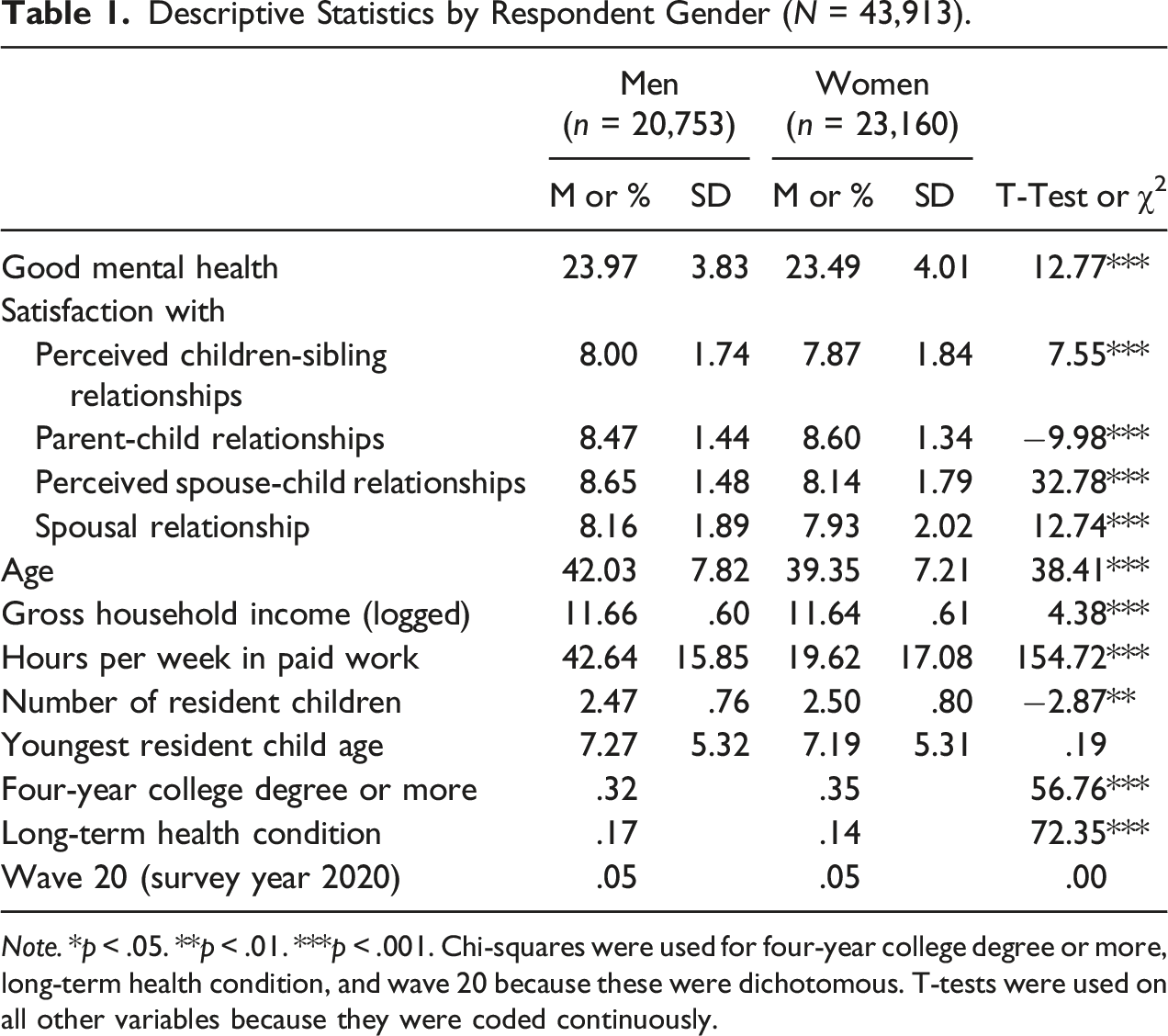
Note. *p < .05. **p < .01. ***p < .001. Chi-squares were used for four-year college degree or more, long-term health condition, and wave 20 because these were dichotomous. T-tests were used on all other variables because they were coded continuously.
Measures
Mental health was measured with the 5-item Mental Health Inventory (MHI). The MHI is a subscale of the SF-36 (a widely used self-complete measure of health and well-being) and is a valid and effective screening tool (Butterworth & Crosier, 2004; Ware & Gandek, 1998). Respondents were asked how frequently they experienced the following in the last four weeks, ranging from 1 (All of the time) to 6 (None of the time): (a) Been a nervous person; (b) Felt so down in the dumps nothing could cheer you up; (c) Felt calm and peaceful, (d) Felt down; (e) Been a happy person. Items C and E were reverse-coded. The sum measure ranges from 5 to 30, with higher scores indicating better mental health (α = .83).
Independent and mediating variables were measured with single items asking respondents to indicate their satisfaction with the following relationships on a scale of zero (Completely dissatisfied) to 10 (Completely satisfied): How well the children in the household get along with each other; Your relationship with your children; Your partner’s relationship with your children; Your relationship with your partner. These measure satisfaction with perceived children–sibling relationships, parent–child relationships, perceived spouse–child relationships, and the spousal relationship, respectively. Step children were not included in these questions. 2
Several time-varying control variables suggested by previous literature were also included. Age, gross household income (logged), number of weekly hours in paid work, number of resident children, and age of youngest child were included as continuous variables. Completion of a bachelor’s degree and having a long-term health condition were included as dichotomous variables. Lastly, although controlling for age accounts for time effects, a dichotomous variable for the 2020 survey year was also included to account for potential COVID-19–related confounds (coded as wave 20 = 1, all other waves = 0). Models with gender interactions included a variable indicating whether the respondent identified as a woman (coded as woman = 1, man = 0).
Analytic Plan
Analyses were conducted in two parts. First, hypotheses were tested with fixed effects regression. Fixed effects models automatically control for any observed or unobserved characteristics that stay the same over time (e.g., personality), thus producing estimates of how within-person change in time-varying independent variables is associated with within-person change in an outcome across the same timepoints. Robust standard errors were used in all models due to the clustering of observations within respondents. Multicollinearity was assessed with the variance inflation factor (VIF) in Model 4. VIFs were all under 3, indicating no serious multicollinearity issues (Allison, 1999). Control variables were included in all models and focal variables were added in the following order: satisfaction with perceived children–sibling relationships (Model 1); satisfaction with parent–child relationships (Model 2); satisfaction with perceived spouse–child relationships (Model 3); satisfaction with the spousal relationship (Model 4). This ordering was important for assessing whether satisfaction with parent–child relationships helps mediate the effect of satisfaction with perceived children–sibling relationships (H2a) and whether satisfaction with the spousal relationship helps mediate the effect of satisfaction with perceived spouse-child relationships (H2b). Interaction terms between gender and each focal independent/mediating variable were then added one by one (Models 5–8). (Although Hypothesis 3 did not predict an interaction between gender and spousal relationship satisfaction, Model 8 tested this for exploratory purposes.)
Second, to establish a clearer time ordering of associations and strengthen confidence in the causal directions proposed in the mediation hypotheses, I also conducted ordinary least squares (OLS) regressions with time-lagged independent/mediating variables. This second analysis complements the fixed effects regressions (wherein data for all variables come from the same timepoints) by examining how parents’ perceptions of the relationships among their family members may predict parents’ satisfaction with their own direct relationships with those family members a year later, which in turn, may predict the mental health they experience another year later. In these models, focal independent variables and controls come from “Time 1” (i.e., second lags, henceforth “T1”), mediating variables come from “Time 2” (i.e., first lags, henceforth “T2”), and the dependent variable comes from “Time 3” (i.e., not lagged, henceforth “T3”). To prepare for this analysis, the sample was restricted to only person-year observations that were a part of “spells” where the participant had valid data for at least three consecutive waves/years. Observations that occurred after the third observation in any spell were dropped to produce a balanced sample (N = 5,684). Missing data were handled using full-information maximum likelihood and Stata’s “sem” and “medsem” (Mehmetoglu, 2018) commands were used to estimate models and perform mediation tests. Robust standard errors were again used in all models. Below, notable bivariate relationships are first summarized before turning to regression results.
Findings
Bivariate Associations
As shown in Table 1, gender differences on focal variables were fairly small. Men had better mental health and higher satisfaction with perceived children–sibling relationships, perceived spouse–child relationships, and spousal relationships, whereas women had higher satisfaction with parent–child relationships. Perceived spouse–child relationships had the largest gender difference of any relationship satisfaction variable. An interesting descriptive pattern emerged where men rated their spouse’s relationships with their shared children better than their own, while women rated their own parent–child relationships better than their spouse’s, suggesting that both men and women agree that mothers’ relationships with their children are better than fathers’. Bivariate correlations were also examined. The largest correlations were between spouse–child relationship satisfaction and spousal relationship satisfaction (r = .64, p < .001) and between spouse–child relationship satisfaction and parent–child relationship satisfaction (r = .62, p < .001).
Fixed Effects Regressions
Fixed Effects Regressions With Good Mental Health as Dependent Variable (N = 43,913).
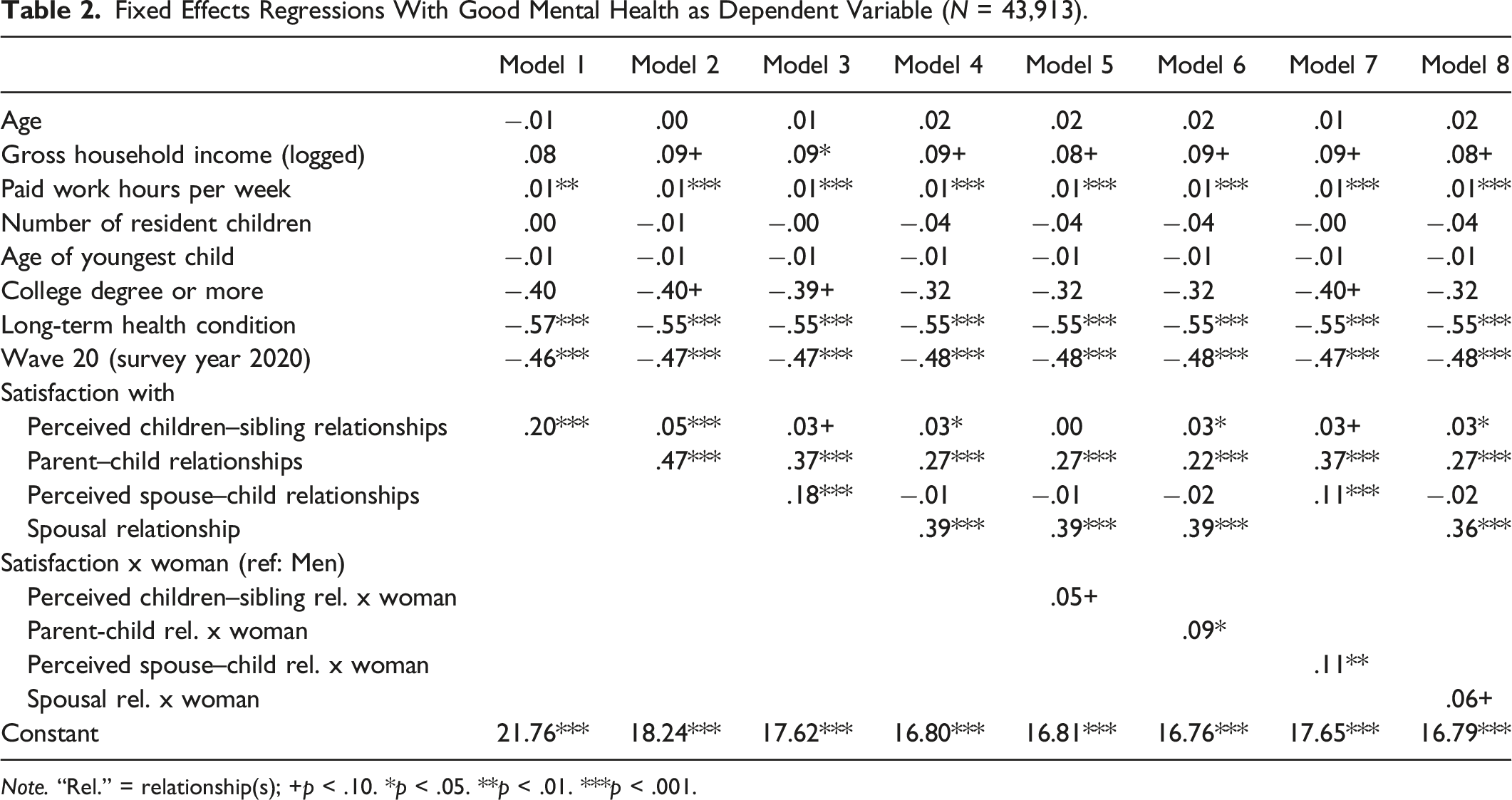
Note. “Rel.” = relationship(s); +p < .10. *p < .05. **p < .01. ***p < .001.
Model 3 shows that satisfaction with perceived spouse–child relationships is associated with better mental health (b = .18, p < .001), supporting Hypothesis 1b. In Model 3, the coefficient for spouse–child relationship satisfaction is significantly larger than the coefficient for children–sibling relationship satisfaction but significantly smaller than the coefficient for parent–child relationship satisfaction (all tests significant at p < .001). 3 This suggests that, considering only the relationships involving one’s children (i.e., prior to accounting for the role of spousal relationship satisfaction), parents’ mental health is shaped most by their evaluations of their own relationships with their children, followed by their evaluations of their spouse’s relationships with their children, followed by their evaluations of their children’s relationships with each other.
Model 4 shows that satisfaction with the spousal relationship is also associated with better mental health (b = .39, p < .001). The coefficient for spouse–child relationship satisfaction shrank drastically (i.e., by roughly 100%) and became non-significant after the inclusion of spousal relationship satisfaction. The coefficient’s loss of both magnitude (b4–b3 = −.19; p < .001) and statistical significance suggest that spousal relationship satisfaction fully mediates the association between satisfaction with perceived spouse–child relationships and mental health, supporting Hypothesis 2b. In Model 4, the coefficient for spousal relationship satisfaction is significantly larger than the other three satisfaction variables and the coefficient for parent–child relationship satisfaction is significantly larger than what remains of the coefficients for (the direct effects of) children–sibling and spouse–child relationship satisfaction (all test significant at p < .001). The coefficients for children–sibling relationship satisfaction and spouse–child relationship satisfaction are not significantly different from each other. The findings presented thus far suggest that spousal relationship satisfaction is more important to parents’ mental health than is parent-child relationship satisfaction, and that perceptions of spouse–child and children–sibling relationships primarily matter to parents’ mental health through their roles in shaping parents’ feelings about their spousal and parent–child relationships, respectively.
Models 5–8 test gender interactions. Interaction terms are significant (at p < .05 or stronger) for satisfaction with parent–child relationships and perceived spouse-child relationships,
4
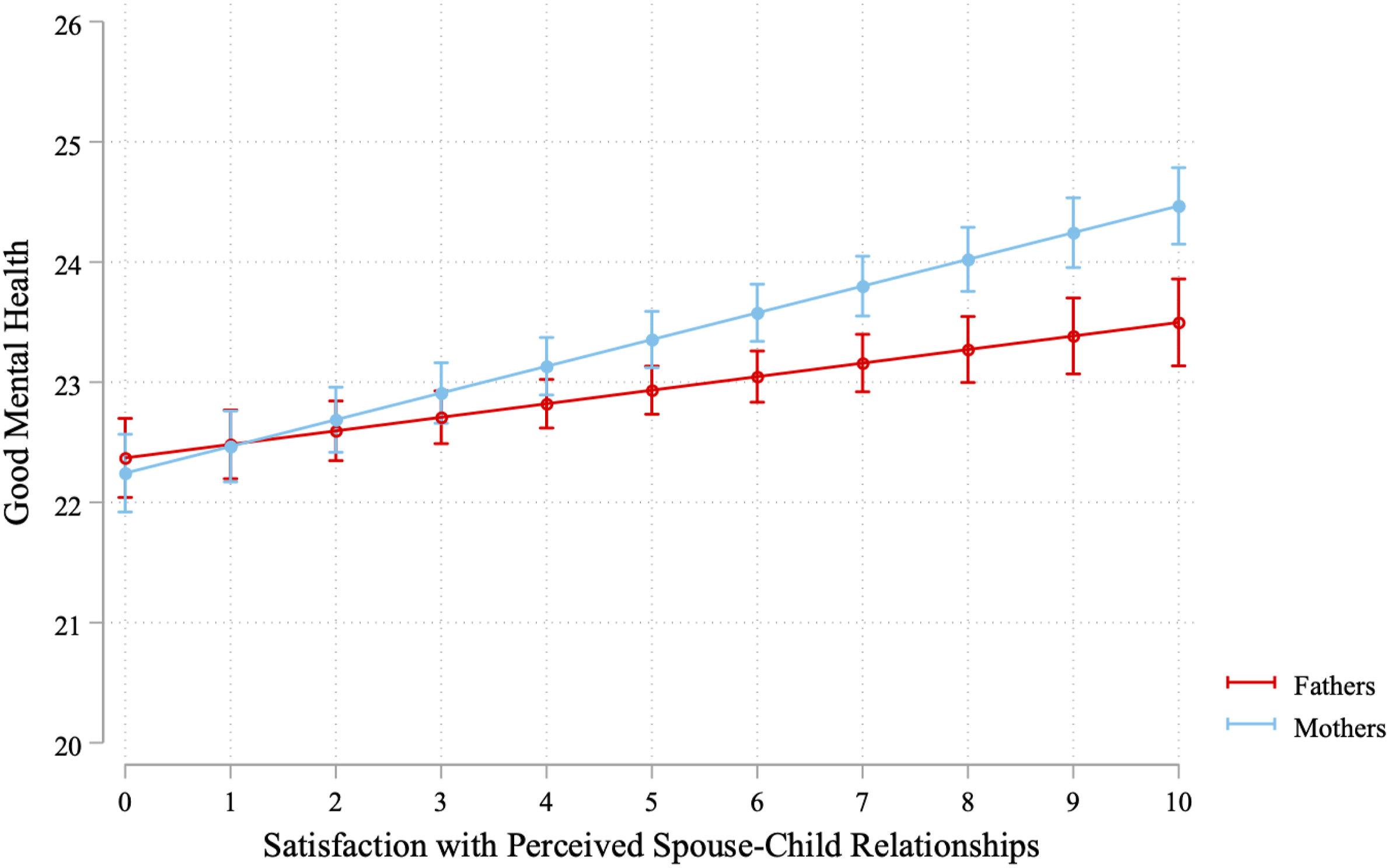
but not perceived children–sibling relationships, thus providing partial support for Hypothesis 3. These interactions are depicted in Figures 1 and 2, respectively. Figure 1 shows that satisfaction with one’s own relationships with one’s children has a greater association with mothers’ mental health than fathers’. Figure 2 shows that satisfaction with the perceived relationships between one’s spouse and one’s children also has a greater association with mothers’ mental health than fathers’—so much so that although mothers and fathers have similarly poor mental health at lower levels of satisfaction with perceived spouse-child relationships, mothers’ mental health is significantly better than fathers’ at higher levels of satisfaction. This is particularly notable given that mothers had worse mental health than fathers on average. Mental health by satisfaction with parent–child relationships and parent gender. Note: Predicted values calculated from Model 6 in Table 2. Mental health by satisfaction with perceived spouse–child relationships and parent gender. Note: Predicted values calculated from Model 7 in Table 2.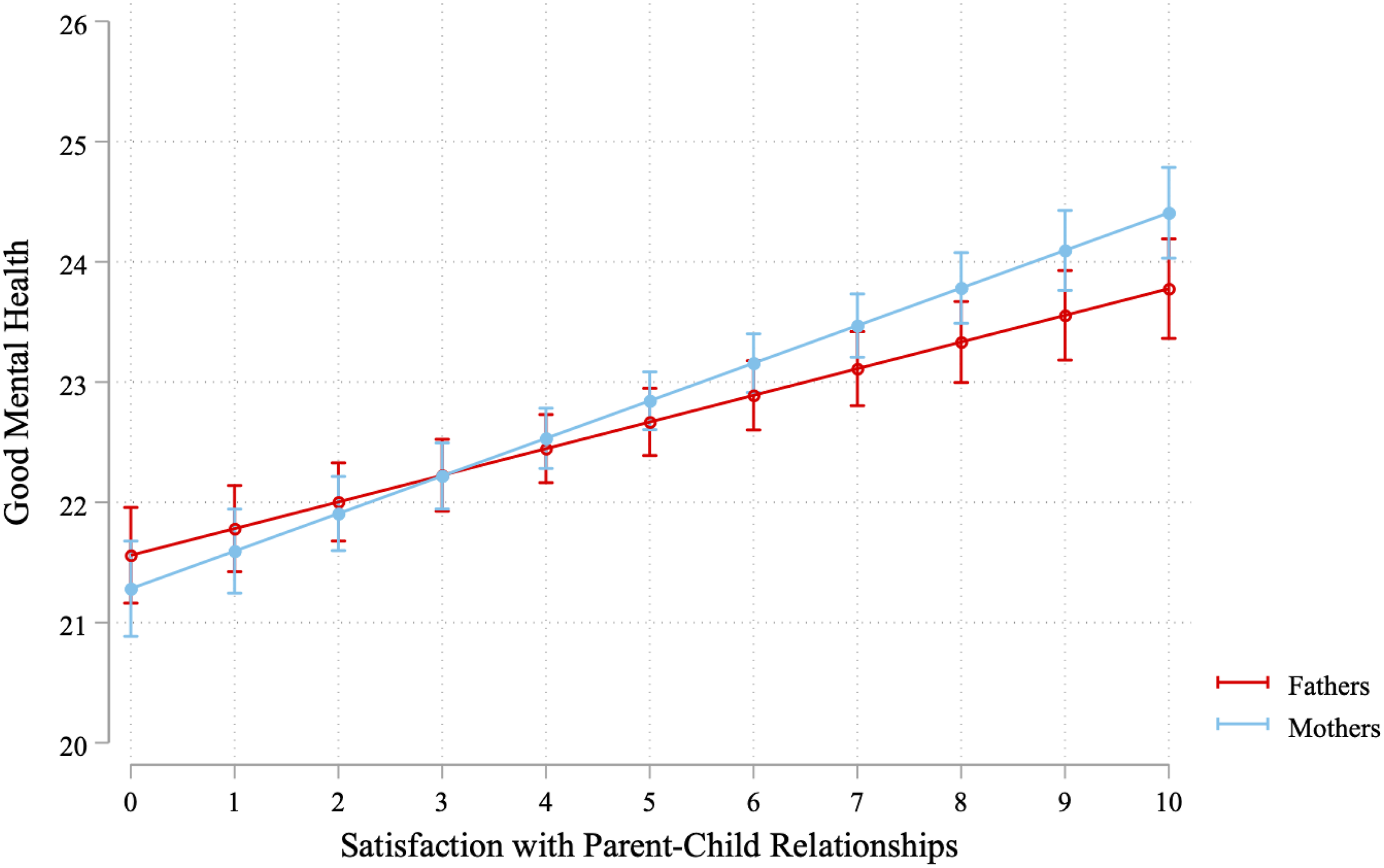
OLS Regressions With Lagged Independent Variables
OLS Regressions With Lagged Independent Variables (N = 5,684).
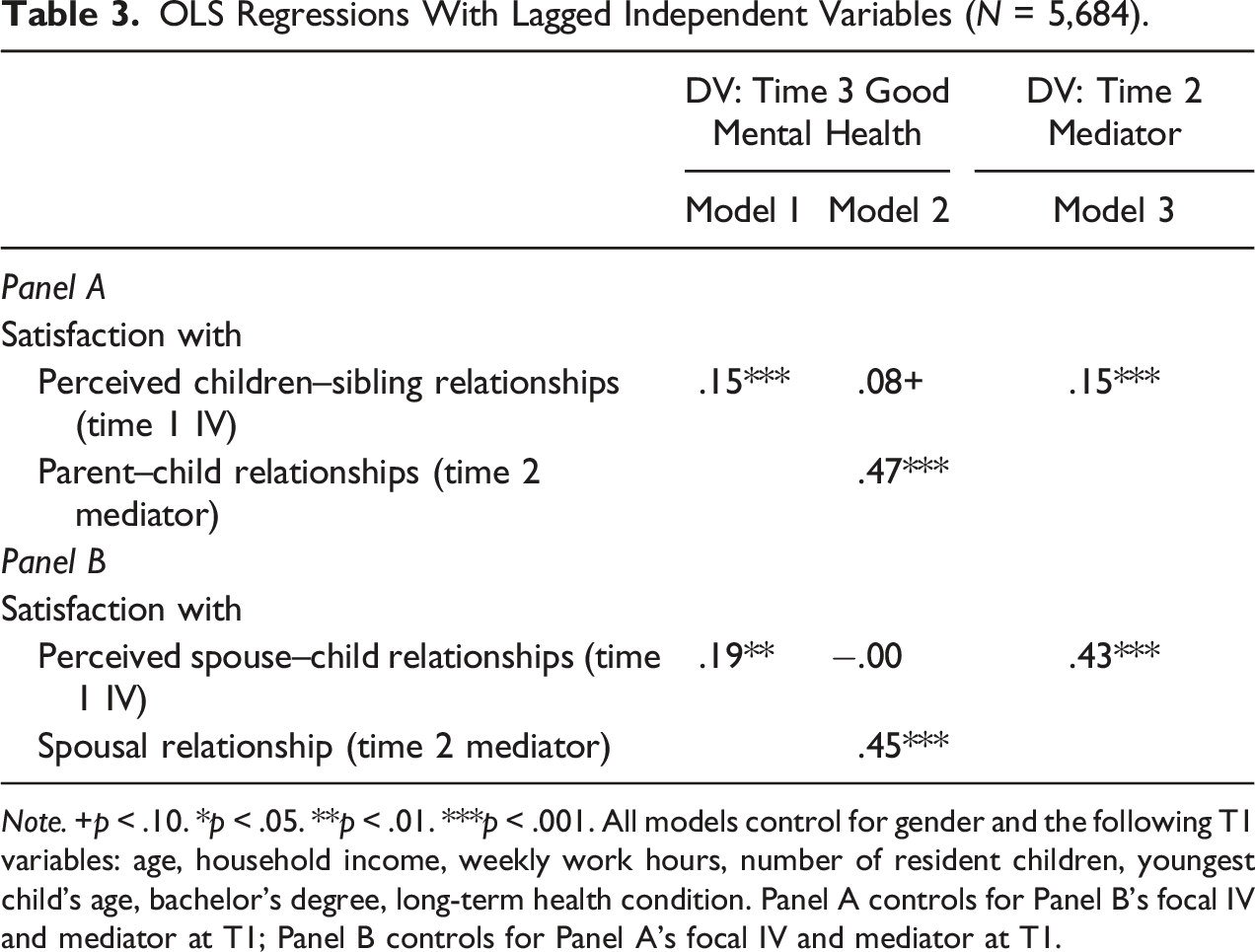
Note. +p < .10. *p < .05. **p < .01. ***p < .001. All models control for gender and the following T1 variables: age, household income, weekly work hours, number of resident children, youngest child’s age, bachelor’s degree, long-term health condition. Panel A controls for Panel B’s focal IV and mediator at T1; Panel B controls for Panel A’s focal IV and mediator at T1.
In Panel B, Model 1 shows that satisfaction with perceived spouse–child relationships at T1 predicts better mental health at T3 (b = .19, p < .10). Model 2 shows that satisfaction with the spousal relationship at T2 also predicts better mental health at T3 (b = .45, p < .001), and that after accounting for this association, the coefficient for satisfaction with perceived spouse–child relationships at T1 shrinks drastically (i.e., by roughly 100%) and becomes non-significant. Finally, Model 3 shows that satisfaction with perceived spouse–child relationships at T1 predicts satisfaction with the spousal relationship at T2 (b = .43, p < .001). Sobel’s z-test of the indirect effect was significant (p < .001), suggesting that spousal relationship satisfaction fully mediates the association between spouse–child relationship satisfaction and later mental health (Baron & Kenny, 1986; Iacobucci et al., 2007). These results are also consistent with findings from the fixed effects analysis.
Discussion and Conclusion
Past research suggests that married parents’ psychological well-being is influenced by the quality of their relationships with their spouses and their children (see Umberson & Thomeer, 2020). Little research, however, examines how parents’ well-being is also shaped by the perceived quality of family relationships in which they are not directly involved. I investigated this question through a fixed effects analysis of Australian panel data from parents in heterosexual marriages with at least two children. Findings revealed that parents’ mental health is shaped not only by satisfaction with their own relationships with their children and their spouses, but also by satisfaction with perceptions of their children’s relationships with each other (i.e., perceived children–sibling relationships) and their spouses’ relationships with their children (i.e., perceived spouse–child relationships) (H1a and H1b, respectively). Moreover, satisfaction with perceived children–sibling relationships is linked to better mental health largely but not entirely through satisfaction with one’s own relationships with one’s children (H2a) and satisfaction with perceived spouse–child relationships is linked to better mental health though satisfaction with the spousal relationship (H2b). The causal directions suggested by these mediation findings were further supported by OLS regressions that used lagged independent variables. More specifically, the time-lagged analysis clarified that satisfaction with perceived relationships among one’s family members can help predict later satisfaction with one’s own direct relationships with those family members, which in turn can help predict later mental health. Finally, the fixed effects analysis also highlighted notable gender differences, as satisfaction with spouse–child relationships and satisfaction with one’s own relationships with one’s children both have stronger links to mothers’ mental health than fathers’ (H3). Collectively, these findings make unique contributions to literature on family systems theory and parental well-being.
The finding that satisfaction with children–sibling relationships was associated with better mental health (both contemporaneously and two years later) suggests that when parents are happier with the relationships among their children, they tend to be (or to become) happier overall. Few previous studies have examined how parents’ mental health is shaped by their satisfaction with their children’s relationships with each other, despite seemingly widespread beliefs that feeling like one’s children do not get along is stressful for parents (e.g., Conger et al., 2009; Gallagher, 2020; Markham, 2017; McHale et al., 2016). This finding offers empirical backing for that popular wisdom. It also supports family systems theory by showing how the broader family context influences people’s well-being (Cox & Paley, 1997), even through perceptions of family relationships that do not directly involve them.
Children–sibling relationship satisfaction influences not only better mental health for parents, but also better satisfaction with parents' own relationships with their children. Notably, this link helped to explain much of the association between satisfaction with perceived children–sibling relationships and parents’ mental health. This suggests that parents may feel disappointment, frustration, and dissatisfaction toward their relationships with their children if they perceive that their children do not get along. These less positive parent–child relationships, in turn, undermine parents’ psychological well-being. These findings support the impression spillover hypothesis, which asserts that feelings about other family members’ relationships with each other (e.g., the perceived bond among one’s children) can transfer into feelings about one’s own direct relationships with those family members (e.g., one’s own bond with one’s children) (Kincaid, 2022).
Findings also suggest that positive impressions of spouse–child relationships are linked to better mental health (both contemporaneously and two years later). Importantly, the association between satisfaction with perceived spouse–child relationships and mental health was explained entirely by satisfaction with the spousal relationship. This suggests that perceiving a positive bond between one’s spouse and one’s children is important for feeling positively about one’s own bond with one’s spouse, thus again supporting the impression spillover hypothesis (Kincaid, 2022). This finding extends past research on the link between perceptions of spouse–child relationships and marital quality (Galovan et al., 2014; Kincaid, 2022; Pedersen, 2017) by suggesting that because of this link, perceptions of spouse–child relationships also indirectly shape parents’ mental health. This finding is notable given that spousal relationship satisfaction had the strongest association with mental health out of any of the family relationships examined, supporting extensive past research on the connections between marital quality and well-being (e.g., Proulx et al., 2007).
Gender also played a role in shaping links between satisfaction with family relationships and parents’ mental health. In support of previous research on parent–child relationship quality and well-being (Hong et al., 2021; Nomaguchi, 2012; Reczek & Zhang, 2016), parents’ satisfaction with their relationships with their children was associated with better mental health; this link was especially strong, however, among mothers. This gender difference comports with similar patterns from studies of older parents’ relationships with their adult children (Milkie et al., 2008; Reczek & Zhang, 2016). The greater effect of parent-child relationship satisfaction among mothers may reflect the greater cultural pressures mothers face to invest their time and energy into their children and to find fulfillment in doing so (Hays, 1996). Indeed, given that mothers spend more time with their children than do fathers and find motherhood highly salient to their identities (Craig et al., 2014; McQuillan et al., 2008), it is logical that their satisfaction with these relationships would be especially important to their well-being.
Satisfaction with the perceived relationships between one’s spouse and one’s children also showed a stronger association with mothers’ mental health compared to fathers’. In fact, although fathers had better mental health on average, mothers’ mental health exceeded fathers’ among parents who perceived highly positive relationships between their spouses and their children. These gender differences may reflect that mothers are more attuned to their spouses’ relationships with their children due to their greater likelihood of being present during fathers’ time with children (Craig et al., 2014) and the efforts they often devote to subsidizing and encouraging fathers’ bonds with their children (Seery & Crowley, 2000). This finding extends literature on mothers’ investment in father-child relationships by showing that this generally greater investment seems to also come with greater rewards when they feel satisfied with those relationships.
Conversely, the association between satisfaction with perceptions of children-sibling relationships and mental health did not differ by gender, suggesting that both mothers and fathers may experience similar psychological benefits from perceiving that their children get along well. Future qualitative research would be useful in shedding light on whether gender shapes this link in other ways—for example, whether mothers and fathers differ in their standards for “getting along well” in the context of their children’s relationships with each other.
This study is, of course, not without limitations. Importantly, all key independent variables were measured with single items. Although multi-item scales would have been preferable, single-item measures are often used to measure relationship quality and are especially common for measuring perceptions of other family members’ experiences (Matthews et al., 2006; Young et al., 2014). Given that measures with lower reliability, including single-item measures, tend to underestimate associations (Allison, 1999), results may have been stronger had multi-item scales been available.
Relatedly, HILDA’s relationship satisfaction questions ask about “children” broadly rather than asking parents about their relationship with each separate child, their spouse’s relationship with each separate child, and each separate child’s relationship with each other. HILDA’s lack of fine-grained data on parents’ satisfaction with all possible relationship dyads in the family makes it impossible to examine, for example, the circumstances under which feelings about the perceived relationship between “child A” and “child B” translate into feelings about one’s relationship with child A, child B, or both children. Moreover, the measures used in this study did not ask about stepchildren. Future research should examine how these processes unfold in blended/step families, extended families, families with same-sex parents, and other family forms.
Despite these limitations, this study makes useful contributions to family research by expanding beyond a conceptual focus on people’s satisfaction with the family relationships directly involving them to also consider people’s satisfaction with their family members’ relationships with each other. More specifically, this study shows that positive perceptions of the relationships between other family members are indeed important for parents’ well-being, and that this is largely because these perceptions “spill over” into parents’ feelings about their own relationships with those family members. This study also offers practical implications for promoting family well-being. Findings suggest that interventions aimed at improving parents’ mental health—especially those that seek to do so by improving their relationships with their children—may benefit from incorporating more targeted efforts at understanding how parents feel about the relationships among their children. Providing parents with tools and strategies to foster better children-sibling relationship quality could be an important component in aiding distressed parents. Similarly, couples therapy practitioners may be able to improve outcomes for clients who are parents by assessing their perceptions of their spouse’s relationships with their children, and working to identify discrepant or distorted perceptions. While this study offers some useful insights, advancing interventions will require that scholars continue to build and expand research on not only peoples’ own relationships with their family members but also their perceptions of their family members’ relationships with each other.
Footnotes
Acknowledgments
Many thanks to Jeremy Reynolds for his helpful comments on analysis and on earlier drafts of this paper.
Declaration of Conflicting Interests
The author(s) declared no potential conflicts of interest with respect to the research, authorship, and/or publication of this article.
Funding
The author(s) received no financial support for the research, authorship, and/or publication of this article.

Notes
Data Availability Statement
The Household, Income and Labour Dynamics in Australia (HILDA) Survey data are not publically available but can be requested from the Australian Government Department of Social Services National Centre for Longitudinal Data (https://dataverse.ada.edu.au/dataverse/ncld) (Summerfield et al., 2018).