



Abstract
Food labeling in the United States has been a topic of public debate and conflict for almost two centuries. Legislative activity has involved consumer–industry–government battles over both mandated requirements for food labeling, industry’s freedom of speech in messaging, and consumers’ struggle to make informed choices in a complex food environment. Information asymmetries have been attributed to the failure of government in terms of enough legislation, industry’s noncompliance with existing regulations, lack of consumer attention to the information available, and industry marketing practices. This overview of food labeling legislation combined with a discussion of contemporary labeling issues makes the case that information asymmetry is likely to persist. The food environment is changing quickly, regulatory authorities are not nimble, regulators often clash with themselves and industry, business has been unable to look far beyond its bottom line, and consumers are unwilling or unable to comprehend and use label information to make choices that maintain and/or improve their health.
Introduction
Food labeling has been a topic of public debate and conflict for almost two centuries in the United States. Federal laws with labeling implications were first promulgated in 1906 with the passage of the Pure Food Act after decades of consumer activism and the exposure of unsafe food processing conditions. Legislative activity has been influenced by consumer–industry–government battles over mandated requirements for food labeling, industry’s freedom of speech in messaging, and consumers’ struggle to make informed choices in a complex food environment. Finding the optimum balance between information provision by industry and consumer use of that information becomes increasingly complicated as the food system becomes more industrialized, product differentiation increases, more sellers vie for the consumer’s dollar, and government regulations become more complex. Early food labeling legislation grew out of food safety concerns and a need for fair competition. However, contemporary arguments have expanded to health claims, production practices, and the amount and placement of label information.
Information asymmetry is defined as sellers having more information than consumers, leading to inefficient markets (Caswell and Mojduszka 1996; Golan et al. 2001). Consumers “vote with their dollar,” revealing preferences through purchases. Imperfect information leads to imperfect consumer purchasing decisions, or adverse selection, resulting in inferior product offerings, extraordinary profits, competitive barriers to entry, inadequate consumer-oriented communication, and decreases in consumer satisfaction (Akerlof 1970; Harris and Carman 1983; Mishra, Heide, and Cort 1998; Redmond 2009; Scherer 1970). These consequences raise the question of how to remedy imperfect or inadequate information. Finding solutions is complicated by the fact that while consumers want succinct information conveyed in simple terms, industry must balance the costs of providing information with business profitability (Childs and Childs 2001; Gardner 2006; Gorski 1997).
Claims made on labels are sometimes not credible or are difficult for consumers to understand without third-party intervention (Caswell and Majduszka 1996; Smith, Chouinard, and Wandschneider 2009). The information landscape has become more complicated as food products have moved from being search goods (easily evaluated before purchase) to experience goods (difficult to evaluate in advance of use) to credence goods (difficult to evaluate even after consumption; Caswell and Majduszka 1996). When product benefits are marketed instead of physical attributes, even experience with a product may not provide adequate information for consumers to determine quality and labels become a quality signal (Caswell and Padburg 1992). Labeling legislation turns experience and credence goods into search goods (Caswell and Mojduszka 1996; Vining and Weimer 1988).
Many information asymmetries in food labeling have been attributed to the failure of government to pass legislation, to industry’s noncompliance with existing regulations, to lack of consumer attention to the information available, and to industry marketing practices (Arndt 1983; Carman and Harris 1986; Redmond 2009; Smith, Chouinard, and Wandschneider 2009; Verbeke 2005). The following overview of US food labeling legislation combined with a discussion of contemporary food labeling concludes that asymmetry of information is likely to continue. It is not the fault of any one consumer, seller, or regulating institution. The food environment is changing quickly; regulatory authorities are not nimble; regulators often clash with themselves and industry; business does not look far beyond their bottom line; and consumers are unwilling or unable to use label information to make choices that maintain and/or improve their health.
Historical Review of Food Labeling
Young (1989) describes the period from about 1820 to 1906 as a time of seven Cs: change, complexity, competition, crusading, coalescence, compromise, and catastrophe. The same descriptors can be applied through time as information asymmetries are traced from the early 1900s to the twenty-first century. Three more Cs are also appropriate: consumer, conflict, and communication. Information asymmetries have persisted through time despite over a century of regulatory efforts. From the early nineteenth century until the third quarter of the twentieth, regulation focused on food safety and packaging. From the 1970s on, the focus switched to food labeling as it relates to the impact of health claims on society. The twenty-first century has brought a host of compounded issues—including “bundled” claims, value-laden claims, and new technologies—that have increased information asymmetries and have made regulatory efforts increasingly complicated.
The Decline of Search Goods and Labeling Legislation: The First One Hundred Years
The nineteenth-century rural-to-urban migration forced the nation’s eating habits to change. The fresh foods available in rural environments were no longer readily accessible to city dwellers. Increasingly, packaged foods with preservatives, artificial colors, and flavors appeared. Choices became more complex as the number of sellers grew (High and Coppin 1988). Packaging hindered consumers’ ability to identify quality. Consumers could only taste, smell, or experience quality after purchase, and search criteria became experience criteria for decision making. As food production became more and more industrialized, the number of adulterated, mislabeled, or unsafe products available for sale also increased: chocolate adulterated with rice and soap, “factory” farm dairies producing milk from sometimes dying cows fed whiskey swill, butter produced without milk, and margarine sold as butter (Beck 1846; Hartley 1842/1977; Young 1989). Margarine’s ingredients were deemed “filthy fats” (Millard, cited in Young 1989). Hartley (1842) pointed to distillery milk as destroying the lives of multitudes. Credence qualities were also appearing in the food supply. Substituting grape sugar and glucose for sorghum and beet sugar might never be detected by nor harm consumers, but the use of adulterants was misleading (Young 1989). Because consumers were unfamiliar with these new products, some businesses took advantage of the confusion and promoted their products using deceptive marketing tactics (High and Cobbin 1988; Wall 2002; Young 1989). Pure food movement crusaders coalesced as both a “reaction not only against unsanitary processes and fake products, [but] against the new food processing practices in general” (High and Cobbin 1988, p. 289). Both consumers and some businesses were concerned about new technologies, fueling the national debate around what constituted “pure” food and the need for defining legislation (High and Cobbin 1988; Wall 2002). There was resistance by both industry and legislators who believed the invisible hand of commerce would omit bad practices. Industry lobbyists were hired to oppose the Pure Food Act and obtain exemptions for the industries that they represented (Kantor 1976). Industry pressured the press, reminding publishers “which side their bread was buttered on” (Mowbray 1967, p. 161). The press steered away from providing information that communicated the food safety conditions of the time. The situation was one of a food safety catastrophe waiting to happen. Public outcry generated by the few stalwart journalistic “muckrakers” and Sinclair Lewis’1906 novel, The Jungle, coalesced with other crusaders and legislators. The Jungle’s vivid descriptions of Chicago’s meatpacking industry and subsequent verifying private and public investigations provided a catalyst for Congress. These events aided the passage of the Federal Meat Inspection Act in addition to the Pure Food Act (Kantor 1976; Young 1989). Passing both laws was the culmination of over nine decades of conflict and compromise by consumers, legislators, and industry (Hutt and Hutt 1984; Young 1989). Previously governed by State law, The Pure Food and Drug Act was the first federal law that regulated interstate commerce, prohibiting misbranding and adulteration of foods (Food and Drug Administration [FDA] 2010). The public had more assurance that their health was protected through the insurance of a safer food supply. Responsibility for administering the Pure Food Act fell to the Bureau of Chemistry, which in 1930 was renamed the Food and Drug Administration (FDA 2010; Hutt and Hutt 1984). Federal inspection revealed many an adulterated food. Inspection notes from a suspect candy factory are shown as Figure 1 . Administration of the Federal Meat Inspection Act was allocated to the Secretary of Agriculture and the Bureau of Animal Husbandry (Young 1989).
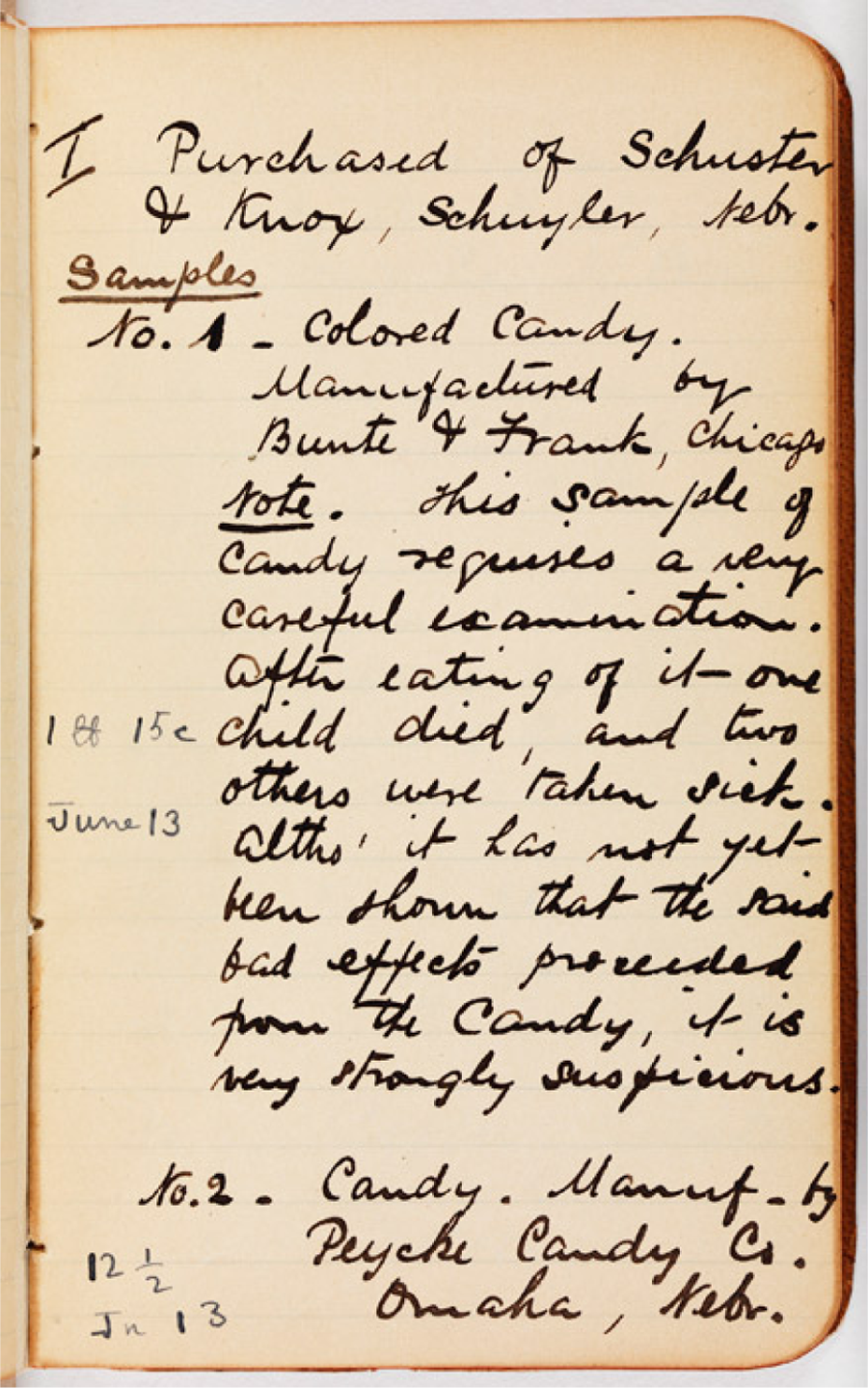
Inspector’s notes about a candy factory, circa 1890 (Courtesy of the U.S. National Archives).
As of 1906, it was illegal to label a food that would deceive the public. Labels were required to be present and accurate regarding weights and measures as well as ingredients. These measures were thought to decrease information asymmetry (Roberts 2003). The 1906 legislation also created precedent for government engagement in consumer information vis-à-vis food and drink, but loopholes, such as deceptive package sizes, existed (Wall 2002). Competing agendas and lack of coordination and communication between the regulating agencies hindered consistent enforcement of these two milestone regulations (Young 1989). Food regulations expanded during the next fifty years, and regulatory responsibilities spread to other agencies, including the Federal Trade Commission (FTC) in 1914. Both the complexity and effectiveness of regulatory enforcement were increased (Neale and Goyder 1982; Rosch 2011).
By the 1930s, consumer advocates lobbied for even more stringent legislation (FDA 2010). In 1938, Congress passed The Federal Food, Drug, and Cosmetic Act, replacing The Pure Food Act of 1906 and expanding the FDA’s regulatory oversight (US Department of Agriculture [USDA] 1938). Building upon the Gould Amendment of 1913 that stipulated that size had to be conspicuously placed on the outside of a package, the 1938 Act created additional food standards for the FDA to enforce. The new legislation also closed many of the regulation gaps relating to food quality and packaging. Starting with the regulation of food standards, specifically tomatoes, and the use of benzoate soda as a preservative (see Figure 2 ), FDA oversight grew by the 1960s to include nearly half of the food supply (FDA 2010; Kamps 2011). The regulatory landscape became even more complex as the number of processed foods, number of food companies, and number of regulations increased. Companies increasingly relied on product differentiation and labeling claims as a marketing strategy to gain increased market share, and the ability to enforce regulations became increasingly difficult. Wall (2002) notes that the agencies had neither the interest nor adequate appropriations to enforce the laws.
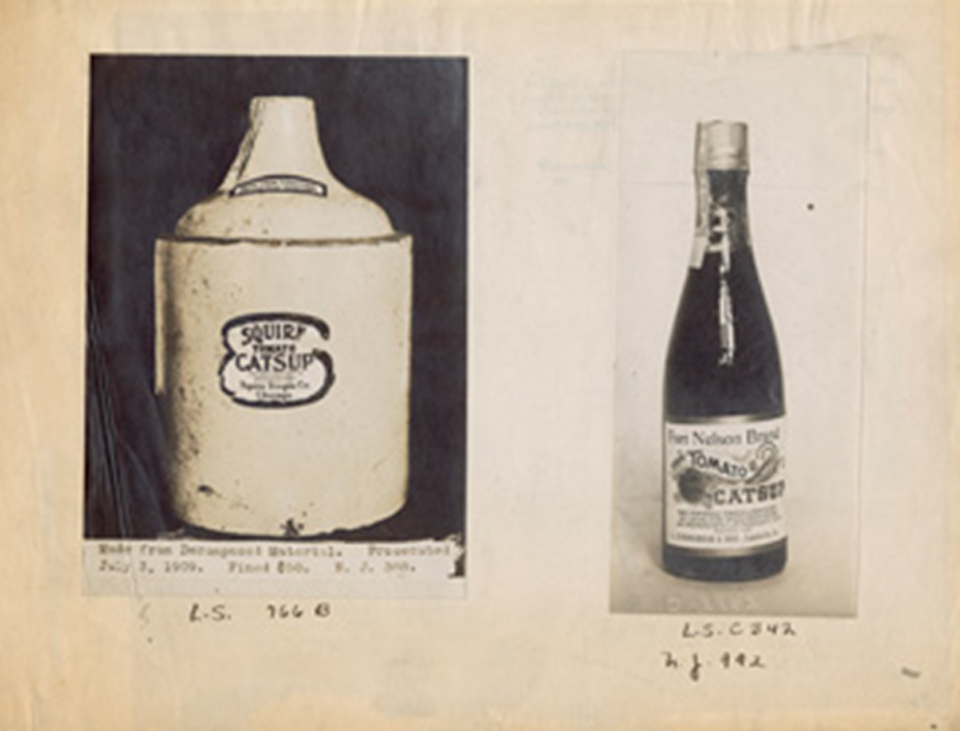
Catsup made with decomposing tomatoes caused bottles to explode without preserving with poisonous benzoate soda (Courtesy of the U.S. National Archives).
The growth in FDA oversight during the mid-twentieth century was in some ways driven by the same food industry changes that helped to motivate the 1906 Pure Food and Drug Act. After World War II, the number of products available for sale and the number of places to buy them grew. Household incomes increased and supermarkets responded by targeting middle-class families; mass consumption was being defined (Deutsch 1999). Deutsch (2010) described the interplay between industry, gender, and economics on the growth of mass marketing to women as “babes in consumerland” (p. 183) and individual consumers’ dollars held little power over industry decisions (Cohen 1998).
From chrome plating and conveyer belt technologies to the invention of plastics and improved instrumentation, productivity in manufacturing was increasing (Field 2005; Weintraub 1939). The slicing and packing machine brought American consumers new product variations, such as sliced Wonder Bread (Smith 2007). The expanding mass production and packaging of processed foods influenced the modern supermarket layout. Between 1940 and the late 1950s, the number of items on supermarket shelves nearly doubled from 3,000 to 5,800 (Smith 2007). Supermarkets lost the personal touch of grocery stores and butcher shops as they adopted more self-service (Deutsch 1999). As the food supply became more complex and complicated to navigate, new legislation with regard to the actual foods on the supermarket shelves was also needed. Subsequent amendments to the 1938 Act included regulation of food and color additives, widening the breadth of food standards under the directive of the FDA (FDA 2010). Table 1 builds on Kurtzweil’s (1993) Milestones in US Food Labeling and provides a chronology of landmark labeling legislation.
Package Label Legislation
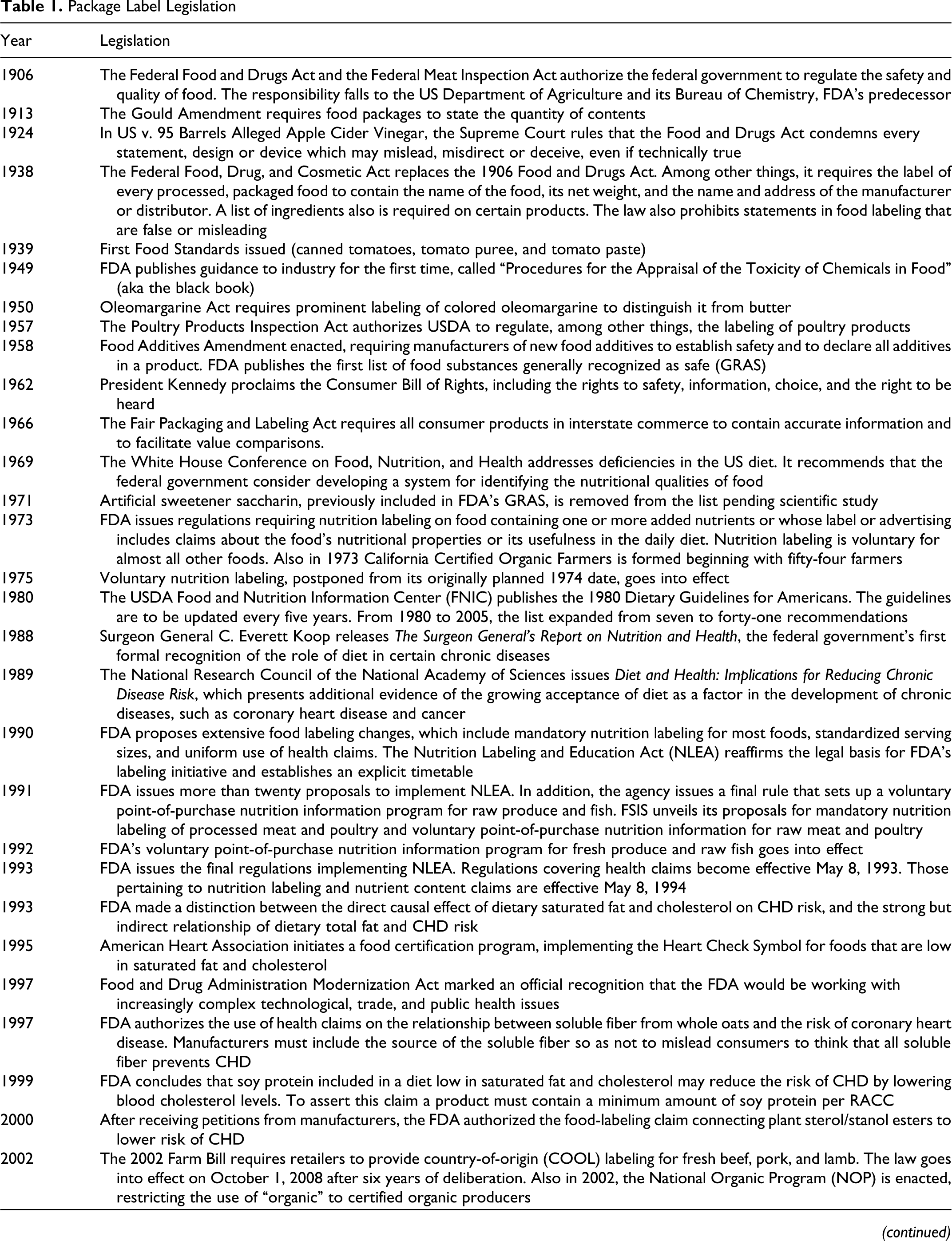
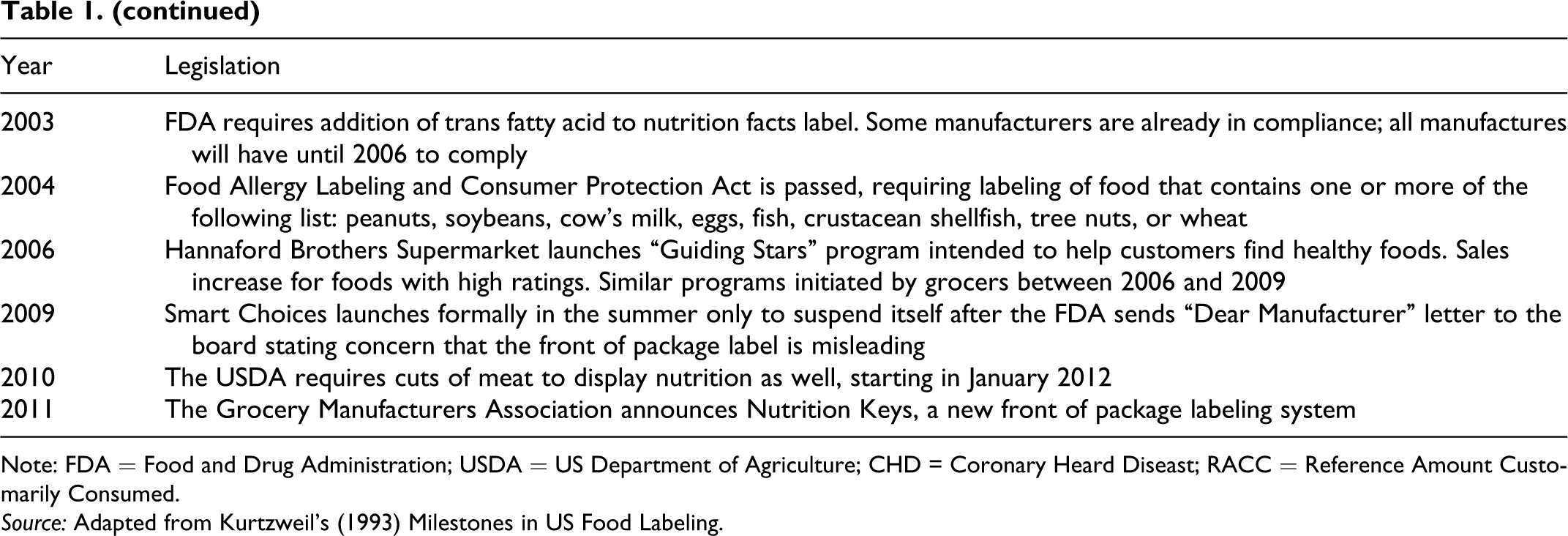
Note: FDA = Food and Drug Administration; USDA = US Department of Agriculture; CHD = Coronary Heard Diseast; RACC = Reference Amount Customarily Consumed.
Source: Adapted from Kurtzweil’s (1993) Milestones in US Food Labeling.
While the FDA is responsible for regulating food safety, the FTC regulates food advertising. Prior to 1960, the majority of labeling initiatives put into place by the FTC were designed to regulate commerce and not to protect the consumer (Golan et al. 2001). False advertising, including that on labels, fell under the purview of the FTC (Neale and Goyder 1960). There are numerous examples of misleading food claims that occurred in the1960s and later including “fruit juicy Hawaiian Punch” (it only contained 10 percent juice none of which came from Hawaii) and “Wonder Bread builds bodies twelve ways” (no different than any other fortified bread on the market) (FTC 1973; Michigan Law Review 1971).
Both the FDA and the FTC have long operated in consort, but often at cross-purposes, not unlike how the USDA and Bureau of Chemistry acted at the time of the passage of the Pure Food Act (Rosch 2011). For example, to protect commerce, FTC language refers to harming “ignorant” consumers, while the FDA’s more stringent criteria refers to the “ordinary person” standard when examining regulatory breaches (Wall 2002). The FDA had a difficult time enforcing the misleading package size clause outlined in the 1938 Food, Drug, and Cosmetic Act. Wall (2002) notes that there were terms such as jumbo, giant, super, and economy, on all types of items found on supermarket shelves. While the agencies tried to provide oversight to protect both consumers and business, business had the resources to fight back, while individual consumers, especially women shoppers, lacked any cohesive power (Deutsch 2010; Mowbray 1967). The Wall Street Journal described the Judiciary Committee as conservative and not able to see eye-to-eye with the Antitrust Committee (Mowbray 1967). Industry litigated and won, even when packages were measured as less than 50 percent full as was the case with Delsen Thin Mints (Yale Law Journal 1963). The FDA appeared to be waiting for the courts to decide whether a package was unfairly labeled to signal more regulation was needed (Mowbray 1967).
As in 1906, the press knew that food advertising dollars subsidized publishing costs and so few media outlets provided information about packaging issues (Mowbray 1967). Consumers remained relatively powerless until consumer groups began to represent the public (McColl 2006; Herrmann 1970). The Consumers’ Union received 500 complaint letters about deceptive packaging issues from individual consumers (Mowbray 1967; Wall 2002; Yale Law Journal 1963). The Resulting Fair Packaging and Labeling bill would require a business name and address as well as the actual quantity contained on packages (FTC 1966), and producers could no longer sell a large package with little contents that either fooled the customer or allowed sellers to cut their cost of goods compared to other sellers. Legislators, consumer advocates led by Ester Peterson, and President Lyndon Johnson supported new legislation. Major opposition came from industry, led by the Grocery Manufacturers of America (Wall 2002). Some referred to the compromise Fair Packaging and Labeling Act of 1966 as toothless and a shell of the original proposal (Mowbray 1967). However, it did provide uniform package standards for consumers and, similar to the Pure Food Act, manufacturers did benefit because competitors could no longer undercut each other by skimping on package fill.
The 1966 Fair Packaging and Labeling Act was a milestone in labeling history as it closed loopholes that were covered neither in the 1906 Pure Food Act nor the 1938 Food, Drug and Cosmetic Act. Consumer groups were enabled as crusaders, and they addressed information asymmetry when even more complexity entered the food environment. It was only four years before the next wave of change hampered consumers’ ability to navigate the supermarket shelves. A different type of information asymmetry appeared.
Proliferation of Food Labeling and Healthy Diets: 1970–2000
An era of ever increasing consumer reliance on processed and packaged foods began in the 1960s. It had less to do with urban migration than with drives for convenience and efficiency (Redman 1980; Senauer, Asp, and Kinsey 1991; Strober and Weinberg 1980). The number of products on typical supermarket shelves nearly doubled from 5,800 at the end of the 1950s to over 10,000 by 1970 (Smith 2007). This proliferation increased the information processing burden for consumers (Childs and Childs 2001; Gallo 1995; Thompson 2000). Furthermore, families were eating fewer meals together and snacking or eating away from home more, which resulted in nutrition imbalances (Lenahan et al. 1973; Redman 1980). Rising awareness that Americans needed nutrition information to inform their eating choices led to the expansion of government’s role. Commerce, information, and safety were of concern before this time, but societal goals such as decreasing the incidence of dietary-induced disease were just appearing, further complicating the food choice landscape and the breadth of regulatory possibility (Golan et al. 2001). Regulatory intervention occurred to guide consumer behavior toward healthier choices (Caswell et al. 2003; Ellwood, Trumbo, and Kavanaugh 2009). A 1969 White House Conference on Food, Nutrition, and Health paved the way for nutrition labeling (Lenahan et al. 1973). It also opened a new chapter in the crusade to provide consumers with fair, truthful information, while meeting the needs of commerce and food safety (Golan et al. 2001). Health claims became the major driver of food labeling initiatives in the thirty-year period between 1970 and 2000 (Smith, Chouinard, and Wandschneider 2009). Business was eager to differentiate their products and linking foods to health was a strategic approach (Caswell et al. 2003; Thompson 2000). Before mandatory nutrition labeling, information asymmetries increased in this yet unregulated food environment, as many businesses saw labeling as an opportunity to target an increasingly large segment and generate more profits (Drichoutis, Lazaridis, and Nayga 2006).
The passage of the 1973 nutritional guidelines required the labeling of certain foods: those with added nutrients and those for which a nutrition claim was made on the label, or in advertising (FDA 1998). From that “simple” legislation, the list has grown over decades to include more than a dozen specific definitions of what healthy label claims actually mean. Table 2 presents some examples. With producers’ ever-growing need to differentiate and sell more of a product, more language evolved to communicate these differences. Each time a new claim was made, legislation was needed to define what it meant. This large collection of definitions has created a system in which consumers are often either uninformed or have trouble understanding subtle differences between products’ ingredients. The regulations have spiraled to hundreds of pages of guidelines for labeling (FDA 1998). The labeling landscape grew more complicated for industry to comply with, consumers to navigate, and regulators to regulate.
Key Front of Label Phrases and What They Mean

Source: Appended from American Heart Association (2009).
It was during this time that the consumer behavior literature burgeoned with articles about “information overload” (see, e.g., Friedman 1977). Just placing information on the label does not necessarily translate to consumer understanding (Brucks, Mitchell, and Staelin 1984; Jacoby, Chestnut, and Silberman 1977). Because consumers gravitate to the information they need to make satisfaction maximizing decisions, industry responded by providing more information on labels of goods in the market. Carman and Harris (1986) call these types of market failures design failures. Some economists disagreed. Several FTC employed scholars believed that more information is better (Calfee and Pappalardo 1991; Ippolito 2004; Ippolito and Pappalardo 2002; Mathios and Ippolito 1998). There were indications that industry reformulated products that were healthier (Ippolito and Mathios 1994; Mathios and Ippolito 1998). More low fat and higher fiber products were available. However, Redmond (2009) notes that there was also a proliferation of unbalanced information available in the late 1980s. Consumers also bore responsibility; their satisfaction or dissatisfaction is the result of the consequences of the use or a lack of use of labels in their food choices (Lawrence 2004; Zernicke 2003).
While understanding food labeling in the face of information overload is difficult for many consumers, navigating misleading labels adds an additional barrier. Consumer distrust of food advertising and labeling became widespread in the 1980s (Mazis and Raymond 1997; Sugarman and Morin 1992). As in the early 1900s when unfamiliar foods and changing diets brought about an opportunity for some in industry to misinform consumers for their own benefit, the health/diet link promoted a similar occasion, or as the American Dietetic Association (ADA) put it, created “opportunities for nutrition misinformation, health fraud, and quackery to flourish” (ADA 2002, p. 260). As with the 1960s and the fair packaging debate, some argue that the political arena during the decade from 1980 to 1990 was conducive neither to increasing nor enforcing regulation. During the Reagan administration, a “New Federalism,” including an agenda of deregulation, ensued (Conlan 1986; Gray 1983–1984). Carman and Harris (1986) call this implementation failure. Pressure on business to increase sales and increasing competition through differentiation of products contributed on the marketing side. Lack of enforcement on the government side gave a green light to businesses to gravitate further into a gray area of label messages that might be considered false or misleading (FTC 1998). The decade of the 1980s was an active period for consumer confusion, conflict between consumer advocates and regulators, conflicts between regulatory agencies and State Attorney Generals, increased information asymmetry fueled by misleading health claims and increases in the complexity of the food environment.
A milestone example occurred in 1984. The Kellogg Company advertised the consumption of All Bran cereal as a cancer prevention strategy. Gardner (2006) called Kellogg’s promotion of cereal as a way to prevent colon cancer an opened “Pandora’s Box” and a “chink in the dam that started a flood” (p. 298). Placing specific health information on labels carried the threat that the FDA would reclassify the (offending) food as a drug, with the ensuing regulatory authority of that agency (Calfee and Papalardo 1991). Yet, the FDA issued only a warning.
At the time Kellogg’s made its health claim about All Bran, the FTC and the White House Office of Management and Budget convinced the FDA to drop its regulatory policy banning health claims on labels (Silverglade 1991). Others assert that industry put pressure on the FDA to loosen their reigns (Calfee and Papalardo 1991; Mussman 1986). Consumer advocates were alarmed; the Center for Science in the Public Interest (CSPI) called the FDA the “sleeping watchdog” (CSPI 2005). Between 1987 and 1990 when the FDA imposed a stricter policy, regulators did not necessarily enforce them (Silverglade 1991). Unbalanced claims that focused on “good” characteristics while downplaying “bad” ones, such as “low” fat but “high sugar,” also increased (Redmond 2009). A comprehensive study of health advertising claims found that the number of health claims grew by 550 percent between 1987 and 1990 (Ippolito and Pappalardo 2002). During this same period, the State’s Attorney Generals brought many companies to task about their messaging. Kellogg’s countered by bringing a harassment suit against the Iowa Attorney General’s office (Armstrong 2010). Contrary to the 1930s, States began to win litigated cases. Proctor and Gamble paid $350,000 to the State of California based on misleading advertising of Citrus Hill Plus Calcium orange juice as the product contained only 60 percent juice (Sugarman 1988). Kellogg’s lost its case when it advertised Rice Krispies Cereal as fortified with energy releasing B vitamins (Silverglade 1991) and reached an agreement with the New York Attorney Geeral (Sugarman 1988). Neither the FTC nor FDA stepped in.
The crusades by the States’ Attorney Generals were one of the engines that spurred the Nutrition Labeling and Education Act of 1990 (NLEA; Armstrong 2010). The food industry continued to litigate against regulations based on the right to free speech (Calfee 1992). With individual States involved, each with differing laws, industry was faced with mounting court costs. Industry and federal legislators coalesced to create federal regulation that would provide consistent rules. The series of events led to the largest change in labeling legislation in over fifty years (FDA 1994; Froeb, Hosken, and Pappalardo 2004). The NLEA established standards for health and nutrition claims and mandated most foods to have nutrition facts labels (FDA 1994). The number of health claims fell for several categories of processed foods between 1992 and 1999, while the percentage of conforming claims increased (Caswell et al. 1999). The 550 percent increase in the number of claims during the 1980s fell almost immediately back to pre-1987 levels (Ippolito and Pappalardo 2002).
Industry again challenged the new rules. It was costly to adapt to the new labeling requirements (Gorski 1997; Prince 1992; Rogers 2000). Some economics literature attributes the continuation of information asymmetry and industry reluctance to accept more labeling regulation to higher costs versus benefits for both consumers and business (Blandford and Fulponi 1999; Salaün and Flores 2001; Teisl, Bockstael, and Levy 2001). Increased industry and enforcement costs could be passed on to consumers in the form of higher prices and taxes, ultimately causing a decrease in consumer economic welfare in the longer run—the same arguments used since the Pure Food Act of 1906. Although industry continued to litigate, changes were seen in 1995. In The National Council for Improved Health vs. The US Department of Health and Human Services case, the courts found that the NLEA did not violate marketers’ First Amendment rights (Silverglade 1996). However, more challenges came with the Food and Dietary Supplemental Food Act introduced to Congress in 1995, which had the intention of allowing companies to base their labels on “truthful and nonmisleading” claims instead of “significant scientific agreement” (Silverglade 1996). Consumer advocates argued against this change, believing that it would hold marketers less accountable (Silverglade 1996). “The 1997 Food and Drug Administration Modernization Act provided for health claims based on an authoritative statement of a scientific body of the U.S. government or the National Academy of Sciences; such claims may be used after submission of a health claim notification to FDA” (FDA 2003, p. 1). This was relaxed further in 2003 when the statement “the 2003 FDA Consumer Health Information for Better Nutrition Initiative provides for qualified health claims where the quality and strength of the scientific evidence falls below that required for FDA to issue an authorizing regulation. Such health claims must be qualified to assure accuracy and nonmisleading presentation to consumers” was added (FDA 2003, p. 1). This language brought the FTC and FDA language closer together but also moved toward the less stringent advertising communication language of the FTC. The door for increased information asymmetry opened wider.
New Issues for a New Century and Hope for the Future: 2000and Beyond
At the start of the twenty-first century, the FDA continued to take a deregulated approach. No food catastrophe had occurred to change the dynamics of the labeling debate in the second half of the twentieth century, although new foodborne pathogens contributed to illness (see Nutrition Reviews 1999). Change, complexity, competition, crusading, coalescence, and compromise were valid descriptions of the new century, just as they had been in 1906. Moreover, the food environment was about to become even more complex. Consumers were faced again with misleading labels similar to those of the 1970s and 1980s. Consumer confusion grew due to an increase in the number of claims, the simplistic front of package label schemes that provided a composite image about a product, and because many claims came in multiples, such as organic and low calorie (Armstrong 2010; FTC 2003; Pomeranz 2011; Scott-Thomas 2010a, 2010b). And a new wave of values-based labeling threatened to open gaps in consumers’ ability to make informed choices (Barham 2002).
Starting early in 2000, major food companies including Kraft, Campbell’s, Kellogg and Hershey Foods started to refocus on the high-growth health segment (Thompson 2004). Between 2004 and 2009, Symphony-Information Resources Inc. (IRI) Group reported that five to six health characteristics were represented in the top fifteen consumer benefit trends. These attributes included low calorie, low fat, high fiber, zero trans-fat, diet aid, and natural/organic (IRI 2005, 2007, 2009). General Mills was expected to make a “bold move” into the market by targeting cardiovascular health, cognitive function, and weight management (Watson 2011). The US obesity epidemic facilitated information asymmetry as food labels making “diet aid” or “reduced calorie” claims became a common occurrence in the new millennium’s first decade (IRI 2009).
However, some signs have indicated that information asymmetry may be ameliorated somewhat by actions of consumers, their advocates, the food industry, and government agencies. In reaction to Kellogg’s promoting its Rice and other Krispies cereals with the claim “now supports your child’s immunity” (see Figure 3 ), and to Dannon’s making exaggerated health claims for Activia yogurt, the FDA increased enforcement of labeling laws in early 2010, settling out of court with Kellogg and Dannon (Armstrong 2010; Rosch 2011). In 2010, the FDA sent seventeen warning letters covering twenty-two labeling violations for labels bearing nutrient content claims that did not meet requirements (FDA 2010, p 1). This action showed a new emphasis on enforcement under the Obama administration. In 2009, Commissioner of Food and Drugs, Margaret Hamburg, MD, encouraged companies to review their labeling to ensure they were in compliance with FDA regulations, were truthful, and were not misleading (FDA 2010). Contrary to the historical tendency of the press to veer away from reporting label violations, coverage was widespread (see, e.g., Lipka 2010). The consumer advocacy group, CSPI, had been leading crusading to limit misleading labels (Silverglade and Heller 2010). Mark Silverglade called the initiative a “once in a generation” action (Lipka 2010). Both FDA and FTC have stepped up enforcement, but the growing number of claims will continue to tax the agency’s ability to enforce laws (Censky 2010; FDA 2010). In an open letter, FDA Commissioner Hamburg urged the food industry to be honest with consumers. She made improving the scientific accuracy and usefulness of food labeling a priority (Hamburg 2010). Almost half of the seventeen warning letters dealt with claims related to weight control (FDA 2010). The agency’s hope was that industry will self-monitor and voluntarily change labels to comply with regulations. In a speech to The American Association for the Advancement of Science, Dr. Hamburg described her job as FDA Commissioner as being an advocate and zealot who makes sure the agency is scientifically robust, trusted by consumers, and has adequate resources (Hamburg 2009b).
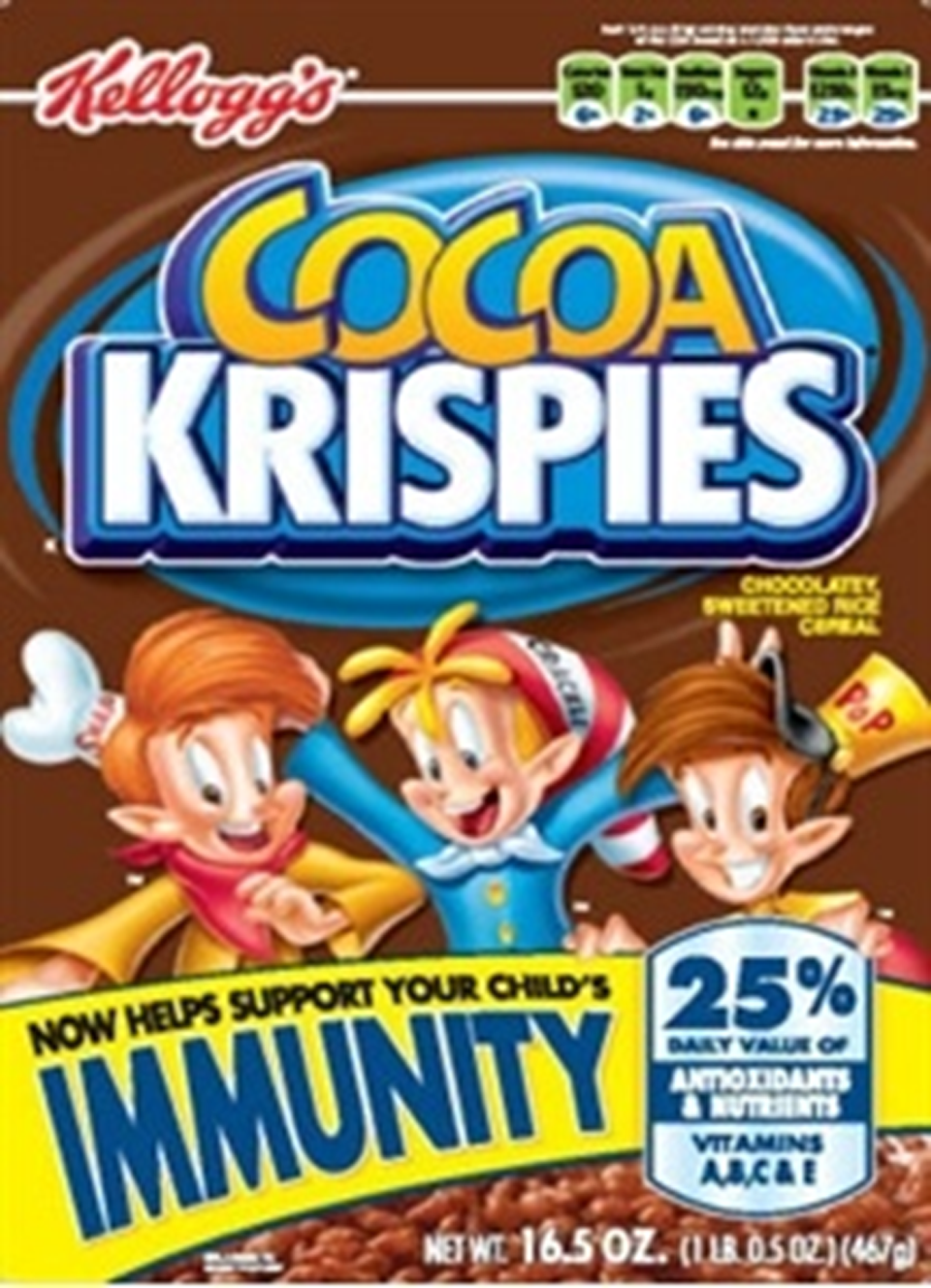
Misleading Kellogs Cereal package.
Industry cooperation may help ameliorate information asymmetry over the next decade. While the first ten years of this century were marked by a need for increased regulatory enforcement, industry has shown signs of cooperation and compliance. With the threat of government action beyond a warning, industry has had a chance to self-regulate against false and misleading labels. Hans Aeezen, chair of the International Sweetener Association, warned food and drink manufacturers that they were “shooting themselves in the foot” if they labeled their products “no artificial sweeteners” (Gray 2011).
The coalescence between government and industry decreases information asymmetry for different reasons. Regulation seeks to protect consumers, while business seeks to limit competition to make their own cadre of offerings more attractive. But, isolated company actions are unlikely to solve the information asymmetry problem, just as isolated consumer action had little effect in the mid-twentieth century. “In packaged goods markets, the powers of food firms and related actors have been sufficient to shape the control system in conformity to their values and interests” (Redmond 2009, p. 140). Other forces have perpetuated information asymmetry. Nestlé’s food and drug attorney, Marc Ullman remarked, “as it stands the odds are better to litigate than settle,” referring to an FTC warning about their “immunity boosting” product, Boost (Starling 2010). Legal tactics were used throughout the twentieth century to fight labeling legislation and it is expected that industry will continue to rely on litigation that capitalizes on the First Amendment free speech guarantee (Nestlé 2010; Pomeranz 2011).
Front of package (FOP) labeling composites have been proposed by both industry and government as a method to help consumers navigate the many health claims that have proliferated and decrease the complexity of available information. The first generation of FOP labels were industry-developed and proprietary. Several supermarket chains instituted FOP programs, including NuVal, Guiding Stars, Healthy Ideas, and nutrition iQ (Armstrong 2010). The Smart Choices program, a broad industry led FOP initiative, was suspended shortly after its introduction. It was described as an example of the power of joining private and expert groups, including the American Diabetes Association, to foster the development of FOP labels that signal healthier choices backed up by the Dietary Guidelines for Americans 2005 (Smart Choices Program 2010). Industry giants including PepsiCo, Kellogg’s, Quaker Oats, and Kraft were participants (Neuman 2009). The program provided an icon for the front of packages that met certain nutritional criteria, created to “direct consumers to smarter food choices in the supermarket” (Lupton et al. 2010, p. 1078s). However, the scoring mechanisms that allowed products to be labeled a smart choice were flawed toward highlighting positive benefits and downplaying negative ones (Lukovitz 2011). With the 2009 increased focus on enforcement, both the FDA and USDA stepped in and the Smart Choices program voluntarily shut down (FDA 2009).
The Smart Choice labeling system appeared to be a guise for giving highly processed junk food the “seal of approval” from the American Diabetes Association and others (Armstrong 2010; Ruiz 2009). This was analogous to Kellogg’s bran cereal cooperating with the National Cancer Institute to promote eating cereal as a cancer prevention strategy (Freimuth, Hammond, and Stein 1988). Yet, this time the FDA took action. The press, historically an advocate for the food industry, reported that both the high sugar cereal Froot Loops, sugary snack Cracker Jacks, and high fat mayonnaise were given approval under the Smart Choices Label (See Figure 4 ; Neuman 2009). Yale’s Rudd Center for Food Policy listed Froot Loops in the bottom 25 percent of forty-three ranked cereals in “Cereal F.A.C.T.S.” scores and in the top ten of cereals advertised to children (Rudd Center 2009). Froot Loops would not be labeled a healthy option in other FOP labeling programs (Armstrong 2010). In an effort for industry to partner with regulatory agencies, Eileen Kennedy, Smart Choices board member, said “I’m actually pleased that FDA has moved in this direction. I think it’s one more step in decreasing any confusion that’s out there in the marketplace” (in Neuman 2009). A voluntary coalition of industry, government agencies, and consumer advocates worked to halt the Smart Choices program. In 2011, while the FDA continued to work on their own FOP initiative, industry introduced “Nutrition Keys” (Lukovitz 2011). The press did not shy away from the issue and reported that consumer advocates and legislators criticized the new effort as a way to “preempt the FDAs initiative to develop a voluntary but agency-regulated FOP system” by highlighting only the positive nutrients and benefits of a product while ignoring any negatives as had been the case with the Smart Choices program (Lukovitz 2011, p. 1). However, the other side reported that the program was the most significant modernization of food labels since the NLEA (Grocery Manufacturers Association [GMA] 2011).
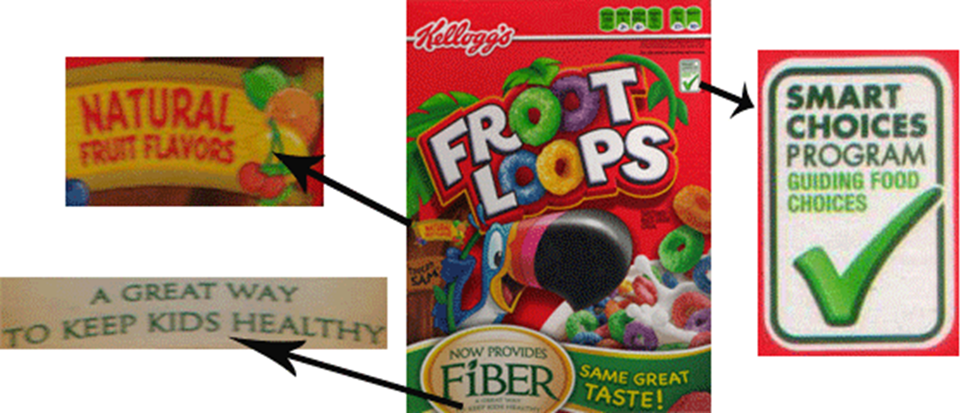
Example of high sugar cereal awarded the Smart Choices Front of package (FOP) label.
Looking to the future, an increasing number of credence food characteristics have appeared. Not listed on the nutrition facts panel, they include a long list of values consumers consider in decision making, for example, fair trade, organic, locally grown, no genetic engineering (GE; Honkanen, Verplanken, and Olsen 2006; Siegrist 2008). Many of these values have health links that have yet to be verified. Consumers are concerned with safety risks associated with new technologies and industrial food production in a way not seen since the 1906 Pure Food Act (Allen 1999; Brill 1985; Magdoff, Foster, and Buttel 2000; Stuart 2007; Thompson 2003). Values-based decisions make the task of providing accurate consumer information via labeling more difficult. Theories are only developing about values-based labels and there is no agreement among industry, consumer advocacy organizations, and governments (Barham 2002). In addition, the science of product development is progressing more quickly than the science used to test safety, as in the case of GE foods. While European nations have relied on the precautionary principle as a way to address currently unknown harm to society or the environment, the United States has not forgone the reliance on “scientific evidence as we know it today” as the benchmark for making labeling decisions (Jensen 2002).
Consumer advocacy organizations, such as the Truth in Labeling Coalition, Union of Concerned Scientists, and Organic Consumer Association, have led the crusade against GE foods. These organizations consist of citizens, producer groups, and former legislators who hope that consumer oriented grass roots efforts can persuade the FDA to promulgate more than voluntary labeling guidelines for foods containing GE ingredients. Huffman et al. (2003) reported that consumers are less willing to pay for GE foods that are labeled, while consumers overwhelmingly respond that they want this information to be available (Esposito and Kolodinsky 2008; Hallman et al. 2003; Shanahan, Scheufele, and Lee 2001). Conflict persists between the consumer’s need for information and food safety and business’ profit motives and rights of free speech. Currently, the US government only allows voluntary labeling of GE free products.
A growing number of consumers want to know how their food is produced. The terms organic, natural, free range, and fresh have found their way into the regulatory lexicon. Food safety is one component of this movement, but it also includes sustainability of the planet and support for local economies (Allen 1999; Kolodinsky and Pelch 1997; Zepeda and Li 2006). US National Organic Standards went into effect in 2002 (USDA 2012). Products labeled organic must be certified (see Figure 5 ). Selling or labeling a product as organic without following the standards can result in a civil penalty of $10,000 (Grubinger 2009). Organic label regulation did not come without compromise and conflict (Shulman 2003). Organic farmers worried about losing control over the process fought large agribusiness lobbies that added “loophole” language, which initially allowed genetically modified (GM) and synthetic ingredients. Organic farmers are still fighting. For example, court rulings and appeals over GM sugar beets and the possibility of genetic drift from the GM crop into organic crops are ongoing (Scott 2011). As has been typical in antilabeling legislative initiatives, cost–benefit analysis and protection of industry free speech so as to not demonize other production mechanisms are at the forefront of the debate (Caswell 1998; Klintman 2002). Renewed interest in protecting the organic label indicates that there are factions that believe current legislation is not effective and that clearer, trustworthy, and enforceable labeling rules are necessary (Gaudiano 2010).
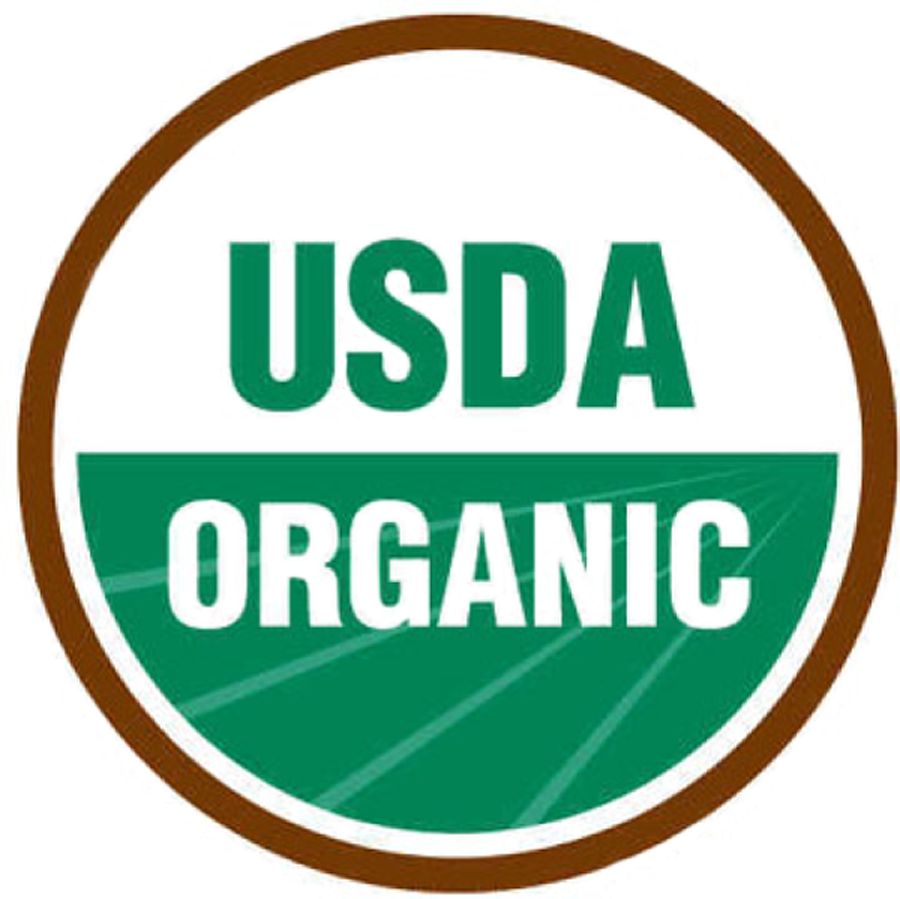
The certified organic label.
Locally grown claims are another recent example of information asymmetry related to food safety (Allen 1999; Zepeda and Li 2006). Numerous foodborne illness outbreaks have occurred since the 1980s, and both the number and size of recalls tainted foods are increasing (Dodd and Powell 2009; Nutrition Reviews 1999). Knowing where food is grown helps identify contamination points. Not since the Pure Food Act of 1906 has the United States faced such a magnitude of food safety issues. Tomatoes, ground beef, hot peppers, peanuts, and spinach have all been implicated on a national scale (Centers for Disease Control and Prevention [CDC] 2011). Currently, there are no current federal labeling guidelines as to what is “local.” The Frito-Lay Company advertised potato chips as local because they used potatoes grown by farmers in the United States (Fritolay 2009). Taken in the context of the “buy local movement,” this label may be misleading since nationally based production does not facilitate tracing food back to the source. Until legislation provides definitions of what is local, consumers will continue to question whether a labeled food is truly local or if sellers are using labeling to generate profit on the heels of the trend, similar to health labeling in the 1970s.
At the international level of “local,” Country of Origin Label (COOL) was implemented in 2009 (American Mathematical Society [AMS] 2010; Gunn and Gray 2009). This label requires retailers to provide consumers with information about where meats and perishable agricultural items originate (AMS 2010; Gunn and Gray 2009). While proponents of this label point to the benefit of consumers knowing where their food comes from and possibly portraying it as a food safety issue, the COOL labeling program is primarily a marketing program since it is under the jurisdiction of the Agricultural Marketing Service, not the FDA or Food Safety Inspection Service who handle issues of food safety (Gunn and Gray 2009).
Persistence of Health Label Information Asymmetry: Food for Thought
The goal of labeling regulations is to provide assurance and validity of claims to consumers. Yet, with over 100 years of labeling regulation, many consumers remain unaware of or confused about what the information on labels actually means, or they are unsure if the claims on the labels are true. Competition, conflict, near catastrophe, and complexity have all contributed to series of labeling legislation that have been influenced by crusading, coalescence, and compromise (Young 1989). There is no indication that these same descriptors of the situation surrounding the passage of the first major labeling legislation in the United States, the 1906 Pure Food Act, have changed or will change in the future. During the latter part of the twentieth century and continuing into the second decade of the twenty-first century, regulators have faced difficulties in both promulgating laws and enforcing them. Furthermore, while consumers have a right to information, they still have trouble understanding the immense variety of definitions used on food labels.
There still appears to be a fundamental conflict about the ultimate aims of food labels: should they ensure consumer safety, provide information, or enhance corporate profitability. Both the proliferation of products through time as markets expand and the expansion of value-driven consumer decision making will only make the task of communicating information more difficult. The current approach to labeling regulation in the United States, combined with businesses’ rush to profit from the latest social trend, leaves the consumer in a world where he/she must make choices among hundreds of products with hundreds of label claims, most of which are sound bites that often provide misleading or very little useful information. These information gaps are not the sole result of a lack of honesty on the part or business, regulatory failure on the part of government, or a lack of responsibility of consumers. They are also the result of a long interplay between consumers, markets, and public policy. Combining this history with an increasingly complex and technologically advancing society, we are unlikely to move past the 100-year impasse of information asymmetry in the food labeling arena.
Footnotes
Acknowledgments
An earlier version of this article was presented at the First European Conference in Food Marketing and Ethics in Paris, France, December 2009. The author thanks Journal of Macromarketing Editor Terrence H. Witkowski and the anonymous reviewers for their helpful reviews. The author thanks Abby Barrett-Smith, graduate student, for hunting down the references and anthropologist colleague Amy Trubek for teaching how to write in a narrative style rather than like an economist.
The author declared no potential conflicts of interest with respect to the research, authorship, and/or publication of this article.
The author received no financial support for the research, authorship, and/or publication of this article.