



Abstract
Food certifications guarantee food quality and reduce information asymmetry regarding food between consumers and producers. There are numerous certifications that facilitate global food systems. While scholars have addressed this issue from several viewpoints, a systematic synchronization of the research in international food certification studies is lacking. The purpose of this study is to explore the field of food certifications. This includes identifying certification definitions, related categories, the main purposes and topics of existing studies in this field. This study uses a systematic literature review. It proposes an integrative conceptual framework, that summarizes the main findings of the study. Additionally, new research routes, as well as both theoretical and macromarketing implications are discussed. This study provides a comprehensive understanding of the international field of food certification, giving researchers, consumers, and food companies a guide to understand the complexity of the global food certification and the related macromarketing effects.
Introduction
Food certification is susceptible to social, economic, environmental, and religious factors (DeQuero-Navarro, Stanton and Klein 2020). For this reason, certification plays a strategic role in the food marketing system, affecting society's demands (White and Samuel 2016), consumer behaviours, and food supply chain members’ work (Newman et al. 2014).
Two main functions can be attributed to food certification: (i) from the consumers’ viewpoint, certification ensures food quality and safety (Zhang et al. 2015); (ii) from the food companies’ viewpoint, certification works as a marketing tool used to communicate the safety and quality of their products to consumers, leading them to obtain a competitive advantages to satisfy a growing number of conscientious consumers (Ab Talib, Ai Chin and Fischer 2017). Indeed, among the several types of information included on a food label (e.g., claims, list of ingredients, nutritional table, provenance.), certification is used as an instrument to solve information asymmetry between consumers and producers (Newman et al. 2014; Turra et al. 2014; Carter and Cachelin 2018). Information asymmetry occurs when sellers have more information than consumers, which leads to inefficient markets (Caswell and Mojduszka 1996; Golan et al. 2001), and causes consumers to distrust food businesses (Nikolaou and Kazantzidis 2016). Therefore, an increase in symmetrical information between buyers and sellers, through the adoption of certifications, improves the efficiency of the market by supporting informed consumption (Newman et al. 2014). This represents a practice of socially responsible marketing (SRM), since it is controlled by an implicit social contract that requires marketing policies capable of implementing customer-oriented, proactive, and non-discretionary corporate citizenship (Laczniak and Shultz 2021). These practices assumed particular relevance due to the numerous food frauds in the international market (Spink and Moyer 2011; Charlebois et al. 2016) encouraging food companies to avoid misconduct.
Therefore, with the aim to facilitate the global food system, certifications and certification standards were established over the world. However, the absence of clear and defined classifications of food certifications has introduced a high level of complexity regarding food certifications. On the one hand, consumers may find it difficult to perceive the purpose of the certification. On the other hand, food producers find it difficult to choose which certification they need to adopt to meet consumers’ needs and/or to operate efficiently in several markets. Moreover, the implementation of a certification modifies the marketing system in terms of the type and number of actors in the network, products, and processes (Skilton and Wu 2013).
Academic research has addressed the field of food certification analysis from several viewpoints: willingness to pay, cost analysis, performance analysis, and consumer's attitude, etc. However, to the best of the researchers’ knowledge, no study in the existing literature has proposed a systematisation of the main research directions undertaken in international studies on food certification.
Therefore, to fill this gap in the literature, the present study adopted the method of systematic literature review to enhance the understanding of the food certifications field. Thus, this study's purpose comprised the following: (i) to systematically review and critically analyse the extant body of knowledge in food certification, identifying the various certification definitions, several categories of food certifications, and the main purposes and topics of the extant studies; (ii) to synthesise the review findings into an integrative conceptual framework; and (iii) to identify knowledge gaps and propose new research routes for future research. The proposed framework was supplemented with a more comprehensive food certification definition that aims to overcome the limitations of the existing definitions. To conclude this study, the researchers discussed the theoretical and macromarketing implications of this work.
Researchers, practitioners, marketers, and policymakers can all benefit from the proposed framework, definition, and findings of this study, as they all supply various insights from the existing research.
Furthermore, consumers and food companies will benefit from the study's results because this study will allow them to obtain a guide to decipher the complexity of food certifications as well as the relevant categories and purposes.
Theoretical Background
Food Certification Standards
Food certifications follow standards provided by public or private organisations. Public standards are defined by governments and can be established in a single nation or region. However, in the global food system, retailers require production standards that are much higher than those set forth by local regulations. Therefore, private standards and private labels have been defined. ‘For instance, British retailers developed the British Retail Consortium standard (BRC), while German and French retailers require the International Food Standard (IFS)’ (Latouche and Chevassus-Lozza 2015, p. 1312). Among the several private standard entities, the International Organization for Standardization (ISO) works to harmonise regulations between different countries in an effort to create international standards that are useful when increasing food companies’ internationalization (Skilton and Wu 2013). Therefore, while numerous certifications facilitate the global food system, these certifications may or may not be similar to the regulated standards. However, in the cases when a governments establishes food certifications, some food certifications are mandatory while others are voluntary (Kimura 2010). Voluntary standards aim to improve the economic, environmental, and social sustainability of the agri-food sector and are becoming increasingly common (Latynskiy and Berger 2017).
Market Benefits and Risk of Food Certification
Companies can benefit from certification programmes by using them as tools to market to new consumers, diversify the proposed products, and increase their profit. Conscious consumers have begun paying high premiums for products with credence attributes such as certifications (Nilsson, Foster and Lusk 2006). For example, the protected geographic indicator (PGI) system, that represents a form of intellectual property that can testify to the exclusive production and marketing of traditional specialty food and beverage products, supports local producers who are otherwise excluded from business and cannibalised by global retailers or distributors (Skilton and Wu 2013).
However, it is necessary to consider that when a company provides a certification, it sustains a particular cost and risk. For example, according to Wilson, Henry and Dahl (2008), the adoption of the genetically modified organism (GMO) certification by a food company not only affects the company's production costs, but also the cost of the entire supply chain. This is due to the effort needed to manage a dual production system in which GMO certified and non-GMO certified products are manufactured. Furthermore, having certifications for pork products regarding environmental welfare, animal welfare, and the usage of antibiotic increased the production costs for farmers, packers, and retailers because of the need to separate the production of certified and non-certified products. This increased the costs for packers and retails as there was suddenly a need to create different packaging and selling spaces (Roller 2004). An increase in the costs for the company (and the entire supply chain) generates an increase in the final product price. Hence, certification assumes a negative utility for consumers who prioritise the product price over certification (Boncinelli et al. 2017).
Moreover, adopting a certification it is not always a guarantee of consumer trust (Wang, Tao and Chu 2020; Moruzzo et al. 2020). Therefore, it is necessary to enhance the consumers’ confidence in food certifying entities, which, in turn, promotes international bodies (Skilton and Wu 2013). In this view, government policy and regulations play a strategical role in the food certification system (DeQuero-Navarro, Stanton and Klein 2020), and have the power of favour or obstruct a company's product within a market (Newman et al. 2014). The commitment and coordination implemented by the government and policies (i) affect the food companies’ participation efforts in certification schemes, influencing the quality of product, marketing, and market placement and (ii) encourage consumption at a premium price (Skilton and Wu 2013).
Methodology
Choosing a Review Methodology
Using the method of a systematic review is helpful when laying bare the boundaries of knowledge (Tranfield, Denyer and Smart 2003). This method also assist with systematising and sharing the results of a specific body of literature (Creswell and Creswell 2017; Crossan and Apaydin 2010). Based on this principle, the researchers adopted this methodology for this study. A systematic literature review was applied to identify and critically appraise relevant research (Liberati 2009). Considering all empirical evidence that fits the pre-specified inclusion criteria, the researchers were able to answer a specific research question or aim (Snyder 2019). Additionally, this methodology is useful when the aim is to map a field of research, identify research gaps, and develop an agenda for further research (Snyder 2019).
This methodology includes a well-structured approach to conducting the analysis, proposing rigorous criteria to identify, evaluate, and synthesise the literature regarding a selected topic. Following an iterative process based on keyword definitions, this method allows the selection of reference literature that needs to be analysed to create evidence (Ahmed et al. 2018). Among the several kinds of systematic literature reviews proposed by Paul and Criado (2020), this study adopted a domain-based review method. Following the suggestions outlined by Crossan and Apaydin (2010), Leonidou et al. (2020), Snyder (2019), and Tranfield, Denyer and Smart (2003) the proposed literature review involved the following steps: 1) question formulation; 2) definition of the protocol for review; and 3) analysis of the results in terms of descriptive and thematic analysis as well as data synthesis. The review process was concluded by proposing an integrative conceptual framework and proposing a new comprehensive definition of food certification.
Question Formulation
According to Cronin (2008), it is necessary to propose a focused research question during a literature review. Starting from this research question, search strings for the scientific database searches are defined (De Menezes and Kelliher 2011). According to the research premise discussed above, the research questions were specified as follows: ‘What are the main certification categories and how they are defined by scholars?’ and ‘What are the main purposes and topics of studies in the food certification field?’.
Definition of the Protocol for Review
To identify the relevant studies in relation to the proposed analysis, a search scheme and the inclusion and exclusion criteria needed to be defined. Keyword searches were used to identify the relevant literature by combining representative keywords through Boolean operators, allowing careful selection of the research sample (Ely and Scott 2007). Considering the research focus and using the OR Boolean operator, the following search scheme was defined: ‘food certification’ OR ‘food certifications’.
While this scheme adequately narrowed down articles that matched this study's research focus, restricting the field of certifications to food certifications alone, it did not limit the research to specific purposes or topics of analysis.
The following two important indexed electronic scientific databases were chosen to identify the relevant studies in the scientific literature:
Web of Science (www.webofknowledge.com), published by Thomson Reuters, is considered as the most important source of scientific data (van Leeuwen 2006); and Scopus (https://www-scopus-com.web.bisu.edu.cn), managed by Elsevier publishing, is considered to be one of the most extensive databases (Mishra et al. 2016) because it is more comprehensive than other databases, such as Web of Science that provides only ISI indexed journals (Jo 2019).
This research considered papers published until October 2020. The research on Web of Science was conducted in the ‘Title’ and ‘Topic’ format; in Scopus, it was conducted in the ‘Article title, Abstract, Keywords’ format. No temporal restrictions were imposed. The selected keywords provided an initial sample of 99 papers, excluding duplicates. These papers were selected by applying two criteria: (i) the document was fully available, and (ii) the study was conducted in English or Italian. Consequently, a final sample of 85 papers was recognised.
Analysis of the Results and Data Synthesis
This study employed both descriptive and thematic analysis. Descriptive analysis was conducted by applying frequency analysis to provide an overview of the characteristics of the sample. Thematic analysis was conducted by applying content analysis. Content analysis is a ‘careful, detailed, systematic examination and interpretation of a particular body of material in an effort to identify patterns, themes, biases, and meanings’ (Lune and Berg 2016, p. 338). Specifically, qualitative content analysis was employed to analyse the meaning of a knowledge base. Then, qualitative content analysis was used to classify and organise the contents systematically into categories that describe the topics, themes, and context of the knowledge base (Williamson, Given and Scifleet 2013). Categories then arise inductively during the analysis (Altheide and Schneider 2013; Mayring 2004). The researcher should describe the categories and define the criteria by which a concept belongs to a category.
An iterative process of analysis helped identify the main categories of food certification, the main topics of analysis, and the research objective within the inquired scenario. Each paper in the final sample was analysed separately by researchers. Finally, as validation strategy, the results from the qualitative analysis were proposed to a focus group of experts. The researchers posed several questions to the focus group so as to produce data and insights that would have been less accessible without the group interaction (Morgan 1996). According to Stewart and Shamdasani (1990), a focus group can work successfully when it is composed of 3–14 participants. However, the optimal size is recognised as 6–8 experts. Following these suggestions, the focus group was composed of seven experts; two were from the academic field, two were from food production companies, and three were from certification companies. One researcher acted as a moderator and five sessions were conducted to obtain the final results. The other researchers observed, recorded, and took notes during and of the discussion. During the first session, the moderator asked the experts to read the discovered definitions, and subsequently, to determine the categories of these definitions (generic definition, product/system certification definition). Through this process, the definition analysis carried out by the researchers was validated. The remaining four sessions focused on the purposes of the studies in the sample. The moderator asked the experts to determine the category of purpose for each paper. This interaction led to new categories definitions and validations of the previous classifications made by the researchers. In the final session, the moderator asked the experts to group the purpose categories into the main topics of analysis. The overall strategy of the review methodology and findings are illustrated in Figure 1.
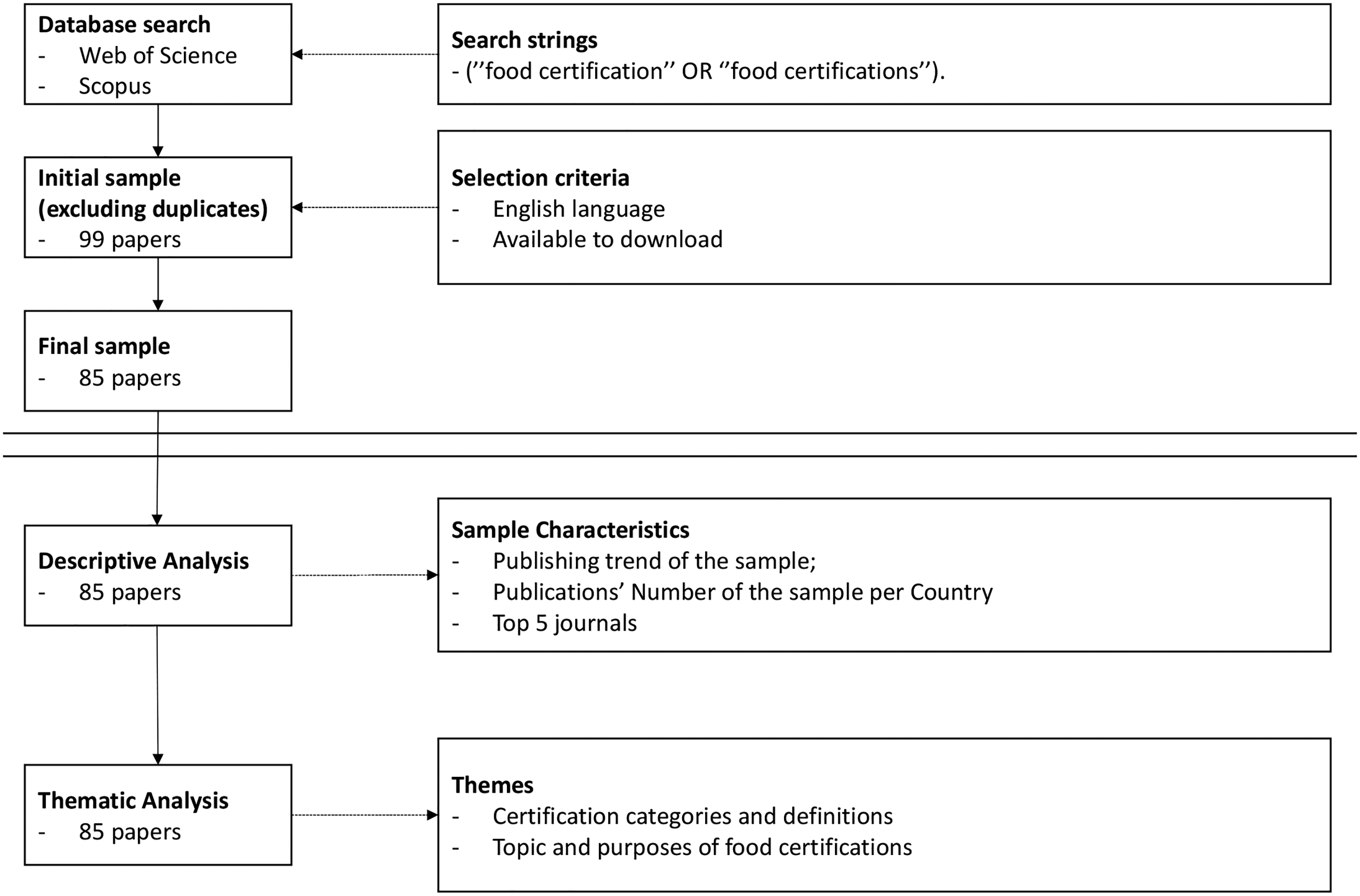
Methodology.
Descriptive Analysis
In this section, the technical characteristics of the reviewed sample consider the trends of both journals and publications over time. The geographical distribution of the studies is also described. These characteristics helped the researches and practitioners in understanding the features of the research domain.
Journals
It was determined that six journals have published more than one work on food certification, representing 25.56% of the final sample. In Figure 2, these journals are represented in a block graph. In this graph, the x-axis lists the source titles and the y-axis presents the number of papers published.
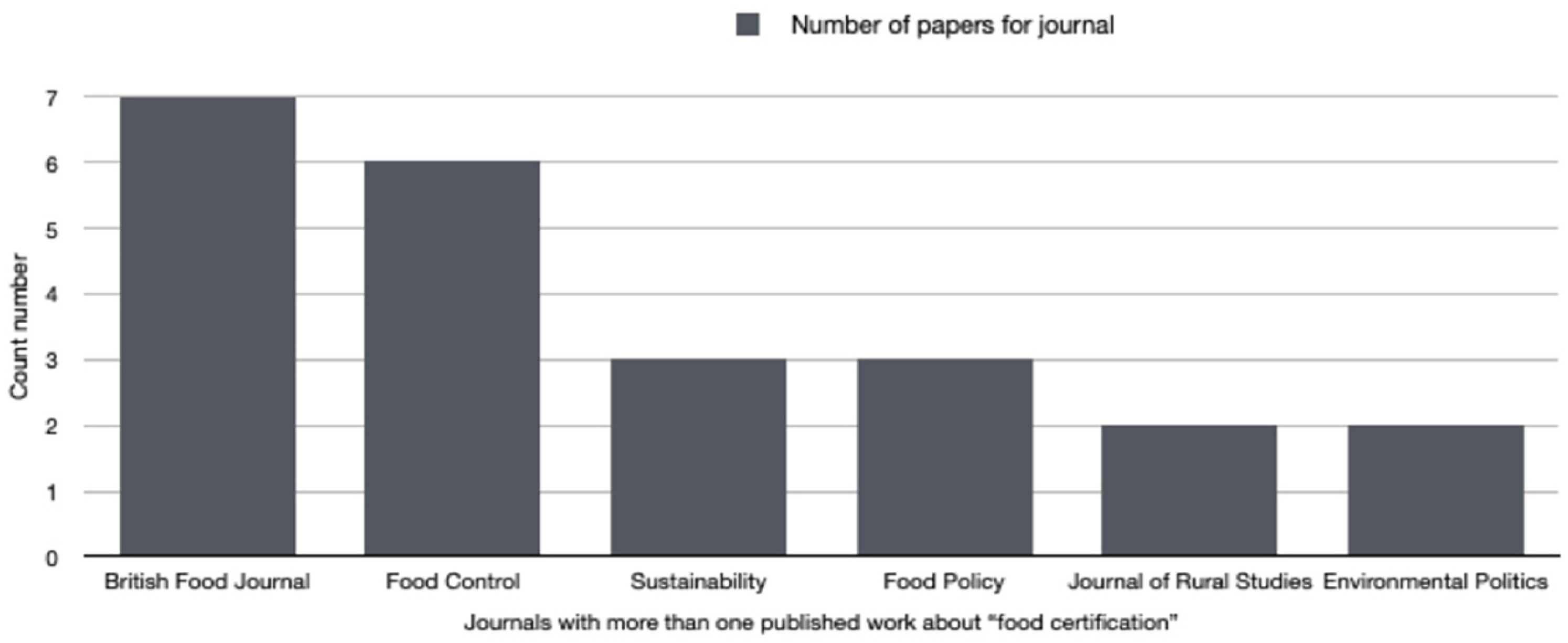
Top 5 journals.
Publication Trends
Figure 3 shows the trends in the number of relevant papers published over the years. The first contribution dates back to 1976; however, in the subsequent 30 years, the publication trend remained low and constant. Although a moderate increase in the publication trend occurred between 2008 and 2013, researchers observed that beginning in 2014, there has been a substantial increase in the contributions regarding food certifications. The attention from the scientific community to this field may be attributed to the simultaneous increase in consumer awareness regarding health, safety, and sustainability in the food industry worldwide (Abdul Latiff et al. 2016; Flynn et al. 2019; Wang, Ge and Ma 2018a; Wang, Shen and Gao 2018b).
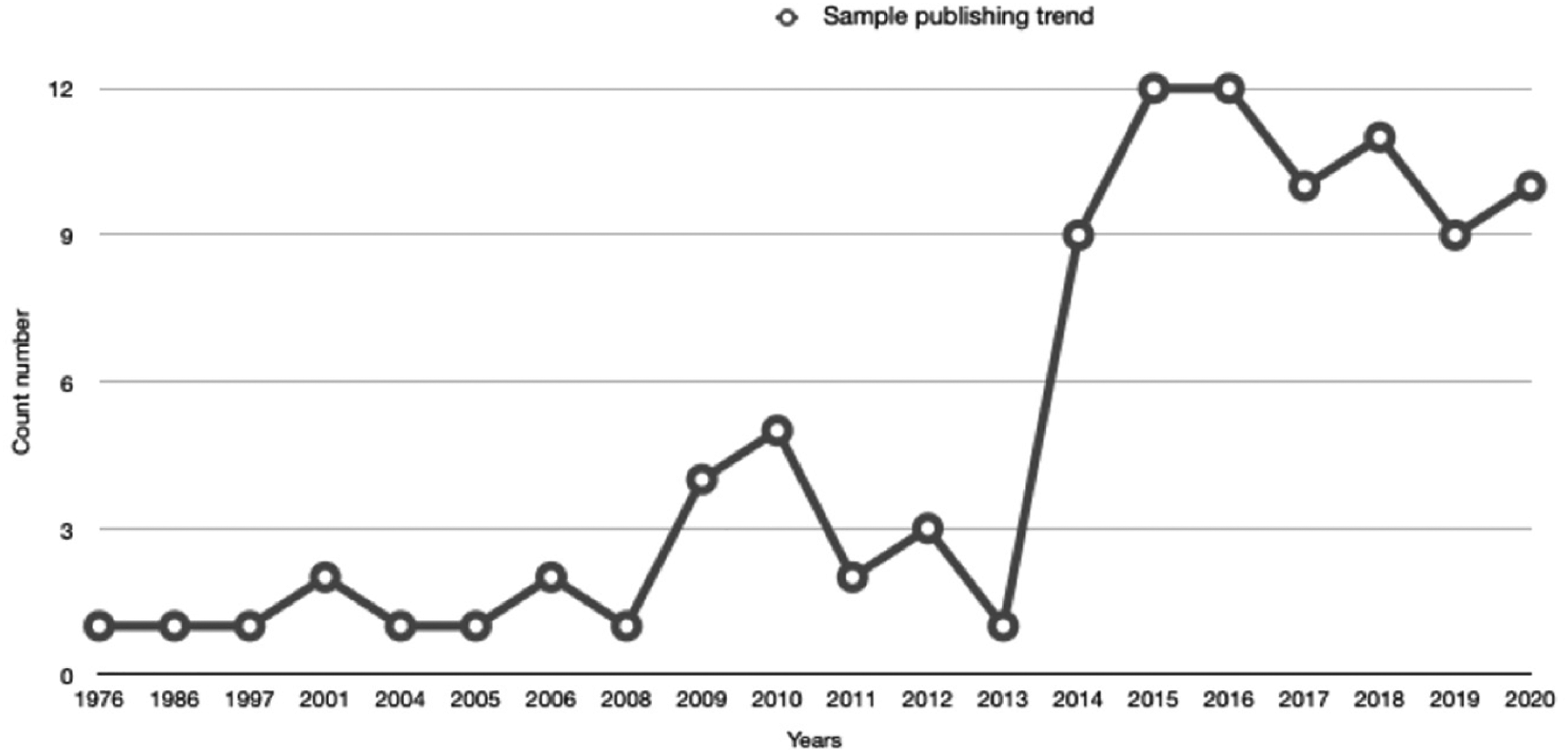
Publishing trend of the sample.
Geographic Analysis of Data
The studies encompassed in the present literature review focus on analyses conducted in several countries, therefore covering the international food certification (Figure 4). Specifically, the majority part of the studies were carried out on the Asia continent (in China, Malaysia, Indonesia, and South Korea), followed by Europe (in Italy, UK, Germany, and Spain), and rounded out with the North American continent. Surprisingly, North America was represented solely by studies conducted in the United States. In the sample, six studies focused on the Australian continent. This evidence shows that the issue of certification within the food sector is both an emergent and international issue. This is attested by the focus area of the Food and Agriculture Organization of the United Nations programme, where one of the core issues is the harmonisation of inspection and certification practices to ensure global food quality and safety.
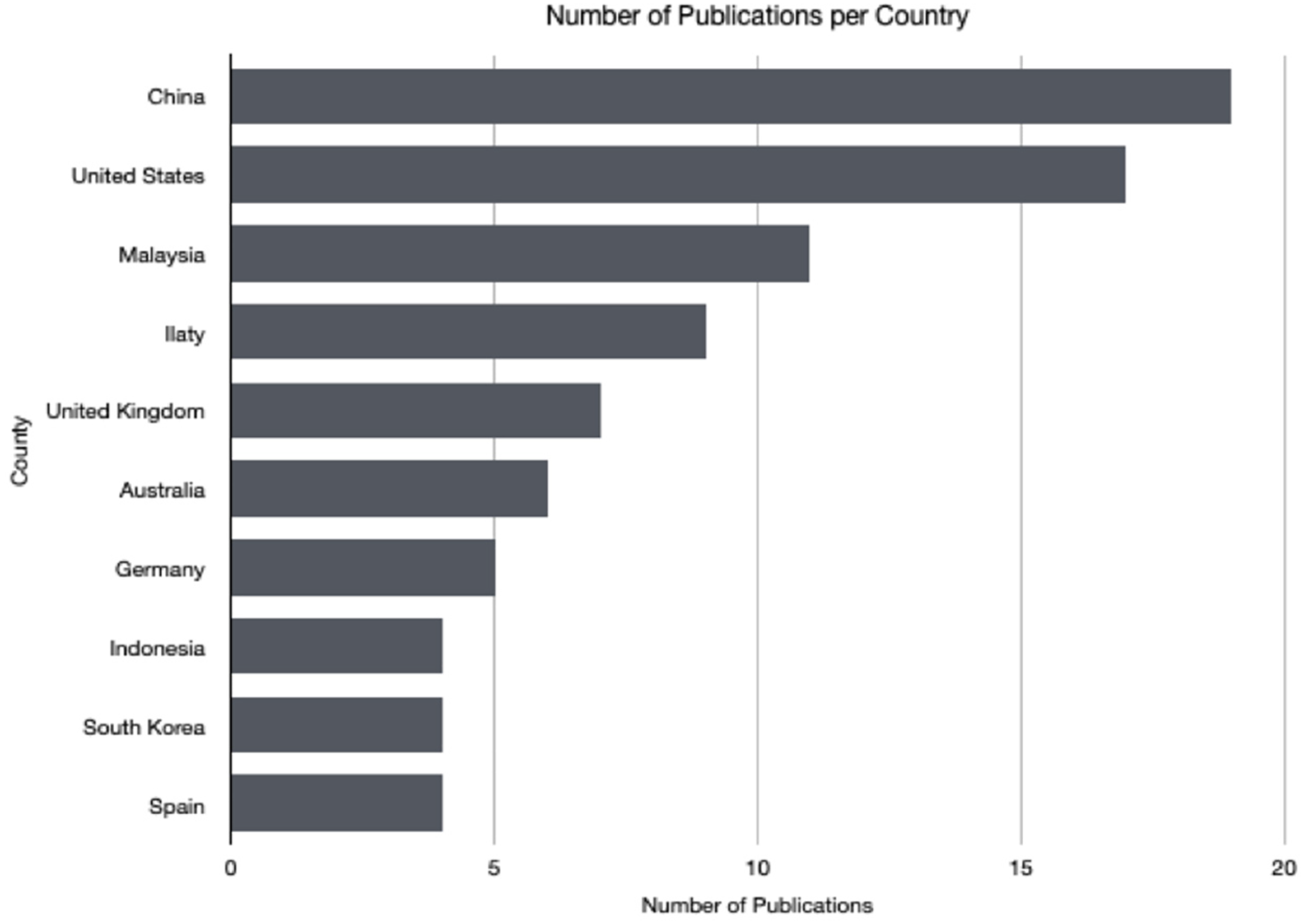
Publications’ number of the sample per country.
Thematic Analysis
The content analysis identified the food certification categories and definitions proposed by scholars as well as the topics and purposes addressed in the food certification field. The results of the thematic analysis are as follows.
Defining Certification Within the agri-Food Field
Within the sample, 32 sources offered 47 definitions, and 53 sources did not offer any definitions of certification in the agri-food field. Three observations were made by analysing the discovered definitions. First, certification in the agri-food sector is primarily defined from a general perspective. While no univocal meaning emerged, the following recurring issues arose: (i) verification of adherence to product or process standards (Attrey 2017; Carter and Cachelin 2018; Cezar 2019; Della Corte, Del Gaudio and Sepe 2018; Kimura 2010; Turra et al. 2014); (ii) assurance of product quality and safety (Attrey 2017; Kimura 2010; Nandonde and Kuada 2016; Song et al. 2017; Wang, Tao and Chu 2020; Wang, Ge and Ma 2018a; Wang, Shen and Gao 2018b; Zhang et al. 2015); (iii) supply of food product information to consumers as well as actors within the supply chain (Kimura 2010; Moruzzo et al. 2020; Naspetti and Zanoli 2012; Nie et al. 2018; Song et al. 2017; Wang, Tao and Chu 2020; Wang, Ge and Ma 2018a; Wang, Shen and Gao 2018b); (iv) utilisation of certification as a marketing tool for obtaining a higher level of consumer trust in food products (Muhamad, Leong and Md Isa 2017; Wang, Tao and Chu 2020); v) gaining more competitive advantage (Kimura 2010; Song et al. 2017); and (vi) promoting sustainable agriculture and food processing (Cezar 2019).
Second, Halal, Hazard Analysis and Critical Control Points (HACCP), Fairtrade, Organic, Global GAP, hazard-free, ISO22000, and Green Food were the only specific certifications that were defined. The preponderance of literature regarding what defined halal certification was surprising. However, the absence of a univocal definition was more surprising. Halal is a certification that follows rules not based on health and hygiene standards but on religious commandments (Thomas et al. 2017; White et al. 2018, 2021). The largest consumers of halal products are Muslims, who currently constitute 24% of the world's population and account for a market share of $1.2 trillion with an annual growth of 8.5%. Estimates show that in 2050, Muslims will account for approximately 30% of the world's population. Therefore, the market for halal products has excellent growth prospects (Randeree 2019; Thomas et al. 2017). Considering that halal products can also be consumed by non-Muslims (White et al. 2018), many food supply chains produce halal products and provide the same products with a halal certification for Muslim consumers and without the certification for other consumers (Alqudsi 2014). Both the growth prospects and the complexity regarding halal products may be the reasons for the importance given by the current scientific literature to religious certifications.
Third, few sources propose categories of certification, such as product, system, and voluntary. Product certification indicates that a product, following a standard, must possess specific features (Muhamad, Leong and Md Isa 2017; Zhang et al. 2015). System certification, on the other hand, describes procedures that a product must follow within the entire supply chain, such as HACCP (Zhang et al. 2015). However, it is necessary to underline that product and system certifications can be voluntary or mandatory, and that no category is discrete.
Despite this, a clear and opposing distinction between the product and system categories is recognised. This shows, respectively, the ability of the certification to indicate (i) product specificity, and (ii) production activities. Any other category falls under the category of voluntary certification. This result is surprising because some certifications are mandatory (such as HACCP, Reg Eu 178/200 on food traceability) whereas others are voluntary, and considered by the food companies to be marketing tools used to justify the singularity of the product (Ab Talib, Ai Chin and Fischer 2017; Kimura 2010). Table 1 presents retrieved definitions to gather evidence regarding the following: ‘what is food certification, what is it for, what is the type of certification (e.g., product, process, system), and what are its benefits?’. After a critical examination of the contents of Table 1, the researchers observed that the food certification definitions in existing literature almost never addressed all the issues proposed in this study. Therefore, these definitions only partially describe the factors associated with food certification.
Critical Analysis of Retrieved Food Certification Definitions.

Topics and Purposes of Food Certifications
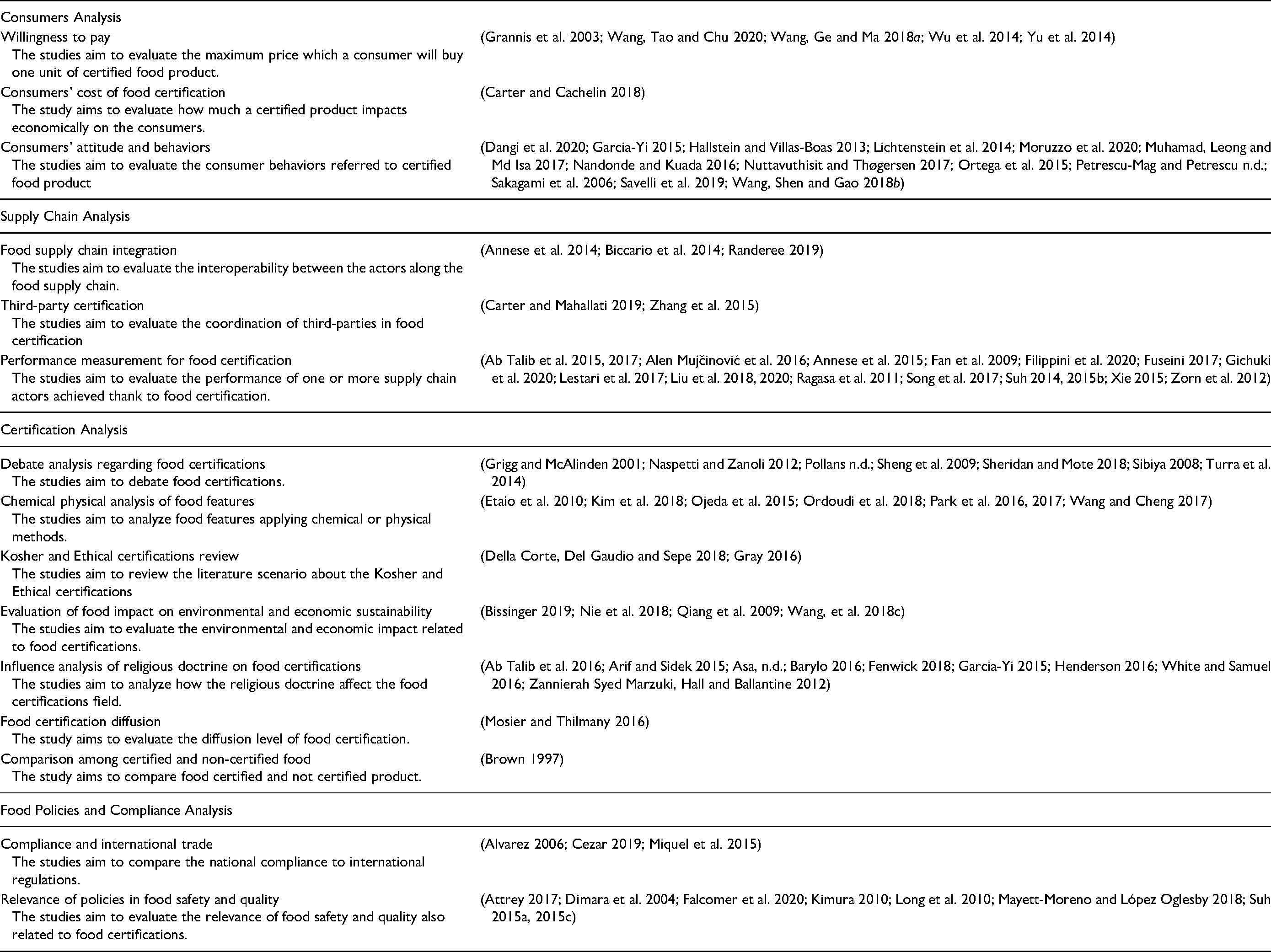
During the content analysis, each paper was analysed to identify the purpose of the study. The following 15 purposes were found to be recurring: willingness to pay, the cost of food certification to the consumer, consumers’ attitudes and behaviours, food supply chain integration, third-party certification, performance measurement for food certification, debate analysis regarding food certification, chemical and physical analysis of food features, kosher and ethical certification review, evaluation of food impact on environmental and economic sustainability, influence analysis of religious doctrine on food certifications, food certification diffusion, comparison of certified and non-certified food products, compliance and international trade, and relevance of policies in food safety and quality.
Purposes were aggregated to condense them into emerging topic categories. The aggregation process, which followed inductive logic, was conducted by the focus group experts. This led to their determining four categories of topics: (i) certification analysis was found to be the most treated topic, encompassing several kinds of analysis regarding specific certifications, such as ‘kosher’ or ‘ethical’. This included studies that debated general certifications by considering various viewpoints and in different settings; (ii) consumer analysis encompassed studies of consumers and their involvement in food certifications; (iii) supply chain analysis encompassed studies on several issues related to supply chain management in food certifications; (iv) food policy and compliance analysis encompassed studies related to regulations and public guidelines. More detailed information about the classification of the purposes of the studies is shown in Table 2.
Studies’ Purposes Classification.
An Integrative Conceptual Framework of Food Certification and the Proposed Definition
The integrative conceptual framework in Figure 5 is derived from the synthesis and integration of the systematic literature review findings. This aims to propose, from a single viewpoint, the knowledge base of the food certification phenomena. It encompassed the following: (i) the food certification definitions provided by scholars which are classified into three categories, including: generic definitions, specific food certification definitions, and certification category definitions; (ii) the purposes emerging from the body of knowledge; (iii) the topics emerging from the body of knowledge; and (iv) the links between purposes and topics which highlight the inductive aggregation process achieved by the focus group members. The proposed framework is not to be considered exhaustive, but rather meant as a multidimensional integrative framework within which other elements could be incorporated in the future. Following the approach proposed by Leonidou et al. (2020), the integration offered by this proposed framework can serve as a building block to conduct future research efforts in a more systematic and constructive manner.
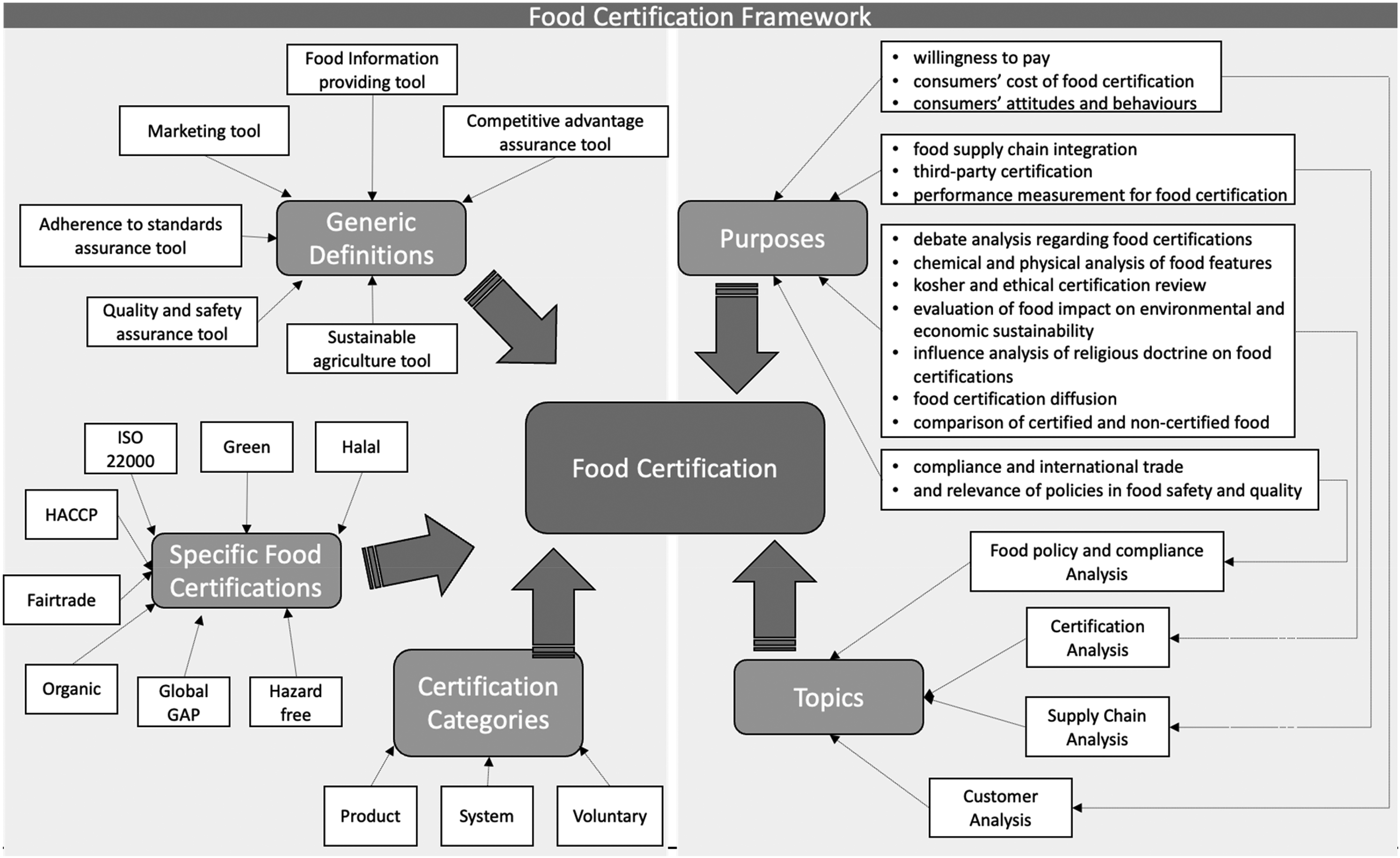
The proposed integrative content framework of food certification.
Proposed Definition of Food Certification
The analysis conducted and summarised in Figure 5 reveals the complexity of the food certification scenario and emphasises the lack of a shared definition that encompasses and describes the multiple purposes of food certifications, and the benefits of food certification regarding consumers and food companies. To fill this gap, the researchers proposed the following definition of food certification that considered all these aspects and the key issues derived from the literature review:
Food certification is a knowledge tool that can demonstrate the quality and safety of the product (product certification) or the compliance of food supply chain processes (system certification), with the aim of reducing information asymmetry between producers and consumers. It allows for an increase in customer trust, acting as a marketing tool that satisfies the informational needs of consumers derived from social, economic, and environmental sustainability and religious motivations. It allows for an increase in the efficiency of responsibility management of actors along the food supply chain, allowing them to assure (and demonstrate) quality, health, traceability, sustainability, and compliance with religious needs from farm to fork and increase the competitive advantages of food companies to help them gain the market share of conscientious consumers.
The process that guided the researchers in the formulation of this definition utilised the critical examination of the existing definitions summarised in Table 1. Therefore, the findings of this systematic review were used to provide an answer to the questions used to analyse the extant definitions: ‘what is food certification?’, ‘what is the certification for?’, ‘what is the type of certification?’, and ‘what are its benefits?’.
Responding to the question ‘what is the certification?’, the researchers chose to characterise food certification as a knowledge tool. They did so because they considered it a tool capable of collecting and managing product and process information along the food supply chain and during the lifecycle of food. Moreover, beyond the certifications imposed by regulations (mandatory certifications), the researchers chose to emphasise the voluntary role of certifications that give to the producer the possibility of satisfying the emerging information needs of contemporary consumers, acting as a marketing tool.
The usefulness of this knowledge tool (‘what is the certification for?’) is related to its ability to reduce information asymmetry, as also proposed by Carter and Cachelin (2018). In this definition, this study introduced two main types of certifications: product and system (‘what is the type of certification?’), and discussed the specific utility of each type. Specifically, the proposed definition underlines the ability of product certification to testify the quality and safety of the food products and that of system certification to ensure compliance of food supply chain processes.
Finally, responding to the question, ‘what are its benefits?’ the proposed definition explains the benefits that this tool can bring to consumers and food supply chain companies. Certification provides more details about the product to the final consumers to satisfy their information needs arising from personal, social, economic, and environmental sustainability and/or religious motivations. This generates an increase in consumers’ trust in food products that allow informed and conscious food choices. Due to certification, food supply chain companies benefit from an improved efficiency in managing responsibilities among the several actors in the supply chain, demonstrating quality, health, traceability, and sustainability in the path that brings the food product ‘from farm to fork’. The benefits of food certification for consumers and supply chain companies generate an increased competitive advantage for these companies, helping them to gain the market share of conscientious consumers.
Figure 6 summarises the main contents encompassed in the proposed food certification definition, emphasising the results emerging from the systematic literature review.
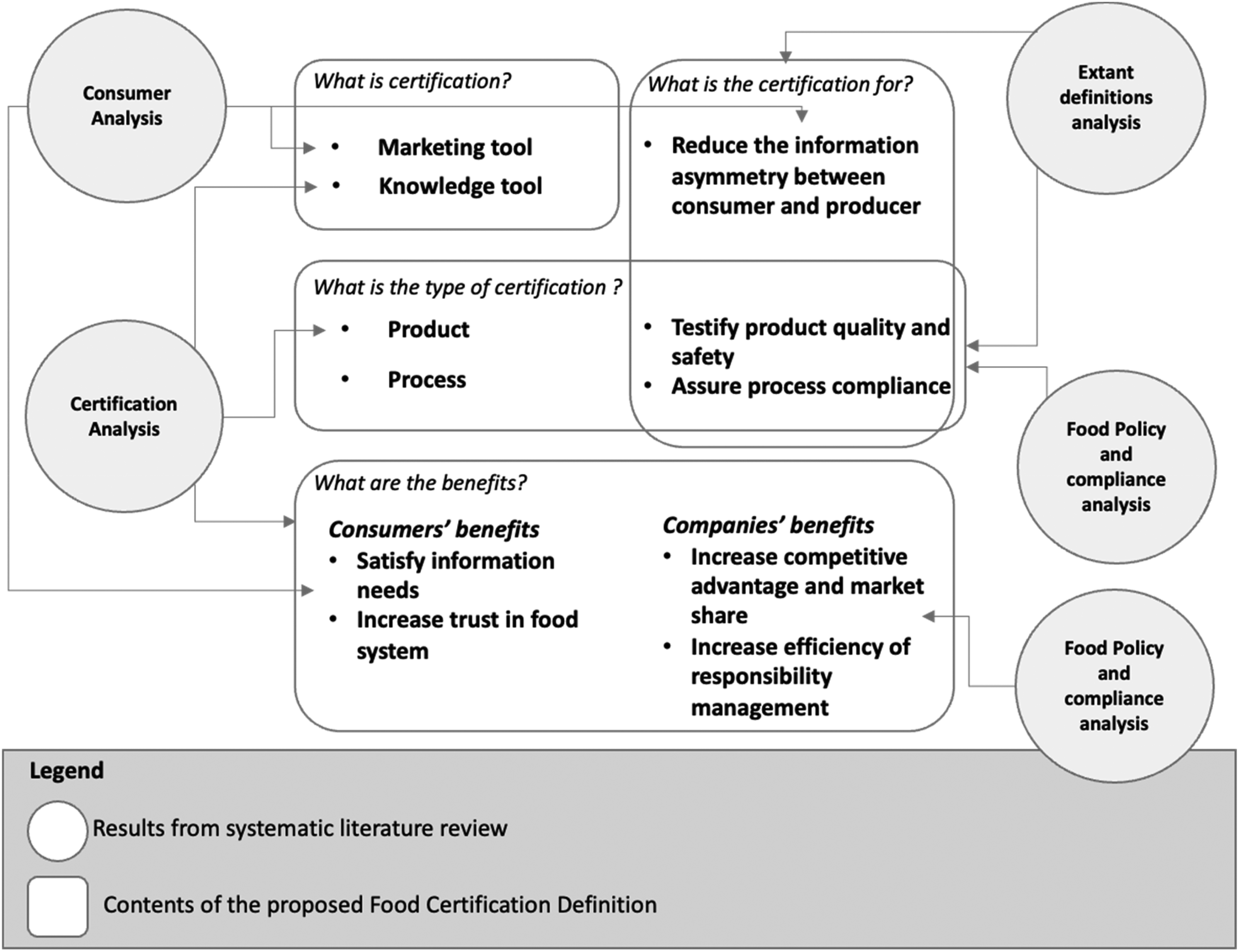
Contents of the proposed food certification definition and related systematic literature review results.
Implications
Based on the findings highlighted in the integrative conceptual framework, theoretical and practical implications for the macromarketing are discussed in this section.
Theoretical Implications
This study presents important implications for researchers. To the best of the researchers’ knowledge, this study is the first to provide a systematic overview and critical appraisal of the extant literature on food certification. This review maps the current body of knowledge from a multidisciplinary perspective, using the extant certification definitions, several categories of food certifications, and the main purposes and topics of food certification studies. This study also provides distinctive and overarching insights that allow for a more integrated and holistic understanding of the topic. The framework proposed in this study integrates the main findings of the systematic literature review but goes far as to provide new insights that will be useful in guiding future research surrounding this subject. The proposed food certification definition from this study provides a novel and more comprehensive way of explaining the role of this knowledge tool in decreasing information asymmetry. The definition provides insights about the product and system certifications as well as the reasons for using these certification schemes and explains the benefits of food certification for the main market actors (consumers and companies). The research agenda, discussed in Implications, represents an interesting starting point for future studies in the food certification field. The arguments presented in this study may represent valid ideas that enrich and extend the analysed research field, and the marketing field as a whole, from a macromarketing perspective.
Macromarketing Implications
Food certifications and, more generally, food certification labels, play a strategic role in the food marketing system, affecting society's demands (White and Samuel 2016), consumer behaviours, and food supply chain members’ work (Newman et al. 2014). Therefore, the practical implications, from a macromarketing perspective, are discussed in this study. These considering the impacts and the benefits regarding the two main actors within the marketing system that are of interest for macro marketers (Wilkie and Moore 2006). These actors are consumers and food companies.
Macromarketing studies the impact of society on market systems and vice versa focusing on the market, companies, and individual customers (Mittelstaedt, Kilbourne and Mittelstaedt 2006). Macromarketing is guided by the following three fundamental and complementary principles: markets are systems, markets are heterogeneous, and the actions of the market participants generate consequences far beyond the boundaries of the companies (Mittelstaedt, Kilbourne and Mittelstaedt 2006). Considering these principles, the implications of macromarketing follow naturally, according to the four topics that emerged during the systematic literature review.
Consumers’ Analysis
Several factors can affect consumers’ food behaviours, such as sensory attributes (perceived quality, taste, and consistency), non-sensory attributes (certification labels, location of origin, ‘free from veterinary drug residues’ label, and price), and personal features of the consumer (age, income, and educational level). Therefore, consumers evaluate differences in price in the presence of food certifications and modify their own behaviour, highlighting the importance of the food's attributes to achieve consumers’ attention and willingness to pay for these attributes., This confirms the arguments proposed by Boncinelli et al. (2017) and Nilsson, Foster and Lusk (2006). Simultaneously, it is also important to evaluate the effective possibility of consumers’ spending on these attributes. Considering food certification as a marketing tool, the presence (or absence) of a certification on the food label, as a non-sensory attribute, affects the consumers’ choice. This is because the certification acts as a proxy for other information required by consumers during the purchase, such as information regarding ingredients and nutritional elements, trust, quality, sustainability, traceability, health, or production. However, the presence of a certification label is not always a positive, as it also represents an additional cost for the consumers. If consumers are not sufficiently aware, they may prefer food without certifications. This was demonstrated by Boncinelli et al. (2017). Using these insights, food companies receive an advantage by adopting certification schemes only if they can reduce the information asymmetry between themselves and the consumers. On top of this, they must avoid providing misleading information, which confirms the position of Kolodinsky (2012), Newman et al. (2014), and Turra et al. (2014). The benefits of symmetrical information are related to an increased quality of products offered to consumers, favourable conditions to entry in the market, efficient communication oriented to final consumers, and high consumer satisfaction (Mishra, Heide and Cort 1998; Redmond 2009). From a consumer viewpoint, receiving more information regarding the certification leads to a conscientious food choice (Kolodinsky 2012).
Moreover, as stated by Wang, Tao and Chu (2020) and Moruzzo et al. (2020), adopting a certification is not always a sufficient action when attempting to ensure consumer trust. A company must act on the level of consumers’ confidence in food certifying entities, and promote international bodies that receive consumers’ highest confidence level. This confirms the strategic role of the government in the field of food certification (Skilton and Wu 2013). Thus, the findings of this study highlight the role of certification as a macromarketing tool, since it can affect consumer choice and, at the same time, is affected by the food trend established by society, embodying the macromarketing definition proposed by Mittelstaedt, Kilbourne and Mittelstaedt (2006).
Supply Chain Analysis
The behaviours of supply chain actors and stakeholders were analysed to determine the benefits that they could obtain by understanding consumers’ perceptions of specific certified food and to evaluate technologies that could increase the performance of the supply chain during food certification and control. Professional certification associations represent a mechanism by which policy actions may be coordinated in decentralised arrangements. This considers media and consumer associations as the major players in third-party regulations. The variation in supply chain performance, following the adoption of food certifications, should be measured as a trade-off between costs and benefits. These results primarily impact food companies, suggesting that the adoption of a certification scheme contributes to the change in supply chain performance. Adopting a standard certification scheme along the entire food supply chain allows food companies to act globally, widening their market activities to include international trade, and allowing them to overcome the scarcity of support for local food producers. All of this is discussed by Skilton and Wu (2013). Overall consumers’ trust increases if the entire supply chain follows the same certification rules, which in turn repays the efforts put into coordination, communication, and cooperation activities within the company and supply chain. Moreover, the adoption of agreements at the supply chain level makes it possible to divide the costs of certification among the various supply chain members, increasing the economic sustainability from that of a single company. Therefore, a food company, when adopting a certification scheme, is able to implement Socially Responsible Marketing (SRM) practices (Laczniak and Shultz 2021) and generate positive effects far beyond the boundaries of the company (Mittelstaedt, Kilbourne and Mittelstaedt 2006) covering the entire food supply chain and food system.
Certification Analysis
Social, economic, environmental, or religious factors affect the demand for certified food products. Specifically, the influence of the religious doctrines on food certification has been highlighted (Ab Talib et al. 2016; Arif and Sidek 2015; Asa 2018; Barylo 2016; Fenwick 2018; Garcia-Yi 2015; Henderson 2016; White and Samuel 2016; Zannierah Syed Marzuki, Hall and Ballantine 2012). It is interesting to note that, among the analysed studies, only one study presented a comparison between certified and non-certified animal-based foods intending to monitor the nutrient composition, digestibility, and effect on urine pH (Brown 1997). This could be relevant if the comparison was made for specific foods for specific to human consumption. From this evidence, it arose that certifications, and consumer trust in certifications, are susceptible to social, economic, environmental, and religious predispositions because of their capability to impact on ‘consumer behaviour, ethical decision making by businesses, and the market dynamics framed within the religious values associated with a given society’ (DeQuero-Navarro, Stanton and Klein 2020, p. 12). Therefore, the process of analysis that underlies the choice and the evaluation of certification concerns and can be influenced by cultural issues that are important to consumers (Fischer 2019). This is also affected by the socially responsibile routes undertaken by food companies (Mish and Scammon 2010), and, more generally, allows marketing dynamics to be built around religious, ethical, and/or sustainable needs (Humphreys 2014; Mathras et al. 2016).
Food Policy and Compliance Analysis
The relationship among important food product features, such as safety, quality, and food certifications, was explored. This study analysed how the latter positively affects the first two, particularly in the case where the food product features are relevant for the care of patient nutrition (such as, patients with coeliac disease or patients in other similar situations).
The role of government policy and regulations in a food certification system, as well as in a marketing system, is important and has two points of focus (DeQuero-Navarro, Stanton and Klein 2020, p. 10): first, the recognition of the ‘regulatory functions of the market system itself, reflected in horizontal (competitive) and vertical (buyer-seller) relations and processes’; and second ‘the explicit analysis of public policy in either general or specific terms’. The presence of certification systems at the country level can either favour or obstruct a company's product within a market, representing either leverage or a barrier to entry into the market (Newman et al. 2014). For instance, in the case of Food and Drug Administration (FDA) certification, some food products, such as products with a longer shelf life or milk-based or eggs-based products, require an additional certification procedure to obtain an import permit to the U.S.. Within a country's system, the establishment of a policy promoting food certification could encourage the adoption of responsible, healthy, and sustainable behaviours by both food companies and consumers. As demonstrated by Skilton and Wu (2013), the commitment and coordination implemented by the government and policies, affects the food companies’ participation efforts in certification schemes, influencing the quality and consistency of production, the effectiveness of promotion, product placement in the market, and consumer availability for a premium price.
Another relevant issue is that of food frauds in the international market, which also influences the actions of both companies and consumers. ‘Food fraud is a collective term used to encompass the deliberate and intentional substitution, addition, tampering, or misrepresentation of food, food ingredients, or food packaging; or false or misleading statements made about a product, for economic gain’ (Spink and Moyer 2011, p. 2). A shortage of resources, the possibility of increasing profits, regulation weaknesses, and so on, have encouraged food companies to adopt incorrect labelling behaviours, which often results in consumer fraud (Charlebois et al. 2016), subsequently sowing distrust amongst consumers. This moves the market away from the SRM concept proposed by Laczniak and Shultz (2021). Food fraud affects the intellectual property protection of a region or country (Qian 2014) and damages the economic development of a country. For example, the ‘Italian Sounding’ phenomenon can trick consumers and damage companies that invest in the origin mark of ‘Made in Italy’. In this context, the EU established several origin-based certifications (e.g., Protected Designation of Origin (PDO), Protected Geographical Indication (PGI), Traditional Speciality Guaranteed (TSG)), providing a way to demonstrate the geographical provenance of a specific food. Through the adoption of these certifications, food companies are able to create an association between the product and the region of provenance. This association represents an enhanced quality element for consumers. This servitization process enriches the product with an image, for which a consumer is willing to pay additional cost. The nation's image is used in marketing as the synthesis of a positive impression and positively influenced attitudes towards the country's products (O’Shaughnessy and O’Shaughnessy 2000).
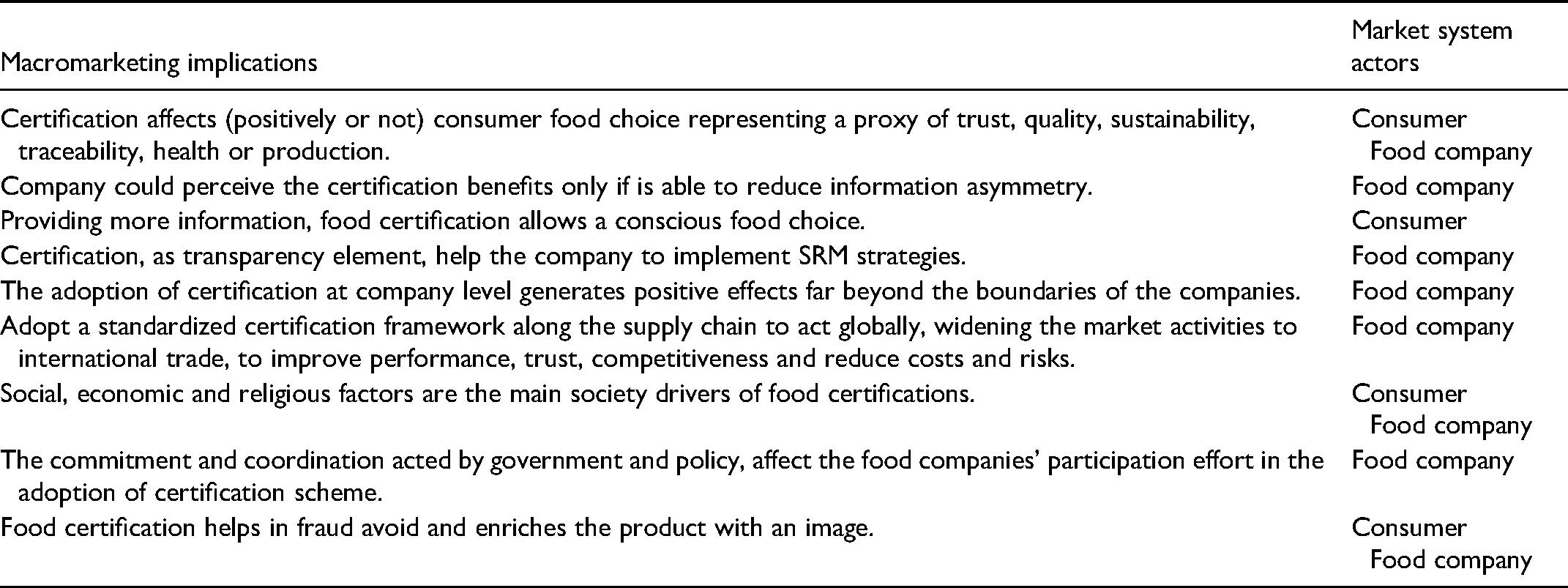
Table 3 presents the synthesis of the main macromarketing implications discussed above, indicating the actors of the market system who are involved in the implication.
Synthesis of Macromarketing Implications.
Future Research Agenda
With the aim of providing clearer and more valuable research directions, based on the gaps identified in the existing literature, this study proposes a research agenda for food certification from a macromarketing perspective.
Among the Consumers analysis studies, the work between certifications and certification bodies to increase consumer trust has not been sufficiently explored. However, this research route is promising. Several instruments can be combined with certifications to increase positive consumer responses. For example, marketing campaigns can be created to inform consumers about certification, and technologies can act as guarantors capable of replacing the certifying body.
It is interesting to study the effects of these tools on society, with the aim of answering to the following questions: ‘Is a consumer's trust in food certification entities enough to affect consumer choice towards a certified product? Alternatively, could other solutions be more effective?’.
Marketing campaigns can be used to create a positive perception of certification systems in consumers, helping to reduce information asymmetry. It would be interesting to ascertain whether the consumers are satisfied with the information provided by the certification on the label by applying survey-based methods. New user-friendly communication systems can be studied, improving the efficiency of food label design through the application of methodologies designed to increase the content understandability, ease of use and user involvement. These methodologies include, for example, human factors or gamification, which could find interesting applications in the food marketing field, also supported by technological devices. The Human Factor is a design process for machines, systems, work methods, or environments that consider the safety, comfort, and productivity of human users and operators (Holstein and Chapanis 2018). It is widely applied to study the human-computer interaction (e.g., Card 2017; Foley, Wallace and Chan 1984; Jacko 2012; Keim et al. 2008; Mohamed et al. 2019) or human-robot interaction (e.g., Goodrich and Schultz 2007; Hancock et al. 2011; Lee and Cha 2019; Steinfeld et al. 2006). Food labels, representing an interface between food companies and consumers, can benefit from applying this design method. In future research route, how a label design based on human factor principles can reduce unsafe acts (e.g., human errors and violations) and what are the impacts generated by individual, organizational, technological, and environmental factors can be studied. Gamification, as a service marketing tool, is defined by Huotari and Hamari (2017, p. 25) as ‘a process of enhancing a service with affordances for gameful experiences in order to support users’ overall value creation’. As future research route, researchers can demonstrate how the definition, especially in the case of technological labels, of gamification strategies is useful to involve consumers in virtuous behaviours regarding label reading, certification awareness, and food choices in general.
Furthermore, Industry 4.0 offers a set of solutions potentially relevant for every field, including the agri-food sector. Artificial intelligence, robotics, Internet of Things, sensors, big data, blockchain, and analytics help to obtain further knowledge about products (Shamim et al. 2018). Thus, it would be interesting to analyse how these new technologies could foster and innovate the food certification field, and to understand if consumers’ trust level in the traceability data collected automatically by technological solutions could be higher than that of the current certification system based on control by competent bodies. This research route could lead to a new path of certification based on technology-based monitoring, that can replace/sustain existing certification bodies and improve customers’ positive response to food certification. Industry 4.0 involves the agri-food sector, proposing a digitalization of production processes (Klerkx, Jakku and Labarthe 2019) and a set of technologies such as nanomaterials and nanotechnologies (Dawit Moges et al. 2020). This is specifically discussed in the extant literature regarding the halal food supply chain, where the main issues are related to assessing approaches in regulating nano-based products in order to ensure only halal and safe products for both production and sale phases (Bujang, Rahman and Omar 2020). However, such products/technologies remain the subject of considerable research, as this technology is relatively nascent and the safety/risk threshold has not been fully ascertained (Awang and Zakaria 2019). This issue provides relevant suggestions for several stakeholders: engineers, biologists, managers, regulators and policymakers, and third entities certifications. Considering this evidence, new research routes could be opened to validate and test the consumer acceptability and preferences of nano-based food for different geographical markets, design marketing strategies tailored for nano-based food, and assess approaches in regulating nano-based food to ensure different certification standards.
Another point of discussion emerging from the findings and particularly from Supply chain analysis papers is related to the absence of a systematised map of food certifications existing worldwide. Indeed, only two studies have shown a food certification map. Zhang et al. (2015) reviewed the third-party regulations in the Chinese agri-food industry, analysing them from five different perspectives: media, third-party certifications, consumer associations, social movements promoted by NGOs, and industry associations. Therefore, Zhang et al. (2015) proposed a map of food and agricultural product certification in China, reporting the top six certification programmes delivered by the 48 certification agencies in the agri-food industry in 2013. For each of the six certification types, details about the number of certifications delivered, the number of certification agencies, and the top three certification agencies were provided. Turra et al. (2014) studied the social and environmental factors affecting the certification of citriculture products in Brazil. In this study, the researchers provided a list of citriculture product certifications, specifying those that are mandatory and those that are voluntary. Moreover, for each certification, the area to which they belong is indicated (environmental or social area) along with whether the certification affects the product price, if it also covers transgenics plants, and if it allows agrochemicals.
From a macromarketing perspective, the revealed complexity due to the presence of multiple certification systems is problematic for both producers and consumers; it represents a strong limitation for the globalisation trend, posing problems regarding reducing information asymmetry, managing company mistrust, promoting sustainability, and adopting certification at the supply chain level. Consumers are faced with competing labels that may each have different interpretations of what constitutes quality/trustworthy/trace/healthy products. They may become confused by multiple certifications and become sceptical of companies.
Food companies are uncertain as to which certification scheme is most effective to adopt in order to achieve maximum growth. From this standpoint, an important research question arises: How can we decrease the level of complexity in the food certification field? To decrease the level of complexity in the food certification field, a holistic definition is proposed in this paper. However, this is insufficient as it would be useful to encourage the stakeholders involved in the food certification field to follow a path that leads to a ‘harmonised certification framework’. To find evidence in this direction, researchers could invest their efforts in defining a number of useful suggestions and best practices. Creating a map of all food certifications worldwide represents the first step in reducing the complexity regarding food certification and to underlining overlaps and differences between the various certifications. This map, in the short term, will help consumers to better understand what certification to look for obtain specific information according to their personal needs, leading to their avoiding scepticism and misunderstanding; for producers, it will also help them to better understand which certifications can be adopted to improve consumers’ satisfaction and which certifications facilitate entry to a specific country's market. In this map, certification entities and governments will find the information required to increase awareness about the importance of adopting a harmonised certification framework, encouraging them to employ long-term systematising action to reach the envisaged solution. In the absence of a standardised referral scheme, working in a global market is difficult because consumers’ quality perceptions depend on a country's cultural values and norms. Conversely, a harmonised certification framework improves producers’ and retailers’ confidence and consequently increases transparency along the value chain, making it possible for companies to better communicate the messages linked to certification.
Conclusion and Limitations
This study explores the field of food certification using a systematic literature review to identify the definitions of food certification, its related categories, and the main purposes and topics of the analysis; consequently, this study provides an overview of the food certification field, theoretical and macromarketing implications, and future research routes.
The results of the review were integrated and summarised in a conceptual framework that represents an overall picture of the extant knowledge base on food certification. The recognised definitions are generic or are specifically declared as belonging to a category: product, system, or voluntary. In other cases, the definition refers to a specific product certification (such as organic, Halal, or HACCP certifications), with Halal certification being the most discussed. Additionally, the purposes of the studies varied, and a categorization of these purposes into four main topics was provided: (i) certification analysis, (ii) food policy and compliance analysis, (iii) consumer analysis and (iv) supply chain analysis.
The complexity of the food certification system may be attributed to a missing shared definition within the literature, which can encompass and describe the multiple purposes of food certification. Therefore, a new definition of food certification was provided in this study to include all the key results from the analysis and those from the relevant existing studies.
The absence of a harmonised map of worldwide food certification was indicated in this study. This is problematic for both producers and consumers as benefits could be derived from a standardization path. These issues could be considered as a strategic point in the future research agenda. Additionally, the study of the effects of new marketing strategies or technologies on the food certification field was discussed in this study as a research route.
The results of this study provide a guideline for academic research by providing an overview of the food certification theme.
Consumers and food companies could both benefit from the results of this study by obtaining a guide that allows them access to comprehensive definitions surrounding food certification, understand the categories, purposes, and topics of the analysed field, and evaluate the macromarketing effects related to food certification.
Specifically, by considering the study results, the benefits for consumers are indirect. Indeed, if food certification agents and food companies act upon the insights of this study, consumers can be assured of the provenance and quality of their food purchases, become aware, and make informed food choices. Similarly, food companies will be able to perceive the complexity of the food certification field, adopt strategies to better inform the consumer about the chosen certification, and understand that to access the global market, it is necessary to carefully study the rules and cultural aspects in force. Indeed, with the help of this study, policymakers and regulators could initiate a standardised path that is useful in decreasing the complexity of the field, assuring companies the possibility of easy access to a global market, and promoting a certification strategy capable of generating, indirectly, sustainable and healthy consumer behaviours.
Limitations
Although the research methodology is well established and extensively discussed in Theoretical background, some limitations were identified. These limitations mainly regarded the search keywords and the chosen databases, which affected the results obtained. Using another set of keywords or a different Boolean operator for the searching phase within the selected databases could have generated a different analysis sample, which might not have completely correspondent to the aim of the present research; considering other databases for the composition of the sample (such as Google Scholar or Science Direct) might have expanded or reduced the number of papers considered, affecting the typology and quality of the results (more or fewer definitions; different typologies of works like lecture notes or commentary or teaching materials). Moreover, it is necessary to note that Web of Science permits search operations in the ‘Title’ and ‘Topic’ fields, while Scopus offers the ‘Article title, Abstract, Keywords’ field for the same scope. Although ‘Topic’ and ‘Keywords’ could be assimilated, the ‘Abstract’ field is absent in the first database, which may have excluded several published works. This is a limitation of the study.
Footnotes
Associate Editor
Karim Ben Slimane.
Acknowledgments
This work was partially supported by REFIN intervention co-financed by the European Union through the Apulian regional plan (POR Puglia 2014–2020, Asse prioritario OT X “Investire nell'istruzione, nella formazione e nella formazione professionale per le competenze e l'apprendimento permanente”–Azione 10.4–DGR 1991/2018– Avviso2/FSE/2020 n. 57 del 13/05/2019–BURP n. 52 del 16/05/2019).
Declaration of Conflicting Interests
The author(s) declared no potential conflicts of interest with respect to the research, authorship, and/or publication of this article.
Funding
The author(s) received no financial support for the research, authorship and/or publication of this article.

Supplemental Material
Supplemental material for this article is available online.