



Abstract
Research on the affective phenomena involved in music has grown exponentially over the last 20 years. One particular topic is the use of music for affect self-regulation (i.e., the process of creating, changing, or maintaining affective states). Being a recent field of research, knowledge remains scattered and heterogeneous. An integrative literature review was conducted to present the results from recent research and critically analyse its overall conceptual state. A systematic search of online databases focusing on publications from January 1994 to June 2014 was completed. An extensive screening resulted in the selection of 34 publications, which were analysed with regard to their focus, conceptual clarity, and the results obtained concerning the following levels: goals (G), strategies (S), tactics (T), and mechanisms (M). The findings show that the GSTM levels have not been studied with equal weight and precision. Moreover, additional relevant dimensions of analysis have also emerged. A considerable degree of inconsistency in the use of terms and conceptual imprecision was found across the publications, and the lack of a model aggravated the situation. The main components of affect regulation through music were identified. A compilation of definitions of affective terms and recommendations for future research are presented.
Keywords
Emotion regulation (i.e., the internal and external processes for monitoring, assessing and modifying emotional reactions, whether positive or negative; Thompson, 1994) is a growing topic in psychology (Koole, 2009). Still, paired with the scientific enthusiasm for this concept, questions and doubts regarding its validity and definition have arisen (e.g., Bridges, Denham, & Ganiban, 2004; Campos, Walle, Dahl, & Main, 2011).
The difficulties regarding this concept start with emotion: the act of defining emotion poses several problems, and the attempt to differentiate it from emotion regulation is not always successful. Some authors have argued that emotions are inherently regulatory (Kappas, 2009, 2011) and our understanding of emotion is limited (e.g., Kagan, 1994), thus making it impossible to distinguish between the concepts of emotion and emotion regulation; that emotion regulation processes involve more than influencing emotions (Hofer & Eisenberg, 2009); and that the general concept of emotion should be discarded for not being useful to psychological theory (Griffiths, 1997).
In the field of music and emotions, the concept of emotion regulation has been used as a starting point for studying regulatory processes through music engagement (e.g., Thoma, Ryf, Mohiyeddini, Ehlert, & Nater, 2012). Additionally, perhaps as an attempt to grasp different affective phenomena, mood regulation (Saarikallio & Erkkilä, 2007), mood enhancement (Sleigh & McElroy, 2014), coping (Miranda & Claes, 2009), and affect regulation (Van Goethem & Sloboda, 2011) have also been used.
This variety of approaches has enriched the field; nonetheless, it can have a negative effect when definitions are not precise or concepts are used interchangeably. Affect, mood, and emotion each have different definitions as psychological phenomena. Affect can be considered the umbrella term, but no consensus exists regarding which phenomena to include under it (for a review on different approaches to affect, see Van Goethem, 2010).
In order to provide better insight into the different sub-components of the affect regulation concept, Van Goethem (2010; Van Goethem & Sloboda, 2011) suggested studying affect regulation through music at different levels: goals, strategies, tactics, and mechanisms (GSTM framework).
Goals comprise the first level of the GSTM framework and serve as a reference for the entire process; they are the desired future states (Shah & Kruglanski, 2000) that provide direction toward fulfilling an individual’s needs as well as influencing the strategies, tactics, and mechanisms used (Van Goethem & Sloboda, 2011). The second level of the GSTM framework consists of strategies, which are defined as the specifications regarding how a given regulatory act is implemented (Koole, 2009, p. 10) or how a goal is pursued.
The third level, tactics, corresponds to the practical activity that supports the strategy. Finally, mechanisms refer to the features of the tactic that enable the entire process. The following description provides an example of the entire framework: An individual defines the goal as reducing sadness, and uses the strategy of distraction through the tactic of music listening, via the mechanism of emotional contagion.
The GSTM framework will be used in this study because it is, at the time of writing, the only existing framework that encompasses all the dimensions of affect and allows the study of music as a tactic. Despite being neither descriptive nor an explanatory model of the regulative process, it enables the categorization and analysis of the data related to this topic. Other models have been suggested, but were not chosen due to their specific scope: emotional uses of music by young tennis players (Bishop, Karageorghis, & Loizou, 2007), mood regulation through music by adolescents (Saarikallio & Erkkilä, 2007), and use of sad music for self-regulation (Van den Tol & Edwards, 2013).
Cole, Martin, and Dennis (2004) identified the lack of definition for emotion and emotion regulation as one of the major issues in the study of emotion regulation. This concern is directly transferable to music research, where there has not been a conceptual discussion about self-regulatory processes. This field is emerging; at present, only two publications have reviewed the topic in an integrative and critical manner (McFerran, Garrido, & Saarikallio, 2013; Uhlig, Jaschke, & Scherder, 2013). However, these articles did not address conceptual definitions.
Because of this situation, scattered knowledge and the absence of solid and homogeneous definitions are expected across publications. The concerns regarding conceptual definitions are one of the motivators of the present work.
Definitions, terminology, and scope of this study
In the present article, affect will be used “as an umbrella term that covers all evaluative – or ‘valenced’ (positive/negative) states” (Juslin & Sloboda, 2010, p. 10). The affective states included under the term affect can be found in Figure 1. In the figure, the different affective states are distributed according to a scale of duration and stability throughout time based on Scherer (2000, 2004, 2005) and on additional information found in Ferguson, Hassin, and Bargh (2008), Fleckenstein (1991), Gross (2014), Gross and Thompson (2007), Harmon-Jones and Harmon-Jones (2015), and Van Goethem (2010). These affective phenomena will not be separately analysed in the current paper, so detailed definitions will be presented later, in the recommendations.

Affect as an umbrella term and the affective terms that are included in it, ranking from short duration (1) to long duration (4).
Affect regulation is considered in this work as all the attempts at creating, changing, or maintaining any of the affective states, positive or negative (e.g., emotion regulation, coping, mood regulation, arousal modulation). As with emotion regulation (Gross & Thompson, 2007), these attempts may be directed to multiple aspects of the affective states: their latency, rise time, magnitude, duration, the offset of behavioural responses, the experience, or the physiological reaction. Furthermore, in this paper, “affect regulation” refers solely to self-regulation processes; attempts to regulate others’ affective states – such as music targeted to consumers, music therapy, or music interventions – are not considered in this review. Moreover, the terms “affective states” and “affect regulation” are used when referring to the research results, even when the authors originally used other terms, in order to maintain conceptual coherence throughout the paper.
Aim and research questions
The purpose of this study is to review the pertinent publications concerning affect self-regulation through music in an integrative manner and to present a critical perspective on the conceptual state of the field. While recognizing that terminologies are plastic and that there will always be variance in their use, it aims at stimulating self-reflective questions and discussion amongst researchers. Consequently, the field can reach higher levels of cohesion, precision, and clarity.
The following research questions guided this study:
Which concepts and theoretical backgrounds have been used to research affect regulation processes through music?
How well defined and consistent are these concepts throughout the publications?
What are the major research results, and how do they fit the levels of Van Goethem’s (2010) GSTM framework?
Recommendations for future research are also discussed.
Methods
The current literature review was performed following an integrative methodology. An integrative literature review synthesizes, analyses and critiques findings from studies across multiple paradigms to address the current knowledge regarding a specific area to generate new frameworks and perspectives (Torraco, 2005). The current study adopted a five-stage model (Whittemore & Knafl, 2005) that includes problem formulation, a literature search, data evaluation, data analysis, and the interpretation and presentation of results.
Literature search
An extensive literature review was conducted using electronic databases. The first step included a broad search of the literature using the following keywords: music AND (emotion OR mood OR affect) AND (regulation OR strategy OR coping); minor changes in the Boolean expression were made to adapt to particular search engines’ features. The included databases were ProQuest PsycINFO, ProQuest Social Science Journals, ProQuest Psychology Journals, ERIC, Science Direct, Web of Science and Scopus. The search was confined to journal articles and dissertations published in English between 1 January 1994 and 30 June 2014.
Data evaluation
Data were evaluated in terms of inclusion and exclusion criteria in order to keep the selected publications within the scope of this review. When an author had published an article based on a dissertation, the article was preferred and the related dissertation excluded. Table 1 shows the inclusion and exclusion criteria that guided the selection of publications.
Inclusion and exclusion criteria for the selection of publications.

The steps followed to screen and delete publications from the initial to the final sample are featured in Figure 2.

Flowchart of the data screening process.
Data analyses
To thoroughly interpret the data and provide a critical and innovative synthesis, the data were analysed using the strategies suggested by Whittemore and Knafl’s framework (2005). First, the data were extracted, coded and organized into subgroups. The extraction and codification of data were performed based on a priori constructs, creating three stances in this analysis: I) focus of study; II) conceptual clarity; and III) results related to each dimension of the GSTM framework. Every selected publication was analysed under these three stances. The stances and their connections to the research questions are listed in Table 2.
The three analysis stances, their object, and their relation to the research questions.
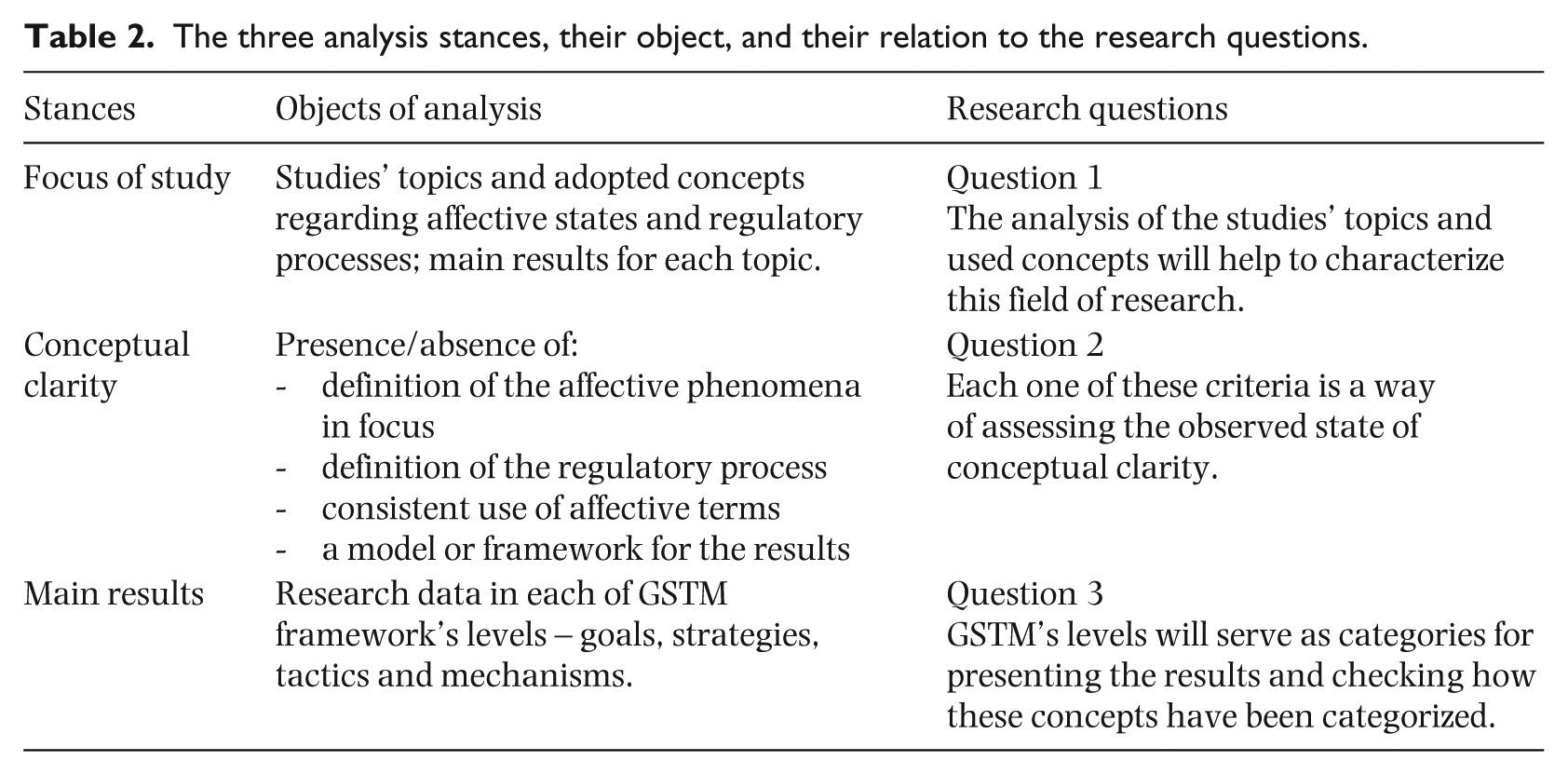
In the first stance (focus of study), the major concepts related to affect and regulatory processes as well as the results of each publication were registered and summarized.
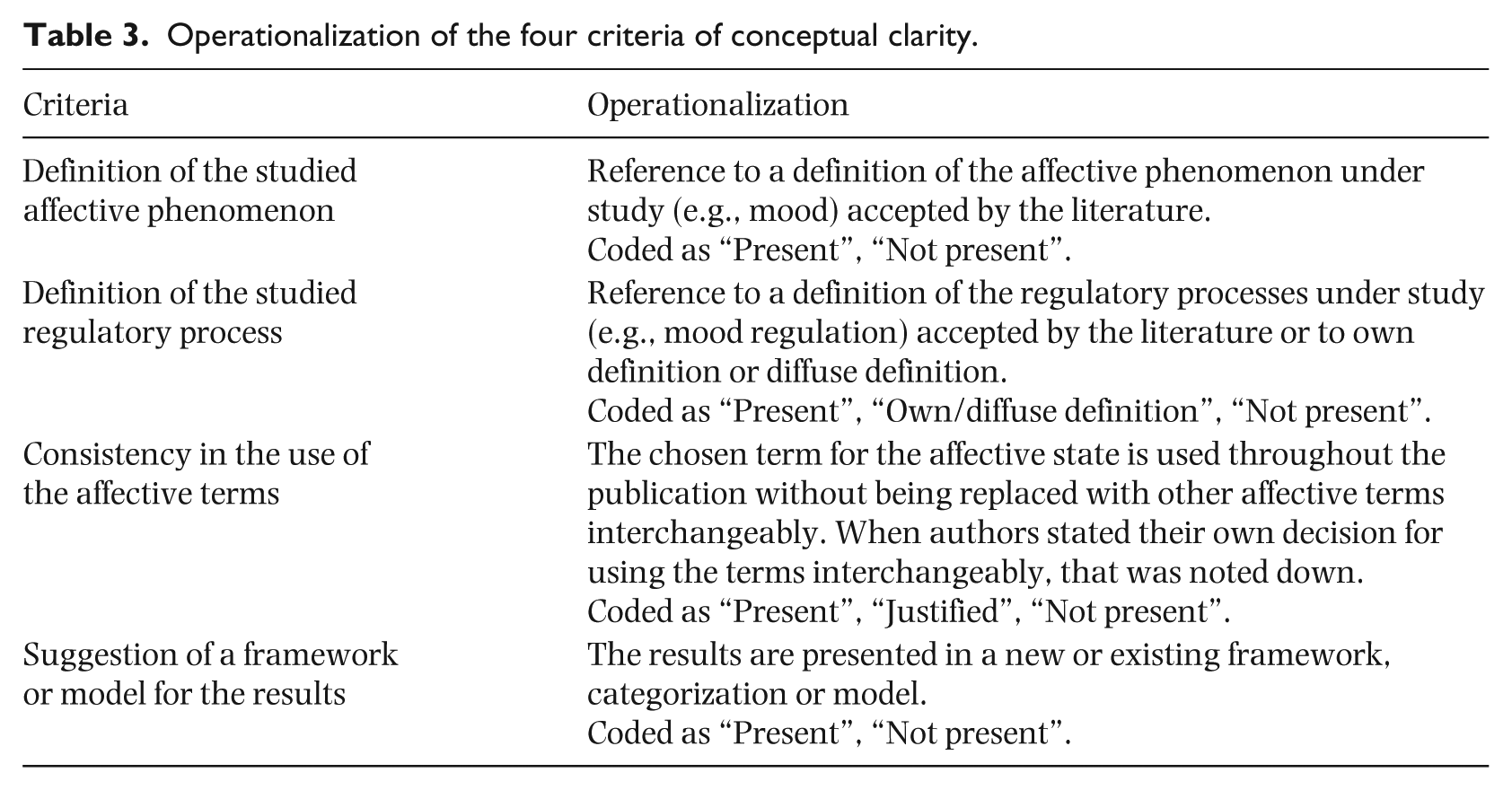
Concerning the second stance (conceptual clarity), the following criteria were chosen to assess the conceptual clarity and precision of the studies: definition of the studied affective phenomenon; definition of the studied regulatory process; consistency in the use of affective terms; and suggestion of a framework or model for the results. These four criteria are operationalized in Table 3.
Operationalization of the four criteria of conceptual clarity.
As for the third stance (main results), the results of the selected publications were categorized based on the GSTM framework (Van Goethem, 2010) to describe the current state of the art and provide a basis for discussion regarding how this topic has been approached. The differences between the categorizations of the different authors and the GSTM framework were analysed to measure conceptual heterogeneity and precision.
Finally, the publications were further categorized according to their degree of closeness to the specific topic of affect self-regulation through music. This categorization is based on the publications’ content and main topic. Three subgroups were formed. Subgroup 1 was composed of studies focusing directly on some kind of affect regulation through music engagement; subgroup 2 included publications where affect regulation through music is studied in relation to other phenomena; and subgroup 3 concerned different but related phenomena that provided information about affect regulation through music.
Because the review targeted concepts and definitions in particular, the methodological qualities of the study design, data collection, and analysis were not assessed (for a review on these, see McFerran et al., 2013; Uhlig et al., 2013).
Results
Search results
The first step of the screening process, i.e., the database search, resulted in 2,004 hits. At the end of the screening process, the final sample consisted of 34 publications. Of these publications, two were dissertations, and 32 were journal articles published in varied fields. The exclusive focus on self-regulation of this research led to the elimination of a considerable part of the empirical literature that measured the regulation initiated, suggested, or influenced by others.
Stance I: Focus of study
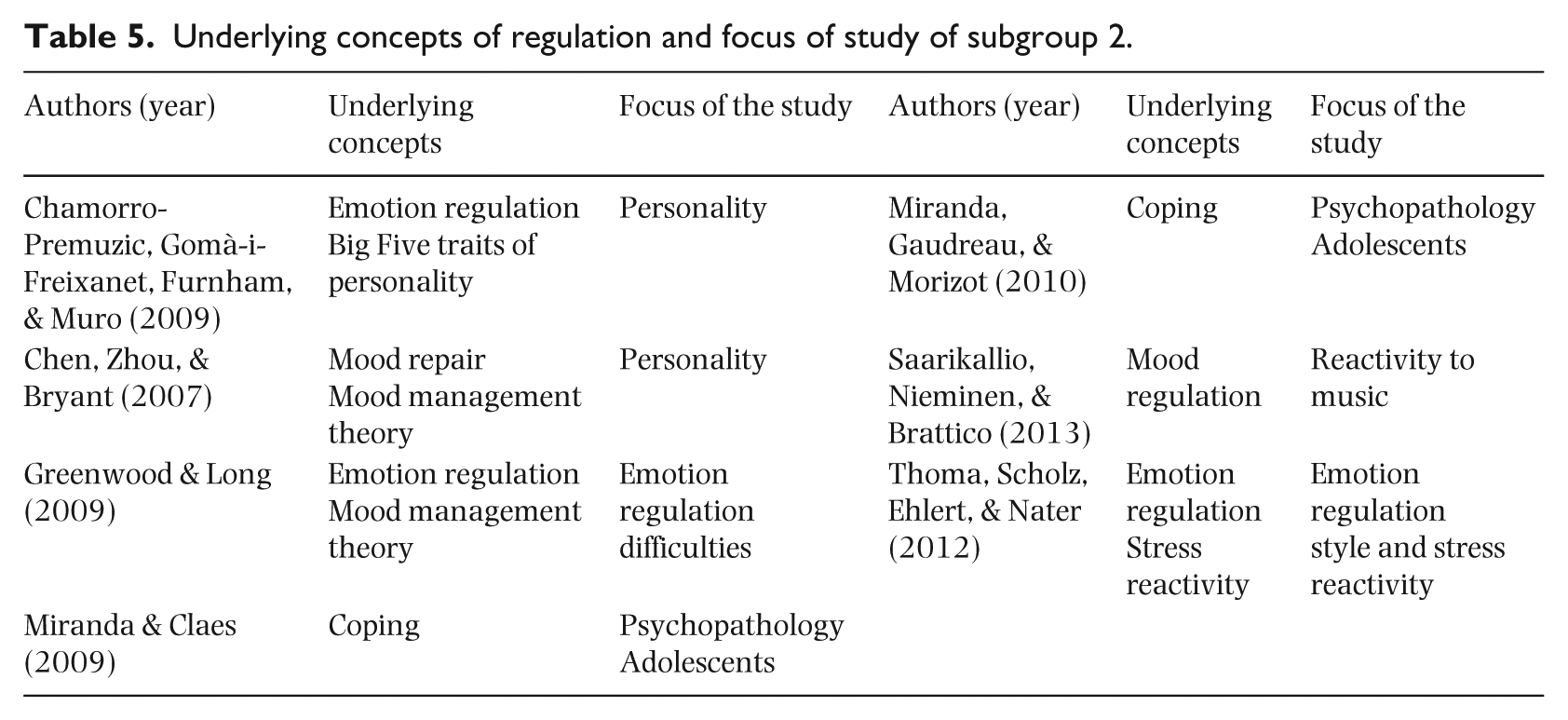
Tables 4, 5, and 6 provide an overall view of the examined publications, including their major concept or theory and their focus of study (the main results of each publication can be consulted in Appendix A in Supplementary Materials online). The publications are categorized by degrees of closeness to the topic. Seventeen publications were categorized as directly related to affect regulatory processes through music – subgroup one (Table 4); seven were identified as addressing this topic via the relations with other phenomena – subgroup two (Table 5); and 10 were more indirectly related – subgroup three (Table 6).
Underlying concepts of regulation and focus of study of subgroup 1.

Underlying concepts of regulation and focus of study of subgroup 2.
Underlying concepts of regulation and focus of study of subgroup 3.

Some variability amongst the publications was found with regard to the terms used to identify the regulatory processes: emotion regulation, mood enhancement or repair, mood regulation, coping, emotion modulation, affect regulation, and others. Similarly, there were multiple studied targets of regulation across publications, including emotion, mood, motivation, impulses, energy, and focus.
Considering the scope of the topics, the most common foci concerned the regulatory use of music during daily life or within specific situations (e.g., Thoma, Ryf, et al., 2012), the relationships between the use of music and several individual traits such as personality or music preferences (e.g., Getz et al., 2012), and the relationships between the regulatory use of music and psychopathology or wellbeing (e.g., Miranda et al., 2010). In addition, certain publications focused on specific cultural or age groups and the regulatory use that these groups have for music (e.g., Saarikallio & Erkkilä, 2007). Finally, other publications studied the functions of music (e.g., Schäfer et al., 2013) or with regard to specific populations (e.g., Bishop et al., 2007).
The function of music
Overall, the literature supports the notion of music as a rich resource that has several functions (DeNora, 1999; Schäfer et al., 2013). Affect- and regulation-related functions are amongst the functions that participants value the most (Schäfer et al., 2013), particularly in the case of their favourite music (Schäfer & Sedlmeier, 2009). This function is somewhat universal, given that similar results were found across different groups and populations (Boer & Fischer, 2012; Hakanen, 1995; Laukka & Quick, 2013). Functions other than affect regulation have also been identified; for example, those related to self-awareness achievement, the expression of social relatedness (Schäfer et al., 2013), aesthetic reflexivity, construction of the self (DeNora, 1999), art enjoyment (Schäfer & Sedlmeier, 2009), and even help with sports performance (Laukka & Quick, 2013).
The use of music for affect regulation
The results showed that affect is a determinant factor when selecting music for listening (Heasley, 1995). Furthermore, a tendency exists for selecting music that mirrors the experienced affect (Thoma, Ryf, et al., 2012). Music is used to regulate several components of affect in daily life: emotion, mood, motivation, focus, impulses and arousal levels (DeNora, 1999). The use of music is based on different goals related to the maintenance, maximization, change or inducement of affect (Thoma, Scholz, et al., 2012; Van Goethem & Sloboda, 2011). The pursuit of these goals is supported by strategies that fit the individual (e.g., Gebhardt & Von Georgi, 2007; Saarikallio & Erkkilä, 2007).
Age group
Adolescents are a relatively common target population for research regarding affect regulation through music. Saarikallio and Erkkilä (2007) suggested that music is a versatile resource that offers adolescents a way to increase and restore wellbeing as well as improve emotional life through different strategies such as revival and diversion. Adults also use music for their affect regulation. For example, the use of MP3 players might help people cope with internal and external stressors by creating a personal space that increases their sense of control (Skånland, 2011).
Throughout adulthood, certain goals and strategies remain similar; however, others change over time with age, after particular events or retirement (Saarikallio, 2011). Still, music remains a source for positive emotions, and mood regulation through music predicts wellbeing and personal growth amongst the elderly (Laukka, 2006).
Specific groups
Studies of tennis players (Bishop et al., 2007) and other professional athletes (Laukka & Quick, 2013) showed that these groups use music in order to elicit emotional states that foster their desired performance outcomes. Athletes can listen to music during warm-ups, training sessions and pre-events preparations.
Individual differences and contextual influences
Individual differences influence both the relationship with music and the outcomes of music engagement. Pursued goals (Thoma, Scholz, et al., 2012), emotion regulation difficulties (Chen et al., 2007; Greenwood & Long, 2009), personality traits (Barcewicz, 2012; Chamorro-Premuzic et al., 2009), relationships with music (Ter Bogt et al., 2011), and affective reactivity to music (Saarikallio et al., 2013) were some of the personal factors related to the regulatory use of music.
Although the contextual features have not been studied deeply, some studies have suggested that context matters. Participants in Saarikallio’s study (2011) frequently mentioned the perceived relationships between context and their choices of music. Thoma, Ryf, et al. (2012) found that preferences for certain emotional content within music was correlated with the emotional content of the situation itself. Likewise, Skånland (2013) suggested that whether an individual attempts to maintain, change or enhance their emotions through music depends on contextual features.
Effects on mental health and wellbeing
Some studies have focused on the protective characteristics of music, suggesting that engaging with music benefits individuals and fosters wellbeing (Dingle et al., 2013; Laukka, 2006; Skånland, 2011). Both in healthy and in clinical samples, the use of music to entertain and induce positive states correlates with higher levels of wellbeing (Gebhardt et al., 2014; Thomson et al., 2014). Nevertheless, certain uses of music for affect regulation are related to symptoms of mental distress, both in adolescents (Miranda & Claes, 2009; Miranda et al., 2010) and adults (Thoma, Scholz, et al., 2012).
Overall, it has been found that the frequent use of music for affect regulation predicts mental disorders (Thomson et al., 2014). Studies with clinical samples have revealed that participants diagnosed with psychopathology, besides engaging more often with music for self-regulation, show different patterns in the underlying strategies and goals depending on the diagnosed pathology (Gebhardt et al., 2014; Gebhardt & Von Georgi, 2007). To date, it has not been possible to ascertain if certain uses of music are maladaptive and increase psychopathology or if higher uses of music reveal the increased need of regulation to cope with mental suffering.
Stance II: Conceptual clarity
Table 7 depicts the evaluation of each publication’s conceptual clarity. The first criterion (column 1) is the presence/absence of a definition for the studied affective state (e.g., emotion). The second criterion (column 2) is the presence/absence of a definition for the regulatory process (e.g., mood management).
Assessment of conceptual clarity based on the presence of definition of affective terms (1), definition of the regulatory process (2), the consistency of their use (3), and proposal of model/framework for the results (4).

Note. 1 – Definition of the affective phenomena in focus: X = present; O = not present; 2 – Definition of the regulatory process in focus: X = based on theory; / = short description of authors’ conception or diffuse definition; O = no definition; 3 – Consistent use of affective terms: X = consistency; / = assumed or explained interchangeability; O = unjustified interchangeability; 4 – Model or framework for the data: X = present; O = not present.
The analysis of column 1 revealed that a significant majority of the publications (26 of 34) did not define the affective concepts under study. This lack of definition was particularly salient in the subgroups that addressed the topic more indirectly (subgroup 2 and 3) but was nevertheless problematic also for the closest subgroup (subgroup 1), in which less than half of the publications presented a clear definition (8 of 17).
Similarly, regarding the definition of the regulatory processes, more articles were published without a definition (16) than those with a definition (13). Five publications defined regulatory processes in a less formal way (e.g., without theoretical support). Definitions were more common amongst publications with a higher degree of closeness to the topic (subgroup 1: 9 of 17, subgroup 2: 4 of 7), whereas none of the subgroup 3 publications provided a theory-based/clear definition.
Column 3 shows the consistency/interchangeability of the use of affective terms and concepts throughout the publication. Nearly half of the publications within the closeness subgroups 1 and 2 used the affective concepts interchangeably, of which two articles assumed or justified this interchangeability. In subgroup 3, most of the publications were consistent in their use of the chosen terms and concepts.
The fourth criterion was the proposal/absence of a model or framework for the results of the paper (column 4). This criterion portrays the capacity of recent research to produce systematized knowledge. Column 4 shows that approximately only one-third of the publications in the first subgroup organized their results based on a model. For subgroup three, the proportion was inverted, with two-thirds proposing a model or framework.
The identified models/frameworks varied in their focus and comprehensiveness. Some concerned specific populations (e.g., tennis players; Bishop et al., 2007), specific affect dimensions (e.g., mood regulation; Saarikallio & Erkkilä, 2007) or specific uses of music (e.g., listening to sad music when feeling sad; Van den Tol & Edwards, 2013). Examples coming from publications belonging to the second or third levels of closeness presented, as expected, frameworks that focus on more distant phenomena (e.g., health benefits of choir singing, Dingle et al., 2013; functions of music, Schäfer & Sedlmeier, 2013; typology of music listeners, Ter Bogt et al., 2011). Regarding the comprehensiveness of these categorizing systems, they ranged from models of a specific process (e.g., Saarikallio & Erkkilä, 2007) to broader frameworks to briefly explain the results obtained (e.g., Boer & Fischer, 2012).
Stance III: Research results related to the GSTM framework
The results based on the four levels of the GSTM framework are summarized in Tables B1, B2, B3 and B4 (Appendix B in Supplementary Materials online).
Goals
The first level of the GSTM framework concerns the goals of affect regulation. Some studies have created lists of goals based on the existing literature and presented them to participants (e.g., Thoma, Scholz, et al., 2012); others extracted possible goals via grounded theory (e.g., Bishop et al., 2007); still others reduced regulation goals into theory-driven categories such as changing, creating, enhancing and maintaining affective states (e.g., Van Goethem & Sloboda, 2011).
Not all of the goals were equally frequent. For example, Laukka (2006) presented a group of elderly participants with a list of 28 reasons to listen to music, and certain goals were identified more frequently: to be entertained, to evoke memories, to feel pleasure, to have company/background music. Overall, the most common goals were to change from a negative to a positive affective state (Bishop et al., 2007; Heasley, 1995; Saarikallio, 2011; Van Goethem & Sloboda, 2011), or to maintain/strengthen a certain state by listening to affect-congruent music (Heasley, 1995; Saarikallio, 2011; Skånland, 2013).
Certain variables influence the setting of personal goals. For example, when feeling sad, the goal of enhancing one’s mood or creating happiness is less likely when individuals believe that nothing can be done about their affective state or when their sadness is already resolved (Tahlier et al., 2013). In general, adolescents believe that it is easier to use music to promote positive affect when they are already in positive states (Barcewicz, 2012).
During the analysis, several concepts were identified that could be categorized as goals, according to the GSTM framework; however, the authors presented them with different labels (Table B1 in Supplementary Materials). For example, Heasley (1995) presented three categories (enhance, change, and enhance-to-change) as “metastrategies”. Because these concepts were described as overarching plans, they fit better in the category of goals than strategies. Boer and Fischer (2012) described seven functions of music, with each one including several goals, which they called “sub-functions”. Other publications recognized goals in their research but did not label or identify them thoroughly (Barcewicz, 2012; DeNora, 1999; Knobloch & Zillmann, 2002; Sleigh & McElroy, 2014).
Strategies
Research on this topic has identified numerous affect regulation strategies using music. A compilation of all of the strategies identified by the current review resulted in the following list (similar strategies with different names are not repeated here): revving up, relaxing, discharging, mental concentrating, focusing on energetic aspects of music, inducing visual and auditory imagery, thinking rationally, reducing negative activation, fun-seeking, modulating arousal, ruminating, introspecting, reflecting, reminiscing about pleasant thoughts and images, seeking diversion, increasing motivation, increasing positive affect, maintaining a happy mood, increasing flow and endurance, actively coping, problem-oriented coping, emotion-oriented coping, avoidance-disengagement coping, reviving, seeking strong sensations, finding solace, and retrieving memories (Table B2 in Supplementary Materials). None of the studies included all of the identified strategies; rather, most studies referred to four to six strategies.
Given the inherent link between goals and strategies with regard to affect regulation, it is possible to find connections between these concepts in music use. Cognitive reappraisal and distraction might be positively related to mood enhancement (Van den Tol & Edwards, 2015). Relaxation, cognitive problem solving and the reduction of negative activation might be related to the modulation of negative emotions, whereas fun seeking might meet the goal of positive stimulation (Gebhardt et al., 2014; Gebhardt & Von Georgi, 2007).
In addition, differences were found between the definition of a strategy based on the GSTM framework and the labels created by the authors (Table B2 in Supplementary Materials). Certain strategies were identified as being outcomes despite the fact that participants referred to them as an action (visual and auditory imagery; Bishop et al., 2007). In other cases, potential strategies (e.g., retrieving memories and distraction) were identified as goals, emphasizing the action rather than the desired affective state (Van den Tol & Edwards, 2013, 2015).
Tactics
Regarding the third level of the GSTM framework, all publications showed, to some extent, that music can be viewed as a tactic in the process of affect regulation and that it helps to attain individually defined goals. Multiple activities are related to music, and each one of them can be a potential tactic for affect regulation. Nevertheless, all but three of the analysed publications (Dingle et al., 2013; Saarikallio & Erkkilä, 2007; Van Goethem & Sloboda, 2011) focused solely on the tactic of music listening.
Other tactics can be found in Saarikallio and Erkkilä’s (2007) model, which includes music listening, playing, singing, songwriting and performing. These actions can serve multiple regulatory goals, and each one has different relationships with specific strategies. Van Goethem and Sloboda (2011) also listed music-related activities, including dancing, singing along, listening intensely, actively choosing songs and sitting and listening. Dingle et al. (2013) focused on the specific tactic of singing in a choir and suggested that this activity can help participants to achieve personal and social changes.
Music use is a rich tactic that is frequently utilized. Van Goethem and Sloboda (2011) found that music was the second most used tactic after talking to friends, followed by watching television. Greenwood and Long (2009) also found that listening to music was more common than watching television; furthermore, these authors found that watching television was the most frequent tactic when the participants were feeling bored but that they turned primarily to music when feeling either positive or negative affect.
The contexts in which musical tactics occur are also diverse. Individuals can use this tactic either alone or with others (Barcewicz, 2012), in public places while searching for a personal space (Skånland, 2011), and while performing other activities (Bishop et al., 2007; DeNora, 1999).
Additional important information came out of this analysis including the inconsistent labelling of music engagement as a tactic or a strategy amongst researchers. Although most researchers account for the richness of music as a resource and its ability to meet multiple strategies and goals (thereby being a tactic of affect regulation), numerous publications approached music listening as a strategy (see Table B3 in Supplementary Materials; Bishop et al., 2007; Chen et al., 2007; Miranda & Claes, 2009; Miranda et al., 2010; Skånland, 2011). Van Goethem (2010; Van Goethem & Sloboda, 2011) identified music listening as a tactic but included several other music activities (e.g., dancing, listening intensely, going to concerts, actively choosing songs) in the mechanism category, labelled as “music-related activities”.
Mechanisms
Finally, the mechanisms through which music supports the goals and tactics of affect regulation have also been included in previous studies; however, these studies are scant and solely related to the tactic of “music listening” (Table B4 in Supplementary Materials). Only one paper (Van Goethem & Sloboda, 2011) directly approached and identified mechanisms as such: the emotion of music, the type of music, familiarity with music, content of music, other world, and memories. Two additional concepts were included in this study by the authors; in the present analysis, however, they were considered as tactics: music-related activities and unrelated activities.
Although not identified as such, some of the selected publications addressed musical mechanisms. Regarding the emotion of music, preferences for higher or lower levels of energy and joy depended on participants’ moods (Knobloch & Zillmann, 2002); furthermore, the choice of music usually followed the principle of affect congruency (Thoma, Ryf, et al., 2012). The genre of music can also make a difference in regard to affect regulation processes, given that certain associations between genres, emotions and goals have been found (Hakanen, 1995). In general, however, the associations that individuals make between genres and emotions depend on their preferences.
In other cases, potential mechanisms were noted only in a secondary manner (DeNora, 1999; Laukka & Quick, 2013), or studied under a different label. Bishop et al. (2007) identified a list of determinants for music listening amongst tennis players, which, according to the GSTM framework, can be categorized as mechanisms, such as extramusical associations, acoustical properties, and identification with the artist or lyrics. Similarly, and with regard to listening to sad music while feeling sad, Van den Tol and Edwards (2013, 2015) identified connection, memory triggers, the message communicated (named as “direction” in Van den Tol & Edwards, 2015), and high aesthetic value as being music-selection strategies.
People might use the mechanisms of music engagement in different ways depending on the situation and their personal characteristics. Participants with different emotion regulation profiles (emotion moderation, hedonistic emotion regulation, and distress-augmented) make disparate music valence and arousal choices for different emotional situations (Thoma, Ryf, et al., 2012). Moreover, specific mechanisms might be preferred for specific strategies and goals, such as “connection” and “intensifying sadness” (Van den Tol & Edwards, 2015).
Most of the information regarding mechanisms was not identified as such. This level of the GSTM framework appeared to be the least recognized by the research field. Yet, the current results show that several mechanisms make music engagement a multifaceted resource.
Discussion
This integrative literature review resulted in a broad overview of recent research concerning affect regulation through music, and identified a variety of conceptual issues timely for this emergent field. This topic of research is growing, thus it is appropriate to analyse the existing literature and suggest guidelines for the future.
Stance I: Focus of study
The analysis of the subgroups of closeness revealed that only half of the selected publications have directly focused on the phenomenon of affect regulation through music. One possible explanation is that this topic is in its early stages, and there is plenty of space for more research. With such a small number of studies, fully consolidated knowledge remains elusive in this area. Nevertheless, a diverse scope of topics was found across publications, and this variety has surely enriched the field.
One of the topics commonly present in the field was the functions of music. Overall, affect-regulation-related functions seem to be amongst music’s most important and frequent functions (Ter Bogt et al., 2011). However, the relationship between the concept of functions (or motivations, reasons) and the concept of affect self-regulation appears to be far from clear.
Self-regulation is a dimension present in virtually every voluntary human behaviour, and can be defined as “self-generated thoughts, feelings, and actions that [are] planned and cyclically adapted to the attainment of personal goals” (Zimmerman, 2005, p. 14). Our actions and decisions, conscious or unconscious, are attempts on different levels at bringing us closer to our goals (Carver, Johnson, Joormann, & Scheier, 2015). However, the functions of music have typically been differentiated between regulatory functions (usually affect-related) and other functions (social, individual, cognitive, behavioural functions).
Given the underlying self-regulation motivation in every human being and the infinite sources of affective influences, it is possible to raise the question of whether there is any use of music that is not self-regulatory and where the border lies between affective and non-affective functions of music. For example, Boer and Fischer (2012) identified seven functions of music, and, although only the first function (“self-regulation through music”) includes self-regulation in this labelling, according to the empirical literature in music psychology almost all the others might also play a role in self-regulation (e.g., “memories through music” as a mechanism, Juslin & Västfjäll, 2008; “music as a diversion” as a strategy, Saarikallio & Erkkilä, 2007; “music in the background” as a tactic, Van Goethem, 2010). This illustrates high levels of discrepancy in conceptual understanding about the different dimensions of human behaviour and experience involved in music use.
Despite the lack of studies on the influence of context on music functions, overall the results show that contexts have an impact on the choice of music (Saarikallio, 2011), on the preference for emotional content (Thoma, Ryf, et al., 2012), and on the setting of affective goals. The studies of music uses in defined contexts, such as sports (Bishop et al., 2007; Laukka & Quick, 2013), reflect in their results the specificities of different populations and the malleability of music to adapt to varied needs and goals. Future studies with a context- or population-specific approach would be beneficial for understanding the different functions of music, and their interplay with affect-regulatory goals.
Stance II: Conceptual clarity
The way each study refers to the regulatory function of music (e.g., mood enhancement) and to its target (e.g., emotion) varied substantially. However, given the number of publications that did not define their chosen concepts, it is difficult to know exactly how each phenomenon within a certain study resembles/differs from those in other studies. In addition, unjustified interchangeability was observed in approximately half of the analysed publications. Surprisingly, the lack of definitions for affective terms and consistency with regard to their use was more prevalent amongst publications focusing directly on the study of affect regulation through music (subgroup 1). Despite the differences amongst affective phenomena, the social sciences have commonly used terms such as mood and emotion interchangeably. This use, as Scherer (2005) stated, leads us to a lack of clarity with regard to the terminology and jeopardizes the possibility of creating solid knowledge.
Stance III: Research results related to the GSTM framework
The particular goals, strategies, tactics, and mechanisms are likely to have different effects on affect regulation. Thus it is important to explore how the different elements involved in this process work and interact with each other and what is the weight of each one with regard to emotionality and health. However, most studies have focused on only one specific level or component of this process, and this one-dimensional knowledge is not enough to build solid and comprehensive models of the health effects of affective regulation through music.
The GSTM framework was shown to be effective in analysing and presenting the data in a structured way, and all its levels were represented in the collected results. Nevertheless, the overall presence and deepness of study of these levels varied.
The mechanisms level has received the least amount of attention and was rarely identified by researchers. Two of the mechanisms that were more commonly present in recent research (even if not identified as such) included music genre (e.g., Hakanen, 1995) and musical preferences (e.g., Getz et al., 2012). Although the concept of mechanisms is supported by the model of emotion induction through music (Juslin & Västfjäll, 2008), the relationship between these two types of affective processes (induction and regulation) has not been explored empirically.
At the tactics level, the variety of possible music-related tactics is not properly represented, as most of the studies have focused solely on music listening. This leaves us with little information about how tactics differ from each other in terms of regulation uses and results.
Despite the abundant list of strategies identified in this analysis, few studies have included many of them or tested which strategies are actually used, when, and how. This matter is important given the results indicating the presence of a relationship between the strategic use of music and mental health or wellbeing (Thoma, Scholz, et al., 2012).
With regard to the components of affect regulation, a certain conceptual imprecision was found across publications. For example, the identification of music as a strategy rather than a tactic was an issue in certain publications (Bishop et al., 2007; Chen et al., 2007; Skånland, 2011; Sleigh & McElroy, 2014; Tahlier et al., 2013). This perspective can negatively influence research because it does not pave the way for the investigation of the additional levels and dimensions present in music engagement. In general, the discrepancies between the authors’ labelling and the one suggested by the GSTM framework reinforce the idea that this field of research is still searching for suitable definitions.
Certain publications presented models for their results; however, most of these studies focused on adjacent topics (i.e., the second and third subgroups of closeness). This finding is a further indication that the specific field of affect regulation through music has experienced more difficulties with regard to producing models than the other fields. At the moment, no complete model of affect regulation through music exists.
Nevertheless, it is of interest to analyse what kinds of models better fit the process of affect regulation. The most inclusive and pertinent models for this purpose identified in the literature review are the three models already mentioned in the introduction of this article (Bishop et al., 2007; Saarikallio & Erkkilä, 2007; Van den Tol & Edwards, 2013). Overall, the four levels of the GSTM are present at the core of these three models as well. But, distinctly, the models imply an idea of direction or sequence, which is not present in the GSTM framework. Even though it is not possible to specify exactly on which level the regulative process starts, the setting of individual goals seems to be the first step for these three models. Moreover, under this first step two other factors appear in Saarikallio and Erkkilä’s (2007) and Van den Tol and Edward’s (2013) models, situational and individual. These factors help to place the regulatory process in context.
Additionally, some other ideas come from these two models: music prerequisites are necessary for it to be helpful for regulation purposes (Saarikallio & Erkkilä, 2007), mediator factors influence the whole process at different stages (Bishop et al., 2007), and the affective outcomes depend on the success of the regulation process (Van den Tol & Edwards, 2013).
In summary, the combination of empirical and theoretical knowledge collected in this literature review drafts a direction for future models to be built. Figure 3 is an attempt at portraying the main elements in the affect regulation process; it gathers the dimensions commonly present in research and its dashed lines represent tentative relationships as suggested by the literature. The inclusion of new components and the representation of the dynamic and fluid aspects of the regulation process through music are some of the challenges that must be faced when building a descriptive and explanatory model. Model development is of the utmost importance for the construction of theory (Shoemaker, Tankard, & Lasorsa, 2004), and would contribute to higher levels of understanding of affect regulation through music and produce more solid results.
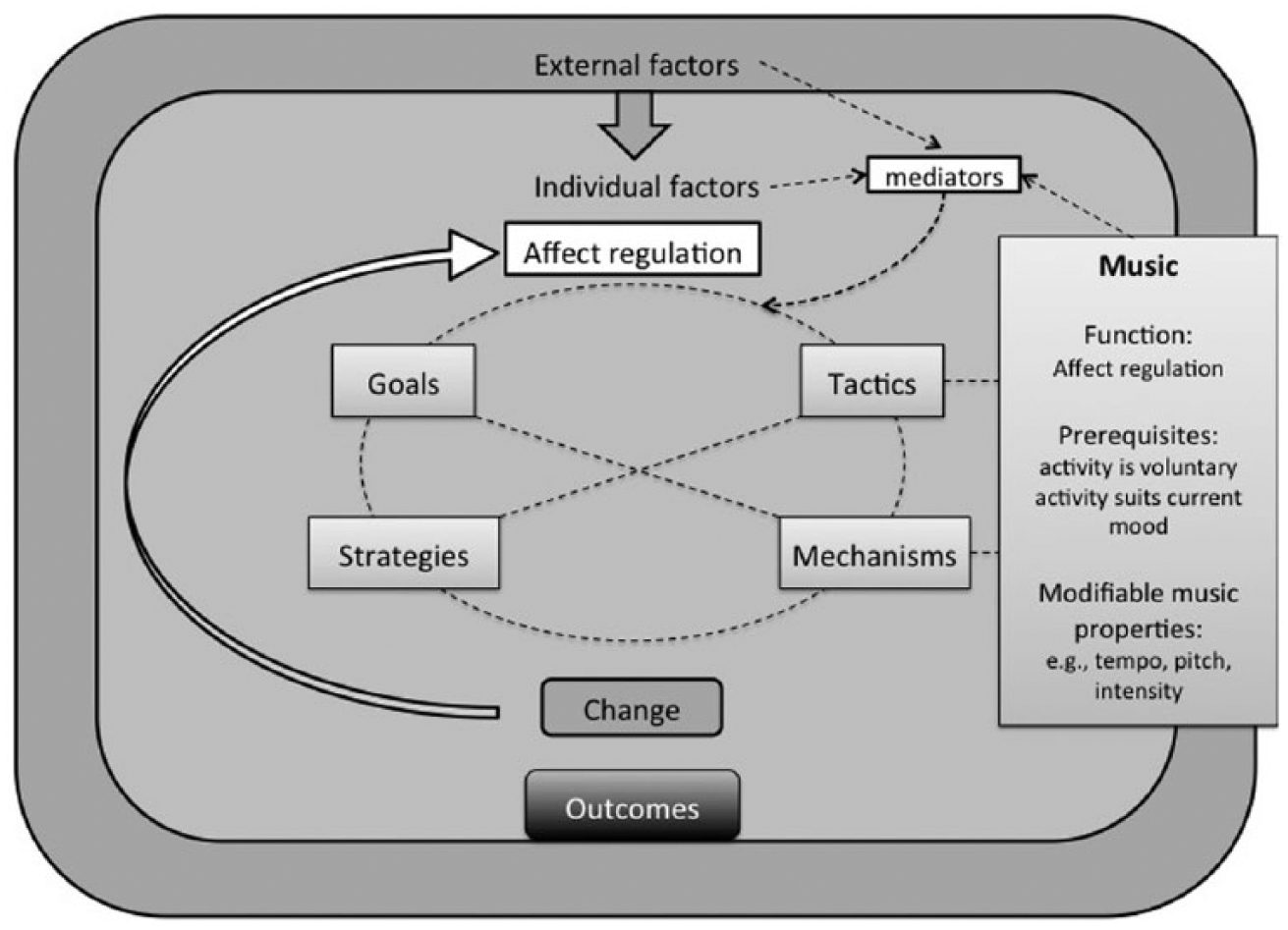
Relevant components for a conceptual understanding of affect self-regulation through music.
Recommendations for future research
Accounting for the topics reflected in the previous section, the following recommendations for future research are proposed:
Choosing the appropriate term for the affective phenomena under study. A more specific term might be suitable when the focus is on a particular process (e.g., mood regulation), whereas the umbrella term “affect regulation” might be more suitable when all the affective phenomena are included, or when it is not possible to separate the components involved in music engagement (cf. Figure 1).
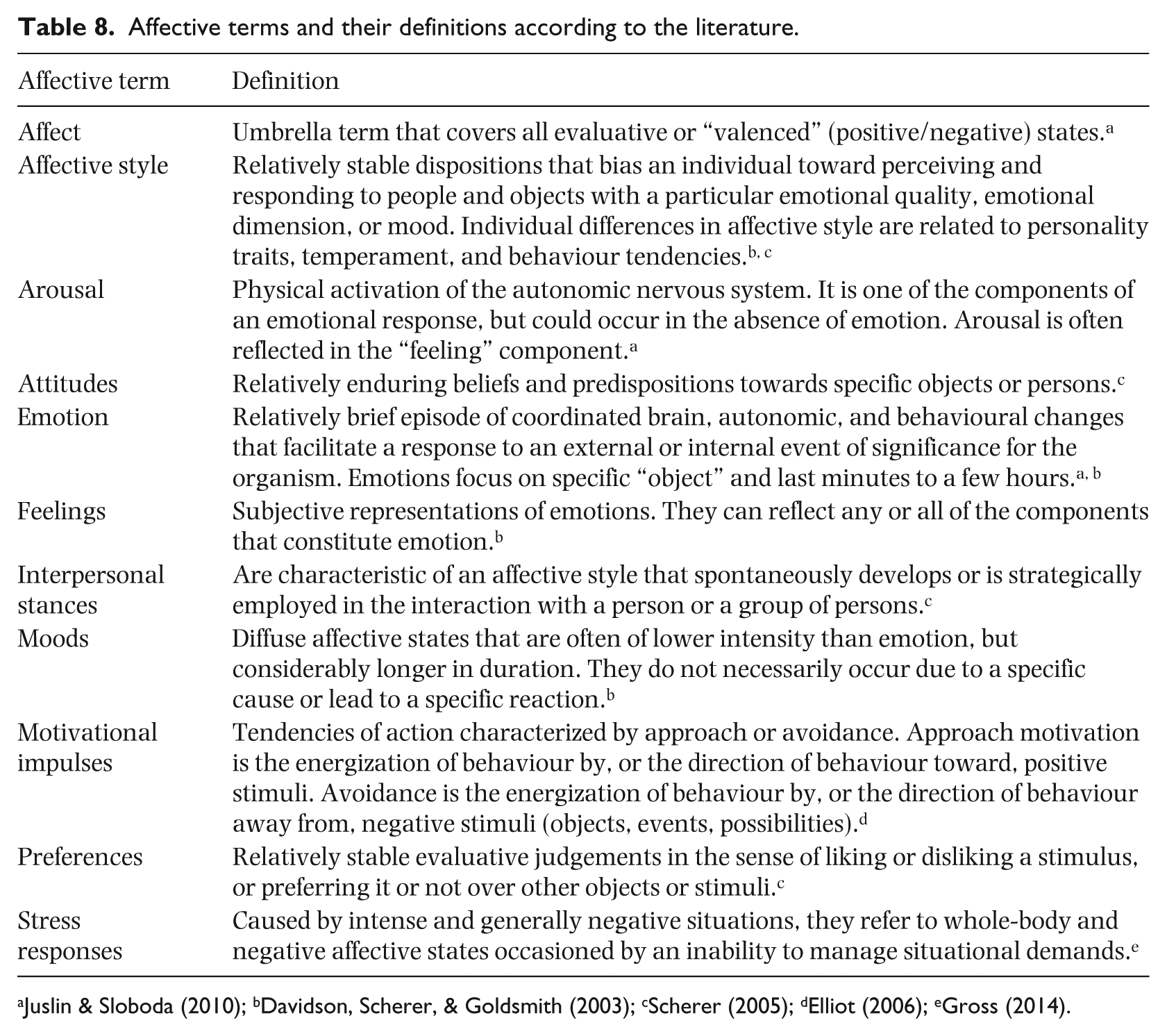
Providing a precise conceptual definition of the affective states approached. A list of definitions retrieved from the literature is presented in Table 8.
Thoroughly exploring the diverse levels and components of the regulatory processes through music and the interaction between them.
Clarifying the role of self-regulation across the functions of music.
Expanding the research to other populations (e.g., writers, musicians), identifying specific and universal aspects of music use.
Clearly classifying music as a tactic (rather than a strategy) and further elaborating on the type of musical activity in question. A lack of studies exists with regard to musical activities other than music listening.
Exploring the differences and similarities between emotion-inducing and emotion-regulating mechanisms.
Aiming for a better understanding of how affect regulation through music is related to, is similar to, or differs from affect regulation in general.
Creating a model that includes all of the components observed in affect regulation and that reflects its complex and dynamic character. The visual representation of the most important components of affect regulation through music presented in Figure 1 can be used as a starting point.
Affective terms and their definitions according to the literature.
Implications and contributions
The first look at past research (Stance I) showed us what kinds of topics have been explored in the field. In addition to summarizing recent results, the review identified which topics have received less attention and pointed at questions in need of study.
More importantly, the results alert us to a situation where the lack of definitions, interchangeability of terms, and labelling of phenomena incongruently with the theory (e.g., label music listening as a strategy) are frequently present. This is the first review work that addresses these issues in the field of affect regulation through music. By showing the fragilities in the state of the art, it promotes a (hopefully productive) discussion in the field.
The analysis of existing models and theories led to the compilation of adequate definitions for several affective terms (Table 8) and to the identification of the most important components of affect regulation through music (Figure 3). This represents a step further and creates the groundwork for future studies.
Conclusion
The debate surrounding the theoretical and empirical frameworks used in this area can only improve the quality of research. This review showed that an interesting body of research already exists concerning the topic of affect regulation and music, drawing influences from a variety of research fields. Despite the growth in interest and the publications dedicated to this topic, the total amount of research with a direct and deep focus on affect regulation through music remains small. Moreover, the theoretical knowledge in this field is not yet consolidated, and complete models have not been presented. We hope that this article will promote more precise and comprehensive research on this rapidly growing area of interest.
Footnotes
Funding
The author(s) disclosed receipt of the following financial support for the research, authorship, and/or publication of this article: The first author received support from the Faculty of Humanities of the University of Jyväskylä and the second author received support from the Academy of Finland, project number 136358.
References
Supplementary Material
Please find the following supplemental material available below.
For Open Access articles published under a Creative Commons License, all supplemental material carries the same license as the article it is associated with.
For non-Open Access articles published, all supplemental material carries a non-exclusive license, and permission requests for re-use of supplemental material or any part of supplemental material shall be sent directly to the copyright owner as specified in the copyright notice associated with the article.
