



Abstract
This study aimed at investigating the associations between regulation strategies and musical mechanisms involved in musical affect self-regulation. A sample of 571 participants was collected and the data regarding the reported strategies and mechanisms were analysed using correspondence analysis (CA). Three bipolar dimensions – cognition, feelings, and body – were retained for interpretation, thus revealing six contrasting strategic uses of music: cognitive work, entertainment, affective work, distraction, revival, and focus on situation. Clear associations between strategies and mechanisms emerged from the CA, connecting cognitive, feelings-focused, and situational processing with individual-dependent mechanisms and repairing, pleasure, and body-focused strategies with feature-dependent mechanisms. The novel observations about these associations renew the conceptual understanding of musical affect self-regulation and lay foundations for a new model that integrates regulatory strategies and mechanisms as intrinsic and interrelated components of this behaviour.
Keywords
Music provides people with innumerous possibilities of regulating their affective states (e.g. Groarke & Hogan, 2015; Thoma, Scholz, Ehlert, & Nater, 2012). These states consist of emotions (Tahlier, Miron, & Rauscher, 2013), moods (Saarikallio & Erkkilä, 2007), energy levels and arousal (DeNora, 1999), and focus and motivation (Bishop, Karageorghis, & Loizou, 2007). The key features of musical self-regulation – affect, cognition, and music – have been recognized to be closely connected (Krumhansl, 2002); yet, how people use music’s proprieties to manage their affective states is still intriguing and fascinating. With this article, we will approach this topic by tackling two of the main aspects underlying musical affect regulation: the strategies employed through music to attain affective goals and the musical mechanisms that support self-regulation.
Terminology and definitions
Affect has been used in the literature as an umbrella term to include all the evaluative (positive or negative) states (Juslin & Sloboda, 2010). However, due to the fuzzy borders between cognition, motivation, and emotion – which can be seen as a continuum (Fleckenstein, 1991; Scherer & Peper, 2001) – there is still no consensus on what to include under this umbrella. Baltazar and Saarikallio (2016) reviewed and compiled the affective phenomena that have been identified in the literature (Figure 1). In the present paper, a similar concept of affect is adopted. Affect regulation is defined, thus, as all attempts at creating, changing, or maintaining any of the affective states, positive or negative (e.g. emotion regulation, coping, mood regulation, arousal modulation; Gross, 2015; Gross & Thompson, 2007).
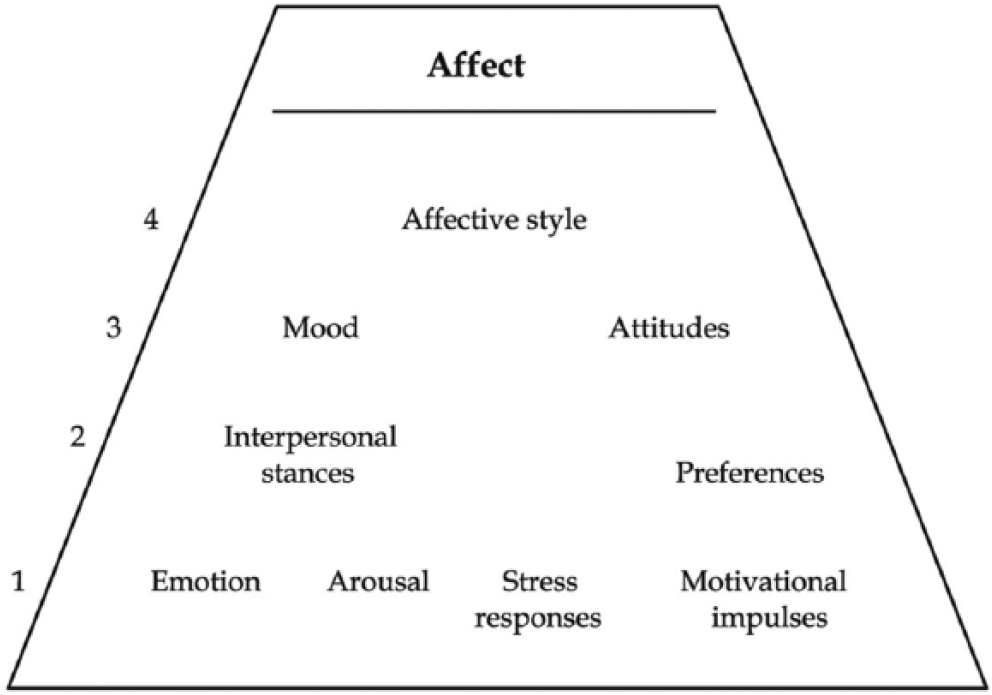
Affect as an umbrella term and the affective terms that are included in it, ranking from short duration (1) to long duration (4). From Baltazar and Saarikallio (2016). Reprinted by permission of Sage Publications.
Affect regulation is directed by a goal (conscious or unconscious) and the concrete approach people take to achieve the goal is a strategy (Koole, 2009, p. 10). Strategies take place in a certain context or activity (i.e. tactics; Van Goethem, 2010), which can, for instance, be listening to music, singing, or dancing. The underlying processes explaining why music then impacts emotions and allows affective regulation to occur are labelled mechanisms (Juslin & Västfjäll, 2008b; Saarikallio, Baltazar, & Västfjäll, 2017; Van Goethem & Sloboda, 2011). For example, the strategy reappraisal (finding different interpretations for the situation) can be used while listening to music with empowering lyrics. The lyrics, in turn, are the mechanism facilitating affect regulation. Although some mechanisms are music-specific (e.g. rhythm), some mechanisms are general psychological processes, not specific to music (e.g. memories). However, as mechanisms are here studied in the context of music as the means for self-regulation, they will be addressed as musical mechanisms.
Research on strategies and mechanisms in the context of musical affect regulation
The study of strategies within musical affect regulation is especially challenging due to the unfitness of general affect regulation models to the case of music (Randall, Rickard, & Vella-Brodrick, 2014) and the difficulty in defining strategies and differentiating them from other concepts such as musical goals and tactics (Baltazar & Saarikallio, 2016). Studies differ in whether the strategy as a concept refers to processes identified in general affect regulation or processes encountered specifically in music, but overall, music has been reported to facilitate strategies such as reappraisal (Chin & Rickard, 2014a; Randall et al., 2014), entertainment/fun seeking (Gebhardt, Kunkel, & Von Georgi, 2014; Saarikallio & Erkkilä, 2007), relaxation (Van Goethem & Sloboda, 2011), revving up/energizing (DeNora, 1999; Saarikallio, 2011), and finding solace (Saarikallio & Erkkilä, 2007) (see a complete compilation in Baltazar & Saarikallio, 2016). Recent work has also noted that different strategies have differing impacts on development, wellbeing, and psychological health (Carlson et al., 2015; Chin & Rickard, 2014a; Gebhardt et al., 2014; Marik & Stegemann, 2016; Schäfer & Sedlmeier, 2009; Thoma, Ryf, Mohiyeddini, Ehlert, & Nater, 2012; Thomson, Reece, & Di Benedetto, 2014).
As for the underlying mechanisms in music, the first approach was taken towards musical emotion induction (Juslin, Barradas, & Eerola, 2015; Juslin & Västfjäll, 2008a, 2008b). Juslin and Västfjäll (2008a) identified six mechanisms underlying emotion induction through music: brain stem reflex, evaluative conditioning, emotional contagion, visual imagery, episodic memory, and musical expectancy. Later, rhythmical entrainment (2008b) and aesthetic judgment (Juslin, 2013) were added to the list.
However, there is more to affect regulation than emotion induction (e.g. suppression of affective responses). Within affect regulation, Van Goethem and Sloboda (2011) identified eight underlying mechanisms: type of music, familiarity, unrelated activity, emotion of music, memories, content of music, related activities, and other world (from higher to lower frequency). Although not named as such, other musical mechanisms have been sparsely present in other studies, such as connection, memory triggers, high aesthetic value, and message (Van den Tol & Edwards, 2013) and extramusical associations, acoustical properties, and identification with artist/lyrics (Bishop et al., 2007).
While conceptually differentiated, strategies and mechanisms occur as interrelated elements of affect regulation. Yet, only preliminary studies of their interlinkage exist. Van Goethem and Sloboda (2011) reported an association between the strategy active coping and the mechanisms memories and related/unrelated activities, and between the strategy relaxation and emotion, type of music and familiarity. Saarikallio et al. (2017) reported that strategies distraction and emotion induction were linked to musical mechanisms, while strategy processing was linked to both musical and mental mechanisms. These associations seem to occur due to people’s (conscious or unconscious) matching of affective goals and music used (e.g. Shifriss, Bodner, & Palgi, 2015).
Aim of the current study
Despite the advancements of studying music-related regulation strategies and mechanisms, there is still great conceptual ambivalence in the field (Baltazar & Saarikallio, 2016). In particular, it is far from clear how each mechanism is used in cooperation with a particular regulation strategy. For this reason, the principal aim of the present study was to explore the associations between strategies and mechanisms used while regulating affect through music.
Method
Participants
The sample consisted of 571 participants, of which 24 were excluded due to incomplete answers, leading to a final sample of 547 participants. The sample’s characteristics are described in Table 1. The participants were recruited through several means: schools, mailing lists, social media, webpages for recruiting participants, psychology experiments webpages, and the researchers’ personal networks (there is no data on how many participants came from each). Except for the participants who were recruited directly from schools, the participation was done online. All the participants were voluntary and gave their informed consent. No compensation was offered.
Descriptive statistics of the sample.
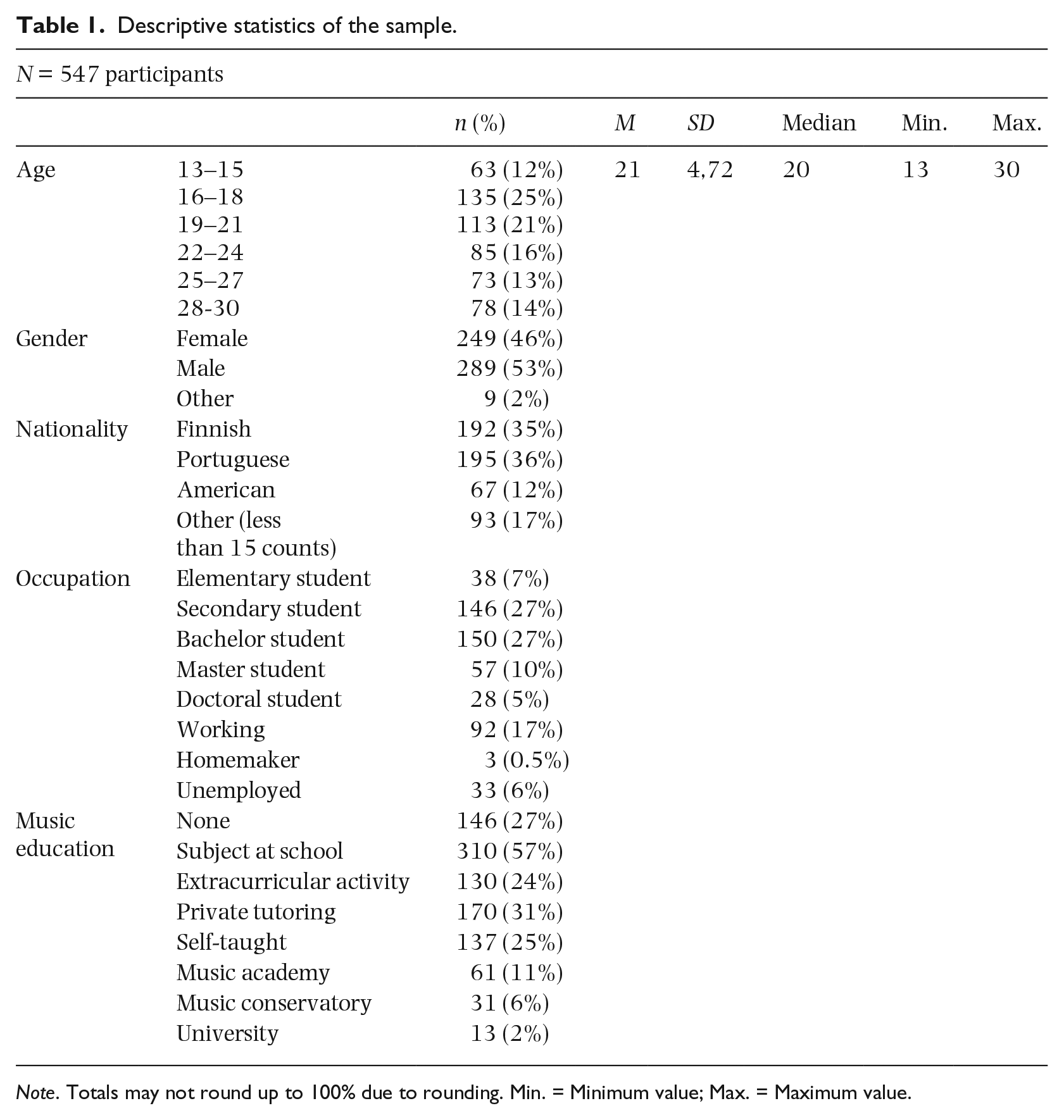
Note. Totals may not round up to 100% due to rounding. Min. = Minimum value; Max. = Maximum value.
Measures – Questionnaire
The data were collected through a computer-based questionnaire, designed specifically for this study. The participants were asked to recall the last moment when they engaged with music (by listening, playing, watching concerts, or creating) with some affective intention/outcome. Participants then identified which strategies they put in practice and which mechanisms were the most relevant in the music they chose. The strategies and mechanisms presented as options were retrieved from the literature (Baltazar & Saarikallio, 2016) and consisted of 13 mechanisms and 25 strategies (organized in five categories). While the minimum was to choose one strategy and one mechanism, participants could choose as many options as they wished. The questionnaire is shown in the Appendix.
Statistical procedures
Categorization
As a standard first step for dimensionality reduction methods, a preliminary analysis was conducted to assess the structure of the answers, perform some necessary categorization, and label categories. Categorization, and sometimes recoding, of data might be necessary for correspondence analysis (Greenacre, 1984; Kaciak & Louviere, 1990), given that this tecnique is based on a table of crossed frequencies (i.e. contingency table). For the variable Mechanisms, no further categorization was needed. The participants were allowed to choose more than one mechanism and order them from the most to the least relevant. However, only the first choice is included in this analysis. In the particular case of the mechanism musical expectancy, only eight participants selected this mechanism as a first choice. Given the small frequency, musical expectancy was replaced by the participants’ second mechanism. See Table 2 for the list of mechanisms and their definitions.
Underlying mechanisms for musical affect regulation.
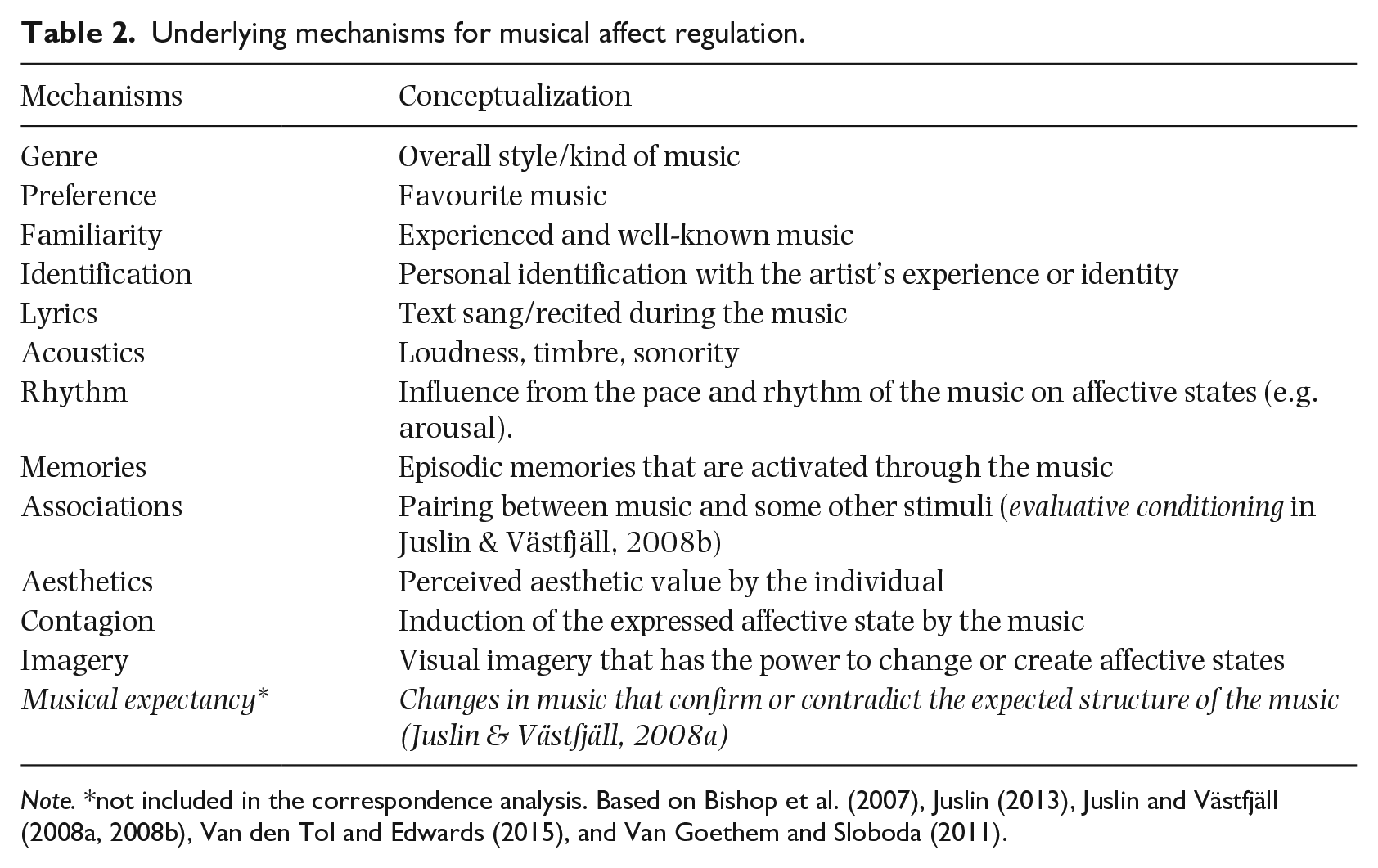
Note. *not included in the correspondence analysis. Based on Bishop et al. (2007), Juslin (2013), Juslin and Västfjäll (2008a, 2008b), Van den Tol and Edwards (2015), and Van Goethem and Sloboda (2011).
As for Strategies, the participants could choose from one up to five categories, thus creating multi-answer data. The five main categories already present in the questionnaire were kept: 1) Focus on thoughts, affective state and/or situation, 2) Distraction from thoughts, affective state and/or situation, 3) Cognitive Work, 4) Modify feelings, 5) Bodily reactions/behaviour. A total of 335 participants chose just one of these options. For the 128 participants who identified two strategies, it was necessary to create new categories based on combinations in order to represent the simultaneous use of strategies. As the combination of Bodily reactions/behaviour with other strategies was rare (17 occurrences), these participants were categorized in the main category “Body”. Eighty-four participants chose three or more strategies, and a specific category reflecting the simultaneous (and possibly low differentiated) strategies was created for them (three or more). As the count for each possible combination of three strategies was low, it would not be feasible to treat them separately. Table 3 shows the final strategy categories and presents their code names which will be used in the text from now on. The specific strategies included in each category can be seen in the questionnaire (see Appendix). Overall, the categorization procedure resulted in a total of 12 mechanisms and 12 strategies to be used in the subsequent analyses.
Strategies and their categorization.
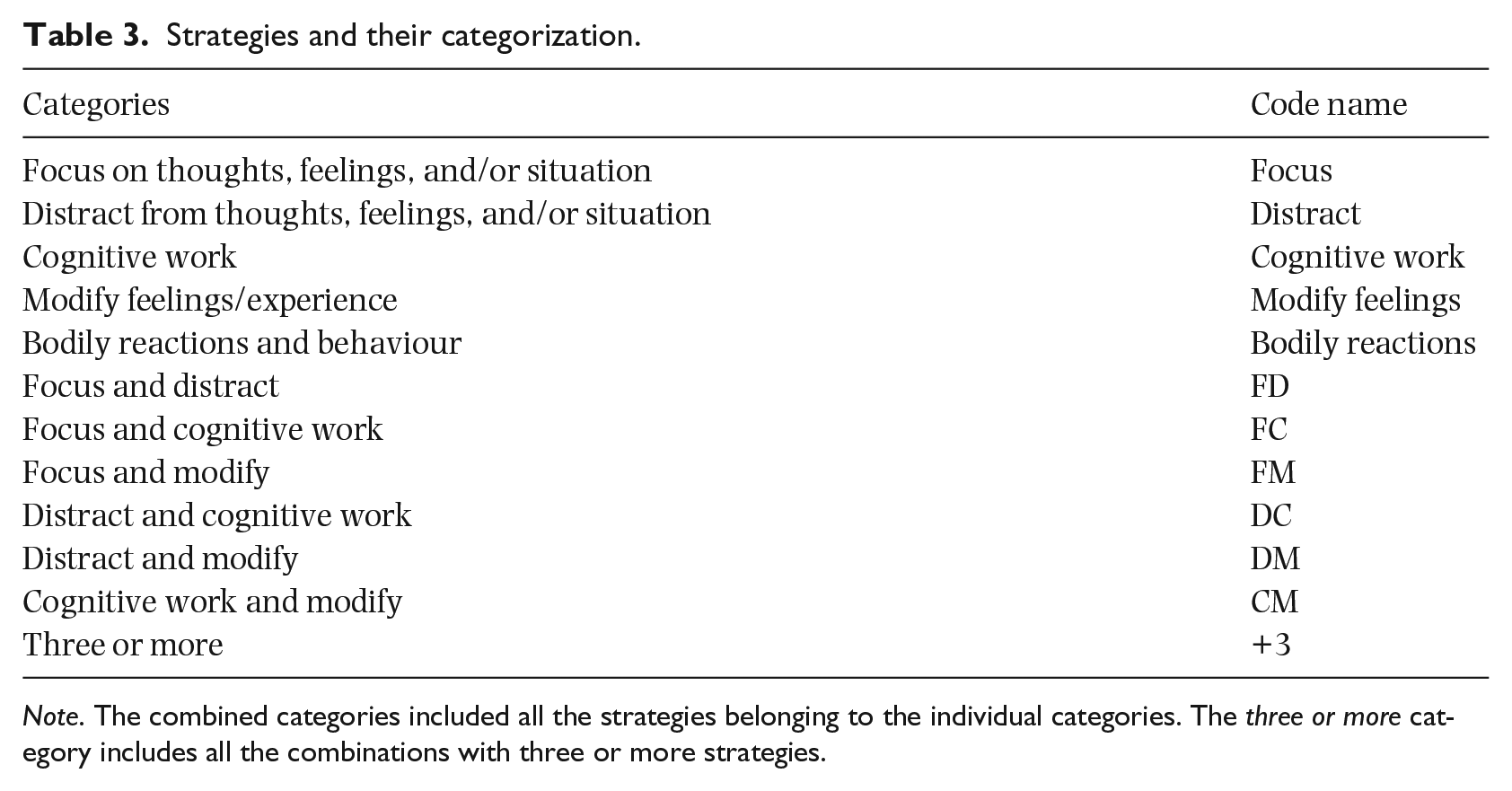
Note. The combined categories included all the strategies belonging to the individual categories. The three or more category includes all the combinations with three or more strategies.
Correspondence analysis
Correspondence analysis (CA) is a descriptive and exploratory technique developed to deal with contingency tables (Benzécri, 1992). Described as a “variant of principal component analysis (PCA) applicable to categorical data” (Greenacre, 2015, p. 1), this technique is especially useful when the size of the tables does not allow us to see appropriately the underlying associations. Complex data is simplified by the extraction of the least number of dimensions that explain the most inertia (i.e. variance). Besides demonstrating the association between variables, CA projects these associations into a biplot, with the distances between the points calculated through the chi-square statistic.
The current data meets the CA’s expected features and assumptions: it is categorical, includes several levels, its complexity does not allow us to directly perceive underlying associations, there was no model to explain/predict it, it does not include negative values, and exhibits homogeneity of categories (Garson, 2012; Greenacre, 1984). Because our aim was to describe both variables (Strategies and Mechanisms) and explore the associations between them, we computed symmetrical coordinates. The analyses were computed with the Matlab package Correspondence Analysis with Rotations (CAR; Lorenzo-Seva, van de Velden, & Kiers, 2009).
Results
Extracting the dimensions and their contributing variables
The first step in CA is the extraction of the dimensions explaining the most of the inertia (i.e. variance) by analysing the cross-tabulated data. The chi-square test of independence examined the relation between the row and column variables in the contingency table (mechanisms and strategies; see Table 4) and showed that the relation was significant, X2 (121, N = 547) = 147.24, p < .05. Power-divergence statistic with lambda = 2/3 (Read & Cressie, 1998) was used as suggested for small tables (Parshall, Kromrey, & Dailey, 1995). The first three dimensions explained 78.5% of the inertia, with each one explaining more than the expected average (33.4%, 25.3%, and 19.8%, respectively). The analysis of the scree plot and eigenvalues (Table 5), and the Hull’s parallel analysis (Lorenzo-Seva, 2011) confirmed the extraction of the three dimensions.
Contingency table with Mechanisms as row and Strategies as column.
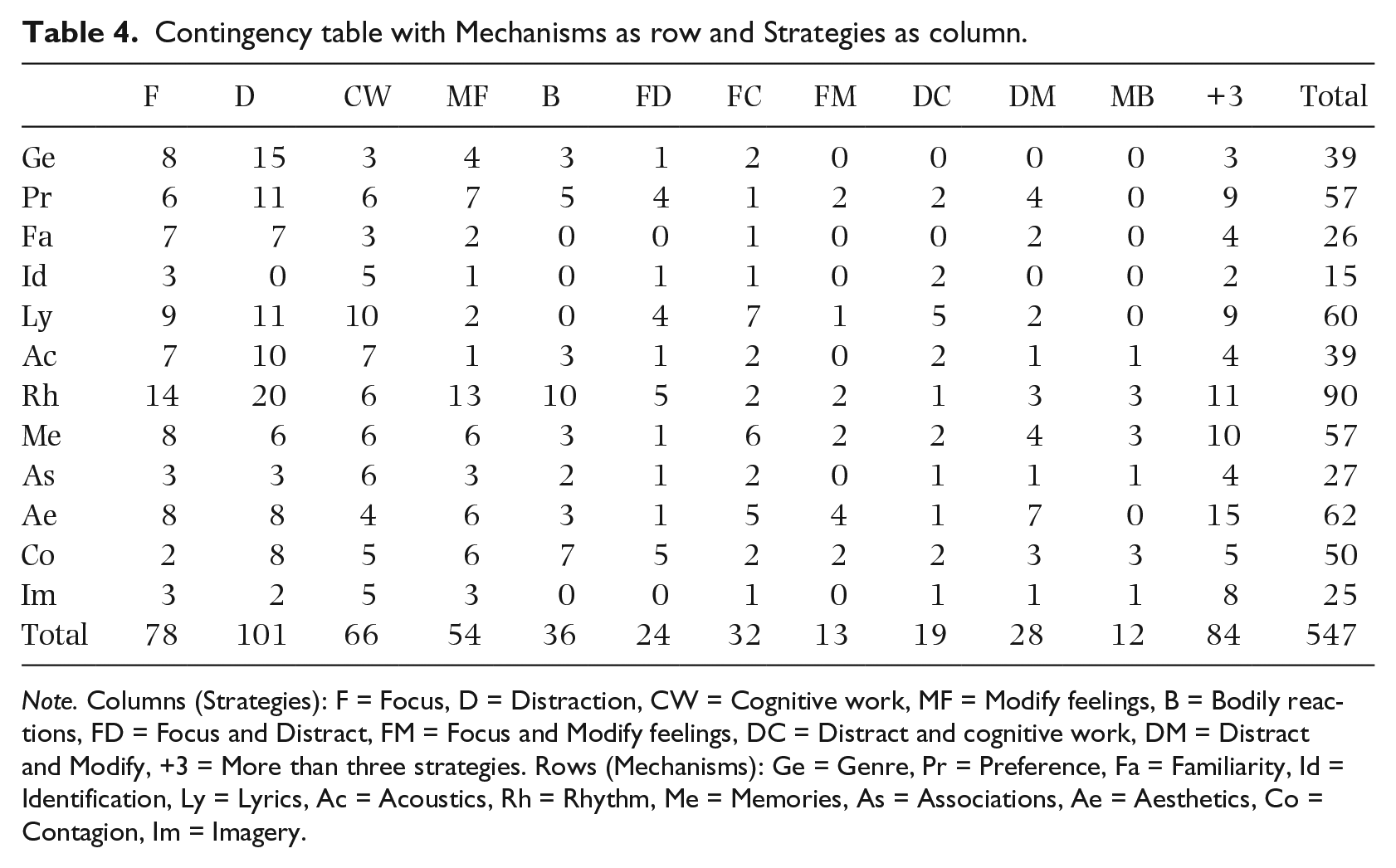
Note. Columns (Strategies): F = Focus, D = Distraction, CW = Cognitive work, MF = Modify feelings, B = Bodily reactions, FD = Focus and Distract, FM = Focus and Modify feelings, DC = Distract and cognitive work, DM = Distract and Modify, +3 = More than three strategies. Rows (Mechanisms): Ge = Genre, Pr = Preference, Fa = Familiarity, Id = Identification, Ly = Lyrics, Ac = Acoustics, Rh = Rhythm, Me = Memories, As = Associations, Ae = Aesthetics, Co = Contagion, Im = Imagery.
Eigenvalues, percentage of inertia explained, and scree plot for the first five dimensions.
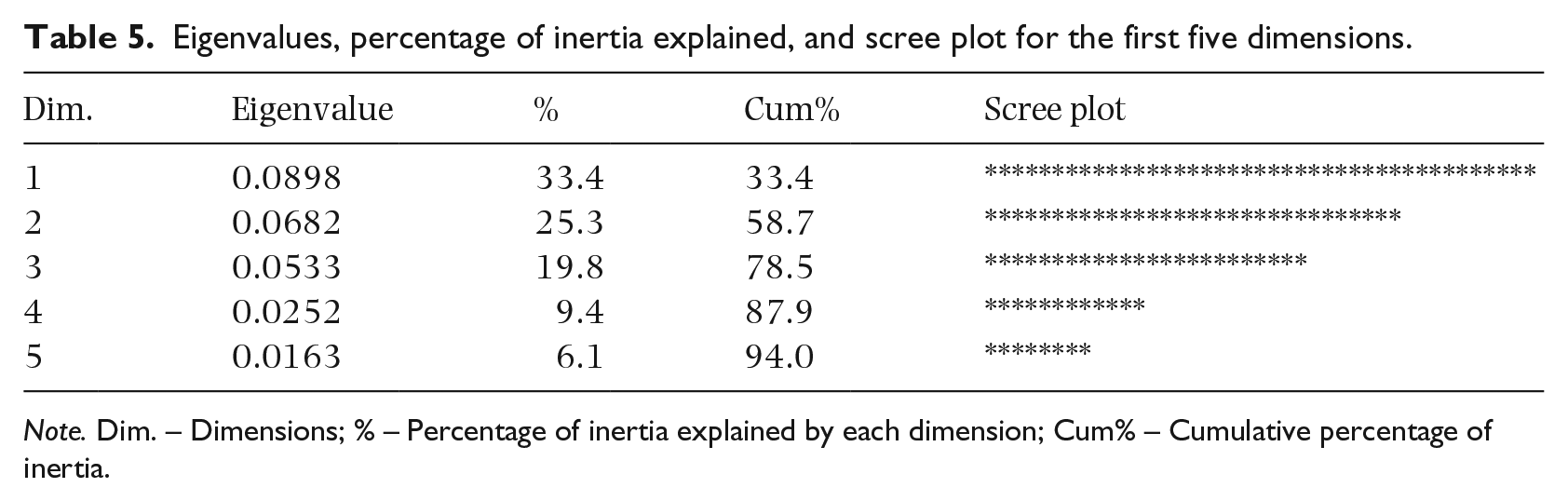
Note. Dim. – Dimensions; % – Percentage of inertia explained by each dimension; Cum% – Cumulative percentage of inertia.
One of the outputs of CA is the contribution of each row and column to the dimensions. The rows and columns with higher contributions are the most meaningful for the dimension and relevant for its interpretation. The contributions that are larger than the average (i.e. 1/number of rows and 1/number of columns) are considered salient contributions and retained for interpretation. Table 6 shows the contributions for each row and column, with salient values (i.e. values higher than the average contribution, 0.083) in bold face.
Rotated symmetrical coordinates for each category under Strategies and Mechanisms and their respective contributions for each of the extracted dimensions (in percentage).
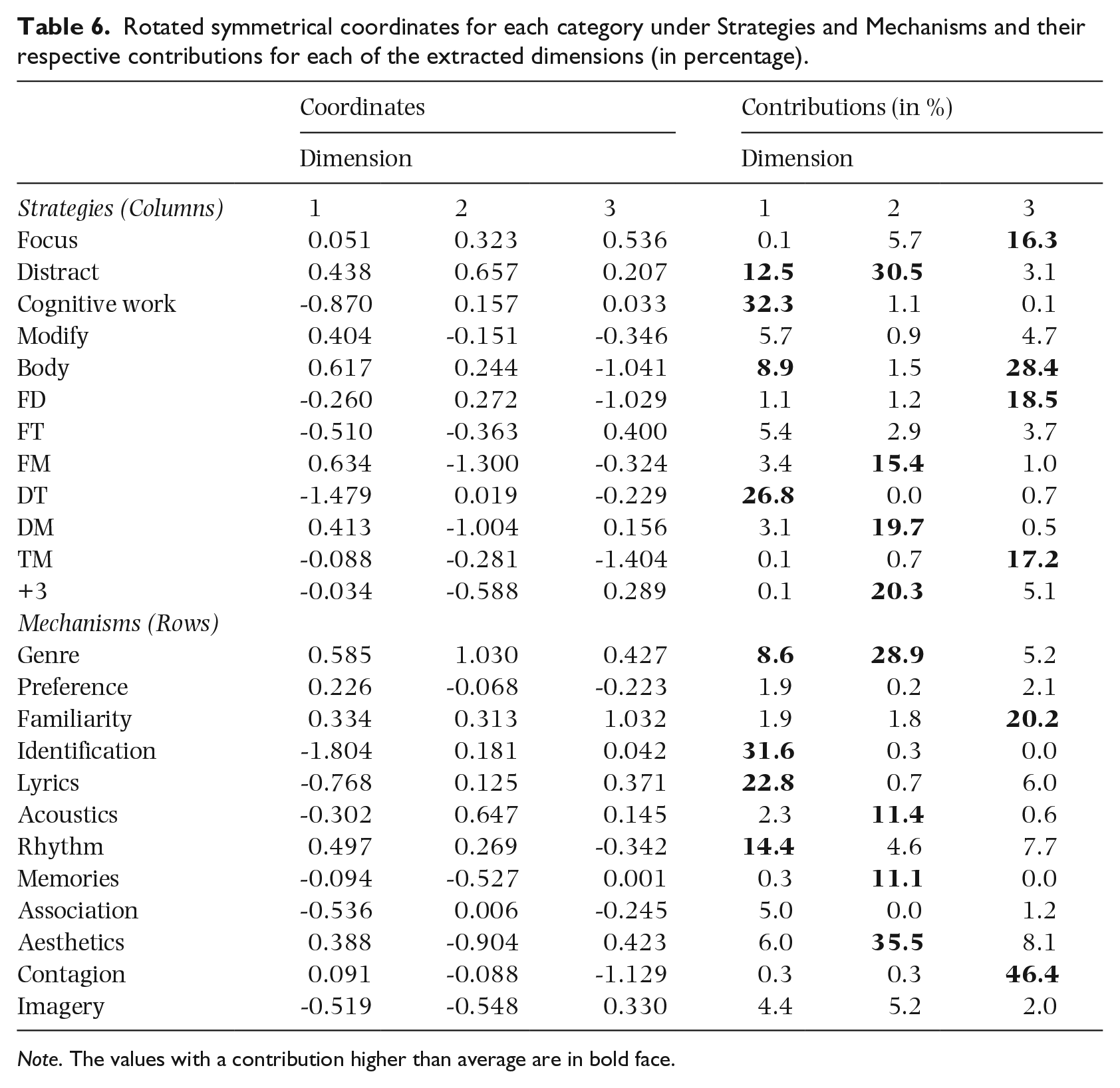
Note. The values with a contribution higher than average are in bold face.
The values in Table 6 are further represented in a visual translation in Figures 2, 3, and 4. As more than two dimensions were extracted and the dimensions were not correlated, the solution was orthogonally rotated (varimax) to improve its graphical representation (Lorenzo-Seva et al., 2009;Van De Velden & Kiers, 2005). No weighting system was applied, as it yielded the best results in Bentler’s simplicity index (1997) (before rotation: .587 and .480, after rotation: .935 and .935, for row and column coordinates respectively).
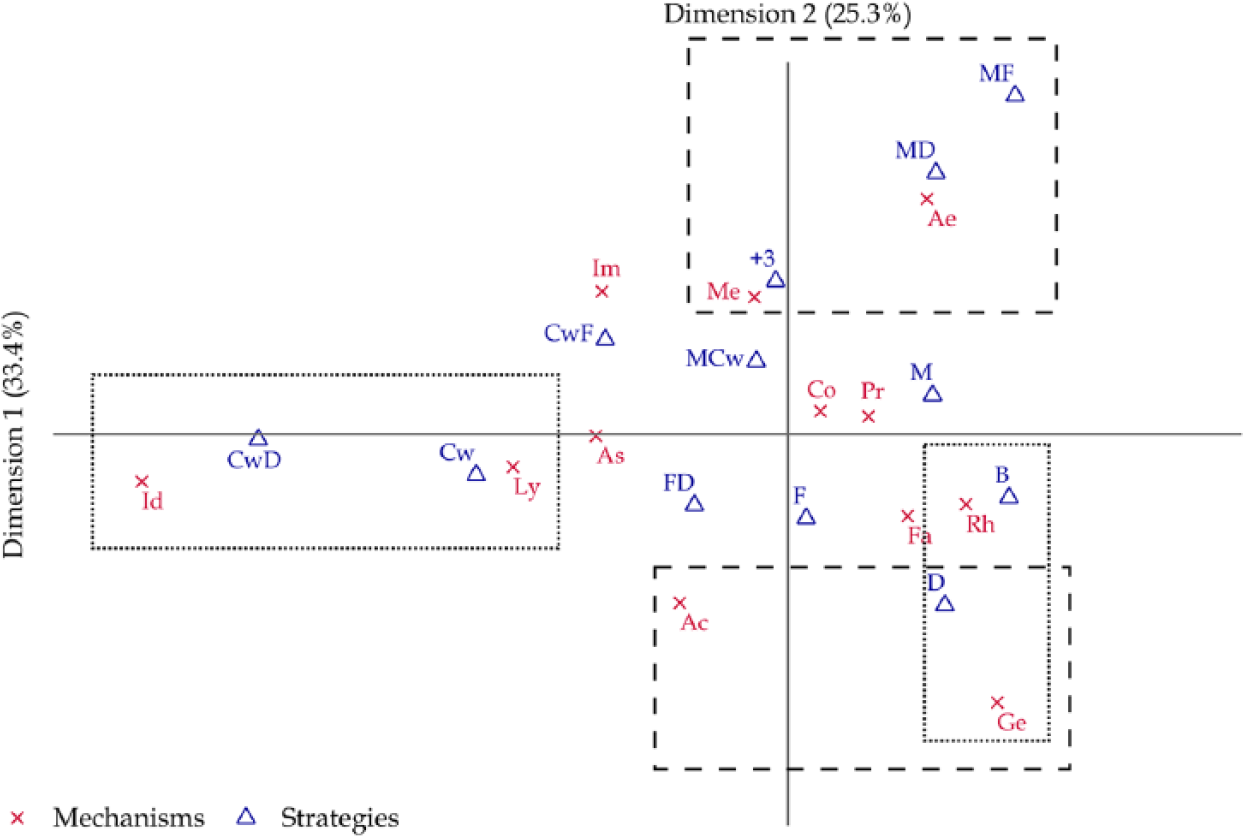
Biplot with visual representation of dimensions 1 and 2. The categories with significant contributions to dimension 1 are inside the dotted line and to dimension 2 are inside the dashed line.
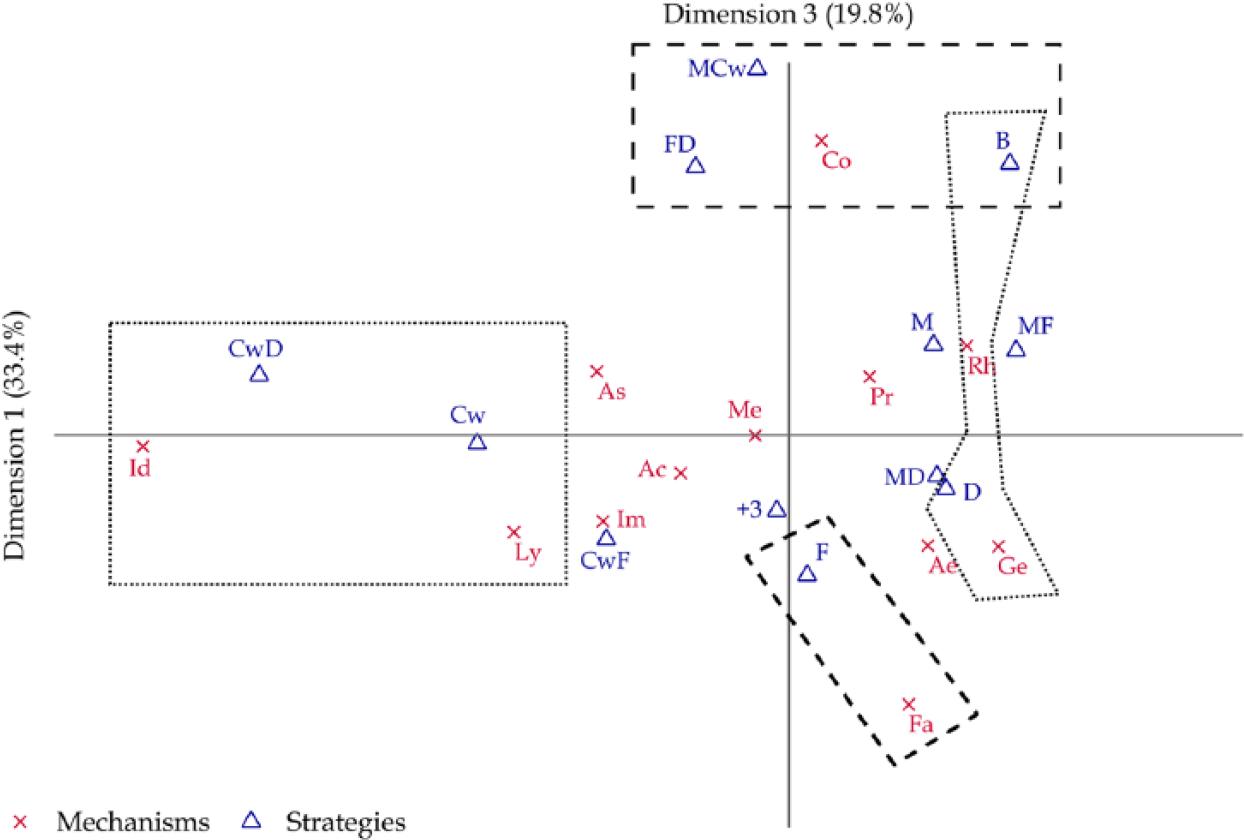
Biplot with visual representation of dimension 1 and 3. The categories with significative contributions to dimension 1 are inside the dotted line and to dimension 3 are inside the dashed line.
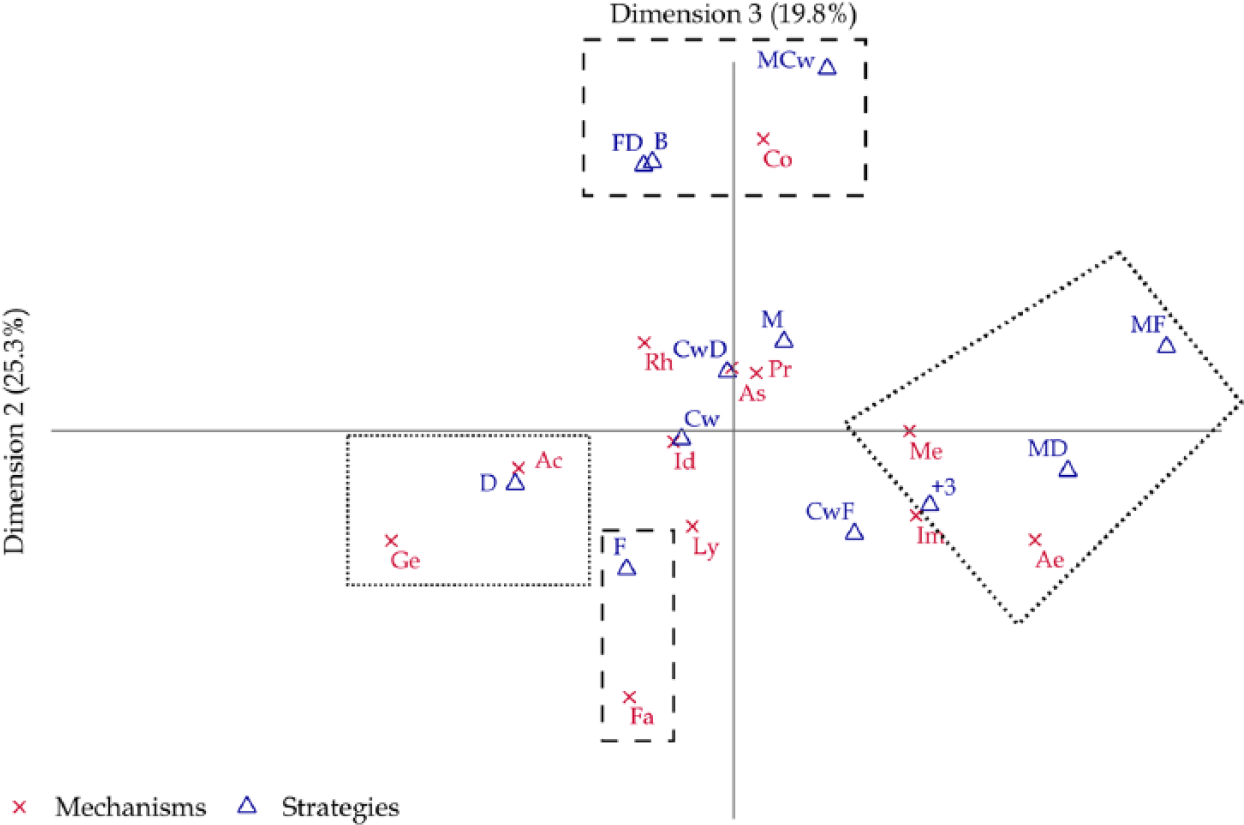
Biplot with visual representation of dimension 2 and 3. The categories with significative contributions to dimension 2 are inside the dotted line and to dimension 3 are inside the dashed line.
Figure 2 depicts all the strategy and mechanism categories projected simultaneously in the space created by the associations between them, in dimensions 1 and 2. Figure 3 includes dimension 1 and 3, while Figure 4 represents the dimensions 2 and 3. The variables that have a stronger contribution for the dimension are closer to each extreme; the central position shows a contribution close to zero. The categories retained for interpretation, due to their significant contributions, are circled in the biplots. Two strategies (modify feelings, cognitive work and focus) and three mechanisms (preference, association, and imagery) did not have salient contributions for any of the dimensions.
Describing the extracted dimensions
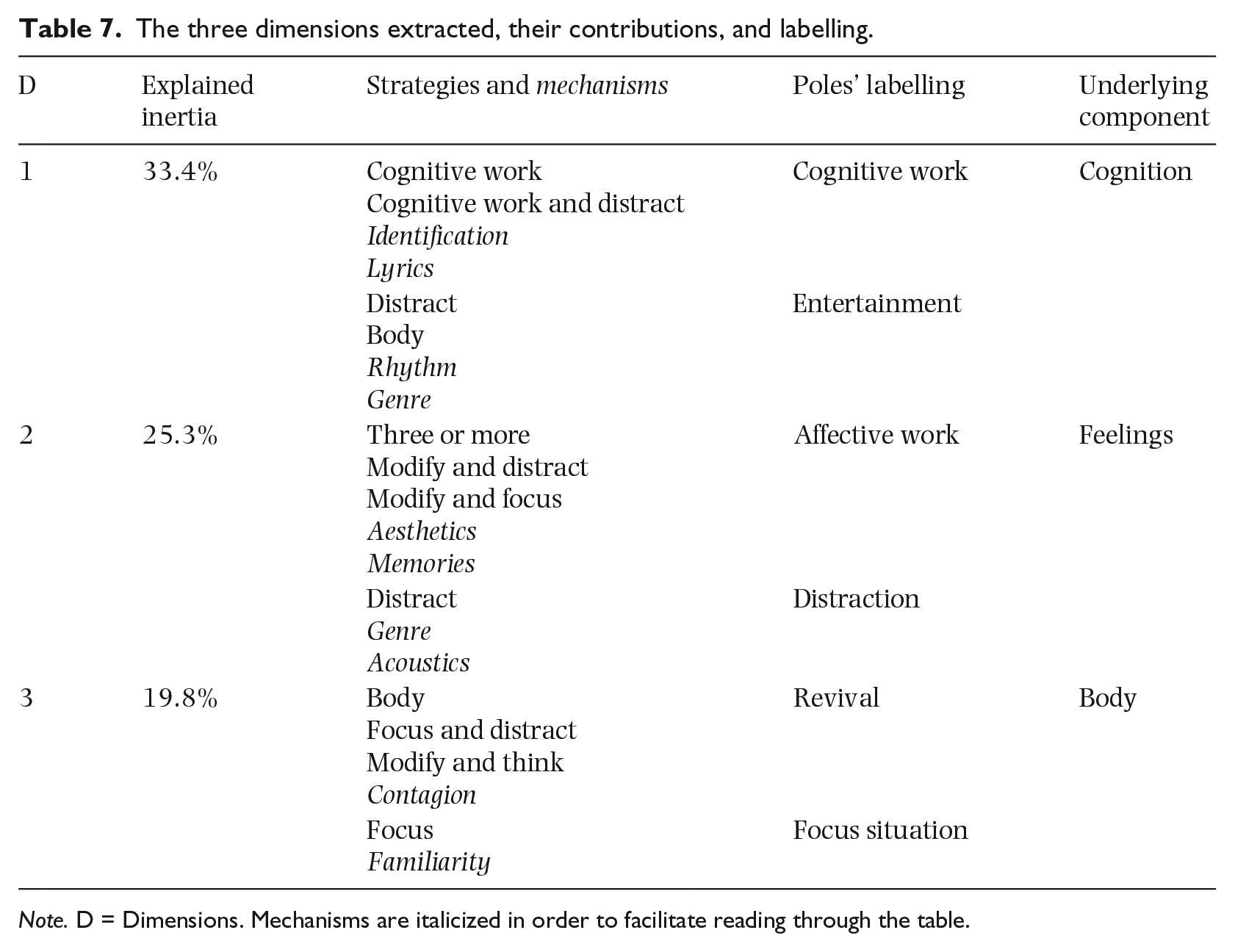
The analysis resulted in a three-dimensional solution built of both regulatory strategies and mechanisms. The description of the dimensions is based on the analysis of the relevant strategies and their associations with musical mechanisms. Table 7 summarizes the features of each dimension that will be used later for their interpretation.
The three dimensions extracted, their contributions, and labelling.
Note. D = Dimensions. Mechanisms are italicized in order to facilitate reading through the table.
By taking into account both poles of the three dimensional solution (Table 7), the results reveal six major groups of strategy-mechanism combinations, which portray different processes of affect regulation through music. The labelling of the dimensions (columns 4 and 5 in Table 7) was done by analysing and counterposing the strategies and mechanisms on the poles (column 3). We suggest looking at each dimension as representing a higher or lower focus on a component of affect regulation: cognition, feelings, bodily reactions. The visual representation of these three dimensions can be seen in Figure 5.
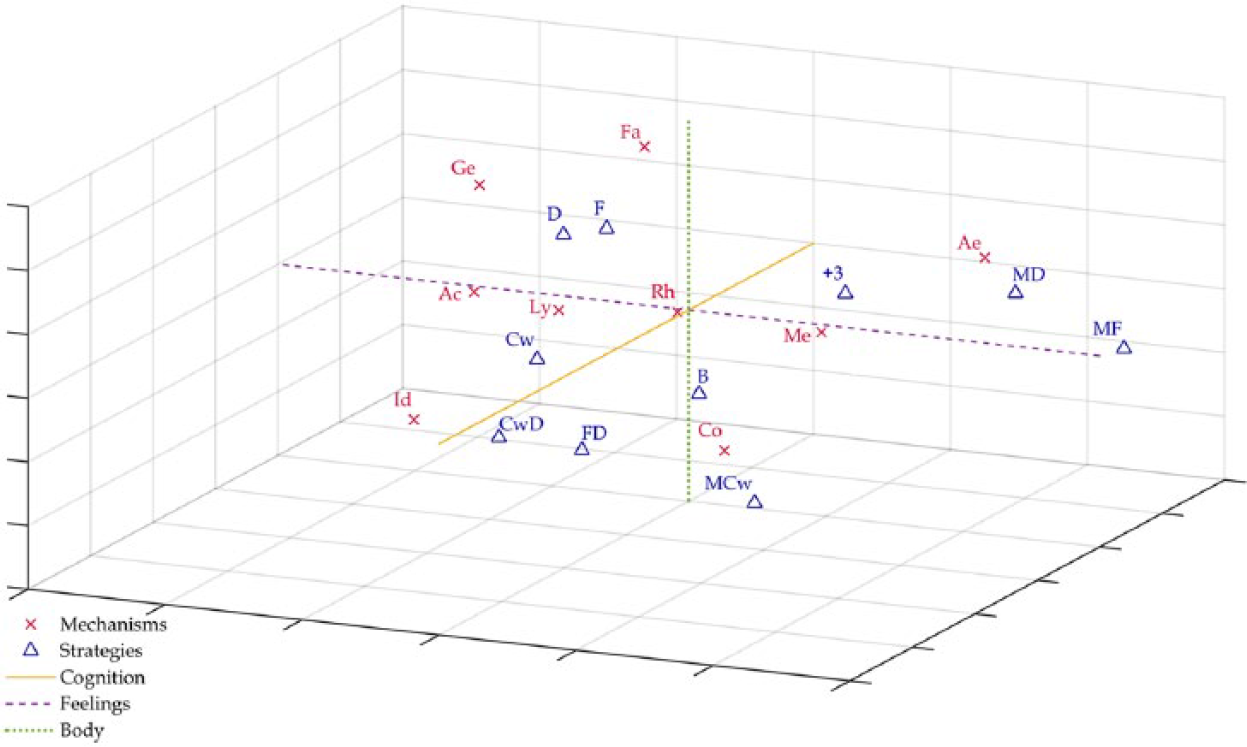
Three-dimensional projection of the associations between strategies and mechanisms that had relevant contributions to the axes (dimensions Cognition, Feelings, and Body).
Discussion
The three-dimensional solution emerging from the data describes musical affect self-regulation as a combination of strategies and mechanisms across three affective components: cognition, feelings, and bodily reactions. The solution serves as a base for a model of strategic use of music for affect self-regulation (Figure 6).
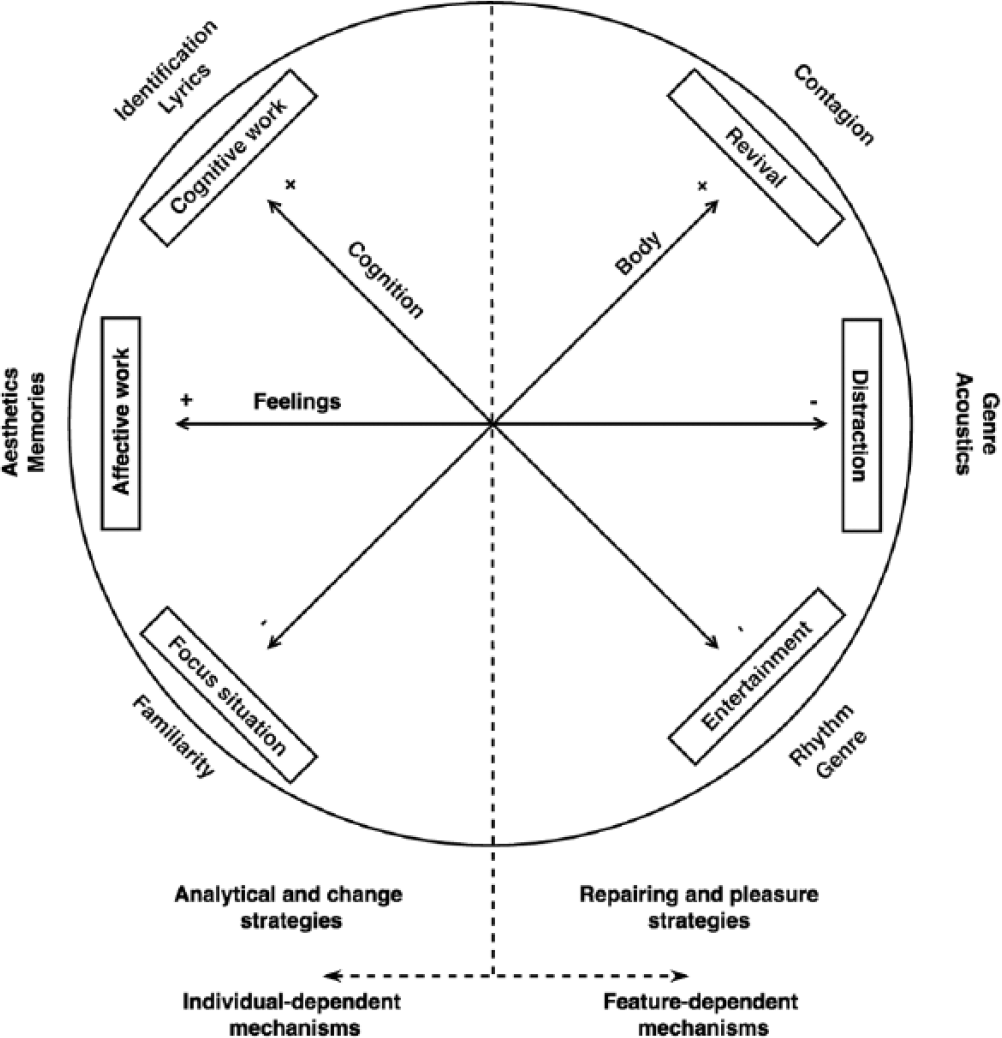
Model of strategic use of music for affect self-regulation. A higher use of the process that names the dimension (e.g. cognition) is marked with “+” and a lower use of that process is marked with “-”. The six major groups of strategies are inside the circle and the associated mechanisms are outside the circle.
The model of strategic use of music for affect self-regulation
In the following paragraphs, we will discuss this emergent model and its constituent elements by starting with the extracted dimensions (representing the three core affective components) and their respective poles, continuing with the division of strategies and mechanisms into two groups, illustrated by the two halves of Figure 6.
Dimension 1: Cognition (cognitive work vs entertainment)
Dimension 1 shows how close or distant the regulation was to cognition. One pole represents cognitive work, which constitutes a separate major group of regulation strategies (Garnefski, Kraaij, & Spinhoven, 2001), and includes, for example, reappraisal and perspective taking. Reappraisal specifically has been linked to higher effectiveness and better affective outcomes, both in general regulation (Augustine & Hemenover, 2009; Gross & John, 2003) and musical regulation (Chin & Rickard, 2014b). Regulation through cognitive work can be seen as an effort of gaining new meanings before a total response takes place (antecedent-focused; Gross, 1998). The combined use of cognitive work and distraction might reveal the supporting effect of disengagement from undesired thoughts or feelings in attaining new cognitive perspectives. The mechanisms identification and lyrics point at a desirable congrutiy with the artists/emotional content and with the extracted meaning to support cognitive strategies.
As for the other pole of this dimension, distraction and body signal an attempt at turning to non-cognitive stimuli for influencing mood and arousal. This has been identified by Saarikallio and Erkkilä (2007) as entertainment, a strategy of having music in the background for lifting up spirits and maintaining positive mood. Similarly, the model of activation and arousal modulation with music (Gebhardt & Von Georgi, 2007), includes fun stimulation as a basic dimension. The regulation of bodily feelings got a less relevant score in this dimension and it possibly assists entertainment through relaxation or energizing. The disengagement from cognitive processing seems to be facilitated by music features like rhythm and genre. Music’s styles and features have already been reported to serve different affective goals (Hakanen, 1995). One particular way of taking advantage of genre and beat is through ironically-enjoyed music, which might be more stimulating than preferred music (Van den Tol & Giner-Sorolla, 2017).
Dimension 2: Feelings (affective work vs distraction)
The second dimension indicates whether regulation particularly focuses on feelings and affective reactions (labelled affective work) or aims to disengage from them (labelled distraction). Affective work involves a large variety of strategies and is highly complex: the variables more than 3 strategies, modify and distract, modify and focus, all contributed significantly to this pole. It encompasses, amongst others, three strategies from Saarikallio and Erkkilä’s model (2007): happy mood maintenance, solace, and strong sensations, which have in common the use of affective resources, either by preserving experienced states, changing them, or creating new ones. Regarding mechanisms, this pole was linked to enjoyment of beauty (aesthetics). Interestingly, Saarikallio, Nieminen, and Brattico (2013) report that people who relate more to aesthetic components of music tend to use it to elicit strong affective responses. Moreover, aesthetic fruition may be used toward mood enhancement (Van den Tol & Edwards, 2015). The second supporting mechanism revealed to be memories. In the context of sad music listening, memories related to feeling closer to others and intensifying sadness (Van den Tol & Edwards, 2015), which are processes close to affective work.
The opposite pole of this dimension represents distraction, which is one of the most common strategies used while listening to music (Boer & Fischer, 2012; Van Goethem & Sloboda, 2011). Distraction provides the possibility of shifting from negative stimuli to positive or neutral music, thus avoiding the undesired affective states (Gross, 2015). Recent literature suggests that distraction might be an adaptive strategy due to its low engagement in negative thoughts/feelings (Carlson et al., 2015; Van den Tol & Edwards, 2015). Distraction has some similarities with entertainment both at strategic and musical level: withdraw from cognitive/affective processing and use of music’s features to either distract or have fun.
Dimension 3: Body (revival vs focus on situation)
In the third dimension, we found a differentiation between the focus on arousal states and on the experienced situation or task at hand. The first pole, labelled as revival, is linked to modifying bodily feelings through relaxing, energizing, and improving flow. Music has often been identified as a means of relaxation (DeNora, 1999; Saarikallio et al., 2017) and energizing (Bishop et al., 2007). Contagion was the supporting mechanism for revival. This mechanism has the ability of inducing the music’s expressed valence and arousal, and it has been found to successfully contribute to relaxation (Saarikallio et al., 2017; Van Goethem & Sloboda, 2011).
The opposing pole, labelled as focus on situation, instead of focusing on bodily change, sets the attention in the situation and the focus is tuned on to the experience and related thoughts, feelings, or surroundings. It might be an attempt at getting a better feel of what is happening or concentrating on some specific task (e.g. studying). Music can indeed be used to improve mental and physical performance (Bishop et al., 2007; Laukka & Quick, 2013). In terms of mechanisms, focus on situation was related to familiarity of music. Interestingly, it has been observed that familiar music has a more positive effect on word memory tasks than unfamiliar music (Chew, Yu, Chua, & Gan, 2016). One might hypothesize that familiar music leaves more cognitive and affective resources available for focusing on the phenomenon while, simultaneously, providing stability to the individual.
Regulation strategies: emerging patterns
On the left side of the model (Figure 6), we have strategies related to a higher mental processing, either by cognitive work, affective work, or deployment of attention to the current situation (focus on the situation). Opposed to these, on the right side, we can find strategies concerning the regulation of arousal levels (revival), distraction, and entertainment. Thus, there is a contrast between active, contemplating, affect-processing, and cognition-loaded regulation (through what we called analytical and change strategies) and more passive, pleasure-oriented, and body-focused regulation (through what we called repairing and pleasure strategies).
Furthermore, it was observed that the simultaneous use of strategies is frequent. This study grasped what Gross (2015) calls blended forms of regulation, in contrast with pure forms of regulation (i.e. involving only one strategy), which constitute the object of the vast majority of the empirical literature. Our results point to the importance of allowing multiple answers in order to explore different layers of regulation and simultaneous processes.
Musical mechanisms: emerging patterns
On the left side of the model (Figure 6) associated with analytical and change-oriented strategies, we find mechanisms that can be labelled individual-dependent. Individual-dependent mechanisms are reflective of the experience emerging from the relationship between the individual and the music. This group included the following categories: identification, lyrics, aesthetics, memories, and familiarity.
Meanwhile, on the right side, supporting repairing and pleasure-oriented strategies, are situated the feature-dependent mechanisms. The feature-dependent mechanisms are related to more universal characteristics of music regarding sound, style, and valence. This group was composed of the following mechanism categories: rhythm, genre, acoustics, and contagion.
We concluded, thus, that mechanisms are a bi-dimensional (individual- and feature-dependent) variable and that these two categories have a particular interplay with the two major categories of regulation strategies (as seen in Figure 6). The categorization is somewhat in line with Sloboda and Juslin’s (2001) coding of underlying emotions in music: iconic, intrinsic, and associative, with iconic and intrinsic coding reflecting feature-dependent and associative coding reflecting individual-dependent mechanisms. Likewise, in the context of adolescents’ musical relaxation, Saarikallio et al. (2017) grouped mechanisms into musical (including melody and music’s valence/arousal, comparable to feature-dependancy) and mental (including memories and images, comparable to individual-dependancy). A similar organization of mechanisms is visible in Van den Tol and Giner-Sorolla’s (2017) results on the ironically-enjoyed music listening for self-regulation.
Conclusions
The current study provided grounds for a clarified conceptual understanding of how the affect-regulatory processes structurally interrelate in a musical context. The emergent model portrays the existent links between two of the key elements of musical affect regulation: strategies and mechanisms. Besides the three-dimensional structure that emerged, the conceptual understanding gained from the model concerns the structure of mechanisms (bi-dimensional: feature- and individual-related) and strategies (bi-dimensional: analytical, focused on change and repairing, focused on pleasure), and the associations between the two variables (feature-related mechanisms associate with repairing strategies, and individual-related mechanisms associate with analytical strategies). Future research will be helpful to further explore the eventual relations between the three dimensions, individual factors, and wellbeing variables.
Footnotes
Appendix: Questionnaire
[section concerning the reported results]
How was music a “tool” for you?
Music helped me to:
Please specify on what:
Please specify from what:
Please specify on what you focused:
Please specify how:
Please specify how:
Please specify how:
Please specify how:
Which elements of music influenced you the most?
Select from the list and order them from the most important (on top) to the least important (bottom). The minimum selection is one; there is no maximum.
Acknowledgements
The authors would like to thank the schools’ directors, teachers, and students who so warmly welcomed our research and accepted to participate (Escola Básica e Secundária de Carcavelos, Escola Básica e Secundária Matilde Rosa Araújo, Jyväskylän Lyseon lukio, and Viitaniemen koulu). Also all the volunteers who took part through the Internet are deeply acknowledged.
Funding
The authors disclosed receipt of financial support from the following entities for the research, authorship, and/or publication of this article: Finnish Cultural Foundation (1st author) and Academy of Finland, project ID 136358 (2nd author).