



Abstract
The purpose of this study was to explore potential relationships between music performance anxiety (MPA) and feelings associated with the impostor phenomenon (IP). Participants completed an online questionnaire comprising demographic questions and two instruments: the Kenny Music Performance Anxiety Inventory (KMPAI) and an adapted version of the Clance Impostor Phenomenon Scale (CIPS-P). Although MPA has been found to affect performers of many ages and levels, IP is associated with individuals who are considered successful. Thus, we chose graduate students pursuing music performance degrees at colleges and universities in the United States and Canada to serve as the participants-individuals who have attained success in music performance. Findings from the 171 participants reveal a strong positive correlation between higher levels of MPA and higher frequency of impostor feelings. Responses indicated that over 75% of participants experienced clinically high levels of MPA and frequent to intense impostor feelings. When asked to comment on their experiences related to the pandemic, some of the performers discussed finding little fulfillment performing without an audience present, others described virtual performances as being less stressful than live, and there was concern that the long period without in-person performances may result in a set-back in dealing with performance anxiety.
Keywords
Musicians’ mental health has been a topic of systematic study for over 40 years. There are thousands of journal articles, books/chapters, and graduate degree research studies in this area, the majority of which relate to aspects of music performance anxiety (MPA). Because high levels of anxiety and stress can have negative effects on musicians’ health and well-being and be detrimental to their music performance (Wiedemann et al., 2022), researchers have long been attempting to understand MPA’s characteristics, causes, and manifestations in search of ways to help alleviate the detrimental consequences (Burin & Osorio, 2017). One of the many approaches that researchers have taken for gaining insights about MPA has been to examine its possible relationships with other psychological constructs and scales, such as various types of social and anxiety disorders (Cox & Kenardy, 1993; Dobos et al., 2019; Wiedemann et al., 2022). A potential connection between MPA and the psychological construct of the impostor phenomenon (IP; Clance & Imes, 1978) was postulated by the first author of this study, one of the first researchers to apply IP in the field of music education (Sims & Cassidy, 2019). IP is experienced by high-achieving, successful individuals and is manifested by irrational fear that others will “discover that they are a phony” and judge them to be undeserving of their success or position. There are similarities between these two phenomena with respect to both causes and negative consequences. Thus, the purpose of this study was to explore potential relationships between MPA and IP.
MPA has been studied extensively in recent years, leading Kenny (2010) to develop a more comprehensive definition of the construct than had been employed previously: Music performance anxiety is the experience of marked and persistent anxious apprehension related to musical performance that has arisen through specific anxiety conditioning experiences and which is manifested through combinations of affective, cognitive, somatic and behavioural symptoms. It may occur in a range of performance settings, but is usually more severe in settings involving high ego investment and evaluative threat. It may be focal (i.e., focused only on music performance), or occur comorbidly with other anxiety disorders, in particular social phobia. It affects musicians across the lifespan and is at least partially independent of years of training, practice and level of musical accomplishment. It may or may not impair the quality of the musical performance. (p. 433)
Given the important positioning of public performance within music education and music psychology fields, the challenges of MPA have been of great interest to the research community and have resulted in many studies examining MPA characteristics, related factors, comorbidities, and treatments with different populations of performers. Comprehensive reviews of this literature have been conducted by several authors, including Barros et al. (2022), Burin and Osorio (2017), and Taborsky (2007). The literature reviewed here will focus on high-achieving musicians, because achievement is an important aspect that appears to overlap between the MPA and IP constructs.
Related MPA literature
MPA can present in a range of psychological, physical, and behavioral manifestations, and is characterized by anxiety in advance of and/or during music performances. High levels of MPA can be debilitating to the musician and detrimental to their performance and career. The bulk of the MPA literature involves professional and university-level musicians; however, distinctions are not frequently made between graduate and undergraduate students, except in the description of participants, with data analyses generally conducted on the student or student/professional group as a whole. It is our contention that graduate music performance students may be a unique population, hence our focus on them in this study. They may be viewed as simultaneously students and professionals, in that most perform regularly while also undertaking their graduate studies. Each of the studies referenced below, unless otherwise indicated, pertains to high-achieving musicians enrolled in university studies and/or working as professional performers.
A number of studies have identified perfectionism as a common feature of individuals suffering from MPA (Jeong & Ryan, 2021; Mor et al., 1995; Nielsen et al., 2018). Dimensions of perfectionism, including concern over mistakes, doubts about actions, and high personal standards, were found by Sinden (1999) to serve as significant predictors of MPA. Likewise, MPA was reported to be higher in individuals with maladaptive perfectionism (Butković, et al., 2022). Dobos et al. (2019) identified subscales involving parental criticism and doubts about actions as positive predictors of MPA, and subscales involving parental expectations and preference for organization as negative predictors. Furthermore, both self-oriented and socially prescribed perfectionism seem to be significant predictors of MPA (Diaz, 2018; Mor et al., 1995), indicating a possible connection between the development of maladaptive perfectionism and current music pedagogical practices (Jeong & Ryan, 2021).
Unrealistically high standards may impact musicians’ thinking both during and after performing, as well as their MPA and performance success. Facilitative perfectionism seemed to be connected with musicians’ perception of successful performances and debilitative perfectionism with their perception of unsuccessful performances (Clark et al., 2014), while perfectionism, both socially prescribed and self-oriented, was found to be related to debilitating MPA and low goal satisfaction (Mor et al., 1995). Following performances, “high-anxious music students” had more negative thoughts than did “low-anxious music students” (Nielsen et al., 2018, p. 147), which may be related to a fear of negative evaluation about the performance—a significant predictor of MPA (Kenny et al., 2013).
Research findings have indicated that greater MPA may be experienced by performers with higher levels of education as well as more musical exposure when performing as a soloist versus ensemble member (Casanova et al., 2018). For solo musicians, MPA tended to increase as students progressed through their university studies, although no such difference was noted for ensemble musicians. The increased exposure experienced by solo musicians over ensemble players likely results at least in part from the concern of solely bearing the weight of an unfavorable evaluation, which connects to the fear of being judged. Perhaps the higher levels of MPA associated with higher levels of music education reflect the increased investment the musicians are making toward a performance career, with the commensurate risks that may involve, in addition to differences between ensemble and solo musicians with respect to training, peer support, and performance frequency, as noted by the authors. Higher MPA in more versus less advanced students was similarly noted by Patson and Osborne (2016). Although their study did not distinguish instrumentalists by solo- or ensemble-leaning tendencies and focused on a younger population, the results point to a need to better understand how training impacts the development of MPA during music study.
Across the literature on MPA, a wide range of psychological measures has been employed. One that has gained substantial traction and widespread use is the Kenny Music Performance Anxiety Inventory (KMPAI). Based on Barlow’s (2000) model of anxiety, it was originally developed as a 26-item inventory (Kenny et al., 2004), and later revised to include 40 items (Kenny, 2009) to form a comprehensive measure of MPA, including its etiology, latent psychological vulnerabilities, and preperformance experiences (Kenny, 2009). The inventory has been used in many studies conducted in English (e.g., Amorim & Jorge, 2016; Kenny & Ackermann, 2015; Martin-Gagnon & Creech, 2019; Ryan, 2022; Spahn et al., 2016; Wiedemann et al., 2022) and has been adapted for use in studies in numerous other languages, including Portuguese (Rocha et al., 2011), Spanish (Zarza-Alzugaray et al., 2016), Turkish (Otacioglu, 2016), Korean (Oh et al., 2020), Ukrainian (Ksondzyk, 2020), Romanian (Faur et al., 2021), and French (Philippe et al., 2021).
Related IP literature
There is a large and continually growing body of research about IP, beginning with the seminal work of Clance and Imes (1978). They identified and named this construct based on their experiences working with high-achieving women who were respected professionals or excellent students, but, “despite their earned degrees, scholastic honors, high achievement on standardized tests, praise and professional recognition from colleagues and respected authorities, these women do not experience an internal sense of success” (p. 1), and fear that they will be discovered to be “frauds” by others whose opinions they value. Frequent and intense impostor feelings can lead to potentially debilitating psychological, physical, and behavioral outcomes that can influence productivity and quality of life, such as anxiety, stress, insecurity, depression, insomnia, lack of energy, procrastination, job burnout, and the inability to enjoy/accept one’s success. It should be noted, however, that lower levels can have more positive effects such as leading to the development of coping mechanisms, higher levels of achievement motivation, and “by driving superior achievements” (Seritan & Mehta, 2016, p. 418).
The IP construct was based initially on observations of women, yet findings of a recent meta-analysis of 62 studies indicated that men were also affected by impostor feelings, although in some cases to a lesser extent (Bravata et al., 2020). The authors of that study also reported that IP was experienced across ages ranging from adolescents to advanced-level professionals. Another general research finding particularly relevant to the context of the current study is the prevalence of IP in academic settings. There are so many accomplished people in that environment, and the “emphasis on perceived intellect makes the experience of feeling like an intellectual fraud a particularly common one” (Muradoglu et al., 2021, p. 2). Muradoglu et al. found this was particularly true for academics who self-identified their fields as brilliance-oriented (requiring a special aptitude, ability, or talent to be successful).
With respect to graduate students specifically, arts and humanities students were found to have significantly higher impostor scores than students in other professional fields (Cohen & McConnell, 2019). Based on a qualitative study of master’s and doctoral students’ impostor feelings, the researcher concluded that there was tendency for the students to compare their intelligence and knowledge unfavorably against that of their peers and professors (Cisco, 2020).
Although there have been several measures of IP created over the years, the Clance Impostor Phenomenon Scale (CIPS; Clance, 1985) has been employed by most researchers in this area. This scale, which results in designation of four levels of impostor feelings ranging from few to frequent, has been used to investigate IP with various populations representing different career paths, academic levels and majors, and personal characteristics. The study of impostor feelings of musicians, however, is much more recent (Sims & Cassidy, 2019; Sims & Cassidy, 2020; Sorenson, 2022).
There have been two studies of IP published in music education journals to date (Sims & Cassidy, 2019; Sims & Cassidy, 2020). Findings of an investigation of impostor feelings of music teacher education faculty members in their first 4 years of teaching in higher education revealed that the participants’ IP feelings were more frequent when they responded to different scales focused on their roles as a researcher and a graduate-level course instructor, with fewer IP feelings attributable to undergraduate teaching (Sims & Cassidy, 2019). Gender differences were evident with regard to the researcher scale, with women’s responses indicating higher levels of IP. In a subsequent study of graduate students in music education, Sims and Cassidy (2020) reported that almost 70% of the participants’ responses indicated that they experienced frequent or intense impostor feelings. Gender differences were evident in these data as well, with the women evidencing higher levels of impostor feelings. Additional variables associated with higher IP responses in that study included age (age groups 22–25 and 36 or older had higher levels than those aged 26–35), relationship status (single as compared with those in a married/committed relationship), participants with children at home versus those without, and those who were first in their family to pursue a graduate degree. Scores were not differentiated depending on whether students were pursuing master’s or doctoral degrees, although longevity in graduate studies was associated with stronger IP feelings.
The author of a recently completed doctoral dissertation investigated IP with music students during their final, teaching internship semester (Sorenson, 2022). Findings indicated that the majority of participants were experiencing frequent and intense levels of impostor feelings, with male participants scoring lower than female, and first-generation college students experienced IP more frequently than did those who were not first generation, similar to Sims and Cassidy’s (2020) results.
Potential intersections of MPA and IP
In comparing the research related to both MPA and IP, it became clear to us that both can manifest in similar ways. The most important commonality may be that both high levels of MPA and frequent impostor feelings can result in debilitating mental and physical consequences, given that both are characterized by tendencies toward perfectionism (e.g., Brennan-Wydra et al., 2021; Grubb & Grubb, 2021; Jeong & Ryan, 2021; Lee et al., 2021; Patson & Osborne, 2016); fear of making mistakes, failing, and being evaluated (e.g., Dempsey, 2015; Dobos et al., 2019; Dudău, 2014; Ryan, 2004); and low self-esteem (Kenny, 2011; Muradoglu et al., 2021; Neureiter & Traut-Mattausch, 2017; Ryan et al., 2021).
Gender differences are another potential intersection between these two constructs. Research findings have indicated a tendency for females to be disproportionately affected by both MPA and IP, as compared with males (e.g., Ivie & Ephraim, 2011; Jöstl et al., 2012; LeBlanc et al., 1997; Muradoglu et al., 2021; Osborne et al., 2005; Oriel et al., 2004; Osborne & Kenny, 2005; Rae & McCambridge, 2004; Ryan, 2004, 2005; Sims & Cassidy, 2019, 2019, 2020; Wolfe, 1990), and this is consistent in the literature on high-achieving musicians (e.g., Butković et al., 2022; Dobos et al., 2019; Sinden, 1999). It is important to note that most research on these constructs was conducted prior to the widespread recognition that gender is not binary, and that the authors of the studies used the terms sex/gender synonymously when considering this to be a binary variable.
Purpose and research questions
Given the characteristics that have been found in the literature to be common to both MPA and IP, and the speculation of a connection between them, a next logical step is a systematic exploration of these possible relationships. Thus, the purpose of this study was to explore potential relationships between MPA and IP in high-level performers: graduate students pursuing music performance degrees and certificates. We hoped to acquire a better understanding of both constructs and the possible relationships between them, which ultimately may aid in the development of remediation strategies for individuals suffering from high levels of one or both of these potentially debilitating conditions.
The specific research questions we investigated included the following: What is the correlation between graduate music performance students’ scores on the KMPAI and its subscales and the CIPS-P? What are the relationships between selected demographic variables and graduate music performance students’ scores on the KMPAI and the CIPS-P? How do graduate music performance students describe their feelings regarding MPA and/or IP?
Method
Participants
Graduate students pursuing music performance degrees or diploma/certificates at colleges and universities in North America served as the participants in this study. Individuals at this level of study may be assumed to have attained success in music performance, and thus have achieved the level of competence that is necessary to meet the definition of individuals susceptible to impostor feelings. The general age range and levels of study of these students are also reasonably comparable with the graduate music education students studied by Sims and Cassidy (2020).
We included students from both Canada and the United States because we desired a diverse set of participants, and those countries represented the authors’ institutional affiliations. To identify potential participants, we started from lists of colleges and universities offering graduate degrees in music performance, including Canadian universities (N = 12) and U.S. institutions accredited by the National Association of Schools of Music (NASM; N = 208). Websites for all Canadian universities offering music programs (N = 39) were examined for graduate degree offerings. Fourteen were found to offer graduate degrees at the master’s and/or doctoral level in performance. Two of these were French-language institutions, which we excluded to keep the language of instruction consistent across all participants, resulting in a total of 12 Canadian schools with potential participants. NASM institutions were used because given the large number of schools in the United States that offer music degrees, the NASM website provided a convenient way to determine which of those offered graduate performance degrees.
We started by contacting the graduate contact and/or department chair/director for all 12 Canadian schools, and for a random sample of 40 from the U.S. list, with the request to send our institutional review board (IRB)–approved recruitment message to their graduate performance students. When we received replies from only 11 of those contacted, we expanded to institutions where we had personal contacts and wrote directly to those individuals. This resulted in an additional 27 institutions whose representative agreed to distribute the message, for a total of 38. We had asked everyone contacted to reply with the number of students to whom messages were sent and 26 provided those numbers for performance students (total sent = 955), although six sent to lists that included all graduate students, not just those pursuing performance tracks (total sent = 1091) and six did not provide a number.
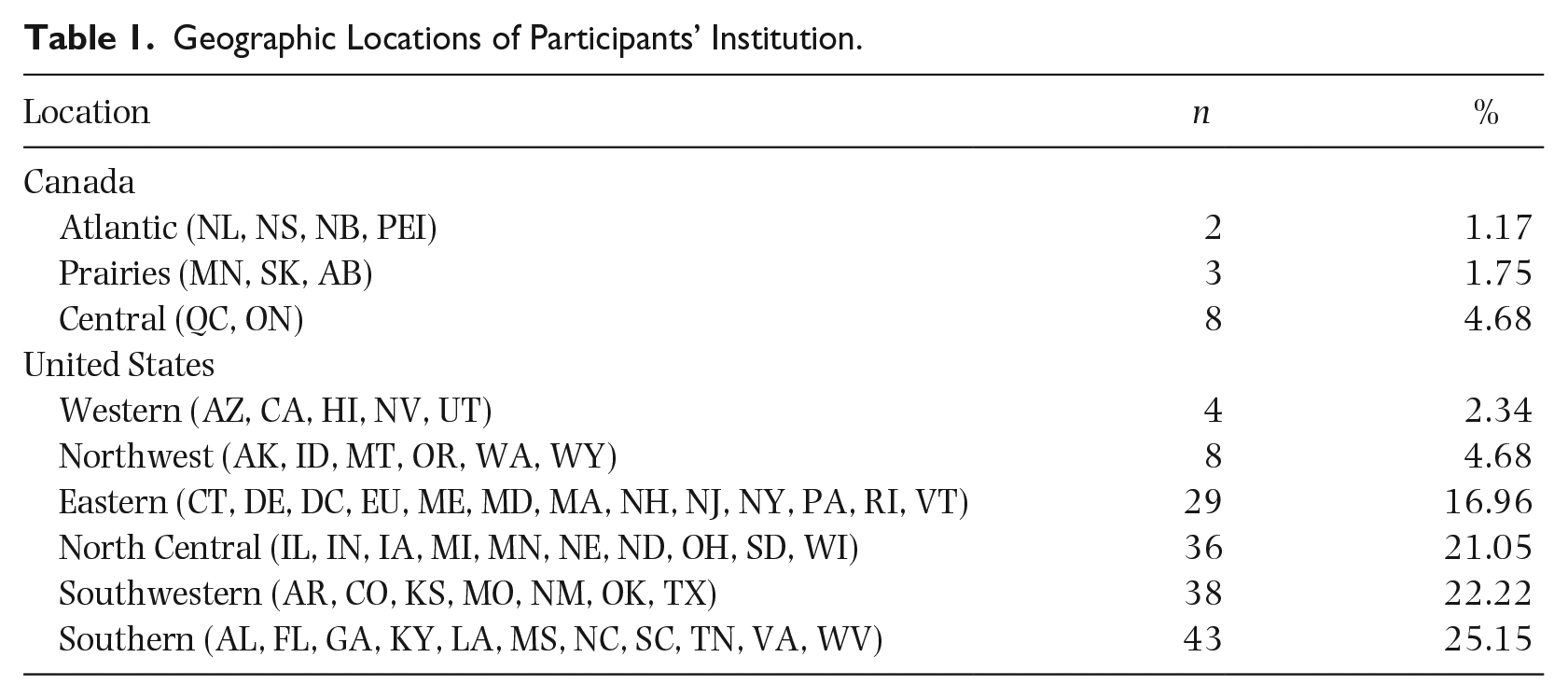
A total of 171 individuals completed the survey. It is not possible to determine an accurate response rate, given the imprecise data about the number of students receiving the message. However, we believe this sample is sufficient to be informative because it represents students from a large number of schools representing a wide geographical distribution, including three of the four Canadian regions (all except Western) and all six of the U.S. regions designated (see Table 1). The home countries of the participants included the United States (n = 143; 83.63%), Canada (n = 10; 5.85%) and 11 other countries represented by one to four individuals each. Eighty-eight percent of the respondents indicated that they were native English speakers.
Geographic Locations of Participants’ Institution.
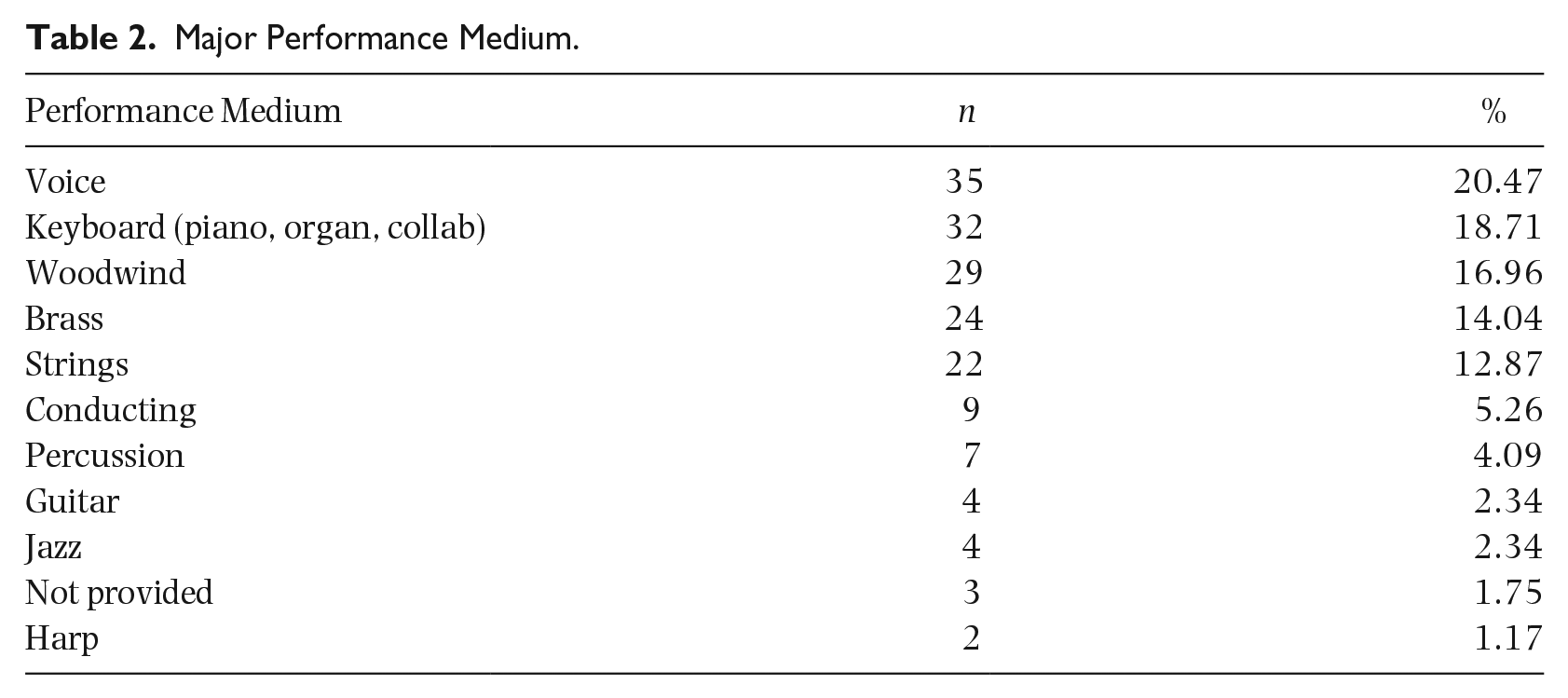
Participants identified themselves as female (n = 90; 52.63%), male (n = 69; 40.35%), gender-diverse (n = 9; 5.26%) or preferred not to respond (n = 3; 1.75%). Ages ranged from 21 to 56 years, although 81.29% were in their 20s, so the average was 26.95 (SD = 6.62) years. The 170 participants who responded to the item regarding their degree program were pursing master’s degrees (n = 130; 76.47%), doctorates (n = 34; 20.00%), and diplomas/certificates (n = 8; 3.53%). Voice, keyboard, woodwinds, brass, and string instruments accounted for the instruments 83 of these participants were studying (see Table 2). (Although racial identity/ethnicity has been found to be a variable in many IP studies, Canadian ethics protocol permitted only broad categorizations of ethnic origins that we felt would not provide enough information to either compare or add to previous findings on this factor.) Additional demographic information that was incorporated into data analyses will be provided in the “Results” section.
Major Performance Medium.
Instrumentation
Data were collected via the Qualtrics online survey software (Qualtrics, Provo, UT). This research was approved by both the Ryerson University Research Ethics Board and the University of Missouri Institutional Review Board, and informed consent information was included as the landing page of the survey. Demographic items, included at the end of the survey, were based on characteristics reported in the literature to be related to MPA and/or IP responses as well as characteristics used to describe our specific sample. Given that the data were being collected in the first few months of 2022, we also included questions regarding online performances and provided a space for comments or observations about their experiences in the context of COVID-19.
The majority of the items were responses to the two standardized instruments: the KMPAI and an adapted version of the CIPS. As discussed in the literature review, these are the scales that are used the most frequently in studies of their respective constructs, and the reliability and validity of both are well documented in the literature. After each scale, we included an opportunity for participants to provide optional comments.
The KMPAI was designed by Dianna Kenny et al. (2004) as a comprehensive measure of MPA that takes into account psychological vulnerabilities and preperformance experiences (Kenny, 2009). Originally a 26-item scale, it was revised in 2009 (Kenny, 2009) and expanded to include 40 items across eight subscales: (1) Proximal Somatic Anxiety and Worry about Performance, (2) Worry/Dread (Negative Cognitions) Focused on Self/Other Scrutiny, (3) Depression/Hopelessness, (4) Parental Empathy, (5) Memory, (6) Generational Transmission of Anxiety, (7) Anxious Apprehension, and (8) Biological Vulnerability (Kenny& Ackermann, 2015). Each item is scored on a 7-point Likert-type scale, with responses ranging from strongly disagree to strongly agree. The maximum possible score on the scale is 240, which would indicate intense MPA. Kenny and Ackermann (2015) identified the clinical cut-off score for anxiety as 104 to 105. Cronbach’s alpha was calculated to be very high for the current sample (α = .924), indicating a high internal consistency for the measure.
To collect our IP data, we adapted the original CIPS to include language specific to music performance, rather than use the more generic original scale. Sims and Cassidy (2018, 2020) had employed adapted scales in their previous studies and found them to be interpretable and reliable. We substituted and/or added terms such as performance or musical to 13 of the original 20 items (with permission from Dr. Clance). For example, the original item wording, “I have often succeeded on a test or task even though I was afraid that I would not do well before I undertook the task,” was modified to replace “test or task” with “performance.” Participants respond to each item on a scale from 1 (not at all true) to 5 (very true). The frequency of impostor feelings is typically determined based on the sum of the 20 responses, which falls into one of four designated categories ranging from few to intense. To determine the internal consistency of our CIPS for Performers scale (CIPS-P), we calculated Cronbach’s alpha using the raw scores, and obtained a very high coefficient (α = .912).
Results
Scores on the KMPAI ranged from 34 to 214 for this sample (n = 171), with a mean of 134.72 (SD = 38.45). Using Kenny’s and Ackermann (2015) clinical cut-off score of 104 for MPA, we found that 134 (78.40%) participants could be described as experiencing clinical levels of anxiety. The IP results were similarly high. Scores on the CIPS-P could range from 20 to 100, and this sample’s mean was 72.43 (SD = 14.86), with a range from 35 to 98. According to the categories defined by Clance (1985), there were six (3.51%) participants whose scores placed them into the few IP feelings category, and 30 (17.54%) in the moderate category. Almost 79 of the participants’ responses were placed into the frequent (n = 81, 47.37%) or intense (n = 54; 31.58%) categories. Given the similarity of these findings for the two scales, it is not surprising that the correlation of the total KMPAI and CIPS-P scores was positive, high, and significant, r(169) = .762, p < .001.
Given the strong relationship indicated between MPA and IP, further correlations were calculated on the eight subscales of the KMPAI and IP total to determine whether specific aspects of MPA were more closely related to IP. All correlations were significant (p < .001; see Table 3), with the strongest correlations for Worry/Dread focused on Self/Other Scrutiny, Proximal Somatic Anxiety and Worry about Performance, Anxious Apprehension, and Depression/Hopelessness.
Correlations Between CIPS-P and the KMPAI Subscales.
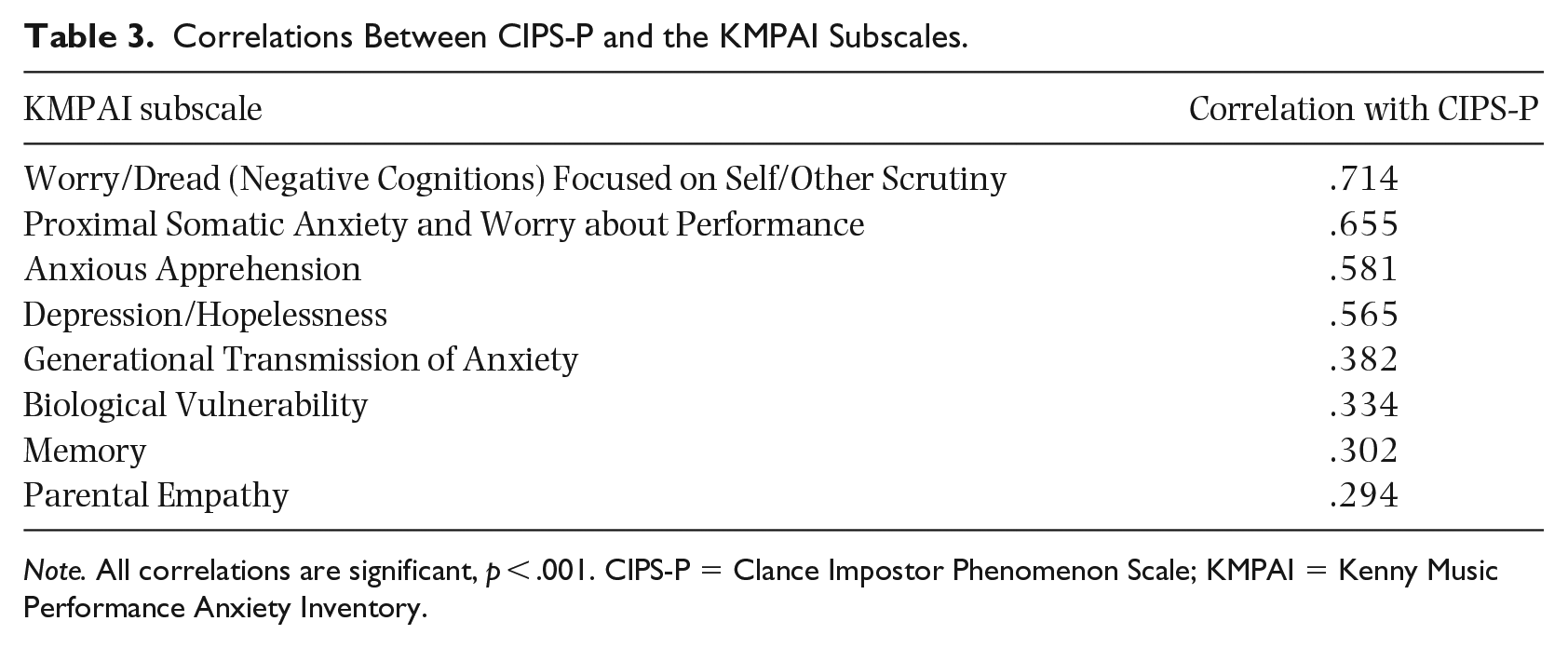
Note. All correlations are significant, p < .001. CIPS-P = Clance Impostor Phenomenon Scale; KMPAI = Kenny Music Performance Anxiety Inventory.
We investigated possible relationships among MPA, IP, and the demographic variables several ways. Table 4 displays the findings by IP categories and KMPAI scores for four of the variables. While percentages by categories and KMPAI scores were very close among those seeking the three different degree types, the other variables appeared to have a few more discrepancies. To investigate the variable of gender further, we computed analyses of variance (ANOVAs) (for binary gender only, as there was an insufficient number of nonbinary participants to analyze) for each instrument, with results indicating no significant differences for total IP, F(1, 157) = 2.267, p = .134, or KMPAI, F(1, 157) = 0.491, p = .484, scores (statistical results for all ANOVAs are reported in Tables 5–8 in Appendix A, available in the online supplemental material). Similar ANOVAs were computed for the responses to the yes/no item: “I am the first person in my immediate family to enroll in a graduate degree,” and no significant differences were found associated with either MPA, F(3, 167) = 0.816, p = .487, or IP, F(3, 167) = 1.158, p = .328.
IP Category and KMPAI Means and Standard Deviations by Gender Identification, Family Graduate Degree Background, Degree Pursued, and Relationship Status.
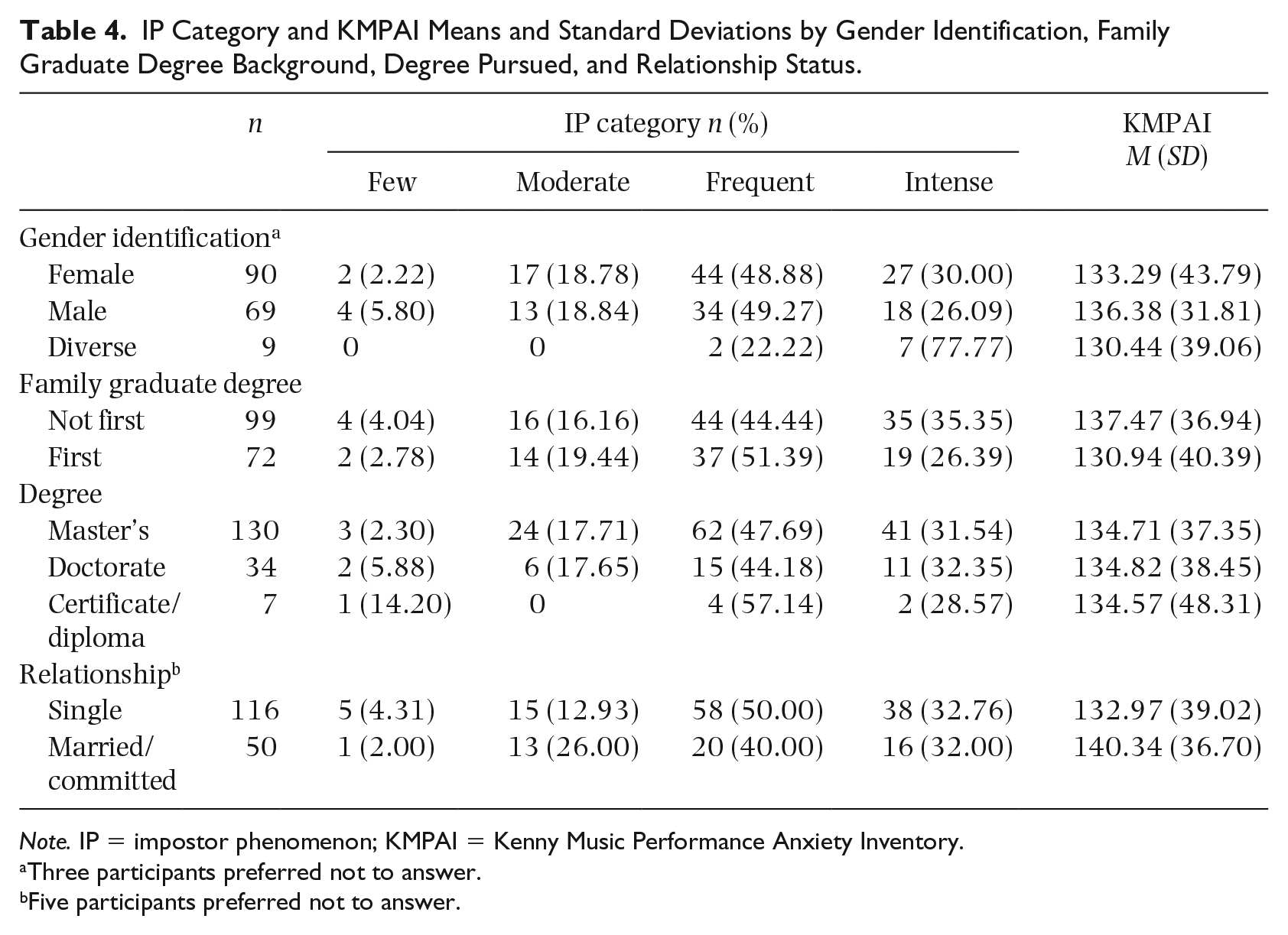
Note. IP = impostor phenomenon; KMPAI = Kenny Music Performance Anxiety Inventory.
Three participants preferred not to answer.
Five participants preferred not to answer.
Possible effects of the relationship status of the participants also were of interest, based on findings that this was a salient variable for IP responses of music education graduate students (Sims & Cassidy, 2020). The IP categories for those who indicated that they were single (n = 116; 69.88% of those responding to that item) indicate that almost 83% of the single participants scores placed into the highest two categories, as compared with those married or in a committed relationship (n = 50; 30.12%), with 72% in the highest categories. However, the mean KMPAI scores were the opposite, with those who were single scoring lower. Results of ANOVAs indicated no significant differences on either measure according to their relationship status, IP, F(2, 168) = 0.997, p = .371; MPA, F(2, 168) = 1.052, p = .351.
We were interested in whether the expectation to perform by memory was related to MPA or IP, and so analyzed by participants’ yes/no responses to the question, “Is performing from memory required for your instrument/specialization?” (yes = 88; 51.46%: no = 83; 49.54%). Results of the ANOVAs indicated no significant differences on the KMPAI, F(1, 169) = 0.021, p = .885, or CIPS-P, F(1, 169) = 0.202, p = .654, scores.
There were several issues related to age that we wished to investigate. Results of correlations between age and KMPAI scores, and age and IP total scores were negligible, KMPAI, r(169) = .092, p = .231; IP, r(169) = –.097, p = .208. However, there was a low but significant correlation indicating that people who started performing at a later age experienced greater MPA, r(169) = .181, p = 028.
There were opportunities provided for optional comments after participants completed each scale. At the end of the study, participants were asked to provide comments in response to prompts related to virtual versus live performances and their experiences with performing during COVID-19. Seventy-seven participants provided comments in response to these items. To analyze these data, the contents of each unique issue addressed by a participant were considered the unit of analysis, and many respondents addressed more than one issue (Ncomments = 125).
After open coding of each comment, 24 categories were identified, with three main topics (see Appendix B for a table of codes, frequencies, and representative participant comments for each code, available in the online supplemental material). Given the nature of the scales participants had just completed, it is not surprising that MPA and IP were mentioned specifically in the comments. There were 13 (10.4%) comments describing negative aspects of the participants’ performance anxiety, although two individuals (1.6%) explained that they found some anxiety to be helpful for performing. Ten participants (8.0%) made comments using the term “impostor” explicitly, or statements that reflect impostor characteristics (e.g., one stated, “I often feel like a fraud,” and another wrote, “I find it difficult to take compliments seriously . . . and distrust most of what others say to me”). Other impactful physical or mental health issues were discussed by eight participants (6.4%), such as physical tremors, sweaty palms, or test anxiety. Six (4.8%), however, expressed a more positive outlook, stating that they did not have any negative feelings associated with performing. In fact, one participant wrote that, “Overall, I think I have no anxiety and imposter syndrome symptoms because performing is a natural extension of who I am,” and his scores on the two scales reflected that. Two participants (1.6%) described successful efforts to change from a negative to positive mindset. One noted efforts to reduce comparisons, which is actually a potential way to reduce IP. The participant explained that: I now focus on how hard I worked and showing beauty of music and have gotten to the point where I compare as little as possible (as in limiting conversations about music and time with people who encourage a toxic mindset).
There were 42 comments (26.6%) related specifically to the effects of COVID-19 on performance, with the most frequent being the difficulty of returning to live performance (n = 9; 7.2%); effects of the disease or COVID-related trauma such as memory or breathing; mental health issues (n = 7; 5.6%); and difficulties for singers related to mask wearing, such as creating tension in the jaw, or distorting their tone (n = 5; 4.0%). Other negative consequences mentioned included lack of motivation or focus, increased COVID-related anxiety, and worry about the effects on the music industry of fewer performance opportunities “when the world sacrificed the arts during COVID.” Several comments mentioned positive issues, however, such as fewer rehearsals and performances resulting in more practice time.
There was an equal number of comments related to the experience of virtual versus live performance (n = 42; 33.6%). The majority described virtual performances as less fulfilling because of the lack of energy from an audience (n = 16; 12.8%), although the next most frequent set of comments was about how performing live via technology or recording for a virtual audience was less stressful than in-person performances (n = 9; 7.2%). As one participant described this: Performing virtually places a barrier, a filter, between you and the audience, making it a very effective tool for learning to deal with performance anxiety. Honestly, it has been the most effective coping tool I’ve found in 30 years of performing.
The responses of some individuals, however, described stress involved with recording—they felt that recording called for perfection because of the possibility of re-recording (n = 5; 4.1%). Other comments addressed problems involved with performing well given the sometimes inferior/unstable technology available. Several participants commented that the pandemic period provided a good opportunity to learn to use technology better, and one participant mentioned the ability technology affords to reach a much larger audience.
Discussion and recommendations
The results of this study indicated a high, positive correlation between the responses to the MPA and IP instruments; this is not surprising, given the aspects that these constructs have in common (as described in the literature review). In addition to the feelings of anxiety characteristic of both MPA and IP, each is associated with social contexts where judgment, evaluation, and potential for comparisons with others are prevalent. The commonalities are reflected in the four KMPAI subscales that correlated the most strongly with IP scores, which include a focus on personal negative mindsets (worry, dread, anxiety, and apprehension) and on scrutiny by self or others. Interestingly, it seems that the components of MPA most highly correlated with IP pertain to psychological features of the individual musician. While correlations for factors related to upbringing and family (generational transmission of anxiety, biological vulnerability, and parental empathy) were significant, they were low to moderate, indicating a weaker relationship with IP. We hesitate to suggest that individual attributes, such as temperament and training, might be more strongly associated with the development of IP than an individual’s biological vulnerability or upbringing, but further research seems warranted to better understand these relationships.
We were interested in understanding relationships among IP, MPA, and a variety of demographic variables, but found few differences. Whether participants were the first in their family to attend graduate school, were master’s or doctoral students, routinely performed from memory, or identified as men or women did not appear to be related to their performance anxiety or impostor feelings. However, we found a few notable results that are worthy of further exploration, related to three of the demographic characteristics.
One of these findings pertains to musicians’ relationship status, with single musicians scoring higher on IP, but lower on MPA than musicians in committed relationships. This is consistent with the IP results for graduate music education students (Sims & Cassidy, 2020). Given that the differences noted here pertain to percentages rather than statistical differences, we wonder whether a more in-depth qualitative study exploring the role of relationships in ameliorating or exacerbating anxiety or impostor feelings would shed more light on the matter.
Another demographic variable of interest involves the age at which the musicians began performing, with later starters experiencing higher MPA. This particular finding has been noted by other researchers (e.g., Boucher & Ryan, 2011; Lupiáñez et al., 2022; Zarza-Alzugaray et al., 2016), suggesting that starting musicians with onstage experiences earlier, or potentially easing older novice performers into performing with some care and preparation for anxiety mitigation, may be important considerations.
A third demographic warranting consideration is gender-diverse musicians. Although our sample included a relatively low number of nonbinary participants, their IP scores were very high. Given that most research in both the IP and MPA literature has only considered gender as a binary variable, it seems important now to more fully explore these constructs among a broader sample of musicians with diverse gender identities.
As noted, we were not able to collect data related to race/ethnicity for this study, although data from research related to both IP and MPA indicate that this should be another area for consideration. The potentially important demographic variables that have been identified in previous music research, and/or in the general IP literature, warrant further study with respect to musicians/music educators.
It is concerning that there were more than 130 graduate-level performing musicians whose responses indicated that they had very high levels of MPA and IP (over 76% of the sample). Given this, it is not surprising that many of the open-ended comments described anxiety and stress, as well. The number of these participants with scores indicating frequent to intense impostor feelings, according to the categories designated by the IP scale scoring system, represents about the same percentage as found for music student teaching interns (Sorenson, 2022) but is higher than the percentages reported for graduate music education students (Sims & Cassidy, 2020) and early career music education faculty (Sims & Cassidy, 2019).
It is possible that there was response bias in the sample, with people who were suffering from one or both of these conditions more likely to complete the questionnaire than others. Nonetheless, even if these data are an overestimation of prevalence, the findings still represent a large number of students susceptible to the deleterious physiological and psychological symptoms associated with each condition. Future research to uncover the symptoms that individuals with high levels of MPA and IP experience could be helpful to develop a better understanding of their actual effects.
Understanding intersections between MPA and IP may lead to new strategies with which to address MPA, IP, or both. One intervention for IP that was found to be successful was one-on-one coaching, in which a coach and student worked on individual goals and developing beliefs associated with a growth mindset such as reflecting on abilities, identifying strengths, and improving self-efficacy, and decreasing fear of negative evaluation (Zanchetta et al., 2020). In fact, the authors of that study concluded that “interventions that are able to strengthen individuals to be less afraid of negative evaluations seem to be the most effective way for reducing IP fears” (p. 10). Fear of evaluation/judgment is one of the factors common to both IP and MPA. Given the importance of their studio music teachers to music performance students, sensitizing teachers to these ideas and developing strategies that they may use to “coach” their students through MPA and IP feelings could be a valuable undertaking. These might include helping students to set appropriate goals, define and celebrate small successes, work on self-affirmation, visualize success, and learn to accept compliments.
One of the challenges to addressing both MPA and IP involves the culture of perfectionism that permeates the field. Many studies have pointed to the very high standards, the fear of making mistakes, and the striving toward flawless performance that music students learn from a young age. Certainly, adjudication reports from competitions and exams routinely note less-than-perfect technique, memory, and adherence to the score, and deviations in these areas can also cost musicians success in auditions for specialized programs, graduate school, and jobs. It is a difficult challenge to navigate because the competition for seats is intense; however, the focus on perfection is highly linked with both MPA and IP and may ultimately result in losing out on artistic interpreters in favor of reliably accurate technicians. The question of how to support artistry may come down to choice, along with education and training in balancing high expectations and standards with the realities and demands of the spotlight.
Music departments, in particular graduate music programs, are uniquely positioned to provide such training. The literature clearly reflects the pervasiveness of IP and MPA among students in higher education, indicating a need to build discussion and “normalization” of them into the existing curriculum. Furthermore, music departments might consider developing courses that specifically focus on the psychological strengths and needs of performing musicians. Such education and training are common among elite athletes, but rare among high-level musicians. Given the long history of documented research on MPA and the more recent studies highlighting the prevalence of IP among music students, it seems to be time that faculty and program leaders take note and work toward the implementation of supports for their current students, thereby enabling the success, mental health, and longevity of their future alumni.
The importance of open and frequent conversations regarding mental health issues such as MPA and IP cannot be overstated, as these may be important first steps for musicians to engage in because awareness is key in identifying and overcoming their potentially detrimental effects. Exploration of effective strategies to address these feelings would be a valuable addition to the professional literature, so that music performers and teachers can develop strategies and techniques that will assist them and their students to reach their fullest potential.
Supplemental Material
sj-pdf-1-pom-10.1177_03057356231209264 – Supplemental material for Relationships between music performance anxiety and impostor phenomenon responses of graduate music performance students
Supplemental material, sj-pdf-1-pom-10.1177_03057356231209264 for Relationships between music performance anxiety and impostor phenomenon responses of graduate music performance students by Wendy L Sims and Charlene Ryan in Psychology of Music
Supplemental Material
sj-pdf-2-pom-10.1177_03057356231209264 – Supplemental material for Relationships between music performance anxiety and impostor phenomenon responses of graduate music performance students
Supplemental material, sj-pdf-2-pom-10.1177_03057356231209264 for Relationships between music performance anxiety and impostor phenomenon responses of graduate music performance students by Wendy L Sims and Charlene Ryan in Psychology of Music
Footnotes

References
Supplementary Material
Please find the following supplemental material available below.
For Open Access articles published under a Creative Commons License, all supplemental material carries the same license as the article it is associated with.
For non-Open Access articles published, all supplemental material carries a non-exclusive license, and permission requests for re-use of supplemental material or any part of supplemental material shall be sent directly to the copyright owner as specified in the copyright notice associated with the article.
