



Abstract
The current study aims to fill the gap on hebephile sex offenders by comparing them to a group of pedophile offenders as well as a group of teleiophile offenders. The focus of the study is to examine the victims’ and offenders’ characteristics, the crime characteristics, and the modus operandi used by a sample of 111 male sex assaults currently serving a sentence for sexual crimes in Korea. Looking at all the comparisons conducted, it seems that the hebephiliac is not more similar to the pedophile nor the teleiophiliac. He is in fact a mix of both. Aside from certain characteristics that make hebephiliacs different from the other two subtypes of sex offenders (e.g., sadism, travelling longer than 2 km to commit the crime, history of bipolar disorder), they mainly share characteristics of both groups. The current study uncovers very important differences that could prove useful for the management of these cases by the actors of the criminal justice system.
Introduction
It is still a critical ongoing issue that men differ dramatically in their erotic age-preferences, with important psychosocial and legal consequences. The establishment of standard labels for these preferences has proceeded in inverse relation to their prevalence, perhaps because of psychiatry’s need for a nomenclature for the most aberrant conditions (Cantor & Blanchard, 2012). Thus, the relatively rare erotic preference for prepubescent children has long been denoted as pedophilia (Beier et al., 2015; von Krafft-Ebing, 1886, 1965a, 1965b; Freund, Seeley, Marshall, & Glinfort, 1972). Except for the occasional use of the term adultophilia (Gebhard, Gagnon, Pomeroy, & Christenson, 1965), there was no sustained effort to label the population’s majority erotic preference for adults until the term teleiophilia (Blanchard, 2012; Blanchard et al., 2009) was introduced. This term denotes the erotic preference for persons between the age of physical maturity and the onset of middle age. But these two age categories excluded a group of people who reported a sexual preference for pubescent children—not children anymore but not quite adult yet. Glueck (1955) first contributed the word hebephiliac to denote the erotic preference for pubescent children. Later, Blanchard et al. (2009) specified hebephilia’s target ages as generally from 11 to 14 years (typically, Tanner Stages 2 and 3).
Controversial Issues in the Conception of Hebephilia
Both Blanchard (2009) and Blanchard et al. (2009) pointed out that sexual offenders of adolescents are already receiving a Diagnostic and Statistical Manual of Mental Disorders (4th ed., text rev.; DSM-IV-TR; American Psychiatric Association [APA], 2000) diagnosis, namely, “paraphilia not otherwise specified (NOS): hebephiliac” (Levenson, 2004), which is not the most precise one. This proposal is mostly based on a phallometric study of 881 men that concluded men who verbally reported maximum sexual attraction to “pubescent children” had greater penile responses to depictions of pubescent children than to depictions of younger or older persons (Blanchard et al., 2009). However, significant statistical differences were only found for heterosexual hebephiles, not homosexual. Spape and Looman (2012) indicated the existence of a pedophilic sexual arousal pattern but did not provide evidence of a distinct hebephilic arousal pattern. Furthermore, Rind and Yuill (2012) critically pointed out that hebephilia still presents weaknesses, for instance, in terms of conceptual validity, methodology, socio-legal implications, as well as motives and context. These issues had not been adequately addressed by Blanchard et al.’s (2009) rebuttal. It was also found that data on hebephiliac is too rare to produce solid foundations for a mental health diagnosis (DeClue, 2009; Frances & First, 2010; Franklin, 2010), and ongoing debates about hebephilia still exists as most studies have been published in the last 7 to 8 years especially after Blanchard et al.’s (2009) proposal (DeClue, 2009; Prentky & Barbaree, 2011; Spape & Looman, 2012). Psychiatrists working with sex offenders still face this debate (see Spitzer, 1999). Using an alternative approach, Rind and Yuill (2012) suggested an evidence-based method using harmful dysfunction (Wakefield, 1992a, 1992b, 2007) and a harmful-for-others criterion (Brülde, 2007) to disorder. The study suggested that the examination of historical, cross-natural, sociological, cross-species, nonclinical empirical, and evolutionary evidence and perspectives indicated that hebephilic interest is an evolved capacity and hebephilic preference an expectable distribution variant, both of which were adaptively neutral or functional, not dysfunctional, in earlier human environments. That is, hebephilia’s conflict with modern society makes it an evolutionary mismatch, not a genuine disorder. Thus, it could be entered in DSM’s five-code section, “used for nondisordered conditions.” However, there could be a consequence of the inclusion of hebephiliac in the Diagnostic and Statistical Manual of Mental Disorders (5th ed.; DSM-5; APA, 2013) for the civil commitment of sexually violent predators, which requires a diagnosis of mental disorder (Fabian, 2011).
In terms of typology, are hebephiliacs similar to pedophiles or share more similarities with teleiophiliacs? Should we treat hebephiliacs the same way we treat pedophiles or rapists? There is a gap in the literature on the typology of sex offenders. Prior studies (Blanchard, 2009) have often mixed together sex offenders against children with sex offenders against adolescents or merged the latter group with sex offenders against adult victims. As these decisions were mainly based on an arbitrary age cut-off (e.g., a child is a person under 13 years old or a victim is considered adult if (s)he is 16 or older), the group of sex offender specifically targeting pubescent children has often been overlooked and understudied. The aim of the current study was to attempt to fill that gap by comparing a group of hebephiliacs to two other groups of sex offenders: pedophiles and teleiophiliacs—sex offenders targeting adult victims.
Differences Between Sex Offenders
When looking specifically at cases of hebephiliacs, we realize that only a few studies are available (Baxter, Marshall, Barbaree, Davidson, & Malcolm, 1984; Blanchard & Barbaree, 2005; Blanchard et al., 2009; Freund, 1967; Freund, Chan, & Coulthard, 1979). Freund and colleagues (Freund, 1967; Freund et al., 1979) found differences between hebephiliacs and other subjects. Despite the small number of studies examining specifically hebephiliacs, some other studies investigated possible differences between three subtypes of sex offenders. Using a developmental approach (Blanchard et al., 2002; Blanchard et al., 2003; Cantor et al., 2004; Cantor et al., 2005; Cantor et al., 2006), studies found that compared with hebephiliacs and teleiohiliacs, pedophilic offenders were more likely to fail grades in school or require placement in a special education system, and suffer head injuries during childhood. However, hebephiliacs were approximately three times more likely to be left-handed, but less frequently than pedophiles (Cantor, Klassen, Dickey, Christensen, Kuban, Blak, & Blanchard, 2005; Cantor et al., 2006). Also, prior studies provided data on the heights of pedophilic and of nonpedophilic men (Cantor et al., 2006; Mellan, Nedoma, & Pondelícková, 1969; Taylor et al., 1993; Cantor et al., 2007), and results showed that the pedophilic and the hebephilic offenders were significantly shorter than the teleiophilic nonoffender controls. Moreover, the teleiophilic offenders were intermediate in height, ranked between the nonoffenders and the pedophilic and hebephilic sex offenders, not significantly different from any of the groups.
Baxter et al. (1984) examined the criminal record, personal history, social-sexual competency, and the physiological responses to erotic stimuli in incarcerated pedophiles, hebephiles, and rapists. Significant differences among the three subgroups were observed as to the criminal and personal backgrounds. In particular, pedophiles tended to be older, less educated, less likely to be married, and less frequently involved in nonsexual crime. Social and sociosexual inadequacies were common to all groups, reflected by under-assertiveness, low self-esteem, and negative sexual attitudes. In terms of physiological responses to erotic stimuli, both rapists and hebephiles responded maximally to adults as sexual partners, and both responded more to cues of consensual sex than to cues of rape. Cantor et al. (2006) also revealed that relative to the teleiophilic offenders, both the pedophilic and the hebephilic groups showed approximately double the odds of failing a grade and being enrolled in special education.
The Current Study
Within prior studies on sex offenders, only a few have looked specifically at the hebephile sex offenders, the others neglecting to even consider this as a possible subtype of sex offenders. Using different age cut-offs to identify child victims and adult victims (e.g., using age of consent), the group of hebephile sex offenders have often been split in two, half being merged with the “child victims” whereas the other half was considered as “adult victims.” Such decisions have caused this subtype of sex offenders to be examined specifically. Moreover, of the few studies that have investigated hebephiliacs, most of them are dated and/or have mainly focused on biological factors (e.g., height, handedness, IQ, Alzheimer, neurodevelopmental diseases; see meta-analysis by McPhail & Cantor, 2015), neglecting to examine other important factors such as victims’ characteristics and criminal patterns.
The current study aims to fill the gap on hebephile sex offenders by comparing them to a group of pedophile offenders as well as a group of teleiophile offenders. Specifically, the focus of the study is to examine the victims’ and offenders’ characteristics, the crime characteristics, and the modus operandi used by a sample of male sex offenders currently serving a sentence for sexual crimes in Korea. The study will attempt to identify which of these factors can be useful in distinguishing the three subtypes of offenders (i.e., pedophile, hebephiliac, and teleiophiliac). Such findings can be useful to clinicians needing to intervene with these sex offenders or involved in the decision-making prior, during, or even after their sentence (e.g., treatment modalities, conditions of release). In the present study, hebephilia was defined as the sexual preference for early pubertal individuals, specifically from 11 to 14 years (early pubertal children in Tanner Stages 3 and 4) based on Blanchard et al. (2009), which should be a consistent and reliable pattern over the life time; pedophilia (prepubertal children in Tanner Stage 1 and 2, generally age 10 or younger); teleiophilia (adults in Tanner Stage 5, between the ages of physical maturity and physical decline).
Method
Sample and Procedure
Information concerning sexual assaults was obtained from the Crime Behavior Analysis Unit (CBAU) in the Korean National Police Agency (KNPA). Criminal behavior analysts conduct standardized psychological evaluations, interviews, physical evaluations, and reviews of materials, including collateral data gathered from various sources (e.g., relatives, medical, criminal, school and military records). This information is then entered into the Scientific Crime Analysis System (SCAS). SCAS is comprised of criminal index files, investigative files (e.g., witness’s statement, evidence), medical records, coroner’s reports (or medical examiner’s data), crime scene characteristics obtained from the Division of Crime Scene Investigation (e.g., pictures, other evidence), and results from psychological evaluations (e.g., Personality Assessment Inventory [PAI], Morey, 1999; Psychopathy Checklist–Revised [PCL-R], Hare, 2003; STATIC-99R, Phenix, Helmus, & Hanson, 2012). The material of the present study was drawn from the Korean national SCAS database.
From 580 sexual offences recorded between 2005 and 2010, through a two-step procedure, 111 sexual assault cases were selected for the current study. Specifically, the case-reduction procedure to determine three types of sexual offenders were based on one or two semistructured interview session[s] along with the analysis of previous sexually behavioral archives (e.g., previous psychiatric diagnosis, psychological assessment, previous criminal patterns’ descriptions and written judgments). First, interviewers directly asked the questions related to items for identifying sexual preferences (i.e., self-reported erotic gender-age preferences: “do you experience a sexual preference for specific age and/or gender?” “what is the degree of sexual interest in females or males age 5 or younger, 6-10, 11, 12-14, 15-16, and 17 or older?” “If so, could you explain why and how in more details?”). Then, along with the two- to three-hour intensive interviews, previous criminal records and patterns across the life-course were explored to find out the relationship between the sexual assault and any specific preferences in terms of age and/or gender. Finally, three of the criminal analyzers (two interviewers and one noncontact criminal analyzer) had one or two consensus meeting[s] regarding the preference based on the comprehensive information (i.e., not solely based on either self-reports or collateral data). If the information was ambiguous in differentiating the age preference based on the data obtained, then another consensus meeting was held to come to an agreement. In the cases where such an agreement was not possible (e.g., unresolvable conflicts related to information sources or the lack of sufficient information), cases were excluded. Ultimately, 30 cases were classified as pedophiles (i.e., presented an erotic preference in prepubescent children; von Krafft-Ebing, 1886, 1965a, 1965b), 28 cases were classified as hebephiliacs (i.e., presented an erotic preference in pubescent children; Blanchard, 2009; Glueck, 1955), and last, 53 cases were classified as teleiophiliacs (i.e., presented an erotic preference in adults; Blanchard et al., 2009). Therefore, all cases included in the current study are considered as “admitters” (i.e., persons whose behaviors imply there is such hebephilic preference and who confess its presence, despite not being confirmed by a screening tool such as a phallometric measurement of erotic gender-age preferences, for example, degree of penile erection; Blanchard, Klassen, Dickey, Kuban, & Blak, 2001; Freund & Blanchard, 1989).
Measurement
Personality Assessment Inventory (PAI) and Alcohol Use Disorder Identification Test (AUDIT)
PAI (Morey, 1999) was used by two criminal analyzers following the semistructured interview schedule. The PAI (Morey, 1999) is a widely used, multidimensional, 344-item self-report measure of personality and psychopathology intended to provide information on critical variables in behavioral health care settings, as well as information on treatment, planning, implementation, and evaluation (Morey, 1999). The PAI consists of 22 nonoverlapping scales and four validity scales. The AUDIT is a 10-item screening tool developed by the World Health Organization (WHO) to assess alcohol consumptions, drinking behaviors, and alcohol-related problems. In the Korean version (1986), a score of 16 or more is considered to indicate harmful alcohol use.
Previous diagnosis and paraphilias
Previous psychiatric diagnosis was assessed based on the previous diagnosis record registered into the national forensic hospital archive as well as the SCAS system. In terms of paraphilias, we used formal diagnostic criteria, as described in Diagnostic and Statistical Manual of Mental Disorders (4th-TR ed.; DSM-IV-TR; APA, 2000). These criteria require the presence, at least over a period of 6 months, of “recurrent, intense sexually arousing fantasies, urges or behavior” associated with unusual objects, activities, or situations. A series of questions was developed to determine the prevalence of the following paraphilia: exhibitionism, fetishism, public masturbation, frotteurism, sexual masochism, sexual sadism, voyeurism, telephone scatologia, necrophilia, and bestiality.
Criminal Analyzing Questionnaire items
The questionnaire includes various offenders and victims’ characteristics such as age, gender, the number of victims, occupation, victim–offender relationship, criminal history, marital status, last routine behavior, victimization history, individual stress factors, and substance abuse problem. In addition, it also includes the information on pornography usage as well as crime scene behaviors and modus operandi (e.g., con-kidnapping, contact scene, crime scene, type of violence, type of victim approach, any use of blindfolds and/or gags, forensic awareness and precautions, type of sexual acts, any item taken). Qualitative information was gathered by interviewing all participants. The semistructured interview schedule was specifically designed to gather information, using the aforementioned questionnaire.
Data Analysis
Bivariate statistics were used to analyze the differences between the three groups of sex offenders. Specifically, both chi-square and Fisher’s exact tests were conducted to identify differences between sexual offense against children, adolescent, and adult.
Results
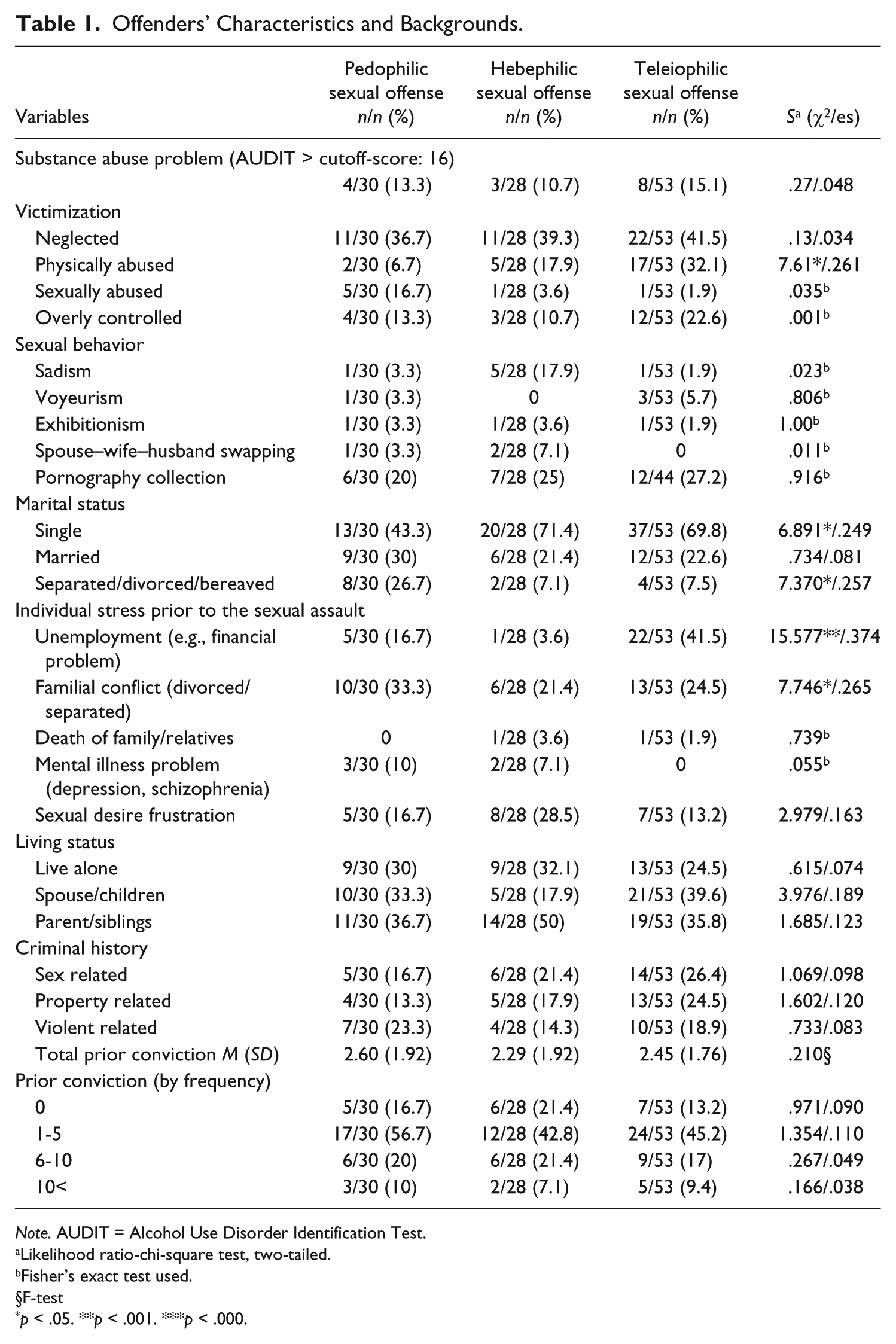
Table 1 shows findings related to the sex offenders’ characteristics and criminal backgrounds. In terms of childhood victimization, compared with the two sexual offense groups (hebephiliacs: 3.6% vs. teleiophiliacs: 1.9%), pedophiles (20%) report more sexual victimization during childhood. As to sexually deviant behavior, hebephiliacs (17.9%) report a greater proportion of sadistic acts than both pedophilic (3.3%) and teleiophilic sex offenders (1.9%). Approximately a quarter of each of the three groups report collecting pornography items such as porno-video, obscene materials, and picture-files.
Offenders’ Characteristics and Backgrounds.
Note. AUDIT = Alcohol Use Disorder Identification Test.
Likelihood ratio-chi-square test, two-tailed.
Fisher’s exact test used.
§F-test
p < .05. **p < .001. ***p < .000.
In terms of individual stress-type prior to the crime, pedophiles (33.4%) report having been through more intrafamilial conflicts (e.g., intimate partner violence, sexual affair, divorce) than both groups of sexual offenders (hebephiliacs: 21.4% vs. teleiophiliacs: 24.5%), whereas teleiophilic sex offenders (41.5%) experience significantly more stress related to being unemployed (e.g., losing job, financial problem due to being fired) than the two other groups (pedophiles: 16.7% vs. hebephiliacs: 3.6%). Interestingly, hebephilic sex offenders (28.5%) report more sexual desire frustration prior to the crime (e.g., being divorced/bereaved, being denied sexual relationship by partners), compared to the other two groups.
In terms of criminal background, teleiophilic sex offenders (26.4%) present a more extensive sexual offense history than pedophiles (16.7%) and hebephiliacs (21.4%), whereas pedophilic sex offenders (32%) present a greater number of violent offense convictions than hebephiliacs (14.3%) and teleiophiliacs (18.9%).
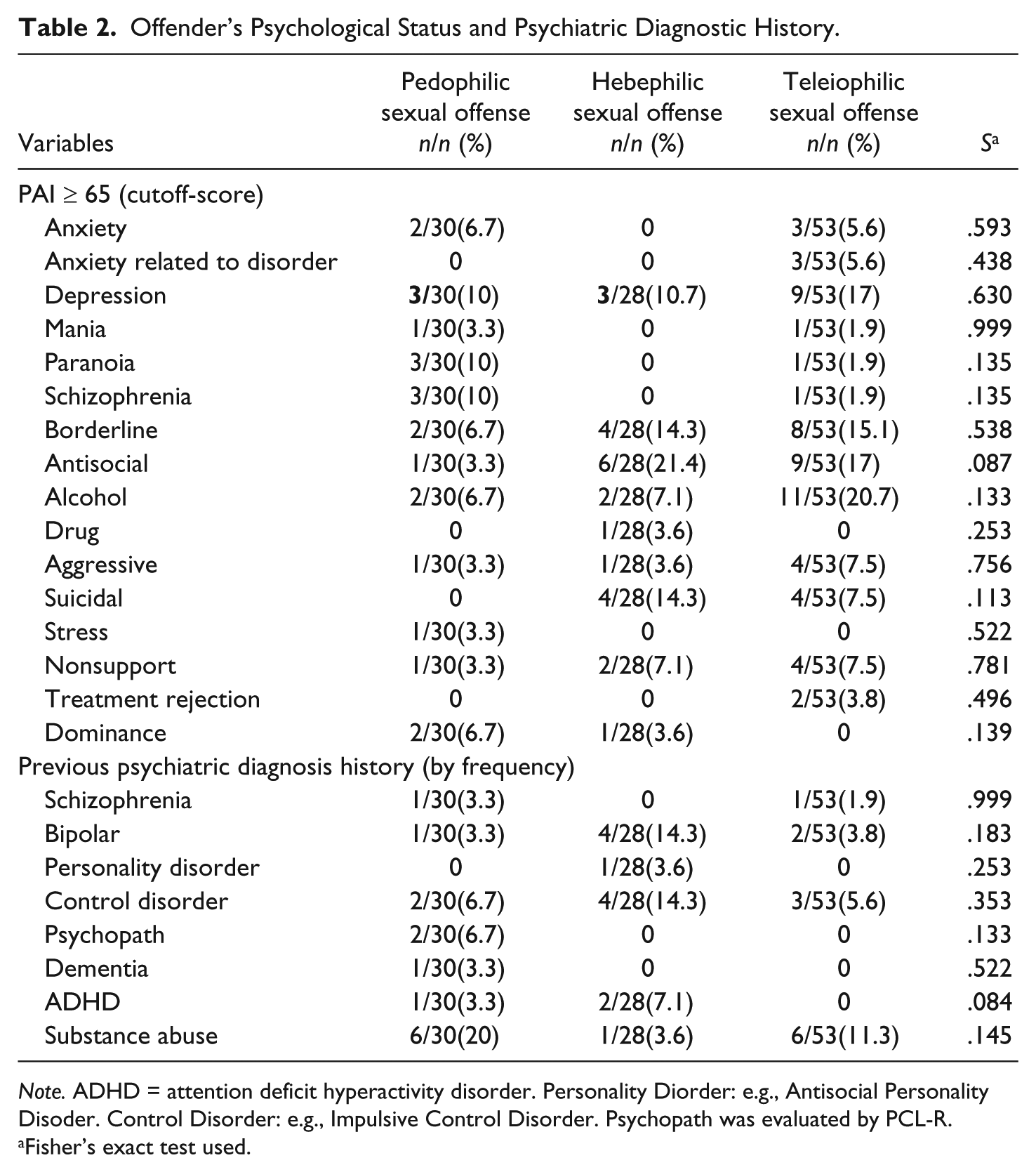
Table 2 presents the results of the PAI and previous psychiatric diagnostics. There were no statistically significant differences among the three offender subtypes. However, compared with pedophilic sex offenders, teleiophiliacs present more problems related to alcohol (20.7%) and depression (17%). On the other hand, hebephiliacs (21.4%) are more often associated with antisocial disorder than both groups (pedophiles: 3.3% vs. teleiophiliacs: 17%), whereas pedophilic sex offenders are more often characterized with paranoid (10%) and schizophrenia (10%) disorders. In terms of previous psychiatric diagnoses, pedophiles (20%) and teleiophiliacs (11.3%) are more often characterized with substance abuse than hebephilic sex offenders (3.6%), whereas this latter subtype is more often characterized with bipolar (14.3%) and impulsive control disorders (14.3%).
Offender’s Psychological Status and Psychiatric Diagnostic History.
Note. ADHD = attention deficit hyperactivity disorder. Personality Diorder: e.g., Antisocial Personality Disoder. Control Disorder: e.g., Impulsive Control Disorder. Psychopath was evaluated by PCL-R.
Fisher’s exact test used.
Victim’s Characteristics and Last Behaviors
Table 3 presents the findings related to the victim characteristics. All of the victims in teleiophilic sex offenses and 67.8% of victims in hebephilic sex offenses were students, whereas almost 15% of victims in teleiophilic sexual offense were employed in the service/clerk industry. Some of victims in teleiophilic sexual offenses were runaway girls (e.g., suspended from school) and temporarily worked as prostitutes. In terms of routine behaviors prior to the crime, victims of pedophilic sex offense are more often playing (20%; for example, hiding game with fathers, friends, teachers, relatives) and more often involved in domestic activities (16.7%; for example, related to family and the home such as reading book time, and hobbyhorse son), while victims of hebephilic sex offense are more often commuting to or from somewhere (e.g., going/coming from school; 39.3%) as well as socializing (35.7%; for example, meeting friends at bar/cafe/club/karaoke). Interestingly, similar proportions of victims of pedophilic (10%) and hebephilic (14%) sex offenses are working as sex trade workers prior to the crime, who were usually runaway girls. On the other hand, a majority of victims in teleiophilic sex offenses are sleeping at home or are at their workplace just prior to the crime. In terms of victim–offender relationship, pedophiles, hebephiliacs, and teleiophiliacs are 13.3%, 0%, and 1.9%, respectively, in intrafamilial relationship.
Victim Characteristics and Routine Behaviors Prior to the Crime.

Likelihood ratio-chi-square test, two-tailed.
F-test.
Fisher’s exact test used.
p < .05. **p < .001. ***p < .000.
Crime Scene and Availability
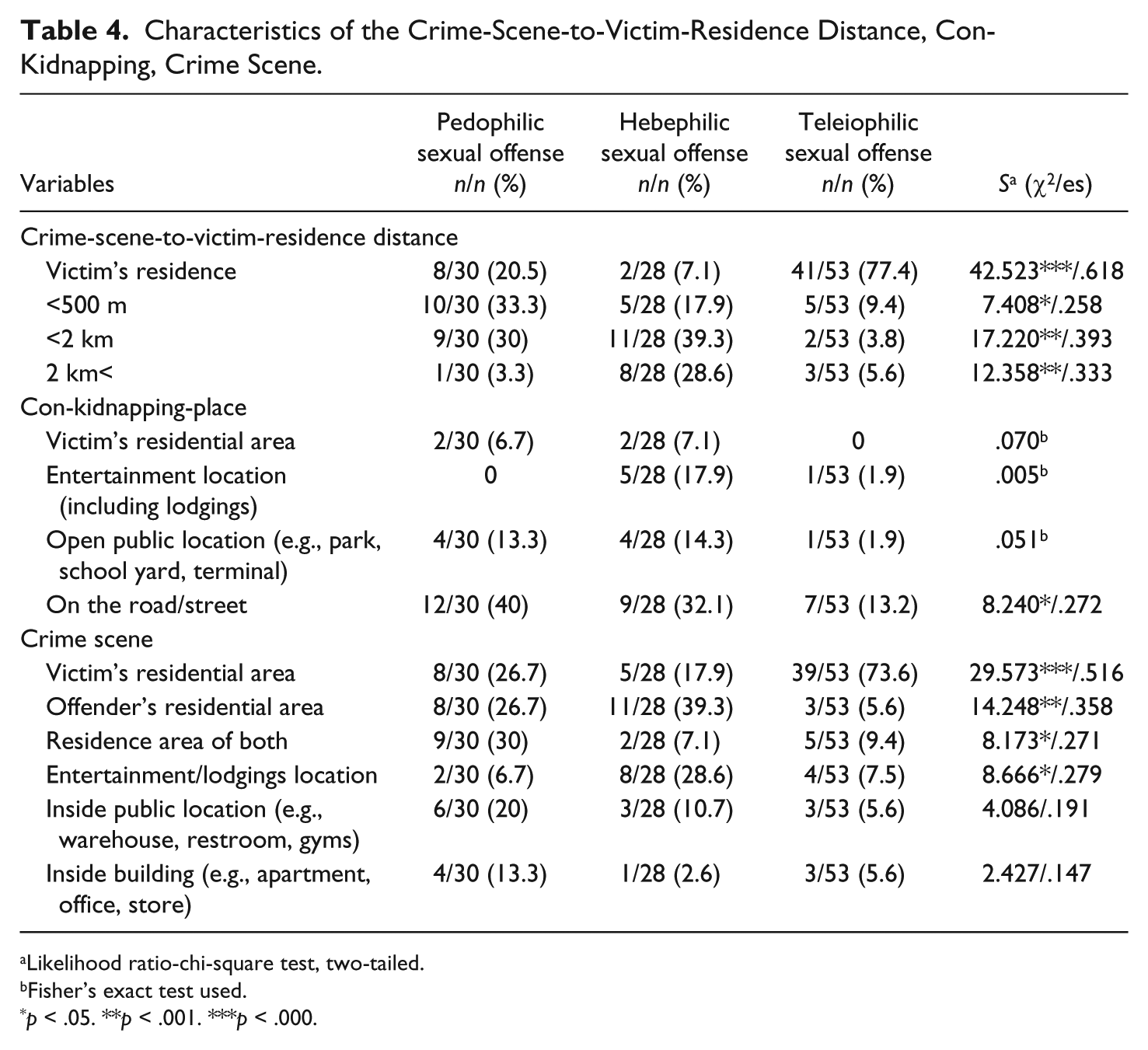
Table 4 presents the findings related to the characteristics of the crime-scene-to-victim-residence-distance, the con-kidnapping (i.e., taking the victim away using a ruse or a con, such as pretending to be physically disabled or showing them the way), and crime scene characteristics. In terms of the crime-scene-to-victim-residence-distance, a majority of teleiophilic sex offenses (86.8%) take place within 500 m, whereas slightly more than 50% of pedophilic sex offenses are located within 500 m. Overall, hebephilic sex offenders travel relatively farther away from the victim’s residence to commit their crime.
Characteristics of the Crime-Scene-to-Victim-Residence Distance, Con-Kidnapping, Crime Scene.
Likelihood ratio-chi-square test, two-tailed.
Fisher’s exact test used.
p < .05. **p < .001. ***p < .000.
In terms of crime scene, pedophilic sex offenses occur more frequently in residential areas related to both offenders and victims (30%), indicating the high prevalence of intrafamilial relationship in these events (e.g., father and daughter, step-father and daughter, mother and son). On the other hand, hebephilic sex offenses take place more often in the abuser’s residence (39.3%) and at some indoor entertainment locations (28.6%; for example, board game rooms, 1 singing rooms, 2 video rooms, 3 massage salons 4 ), whereas teleiophilic sex offenses take place significantly more often in the victim’s residence (73.6%).
Modus Operandi
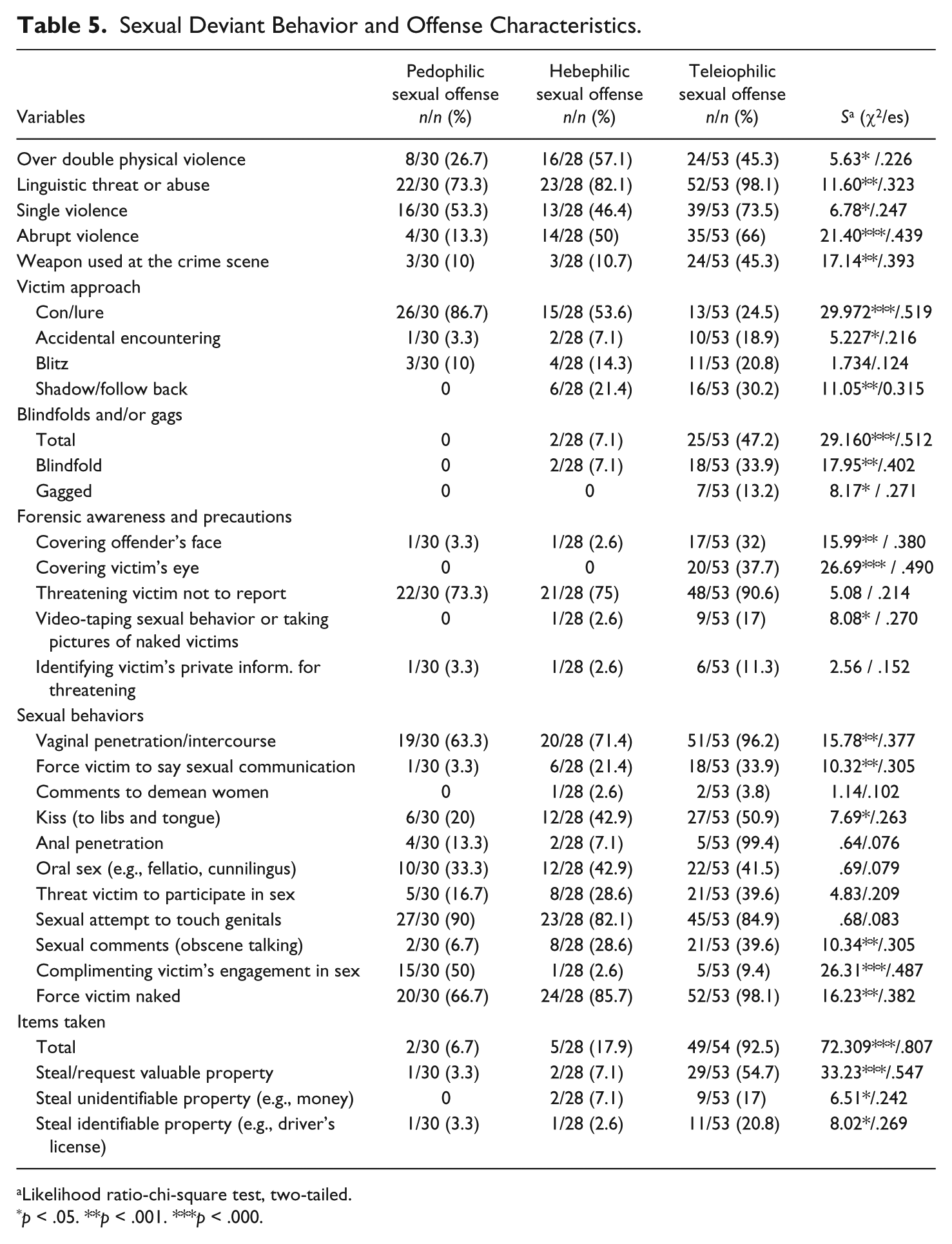
Table 5 presents the findings related to the characteristics of the sexually deviant behaviors. In terms of the type of violence, teleiophilic sex offenders use more often threats (98.1%) and just one-off violence (i.e., one event of violence; 73.5%), whereas hebephiliacs (57.1%) use “over two-time physical violence” more frequently than pedophiles (26.7%). Compared with hebephilic sex offenders (46.4%), pedophiles significantly more often use “one-off physical violence” (53.3%). In terms of how to approach a victim, almost all of the pedophilic sex offenders use a lure-con strategy (i.e., a combination of both lure and con tactics; tricking the victim into doing something, to a particular place or manipulating the victim by lying to her; almost 90%), whereas both hebephiliacs and teleiophiliacs are more likely to shadow the victims, particularly exploring to select targets outdoors and then entering into the victims’ residence (hebephiliacs: 21.4% vs. teleiophiliacs: 30.2%) or use a blitz approach (hebephiliacs: 14.3% vs. teleiophiliacs: 20.8%). In terms of forensic awareness, all sex offender subtypes report typically threatening the victims not to report the crime (pedophiles: 73.3% vs. hebephiliacs: 75% vs. teleiophiliacs: 90.6%). Compared with the other two groups of sex offenders, teleiophiliacs are more likely to use precautions, such as covering their face (32%), covering the victims’ eyes (37.7%), using the victim’s identity not to report to police (17%) to avoid apprehension.
Sexual Deviant Behavior and Offense Characteristics.
Likelihood ratio-chi-square test, two-tailed.
p < .05. **p < .001. ***p < .000.
In terms of sexually deviant acts, teleiophilic sex offenders are significantly more engaged in anal penetration (99.4%), vaginal penetration/intercourse (96.2%), forcing the victim to get naked (98.1%), and threatening the victim to engage in sex (including vaginal penetration with penis and anal penetration with penis; 39.6%), whereas pedophiles are significantly more engaged in praising and encouraging the victim’s sexual engagement (i.e., participation; 50%) and sexual attempts to touch the genitals (e.g., fondling; 90%). Overall, both hebephiliacs and teleiophiliacs appear to be more intrusive compared with pedophiles. Moreover, teleiophiliacs are more likely to use blindfolds or gags with their victims compared with the other two groups, but in terms of weapon usage, this is less likely to be reported by both pedophilic (10%) and teleiophilic (10.7%) sex offenders compared with hebephiliacs (30.2%). Finally, pedophiles rarely engage in taking items from the victim compared with both hebephiliacs and teleiophiliacs (e.g., valuable property: hebephiliacs: 7.1% vs. teleiophiliacs: 54.7%; unidentifiable property, such as cellphone, driver license, video-recorder, underwear: hebephiliacs: 7.1% vs. teleiophiliacs: 17%).
Discussion
Considering the lack of research on hebephilia and the fact that the existing studies are mostly outdated, the main goal of the present study was to offer a new look at this specific type of sex offender. For this purpose, differences on offender and victim characteristics as well as crime characteristics among sex offender subtypes, namely, pedophiles, hebephiliacs, and teleiophiliacs were investigated.
Differences Between Hebephiliacs and Other Sex Offenders
First, in accordance with Abel and his colleagues in the late 1980s and early 1990s (Abel, Becker, Cunningham-Rathner, Mittelman, & Roleau, 1988; Abel et al., 1987; Abel & Osborn, 1992; Abel & Rouleau, 1990), our study showed that sex offenders present a range of sexually deviant behaviors. In particular, it is noteworthy that hebephiliacs are more likely to be characterized with sadism compared with the other two groups. This is surprising considering some of the previous studies (e.g., Groth, 1978; Ward, Louden, Hudson, & Marshall, 1995). These studies suggest that although hebephiliacs are characterized by deviant sexual fantasies, they are typically noncoercive in their strategies and do not present with a structured plan, which does not match with sadism (see Proulx, Perreault, Ouimet, & Guay, 1999). However, it is important to note that the presence of sadism in hebephiliacs is relatively low as only a small number of offenders (17.6%) presented this paraphilia. Such finding needs to be interpreted carefully, and future studies will need to replicate this finding.
Despite the fact that all the subtypes presented a criminal history beyond their sexual offenses, our results revealed that compared with other sex offenders, hebephiliacs presented no significant differences as to their sexual offense history as well as their number of total convictions. This is somewhat surprising considering that according to Baxter et al. (1984) and Baxter, Barbaree, and Marshall (1986), pedophiles have a lower rate of convictions for nonsexual offences. Also men who sexually assault child victims under the age of 14 are less likely to have a nonsexual offending history compared with other sex offenders (Hanson, Scott, & Steffy, 1995). However, our findings showed that pedophiles had more violent offenses than in both hebephiliacs and teleiophiliacs, suggesting that their criminal career is a function of their antisocial tendencies related to a dysfunctional background (e.g., raised in unstable homes, parental conflicts, juvenile delinquency; see Brouillette-Alarie & Proulx, 2014; Gebhard et al., 1965).
When looking at patterns of offending and the choice of victim type (i.e., child, adolescent, or adult), some empirical evidence are consistent with a routine activities approach (Felson, 2008). For example, evidence that younger children tend to be at greatest risk of familial abuse and older children of nonfamilial abuse (Fischer & McDonald, 1998; Smallbone, Marshall, & Wortley, 2008; Snyder, 2000) is consistent with expected changes in children’s routine activities from within the home to outside the home as they grow older. This has also been observed in our findings. Thus, there seems to be an increase of routine activities outside the family for hebephilic sex offenses (e.g., during school and after-school recreational activities or entertainment activities), while children (nonschool age) present routines more closely connected to the activities of the family. For pedophilic sex offense’s victims, the offense may coincide during interactions with their caregivers in the home (e.g., homework, watching TV, bed time) as well as interactions with other individuals outside the home (e.g., sleep over at a friend’s house, at a party, walking home). Thus, the time and context of these incidents may be shaped, to some extent, by the children’s age-related routine activities. In the present study, results showed that the victims of pedophilic sex offense were more often playing indoors usually with acquaintances (e.g., hiding game with fathers, caregivers, relatives) and involved in domestic activities (e.g., related to family members and the home such as reading books, and hobbyhorse son), while the victims of hebephilic sex offenses were more likely to travel outdoors to or from somewhere, for example, going/coming from school as well as socializing (e.g., meeting friends at bar/cafe/club/karaoke), which may lead to greater chances of contact with strangers.
Probably one of the most important situational factors or choice-structuring properties in sexual crimes is the location of the crime (Leclerc, Proulx, & Beauregard, 2009). Pedophilic sex offenses have been found to be committed in private as well as in public locations, but mostly in private places such as the offender’s home (Elliott, Browne, & Kilcoyne, 1995; Lang & Frenzel, 1988; Wortley & Smallbone, 2006). Moreover, it was found that offenders frequently abused children in the victim’s home (Elliott et al., 1995; Lang & Frenzel, 1988), in an isolated place in the victim’s home (e.g., the basement), and at a friend’s or relative’s home (Wortley & Smallbone, 2006). This is consistent with our results in which pedophilic sex offenders have specifically chosen an isolated area (such as both the victim and offender’s home) to prevent being seen or being interrupted by witnesses and to have some time alone with the victims. On the other hand, hebephilic sex offenses occurred more in the offender’s home and entertainment locations such as board game rooms, singing room (e.g., karaoke), and massage salons. Unlike “individualism” characterizing most Western societies, such behavior could be due to more “collectivism” characterizing both male and female younger generations especially between 11 and 14 years old who prefer to cluster and entertain in small indoor locations to bond and/or network. Sometimes male [or female] adult and young female [or male] youths (e.g., runaway girls or young prostitutes) joined together for sexual entertainments; in such a circumstance, adults usually pay for the cost of sexual intercourse (e.g., mature–immature male homosexual [MIMH]), and thus, the hebephilic sex offense could quite often occur in indoor entertaining locations. It is interestingly noteworthy that this could also have originated from ancient Korean history. By the sixth century through the fourteenth century, various kings were known to have had MIMH relations at the courts, such as entertaining rooms especially for singing or dancing. Monastic MIMH was widespread. Popularity of “beautiful boys” in seventeenth century entertainments indicates MIMH was common among the gentry. It is especially common among provincial gentlemen, some of whom kept boy-wives, a practice openly acknowledged in their villages (Leupp, 1997; Rind & Yuill, 2012).
The Hebephilic Sex Offender: Pedophile, Teleiophiliacs, or a Mix of Both?
The hebephile sex offender has caused headaches to many professionals working in the field of sexual violence. Sometimes this offender appears as a rapist—what we termed here the teleiophiliac—but some other times, the offender share more similarities with the pedophile offender. It seems that sexual aggressors against adolescents constitute a distinct group, somewhere between rapists and child molesters. Traditionally in research, cases of hebephiliacs were split between the two other subtypes (i.e., pedophiles and teleiophiliacs), making it almost impossible to specifically examine these offenders. The current study provides a partial answer to this issue. Thus, when looking at all the comparisons conducted, it seems that the hebephiliac is not more similar to the pedophile nor the teleiophiliac. He is in fact a mix of both. Aside from certain characteristics that make hebephiliacs different from the other two subtypes of sex offenders (e.g., sadism, travelling longer than 2 km to commit the crime, history of bipolar disorder), they mainly share characteristics of both groups. In other words, in certain circumstances, hebephiliacs will act as pedophiles whereas in other situations, they will act more like teleiophiliacs. Despite evidence showing that some sex offenders are likely to “switch” from one victim to another (e.g., Abel et al., 1987) and that target preferences could evolve during the criminal career, the field has been hesitant to adopt such a view. This hesitation can be explained by the assumption that sex offenders are driven by specific urges and paraphilia dictating how sexual criminal behavior will be conducted and who will be targeted (e.g., pedophilia, hebephilia, etc.). Also, some researchers have simply avoided the issue of “victim crossover” (see Beauregard, Leclerc, & Lussier, 2012) by focusing on the most recent crime event and victim type (Lussier, 2005). But several studies are showing now that some sex offenders exhibit “sexual polymorphism” (i.e., “crime-switching patterns along several dimensions such as victim’s age, gender, relationship to the offender, nature of acts committed by the offender”; Lussier, Leclerc, Healey, & Proulx, 2011, p. 97) and can select different victim type depending on (a) the sex crime opportunity that presents itself, (b) a desire to diversify sexual and criminal experiences, or simply (c) the element of risk exposure inherent in different victim types (adolescents vs. children).
In their study on crime switching patterns of 216 sex offenders, Lussier, Leclerc, Healey, and Proulx (2011) found that the level of polymorphism varies from one crime to another, and it is not random. Offenders who abuse children tend to limit themselves to children suggesting that these offenders do not actually switch for another victim or rarely do so. If they do switch, they will abuse an adolescent victim not an adult. By contrast, offenders who abuse an adolescent or an adult victim initially are likely to switch and abuse another victim type. Offenders who abuse adolescent victims will switch for a child, whereas offenders who assault adults will switch for an adolescent victim. In line with the concept of sex surrogate, adolescent victims may represent the second option in the absence of the preferred victim type, that is, children or adults (Guay, Proulx, Cusson, & Quimet, 2001). We believe that this could explain, at least in part, the specific type of offender that is the hebephiliac.
Conclusion
As can be seen from the current study, when studying a relatively small proportion of crimes (2%-3.1% of all Korean crime; KNPA, 2012) such as sexual offenses, police databases can provide a level of data not currently available elsewhere. Moreover, even considering the small sample size of our study, the current study uncovers very important differences that could prove useful for the management of these cases by the actors of the criminal justice system.
While these findings are informative, they should be regarded within the limitation of the study. First, the sample size was relatively small (n = 111) and may have compromised statistical power, thereby increasing possibility of Type II error (selection bias). For example, our data indicated an underrepresentation of victims between 4 and 8 years of age, which could indicate a decreased risk of sexual abuse for that age period. This is partially due to all the cases not reported to the KNPA. Therefore, our result should be considered exploratory. Moreover, as the offender’s information was obtained through one or two semistructured interview sessions, it needs to be used with caution. It is possible that some of this information could be incorrect because of a desire to hide the truth or minimize it, or simply due to memory recall and social desirability bias during the interview.
Nonetheless, the current study offers a very detailed portrait of the sexual offender and his crime with probably the most extensive database existing in Korea. Future studies should use the available data to replicate some of the findings on the hebephile sex offender as well as examining specific aspects of the sex offender behavior. Given that there are still very few empirical investigations of sexual offense subtypes, we encourage further studies employing large sample sizes, including community-based samples, which comprehensively examine the onset and progression of sexual offending incidents by sexual subtypes.
Footnotes
Declaration of Conflicting Interests
The author(s) declared no potential conflicts of interest with respect to the research, authorship, and/or publication of this article.
Funding
The author(s) received no financial support for the research, authorship, and/or publication of this article.