



Abstract
The comparison of the South Korean male and female homicide offenders’ characteristics and crime scene behaviours is presented in this study. A total of 537 cases of homicide offenders prosecuted in Korea between 2006 and 2010 were analyzed in terms of offenders’ characteristics, victim–offender interaction, places of crime, and crime scene actions. Significant differences between male and female offenders were revealed in prior criminal history, offenders’ personal characteristics, choice of victim, crime scene behaviours during and after the homicide, and choice of weapon. The parallel with the gender differences in homicides found in Western countries is discussed as well as the possible explanations for the gender-related characteristics found in this study.
Introduction
Years of research on offenders’ behaviour and reasoning in homicide have consistently shown dissimilarities between the homicide patterns of men and women. Significant differences were found in offense location (e.g., studies on U.S. samples: Barnard, Vera, Vera, & Newman, 1982; Goetting, 1987), and offender–victim relationship (e.g., study on Australian sample: Bacon & Lansdowne, 1982; U.S. sample: Hoffman-Bustamante, 1973; Hungarian sample: Rasko, 1976). Also some differences were found in situational dynamics surrounding the offense (e.g., U.S. sample: Mills, 1985; German sample: Masle, Goreta, & Juki, 2000; Stark, 2007), and style or method of inflicting injury (e.g., Canadian samples: Chan, Frei, & Myers, 2013; Chan, Heide, & Beauregard, 2010). As shown by Bureau of Justice Statistics (2016) and the Federal Bureau of Investigation (2013), most street homicides are typically committed by male offenders. This finding accords with the results of other studies: Homicides committed by men typically happen in public places (e.g., bars, cafes), while homicides committed by women usually occur at home (Korean samples: Go, 2010, 2011; Go & Lee, 2011; U.S. sample: Chan & Frei, 2013).
Most of the studies on comparison between action patterns of male and female murderers are dedicated strictly to the intimate partner homicide (Hoffman-Bustamante, 1973; Mills, 1985; Rasko, 1976; studies on Australian samples: Bacon & Lansdowne, 1982; Polk, 1994; Wallace, 1986; studies on samples from different countries: Daly & Wilson, 1988; Canadian sample: Johnson & Hotton, 2003; samples from various countries: Stark, 2007). These homicides are frequently an escalation of prolonged intimate partner physical violence (Swart et al., 2002), from which women suffer more frequently than men (Krahe et al., 2005). These findings explain the gender differences in choice of victim and homicide style. In homicides committed by either male or female offender, the victim most frequently will be intimate partner (Archer, 2000; Bookwala, Frieze, Smith, & Ryan, 1992; Dutton, Nicholls, & Spidel, 2005; Hakkanen-Nyholm et al., 2009; Makepeace, 1986; Silverman & Kennedy, 1987). At the same time, men killed their partners/spouses more frequently than women did (46% vs. 9%), and typically in the midst of domestic dispute (study on U.S. sample: Cooper & Smith, 2011; studies on Canadian sample: Silverman & Kennedy, 1987, 1988). Women typically killed their partners or ex-partners in response to long previous abuse (studies on U.S. samples: Chan et al., 2013; Chan et al., 2010; Ward, Jackson, & Ward, 1969; Wimberly, 2007; Wolfgang, 1958) or in the result of a violent conflict (Chimbos, 1978; Daniel & Harris, 1982; Garcia-Moreno & Stöckl, 2009; McQuigg, 2011; Silver & Kates, 1979; Totman, 1978). Men were more likely to throw something at their victim, slap, kick, bite, punch, or hit with an object (Chan et al., 2013). Also, the findings were partially confirmed by results of the study on frequencies of violence and reported injuries (Whitaker, Haileyesus, Swahn, & Saltzman, 2007).
At the same time, the studies highlighted a tendency for female homicide to occur when the male is incapacitated (i.e., poisoned, asleep or drunk, and taking rest) (U.S. trends: Chan et al., 2013; Chan et al., 2010; Ward et al., 1969; Wimberly, 2007; Wolfgang, 1958). Overall, although intimate partner homicides committed by either men or women are the result of domestic violence, the positions of male and female perpetrators are absolutely different. While “male homicide” is the crime of rage and power, and the offender is the aggressor, it is absolutely not so in “female homicides.” They are committed out of despair and as a last resort of self-defense—victims of intimate partner violence have no other choice but to kill the abuser.
It is worth remarking that even after many years of feminism, the tendencies in homicide style show the dependent position of women. Either they kill their abuser, or—if they kill in league with others—they play secondary roles, while typically giving the first one to their male romantic and/or intimate partner (as shown in the study on U.S. sample: Jurik & Winn, 1990). All that taken together with facts that women more frequently than men murder their children, while men more frequently than women murder strangers bring on the theme of patriarchal gender roles and hierarchy. Female homicides are more “family-focused” and typically the result of the domestic violence: Either women kill their abusive partner, or they are helping their partner to kill. The filicide, especially in Asian countries, is frequently described by the perpetrator as a result of an attempt to discipline the child (e.g., Kim, 2012; Kwak, 2005—studies done on the Korean samples). Women suffering from mental illnesses (e.g., postnatal depression, delusion disorder, schizophrenia) and acute traumatic stress had a tendency to kill their own children—regardless of the number of children and their gender (Jung, Lee, Lim, & Kang, 2009; Korean National Police Agency, 2016).
Studies show also gender differentiation in the psychological backgrounds and reasoning in homicides. For example, in a recent study on Swedish offenders with mental disorders, it was found that a significantly higher proportion of female offenders suffered from personality disorder, while male offenders more often had a diagnosis of alcohol and/or drug dependence or sexual disorders (e.g., symptoms related to the paraphilia and sexual dysfunction; see Diagnostic and Statistical Manual of Mental Disorders [5th ed.; DSM-5; American Psychiatric Association, 2013]; Yourstone, Lindholm, & Kristiansson, 2008). There were some inconsistencies in the use of violence against intimate partners between male and female perpetrators across 35 countries (Jamaica, Germany, United Kingdom, Mexico, etc.; Krahe, Bieneck, & Moller, 2005). However, the same research also showed that not only choice of victim but also crime action reasoning and postcrime behaviours could be gender-correlated. Specifically, the same crime action of covering the victim’s body after the murder was taken for different reasons by male and female offenders. Men covered victim’s body to prevent its discovery (thus showing some forensic awareness), while women took the same action to facilitate psychological detachment of themselves from their victims (typically one of the family members). Furthermore, it was found that regret and search for help are more typical posthomicide behaviours for Finnish female offenders (Hakkanen-Nyholm et al., 2009; Weizmann-Henelius, Gronros, Putkonen, Eronen, Lindberg, & Hakkanen-Nyholm, 2012).
In addition, emotions and experiences prior to homicide are described differently by male and female perpetrators. For example, in the studies done on U.S. population, men reported losing control, suspecting infidelity, involuntary separation, jealousy, and rage (Daly & Wilson, 1988; Johnson & Hotton, 2003; Polk, 1994; Wallace, 1986), while women described their feelings as fear and desperation resulting from exposure to domestic violence and social isolation (Mills, 1985; Stark, 2007). Masle et al. (2000) found that women in Croatia more often than men are emotionally related to their victims, and more frequently have experienced some form of criminal victimization before committing the homicide. Last finding also accords with the results of nationwide register-based study of Finnish homicide cases for the years between 1995 and 2004 (Weizmann-Henelius, et al., 2012).
For decades, gender differences in offenders’ behaviour and motivation in homicide have been studied in various Western contexts, mainly on the samples from United States, United Kingdom, Finland, and so on (e.g., Ward et al., 1969; Wilbanks, 1983a, 1983b; Wolfgang, 1958; Browne & Williams, 1989; Durose et al., 2005; Haakkaanen-Nyholm et al., 2009; Langton & Truman, 2014). However, the homicides in non-Western societies (e.g., Ghana, Korea, Japan) have been rarely explored from this point (Adinkrah, 2008; Sea & Beauregard, 2017). Previous studies suggested that homicide style reflects socially approved gender roles in Western samples (e.g., Jurik & Winn, 1990; Steffensmeier & Allan, 1996; Wolfgang, 1958). Altogether, this provides the solid reasoning for the study on the gender differences in the homicide patterns in traditionally patriarchal East Asian societies and especially in Korea. In 2013, South Korea had a murder rate of 2.9 per 100,000 population (Korean National Police Agency, 2015) and that puts it in the sixth place among OECD countries (members of Organisation for Economic Co-operation and Development; OECD, 2015). Approximately, 16.6% of homicides per annum are committed by women (vs. 83.4% by men; Supreme Prosecutor’s Office, 2016). That is almost 3 to 4 times more than in other countries such as Finland (3%), United States (4.5%), Canada (6.5%), and United Kingdom (5%) (FBI, 2014; Statistics in Finland; SF, 2009).
Modern Korean society is still strongly influenced by deep-rooted patriarchal and highly hierarchical Confucian traditions. South Korea is even described as gendered hybrid product of Western capitalism and Confucian parental governance (Han & Ling, 1998). Although some researchers note that gender-role differentiation is vanishing in modern society (Kim & Park, 2000), the process may only be described as ongoing. As recent studies show, traditional power hierarchies and gender-role conflicts are still prevalent in Korean couples (Kim, Cho, Cheon-Klessig, Gerace, & Camilleri, 2002; Kim, Han, Kim, & Duong, 2002). As Sanchez-Hucles and Dutton (1999) point out, cultural groups with a collectivist orientation concerned primarily with preserving the “face” of the family as a social unit may show seemingly lower rates of partner violence because of the unwillingness to disclose instances of partner violence to third parties. Studies show that collectivistic thinking (Kim & Park, 2000), gender attribution of family roles, and status (Hurh & Kim, 1990; Min, 1990) are still holding a strong position in Korean society.
Altogether, patriarchal beliefs, strong gender-role stereotypes, and attitudes, in addition to other culture-specific factors, for example, Hwa-Byung (Korean culture-bound anger syndrome attributed locally to suppression of anger; Colman, 2016), can create culture-specific homicide patterns. Along with this, Kim and Emery (2003) found that the rate of physical violence was considered higher in relationships characterized by male dominance. Thus, unequal power structure favoring men, preserved in the traditional partnership ideology in Korean society, provides the substratum for the domestic violence and intimate partner homicide. The present study examines sex differences in Korean homicide, and explores gender variations in the context of the crimes, in detailed crime scene behaviours, and in offenders’ characteristics as well as cultural variations across Western and Eastern countries. One of its focal points is to provide fundamental understanding of the different situations out of which female homicide tends to emerge.
Method
Data Source
For the purpose of this study, homicide cases’ details were obtained through the Crime Behaviour Analysis Unit (CBAU) and Crime Scene Investigation (CSI) in the Korean National Police Agency. All data were drawn from the Scientific Crime Analysis System (SCAS; for details, see Sea & Beauregard, 2016, 2017a, 2017b). SCAS contains criminal index files, investigative files (e.g., witnesses’ reports, medical, criminal, school, and military records), CSI results (e.g., crime scene pictures), results of psychological evaluations of the offender (e.g., Personality Assessment Inventory [PAI], Psychopathy Checklist–Revision [PCL-R]), and so on. More than 70% of all South Korean homicide cases are storaged in this database. All data are entered into the system by forensic experts (i.e., criminal analyzers) in accordance with specialized and uniformed input manual (SCAS, 2005). The data of each case can then be updated in light of the new evidence or case progress. The updates are completed by the specialists.
Sampling Procedure
Out of 1,200 homicide offences recorded between 2006 and 2010, 537 cases were chosen for the current study. The inclusion criteria were as follows: (a) There should be robust evidence of offender’s guilt (both critical DNA evidence and the offender’s confession), and (b) the information on crime scene and victim’s characteristics entered into SCAS should be well documented and rich in details.
Out of 537 cases chosen for this study, 48 were homicide committed by females (9%) and 489 (91%) were homicide committed by females. This proportion is close enough to the one between male and female homicides’ statistics per annum in South Korea (16.6% of homicides per annum are committed by women and 83.4% are committed by men; Supreme Prosecutors’ Office, 2016). Thus, it can be concluded that in terms of proportion between male and female homicides, the sample sufficiently represents South Korean general situation with homicide cases.
Item Questionnaire in SCAS
SCAS system includes raw data obtained from Forensic Service and Korean National Police Agency as well as crime descriptions done in a form of questionnaire. The criminal analyzers fill the questionnaire’s items based on the raw data entered into SCAS questionnaire. This questionnaire consists of 179 questions in six categories: (a) basic case information (26 items, e.g., time-table, location, crime scene’s characteristics), (b) victim’s characteristics (29 items), (c) offender’s characteristics (81 items), (d) administration of crime (37 items, e.g., actions prior crime, actions in the course of crime, actions post crime), (e) crime scene evidence left behind (4 items), and (f) weapon’s characteristics (2 items). Further details of the SCAS questionnaire’s items are given in the appendix.
Altogether, SCAS questionnaire’s items provide a good basis for uniformed analysis of the offenders’ characteristics, victim–offender relationship, crime scene behaviours, and so on. The comparison between male and female homicides was done based on SCAS subcategories.
Crime Scene Action
Table 1 shows the crime scene behavioural variables and the definitions. The selected variables (41 items) were specifically measures of the manner of disposals (5), clothing (3), sexual behaviour (4), wound location (11), method used (5), stolen property (4), controlling behaviour (3), and weapon (6) (Salfati, 2000; Salfati & Dupont, 2006; Salfati & Haratsis, 2001; Salfati & Park, 2007; Santtila, Canter, Elfgren, & Hakkanen, 2001; Sea & Beauregard, 2017a). For the specific selection of crime scene actions, a content analysis was conducted to extract specific information related to each homicide case. The information about each homicide was obtained through a range of primary sources (e.g., statements of offenders, pictures of crime scenes, documentary evidence, and crime scene investigative reports). Any contradictory, conflicting, or biased documented information from any given source was also discarded. The crime scene behavioural variables were coded into dichotomous categories (0 = absence, 1 = presence).
Crime Scene Actions and Their Definitions.
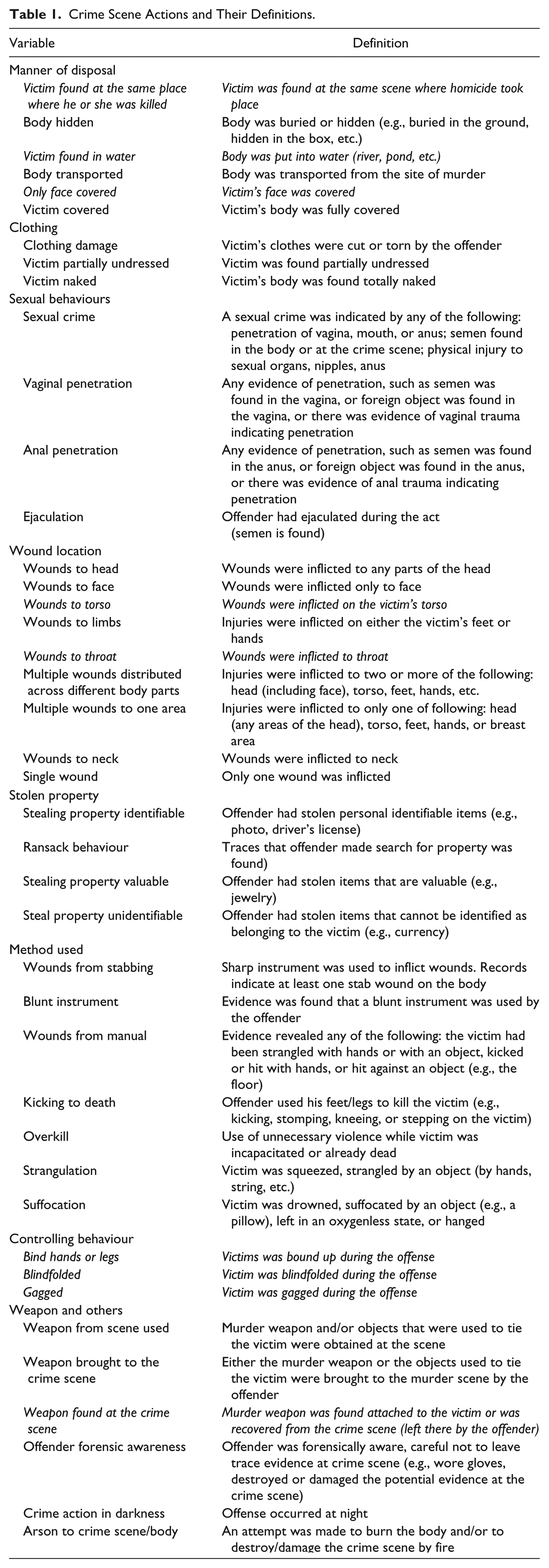
Two independent raters applied the coding to all 537 cases in the sample. Established Cohen’s kappa coefficient for the data set was between good and perfect agreement (0.75 or higher). This level of agreement was achieved for more than 70% of the interview items. When disagreement was observed on a specific variable, the raters extensively reviewed and discussed the case until the disagreement was resolved. Chi-square test and the series of multivariate regression models were used to examine differences between male and female offenders across the crime scene behaviors.
Results
Offenders’ Characteristics
Based on Table 2, offender age did not differ significantly between the groups (for females, M = 37.66, SD = 11.54; for males, M = 38.19, SD = 11.61). Furthermore, there was no significant difference between age ranges and educational background of the participants. A closer look at occupation status reveals a high percentage of males as both “out of work” (38.2%) and “blue collar” (29.4%). Percentage of “out of work” among female participants was insignificantly lower (30.4%). Many of the females were “sales/serv./clericals” (19.6%) or “homemakers” (17.4%), χ2(9) = 97.3, p < .000.
Offender’s Characteristics and Backgrounds.
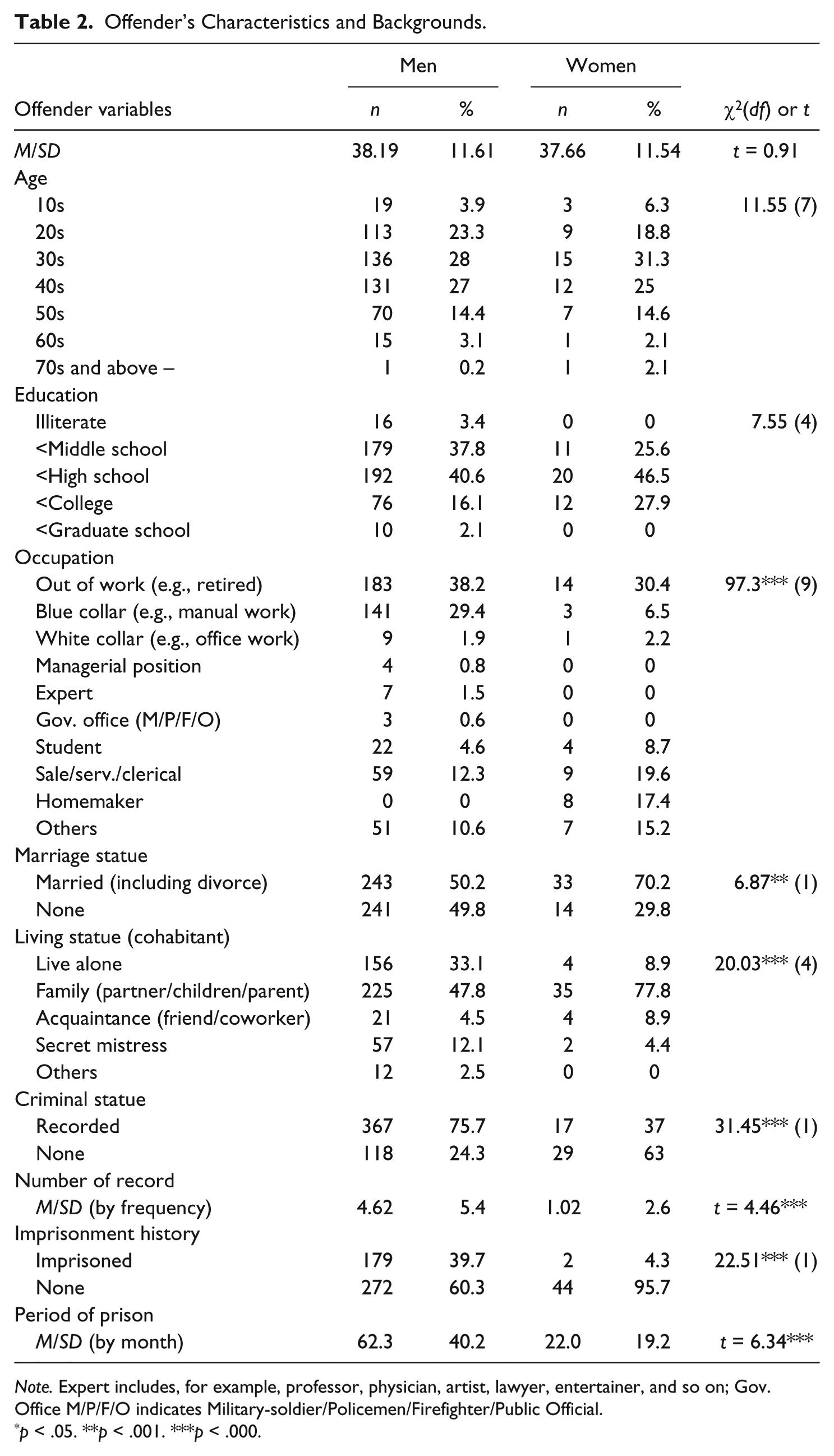
Note. Expert includes, for example, professor, physician, artist, lawyer, entertainer, and so on; Gov. Office M/P/F/O indicates Military-soldier/Policemen/Firefighter/Public Official.
p < .05. **p < .001. ***p < .000.
Regarding marital status, there was a significant difference, χ2(1) = 6.87,p < .005, between groups, indicating that more females (70.2%) than males (50%) were married. At the time of the homicide, 67% of males and nearly all females were living together with family such as partners, children, and parents. With respect to criminal status, the difference across gender groups was significant, with over two thirds (75.7%) of males but only one third (37%) of females having a criminal history, χ2(1) = 31.45, p < .005. The mean term of imprisonment was relatively different for men and women (62.3 months [SD = 40.2] for men; 22 months [SD = 19.2] for women).
As presented in Table 3, some of the primary motives recorded for the homicides were significantly different between the groups, χ2(7) = 20.9, p < .005. Specifically, significant difference was found between groups in the crime motives “trivial quarrel” (minor quarrels escalated to accidental crime; 28.7% males; 17.7% females) and “killing descendant” (0.4% males; 6.3% females). The motive “arguing for jealousy” was high among both males (13.3%) and females (17.7%). In terms of planning the crime in advance, there was no difference between the two groups (39.1% males and 31.9% females).
Comparison of Motive and Criminal Type in Male and Female Offenders.
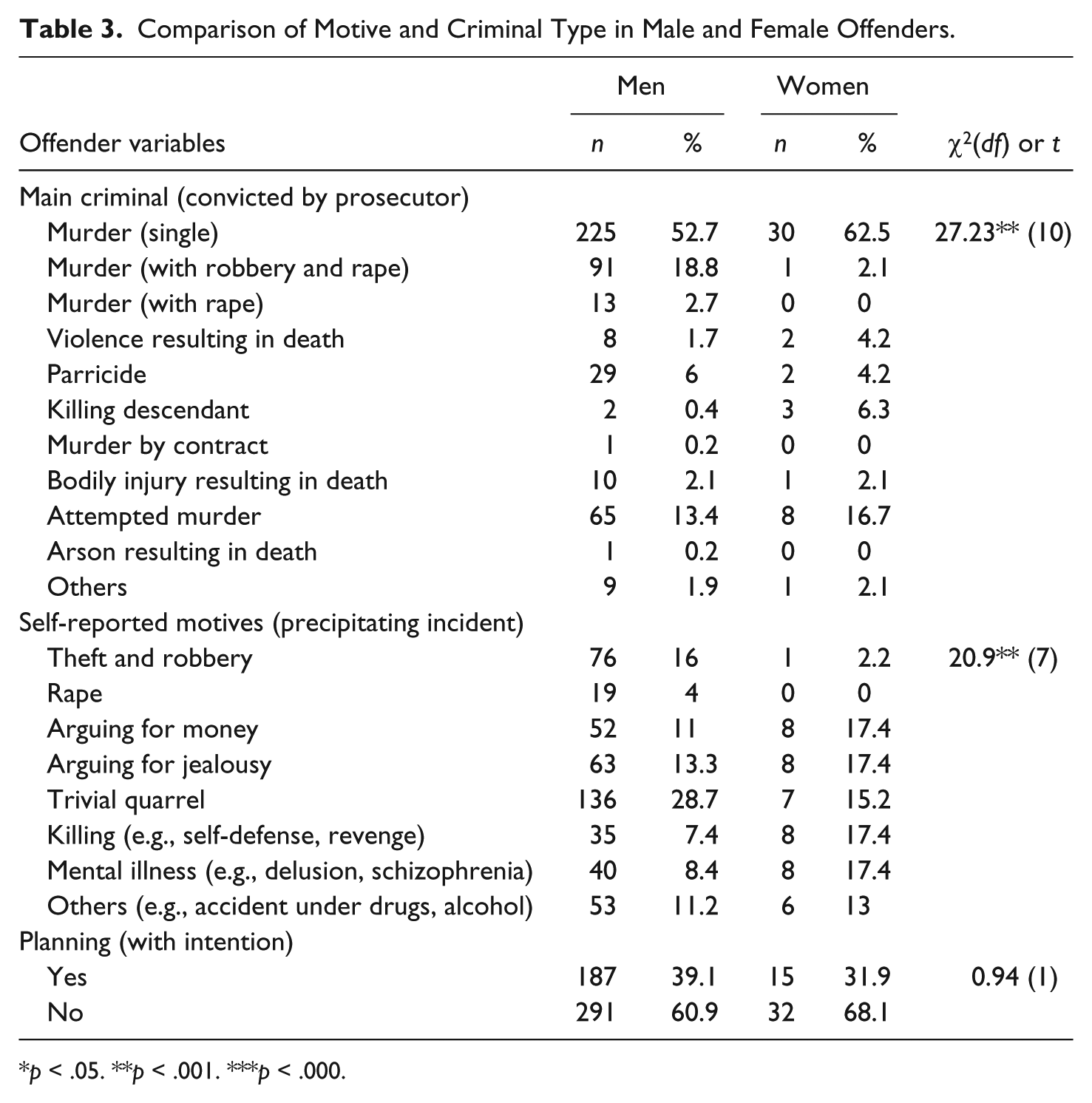
p < .05. **p < .001. ***p < .000.
Victim–Offender Interaction
As Table 4 shows, the victim’s gender was significantly different between the groups, χ2(1) = 7.04, p < .05. Specifically, male offenders killed more women (59.4%) than men (40.6%), whereas female offenders were likely to kill men (60.4%) than women (39.4%). However, the victim age did not differ significantly between the two groups (for victims of female perpetrators, M = 37.7, SD = 21.4; for victims of male offenders, M = 44.1, SD = 15.3). No significant differences emerged in relation to victim’s occupation, with victims typically being “out of work” (30% of male offenders’ victims; 44.7% of female offenders’ victims) or “Sales/serv./clerical” (31.4% of male offenders’ victims; 13.2% of female offenders’ victims) or “blue collar” (12.8% of male offenders’ victims; 13.2% of female offenders’ victims).
Comparison Victim’s Backgrounds in Male and Female Offenders.

Note. Expert includes, for example, professor, physician, artist, lawyer, entertainer, and so on; Gov. Office M/P/F/O indicates Military-soldier/Policemen/Firefighter/Public Official.
p < .05. **p < .001. ***p < .000.
Table 5 shows the significant differences that emerged between the two groups in the victim–offender relationship, χ2(4) = 17.72, p < .001. Women offenders more frequently killed family members (39%) such as intimate partners, children, and parents, while males were more likely to kill current or previous acquaintances (46.8%), for example, friends and colleagues.
Victim–Offender Relationship With Victim’ Last Behaviours.
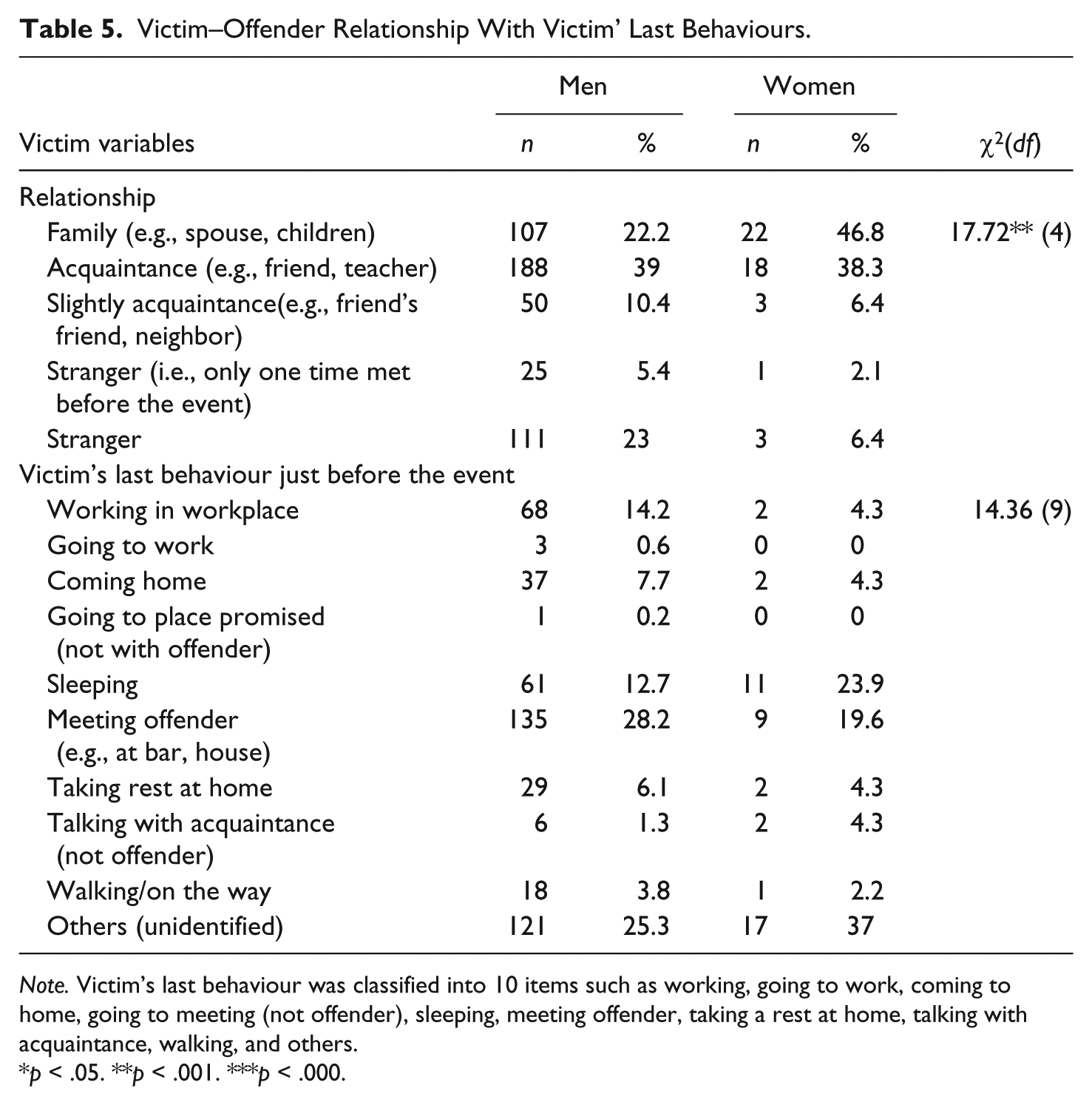
Note. Victim’s last behaviour was classified into 10 items such as working, going to work, coming to home, going to meeting (not offender), sleeping, meeting offender, taking a rest at home, talking with acquaintance, walking, and others.
p < .05. **p < .001. ***p < .000.
The most common last actions of the victims just prior to crime for male offenders were “meeting offender” (28.2%) or working (14.2%), whereas victims of female offenders were sleeping inside (23.9%) at night or meeting offenders outside of house (19.6%) (for the details, see SCAS Manual, 2005, for last behavior’s item in the category of victim and offender’s characteristics). These differences did not reach significance across the male and female offender groups.
Places of Homicide
Table 6 shows the criminal sites involved in the homicides: the encounter site, the murder site, body left/disposal site, and whether or not the place where the victim was found was the same as the murder site. Of note, both the sites where the victim was approached by the offender, χ2c(4) = 10.08, p < .05, and the body was found, χ20(4) = 14.3, p < .001, were significantly different between the two groups. For male offenders, both the encounter between victim and offender and the actual murder most frequently happened in the place that was familiar to the victim (e.g., victim’s workplace, victim’s residency, leisure and entertaining facility chosen by victim; 40.1%). Murder also most frequently occurred in one of these familiar to victim places (38.8%). Finally, the victim’s body was discovered at the home (30.8%), workplace (13.1%), and on the road (10.9%). As for crimes committed by female offenders, both the encounter between victim and offender and the actual murder most frequently happened in some place associated with both victim and offender (e.g., home in case when victim and offender are members of the same family, or workplace, when they are coworkers; 56.3% and 50%, respectively). Most frequently, the bodies were then discovered at the victim’s house (39.1%) or on the road (8.5%). In general, bodies were usually left at the murder site itself (70.8% of all cases).
The First Place Encountered With Victim, Victim Murdered, and Body Found.

p < .05. **p < .001. ***p < .000.
Crime Scene Actions
As seen in Table 7, Male offenders were much more likely to possess a weapon at the time of the homicide (45.3%) than the female offenders (17%), χ2(1) = 14, p < .000. Almost all of the victims were killed by weapons that had been brought to the scene. A sharp knife was the most common weapon among both men (39.5%) and women (41.6%), followed by a hammer (25.4%). The other killing methods such as poison (e.g., potassium cyanide) were relatively rare (10.8%). Women seldom carried weapons (6.4%), but when they did, these weapons were almost always used for the homicide.
Comparison of Weapon Usage Pattern in male and female Homicide.
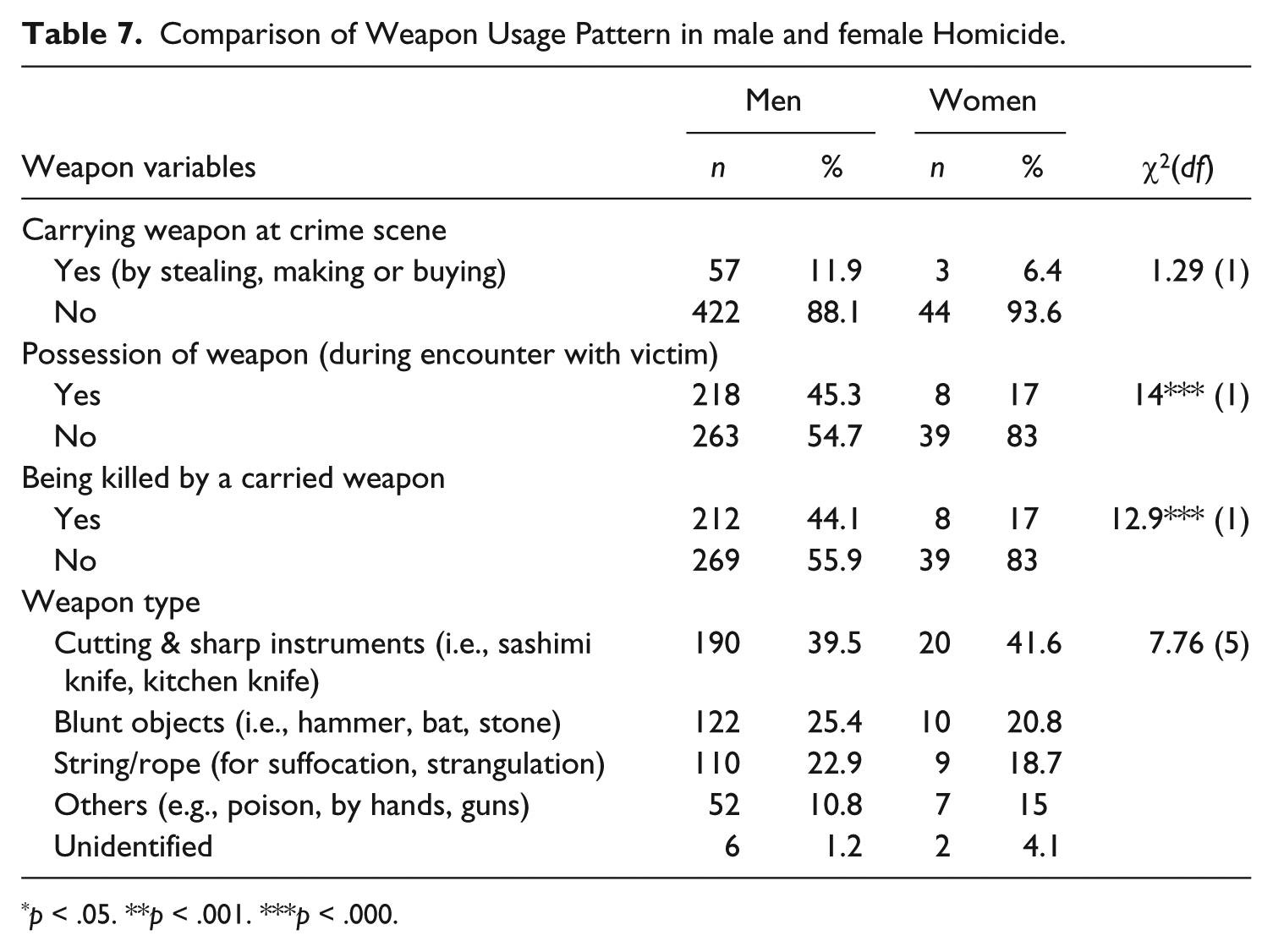
p < .05. **p < .001. ***p < .000.
As Table 8 shows, male and female offenders differed on the following crime scene behaviours: vaginal penetration, χ2(1) = 3.93, p < .05; sexual crime, χ2(1) = 4.74, p < .05; face wound, χ2(1) = 4.16, p < .05; weapon used at the scene, χ2(1) = 10.15, p < .001; weapon brought to the crime scene, χ2(1) = 12.63, p < .000; trace search, χ2(1) = 7.32, p < .001; steal valuable property, χ2(1) = 7.11, p < .05; and crime in darkness, χ2(1) = 4.09, p < .05.
Descriptive Comparison of Crime Scene Behaviour in Male and Female Homicide.

Note. Offender forensic awareness indicates that evidences (e.g., semen, hairs, DNA, weapon) at the crime scene were destroyed by the offender to avoid arrest; Overkill includes combinations of two and more brutal wound patterns. DNA = deoxyribonucleic acid.
p < .05. **p < .001. ***p < .000.
As might be expected, men are much more likely to commit sexually oriented crime scene behaviours such as vaginal penetration (7.6%), sexual crime (9.1%), victim naked (7.4%), and anal penetration (1.2%), with none of these behaviours occurring in any female offender cases. With respect to the specific nature of the violence suffered by the victim, in both male and female offenders, stabbing wounds (50.3% for men, 52.1% for women) and torso wounds (56.6% for men, 43.8% for women) were notably more common than knife/sharp instrument wounds to the face (35.5% for male offenders, 20.8% for female offenders), multiple wounds across body (32% and 29.2%, respectively), neck (34.8% for male, 29.2% for female offenders), or head (26.6% for men, 22.9% for women).
In both groups, behaviours representing attempts to control the victim, such as blindfolding, binding of hands and/or legs, gagging, and covering victim’s face, were found in less than 10% of cases. Overkilling (i.e., the investigating officers believed that offenders used more force or wounding than was necessary to kill the victim; Beauregard & Martineau, 2013) was present significantly more often in homicides committed by men (17.9%) than by women (10.4%). In terms of additional crime scene behaviours, one fifth of men stole valuable property (19.8%), and slightly more than one tenth (10.9%) stole unidentifiable property (e.g., underpants, wallets, souvenirs). On the contrary, women were rarely involved in stealing valuable property (e.g., credit card, money, jewel; 4.2%) and stealing unidentifiable property (0%)
Multivariate Logit Analysis
To identify the crime scene actions on men and women’s homicide, special variables were derived from previous studies (see Table 1). The selection of crime scene action variables in the current study was made based on the robust results in both Western and Eastern studies. The researches were conducted in the United States (Salfati & Bateman, 2005; Sorochinski & Salfati, 2010), Belgium (Thijssen & Ruiter, 2011), Greece (Salfati & Haratsis, 2001), Canada (Salfati & Dupont, 2006), Finland (Santtila et al., 2001), Korea (Salfati & Park, 2007; Sea & Beauregard, 2017a), and Japan (Zaitsu, 2010).
Using the Wald statistic, the estimated coefficients for the 35 independent variables and the constant were evaluated for statistical significance. The coefficient of three variables (“wounds by hands,” “weapon carried to the crime scene,” and “crime in darkness”) in the final model were statistically significant at the .028, .000, and .041 levels, respectively. Table 9 suggests that “wounds by hands (manual wounds),” “weapon carried to the crime scene,” and “crime in darkness” (see all variables and definitions in Table 1) were negatively associated with the dependent variable (i.e., “gender”). These correlations imply that men are more likely to kill their victims with their hands, to bring weapons to the crime scene, and to commit the homicide in a dark place.
Stepwise Logistic Regression Analysis Predicting Homicide Gender.
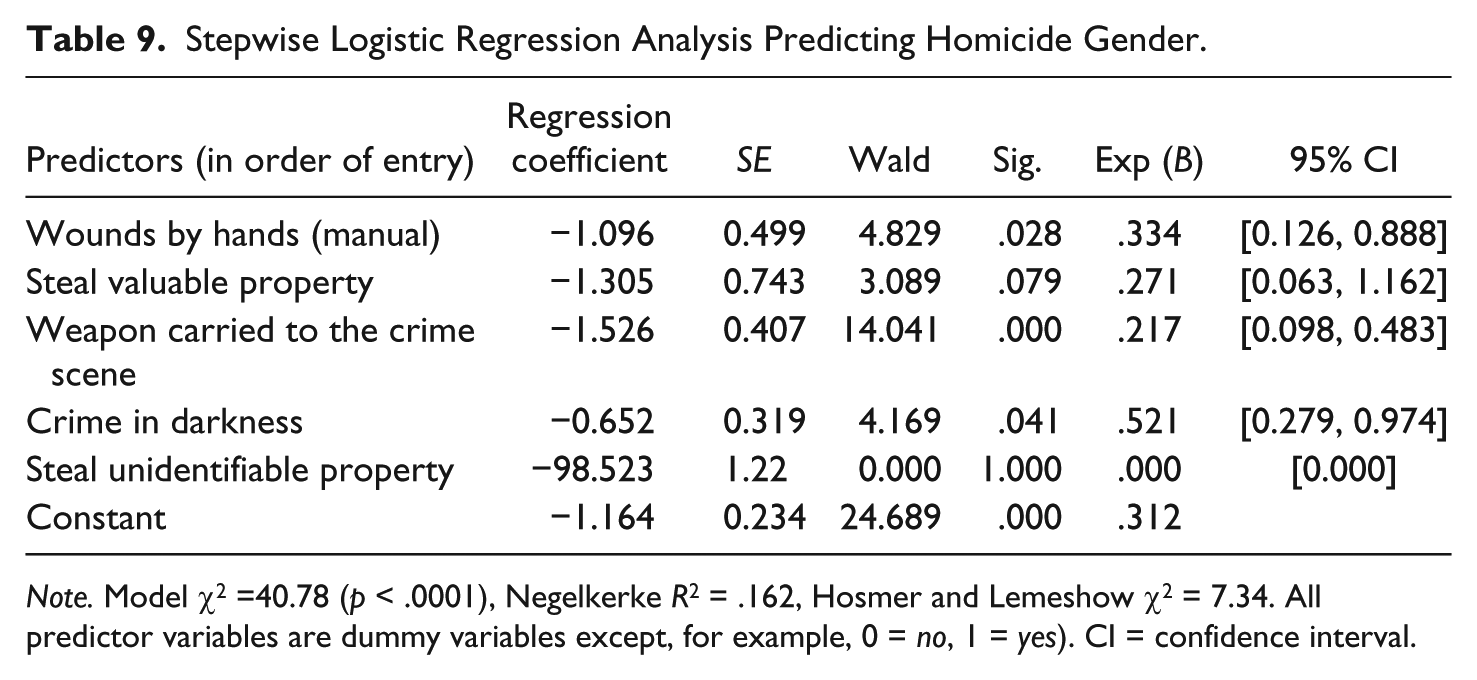
Note. Model χ2 =40.78 (p < .0001), Negelkerke R2 = .162, Hosmer and Lemeshow χ2 = 7.34. All predictor variables are dummy variables except, for example, 0 = no, 1 = yes). CI = confidence interval.
Discussion
The current study explored gender differences in Korean homicide offenders’ characteristics, offence circumstances, and crime scene behaviours. The results show that in Korea, as in Western cultures, male and female homicides do represent rather different scenarios. Gender differences were found in the choice of the victim, previous criminal histories of the offenders, the place of crime, and in the manner in which homicides were perpetrated. Thus, male offenders were found more likely to have previous criminal history than female offenders. This accords with the research findings based on the Western samples (study on the Finnish sample by Haakkaanen-Nyholm et al., 2009; study on the U.S. sample Jurik & Winn, 1990; Vanamo, Kauppi, Karkola, Merikanto, & Räsänen, 2001). The approach to the offence also varied between genders: For example, male offenders were more likely to bring weapons to the crime scene and to steal property from their victims.
The comparison with the results of Western gender homicide studies (Finland: Haakkaanen-Nyholm et al., 2009; Sweden: Yourstone et al., 2008; United States: Jordan, Pritchard, Duckett, Wilcox, & Combest, 2010) reveals interesting tendency. Unlike Western male offenders, the male offenders in South Korea are more likely to kill acquaintances (i.e., friends, fellow workers). The results for the “offender–victim” relationships for female offenders show more congruence with the Western situation. For example, either in the United States (Bachman & Saltzman, 1995; Moracco, Runyan, & Butts, 1998; Tjaden & Thoennes, 2000) or, as this study results show, in South Korea, victims of the female homicides were quite often family members (e.g., spouses, partners, children). In the Western world (e.g., United States and Canada), this trend was observed for decades (Goetting, 1998; Husain, Anasseril, & Harris, 1983; Jurik & Winn, 1990; Kellerman & Mercy, 1992; Koss et al., 1994; Maguire, Pastore, & Flanagan, 1992, 1993; Mercy & Saltzman, 1989).
One possible explanation for the observed differences in the victim selection is the routine activities of the parties/actors involved (Kennedy & Silverman, 1990). Smallbone, Marshall, and Wortley (2008) proposed that social ecosystems demarcate the routine activities of potential victims and offenders, thereby presenting or restricting opportunities for homicides. For instance, research on homicide in South Korea have shown that due to the family relationship problems and gender inequality based on patriarchal family structure, women tend to be in greater stress (Hwa-Byung; Kim, Hogge, Ji, Shim, & Lothspeich, 2014) in comparison with men (Kim et al., 2013; Kim et al., 2016). From a Korean situational perspective (Kim & Emery, 2003; Kim, Gerber, & Kim, 2007; Kim, Titterington, Kim, & Wells, 2010), domestic settings provide easy access to victims while involving the least amount of effort and risk to offenders. This could explain some of the differences observed in the present study: In patriarchal society, women are confined to house and domestic duties and have nearly no means of defending themselves, while their real or perceived offenders are members of their own family
Despite this observed similarity between Western and Korean “offender–victim” relationships in female homicides, the background differences are drastic. According to previous studies (Jung et al., 2009; Jung et al., 2014), Korean homicide ratio in intrafamilial relationship is 2.5 to 3 times higher than the United States and the United Kingdom (e.g., of total homicide cases, 28% in Korea, 14% in the United States, 10% in the United Kingdom; FBI, 2011). Although South Korea has many cultural ties with Western world, the inherited Korean culture is collectivistic and in many respects Confucian. In collectivistic cultures, interdependence within society and harmony with significant others (family members in particular) are paramount (Markus & Kitayama, 1991, 1994). One of the central principles of Confucian tradition is fen (“portion” or “place”): “. . . each thing in nature and cosmos has a fixed place, akin to the fixed social places of father, wife, older son, younger son, and so forth in the family” (Munro, 1985, p. 18). In this cultural trend, if the family members (typically husband and wife) are in conflict (Shin & Gong, 2006; Sohn, 2017), it could be difficult for women (eg., wife, intimate partner) to leave the family due to a strong bondage and dependency. Thus, the conflict can escalate further up to the extreme crime. This situation is relatively rare in Western societies, with their successful distancing from patriarchal values in process and with their developing institutions of protection from domestic violence (Jung et al., 2014).
Furthermore, criminal policy and public principles in Korean judicial system tend to regard family affairs as a private matter and thus leave them to the family members themselves. All this results in the situation where women suffering from domestic violence have no timely protection and no personal psychological power to break the bond with the family. Thus, when Western police and social workers will proactively intervene on behalf of the victim of domestic abuse (verbal or physical), in similar cases in South Korea, their colleagues would hesitate to take actions or would not intervene until it is too late. The victim will be murdered—or will murder the abuser.
The great respect to the patriarchal values might make the whole experience even more traumatic for the Korean female murderer. To kill one of the family, she needs to “kill” the idea of family bond and her own role in the family. Further research is required to check this theory, to compare psychological effects of the murder on the female offender in Western and Eastern culture.
The results of this study show that female offenders were approximately twice more likely than males to have mental illness (such as postnatal depression or schizophrenia). As many studies pointed out (Eronen et al.,1996; Jung et al., 2014; Millaud et al., 1996; Pal, 1997; Cho, Sung, Shin, Kim, Jeon, & Kim, 2011), not only female offenders are more likely to have previous mental condition (e.g., mood disorder, delusion disorder, and schizophrenia), but also mental illness could act as one of the motivators and disinhibitors (Flynn, Rodway, & Appleby, 2014; Douglas, Guy, & Hart, 2009). In Korea, this situation is aggravated by the presence of “Hwabyung”—a mental issue that arises when the individual is unable to change the conditions that are perceived as unfair and is also unable to confront his or her own anger. Thirty-five percent of the Korean women suffered from Hwabyung at some point in their life—and the frequent cause was the unfairness of social and/or family situation (Park, 2014). That brings up again the idea that the main cause determining the “female homicide specifics” is the social situation, the submissive role imposed upon women.
The relative prevalence of children among the victims of female murderers in South Korea is a culture-specific trait. The filicide is not as common in Western societies (United Nations Office on Drugs and Crime, 2013). The possible explanation for it can be found in Korean culture: Women tend to perceive children as a family property. This accords with previous study by Kim et al. (2014) on psychological consequences of subordinated female role in Korea. In homicides committed by women, the use of poison is not rare (15% of all the cases) and can be defined as relatively high in comparison with the data from OECD countries. Typically, poison as a murder weapon was used in rural and preindustrial settings; moreover, especially, female offenders in a relation (e.g., husband vs. wife or children vs. mother) could easily and quickly use poison, diluting with water or coffee under the unavailability of guns and other instruments. That might explain relatively high rates of murders by poison in South Korea (UNDOC, 2013).
The following crime scene behaviours were nearly equally frequent for both male and female offenders: “stabbing wounds” and “torso wounds by sharp instruments.” The single attack was more typical for female offenders. Interestingly, almost half of the stabbed victims of female offenders had sustained only one major injury, possibly because the attack happened as a part of a struggle. This finding accords with the results of the previous studies (Haakkaanen-Nyholm et al., 2009; Jordan, Pritchard, Duckett, Wilcox, Corey, & Combest, 2010; Whitaker et al., 2007). Both men and women did not use firearms to commit the murder. Sorochinski, Salfati, and Labuschagne (2015; see also Sorochinski & Salfati, 2010) explored two domains for local contextual differences: tool availability and physical environment and psychological factors. From this point, firearms (legal or illegal) may be more accessible in the United States and Canada than in other countries (e.g., Korea), making it the weapon of choice for the American or Canadian offender, but not the Korean one.
Differences in behavioural patterns and background characteristics between male and female offenders provide both theoretical and practical implications. The results can be adapted as an aid in linking crimes to different subgroups (men/women) and selecting suspects in homicide cases. The present study provides a good start for the register-based research. The clearance of the Korean Police for homicide cases is high, and due to the fact that official police materials were used as data source for the current study, research sample is comprehensive, nationwide, and reliable.
Presently, there are but few studies that explore female offenders’ characteristics and crime style. Even less is number of such studies done on Eastern populations. The current study provides the preliminary exploration of gender-related homicide and offender characteristics in Eastern culture. Further studies are required to examine this topic and provide a more detailed picture.
One limitation of the current study was the sample specifics. The research database included only cases where offenders’ confession and DNA evidence were obtained. Thus, the results of this study can be extrapolated to a large population with caution. All variables in the present study were based on previous researches, done mainly on Western samples (i.e., Salfati & Bateman, 2005 [Canada]; Salfati & Dupont, 2006 [Greek]; Salfati & Haratsis, 2001 [U.S.]; Santtila et al., 2001 [Finland]). While most of the offenders’ characteristics and crime scene behaviours may be international, the fact that variables were based strictly on European context may limit the opportunity to register some traits and patterns specific for Korean culture. Further studies are required to overcome this limitation. Overall, the results of the current study provide a good basis for future cross-cultural comparisons between gender-specific characteristics of the homicides in the Western and Eastern worlds.
Footnotes
Appendix
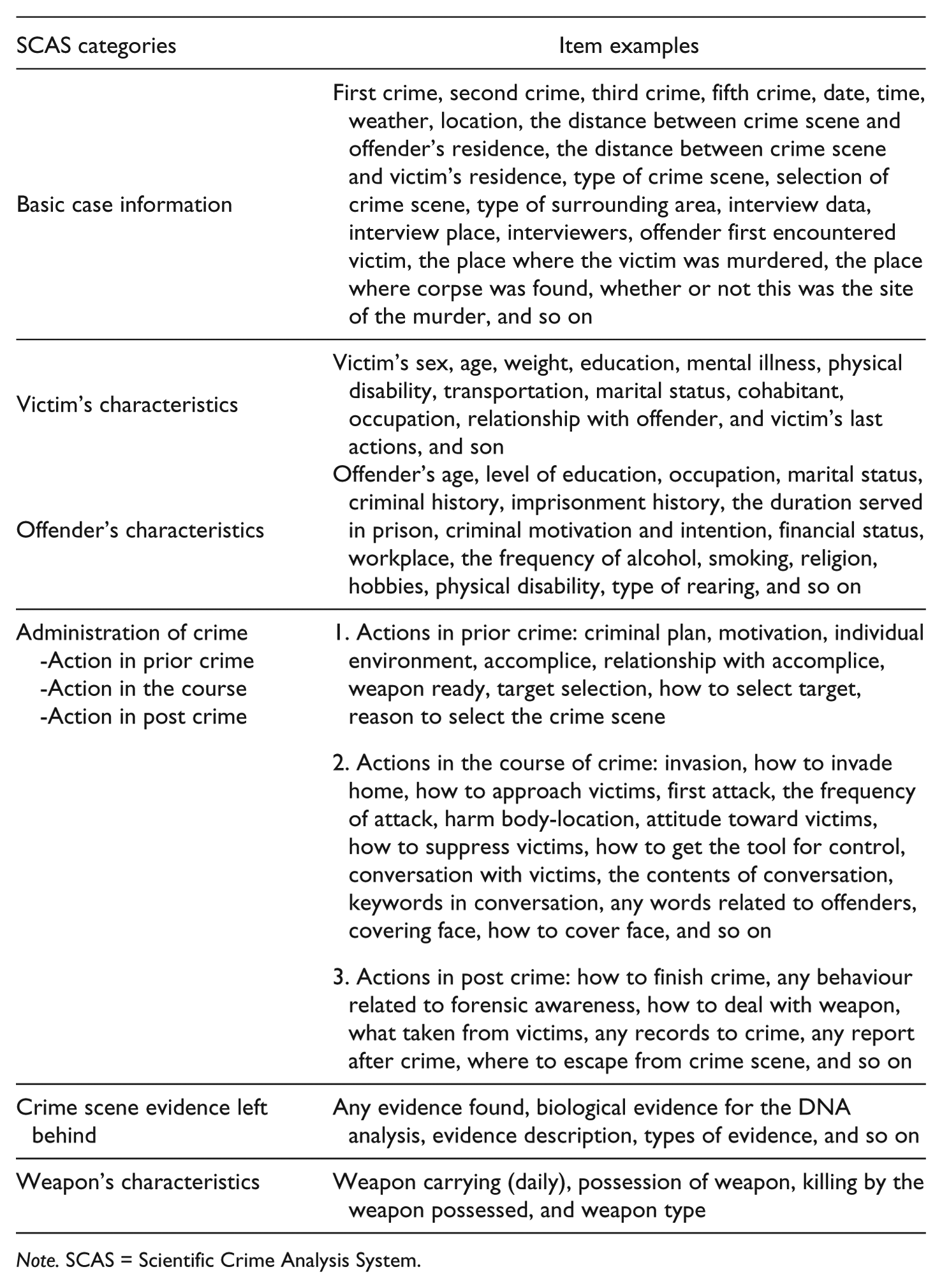
| SCAS categories | Item examples |
|---|---|
| Basic case information | First crime, second crime, third crime, fifth crime, date, time, weather, location, the distance between crime scene and offender’s residence, the distance between crime scene and victim’s residence, type of crime scene, selection of crime scene, type of surrounding area, interview data, interview place, interviewers, offender first encountered victim, the place where the victim was murdered, the place where corpse was found, whether or not this was the site of the murder, and so on |
| Victim’s characteristics | Victim’s sex, age, weight, education, mental illness, physical disability, transportation, marital status, cohabitant, occupation, relationship with offender, and victim’s last actions, and son |
| Offender’s characteristics | Offender’s age, level of education, occupation, marital status, criminal history, imprisonment history, the duration served in prison, criminal motivation and intention, financial status, workplace, the frequency of alcohol, smoking, religion, hobbies, physical disability, type of rearing, and so on |
| Administration of crime -Action in prior crime -Action in the course -Action in post crime |
1. Actions in prior crime: criminal plan, motivation, individual environment, accomplice, relationship with accomplice, weapon ready, target selection, how to select target, reason to select the crime scene |
| 2. Actions in the course of crime: invasion, how to invade home, how to approach victims, first attack, the frequency of attack, harm body-location, attitude toward victims, how to suppress victims, how to get the tool for control, conversation with victims, the contents of conversation, keywords in conversation, any words related to offenders, covering face, how to cover face, and so on | |
| 3. Actions in post crime: how to finish crime, any behaviour related to forensic awareness, how to deal with weapon, what taken from victims, any records to crime, any report after crime, where to escape from crime scene, and so on | |
| Crime scene evidence left behind | Any evidence found, biological evidence for the DNA analysis, evidence description, types of evidence, and so on |
| Weapon’s characteristics | Weapon carrying (daily), possession of weapon, killing by the weapon possessed, and weapon type |
Note. SCAS = Scientific Crime Analysis System.
Declaration of Conflicting Interests
The author(s) declared no potential conflicts of interest with respect to the research, authorship, and/or publication of this article.
Funding
The author(s) received no financial support for the research, authorship, and/or publication of this article.