



Abstract
Until relatively recently, it was assumed that Arctic ice masses would respond to climatic/oceanic forcing over millennia, but observations made during the past two decades have radically altered this viewpoint and have demonstrated that marine-terminating outlet glaciers can undergo dramatic dynamic change at annual timescales. This paper reviews the substantial progress made in our understanding of the links between marine-terminating Arctic outlet glacier behaviour and the ocean-climate system during the past 20 years, when many ice masses have rapidly lost mass. Specifically, we assess three primary climatic/oceanic controls on outlet glacier dynamics, namely air temperature, ocean temperature and sea ice concentrations, and discuss key linkages between them. Despite recent progress, significant uncertainty remains over the response of marine-terminating outlet glaciers to these forcings, most notably: (1) the spatial variation in the relative importance of each factor; (2), the contribution of glacier-specific factors to glacier dynamics; and (3) the limitations in our ability to accurately model marine-terminating outlet glacier behaviour. Our present understanding precludes us from identifying patterns of outlet glacier response to forcing that are applicable across the Arctic and we underscore the potential danger of extrapolating rates of mass loss from a small sample of study glaciers.
I Introduction
Arctic warming is expected to far exceed the global average and is forecast to reach 4–7°C by 2100 (IPCC, 2007; Meier et al., 2007). Consequently, Arctic ice masses are expected to undergo rapid change during the 21st century and to contribute significantly to global sea level rise (e.g. Bamber et al., 2007). Indeed, estimates suggest that the Greenland Ice Sheet (GIS) contributed 0.46 mm a-1 to sea level rise between 2000 and 2008 (van den Broeke et al., 2009). Assessing the potential response of Arctic ice masses to climate change is therefore crucial for the accurate prediction of near-future sea level rise (IPCC, 2007). For the purposes of this paper, we define ‘Arctic ice masses’ as the major glaciated archipelagos within the Arctic Circle, namely the Greenland Ice Sheet (GIS), Svalbard, Novaya Zemlya (NZ), Severnaya Zemlya (SZ), Franz Josef Land (FJL) and the Canadian Arctic (Figure 1). Alaska is also included as results from the region have contributed significantly to our knowledge of marine-terminating outlet glacier dynamics. Here we define a marine-terminating outlet glacier as a channel of fast-moving ice that drains an ice cap or ice sheet and terminates in the ocean, at either a floating or grounded margin (Benn and Evans, 2010) (Figure 2).

Regional overview map showing the location of major ice masses, outlet glaciers and other sites discussed in the text. Major water masses are also labelled. Glacier abbreviations are as follows: Helheim Glacier (HH), Kangerdlugssuaq Glacier (KG), Daugaard Jensen Gletscher (DJ), Kangiata Nunata Sermia (KNS), Jakobshavn Isbrae (JI), Petermann Glacier (PG), Hansbreen (HB), Duvebreen (DB) and John Evans Glacier (JEG). Inset: Overview map of Alaska, showing the location of LeConte Glacier (LCG).

Visible satellite imagery of selected marine-terminating Arctic outlet glaciers and Arctic ice masses at 1:1,000,000scale. Images are ordered by glacier location, from west to east, and show (A) Petermann Glacier, northwest Greenland; (B) Kangerdlugssuaq Glacier, east Greenland; (C) Vestfonna Ice Cap, Svalbard; (D) northern ice cap, Novaya Zemlya. Outlet glacier and ice mass locations are shown in Figure 1. Major outlet glaciers are labelled according to terminus type (M = marine; L = land) and approximate near-terminus flow direction is marked (dashed lines).
Our understanding of Arctic ice mass behaviour has advanced dramatically during the last 20 years, particularly during the last decade. Previously, it was generally assumed that large Arctic ice masses would respond to climatic warming at millennial timescales, primarily through increased surface melting, and that changes in ice flow would occur only at centennial timescales or longer (Greve, 2000; Huybrechts et al., 1991; IPCC, 2001). However, studies published during the past two decades have dramatically altered this viewpoint (e.g. Joughin et al., 2010; Rignot et al., 2008; van den Broeke et al., 2009) and have shown that most Arctic ice masses have rapidly lost mass since the 1990s. Crucially, losses have been concentrated at the coastal margins, particularly on marine-terminating outlet glaciers (e.g. Joughin et al., 2010; Meier et al., 2007; Thomas et al., 2009). Indeed, recent studies have demonstrated that marine-terminating Arctic outlet glaciers can respond rapidly to climatic/oceanic forcing (e.g. Andersen et al., 2012; Howat et al., 2007, 2008a, 2011; Joughin et al., 2008b, 2010; Kjær et al., 2012) and can significantly influence the mass budget of their parent ice masses over annual to decadal timescales (e.g. Pritchard et al., 2009; Rignot et al., 2008; Stearns and Hamilton, 2007).
Results from the Antarctic, particularly Pine Island Glacier (Payne et al., 2004), have also highlighted the role of outlet glaciers and ice streams in enabling rapid coupling between forcing at the margins and the ice sheet interior and have raised concerns over the vulnerability of some regions to rapid mass loss (Joughin and Alley, 2011). Furthermore, iceberg-rafted debris from palaeo-ice sheets attests to major episodes of ice sheet collapse (e.g. Bond et al., 1992) and reconstructions of marine-based palaeo-ice sheets have highlighted the potential for rapid ice stream/outlet glacier retreat (e.g. Briner et al., 2009; Winsborrow et al., 2010). Theoretical considerations also suggest that glaciers resting on reverse bed slopes may potentially be unstable (Thomas, 1979; Weertman, 1974). Although this review focuses on the Arctic, these findings have demonstrated that marine-terminating outlet glaciers can respond rapidly to climatic/oceanic forcing and play a key role in regulating the mass balance of marine-based ice sheets. As a result, the factors controlling marine-terminating outlet glacier dynamics have emerged as a primary area of research.
Recent mass deficits have been attributed to both increased marine-terminating outlet glacier discharge and to a more negative surface mass balance (SMB), primarily resulting from increased surface melting relative to accumulation (Rignot et al., 2008, 2011; van den Broeke et al., 2009; Zwally et al., 2011). The relative contribution of each of these two components varies across the Arctic, but is presently approximately equal on the GIS (van den Broeke et al., 2009). A number of potential controls on marine-terminating outlet glacier behaviour have been identified (Figure 3), which we broadly classify as: (1) glacier-specific factors, which relate to the glaciological, topographic and geological setting of the glacier; and (2) climatic/oceanic forcing, including air and ocean temperatures, sea ice and precipitation. Important glacier-specific factors include subglacial topography and geology, fjord bathymetry and topography, sedimentation at the grounding line and glacier velocity, size, surface slope and catchment area (Figure 3) (Alley, 1991; Joughin et al., 2008b; Meier and Post, 1987). Theory suggests that changes in marine-terminating outlet glacier dynamics can occur independently of climatic/oceanic forcing (e.g. Alley, 1991; Meier and Post, 1987) and the importance of glacier-specific factors, particularly subglacial topography, has been highlighted by recent studies (Joughin et al., 2010, 2012; Thomas et al., 2009). Despite their apparent significance, however, the influence of glacier-specific factors on Arctic marine-terminating glacier behaviour is poorly understood.
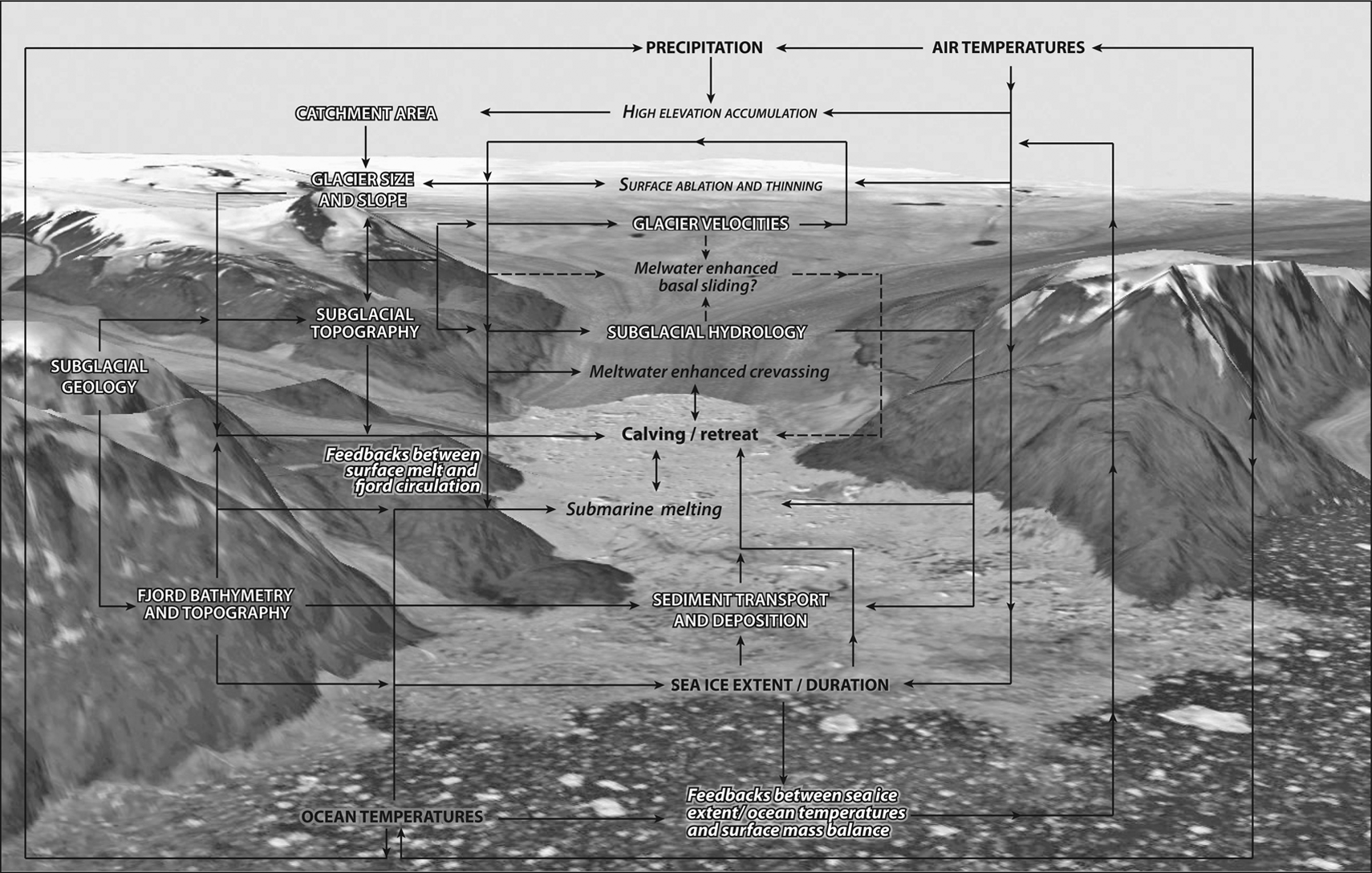
Illustration of the primary climatic/oceanic forcing factors (black CAPS) and glacier-specific controls (white CAPS) thought to influence marine-terminating Arctic outlet glacier behaviour and mass balance. The major processes (black italics) and potential feedback mechanisms (white italics) are included. The role of meltwater enhanced basal sliding is represented with a dashed line as its influence on multi-year glacier behaviour remains equivocal.
In contrast, concerns over anthropogenic climate change in the 1990s resulted in an increasing focus on climatic/oceanic forcing factors and recent work has emphasized the widespread and synchronous nature of dynamic changes in many regions, particularly southeastern Greenland (e.g. Howat et al., 2008a; Murray et al., 2010). Consequently, this paper focuses on the climatic/oceanic drivers of marine-terminating Arctic outlet glacier dynamics and discusses three primary controls: air temperatures, ocean temperatures and sea ice concentrations (Figure 3). It should be noted, however, that these forcing factors are not independent (Figure 3) and that interconnections between them may significantly influence outlet glacier behaviour, yet many of these relationships are poorly understood. We aim to: (1) review and summarize recent developments relating to each of these climatic/oceanic forcing factors; (2) highlight key uncertainties surrounding mar-ine-terminating Arctic outlet glacier response to climatic/oceanic forcing; and (3) recommend directions for future research.
II Arctic mass balance trends: 1990–2010
Rapid mass loss from Arctic masses has been documented since the early 1990s by numerous independent studies (Table 1) (e.g. Gardner et al., 2011; Krabill et al., 2004; Moholdt et al., 2010b; Rignot and Kanagaratnam, 2006; Velicogna and Wahr, 2006). Due to their remote location and considerable size, mass balance is usually determined indirectly using remotely sensed data and/or SMB modelling. Considerable advances have been made in these techniques during the past 20 years, which have substantially improved our ability to quantify mass budgets and to assess the relative contribution of ice dynamics to mass loss (Krabill et al., 2004; Rignot and Kanagaratnam, 2006; van den Broeke et al., 2009; Velicogna and Wahr, 2006). At present, the primary techniques include Gravity Recovery and Climate Experiment (GRACE) data (e.g. Arendt et al., 2008; Bergmann et al., 2012; Jacob et al., 2012; Khan et al., 2010; Luthcke et al., 2006; Mémin et al., 2011; Velicogna, 2009; Velicogna and Wahr, 2006; Wouters et al., 2008), comparison of SMB with outlet glacier discharge (Rignot et al., 2008, 2011; Rignot and Kanagaratnam, 2006; van den Broeke et al., 2009) and repeat laser or radar altimetry measurements (Abdalati et al., 2001; Krabill et al., 2004; Pritchard et al., 2009; Thomas et al., 2006, 2009).
Recent mass losses from the major glaciated regions and subregions of the Arctic. Data are first ordered according to regional mass loss rates and then according to mass loss rates from each subregion. The most recent estimates of total mass loss were used for each region and the latest values obtained from GRACE and SMB/D are presented for the GIS. Abbreviations are as follows: SMB – Surface mass balance; D – Discharge; GRACE – Gravity Recovery and Climate Experiment; SPOT – Système Pour l’Observation de la Terre; GNSS – Global Navigation Satellite System; RES – Radio Echo Sounding. *Mass loss rates converted from Gt a-1 to km3 a-1, assuming an ice density of 0.917 kg km3 (IPCC, 2007).#This value includes peripheral ice caps and glaciers (Jacob et al., 2012).
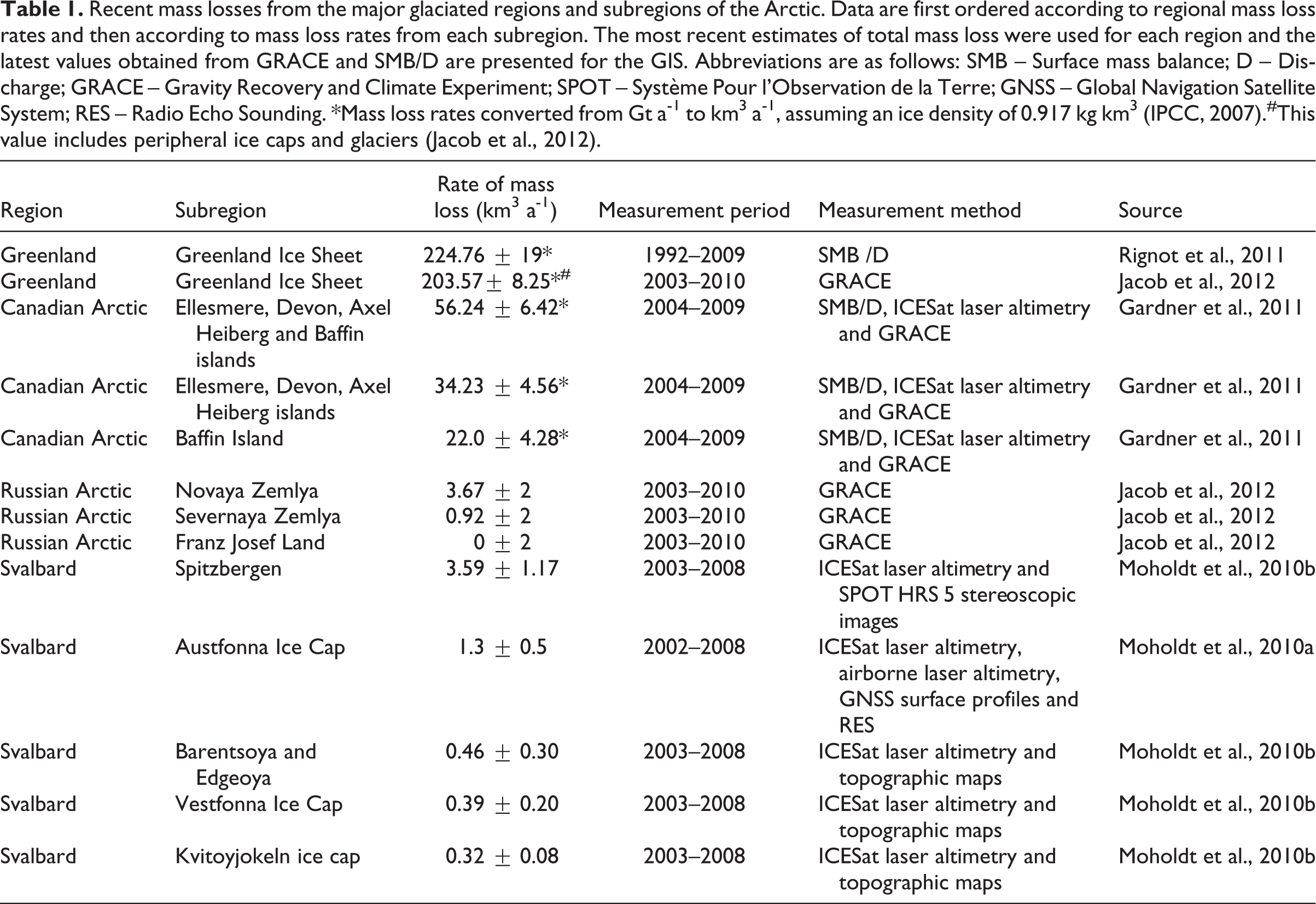
The negative mass balance of the GIS has received particular attention and has been estimated via a number of techniques and for a range of time periods. The most recent values from GRACE (Jacob et al., 2012) and from the comparison of SMB with outlet glacier discharge (Rignot et al., 2011) are presented in Table 1. An important new trend is the rapid mass loss from the Canadian Arctic between 2007 and 2009, which made the archipelago the primary cryospheric contributor to eustatic sea level rise outside of the Greenland and Antarctic ice sheets (Table 1) (Gardner et al., 2011). Furthermore, the area has been highlighted as the largest potential contributor to ice loss and sea level rise of any glaciated region during the 21st century (Radić and Hock, 2011). Negative mass balance trends have also been documented in Svalbard (Hagen et al., 2009; Moholdt et al., 2010b; Nuth et al., 2010) and the Russian Arctic (Kotlyakov et al., 2010; Sharov et al., 2009) (Table 1). However, the mass balance of the Russian Arctic archipelagos have been comparatively poorly documented (Bassford et al., 2006). This represents a significant limitation to our understanding of the Arctic cryosphere, and highlights the need for further research in the region, as NZ, SZ and FJL account for approximately 20% of the glaciated area of the Arctic, excluding the GIS (Dowdeswell et al., 1997).
1 Spatial trends in Arctic mass balance
Arctic mass balance trends have been spatially non-uniform, with many areas exhibiting slight growth at high elevations and rapid marginal thinning (e.g. Hagen et al., 2009; Pritchard et al., 2009; Sharov, 2010; Sharov et al., 2009; Thomas et al., 2006, 2008; Zwally et al., 2011). Substantial thickening has been observed at high elevations on the GIS (Ettema et al., 2009; Johannessen et al., 2005; Thomas et al., 2006; Zwally et al., 2005); Austfonna ice cap, Svalbard (Bamber et al., 2004; Moholdt et al., 2010a, 2010b; Raper et al., 2005); the northern ice cap, NZ (Sharov et al., 2009); Tyndall and Windy ice domes in FJL; Schmidt and Vavilov ice caps in SZ (Sharov, 2010); and some Canadian Arctic ice caps (Abdalati et al., 2004; Mair et al., 2009). A number of potential explanations have been proposed for this interior thickening, including increased precipitation (Thomas et al., 2006; Zwally et al., 2005), possibly related to changes in sea ice extent (Bamber et al., 2004; Mair et al., 2009; Raper et al., 2005), long-term accumulation trends (Koerner, 2005; Moholdt et al., 2010a) and/or surge dynamics (Bevan et al., 2007). However, interior gains have been far outweighed by low-elevation thinning and marginal retreat (e.g. van den Broeke et al., 2009; Zwally et al., 2011), resulting in an overall negative mass balance in many regions (Table 1).
2 Dynamic contribution of marine-terminating outlet glaciers to mass loss
In addition to rapid marginal thinning, peak losses have occurred on marine-terminating outlet glaciers (Moon and Joughin, 2008; Pritchard et al., 2009; Sole et al., 2008). On many of these glaciers, thinning rates of 10s of m a-1 have far exceeded surface melt rates, suggesting that thinning is largely ‘dynamic’ (i.e. resulting from changes in ice flow, rather than increased surface melting) (e.g. Abdalati et al., 2001; Burgess and Sharp, 2008; Krabill et al., 2004; Thomas et al., 2009). The contribution of glacier dynamics to recent mass deficits has been further emphasized by rapid retreat rates, which have reached kilometres per year on the GIS (e.g. Howat et al., 2008a; Joughin et al., 2008b, 2010; Moon and Joughin, 2008) and hundreds of metres per year elsewhere (e.g. Blaszczyk et al., 2009; Burgess and Sharp, 2004; Nuth et al., 2010; Sharov, 2005). Furthermore, recent research has underscored the contribution of dynamic changes to decadal-scale losses, as initial perturbations at the glacier terminus may be rapidly transmitted to inland areas, producing widespread, substantial thinning (Howat et al., 2005, 2008b; Pritchard et al., 2009; Thomas et al., 2011; Zwally et al., 2011). This longer-term component of dynamic loss is an important emerging area of research and has the potential to be the primary component of the GIS contribution to 21st-century sea level rise (Price et al., 2011; Vieli and Nick, 2011).
Although the dynamics of marine-terminating outlet glaciers are now recognized as a key component of Arctic ice mass loss, they have also been highlighted as a principal area of uncertainty (IPCC, 2007). Specifically, the primary climatic/oceanic controls and the mechanisms by which they induce a dynamic response are yet to be fully understood (Howat et al., 2010; Sole et al., 2008; Vieli and Nick, 2011). The following sections review the three main climatic/oceanic controls identified to date, namely surface air temperatures, ocean temperatures and sea ice concentrations, and discuss the primary linkages between these factors (Figure 3). All three forcing factors have undergone marked changes in recent years, which have been linked to both recent climatic warming (ACIA, 2004; IPCC, 2007) and to the onset of a negative phase of the North Atlantic Oscillation (NAO) in the mid-1990s (e.g. Stern and Heide-Jørgensen, 2003; Gerdes et al., 2003; Hurrell et al., 2003; Holliday et al., 2008).
III Air temperature forcing
Arctic air temperatures have risen substantially since the mid-1990s (ACIA, 2004; Hanna et al., 2008; IPCC, 2007), although they are not unprecedented at decadal timescales (Box et al., 2009; Chylek et al., 2006). We present a new synthesis of air temperature data to investigate the spatial distribution of Arctic warming between 1990 and 2010 and to visualize this trend in terms of both magnitude and statistical significance (Figure 4). Linear trends were calculated from annual air temperature series, which were compiled from meteorological station data of varying temporal resolution (three-hourly to monthly). In order to account for missing values, three-hourly data were used only if: (1) no more than two consecutive records were missing in a day; and (2) no more than three records in total were missing in a day. Daily data were only used if values were available for 22 or more days per month and monthly values were used only if data were available for all months of the year (Cappelen, 2011).
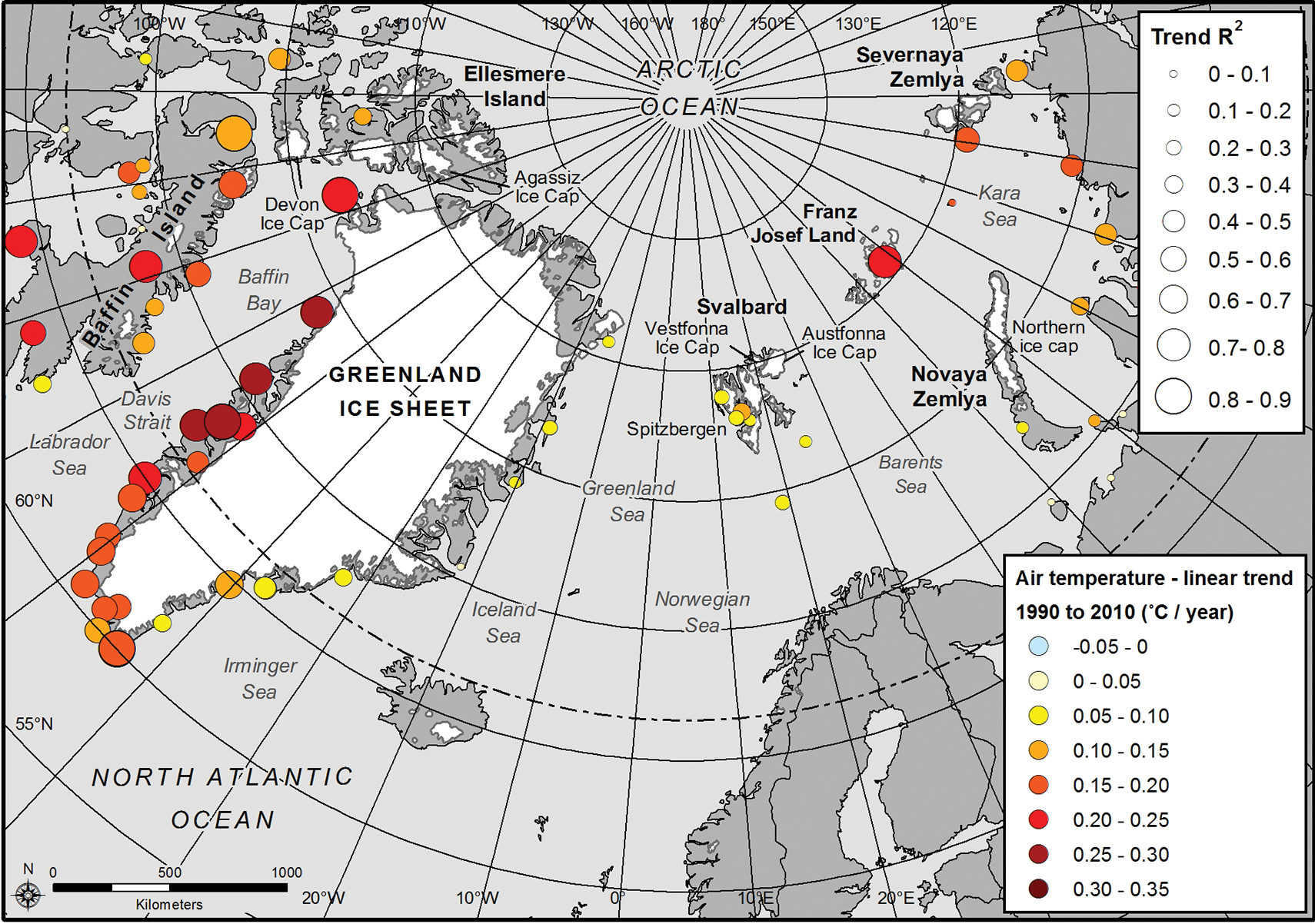
Linear trend in mean annual air temperatures between 1990 and 2010 for selected Arctic meteorological stations. Symbol colour shows the magnitude of the linear trend in °C per year between 1990 and 2010. Symbol size shows the R2 value of the relationship: a larger symbol represents a larger R2 value and therefore the trend line better fits the data. Meteorological stations were selected according to data availability for the study period.
Results suggest that warming has been greatest at coastal stations surrounding Baffin Bay and the Davis Strait (Figure 4), which is consistent with dramatic mass loss from the Canadian Arctic between 2004 and 2009 (Gardner et al., 2011). Significant warming has also occurred in the Kara Sea region, particularly on FJL (Figure 4), although data coverage is comparatively sparse. Warming from the mid-1990s has been linked to negative SMB on a number of Arctic ice masses, particularly the GIS (e.g. Abdalati and Steffen, 2001; Bhattacharya et al., 2009; Box et al., 2006; Ettema et al., 2009; Hanna et al., 2008; Mote, 2007). However, while warming directly affects SMB, a key recent development has been to consider the potential impact of meltwater on outlet glacier dynamics.
1 Air temperatures, meltwater production and ice velocities on temperate and polythermal glaciers
The relationship between air temperatures, meltwater supply and ice velocities has been well documented on temperate glaciers (e.g. Fountain and Walder, 1998; Iken and Bindschadler, 1986; Willis, 1995), but had not been extensively considered on large Arctic ice masses until relatively recently. On temperate glaciers, surface meltwater is thought to access large portions of the glacier bed during the melt season, resulting in elevated basal water pressures, reduced basal drag and enhanced ice motion (e.g. Fountain and Walder, 1998; Iken and Bindschadler, 1986; Kamb, 1987; Nienow et al., 1998; Willis, 1995). As the melt season progresses, continued meltwater input promotes the development of a more efficient subglacial drainage system, which lowers basal water pressures and reduces the sensitivity of glacier velocities to additional melt (Figure 5) (e.g. Nienow et al., 1998; Willis, 1995). Recent studies have demonstrated a similar relationship on polythermal glaciers in the Canadian Arctic (e.g. Bingham et al., 2003, 2008; Boon and Sharp, 2003; Copland et al., 2003) and in Svalbard (Nuttall and Hodgkins, 2005; Rippin et al., 2005; Vieli et al., 2004). In particular, extensive investigations on John Evans Glacier (JEG), Ellesmere Island, Canada, showed that surface meltwater could rapidly access the bed through predominantly cold ice and cause substantial seasonal acceleration (Copland et al., 2003; Bingham et al., 2003, 2005, 2008).
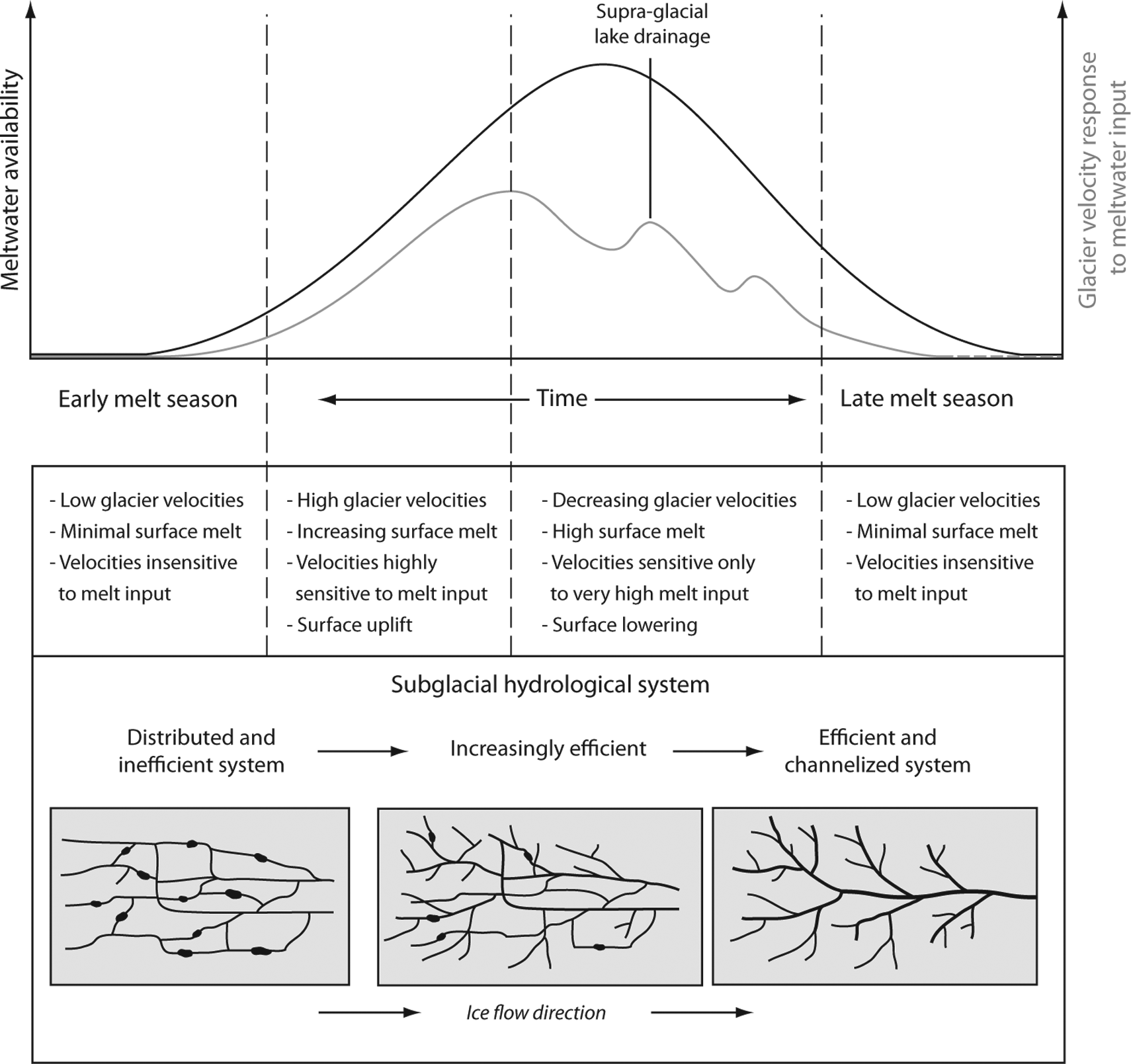
Idealized seasonal evolution of glacier response to meltwater inputs. The graph illustrates the theoretical response of outlet glacier velocities to meltwater inputs during the melt season. The bottom panels illustrate an idealized plan view of the subglacial hydrological system at different stages of the melt season (bottom panels modified from Fountain and Walder, 1998). Individual glacier response to meltwater forcing may vary significantly from this idealized situation.
2 Surface meltwater and ice velocities in the GIS ablation zone
Until a decade ago, it was largely assumed that penetration of surface meltwater to the bed of large Arctic ice masses would be minimal and that its effect on ice velocities would be limited, especially on the GIS (Copland et al., 2003; Hodgkins, 1997; Zwally et al., 2002). This viewpoint was radically altered by GPS measurements from Swiss Camp in the west Greenland ablation zone, which first demonstrated a close correspondence between surface meltwater inputs and ice velocities (Zwally et al., 2002). Here we define the ablation zone as areas that experience melt, with the exception of fast-flowing, marine-terminating outlet glaciers, which are discussed separately (section III.3), due to their differing response to meltwater inputs. Results from Swiss Camp showed that velocities closely followed seasonal and interannual variations in surface meltwater production, as previously observed on temperate glaciers, and this was attributed to meltwater-enhanced basal sliding (Zwally et al., 2002). Most importantly, the study highlighted meltwater-enhanced basal lubrication as a potential mechanism for rapid, dynamic and widespread response of the GIS to atmospheric warming (Zwally et al., 2002).
The work of Zwally et al. (2002) was supported by subsequent results from the west Greenland ablation zone, which provided further evidence of rapid coupling between seasonal meltwater inputs and ice velocities (e.g. Bartholomew et al., 2010, 2011; Catania and Neumann, 2010; Das et al., 2008; Joughin et al., 2008a; van de Wal et al., 2008). Studies also identified supraglacial lake drainage events as a potential mechanism for rapid transfer of meltwater to the bed (e.g. Das et al., 2008; Krawczynski et al., 2009). Large volumes of water released during drainage events may promote crevasse propagation through the full ice thickness by offsetting rapid refreezing and maintaining high water pressures at the crevasse tip (Alley et al., 2005; Krawczynski et al., 2009; van der Veen, 1998, 2007). Drainage events have immediately preceded velocity increases in the west Greenland ablation zone (Box and Ski, 2007; Das et al., 2008; McMillan et al., 2007), on land-terminating west Greenland outlet glaciers (Shepherd et al., 2009; Sneed and Hamilton, 2007) and on JEG (Bingham et al., 2003; Boon and Sharp, 2003; Copland et al., 2003), providing empirical support for their role in meltwater delivery to the bed.
The potential impact of surface meltwater inputs on the GIS was also explored using numerical modelling, which predicted far greater losses with enhanced basal sliding (Huybrechts and de Wolde, 1999; Parisek and Alley, 2004; van de Wal and Oerlemans, 1997). This occurred via a number of proposed feedback mechanisms, which are illustrated for an idealized section of the GIS (Figure 6). Specifically, feedbacks could develop between glacier acceleration, dynamic thinning and surface melting: increased basal sliding would promote dynamic thinning and bring a greater portion of the ice sheet into the ablation zone, thus exposing a greater area to melting and enhanced lubrication (Figure 6) (Parisek and Alley, 2004).

Proposed feedback mechanisms between surface meltwater availability, basal sliding and ice sheet geometry for an idealized section of the GIS. Atmospheric warming may increase surface meltwater input to the bed, resulting in enhanced basal sliding and transfer of a greater portion of the outlet glacier to the ablation zone. Further feedbacks may then develop between dynamic thinning, inland migration of basal sliding and ice acceleration. The response of individual sections of the ice sheet may vary significantly from these idealized theoretical responses.
3 Surface meltwater and marine-terminating Arctic outlet glacier dynamics
The close coupling between surface meltwater and ice velocities observed in the GIS ablation zone led to increased consideration of the influence of meltwater on marine-terminating outlet glacier dynamics (e.g. Hall et al., 2008; Krabill et al., 2004). This was further motivated by the concurrence of the onset of marine-terminating Arctic glacier retreat from the mid-1990s with atmospheric warming (e.g. Bevan et al., 2012a; Dyurgerov and McCabe, 2006; Howat and Eddy, 2011) and the coincidence of substantial changes in glacier dynamics with elevated air temperatures (e.g. Howat et al., 2008a; Moon and Joughin, 2008; Rignot and Kanagaratnam, 2006).
Recent results from marine-terminating Arctic outlet glaciers appear to support meltwater-enhanced basal lubrication as a mechanism for ice acceleration at subannual timescales: glacier velocities in the Uummannaq region of west Greenland (Howat et al., 2010) and on Duvebreen, Austfonna (Figure 1) (Dunse et al., 2012), closely corresponded to the seasonal melt cycle. Similarly, results from Petermann Glacier (Figures 1 and 2) (Nick et al., 2012) and Daugaard Jensen Gletscher (Figure 1) (Bevan et al., 2012b) suggest that seasonal velocities primarily reflect variations in surface meltwater availability, and data from Helheim Glacier (HH) (Figure 1) indicate that surface meltwater can be transmitted to the bed within 12–36 hours (Andersen et al., 2010a).
Despite an apparent relationship at seasonal or shorter timescales, however, the influence of meltwater-enhanced basal lubrication on interannual marine-terminating outlet glacier behaviour remains equivocal (e.g. Bingham et al., 2003; McFadden et al., 2011; Seale et al., 2011; van de Wal et al., 2008; Vieli et al., 2004). Evidence from the GIS suggests that meltwater input to the bed may have a limited impact on interannual velocity changes on fast-flowing marine-terminating outlet glaciers and that ice flow may be more responsive to conditions at the ice-ocean interface (Joughin et al., 2008a; Nick et al., 2009). A similar pattern has been observed on JEG (Bingham et al., 2003) and Hansbreen, Spitzbergen (Figure 1) (Vieli et al., 2004), where periods of high melt coincided with reduced seasonal acceleration or even deceleration. Furthermore, numerical modelling results from HH (Nick et al., 2009) suggest that changes in frontal position, as opposed to meltwater-enhanced basal lubrication, are the dominant control on interannual behaviour. Thus, evidence suggests that meltwater-enhanced basal lubrication may significantly influence marine-terminating outlet glacier dynamics at subannual timescales, but its role in driving interannual retreat remains uncertain.
To date, research into the influence of meltwater on marine-terminating outlet glacier dynamics has predominantly focused on enhanced basal lubrication. However, meltwater may also influence dynamics by promoting crevasse propagation at the terminus and/or lateral margins (Figure 3), which together could reduce resistive stresses and promote glacier retreat (Andersen et al., 2010b; Sohn et al., 1998; van der Veen, 1998; van der Veen et al., 2011; Vieli et al., 2007). This partly agrees with model results from JI, which suggest that increased crevasse water levels can partially reproduce observed patterns of retreat and acceleration, but this may also reflect the choice of calving model (Vieli and Nick, 2011). Numerical modelling studies also suggest that acceleration at Jakobshavn Isbrae (JI), west Greenland, may have resulted from weakening at its lateral margins, potentially due to hydrofracturing and/or meltwater-induced warming of the ice (van der Veen et al., 2011). Thus, while the role of meltwater-enhanced fracture as a primary trigger of retreat remains equivocal, this mechanism warrants further consideration given the sensitivity of marine-terminating glaciers to changes at the terminus (Nick et al., 2009; Vieli and Nick, 2011).
4 Subglacial drainage systems of large Arctic ice masses
Research into the subglacial hydrology of Arctic ice masses has predominantly focused on land-terminating sections, but recent advances, particularly from the GIS, may provide insight into the comparative insensitivity of marine-terminating outlet glaciers to meltwater-enhanced basal lubrication at interannual timescales. Although the subglacial hydrology of marine-terminating outlet glaciers is comparatively poorly understood and the response of individual glaciers may vary significantly, observations suggest that the seasonal evolution of the subglacial drainage system is very similar to that observed on temperate, polythermal and land-terminating outlet glaciers and sections of the GIS ablation zone: the subglacial drainage system is thought to evolve during the melt season, causing variation in the sensitivity of ice velocities to meltwater inputs (Figure 5) (e.g. Bartholomew et al., 2010, 2011; Copland et al., 2003; Dunse et al., 2012; Howat et al., 2010; Shepherd et al., 2009; Sole et al., 2011; Vieli et al., 2004). Early in the melt season, the drainage system may be relatively inefficient (Figure 5) (Bartholomew et al., 2010; Bingham et al., 2003; Kamb, 1987; Price et al., 2008). Consequently, meltwater can rapidly increase basal water pressures, causing rapid ice acceleration and surface uplift (Bartholomew et al., 2010; Bingham et al., 2005; Copland et al., 2003). As the melt season progresses, continued inflow of surface meltwater may promote the development of a more efficient, channellized drainage system which operates at lower basal water pressures (Figure 5) (Bingham et al., 2003, 2006; Kamb, 1987; Palmer et al., 2011; Shepherd et al., 2009; Sole et al., 2011). Thus, the sensitivity of ice velocities to surface melt may decline and only large meltwater inputs may induce substantial velocity change (Figure 5) (Bartholomew et al., 2010; Dunse et al., 2012; Schoof, 2010; Shepherd et al., 2009). The primary implication of these results is that ice velocities depend not only on surface meltwater inputs, but also on the subglacial hydrological system.
The evolution of the subglacial drainage system has important implications for the response of marine-terminating outlet glaciers to interannual variations in meltwater availability and atmospheric warming (Price et al., 2008; Schoof, 2010; Sundal et al., 2011; van de Wal et al., 2008). As observed at seasonal timescales, continually high meltwater inputs are likely to promote the formation of an efficient basal drainage system, operating at low water pressures (Figure 5). Consequently, increased meltwater input at interannual timescales may not necessarily equate to increased ice velocities, and may even cause deceleration above critical thresholds of water supply (Schoof, 2010; Sundal et al., 2011; Vieli et al., 2004). This is consistent with empirical results from Kangiata Nunata Sermia, southwestern Greenland, where meltwater-induced summer speed-up events are thought to contribute little to annual ice velocities, partly because they are offset by the deceleration associated with the formation of an efficient subglacial system (Sole et al., 2011). The key conclusion of these findings is that the evolution of the hydrological system may act as a buffer against accelerated ice loss through meltwater-enhanced basal sliding in response to increased melt and atmospheric warming (Price et al., 2008; Schoof, 2010; Vieli et al., 2004).
IV Oceanic forcing
While atmospheric warming has received substantial scientific attention, oceanic forcing has been recently recognized as a key control on marine-terminating outlet glacier dynamics. This was partly instigated by results from the GIS (e.g. Moon and Joughin, 2008; Pritchard et al., 2009; Sole et al., 2008), where retreat rates were approximately two orders of magnitude greater on marine-terminating glaciers (10s to 1000s of m a-1) than on their land-terminating counterparts (0.1 to 1 m a-1) (Figure 7). A similar pattern has been observed elsewhere in the Arctic, including Austfonna ice cap (Dowdeswell et al., 2008), Devon Ice Cap (Burgess and Sharp, 2004, 2008; Dowdeswell et al., 2004; Shepherd et al., 2007) and in Arctic Alaska (Arendt et al., 2006). Furthermore, thinning rates have been greatest on glaciers occupying deep bedrock troughs (Thomas et al., 2009), which may allow warm, subsurface Atlantic Water (AW) from the continental shelf to access the glacier termini (e.g. Rignot et al., 2010; Straneo et al., 2010, 2011). Oceanic forcing may be of particular concern in the near future, as model predictions suggest that ocean temperatures around the GIS may warm by 1.7–2°C by 2100 (Yin et al., 2012).
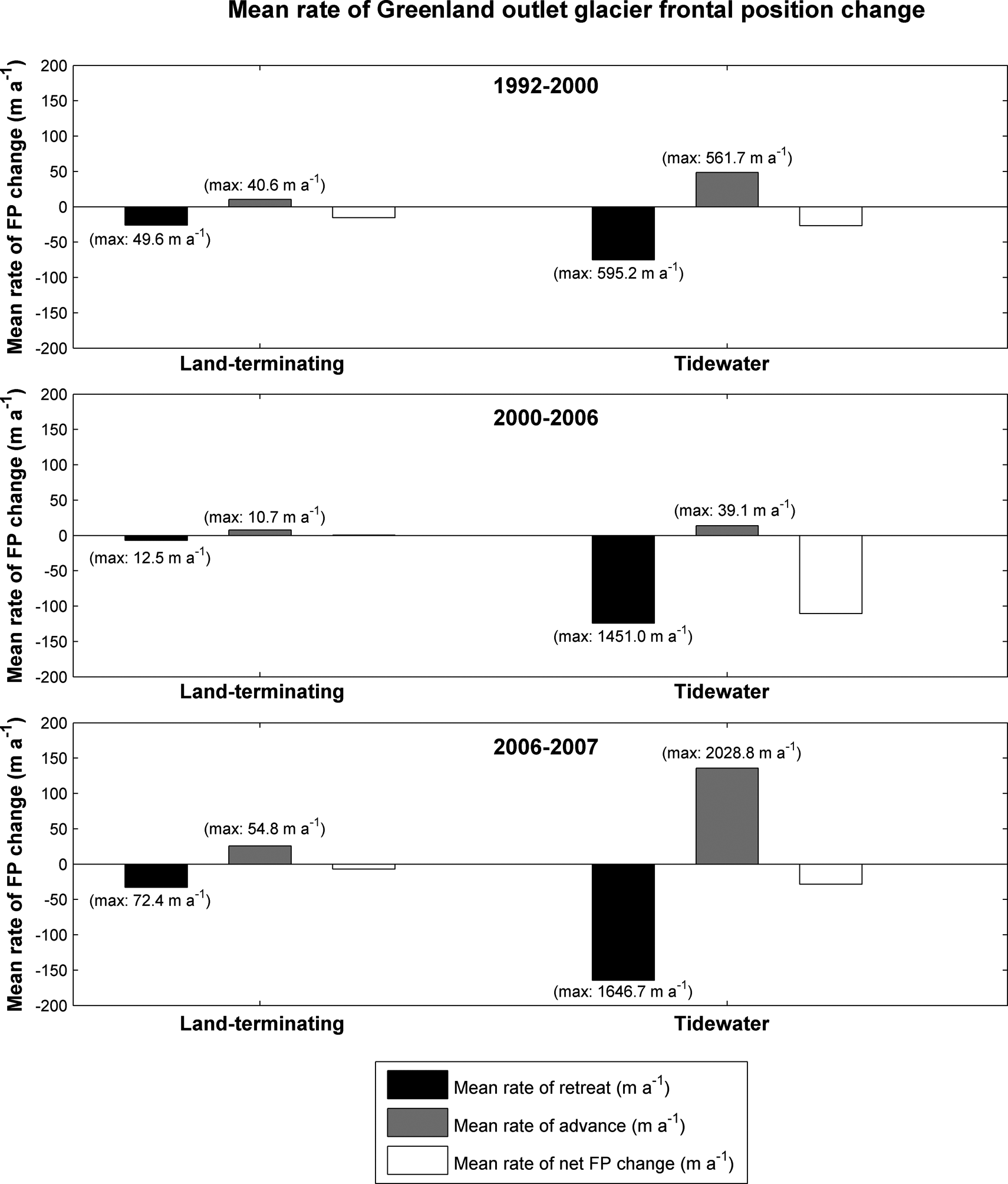
Mean rate of Greenland outlet glacier frontal position change (m a-1) grouped according to terminus type. The mean rate of retreat, advance and net frontal position change were calculated for land-terminating and tidewater glacier termini and are shown in the bars above. Values were calculated for three time periods (1992–2000, 2000–2006 and 2006–2007) and maximum rates of retreat/advance are given in brackets above the corresponding bar. Mean values are calculated from a sample of 139 (1992–2000), 169 (2000–2006) and 154 (2006–2007) tidewater glaciers, and 10 (1992–2000), 14 (2000–2006) and 13 (2006–2007) land-terminating glaciers. Glaciers terminating in ice shelves were excluded from the analysis, as data were only available from three glaciers for 1992–2000 and 2000–2006 and no data were available for 2006–2007.
1 Submarine melting at marine-terminating outlet glacier termini
Measurements of submarine melt rates at the termini of marine-terminating glaciers are rare, but estimates suggest that rates range between 0.7±0.2 and 3.9±0.8 m per day in central west Greenland (Rignot et al., 2010) and 4.34±0.94 m per day at JI (Motyka et al., 2011). Substantially higher melt rates of 6.9 to 12.4 m per day have been estimated at LeConte Glacier, Alaska (Figure 1) (Motyka et al., 2003), probably reflecting its comparatively southerly location. These results highlight the potential sensitivity of marine-terminating glaciers to oceanic warming, which could influence outlet glacier dynamics via a number of mechanisms (Figure 8). First, enhanced submarine melting may cause grounding-line retreat at floating and grounded margins, potentially resulting in further ungrounding and the development of positive feedbacks if retreat occurs into deeper water (Howat et al., 2008a; Joughin et al., 2008b; Meier and Post, 1987; Nick et al., 2012; Vieli and Nick, 2011; Vieli et al., 2001). Second, oceanic warming may cause rapid thinning of floating termini (e.g. Motyka et al., 2011; Nick et al., 2012; Thomas, 2004) and the formation of deeply incised basal channels (Rignot and Steffen, 2008), which together make the termini more vulnerable to full thickness fracture and eventual disintegration (Figure 8). Third, submarine melting may influence the terminus geometry and calving rates by undercutting at the grounding line and/or waterline (Figure 8) (Benn et al., 2007; Vieli et al., 2002).
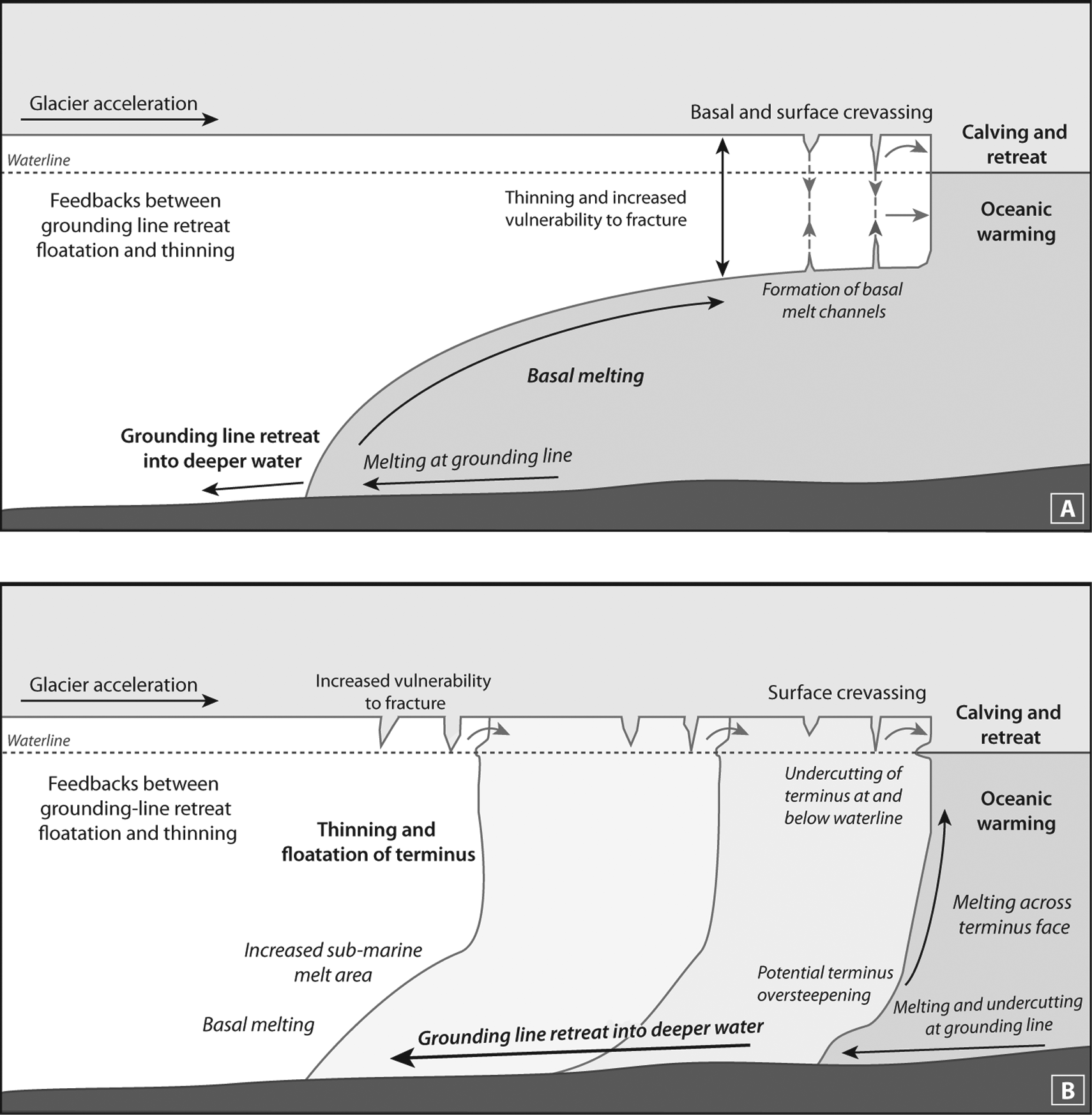
Illustration of the influence of oceanic warming and submarine melting on outlet glacier dynamics and geometry for (A) an initially floating terminus and (B) an initially grounded terminus. In (A), feedbacks may develop between submarine melting, grounding-line retreat, thinning and calving front retreat. In (B), changes in terminus geometry may initiate feedbacks between grounding-line/terminus retreat, thinning and floatation.
2 Oceanic controls on marine-terminating glacier dynamics
Our understanding of oceanic forcing has been largely developed from observations from the GIS, where warming has immediately preceded the retreat and acceleration of a number of marine-terminating outlet glaciers (e.g. Bevan et al., 2012a; Hanna et al., 2009; Holland et al., 2008; Motyka et al., 2011; Murray et al., 2010; Rignot et al., 2012). This was first investigated in detail at JI, which was one of the earliest and most significant contributors to recent GIS mass losses (Joughin et al., 2004, 2008c; Motyka et al., 2010, 2011; Rignot and Kanagaratnam, 2006; Thomas et al., 2003). Following 50 years of comparative stability (Csatho et al., 2008; Sohn et al., 1998), JI’s floating terminus began to retreat in October 1998 (Luckman and Murray, 2005) and subsequent periods of acceleration often coincided with the loss of sections of its tongue (Joughin et al., 2004, 2008c). Initial retreat was accompanied by rapid thinning, which may have ungrounded the tongue from its underlying pinning points, and caused a substantial reduction in resistive stresses (Joughin et al., 2004; Thomas, 2004; Thomas et al., 2003). This may have initiated feedbacks between retreat, dynamic thinning and acceleration, which led to the disintegration of the ice tongue by spring 2003 (Joughin et al., 2004, 2008c; Thomas, 2004).
The underlying driver(s) of mass losses at JI remain subject to debate, but evidence suggests that oceanic warming, rather than increased air temperatures, was the primary cause (Holland et al., 2008; Motyka et al., 2010, 2011; Thomas, 2004). Thinning rates on JI’s floating tongue far exceeded estimated surface melt rates and closely followed substantial subsurface ocean warming, which is thought to have increased basal melt rates by 25% (Holland et al., 2008; Motyka et al., 2011; Thomas et al., 2003). Estimates suggest that the resultant thinning was sufficient to destabilize the ice tongue and to initiate rapid mass loss (Motyka et al., 2011). Numerical modelling results agree with these findings and suggest that increased submarine melting is capable of triggering the behaviour observed at JI, but that dynamic feedbacks are also required (Vieli and Nick, 2011).
Subsequent to retreat at JI, marine-terminating outlet glaciers in southeastern Greenland followed a similar progression of dynamic change (e.g. Howat et al., 2007, 2008a; Joughin et al., 2008b; Luckman et al., 2006). Losses began with retreat, thinning and acceleration proportional to retreat, which suggests that changes also resulted from a loss of resistive stresses at the terminus (Howat et al., 2005, 2007, 2008a). The trigger for these changes remains equivocal, with both air temperatures (Box et al., 2009; Hanna et al., 2008) and ocean temperatures (Hanna et al., 2009; Murray et al., 2010; Seale et al., 2011) increasing substantially prior to retreat. However, the initiation of glacier response at the terminus (Howat et al., 2005, 2007, 2008a) suggests that meltwater-enhanced basal lubrication was unlikely to be the primary trigger and that forcing factors operating at the calving front, such as oceanic warming, were the more likely cause. This is consistent with numerical modelling results from HH, which suggested that interannual glacier dynamics are comparatively insensitive to enhanced basal lubrication, but are acutely sensitive to calving front perturbations (Nick et al., 2009).
3 Marine-terminating outlet glacier dynamics and Atlantic Water distribution
An important emerging theme has been the relationship between marine-terminating outlet glacier dynamics and variations in the distribution and properties of warm Atlantic Water (AW) (Andersen et al., 2012; Holland et al., 2008; Murray et al., 2010; Straneo et al., 2010, 2011). Until recently, it was assumed that oceanic changes at the continental shelf could be transmitted into outlet glacier fjords, but this was largely untested (Mortensen et al., 2011; Straneo et al., 2010). However, recent studies have shown that AW can access the fjords of a number of large outlet glaciers in Greenland (Christoffersen et al., 2011; Holland et al., 2008; Johnson et al., 2011; Mayer et al., 2000; Straneo et al., 2010, 2011) and Svalbard (Nilsen et al., 2008). These results marked a significant advance in our understanding, as they demonstrated that rapid connections could exist between marine-terminating outlet glaciers and oceanic variability in the northern North Atlantic, particularly via deep fjords (Straneo et al., 2010). This conclusion was supported by the coincidence of glacier retreat in southeastern Greenland in the early 2000s with AW incursion onto the coast (Christoffersen et al., 2011; Murray et al., 2010; Seale et al., 2011) and provides a plausible mechanism for widespread and synchronous retreat.
4 Marine-terminating outlet glacier dynamics and fjord circulation
Recent research into the role of AW has led to increased consideration of the factors controlling its distribution within glacial fjords. A number of possible controls have been identified (Figure 9), including: the temperature, salinity and volume of subtropical waters at the continental shelf; along-shore wind patterns; storm tracks; and fjord stratification (Christoffersen et al., 2011; Nilsen et al., 2008; Straneo et al., 2010, 2011). Fjord circulation can also be influenced by subglacial meltwater, which forms a rising plume of cool, buoyant water at the calving front and promotes a compensatory inflow of warmer water at depth (Figure 9) (Motyka et al., 2003, 2011; Straneo et al., 2011). Thus, plumes may substantially increase submarine melt rates (Jenkins, 2011; Motyka et al., 2003; Seale et al., 2011) and model results suggest that melt increases linearly with oceanic warming and to the power of one-third with subglacial discharge (Jenkins, 2011; Xu et al., 2012). A key implication of this relationship is that positive feedbacks could develop, whereby atmospheric warming increases subglacial discharge and ice sheet runoff, which strengthens the plume and enhances submarine melt rates (Seale et al., 2011). Feedbacks between glacier runoff and ocean properties have been identified as a potential trigger for recent retreat in southeastern Greenland (Murray et al., 2010; Seale et al., 2011) and variations in meltwater production may be an important control on AW distribution in the region (Murray et al., 2010).
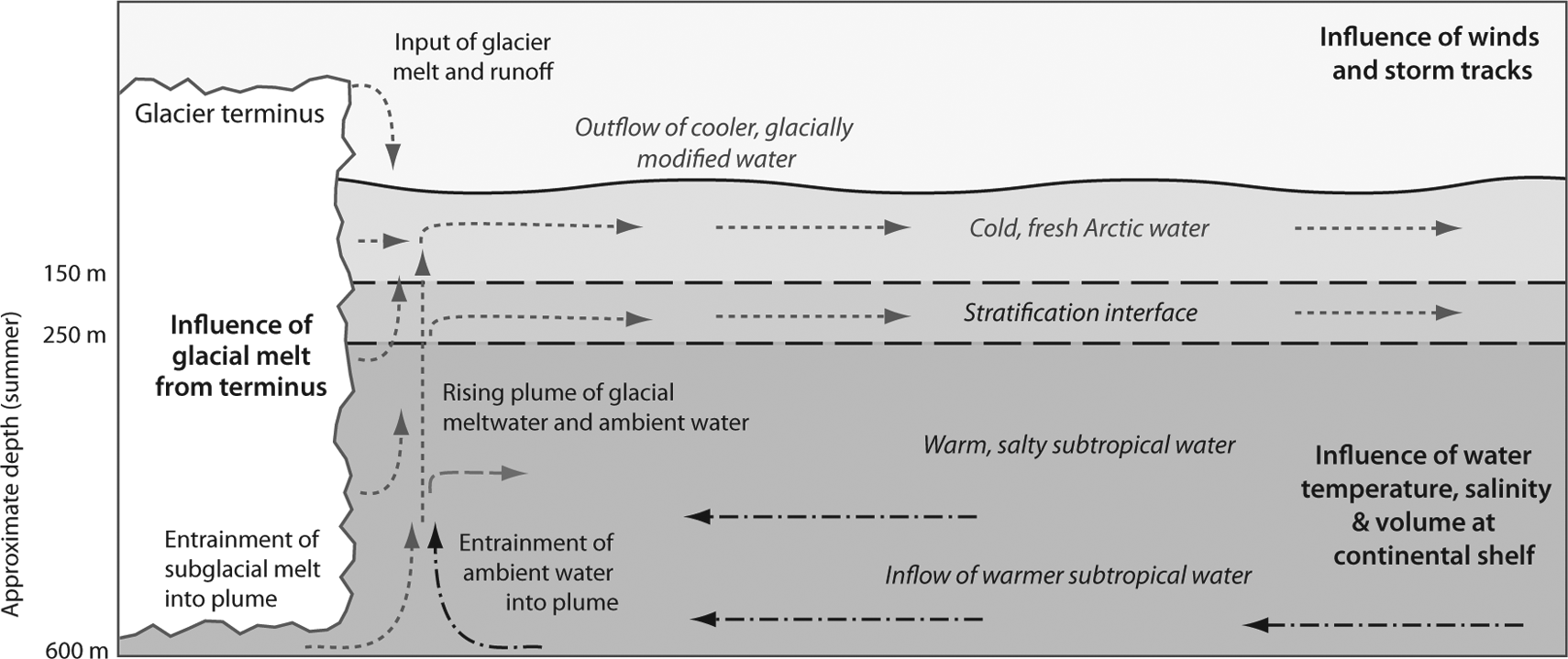
Schematic illustrating the circulation pattern and water properties within a large Arctic outlet glacier fjord. Fjord circulation and water mass depths are based on conditions within Helheim Glacier fjord (Straneo et al., 2011). The primary controls on fjord circulation are thought to be water properties at the continental shelf, wind/storm tracks and glacial meltwater input.
V Sea ice forcing
The increasing focus on oceanic forcing has led to further consideration of the influence of sea ice on marine-terminating Arctic outlet glacier behaviour (Figure 3). Although sea ice is discussed separately, it should be noted that it is influenced by both air and ocean temperatures (Figure 3) and that these factors are not independent. It should also be noted that sea ice concentrations may significantly affect SMB, through their influence on accumulation and ablation patterns (Figure 3) (e.g. Bamber et al., 2004; Rennermalm et al., 2009). The influence of sea ice on marine-terminating Arctic outlet glacier dynamics was first documented in northern Greenland, where semi-permanent fast-ice contributed significantly to the stability of several marine-terminating outlet glaciers (Higgins, 1989, 1990; Mayer et al., 2000; Reeh et al., 2001; Weidick, 1975). Fast-ice was thought to promote glacier stability by suppressing calving and by preventing calved material from moving away from the terminus (Higgins, 1990; Reeh et al., 2001). In contrast, periods of fast-ice disintegration were accompanied by rapid calving and release of trapped ice. Early investigations suggested that fast-ice break-up occurred at decadal intervals, when summer temperatures were exceptionally warm (Higgins, 1989, 1990; Reeh et al., 2001), but this pattern has changed substantially in recent years, with disintegration now occurring several times per decade (Hughes et al., 2011).
1 Sea ice influence on the seasonal calving cycle
Recent studies have investigated the influence of sea ice on calving rates at more southerly Greenland glaciers (Ahn and Box, 2010; Howat et al., 2010), particularly on JI (Amundson et al., 2010; Joughin et al., 2008c; Sohn et al., 1998). As in northern Greenland, sea ice concentrations at JI appear to influence the timing and nature of calving events, but this occurs on seasonal, as opposed to decadal, timescales (Amundson et al., 2010; Joughin et al., 2008c). In winter, sea ice binds together icebergs to form a semi-rigid, seasonal ice shelf, or mélange, which is pushed along the fjord as a coherent mass by the advancing calving front (Figure 10) (Amundson et al., 2010). The mélange suppresses calving rates by up to a factor of six and alters the terminus geometry and near-front stress fields, causing seasonal terminus advance and deceleration (Amundson et al., 2010; Joughin et al., 2008c; Sohn et al., 1998). Conversely, springtime mélange disintegration allows high rates of summer calving to commence, which initiates seasonal retreat and acceleration (Figure 10) (Ahn and Box, 2010; Amundson et al., 2010; Howat et al., 2010; Joughin et al., 2008c). A similar relationship has been documented on the Agassiz Ice Cap, Ellesmere Island, Arctic Canada, where peak glacier velocities have coincided with seasonal sea ice disintegration (Williamson et al., 2008). However, observations also indicated that sea ice weakening and/or thinning, as opposed to complete disintegration, may be sufficient to initiate seasonal acceleration (Williamson et al., 2008).
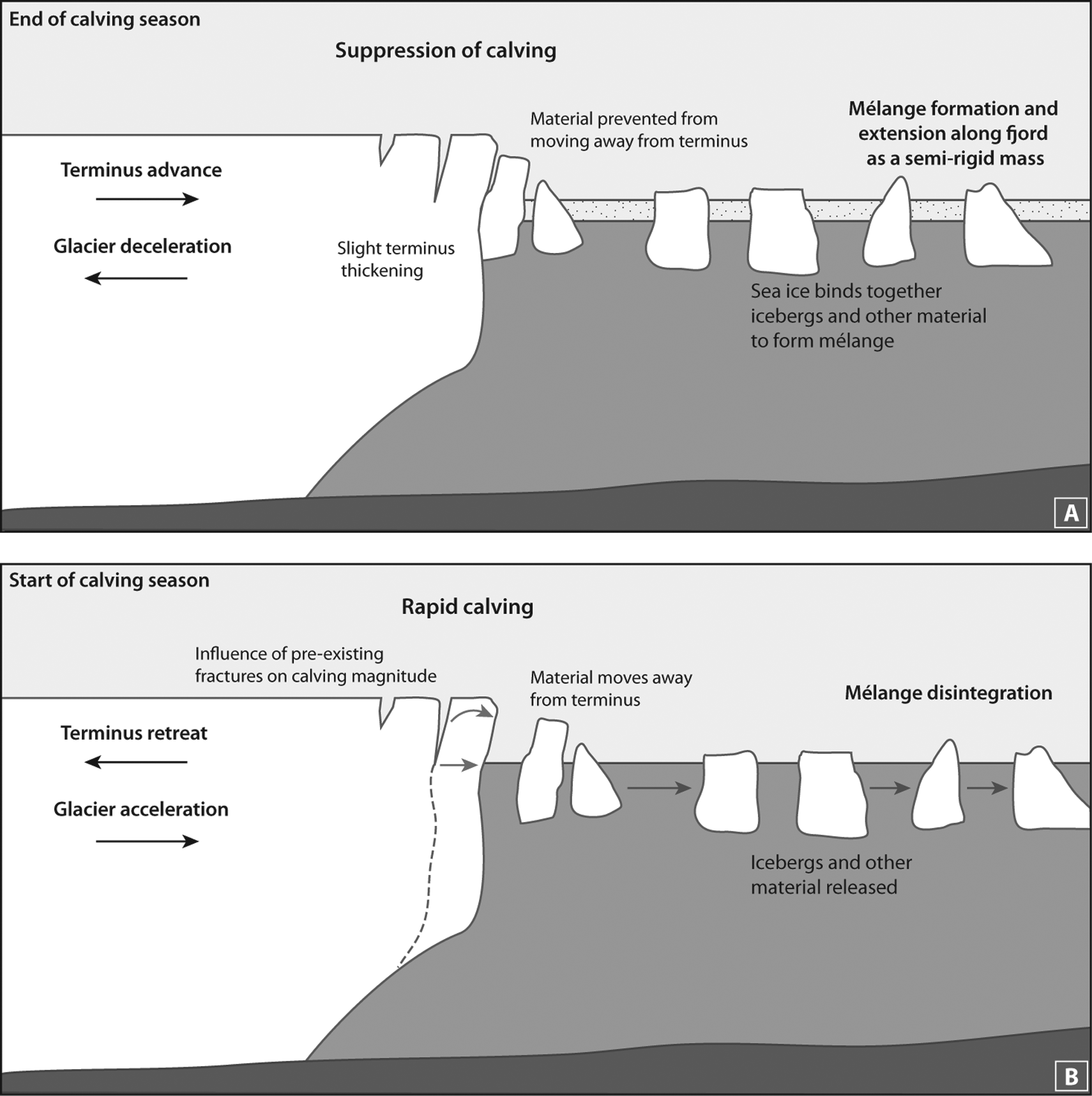
Illustration of the influence of sea ice and mélange formation on Arctic outlet glacier dynamics during (A) mélange formation at the end of the calving season and (B) mélange disintegration at the start of the calving season. In (A) the mélange binds together material within the fjord, thus suppressing calving and promoting seasonal advance. In (B) mélange disintegration allows seasonally high calving rates to commence and promotes glacier retreat.
2 Sea ice influence on interannual marine-terminating outlet glacier behaviour
Observations from JI have contributed substantially to our understanding of sea ice forcing at seasonal timescales, but have also highlighted its potential influence on interannual behaviour of marine-terminating outlet glaciers (Joughin et al., 2008c). Initial retreat at JI began within one year of the onset of sea ice decline in the surrounding Disko Bay (Joughin et al., 2008c). Estimates suggest that the extension of ice-free conditions by one or two months may have been sufficient to trigger the initial retreat by extending the duration of seasonally high calving rates (Joughin et al., 2008c). This is consistent with numerical modelling results which demonstrated that reduced mélange duration could trigger rapid retreat at JI, although it could not replicate the magnitude of subsequent seasonal variations in terminus position (Vieli and Nick, 2011). A similar response has been observed in the Uummannaq region (Howat et al., 2010) and at KG (Christoffersen et al., 2011; Seale et al., 2011), where interannual retreats also followed sea ice decline. It is thought that delayed winter sea ice formation at KG (Christoffersen et al., 2011; Seale et al., 2011) and early mélange clearance in the Uummannaq region (Howat et al., 2010) may have initiated glacier retreat by extending the calving season.
Although the influence of sea ice on marine-terminating outlet glacier behaviour has been little studied outside of the GIS, Arctic sea ice has declined markedly in recent years (e.g. Kwok and Rothcock, 2009; Rodrigues, 2009; Serreze et al., 2009) and its influence may become increasingly widespread if current losses continue. On the basis of the relationships observed in Greenland, we suggest that sea ice decline may affect glacier dynamics via two potential mechanisms: (1) seasonal calving may be extended in areas which currently experience seasonally ice-free conditions; and (2) areas currently characterized by interannual fast-ice may transition to a seasonal sea ice loss. We suggest that the former process may become increasingly significant on the eastern and central-western Greenland coast, on the western coasts of NZ and Svalbard and in the southern Canadian Arctic, where the ice-free season has extended markedly during the past 30 years (Rodrigues, 2008) and losses are predicted to continue during the 21st century (Figure 11) (ACIA, 2004; IPCC, 2007). This mechanism may eventually cease, however, if areas become perennially ice-free. The latter process may become increasingly important on the coasts of northeastern Greenland, northeastern Svalbard, eastern NZ, southern FJL and the northern Canadian Arctic, where sea ice concentrations are predicted to decline markedly by 2100 (Figure 11) (ACIA, 2004; IPCC, 2007). Observations suggest that this may already be occurring in northeastern Greenland, where fast-ice break up has occurred several times in the past decade (Hughes et al., 2011), in comparison to the decadal intervals recorded by earlier work (Higgins, 1989, 1990; Reeh et al., 2001).
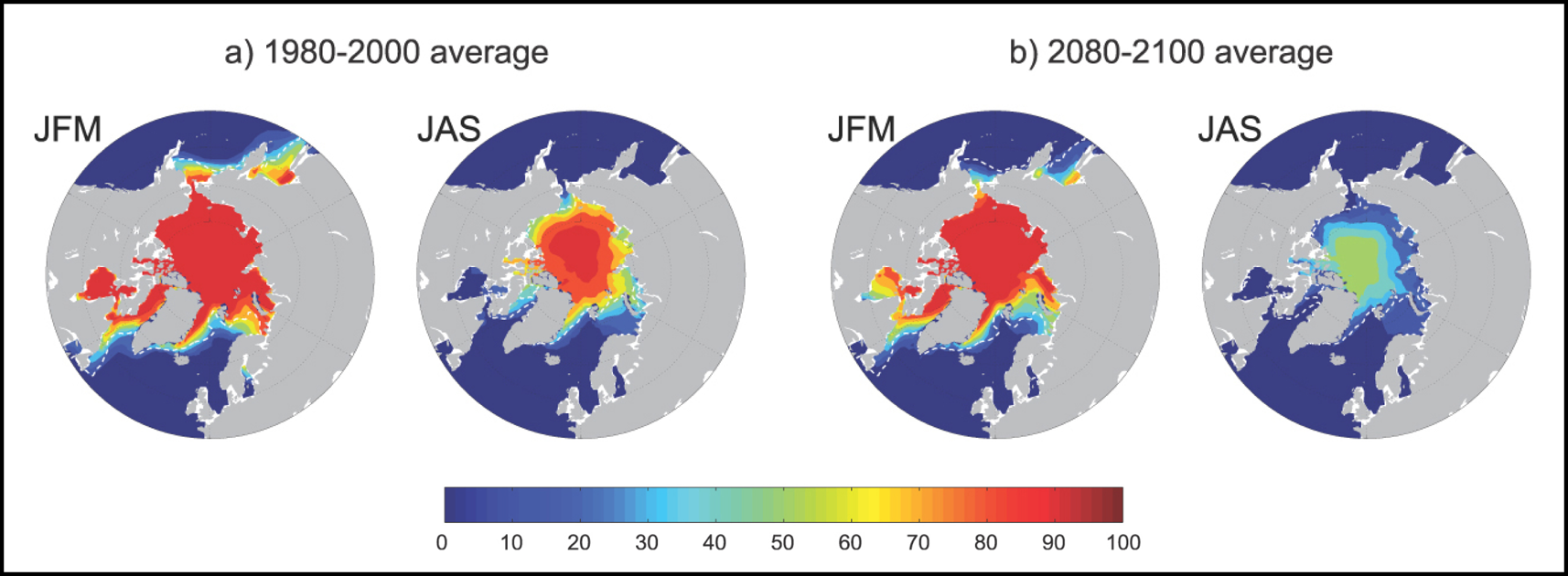
Multi-model mean sea ice concentration (%) for January to March (JFM) and June to September (JAS) in the Arctic for the periods (a) 1980–2000 and (b) 2080–2100 for the SRES A1B scenario. The dashed white line indicates the present-day 15% average sea ice concentration limit. Note the substantial reduction in summer sea ice concentrations predicted across the Arctic by 2100, which may extend seasonally ice-free conditions in southerly areas and may result in a transition from multi-year fast-ice to seasonal sea ice disintegration in northern regions.
VI Key uncertainties and future directions for research
Despite recent advances, the response of marine-terminating outlet glaciers to climatic/oceanic forcing continues to be an area of rapidly developing research, and significant uncertainties remain over the relative importance of each forcing factor and the mechanisms by which these factors influence glacier dynamics (Howat et al., 2010; Sole et al., 2008; Vieli and Nick, 2011). The following subsections outline the primary uncertainties surrounding marine-terminating Arctic outlet glacier behaviour and highlight key areas for future research.
1 Spatial variation in the relative importance of climatic/oceanic forcing factors
Our understanding of marine-terminating Arctic outlet glacier response to climatic/oceanic forcing has been primarily based on observations from a small number of Greenland outlet glaciers, with the majority of research focusing on JI and southeastern Greenland, particularly HH and KG. Consequently, it is uncertain whether the relationships observed at these locations can be extrapolated to other Arctic regions and/or whether recent changes represent a longer-term trend or shorter-term variability (Price et al., 2011; Vieli and Nick, 2011). Although glaciers within certain regions have shown some common response to climatic/oceanic forcing, most notably southeastern Greenland (Bjørk et al., 2012; Howat et al., 2008a; Murray et al., 2010), this pattern is far from ubiquitous. Results from west Greenland found no correlation between retreat and climatic/oceanic forcing for a sample of 59 marine-terminating outlet glaciers (McFadden et al., 2011) and comparison of 15 major Greenland outlet glaciers between 1985 and 2011 showed some common response to forcing, but also highlighted several notable differences (Bevan et al., 2012a). Furthermore, assessment of decadal and interannual velocity changes on >200 major Greenland outlet glaciers demonstrated substantial variations in glacier behaviour at both regional and local scales, and highlighted the importance of glacier-specific factors (Moon et al., 2012). In contrast to the GIS, observations in the Canadian Arctic (Gardner et al., 2011) and Novaya Zemlya (Moholdt et al., 2012) have found no difference between area-averaged thinning rates in land- and marine-terminating basins (Gardner et al., 2011). Moreover, the longer-term evolution of HH, KG and JI has differed markedly following their earlier mass losses (Howat et al., 2011; Thomas et al., 2011) and numerical modelling studies indicate that marine-terminating outlet glaciers can rapidly adjust to short-term calving front perturbations (Vieli and Nick, 2011). Together, this evidence suggests that the relative importance of climatic/oceanic controls varies across the Arctic and that present theories of outlet glacier response to forcing cannot be universally applied to all glaciers, regions or ice masses. We therefore draw attention to the danger of extrapolating recent rapid mass losses from a small number of glaciers and highlight the need for continued research into the climatic/oceanic drivers of marine-terminating outlet glacier behaviour on each of the major Arctic ice masses.
2 Glacier-specific factors
Results from the GIS have highlighted the substantial variation in marine-terminating outlet glacier response to climatic/oceanic forcing (McFadden et al., 2011; Moon et al., 2012), and the role of glacier-specific controls, particularly fjord geometry and basal topography, is being increasingly recognized (Bevan et al., 2012a; Howat and Eddy, 2011; Joughin et al., 2010, 2012; Nick et al., 2009; Thomas et al., 2009). Traditional theories of tidewater glacier dynamics and ice sheet instability suggest that a reverse basal slope may initiate rapid retreat via a series of positive feedbacks, as the glacier terminus retreats into progressively deeper water (Figure 12) (e.g. Hughes, 1986; Joughin et al., 2008b; Meier and Post, 1987; Vieli et al., 2001, 2002; Weertman, 1974). This behaviour may occur independently of climatic/oceanic forcing (e.g. Alley, 1991; Pfeffer, 2003), but may also be initiated by perturbations at the calving front (e.g. Howat et al., 2008a; Joughin et al., 2008b; Meier and Post, 1987; Nick et al., 2009; Pfeffer, 2007). However, the influence of overdeepenings on glacier dynamics remains subject to debate, and recent modelling results suggest that stable grounding-line positions can be achieved on a reverse bedrock slope (Gudmundsson et al., 2012; Nick et al., 2010). Furthermore, the importance of other glacier-specific factors, such as variations in fjord width, is being increasingly acknowledged (Jamieson et al., 2012). Assessing the role of glacier-specific controls is a key area for future study, as inadequate consideration of these factors may lead to substantial errors in estimates of glacier response to climatic/oceanic forcing and their contribution to sea level rise. A full analysis is, however, currently constrained by limited data availability.

Illustration of feedbacks between glacier retreat, dynamic thinning and ice acceleration during retreat into progressively deeper water. Initial retreat reduces resistive stresses acting on the outlet glacier, promoting dynamic thinning and terminus floatation, which in turn makes the terminus increasingly vulnerable to fracture and further retreat. Positive feedbacks may also develop between grounding-line retreat and submarine melt rates. These feedbacks may occur independently of climatic/oceanic forcing, but may also be triggered by forcing.
3 Quantitative assessment of marine-terminating outlet glacier response to climatic/oceanic forcing
Even on comparatively well-studied sections of the GIS, previous studies have tended to infer causality from the coincidence of climatic/oceanic change and marine-terminating outlet glacier response (e.g. Luckman et al., 2006; Moon and Joughin, 2008). As a consequence, the mechanisms linking climatic/oceanic forcing and glacier dynamics are often poorly understood (Nick et al., 2009; Vieli and Nick, 2011) and the extent to which forcing can explain glacier behaviour has not been extensively assessed. This has been improved in recent years through the development of numerical models focusing on the response of individual outlet glaciers to forcing (Nick et al., 2009; Vieli and Nick, 2011). However, marine-terminating outlet glacier dynamics are not yet adequately represented in ice sheet scale models (Price et al., 2011; Vieli and Nick, 2011; Zwally et al., 2011) and this is recognized as a significant limitation in our capacity to accurately predict near-future sea level rise (IPCC, 2007). We therefore highlight numerical modelling as an important area for future development and emphasize the need to combine results with remotely sensed and observational data, in order to improve our understanding of recent changes in Arctic marine-terminating outlet glacier dynamics.
VII Conclusions
Arctic ice masses have rapidly lost mass since the mid-1990s due to a combination of negative SMB and accelerated discharge from marine-terminating glaciers (van den Broeke et al., 2009). Studies conducted during the past 20 years have fundamentally altered our understanding of ice mass response to climatic/oceanic forcing and have demonstrated that changes in marine-terminating glacier dynamics can result in dramatic mass losses at annual timescales (e.g. Howat et al., 2008b; Rignot and Kanagaratnam, 2006; Stearns and Hamilton, 2007). In this paper, we identify and review three primary climatic/oceanic drivers of marine-terminating Arctic outlet glacier behaviour: air temperatures, ocean temperatures and sea ice. Although discussed separately, these factors are interconnected and we highlight a number of potentially important linkages which may significantly influence glacier dynamics. We suggest that meltwater-enhanced basal sliding may contribute to marine-terminating outlet glacier velocities at seasonal timescales (Howat et al., 2010; Nick et al., 2012), but its net effect on interannual behaviour may be limited, potentially due to the capacity of the subglacial hydrological system to evolve in response to meltwater inputs (Price et al., 2008; Sundal et al., 2011). Instead, marine-terminating outlet glaciers may respond to atmospheric warming via a number of alternative mechanisms, including: (1) hydrofracture of crevasses at the terminus/lateral margins; (2) meltwater-enhanced submarine melting, via plume circulation; and (3) sea ice loss due to atmospheric warming. Marine-terminating outlet glaciers are potentially highly sensitive to oceanic warming (Rignot et al., 2010), which may cause retreat through: (1) submarine melting and rapid thinning across floating sections; (2) grounding-line retreat; (3) alteration of the calving front geometry at the grounding line and/or waterline; and (4) sea ice loss due to oceanic warming. We emphasize the need to further investigate controls on Atlantic Water distribution within glacier fjords and feedbacks between fjord circulation, subglacial meltwater and submarine melting. We also underscore the influence of sea ice on seasonal and interannual outlet glacier dynamics, via its influence on calving rates (Amundson et al., 2010; Joughin et al., 2008c), and suggest that sea ice forcing may become increasingly important during the 21st century if current negative trends continue.
We suggest that the respective role of each climatic/oceanic factor varies across the Arctic and that outlet glacier response to forcing within one region cannot be assumed to apply elsewhere. Moreover, glacier-specific factors may substantially modulate the response of individual glaciers to climatic/oceanic forcing and we highlight this as priority area for future research. Numerical modelling results have improved our understanding of marine-terminating outlet glacier behaviour, but remain a key area for future development. Notwithstanding recent advances, substantial uncertainties remain over the respective roles of the various climatic/oceanic and glacier-specific forcing factors, and we highlight the potential danger of extrapolating mass loss rates from a small number of study glaciers. Consequently, the response of marine-terminating Arctic outlet glaciers to climatic/oceanic forcing remains a key area for future research and is crucial for accurate prediction of near-future sea level rise and Arctic ice mass response to climate warming.
Footnotes
Acknowledgements
We thank T. Moon for the provision of Greenland frontal position data and G. Moholdt for helpful comments on Svalbard mass balance data. We thank E. Hanna and N.J. Cox for their assistance with the air temperature data. Two anonymous reviewers are thanked for their constructive comments on the manuscript.
Funding
This work was supported by a Durham Doctoral Studentship granted to J.R. Carr.