




Abstract
This article examines the factors influencing age at death in the multiethnic villages, comprised mostly of Georgians and Ossets, in the Kistauri commune in the eastern Republic of Georgia between 1897 and 1997. The data are analyzed with Cox proportional hazards models using age at death as the dependent variable, and ethnicity, gender, marital status, residency status, and year of birth as the independent variables. The results show that Georgians lived longer than Ossets. Individuals who had ever been married lived longer than those who had not. The results perhaps reflect harsher living conditions for Ossets, the ethnic minority, despite Soviet ideologies about equality.
After the breakup of the Soviet Union, numerous reports of violent ethnic conflicts and separatist movements in the Caucasus region, which includes the country of Georgia, reached the forefront of the US news media. 1 Geopolitical rivalries and power struggles may have caused some tension; ethnic and religious differences and grievances may have caused others. Identifying possible historical roots of these tensions, however, is difficult, in part because there is virtually no reliable information about ethnic relations before the early 1990s when much of this region was part of the Soviet Union. Thus, it is nearly impossible to evaluate how much—if any—of the conflict was generated by relatively long-standing historical conditions. This article takes one step toward providing some context for ethnic relations by examining historical differences in age at death, which can serve as an overall measure of well-being and institutional discrimination between Georgians and Ossets (or Ossetians)—an ethnic group originally from the mountainous region of the Northern Caucasus—living in some small villages in Georgia. Specifically, we examine ethnic differences in historical age at death as a way to understand historical ethnic relations. Long-standing ethnic differences in age at death, for example, might suggest persistent structural inequalities between the ethnic groups that could in turn lead to grievances and conflict.
Post-Soviet Demographic Studies
One major problem in investigating historical differences among ethnic groups is the lack of data. In the former Soviet Union, demographic researchers often focused on the contemporary or historical situation in the country overall 2 or in large administrative units such as the Soviet and/or Autonomous Republics. 3 There was relatively little interest in investigating ethnic minorities. Studies of historical death rates in Russia do not consider ethnic differences. 4 Although the breakup of the Union of Soviet Socialist Republics (USSR) promoted researchers’ interest in former Soviet Republics, much of the post-Soviet research, including demographic research on mortality, focused on Russia and, to a lesser extent, on the Baltic States where demographic studies had a longer tradition. 5 However, these countries differed demographically from the other former Soviet Republics because they had different patterns of political, cultural, and demographic development.
Although Georgia is strategically important, 6 relatively little is known about the current or historical conditions of its ethnic minorities. Furthermore, demographic patterns in general, and mortality in particular, are understudied there. 7 Even the reliability of official data is questioned. 8 Official published figures from the 1960s to 2000, including the census information, may underestimate the actual death rate in Georgia. 9 Not surprisingly, then, it is even harder to find studies of mortality in Georgia that focus on specific ethnic minorities or on earlier historical periods (in fact, we know of no such study).
Throughout the twentieth century, age at death increased dramatically worldwide, as well as in the Soviet Union and Georgia. 10 During the market transition, life expectancy declined in Russia and in some post-Soviet successor states; however, there was no dramatic decline, and perhaps even an increase, in Georgia. 11 In postsocialist countries with rapid privatization, the mortality of working-aged men in particular increased, and mortality was high among the unemployed. 12 The collapse of socialist social and economic structures was difficult for everyone, especially for those who had been advantaged by them. It is highly possible that this trend of increased mortality also characterized Georgian citizens. Although ethnic differences were officially downplayed, ethnic majorities, such as Georgians, may have been advantaged under socialism in comparison to the ethnic minorities, such as Ossets. Thus, during the market transition, if social policies had conferred advantages, and they were subsequently eliminated, Georgians may have been adversely affected in comparison to Ossets. 13
Thus, we examine age at death among Georgians and Ossets. We use the records that were kept in the late 1990s at the Akhmeta Bureau of Civic Registers in eastern Georgia, which include separate sets of birth, marriage, and death records for the villages of the Kistauri commune, where many Ossets lived in the twentieth century. We anticipate an overall upward trend in age at death in the twentieth century, with a possible increase or decrease in the last few decades, and we then look for possible patterns of ethnic inequality net this trend. We also consider several other factors that could have influenced age at death, including gender and marital status, which we review below. Our data provide an interesting empirical case because they represent an understudied multiethnic community during the time span of a century.
Ethnic Differences in Mortality
Mortality rates reflect living conditions. 14 Widespread differences in living standards of different ethnic groups, sometimes created by institutionalized discrimination, can lead to differences in age at death. 15 Ethnic differences in mortality may result from educational inequality, low income and wealth, unemployment, homelessness and poor housing conditions, low birthweight, and low rates of marriage. 16 For example, in the United States and other Western countries, ethnic or racial minorities experience high levels of discrimination and poverty that may result in higher mortality rates for these minorities than for whites, despite declining national mortality rates. 17 However, not all racial and ethnic minorities have higher mortality rates. 18 In the United States, mortality rates of Latinx and Asians/Pacific Islander populations are often lower than those of White ones, while the mortality rates of African American populations are higher than those of White ones, 19 suggesting that poverty and discrimination affect ethnic and racial groups differently. Racial and ethnic minorities may have lower mortality rates than the majority population because many are immigrants who may have been positively selected from their country of origin and have more health-enhancing behaviors and stronger social support from their community. 20
It is not clear, however, whether there were ethnic differences in mortality in the former Soviet Union. Most twentieth-century research on this topic focused on the United States, Canada, Europe, and Australia, which operate under different racial and ethnic structures than those of the former Soviet Union. 21 In particular, ethnicity has been historically salient in many Western contexts, and there is a plausible link between institutionalized ethnic discrimination and widespread differences in living conditions and age at death.
In contrast, while considerable evidence suggests that some ethnic groups faced discrimination or became victims of ethnic cleansing or deportations in the early years of the Soviet Union, 22 once the regime stabilized, ethnic differences tended to be downplayed by both state policies and official propaganda. During socialism, national unity campaigns attempted, sometimes forcibly, to reduce social inequality and to assimilate ethnic minorities. 23 In addition to supporting effective state repression, however, Soviet policies aimed to minimize ethnic differences under the banner of a united Soviet citizenry, which created, at least to some extent, citizens who identified as such. 24 Soviet propaganda made strong claims about the equality of all citizens irrespective of their ethnic origin, suggesting that the USSR built an egalitarian society with equal opportunities for all ethnic groups. Grievances were generally expressed in economic or social terms, not ethnic ones. 25 Furthermore, while inequality existed in socialist societies, its overall level was relatively low in comparison to capitalist ones. 26 This overall low level of inequality may also have minimized grievances and in turn limited ethnic conflict.
Of course, ideologies and policies promoting equality did not necessarily guarantee ethnic harmony, and ethnic minorities certainly faced discrimination. 27 Ironically, these same policies that attempted to create a common identity sometimes institutionalized ethnic differences because the structure of the Soviet Union entrenched the ethnic identity of the minority populations. 28 Although there are no accounts of widespread ethnic violence before the collapse of the Soviet Union, Ossets were involved in several conflicts, though they were all outside of the Kistauri commune that we study. Conflicts occurred in South Ossetia (Figure 1) between 1918 and 1920 among the Russians, Georgians, and Ossets. 29 There was considerable violence in the 1950s in the Northern Caucasus among the Chechens, Ingush, and Russians, and some of this violence was directed toward Ossets. 30 Starting in 1989, ethnic conflicts between Georgians and Ossets erupted in South Ossetia. 31
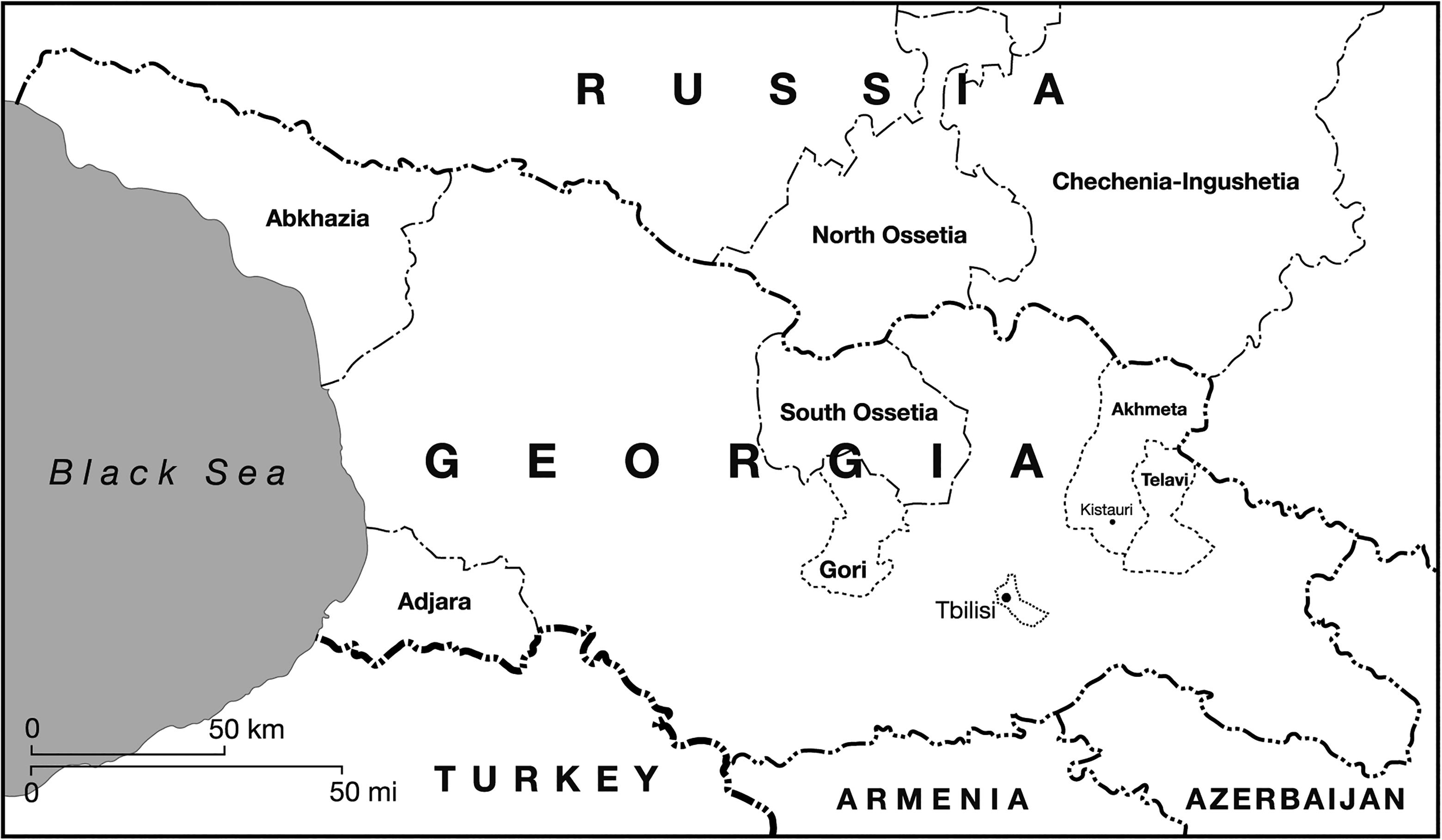
Georgia and Environs in the 1980s.
After the breakup of the Soviet Union, ethnic identity became increasingly politicized in the absence of Soviet ethnic policies. 32 Ethnic tensions arose in many postsocialist countries, sometimes leading to widespread ethnic violence, as in some regions of the former Soviet Union. 33 This trajectory raises the question as to what explains the increased salience of ethnicity after socialism. One possibility is that ethnic salience was created after socialism (perhaps spurred by geopolitical conflicts). Another possibility is that ethnicity was only suppressed (or actively repressed by forced assimilation) during socialism and resurfaced once Soviet policies disappeared, suggesting long-standing historical roots to ethnic conflicts. Thus, evaluating the increased salience of ethnicity requires historical evidence, which is notably difficult to obtain given that ethnicity and inequality were rarely explicitly investigated during the socialist period.
Finally, it is hard to judge the actual effect of Soviet ideologies with respect to ethnicity in the region that we study. It is not clear what influence Soviet propaganda had on the Kistauri commune, which was far from the political and ideological centers of the Soviet Union and outside of South and North Ossetia where Ossets were concentrated. During socialism, the Soviet system in this commune worked without permanent supervision from the controlling Communist Party bodies, 34 so both ideological pressures and information were relatively limited there for most of the twentieth century. Finally, although Ossets faced some institutional discrimination in these villages (e.g., Georgian was the language of instruction in schools), the level of social homogenization was relatively high. For example, when Zurabishvili visited the villages in the late 1990s and early 2000s, she could not distinguish between Osset and Georgian houses. The local population claimed that the different ethnic groups lived together on friendly terms. Many Ossets living outside of South Ossetia adopted the Georgian language and intermarried with Georgians, suggesting that interethnic tension was relatively low. 35 Our analysis of age at death below provides historical evidence about Ossets where there is little other information available to assess their quality of life.
Gender, Marital Status, and Migration
In addition to ethnicity, major determinants of mortality include gender, marital status, and migration. After the development of reproductive healthcare in particular, and increased access to health care more generally, women’s life expectancy often exceeded men’s. 36 However, women’s life expectancy may be compromised in societies where access to health care is limited because maternal mortality is often high. 37 Furthermore, excess female mortality is more common in underdeveloped and rural societies because many parents prefer male children. 38 Females in these societies who nevertheless survive until old age face higher mortality risks as widows. 39 High levels of illiteracy, poor health care, and limited access to health care for women are also linked to excess female mortality rates. 40
The breakup of the Soviet Union had a negative effect on life expectancy in the successor states, 41 but the life expectancy of men and women had been declining in many countries since the 1960s. 42 The premature mortality of men has been documented in all Eastern European countries from the 1970s to 1990s and is usually linked to lifestyles that increase mortality, such as smoking, excessive alcohol consumption, and unhealthy diets. 43 The importance of the family and, in particular, women’s ability to generate support networks and survival strategies increased during the market transition in the former Socialist countries. 44 As a result, unmarried men in this region faced higher mortality rates during the transition.
Marital status also affects mortality because married individuals generally live longer, but the relationship between marriage and longevity is generally stronger for men than for women. 45 The excess mortality of all unmarried groups (single, widowed, and divorced) may have increased over the past decades. 46 It is not clear, however, whether marriage has a positive effect on longevity or whether healthier individuals tend to be selected into marriage and therefore enjoy the economic stability provided by family. 47 Both mechanisms, of course, can operate simultaneously. 48 It is also possible that it is not marriage itself but the presence of kin or a large social network that supports longevity. 49
Finally, migration may affect age of death. While internal and international migrants often have a health advantage, the effects are not universal and often depend on gender and age at migration. 50 Location of origin and destination may or may not affect migrants’ health. 51 Some of these locational effects are explained by selection and sorting; for example, poor migrants tend to move to poor neighborhoods. 52 In addition to sorting and positive and negative selection, migration itself can influence mortality because of the dangers of the journey or the difficulties associated with integration at the destination. 53 Finally, the cumulative chance of migration increases with age, so individuals who live longer are more likely to have migrated. 54
Twentieth-century Georgia: Major Historical Events
Our data span the late nineteenth to the late twentieth centuries, when Georgia experienced several forms of statehood and had several different governments. By the end of the nineteenth century, Georgia was part of the Russian Empire. After the Bolshevik revolution in Russia in 1917, the Menshevik Georgian elite attained power, and in 1918, an independent Democratic Republic of Georgia was established. Independence lasted only until the beginning of 1921, when the Soviet army occupied the country and forced the Menshevik government into exile in Western Europe. Forced Sovietization of Georgia started immediately after that, albeit with limited success. During the repressions of 1937, the percentage of Georgian intellectuals who were prosecuted may have been one of the highest of all ethnic groups in the Soviet Union. 55
The Great Patriotic War (1941–1945) was an important milestone in Georgian history, partly because it strengthened a “Soviet” identity among individuals who otherwise might have characterized themselves as ethnic Georgians. However, soon after the death of Stalin, events in Moscow (namely, Khrushchev’s speech against Stalin) provoked strong anti-Soviet demonstrations in Georgia. In March 1956, Georgians organized mass protests in Tbilisi that were harshly suppressed; little was known about them until the late 1980s. 56
It was probably at least partly because of such protests that socialism in Georgia during the Soviet period did not have the same orthodox nature as in central Russia. 57 Especially during the late socialism of the 1970s and 1980s, Georgia had different cultural norms and relatively higher living standards than other Soviet Republics 58 as well as higher levels of national self-consciousness. 59
In 1989, the movement for national independence reached its peak in Georgia. On April 9, 1989, an anti-Soviet protest in Tbilisi was dispersed by Soviet troops, resulting in the deaths of twenty young protesters. The events were widely covered by the Georgian, Soviet, and international news media. In 1991, Georgia officially regained independence. After independence, conditions were difficult; the government and the population had little experience with independence or democracy. The economy collapsed, and the country became involved in two violent ethnic conflicts in Abkhazia and South Ossetia. The second of these conflicts is of particular importance for us, since it is connected to Ossets, the ethnic minority group we analyze.
Georgian–Ossetian Relations
Ossets, a North Caucasian ethnic group, constituted one of the largest ethnic minorities in Georgia throughout the whole Soviet period. They speak the Ossetic language, which belongs to the North Iranian language group. Both Ossets and Georgians practice Orthodox Christianity 60 although Ossets are believed to retain numerous pagan beliefs. 61 In the Soviet Union, Ossets were concentrated in two autonomous regions located on the border between Georgia and Russia. One of these regions was the North Ossetic Autonomous Republic, which was part of Russia. The other one was the South Ossetic Autonomous District, within the borders of Georgia (Figure 1). Ossets, therefore, were one of the two ethnic minorities that had administrative autonomy in Georgia during the Soviet period along with the Abkhaz. 62
Historically, Ossets lived in the mountains of the North Caucasus. Because arable land was scare, their major occupation was cattle-breeding, which was generally insufficient to sustain their families, and poverty was widespread. 63 Because of these harsh conditions, many Ossets migrated from the mountains to the valleys south of the Caucasus. Osset authors claim that such migration started in the thirteenth century. 64 Movement of Ossets to the inner regions of Georgia (such as the Akhmeta region where the Kistauri commune is situated) started in the late seventeenth century 65 although this migration stream was not as large as the one from the mountains to the valleys. 66
By the end of the nineteenth century, Ossetic settlements in North Ossetia and South Ossetia were established. As late as the 1880s, Ossetic settlements in the North Caucasus were monoethnic. 67 The subsequent migration of Ossets often led to the formation of multiethnic settlements and exposed them to the culture of other ethnic groups living in the Caucasus. Hence, the migration of Ossets had not only geographic and economic consequences but also important demographic and cultural effects as well; in particular, it affected family structure by decreasing family size. 68
According to the 1979 Census, 162,000 Ossets lived in Georgia. Of these, 65,000 lived in the South Ossetic Autonomous Region. The remainder lived throughout Georgia, 69 though they were concentrated in the Georgian capital, Tbilisi, and in several regions in northern and eastern Georgia (primarily in the regions of Gori and Akhmeta where Kistauri is located). 70 Ossets living in the inner regions of Georgia preserved their ethnic identity, language, and close ties with their relatives in North or South Ossetia. However, Ossets who lived in villages and cities alongside ethnic Georgians were more integrated in Georgian society and more proficient in the Georgian language than those who lived in South Ossetia. 71 During the late Soviet period, there was relatively high out-migration from the South Ossetian Autonomous District, mostly to North Ossetia. 72 Relatively little is known about the migration from the inner regions of Georgia.
In the early 1990s, parallel to the anti-Soviet nationalistic movement in Georgia, there were equally strong anti-Georgian nationalistic movements in the autonomous regions of Abkhazia and South Ossetia. The most extreme leaders demanded separation of the regions from Georgia. Abkhazian leaders often advocated for full independence of their region. Separatist leaders in South Ossetia wanted to join their region with the North Ossetian Autonomous Republic to create a single Ossetian autonomous region within the borders of Russia. As a result of the conflict in South Ossetia, the Georgian government decided to abolish the autonomous region as an administrative unit. Consequently, the region, most of which is currently de facto controlled by Russia, was renamed by Georgian authorities so that the name did not suggest an association with Ossets living there. The Georgian–Ossetian military conflict did not spread outside South Ossetia, so it did not have a direct, violent impact on the community we analyze. However, it increased Ossetian emigration from Georgia, 73 including the Kistauri commune villages because of ethnic discrimination and economic reasons. 74
The Georgian–Ossetian conflict is often characterized as a legacy of the Soviet policies that created tensions between the ethnic majority and minority populations. 75 At the same time, the Georgian government during the early years of independence was criticized for ineffectively addressing the integration of ethnic minorities and failing to protect their rights. 76
Ossets in the Kistauri Commune
Although there are now nine villages in the Kistauri commune (Figure 2), in the past, the number of villages as well as their administrative organization differed. 77 These villages vary by size and ethnic composition (Table 1). The two major ethnic groups are Georgians and Ossets although some Armenians live in the commune, primarily concentrated in the central village, Kistauri. The Kistauri commune villages never have had Ossetian or Armenian schools.
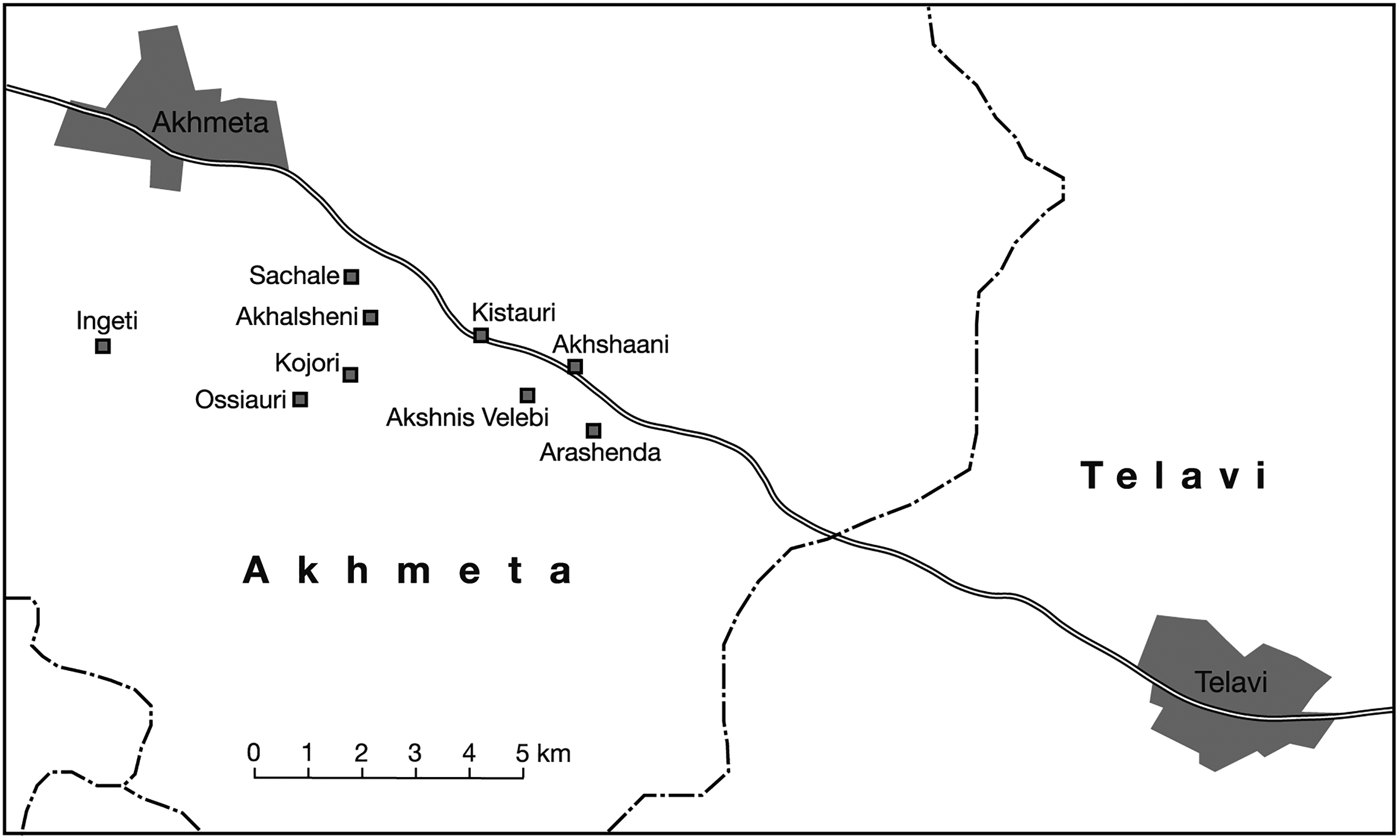
Villages of the Kistauri Commune in the 1980s.
Population and Ethnic Composition of Kistauri Commune Villages, 1999.
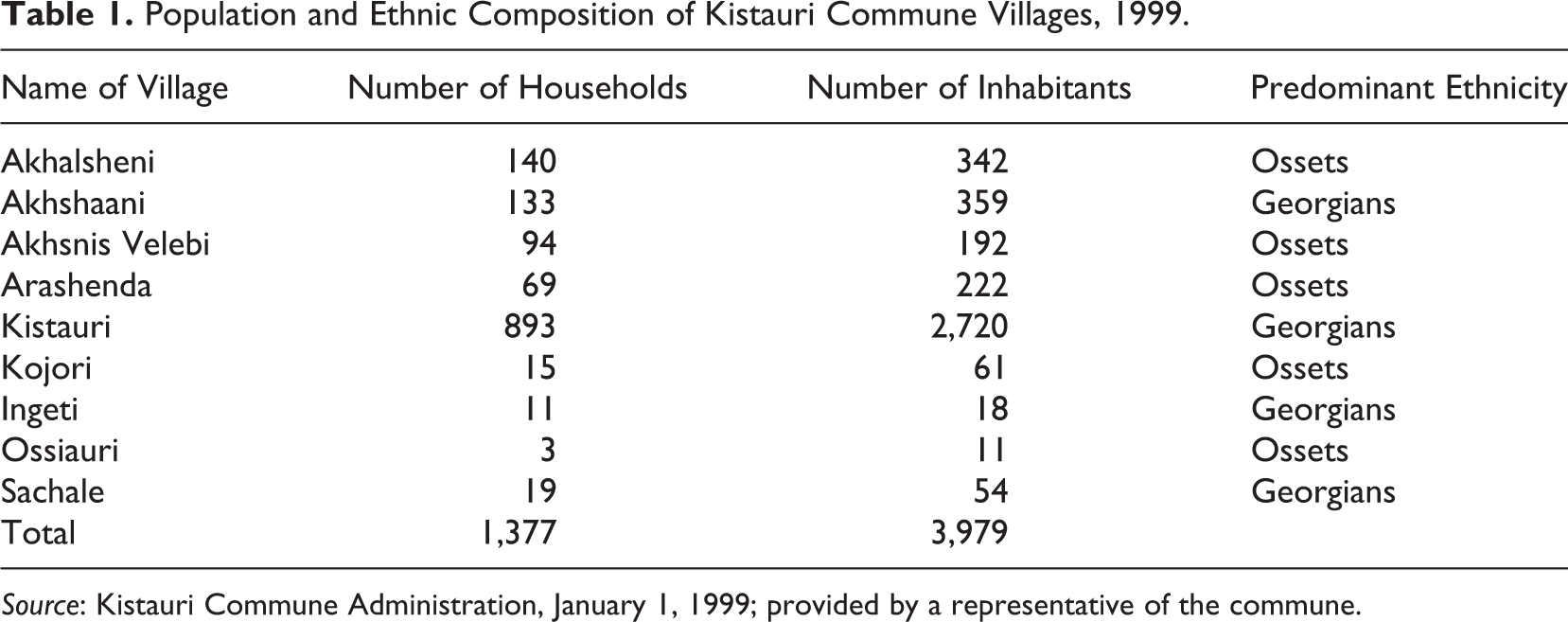
Source: Kistauri Commune Administration, January 1, 1999; provided by a representative of the commune.
Although infrastructure was relatively decentralized in the Soviet Union, the outlying villages had less access to social services and less developed infrastructure and health care facilities. Thus, it is possible that the residents of the commune’s central village, Kistauri, and of the closest neighboring villages, Akhalsheni, Akhshaani, and Akhshnis Velebi, lived longer than those who lived in the more remote villages. Almost all of these villages were depopulated in the 1990s although the rate of out-migration varied by village. Some inhabitants moved to a neighboring village in the same commune, often to a village with a more developed infrastructure; some moved out of the Kistauri commune.
Method
Collecting Data for the Kistauri Commune
Between 1999 and 2000, Zurabishvili compiled all the birth, marriage, and death records from the surviving archival documents that were recorded for the Kistauri commune villages and dated from 1897 to 1997. All of these documents were kept in the Bureau of Civic Registers of the Akhmeta region. Prior to 1921, the priests of St. Nino’s church in the village of Kistauri kept the birth, marriage, and death records. After Georgia became part of the Soviet Union in 1921, civil registration replaced parish registration. Because Georgia was part of the Russian Empire in the nineteenth century, the parish records prior to 1918 are mostly in Russian; after 1921, all records are in Georgian. The civil registers contain information similar to, but not identical to, the parish records. The most important difference for our analyses is that ethnicity was recorded in the civil registers but not in the parish records, so we have to impute ethnicity for these records as we explain below.
Registration was most complete between 1945 and 1991, possibly because of the development of so-called “population politics” adopted by the early Soviet government. 78 In our data set, 73.0 percent of birth records, 84.7 percent of marriage records, and 67.5 percent of death records fall in this period. Earlier records throughout the Caucasus and the Russian Empire are not as reliable; during wars and revolutions, in particular, collection of this information was discontinuous. 79 In addition, because of the unrest in Georgia that followed the forced Sovietization of the country in 1921, all three types of records are often missing from the mid-1920s to the mid-1930s. These records were not collected during the civil war in Georgia in the 1920s, and some records were later lost in fires or other incidents. These and other sources of missing data are common in demographic records, especially historical ones. 80
We merged the separate birth, marriage, and death records to create a single record for each individual. Although these records have limitations, they create a unique data set for this region and time period. Given the virtual absence of any other historical studies or sources of information, this data set provides one of the few sources to examine the historical conditions of Ossets and Georgians. In the analyses below, we consider possible differences in age at death for Ossets and Georgians as an indicator of structural inequalities between the two groups. We also consider the effects of gender, marital status, migration, and year of birth as a way to consider some of the historically specific effects described above. As there are virtually no other ways to study inequality during the Soviet period given the lack of data and the taboo of studying inequality, our approach can provide important insights into this issue despite the data limitations.
Results
Descriptive Statistics
In the following analyses, age at death, in years, is the dependent variable and the independent variables are ethnicity, gender, marital status, residency status, and year of birth. Table 2 provides information on the dependent variable. We had records for 8,351 individuals whose birth, marriage, or death was recorded in one of the villages in the Kistauri commune between 1897 and 1997, the years of our data set. 81 For five of these individuals, the records were so incomplete or illegible that we could not determine the age of death or age of last observation (the date of the last event recorded for that individual), leaving us with 8,346 cases, detailed in Table 2 and used in the following analyses. Of these individuals, there were 1,953 recorded deaths; for these deaths, the value of the dependent variable is the recorded age of death. The dependent variable is censored for all cases in which we did not have the recorded age of death. For these cases, we used the date of last observation in the models. For the censored cases, the independent variables are also defined at the point of censoring.
Means of Variables (without Imputation).
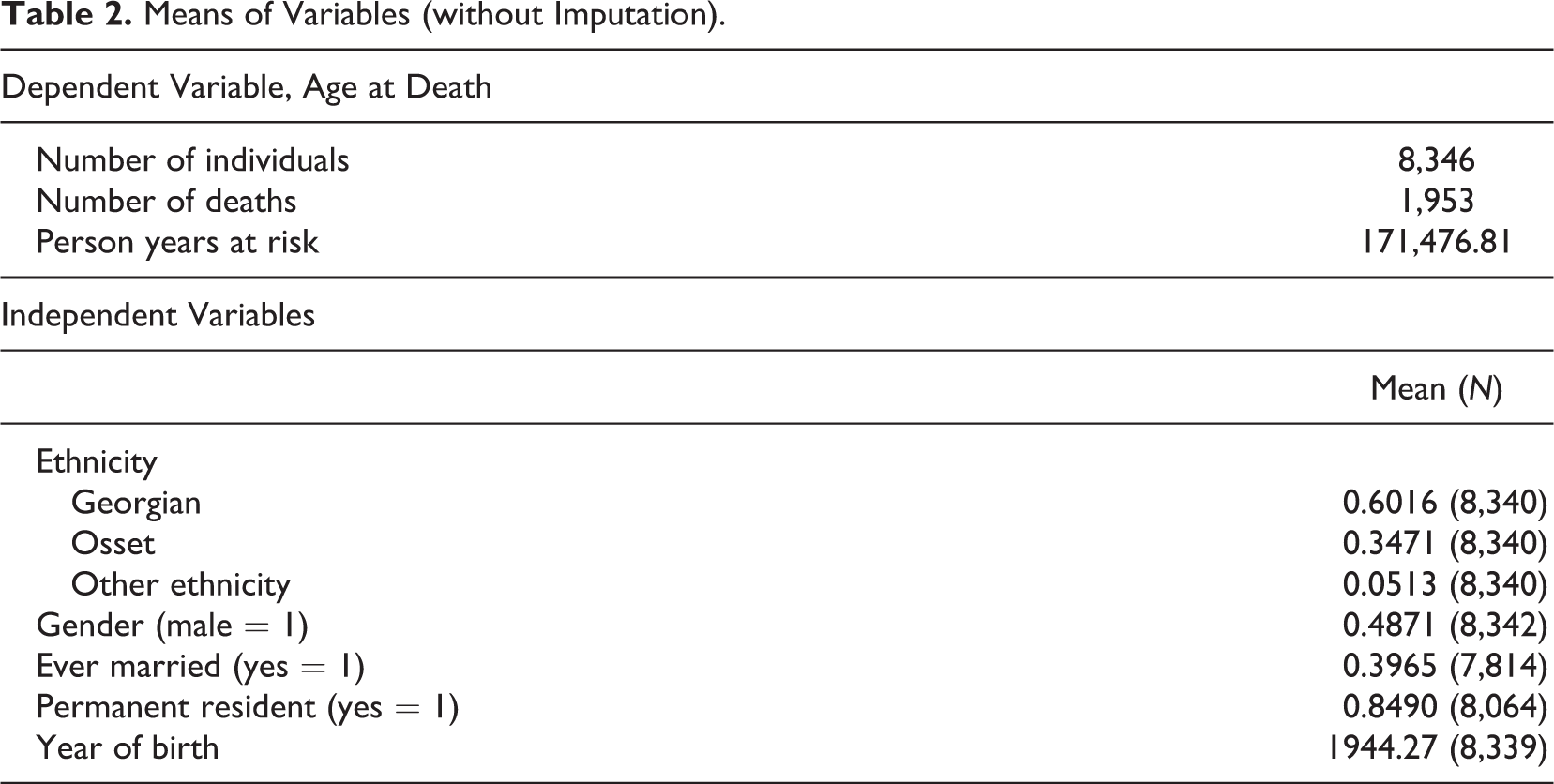
The means of these independent variables are also presented in Table 2. Ethnicity was often recorded directly in the records, though it was recorded less frequently than gender. If the ethnicity could not be determined from the records, we assigned ethnicity on the basis of the surname, which were often specific to particular ethnic groups. Finally, if ethnicity was still missing, we assigned ethnicity on the basis of residence, since most of the villages were ethnic villages, and on the basis of the ethnicity of family members recorded in the data, where available. Georgians constituted the majority of the sample (60.16 percent; Table 2). Ossets constituted a sizeable minority of the population (34.71 percent). Also, some Armenians, Slavs (e.g., Russians, Ukrainians), and Kurds lived in these villages. Table 2 shows that 5.13 percent of the population was neither Georgian nor Osset. Men comprised 48.71 percent of the individuals in our data. Gender was usually recorded directly in the records. In the few cases where gender was not recorded in the birth, marriage, or death record, it could be determined from the first name for almost all cases.
To create the variable, ever married, (coded 1 if the individual had ever been married and 0 if not), we again combined information from the birth, marriage, and death records. Marital status (married, widowed, and never married) at the time of death was provided directly in many of the death records. The marriage records themselves obviously provide evidence of marriage. The individuals for whom we only had a birth record were censored at that point in time, so they were coded as never married. About 39.65 percent of individuals were married at some point in their lives.
We determined residence by comparing individuals’ places of birth, marriage, and death to ascertain whether these places were the same or different. Where these places were missing, we used the information from the marriage and death records, which usually indicated whether or not the individual had always lived in his or her village at the time of marriage or death. From these pieces of information, we created a variable indicating whether or not the individual was a permanent resident of the village. This dummy variable was coded as 1 if the individuals had always lived in the same village and 0 if they had changed their place of residence at least once. As Table 2 shows, 84.90 percent of the individuals lived in the same village their entire lives. We also were able to determine the year of birth, either directly from the records or indirectly by using an age and date (e.g., an age of marriage and date of marriage). The mean year of birth was 1944 (Table 2).
Multivariate Results
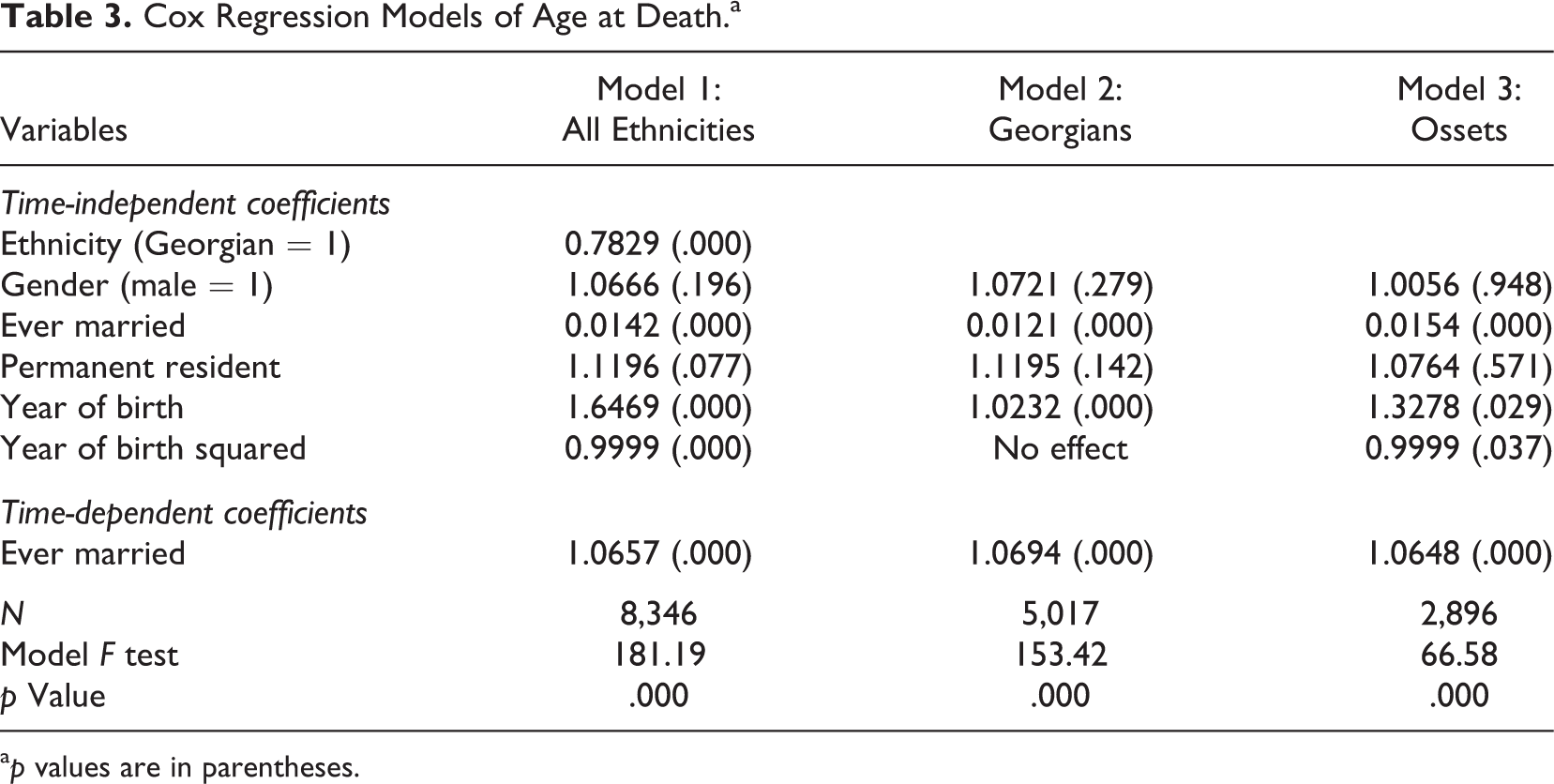
To analyze the effects of several independent variables on age at death, we used Cox regression, a common method for analyzing mortality, 82 including age at death in historical populations. 83 We used multiple imputation, with chained iterations, to obtain our estimates. We present hazard ratios in Table 3, which give the effect of a one-unit difference in the independent variable on the hazard of dying. 84
Cox Regression Models of Age at Death.a
a p values are in parentheses.
Cox regression is based on the assumption that the hazard ratio is proportional over time. 85 In results not presented here, we began with a baseline model with only time-independent effects, and we tested the proportional hazards assumption for all of our models using covariate-specific and global tests of the estat phtest Stata command. 86 None of these models passed the proportional hazards test, so we added the time-dependent coefficients for the variable indicating whether the individual had been married to the models, and they are shown in Table 3 in the bottom panel. 87 Stata 88 estimates time-dependent coefficients as linear interaction terms between the independent variable, ever married, and time, which here is age. Statistically significant interactions indicate that the effect of the independent variable on the dependent variable changes over time. 89
In Table 3, model 1 shows that the hazard ratio for the variables ethnicity and ever married are significant and less than 1. In model 1, we used a dummy variable for ethnicity, coded 1 if the individual was Georgian and 0 otherwise. Thus, Georgian ethnicity and having been married reduces the hazard of dying. The time-dependent component of the effect of marriage is significant and greater than 1, indicating that the protective effect of marriage decreases as individuals become older. The hazard ratios for gender and residency status are not significant. The hazard ratio for year of birth is significant and greater than 1, indicating that the individuals born in more recent years have a higher hazard of dying. The hazard ratio for year of birth squared is significant and slightly less than 1, indicating that the higher hazard of death associated with more recent years of birth decreases as year of birth increases. There is also an interaction between year of birth squared and ethnicity. We show this effect in models 2 and 3 by separating the models for Georgians and Ossets because model 1 also includes the small number of other ethnic minorities living in these villages. Model 3 shows that the hazard for year of birth squared is significant only for Ossets, not Georgians. Thus, for Georgians, the hazards of dying increase as year of birth increases. For Ossets, this effect diminishes for individuals born at later dates.
In analyses not presented here, we also considered alternative operationalizations of year of birth, possible effects of social status, and possible effects of residence. First, we investigated multiple categorical periodizations of year of birth, including fixed ten- and twenty-year cohorts and substantive groupings around historical events (e.g., wars, political regime change), but these models were not substantively interesting. Second, we included variables that measured the effects of social status, but the results were insignificant. We measured social status by combining information in the records about education and occupation from birth, marriage, and death records, either about the individuals themselves or about their parents or spouses. Our measure was obviously rough, so a more refined one might have provided statistically significant results, but unfortunately, these data provided no better measure. Third, we explored the potential effects of village of residence. We examined whether living in the central village, Kistauri, which may have had somewhat better infrastructure and services, increased age at death. However, we found no statistically significant effect of this variable. We also explored other possible geographic effects; for example, living in the villages that were relatively close to each other and connected by a major regional road (i.e., Kistauri, Akhalsheni, Akhshaani, Akhshnis Velebi), as opposed to living in the more peripheral villages, affected age at death, but these results were also statistically insignificant. Finally, we considered whether living permanently in a predominantly Georgian village affected age at death, but again, we found no statistically significant effects of this variable. Thus, our findings about ethnic differences in mortality do not seem to be a result of village of residence.
Discussion and Conclusions
We examined possible factors that affected age at death of the population of the Kistauri commune villages in eastern Georgia in the twentieth century using birth, marriage, and death records. We considered differences in age at death (our dependent variable) as an important reflection of living conditions 90 and examined the relationships between it and ethnicity, gender, marital status, residency status, and year of birth (our independent variables). In sum, our results suggest that Georgians lived longer than Ossets, individuals who had been married lived longer than those who never had been married, and individuals born earlier in the twentieth century lived longer than those who had been born later in the twentieth century.
We were particularly interested in whether ethnicity influenced age at death in these villages. Our analyses show that Georgians lived longer than Ossets. Ossets may have faced discrimination, differential treatment, more physically demanding or difficult jobs, and other structural disadvantages (e.g., Georgian was always the language of instruction in the schools, not Ossetian or Armenian). Institutional and social discrimination created large differences in life expectancy by race and ethnicity in the United States and other Western countries. 91 It may have had some similar effect in these Georgian villages. To a large extent, these villages were socially homogeneous though ethnically diverse. Furthermore, although villages tended to be comprised primarily of either Georgians or Ossets, there was no strict residential segregation in the commune, and the groups were not socially isolated from each other. Residential segregation has an important effect on mortality, 92 but there may have been other mechanisms that created differences in mortality in these villages. 93 It is possible that the Soviet ideology of the equality of national and ethnic groups may have been ineffective in Georgia and that Georgians were advantaged, which in turn might have affected age at death.
Finally, as we noted at the beginning of this article, dramatic ethnic conflict between these groups developed after the collapse of the Soviet Union. 94 While our data cannot point to any cause of ethnic violence, our results suggest that Georgians died at older ages than Ossets, which might reflect lower living standards for Ossets. Our finding that the effects of year of birth on age of death was curvilinear only for Ossets suggests that the effect of the market transition in increasing mortality was not as strong for Ossets as for Georgians. The market transition disadvantaged some groups that had been advantaged during socialism (e.g., in most countries, men’s mortality generally increased during the market transition). 95 If our interpretation is correct, then Ossets may have had relatively fewer reasons for grievances in more recent years, which suggests that long-standing grievances, not recent ones, might have spurred violence. Of course, we can only speculate here about the causes of grievances or violence. These findings may also stem from deficiencies in our data, and in particular, the relatively incomplete registration after 1991. In addition, our study examines ethnic differences only in one small region in Georgia. It is possible that conditions were different in other locations. Nevertheless, our results suggest that in the Kistauri commune villages, Georgians outlived their Osset neighbors.
We also examined other variables—gender, marital status, and residency status—though they were not the focus of our study. In contrast to the findings of other research in different countries, our results do not show gender differences in age of death. 96 Our results confirm previous findings that marriage has a protective effect. 97 However, our data did not allow us to distinguish between different types of unmarried people, that is, to compare age at death for divorced, widowed, and never-married individuals. Furthermore, we cannot separate out possible effects of selection. 98 Our findings that migration does not affect age of death confirms similar findings 99 but differ from findings showing that migration does affect survival. 100 However, our data do not allow us to consider the many other factors that influence whether or not migration had an effect on age of death, including age, location of origin, changes in behavior and health because of migration, selection, and sorting. 101
The results of our analysis do not illustrate a dramatic decrease in mortality in the population of the Kistauri commune villages in the twentieth century. This is somewhat in contrast with the increase of life expectancy of the population worldwide 102 and with the rapid increase in life expectancy in the Soviet Union. 103 Our findings may reflect the high mortality for cohorts who lived during World War II and the harsh realities of Soviet rule. Furthermore, we do not see a sharp increase in mortality during the market transition in our data. In some countries in Eastern and Central Europe, life expectancy started to decline during the 1960s, dropping precipitously in the 1990s. 104 In almost all Eastern European countries and the former Soviet Union, the processes of social and economic transformation had a negative effect on life expectancy. 105 Georgia may have been an exception, however, as there was no dramatic decline and perhaps even an increase in life expectancy in Georgia during the market transition. 106 Registration, and therefore our data, was relatively incomplete after 1991, so we cannot draw strong conclusions from our findings with respect to that particular period. Similarly, our data before 1945 are also relatively incomplete. It is possible that our findings of increasing mortality in most of the twentieth century, followed by decreased mortality at the end of the century, reflect the unique pattern of mortality in this area of Georgia that seems to contrast with many of the other socialist and postsocialist countries (and also perhaps is unique to Georgia more generally). 107 It is also possible that our findings stem from deficiencies in the data. Although analyzing overall changes in mortality is not the main point of our article, it is important that we included year of birth in our models, irrespective of whether it is interpreted as a control or a trend.
Mortality in Georgia is relatively understudied. 108 Along with ethnicity and inequality, mortality received little attention during the Soviet period, and as a consequence, there are few concrete studies and little scholarly tradition of examining these phenomena and their interrelationships. Our study attempts to fill this gap. Although we focus on one small region with incomplete historical data, we are able to provide a unique longitudinal study of age at death in the Kistauri commune villages of Georgia. We hope that it will provide a comparative basis for future studies in other regions.
Footnotes
Authors’ Note
Earlier versions of the article were presented at Association for the Study of Nationalities Nineth Annual World Convention at Harriman Institute (Columbia University, New York; April 15–17, 2004) and at the Social Science Historical Association Annual Meetings in Montreal, where we got helpful comments from the discussants, Sergey Sokolovsky and Ioan Bolovan. Chase Langford made the maps.
Acknowledgments
We would like to thank the members of Emigh’s graduate student “working group,” members of William Mason’s Event History Analysis Winter 2004 class, Xiao Chen, Andy Lin, UCLA ATS, Elizabeth Frankenberg, Douglas L. Anderton, Ka-Yuet Liu, Siwei Cheng, and Susan Watkins for their helpful comments. We also thank Corey O’Malley and Alessandra Chinsen (funded by University of Melbourne’s Early Career Researcher Grant Scheme) for their research assistance.
Declaration of Conflicting Interests
The author(s) declared no potential conflicts of interest with respect to the research, authorship, and/or publication of this article.
Funding
The author(s) disclosed receipt of the following financial support for the research, authorship, and/or publication of this article: Funding for Zurabishvili for data collection was provided by the Ford Foundation (Grant # 990-0133) and NSF (SES-9906120). A fellowship from Open Society Institute allowed Zurabishvili and Emigh to analyze the data and write the results. The University of Melbourne’s Early Career Researcher Grant Scheme provided funds for research assistance for Lee.