



Abstract
In the last several years, marriage and family patterns among the Kucong Lahu of Jinping County, Yunnan, have changed significantly due to rapid economic and social changes all over China. Based on ethnographic research in Lu Village, this article explores the current “escape” migration behavior of married Lahu women. They used migration as a strategy to escape patriarchal husbands, families, and local society. This paper describes a paradox between the autonomy of women's individual actions and the inability to escape the system even when on “escapes.” This sort of “escape” strategy cannot ultimately change the gender inequality and social status.
Bai is a 36-year-old woman. She grew up in a family with eight children, in Lu Village, a remote ethnic Lahu settlement in Yunnan, near the Vietnamese border. When she was young, she lived in poor conditions and her family did not have enough food. She was rebellious, unlike her sisters and brothers. In December 1994, when she was only 12 years old, she ignored her parents’ wishes and resolutely married 35-year-old Wang, who came from Guangxi province. Wang was a Han; he came to Lu Village to find a wife. In an agreement between Wang and Bai's family mediated by a matchmaker, Bai immediately married Wang and migrated to Guangxi with him. Unfortunately, life in Guangxi was not what Bai had expected. Wang's home was poor and located in a small, poverty-stricken village. As an only child, he needed to support his aging parents. After she went to Guangxi, Bai was forced to find a job in a nearby town, while Wang stayed at home, supported by Bai. He warned her, “No work, no food.” After two years of marriage, she gave birth to a girl. Afterwards, Bai and Wang migrated to Guangdong—a province much farther away from Wang's home—to find a job because they needed more money with a child to take care of now. In 1998, she finally gave birth to a son. However, her life in her husband's family did not improve. After a brief period of confinement, Bai left Wang during a quarrel. She went alone back to Lu Village, without telling her husband or his family. She just escaped. Wang and his family never contacted Bai after her “escape,” and she never went back to Wang's home. After this failed marriage migration, Bai stayed in Lu Village for about two years. She found that she could not re-adapt well to life in the village. Bai's mother told me her daughter wouldn't do any housework and only watched TV or occupied herself on her mobile phone. In Bai's opinion, living in Lu Village was boring and hopeless—so she migrated again in 2000. From then until 2016, Bai had many intimate relationships with men from different regions, but she never married anyone again. In 2011, Bai met her current boyfriend, 26-year-old Chen, when they worked in Guangdong. He was 10 years younger than Bai; therefore, Bai was not too optimistic about this relationship even though they kept up an intimate relationship for 5 years. She found that Chen had many dubious relationships with other girls on WeChat. “I’m too old to find a good husband now,” she thought. During her work in Guangdong, she tried to commit suicide twice. In Lu Village, however, nobody knew what happened to her. Families and friends would say she had too many boyfriends. They told her to find a good man and marry him, but she always responded, “I know I know, don't educate me.” As she told me about her personal experiences, she was a sex worker in many places where she migrated. The villagers were also aware that she had been a known mistress to some man near Lu Village.
Introduction
In the past four decades, China has experienced consistent and rapid economic growth and dramatic social structural change, both of which have impacted ethnic minority areas in the remote and frontier regions of southwest China. Traditional cultures, values, religious beliefs, and marriage patterns of most of China's ethnic populations were relatively stable until recently due to historical and geographical isolation. But especially, since the beginning of China's Reform and Opening in 1978, the pursuit of development, bringing urbanization, and commodification have created some new social phenomena and problems in ethnic minority areas, eroding old social forms and bringing risk and precarious freedom 1 (see Figure 1).
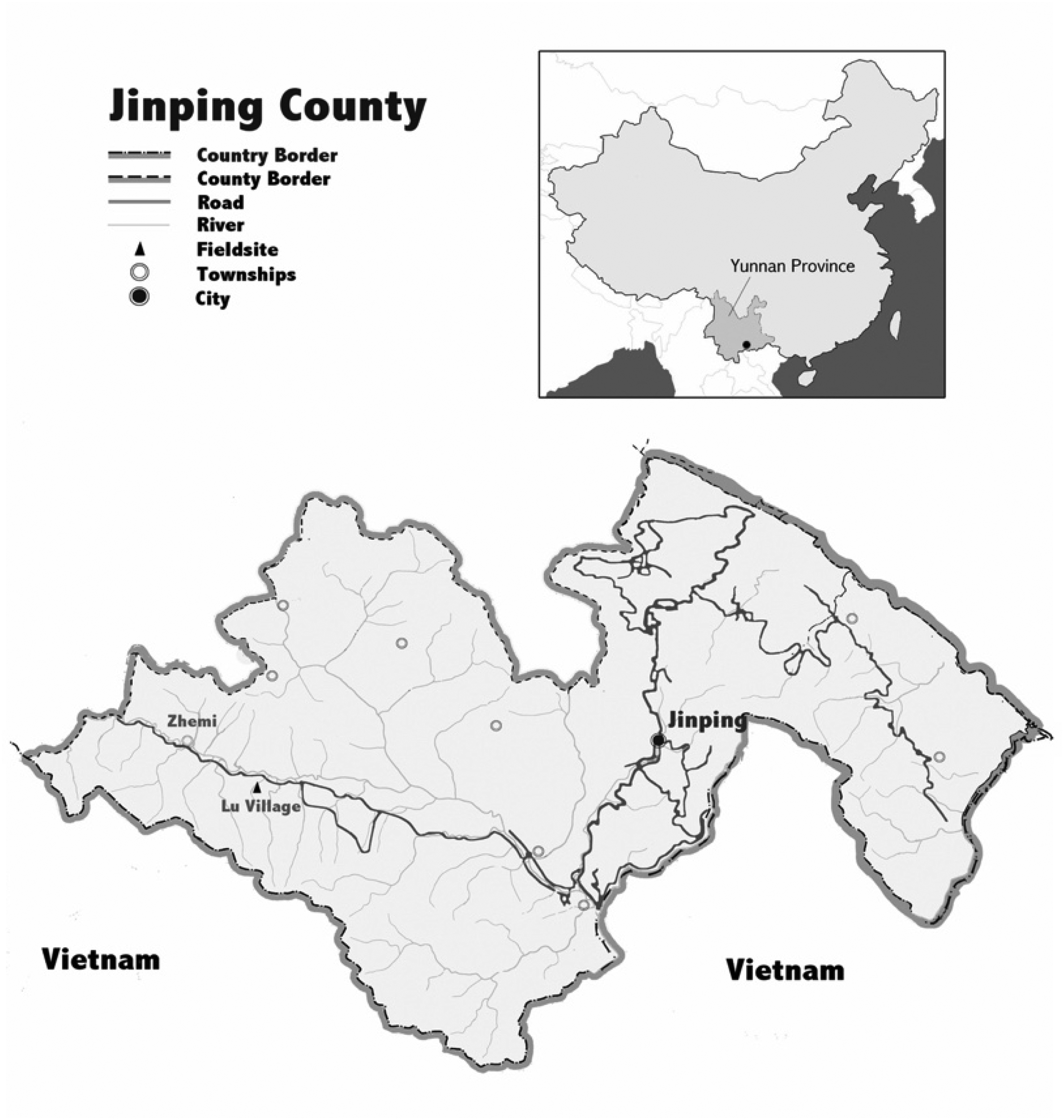
Jinping county in Yunnan province and Lu village in Jinping.
Human migration has been a feature throughout Chinese history, as the result of natural disasters, wars, population stress, poverty problem, and climate changes. Over the past several decades, scholars have focused on the myriad ways in which people have migrated, including rural people working in cities, 2 marriage migration, 3 ecological migration, 4 poverty alleviation resettlement, 5 political migration, 6 etc. However, fewer scholars have paid attention to migrant ethnic women.
In 2009, the migrant population in China was estimated at 211 million, and one-third of them were females. 7 By the end of 2016, there were more female migrants 20–29 years old than males. 8 By 2020, China's migrant population was projected to grow to 291 million, based on estimates of the industrialization and urbanization process, as well as the trend of rural–urban migration. 9 The gender ratio of the migrant population has thus shifted from men significantly outnumbering women to gender balanced since the end of the twentieth century. Most of the migrant women came from poor regions, many of them from impoverished ethnic minority areas in southwest China.
Previous studies on ethnic minority migrant women of southwest China summarized by Yang 10 focused on the characteristics of migrant women, including the causal factors contributing to the decision to migrate, the ethnic women's social integration in urban areas, and the gender characteristics of the migrant population. The effects of migration on sending and receiving areas were also significant research topics, along with the nature of migration by ethnic women. More specifically, the literature emphasizes marriage migration, 11 women trafficking, 12 transnational migration, and labor export. 13
From the perspective of gender, women's migration has received much recent scholarly attention. With economic development and social changes, migrant women have more chances to be upwardly mobile due to more employment opportunities, which could help them achieve higher status in marriage and family. 14 This also can account for the reason why it's easier for ethnic women to find a job in urban areas than men. Likewise, some scholars have observed that sex-ratio imbalance has given women an upper hand in the marriage market, marital, and family relations. 15 Contrary to these understandings in current research articles, in my study of married Lahu women, I have found that the married Lahu women migrated from one patriarchal family and society to another, never changing their low status in marriage and family.
This paper attempts to construct a historical framework that includes both the escape of married Lahu women, and the direct causes of this phenomenon under the interaction of endogenous and exogenous factors. Before 1958, Kucong Lahu were isolated on the frontier, but their isolation was broken by the outside world progressively. The migration of the Lahu people began with women's marriage migration in the 1980s. After that, especially since the turn of the millennium, the combination of increasingly imbalanced development, continued gender imbalance and patriarchal family relations, rapid development of social media, and more formal institutional regulations has led to a new and emerging phenomenon: married Lahu women have increasingly begun to “escape” (pao 跑) from their husbands and original communities. This paper describes a paradox of “escape”: on the one hand, this behavior is an autonomous reaction of individuality, rather than a passive one. The autonomy of these women's mobility was due to the impact of external structural factors on the internal culture and to the systems and rules of the Lahu people. On the other hand, these women's agency rarely granted them actual escape from the patriarchal structures that occasioned the “escape” in the first place. This article describes Lahu women's “escape,” and explores possible determinants of this behavior.
Kucong Lahu and Lu Village
There are about 40,000 Kucong people in China. They were originally forest-dwelling foragers, and swidden cultivators, living in Jinping and nearby counties in Yunnan, and in adjacent areas in Vietnam. In 1958, Jinping's Kucong people began to move out from the primeval forest. Then, in 1966, the cultural revolution swept across China, even affecting ethnic minorities in the border of southwest China. It was not until 1983, when the People's Communes were dismantled in Jinping that a Household Responsibility System was set up in Lahu society.
There was some controversy about the “nationality” or minzu 民族 status of Kucong. Kucong studies predominantly associated the term “Kucong” with “top of the mountain,” 16 “forest people,” 17 or “soot (guocuo).” 18 In late 1953 and early 1954, the Chinese government started the work of ethnic classification, 19 but their status was not resolved until 1985, when they were absorbed into the category of Lahu Shi (Yellow Lahu). Despite this classificatory decision, Kucong society has many distinct features such as language,16 culture, traditional costumes, etc. 20 Because they were originally egalitarian foragers, they are known as zhiguo minzu 21 (ethnic groups that jumped to socialism directly).
Lu Village is located in Jinping County, Honghe Prefecture, Yunnan, which borders Vietnam's Phong Tho, Thanh Ha, and Muong Te counties for 502km. Currently, there are 34 Kucong Lahu villages in Jinping County. Lu was a typical Lahu village established by a government relocation project in 1966. This project moved villagers from altitudes over 1500 to –1520 m so that they were merely 101 m from the county-level road. Compared to most of the Lahu villages in Jinping County, Lu was one of the three villages with altitudes lower than 800 m. By 2016, there were 136 households living in Lu Village, with 493 people, 311 of whom constituted the labor force. Lu Village had 340 mu of arable land. The per capita production of grain was 323 kg. In 2016, the annual disposable income per capita of Lu villagers was about 4,150 yuan. The largest source of income was from rubber cultivation (only half of the households), followed by land subleasing, and the Minimum Livelihood Guarantee 22 from the government of 143 yuan per person each month.
In 2014, I had an opportunity to enter Lu Village due to a project of Yunnan Poverty Alleviation Office named Shanghai-Yunnan Counterpart Assistance Project. Through this project, the issue of ethnic migration in Honghe Prefecture attracted my research interest. Later, I entered Lu Village with the official assistance of the Yunnan Poverty Alleviation Office. From 2015 to 2016, I conducted ethnographic research about the migration of married Kucong Lahu women in Lu Village for 10 months. At the same time, during these 2 years, I spend 1month with one of my important reporter to Suzhou, Jiangsu province, where she worked. During the fieldwork, I conducted semi-structured interviews with 12 “escaped” women. Because most of them returned home only for a short time, as supplementary, I had conversations with some “escaped” women's husbands, relatives, and friends. I was also able to meet with township, and county government staff, village cadres, and other community members.
The Phenomenon of Three Types of “Escape”
Recently, there has been a tendency for rural people to migrate to cities as family units in China. 23 However, Lahu people in the border area of southwest China still migrate primarily as individuals or pairs. The circumstances of married women varied greatly from unmarried women. As wives, mothers, and daughter-in-laws, women were bound to patriarchal marital and family relationships; many of them migrated to escape these relationships. The married women, I have interviewed in Lu Village, expressed a strong desire to escape their husbands, their families, and the patriarchal society they lived in. During my field investigation, that is, from 2015 to 2016, there were no registered marriage cases in Lu Village, but there were two common-law marriage cases in which two young Kucong Lahu girls married in downtown Jinping. There were six “escape” divorces and one legal divorce. In this article, I describe three different types of married Lahu women's migration, all of which I include in the category of “escape.”
Double Escape
Double Escape happens when married Lahu women escape their natal families and migrate from their natal home to neidi 24 and marry a man there, and later on also escape their second husband's family. The first escape happens, when women marry to neidi provinces to escape the prospect of marriage in the village. In Lu Village, this phenomenon has happened since the end of the twentieth century and shows a growing trend. People referred to most of the marriage migration of Lahu women as “trafficked” or “tao xifu(讨媳妇)” 25 from the village to neidi. For instance, just in the year 1998, there were 20 young Lahu women in Lu Village married to neidi provinces including Hunan, Guangxi, Fujian, and others. Since then, 12 of these women have escaped their neidi husbands and families. Some of them returned and found husbands in villages in Jinping County, but most of them choose to migrate again. Recently, this “escape” behavior of ethnic minorities in southwest China has attracted some scholarly attention. Chen 26 asserted that several factors were associated with the trafficked women's escape behavior, including a lack of emotional connection, bad relationships with husband's families, and the ability to increase their income though work in the cities, which can in turn help them to escape their husbands.
Bai's story that introduced this article is one lively case of “double escape.” In June 2016, Haleng, another Lahu women, who had previously married a man named Li, had recently escaped from him in Anhui province and returned to Lu Village. Just after my arrival in Lu Village, I got a chance to speak with her in person and hear her story. She married a young Lahu boy from a neighboring village in 2002, when she was only 14 years old, and divorced after a year when she was 6 months pregnant. She was living with her infant child at her parents’ house until her father passed away in 2013. After her father's death, the family faced worse living conditions and become more vulnerable, and Haleng realized how difficult life was without enough resources for subsistence. The following year, Haleng married a man called Li who came from Anhui province. Li and three other men from Anhui went to Lu Village with two matchmakers. One of the matchmakers was a woman who had migrated to Anhui from neighboring Lüchun County. The other one was a Lu Village resident. The men stood in the square of the village and waited for the matchmakers to find girls for them. The Lu Village matchmaker went to Haleng's home and tried to persuade her that she would have a nice husband and rich living conditions in Anhui. The matchmaker promised her that her family would get 100,000 yuan if she married Li, on the condition that she did not bring her child to Anhui. Finally, Haleng agreed. After she married in Anhui, Haleng discovered that the two matchmakers had earned 30,000 yuan each from Li. Her family only gets the rest of 40,000 yuan.
Life was miserable for Haleng in Anhui. Li confiscated her cell phone to limit her connection with her family and other married girls in Anhui. He locked up her ID card and their marriage certificate to prevent her from escaping. Moreover, he restricted her freedom and didn't allow her to walk outside, even in her house courtyard. Haleng fulfilled and performed all domestic responsibilities, which included washing clothes, gathering firewood, cooking, etc. The worst is, domestic violence, and marital rape happened frequently even during her pregnancy. Li tied Haleng's hands and feet with a rope and hit her more than once. Neighbors called the police twice to save her life: she rolled up her sleeve and showed to me her scars.
Finally, Haleng got a chance to escape from her husband in 2016, and took shelter in the neighboring county town after 5 h of tireless walking. She had no money, no food, and no other resources, but luckily she met a nice family and they accommodated her for one night. They took pity on this homeless girl and gave her 400 yuan to cover her traveling expenses back to Lu Village.
Urban Escape
Urban escape happens when a married Lahu woman who has left her home village with her husband to get a job in an urban area then escapes her husband. The number of women who escaped in this way is especially difficult to estimate, but a rough estimate is probably six from Lu Village between 2010 and now.
During my field research, I met Yang in Suzhou. It was his second urban work experience. He married Mao for 6 years, and they had two children. In 2015, they went to Anhui to get a job, leaving their children in the care of Yang's parents in Lu Village. To his surprise, his wife escaped from the train while they were on their way back to their hometown. When the train arrived at a stop in Jiangxi province, she ran away and never got back onto the train, without letting her husband know. The 3000 yuan they had earned together in Anhui disappeared with Mao. She didn't contact Yang or other family members, even her parents. Yang didn't know the reason why his wife escaped because he never noticed anything unusual until she got off the train. He suspected she was having an affair.
Later, Yang recalled his time spent with his wife, and admitted that he neglected her and spent unnecessary time with his friends by drinking and playing, even though Mao proved herself a good housewife by doing all the domestic work, and also taking care of their children and their parents. When they migrated to Anhui, they got a job together in a toy factory, but their living standards didn't improve as much as they had expected. Yang and Mao could earn 5,000 yuan per month together, but rent and living expenses amounted to about 3,000 yuan per month. In addition, to the heavy work in the factory, Mao needed to do all the housework at home. In just 6 months in Anhui, they changed jobs three times. One time, Yang was fired from his factory job due to drinking, and Mao had no other option but to resign from the current job as well. And during their second job, they did not receive their wages for 3 months; this is the reason why they changed the jobs again and again.
Village Escape
The third phenomenon happens when a married Lahu women leaves her husband and his family by herself to move to another place. I first became aware of this phenomenon from an interview with a village cadre. His grandson's wife had escaped from their family the previous year, and abandoned their little son. Six months after she escaped, one of her friends in Lu Village told them she had married another man in Guangxi province. Reflecting on this, the cadre sighed with great emotion, and said that girls cannot be abused and beaten anymore, unlike the women in Lu Village before, who had no choice but to endure their violent husbands. For girls now, they can escape directly if they are not satisfied with their married life.
The cadre's grandson's wife was not the only one who escaped from the husband, family, and the local community in the last decade. Only in 2016, four women escaped from Lu Village. Another Lahu woman Mi married in 1995. She had two daughters, 15 and 7 years old. Her husband was an alcoholic and would beat her. During my discussion with Mi, she revealed all her husband's secrets. Her husband had hit her on the head several times with a knife blade, which had made her bleed heavily. In 2015, she could not resist her husband's violence and asked for a divorce, but her husband rejected her request.
One day in 2016, Mi left Lu Village and got a job in Sichuan. Upon her arrival in Sichuan, she changed her phone number and never contacted her husband or other relatives in Lu Village. When, I asked Mi's elder daughter her opinion of her mother's escape, she replied, “I respected and supported my mother's decision to escape from my father.”
At first glance, the three types of “escaped” married Lahu women I described above were different from each other. However, they have some common characteristics. First of all, they give up their children and the property which would have belonged to them in a legal divorce. Secondly, they escaped their marriage, rather than getting formally divorced. Third, most of them were under the age of 35 years old when they escaped. Therefore, as I argue below, there are many determinants which affected their “escape” behavior. Meanwhile, I will analyze why the “escape” behavior was a nevertheless futile strategy for the married Lahu women.
Endogenous Factors
Gender Inequality
Kucong Lahu in Jinping are unequivocally patriarchal, with strong gender inequality. 27 The nature of this gender inequality helps answer two questions: Why did married Lahu women have to leave their husbands, and why did they not divorce them through legal solutions?.
The Patriarchal Culture of Kucong Lahu Society in Jinping
Traditional inheritance of property among the Lahu people in Jinping gave the man more power over the disposal of assets. Parents divided the lands and property among their sons, with more than 70 % going to a son they chose, with a small amount of property left to the other sons, but nothing to the daughters. As Santos and Harrell14 have pointed out, this kind of patrilineal partible inheritance strengthened the patriarchal power. From the perspective of Lahu women in Lu Village, and the understandings of their parents’ and community members’ view, women were disparaged as “temporary labor.” As Melissa Brown 28 demonstrated analytically for Han villagers, women's contributions to their natal family credited as “help” but not “work,” thus masking rural women's economic contributions. Actually, to improve the work efficiency of women was a strategy of patriarchal families to maintain their authority.14 Daughters married to urban areas can expand their natal families’ networks of security. 29
Furthermore, the traditional old-age support system was based on sons, which tied the men to the natal family and community. By contrast, women had more freedom to migrate. In rural households, families rely on their sons as insurance—they will work in the city then return to care for their parents and enter marriage. 30 According to my field research, among Lahu migrants in Suzhou, more married women want to live in urban areas in the future, but more men treat working in a city as only a temporary choice. Compared to the Lahu women, the Lahu men had a strong desire to get back to inherit the family estate and take care of their parents. Yang 31 insightfully argues that the migration of ethnic women has mainly been one-directional, but ethnic men were more likely to travel back and forth between urban and village areas. In this sense, the traditional culture gives men both the rights and responsibility which limited their migration behavior.
In fact, the state's public discourses reinforced patrilineal descent and inheritance, patrilocal residence, and elder support by sons, resulting in, patrilineal extended male monopolies from domestic to public areas. I provide an example below from an interview with the chief of the Women's Federation of Jinping County.
Yuan was a woman whose husband passed away last year in Lu Village. Her family lands were occupied by the developers for road construction. However, the developers refused to pay her any compensation because her husband had passed away. She tried to ask for the village cadres’ help but they ignored her, as did other community members. Afterward, she turned to the Women's Federation of Jinping to apply for free legal aid, and eventually, she received a just compensation. The chief pointed to the fact that compared with Han, and other ethnic minorities, fewer Kucong Lahu women will report unfair treatment to the official agencies; most of them will suffer in silence. This is especially true of the Double Escaped women, most of whom choose to migrate again after they escaped their neidi husbands and came back to the village. They were susceptible to stigmatization as “bad women” in the natal community society.
Alcoholism, Opium, and Domestic Violence
There was a pervasive drinking culture for a long time in Jinping County's Lahu villages. In the traditional Lahu culture, homemade rice liquor played an important role not only in the traditional festivals and rituals, but also in daily life such as hunting, inviting guests, and so on. However, with the high commercialization of rural areas in southwest China, the “drinking culture” was gradually replaced by “alcoholism.” Low quality and cheap alcohol—only worth 2.5 yuan per bottle—replaced homemade rice liquor, especially after private shops in county towns became common a decade ago. In addition, it is generally agreed that the Household Responsibility System liberated large amounts of surplus labor in rural areas of China. 32 Rural people thereby had more leisure time. According to my study in Lu Village, people over 45 years old composed the main labor force. By contrast, the young people who dropped out of school—especially the males—wandered around with nothing to do. Drinking alcohol became a source of entertainment, but alcoholism increased the possibility of domestic violence. 33 For example, Mi whom I mentioned before—a married Lahu women—was deeply plagued by her husband's alcoholism and domestic violence.
Unfortunately, Lahu men who migrated to urban areas to find a job brought alcoholism and domestic violence habits into their new urban life. Lahu migrants built an ethnic enclave within urban areas. For Lu Village, there were about nine ethnic enclaves in five neidi provinces. My field research in Suzhou observed one of them, which had nine migrants from Lu village. The establishment of “native-place enclaves” in urban areas meant migrant workers established new social networks based on consanguinity and common native place to help them against social exclusion and discrimination, proffer socioeconomic opportunity, such as providing job information, obtaining protection when they encountered trouble, and making new friends. 34 But at the same time, they copied and rebuilt the natal village's family and social order in urban areas. The rural–urban migrant couples copied the village environment of alcoholism, and domestic violence in the cities along with the rest of this social order. This is one of the reasons why “urban escape” happened.
In addition to alcoholism and domestic violence, opium is another causal factor that threatens the marital relationships of Lahu people. Shaohua Liu's research on Nuosu also shows that women's desire for independence, socially and financially, is often associated with an intention to leave their drug-addicted husbands. 35
Some areas of southwest China had a long history of planting or trading opium. 36 During the GMD (Guomindang or Nationalist) regime, many Lahu villages near the border grew opium to cope with inflated taxes and to purchase waivers from military service. 37 Until now, many aging people in Lu Village regarded opium as an analgesic in their daily life. In my view, opium was one “metis” 38 of Lahu's conservative culture and society. In the modern society, however, opium became a “fashionable and popular item,” helping young Lahu men in local villages blend into the social networks. There was a saying among local Lahu men, “If you don't smoke opium, you won't get along well with others.” Some young people even injected heroin. What's more, the favorable environment for the drug in northern Vietnam was one of the important reasons why opium control was difficult in the borderlands of southwest China. People in Lu Village would spend a day and a half walking through on mountain paths to arrive in Vietnam. It was easy and convenient for them to buy opium from Vietnam.
With opium popular among young Lahu men, a series of social concerns gradually opened up, creating more serious trends. Currently, there are about 60 people addicted to opium in Lu Village, of whom only 5 are women. These data showed significant gender differences on drug using. The situation in Lu Village is similar to those reported in other gender studies that focus on drugs. Women often become involved in drug use often because of their association with male drug users, 39 but not for their own pleasure or in response to same-sex peer pressure.35 The opium price in Vietnam was 10 yuan per gram, so it would cost a common opium addict over 1000 yuan per month. It was a great burden for a common family and easily worsened their state of poverty in Lu Village. It's worth mentioning that some Lahu people who migrate to cities did so for rehabilitation. In Suzhou, there were four Lahu opium addicts. They alleviated their opium addiction by drinking or bought pain-killers when they couldn't stand it. This is one reason why they turned to alcoholism in urban areas and could not work well. In the meantime, the local Lahu people used man-made bamboo tubes to smoke opium, causing large outbreaks of tuberculosis. In the first half of 2016, tuberculosis killed three people in Lu Village—all of them male. The local government was well aware of the opium problem but always went easy on it.
In summary, the men addicted to alcohol, opium, or domestic violence could not take responsibility to support their families or their wives—and worst of all, they burdened the whole family with debt, disease, and violence. Lahu women who married such men felt they had only one option—to escape from their husbands.
The High Cost of Divorce
In Lahu villages of Jinping county, divorce was not negotiated through legal channels, but rather according to traditional regulations. If there were disagreements over terms of divorce between spouses, the “village mediation unit” 40 would step in and provide mediation. However, almost always the result of mediation was to follow the traditional regulation that the party with a desire to divorce had to pay the other party divorce fees.
Scholars have generally found that China's high birth sex ratio and girls’ mortality death levels have resulted in “missing women” since the 1990s. According to China's National Bureau of Statistics, the sex ratio in the first marriage market in China in 2015 was 111.37. By 2020, this number will rise further, reaching 115.98, that is, 11.37% and 15.98% more males than females in the marriage market in 2015 and the early 2020s. Therefore, men don't want to divorce because of the marriage squeeze and gender imbalance in southwest China. This was unfair for those women who suffered from alcoholism, opium, and domestic violence. Escape was thus the only way for them to leave their husbands without paying the divorce fee.
Once I witnessed a young couple's divorce negotiations in Lu Village. About 10 people from the “village mediation unit” were sitting in the couple's living room, and about one-third of Lu Village people were crowded around their house listening and discussing what was happening. The wife, Juan, asked for a divorce because her husband was addicted to opium and rarely took care of their children or elders. Her husband was firmly against divorce and proposed that Juan should pay 100,000 yuan to his family as the expense of raising the children. Juan had no ideas, but cried because she could not afford so much money. And she knew that her husband would treat her worse after this divorce event.
Additionally, for men, given the negative impact of the marriage squeeze on marriage, and the high price of bride wealth, 41 men tend not to initiate divorce. Generally, the divorce initiated by the wife. As in Juan's case, in order to maintain the stability of the village, the “village mediation unit” guarantees the dominance of men in marriage unintentionally, and further consolidated the status of men in patriarchal society.
Common-law Marriage (事实婚姻) and the Failure of Formal Institutions
Heaven and earth, sun and moon as evidence, in front of parents and the elderly inside the village. This morning, he and she got married.
—Respected Lahu elders sing traditional Lahu wedding greetings 42
Traditional Lahu marriages are simple and based on the honesty and morality of the local community. Families hold traditional weddings, hosting banquets for family, relatives, and friends of both spouses, taking in the knowledge and support of the community and social network as an important prerequisite for marriage. In the process of the wedding ritual, young couples worship their parents and ancestors as an important ceremony to establish their marriage relationship. Such marriage rituals are not affected or interfered with by formal regulations at all.
As Table 1 shows, very few couples registered their marriages, and most of their marriages before 2007 are considered common-law marriage. Common-law marriage was hardly governed by formal marriage law, which facilitated escape for married Lahu women. However, Table 1 depicts that more and more couples choose to register their marriages, especially first marriages. In Lu Village, even some common-law married couples would reapply for a marriage certificate after their age reached the legal age limit for marriage—22 years of age for men and 20 for women.
Marriage Registration from 2005 to 2015 by the Township Civil Affairs Office.
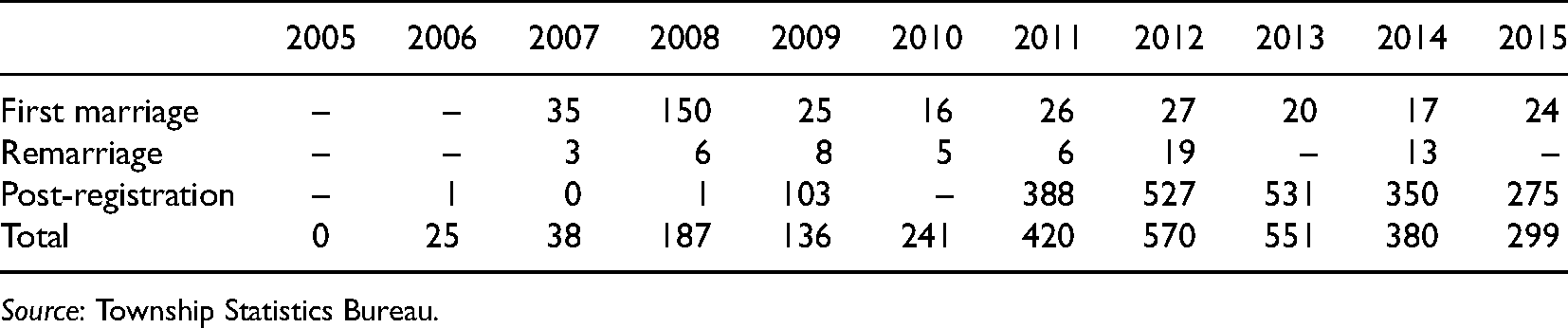
Source: Township Statistics Bureau.
This growth stemmed from the intervention of formal institutions. After the first Marriage Law of the PRC in 1950, the marriage registration system gradually replaced the traditional style marriage of Chinese. Before the promulgation and implementation of the Regulation on the Administration of Marriage Registration by the Ministry of Civil Affairs in China on February 1, 1994, any couples who already met the substantive conditions for marriage were regarded as common-law married. If their marriage was not registered, it would be treated as an illegal cohabitation. For the Lahu people, the designation “illegal cohabitation” is a stigma to their common-law marriage relationship. Besides that, apart from law, formal institutions such as The Minimum Livelihood Guarantee, Children Registration Policy, reduced the number of common-law marriages, but a large number still remain.
To my surprise, Lahu villagers in border areas where legal awareness is weak, even women who could not read Chinese characters, were aware through lawsuits of the divorce provisions in the marriage regulations, which stated that one side could terminate marriage relations. “Escape” as the strategy for married Lahu to end their marriage was not just about a change in geographical location; rather it also enabled them to get legally divorced. Generally, women who divorced by escape also filed divorce lawsuits in their new locations, which greatly increased the probability that their husbands would not attend hearings, due to the geographical distance and other reasons, which was conducive to the plaintiff winning the lawsuit. In the meantime, as important evidence to the breakdown of marriage, the separation of husband and wife was key to the court's decision to grant divorce. 43 Consequently, married Lahu women took advantage of limited of formal institutions to achieve legal divorce.
Exogenous Factors
In addition to these endogenous factors of community disfunction, many exogenous factors connected to recent country-wide socioeconomic change have influenced Kucong Lahu women's escape behavior. China has spent over 30 years on poverty reduction, especially in rural areas and among subaltern populations. From 2001 to now, China added participatory poverty reduction to implement the “Whole Village Advance,” the “New Socialist Countryside,” and the “Targeted Poverty Alleviation” programs. Important parts of these programs were the construction of rural infrastructure and an increase in public services and facilities. In Lu Village, a relocation project in 1966 and transportation improvements since the 1980s gradually broke their isolation.
Regional Development Inequalities in China
Over the past three decades, China's miracle growth can be viewed as the most impressive, lasting, and complex in the human history of economic growth in terms of institutional changes and constraint conditions, and it is generally praised by both prestigious international organizations and economists. However, it should be stressed that such a miracle is by no means costless. Constrained by economic development and the hukou system, inequality has emerged or increased during the period of rapid development. 44
Beginning in the mid-1950s, China began to impose various measures to stem rural outflow and retain the rural population. 45 In the Maoist era, the ban on rural outflows, along with an array of other related institutions and measures, such as the collectivization of farmland and the restriction on its conversion to non-agricultural uses, decisively bottled up surplus labor in the countryside. 46 The hukou system in China, beginning in the 1950s produced rural–urban class inequality, 47 rural–urban “apartheid” 48 , or social stratification 49 in terms of social status and the ability to access resources. Kam Wing Chan46 described how the hukou system as a social control system that stratified the urban class and rural class in order to exclude the rural population from many social and economic benefits. The government distributed many more goods and services to urban people than to rural people. These included housing, education, medical care, insurance, and pensions. 50 After the hukou system reform in 1984, peasants without urban hukou could earn extra income by working in urban areas making them eligible to receive limited urban services and welfare. 51 These possibilities and inequalities have significantly affected the rural-to-urban migration.
Poverty in Jinping Lahu Villages
Migration is the oldest course of action against poverty. To understand the relationship between the escaped married Lahu women and poverty, it is important to understand how the Jinping Lahu people became poor in the last century.
As a zhiguo minzu, the Kucong Lahu people in Jinping were less financially stable than other ethnic groups or people in the neidi. They experienced a complicated and radical economic and political change after leaving their hunter-gatherer livelihood in the forest in 1958. Lahu people went straight from foraging to the attempted rapid economic development of the Great Leap Forward, changing their livelihood and lifestyle radically. Mao's totalitarian Cultural Revolution rapidly swept around the country, including ethnic minority areas in southwest China. In 1966, it forced Lahu people in Jinping county into the collectively owned People's Communes.
Evidence shows that collective production was less effective for most rural areas in China. 52 However, it had a positive effect on the Lahu people in Jinping during the period of the People's Commune. Lu Village used to be a good model village that enjoyed government support. The government utilized its authority to manage the economy directly. Despite the shortage of food under the collective economy, the unified management protected the basic necessities for Lahu people who lacked market awareness. The hegemonism of the government was necessary for the survival of the Lahu people, who were no longer self-sufficient as they had been before 1958. On the other hand, collectivism well matched the egalitarian ideology and shared labor principles of traditional Lahu culture. Therefore, Lahu people adapted to collectivism quickly and developed steadily compared with other nearby ethnic minorities in Jinping County such as Dai, Zhuang, and Hani.
In 1983, the Dingqing Commune, of which Lu Village was a part, collapsed. Lahu people returned to making all livelihood decisions for themselves, as individual families. At the same time, a market economy with a system of household responsibility, and unified management combined with independent management was established. After the market-oriented reform and the privatization, Lahu people became poor, specifically in comparison to their neighbors of other ethnic groups, due to a shortage of market and competition awareness.
As Table 2 shows, Dai planted hybrid rice beginning in 1996, which greatly improved the food security of the Dai people. At the same time, the Lahu people still planted ordinary rice, which meant that they begged for a living from Dai people. By the rubber and banana planting at the end of 1990s, Dai villagers in Jinping were becoming millionaires. However, Lahu people began to plant hybrid rice and rubber only in 2000 and 2007, and until now, they still have not planted bananas. This delay was driven first by difficulties in adapting technologies for crops such as hybrid rice and rubber at high altitudes. Also, the villagers I interviewed expressed that they needed several years to follow Dai's success. Finally, in 2006, riots took place in two Lahu villages, due to the large economic inequality that caused the intensification of conflicts among ethnic groups.
The Livelihood Comparison Between Dai and Lahu in Jinping County.
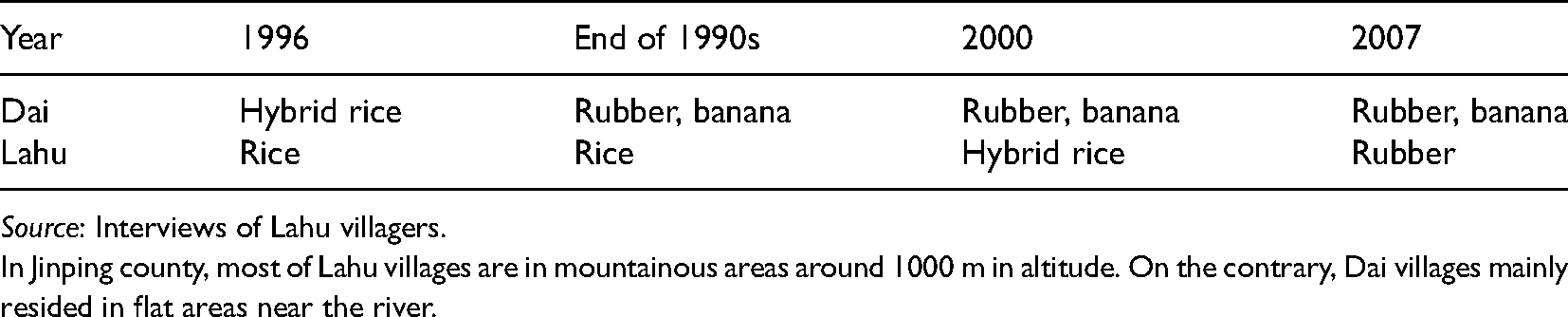
Source: Interviews of Lahu villagers.
In Jinping county, most of Lahu villages are in mountainous areas around 1000 m in altitude. On the contrary, Dai villages mainly resided in flat areas near the river.
Economy as a Pull Factor
It is generally agreed that a significant number of reasons for rural people to migrate to urban areas were economic in character. 53 More specifically, opportunity, available employment and higher living standards in destination locations are pull factors. 54 In the context of migration, China's family planning and One Child Policy in the neidi area of Han people was one of the main reasons for the gender imbalance, which made the marriage market in neidi increase the demand for females as resources. When the migration of Lahu women in border areas became possible, the women came to present an alternative to the missing women in the neidi marriage market.
Many Lahu women escaped from villages to cities, due to poverty in the villages. The data in Table 3 show that the number of Lahu women who married to neidi increased gradually during the years 1976 to 2006, especially in the last decades.
Female Marriage Destinations Every 10 Years in Lu Village During 1966–2006.
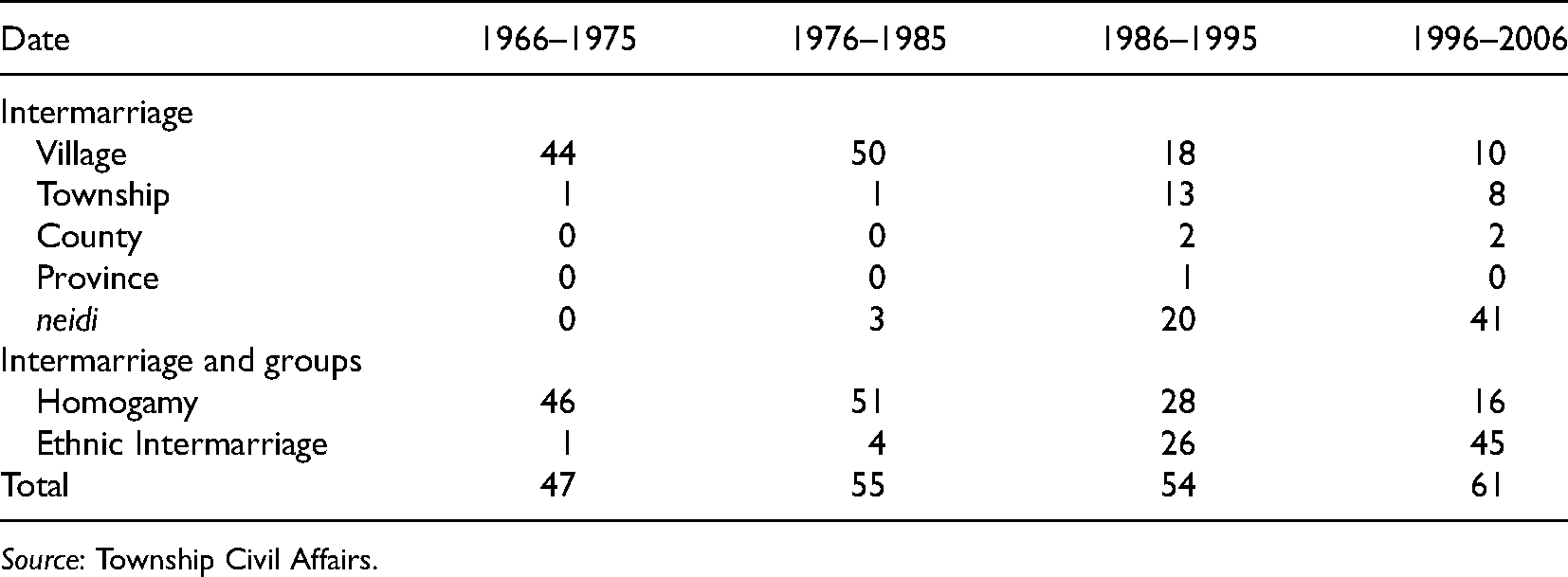
Source: Township Civil Affairs.
With respect to the Urban Escape phenomenon, the working experience in urban areas broke the harmonious marital relationships of the Lahu people. In observing the relationship between spouses in Suzhou, I found that a big divergence emerged in future plans. As I mentioned before, the traditional inheritance and elder support system made the men more inclined to return to their hometowns. In addition, the wealthy living conditions in urban areas attracted Lahu women to stay in the cities. More and more migrant women stayed in urban areas, concerned more with their own development than for their children's education or family incomes, 55 and not as dependents of men. 56 These divergent interests of spouses lead to the broken-down relationships and thus to the women's escape.
In terms of the Village Escape phenomenon, China's developing service and tourist industries created a large number of employment opportunities for married Lahu women, especially after the export-processing industry boomed in China at the end of the twentieth century. 57 Hardworking, docile women workers were exactly what export manufacturing sectors needed. 58 Migrating to a city to find a job or husband was a good way for married Lahu women to escape from their violent and alcoholic husbands, as well as from the patriarchal society.
New Social Media Development
In recent years, new social media such as WeChat and QQ replaced previously used matchmakers for ethnic women to find marriage partners, which made long-distance relationships possible. In Lahu areas, I found that everyone had a mobile phone, including the youth who dropped out of primary school. The prevalent use of mobile phones by Lahu people in Jinping was due to the cheap domestic market. The township where Lu Village is located has three cell phone stores. Most of the products they sold were domestic smartphones costing less than 500 yuan. The lower price and market accessibility made smart phones popular among Lahu people. People can easily download free social apps on a smartphone, such as Wechat, QQ, and MOMO. 59 Married Lahu women thereby have more flexible ways to find a nicer and richer husband. The high efficiency of the social media has increased the probability of divorce or just escape in a conservative society.
In my study, Lahu love affairs arranged through smartphones were a very large complication. Among the four Village Escape women in 2016 in Lu Village, three left the village and their husbands after having an affair with a man outside through WeChat. Moreover, this phenomenon took place in urban areas where migrant couples lived. In 2014, Yaomei and Yage went to work in Guangdong province together after they get married. Once a time, Yaomei met a young man from Anhui province who also works in Guangdong through the function of “check people nearby” on WeChat. Yaomei fell in love with this man and asked Yage for a divorce. Although Yage was very angry with his wife, he refused Yaomei's request and wanted to take her back to Lu Village. Later, Yaomei runs away. After she left, Yage gradually heard from fellow-villagers that she went to Anhui province with that man she met on WeChat.
The Failure of the Escape Strategy
In the current context of rapid social change in China, it is clear that great changes have taken place in the demographic structure, gender relations, family structure, marriage, and divorce. In recent years, under conditions of gender imbalance, improvement of infrastructure, and the development of new social media in rural areas of southwest China, married Kucong Lahu women in the border area have begun to “escape” when they are unable to endure the abuses of patriarchy and patriarchal society, and have experienced the expectations of better-off life in urban areas. In the rural-to-urban migration context, migration can bring gains and losses for escaped married Kucong Lahu women. In the destination areas, most immigrant women were employed in the labor market with low status and incomes, such as factory work, house cleaning, cooking, housekeeping; caring for sick, disabled, elderly, or children; or sex work.60 No matter what kind of work they do in neidi, marriage is their foundation for settling down, and the final destination for their escape. The reason is that women's belonging and identity in rural areas are determined by their consanguine family. Therefore, the institutional arrangement of resources and welfare based on patriliny is the fundamental reason why Kucong Lahu women cannot escape the fate of “returning to the family” (回归家庭)and “ending in marriage” (止于婚姻), even though they have autonomy of mobility.
However, contemporary family processes continue to be shaped by gender and generational hierarchies in the Han area in China. Unlike most ethnic minorities in southwest China, Han people have a strong “son preference.” 60 In China, the long-term basis of a small-peasant economy further strengthened their requirements of the male inheritor. In escaping, Kucong Lahu women escaped into a different, more complex system of patriarchal Han families, especially in rural areas. For example, one aspect of Han patriarchal involves “female patriarchs,” what Stafford calls “matriarchy,” 61 to discipline their in-migrating minority daughter-in-laws.
In 2009, Ping married a poor famer from Henan province who was “tao xifu” in Lu Village. After she was married in Henan, her husband's family did not allow her to leave the house in order to prevent her escape. She did a lot of housework at home, but despite this, her husband often beat her. Her mouth was swollen from the beatings, and sometimes she was even tied up for a long time. Additionally, her mother-in-law treated her badly and often complained to her husband. “In his family, even when I was seven months pregnant, I had to do farm work from six in the morning to two or three in the afternoon with my mother-in-law. She always scolded me and told her son that I was a lazy woman.” The worst time he beat Ping when she was in confinement. He dragged her by her hair into the yard until a neighbor called the police. Since Ping had been in poor health for a long time, she finally became pregnant after six months of marriage. Before that, her husband told her, “if you don't get pregnant, I will slowly abuse you.” Finally, in 2016, Ping escaped from her husband and his family and returned to Lu Village.
Ping's story illustrates one of the tragedies of escaped women marrying into Han families. On the one hand, generally speaking, men and their families who go to ethnic minority areas to “tao fixu” tend to treat their wives as a substitute for local women. As a result, most of their marriage rituals are neglected by their husbands, and they face social exclusion in the village they married into. Moreover, the increase of the bridewealth has made women more and more commoditized. On the other hand, although the migration of Kucong Lahu women seems to be from an impoverished area to a developed areas in neidi where the living conditions and environment have been improved, in fact, the marriages in neidi are still full of poverty and inequality. Renbing Shi 62 calls the further poverty caused by this kind of poor-to-poor marriage as “vulnerable accumulation.”
Therefore, married Lahu women who have escaped from the patriarchal marriage and family in their original communities, are inserted into another patriarchal family relationship in neidi and continue to be dominated. Thus, even though “escaping” was a way for married Lahu women to challenge their predicament in the face of patriarchal society and rural–urban difference, the paradox emerges that in escaping one context of patriarchal oppression, they end up in a different one; in a sense, they rarely “escape” at all.
Footnotes
Acknowledgments
The author wishes to thank Stevan Harrell, Yonggong Liu, Bill Lavely, Kam Wing Chan, Terry Jung, and Ashfaq Ahmad Shah for field investigation, data analysis, language editing, and other sorts of assistance. The author also would like to thank anonymous reviewers who gave the valuable suggestion that has helped to improve the quality of the manuscript.
Declaration of Conflicting Interests
The author declared no potential conflicts of interest with respect to the research, authorship, and/or publication of this article.
Funding
The author received no financial support for the research, authorship and/or publication of this article.
