



Abstract
Dating abuse is a prevalent and consequential public health problem. However, relatively few studies have compared methods of collecting self-report data on dating abuse perpetration. This study compares two data collection methods—(a) the Timeline Followback (TLFB) retrospective reporting method, which makes use of a written calendar to prompt respondents’ recall, and (b) an interactive voice response (IVR) system, which is a prospective telephone-based database system that necessitates respondents calling in and entering data using their telephone keypads. We collected 84 days of data on young adult dating abuse perpetration using IVR from a total of 60 respondents. Of these respondents, 41 (68%) completed a TLFB retrospective report pertaining to the same 84-day period after that time period had ended. A greater number of more severe dating abuse perpetration events were reported via the IVR system. Participants who reported any dating abuse perpetration were more likely to report more frequent abuse perpetration via the IVR than the TLFB (i.e., may have minimized the number of times they perpetrated dating abuse on the TLFB). The TLFB method did not result in a tapering off of reported events past the first week as it has in prior studies, but the IVR method did result in a tapering off of reported events after approximately the sixth week. We conclude that using an IVR system for self-reports of dating abuse perpetration may not have substantial advantages over using a TLFB method, but researchers’ choice of mode may vary by research question, resources, sample, and setting.
Keywords
Introduction
Dating abuse is a prevalent public health problem. It is estimated that 10% to 20% of high school–attending youth in the United States are physically or sexually abused by a dating partner each year (Rothman & Xuan, 2013; Vagi, Olsen, Basile, & Vivolo-Kantor, 2015). As many as 18% to 28% of U.S. college students report that they are physically or sexually hurt by a dating partner while in college (Edwards et al., 2015; Sabina & Straus, 2008), and 14.8% of U.S. women and 9.8% of U.S. men aged 18 to 24 years report experiencing stalking, physical, or sexual violence by an intimate partner in the past year (Black et al., 2011). The consequences of dating abuse are numerous and may include depression, disordered eating, acquiring sexually transmitted infections or experiencing unplanned pregnancy, substance use, suicidal ideation, injury, and death (Ackard, Eisenberg, & Neumark-Sztainer, 2007; Eaton, Davis, Barrios, Brener, & Noonan, 2007; Exner-Cortens, Eckenrode, & Rothman, 2013; Nahapetyan, Orpinas, Song, & Holland, 2014; Shapio, 2014; Wolitzky-Taylor, Ruggiero, & Danielson, 2008). Therefore, research on the etiology of dating abuse has been prioritized so that effective prevention and intervention strategies can be developed (U.S. Centers for Disease Control and Prevention, 2009).
One of the challenges of studying dating abuse is that the best sources of information about the events of interest (i.e., instances of aggression against a dating partner) are the victim or the perpetrator themselves. It is reasonable to question the validity of self-reported dating abuse data, but there are no better options. Alternatives to self-reported data on dating abuse include using criminal justice records or health care records; secondhand reports from teachers, parents, or service providers; or media coverage of newsworthy incidents. The flaws inherent in each of these alternative sources are considerable; only a particular subset of incidents come to the attention of these secondary sources, and in some cases—such as health care or parents—self-reports from victims or perpetrators most likely underlie the event reports anyway. For youth problem behaviors other than dating abuse, research generally suggests that multi-informant data gathering yields low agreement between parents and their children (Barker, Bornstein, Putnick, Hendricks, & Suwalsky, 2007; De Los Reyes et al., 2015). In sum, there is acknowledgment in the field that despite concerns about the validity of self-reported dating abuse data, individuals are likely the best source of information about the prevalence, nature, and consequences of their own dating abuse experiences.
Methods of Collecting Self-Report Data on Dating Abuse
There are several ways to collect self-report data from individuals about dating abuse experiences. First, there are survey instruments. Over the past two decades, there has been a proliferation of dating abuse assessment tools made available to researchers and practitioners. The most widely used are the Safe Dates Victimization and Perpetration Acts Scales and the Conflict in Adolescent Dating Relationships Inventory (CADRI) (Foshee et al., 1998; Wolfe et al., 2001). Although these instruments have excellent face validity and have demonstrated reliability, virtually every study that utilizes these instruments concludes with the caveat that retrospective self-report data likely underestimate the true prevalence of the problem (Reyes et al., 2015; Zweig, Dank, Yahner, & Lachman, 2013). Second, there are face-to-face and telephone interviews (Breiding et al., 2014; Exner-Cortens et al., 2013; Jackson & Shannon, 2015). It is unclear whether interacting with a researcher has a dampening or promotive effect on social desirability bias when it comes to reporting dating abuse victimization or perpetration; in all likelihood, for some research participants paired with some researchers, it encourages disclosure whereas for others it is inhibiting. For example, Fincher et al. (2015) found that African American women were more likely to disclose partner violence victimization in face-to-face interviews as compared with via computer-assisted self-interview, mirroring results obtained by Rathod et al. (2011) from a sample of Indian women (Fincher et al., 2015; Rathod, Minnis, Subbiah, & Krishnan, 2011). However, the results of other studies support the idea that research participants prefer self-administered survey techniques to face-to-face interviews to report sensitive data (Brock et al., 2015; Hussain et al., 2015; Kim, Dubowitz, Hudson-Martin, & Lane, 2008; Newman et al., 2002; Renker, 2008). Third, there are computer-assisted self-interview technologies such as the audio computer-assisted self-interviews (ACASI; Renker, 2008), which involves the research participant wearing headphones to listen to survey questions being read aloud to him or her while he or she responds to those questions using an electronic device such as a tablet computer. Although the invention of ACASI and similar self-interview technologies gave many researchers hope that more partner violence disclosures would be made through their use (Renker, 2008), only a handful of studies have found that using ACASI results in more numerous reports of abuse than other modes of survey administration (Hussain et al., 2015; Klevens, Sadowski, Kee, Trick, & Garcia, 2012; Renker & Tonkin, 2007), and at least two studies have found that ACASI leads to lower partner violence victimization disclosure rates than face-to-face interview (Fincher et al., 2015; Rathod et al., 2011).
Contemporary etiologic research on dating abuse often involves attempts to collect daily (or near-daily) data from either victims or perpetrators (Shorey, Stuart, Moore, & McNulty, 2014). There are a variety of methods for collecting daily data. Ecological momentary assessments (EMAs) record research participants’ moods, behaviors, or health status in real time through the use of electronic diaries, text messaging prompts, or electronic sensors (Shiffman, Stone, & Hufford, 2008). Alternatively, interactive voice response (IVR) can be used to collect data over the telephone at a time of the participant’s choosing (Wiebe, Blackstone, Mollen, Culyba, & Fein, 2011). IVR has several advantages over other forms of data collection—it is convenient for participants, offers them privacy, can be cost-efficient in the context of large trials that require more intensive resources for data management, and tends to result in high user satisfaction (Tucker, Roth, Huang, Crawford, & Simpson, 2012). Several studies have confirmed that paper-based data collection methods and IVR methods are equally good methods for obtaining participant reports on physical functioning and morbidity symptoms (Bennett et al., 2016; Lundy, Coons, & Aaronson, 2014; Weiler, Christ, Woodworth, Weiler, & Weiler, 2004), though to our knowledge no prior studies have compared modes of violence-related data collection for youth. One drawback of IVR research can be high rates of missing data if participants fail to call into the system. Prior studies of IVR have found variable rates of missing data. A recent study of adult (≥18 years old) frequent cannabis users that involved daily calls to an IVR system for 3 months achieved a completed call rate of 84% using a US$2 per call remuneration scheme, with a US$10 bonus for making all calls in a week (Hughes, Naud, Budney, Fingar, & Callas, 2016). In contrast, a study of 12- to 19-year-old urban-residing youth who had experienced physical assault found that only 13.7% completed all IVR calls in an 8-week study, and 56% never called the system at all, using a US$5 per call with US$10 bonus remuneration scheme (Blackstone, Wiebe, Mollen, Kalra, & Fein, 2009). Evidence suggests that IVR call completion rates are better for older participants than younger ones (Tucker et al., 2012). The IVR is intended to improve upon one other commonly used method for daily data collection in substance use, sexual health, or violence research, the Timeline Followback (TLFB) Interview (Sobell & Sobell, 1992).
Using the TLFB Interview for Partner Violence Data Collection
When the TLFB interview first became available as an alcohol consumption research assessment tool in 1992, there was “no practical alternative” to collecting daily data on alcohol use. In the intervening decades, paper-based and computerized forms of the TLFB—both in self-administered and interview-administered form—have remained popular because the TLFB is low cost and requires no technological expertise to use in the field. The TLFB was designed to aid recall of drinking events and patterns; the instrument capitalizes on the fact that most drinkers have established drinking habits—for example, daily, on weekends, or only on major holidays—and that these are captured more efficiently and potentially accurately if the participant can visually examine a calendar while responding. The TLFB uses a paper or online calendar and structured interview to guide research participants chronologically and in reverse (i.e., backward) from the present day to an end point such as 30 or 90 days prior. The TLFB has been subjected to numerous tests of reliability for alcohol-related data collection, including test–retest reliability (Cohen & Vinson, 1995) and validity (Sobell et al., 2001), with positive results. The psychometric excellence of the TLFB for assessing alcohol use has encouraged the use of the instrument to assess other behaviors including exercise, smoking, sexual risk, gambling, exposure to interparental violence, and hate crime perpetration (Carey, Carey, Maisto, Gordon, & Weinhardt, 2001; Lam, Fals-Stewart, & Kelley, 2009; Panza, Weinstock, Ash, & Pescatello, 2012; Parrott, Gallagher, Vincent, & Bakeman, 2010; Rueger, Trela, Palmeri, & King, 2012; Weinstock, Whelan, & Meyers, 2004).
Whether the TLFB is an excellent, or good, measurement tool for assessing adolescent dating abuse has yet to be established. There have been two prior studies that used the TLFB to collect event-level dating abuse data from youth, but neither study provided information about the reliability or accuracy of the TLFB (Epstein-Ngo et al., 2013; Rothman, Stuart, et al., 2012). The TLFB has also been used in two studies to assess partner violence in samples of adults, but again, these studies did not assess the quality of violence-related data collected via the TLFB as compared with another method (Schumacher, Coffey, Leonard, O’Jile, & Landy, 2013; Stuart et al., 2013). The psychometrics of the TLFB for partner violence–related data collection from adults has been assessed twice by Fals-Stewart and colleagues (Fals-Stewart, Birchler, & Kelley, 2003; Lam et al., 2009). Both studies found that the TLFB had excellent temporal stability, and concurrent and discriminant validity for partner violence–related data, but because the integrity of Fals-Stewart’s research has been called into question may not be reliable.
The most informative study about the accuracy of the TLFB for the purpose of collecting any type of violence-related data from youth was conducted by Buu and colleagues (2014), who found that the length of the TLFB recall period is an important consideration when interpreting results. Specifically, Buu et al.’s findings suggest that when the TLFB is used for collecting retrospective peer violence–related data from youth, the recall period of the past week may yield more reliable information about atypical or nonpatterned violent behavior (e.g., once on Tuesday morning and once on Friday night), whereas the recall period of 2 weeks or more may result in acceptable estimates of chronic, repeated patterns of violent behavior (e.g., every Saturday night for the past 6 weeks). The authors propose that the difference in the usefulness of TLFB data for various recall periods may be related to the fact that people have both episodic and semantic memories. For example, the TLFB may collect episodic memories of violent behavior in the past week well, but do a poor job of collecting episodic memories from a lengthier recall period—such as the past 6 weeks—because people may rely on more general, semantic memory of events if they took place in the more distant past.
In summary, the TLFB has been used for decades—primarily to collect substance use–related data from adults—and it has demonstrated excellent psychometric properties for that purpose. However, there have been few analyses of how the TLFB performs as a youth violence or partner violence data collection instrument. Therefore, the purpose of the present study was to assess the performance of the TLFB against another method of event-level data collection, IVR, and to explore the strengths and limitations of each approach.
Method
Sample
Young adult participants were recruited from a health care setting at an urban, Safety Net hospital between March 2012 and January 2013 in the context of an alcohol and dating abuse research study. The advantages of using a Safety Net health care setting for recruitment is that the majority of dating abuse research has used samples of college or high school students, and diversifying the populations that benefit from dating abuse research is a priority. We screened 672 patients, of whom 17% were eligible based on age (18-24 years old at baseline), having had at least one whole drink of alcohol in the preceding month, and having perpetrated physical or sexual abuse against a dating partner twice in the prior 3 months. Patients were ineligible if they were prison inmates, homeless, residing in a substance abuse treatment center, unable to read and speak in English, or had plans to move out of the Boston area in the next 3 months. Of those found eligible, 67% chose to enroll in the study after reading the consent materials and contributed baseline data (n = 74). Of those who enrolled, 79% contributed at least 1 day of IVR data to the study (n = 60) and 68% contributed both IVR and TLFB data (n = 41) (Figure 1). Our analytic sample of 60 IVR participants was 43% male, 47% Black, 25% Hispanic, 10% White, and 18% Multiracial or Other race.
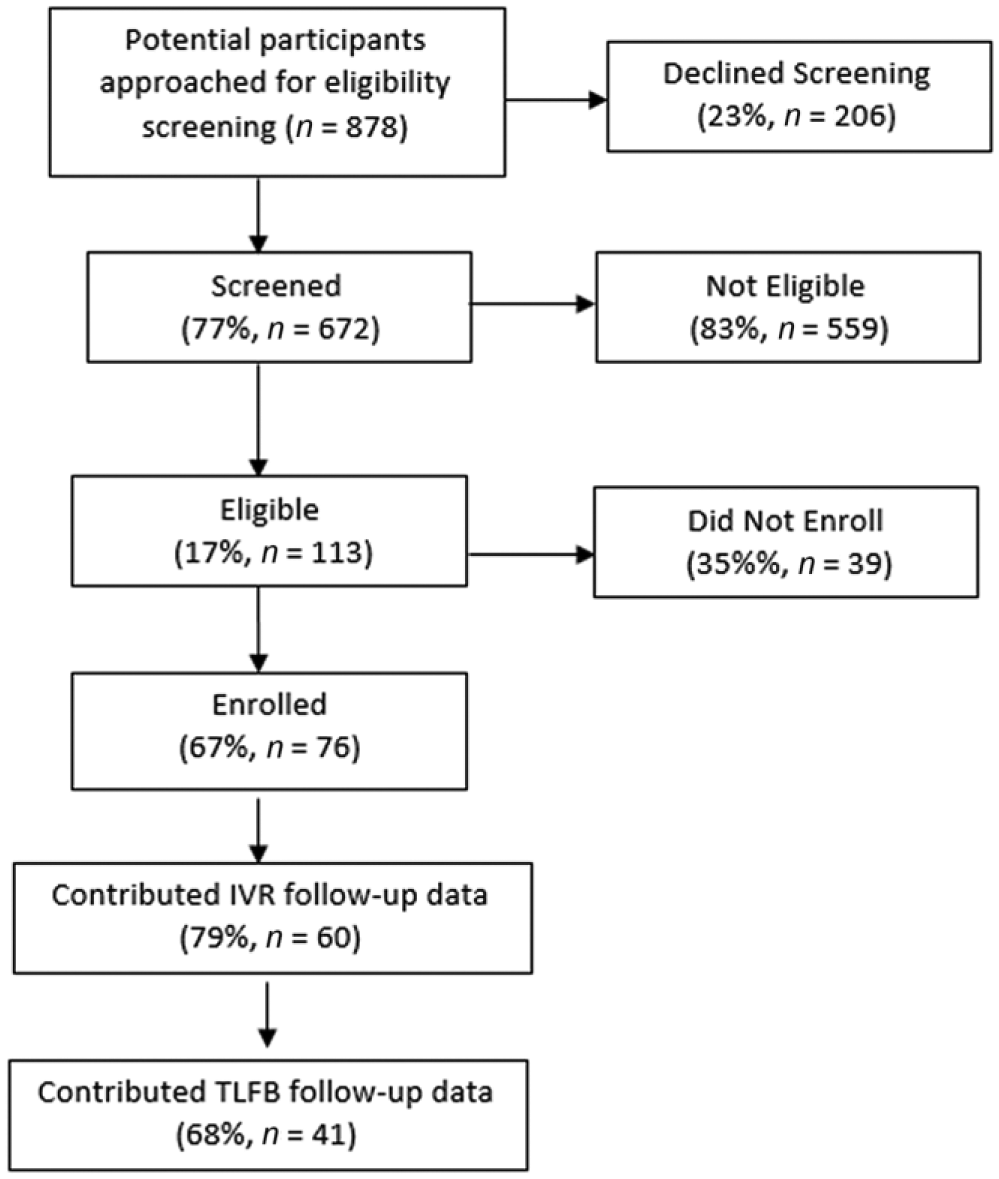
Recruitment, enrollment, and participant retention.
Recruitment and Data Collection Procedures
Trained research assistants (RAs) were stationed in the health care setting and were granted access to the computer software system that displays patient information. When RAs noted a patient in the eligible age range, they approached those patient rooms to determine whether the patient was accompanied by an intimate partner. In cases where the patient was either alone or accompanied by individuals other than an intimate partner, the RA described the research study and asked patients whether they would like to be screened for eligibility. Eligible patients were then asked for informed consent. Consenting patients were then asked to provide “locator” information (i.e., phone number, email address, home address, employer location) that could be used for research-related follow-up, and to complete a brief baseline survey that elicited demographic and situational information. Next, the RA spent approximately 30 to 45 min with each enrolled patient explaining the IVR system and remuneration scheme, and assigning them a cell phone if one was requested. The remuneration scheme was designed to increase the likelihood that participants would phone into the IVR system daily. Participants were paid US$2 for each daily call with a US$10 bonus if they called all 7 days in a week. They were also paid US$20 for completing a TLFB interview 12 weeks following their study enrollment, and received US$20 if they returned the assigned study cell phone if applicable. In total, the most a participant could receive from the study was US$343.00. Beginning on the day after enrollment, participants received periodic text message reminders to call the IVR system. The reminders were sent approximately every 2 days. Participants were able to give the IVR system information about the day on which they were calling, and the day prior, to reduce the number of days with missing data. In cases where participants made no phone calls to the IVR system after 1 week, an RA contacted the participant to encourage participation. All procedures were reviewed and approved by the Boston University Medical Campus Institutional Review Board (IRB).
The IVR script
The IVR script was written after a review of scripts used for two prior IVR studies conducted by Drs. Searles and Testa, respectively (Searles, Helzer, & Walter, 2000; Testa & Derrick, 2014). The script began by asking whether alcohol had been consumed in the past 24 hr, and if so at what time and how much. Participants were asked, “In the past 24 hours, have you had any alcohol? By alcohol, I mean beer, wine or liquor. Press 1 for yes, and 2 for no.” Participants who responded that no alcohol was consumed were routed to a series of questions about possible reasons why they had not consumed alcohol to ensure that the IVR script took the same amount of time for participants to complete regardless of what response options they selected. This procedure was used to reduce the possibility that participants would learn to enter certain responses only to get through the IVR survey as quickly as possible. After eliciting alcohol information, the IVR script asked marijuana consumption information, and then dating violence information.
To assess dating abuse perpetration, participants were first asked whether they had any in-person, texting, or phone contact with a dating or sexual partner on the day in question. If so, they were subsequently asked about perpetration of eight acts from Foshee’s Safe Dates Perpetration Acts Scale, four acts from the revised Conflict Tactics Scale, and one original question on dating abuse perpetration (Foshee et al., 1998). The acts from the Safe Dates Scale were pushing, grabbing, kicking, choking, biting, hitting or shoving, and throwing something at a partner. The items from the revised Conflict Tactics Scale were yelling at a partner, insulting a partner or calling him or her names, threatening to hit a partner, or damaging something belonging to a partner. The original question was about trying to frighten a partner. Participants were instructed as follows:
Now I’m going to read you a list of things that might have happened with a partner yesterday. For each one, press 1 if you did it to a partner and press 2 if you did not do it to a partner.
Using a classification system developed by Safe Dates Perpetration Acts Scale developers as the starting point for categorization (Arriaga & Foshee, 2004), calls were classified as including a more severe violent encounter if the respondent reported threatening to hit a partner, trying to frighten a partner, pushing, grabbing, kicking, choking, biting, hitting or shoving a partner, throwing something at a partner, or deliberately damaging something belonging to a partner. Calls that did not include a more severe violent encounter were classified as including a less severe violent encounter if the respondent reported yelling at or insulting a partner, or calling a partner names.
The TLFB interview
Approximately 3 months after baseline, participants were asked to meet an RA in person to complete a TLFB interview that pertained to the same 12-week period for which they had provided IVR data. Of the 60 participants who submitted any amount of IVR data, 68% (n = 41) also completed TLFB interviews. The TLFB interview entailed the participant and RA looking at a form resembling a calendar that included the dates for the past 3 months. Holidays and other important events (e.g., public schools holiday weeks) were listed on the calendar pages. To collect dating abuse perpetration information, participants were provided with a card that listed each of the perpetration acts as separate, numbered items. They were then asked to indicate by number which item they had done to a partner for each of the days in the calendar (e.g., “On Tuesday I did 5 and 7, and last Wednesday I did 4 and 6”). Stating a number rather than naming the perpetration act aloud was intended to encourage disclosure and reduce social desirability bias, and is a method that has been used in prior partner violence research studies where TLFB interviews were completed (Rothman, Stuart, et al., 2012; Stuart et al., 2013). Participants were asked to start with the day prior to the interview and to report the days when they perpetrated acts for each day preceding in order. The TLFB interview also involved asking participants to indicate whether they had consumed alcohol or illegal drugs on any of the calendar days. The interview included a procedure that captured whether participants had been incarcerated or in a residential substance abuse treatment program on any of the dates in question to eliminate those days (when partner contact would not have been possible) from analyses. No participant indicated having been incarcerated or in residential treatment during the study period.
Human Participants Considerations
Because the IVR portion of the study entailed reports of dating abuse perpetration in real time, the standard operating procedure was to call back any participant who reported an intention to harm himself or herself, or reported having threatened to kill his or her partner, within 24 hr of the IVR call. The IVR system was programmed to send an alert text to project staff if these items were reported. There were a total of six IVR calls that required investigation; none proved to be credible threats and no law enforcement or emergency services interventions were necessary. The procedure for investigating threats, which was approved by the IRB, was that an RA trained by a former batterer intervention program counselor, would call the research participant (tracking the number of times the participant had to be dialed before being reached for record-keeping purposes) and ask if it was OK to check in with the participant about how he or she was doing. The RA was trained to establish a rapport and assess the mood of the participant before asking if it was OK to check in. All six participants agreed to be asked a series of questions about their status. The RA then proceeded through a series of risk-assessment questions to gauge risk of self-harm or harm toward others. The questions were drawn from the Dangerousness Assessment for partner violence and included additional questions recommended to the team by a mental health expert (Campbell, Webster, & Glass, 2009). An example question is as follows: “Do you have any weapons based in your possession?” The RA was trained not to ask this question verbatim but to use less formal sounding language so as not to intimidate the participant. In all but one case, participants stated that their report had been erroneous (e.g., a typo)—and each of these reports seemed credible and consistent with participant behavior (i.e., they seemed confused about why they were being called and did not appear to be putting on an act). In the sixth case, the participant reported that she or he had said “I am going to kill you” to their partner, but that it was just an expression. The RA probed to find out more, determined the statement was not made during a fight but during an episode of horseplay, and reviewed all of the information with the principal investigator who in turn reviewed the information with the data safety monitoring committee. It was determined that no further action was required.
Data Analysis
Basic demographic and situational data from baseline surveys were used to compare the 41 participants who completed both the IVR and TLFB with those who completed only the IVR. Chi-square statistics were used to assess differences in these two subsamples. Next, chi-square tests to assess the per-participant frequency of dating abuse events reported were carried out using a generalized estimating equation (GEE) ordinal logistic regression model approach. This analysis treated reports from the TLFB and IVR as separate observations from the same participant, and GEE analysis accounts for the within-participant correlation between repeated observations from the same participant, which was modeled using compound symmetry. A similar procedure, a GEE logistic regression model, was used to assess the odds of participants reporting a dating abuse perpetration event on the IVR as compared with the TLFB. This analysis treated daily reports from the TLFB and IVR as separate observations, and GEE analysis accounts for the within-participant correlation between repeated observations, modeled using compound symmetry. Using the GEE models, we compared dating abuse data from the TLFB sample (n = 41) with dating abuse data from the entire IVR sample (n = 60), and we also compared dating abuse data from the TLFB sample (n = 41) with the subset of IVR respondents who also completed the TLFB (n = 41). Because the results from these two comparisons were similar, and there were no demographic differences between the IVR participants who did or did not complete a TLFB, we present the results of the former comparison.
Results
IVR and TLFB Participation Rates
Sixty participants used the IVR system for a cumulative total of 1,346 days. If all 60 participants had phoned in every day for 12 weeks, they would have provided information on 5,040 days total. Therefore, 27% of all possible data days were reported by study participants via the IVR system. Of the 60 participants who used the IVR system, 15% called ≥60 times, 5% called 40 to 59 times, 17% called 20 to 39 times, and 63% called one to 19 times.
Forty-one of the participants who used the IVR system also completed TLFB interviews (68%). There were no participants who completed TLFB interviews but did not also use the IVR system. A TLFB interview necessarily covers all days in a selected window of time—in this instance, 84 days. Thus, TLFB participants collectively reported on a total of 3,444 days, which represents 100% of all possible TLFB data days. There were no substantial demographic differences between the IVR participants who did or did not also complete a TLFB (Table 1).
Demographics of Sample, by Data Collection Methodology Used (n = 60).
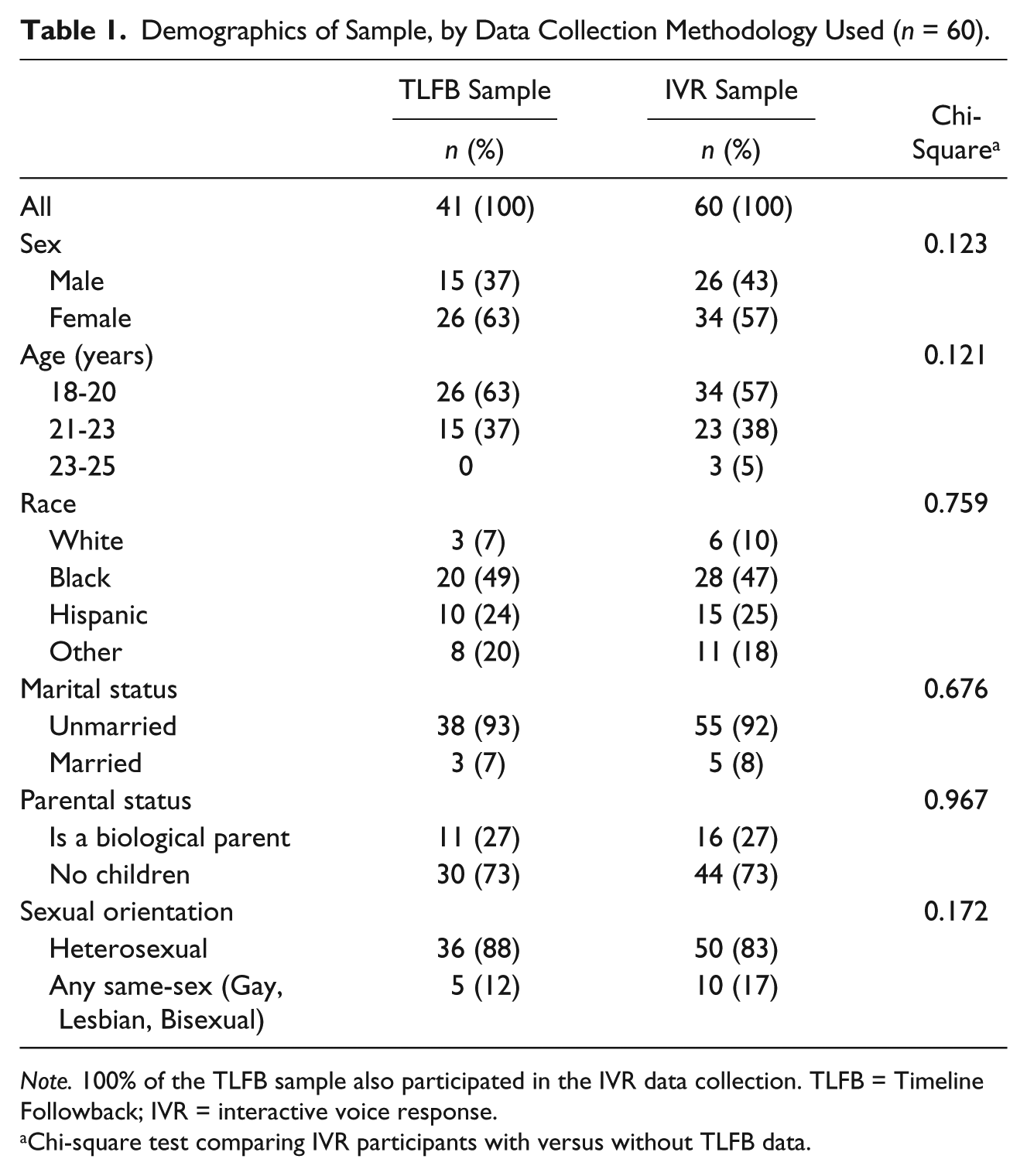
Note. 100% of the TLFB sample also participated in the IVR data collection. TLFB = Timeline Followback; IVR = interactive voice response.
Chi-square test comparing IVR participants with versus without TLFB data.
Stability of Reporting Over Time, for IVR and TLFB
There was little variation in the proportion of respondents who reported perpetrating at least one incident of dating abuse for a given week using the TLFB. Over the 12 weeks assessed, approximately 7% to 12% of respondents reported perpetrating ≥1 dating abuse incident each week according to the TLFB method (Table 2). There was no decreasing, increasing, or nonlinear trend in reporting by week using the TLFB—in other words, approximately equivalent proportions of respondents reported perpetrating ≥1 dating violence incident at the beginning, middle, and end of the 12-week period. However, there was some tapering in the reporting of dating violence via the IVR method. During the first week, 31% of males and 35% of females reported perpetrating ≥1 dating violence incident. During the second week, those proportions decreased to 20% and 19%, respectively. At Week 9, only 7% of males and 15% of females reported any dating violence perpetration (Table 2). There were no substantial differences in reporting patterns by week for males versus females using either TLFB or IVR.
DA Perpetration Reports Over Time, by Method.
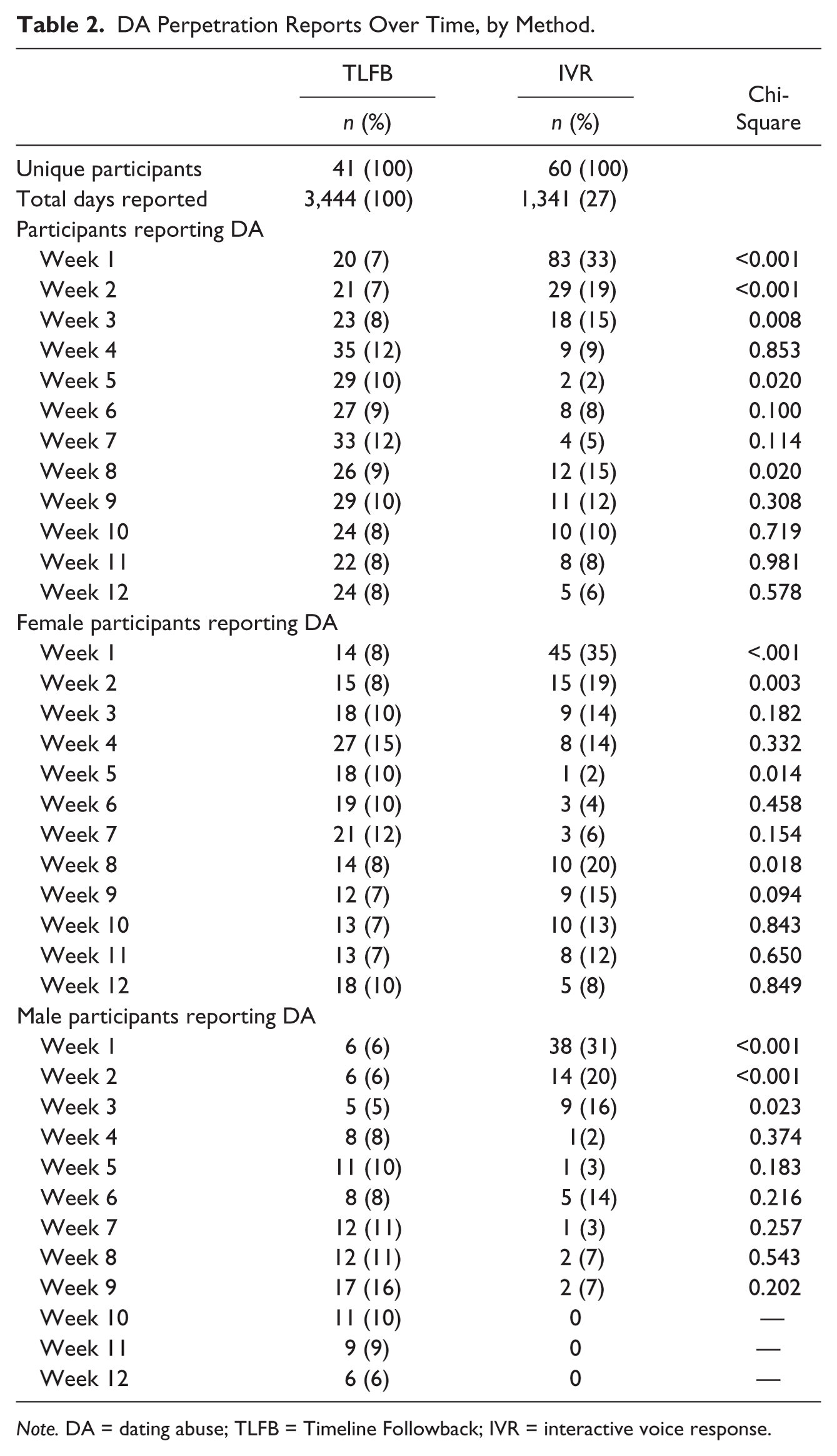
Note. DA = dating abuse; TLFB = Timeline Followback; IVR = interactive voice response.
Dating Abuse Perpetration by IVR Versus TLFB
The TLFB yielded a greater number of dating abuse events reported (n = 313) than the IVR (n = 199) because participants were asked to comment retrospectively on each of 84 days via the TLFB, whereas they had free choice about calling in to the prospective IVR system. Thus, they reported on a total of 3,444 days via the TLFB and called the IVR system a total of 1,341 times. Approximately, equivalent proportions of respondents reported no dating abuse perpetration on any day via the TLFB and IVR methods (17% and 20%, respectively; Table 3). However, those who did admit to any dating abuse perpetration reported perpetrating dating abuse significantly more frequently via the IVR system than via the TLFB system. Almost one half (45%) of those in the IVR sample reported perpetrating dating abuse more than 2 times per week, whereas only 17% of TLFB respondents reported perpetrating dating abuse that frequently (p < .01; Table 3).
Reports of DA Over a 12-Week Period, by Sample.
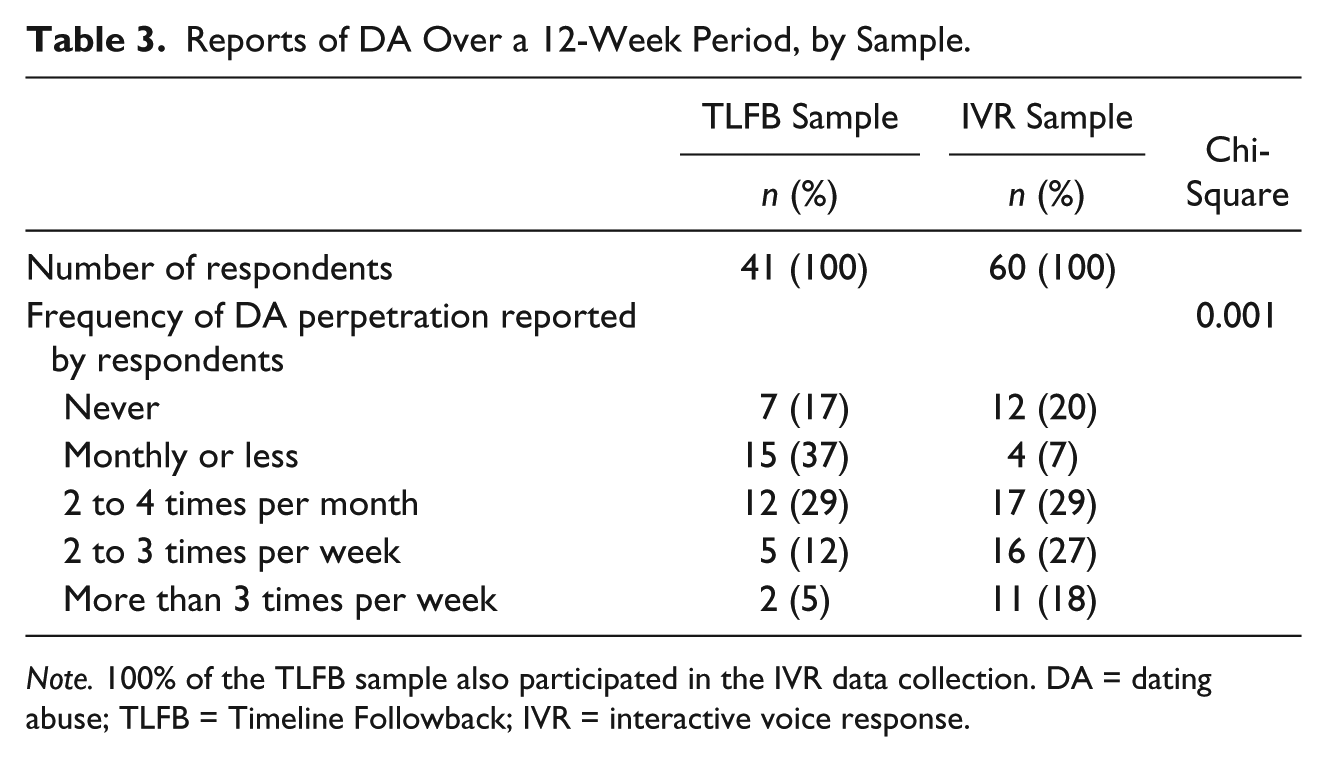
Note. 100% of the TLFB sample also participated in the IVR data collection. DA = dating abuse; TLFB = Timeline Followback; IVR = interactive voice response.
Of the 3,444 TLFB days captured, 9% of those days had ≥1 dating abuse perpetration event reported, and of the 1,341 IVR days captured, 15% had ≥1 dating abuse perpetration event reported (p < .01; Table 4). The most commonly reported forms of dating abuse via the IVR were yelling at a partner, which was reported on 12% of the days captured, followed by insulting or swearing at a partner (5%), and pushing, grabbing, or hitting (2%) (Table 4). Dating abuse perpetration events were categorized as either a more severe or less severe event. Of the 199 dating abuse perpetration events captured via IVR reporting, approximately one third (38 events) involved more severe forms of abuse (e.g., pushing, grabbing, hitting, kicking, choking, biting, threatening suicide, or homicide; Table 4). Similarly, of the 313 events captured via the 3,444 days of TLFB reporting, 29% were more severe events (Table 4). However, participants were slightly more likely to report a severe dating abuse perpetration event via the IVR system than via the TLFB method—5% of IVR data days included a report of a severe event, and 3% of TLFB data days did (p = .052; Table 4). Although cell sizes were too small to permit statistical comparison, participants were more likely to report the most severe forms of abuse (threatening suicide or to kill their partner) via the IVR system than the TLFB system (six reports vs. one report, respectively) (Table 4).
Reports of DA Over a 12-Week Period, by Data Collection Methodology.
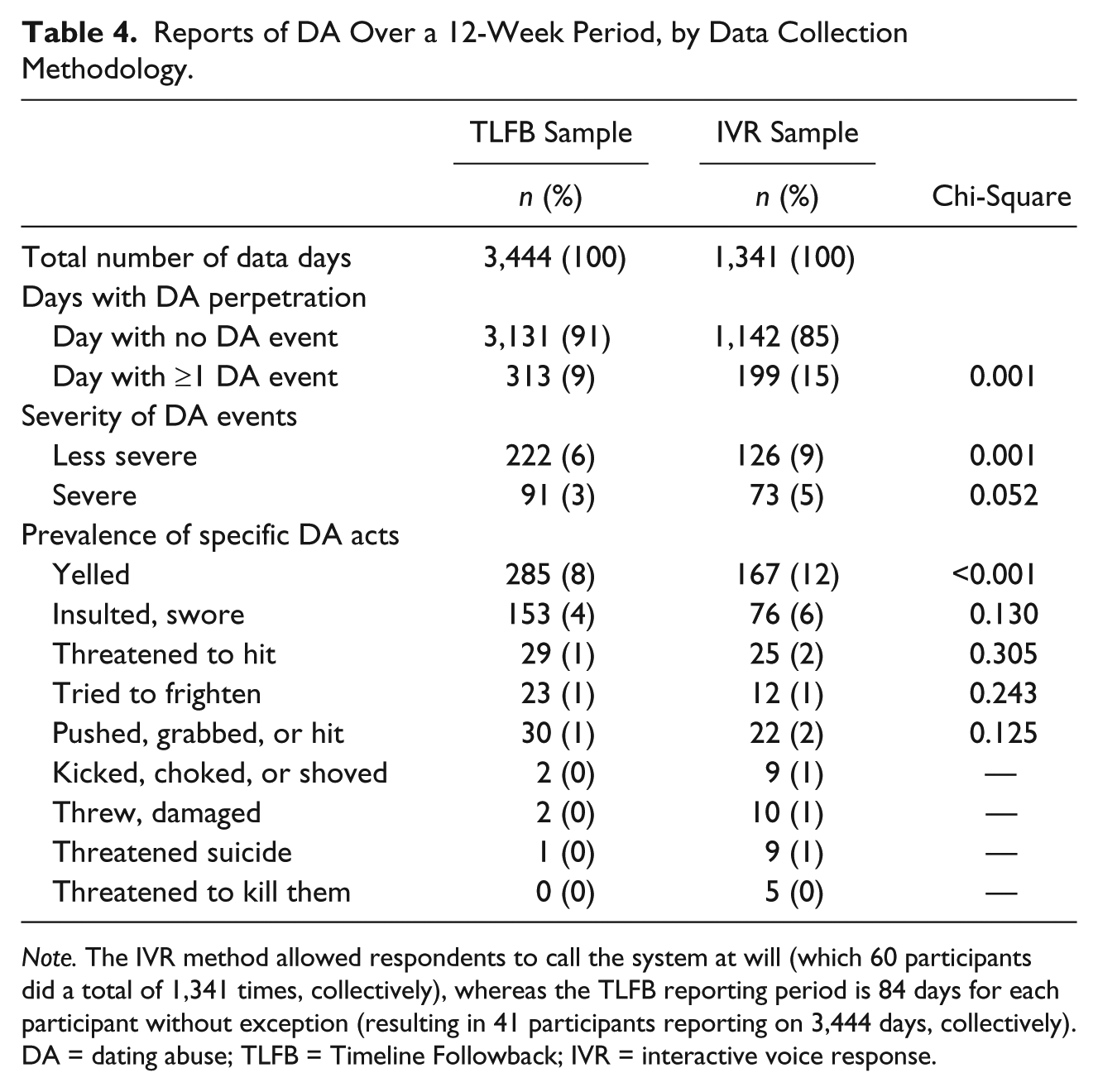
Note. The IVR method allowed respondents to call the system at will (which 60 participants did a total of 1,341 times, collectively), whereas the TLFB reporting period is 84 days for each participant without exception (resulting in 41 participants reporting on 3,444 days, collectively). DA = dating abuse; TLFB = Timeline Followback; IVR = interactive voice response.
Discussion
The purpose of this study was to explore the differences in dating abuse perpetration reports using two different data collection methods. The purpose was not to establish that one was superior to the other, because each has its own drawbacks and strengths, as described below. Empirical information about the relative merits of different dating abuse measurement methods is important for the field of interpersonal violence research. Researchers make choices about how to assess dating abuse based on a number of factors, including the resources available to them, the length of the study period, the likelihood of being able to orchestrate a daily diary or EMA study, the likelihood of data missing at random (or nonrandom), and the validity and reliability of the assessment methods available. The present study is the first to compare two dating abuse perpetration data collection methods—the TLFB and IVR. It is also one of the first studies to compare dating abuse data collection methods using a sample of primarily Black and Hispanic youth, which is important because too few studies have used racially and ethnically diverse (or primarily non-White) samples to generate dating abuse–related knowledge.
There were three important findings of the analysis. First, participants were slightly more likely to report more severe forms of dating abuse perpetration via the IVR than via the TLFB method, and more likely to report multiple episodes of dating abuse perpetration if they reported any dating abuse perpetration via the IVR than via the TLFB. Second, the TLFB captured an overall greater number of dating abuse perpetration events because TLFB administration requires participants to review 84 days in one sitting, whereas respondents can select at will whether to report data for each of those 84 days using IVR and rarely select to call the system on all 84 days—in fact, only 27% of all possible reports were phoned in. Third, the TLFB produced relatively stable week-by-week incidence estimates of dating abuse perpetration (7%-12%), but the IVR produced higher reported incidence rates for the first 3 weeks and then fewer and fewer data days included dating abuse perpetration event reports (i.e., a tapering effect). Given the expense of purchasing and programming an IVR system and the high rate of missing data with this particular study population, we propose that researchers may find the TLFB to suit their needs at least as well as the IVR if they are assessing dating abuse with demographically similar samples.
Other studies have found a tapering effect when using the TLFB to collect violence-related data from youth (Epstein-Ngo et al., 2013; Hoeppner, Stout, Jackson, & Barnett, 2010), and it has been suggested that the TLFB may produce a better quality of data for the past 1 week as compared with the past month (Hoeppner et al., 2010). Our results did not support that contention, and it should be noted that studies using the TLFB to assess other issues—such as cigarette, cannabis, and cocaine use among adult users—find that the TLFB can be used to collect highly reliable data for up to 1 year prior (Robinson, Sobell, Sobell, & Leo, 2014). Additional research that assesses a potential tapering effect in reporting of dating abuse using the TLFB would be useful. The tapering effect that we observed from the IVR system data can be explained in at least three ways. First, respondents may have been less and less truthful about reporting dating abuse on the days when they called the IVR system over time. Second, respondents may have been perpetrating dating abuse less frequently as the weeks went by, so the IVR accurately captured a real tapering of events. Third, some participants may have been more likely to submit data to the IVR system on a regular basis, consistently throughout the study—and these respondents may also have been the ones who were less likely to be engaged in problem behavior. In other words, individuals who perpetrated dating abuse more frequently may have participated actively in the IVR data collection efforts for the first few weeks but then been disproportionately likely to stop calling, as compared with their counterparts who had less violent tendencies and were more consistent about making calls over a longer period of time.
The finding that the IVR system potentially encouraged the disclosure of more severe acts of dating abuse, and more events (among those who reported any events), than the TLFB method is consistent with prior studies that have found that some research respondents disclose more sensitive behaviors with the relative anonymity of an ACASI or other self-administered data collection system as compared with a face-to-face interview (Kim et al., 2008; Morrison-Beedy, Carey, & Tu, 2006; Oschwald et al., 2014). It is also consistent with prior research comparing IVR with other self-report methods for elder abuse victimization (Beach et al., 2010), alcohol consumption (Searles et al., 2000), and parent-to-child abuse (Kepple, Freisthler, & Johnson-Motoyama, 2014). However, an alternative explanation for why the IVR yielded higher severe event reporting is that respondents may have been less likely to be able to recall severe dating abuse events accurately retrospectively when it was time to complete the TLFB interview. More research is needed to better understand reasons why participants call, or do not call, the IVR system on given days.
Whether researchers should use the TLFB or the IVR for their dating abuse perpetration research is a decision that each research team will have to make based on their own research questions of interest, resources available, diversity of their sample, and the referent period of time that they wish to investigate. However, on the basis of this and prior studies, we might offer the following recommendations to fellow dating abuse perpetration researchers: (a) Consider using the TLFB if you have fewer resources, are willing to train and use staff to conduct interviews, have confidence in the ability of the TLFB to yield valid information from the past 12 weeks, and your analysis would benefit from a greater overall number of dating abuse events captured (even if those events are misreported as less severe—such as yelling and insulting instead of slapping and kicking); (b) consider using IVR if you have the resources to purchase IVR hardware and data collection software or can pay to utilize an IVR system belonging to another entity, you have a plan for incentivizing daily calls to reduce missing data, you prioritize collecting data on a larger number of more severe events, and intraperson patterns in abuse perpetration are of particular interest; (c) consider using the IVR for studies that require follow-up from hard-to-reach populations, as they may be more easily persuaded to enter data remotely by phone than meeting you for an in-person TLFB interview; however, a third option is to use a telephone or computer-based self-administered TLFB for this purpose. The present study provides no comparative information about telephone-administered or computer-based, self-administered TLFBs, but other studies have found that computer-based, self-administered TLFBs yield estimates of smoking and alcohol consumption consistent with other self-report measures of substance use, including telephone-administered TLFB (Collins, Kashdan, Koutsky, Morsheimer, & Vetter, 2008; Maisto, Conigliaro, Gordon, McGinnis, & Justice, 2008; Rueger et al., 2012). Generalizing results from substance use assessment studies with adults to youth dating abuse perpetration studies may not be appropriate, however, because the stable, consistent patterning of substance use in adults may be unlike the episodic nature of dating abuse perpetration in youth.
This study is participant to several limitations. First, the correlation between the TLFB and IVR could have been influenced away from the null if participation in the IVR primed participants to report events in a similar manner at the end of the 3-month period, when the TLFB data were collected. If this were true, it would mean that the disparity in results collected via the TLFB and IVR is actually larger than what we were able to detect. Second, participating in any prospective daily data collection effort may induce self-monitoring in participants who decrease unhealthy behavior as a result. This could be why we observed a tapering effect of dating abuse perpetration via the IVR method. If this is true, developing an intervention that involves daily reporting of one’s relationship behavior to a computer system may be an important advance for the field. Third, to facilitate the collection of data, there were minor wording changes between the two systems. For example, “Read their email” on the IVR was “Broke into their email” on the TLFB. Although it is possible this type of variation could affect endorsement of the acts, the symmetrical reporting rates across acts suggests it was not a substantial factor in this study. Fourth, this study compared an in-person, RA-facilitated TLFB interview with an IVR; because self-administered versions of the TLFB exist, another useful comparison would be of a self-administered, telephone or computer-based version of the TLFB with the IVR. Finally, the TLFB and the IVR data collection methods are both limited by the type and number of acts included on each assessment and the preceding instructions. We attempted to balance being thorough in our inclusion of various acts with the need to not overburden adolescent respondents with extremely lengthy daily IVR surveys or in-person TLFB interviews. Nevertheless, the omission of various dating abuse perpetration acts undoubtedly resulted in underreports of dating abuse perpetration via both systems. Similarly, the omission of instructions to participants to not report on acts of horseplay, self-defense, or consensual bondage, dominance, submission, and masochism (BDSM) may have resulted in overreporting of dating abuse perpetration via both systems.
Conclusion
This study found that using an IVR system for self-reports of dating abuse perpetration in a sample of urban-residing, adolescent, primarily Black and Hispanic youth may not have substantial advantages over using a TLFB method due to the high level of missing data. The study also found that the TLFB can collect dating abuse perpetration events over a 3-month retrospective period with temporal stability. This information should help dating abuse researchers make more informed selections about how to collect dating abuse perpetration data from young adults.
Footnotes
Declaration of Conflicting Interests
The author(s) declared no potential conflicts of interest with respect to the research, authorship, and/or publication of this article.
Funding
The author(s) disclosed receipt of the following financial support for the research, authorship, and/or publication of this article: Support for this publication was provided by an award National Institute on Alcohol Abuse and Alcoholism (R03AA020617).