



Abstract
Research has recently found that sexual harassment occurs throughout our education system. Although the focus of these studies has been on both verbal and physical sexual harassment, the literature is scant when examining just verbal sexual harassment. Using self-report data from 30 New York City middle schools, the current study adds to the literature by examining the prevalence of verbal sexual harassment victimization and perpetration through the lens of gender and dating experiences. The study highlights that boys are verbally sexually harassed more than girls and students with dating experience are more likely to be victims or perpetrators of verbal sexual harassment. Additional findings, limitations, and policy implications are discussed.
Introduction
One of the proverbial axioms that children learn is that “sticks and stones may break my bones, but words will never hurt,” but the reality is that “words” really do hurt and can have an impact in the development of children, especially when the words come in the form of verbal sexual harassment. Although there are various definitions of sexual harassment, sexual harassment is generally defined as a behavior. For example, O’Donohue, Downs, and Yeater (1999) identified “that sexual harassment is improper behavior that has a sexual dimension” (p. 112). More specifically, the U.S. Department of Education, Office for Civil Rights (1997) defined sexual harassment as, Sexual harassment is defined as unwelcome sexual advances, requests for sexual favors, and other verbal, nonverbal, or physical conduct of a sexual nature by an employee, by another student, or by a third party, that is sufficiently severe, persistent, or pervasive to limit a student’s ability to participate in or benefit from an education program or activity, or to create a hostile or abusive educational environment. (U.S. Department of Education, Office for Civil Rights, 1997, p. 12038)
The distinction between verbal and sexual harassment, however, is not entirely clear or delineated in prior sexual harassment research. Generally, verbal sexual harassment involves nonphysical contact and primarily refers to sexual comments, jokes, homophobic-name-calling, and gestures, whereas physical sexual harassment refers to some form of inappropriate sexual contact such as brushing up against someone in a sexual way or touching someone in their private areas (American Association of University Women [AAUW], 2001). Despite the important distinctions, the vast majority of prior research addressing sexual harassment has combined verbal and sexual harassment into one measure (AAUW, 2001, 2011; Espelage, Basile, De La Rue, & Hamburger, 2015; Gruber & Fineran, 2007, 2008) or focused solely on physical sexual harassment (Levine, 2017; Pellegrini, 2001), thereby neglecting the unique correlates and effects of verbal sexual harassment. Drawing on hegemonic masculinity and sexual scripts theory, the current study examines the patterns of verbal sexual assault among a sample of middle school students.
Sexual Harassment
Past research on sexual harassment among adolescents has primarily focused on the combined effect of verbal and physical sexual harassment, often in conjunction with other forms of masculine and aggressive behaviors (Espelage et al., 2015; Gruber & Fineran, 2008; Hand & Sanchez, 2000; Miller, 2008; Pellegrini, 2001; Wei & Chen, 2012). Based on this focus, research typically personifies that females are the victims, and males are the perpetrators (Espelage, Basile, & Hamburger, 2012; Fineran, McDonald, & Constable, 2009; Gruber & Fineran, 2008), therefore reinforcing gendered norms. Studies have further shown that early sexual harassment behaviors also continue into dating (Chiodo, Wolfe, Crooks, Hughes, & Jaffe, 2009; Espelage & Holt, 2007; Stein, 1995; Wolfe, Wekerle, Reitzel-Jaffe, & Lefebvre, 1998) where victims and perpetrators of sexual harassment will continue to be either victims or perpetrators of sexual harassment in adolescent or adult dating contexts (McMaster, Connolly, Pepler, & Craig, 2002).
The expansive literature on sexual harassment has primarily focused on the pervasiveness, occurrences, and the consequences of the entire range of sexual harassment behaviors, neglecting the important differences between physical and verbal harassment. More conceptual weight in academic, popular culture, and policy discussions is given to physical sexual harassment than verbal sexual harassment, as actions are perceived to be more consequential than “just words.” Scholarship has not denied that verbal sexual harassment is consequential (Gruber & Fineran, 2008; Hand & Sanchez, 2000; McMaster et al., 2002), but physical sexual assault has been the primary focus of prior sexual harassment research.
Prevalence
The prevalence of sexual harassment within our educational system has been well documented. To date, the AAUW has conducted national studies at three different points in time (e.g., AAUW, 1993, 2001, 2011) on peer-to-peer sexual harassment within our schools. They found that more than three quarters (81%) of the students surveyed stated that they experienced some form of sexual harassment at some point while at school. One in four students stated that they were consistently targeted, and more than half (59%) reported that it occurred occasionally (AAUW, 2011). These experiences ranged from unwelcomed sexual comments, jokes, and rumors, to being touched, grabbed, or pinched in a sexual way. It was also reported that more than half (56%) of the students acknowledged being perpetrators of sexual harassment toward their peers. Sexual harassment victimization is associated with sexual development, attractiveness, and lack of masculinity (McMaster et al., 2002; Petersen & Hyde, 2009; Wei & Chen, 2012). Another contributing factor for the high rate of sexual harassment is age, especially for females, which attributed largely to the differential degrees of sexual development among middle school– and high school–aged girls.
A few studies have uncovered potential explanations for the prevalence of sexual harassment within our schools. For example, one study found that nearly every student (96%) reported that they had witnessed all forms of sexual harassment occurring in the open spaces (i.e., hallways, classrooms, and cafeterias) of their schools (Lichty & Campbell, 2012). Such areas have been identified by other studies to be problematic because they lack supervision from school teachers and staff (AAUW 1993, 2001; Trigg & Wittenstrom, 1996). Despite the lack of supervision in such areas, Charmaraman, Jones, Stein, and Espelage (2013) found that middle school personnel believe that sexual harassment only occurs between adults and/or adults toward students. Thus, faculty and staff did not actively seek a role in preventing peer-to-peer harassment, especially verbal sexual harassment. Despite researchers primarily focusing on physical sexual harassment, AAUW’s (2011) study did acknowledge that verbal sexual harassment incidences were more prominent than physical sexual harassment among students.
The Role of Gender
Feminist theory stresses that hegemonic masculinity, specifically concerning power and dominance over females, characterizes our contemporary culture (Connell & Messerschmidt, 2005). The hegemonic masculinity perspective explains that boys are taught to be tough, aggressive, and dominant, which emphasizes and rewards aggression toward others, primarily females and boys who are perceived to be less masculine than the norm (Messerschmidt, 2000). Certainly, past research shows that girls are victimized more often than boys (AAUW, 1993, 2001, 2011; Fineran & Bennett, 1999) and that boys are primarily the perpetrators of sexual harassment (AAUW, 1993, 2001, 2011; Hand & Sanchez, 2000; McMaster et al., 2002). However, males also engage in same-sex sexual harassment as a means of establishing a social hierarchy based on masculine dominance (Ferguson, 2000; Kimmel, 1996; Oransky & Marecek, 2009). For example, the term “gay” is an insult used by boys to emasculate other boys (AAUW, 2011). Regardless of gender, research has shown that most students encountered unwanted sexual comments, jokes and gestures, and sexual rumors being spread about them (AAUW, 2011).
The Influence of Dating Experience
When students transition from elementary to middle school, students begin to explore romantic and sexual relationships based on social and cultural norms. Gagnon and Simon (1973) proposed a sexual script framework that involves three interrelated factors. First, cultural scripts refer to the broader framework of normative sexual behavior, which is often reinforced by institutions (e.g., marriage laws and formal sex education curriculum). Second, interpersonal scripts are where individuals determine how to navigate and negotiate sexual interactions. Finally, intrapsychic scripts refer to the internalized norms in which individuals believe and understand how their sexual experiences might and should be like. Thus, sexual scripts, while different for men and women, are crucial to the negotiation process of establishing boundaries and consent. By the time students have reached middle school, students have already been exposed to an array of cultural messages about sexuality and therefore begin to explore romantic relationships in the context of shared cultural understandings of sexual scripts.
Past research has shown that sexual scripts are associated with sexual violence among adults (Kimmel, 2007). For instance, the misconception of “women who say ‘no’ are just playing hard to get” is an influential sexual script for men that influences their approach to sex and dating (Anderson, Simpson-Taylor, & Herrmann, 2004; Kimmel, 2007) and can contribute to sexual aggression (Muehlenhard, 2011). Stinson (2010) further argued that individuals who frequently participate in the dating “hook up” culture are at an increased risk of sexual victimization as well. Although middle school students may not be participating fully in the “hook up” culture, they do participate in the culture of boyfriend/girlfriend dialogue and associated sexual scripts. Thus, the perception of how many boyfriends or girlfriends an individual has had likely influences whether or not they are involved in sexual harassment as either a victim or perpetrator.
Verbal Sexual Harassment
Wise and Stanley (1987) identified verbal sexual harassment as a “dripping tap” which involves sexual comments and jokes that occur so frequently that it is considered normal and mundane behavior. Other studies have also recognized that this behavior is normal and that children do accept it as part of their everyday culture (deLara, 2008; Hlavka, 2014; Lichty & Campbell, 2012; Robinson, 2005). Students have also resorted to neutralizing verbal sexual harassment by making statements such as “it was a joke” or “we are just playing around” (Lichty & Campbell, 2012). When students neutralize or justify verbal sexual harassment, it reduces the ability of young people to define or recognize harassment as victimization.
While previous studies have examined sexual harassment in its totality, combining physical sexual harassment with verbal sexual harassment, one study examined verbal sexual harassment victimization and its effect on Turkish adolescent girls (Işik & Kulakaç, 2015). They found that boys were overwhelmingly the perpetrators and girls were the primary recipients of such behaviors. The majority of the female students did not believe that the harassment could be stopped by authoritative figures; therefore, they did not seek help for it to be stopped. The consequence of not believing that nothing could or would be done led many girls to change or even restrict various aspects of their lifestyle to avoid verbal sexual abuse (Işik & Kulakaç, 2015). Documenting the differential outcomes of verbal versus physical sexual harassment is outside the scope of the current study; rather, the current study focuses on the patterns of verbal sexual harassment victimization and perpetration based on gender and previous dating experiences.
The Current Study
The present study examined secondary self-report data from students at 30 New York City middle schools that were randomly selected to participate in the study. The study, specifically constructed six dependent variables to be examined as it pertains to verbal sexual harassment victimization and perpetration through the lens of gender and to prior dating experiences. Based on the literature presented above, along with the concept of masculine hegemony and the sexual scripts theory, there are three hypotheses that will be examined:
Method
Data
This study uses self-reported data from an experimental evaluation of dating violence and sexual harassment prevention programs administered to (n = 1,266) sixth graders and (n = 1,388) seventh graders throughout a total of 117 classrooms in 30 New York City middle schools. Both schools and classrooms were randomly chosen using a stratified sampling procedure during the 2009-2010 academic year (see Taylor, Stein, Woods, & Mumford, 2012). Paper and pencil surveys were administered in three different waves: (a) prior to antiviolence program, (b) immediately after, and (c) 6 months later. Because the current study is concerned only with verbal sexual assault perpetration and victimization, only the pretest (i.e., prior to the antiviolence program) data are assessed, which includes 2,655 students with a 93% response rate. Due to large numbers of missing data on key variables, the working sample includes 1,583 adolescents for the gender-only models, 1,409 for the models that include dating experience, and 839 for the full models with control measures.
Dependent Variables
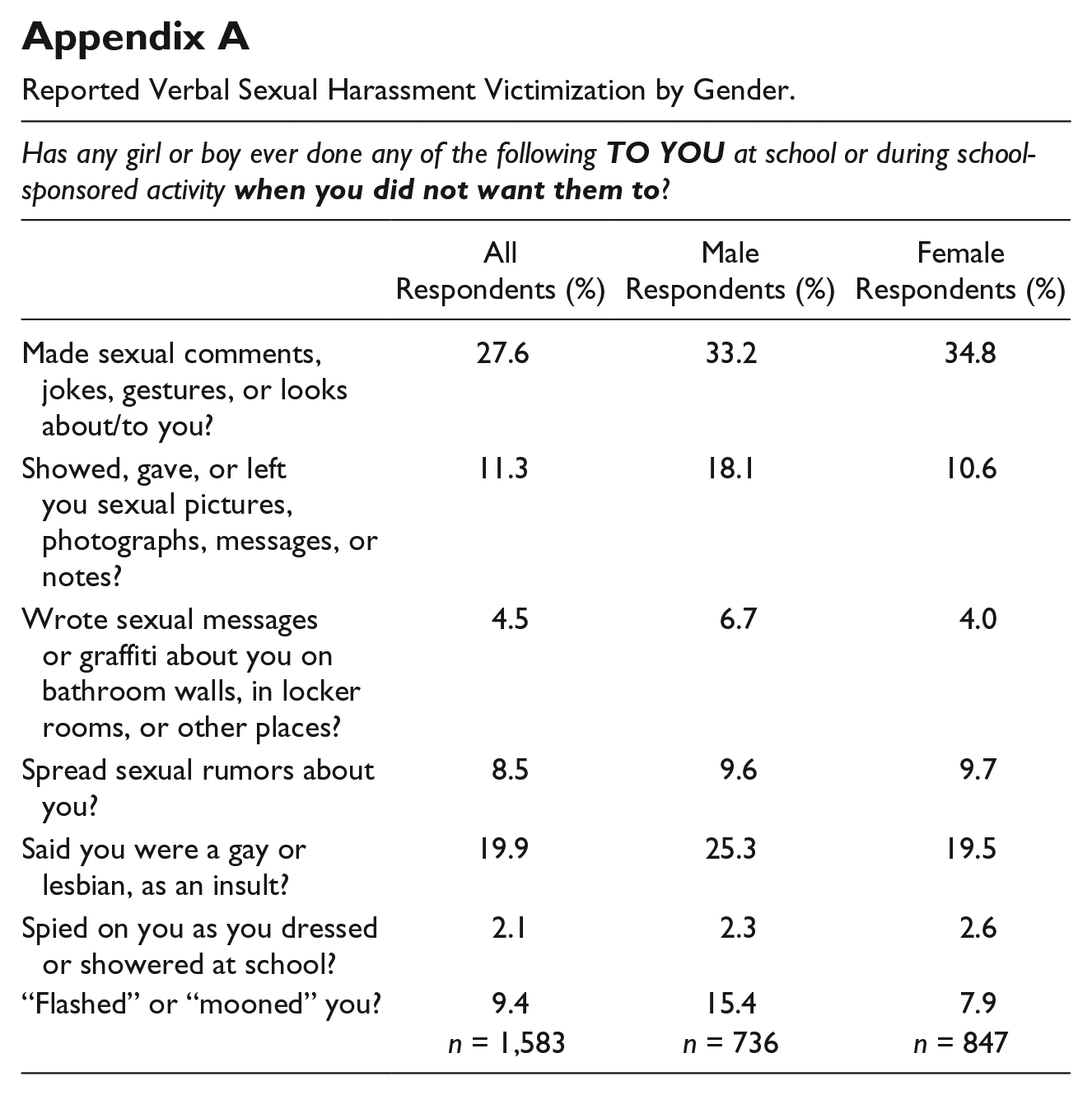
Verbal sexual harassment victimization and perpetration were assessed through seven questions that were deduced from the 14-item sexual harassment scale used in prior research (see AAUW 1993, 2001, 2011; Taylor et al., 2012). The seven verbal sexual harassment victimization questions were identified as the following: (a) made sexual comments, jokes, gestures, or looks about/to you; (b) showed, gave, or left you sexual pictures, photographs, messages, or notes; (c) wrote sexual messages or graffiti about you on bathroom walls, in locker rooms, or other places; (d) spread sexual rumors about you; (e) said you were a gay or lesbian, as an insult; (f) spied on you as you dressed or showered at school; (g) “flashed” or “mooned” you? The response categories allowed the respondents to indicate victimization by male(s), victimization by female(s), or no victimization (see Appendix A). Using these items, three dichotomous dependent variables for verbal sexual harassment victimization were constructed. Any verbal sexual harassment victimization identifies the respondents who report any verbal sexual harassment regardless of the gender of the perpetrator (43.6%), verbal sexual harassment by a male represents the respondents who had been verbally sexually harassed in any form by a male (30.1%), and verbal sexual harassment by a female identifies the respondents who had received at least one form of verbal sexual harassment from a female (21.2%).
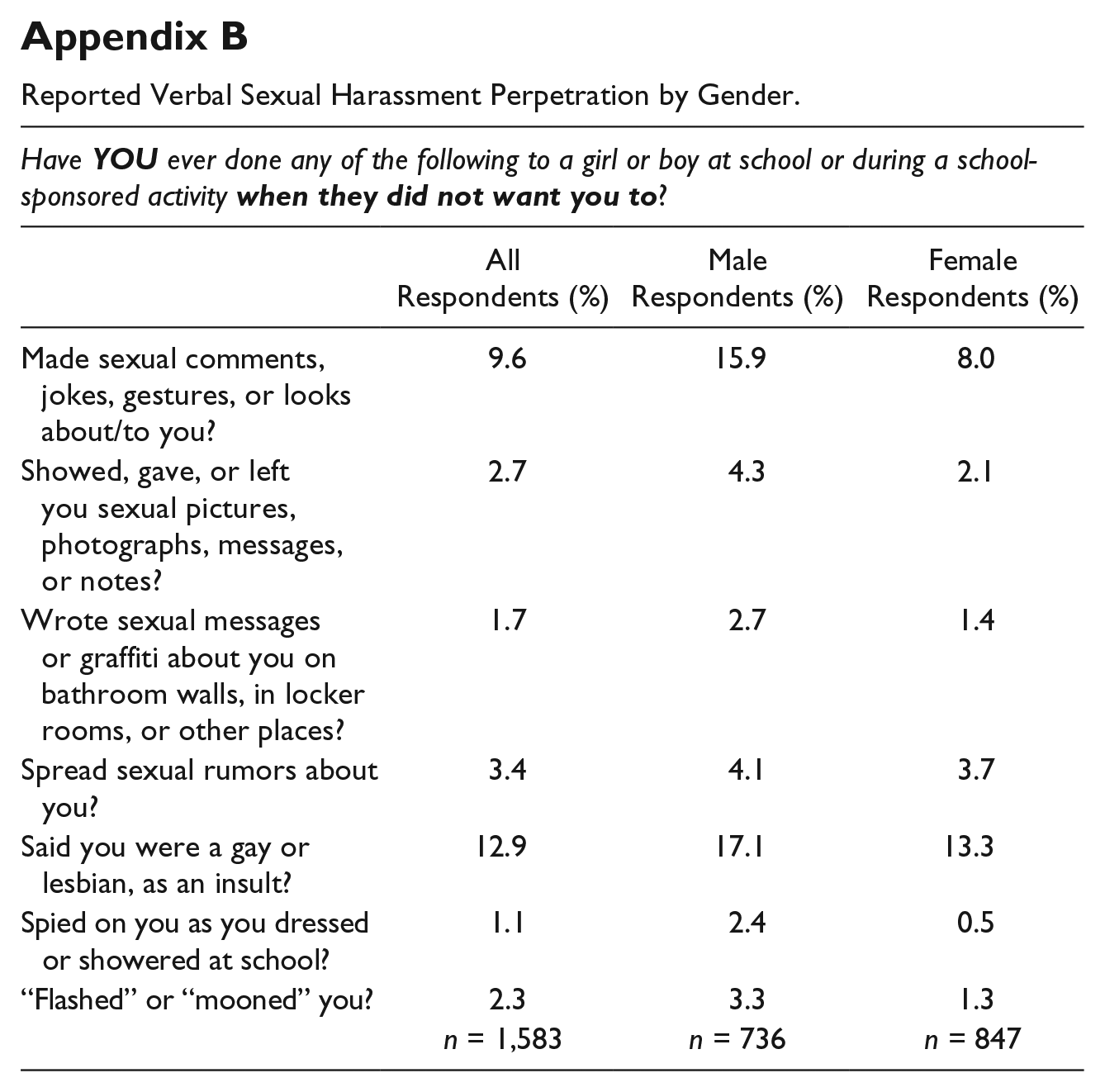
The respondents were also asked whether they had perpetrated any acts of verbal sexual harassment. Using the same measured behaviors and response categories (see Appendix B), three dichotomous measures of verbal sexual harassment perpetration were created: any verbal sexual harassment perpetration (21.4%), verbal sexual harassment perpetration against a male (15.5%), and verbal sexual harassment perpetration against a female (9.5%).
Independent Variables
Gender
Gender is measured with a single item, where the respondents were asked, “Are you: male/female?” The responses are coded such that 1 = male and 0 = female (46.5% male).
Dating experience
Dating experience is measured with a single item that asks the respondents, “Have you ever been in a boyfriend/girlfriend dating relationship that lasted more than one week?” Responses were coded as 1 = yes and 0 = no (50.4% report prior dating experience).
Control Variables
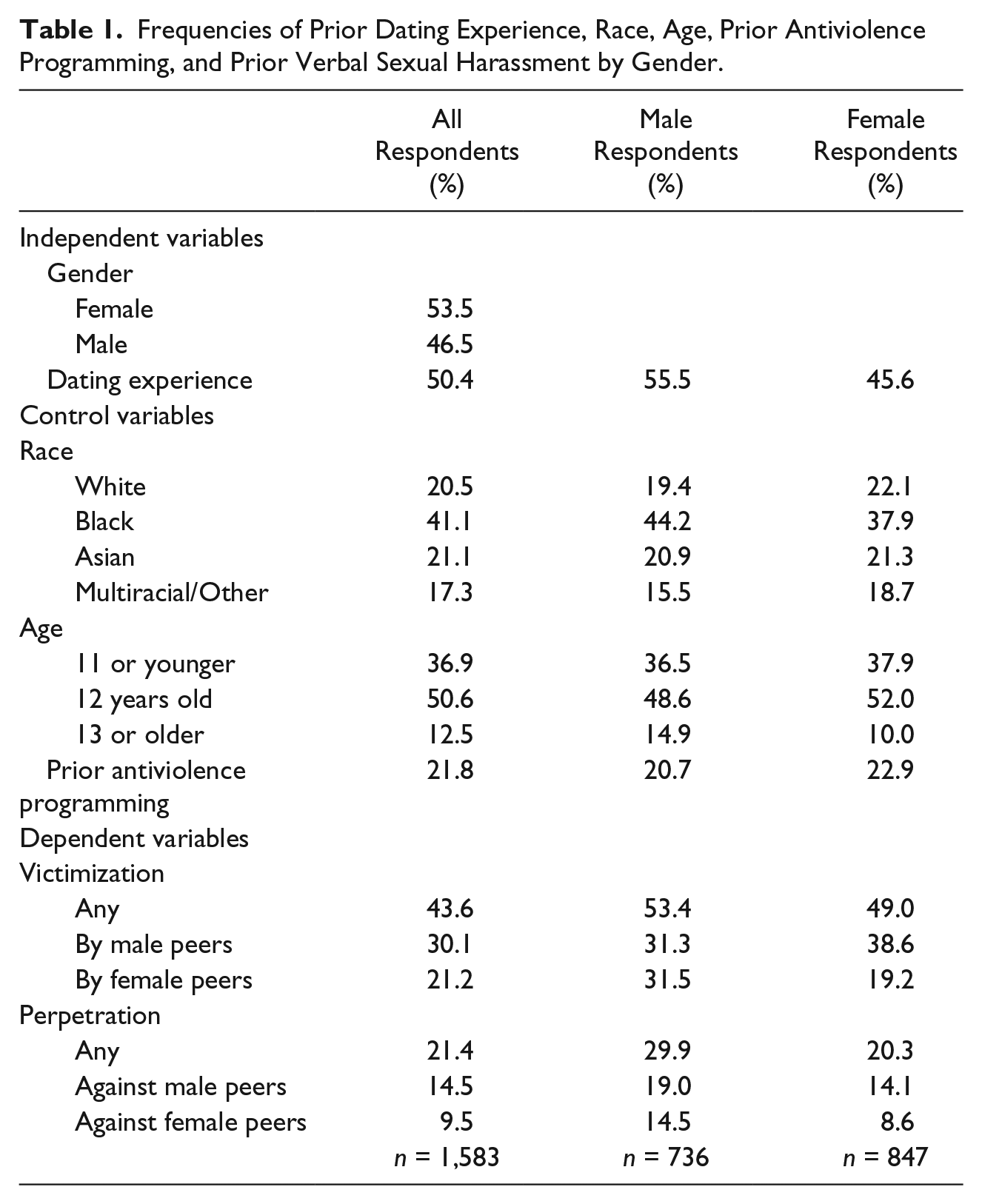
Based on prior research showing variations in sexual harassment perpetration and victimization (AAUW, 2001), the current study controls for race, age, and prior antiviolence programming. Race divided respondents into five categories: Asian (21.1%), Black or African American (41.1%), White (20.5%), and Other/Multiracial (17.3%), with White used as the reference category in the following analyses. Age divided the respondents into 11 and younger (36.9%), 12 years old (50.6%), and 13 and older categories (12.5%), with 11 and younger being used as the reference group. Prior antiviolence programming identifies those respondents who had previously been exposed to any form of antiviolence training or education (21.8%). See Table 1 for descriptive statistics for all variables for the entire sample and by gender.
Frequencies of Prior Dating Experience, Race, Age, Prior Antiviolence Programming, and Prior Verbal Sexual Harassment by Gender.
Analysis Plan
Each analysis begins with a binary logistic regression with gender as the sole independent variable (Model 1) predicting the odds of being victimized by verbal sexual harassment or perpetrating verbal sexual harassment. The next models add prior dating experience to the logistic regressions predicting verbal sexual harassment victimization or perpetration (Model 2). Control variables are then added to the models (Model 3). The final models add an interaction between gender and dating experience along with the control variables (Model 4). Multicollinearity was not found to be problematic throughout all regression analyses (all Variance Inflation Factors were less than 4).
Results
Verbal Sexual Harassment Victimization
Any verbal sexual harassment victimization
The results of the logistic regressions predicting any verbal sexual harassment victimization are shown in Table 2. Gender is associated with the odds of verbal sexual harassment, with boys being 19.3% more likely to have experienced verbal sexual harassment (Model 1). Prior dating experience increases the odds of verbal sexual harassment victimization by 162.3% (Model 2). These relationships remain statistically significant in the model with the control variables (Model 3). The interaction between gender and dating experience is shown to be statistically significant in the final model (Model 4), suggesting that dating experience is a stronger predictor of verbal sexual harassment victimization among females.
Predicting the Odds of Verbal Sexual Harassment Victimization by All Respondents. a .
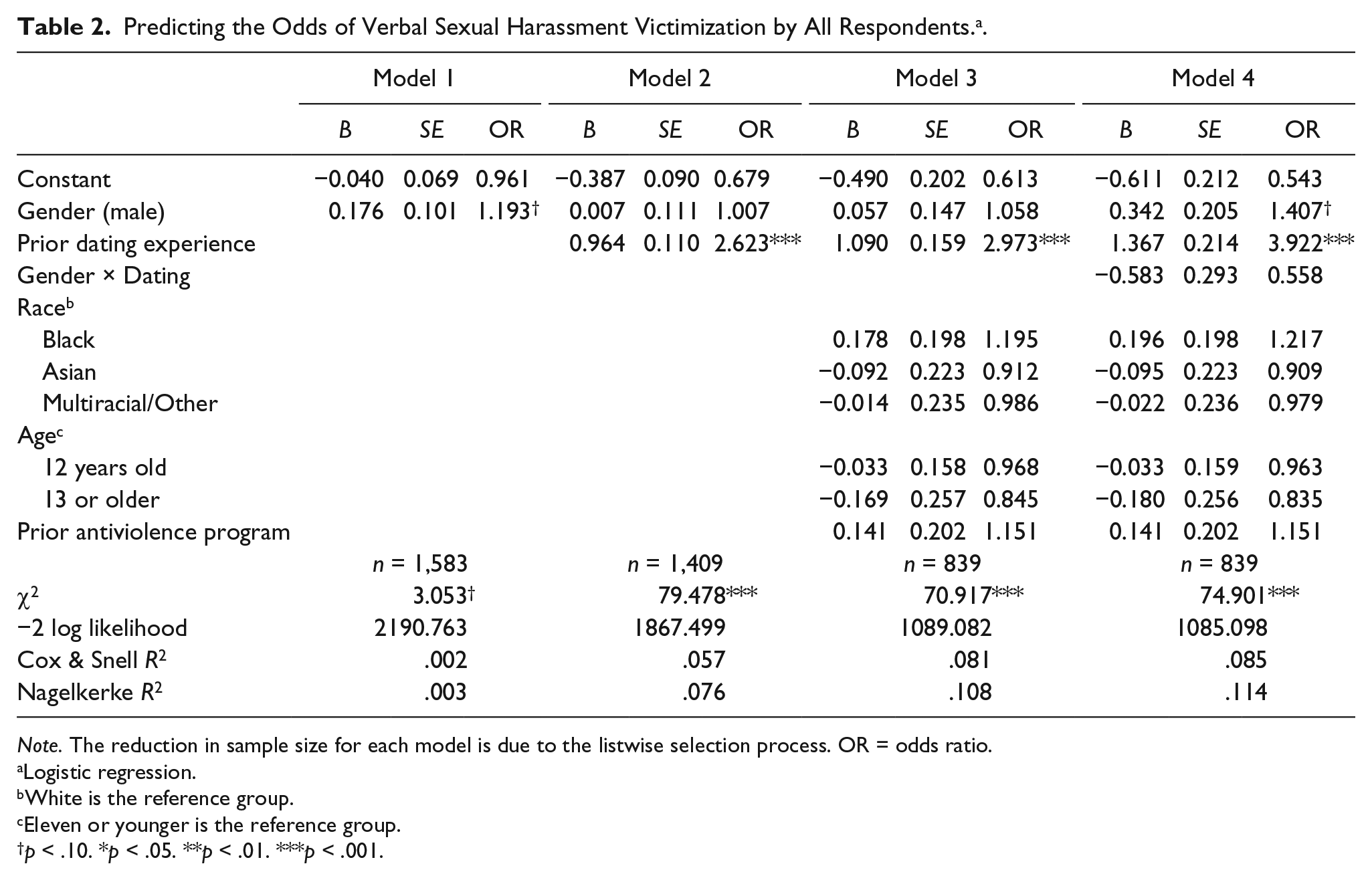
Note. The reduction in sample size for each model is due to the listwise selection process. OR = odds ratio.
Logistic regression.
White is the reference group.
Eleven or younger is the reference group.
p < .10. *p < .05. **p < .01. ***p < .001.
Verbal sexual harassment by male peers
The models predicting the odds of having experienced verbal sexual harassment from male peers are shown in Table 3. The results show that males are 27.7% less likely to have been verbally sexually harassed by male peers than females (Model 1), prior dating experience is associated with an increase in the odds of verbal sexual harassment by male peers (Model 2), and the relationships remain when the control measures are added to the model (Model 3). Importantly, the interaction between gender and dating experience shows that the impact of dating experience on the odds of experiencing verbal sexual harassment from male peers is significantly stronger for the female respondents.
Predicting the Odds of Verbal Sexual Harassment Victimization by Male Peers. a .
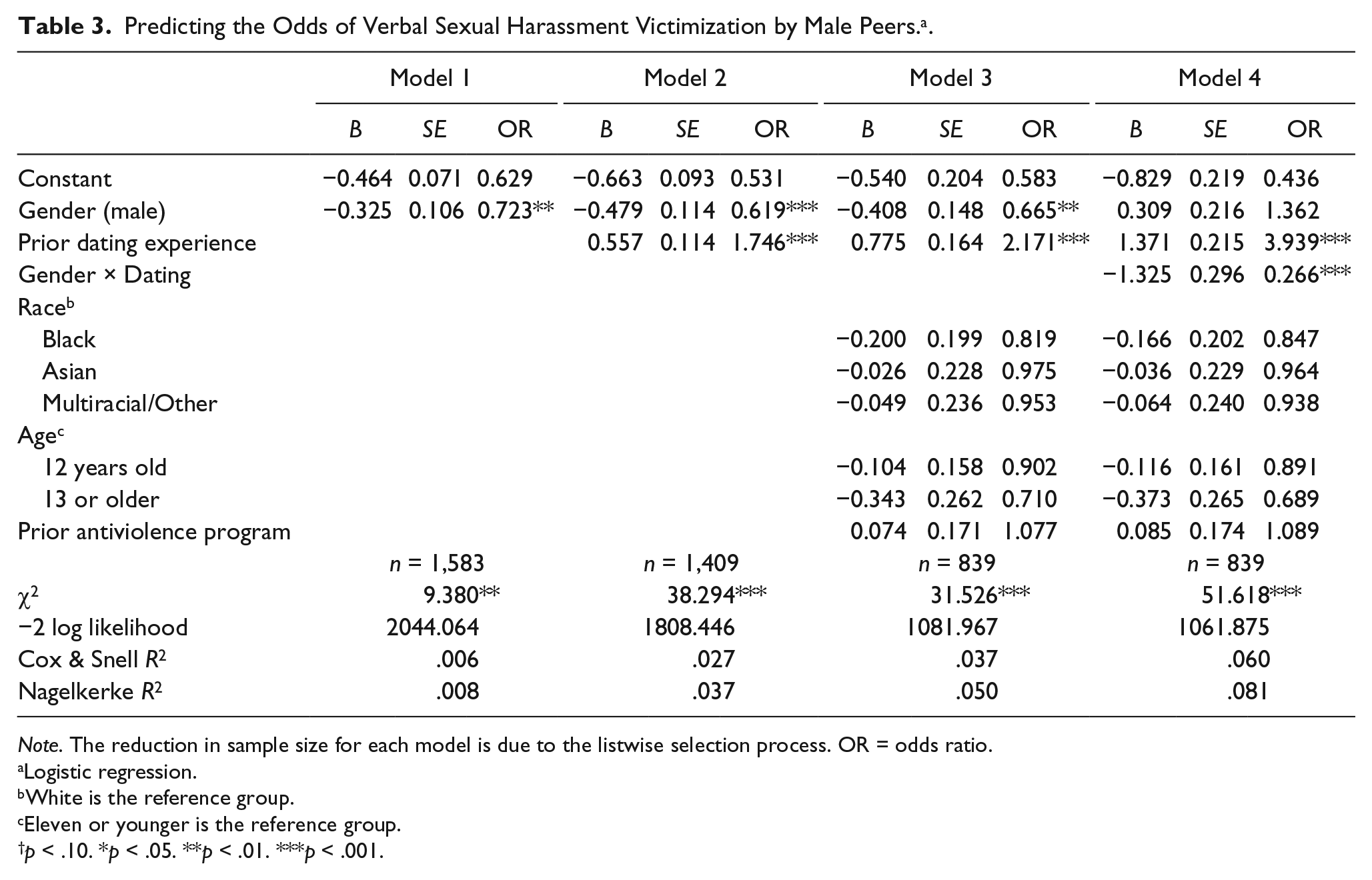
Note. The reduction in sample size for each model is due to the listwise selection process. OR = odds ratio.
Logistic regression.
White is the reference group.
Eleven or younger is the reference group.
p < .10. *p < .05. **p < .01. ***p < .001.
Verbal sexual harassment by female peers
The results of the logistic regression predicting verbal sexual harassment by female peers are shown in Table 4. The results show that males are 94.6% more likely than females to have been verbally sexually harassed by female peers (Model 1) and prior dating experience increases the odds of verbal sexual harassment by female peers by 201.5% (Model 2). The influence of gender on the odds of experiencing verbal sexual harassment by female peers, however, is diminished to insignificance once dating experience is added to the model. The addition of the control variables to the model do not alter the effects of gender or dating experience on the odds of verbal sexual harassment by female peers (Model 3). The interaction between gender and dating experience reveals that dating experience is a significantly stronger predictor of verbal sexual harassment by female peers for the male respondents (Model 4).
Predicting the Odds of Verbal Sexual Harassment Victimization by Female Peers. a .
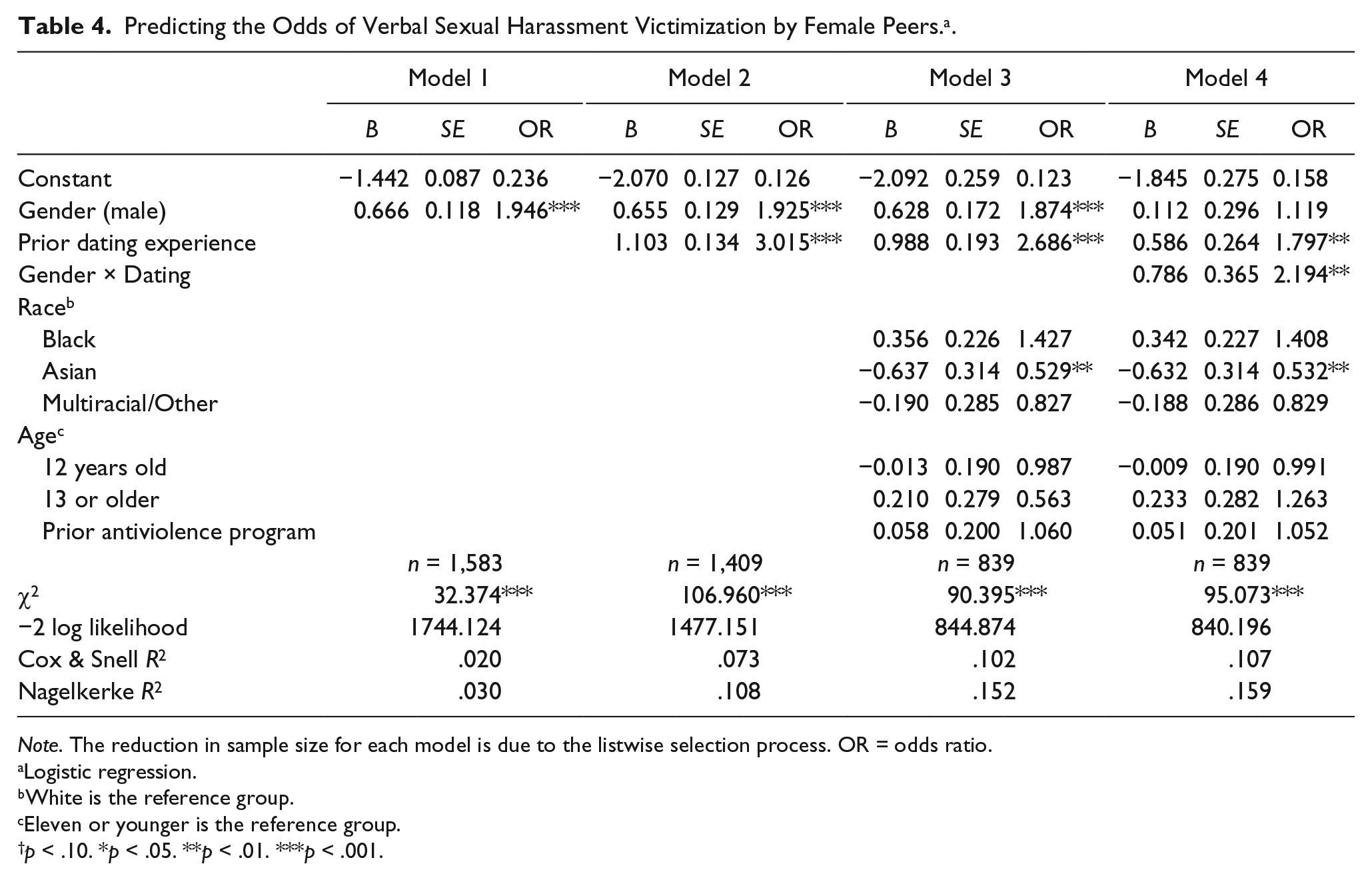
Note. The reduction in sample size for each model is due to the listwise selection process. OR = odds ratio.
Logistic regression.
White is the reference group.
Eleven or younger is the reference group.
p < .10. *p < .05. **p < .01. ***p < .001.
Verbal Sexual Harassment Perpetration
Any verbal sexual harassment perpetration
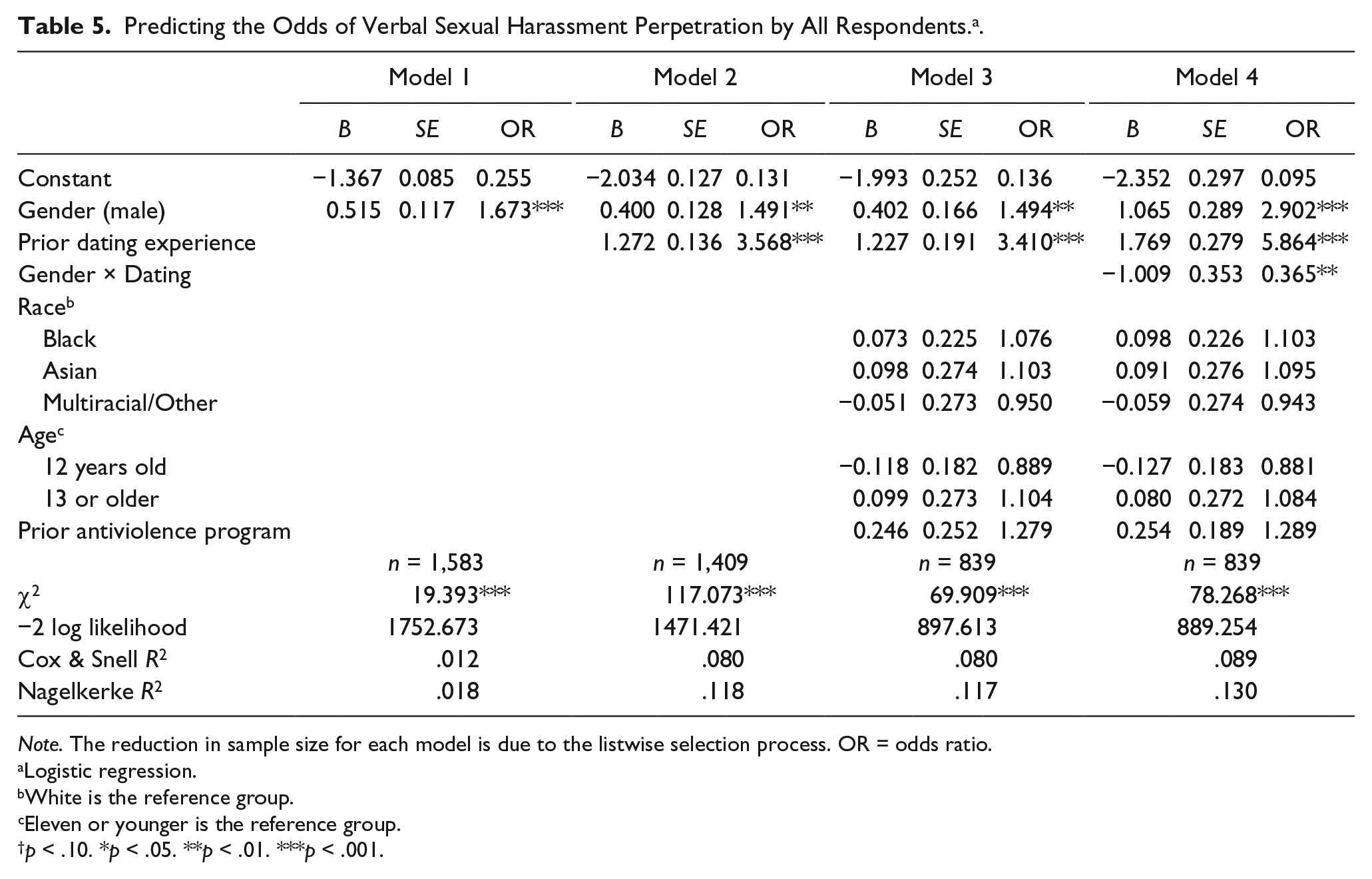
The results predicting any verbal sexual harassment perpetration shown in Table 5 reveal that boys are 67.3% more likely to victimize others with verbal sexual harassment than girls (Model 1), dating experience increases the odds of perpetrating verbal sexual harassment by 256.8% (Model 2), and the relationships remain when the control measures are added to the model (Model 3). The interaction between gender and prior dating experience suggests that the effect of prior dating experience on sexual harassment perpetration is significantly stronger among the female respondents (Model 4).
Predicting the Odds of Verbal Sexual Harassment Perpetration by All Respondents. a .
Note. The reduction in sample size for each model is due to the listwise selection process. OR = odds ratio.
Logistic regression.
White is the reference group.
Eleven or younger is the reference group.
p < .10. *p < .05. **p < .01. ***p < .001.
Verbal sexual harassment perpetration against male peers
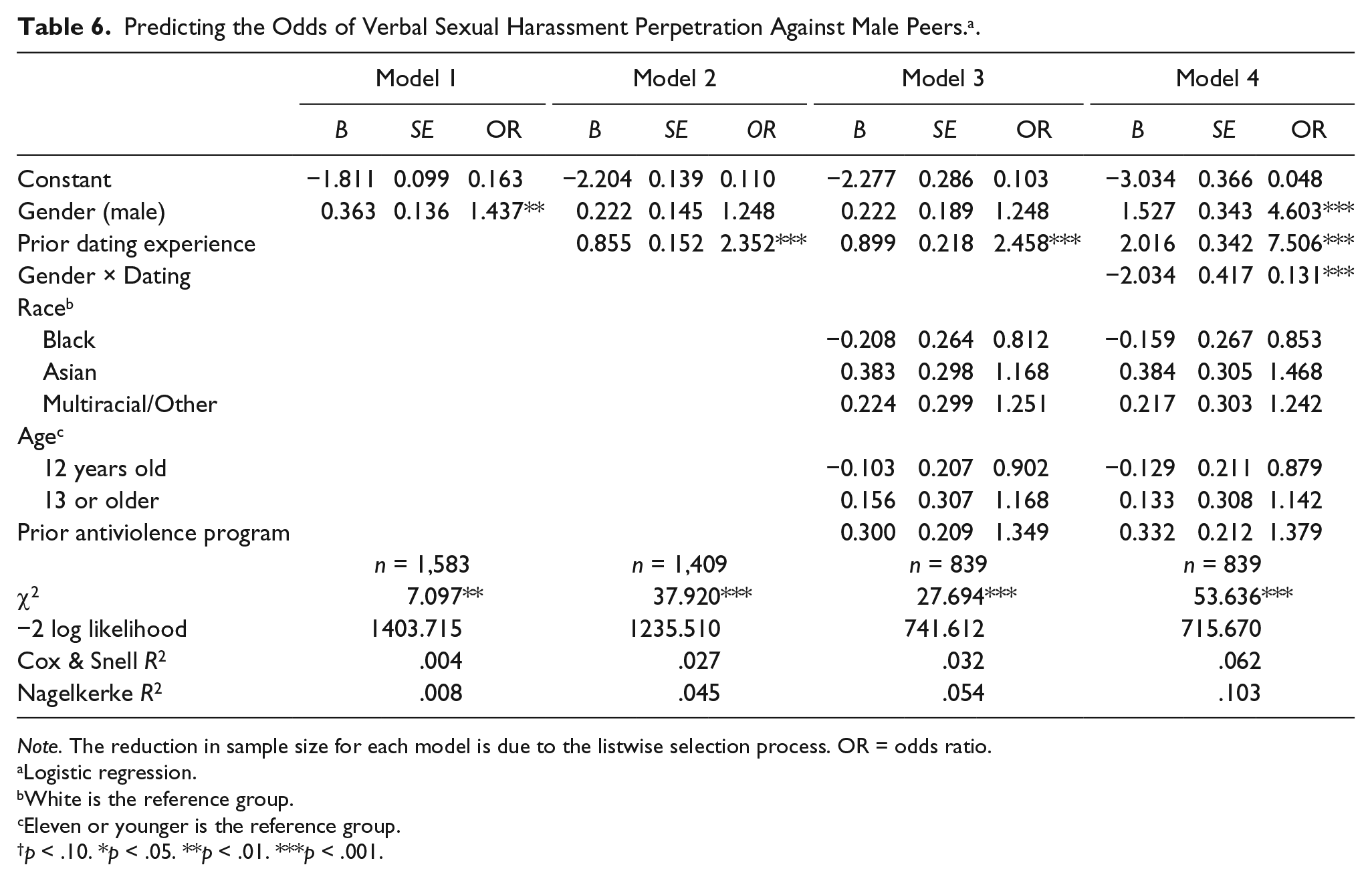
The models predicting verbal sexual harassment perpetration against male peers are shown in Table 6. The results show that males are 43.7% more likely than females to verbally sexually harass male peers (Model 1), prior dating experience increases the odds of verbal sexual harassment perpetration by 135.2% (Model 2), and the control variables do not modify the relationships (Model 3). The interaction between gender and prior dating experience shows that the influence of dating experience on verbal sexual harassment perpetration against male peers is significantly stronger for the female respondents (Model 4).
Predicting the Odds of Verbal Sexual Harassment Perpetration Against Male Peers. a .
Note. The reduction in sample size for each model is due to the listwise selection process. OR = odds ratio.
Logistic regression.
White is the reference group.
Eleven or younger is the reference group.
p < .10. *p < .05. **p < .01. ***p < .001.
Verbal sexual harassment perpetration against female peers
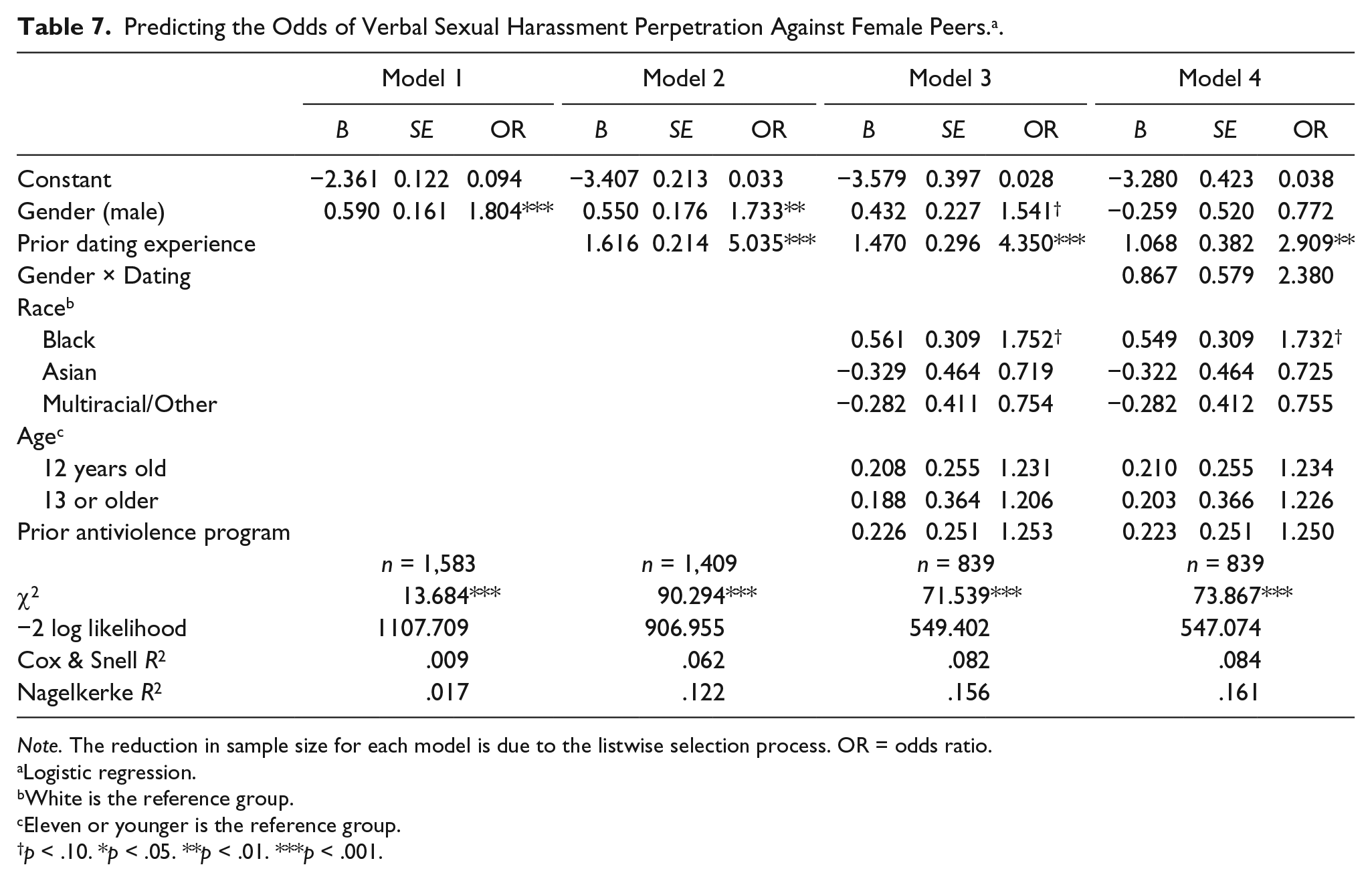
The results of the logistic regression models predicting verbal sexual harassment perpetration against female peers shown in Table 7 reveal that males are 80.4% more likely than females to verbally sexually harass female peers (Model 1) and prior dating experience increases the odds of verbal sexual harassment perpetration against female peers (Model 2). Notably, the influence of gender is reduced to insignificance once verbal sexual harassment is added to the model. The control variables do not influence the odds of verbal sexual harassment perpetration directed at female peers (Model 3). The interaction between gender and dating experience reveals that the dating experience is a significantly strong predictor of the odds of verbal sexual harassment perpetration against female peers among the male respondents (Model 4).
Predicting the Odds of Verbal Sexual Harassment Perpetration Against Female Peers. a .
Note. The reduction in sample size for each model is due to the listwise selection process. OR = odds ratio.
Logistic regression.
White is the reference group.
Eleven or younger is the reference group.
p < .10. *p < .05. **p < .01. ***p < .001.
Discussion
Sexual harassment is pervasive, especially within the educational system, and the effects of sexual harassment have been extensively documented for decades. Research has demonstrated that sexual harassment escalates during middle school and continues through high school and adulthood (Espelage & Holt, 2007; Halpern, Spriggs, Martin, & Kupper, 2009; McMaster et al., 2002). As past research has indicated, sexual harassment results in a wide range of negative developmental problems, including diminished school performance and suicidality (Ackard & Neumark-Sztainer, 2002; Alleyne-Green, Coleman-Cowger, & Henry, 2012; Dahlqvist, Landstedt, Young, & Gådin, 2016; Gruber & Fineran, 2007). The purpose of the current study was to contribute to the gap in the sexual harassment literature by focusing primarily on the patterns of verbal sexual harassment among middle school students, including an assessment of the independent and combined influences of gender and prior dating experience on the likelihood of verbal sexual harassment victimization and/or perpetration. Ultimately, the study highlights that boys are the primary perpetrators of verbal sexual harassment directed toward both girls and boys. Notably, boys are also more likely to have been victimized by verbal sexual harassment than girls, and the verbal sexual harassment directed at boys appears to be primarily from female peers. Explanation for such findings will be further discussed in detail below.
The first noteworthy finding from the current study is the likelihood of victimization and perpetration being influenced by gender. The hypothesis that girls are victims of verbal sexual harassment more than boys was not supported by the findings. In fact, boys experienced this form of harassment more than girls (53.4% boys and 49% girls). One explanation for this is that boys are not just verbally harassed by other boys (31.3%), but boys also receive a considerable amount of verbal sexual harassment from girls (31.5%). It is not surprising that boys would verbally sexually harass one another, especially when taking under consideration our cultural norms that are based on the hegemonic masculinity perspective. According to this perspective, boys are taught to be tough, aggressive, and dominant; thus, same-sex harassment is meant to establish a social hierarchy by emasculating other boys (Ferguson, 2000; Kimmel, 1996). However, based on the high prevalence of girls engaging in verbally sexually harassment perpetration against males, it is possible that a shift in hegemonic masculinity is occurring. In other words, we have started to see a shift within our society in which females are becoming less and less accepting of gender cultural norms. Thus, this has led to females of all ages becoming more prowess in their educational and career choices, as well as sexual roles.
The second noteworthy finding in this study is that dating experience does increase the odds of being a victim or perpetrator of verbal sexual harassment, as originally hypothesized. The influence of dating experience is particularly evident in the interaction with gender. For both verbal harassment victimization and perpetration, the impact of dating experience was stronger for the gender opposite of who was victimized or who was perpetrating the harassment. Dating, therefore, appears to be the context that fosters the development of opposite-sex verbal sexual harassment. Interpreted differently, same-sex verbal sexual harassment is much more likely to occur among the respondents without dating experience. Based on sex scripts discussed above, the results of the current study suggest that early adolescent romantic relationships present new opportunities for both boys and girls to enact shared cultural understandings of sex scripts in an interpersonal context in the form of verbal sexual harassment. Although verbal sexual harassment can be seen as a form of “teasing” done in an attempt to solicit sexual attention, the intent of this verbal sexual harassment can easily be miscommunicated or ignored and lead to further sexual violence (Muehlenhard, 2011).
Limitations and Future Research
The results of the study should be considered carefully as there were a few notable limitations. First, this study was not generalizable to the entire population of middle school students across the country. Therefore, it is important for future research to continue examining verbal sexual harassment with a variety of samples such as other school districts that are similar and different from the present study in New York City. Second, the pencil and paper survey was 12 pages long and students were only given 40 min to complete the survey; therefore, not every respondent successfully completed the survey in its entirety. In the future, researchers should make efforts to make surveys shorter, carry out in an electronic version, and provide more time to complete it. Third, the current study was unable to document the detrimental effects of verbal sexual harassment. Being a victim or perpetrator of sexual harassment has long-term social, emotional, and behavioral consequences (Ackard & Neumark-Sztainer, 2002; Alleyne-Green et al., 2012; Dahlqvist et al., 2016; Gruber & Fineran, 2007; Parker & Asher, 1987; Rhinehart, Doshi, & Espelage, 2014). The detrimental consequences of sexual harassment can be short-term or follow the victims into adulthood (Espelage & Holt, 2007; Halpern et al., 2009; McMaster et al., 2002), but little is known about the consequences of verbal sexual harassment specifically. Future research should delineate the differential negative outcomes of verbal versus physical sexual harassment. It is entirely possible that verbal sexual harassment is as consequential to adolescent development as physical sexual harassment, if not more damaging given the ubiquity of verbal sexual harassment.
Fourth, when referring to “prior dating experience,” the data do not distinguish between opposite-sex dating relationships and same-sex romantic relationships nor does the study address gender identity. As this study highlighted, one’s dating experience increases the odds of verbal sexual harassment victimization and perpetration, but it is possible that the effect of dating experience is influenced by sexual and gender identity. Future research should more precisely measure adolescent sexual scripts, gender identity, sexual orientation, and sexual activity. Fifth, as with any self-report data, the prevalence of underreporting is an issue, especially with middle school–aged children, and admitting that verbal sexual harassment has occurred (AAUW, 2011; Taylor, Stein, & Mumford, 2013). Students at this age tend to normalize and neutralize such behaviors as just part of their everyday life. Therefore, many middle school students may not be able to truly define occurrences of verbal sexual harassment as victimization. Perhaps the best way to accurately capture victimization experiences is to better instruct adolescents to identify what behaviors constitute verbal sexual harassment. Sixth, the survey did not allow the respondents to report being harassed by both male and female peers. Addressing verbal sexual harassment and victimization by both males and females in future research would add valuable information to the literature on sexual harassment. Overall, future research should focus more specifically on verbal sexual harassment among adolescents because it could possibly curtail future incidences of sexual violence later in life.
Policy Implications
Policy makers should give greater attention to policies that control verbal sexual harassment among adolescents, focusing specifically K-12 school. One possibility is to apply and enforce more rigorously the Title IX policies that have existed since 1972 (U.S. Department of Justice, 2016). Second, instructional policies should be targeted at females because they are also heavily involved in perpetration of verbal sexual harassment. Third, adolescents need instructional programs that teach them to define and recognize verbal sexual harassment. Finally, the students should be able to have a safe outlet (i.e., liaison) to report such behaviors.
Footnotes
Appendix A
Reported Verbal Sexual Harassment Victimization by Gender.
| Has any girl or boy ever done any of the following |
|||
|---|---|---|---|
| All Respondents (%) | Male Respondents (%) | Female Respondents (%) | |
| Made sexual comments, jokes, gestures, or looks about/to you? | 27.6 | 33.2 | 34.8 |
| Showed, gave, or left you sexual pictures, photographs, messages, or notes? | 11.3 | 18.1 | 10.6 |
| Wrote sexual messages or graffiti about you on bathroom walls, in locker rooms, or other places? | 4.5 | 6.7 | 4.0 |
| Spread sexual rumors about you? | 8.5 | 9.6 | 9.7 |
| Said you were a gay or lesbian, as an insult? | 19.9 | 25.3 | 19.5 |
| Spied on you as you dressed or showered at school? | 2.1 | 2.3 | 2.6 |
| “Flashed” or “mooned” you? | 9.4 | 15.4 | 7.9 |
| n = 1,583 | n = 736 | n = 847 | |
Appendix B
Reported Verbal Sexual Harassment Perpetration by Gender.
| Have |
|||
|---|---|---|---|
| All Respondents (%) | Male Respondents (%) | Female Respondents (%) | |
| Made sexual comments, jokes, gestures, or looks about/to you? | 9.6 | 15.9 | 8.0 |
| Showed, gave, or left you sexual pictures, photographs, messages, or notes? | 2.7 | 4.3 | 2.1 |
| Wrote sexual messages or graffiti about you on bathroom walls, in locker rooms, or other places? | 1.7 | 2.7 | 1.4 |
| Spread sexual rumors about you? | 3.4 | 4.1 | 3.7 |
| Said you were a gay or lesbian, as an insult? | 12.9 | 17.1 | 13.3 |
| Spied on you as you dressed or showered at school? | 1.1 | 2.4 | 0.5 |
| “Flashed” or “mooned” you? | 2.3 | 3.3 | 1.3 |
| n = 1,583 | n = 736 | n = 847 | |
Declaration of Conflicting Interests
The author(s) declared no potential conflicts of interest with respect to the research, authorship, and/or publication of this article.
Funding
The author(s) received no financial support for the research, authorship, and/or publication of this article.