



Abstract
Investments in elite sport and sport events are often justified by governments with the trickle-down effect. Theoretically, this effect implies that people are inspired by sporting success, the personality of athletes, and hosting elite sport events to practice sport. However, previous research had difficulties in measuring, modeling, and providing evidence of this effect. The purpose of this study is to examine such external drivers of membership numbers in German sport clubs. This study uses unique data on male memberships from 1970 to 2011 in 12 Olympic sports. Under the control of economic variables (income, work time, gross domestic product [GDP]), the results of dynamic panel regression models show a significant positive effect of hosting a major sport event on the growth rate in memberships in the same year and several lagged effects for stars and sporting success. The results have implications for policy makers and the capacity management of nonprofit sport clubs.
Introduction
Sport systems in many countries are organized like a pyramid (Eady, 1993). At the top of the system are elite sport organizations and elite athletes who represent the country at international sport events and are supported financially by governments (Houlihan & Green, 2008). In the middle layers are various sport governing bodies that facilitate the transition to the elite level. The base of the pyramid is formed by local nonprofit sport clubs that provide programs for mass participation and also pathways for young talents (Sotiriadou, Shilbury, & Quick, 2008). Recent research indicates that recruitment and retention of members to sport clubs is problematic (Breuer & Wicker, 2011).
These problems represent financial challenges for the organized sport system for several reasons. First, members make important financial contributions to clubs by paying yearly or monthly membership fees, which represent their most important income source (Breuer & Wicker, 2011). Second, government subsidies for sport clubs are often related to the number of members (Voigt, 2006). More members are beneficial for clubs in both cases, if clubs have some fixed costs that are independent of the number of members (e.g., for sport facilities or a general manager). Third, declining membership numbers in sport clubs influence the financial situation of governing bodies because sport clubs pay membership fees to them based on their membership numbers.
Therefore, the question arises as to what factors determine the membership numbers in sport clubs. Generally speaking, membership numbers can be influenced by the sport clubs themselves, for example, through marketing and promotion activities to attract members (Shilbury, Quick, Westerbeek, & Funk, 2009). In addition to internal efforts, membership numbers can be influenced by external effects. For example, results at the elite level such as sporting success at international competitions can trickle down to the bottom level of the sport system (club level) and thus influence club memberships (Weed, 2009).
The purpose of this study is to examine external drivers of membership numbers in sport clubs, which are conceptualized by the trickle-down effect. According to this concept, participation numbers can be influenced by three effects at the elite level (sporting success, personality of athletes, and hosting major sport events). The study has the following main research question:
The research question is analyzed using unique data on the development of German club memberships in 12 sports from 1970 to 2011 and information about various external drivers. Dynamic panel regression models reveal differences between juniors and seniors and time-lagged trickle-down effects. The study helps to determine whether elite sport should be supported with the aim of increasing participation in sport clubs and achieving related policy goals.
Conceptual Framework and Literature Review
This study is based on the concept of the trickle-down effect (Sotiriadou et al., 2008), which is also referred to as Boris Becker effect (van Bottenburg, 2001) or demonstration effect (Weed, 2009). This concept has also been applied to other fields such as economics (Aghion & Bolton, 1997). In sport, the idea of a trickle-down effect is that “people are inspired by elite sport, sports people or sports events to participate themselves” (Weed, 2009, p. 4). This definition implies that people can be inspired by (a) sporting success and elite performances, (b) elite athletes and their personalities, and (c) elite events to participate in sport. Increases in mass sport participation are supported and appreciated by governments given the positive effects of sport activity on health and well-being (Rasciute & Downward, 2010). Although the trickle-down effect is convincing from a theoretical perspective, previous research experienced difficulties in measuring and providing evidence of this effect (e.g., Hindson, Gidlow, & Peebles, 1994; Veal, Toohey, & Frawley, 2012).
The trickle-down effect has three facets. First, elite sporting success should have an inspirational function for the population. This means that some people take up sport activity because a national athlete or team was successful at a major sport event. Governments promote elite sport and sporting success and acknowledge its positive effects (Cabinet Office, 2002). Most studies examined this facet of the trickle-down effect (e.g., Feddersen, Jacobsen, & Maennig, 2009; Hindson et al., 1994), probably because success in sport is easy to measure and occurs frequently (Kahn, 2000); however, they show contradictory findings. Some studies documented a positive relationship between sporting success in biathlon measured by Olympic or World championship medals and the number of registered participants (Hanstad & Skille, 2010). However, previous research also suggests that the effect does not occur automatically for all sports (Rebel & O’Dwyer, 2008) and is related to the clubs’ marketing and promotion activities (Hindson et al., 1994). Other studies even revealed paradox relationships such as decreasing membership numbers in times of sporting success (Feddersen et al., 2009) or an increase in the sedentary population despite sporting successes (Hogan & Norton, 2000). According to Weed (2009), sporting success does not inspire people who are not emotionally engaged in the sport. In fact, the trickle-down effect would only lead to increases in the frequency of participation of existing participants, to re-engaging lapsed participants, and to current participants switching activities.
Second, it is suggested that people are inspired to take up sport by elite athletes and their personalities. This effect is similar to the superstar effect in professional sport which holds that some athletes stand out not only because of marginal differences in talent (Rosen, 1981) but also because of their personality and popularity (Adler, 1985). They are in the media to a greater extent and people get to know more about these athletes. Thus, network effects are created that lead to increased consumption capital of spectators (e.g., knowledge of rules, players, teams, background information; Stigler & Becker, 1977). The building of consumption capital can be facilitated by role models and stars because the sport is watched more often. Consumers may start practicing the sport as a result of increased media attention and the presence of role models. Previous research has shown that particularly young people and males in particular choose athletes as role models and that the media coverage influences the way role models are perceived (Biskup & Pfister, 1999; Shilbury et al., 2009).
Third, it is assumed that major sport events on home soil inspire the population of the host country to participate themselves. The increased media exposure and the opportunity to watch the sport in the stadium should inspire people to take up sport. This effect is also referred to as the participation legacy of sport events, which is specified in policy documents and typically among the arguments for placing a bid for an event (Cabinet Office, 2002; Veal et al., 2012). Previous research showed mixed effects: While hosting sport events had a positive impact on sport infrastructure (Murphy & Bauman, 2007) and the sport participation of juniors in some studies (Frawley & Cush, 2011), other studies had difficulty in providing evidence of this effect (Veal et al., 2012).
Thus, events do not automatically lead to such positive outcomes because social leverage of sport events needs to be facilitated (Chalip, 2006). Event organizers should engage in various activities to foster social interaction and prompt a feeling of celebration, which can then be leveraged to address social issues and empower community action (Chalip, 2006). As a result of positive messages (Chalip, 2006) and increased publicity associated with sport, the population’s interest in sport increases and people are inspired (Sotiriadou & Shilbury, 2009). To convert inspiration into participation, it is critical that people are provided with information about opportunities to take part (Ramchandani & Coleman, 2012).
Although a couple of studies investigated the trickle-down effect empirically (e.g., Veal et al., 2012; Weed, 2009), some shortcomings can be observed: Most studies examined only one facet of this effect and did not provide a holistic picture (e.g., Hanstad & Skille, 2010). Also, the data quality is open to question because the data did not cover large time frames and may be biased by subjective perceptions of clubs, participants, and policy makers (e.g., Hindson et al., 1994). Furthermore, the statistical procedures were not sufficiently advanced to isolate the trickle-down effect. In doing so, it is important to use regression models (instead of correlations; for example, Hanstad & Skille, 2010) to control for economic factors such as income or working time that may also influence people’s sport participation (e.g., Wicker, Breuer, & Pawlowski, 2009). It may also be pertinent to analyze the time frame of the effect, that is, whether the impact occurs only in the same year or whether it lasts longer. The present study attempts to address these shortcomings.
Method
Data Collection
Data on the development of memberships in sport clubs were compiled for Olympic sports from 1970 to 2011 (Deutscher Olympischer Sportbund/German Olympic Sports Confederation; DOSB). The DOSB is the umbrella organization for organized sport in Germany and tracks club memberships grouped by national governing bodies (NGBs) since 1970. In the German sport system, memberships are reported bottom-up, that is, the DOSB receives membership numbers from the NGBs, which themselves receive numbers from clubs. Recently, numbers have been reported electronically through an online submission system, whereas previously, it was done in hardcopy form. The summary statistics are published annually by the DOSB (e.g., DOSB, 2012). The yearly numbers for each sport were transferred manually to a statistics file. The focus of this study is on male memberships because data on female memberships were not available for the whole period of time (1970-2011). For example, in soccer, data on female junior memberships were only available from 1980 onward. Importantly, the term membership (instead of member) is used in this study, because people can be members of several sport clubs. For example, one person can be a member of a soccer club and a basketball club and would be included twice in the membership data leading to double counting of membership numbers.
Two aspects must be considered when analyzing the effects on membership numbers. First, some NGBs represent several sports or disciplines. For example, the German Ski Association represents club members in various disciplines such as alpine skiing, ski jumping, and biathlon. These NGBs are referred to as heterogeneous sports and are excluded from the analysis because successes in one sport cannot be isolated. Second, it must be considered whether the sport can be practiced in every part of the country under the same conditions (e.g., size of sport fields). For example, some sports can only be practiced in a few regions due to climate and topography (e.g., not all regions in Germany have mountains and/or snow in the winter) and/or differ in the conditions (e.g., skiing, canoeing, bob), whereas other sports such as soccer, handball, and basketball can be played everywhere in the country. Therefore, the former are also excluded from the analysis. Hence, the current analysis focuses on homogeneous fixed-field sports to avoid such biases. Because membership numbers were not available for all 41 years in all sports, the final sample had to be reduced to 12 Olympic sports (Table 1).
Overview of the Olympic Sports Included in the Analysis and the Memberships in 2011.
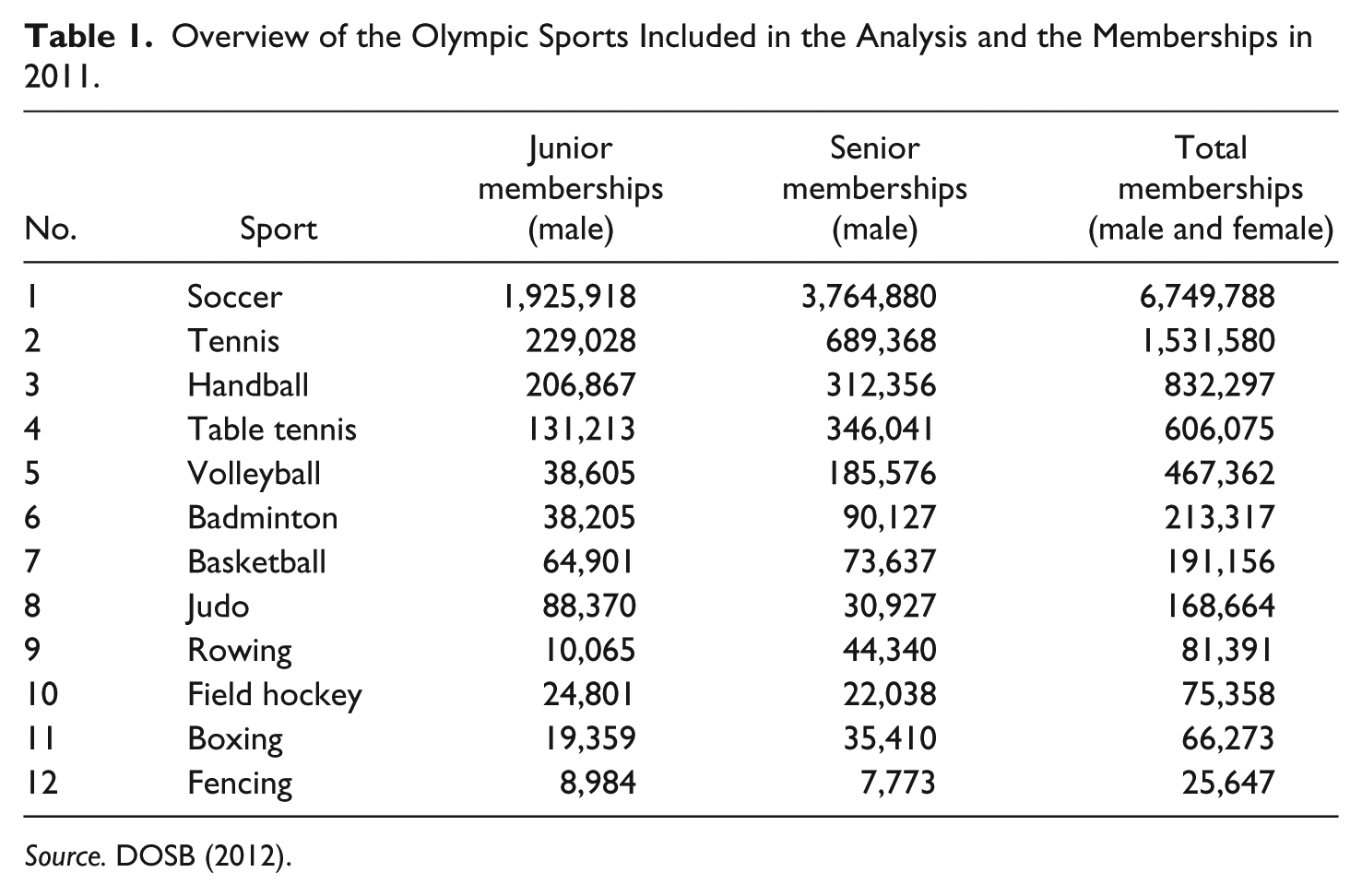
Source. DOSB (2012).
Measures and Variables
All variables of this study and their source of origin are summarized in Table 2. The overall sample was separated into JUNIORS (aged up to 18 years) and SENIORS (aged 19 years and older; the threshold within the DOSB age groups is 19 and not 18). This distinction has also been undertaken in previous research (Frawley & Cush, 2011). This is important because the first fundamental restructuring of life (job, income, domicile, independence from parents) generally occurs around this age and it may influence the demand for club participation (Fernández-Villaverde & Krueger, 2007).
Variable Description.
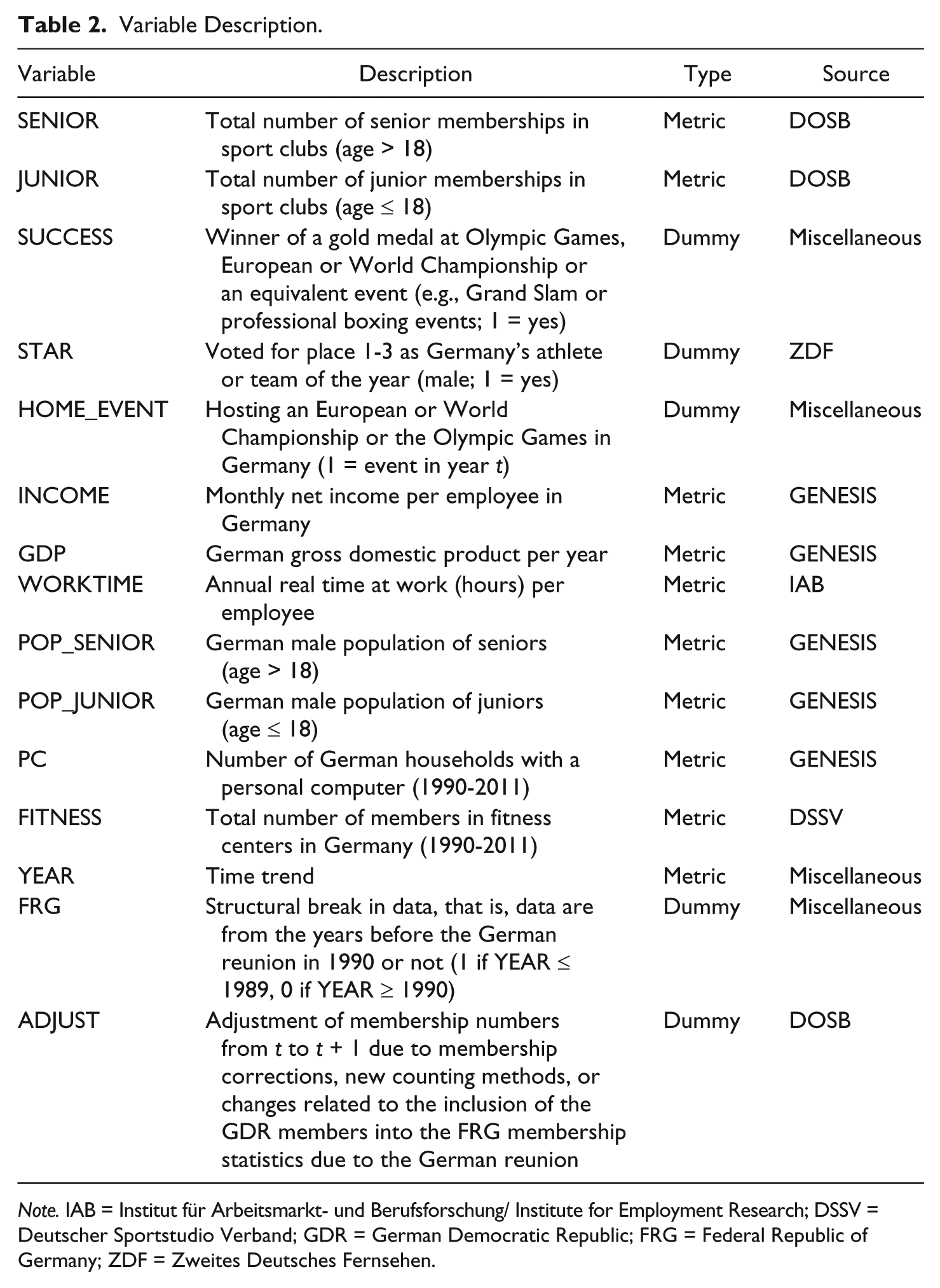
Note. IAB = Institut für Arbeitsmarkt- und Berufsforschung/ Institute for Employment Research; DSSV = Deutscher Sportstudio Verband; GDR = German Democratic Republic; FRG = Federal Republic of Germany; ZDF = Zweites Deutsches Fernsehen.
The trickle-down effect is measured with the three variables SUCCESS, STAR, and HOME_EVENT. The first measure is SUCCESS, which is defined as winning a gold medal at important international competitions (i.e., Olympic Games, World championships, or European championships) or winning equivalent competitions such as Grand Slams in professional tennis or main boxing events. The second measure (STAR) captures the personality of athletes and the concept of athletes acting as role models. In Germany, there is an election of the athlete of the year and team of the year, which is organized by the public television network Zweites Deutsches Fernsehen (ZDF) at the end of each year. More than 300 journalists are invited to vote for the athlete and the team they consider outstanding in terms of sporting achievements and personality. The personality aspect is critical in this election because the objective is to find the best role model instead of the most successful athlete or team (ZDF, 2012). Many athletes and teams have never been ranked among the top three despite their exceptional sporting achievements. This election has taken place on an annual basis since 1947 with a constant mode of election (ZDF, 2012). Specifically, STAR captures if a male athlete or a team of a specific sport was ranked among the top three at the election in year t. The third measure is HOME_EVENT, which reflects whether Germany hosted a major sport event in year t (i.e., Olympic Games, World and European championships).
Because previous research showed that the demand for sport and club memberships is also determined by economic factors such as time and income (e.g., Wicker, Hallmann, & Breuer, 2013), it is important to control for these factors. Therefore, information about the net income (INCOME), the gross domestic product (GDP), and the real work time per capita and per year (WORKTIME) was collected at a macro level. While it is assumed that INCOME and GDP have a positive influence on club memberships, WORKTIME may have a negative impact (Wicker et al., 2013). Moreover, the larger the potential consumer base, the higher the probability of high membership numbers in sport clubs. Therefore, information about the male population of seniors (POP_SENIORS) and juniors (POP_JUNIORS) was gathered. The information was retrieved from the database Gemeinsames Neues Statistisches Informations-System (GENESIS) of the German Federal Statistical Office (GENESIS, 2012) and annual reports from the German Institute for Labor Market Research (Institut für Arbeitsmarkt- und Berufsforschung/ Institute for Employment Research [IAB], 2005, 2011).
As practicing sport in sport clubs can be substituted by other sports providers or alternative leisure activities (Borland & MacDonald, 2003), it is important to also include the variables FITNESS and PC. The variable FITNESS encompasses the number of members in fitness centers in Germany. The information was made available by the German Association for Fitness Centers (Deutscher Sportstudio Verband [DSSV]). The variable PC captures the number of households with a computer and reflects increasing domestic computerization and a possible substitution of sport activity by computer usage (i.e., gaming, social media). In an attempt to proxy time-specific effects, a time trend variable (YEAR) is included. Further covariates control for a structural break in the data due to the German reunification in 1990 (Federal Republic of Germany [FRG]) and for the adjustment of membership numbers due to membership corrections, new counting methods, or other changes related to the German reunification (ADJUST; Table 2).
Econometric Model: Dynamic Panel Regression
The data analysis must take into account that people can be influenced by their peers and practice sport in clubs because of them. These network effects can result from social capital (Bourdieu, 1986) created through the interaction with friends or other sport consumers and lead to general sport trends (general increase in sport demand). An indirect measure is needed to capture these effects because intrinsic motivations cannot be observed. Under the assumption that a growth in club memberships is affected by multiplier effects of personal networks in previous periods, modeling the influence of past decisions in t − 1 on behavior in the current period t is critical. With regard to this dynamic nature and existing unobserved sport-specific heterogeneity, a dynamic panel model should be applied (Bruno, 2005). In doing so, a t − 1 lagged variable of the dependent variable is included. A dynamic model is an autoregressive specification of the following general form (e.g., Judson & Owen, 1999; Kiviet, 1995):

where yit is the dependent variable for individual i in time period t, α the impact of the lagged dependent variable, xit a (K − 1) × 1 vector of strictly exogenous regressors (observed heterogeneity), η i the individual effects term (unobserved, time-invariant heterogeneity), and ϑ it the individual disturbance term (unobserved, time-variant heterogeneity). The observed characteristic (xit) could reflect lagged values of exogenous predictors as well; however, such specifications do not lead to biased results (Kiviet, 1995). The initial distribution of values of memberships (y0) is set as fixed. Fixed-effects estimations are not biased due to large T values, even when the assumptions about the initial values are set as random (Anderson & Hsiao, 1981).
Several aspects must be considered in the choice of a suitable estimator. First, ordinary least squares (OLS) regressions cannot be applied because adding a lagged dependent explanatory variable violates one basic assumption of OLS, that is, low correlations between the error term and the explanatory variables (Hsiao, 2003; Kiviet, 1995). Therefore, a dynamic panel regression is estimated. However, dynamic panel estimations are only valid in the case of asymptotic distributions (Kiviet, 1995). The simple least squares dummy variable (LSDV) estimator would be the preferred estimator for the present dynamic panel model with fixed-effects for sports. Yet, the LSDV estimator suffers from asymptotic bias (Kiviet, 1995). The LSDV corrected estimator (LSDVC) represents an adequate extension of the LSDV estimator because it takes this aspect into account (Judson & Owen, 1999; Kiviet, 1995).
Like in OLS regressions, the ratio between the number of independent variables and the number of cases should be 1:5 (Hair, Black, & Babin, 2006), a requirement that is met given the sample size of n = 492 (= 41 × 12). Moreover, the ratio between T (time periods) and N (objects; here, sports) must be considered. The present data set is characterized by large T (41 periods) and small N (12 sports). Applying the LSDV estimator may be problematic because its estimates are considered less efficient than those of the LSDVC estimator for large T (i.e., T > 30; Judson & Owen, 1999). For small N (i.e., N < 20), the LSDVC estimator outperforms all other estimators (Buddelmeyer, Jensen, Oguzoglu, & Webster, 2008). Following Bruno (2005), the LSDVC estimator is “the preferred estimator for dynamic panel data models with small N and strictly exogenous regressors” (p. 475). It is therefore applied in this study.
Further Specifications
When estimating a dynamic panel regression model, a test of stationarity (unit root test) must be applied to identify whether modifications of the dependent and independent variables are necessary to avoid spurious regression results (Baltagi, 2008). Nonstationary dependent variables may lead to econometric problems. To test for stationary structure, the Im–Pesaran–Shin (IPS) test (e.g., Coates & Humphreys, 2003) and the Fisher augmented Dickey Fuller (ADF) test (e.g., Seetaram, 2010) are used to control for unit root characteristics of the data. All models are specified with a time trend and a t − 1 lag. First differences (FD), natural logarithms (LN; for example, Brida & Risso, 2009), and growth rates (e.g., Baumann, Engelhardt, & Matheson, 2012) are tested for stationarity as transformations of the original data (Level; see Table 3). Stationarity is confirmed for FD and growth rate variables. In this case, the increases in club memberships are stationary around a trend and are thus appropriate for dynamic panel estimations.
Results of the Panel Unit Root Tests (Time Trend, Lags = 1).
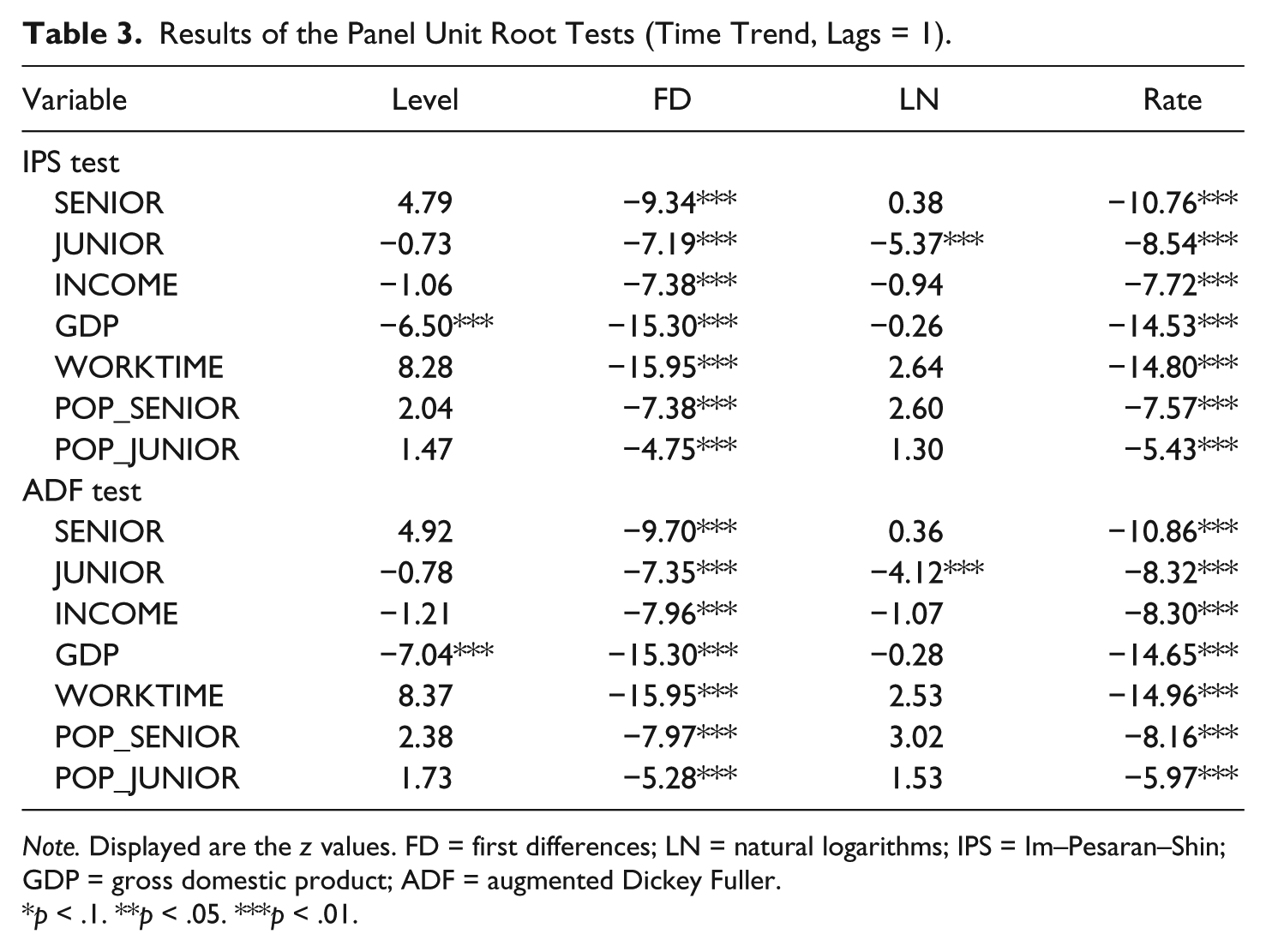
Note. Displayed are the z values. FD = first differences; LN = natural logarithms; IPS = Im–Pesaran–Shin; GDP = gross domestic product; ADF = augmented Dickey Fuller.
p < .1. **p < .05. ***p < .01.
Due to a better interpretation of growth rates and the slightly better performance in the unit root tests, the empirical investigation focuses on growth rates (in the following indicated by Δ) rather than on FD (T = 41). Although growth rates do not capture increases in the total number of members, they allow a better comparison of developments among sports given the large differences in memberships (Table 1). Nevertheless, growth rates may be higher for NGBs with lower membership numbers. To control for this effect, a t − 1 lagged variable of the absolute numbers (SENIOR_L1, JUNIOR_L1) is included in the model.
Altogether, three models are estimated for seniors and three for juniors. Model 1 only includes time lags (indicated by _L1) for growth rates and absolute memberships. In Model 2, five lags for the variables SUCCESS, STAR, and HOME_EVENT are included. The underlying assumption is that the trickle-down effect may be lagged, that is, club membership may not increase in the same year, an assumption that is supported by the paradox relationships in previous research (Feddersen et al., 2009). Moreover, the five lags are chosen to track the sustainability of potential trickle-down effects, that is, how long they last. Because data for the variables FITNESS and PC are only available from 1990 on, the influence of these variables is explored in a different model (Model 3). The basic equation is as follows:

All models are fixed-effects models due to various nonmeasurable individual effects, which are time-invariant, but different among sports (government subsidies, rules, cost of equipment, density of available sport facilities). The choice of a fixed-effects model is supported by the Hausman (1978) test. Panel models are useful in the case of individual heterogeneity among objects (sports). To test for heterogeneity and cross-section dependence, the application of a Frees (1995) test is suitable, because the sample is characterized by relative small T in relation to small N. The results of the Frees test support the choice of a panel model.
Results and Discussion
The descriptive statistics are presented in Table 4. On average, the 12 sports had around 600,000 male memberships. The largest NGB (soccer) registered more than 3.7 million senior and 1.9 million junior memberships. From 1970 to 2011, growth rates of junior memberships were approximately 0.8 percentage points higher than those of seniors. Taken together, a positive development of memberships could be observed since 1970. With regard to the trickle-down effect measures, 25% of the 12 sports had gold medal successes at major sport events during the period under investigation, 15% had an athlete or a team among the top three (STAR), and 9.55% hosted a major event. In summary, the high standard deviations for all variables support the heterogeneity of the 12 sports.
Descriptive Statistics.
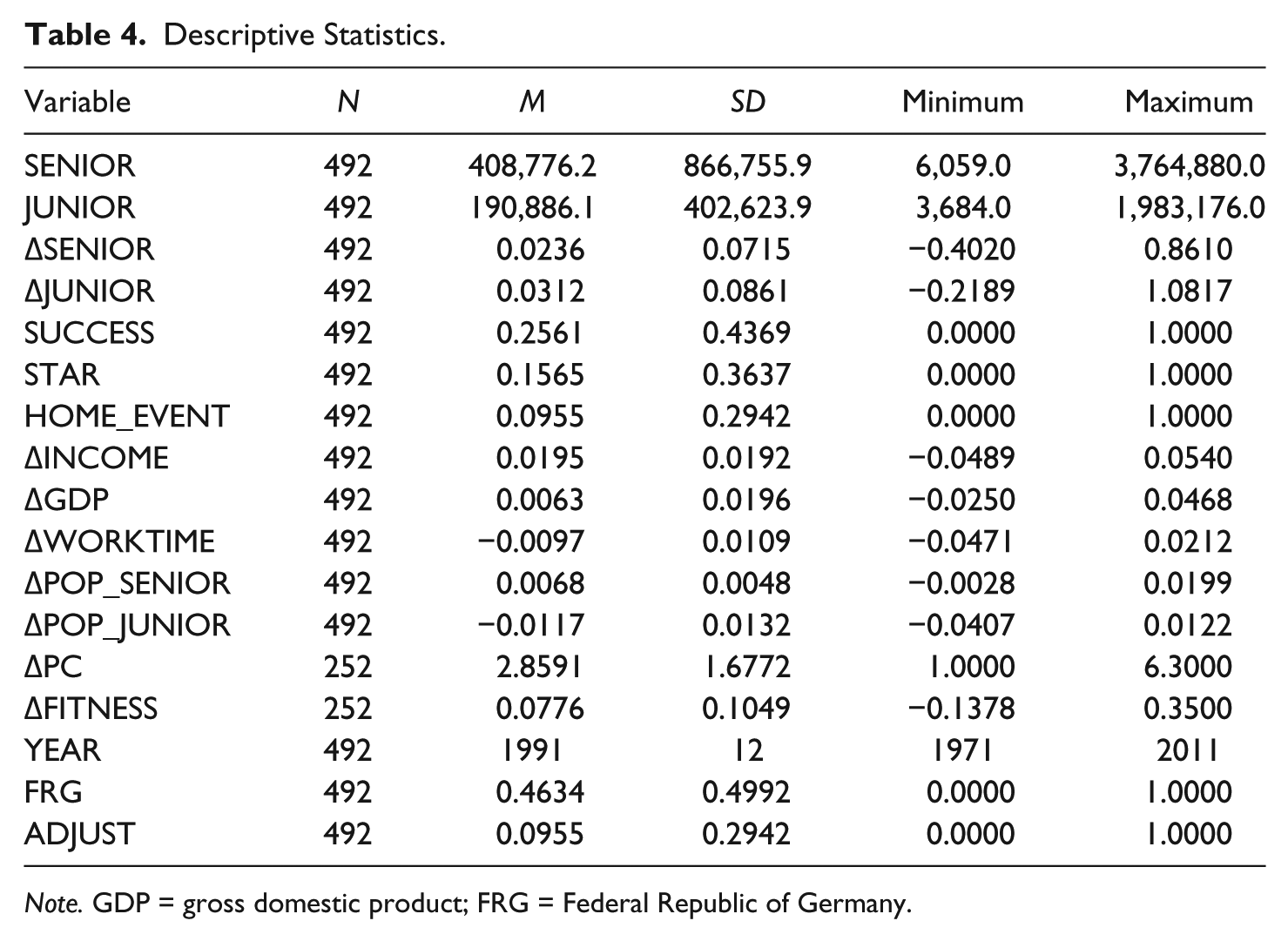
Note. GDP = gross domestic product; FRG = Federal Republic of Germany.
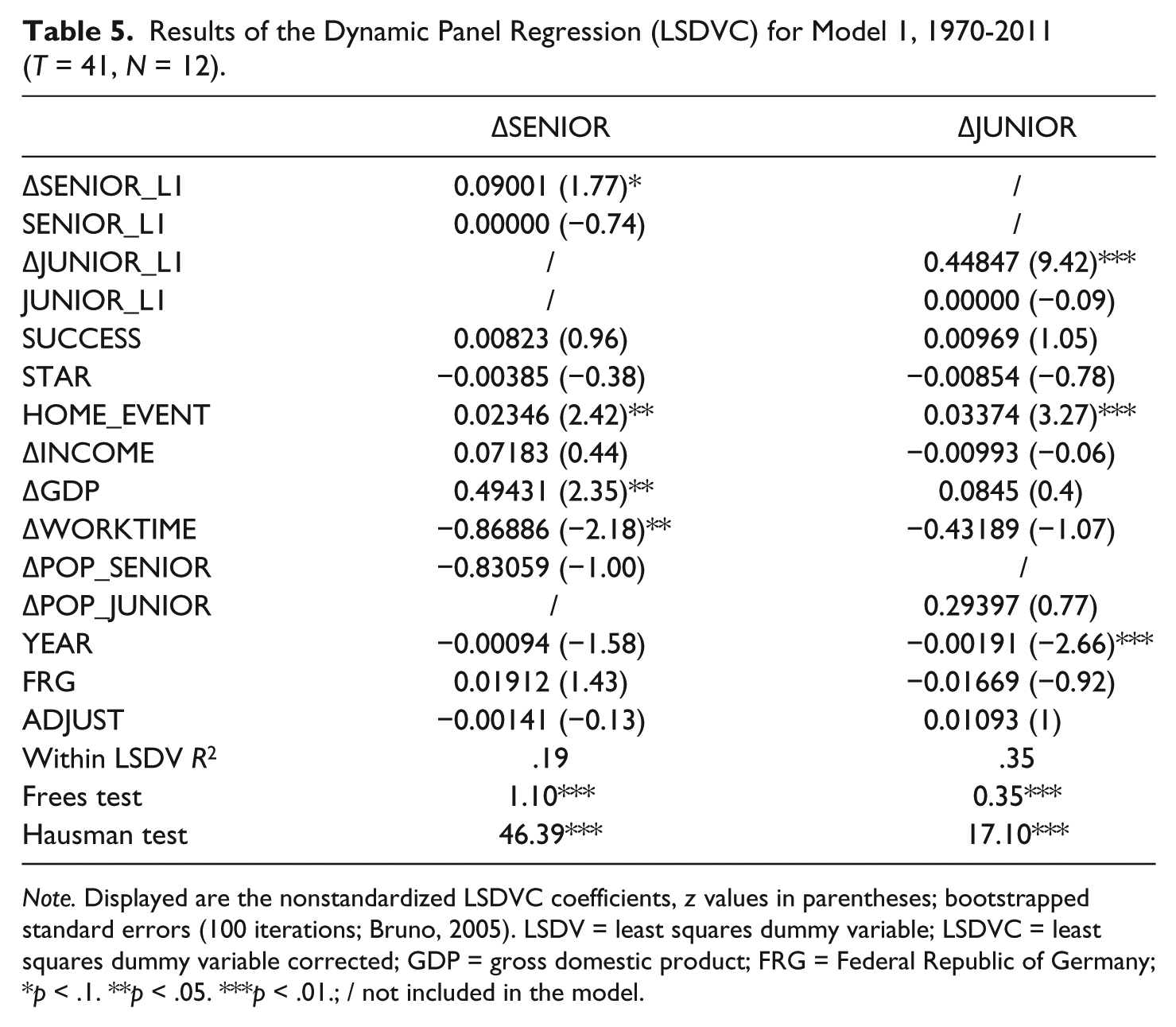
The results of the dynamic panel regression for Model 1 are summarized in Table 5. In both models, the growth rates in the previous year (ΔSENIOR and ΔJUNIOR) have a significant positive influence on the growth rates in the current year. In the case of junior memberships, an increase of 1% in t − 1 leads to a 0.44% higher growth rate in t, if all other explanatory variables are held constant. Senior memberships only increase by 0.09% following a 1% increase in the previous year. The higher increase among juniors may be a result of network effects, that is, younger people are more likely to join a sport club because their friends practice the same sport. In simple terms, the more friends join a sport club in year t, the higher the probability that the connected friends are following in year t + 1. Seniors may also join sport clubs to increase their social networks, but to a lesser extent, because they may have longer established existing networks through social contact.
Results of the Dynamic Panel Regression (LSDVC) for Model 1, 1970-2011 (T = 41, N = 12).
Note. Displayed are the nonstandardized LSDVC coefficients, z values in parentheses; bootstrapped standard errors (100 iterations; Bruno, 2005). LSDV = least squares dummy variable; LSDVC = least squares dummy variable corrected; GDP = gross domestic product; FRG = Federal Republic of Germany; *p < .1. **p < .05. ***p < .01.; / not included in the model.
With regard to the three variables measuring the trickle-down effect, only the variable HOME_EVENT is significant in both models. If Germany hosts a major sport event, the junior memberships in that specific sport increase by 3.3% on average and senior memberships by 2.3% in the same year. The finding that this effect is larger for juniors is consistent with previous research (Frawley & Cush, 2011). This effect may be a result of the increased media attention when a major sport event takes place on home soil. It indicates that leveraging activities and program development should be specifically targeted at juniors (Chalip, 2006) because they are inspired to a greater extent by sport events.
The variables ΔWORKTIME and ΔGDP only influence the growth rate of senior memberships, because juniors are not expected to work and generate GDP to the same extent. If the real time at work of an average German employee decreases by 1%, the rate of senior memberships increases by 0.87%, which indicates that the work reduction is almost completely substituted by sport. This effect is consistent with previous research documenting a negative effect of working time on club participation (Wicker et al., 2013). People have to split their available time into such diverse activities as work, family, shopping, and perhaps also voluntary positions in their sport club (Breuer & Wicker, 2011). A 1% increase in GDP affects the club memberships positively by 0.49%, probably because increases in GDP are associated with improvements in infrastructure (e.g., motor ways, subways), which reduce the commuting time to sport facilities (Borland & MacDonald, 2003). The LSDV R2s indicate that the model for juniors explains a greater share of the variation in the dependent variable than the model for seniors (35% vs. 19%). The difference is likely to be a result of greater heterogeneity among senior members, because they cover a wider range of age groups.
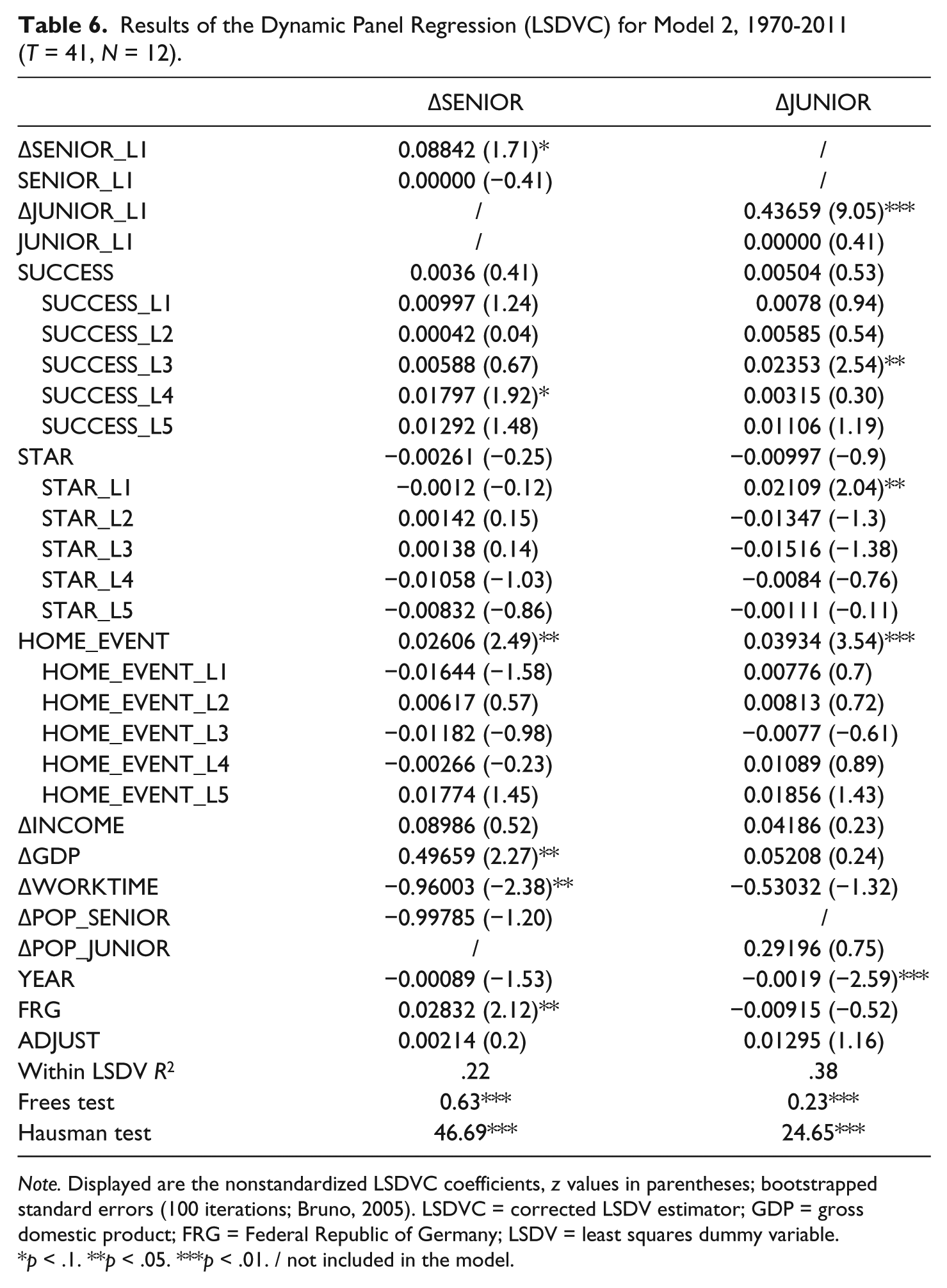
The results for Model 2 are presented in Table 6. Similar to Model 1, the R2 indicates that the model explains a higher share of the variation in junior growth rates than senior growth rates (38% vs. 22%). All significant effects from Model 1 can also be seen in Model 2 supporting the robustness of the results. Contrary to Model 1, Model 2 includes the five time lags for SUCCESS, STAR, and HOME_EVENT and provides interesting insights into the trickle-down effect. With regard to SUCCESS, all lagged effects have positive signs, but only the 4-year lag for seniors and the 3-year lag for juniors are significant. This means that 3 years after a sporting success, the growth rate of junior memberships increases significantly, whereas the rate of senior memberships only increases in the fourth year after the success. The question arises as to why this trickle-down effect is lagged by 3 (juniors) or 4 years (seniors). It is possible that people are inspired by the event and try the sport informally without organizational affiliation. When they become familiar with the sport, they may join a sport club after a few years to practice the sport in a more organized and probably also competitive manner. Taking part in any form of competition such as leagues and local, regional, or national championships requires a club membership in Germany, and the purpose of participation in such competitions could be one reason for joining a sport club after a few years.
Results of the Dynamic Panel Regression (LSDVC) for Model 2, 1970-2011 (T = 41, N = 12).
Note. Displayed are the nonstandardized LSDVC coefficients, z values in parentheses; bootstrapped standard errors (100 iterations; Bruno, 2005). LSDVC = corrected LSDV estimator; GDP = gross domestic product; FRG = Federal Republic of Germany; LSDV = least squares dummy variable.
p < .1. **p < .05. ***p < .01. / not included in the model.
The variable STAR has only a significant positive effect on junior memberships which is evident across the 12 sports under investigation (Table 6). The 1-year lag means that junior memberships increased by 2.1% on average in the year after the election of the athlete or team of the year. This 1-year lag could be explained by the fact that it takes some time until consumption capital is created by spectators. The star has to appear in the media and the news for some time and consumers have to build consumption capital. Moreover, the election, which is a reflection of the star’s appearance during the year as a whole, is held at the beginning of December. People are less likely to join a sport club in the last weeks of the year; it is more probable that they would join the club at the beginning of the next year and pay the respective membership fee. The finding that juniors are more likely to be influenced and inspired by athletes with personalities and role models is in accordance with marketing research (Shilbury et al., 2009). Younger people may be more likely to have time to spend on gathering information about superstars (e.g., scanning the Internet, reading magazines, watching videos, talking with friends).
The variable HOME_EVENT is only significant in the year of the event. This begs the question as to why the star effect and the home event effect do not persist in subsequent years. It is likely that sport clubs experience issues in capacity management and are not able to handle the increased demand, that is, they do not have a sufficient number of facilities and coaches and are not able to increase their capacity in the short term. Capacity management is a typical problem of club goods (Buchanan, 1965): Club managers do not only have to think about the optimum price (membership fee) but also have to think about the optimum number of members. For example, if a tennis club has too many members, the courts are always fully booked and many people cannot play as much as they want. Thus, neither old nor new members are satisfied with the training conditions and may consider leaving the club. One option to manage capacity could be to increase prices; this may lead to some members leaving the club however. Another explanation could be that not only facility sizes but also team sizes are fixed. This may lead to a situation where, for example, five new members are selected for a team, while five older members are dropped from the team and leave the club.
The variable YEAR had a significant and negative impact on junior memberships in Models 1 and 2 indicating that decreasing growth rates have been a trend over several years. This finding is in accordance with previous research suggesting that sport clubs have experienced problems regarding the recruitment and retention of junior members (Breuer & Wicker, 2011). There may be a number of explanations for this. One reason might be the demographic trends in Germany and the underlying changes in the population makeup in Germany (e.g., low birthrates, higher share of older people). However, the models control for the population numbers of male juniors (POP_JUNIOR) and therefore, the demographic shift cannot explain this effect.
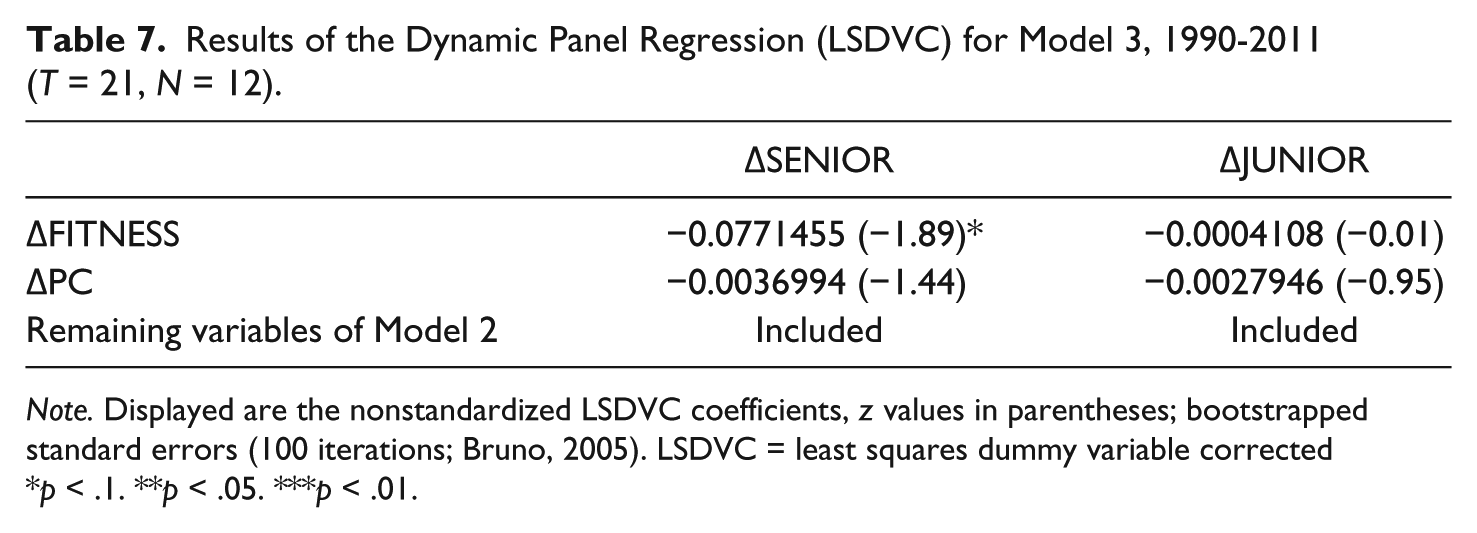
Another reason could be the increasing number of substitute activities in people’s leisure time and therefore, Model 3 is provided which includes the variables PC and FITNESS (Table 7). However, neither of the two variables is significant in the model for junior memberships. Therefore, other explanations for the significant negative time trend must be advanced. One alternative explanation may be the increasing opportunity costs of leisure caused by a rising number of alternative or informal sports (jogging, trend sports) and changes in the social structure (e.g., increasing education pressure, earlier entry into puberty). The education pressure has increased in Germany due to the implementation of all-day schools several years ago. Previously, children only attended school in the morning and on one or two afternoons per week. Nowadays, pupils spend the whole day at school, have to do homework in the evening, and thus have less time for club sport.
Results of the Dynamic Panel Regression (LSDVC) for Model 3, 1990-2011 (T = 21, N = 12).
Note. Displayed are the nonstandardized LSDVC coefficients, z values in parentheses; bootstrapped standard errors (100 iterations; Bruno, 2005). LSDVC = least squares dummy variable corrected
p < .1. **p < .05. ***p < .01.
The results of Model 3 also show that senior membership numbers are significantly affected by the number of members in fitness centers (FITNESS; Table 7). The negative influence indicates that the growth of the commercial fitness sector has taken away memberships from nonprofit sport clubs. Evidently, senior club members have replaced sport activity in clubs by workouts in fitness centers. One advantage of fitness centers is the flexibility of training schedules due to long opening hours, whereas training sessions in sport clubs are rather time bound and less convenient for working people. This assumption is supported by the negative effect of WORKTIME in Models 1 and 2.
Conclusion
This study examined the external drivers of membership numbers in German sport clubs from 1970 to 2011 by focusing on the trickle-down effect and economic measures. It has implications for policy makers and for the management of nonprofit sport clubs. Yet, the implications are limited to the male population because this study only examined male memberships and inspirational effects may be different for females (Vescio, Wilde, & Crosswhite, 2005). The evidence supports continued support of elite sport, which has been questioned over the last years (Houlihan & Green, 2008). This support is important because elite success and particularly sport personalities seem to inspire young males. Moreover, policy makers and NGBs should invest in hosting major sport events for the same reason. Given the inspiration effect on male juniors and seniors, such events can be considered a way to increase club memberships. Although memberships increase in some cases and reach a plateau, all trickle-down effects should become more sustainable. Sport clubs have to be better prepared for sudden increases in male demand due to a trickle-down effect. It can be recommended that sport clubs improve their capacity management and increase their marketing and promotional efforts to capitalize on this effect (Hindson et al., 1994). NGBs may assist clubs by providing financial support and advice in this regard. The findings of this study are also relevant to nonprofit organizations in other fields. Although it is certainly difficult to find equivalent concepts for sporting success, it seems plausible that charismatic personalities and major events are associated with changes in the memberships of nonsporting clubs and associations.
This study has some limitations that represent avenues for future research. First, the German club membership data have some limitations. Because clubs pay membership fees to governing bodies depending on the number of members and because those fees differ by sport, clubs may have an incentive to declare members in a different type of sport. Also, clubs may have an incentive to declare fewer members in an effort to save money. Yet, the extent to which clubs deliberately underreport members is unknown however. Moreover, membership totals include passive members, that is, people who are club members, but do not actively participate. This may be particularly the case for Bundesliga clubs in soccer. Yet, the member statistics do not differentiate between active and passive members. Although the concept of the trickle-down effect refers to active participation, passive memberships may also change depending on success, stars, and home events.
Second, the research was limited to data on male memberships of clubs in 12 sports. Future research should look at females and more sports. Yet, the inclusion of more sports needs more advanced measures given the regional limitations of some sports. Another opportunity would be to replicate the analysis at a more localized level (e.g., state level). The investigation of trickle-down effects on females might be complicated by policies that specifically aim to encourage female participation. Third, the R2s indicate that further variables may be relevant to explain changes in club memberships such as the media coverage of a sport. It would also be interesting to control for ethnicity given that people from a minority ethnic are less likely to be a member of a sport club (Wicker et al., 2013). Fourth, only club memberships were considered. Yet, people who are inspired by sporting success, stars, and events may start practicing sport on an informal basis (without organizational affiliation) or in a different organizational context (e.g., commercial sport provider). The total number of sport participants is difficult to determine precisely and remains a challenge for future studies. Further research may also explore a negative trickle-down effect caused by scandals such as private misconduct (Tiger Woods).
Footnotes
Acknowledgements
The authors would like to thank the German Olympic Sports Confederation (DOSB) for providing information on membership numbers.
Declaration of Conflicting Interests
The author(s) declared no potential conflicts of interest with respect to the research, authorship, and/or publication of this article.
Funding
The author(s) received no financial support for the research, authorship, and/or publication of this article.