



Abstract
Evidence exists that beautiful is seen as good: the halo effect wherein more physically attractive people are perceived to be good, and the reverse halo that good is seen as beautiful. Yet research has rarely examined the evidence linking the beautiful with the good, or the reverse, without the halo effect. We examine the relationship between physical attractiveness (beauty) and giving behaviors (good), where ratings of attractiveness are independent of giving behaviors. We use three U.S. datasets: (a) a nationally representative sample of older adults (NSHAP), (b) a nationally representative longitudinal study of adolescents (ADD Health), and (c) the 54-year Wisconsin Longitudinal Study (WLS), to present evidence that these two characteristics (attractiveness and giving) are indeed correlated without the halo effect. We find a ‘good-looking giver’ effect–that more physically attractive people are more likely to engage in giving behaviors, and vice versa. Thus, in ecologically valid real-world samples, people who do good are also likely to look good.
“He who is fair to look upon is good, and he who is good, will soon be fair also.”
Researchers have established that beauty has a halo effect, and there is an extensive literature supporting the maxim, “what is beautiful is good.” More physically attractive people are seen as having more favorable attributes, are treated better by others, and experience better outcomes in many areas of life (Eagly et al., 1991; Feingold, 1992; Jackson et al., 1995; Langlois et al., 2000; Maestripieri et al., 2017). Some scholars have also examined the halo effect in the reverse, “what is good is beautiful,” and their findings suggest that having certain positive attributes makes one appear to be more physically attractive (Felson & Bohrnstedt, 1979; Gross & Crofton, 1977; Jensen-Campbell et al., 1995; Owens & Ford, 1978; Parsons et al., 2014; Paunonen, 2006; Zhang et al., 2014).
In both of these literatures, the attributes, treatments, and behaviors examined have rarely included giving behaviors of the individual being rated for attractiveness (Cash & Duncan, 1984; Feingold, 1992; Jensen-Campbell et al., 1995; Langlois et al., 2000; Shinada & Yamagishi, 2014; Takahashi et al., 2006). In this article, we specifically examine how beauty is related to prosocial behaviors like charitable giving, volunteering, caregiving, helping friends, blood donations, or registering for organ donations. In doing so, we extend a literature which has typically focused on motivations (Konrath & Handy, 2018) and determinants of giving (Helms-McCarty et al., 2016) to a potential implication of giving.
We address a fundamental question that extends beyond the influence of the halo effect, which involves how beauty affects perceptions of goodness, or how being good affects perceptions of beauty. We ask two research questions: (a) Are individuals who undertake more giving behaviors more physically attractive? We also examine the reverse case, (b) Are more physically attractive people more likely to undertake giving behaviors? We examine data where raters of physical attractiveness have no information on giving behaviors, and hence we are able to ascertain if a person’s giving behaviors correlate with their physical attractiveness, without the halo effect of raters being influenced by knowing their giving behaviors.
Literature Review
We first review the literature that examines whether what is beautiful is good, followed by the literature examining whether what is good is beautiful.
Beautiful Is Good and the Halo Effect
This first halo effect literature is fairly extensive with an interdisciplinary review and four meta-analyses to date (Eagly et al., 1991; Feingold, 1992; Jackson et al., 1995; Langlois et al., 2000; Maestripieri et al., 2017). These meta-analyses all investigated the maxim of “beauty is only skin deep,” and the authors concluded that people not only ascribe positive characteristics to more attractive individuals (such as better interpersonal skills), but also treat them differently (such as giving them more attention and rewards).
In addition, outcomes for physically attractive individuals are better in certain areas of their lives (e.g., occupational success). Scholars conclude that “surprisingly, beauty is more than just skin-deep” (Langlois et al., 2000, p. 404), which suggests perhaps the differential treatment then leads to different outcomes, such as employment opportunities. Indeed, a recent review paper explained why there are biases in favor of those who are considered more physically attractive, examining explanations of these biases from various disciplines (economics, social psychology, and evolutionary psychology). In doing so, the authors reviewed much of the extant literature on the “beautiful is good” hypothesis (Maestripieri et al., 2017). They summarize that beautiful people are perceived as having more positive traits (intelligence, trustworthiness, professional competence, and productivity), which helps to explain why they do better in the labor market.
Table 1 summarizes these meta-analyses and a few other papers that were written later. These summaries indicate whether attractive people were different than their less attractive peers on different measures, showing a halo effect on how beautiful people are judged by others, how they are treated by others, and their outcomes in terms of behaviors and performance. For example, more attractive individuals are judged to have higher intellectual competences, social skills, and sexual warmth; are treated differently in that they receive more attention, and rewards, and in the prosocial domain, they are more likely to receive help and are cooperated with more frequently. They also have better outcomes, more frequent social interactions, and enjoy higher frequencies of dating and sexual activity, as well as having more occupational success.
Summary of Prior Research.
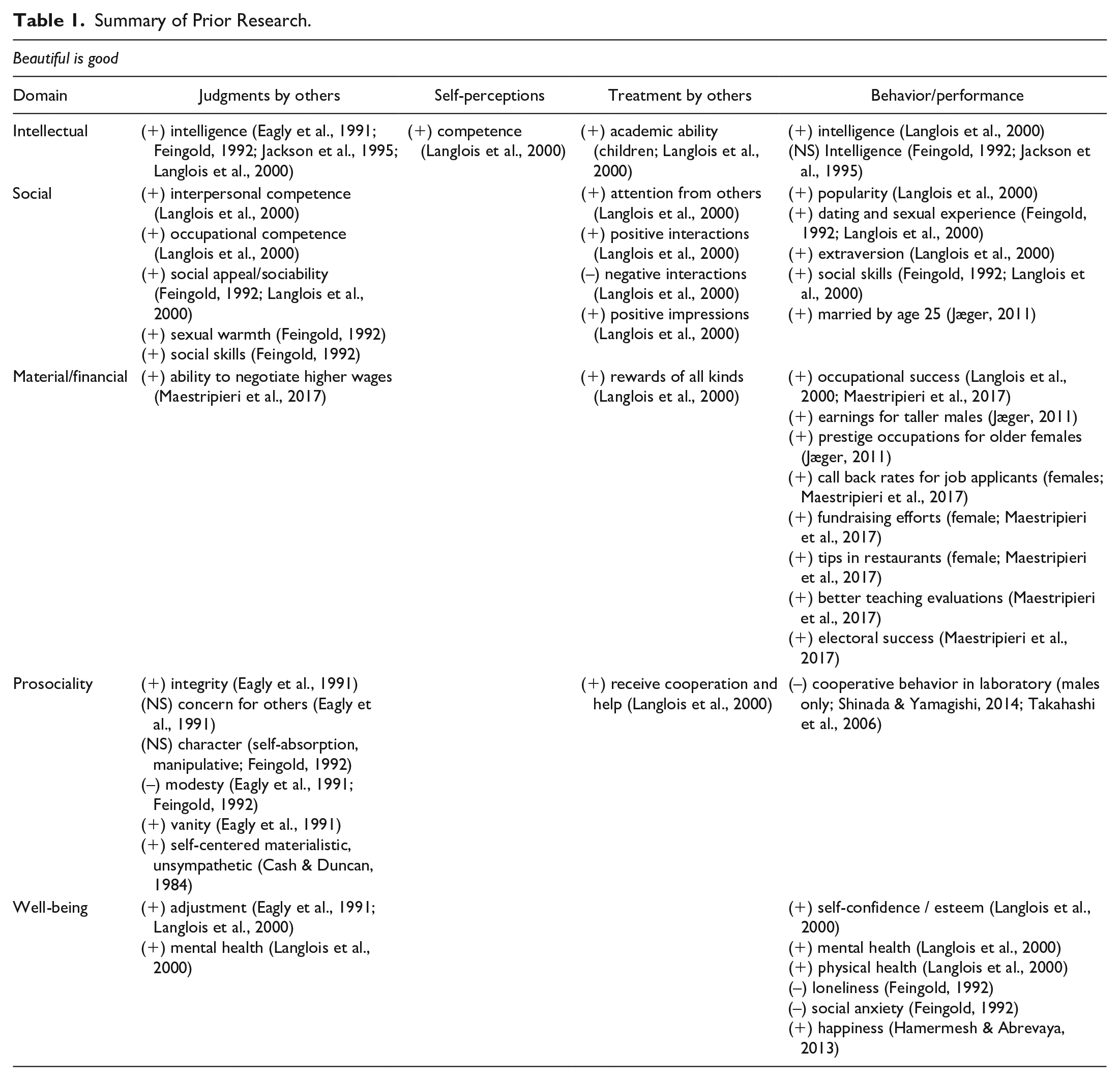
Attractive adults are more likely to have favorable self-perceptions (competence and mental health) than less attractive individuals. As for negative characteristics, an earlier meta-analysis found that attractive people reported less loneliness and social anxiety (Feingold, 1992). Yet other studies have found that attractive individuals are sometimes judged by others to be cold and vain, self-centered, materialistic, and unsympathetic with oppressed people (Cash & Duncan, 1984), suggesting that at times, attractive people could be perceived as less good.
Beautiful Is Good Without the Halo Effect
Are more attractive people actually good? Feingold (1992) examines the correlational literature and finds that attractiveness is correlated with certain positive characteristics, for example, better social skills, more freedom from social anxiety and loneliness, and more opposite-sex popularity and sexual experiences, some of which may result from the halo effect. However, there is less research examining whether attractive people actually behave in more prosocial ways, for example, are they more generous? The studies that do exist have found mixed results. One the one hand, attractive males are less likely to cooperate in laboratory games such as the prisoner’s dilemma (Shinada & Yamagishi, 2014; Takahashi et al., 2006), and these studies find no relationship between physical attractiveness and cooperative behavior among females or older males. On the other hand, attractive people are offered more money in laboratory trust games, and also give more money back (Wilson & Eckel, 2006). This suggests that it is possible that more attractive adults may at times behave more generously, especially when considering that they receive preferential judgments and treatment. We examine the relationship between physical attractiveness and a range of naturally occurring giving behaviors in broader samples, including two nationally representative samples (Studies 1 and 2) and two longitudinal studies (Studies 2 and 3).
Good Is Beautiful and the Reverse Halo Effect
The second set of studies examines the reverse case: whether what is good is considered beautiful. In these studies, researchers argue that the halo effect that beauty creates is bidirectional. In two such studies, participants were provided with short personality descriptions of individuals, along with a photograph, and as expected, the more favorably described people (on a variety of domains such as intelligence, positive personality attributes, happy disposition, etc.) were rated as more attractive (Gross & Crofton, 1977; Owens & Ford, 1978).
Other studies corroborate this “reverse halo”: People who are given positive academic or athletic attributes are also perceived to be more physically attractive than their more average peers (Felson & Bohrnstedt, 1979). Another study finds evidence for this “reverse halo” effect even among infants (Parsons et al., 2014). The researchers found that when pictures of infants were paired with more laughter (versus crying), the “happier” infants were perceived as cuter by adults, and the adults were more motivated to see them again. An experimental study that manipulated the traits of intelligence, honesty, and independence found a substantial effect of honesty on evaluators’ ratings of physical attractiveness, confirming that individuals’ personality characteristics affect ratings of attractiveness (Paunonen, 2006).
Good Is Beautiful and the Reverse Without the Halo Effect
However, few studies have examined whether people who engage in more giving behaviors are rated as more physically attractive. Laboratory studies with college students have found that photographs of people who were described in scenarios as engaging in giving behaviors (e.g., volunteering) are rated as more attractive than those who are not (Jensen-Campbell et al., 1995). Another study demonstrates a potential real-world implication of giving behavior. Single individuals who engaged in giving behaviors at one time point (i.e., informal volunteering; caregiving) had an increased chance of being in a relationship the next year in a nationally representative longitudinal data set (Stavrova & Ehlebracht, 2015). There is also experimental evidence that engaging in prosocial behaviors influences the attractiveness of individuals as romantic partners (Arnocky et al., 2017; Barclay, 2010), and cooperative behavior increases the perceived attractiveness of the cooperator (Farrelly et al., 2007).
Prior research is almost exclusively focused on examining the “halo effect” in both directions. Beautiful individuals are given attributions of “good traits” and the reverse. There is little extant literature examining naturally occurring correlations between attractiveness and actual giving behaviors, such as donating, volunteering, and caregiving. This article fills the gap. (a) We examine attractiveness ratings and giving behaviors without the halo effect. That is the person rating an individual’s attractiveness does not know the participant’s actual giving behavior; and (b) and we do this over time to see if the correlation between attractiveness and giving behavior holds across several years. This leads us to the following two research questions:
In both cases, the individuals’ giving behaviors are unknown to the person rating their attractiveness, thereby ensuring that this is not simply a halo effect. We use both cross-sectional and longitudinal data, among broad samples of Americans, including two nationally representative studies (Study 1: older adults; Study 2: young adults) and two large longitudinal data sets (Study 2 and 3).
This article contributes to the literature in three ways. First, it expands the “good” in the “beauty equals goodness” relationship, to include giving behaviors, such as giving money, time, affection, support, care, and body products (e.g., blood, organs). As reviewed above, this topic has received little empirical attention, with inconsistent results (Barclay, 2010; Cash & Duncan, 1984; Jensen-Campbell et al., 1995; Shinada & Yamagishi, 2014; Takahashi et al., 2006). Second, our research tests the “beauty equals goodness” relationship without the halo effect, as the raters of physical attractiveness in all the three studies are blind to the individuals’ giving behaviors, thus removing potential biases that could occur if the two pieces of information were connected. Third, we use two longitudinal data sets, thereby testing the robustness of our findings over several years. Finally, because our research considers real-life giving behaviors, we optimize the ecological validity of the results.
We present three studies to test our hypotheses. Study 1 examines the relationship between a variety of giving behaviors and attractiveness using a nationally representative sample of older adults. Studies 2 and 3 examine this relationship in longitudinal data sets, using a 15-year study spanning from late adolescence to early adulthood (Study 2: 1994–2009) using a 54-year study spanning from late adolescence to late adulthood (Study 3: 1957–2011). Because we rely on fairly large data sets, the data analyses were sufficiently powered to detect even the smallest effects. We then discuss the findings from these three studies and conclude noting the strengths and limitations of our findings, their implications, and directions for future research.
Study 1 Nationally Representative Sample of Older Adults (NSHAP) American Adult Study
In Study 1, we examine the relationship between giving behavior and attractiveness using a nationally representative sample of older adults, but due to the correlational nature of the data, it cannot determine causality in terms of whether behaving more generously leads to looking more attractive, or whether looking more attractive leads to more generous behavior. Nor can it tell us why this relationship may exist. However, it demonstrates whether and to what extent such a relationship exists in a real world, nationally representative sample.
Study 1 Participants
We used data from the National Social Life, Health, and Aging Project (NSHAP), a nationally representative sample of older, noninstitutionalized American adults (Waite et al., 2010). 1 The study involved 3000 interviews of adults aged 57 to 85 conducted in 2005 and 2006. The overall sample was 51.6% female, with a mean age of 69.3 (SD = 7.9), and was 70.5% Caucasian, 17.0% African American, 10.2% Hispanic-American, 1.2% Asian-American, 1.2% Other/Multiracial. Our sample consisted of between 2,432 and 2,774 completed responses for measures of interest in the study.
Study 1 Measures
Giving behavior
Three types of giving behaviors were included in a leave-behind questionnaire (see Table 2). Giving time (i.e., volunteering) was assessed by asking whether respondents had volunteered for organizations in the past year (0 = never, 6 = several times a week). Giving affection was assessed with two questions: how often they greeted others with touch (embrace, kiss, pat on the back) and how often they engaged in hugging, holding, or other close physical contact with another (non-partner) adult in the past year (0 = never, 6 = several times a week). Caregiving was assessed if respondents were currently providing caregiving for another adult (1 = yes, 0 = no).
Key Measures Across Study 1 (National Social Life, Health, and Aging Project; NSHAP).

Note. Descriptive statistics were calculated for participants for whom all covariates were available.
Key Measures Across Study 2 (National Longitudinal Study of Adolescent Health; ADD Health).
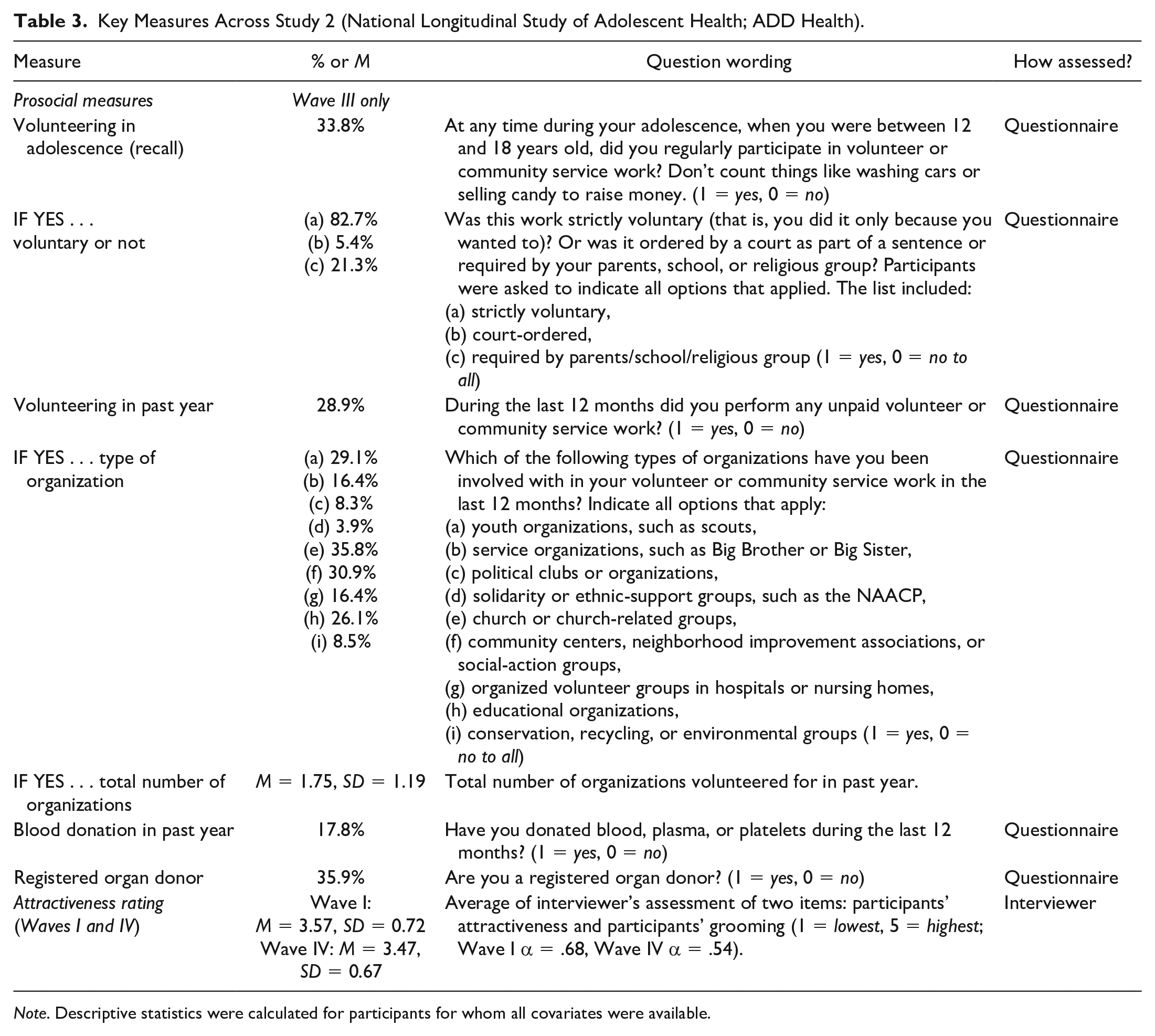
Note. Descriptive statistics were calculated for participants for whom all covariates were available.
Key Measures Across Study 3 (Wisconsin Longitudinal Study).
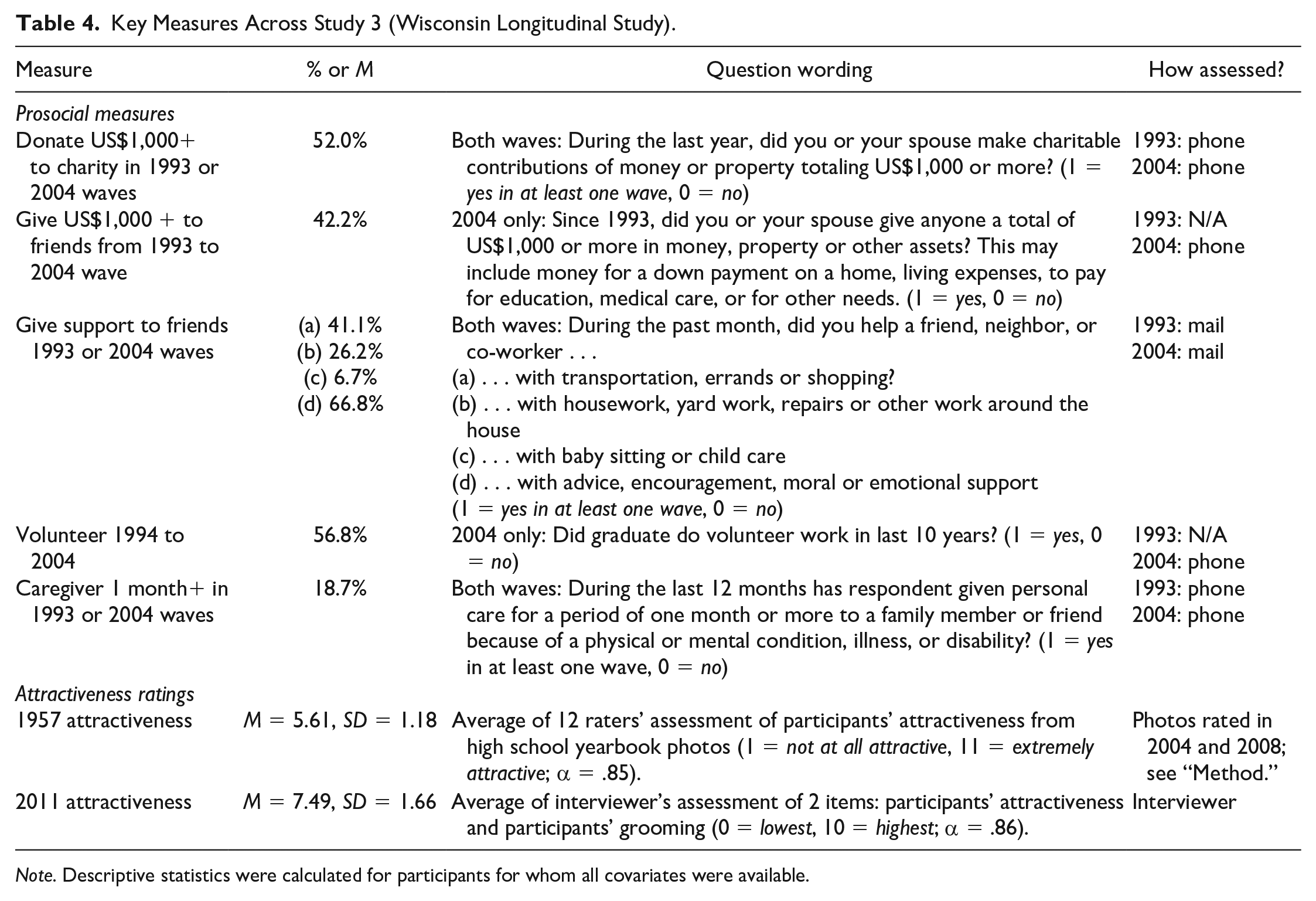
Note. Descriptive statistics were calculated for participants for whom all covariates were available.
Attractiveness ratings
After the in-person interview that took place in respondents’ home, interviewers rated respondents on five characteristics (see Table 2): physical attractiveness, hygiene, posture, stomach, and body size (1 = not attractive, 5 = attractive). Interviewers interacted with respondents without knowledge of their giving behaviors, as these were reported on a separate leave-behind questionnaire. This method rules out the “halo effect” explanation that interviewers simply rated people as more attractive based on their known giving behavior.
Covariates
We included covariates in the analysis, as research has implicated demographic and health-related variables in the likelihood of volunteering, donating to nonprofits, or attractiveness (Bekkers & Wiepking, 2006; Forbes & Zampelli, 2014 ; Gupta et al., 2016; McLellan & McKelvie, 1993; Scholz & Sicinski, 2015; Wilson, 2012): gender (1 = male, 0 = female), age, marital status (1 = married, 0 = not married), income (logged), frequency of attending religious services (0 = never, 6 = several times per week), and self-rated physical and mental health (1 = poor, 5 = excellent). There were 131 different interviewers, however, interviewer gender and age were not available, thus not included as covariates.
Study 1 Results
We conducted three hierarchical linear regressions to examine the relationship between giving behaviors (predictor variable) and interviewer-rated attractiveness (dependent variable). Step 1 included the giving behavior, Step 2 included demographic covariates (age, gender, marital status, income, religious attendance), and Step 3 included physical and mental health. The analyses used sample weights provided by NSHAP. As can be seen in Table 5, volunteering had the largest association with attractiveness (Step 1: β = .14, p < .001), followed by giving affection (Step 1: β = .09, p < .001), then caregiving (Step 1: β = .04, p < .10). However, only the presence (but not the frequency) of volunteering and giving affection were robust to covariates.
Correlations Between Giving Behavior and Attractiveness in Study 1 (NSHAP).
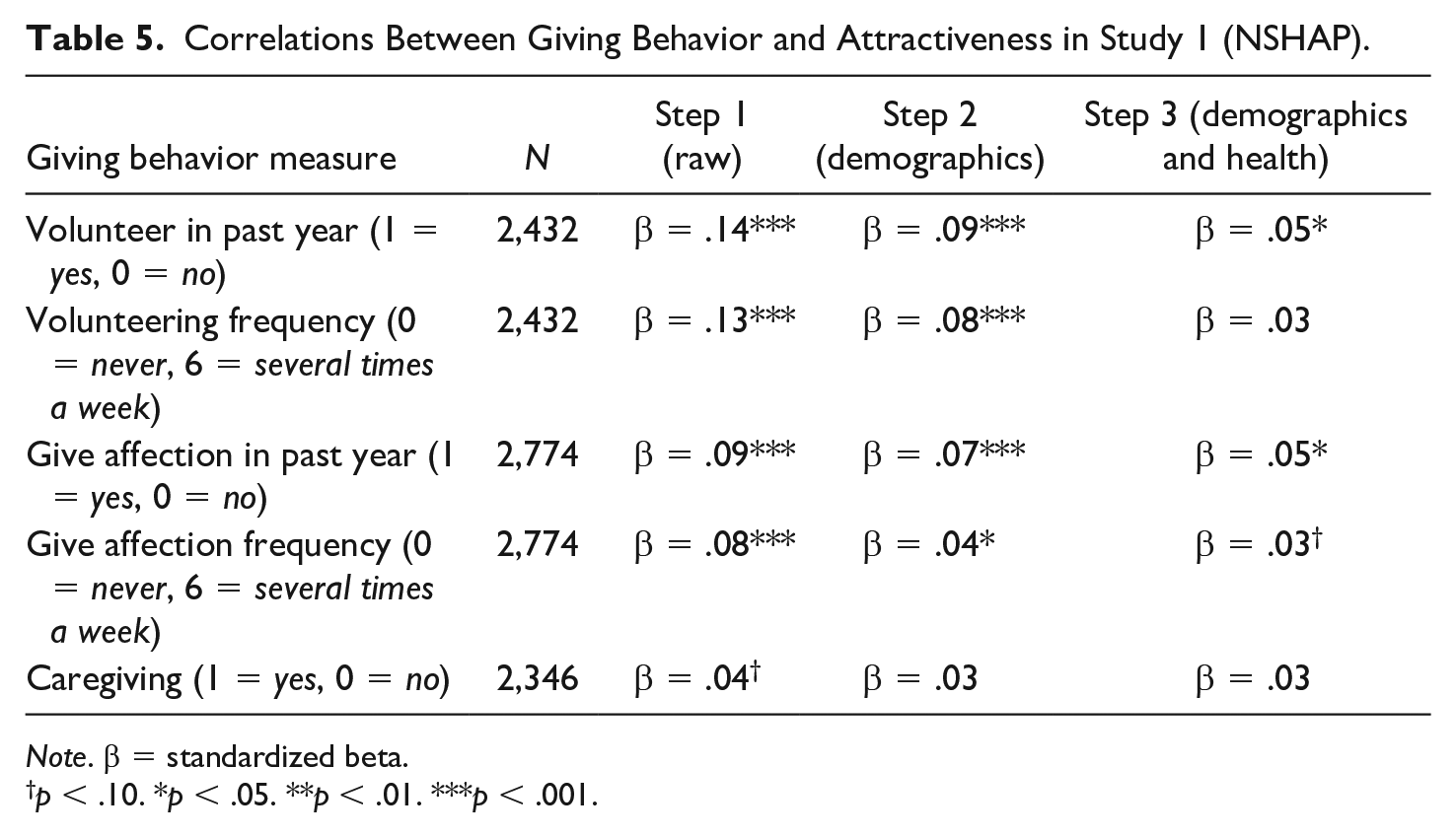
Note. β = standardized beta.
p < .10. *p < .05. **p < .01. ***p < .001.
Study 1 Discussion
This study answers the question: Are more generous people rated as more attractive when their giving behaviors are unknown to the rater?
In this nationally representative sample of older adults, respondents who reported that they volunteered or gave affection in the past year were rated as more physically attractive by interviewers who were blind to their responses. However, because the data are correlational, potential directions of causality are unclear. It is possible that more giving behavior leads to higher attractiveness, being more attractive leads to more giving behavior, or there was a third variable explanation that was not included as a covariate. In addition, Study 1 is limited by the measures of giving behaviors available; it has no information about giving money or helping behaviors. These two issues are partially addressed in Study 2 and 3.
Study 2 National Longitudinal Study of Adolescent Health (ADD Health Study): American Adolescents
In Study 2, we examine the relationship between giving behavior and attractiveness over time by using a nationally representative longitudinal study of adolescents (Waves I, III, and IV from the ADD Health Study (Harris et al., 2009). Waves I and IV measured physical attractiveness, while only Wave III measured giving behavior, when respondents were young adults (18–26 years old). See Figure 1 for our analytic framework.
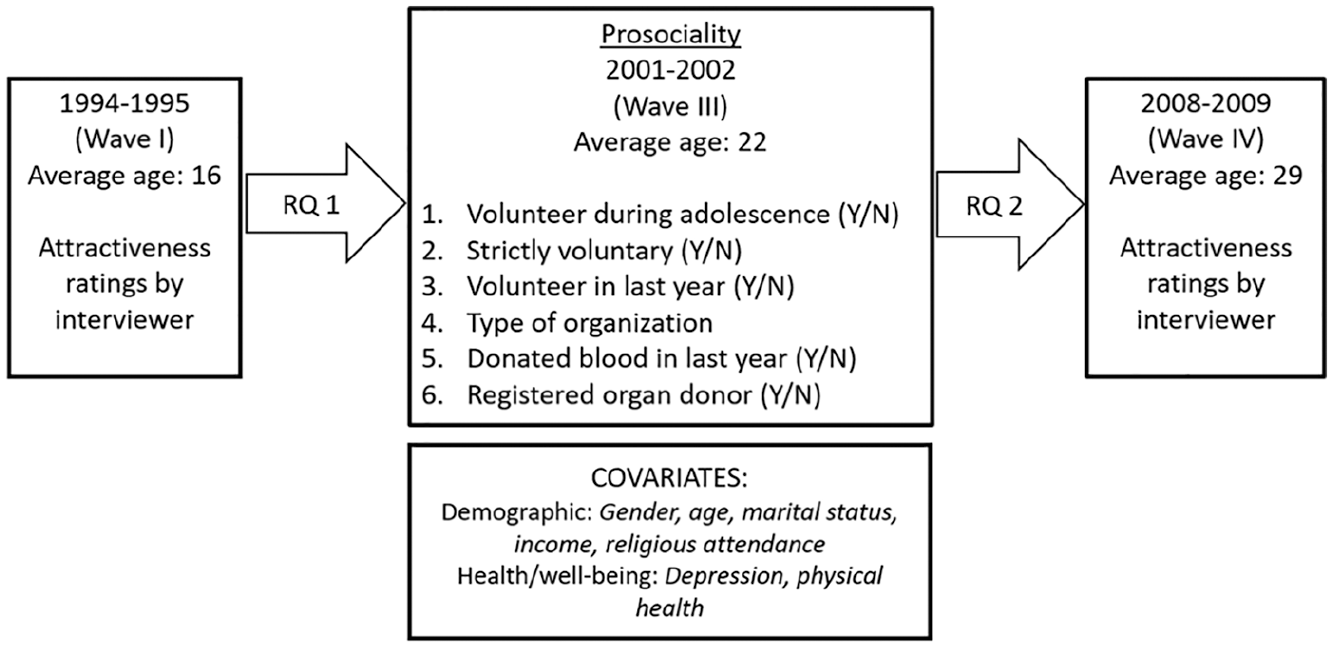
National Longitudinal Study of Adolescent Health (ADD Health; Study 2).
Study 2 Participants
Wave I consisted of adolescents in Grades 7–12 in 1994–1995 (Mage = 15.96). Interviewers rated attractiveness in Wave I, Wave III (2001–2002; Mage = 22.23), and Wave IV (2008–2009; Mage = 28.94). However, giving behaviors were only measured in Wave III, when respondents were young adults (18–26 years old). Wave I participants were 51.6% female, and 64.5% White, 20.8% African American, 1.2% Native American, 3.4% Asian American, and 10.1% Other or Multiracial. A total of 11.5% indicated that they were Hispanic. The number of participants in each analysis varied depending upon participants’ responses to each included measure.
Study 2 Measures
Giving behavior (Wave III)
Respondents were asked about their volunteering when they were adolescents, whether it was voluntary (if applicable), and their recent volunteering behavior (past year), the types of organizations they volunteered for (if applicable), whether they had donated blood in the past year, and whether they were a registered organ donor. See Table 3 for exact question wording and descriptive statistics.
Interviewer ratings of attractiveness (Wave I, III, IV)
Interviewers were asked to rate the physical attractiveness of the respondent after each wave’s interview. We omit Wave III interviewer ratings of attractiveness because study raters were not blind to participants’ giving behaviors. As attractiveness ratings In Wave I and IV were done several years before or after the giving measures (Wave III), raters had no knowledge of participants’ giving behaviors (see Table 3). As in Study 1, this rules out the halo effect.
Covariates (Wave III)
We included a number of covariates to rule them out as potential explanations for any relationship between giving behavior and attractiveness: gender (1 = male, 0 = female), age, marital status (1 = married, 0 = not married), income (logged), frequency of attending religious services (0 = never, 11 = once per day), self-rated physical health (1 = poor, 5 = excellent), and depression history (1 = depression at some point in life, 0 = no depression history).
Study 2 Results
RQ1: Is beautiful good?
We conducted a logistic regression to examine the relationship between 1994-1995 (Wave I) interviewer-rated attractiveness (predictor variable) and each of the 2001–2002 (Wave III) giving behaviors separately (dependent variables). Step 1 included the attractiveness rating, Step 2 included demographic covariates (age, gender, marital status, income, and religious attendance), and Step 3 included physical health and depression history.
As shown in Table 6, attractiveness in Wave I (mid-teens) was significantly associated with more recalled volunteering, both in adolescence and in the past year, in Wave III (early 20s). In addition, more attractive Wave I teens were significantly more likely to report strictly voluntary community service engagement in Wave III. Attractiveness in Wave I was unrelated to the type of volunteering organization, with the exception that more attractive Wave I volunteers were significantly more likely to volunteer for hospitals or nursing homes in Wave III. Attractiveness in Wave I was unrelated to blood donations but was associated with an increased chance of being a registered organ donor in Wave III.
Is Beautiful Good? How Attractiveness in High School (Wave I; Average Age = 16) Predicts Giving Behaviors 6 Years Later (Wave III; Average Age = 22) in Study 2 (ADD Health).

Note. Each line above represents a separate statistical analysis. N depends upon how many participants answered each specific question. β = standardized beta; OR = odds ratio; and CI = 95% confidence interval.
p < .10. *p < .05. **p < .01. ***p < .001.
We conducted a linear regression to examine how attractiveness in Wave I (predictor variable) was associated with the total number of organizations volunteered for (among volunteers only) in Wave III (dependent variable). Table 6 shows that after considering covariates, Wave I attractiveness was only marginally associated with volunteering for more organizations.
RQ2: Is good beautiful?
We used hierarchical linear regressions to examine the relationship between each giving behavior in Wave III (2001–2002; predictor variables) and attractiveness in Wave IV (2008–2009; dependent variable). Step 1 included the giving variable, Step 2 included demographic covariates (age, gender, marital status, income, and religious attendance), and Step 3 included physical health and depression history.
As shown in Table 7, volunteering in Wave III (average age = 22) was associated with significantly higher attractiveness ratings in Wave IV (average age = 29), whether volunteering was recalled from adolescence or in the past year. However, there was no association between the voluntary nature of Wave III volunteering and Wave IV attractiveness ratings. The type of volunteering organization in Wave III was unrelated to Wave IV attractiveness, with the exception that those who volunteered for educational organizations were rated as significantly more attractive 7 years later. Being a registered organ donor in Wave III was associated with higher Wave IV attractiveness but being a blood donor was not. As for the number of volunteering organizations, Table 7 shows that after considering covariates, the number of Wave III volunteering organizations was only marginally associated with Wave IV attractiveness.
Is Good Beautiful? How Giving Behaviors in Wave III (Average Age = 22) Predict Attractiveness 7 Years Later (Wave IV; Average Age = 29) in Study 2 (ADD Health).
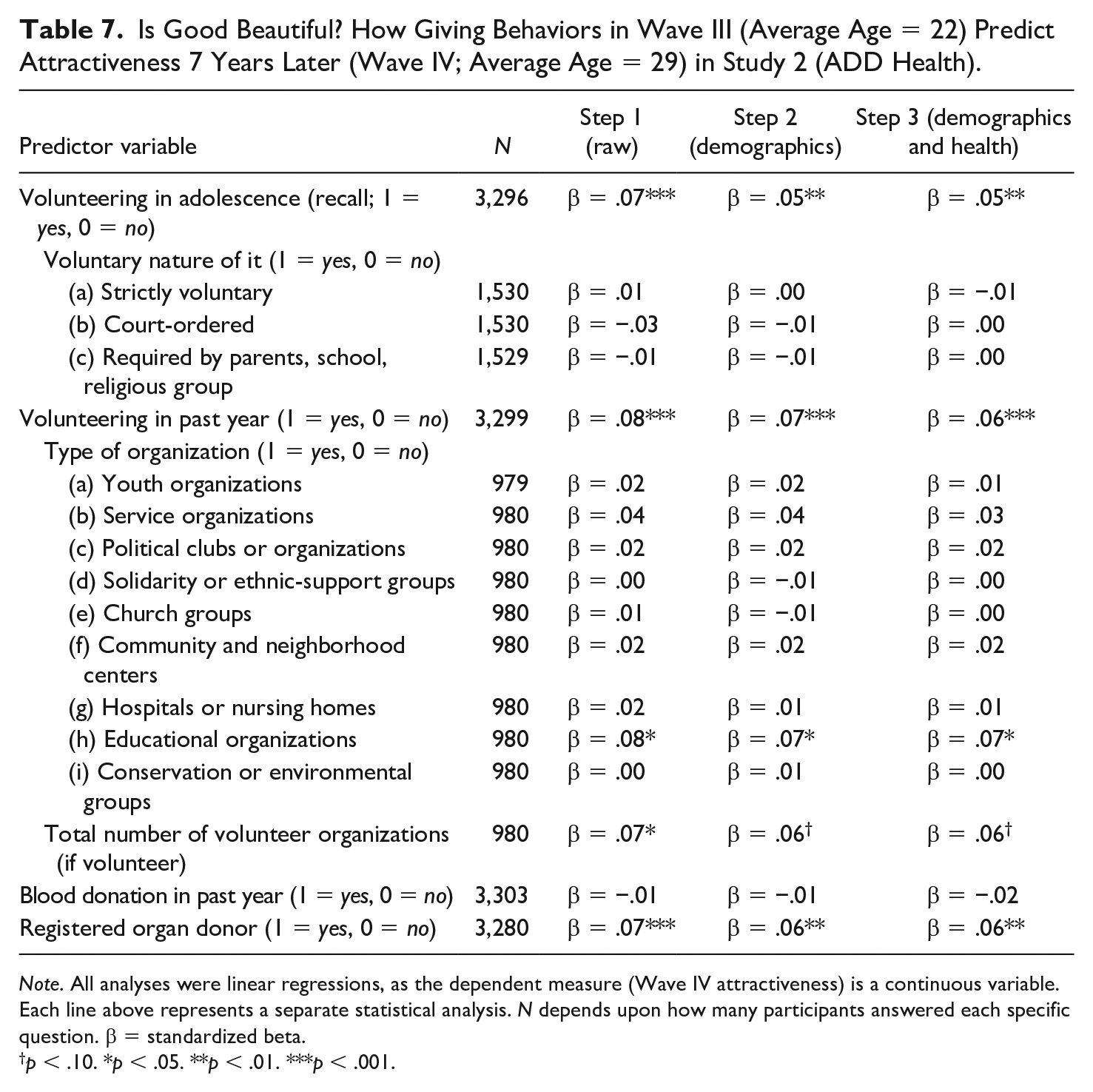
Note. All analyses were linear regressions, as the dependent measure (Wave IV attractiveness) is a continuous variable. Each line above represents a separate statistical analysis. N depends upon how many participants answered each specific question. β = standardized beta.
p < .10. *p < .05. **p < .01. ***p < .001.
Study 2 Discussion
This study examined whether people who are rated as more attractive at one time point (without knowledge of their giving behaviors) are more generous at a later time point (beautiful is good), and whether those who are more generous at one time point are rated as more attractive at a later time point (good is beautiful). It found that adolescents who volunteered, especially voluntarily, were rated as more attractive in their early 20s. It also found that those who were seen as more attractive in their early 20s were more likely to volunteer in their late 20s. In addition, more attractive teens were more likely to register as an organ donor several years later, and in turn, those who registered, were seen as more attractive in their late 20s.
As for the type of organization, the results were not consistent in the two different analyses, with one pointing to hospitals/nursing homes and the other pointing to educational volunteering. Future studies can clarify whether and why some types of volunteering are especially associated with attractiveness.
As in Study 1, Study 2 rules out the explanation that interviewers simply rated people who behaved more generously as more attractive (i.e. the halo effect). This is because there was a time gap of several years between attractiveness ratings and reports of giving behaviors.
Study 3 Wisconsin Longitudinal Study (WLS) Data: Wisconsin Adults
Here we examine the relationship between giving behavior and attractiveness using a 54-year (1957–2011) longitudinal study. Due to the long-term nature of the study and the measurement of attractiveness at two different time points, this study determines whether looking more physically attractive as a high school senior (in 1957) predicts more giving behavior many years later (in the period of 1992–2005), and also whether engaging in giving behavior (1992–2005 window) predicts looking more physically attractive several years later (in 2011). However, it still does not establish causality, or why such effects might exist. Nevertheless, it points to whether each potential direction of the generosity-attractiveness link is possible, within a real-world sample.
Study 3 Participants
We used data from the WLS, which includes a random sample of 1957’s high school graduates from Wisconsin (Herd et al., 2014). 2 Figure 2 provides an overview of the study design. The original wave of the study included 10,317 respondents. We used data from the 1957, 1992–1993, 2003–2005, and 2011 waves of the WLS. Participants with usable data in our sample consisted of 4,470 older adults (54.5% female in 2003–2005 wave), with a mean age of 65.14 years (SD = 0.49) in that same wave (average year of birth was 1939). Race/ethnicity information was not available in the public release data, however, the overall WLS sample included very few people of color, which reflected high school graduate demographics in Wisconsin at the beginning of the study.
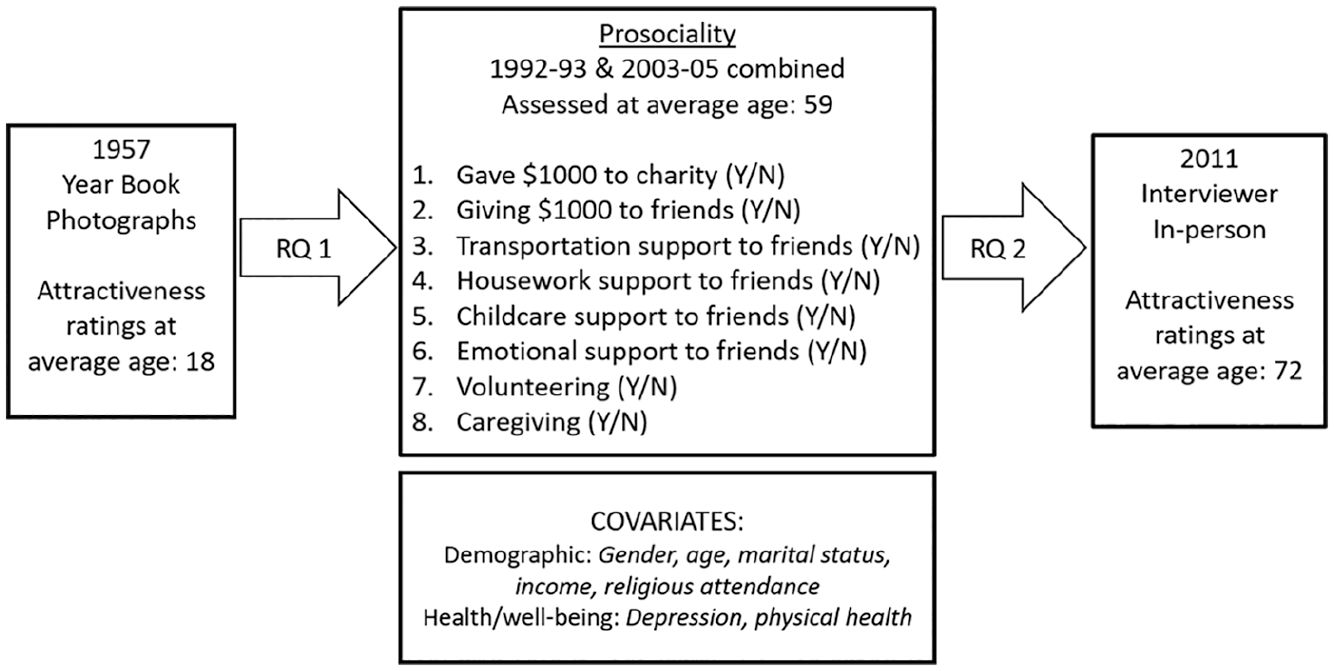
Wisconsin Longitudinal Study (WLS; Study 3).
Study 3 Measures
Eight giving behaviors were included in mail or phone questionnaires (see Table 4). Due to different question wordings (e.g., in the 2003–2005 wave, one question asked about giving since the 1993 wave), we created roughly comparable variables by compiling giving behaviors from both the 1992–1993 and the 2003–2005 waves (see Table 4 for more details). In doing so, data now represent the presence or absence of each giving behavior during a 10 to 13-year window in which the respondents were between 53 and 66 years old (M = 59).
Giving behaviors
Financial giving was assessed with two variables. First, respondents were asked if they or their spouse had made charitable contributions totaling US$1,000 or more in each of the two waves (1 = gave in at least one of the waves, 0 = did not give in either wave). The original question asked whether they had given US$500 or more, then specified the amount. For this item to be comparable with the other financial giving one, we recoded it to represent charitable donations of US$1,000 or more. Next, in the 2003–2005 wave only, giving money to friends was assessed if respondents gave US$1,000 or more to someone they knew since 1993 (see Table 4).
Giving time was assessed with six questions. First, giving support was assessed with four questions in each of the two waves asking if respondents had helped a friend, neighbor, or co-worker: (a) with transportation or errands, (b) with house or yard work, (c) with child care, or (d) with emotional support (1 = provided support in at least one of the waves, 0 = did not provide support in either wave). In the 2003–2005 wave, volunteering was assessed if the respondent had done volunteer work in the past 10 years (1 = yes, 0 = no). Caregiving was measured in two waves by asking if respondents had given personal care to a family member or friend in the past year (1 = gave care in at least one of the waves, 0 = did not give care in either wave).
Attractiveness
Attractiveness was assessed at two time points. First, a set of 12 raters (six female, six male; average age matched to WLS cohort ages) rated the attractiveness of participants’ 1957 high school yearbook photographs (α = .85; 1 = not at all attractive, 11 = extremely attractive). These ratings took place in 2004 and 2008. Note that there was only a limited subsample whose pictures were rated (N = 2,183), and after including all covariates in the model, sample sizes were further reduced (Ns = 1,408–1,496; see Table 8). Second, after the 2011 in-person interview, interviewers rated participants’ grooming and attractiveness (α = .86; 0 = lowest, 10 = highest). Grooming is an important part of people’s physical attractiveness (Brown et al., 1986), as confirmed by the high Cronbach’s alpha between grooming and physical attractiveness in our sample. A total of 5265 participants were rated for attractiveness, and after including covariates, sample sizes were reduced (Ns = 3,604–3,790; see Table 9).
Is Beautiful Good? How Attractiveness in High School Yearbook Photo (Average Age = 18 Years) Predicts Giving Behaviors Approximately 41 Years Later (Average Age = 59) in Study 3 (WLS).

Note. All analyses were logistic regressions, as the dependent measure (presence or absence of prosocial behavior) is a dichotomous variable. Each line above represents a separate statistical analysis. N depends upon how many participants answered each specific question. β = standardized beta; OR = odds ratio; WLS = Wisconsin Longitudinal Study; CI = 95% confidence interval.
p < .10. *p < .05. **p < .01. ***p < .001.
Is Good Beautiful? How Giving Behaviors at One Time Point (Average Age = 59) Predict Attractiveness 13 Years Later (Average Age = 72) in Study 3 (WLS).
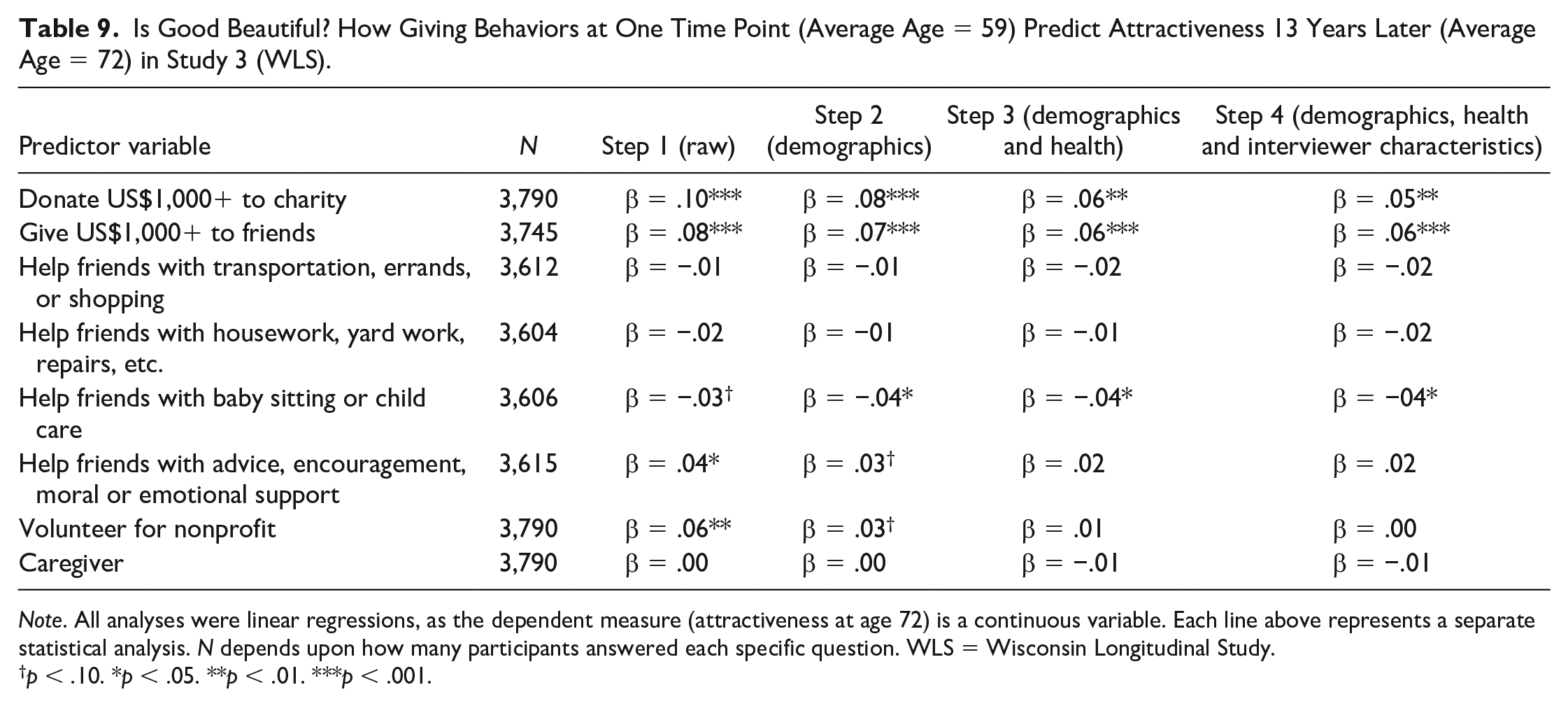
Note. All analyses were linear regressions, as the dependent measure (attractiveness at age 72) is a continuous variable. Each line above represents a separate statistical analysis. N depends upon how many participants answered each specific question. WLS = Wisconsin Longitudinal Study.
p < .10. *p < .05. **p < .01. ***p < .001.
Covariates
We included the same covariates as in Study 1 and 2: gender (1 = male, 0 = female), age, marital status (1 = married, 0 = not married), household income (logged), frequency of attending religious services (0 = never, 11 = once per day), self-rated physical health (1 = poor, 5 = excellent), and depression history (1 = depression at some point in life, 0 = no depression history).
In this study, as in Study 1 and 2, raters were blind to participants’ giving behaviors. There were two attractiveness judgments made in the WLS, and in both cases, raters had no knowledge of participants’ giving behaviors (see Table 4). In the first case, raters judged the attractiveness of participants’ high school yearbook photos (2004 and 2008) and had no access to any other information about participants. In the second case, interviewers judged participants’ attractiveness after the 2011 interview, and giving measures were assessed by phone or mail several years earlier. Thus, interviewers had no knowledge of participants’ giving behaviors when they rated their attractiveness. This again rules out the halo effect explanation that interviewers simply rated people who said they were more engaged in giving behaviors as more attractive.
Study 3 Results
RQ1: Is beautiful good?
We examined attractiveness in 1957 high school yearbook photographs (predictor variable) and each of the eight individual giving behaviors separately (dependent variable) in older adulthood. Logistic regressions results (Table 8) show that the only types of giving that approached significance were financial giving, but yearbook attractiveness was only significantly associated with giving money to friends in older adulthood. This association was robust to covariates. Yearbook attractiveness was unrelated to the likelihood of giving time in older adulthood.
RQ2: Is good beautiful?
We examined eight separate giving behaviors in older adulthood (1992–1993 to 2003–2005 waves; predictor variable) and interviewer-rated attractiveness in 2011 (dependent variable) using eight separate hierarchical linear regressions. Step 1 included the giving behavior, Step 2 included demographic covariates, Step 3 included physical health and depression history, and Step 4 included interviewer gender (1 = male, 0 = female) and age, in case interviewer characteristics affected attractiveness ratings.
As can be seen from Table 9, only giving money was consistently significantly associated with later attractiveness ratings when considering all covariates (Giving money to charity: Step 1: β = .10, p < .001; Step 4: β = .05, p < .01; Giving money to friends: Step 1: β = .08, p < .001; Step 4: β = .06, p < .001).
Study 3 Discussion
In Study 3, we took advantage of a 54-year longitudinal study to ask two questions: whether more physically attractive young people engaged in more giving behaviors many years later, and whether older adults who gave more were rated as more physically attractive a few years later.
For RQ1, we found that respondents who were more attractive in high school engaged in more financial giving to friends and to some extent giving to charities (marginal). However, more attractive young people were not more likely to give their time many years later.
For RQ2, we found that respondents who were more financially generous (giving to charities and friends) were rated as more attractive several years later, and this effect was robust to covariates. Those who gave friends advice or moral support and those who volunteered were rated as more attractive, but these effects disappeared when adding covariates. In addition, respondents who helped with child care were rated as slightly less attractive several years later, but this effect was only significant with covariates. Overall, financial giving in older adulthood was associated with more attractiveness several years later.
General Discussion
Across three large studies (two nationally representative), with participants of different ages, we find that more attractive people are engaged in more giving behaviors and those who are engaged in giving behaviors are more attractive, thus confirming a link between moral and physical beauty that was hypothesized as early as in ancient Greece by the poet Sapphos. In doing so, we contribute to the literature on the reciprocal effects of being beautiful and being good by focusing on giving behaviors, which have only been infrequently studied to date. In addition, we help to generalize these effects beyond laboratory settings and also hold a number of covariates constant. In all three studies, we were careful to rule out the halo effect by ensuring that attractiveness raters did not know the giving behaviors of the respondents.
Study 1 used a nationally representative correlational study of older adults and found that respondents who engaged in giving behaviors were rated as more attractive by their interviewers, and vice versa. Study 2 used a nationally representative longitudinal study of adolescents and examined whether people who are rated as more attractive at one time point are more generous a later time point (beautiful is good), and whether those who are more generous at one time point are rated as more attractive at a later time point (good is beautiful). We found positive and significant results in both cases, that is, giving behaviors at one time were associated with significantly higher attractiveness ratings at another time, and attractiveness at one time was significantly associated with more giving behaviors at another point in time. Study 3 which also used a longitudinal data-set of a randomly selected sample of Wisconsin high school graduates, found that respondents rated as more attractiveness had more giving behaviors approximately 40 years later (~59 years old) in 2004, and those who had more giving behaviors at that same time point (~age 59) were rated as more attractive by interviewers at a later time (~72 years old). In addition, across the three studies, these results were robust to a number of covariates.
With respect to specific giving behaviors across the studies, we found inconsistent results. In Study 1, volunteering and giving affection were related to higher attractiveness ratings. Although caregiving was positively associated with attractiveness, the effects were smaller and not robust to covariates. In Study 2, attractiveness in Wave 1 was associated with a greater likelihood of volunteering in Wave III, and volunteering in turn predicted more attractiveness in Wave IV. However, there was no consistent effect of the type of volunteering organization. In both cases, being a registered organ donor was associated with attractiveness, but this was not true for blood donors. In Study 3, more attractive youth (~18 years) were more financially generous approximately 40 years later, and those who were more financially generous at that time point were rated as more attractive approximately 12 years later.
These different findings are explained by different questions available in each data set. For example, Study 1 did not include items about financial giving, and the studies further differed in the populations sampled. Future research may help to clarify which types of giving behavior have the largest associations with attractiveness, and whether this depends upon participant characteristics.
Finally, prior research has found inconsistent effects with respect to the two potential directions of causality with respect to giving behaviors and physical attractiveness. It has found both that more generous men are rated as more attractive (Jensen-Campbell et al., 1995) and also that more attractive males are less likely to cooperate (Shinada & Yamagishi, 2014; Takahashi et al., 2006). We add to this literature by finding that regardless of the potential direction of causality, there is an association between giving behaviors and physical attractiveness, and that this relationship is robust to gender and a number of other covariates in large samples of Americans.
Limitations and Strengths
Our article replicates and extends prior research examining links between beauty and goodness by examining giving behaviors hitherto untested within two nationally representative samples (Study 1 and 2), and two longitudinal studies (Study 2 and 3), which allows us to generalize to the U.S. population (Study 1 and 2) and examine whether both potential directions of causality are possible (Study 2 and 3), without the bias of the halo effect.
Because Study 1 was correlational, we could not make conclusions about causality, however, Study 2 and 3 provide evidence of potential bidirectionality, among youth and adults, respectively. However, we cannot definitively conclude that being attractive causes people to engage in giving behaviors or engaging in giving behaviors causes people to be perceived as more attractive. It is possible that there is an unexamined third variable that may explain this relationship. To account for this, we controlled for a broad range of demographic factors (gender, age, income, marital status, and religious attendance) and physical and mental health. Physical health was correlated with physical attractiveness in our samples, 3 however, as the association between giving behaviors and attractiveness remains after controlling for physical health, this suggests that physical health is not the only explanation for the link.
It is also important to note that all three studies find small effects sizes and thus should be interpreted with caution. A small attractiveness boost is associated with engaging in more giving behaviors, and the reverse; a small generosity boost is associated with being more attractive.
There may be other explanations for the results we found. For example, perhaps physically attractive individuals are more likely to have wider social networks, and therefore are asked for help or money more frequently (Bekkers & Wiepking, 2011). Or perhaps the fact that other people trust them and act more generous toward them, makes them reciprocate to others (Wilson & Eckel, 2006). It is also possible that more attractive people may crave social desirability and hence be more likely to over-report their giving behaviors. We would need more research to disentangle these ideas to make more definitive claims on the linkages between beauty and goodness. So, while we cannot fully explain why the link between giving behaviors and attractiveness exists, we find remarkably consistent overall effects across the three studies, despite being conducted at different times, using different participants, and using different methods and measures. Perhaps an evolutionary framework would help to explain our results, given that there may be survival and reproduction benefits to being both attractive and generous (Maestripieri et al., 2017).
Indeed, while physical attractiveness is not entirely under one’s control, it is also not entirely a lucky accident of birth. Those of us who were not born with the winning lottery ticket of being attractive (i.e., most of us) can improve our attractiveness by dressing well and being well-groomed (Brown et al., 1986; Buckley, 1983; Hill et al., 1987) and by engaging in healthy behaviors (Tovée et al., 2007), if we think that being attractive is important. However, as engaging in giving behaviors is fully under our control, we can decide to give, share, and care for others, even under challenging circumstances. Based on prior research and on the current studies, we would expect that people who decide to prioritize developing their own “goodness,” such as by being honest, caring, and helpful, would be seen as more attractive.
Conclusion
Overall, despite the small effect sizes, the evidence provides some support for Sappho’s wisdom that “he who is fair to look upon is good, and he who is good, will soon be fair also.” The practical implication of these findings is that we should not necessarily judge beautiful people as self-focused and vain: our studies showed evidence for a ‘good-looking giver’ effect such that being a little more attractive was associated with a little more generosity. In addition, nonprofits may wish to share our finding with their donors and volunteers, as the association between giving and physical attractiveness may be of interest to those who are already actively prosocial.
That individuals have obsessed over beauty for centuries may be for good reason: there are a number of benefits to being physically attractive. The fact that the market for beauty products is continually growing and in 2016 it was valued at US$62 billion in the United States alone (Stewart, 2016) suggests that individuals know these benefits and strive to attain these benefits at a tangible cost. Our results suggest that beauty products and procedures may not be the only way to enhance an individual’s attractiveness; perhaps being generous could be the next beauty trend.
Footnotes
Acknowledgements
The authors are grateful to our three anonymous reviewers who provided us valuable insights that improved the article.
Authors’ Note
Sara Konrath is also affiliated with University of Notre Dame, South Bend, IN.
Declaration of Conflicting Interests
The author(s) declared the following potential conflicts of interest with respect to the research, authorship, and/or publication of this article: Sara Konrath is a paid consultant for OK Cupid. However, this organization was not involved in the current research in any capacity.
Funding
The author(s) disclosed receipt of the following financial support for the research, authorship, and/or publication of this article: The first author was supported by grants from the Corporation for National and Community Service (Grant # 17REHIN002) and the National Institutes of Health (NICHD) via the Panel Study for Income Dynamics (Grant # HD083146-05) while writing this article.
