




Abstract
In this article, we investigate the boundary optimal control problem associated with Heat equation in a two-dimensional highly oscillating domain
Introduction
This article examines an optimal control problem (OCP) in a two-dimensional oscillating domain
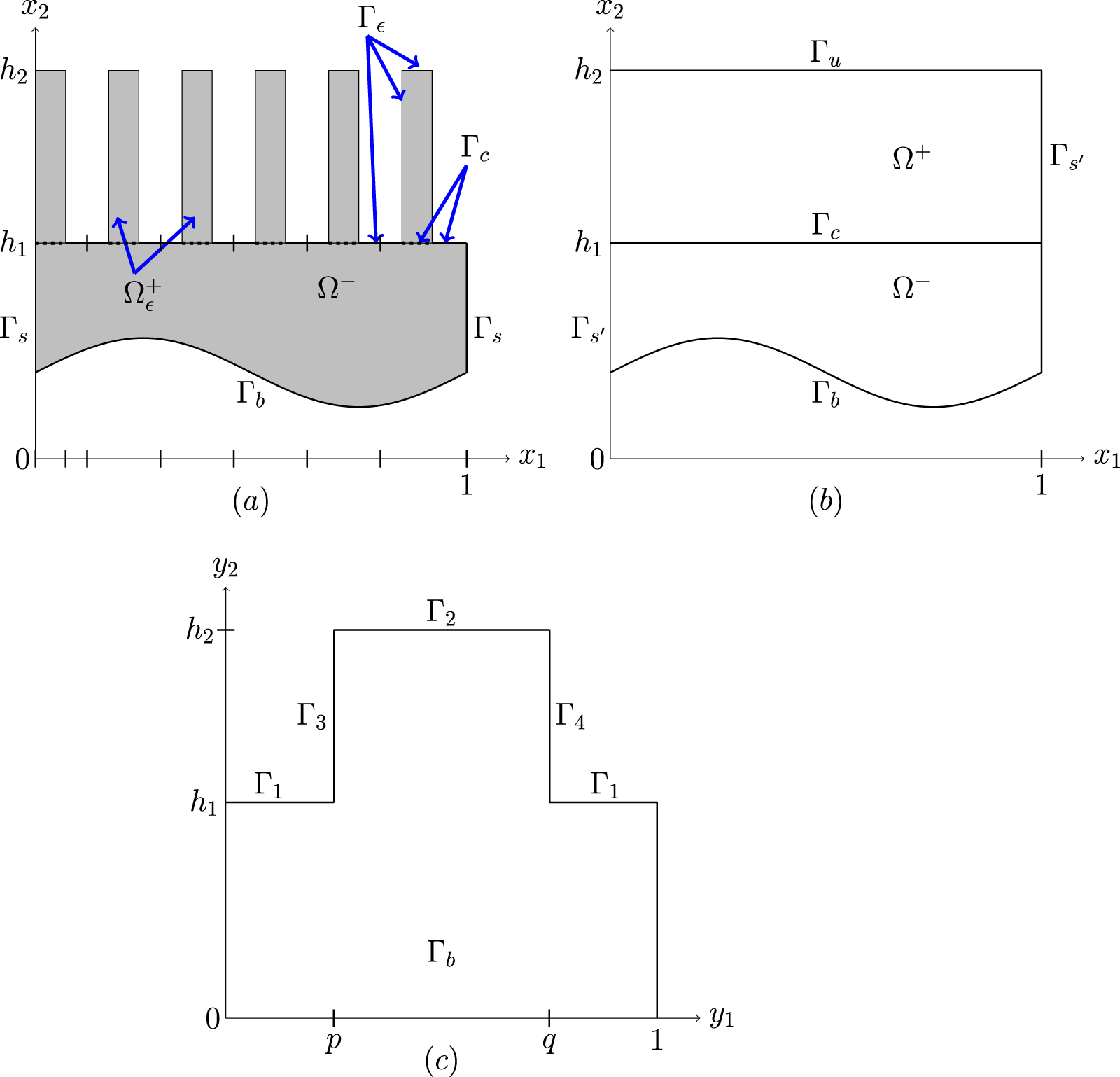
(a) The domain
As for the literature on homogenizing the OCP associated with evolution equations in the domain with oscillating boundaries, the work presented in De Maio et al. (2004) investigates homogenizing an OCP associated with a parabolic equation in a domain that is defined by a set of cylinders positioned
In the literature on boundary OCPs in domain with oscillating boundaries, the work presented in Durante and Mel’nyk (2010) investigated the boundary OCP in a plane thick two-level junction with a large number of thin rods for Poisson equation and further provides a limit OCP. Also, the boundary OCP where controls act periodically on the oscillatory boundary is studied in Nandakumaran et al. (2015) where they characterize the limit control problem by three controls namely distributed, boundary and interfacial controls. Then, boundary OCP for stationary Stokes equation is done in Sardar and Sufian (2022) where limit problem can have one or two controls depending upon the choice of scaling parameters. In both theoretical analysis and practical applications, the study of boundary optimal control for the heat equation is essential because many real-world systems, including mass transport, heat conduction in plates with densely spaced stiffeners, and fluid structure interaction, frequently involve rough and oscillating domains where direct control within the medium is either impractical or expensive. Therefore, rather of relying on internal changes, we need to regulate through boundary techniques. Boundary conditions may be optimized to effectively control the system’s internal state, guaranteeing optimal performance while using the least amount of energy or material possible. In addition to improving modeling accuracy, an understanding of the interaction between boundary factors and the interior dynamics of the heat equation results in effective computational techniques for managing intricate physical processes. This article’s goal is to characterize the control by the unfolding operator using an adjoint equation and investigate the limiting behavior of the optimal solution, or optimal control, the associated state, and the related adjoint state. First presented in Cioranescu et al. (2002), the periodic unfolding approach was refined in Cioranescu et al. (2008). Even though there are other approaches in the literature, such as two-scale convergence, we choose to utilize the unfolding technique since it seems more appropriate in this situation because of the extra difficulty posed by the boundary oscillation. Thus, we believe that the unfolding approach is an appropriate panacea to the problem in this work. Although the present analysis is carried out in two dimensions for the sake of clarity and notational simplicity, the arguments and results can be extended to higher-dimensional settings without essential difficulty.
The framework of this article is as follows: the problem and domain are described in Section 2. In Section 3, the definition and properties of unfolding operator is recalled. Characterization of optimal control and uniform estimates are presented in Section 4. Section 5 introduces two homgenized OCP that rely on the scaling parameter
An Overview of the Domain
In this work, we employ an oscillating domain






We denote fix domain
The reference boundary denoted by




Description of the Problem
Given


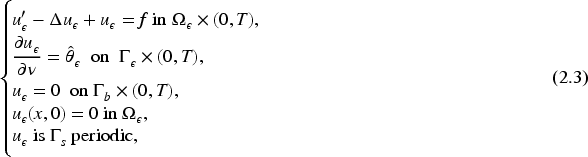
For
Our goal is to investigate the limiting behavior as


A function


Note that, as
Let us recall, for any fixed
For every fixed

In order to facilitate the convergence analysis in the subsequent section, we will demonstrate the uniform estimate for the state and control variable and characterize optimal control in terms of the unfolding operator using an adjoint system in the following section.
For problems on oscillating domain, the periodic unfolding approach is a highly beneficial tool in homogenization theory. We will employ the unfolding operator defined on the oscillating domain’s boundary for the analysis of the boundary. The definition and properties of unfolding operators on the oscillating domain
Now, we revisited the definition and the properties of Unfolding operator
The


In the following proposition, we revisit the properties of the unfolding operator
The unfolding operator Let Let’s denote Further Let Let Let Let


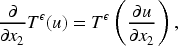
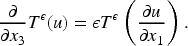




For our analysis on the boundary, we define boundary unfolding operator on
For


We recall some important properties of boundary unfolding operator given in (Damlamian & Pettersson, 2009; Nandakumaran et al., 2013).
For if If Let

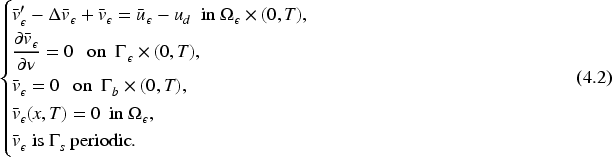
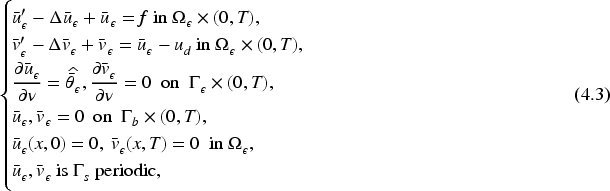
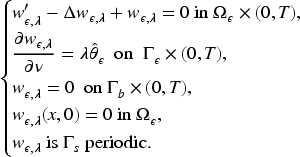
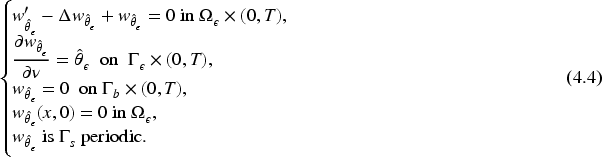
This section showcases the characterization of optimal control in the form of the unfolding operator utilizing an adjoint equation. Also, we prove the uniform estimates for the state variable which will be useful for convergence analysis in a later section. With the standard method of Calculus of Variations (Lions, 1971, Chapter 2), the OCP (2.2) permits a single optimal solution for any Let Let










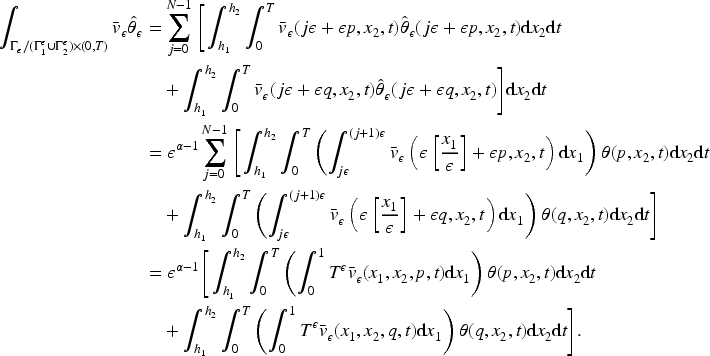
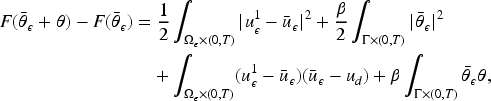





For any

Using Trace theorem, there exist a positive constant

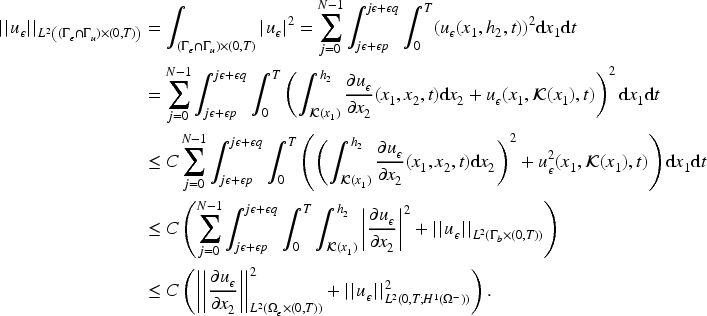
Hence, we have
Let
Using


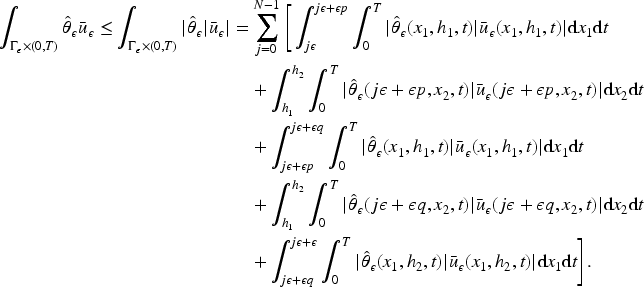
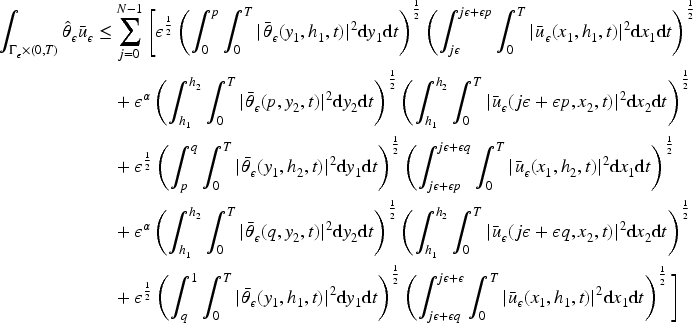
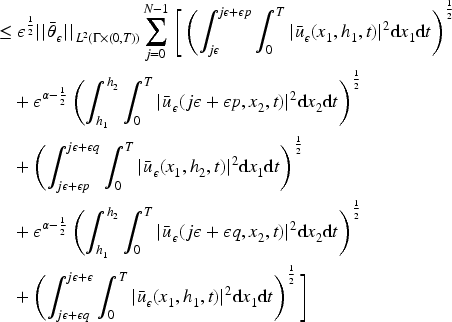
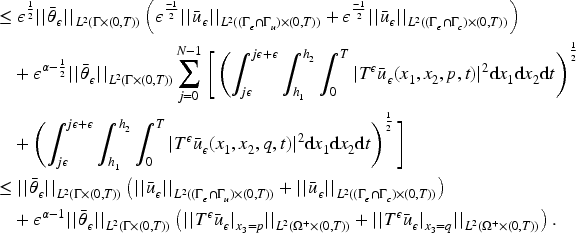

Let’s introduce the space

Note that

We consider the space

Now, we consider the homogenized optimality system corresponding to parameter
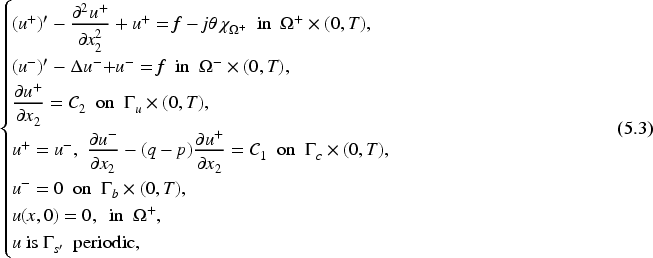
Note that the triple
Existence and uniqueness of solution


Associated with these cost functionals, we introduce following optimal control problems:


Let

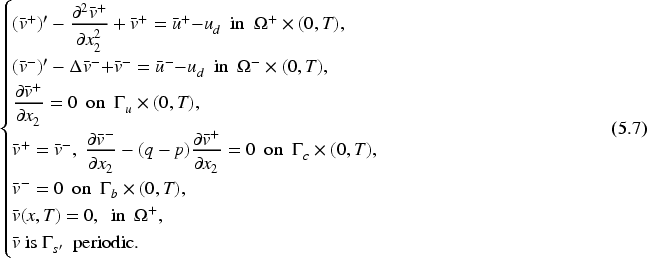
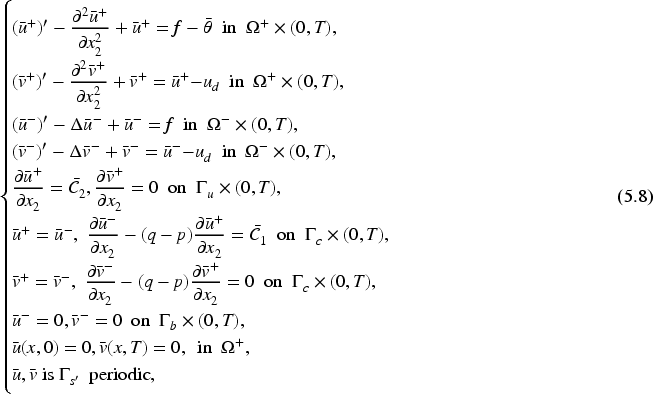

Similarly, we have the following theorem corresponding to
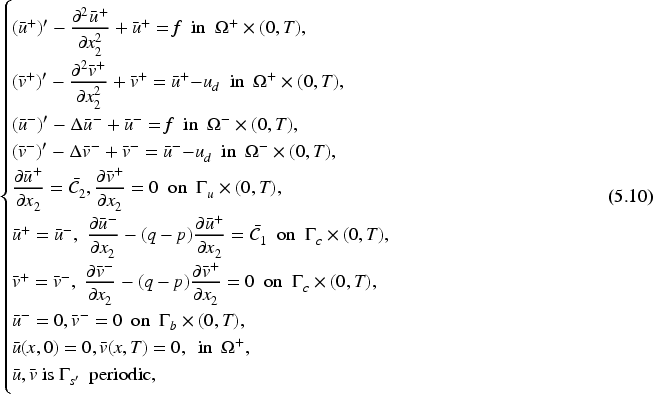
Let


Now, we will state the main convergence theorems depending on the scaling parameter
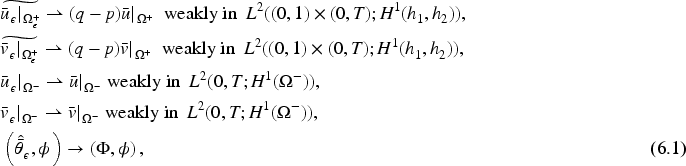
Let


The restriction of




By the Proposition 3.2 (P4), we get





Now, we claim that

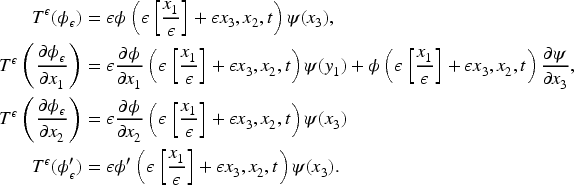
We obtain the following convergences as
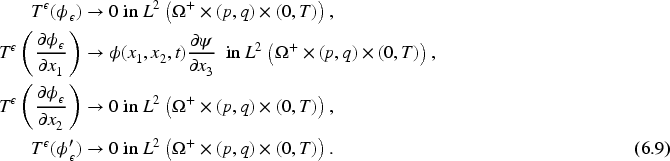



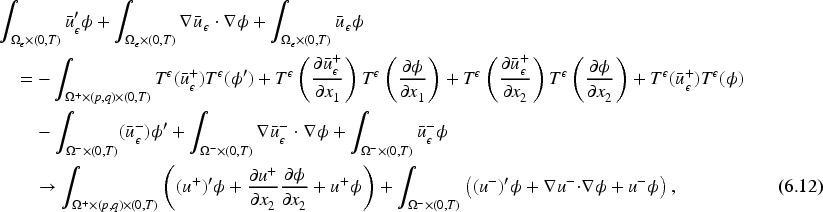



Using Proposition 3.4 (iii) and the characterization of the optimal control
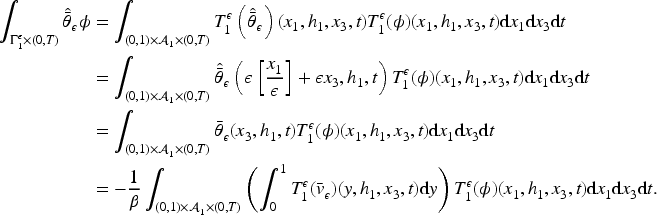

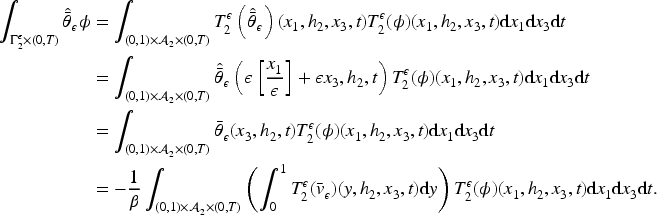

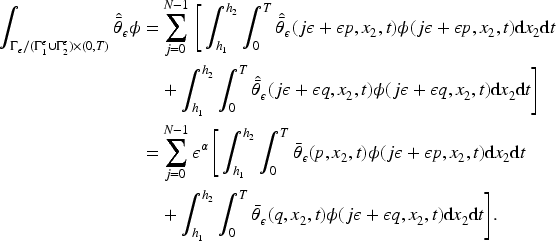
Utilizing the characterization of optimal control in terms of unfolding operator, we get
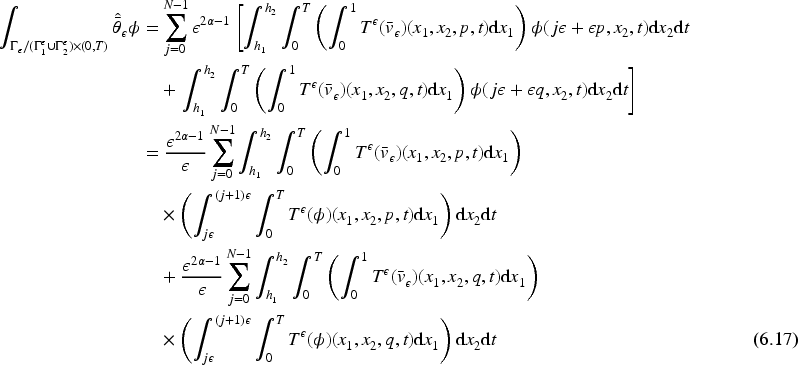
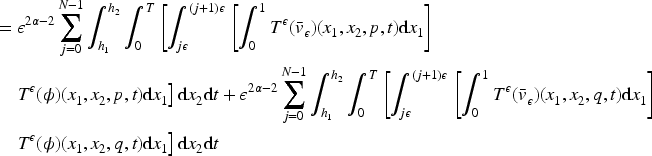
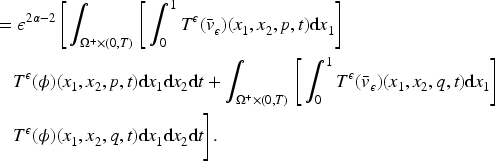

Therefore, we obtain the following limit equation:
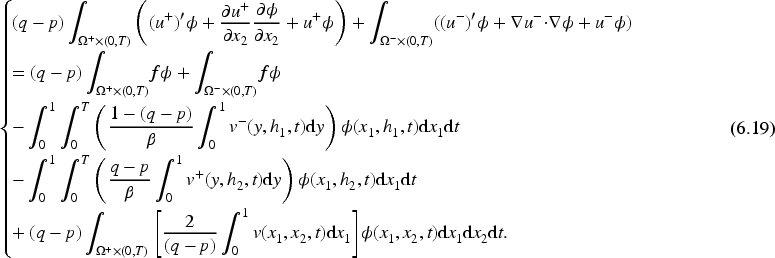


Therefore, we obtain the optimality system corresponding to the minimization problem (5.4). Using Theorem 5.2, the optimal solution is given by

Similarly, we present following theorem for
Let
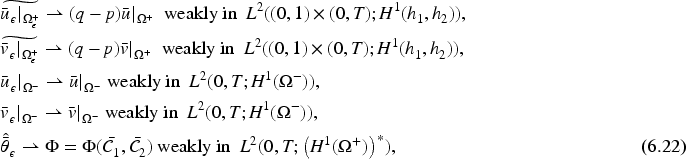


The proof up to equation (6.17) is similar. Now, take

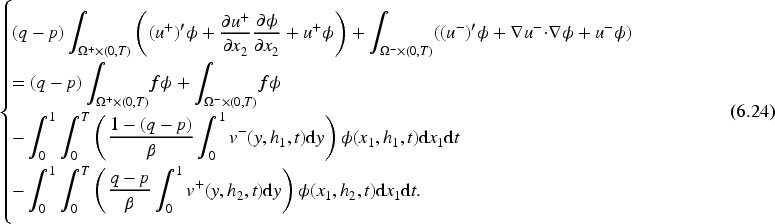
Thus, we have the following limit problem:


The characterization of Neumann boundary optimal control is obtained in this article. Associated with heat equation via the unfolding operator which is further utilized to do limiting analysis and obtain the homogenized optimal control problems. We obtain two homogenized optimal control problems corresponding to
Footnotes
Acknowledgments
The author wish to thank the Editor-in-Chief, Dr. Alain Miranville, and the anonymous reviewers for their valuable comments and helpful suggestions that have strengthened this work. The author also acknowledge Dr. Bidhan Chandra Sardar, Assistant Professor, Department of Mathematics, IIT Madras for his guidance and suggestions in this work. Ritu Raj acknowledges the Council of Scientific & Industrial Research (CSIR), for providing the Research Fellowship (09/1005(0035)/2020-EMR-I). This work was partially supported by the FIST program of the Department of Science and Technology, Government of India, Reference No. SR/FST/MS-I/2018/22(C).

Funding
The author received no financial support for the research, authorship and/or publication of this article.
Conflicting Interests
The author declared no potential conflicts of interest with respect to the research, authorship, and/or publication of this article.
Data Availability Statement
Data sharing not applicable to this article as no datasets were generated or analyzed during the current study.