



Abstract
This article aims to identify the challenges and opportunities in cross-program problem-based learning (PBL) in higher education, based on an Industry 4.0 case with undergraduate and graduate students studying for engineering degrees. The method for this research comprised a cross-program course structured to bring together undergraduate and graduate students using a PBL approach. Five Industry 4.0-related projects were developed in collaboration with four multinational companies. The authors present the results of the projects and feedback from students, professors and industry partners. The results and feedback led to empirical findings on the challenges and opportunities of cross-program PBL in higher education. The findings contribute to the design and implementation of teaching and learning practices and educational policies at undergraduate and graduate levels. In the approach adopted, the undergraduate students acquired hands-on experience while the graduate students had the opportunity to supervise applied research and practice. The study highlights practices that can help to better prepare future industry professionals.
Keywords
The industrial sector plays an extremely important role in the global economy and trading businesses. In recent years, technological updating and innovation in the sector has been growing exponentially. These changes have been so profound that there has, arguably, never been such a potentially promising or dangerous time (Schwab, 2016); that is why we now face a revolution that is being named Industry 4.0.
Industrial revolutions brought about different types of technologies. The first took place in the 18th and 19th centuries with the introduction of the steam engine to industrial production and the far-reaching transformation of transport and travel. The second took place in the 19th and early 20th centuries and was characterized by the introduction of electricity into manufacturing, starting mass production. The third began in the early 1960s and was based on the development of electronic systems and information technologies to further automate production, bringing about mainframe computers, personal computing and the Internet. The fourth industrial revolution was discussed during the Hannover Fair in 2011, and more specifically in 2013 in Germany, and took a pioneering role in the manufacturing system (Xu et al., 2018). Many researchers point out that we are on the edge of the 4.0 industrial revolution, as it might not be happening yet, depending on the location, sector or organization (Ślusarczyk, 2018; Xu et al., 2018). In fact, many industries’ practices remain rooted in the developments of the third, and some of the second, revolution. However, the current market requires organizations to take a competitive stance and to develop new production modes and management with the aim of advancing towards greater innovation.
Industry 4.0, in turn, collectively refers to the combination of a range of concepts, including smart factories, cyber-physical systems, self-organization, new systems in distribution and procurement, new systems in the development of products and services, adaptation to human needs, and corporate social responsibility (Lasi et al., 2014), fusing technologies from the physical, digital and biological worlds (Schwab, 2016). However, it was not born as straightforwardly as is currently depicted (da Silva et al., 2019): it took a process of technological, cultural and organizational evolution. This process applies to all areas of an industry – such as supply chain, manufacturing, sales, logistics, management, strategic planning, as well as cultural aspects. With the advent of the Internet of Things (IoT) and big data, some organizations are entering a previously unknown area. This requires professionals with highly specialized information technology (IT) knowledge, which is revolutionizing the job market. Certainly, many jobs will be replaced by robots and intelligent machines; however, a new demand for backend machinery professionals will be on the rise. In addition, the tools used in Industry 4.0 will allow business managers to make more informed decisions (Menon et al., 2020).
Faced with this revolution, education (mainly tertiary) needs to offer what will be required of Industry 4.0 professionals. The academic learning environment has a significant role in shaping students’ learning experience (Hemmati and Mahdie, 2020) and thus changes to existing study modules are required (Coşkun et al., 2019) to prepare both undergraduate and graduate students to work in industry and academia (Passaretta et al., 2019). It has been highlighted that engineering education must be continuously developed in accordance with current and future industry requirements (Yoshino et al., 2020). Part of the university’s function is to prepare undergraduate and graduate students going into industry for what they will face when they leave the academic environment (Skalicky et al., 2020), and to enable graduate students pursuing an academic career to develop strategies that will deliver high-quality teaching in the preparation of future professionals.
In this context, one can highlight the problem-based learning (PBL) approach, which allows professors to better understand and design teaching methods that address the needs of higher education (see Woollacott et al., 2014). PBL can be considered a pedagogical format and can facilitate student engagement in an authentic science context (Markham et al., 2003; Colley, 2008). In a PBL approach, cross-program courses (bringing together students from diverse areas) can be useful (Coşkun et al., 2019), given that multiple interactions (multi-knowledge teams with people from different areas) will be needed in real-life projects. Teaching quality is a complex and hard-to-measure construct (Valencia, 2020), and collaboration between industry players and vocational education institutions is necessary for local development (Lund and Karlsen, 2020). The university–industry relationship creates a nexus of theoretical knowledge and practical experience. This relationship is considered a pertinent means of combining technical knowledge, principles and concepts (obtained at the university) with practical knowledge (obtained in industry). Thus, identifying challenges and opportunities in educational approaches helps us to fine-tune them to increase the effectiveness of teaching and learning.
A gap can be observed not only in the literature but also in the approaches used to prepare undergraduate students for the requirements of the job market, and in practical guidance on teaching strategies for graduate students pursuing an academic career. To address this gap, the research question guiding this study is: what are the challenges and opportunities in cross-program PBL in higher education? The study’s objective, therefore, is to identify those challenges and opportunities through an Industry 4.0 case involving undergraduate and graduate students studying for engineering degrees.
To the best of our knowledge, this is one of the first studies to address a practical approach to both preparing undergraduate students for the job market and training graduate students pursuing an academic career to be ready to teach future professionals. A number of challenges and opportunities relating to PBL are identified based on the perspectives of students, professors and industry partners. These insights contribute to our general knowledge about engineering education but can also be recommended for other areas. Therefore, this study highlights practices that may assist in developing and improving high-quality teaching in universities, regardless of subject, and it may also contribute to the generation of knowledge, innovation and development in both industry and universities.
This study is a follow-up to that of Yoshino et al. (2020), which systematically reviewed the literature on this topic, identified the main skills required of an Industry 4.0 practitioner and considered how those subjects were taught worldwide. That study also used the methodologies of Flipped Classroom and PBL in a case study. Moreover, although the present article concentrates on an interaction between undergraduate and graduate students, it focuses on the results pertaining to the teaching and learning of undergraduate students, while the implications for graduate students are left to be investigated in future research endeavors.
Literature review
Industries, which play an important role in the global economy (Salvador et al., 2021), have been undergoing substantial computerization and digitization (Centea et al., 2019). These changes call for greater collaboration between people from diverse fields (Ramirez-Mendoza et al., 2018) if good results are to be achieved. Wank et al. (2016) observe that many organizations view Industry 4.0 with skepticism. Hence, Ramirez-Mendoza et al. (2018) argue that there is need for a well-trained new generation of professionals, highlighting the importance of adapting engineering education curricula towards an Education 4.0. In this sense, engineering education programs must strive to anticipate the obstacles that students will encounter in the job market (Cruz and Kellam, 2018).
In the last decade there has been a shift in technology and engineering education towards skill-based teaching (Henri et al., 2017). In this context, the teaching for Industry 4.0 requires changes to existing study modules and the introduction of new ones (Coşkun et al., 2019). Sackey et al. (2017) highlight that Industry 4.0 engineers need both to be globally aware and to have digital literacy. Ramirez-Mendoza et al. (2018) provide a list of skills and attributes that will be needed from an Engineer 4.0, which include: virtual collaboration, resilience, social intelligence, novel and adaptive thinking, cognitive load management, sense making, new media literacy, design mindset (design thinking), a transdisciplinary approach and computational skills. As one can see, both hard and soft skills are required, and Hee Lee and Shvetsova (2019) observe that different teaching methods can affect the development of skills in different ways. In addition, the humanitarian aspects of engineering education (Mikhailov et al., 2018) and the changes in skills required by Industry 4.0 have been noted and discussed in the literature (see, e.g. Flynn et al., 2017; Motyl et al., 2017; Male et al., 2010).
Baena et al. (2017) argue that a transformation process is beneficial in easing the path towards Industry 4.0 into the academic context, thus strengthening the engineering training process. In addition, Sackey et al. (2017) note the important role of learning factories in providing engineering students with hands-on experience, based on real-life projects. Antkowiak et al. (2017) propose that the (steadily growing) complexity of smart factories and systems calls for the use of PBL, in addition to the fact that problem solving is considered a key activity of engineering practice (McNeill et al., 2016). Gualtieri et al. (2018) also highlight the importance of the learning factory in the training of students. Litzinger et al. (2011) note that one of the challenges of engineering education is to put students in contact with practical experiences in real contexts, in which the PBL approach can be highlighted. Salah et al. (2019) claim that people remember something for longer if they perform it, work with it or experience it in reality. All these observations provide evidence of the importance of bringing together university and industry, and so building a solid teaching–research–extension nexus. However, it is not yet clear how best to realize this goal in the most efficient way. Various approaches in engineering education to preparing students for an Industry 4.0 environment have been set out in the literature, as discussed below.
Various authors have been advancing research on Industry 4.0 education. González and Calderón (2018) reported on the use of Industry 4.0-oriented flexible manufacturing systems to develop final projects in engineering degrees. They stated that Industry 4.0 engineers needed an interdisciplinary understanding of production processes through to business processes (González and Calderón, 2018). Embong et al. (2019), in turn, reported on the development of an educational and research platform, with students learning IoT and control concepts, theory and practice while building the platform. Students rated the experience to be good, overall, for developing their Industry 4.0 skills. Baena et al. (2017) reported on the creation of a learning factory within an industrial engineering course at a Colombian university. Schreiber et al. (2016) argued that learning factory approaches were beneficial in that they allowed students to learn from their mistakes without penalty and better prepared them to work with unanticipated complexity. Moreover, Centea et al. (2019) claim that the learning factory can be a talent pipeline for companies aiming to recruit highly qualified professionals. Salah et al. (2019) used a leading visualization method (based on virtual reality) in product manufacturing. This was designed to acquaint students with the concept of Industry 4.0. Students reported being satisfied with the effectiveness of the approach, which proved more effective than the traditional teaching courses regarding completion time, number of errors and student satisfaction. Wermann et al. (2019) reported on the development of a platform for teaching Industry 4.0-related content across multiple departments and courses. The platform linked knowledge and practice inputs from different areas to make a project achievable. As noted by Coşkun et al. (2019), cross-program courses can be useful, grounded in the idea that multiple interactions (multi-knowledge teams comprised of people from different areas) will be needed in Industry 4.0 projects.
The teaching approach more closely related to the one to be discussed in this article is that of Centea et al. (2019), who reported on the educational models employed to teach both undergraduate and graduate students using a learning factory. The authors showed how a learning factory approach was used to develop undergraduate and graduate projects, although separately. Their research aimed to find approaches to integrate Industry 4.0 (and its related subjects) into student learning and employee training in cooperation with industry partners. The authors reported interaction between graduate and undergraduate students where their work may have overlapped or separated. Nonetheless, that interaction was not reported to have been planned or intentional, but rather situational.
Methods
The methodological approach used for this research was based on the observation of a real teaching approach conducted in the Industrial Engineering Department of the Universidade Tecnológica Federal do Paraná (UTFPR), bringing together undergraduate (Bachelor of Industrial Engineering, Bachelor of Electric Engineering and Bachelor of Computer Science), and graduate (Master’s and Doctorate in Industrial Engineering) programs in a PBL approach based on a university–industry partnership in which four multinational companies participated.
The educational approach
This teaching approach was conducted during an Industry 4.0 course. The theoretical classes were offered separately to the undergraduate and graduate students, referred to here as the “Industry 4.0 undergraduate course” and the “Industry 4.0 graduate course”, respectively. However, the projects and practical activities were conducted in teams that mixed undergraduate and graduate students.
The professors from the Industry 4.0 courses in the undergraduate and graduate programs combined their to ensure that undergraduate and graduate students worked together in industry (PBL) projects. In this venture, the role of the undergraduate students was to acquire both theoretical and practical knowledge of Industry 4.0 (and its applications) and to apply that knowledge to real projects related to Industry 4.0, while the role of graduate students was to supervise the undergraduates throughout the project, observing the opportunities and challenges for teaching and learning in higher education given the practical approach used in the undergraduate course. The aim of the industry-related projects was to develop solutions to real problems presented by the industry partners (UTFPR, 2018).
As already noted, four companies participated in the projects and the companies provided Industry 4.0-related problems which formed the basis of the projects to be developed during the Industry 4.0 courses.
Course design
Industry 4.0 undergraduate course. The Industry 4.0 course for undergraduate students had a selection process. A call was issued to make students aware of the requirements to apply for the course, which included knowledge of both Portuguese (as it took place in Brazil) and English (meeting many companies’ communication standards), and availability for an 8 h/week workload (2 h in class, and six outside of class, dedicated to work on the projects to which students would be assigned). The selection was based on students’ resumés, a video (of up to 3 minutes) in which they had to talk about their profile and their motivation for participation in the course, their grade point index (GPI), and their attendance at previous courses. At the undergraduate level the course was transdisciplinary. It was offered by the Industrial Engineering Department, but students from any other major on the same campus (the Ponta Grossa Campus) could apply.
In total, 32 students were accepted and were allocated by the professors to one of the projects that had been provided by the industry partners. The professors aimed to make the teams diverse, assigning students from different majors (thus a cross-program approach) and with different backgrounds so that there would be a variety of perspectives. These students were then introduced to the graduate students who would be part of the same team, and the team was presented with the problem it was charged with solving.
Throughout the term, weekly lectures were delivered on topics related to Industry 4.0, which would be of use to the teams during their projects. These lectures were delivered by a number of professors from different universities and from different countries. As Industry 4.0 involves a plethora of subjects, specialists in each topic were invited and the lectures were delivered by professors from UTFPR (Brazil), the University of Sherbrooke (Canada) and the Polytechnic Institute of Bragança (Portugal). The topics were: Cyber Physical Systems; the Web; the Internet of Things and Industrial Networks; New Business Models; Digital Twin; Self-driving Cars; Machine Learning and Deep Learning; Databases; Big Data and Business Intelligence. Moreover, during the development of the projects throughout the term, students made visits to the companies, attended meetings with different company employees and stayed in close and constant contact with them. The number of visits, meetings and employees involved varied depending on the company and project.
The course assessment for the undergraduate students was based on: • the presentation of the results of the project at a workshop held at the end of term to both the professors and the industry partners; • the feedback provided by the industry partners via a survey; and • a 360° assessment involving all team members.
Industry 4.0 graduate course
The graduate students also had weekly lectures on the same topics as the undergraduates, with the sole addition of “Internationalization of Industry 4.0”. The graduate students had an assigned workload of 4 h/week in class. Nonetheless, they were also required to accompany the project development whenever necessary.
Rather than being hands-on in solving the problem and developing the project, the graduate students were responsible for supervising or guiding and assisting the undergraduate students towards solving the problem and for assessing the didactic challenges and opportunities for teaching and learning.
The course assessment for graduate students was based on: • a research or review article submitted at the end of term (the subject was discussed and agreed upon beforehand between student and professor); and • a report stating (a) the difficulties, challenges and opportunities noted during the term in relation to the teaching, learning and practice of Industry 4.0-related subjects at the undergraduate level, and also the technical results of the project; and (b) an overall assessment of the performance of the undergraduate students, considering both hard and soft skills. This report was made available to the respective industry partners.
Presenting project results to the industry partners
The entire teaching approach lasted one term, comprising 4 months, thus defining the time in which the teams had to finish the projects. The objectives and results of each project can be seen in Appendix A. After the teams had completed the projects, there was a presentation of the potential solutions to the companies’ problems. All managers and personnel involved in the projects (from the four companies) attended the event at which the presentations were made. The managers had the opportunity to ask questions and understand the proposals presented by the students.
Aids for problem solving
After having met and been presented with the problem they were in charge of solving, the teams were responsible for establishing their strategy and method for addressing the problem together with their industry partners.
Various strategies, including technical visits and meetings, surveying, collecting data/information, consulting with both internal and external parties, were used throughout the projects. Minutes of meetings were encouraged to facilitate later consultation. Nonetheless, the methods used throughout the semester were left at the discretion of the team and its industry partner.
Description of the five projects
The four multinational companies involved were: Continental, DAF, Klabin and Tetra Pak. DAF contributed two projects, and the other companies one project each, giving a total of five projects.
Continental is one of the world’s largest suppliers of technical elastomeric products and a specialist in plastic technology. The problem it supplied was: the detection of non-adherence of the fabric using existing cameras in the rolling machine process.
DAF is a Dutch company that has the fifth largest production of heavy trucks in the Brazilian territory. The first problem it supplied was: the excessive use of paper sheets for a work order. The company spent a considerable amount of money on paper sheets monthly, and the completion of each form (1 paper sheet each) took on average 1.16 min.
The second problem supplied sent by DAF was: the need to integrate the management of the tools and clamping equipment used in manufacturing across all related areas.
Klabin is considered the largest producer and exporter of Kraft paper in Brazil. The problem it supplied was: not having standardized information for some machines when performing maintenance.
Tetra Pak is the world’s largest company for food packaging solutions. The problem supplied by its logistics team was: determining the best place to stock a finished product.
Stakeholder feedback
In order to seek feedback from stakeholders in the projects, so that further opportunities and challenges could be identified, three different surveys were prepared, seeking to gather feedback from (i) undergraduate and graduate students, (ii) professors and (iii) industry partners. The quantitative and qualitative analyses involved the following aspects.
For undergraduate and graduate students, the survey was the same (see Table B1 in Appendix B). It was sent to all students who participated in the courses but feedback was not compulsory. Of the 32 undergraduate and 23 graduate students, only 17 undergraduate and 20 graduate students answered the survey.
The second survey (see Table B2, Appendix B) was sent to the two professors of the Industry 4.0 undergraduate course and the Industry 4.0 graduate course. Finally, the third survey (see Table B3, Appendix B) was completed by one representative from each of the four companies.
The three surveys (constructed using Google Forms) were sent by email to the respective parties. The questions were assembled after discussion between the authors of this study and were based on open (descriptive) and closed questions (using a Likert-scale score of from one to 5).
Lessons from cross-program PBL coupled with a university–industry partnership: empirical findings
Besides the results of the projects (shown in Appendix A), the challenges and opportunities in cross-program PBL could be identified from the students’, professors’ and companies’ perspectives (synthesized from the feedback from each of the stakeholders). The challenges and opportunities reported here comprise empirical findings from the feedback of the three groups of stakeholders.
Results of the projects
The project at Continental showed that a camera is capable of mapping the errors in the rolling machine’s fabric and generating a complete report containing the type of error, date, time and severity.
The team addressing Project A at DAF suggested that the employee at each assembly station should receive a digital document detailing which parts would be used in each assembly step. By implementing the recommendation, the company would not only save print and paper costs but would also optimize the time of the workers responsible for manually filling out the forms. The advantages of implementing the digital system would be: automation, reduced writing time, reduced consumption of paper and instant information; besides, it allows the accumulation of a historical database and provides greater data security.
Project (B) at DAF showed some financial investment, equipment portability, ease of handling for operators (due to the use of gloves), energy costs, and maintenance. From the study, it can be expected that, with the automation of building papers, there will be reduction in the consumption of printing material, manufacturing data will be available digitally (and not annotated on paper), there will be easy access to data that previously needed to be passed hand to hand, and there will be greater security of access to sensitive data according to the employee’s area.
The project at the Klabin company developed a tool will have its own information stored on the different types of procedures and, when all the necessary variables are provided, it will generate a Formal Energy Lockout Procedure. To enable this tool, a mobile application was created to assist the maintenance department: the application will be connected to the company’s SAP (Systeme, Anwendungen und Produkte in der Datenverarbeitung) system.
In the project at Tetra Pak, an opportunity was identified to improve processing efficiency by inserting the barcode into the database after segmentation, thus avoiding an unnecessary process when doing it directly after reading it.
Challenges and opportunities identified from student feedback
One of the challenges in higher education is to put students in contact with practical experiences in real contexts (Litzinger et al., 2011) to link ‘know-that’ with ‘know-how’ (Vahed et al., 2016).
Undergraduate students provided their feedback on three aspects: (i) their learning of technical content (in this case, Industry 4.0); (ii) their satisfaction with the course; and (iii) their perspective on working with graduate students.
Learning of technical content. The results of the survey are shown in Figure 1, which gives an overview of the students’ perceptions on a scale of 1–5, and the lessons learned regarding the opportunities and challenges of a cross-program PBL approach are discussed below. Undergraduate students’ perceptions regarding their learning of Industry 4.0 (N=17). Note: 1 = Totally disagree; 2 = Disagree; 3 = Neither agree nor disagree; 4 = Agree; 5 = Totally agree.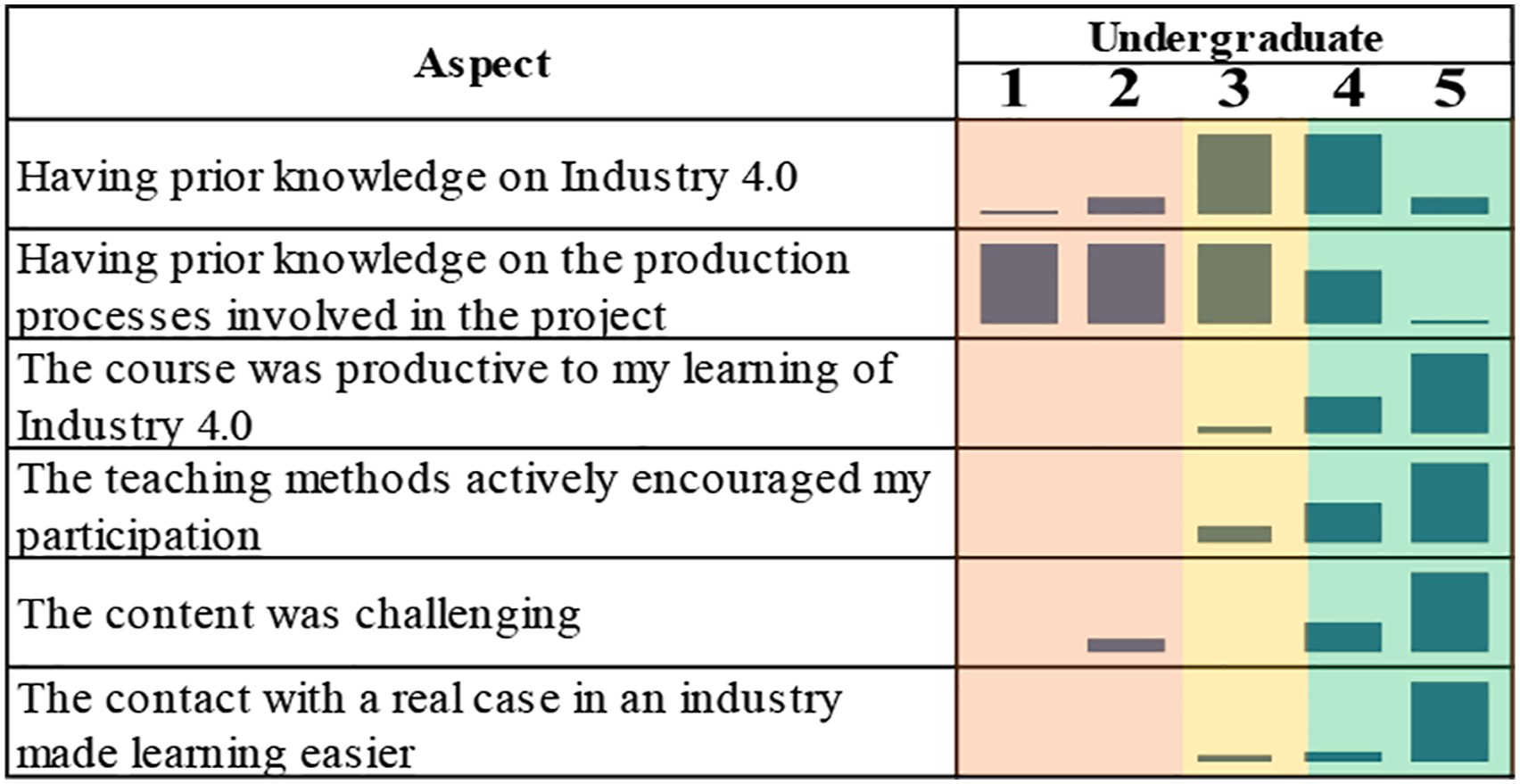
The main challenge for the cross-program PBL approach with regard to the learning of technical content was: • The lack of previous knowledge on the subject (in this case, both Industry 4.0 and the industrial processes). A lack of previous knowledge on the technical content involved in solving the problem at hand, and on organizational/industrial processes might hamper student engagement and performance. One student described the content as “highly technical content with which I had never had contact or acquired prior knowledge related to it”. Other students reported a “lack of previous experience”, and, as the program involved students with different backgrounds, a “training area where little is discussed about the subject” and “not understanding the practical application” until they got to the practical phase of the project.
The main opportunities in the PBL approach regarding the learning of technical content, included: • Cross-program PBL makes students keener to participate actively in problem-solving. This teaching method encourages undergraduate students to participate actively in the course, influenced by the chance to solve real organizational problems, by the collaboration of graduate students in supervising them, and by the active participation of the industry partners. This was one of the highlights for the respondents: “The use of problem-based learning contributed a lot to the interdisciplinarity of the course, making people from different areas converge their knowledge for the project’s success. The joint action of undergraduate and graduate students also provided great learning for both types of students.” • Applying technical knowledge is challenging, but close contact with industry is positive in raising the interest of students/future professionals. While the use of technical content to solve the problem at hand might seem very challenging, the contact with a real case makes learning easier. Students can apply the content taught in class to the projects, and when they need a specific piece of knowledge not yet acquired in class they become interested and are motivated towards self-learning or seeking further assistance. In this case, students reported that the “industry teacher” – the professional responsible for showing them the parts of the company relevant to their project and for acting as a bridge between the company and the university – had been a decisive player in their project’s success: “He was the one who bridged the gap between university and industry, following the needs of the team to carry out the project and being the support point for data collection and negotiations within the industry”. The industry teachers had also reviewed “how processes in the industry work” and “made data collection possible, answered questions, and received the team during technical visits to the company.”
Working with graduate students. To assess the challenges and opportunities regarding the relationship between undergraduate and graduate students, undergraduates were asked to express their satisfaction based on several factors. The results are shown in Figure 2, which gives an overview of students' perceptions on a scale of one–5. Undergraduate students’ perceptions of working with graduate students (N=17). Note: 1 = Very unsatisfied; 2 = Unsatisfied; 3 = Neither unsatisfied nor satisfied; 4 = Satisfied; 5 = Very satisfied.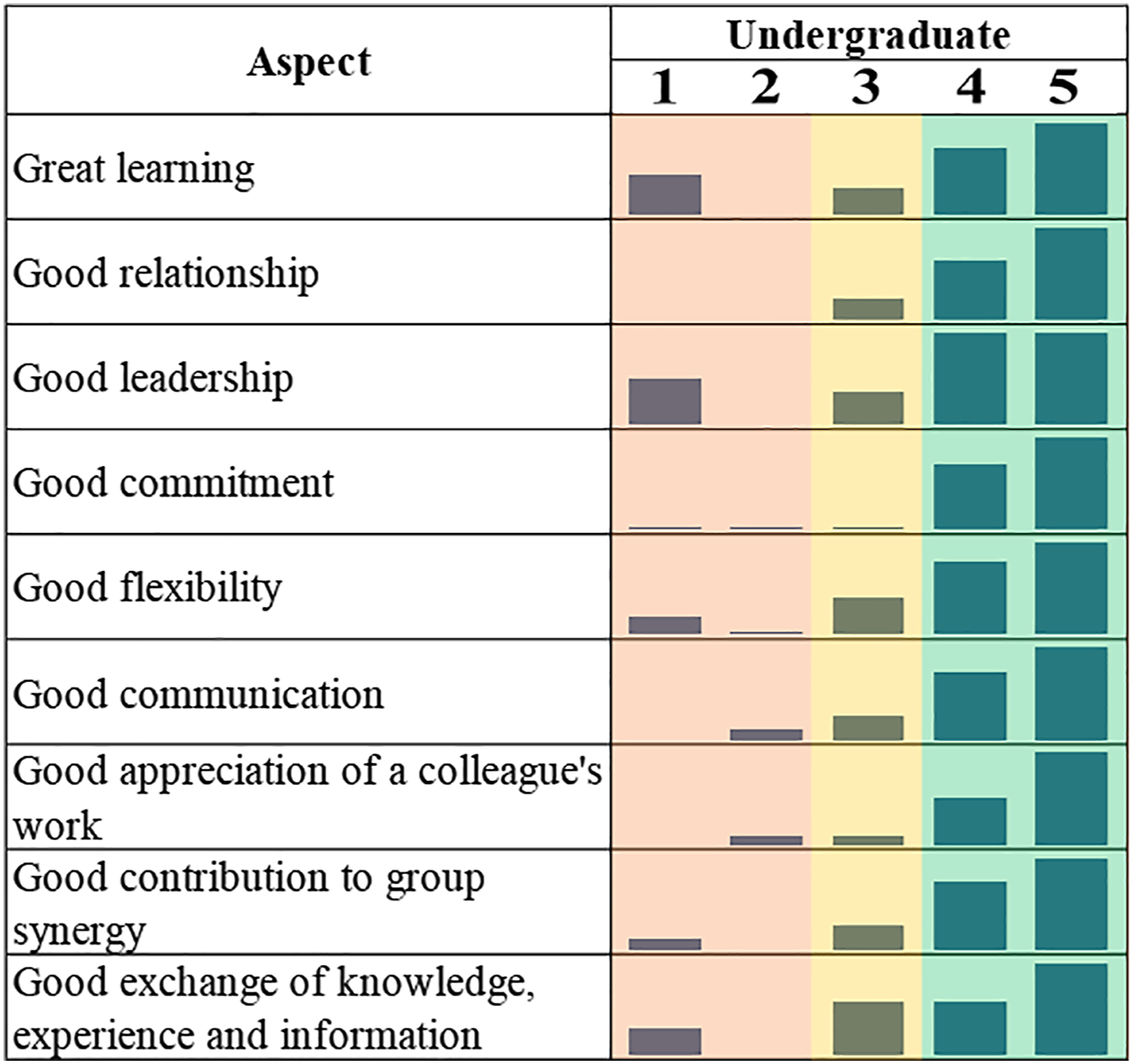
The main challenge in the cross-program PBL approach for undergraduate students, regarding working with graduates can be synthesized as: • Feeling left alone. Once undergraduate students are in charge of being hands-on and developing the project by themselves with only some supervision from the graduate students, they might see the graduates as not much engaged and contributing little to the group; which might also give the impression that the graduates are withholding knowledge and are unwilling to share experience/expertise. Moreover, flexibility might be another issue, as the respective timetables often do not match.
The main opportunity in the approach for undergraduate students regarding working with graduates can be synthesized as: • Learning from exemplary behavior. Graduate students are committed to their work and to establishing a good relationship with the teams, showing appreciation for the work of colleagues. They communicate well and contribute satisfactorily to the team’s synergy. Undergraduate students were positive about the presence of graduate students: “Having a team of students who are not undergraduates helped a lot with the knowledge they have; we were able to follow the project in a more consistent way.”
Challenges and opportunities identified by the professors
The two professors responsible for the Industry 4.0 courses in the undergraduate and graduate programs were surveyed to capture their perceptions.
The main challenge in the cross-program PBL approach based on the professors’ feedback was: • Defining and maintaining roles for both undergraduate and graduate students. “The role of the graduate students is [to act] with the view of ‘future scholars’, not participating effectively and directly in the technical part of the project.” While a few graduate students might seem like mere spectators, others go beyond their role (of advising) and assist the undergraduates by participating effectively from a technical perspective and not understanding that they should maintain the distance of a supervisor instead of being hands-on. Regarding the undergraduate students, “many effectively participated, some remained as spectators” and did not show much engagement, which might be due to the active participation of graduates, thus making the undergraduates more “relaxed”.
The main opportunities based on professors’ feedback included: • Student engagement. Students are more engaged than in traditional (non-PBL) courses. “The dynamics with industry resulted in greater interest from the students”. This greater interest enabled them to develop innovations. • A close relationship with industry and industrial processes. Visits to the companies are extremely important for learning, since students have the chance to get to know industrial facilities (rather than only hearing or reading about practical examples). Moreover, the “contact with real problems and solutions; contact with the industry”, and becoming acquainted with the relevant industrial processes are critical to a satisfactory understanding of the project at hand. Besides, the contact with real industrial problems and interaction with the companies provide a new perspective for undergraduate students and promote better performance in industry projects. • Participation of graduate students. The participation of graduate students is positive, since each team receives tailored attention and supervision on a level that professors would not have the time to provide. • Inviting guest lecturers. Inviting professors from specific areas of knowledge to deliver lectures is beneficial to students, since “Industry 4.0 is multidisciplinary and permeates in several areas of knowledge”. • Multidisciplinary teams. “Minds and knowledge from several areas together, more significant results, work in multidisciplinary teams” are beneficial to each student’s life experience, since students begin preparing to work alongside and to interact with professionals from various areas, as they will certainly need to do in their working lives. • Development of soft skills. All students put into practice a range of soft skills – for example, “teamwork, ability to learn, ability to teach” – and must develop them as they work towards completion of the project along with a range of people from different personal and technical backgrounds. • Practice of concepts learned in class. Students have the chance to see proof of the importance of concepts they have encountered in class, which contributes to more solid learning.
Challenges and opportunities identified from the companies’ feedback
Challenges and opportunities in the PBL approach could also be identified from the feedback obtained from the participating companies. The four company managers provided their feedback via a survey and identified further challenges and opportunities.
The main opportunities in the cross-program PBL approach based on the industry partners’ feedback included: • Mutual learning of new technologies and methodologies. University and industry both benefit from learning new methodologies. The university–industry collaboration “takes students away from the theoretical world of the university and [brings] new knowledge for the industry”, allowing companies to incorporate scientific knowledge and innovation into industrial operations while universities are able to stay up to date with industry practices. • Greater visibility for academics and their potential. A close interaction with industry allows students to be seen as professionals and might help those who are seeking internships or work opportunities to prove their abilities. • Supervision from graduate students. The participation of graduate students in supervising the undergraduates results in improvements on projects developed solely by undergraduates. The participation of the graduates contributes to the development of a project as they add “organization, baggage from other industries, leadership, maturity” by acting in a pedagogical, supervisory and supportive manner.
The main challenges based on the industry partners’ feedback included: • Need to adjust course time and project scope to enable the implementation and monitoring of solutions. It is necessary to adjust the course timeframe and the scope of the projects to allow “longer project/course times for greater productivity and implementation”. Otherwise, the effectiveness of the proposed solutions may not be proved. Alternatively, it is worth noting that the project proposed by the company can be broken down into smaller milestones and deliverables, so that parts of the overall project can be done in different terms, as “follow-ups”. • Lack of involvement of all necessary stakeholders from the beginning. The company needs to “involve [all] teams from the beginning, from the scope to the final delivery, so that there are no problems in the implementation of externally developed software”. It is important to ensure that all who have any relationship to the project are involved. One of the key requirements when developing a project is constant contact with the department that requested it, but failing to involve all other departments that will be affected by it could lead to reworking or even loss of the work due to lack of compatibility. • Allocating workload as evenly as possible. Workload should be shared as evenly as possible among team members in order not to overburden a few members of the team. To that end, it was proposed to “make a Roadmap with all direct actions of the project foreseen with dates and assign roles to everyone, without overloading just a few members”. • Streamlining data and information exchange. To enable a project to be conducted in one term (4 months), there needs to be reasonable agility and speed in the provision of information and data to students, with “better organization from industry to gather the necessary data faster and more assertively”. Hierarchy and bureaucracy need to be followed but should not overburden the development of the project.
The managers of the four participating companies responded that their level of satisfaction with the project had exceeded their expectations. In fact, the projects were well-aligned with the problems posed by the companies and so the students had playing their roles successfully. Figure 3 shows the Industry 4.0 topics that the companies found to be most useful for the projects. Usefulness of Industry 4.0 topics for the projects.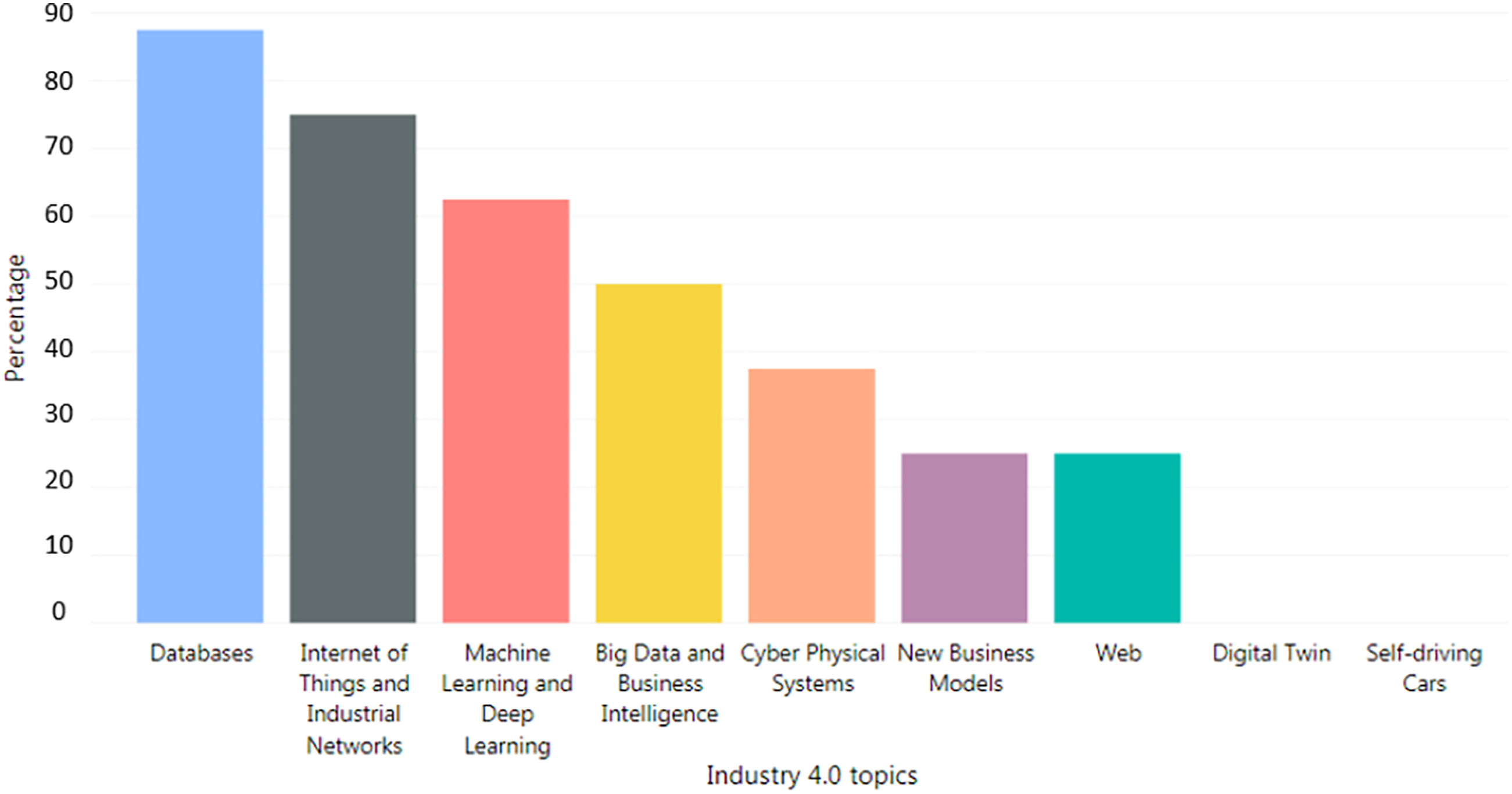
According to the industry partners, “the university–industry relationship materializes the integration between the classroom and the factory”. “Students go to the industry with no vices, which allows them to spot new opportunities due to a breaking of paradigms.” In addition, developing new technologies can be a learning experience for both parties (students and company).
In summary, the pros of the university–industry partnership were identified as: mutual learning of new technologies and greater visibility for academics and their potential. In addition, the industry managers who answered the survey all stated that there was some improvement in the results of that semester compared to previous semesters, due to the participation of graduate students. This clearly shows that the participation of graduate students, acting in a pedagogical, supervisory and supportive manner, can contribute to the successful development of a project. Graduates have a different view of industry (from undergraduates) and have other experiences and backgrounds. Moreover, their organization, leadership and technical and academic knowledge can contribute to the project development. No disadvantages of the participation of graduate students were mentioned.
All companies indicated a strong intention to implement the results of the projects. The implementation would depend on factors such as finance, human resources, project maintenance and information technology. However, their intention was to have the solutions ready and running in the short term. In addition, for the following semesters, all the companies wished to continue the partnership with UTFPR.
Didactic gains, the role of universities and institutional partnerships
General discussion
University–industry relationships create a nexus of theoretical knowledge and practical experience. Research institutions contribute significantly to innovation processes (Fritsch and Schwirten, 1999) and such relationships are considered a pertinent approach to combine technical knowledge, principles and concepts (obtained at university) with practical knowledge (obtained in industry) (Piekarski et al., 2019).
Contact with practice is relevant not only in engineering but in many other areas of higher education, including studies in health sciences, biology, social science, the humanities, and technology-related disciplines, among others. In addition, contact with company managers may facilitate students’ entry into an internship or trainee program, or the development of scientific research. In fact, arrangements such as those that form the subject of this study can constitute a talent pool for organizations, since they can observe students (future professionals) in various situations and assess their behavior and commitment more deeply than could be done in a one-time selection process.
For graduate students, contact with practice may bring interesting future opportunities. In many cases, the course proposal for graduate students is aimed at pedagogical training and also at expanding knowledge in a given area with in-depth research. Therefore, bringing together both levels of education may provide an interesting means of complementing the training of future professors and researchers, developing skills in supervision, support, guidance and problem-spotting and problem-solving.
The requirement to develop an education of excellence via teaching, research and extension corresponds to the mission of many universities worldwide, since teaching is supported by a professor or tutor; research is supported by the use and elaboration of scientific material (books, articles, reports, etc.); and extension refers to the relationships that the university has with external stakeholders, mainly in industry and the broader society.
Case study discussion
Understanding and solving real problems in industry in one academic semester (4 months) is challenging but at the same time exciting for undergraduate students. Therefore, the students’ didactic and experimental performance was positive. Although the case study of the educational approach took place at a Brazilian university, the reports and discussion are relevant to other educational institutions using or planning to use PBL for teaching. The contact with the companies helped the undergraduate students to understand how industrial facilities really work and, from there, to decide which area they found most suitable for them with regard to a future internship or job.
As outlined in the introduction to this paper, different studies have addressed the use of PBL in an effort to improve teaching and learning in higher education. Overall, the practice seems to produce positive and significant results in this respect (see, for example, Yoshino et al., 2020).
Furthermore, in the case discussed in this study of cross-program PBL, the graduate students participating were able to observe more closely, and even externally, how undergraduate students behaved under pressure and stress, and could assess their behavior when working with no direct supervision.
Final considerations
This aim of this research was to identify the challenges and opportunities, from an empirical perspective, of cross-program PBL in higher education, based on an Industry 4.0 case involving undergraduate and graduate students from engineering courses.
Certain benefits for the respective parties should be emphasized. For undergraduate students, key benefits were the early contact with industrial/organizational practices and an industrial environment, the possibility of becoming part of a talent pool considered by the industry partner, and the opportunity to work alongside graduate students. For the participating companies, the main benefits came from having a highly-specialized team working on an innovation-driven project. The university–industry relationship here is seen as a key factor in the development of competent professionals who can meet current market needs and who are capable of solving complex problems.
This study builds on a solid teaching–research–extension nexus, demonstrating a novel teaching approach. PBL approaches that involve partnerships with industry can also bring gains for society (e.g. customers), for example through advances and improvements in production systems that may lead to cost reduction, increased quality or agility in delivery.
Some study limitations should be noted. The teaching approach used as the basis of this research took place on only one campus of a Brazilian university (UTFPR), including students from three undergraduate majors and one graduate program. Nonetheless, the authors argue that the challenges and opportunities identified in the study are of international significance and can be transferred to other contexts, helping institutions around the world to design and improve teaching and learning approaches based on cross-program PBL, thus contributing to the better preparation of future professionals.
As an opportunity for further research, the authors encourage the development of other cross-program PBLs in different locations institutions in order to enable comparability. Some challenges for future research should perhaps also be mentioned. Aligning the perspectives of undergraduate and graduate students, as well as of faculty and industry personnel, can be hard work. All parties need to align their visions to enable the identification and successful solution of the problem to be addressed, and each has a different role to play. Working with a multidisciplinary team means that each member must understand their role within the group, thus contributing their particular skills and knowledge. However, it can be challenging for professors to organize teaching approaches based on PBL (especially cross-program PBL), seeking collaboration with companies, devoting considerable effort to splitting large classes into smaller teams, and arranging class and meeting schedules with guest lecturers and companies.
Footnotes
Acknowledgements
The authors would like to thank the students, professors and industry managers for taking their time to provide their feedback, and also the industry partners (Continental, DAF, Klabin, and Tetra Pak) for agreeing to participate in this study.
Authors' contributions
Conceptualization: Joseane Pontes, Murillo V Barros, Rodrigo Salvador. Methodology: Joseane Pontes, Murillo V. Barros, Rodrigo Salvador, Rui T. Yoshino. Data curation: Bernardo Barreto, Murillo V. Barros, Rodrigo Salvador. Writing – original draft preparation: Bernardo Barreto, Joseane Pontes, Murillo V. Barros, Rodrigo Salvador, Rui T. Yoshino. Writing – review and editing: Antonio C. De Francisco, Bernardo Barreto, Cassiano M. Piekarski, Joseane Pontes, Murillo V. Barros, Rodrigo Salvador, Rui T. Yoshino. All authors have read and agreed to the published version of the manuscript.
Declaration of conflicting interests
The author(s) declared no potential conflicts of interest with respect to the research, authorship, and/or publication of this article.
Funding
The author(s) disclosed receipt of the following financial support for the research, authorship, and/or publication of this article: Murillo Vetroni Barros has received research grants from the Coordenação de Aperfeiçoamento de Pessoal de Nível Superior – Brasil (CAPES) – Finance Code 001. Cassiano Moro Piekarski has received research grants from the Conselho Nacional de Desenvolvimento Científico e Tecnológico (CNPq), sponsored by CNPq 312,285/2019–1.
