



Abstract
To determine the correlation between protein-to-creatinine ratio and 24-h urinary protein, proteinuria was measured in 45 patients attending a public HIV clinic in Porto Alegre, Brazil, using 24-h urinary protein excretion (24hUP) and urinary protein-to-creatinine ratio. Spearman’s correlation test was done to evaluate the association between spot protein-to-creatinine ratio and 24hUP. The limits of agreement between the two methods were analysed by the Bland–Altman method. For protein excretion <1 g/day, limits (95%) of agreement of protein-to-creatinine ratio and 24hUP were +0.112 and −0.097 g/day. A strong correlation (r = 0.957) was found between protein-to-creatinine ratio and 24hUP excretion. The conclusion is that the protein-to-creatinine ratio in spot urine specimens is an accurate, convenient and reliable screening method to estimate the urinary protein excretion in HIV patients to detect abnormal urinary protein loss. Further studies are required to evaluate renal disease in HIV patients with chronic renal disease and higher urinary protein excretion.
Keywords
Introduction
Measurement of protein excretion in a 24-h urine collection (24hUP) is the gold standard for quantitative evaluation of proteinuria.1,2 However, this method is cumbersome and inconvenient as it is difficult to accurately collect a complete 24-h urine sample, especially in an outpatient setting. An alternative method for the evaluation of proteinuria is measurement of the protein-to-creatinine ratio (PCR) in an untimed “spot” urine specimen, which provides a more convenient method for assessing protein excretion. 1 Although there is correlation between PCR and urinary protein (UP), the agreement between the two techniques of measurement should be assessed when considering replacing one another.1–4 We are unaware of any reports in the literature that test this correlation, when considering the detection of abnormal UP excretion in HIV-positive patients who have not been diagnosed as having renal disease.
The aim of this study was to evaluate the association between PCR and 24hUP in screening proteinuria in HIV patients attending a public health HIV clinic in Porto Alegre, Brazil.
Subject and methods
A retrospective study was conducted evaluating the medical records of 464 outpatient subjects attending an HIV clinic of the Public Health System (SUS) in Porto Alegre, Brazil. Of these, 45 patients were identified with no known history of renal disease and having measured both 24-h UP excretion and PCR. Patient demographic and laboratory data from the time of urine collection were recorded. The study was approved by the Research Ethics Committee of the City Hall, Porto Alegre, under protocol number 05773912.1.0000.5338.
Statistical analysis
Statistical evaluation was performed using descriptive analysis and reporting mean ± standard deviation for continuous variables, and frequency and percentages for categorical variables. Spearman’s correlation coefficient between PCR and 24hUP was used. The limits of agreement between the two methods were analysed using the Bland–Altman method. Microsoft Excel software was used for the database and analyses were performed using SPSS for Windows (Statistical Package for Social Sciences), version 18.
Results
Forty-five patients were assessed (24 males, 21 females) with a mean age of 46.86 ± 12.8 years. Thirty-three patients were Caucasian and 12 black. Thirty-four patients were taking antiretroviral therapy (ART) and nine patients were ART-naive. None of the patients had a diagnosis of chronic kidney disease (CKD), four patients were being treated for hypertension, three were receiving oral treatment for type 2 diabetes and four were being treated for dyslipidaemia. The mean CD4 count was 457.1 ± 266.90 cells/mm3. The mean PCR in the groups was 0.11 ± 0.17 g/g and mean 24hUP was 0.116 ± 0.163 mg/24 h, p = 0.88. The mean serum creatinine was 0.82 ± 0.24 mg/dl. Only one patient had serum creatinine above the upper limit of normal (1.46 mg/dl).
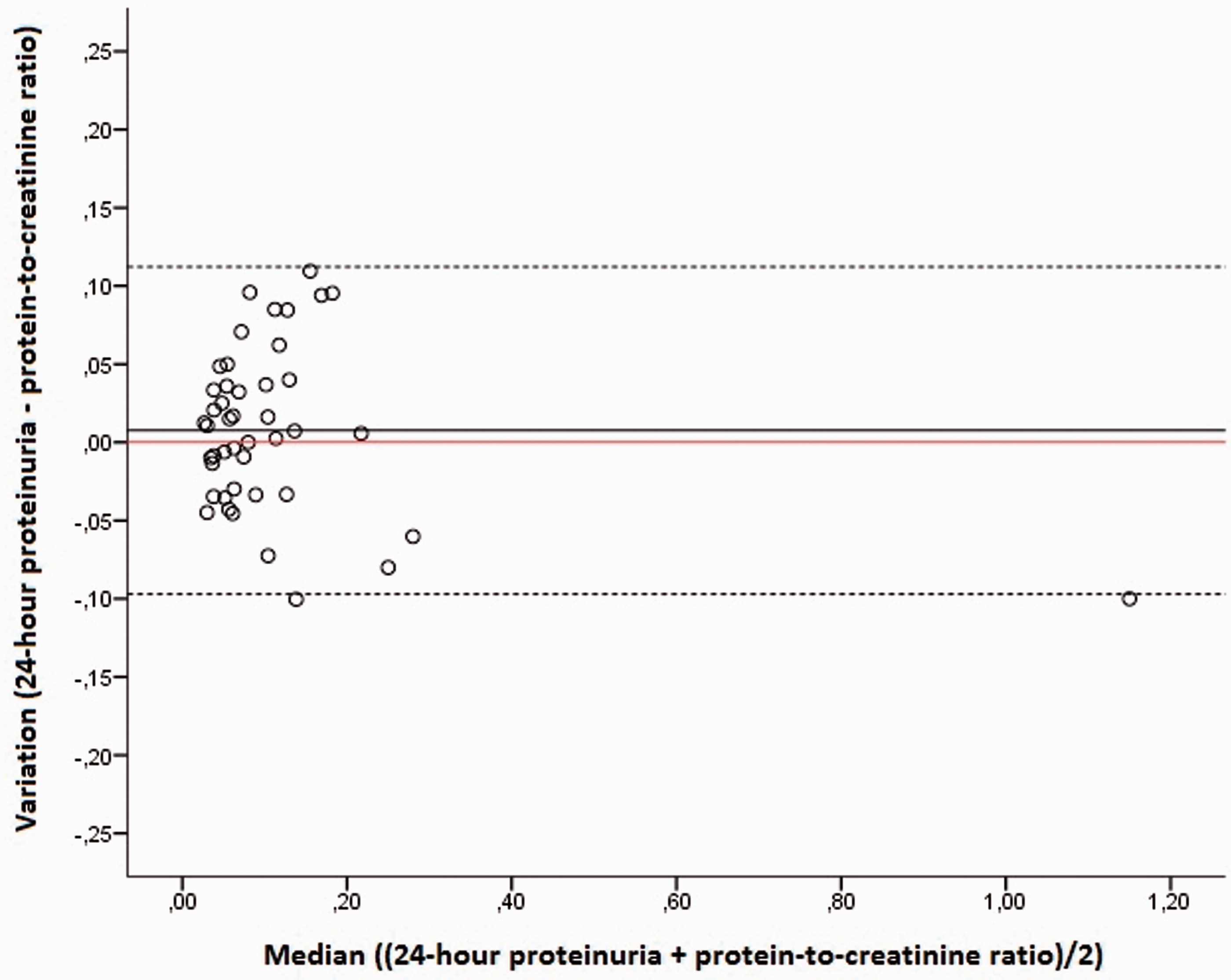
There was a very strong correlation between PCR and 24hUP (r = 0.957, p < 0.0001) (Figure 1). A Bland–Altman plot disclosed the limits of agreement between the PCR and 24hUP of 0.112 and −0.097 g/day (Figure 2).
Spearman’s correlation between spot urine protein-to-creatinine ratio and 24-h urine total protein. Bland–Altman method for analysis of the limits of agreement between spot urine protein-to-creatinine ratio and 24-h urine total protein.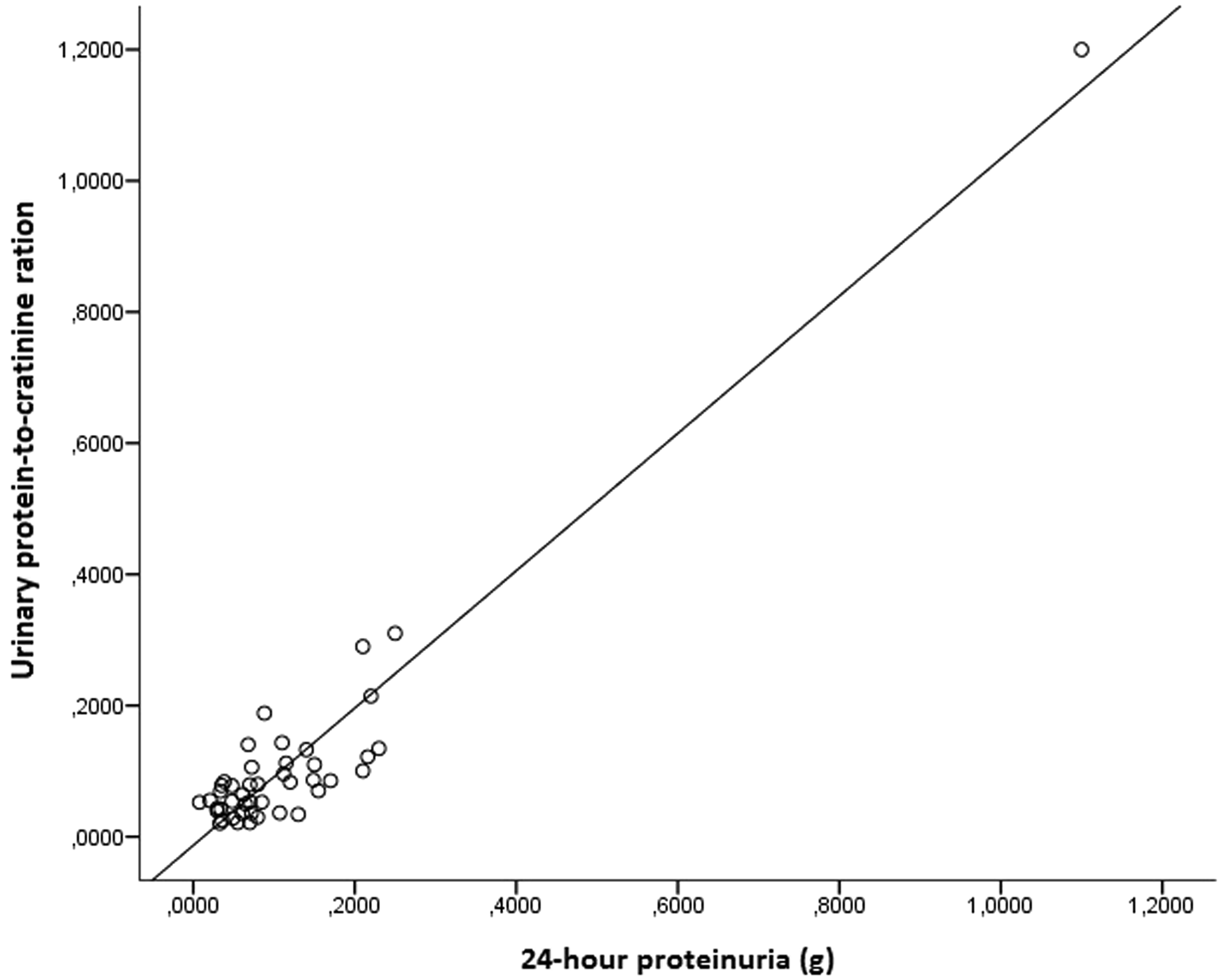
Discussion
The era of highly active antiretroviral therapy and early diagnosis improved survival and disease progression in HIV patients, leading to non-infectious complications, such as progressive kidney injury.5–7 The screening of renal disease in HIV by measurement of proteinuria is recommended, since it is strongly associated with the progression of renal disease and renal failure. 8
The findings of this study demonstrated a strong correlation between 24hUP and PCR in patients with HIV; however, it should be noted that nearly all the subjects evaluated had no significant proteinuria. Additionally, present CKD guidelines (KDIGO) recommend measuring albuminuria, together with the estimated glomerular filtration rate, as one of the main tools for classifying CKD patients. 9 Assessing albuminuria is a more expensive procedure than that of proteinuria and the public health system has limited access to albuminuria evaluations. It remains to be seen if measuring albuminuria, either by timed urine collection or spot urine, may perform better in screening HIV patients without detected renal disease.
In conclusion, this research suggests that measuring PCR in spot urine specimens is an accurate, convenient and reliable method for estimating UP excretion in HIV patients without significant proteinuria. We believe this to be the first study to determine the correlation between the PCR and 24-h UP in HIV patients with no known renal disease. Further research should be conducted in HIV patients with CKD, pathological proteinuria and nephrotic proteinuria in order to better evaluate the correlation in this special population.
Footnotes
Declaration of Conflicting Interests
The authors declared no potential conflicts of interest with respect to the research, authorship, and/or publication of this article.
Funding
The authors received no financial support for the research, authorship, and/or publication of this article.