




Abstract
Abstact
This empirical study aims to investigate the dynamic response of renewable energy consumption to long-run disequilibrium and short-run impact of tourism development and agricultural land usage for the period of 1995 to 2014 in 16 Coastline Mediterranean Countries. For this reason, a dynamic Autoregressive Distributed Lag approach is employed in a multivariate and two-model framework such that carbon emission and gross domestic product are being controlled for in the models. Significantly, there is evidence of a joint impact of tourism development and agricultural land usage on renewable energy consumption. With a speed of adjustment of 21.6% from short-run disequilibrium to long run, their respective panel elasticities are 0.33 and negative 1.60 in the long run. Significant evidence shows that nine of the Coastline Mediterranean Countries have tourism development as a short-run factor while Slovenia and Cyprus exhibit a short-run common factor. Also, Granger causality evidences from carbon emission, gross domestic product and tourism development to renewable energy are all with feedbacks. However, Granger causality from agricultural land usage to renewable energy is without feedback. In the region, effective policy implementations through the collaborative effort of stakeholders will ensure a sustainable renewable energy development amidst agricultural and tourism activities.
Keywords
Introduction
Quality progressive studies within the framework of renewable energy have consistently added to the literature of knowledge such that guides policymakers and researchers on the pathway to clean and sustainable energy, and amidst economic development and sustainability. The International Energy Agency (IEA) and other energy-related agencies indicate that investing in energy efficiency is capable of increasing global economic output by $18 trillion dollars which is more than the combined outputs of the United States, Canada, and Mexico (World Energy Outlook-IEA, 2016). Similarly, ExxonMobil 1 also enumerated the importance of energy to economic growth. Their report predicts that the next 15 years will see middle class more than double thus pacing-up energy consumption with more people expected to have access to energy-powered facilities. Apergis and Payne 2 studied a panel of nine South American countries using a multivariate framework of panel cointegration and error correction models for a period of 1980–2005 to reveal evidence of long-run equilibrium relationship between real gross domestic product (GDP), energy consumption, and real gross fixed capital formation. Other specific studies of energy consumption in some selected regions are further documented.3–7
Generally, energy has been conceived to have a positive driving momentum on economic growth, the lingering concern over recent years has drastically shifted to the speed of transitioning to a more secure, effective, and cleaner source of energy vis-à-vis renewable energy sources. The United States Energy Information Administration (EIA) simply referred to renewable energy as the energy type that regenerates, unlike the fossil fuels that are finite. It corroborated that the five types of renewable energy include biomass (biodiesel, ethanol, landfill gas, solid waste gas, and wood waste), hydropower, geothermal, wind and solar a . There have been renewed calls for more development of a renewable type of energy, low carbon, and other alternatives and efficient sources of energy have consistently being advocated.8,9 Yet, it is widely reported that renewable energy constitutes a relatively small proportion of the total energy mix across countries worldwide. 10 The study by Sadorsky 9 detailed an examination that relates oil prices, CO2 emissions, and renewable energy consumption (REC) of the G7 countries. The per capita REC is observed to be majorly driven by increases in both the real GDP per capita and CO2 per capita. Also, Apergis and Payne 2 observed a long-run equilibrium relationship between real GDP, real gross fixed capital formation, labour force, and REC. Their further study found both short- and long-run bidirectional causality between REC and economic growth among Eurasian countries 2 and carbon emission. 6 Interestingly, using a multivariate panel technique on 27 European countries, Menegaki 11 noted a lack of causality evidence between GDP and REC among the observed 27 European countries which is assumed to be partly caused by the inadequate and unequal development of renewable energy sources across the continent. In retrospect, many countries of the world, including the coastline Mediterranean are fast adopting the policies aimed at attaining cleaner energy and economic sustainability. For instance, in a recent move, the French government (one of the European Union [EU]-28 and coastline Mediterranean country [CMC]) announced on 6 July 2017 its plan to ban or end the sales of petrol and diesel vehicles by 2040.
While studying renewable energy mix with specific relation to the land use of the Polish province Kujawsko–Pomorskie Voivodship, Sliz-Szkliniarz 12 notably expressed that trade-off is potentially accounted for in renewable energy and land use interaction. The justification for this interaction is that every energy production process (specifically renewable energy sources (RES)) affects the environment and such directly or directly places a demand on land resources. On the basis that renewable energy systems are land intensive, 13 several recent studies,13–15 respectively for cases of Turkey, Morocco, and Canada are directed at implementations that maximizes the availability and productivity of land resources. In retrospect, the study of renewable energy technologies in Eastern Ontario of Canada by Calvert and Mabee 13 appropriately captures the framework of this study. The study noted the competition of solar and biomass technologies for the available “marginal and abandoned agricultural land.”
However, several studies that relate renewable energy sources and production with land use as mentioned above and more fell short of empirical analysis within this context. Hence, the novelty of this study is to empirically understand the nexus of agricultural land usage, tourism, and REC. Also, in this framework, studies on the Mediterranean region and specifically the CMCs have barely been conducted. Leaning on the theoretical ideas of Tilman et al., 16 which addresses arable land-RES interplay and Tsagarakis et al. 17 and Dalton et al.,18,19 which discussed the attitudinal impact of tourists on RES, this study aimed to empirically answer contextual questions. Firstly, if the study empirically predicts the impact of agricultural land usage on REC, then the question of “how much of the agricultural land is needed for specific RES consumption” is an answered one. In the same tune, the short-run and long-run equilibrium relationship between these variables are investigated in the study. Secondly, similar to the above objective, the nexus of tourism and renewable energy is empirically established. As such, significant evidence of short-run and long-run equilibrium with the pair is illustrated. And lastly, significant evidence of Granger causality among aforesaid relationships is billed to further support the linkages.
The investigation presents a panel data with an autoregressive distributed lag (ARDL) specification that details the long-run relationship between REC, tourism, and agricultural development with cross section short-run evidence. Investigating this panel of CMC-16; Albania, Algeria, Bosnia and Herzegovina, Cyprus, Egypt, France, Greece, Israel, Italy, Lebanon, Malta, Morocco, Slovenia, Spain, Tunisia, and Turkey spanning from 1995 to 2014 further shows evidence of Granger causality. A visual observation of a co-movement in Figure 1 suggests a relationship between REC, tourism, and agricultural development.
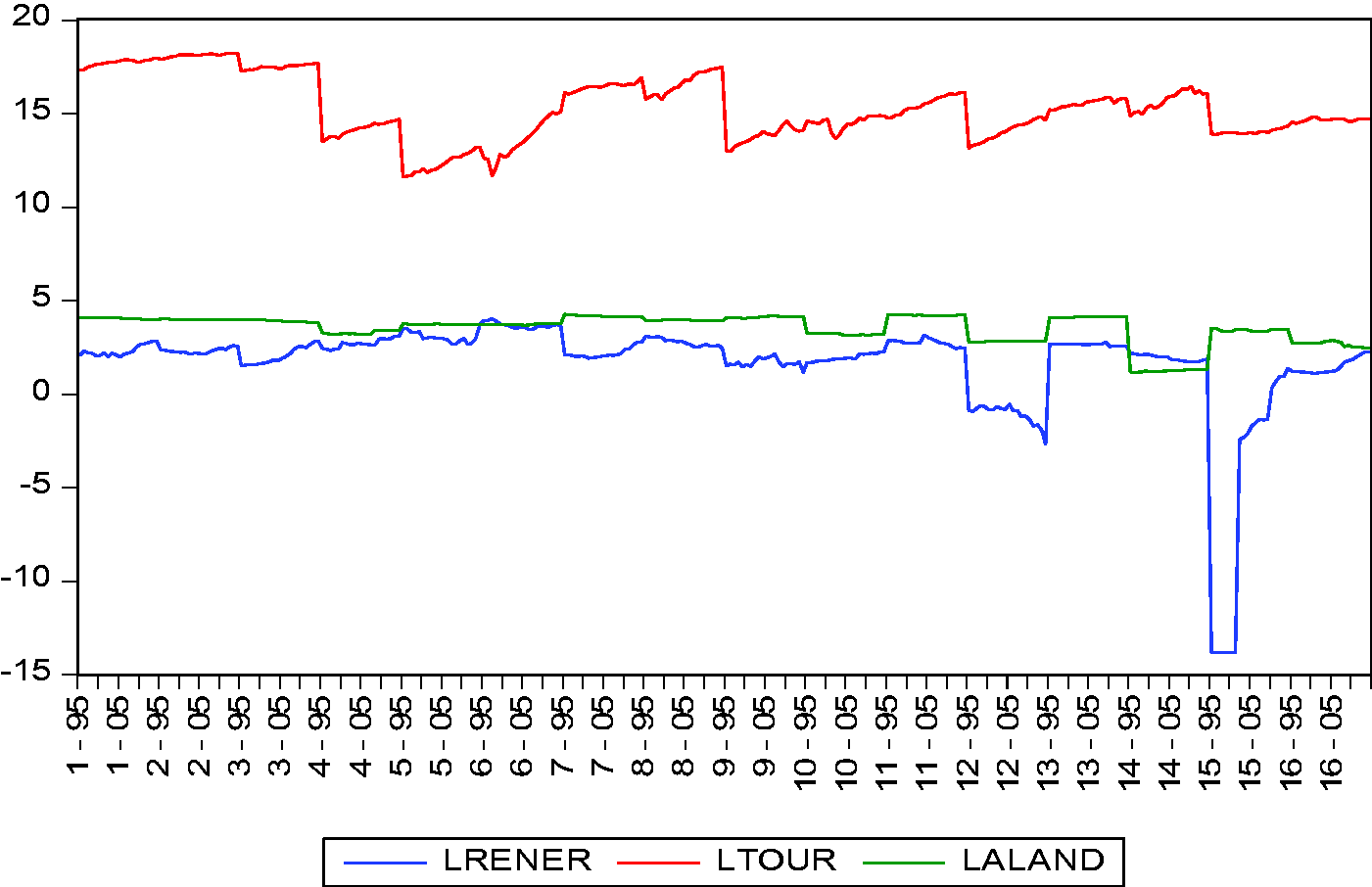
Renewable energy and agricultural land co-moving with tourism arrival mimicking in similar direction.
The rest of the study is structured as follows. Agricultural land: A nexus of renewable energy production section highlights existing studies and trends of linkages between agricultural land usage, tourism, and REC, while Data and estimation specification section covers data description and empirical methodologies. The empirical findings and implications for policy are reported in Empirical results and discussion section. Concluding remarks are provided in the Conclusion section.
Agricultural land: A nexus of renewable energy production
Across the globe, there has been a continuous increase in the development of renewable energy sources. A good number of RES are crop- and plant-based, as such, what ensured is the food, energy, and environment trilemma. 16 The idea of possible competition for land use between food and energy productions was conceptualized in the 1970s. From that period and the pioneering work of Brazil’s Proa´lcool, the use of biofuel, solar, and wind as energy sources for transportation, industrial production, household lightings, and among others is fast increasing. 20 In the current year 2018, British Petroleum (BP) energy outlook report indicates a growth of over 400% in renewable energy that accounts for over 50% increase in global power generation. 21 Such report affirms previous literature that suggested the increasing development of renewable energy sources and such directly or indirectly trigger demand for land use. Evidently, Ajanovic 22 reiterated this competitive dynamics between food production and biofuel in his study. The study specifically noted that the main feedstock which comprises of corn, wheat, barley, sugarcane, rapeseed, and soybeans are used for biofuels production. In the ploy of avoiding impending food insecurity, research is fast developing and considering a switch-over to the second-generation and third-generation biofuels b , which is primarily based on lignocellulosic feedstocks. 23 In their study, Murphy et al. 23 hinged the research question on the implicative linkage between competition for land and biofuels. As such, and regarding Europe, the study opined that Europe continues to enjoy moderate crop yield, which has obviously translated to decline in an arable cross across Europe. Observing a paradigm shift from the traditional land usage for food production to crop production as sources for biofuels, the emergence of agro-energy has significantly altered the dynamics of land use. 24 Harvey and Pilgrim 25 and Nonhebel 26 are among important contributor to this contextual underpinning of arable land, food, and biofuel productions.
Similarly, solar and wind sources of renewable energy have been investigated comprehensively over time. A newly adopted form of agricultural practice, the Agrivoltaic systems (AVSs) and was expressed “as mixed systems associating solar panels and crop at the same time on the same land area.” 27 This new system is developed as a framework to resolve the competition for land use between food and energy production through the combination of photovoltaic panels (PVPs) and crops on the same land area. 28 Also, the study mentioned the advantage of using a mobile or dynamic Agrivoltaic concept with the aid of orientable PVPs derived from solar trackers. This is so because increasing land availability and productivity would mean increase renewable energy production.13,29,30 Other uses of land, for example, ecological conservation, tourism, and agriculture 12 are subjected to competition for land space with the different option of renewable energy sources. Economic contributions of agriculture in some CMC are evidently important as illustrated in Table 4 of Appendix 1, which also presents information on the respective proportion of RES generation. For instance, olive oil production (probable source of renewable energy) from the Mediterranean basin: Greece, Italy, Spain, Syria, Tunisia, and Turkey account for about 90% of global production. The case of Israel’s sophisticated agricultural–irrigation systems, with a continuously increasing land area for agricultural purpose, is a typical illustration of land use trade-off. Agricultural soils across some Mediterranean countries were suspected to possess valuable chemical compositions, which are inclusive of heavy metals. 31 In spite of the terrestrial endowment of the region, the study by Zalidis et al. 32 reveals the limitations of agricultural exploitations in the region as associated with and affected other development activities. Also, recent evidence has shown that Mediterranean countries are already facing important issues of water stress and extreme climate events, which in turn could hamper renewable energy sources in the region. Responsible factors for these include increased tourism development and agricultural activities and such that could exacerbate issues, resulting in significant human and economic losses. Also, worst of these problems, for example, is observed in wind farms where wind turbines are installed on arable land alongside crop production. The conservation and recreation of such land are adversely impacted due to the effect of the turbines on the esthetics of the landscape and on the sensitivity of ecological areas.
Tourism: REC indicator
The geographical masterpiece of the coastline Mediterranean region has been linked to the increasing development of tourism as well the economic growth33,34,35 as contextually studied for other countries of the world.36,37 The region is the world’s leading tourist destination, and tourism is mostly a source of national revenue and employment. Given the activities within components of tourism; transportations, hoteling, resorts, and cruise lines and recreations, it relatively becomes clearer to the connectivity of renewable energy. Tourism and its challenges greatly hamper the preservation of the Mediterranean ecosystem. This is because millions of tourists visiting the region pose a burden on the environment, particularly along the Mediterranean coastline, where they exacerbate water and energy consumption, agricultural and waste production, and pollution. Notwithstanding, contributions of tourism to the economies of CMC along the information of their respective proportion of RES are illustrated in Table 4 of Appendix 1.
However, the only handful of studies has addressed the impact of tourism development on renewable energy.17,18,38,39 Specifically, the rationale for tourists’ attitude for selection of accommodation with renewable energy and energy saving systems was investigated by Tsagarakis et al. 17 In the study, the island of Crete, which hosts the highest Greek tourist capacity was discovered to have 86% of tourists who rather choose to live in hotels equipped with energy-saving installations (ESI) than similar hotels without ESI. Similarly, 87% of the tourist also expressed interest to live in hotels with RES than staying in identical quality hotels without RES. Applying the same research methodology for the case of Australian hotel accommodation, Dalton et al.18,19 investigated tourist attitudes toward the supply of renewable energy supply. The survey outcome was a positive rate of more than 50%, which confirms tourists’ preference for an environmentally friendly energy supply. The reasons and willingness expressed by the Australian tourists are mainly that RES is perceived to be more reliable. Kostakis and Sardianou 39 further investigated the factors responsible for the willingness of such tourists to pay for renewable energy. Binary logistic regression models that featured four subsets of independent variables were employed in the study. The identified factors that significantly accounts for such tourist attitude are demographic factors, economic variables, past experiences with regard to renewable energy sources and environmental awareness variables and information dissemination.
In the reverse direction, as commonly observed in the literature, Popp et al. 40 noted that the unprecedented volumes of land, food, and animals sources are essential for expansion of bioenergy production and consumption. It simply shows that this type of energy generation may have adverse impacts on the ecologically sensitive areas and the aesthetics of the landscape, thus affecting conservation and recreation.49
Data and estimation specification
Data
This study employs annual panel data for the CMC-16 (earlier listed above) from 1995 to 2014. The remaining five countries within the context were excluded due to data unavailability. International tourism arrival (tour) is the number of inbound tourists who travel to a country other than which they have their usual residence and it is a proxy for tourism. Agricultural land use (alnd) is the percentage of land use for arable, under permanent crops, and permanent pastures. Renewable energy consumption (renc) is the percentage of total energy consumed in kilotons. Real gdp in billions of constant 2010 dollars. Carbon emissions (cem) are measured in kilotons per capita. All the aforementioned variables are collected from the World Development Indicators c of the World Bank online database.
Estimation specification
The studies by Marques et al.
41
and Aguirre and Ibikunle
42
painstakingly grouped the determining factors of renewable energy sources as political factors, welfare, socioeconomic factors, energy needs, and country-specific factors. Additionally, the study of Omri and Nguyen modelled REC as a function of carbon emission, real oil price, per capita GDP, and trade openness. In a similar pattern, REC is modelled in this study such that tour and alnd respectively proxy for energy needs and country-specific factors, while welfare and socioeconomic factors are respectively proxies by GDP and cem as shown in equation (1).

Also, the long-run relationship of the above expression is determined via the two linear logarithmic models which are presented as:


Dynamic ARDL and Granger causality test
The advantage of an ARDL model is its applicability for a mixed order of integration which is experienced in the panel unit root estimations shown in Table 1. In an alternative format to generalized method of moments (GMM), the pooled mean group (PMG) estimation adopts the cointegration form of the ordinary ARDL model as proposed by Pesaran, Shin and Smith (PSS, 1999)48. It is adopted here such that the panel estimation presents the lag length q (which is 2 and 1 for the respectively estimated equations (2) and (3)) as both selected by the Akaike Information Criteria (AIC) for both the regressors and dependent variables and presented as:

Panel unit root test.
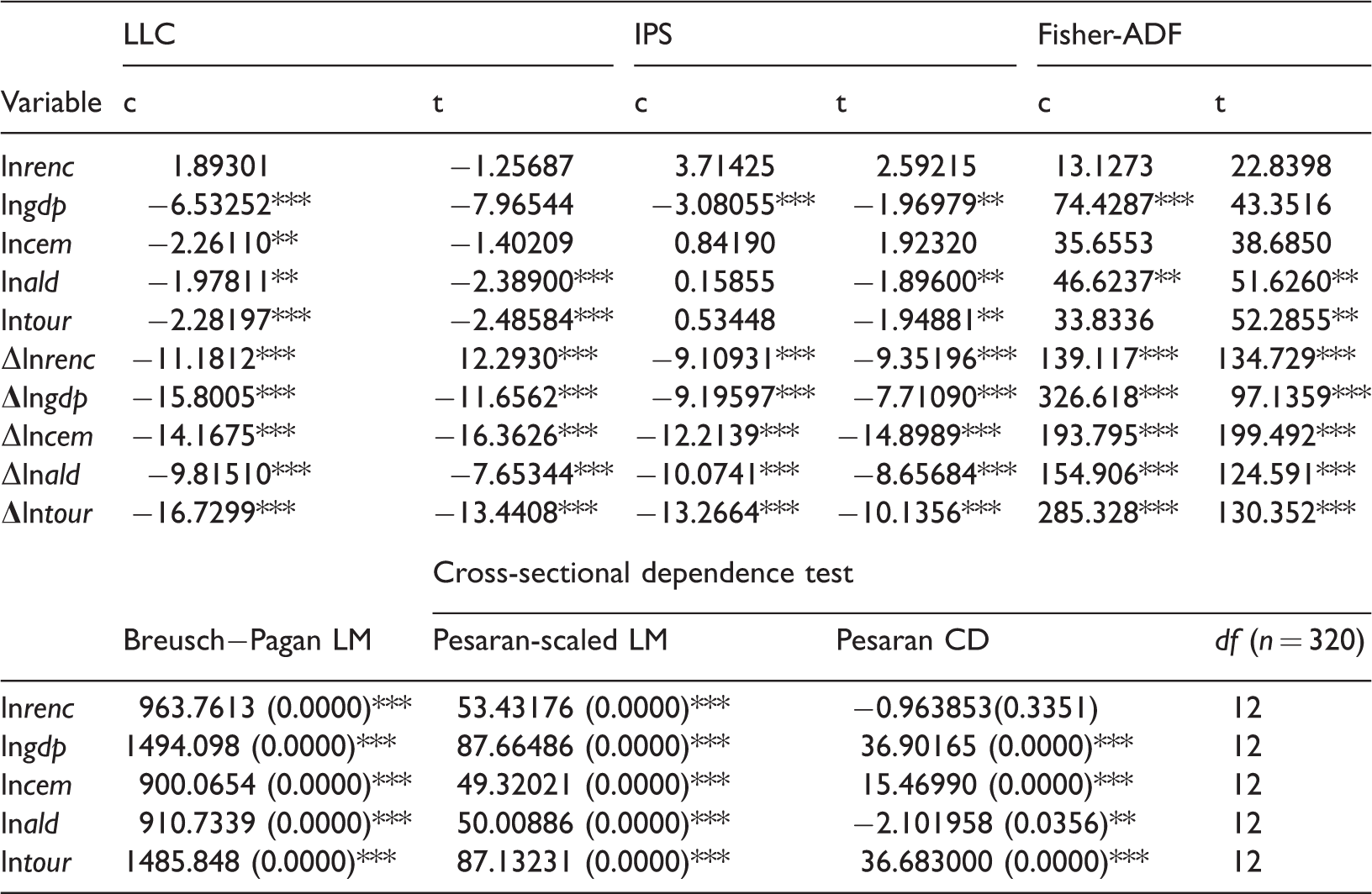
Note: *** and ** are statistical significance at 1% and 5%, respectively.
LLC, IPS and Fisher-ADF are the Levin et al. (2002); Im et al. (2003); Fisher-ADF by Maddala and Wu (1999) panel unit root tests.
For the Lagrange Multiplier (LM) and cross-sectional dependence (CD) tests methods, () is the p value.
Pooled mean group test with dynamic autoregressive distributed lag (ARDL) specifications.
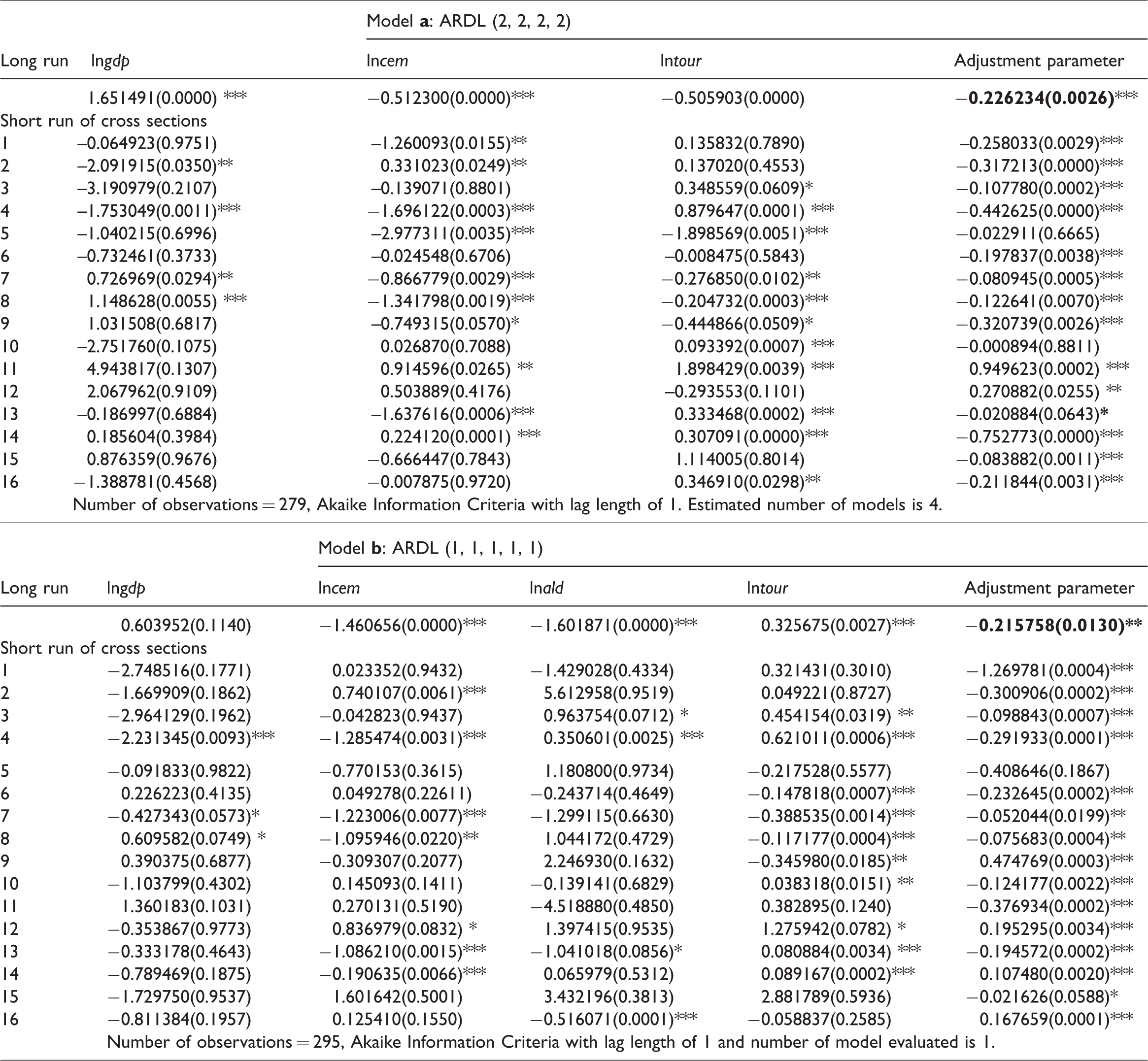
Note: ***, **, * are statistical significance at 1%, 5%, and 10% respectively. The models
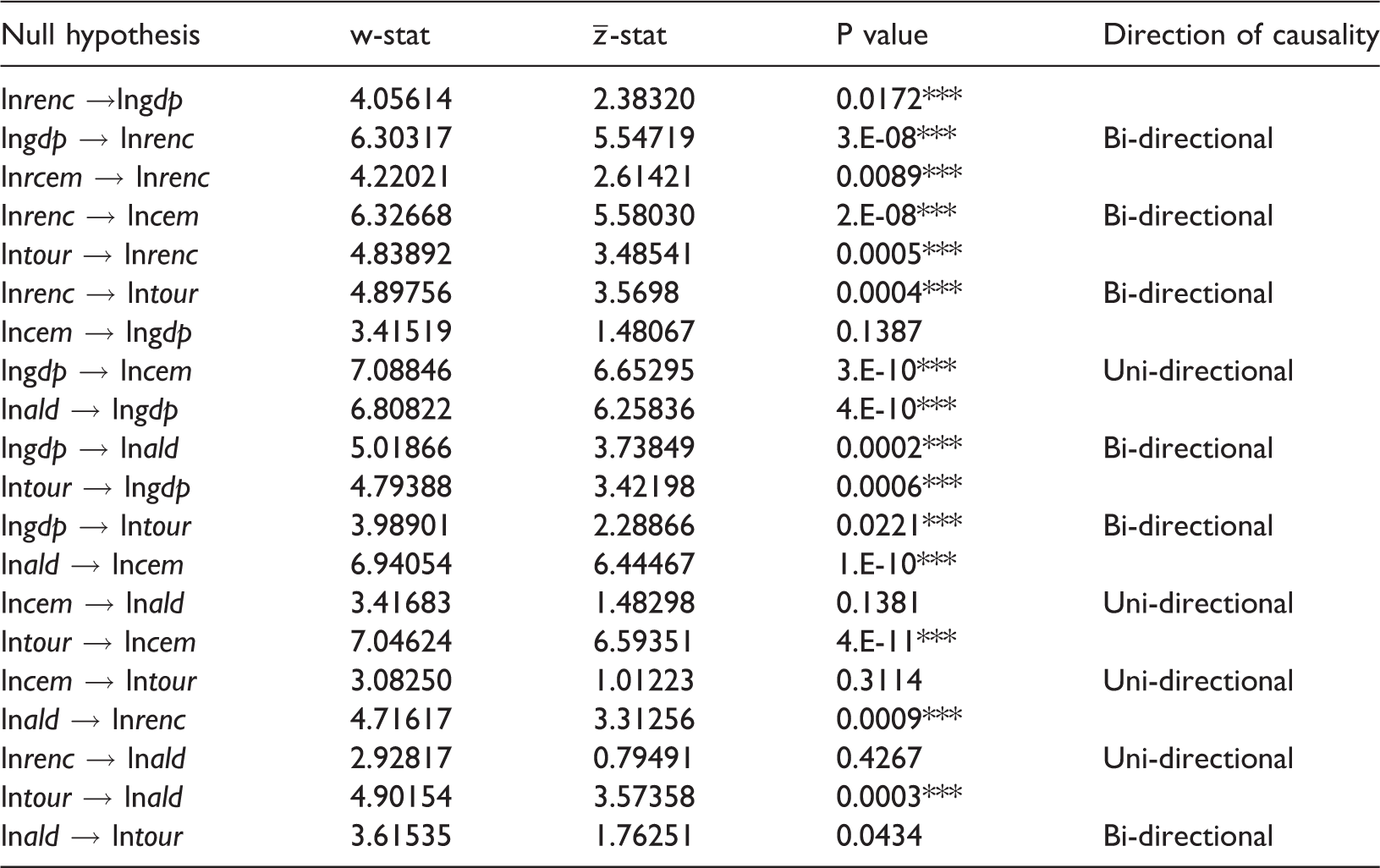
In addition to residual diagnostics and coefficient diagnostic of confidence ellipse of Figures 2 and 3, the estimates as shown in Table 3 equally presents Granger causality relationships between the estimated variables. The employed Dumitrescu and Hurlin (2012) d test also reveal the predictability of future occurrences using past event history of the estimated variable. In testing the Granger non-causality adopted by Dumitrescu and Hurlin (2012)50, the test model uses the statistical significance of the Wald statistics to predict the causality among the variable estimates. It tests for the homogenous non-causality (null hypothesis) against the alternative (model heterogeneity) and the results are presented in Table 3.
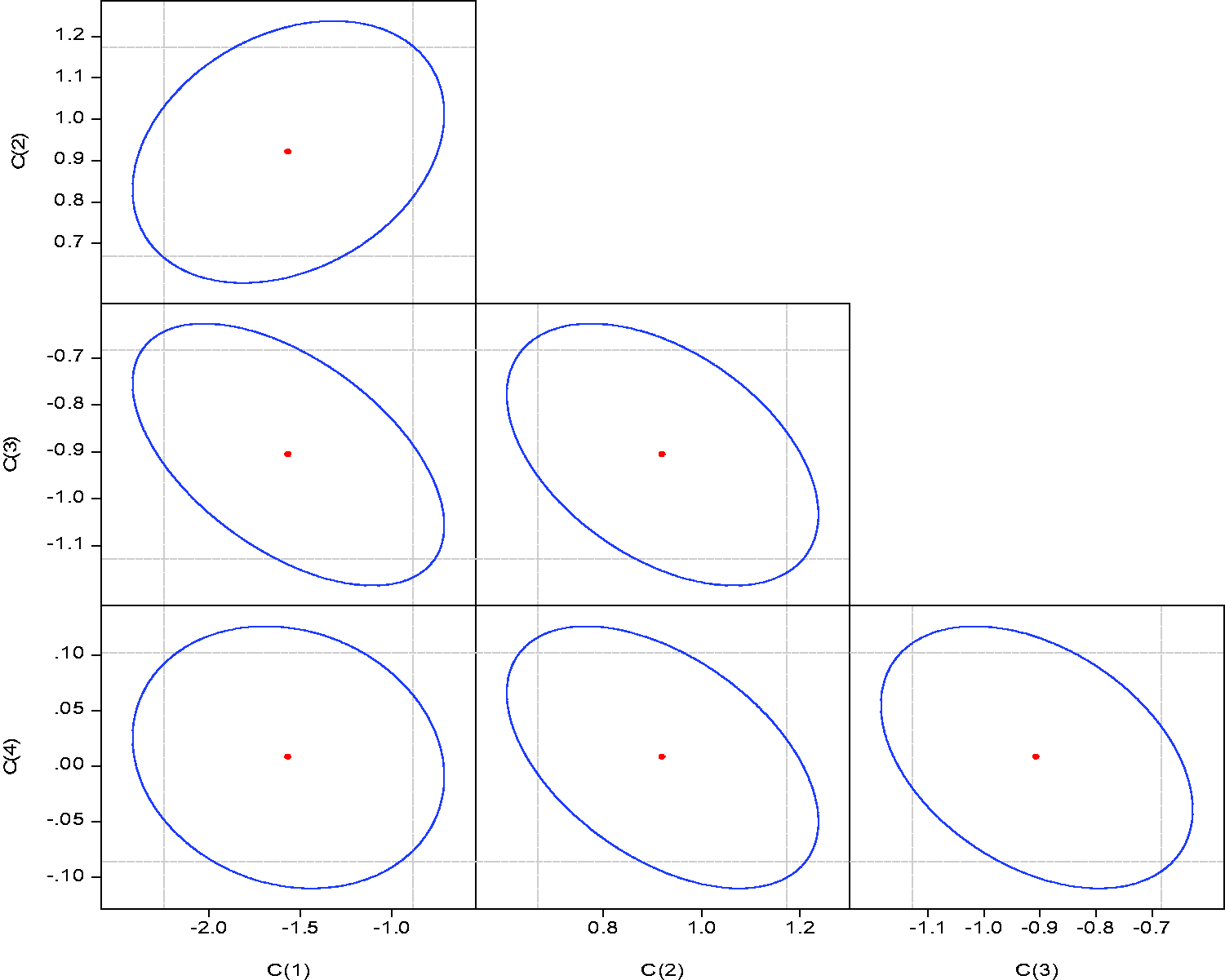
Coefficient diagnostic with confidence ellipse.

Illustrate the residual, actual, and fitted value estimates.
Panel Granger causality results by Dumitrescu and Hurlin (2012).
Note: ** and *** are statistical significance level at 5% and 1% respectively and it indicates evidence of Granger causality.
Empirical results and discussion
Illustration from the unit root results of Table 1 (top) presents a justification for ARDL because of the mixed order in the stationarity of the variables. Also at the bottom of the same Table 1, and because of T > N, the diagnostic test for cross-sectional dependency further informs that disequilibrium in any of the sampled countries may spill over to other countries. The error correction model (ECM), specifically the coefficient of adjustment from short-run to long-run is desirables. Estimates from the two ARDL models (a) and (b) as shown in Table 2 are desirable. It indicates that in any situation of disequilibrium, the models (a) and (b) respectively adjusts with the speed of 23% and 22%. As previously noted in past literature, for instance, Tsagarakis et al., 17 Dalton et al.18,19 discovered in their investigations that tourists have a significantly positive attitude (of more than 50% preference) toward REC. However, their respective studies on Crete and Australia lack information on the dynamic relationship between tourism and REC. In the case of CMC here, the results both provide similar results as well as the long-run relationship between duos. Our result from the model (a) significantly suggests a negatively long-run relationship. This indicates that in the long run, 1% increase in tourism arrivals (or activities) will significantly cause a 0.51% decline in REC. Also by country-wise, specifically in the short run, Bosnia and Herzegovina, Greece, and Turkey are the three countries with a significantly negative relationship. In contrary, Slovenia, Israel, Morocco, Tunisia, Egypt, and Cyprus show significant evidence of a positive short-run relationship between tourism arrivals and REC as presented in Table 2 (upper part). The second part of Table 2 presents the estimates of the second model where agricultural land usage and tourism arrival (tourism) are being jointly tested. In this case, the model (b) ARDL (1, 1, 1, 1, 1) of the panel is significantly negative and positive for logalnd and logTour, respectively. From the result of this estimation, agricultural land usage and tourism activities are significantly related in the long run with REC with respective elasticities of 1.60 and 0.32. Regarding agricultural land usage, similar supporting studies previously noted the competition of solar and biomass technologies for the available “marginal and abandoned agricultural land and in cases of Agrivoltaic concept.” 28 Other studies had previously accounted for the association between land availability and renewable energy production.13,29,30
The Granger causality results of Table 3 shows two-directional relationships i.e. causality with feedbacks between lnrenc and lngdp, lncem and lnrenc, lntour and lnrenc, lnalnd and lngdp, and lntour with lngdp and logTour with logalnd. It all means that the previous history of each variable can appropriately suggest the future behavior of another variable. But logcem with loggdp, logalnd with logcem, logTour with logcem, and longalnd with logrenc as observed in the table show a one-directional Granger causality association.
Policy implication
The result of the negative long-run equilibrium relationship between agricultural land usage and REC poses a concern for policymakers. Ideally, production of millions of tons of ethanol-based fuel from crops and plants to meet daily transports, industrial production, and service industry demands would expectedly translate to continuous agricultural practices. Considering the long-run result, policymakers and stakeholders in the CMC-16 and by extension to other regions should consider the cultivation of higher yielding and improved crop seedlings and plants the purpose of land use maximization. For Slovenia and Cyprus with significant impacts in the short run, both agricultural and renewable energy policies of the countries should reflect this available evidence. In designing instruments for RES and agricultural land-use regulation, the essential step is to explore investment possibilities in different contexts considering also the potential for a rise in food prices as opined by Rathmann et al. 24 Similarly, the positive long-run equilibrium association between tourism and REC reveals the essentiality of a sustainable energy program. Supports from a private and non-governmental partnership like the International Renewable Energy Agency has further strengthened 2020, 2030, and 2050 energy strategy of the EU. These policy implementations are essential to meet the growing REC of the CMC-16 specifically as nine of the examined countries showed a significant relationship in short run.
Conclusion
This study has focused on providing insights into the equilibrium relationship between agricultural land usage and REC. Concurrently, the paper has also addressed the underpinnings of tourism development and REC in a multivariate approach. Both agricultural land usage and tourism are shown to have a significant impact on REC and as such affirming dynamic relationships. Our findings established a significantly negative relationship between agricultural land usage and REC. This is very consistent with the question “renewable energy and food supply: will there be enough land?” by Nonhebel
26
and the study of Murphy et al.
23
Without specificity of a dynamic relationship, a handful of studies have previously raised the concern and researched on the possible solution of land use.3,24,25,30 Specifically, in the main model (
But more importantly, the long-run impact of agricultural land use and tourism development in the CMC-16 region. Being largely a tourist region, the increase in tourist arrivals would automatically cause higher consumption of energy. Since renewable energy source is not largely spread out across the region, the percentage of REC to total energy use is observed to decrease as observed from the estimates. Also, the contribution of agriculture to the economies of the CMC-16 is responsible for the significantly negative long-run relationship which could be due to the depletion and lack or ineffective of utilization of renewable energy sources in the environment resulting from excessive agricultural practices.
Also, a future study could be tailored to addressing the significance of the components of renewable energy sources to the region and by specifics to the member countries of the coastline Mediterranean region.
Footnotes
Acknowledgements
Authors’ gratitude is extended to instructors in our respective departments as well as prospective editor and reviewers that have sacrificed time to guide toward a successful publication.
Declaration of conflicting interests
The author(s) declared no potential conflicts of interest with respect to the research, authorship, and/or publication of this article.
Funding
The author(s) received no financial support for the research, authorship, and/or publication of this article.