



Abstract
This study analyzes the impact of energy security and geopolitical risks on energy consumption in countries with geopolitical risk from 1985 to 2021, with the aid of financial development, economic growth, and human capital as moderating variables. Employing robust panel data econometric techniques, the analysis reveals that heightened geopolitical risks and compromised energy security significantly affect energy consumption patterns. The increase in energy security risk by 1% has a dual impact on energy consumption patterns in countries with high geopolitical risk, as renewable energy consumption increases by 0.1227%, while non-renewable energy consumption also increases by 0.113%. As geopolitical risk increases by 1%, energy consumption patterns change, decreasing renewable and non-renewable energy consumption. Specifically, renewable energy consumption decreases by 0.00010% with a 1% rise in geopolitical risk. A 1% increase in financial development significantly impacts energy consumption in these countries. The adoption of sustainable energy solutions is positively correlated with the development of financial markets in high-risk countries, with non-renewable energy consumption decreasing by 0.0187% as financial development progresses. Additionally, an increase in economic growth of 1% leads to a 0.6750% increase in renewable energy consumption, indicating a preference for renewable sources as economies expand, aligning with global sustainability efforts. The findings underscore the importance of resilient energy policies considering geopolitical uncertainties while promoting sustainable economic development. This study offers critical insights for policymakers aiming to balance energy security with financial stability in geopolitically sensitive regions, providing a comprehensive framework to guide strategic decisions in the face of evolving global risks.
Keywords
Introduction
The term geopolitical risk describes international political conflicts that produce uncertain threats, including trade disputes, sanctions, territorial conflicts, and military tensions. Global markets experience disruptions while foreign investments influence economic and energy sectors become unstable. The geopolitical risk exposure hits import-dependent countries most strongly because they must confront broken supply lines and shifting energy prices resulting from political tensions. 1 Energy security risk exists when there are potential interruptions to power supply combined with price stability problems that occur because of geopolitical conflicts, natural disasters, market conditions, and infrastructure breakdowns. Energy security depends on three key components: First, energy supply should be diverse, and second, infrastructure investments must co-occur with third, strategic energy reserves for shock management. The level of dependency on fossil fuel imports determines how vulnerable a nation is to energy disruptions, while countries that mix their energy supply with renewables experience better resistance against supply interruptions. 2
Geopolitical risk, along with energy security risk, strongly affects financial development and economic growth through the creation of market instability, which impacts investment decisions and causes economic disturbances. Statistically, high geopolitical risks create three significant economic challenges: capital flight, decreased FDI, and elevated government interest rates. Financial development and capital market growth get slower when investors withdraw from potentially unstable geopolitical regions. Higher geopolitical tensions cause devaluation of a country's currency and increased inflation, creating difficult economic performance conditions. 3
The financial and economic stability depends on energy security risk because energy price volatility and interrupted supply chains create barriers to industrial production, resulting in diminished economic output and slower growth. The high dependence of nations on energy imports makes them especially sensitive to outside events that generate price inflation and trade statistics imbalances. Stable, accessible energy availability fails to promote sustained investment, especially in energy-demanding businesses, reducing economic growth. Economic stability emerges from countries that maintain robust energy security systems and multiple power supply methods to create prosperous market environments for sustainable financial growth. 4
Geopolitical risks between nations drive volatile energy prices through their interaction, which endangers economic success and fiscal stability. Long-term development and stability become achievable for nations that actively address their energy problems, financial sector vulnerabilities, and economic diversity issues. 5 Figure 1 presents the trend of the energy security index (ESI) for the selected 21 IEA countries over the study period. The ESI combines multiple elements to measure energy system performance by assessing supply diversity, reliability, import dependency, and resilience characteristics. The figure displays the evolving nature of energy security among the selected 21 IEA countries, which demonstrates both progressive shifts alongside intermittent disturbances connected to external disturbances or policy adjustments. The index reveals notable drops when global energy market stability faces disruptions, along with geopolitical conflicts, because these events make countries more exposed to risks. Increased energy trend values show improved diversity in energy supply and investments into infrastructure and increased use of renewable sources. The illustration gives us a live understanding of how energy security dynamics react to domestic initiatives and worldwide developments, making it crucial to comprehend the link between power network features and environmental results.
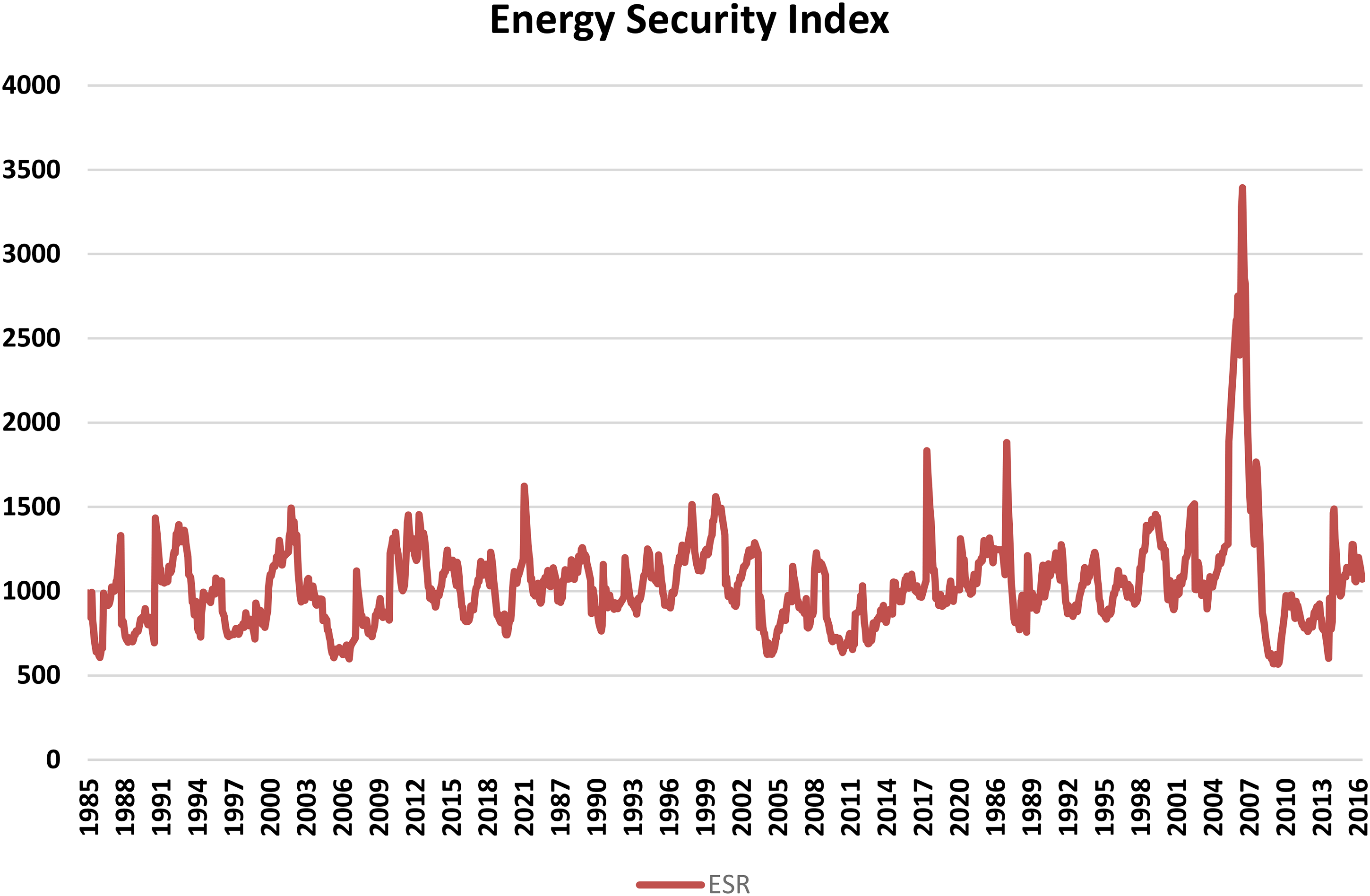
Energy security index trend.
Geopolitical and energy security risks are closely related concepts with distinct meanings critical to understanding energy markets’ operations. The influence of political conditions, military conflicts, and diplomatic relations combined with policy changes creates market instability, which disrupts global energy supply networks. Energy security risk involves evaluating two main aspects: eliminating supply disruptions and maintaining affordable access to steady energy supplies within an individual country or regional system. 6 The separation between these security threats matters because energy instability depends on global political factors yet stands separately from homegrown resource boundaries and maintenance problems. This differentiated approach generates improved methods to evaluate the impact of policy adjustments and external disturbances on energy transition routes. 7
Energy security and geopolitical dangers produce significant changes in energy usage. Globalization controls how nations access their energy resources because these resources determine their economic stability and national security level. This document evaluates the relationship between geopolitical factors affecting energy consumption and the corresponding energy security risks. Energy security risks include all potential disruptions and shortages that affect the nation's energy supply. The phenomenon results from several elements, including political instability, conflicts, natural disasters, or technological failures. A nation dependent on one or several energy supply sources faces potential harm from interruptions within its supply network. 8
Different political and economic forces between countries are known as geopolitical risks. Political tensions, trade disputes, economic sanctions, and geopolitical conflicts are the main elements that sustain geopolitical tensions. Multiple risks affect the accessible supply of energy resources and simultaneously disrupt international trade operations by limiting energy imports and exports. Various worldwide energy markets prove how political security challenges intersect with geopolitical risks. The oil resources in the Middle East have historically triggered supply interruptions and price instabilities throughout the worldwide oil market because of regional conflicts. Major energy-producing nations that experience tensions with their consumer counterparts may employ trade restrictions and embargoes, which negatively influence energy supply dynamics and market consumption patterns. 9
Several elements influence energy use, such as energy security threats and difficulties from geopolitical conditions. Market energy pricing becomes unstable due to these factors, which impacts producers and consumers. The sudden interruption or restriction of energy supply can produce dramatic price elevations, which increase expenses for business organizations, industries, and homes. The economy's expansion, along with consumer purchasing strength, becomes directly impacted by these developments. A Nation's initiative to vary energy sources becomes unstable due to energy protection risks and geopolitical security concerns. Countries work to reduce their exposure to energy vulnerabilities through investments in renewable power technologies and energy route exploration in combination with energy efficiency enhancement measures. The pursuit of energy diversification encounters challenges because of geopolitical risks, which introduce market uncertainties and create obstacles to expanding energy sources.
Energy security risks and geopolitical risks produce geopolitical consequences that affect general politics. Countries with substantial energy resources gain political and economic advantages from their energy supplies, enabling them to establish strong geopolitical power. The growth of geopolitical competition produces conflicts that enhance energy security risks while threatening stability in global energy markets. 10 Countries must develop a complete strategy to safeguard their energy supplies because failure will lead to significant problems. The initiatives for energy security include developing renewable energy technologies, investing in renewable power generation investments, improving energy efficiency standards, and promoting worldwide energy governance. International countries must implement diplomatic talks to secure safe energy supply routes and manage geopolitical security threats. 6
The weak energy infrastructure hazard is the predominant threat to national energy protection. Power distribution needs pipelines, power grids, and transportation networks to function efficiently. Energy distribution systems remain prone to physical harm, cybersecurity attacks, and geopolitical pressure. Energy supply deficits, unstable energy costs, and economic turbulence become potential outcomes when energy infrastructure experiences disturbances. The dependence on a single energy supply or single energy source presents significant threats to energy security. Multiple nations depend on individual energy resources for their entire energy requirements through oil or natural gas supplies. Closely linking operations to this dependency creates a risk of exposure because supply chain interruptions will lead to significant problems. Expandable risks emerge from the opposing political circumstances between nations supplying energy and those consuming it. 11
Political and map-based dynamics of the world contribute substantially to establishing energy security. The disruption to energy supplies happens because of political instability and violent conflicts inside regions that generate energy. The Middle Eastern conflicts of the present generation disrupt the worldwide energy sector while fostering instability in importing energy resources. International disagreements and trade sanctions impact the availability of energy supplies to the extent that countries become more prone to interruptions in their energy supply. Emergencies related to climate change generate both positive and negative effects on worldwide energy distribution frameworks as well as global political dynamics. Renewable energy technology brings several novel complications even though it minimizes fossil fuel usage and diminishes environmental harm from energy generation facilities. The production and distribution of renewable energy technologies require minerals and rare earth elements that generate geopolitical tensions. 12
The most significant concern of this study examines the level to which energy security risk influences energy consumption within regions vulnerable to geopolitical tension. Energy security means both reliable access and affordable energy services for a country, and geopolitical risks encompass political, economic, and social factors that create disruptions to energy supply chains. The geopolitical risks include conflicts and disputes regarding trade, policy modifications, and natural disasters. Based on the severity of risks, energy infrastructure, and availability, together with the consumption patterns of a nation, may suffer substantial effects. Energy security risk stands among multiple variables that affect the amount of energy people consume. A nation's increased dependency on sources of energy generates additional vulnerability to possible threats. These potential risks consist of geopolitical tensions and natural disasters, together with interruptions in supply and cyber threats. Such risks generate extensive effects that damage a country's economy and place its national security alongside its citizens’ overall health at risk. Countries that strive to improve their energy security through multiple energy source development face direct effects on their energy consumption. The breakdown of energy supply networks produces significant impacts on nations with primarily fossil fuel energy consumption. 13 The exposed vulnerability might trigger an energy crisis, supply shortages, and price volatility. Various nations choose to improve their power supply by integrating renewable energy platforms like solar, wind, and hydropower together with energy storage solutions. Implementing energy efficiency measures serves as a method that energy security risk impacts energy consumption levels. Improving energy efficiency throughout different sectors enables nations to decrease their dependency on imported energy supplies. Environmental sustainability develops through greenhouse gas emission reductions which help prevent energy shortage-related environmental risks.
The research delves into the impact of geopolitical risk on the energy consumption levels of countries involved in geopolitical conflicts. The consumption of energy worldwide experiences major disruptions due to political instability. How the world consumes energy will change according to how politics interacts with international relations and other energy resources. The breakdown of supply chains acts as a key mechanism through which geopolitical risks cause changes in energy usage levels. Political tensions, together with conflicts and trade disputes, create production delivery and distribution impediments for energy resources. Widespread conflicts within oil-producing territories lead to downed oil supply routes, generating unpredictable price sways and energy resource deficits. 14 The interruptions force countries to locate backup energy options or decrease nationwide power usage because they cannot get enough energy. Geopolitical risk is a significant factor behind national energy regulation and policy modifications. Government bodies implement protective measures to obtain vital national interests and secure their vital energy sources. Countries possess different approaches to regulating energy sources through limitations on imports and exports and through financial support systems and complete trade bans. These regulatory measures allow governments to control the specific energy source use level that directly affects national energy consumption. Countries reliant on heavy imports of natural gas will face difficulties when geopolitical tensions create problems for either affordability or availability. Changes to energy consumption patterns will occur when energy-saving strategies or newer alternative energy solutions replace traditional consumption methods. Business operations in the energy sector are heavily affected by geopolitical risks that pose significant challenges to investment decisions. Major capital expenditures, together with extended timeframes, absorb investment into oil reservoirs as well as natural gas conduits and renewable energy building projects. Investors avoid making energy project investments due to political turbulence and geopolitical conflicts within the regions in which they operate. The affordability and availability of energy resources undergo alterations because of these events that influence how people use energy. 15
This study analyzes the relationship between financial development, economic growth, and human capital development on energy consumption in nations under geopolitical risk. The development of the financial system directly influences economic expansion and human capital development, leading to energy utilization. A nation can achieve economic growth through financial sector development, human capital advancement, and energy efficiency investments. Financial development, economic growth, human capital, and energy consumption all play pivotal roles in the development of societies. A well-established finance system comprises enhanced operational quality and service efficiency of money management institutions and market systems and financial service availability. The economic growth depends heavily on this system for its advancement. Developing a well-functioning financial sector enables investments and supports capital allocations to individuals and businesses to bring out entrepreneurship. Increased productivity creates new employment opportunities as the economy grows at large. Human capital serves as individuals’ knowledge, abilities, and skills to contribute significantly to economic development. When workers receive education and training together with comprehensive health care, they become productive performers whose efficiency increases. A nation prepares better to adjust toward technological progress while creating new solutions and participating in global competition through educated employees with applicable skills. The development of human capital strongly encourages continuous economic growth.
This extensive research has substantially added to the literary knowledge regarding geopolitical risk effects on energy use. The research expands knowledge about risk's complicated effect on energy markets by investigating multiple forms of risk together with their essential implications. These findings create a strong basis that guides additional research and functions as essential knowledge for researchers investigating this subject. Different geopolitical risk elements drive energy consumption at high levels. Political stability, together with conflict and trade disputes, as well as regulatory changes and resource nationalism, form the multiple dimensions that affect this process. Energy market risk analysis requires an examination of these influential elements according to this research. Geopolitical risk functions as a key element that shapes energy market operations, according to the study. Political unrest, together with warfare, threatens to disrupt energy delivery lines, which leads to both unstable prices and interrupted supplies. The delivery of energy resources between international borders gets disrupted because of trade conflicts and newly implemented regulations. Policymakers, alongside stakeholders in the industry, must understand the existing implications of these risks to build strategies for minimizing energy security risks. Through this research, policymakers will obtain significant information about geopolitical risks together with their effects on energy usage amounts. Energy market protection requires policymakers to inspect different aspects of risk through analysis. The implementation of these measures would result in diversified energy supplies and increased promotion of renewable energy and diplomatic relationships for conflict resolution within energy supply networks. This research investigation presents valuable information suitable for the stakeholders operating in the energy business sector including both energy operators and investment firms. Management decisions require understanding geopolitical risk factors, especially for stakeholders, to conduct sound risk assessments and modify their business strategies accordingly. Stakeholders should develop emergency plans with backups of different energy sources once they know about possible interruptions from geopolitical events.
Literature review
Energy security risk has been examined from a variety of perspectives in a number of studies.16–26 An analysis of energy security risks in the Middle East and North Africa region was conducted. 27 A number of key factors have been identified as affecting the supply of energy in the region, including political instability, terrorism, and conflicts. Global energy consumption is significantly affected by energy security and geopolitical risks. 28 There are many challenges associated with ensuring a stable and reliable supply of energy, as the demand for energy continues to grow. 29 An energy security risk is an issue related to vulnerabilities and threats that can affect energy availability, accessibility, and affordability. 30 Geopolitical tensions, natural disasters, disruptions in supply chains, and technological vulnerabilities are some of the factors that contribute to it. A sustainable and uninterrupted energy supply depends on understanding and managing energy security risks.31–35
It has been found that geopolitical risk has a direct relationship with energy consumption in several studies.27,36–40 An examination of the impact of geopolitical risks on China's oil consumption was conducted by Li et al. 41 As a result of the uncertainty and disruptions they create in the global oil market, geopolitical tensions and trade disputes can result in a decrease in oil consumption. 42 Energy consumption patterns are affected by a variety of factors, including political, economic, and social factors. Political instability, trade disputes, sanctions, geopolitical tensions, and sanctions are some of the factors that affect the economy. There can be significant effects on energy markets caused by geopolitical risk and uncertainty that impact energy consumption decisions.43–46
Global and national energy consumption patterns are profoundly affected by energy security risk and geopolitical risk. Energy prices, supply chains, investments, and policy frameworks can be affected by these risks, ultimately influencing energy consumption behaviors.17,20,47–52 In order to enhance energy security and mitigate geopolitical risks, it is important to diversify energy sources and supply routes. It has been emphasized by Hoseinzadeh et al. (2019) that countries should diversify their energy portfolios and reduce their reliance on a single energy source or supplier. It is possible to reduce vulnerability to disruptions in supply and geopolitical tensions by utilizing this diversification strategy.36,38,41,53
Currently, most literature on energy consumption is devoted to analyzing its economic, environmental, and technological aspects. Despite the importance of these aspects, it is essential not to overlook the risks associated with energy security and geopolitics, which can lead to incomplete and potentially misleading conclusions. This neglect of these factors leads to a lack of an understanding of the complex dynamics that determine energy consumption patterns as a whole.
A country or region may be vulnerable to disruptions in its energy supply if their energy security is at risk. Factors such as reliance on foreign energy sources, infrastructure vulnerability, geopolitical conflicts, and natural disasters contribute to this problem. In the existing literature, energy security risk has been ignored, which limits our ability to assess the potential economic and energy impacts of supply disruptions. Geopolitical risks are defined as the challenges posed by international relations and interactions among nations in terms of politics and security. A number of risks may contribute to political instability, including conflicts, trade disputes, sanctions, and trade disputes. Energy markets can be adversely affected by geopolitical risk, leading to price volatility and supply uncertainty. A crucial aspect of energy planning is overlooked in the existing literature, as geopolitical risk has a significant impact on energy consumption patterns. 40
For several reasons, it is imperative that the literature gap in relation to energy security risk and geopolitical risk be addressed. For starters, policymakers can develop more robust energy security strategies by understanding how these factors interact with energy consumption. It is possible for policymakers to make informed decisions regarding an energy supply that is stable and sustainable if they consider potential risks and vulnerabilities. Additionally, the incorporation of energy security risks and geopolitical risks into existing literature could provide valuable insight for businesses and investors engaged in the energy sector. In order to mitigate adverse impacts and enhance resilience, companies should understand the potential risks associated with their energy consumption patterns.
Finally, the existing literature on energy consumption21,52,54,55–67 ignores the critical factors of energy security risk and geopolitical risk. It is evident that the literature does not provide a comprehensive understanding of the complex dynamics that affect energy consumption patterns due to the absence of consideration of these factors. An accurate and holistic understanding of energy consumption must be achieved by bridging this literature gap. In order to achieve a secure and sustainable energy future, policymakers, businesses, and other stakeholders must consider energy security risk and geopolitical risks.
Through this study, we aim to fill critical gaps in the existing literature on energy consumption by exploring the often overlooked issues of energy security risk and geopolitical risk. This study seeks to contribute to a better understanding of the global energy landscape by examining the implications of these risks on energy consumption patterns. Policymakers, researchers, and industry stakeholders will make informed decisions based on these findings, which will reduce risks and promote sustainable energy practices. As part of this study, we intend to provide a comprehensive understanding of factors influencing energy consumption by focusing on energy security risks and geopolitical risks. As a result of the findings, policy decisions may be informed, energy planning can be enhanced, and energy sector investments can be guided. Furthermore, the study aims to contribute to the existing literature in the area of energy security and geopolitical risk by emphasizing the importance of including these issues in future research.
Research about how geopolitical and energy security risks affect energy consumption patterns exists extensively across literature but shows varied outcomes because authors employ distinct methods, datasets and research areas. A variety of research experiments have analyzed the link between geopolitical risks and energy consumption data. Energy markets experienced considerable volatility because geopolitical tensions create significant impacts according to Zhao et al. 38 on renewable and non-renewable energy consumption (RE and NRE). The research by Villanthenkodath and Pal 68 revealed how geopolitical tensions cause problems with fossil fuel consumption for nations that import significant amounts of oil. This paper builds on previous research which concentrated on fossil fuel use and price volatility by adding renewable energy resources into analysis and studying how unstable geopolitics affects energy transition paths.
Energy security risks have produced substantial effects on how people use energy. National energy policies transition due to energy security worries creates opportunities for greater funding in renewable power sources according to Husnain et al. 36 Survival concerns about energy security act as a driving force behind country efforts to diversify their energy supplies especially when import dependencies remain high according to Zakari et al. 10 Although researchers have recognized these findings the relationship between energy security risk and financial development requires additional comprehensive study in current literature. This study investigates the mechanisms by which financial investments help reduce or strengthen energy security risks in the present research context.
Most studies in energy consumption literature analyze the relationships between renewable and non-renewable energy sources. According to Apergis and Payne (2010) economic progress produces positive outcomes during renewable energy implementation. According to Goldsmith 69 financial development serves as a crucial component that drives green energy investment promotion. The research fails to provide a comprehensive understanding of the complete interplay between geopolitical risks together with energy security risks and financial development systems for energy consumption patterns. The research incorporates all mentioned dimensions into an interconnected framework.
Previous research focused on individual characteristics of energy security risk, geopolitical risk, and financial development, yet this study combines them in an advanced empirical framework. The study enhances prior research by examining renewable and non-renewable energy consumption under the influence of geopolitical and energy security risks through the crucial moderation of financial development. The research merges distinct approaches to create an enhanced comprehension of energy security patterns and their associated sustainable energy policy implications.
Research methodology
Theoretic linkages
Risks related to energy security and geopolitics play an important role in shaping the global energy landscape. In order to address these risks, an understanding of the complex interactions between energy resources, political dynamics, and regional rivalries is imperative. In order to mitigate the adverse effects of these risks and ensure a stable and sustainable energy future, it is crucial to develop strategies for enhancing energy security, diversifying energy sources, and promoting international cooperation. There is a profound interconnection between energy security risk and geopolitical risk, and the two are mutually reinforcing. It is possible for geopolitical tensions to worsen as a result of energy security risks, such as disruptions in supply or price volatility. Thus, geopolitical risks can further heighten concerns about energy security, since nations are seeking to diversify their energy sources and reduce their dependence on regions that are politically unstable. In addition, energy security risks as well as geopolitical risks can trigger a vicious cycle that perpetuates further disruptions, leading to higher levels of volatility in the global energy markets. Both energy-importing and energy-exporting nations may experience severe economic, environmental, and social consequences as a result of this cycle.
Energy security directly affects economic stability and national security. The demand for energy continues to rise, and countries must ensure that an adequate supply of energy is available on a reliable and sustainable basis. It is important to recognize, however, that energy security is often threatened by a variety of geopolitical risks, which can disrupt energy markets and impact global stability. The concept of energy security refers to the capability of a country to access and utilize its energy resources efficiently, affordably, and reliably. Energy sources must be readily available, accessible, affordable, and acceptable. The key to achieving energy security is the diversification of energy sources, the development of an efficient energy infrastructure and the establishment of robust energy policies.
Risks associated with geopolitics are influenced by the interaction between politics and geography. A number of risks can be associated with resource nationalism, such as political instability, conflicts, and trade disputes. There are two distinct types of geopolitical risks associated with energy consumption: Supply-side risks and demand-side risks. Risks associated with the supply of energy resources relate to their availability and accessibility. Those countries that are heavily dependent on one or a few sources of energy are at risk of supply disruptions. As a result of this dependence, supplier countries may exploit it for political gains, resulting in price volatility and energy security issues. A disruption in energy supply may result from a terrorist attack or natural disaster affecting energy infrastructure, such as pipelines, refineries, and transportation networks. Conflicts and Political Instability: Energy-rich regions are frequently affected by conflict and political instability, resulting in disruptions in supplies. Oil production and transportation have been significantly affected by geopolitical tensions in the Middle East.
Geopolitical risks relating to demand-side factors include the impact of energy consumption on geopolitical dynamics. It is important to note that countries heavily dependent on energy imports are vulnerable to disruptions in supply and price fluctuations. As countries compete for energy resources, this dependence may result in geopolitical tensions and conflicts. As a means of controlling their energy resources and limiting exports, countries may adopt protectionist policies. As a result of these policies, geopolitical tensions may arise and global energy markets may be affected. As a result of the shift toward renewable energy sources and a reduction in carbon emissions, geopolitical balances can be disrupted. The economies of countries that are heavily dependent on fossil fuel exports may be affected by economic challenges as well as political instability. Figure 2 depicts the cross-sectional trend of CO₂ emissions among the 21 IEA countries, offering a comparative snapshot of national emission levels. A wide range of emissions levels exists between member countries, thus demonstrating the variations in their energy usage rates, together with industrial frameworks and national approaches. Nations that maintain heavy reliance on fossil fuels, combined with extensive industrial output, such as China and the United States, tend to produce significant emissions. The transition levels toward clean energy and the implementation of strict environmental regulations determine the amount of emissions different countries produce. Data analysis at one specific time confirms the need to evaluate pollution levels through national energy systems and nation-based developmental stages. The analysis strengthens broader research regarding clean energy technologies and their relationship with mineral requirements and their effect on emissions throughout advanced economies.
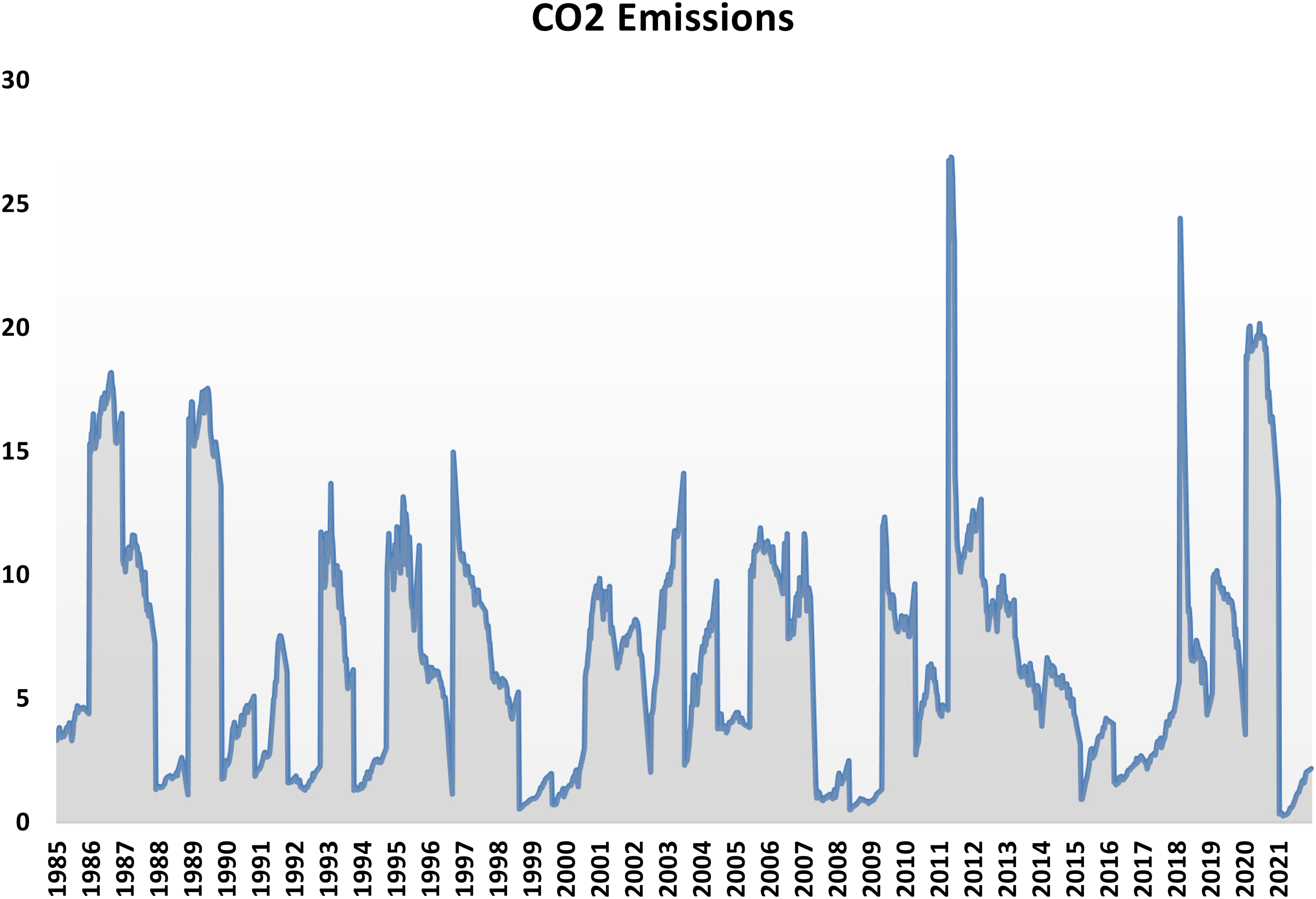
CO2 Emissions cross-sectional trend.
In order for policymakers and energy stakeholders to make informed decisions, a thorough understanding of the theoretical framework behind energy security and the associated geopolitical risks is essential. In order to mitigate the risks and achieve a more secure and sustainable energy future, it is imperative that countries diversify their energy sources, develop resilient infrastructure, and foster international cooperation. An effective strategy for managing geopolitical risks associated with energy consumption should consider economic interests, environmental concerns, and geopolitical stability simultaneously.
Data and modeling
This study analyzes the impact of energy security and geopolitical risks on energy consumption in countries with geopolitical risk from 1985 to 2021 with the aid of financial development, economic growth, and human capital as moderating variables. Having reliable, affordable, and sustainable energy sources constitutes energy security for a country. The term geopolitical risks refers to a variety of factors that can affect the supply and demand of energy, including political instability, conflicts, territorial disputes, and economic sanctions. Due to the uncertainties and disruptions caused by geopolitical risks, countries are prone to experiencing fluctuations in energy consumption. Several factors can have a significant impact on the pattern of energy consumption, such as volatility in energy prices, interruptions in supply, and geopolitical tensions. The development of the financial sector is crucial to facilitating energy investments and maintaining a stable energy industry. Promoting financial resilience and attracting investment in the energy sector, can help mitigate the impact of geopolitical risks on energy consumption. Energy consumption is strongly influenced by economic growth. A country with a higher economic growth rate tends to have a higher energy demand. However, geopolitical risks can have an adverse effect on economic growth and, as a result, impact energy consumption. The energy consumption patterns of a country are strongly influenced by its human capital, which includes its education and skills. Furthermore, higher levels of human capital may make it easier to make informed decisions regarding energy efficiency and conservation in addition to reducing the impact of geopolitical risks on energy consumption.


The
Cross-section dependence
In this study, cross-section dependence is examined using a cross-section dependence test. A cross-sectional dependence describes the interdependency among individual units or entities within a dataset. Cross-sectional dependence must be evaluated in order to ensure the validity of statistical inferences and avoid biased results. The cross-section dependence test used in this study is a commonly used statistical technique that allows us to assess the degree of relationship between the observations from different units within the dataset. This test is used to determine whether the variables under investigation are significantly related cross-sectionally. It is important for empirical researchers to take into account cross-sectional dependence. There is a violation of the assumption of independence between the observations, and this can have an adverse impact on the accuracy of parameter estimations and hypothesis testing. In order to properly analyze data that exhibits such interdependence, it is imperative to take cross-section dependence into account. 72
A generalized method of moments (GMMs) framework is used to formulate Pesaran's cross-section dependence test equation. It is given by:

Testing for slope heterogeneity
When analyzing panel datasets that include a large number of observations over a wide variety of time periods and cross-sectional units, testing for slope heterogeneity is crucial. Pesaran and Yamagata (2008) introduced the delta test, which has been widely adopted for this purpose. The use of this test allows researchers to identify variations in the relationship between variables, thereby aiding in the development of more accurate and insightful analyses.
Pesaran and Yamagata (2008) specify the moment conditions as follows:

Unit root

Whereas

Fisher effect Westerlund Cointegration test
Cointegration tests such as the Fisher effect Westerlund cointegration test can be useful for analyzing the relationship between nominal interest rates and inflation rates.
75
We apply this test in order to provide meaningful insights into the dynamics of financial markets and shed light on decision-making processes. It is a common econometric technique to examine the long-run equilibrium relationship between variables on a panel dataset through cointegration analysis. The Westerlund panel cointegration test is one method available for detecting cointegration in panel data. It is particularly important to examine cointegration analysis when analyzing variables that are non-stationary because it identifies long-term relationships between variables. According to,
75
the test equation is as follows:

Panel long run analysis
The study employed new and advanced estimators called continuously updated fully modified
The CUP-FM estimator deals with cross-sectional dependency as well as long-term variable relationships between variables. Standard estimation approaches yield faulty results when analyzing data sets containing cross-sectional dependence so they fall short of producing accurate outcomes in panel datasets. The CUP-FM method establishes accurate long-term estimates while addressing biases which makes it appropriate when evaluating relationships between geopolitical risk and energy security and consumption patterns. The non-stationarity problems found throughout macroeconomic and financial time-series data can be effectively handled by utilizing CUP-FM methods. The selection of GMM serves this estimation method because it successfully addresses endogeneity problems from simultaneous relationships and unobserved variable errors and measurement inaccuracies. GMM optimally detects dynamic patterns affecting energy consumption alongside unobserved heterogeneity because energy consumption responds to changes in financial development and policy changes. The large number of cross-sections and medium-length temporal span in the studied dataset makes GMM the most appropriate methodology because it supports this type of panel data structure. Using these two statistical methods enables this research to provide a complete assessment which shows swift temporal effects via GMM along with long-lasting equilibrium patterns through CUP-FM. The dual analytical approach improves research reliability by strengthening results and revealing strengthened explanations regarding how geopolitical and energy security concerns affect national energy consumption behavior. With the help of these state-of-the-art estimators, the study aimed to provide a comprehensive and precise analysis of the long-term influences being investigated.
With the help of the

As part of the

Result and discussion
In Table 1, descriptive statistics regarding energy consumption, energy security risk, geopolitical risk, financial development, economic growth, and education are presented for the geopolitical risk countries. It is noteworthy that the mean and median values of energy consumption, financial development, economic growth, and education are very similar, suggesting that the distribution is consistent. A variation in the maximum values of these indicators, however, indicates the presence of outliers or extreme observations. The geopolitical risk indicator, on the other hand, exhibits significant variations across the mean, median, and maximum values, a reflection of its inherent volatility. It is clear from these variations that different countries and regions experience varying levels of political and economic instability. As policymakers, researchers, and analysts assess the overall economic and geopolitical environment, understanding the similarities and differences among these key indicators provides valuable insights.
Descriptive statistics.
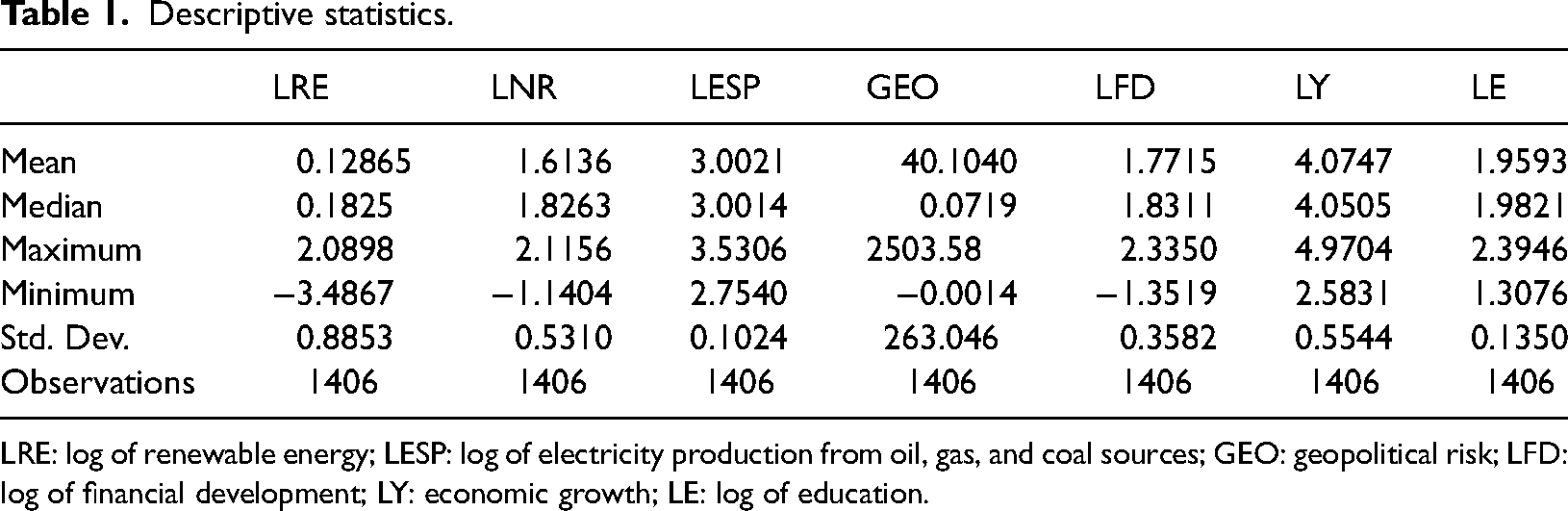
LRE: log of renewable energy; LESP: log of electricity production from oil, gas, and coal sources; GEO: geopolitical risk; LFD: log of financial development; LY: economic growth; LE: log of education.
Table 2 presents the correlation results for energy consumption, energy security risk, geopolitical risk, financial development, economic growth, and education. Energy consumption and energy security risk are positively correlated. A country's energy supply can be vulnerable to disruptions or shortages due to energy security risks. As energy consumption increases, this risk increases. In order to meet its energy needs, a country becomes more dependent upon external sources when it consumes more energy. The country is at risk of disruptions due to the reliance it places on imports or international markets, such as geopolitical conflicts, trade disputes, or natural disasters. As a result of these events, a country's energy security may be affected by supply shortages or price fluctuations. In contrast, geopolitical risk is negatively related to energy consumption. It is important to note that geopolitical risk refers to the possibility of political or social instability that may affect the energy market. As a result of higher energy consumption, a country is less vulnerable to geopolitical risks.
Cross-sectional dependence test results.
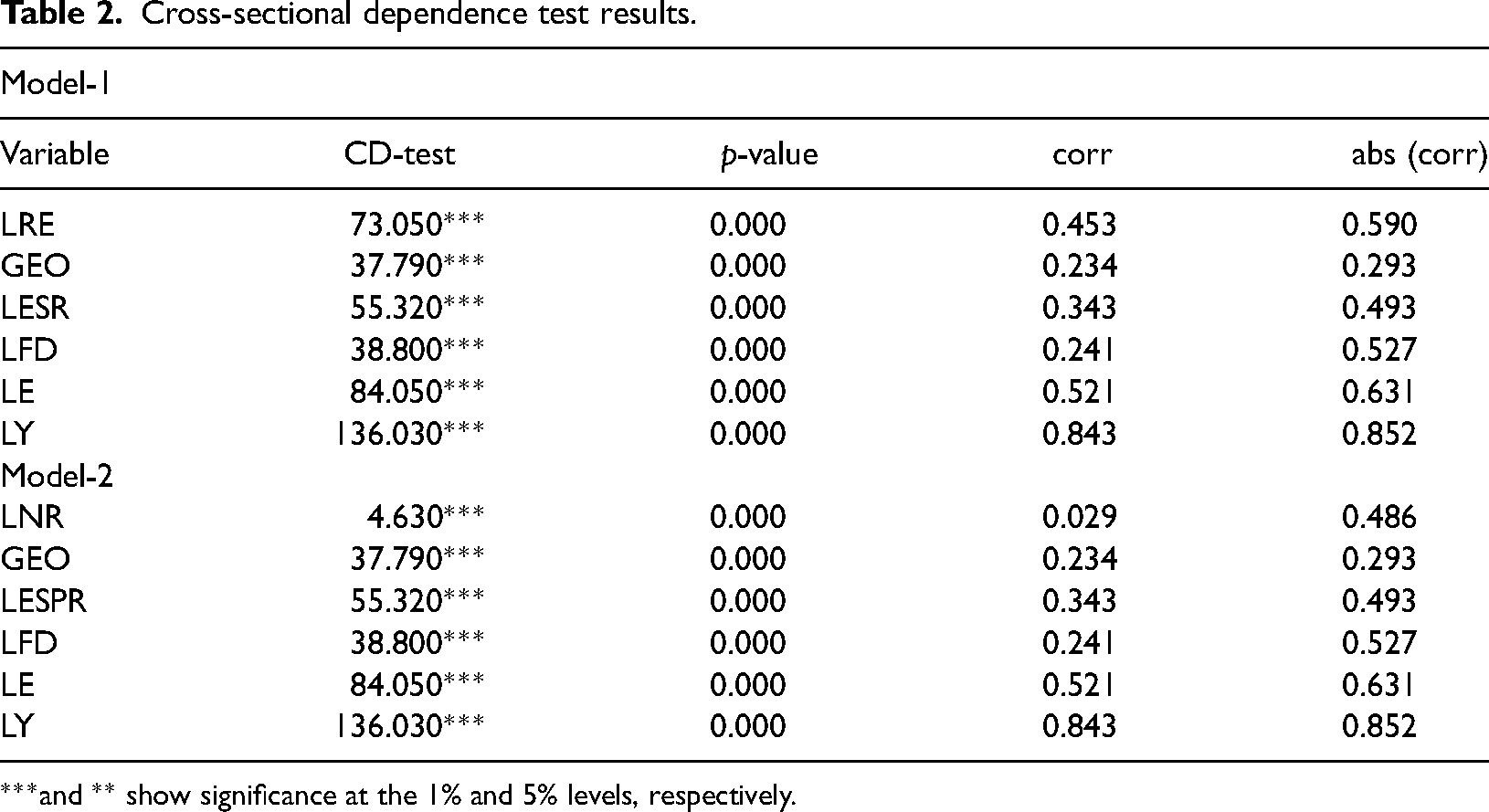
***and ** show significance at the 1% and 5% levels, respectively.
Table 3 presents the result of the cross-section dependence test for energy consumption, energy security risk, geopolitical risk, financial development, economic growth, and education. Energy consumption, energy security risks, geopolitical risks, financial development, economic growth, and education have been found to have cross-sectional relationships. As a result, observations pertaining to different entities or units within a particular dataset are not independent of one another. In terms of energy security risk, it refers to the degree to which a country or entity is vulnerable to disruptions in its energy supply. A number of factors are considered, such as the dependence on energy imports, political instability in the energy-producing regions, and natural disasters. It is likely that the risk levels of different entities may be affected by common factors, such as global energy market fluctuations or geopolitical tensions because there exists a cross-sectional dependence on energy security risk. Generally, geopolitical risk refers to the uncertainties and potential risks associated with global political developments. A number of factors contribute to this, including conflicts, territorial disputes, and trade restrictions. Geopolitical risk appears to be cross-sectionally dependent on factors such as regional conflicts and global economic conditions, which may affect the risk levels of different entities.
Testing for slope heterogeneity.
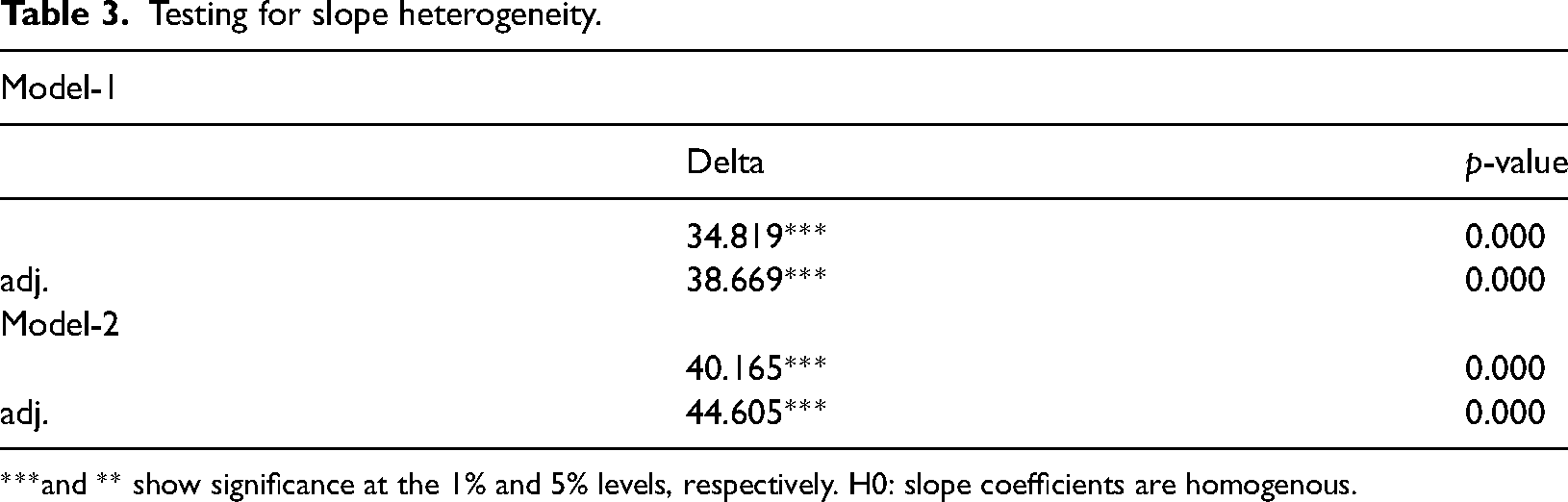
***and ** show significance at the 1% and 5% levels, respectively. H0: slope coefficients are homogenous.
Table 4 summarizes the results of Pesaran and Yamagata (2008) slope heterogeneity test and displays the delta p-values. In this table, statistical analysis is presented of the variation in slopes among different groups or variables. In order to determine the significance of the differences in slopes, delta p-values are used. Using these values, researchers can determine if slopes are heterogeneous and draw meaningful conclusions from their findings. Based on Pesaran and Yagamata's interpretation of slope heterogeneity, the adjusted delta values for both models indicate a statistically significant relationship between the variables under study. This finding should be carefully analyzed in relation to the research question and potential explanations for the observed heterogeneity should be considered in the formal analysis.
Second generation unit root tests.
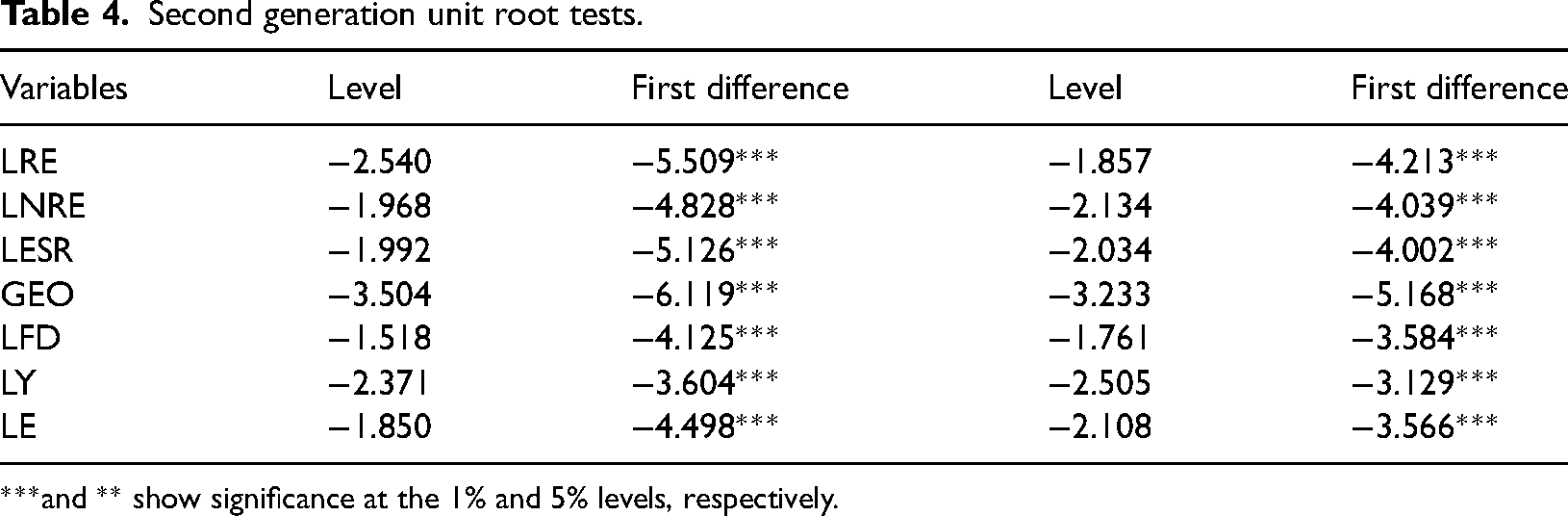
***and ** show significance at the 1% and 5% levels, respectively.
Table 5 presents the results of panel unit root tests for CIPS and CADF for energy consumption, energy security risk, geopolitical risk, financial development, economic growth, and education. According to the CIPS and CADF unit root tests, energy consumption, energy security risk, geopolitical risk, economic growth, financial development, and education are all stationary at the first difference. In addition to providing valuable insights for policymakers, researchers, and businesses, these findings contribute to our understanding of the stability and long-term trends of these indicators. Stationarity in energy consumption indicates that the overall use of energy has remained stable for the period analyzed, without any significant upward or downward trends. It is likely that this stability will have an impact on the planning and allocation of energy resources as well as the sustainability of the environment. Based on the stationarity of energy security risk, we can conclude that the risks associated with energy supply and reliability do not exhibit a long-term pattern. In order to minimize potential risks and ensure a secure energy supply, policymakers and energy companies can use this finding to develop strategies. In addition, the static nature of geopolitical risk implies that there is no significant long-term change in the geopolitical landscape of the assessed region or country. Economic growth and investment climates may be more predictable as a result of this stability.
Fisher effect test results.

***and ** show significance at the 1% and 5% levels, respectively.
In Table 6, Westerlund cointegration values of dh_g and dh_p are significant, indicating a cointegration relationship between energy consumption, energy security risk, geopolitical risk, financial development, economic growth, and education. The cointegration values of dh_g and dh_p determined by Westerlund are significant. Consequently, there is evidence that energy consumption, energy security risk, geopolitical risk, financial development, economic growth, and education cointegrate. As the name implies, cointegration refers to the presence of a long-term relationship between two variables, suggesting that they move in tandem over time. Considering energy consumption, energy security risk, geopolitical risk, financial development, economic growth, and education, the strong cointegration values suggest that these variables are interconnected and influence one another. We have gained a deeper understanding of how these factors interact and the interdependencies that exist between them as well as the implications of these factors on a wider socio-economic and geopolitical scale.
Panel long-run analysis.
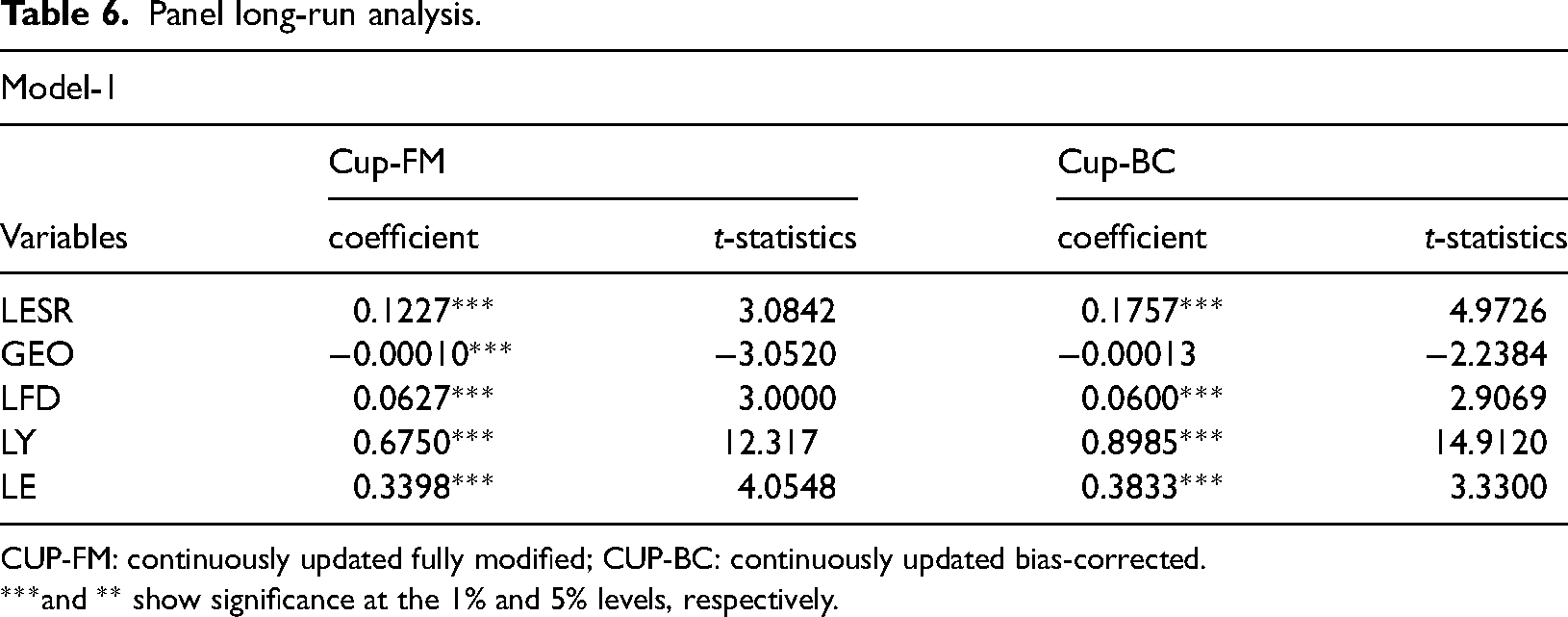
CUP-FM: continuously updated fully modified; CUP-BC: continuously updated bias-corrected.
***and ** show significance at the 1% and 5% levels, respectively.
Our long-run estimates of Cup-FM and Cup-BC are presented in Table 7. Geopolitical risk is positively correlated with both renewable and non-renewable energy consumption. Renewable and non-renewable energy consumption are negatively correlated with geopolitical risk. The level of financial development in countries with geopolitical risk is positively associated with the level of consumption of renewable energy, while it is negatively associated with the level of consumption of non-renewable energy.
Panel long run analysis.
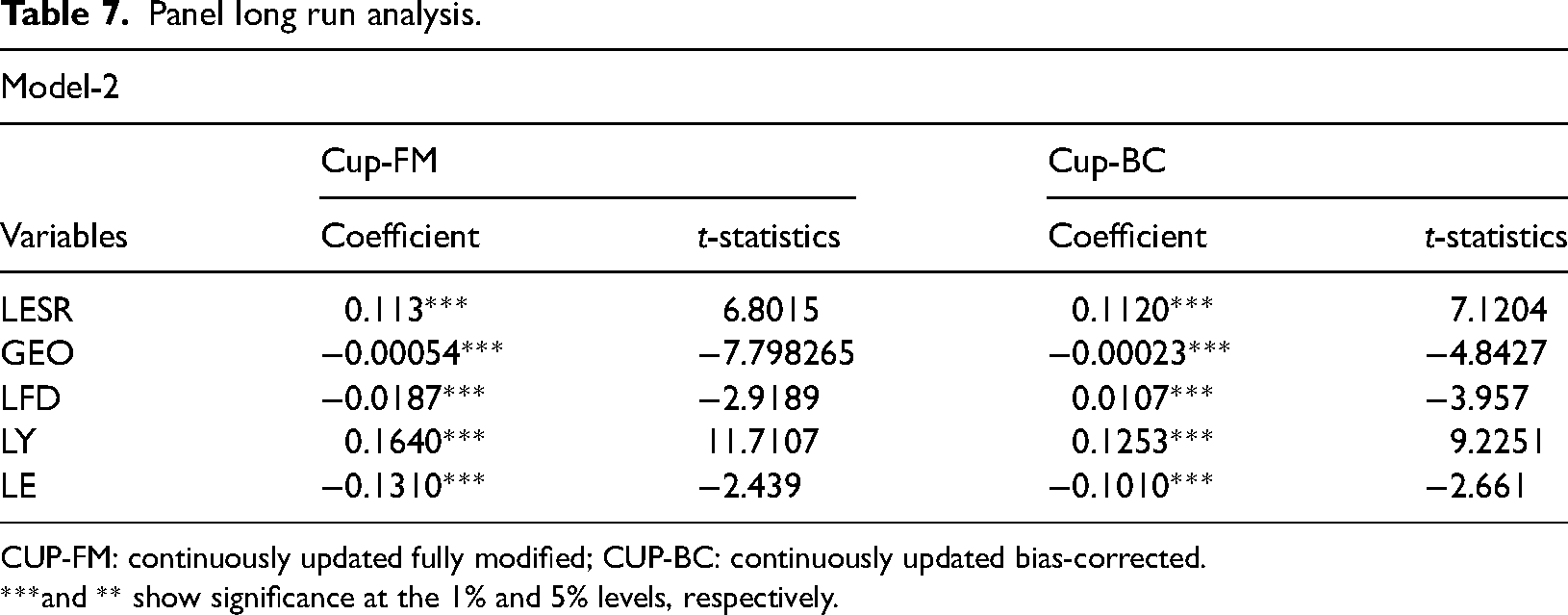
CUP-FM: continuously updated fully modified; CUP-BC: continuously updated bias-corrected.
***and ** show significance at the 1% and 5% levels, respectively.
The increase in energy security risk by 1% has a dual impact on energy consumption patterns in countries with a high geopolitical risk in that while renewable energy consumption increases by 0.1227%, non-renewable energy consumption also increases by 0.113%. As a result, it is clear that the choice of energy sources in these countries has a complex relationship with the risk of energy security. The security of a country's energy supply is essential to its stability and sustainability. The political, economic, and social factors that influence geopolitical risk countries make maintaining a secure energy infrastructure particularly challenging. The reason for this can be attributed to the desire to reduce dependence on non-renewable energy sources, which are frequently subject to geopolitical tensions and interruptions in supply. Renewable energy sources, such as solar, wind, hydropower, and biomass, can provide an alternative to fossil fuels that is sustainable and environmentally friendly. Investing in and adopting these technologies will enable countries to increase their energy security by diversifying their energy mix and reducing their dependence on non-renewable resources. Although it may seem counterintuitive, this finding can be explained by the need for these countries to ensure that their energy supply remains stable and reliable despite heightened risks. The primary source of energy for many countries has traditionally been non-renewable resources, such as oil, natural gas, and coal. Even though these sources have negative environmental impacts and finite reserves, they continue to play an essential role in meeting the world's energy needs. To mitigate the potential disruptions caused by geopolitical tensions, countries may prioritize securing access to these resources in geopolitically unstable regions.
The relationship between energy security risk and renewable and non-renewable energy consumption emerges from sophisticated interactions between market dynamics and governmental directives together with technological developments, which mainly affect countries facing high geopolitical threats. Higher energy security priorities encourage nations to direct their energy resources toward renewable sources because they need to decrease their dependence on uncertain fossil fuel imports. Regions with exposed geopolitical risks generally get improved support from their government through financial advantages like feed-in tariffs and incentives and subsidies to boost renewable energy usage. The construction of wind turbines, solar panels, and bio-energy installations at local levels represent essential security measures that both protect the energy supply network and boost national energy independence. The increase in renewable energy implementation efforts does not stop non-renewable sources from expanding because of escalating energy security threats. The established pattern of fossil fuel infrastructure, as well as immediate requirements for stable energy distribution, explain this situation. The dominance of conventional energy resources persists in energy markets of many high-risk countries mainly because their supply systems prove dependable while renewable technology adoption progresses slowly. The uncertain geopolitical environment creates a need for increased stocking up of fossil fuels for protection against energy supply disruptions, which solidifies their position in the energy distribution. The dual effect results from advancements in technology. The deployment of renewable energy depends on modern grid technology and storage systems, but extraction method innovations help maintain fossil fuels as primary supplies. The progression of technological development and adoption speeds determines how these two energy sources maintain equilibrium. The growth of simultaneous renewable and non-renewable energy consumption results from conflicting priorities between sustainable energy targets and current security requirements. High-risk countries maintain fossil fuels as fundamental energy components through existing infrastructure, market criteria, and temporary security measures, although sustainable energy investments and policies contribute to their growing adoption.
As geopolitical risk increases by 1%, energy consumption patterns change in countries with high geopolitical risk. In particular, it results in a decrease in both the consumption of renewable energy and non-renewable energy. In these countries, the consumption of renewable energy decreases by 0.00010% when the geopolitical risk increases by 1%. In addition to reduced investments in renewable energy infrastructure, decreasing government support, and uncertainty surrounding renewable energy projects, this decline can be attributed to a number of factors. Increasing geopolitical risks may lead countries to shift their attention to other areas, resulting in a decrease in the consumption of renewable energy. As geopolitical risk increases, non-renewable energy consumption also increases. Non-renewable energy consumption decreases by 0.00054% when the overall geopolitical risk increases by 1% in countries with a high geopolitical risk. As a result of an array of factors, including economic instability, political conflict, and a limited supply of non-renewable energy resources, this decline is likely to continue. It is likely that countries will face challenges in securing and extracting non-renewable energy sources, which will result in a decline in their consumption of non-renewable energy sources as geopolitical risks escalate. It is important to note that geopolitical risks can influence energy consumption patterns differently across countries and regions. A number of factors contribute to determining the extent of these changes, including the degree of dependence on energy imports, the capabilities of domestic energy producers, and government policies. Despite this, the overall trend indicates that countries with a high geopolitical risk consume less renewable and non-renewable energy as a result of an increase in geopolitical risk.
Geopolitical instability causes uncertainty among investors, who respond by withdrawing their capital investments while demonstrating greater caution in their risk-taking behavior. The current geopolitical turmoil drives investors to choose assets that are safer than alternative investments, such as bonds or gold, over-committing to sustainable energy projects. Financial institutions increase the capital expense for renewable energy investments through elevated risk-based premium costs, which lowers the opportunity to get funding. The price movements of fossil fuels in markets affect investment in renewable power through periods when conventional energy becomes comparatively cheaper. Instabilities in public policies make renewable energy investments more challenging to implement. Political uncertainties produce hybrids of uncoherent governmental support, sudden policy modifications, and discontinuation of economic support programs for renewable development. National priority changes sometimes cause regulatory bodies to postpone the approval phase of new project development. Decisions regarding trade restrictions, together with diplomatic alignment changes and sanctions, impair worldwide renewable power development efforts. Supply chains often experience permanent disruptions that are major obstacles throughout the process. Implementing renewable technologies requires essential minerals such as lithium cobalt and rare earth elements, mainly from geopolitical hotspots. The delivery of essential project components becomes delayed because of trade restrictions, logistical challenges, and port closures, which occur during geopolitical conflicts, increasing costs. The slowdown of worldwide renewable energy progress depends on trade restrictions or sanctions experienced by major suppliers of solar panels, wind turbines, and battery storage systems.
The pattern of energy consumption is strongly influenced by financial development, particularly in countries with a high geopolitical risk. A 1% increase in financial development has a significant impact on energy consumption in these countries. The adoption of sustainable energy solutions is positively correlated with the development of financial markets in high-risk countries. Financial development has a significant impact on energy consumption through the shift towards renewable sources of energy. The consumption of non-renewable energy sources decreases by 0.0187% as financial development progresses. A decline in the amount of non-renewable energy used is indicative of the reduction in reliance on these resources and the consequent move towards cleaner, more sustainable sources of energy. It is clear from these findings that financial development and energy consumption patterns are intertwined in countries that are at high risk of geopolitical instability. An increase in financial development has resulted in a greater use of renewable energy sources as well as a reduction in the use of non-renewable energy sources. A one percent increase in financial development causes a change in the pattern of energy consumption in countries at high geopolitical risk. There has been a significant increase in the consumption of renewable energy by 0.0627%, while the consumption of non-renewable energy has decreased by 0.0187%. According to these findings, financial development should be prioritized as a strategy for driving sustainable and environmentally friendly energy practices in countries at risk.
Renewable energy adoption benefits heavily from financial development because it increases green financing availability, strengthens investment stimulation, and reduces project risks. Implementing green financing gives renewable energy projects access to green bonds alongside climate funds and low-interest loans, which expand access to funding. Green credit programs and government-backed funding initiatives receive financial market support for sustainable investments. Private investors participate in renewable energy through tax benefits, concessionary loans, and carbon trading schemes, which promote extended renewable energy investments. The innovation of clean technologies benefits from venture capital and private equity funding, which arises in countries with developed economies. Businesses can decrease their uncertainties about technical expenses as well as regulatory demands and market price volatility by using risk minimization strategies. Renewable energy adoption grows on a large scale through financial mechanisms such as insurance programs, credit guarantees, and hedging strategies. Financial development generates beneficial conditions for renewable energy adoption through improved access to finances and lowered risks, which drive investments to advance clean energy adoption worldwide.
Energy consumption in countries with geopolitical risk increases by 1% with each increase in economic growth. There has been a proportional increase in renewable energy and non-renewable energy sources, although at different rates. An increase in economic growth of 1% results in an increase in renewable energy consumption of 0.6750% in these countries. This indicates that renewable energy sources are being used more frequently as the economy grows. It is in line with global efforts to reduce carbon emissions and achieve sustainability. Similarly, the consumption of non-renewable energy has increased, but at a lower rate. An increase of 1% in economic growth results in an increase of 0.1640% in the consumption of non-renewable energy. While renewable energy sources are gaining popularity in these countries, non-renewable energy sources continue to be a significant source of energy. Energy consumption in geopolitical risk countries is inversely related to economic growth, highlighting the complexity of the energy landscape in these countries. It is imperative that these countries consider the environmental impact and long-term sustainability of their energy choices as they strive for economic progress.
Increasing education by 1% increases renewable energy consumption by 0.3398% and decreases non-renewable energy consumption by 0.1310% in countries with geopolitical risk. A higher level of education has been shown to positively impact the consumption of renewable energy, as well as the consumption of non-renewable energy, particularly in countries with geopolitical risks. It is essential that education plays a key role in increasing awareness about the benefits of renewable energy and the negative consequences of relying on non-renewable energy sources. Individuals are more likely to support renewable energy adoption and consumption if they have knowledge and understanding of its environmental, economic, and social benefits. An energy supply that is sustainable and reliable is even more critical in countries with geopolitical risks. In addition to political instability, conflicts, and dependence on energy imports from unstable regions, these risks may also exist. It is important that these countries invest in education so their citizens have the knowledge and skills they need to develop and implement renewable energy solutions that will reduce their vulnerability to geopolitical influences.
Conclusion and policy implications
This research provides an extensive analysis of how energy security issues, together with geopolitical hazards, influence energy consumption throughout risky nations while financial development and economic growth alongside human capital functions as control variables. The analysis shows that increased energy security risks cause countries to boost their consumption of renewable power systems alongside traditional nonrenewable sources because they need various energy supply types in dangerous geopolitical areas. General energy consumption levels decrease as geopolitical risks increase because of disruptions in energy supply routes together with unstable policies and unclear investment prospects. The research confirms that complex relations between geopolitical movements and national energy plans demonstrate how uncertain geopolitical situations affect consumption patterns and reduce the pace of energy transformation.
Financial development plays an essential part in forming the way energy consumption patterns evolve according to this study. Financial markets with strong development patterns support renewable energy infrastructure investments which create lower consumption of non-renewable energy. The availability of capital, together with financial instruments used to decrease risks, enables the quick adoption of clean energy technologies in areas facing high financial risks. Growing economies demonstrate strong financial support for renewable energy adoption because they require additional sustainable energy solutions during their expansion. Economic development continues to drive non-renewable energy consumption rates yet at a diminishing speed because countries retain their dependence on fossil fuels during their sustainability transition.
The study provides fundamental guidance that helps policy creators and industry participants operating in energy sectors. The research outcomes call for political instability factors to receive attention in energy policy development and operational frameworks. The transitional process towards renewable energy becomes smoother when financial institutions receive greater support and universal financial access grows. Countries can obtain balanced sustainable energy security through appropriate strategic energy policies combined with financial development initiatives.
Policymakers need to develop clear and executable plans that build up both energy reliability and sustainability for defense against geopolitical and energy security threats. Multiple specific policy interventions provide countries with effective solutions to address their current challenges.
Investing in renewable energy with clear policy incentives is another crucial step in reducing exposure to geopolitical risks. Governments should implement targeted incentives such as long-term power purchase agreements (PPAs), tax credits, and feed-in tariffs to encourage investment in clean energy. Germany's Renewable Energy Sources Act (EEG), which provides guaranteed prices for renewable energy producers, has proven highly effective in driving large-scale investments in solar, wind, and hydroelectric power. Such policies create market certainty, attract investors, and reduce reliance on fossil fuel imports that are often subject to geopolitical instability.
Strengthening energy infrastructure for greater resilience is essential in ensuring uninterrupted energy supply, especially in countries vulnerable to geopolitical risks. Investments should focus on modernizing power grids, expanding energy storage capacity, and securing critical energy facilities against disruptions. The United States’ Grid Resilience and Innovation Partnerships (GRIP) program, which funds grid modernization projects, provides a useful model. Upgrading transmission and distribution systems, integrating smart grid technologies, and enhancing cybersecurity measures can help countries reduce their dependence on unstable foreign energy supplies.
Another critical policy intervention is enhancing energy efficiency to reduce vulnerability. Implementing stringent energy efficiency standards for buildings, industrial processes, and transportation can significantly lower energy consumption and reduce exposure to price volatility and supply disruptions. Japan's Top Runner Program, which sets strict efficiency benchmarks for appliances and vehicles, has demonstrated how efficiency measures can lower national energy demand while maintaining economic growth. Policymakers should promote similar initiatives, including energy conservation programs, smart grid technologies, and energy-efficient building codes to strengthen energy security.
Strengthening energy diplomacy and regional cooperation is also a vital strategy for mitigating geopolitical risks. Countries should actively engage in bilateral and multilateral energy agreements to ensure stable access to energy resources. The European Green Deal, which fosters cooperation among EU nations to promote clean energy and reduce external energy dependencies, is a prime example of how energy diplomacy can enhance security. Establishing cross-border electricity interconnections, regional energy-sharing mechanisms, and coordinated energy policies can help mitigate the impact of geopolitical disruptions on energy markets.
By implementing these targeted policy measures, countries can effectively mitigate geopolitical and energy security risks while promoting a more stable and sustainable energy future. These strategies will ensure that energy markets remain resilient in the face of uncertainty, support the transition to clean energy, and enhance economic and environmental sustainability.
There are several limitations to the study under review. A major focus of the study is the impact of energy security risks and geopolitical risks on energy consumption. Although this approach provides valuable insight into the relationship between these factors, it fails to consider the broader consequences of energy consumption for the environment. It is possible, therefore, that the study's findings do not provide a comprehensive understanding of the overall impact of energy consumption on the environment. To address the limitations noted above, future research in this area should consider the effects of energy consumption on the environment as well as the risk of energy security and geopolitical instability. Researchers can gain a more comprehensive understanding of the consequences of energy consumption by incorporating environmental factors into the analysis. It would be possible to provide a comprehensive assessment of the trade-offs and potential synergies between energy security, geopolitical stability, and environmental sustainability by employing this expanded approach. Moreover, future studies should examine the interrelationships between the three dimensions. There is a possibility that this investigation could relate to the impact of energy security risks and geopolitical factors on environmental outcomes as well as, conversely, how environmental factors impact energy security and geopolitical stability. Researchers can gain a deeper understanding of these interrelationships by exploring these interrelationships, thereby enabling them to develop more effective policies and strategies.
Footnotes
Data availability statement

Declaration of conflicting interests
The authors declared no potential conflicts of interest with respect to the research, authorship, and/or publication of this article.
Funding
The authors received no financial support for the research, authorship, and/or publication of this article.
Appendix
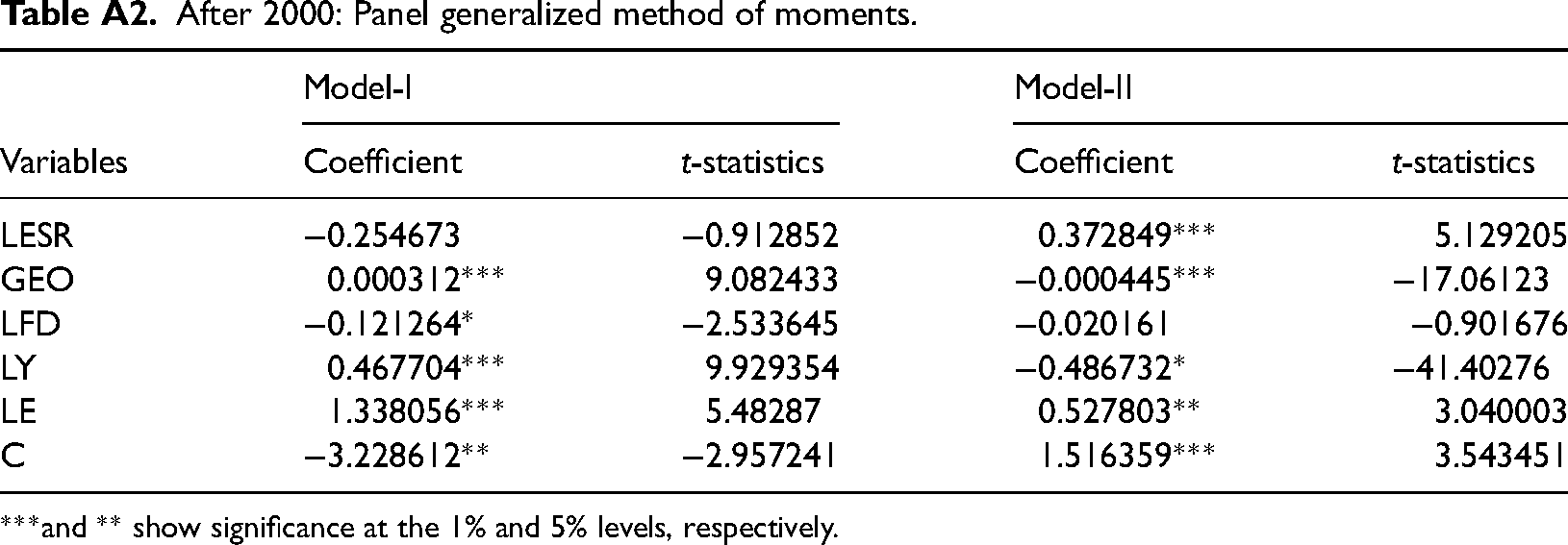
Before 2000: Panel generalized method of moments. ***and ** show significance at the 1% and 5% levels, respectively. After 2000: Panel generalized method of moments. ***and ** show significance at the 1% and 5% levels, respectively.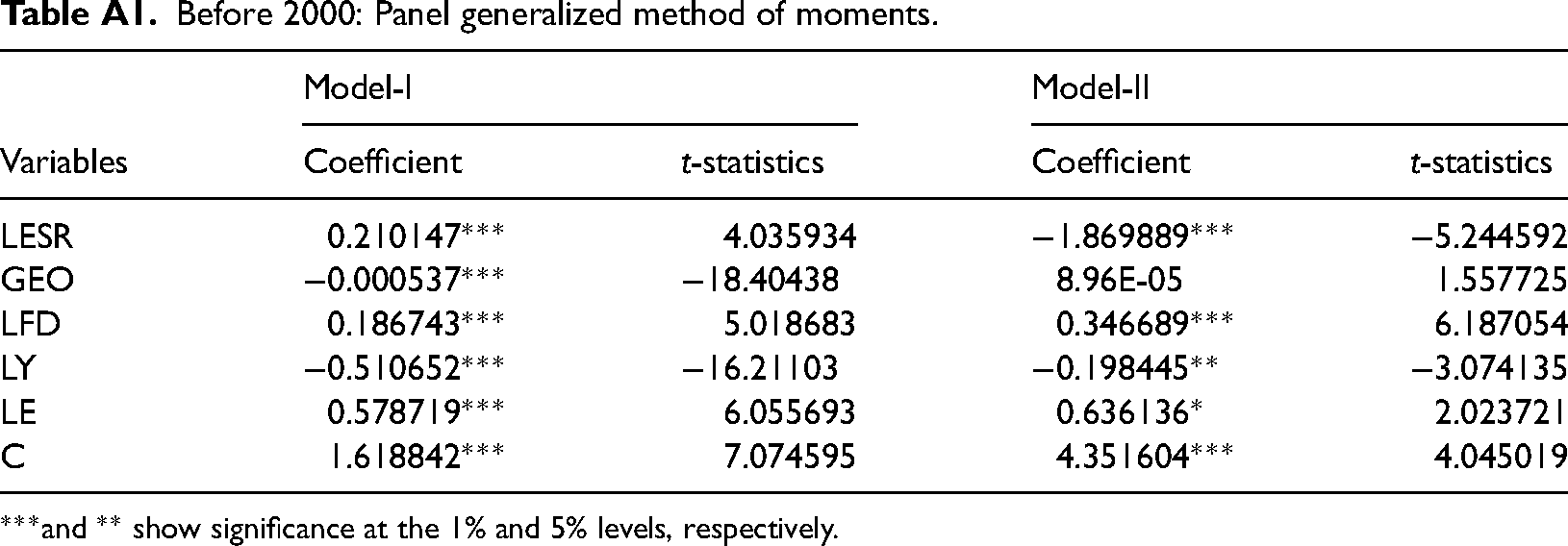
Model-I
Model-II
Variables
Coefficient
t-statistics
Coefficient
t-statistics
LESR
0.210147***
4.035934
−1.869889***
−5.244592
GEO
−0.000537***
−18.40438
8.96E-05
1.557725
LFD
0.186743***
5.018683
0.346689***
6.187054
LY
−0.510652***
−16.21103
−0.198445**
−3.074135
LE
0.578719***
6.055693
0.636136*
2.023721
C
1.618842***
7.074595
4.351604***
4.045019
Model-I
Model-II
Variables
Coefficient
t-statistics
Coefficient
t-statistics
LESR
−0.254673
−0.912852
0.372849***
5.129205
GEO
0.000312***
9.082433
−0.000445***
−17.06123
LFD
−0.121264*
−2.533645
−0.020161
−0.901676
LY
0.467704***
9.929354
−0.486732*
−41.40276
LE
1.338056***
5.48287
0.527803**
3.040003
C
−3.228612**
−2.957241
1.516359***
3.543451