



Abstract
The economic development of any nation depends on energy production and consumption, thereby, needing more exploration from researchers. The current article thus makes an attempt to examine the role of REW and non-REW energy on the economic development in China. The current article has used renewable energy production (REP), and renewable energy consumption (REC) to measure renewable energy. The current research has used fossil fuel energy consumption, energy use, energy import, and electric power consumption to measure non-renewable energy. The present study has taken secondary data from world development indicators from 1986 to 2020. The article has applied the nonlinear autoregressive distributed lagged model to evaluate the association among the understudy constructs. The findings indicated that REP and REC, fossil fuel energy consumption, energy use, energy import, and electric power consumption are linked with economic development in a positive manner in China context. The study guides the regulators in establishing the regulations related to economic development through both type of energy resources.
Keywords
Introduction
Sustainable economic development is more significant than economic growth as it has broader criteria. It is sustainable economic development that determines the worth of a country among the states across the entire world in real meaning. The competition among the countries has constantly been increasing. 1 The increase in the economic growth just shows the rank of the country in terms of its economy for a specified period in which the position of the country in the upcoming time is a blur. But sustainable economic development, as compared to economic growth, is a more appropriate indicator or driver of a country's worth in the international market. That's why researchers or scholars have long been paying attention to the economic development of a country so that its ranking among world states can be raised in the present period and sustained in the upcoming period.2,3 A country's economic development means the way to improve the overall health, academic level, and well-being of the general public. It also shows improved productivity of goods and services on account of the technology advancements, value addition to resources, and improvement in business processes. 4 It deals with the qualitative development of country's population hence human development index is an appropriate measure for it. Furthermore, economic development is linked with the overall growth of company as it creates multiple jobs, brings technological evolution, improve living standard and quality of life, increases gross domestic product (GDP), per capita income and overall infrastructure structure of the country. 5
Energy is a key way to achieve high economic development, as energy is the main ingredient in so many manufacturing, consumption, and trading practices. Energy is crucial to the operation of any contemporary economy and drives progress in economic productivity and industrial growth from a physical perspective. 6 In the modern era, energy accounts for at least half of the industrial progress, social performance, and building a better quality of life. Energy is basically of two types, renewable and non-renewable energy. Both forms of energy have their own advantages and contributions to economic development. Non-renewable energy sources are fossil fuels: natural gas, oil, coal, petroleum, ore, or nuclear power. These are considered the fast means of fuel and provide high voltage power.7,8 At the commercial level, these sources provide fuel for infrastructure, logistics, operational appliances, production machinery, construction machines, and information and communication network. Thus, they help in accomplishing the business goals of raising productivity, agility in operations, responsiveness, and building relations with the stakeholders.9,10 Renewable energy is the energy from renewable and natural resources like wind, water, sunshine, crops, and crop wastes. This sort of energy is clean energy as it does not cause pollution emissions or causes fewer pollution emissions and reduces the costs of fossil fuels. It maintains the health of people, improves the quality of nature, provides a comfortable work environment, and cuts the total tests. So, there is high economic development.11,12
The study examines the role of RE consumption, RE production, energy import, fossil fuel energy consumption, energy import, energy use, and electric power consumption in accelerating economic development in China. China is a developing upper-middle-income economy. It is the second largest among the world economies in terms of nominal GDP which appears to be $18.46 trillion in the year 2022. The forecasted data shows that China is going to be the world's largest economy by the year 2028 due to its 2028. China previously was also considered to be the most powerful economy.13,14 China has the capacity to provide itself completely by self-producing energy. The whole production generates 5883 billion kWh which is equivalent to 106% of country's total consumption. Additionally, China also involves in energy trade with other states.15–17 The overall electrical power consumption of China is 5,55.00 billion kWh. The country itself produces 5883 billion kWh of electric power. In this country, the import and export of electric power are 6.19 and 18.91 billion kWh, respectively. The 2019 statistics denote that the cent% of the Chinese population has access to electricity. The crude oil production in the Chinese state is 3.77 million barrels.18–20
The country is also open to international trade with import and export of 6.71 million barrels and 57,310 barrels crude oil. In 2018, China's currently recognized deposits included 25.63 billion barrels of viable but untapped crude oil reserves.21,22 There is still roughly 1620 billion barrels of proven oil reserves around the world. As a result, China has 12th rank in the list of 98 countries which has crude oil reserves, with a share of 1.58%. China is engaged in natural gas consumption which accounts for 238.60 billion m3. The country's own production of natural gas is 145.90 billion m3 which enables the country to export 3.37 billion m3. The country also indulged in the imports of natural gas to meet the domestic energy, and these imports account for 97.63 billion m3.23,24 In China, the actual production of electricity is 5883 billion kWh. But it depends on the capacity of different power plants or generators using both types of energies. The production capacity through fossil fuel combustion is 8977.77 billion kWh. Nuclear power plants have the capacity to generate 289.61 billion kWh of electricity. Hydropower plants have a capacity of 2606.45 billion kWh energy production, and with the use of renewable energy resources, 2606.45 billion kWh energy can be generated. Though the total production capacity is 14,480.28 kWh, the actual production of electricity is relatively less because of the change in the conditions.25,26 In addition, the 5-year average growth in GDP and energy in China is illustrated in Figure 1.

Five-year average growth in GDP and energy in China. Source: US energy information administration. GDP: gross domestic product.
The government has always been attentive to the economic development of the country. Till now, many reforms have been made in all the economic sectors like agriculture, industry, and services. The struggles for the well-being of the country through raising their living standard, improving their health and education, providing good quality products and services with technological advancements, improvement in resources and business processes, are being made.27,28 Still, there is a need to pay attention to the acceleration and sustainability of economic development. The present study is also an initiative in this regard, as it not only diverts the attention of responsible authorities toward the acceleration and sustainability of economic development but presents the ways to accelerate and sustain economic development (ED).
The study aims to probe the role of renewable and non-renewable energy in economic development. For this, it is to analyze the impacts of renewable energy consumption (REC), renewable energy production (REP), energy import (EI), FFEC: fossil fuel energy consumption, energy use (EU), and electric power consumption (EPC) on economic development. The article adds valuable contribution to the existing literature. First, in prior studies, either the authors have discussed the role of REW energy or non-REW energy on sustainable economic development. But the present is about both the role of renewable and non-renewable energy in achieving sustainable economic development. So, it extends the literature. Second, the authors have explored mostly the influences of renewable energy consumption on achieving sustainable economic development. The present study with the analysis of both renewable energy consumption and production as a contributor to sustainable economic development achievement adds to the literature. Third, the study also adds significant value in the literature as it uses world development indicators database and nonlinear autoregressive distributed lagged (NARDL) technique in order to probe the study constructs.
The present article is divided in to five sections. The second part examines the impacts of renewable and non-renewable energy like renewable energy consumption and production, energy import, fossil fuel energy consumption, energy import, energy use, and electricity power consumption on economic development in the light of previously conducted literature. The third part describes the procedures adopted to collect and analyze the data regarding the nexus between energy and economic development. The fourth part deals with the comparison of the findings with the previous ones and thus, approves them. Afterward, the implications of the study are described that is followed by the study's conclusion and limitations.
Literature review
Energy is the key factor in commercial practices like transportation, production technologies, infrastructure, plants, communication networks, and many social processes, including food production, transportation, room infrastructure, and many facilitating electric appliances. The performance of commercial activities with the use of energy creates job opportunities, technical breakthroughs, improves the standard of living, improves living circumstances, per capita income, quality of life, GDP, and so on.29,30 There is an increase in economic development and the ability to sustain it. Different forms of renewable and non-renewable energy like renewable energy consumption and production, energy import, fossil fuel energy consumption, energy import, energy use, and electricity power consumption provides fuel for both commercial and social activities, which lead to economic development.31,32 In the existing literature, the role of renewable energy consumption and production, energy import, fossil fuel energy consumption, energy import, energy use, and electric power consumption in economic development has a significant place. The present study reviews the past literature for the hypotheses regarding renewable energy consumption and production, energy import, fossil fuel energy consumption, energy import, energy use, and electricity power consumption on economic development. The relationships between understudy variables are given below.
Renewable energy is a form of energy that is taken from natural resources, geographical elements, weather conditions, and different sorts of wastes and naturally created resources like crops, woods, plants, etc.33–35 Renewable energy consumption has a positive impact on the economic development of the country because it reduces the total costs and creates many economic development opportunities. The policy to consume renewable energy reduces the use of fossil fuels that are coal, oil, gas, and ore and, while being combusted, emit greenhouse gases and destroy the environmental quality. Hence, renewable energy consumption helps to develop sustainability in the resources’ availability and their quality and facilitates achieving high economic development.36,37 The research was conducted by Isik et al. 38 to explore association of tourism growth, renewable energy consumption with economic development in a sample of few countries such as France, Spain, the United States, China, Turkey, Italy, and Germany. The research showed a positive relation between renewable energy consumption and economic development. The use of renewable energy in the different tourism practices like infrastructure to accommodation buildings, recreational practices, and the most significant transportation vehicles maintains the climate balance and does not damage the health of the tourists and general public. The consequent increase in tourism development, environmental protection, and public health enhance economic development. Similarly, Wang and Wang 39 highlight that the use of renewable energy for different electric appliances in business practices helps save fossil fuels, the fast energy sources, and allow the economy to sustain its development. So, renewable energy consumption and economic development shares positive relation. The literary article of Piligrimienė et al., 40 examines the sustainable consumption pattern and its contribution to economic development. The data was collected from 498 Lithuanian consumers to analyze the consumption pattern's impacts on economic development. The study finds a positive relation between renewable energy consumption on economic growth acceleration. Magazzino et al. 41 also make an investigation of the relation between renewable energy consumption, environmental quality, and economic development. This study concludes a positive relationship between renewable energy consumption, environmental quality, and economic development.
Renewable energy production itself has many contributions to economic development for many reasons. It keeps the environment safe, produces an excessive amount of energy for commercial use, generates energy for improving human capital, reduces traditional energy consumption, and brings improvement in technologies or technological processes.42,43 The study of Baloch et al. 44 analyzed the influences of natural resources and renewable energy production on CO2 emissions and economic development. The study sample consists of BRICS countries from the period of 1990 to 2015. The study applied analytical approaches like the augmented mean group panel algorithm, robust to cross-sectional dependence and heterogeneity. The evidence revealed that REW energy production in the form of bioenergy motivates the production of natural resources like crops, plants, and weeds. The cultivation of these natural resources reduces greenhouse gas emissions into the air. The clean environment provides a clean working context and good quality natural resources in abundance. So, sustainable economic development is possible. He et al. 45 examine the nexus between green credit, investment in renewable energy production, and green economic development. The required nexus is checked in the 150 enterprises operating in China with the threshold effect model. The study implies that in the region where the firms spend their money in the form of investment in the production of renewable energy, the environmental pollution emissions can be reduced significantly as the production of renewable energy like solar power reduces the heat in the air and provides a clean environment which is the key to success in getting sustainable economic development. Hence, the production of renewable energy positively affects economic development. Chopra et al. 46 analyzed the nexus between the production of natural resources and renewable energy, positively affecting economic development. For empirical research survey of ASEAN economies, the study finds a positive contribution of production of natural resources and renewable energy positively to economic development.
Non-renewable energy like fossil fuels is the natural resources like natural gas, crude oil, petroleum, coal, and ore. These are considered traditional energy sources which could provide energy in large amounts, the energy which can be utilized in the practices like human capital creation, technology development, manufacturing of raw materials, production of economic resources, construction, and transportation processes. These practices are a great contributor to economic development and its sustainability.47–49 Some researchers suggested that countries with abundant fossil fuel resources and use them in their businesses develop infrastructure, increase the quality of the work environment, make it more comfortable, and assist in the operation of production technology. The usage of fossil fuel energy boosts production, creates new job possibilities, and improves the standard of living for citizens. Kibria et al. 50 examine the share of fossil fuels in the energy mix and economic development. The 151 countries across the world provide panel information about the relation between fossil fuel consumption and economic development for the years 1971 to 2013. The study findings show that the large portion of the fossil fuels in the energy mix is necessary for getting high economic development, as it is the energy from fossil fuel combustion which enables the businesses to run heavy technologies which assist their operations, including the production of goods and services. The increase in the total productivity of goods and services determines high GDP and contributes to economic development. The study conducted by Mele et al. 51 examines the relationship between energy consumption and economic development. This study implies that as the consumption of energy like fossil fuels is increasing, there is an activity in the economy, and their growth rate is getting high. Hence, there is a positive relation between fossil fuel consumption and economic development.
The study by Rehman et al. 52 examines the energy consumption impacts on the economic performance of firms and the country's economic development. This study takes fossil energy, electrical energy, and renewable energy to analyze economic performance in Pakistan for the time from 1990 to 2017. The results posit that energy consumption by creating heat or steam runs the machines, plants, transport vehicles, and other technologies which facilitate the functions of a business firm. Hence, the economic performance is high. The study conducted by Ahmed et al. 53 identifies the relation of environmental technology and energy use with economic development. The variables under analysis are CO2 emissions, technological changes, renewable energy, fossil fuel consumption, and economic output, and BRICS countries are selected for this sample purpose. The study conveys a positive association of renewable energy and fossil fuel consumption with economic development. According to the authors’ views, both the use of renewable energy and the energy from fossil fuels lead the country toward high economic development with a consistent rise in the total economic output. Magazzino et al. 54 examine the role of GDP, solar and wind energy production, coal consumption, and CO2 emissions in economic development. The evidence for the relationship of the factors was collected from the United States and China. The study posits that where there is an increase in the use of energy of forms like solar and wind energy and coal energy, etc., utilized, the chances for the economy to grow increase.
As the economic requirements and social needs are increasing, the country becomes open to the international trade of energy sources. The energy import from other states influences economic development from different perspectives like environmental, social, and financial development.55,56 Theoretical research by Rokicki et al. 57 examines the role of energy import in economic development. The research depicts that those businesses can apply measures to improve company agility and responsiveness in nations where individuals have the ability to buy energy from other countries whenever they need it, which is reliant on the efficiency and speed of the technology utilized. Importing energy hastens economic development. Doğan et al. 58 analyze the foreign development index, energy trade, energy consumption, and economic complexity effect on sustaining economic development. The study considered 32 European countries for the time from 1995 to 2014. The study reveals that when trade policies allow the import of renewable energy sources like the resources used for the generation of solar power or wind power, the use of clean energy increases within the country. As a result, the work environment is clean, which brings improvement in employees, their disposition, and work efficiency. The improved labor productivity is a contribution to economic development. Shao et al 59 analyze energy import and economic development association. The facility to import energy help controlling the usage of fossil fuels and save them for meeting future energy needs. This develops sustainability in the economic development of the country. Magazzino and Mele 60 explored energy import, energy consumption, and their impact on economic development. The study finds a strong association of energy import, energy consumption with economic development.
Electric power consumption is a key indicator of people's improved quality of life and high economic development.61,62 The access to energy through electricity is significant to security issues, maintaining climate balance, clean food, and water, and thus, by providing a safe eco-system, strengthens the economies. The enhanced electricity access brings improvement in education, health, protection, entertainment, comfort, and productivity.63,64 The study by Riva et al. 65 highlights that electricity supports industrial operations and services (medical, education, and so on) even in remote places because electricity is delivered via the grid. As a result, increased electricity usage improves economic development potential. Salahuddin et al. 66 wrote about the role of increased electrical power consumption in economic development. They postulated that the increased electricity consumption tendency facilitates the use of many up-to-date technologies even in remote areas. The use of innovative technologies improves education, medical, manufacturing, and trade building infrastructure there. The increase in the performance of these sectors improves social wellbeing and increases economic productivity. Thus, it enhances economic development. Azam et al. 67 examine renewable electric power consumption impacts on CO2 emissions and economic development. The research survey was conducted in newly industrialized countries during the period of 1994 to 2015. The study shows that renewable electricity consumption and economic development are associated positively as it assists in mitigating CO2 emissions on account of reducing fossil fuel consumption. The improved environmental protection sustains economic development.
Sustainable economic development is not a novel subject of discussion and debate in the literature. Many authors have written on sustainable ED achievement. Still, the article is a novel article itself and removes many literary gaps. First, in the past literature, different authors have presented their views in different directions while analyzing the relationship between renewable and non-renewable energy like renewable energy consumption and production, energy import, fossil fuel energy consumption, energy import, energy use, and electric power consumption and economic development. The present study shows the positive relation of renewable and non-renewable energy like renewable energy consumption and production, energy import, fossil fuel energy consumption, energy import, energy use, and electricity power consumption to economic development. Second, the majority of previous literature either examined the impact of non-renewable energy on economic development or highlighted the contribution of renewable energy to economic development. However, the literary article at hand is about the impacts both renewable and non-renewable energy sources play in attaining high economic development. It, therefore, broadens the literature. Third, researchers have mostly looked at how renewable energy consumption may lead to high economic development. The current study adds to the body of literature by analyzing both renewable energy generation and consumption as drivers of economic development. Fourth, the previously conducted research articles have analyzed the role of these factors in accelerating economic growth in different world economies such as BRICS countries, European countries, France, Spain, the United States, Turkey, Italy, Germany, etc. The current article removes this literary gap and examines the renewable and non-renewable energy impacts on economic development in China. In past literature, different statistical and econometric approaches are applied to check the nexus between renewable energy, non-renewable energy, and economic development. The present article contributes to the literature as it seeks data from the World Bank Indicators and applies the NARDL model for analyzing these factors and their relationship.
Data and material
The article examines the role of renewable and non-renewable energy on the economic development in China. The current article has used the REP and REC as the measurement of renewable energy. The current research has used the FFEC, energy use, energy import, and EPC as the measurement of non-renewable energy. The present study extracted the data from WDI from covering the period from 1986 to 2020. The level of energy consumption is the evidence of the economic growth in the country. Higher the consumption level of the energy, higher is the economic development. The study by Piligrimienė et al.
40
found a positive relation between renewable energy consumption on economic growth acceleration. In addition, Magazzino et al.
41
concluded a positive relationship between energy consumption, environmental quality, and economic development. Thus, the equation is developed using understudy variables given below:

Variables of the study
The study has taken economic development as the main variable of the research. In addition, the current study has used renewable and non-renewable energy as the study's predictors. Table 1 given below shows the variables and measurements with sources and databases.
Variables with measurements.
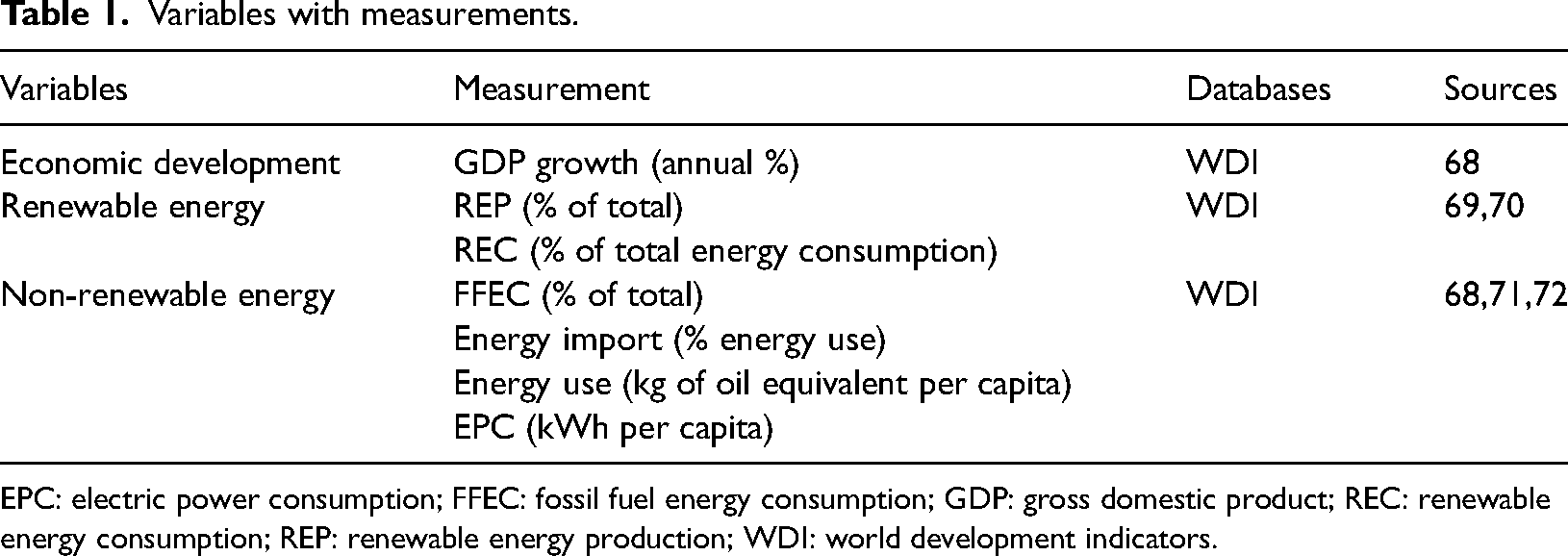
EPC: electric power consumption; FFEC: fossil fuel energy consumption; GDP: gross domestic product; REC: renewable energy consumption; REP: renewable energy production; WDI: world development indicators.
Empirical models
The present article conducted descriptives that show the properties of study's construct. In addition, the current study also runs the year-wise descriptive statistics. Moreover, the current article also runs the correlation matrix that provides the multicollinearity results. In addition, this study also ran the Augmented Dickey–Fuller (ADF) test and Phillips–Perron test (PP) to check the stationarity of the constructs. The expression is illustrated below:
The results of the ADF and PP test exposed that the ARDL is suitable because the characteristics of the ARDL model are significantly implemented when some constructs are stationary at I(0) and other variables are stationary at I(1). In addition, the ARDL model provides the short-run and long-run linkage among the variables. Moreover, the ARDL model adjusts the heteroscedasticity and autocorrelation issues that generally exist in the data. The ARDL equation is given below:


Thus, by using the above positive and negative changes in energy import, EPC, and energy use, the current study has developed the NARDL model equation given below:
The article has applied the robustness test and used quantile autoregressive distributed lag parameter (QARDL) model for this purpose. The study has taken the quartile like 
Findings of the study
The findings exposed those 35 observations used by the study. The findings also showcased the average value of chosen constructs. The ED mean value was 9.103%, following REP was 18.566%, REC 21.806%, FFEC 83.082%, EI 5.857%, EU 1458.037%, and EPC 2046.919%. From descriptive, it is also revealed that kurtosis, skewness and Jarque–Berra values are not distributed normally. Table 2 highlights the details of descriptive values.
Descriptive statistics.
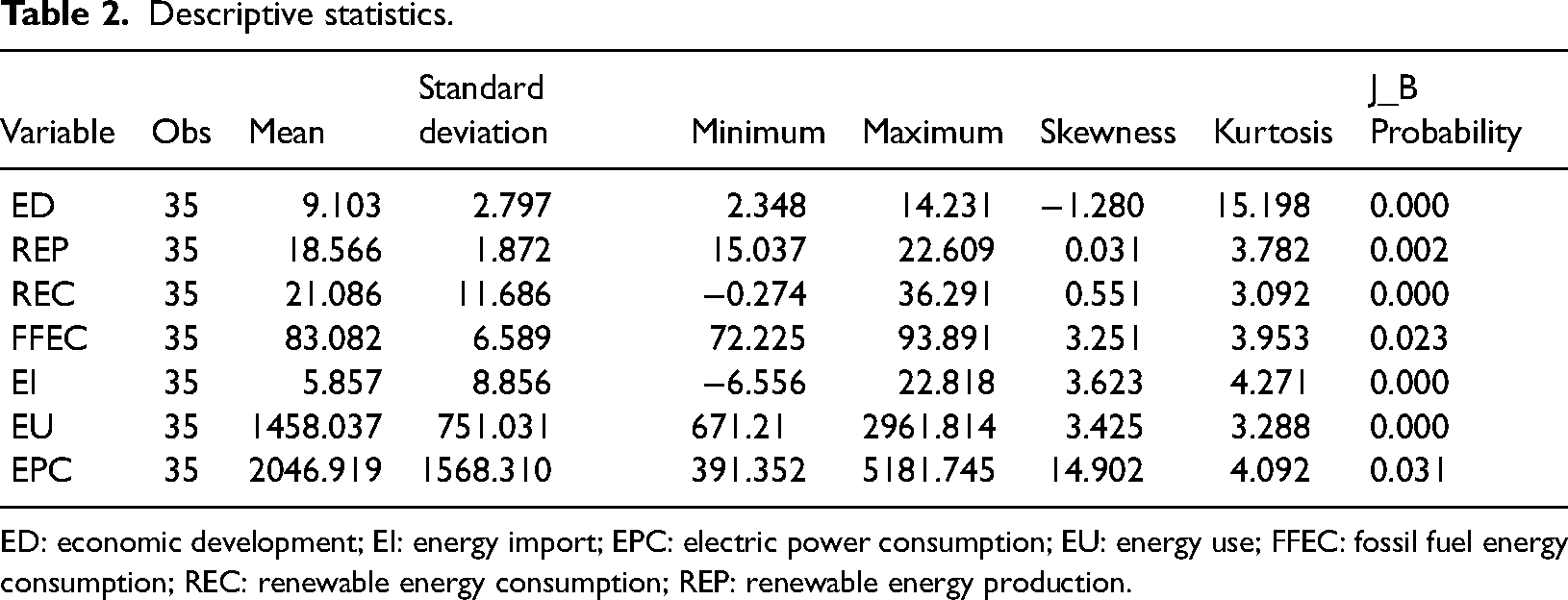
ED: economic development; EI: energy import; EPC: electric power consumption; EU: energy use; FFEC: fossil fuel energy consumption; REC: renewable energy consumption; REP: renewable energy production.
Moreover, the current article also runs the correlation matrix that provides the multicollinearity results. The results indicated that REP, REC, FFEC, EI, EU, and EPC have a positive nexus with the economic development in China. Table 3 shows the correlation matrix results (Figure 2).
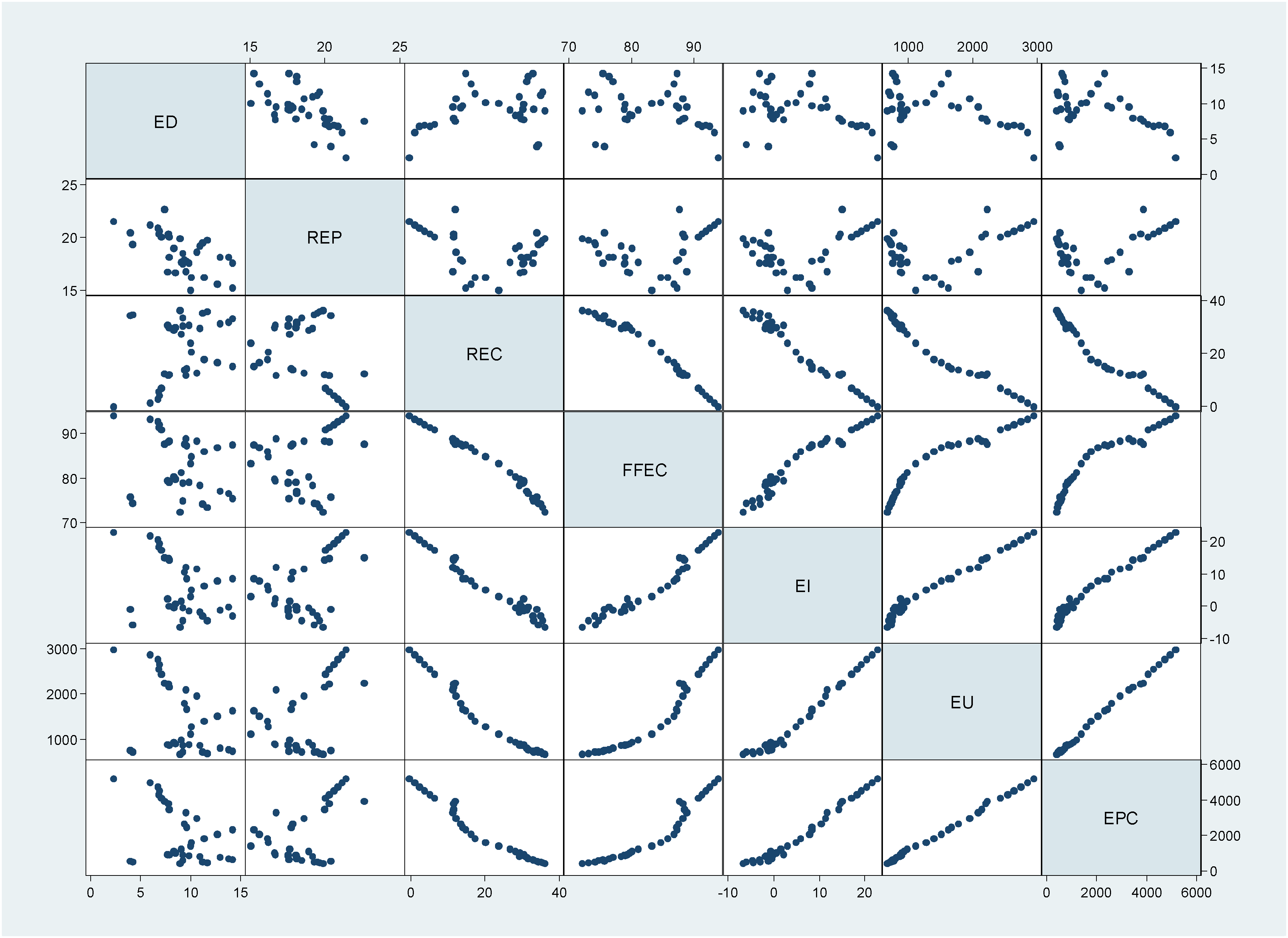
Correlation matrix.
Correlations.
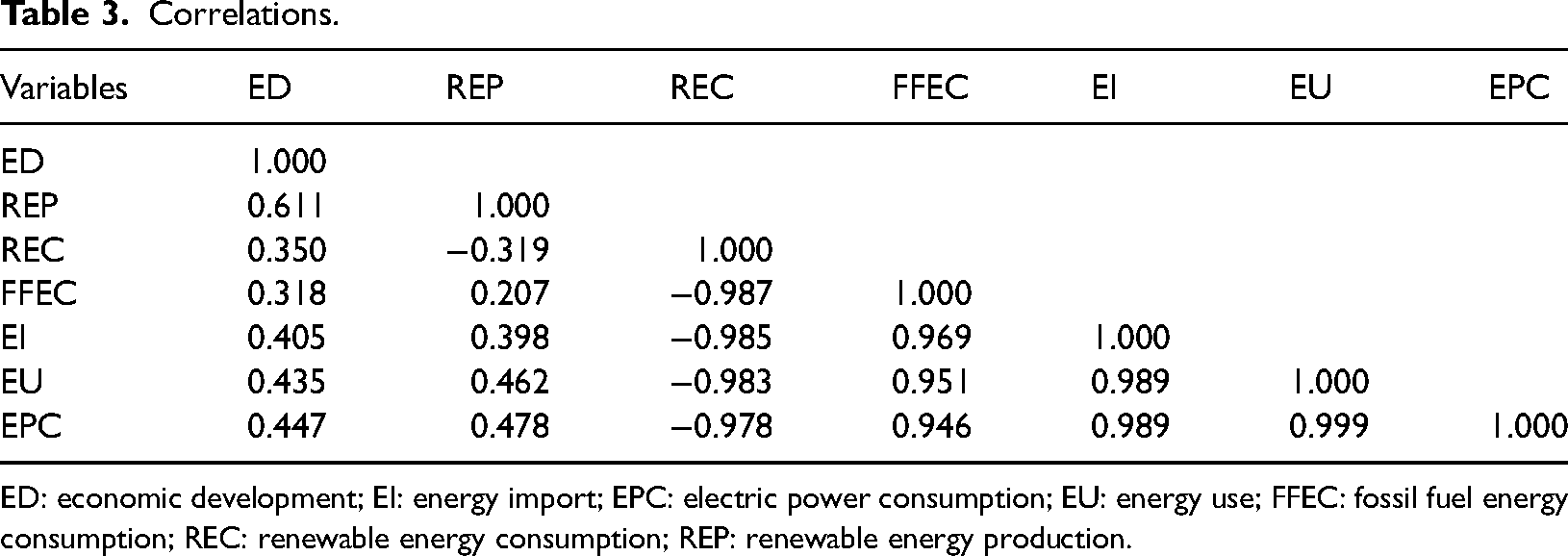
ED: economic development; EI: energy import; EPC: electric power consumption; EU: energy use; FFEC: fossil fuel energy consumption; REC: renewable energy consumption; REP: renewable energy production.
In addition, the study also used ADF test and PP techniques to evaluate the stationarity of constructs. The results disclosed that ED, REP, EU, and EPC are stationary at a level whereas REC, FFEC, and EI are stationary at first difference. Table 4 depicts the details of ADF and PP values.
Unit root test.
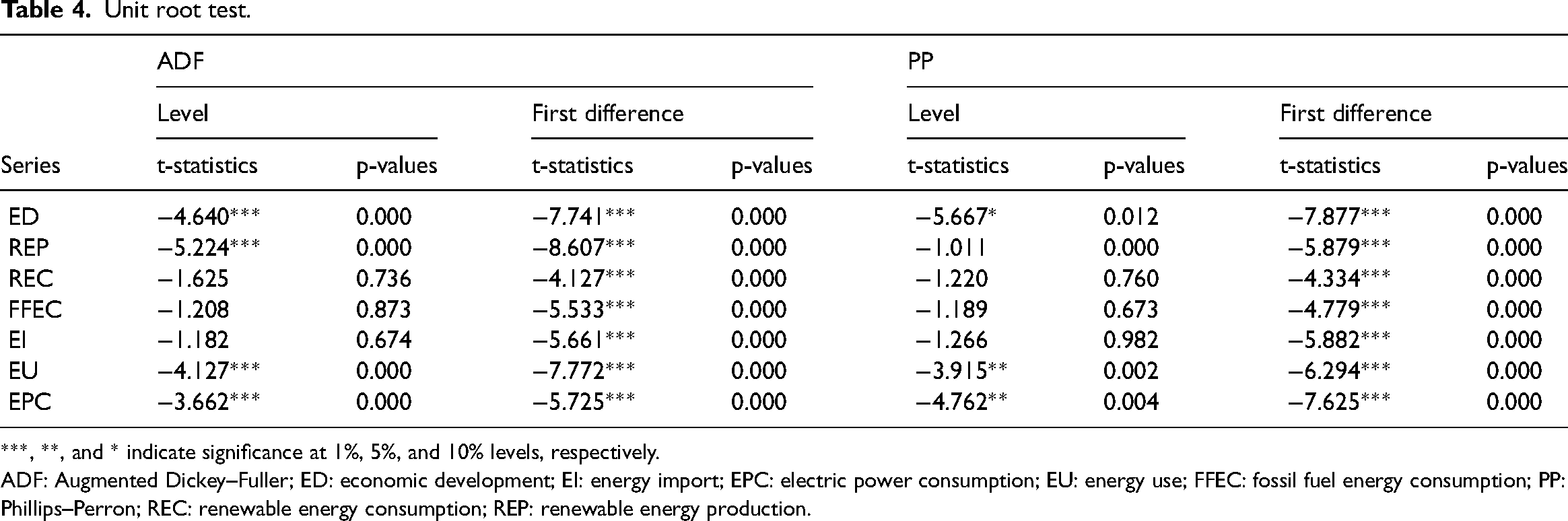
***, **, and * indicate significance at 1%, 5%, and 10% levels, respectively.
ADF: Augmented Dickey–Fuller; ED: economic development; EI: energy import; EPC: electric power consumption; EU: energy use; FFEC: fossil fuel energy consumption; PP: Phillips–Perron; REC: renewable energy consumption; REP: renewable energy production.
The study also ran the bound test for NARDL. The results indicated that the calculated F-statistics value is larger than the upper and lower bounds, which shows co-integration exists. Table 5 shows the bound test for NARDL.
Bound test of nonlinear ARDL.

ARDL: autoregressive distributed lagged.
The findings of NARDL indicated that renewable energy such as REP and REC, non-renewable energy such as FFEC, energy use, energy import, and EPC have a significant and positive linkage with economic development in China. In addition, the results also indicated that energy use, energy import, and EPC, both positive and negative, have a positive association with economic development in China. In addition, if 1% change occurs in REP then ED would also be changed by 0.692% in similar direction. Similarly, 1% increase in REC, ED would also increase by 0.07%. Also, the 1% rise in FFEC, there will be a change in ED by 0.29%. Further, 1% increase in EI, ED will also be increased with 0.432%. In addition, if 1% change in EU, the ED will also change by 0.621% in same direction. Finally, 0.872% change will occur in ED if there is a 1% change occurs in EPC. These results are mentioned in Table 6 (Figures 3 and 4).The findings of robustness test indicated that renewable energy such as REP and REC, non-renewable energy such as FFEC, energy use, energy import, and EPC are positively connected with economic development in China. Findings are illustrated in Table 7.
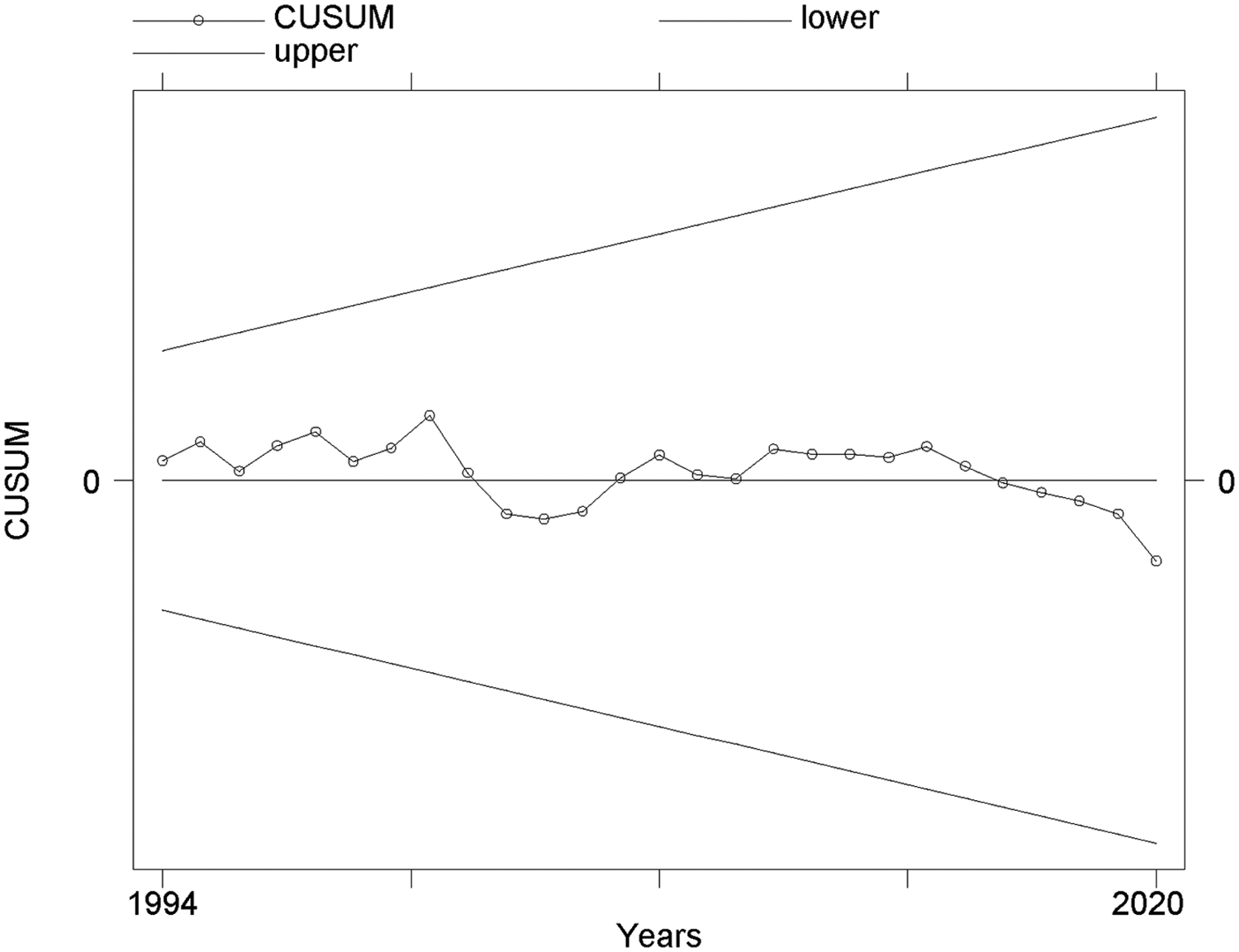
CUSUM. CUSUM: commulativd sum.
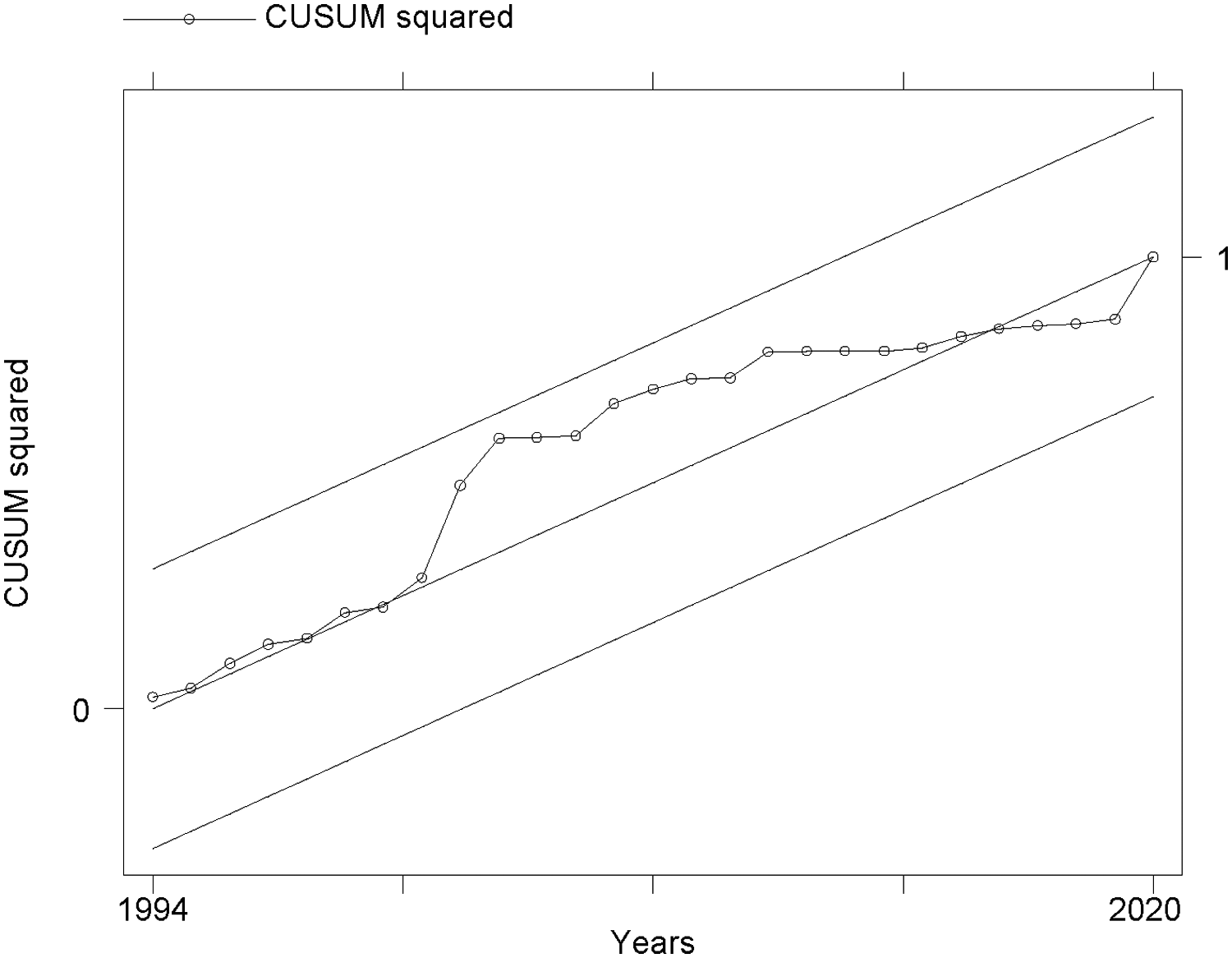
CUSUM square. CUSUM: commulativd sum.
Nonlinear ARDL results.

ARDL: autoregressive distributed lagged; CUSUM: commulativd sum; ED: economic development; EI: energy import; EPC: electric power consumption; EU: energy use; FFEC: fossil fuel energy consumption; REC: renewable energy consumption; REP: renewable energy production.
Robustness test.
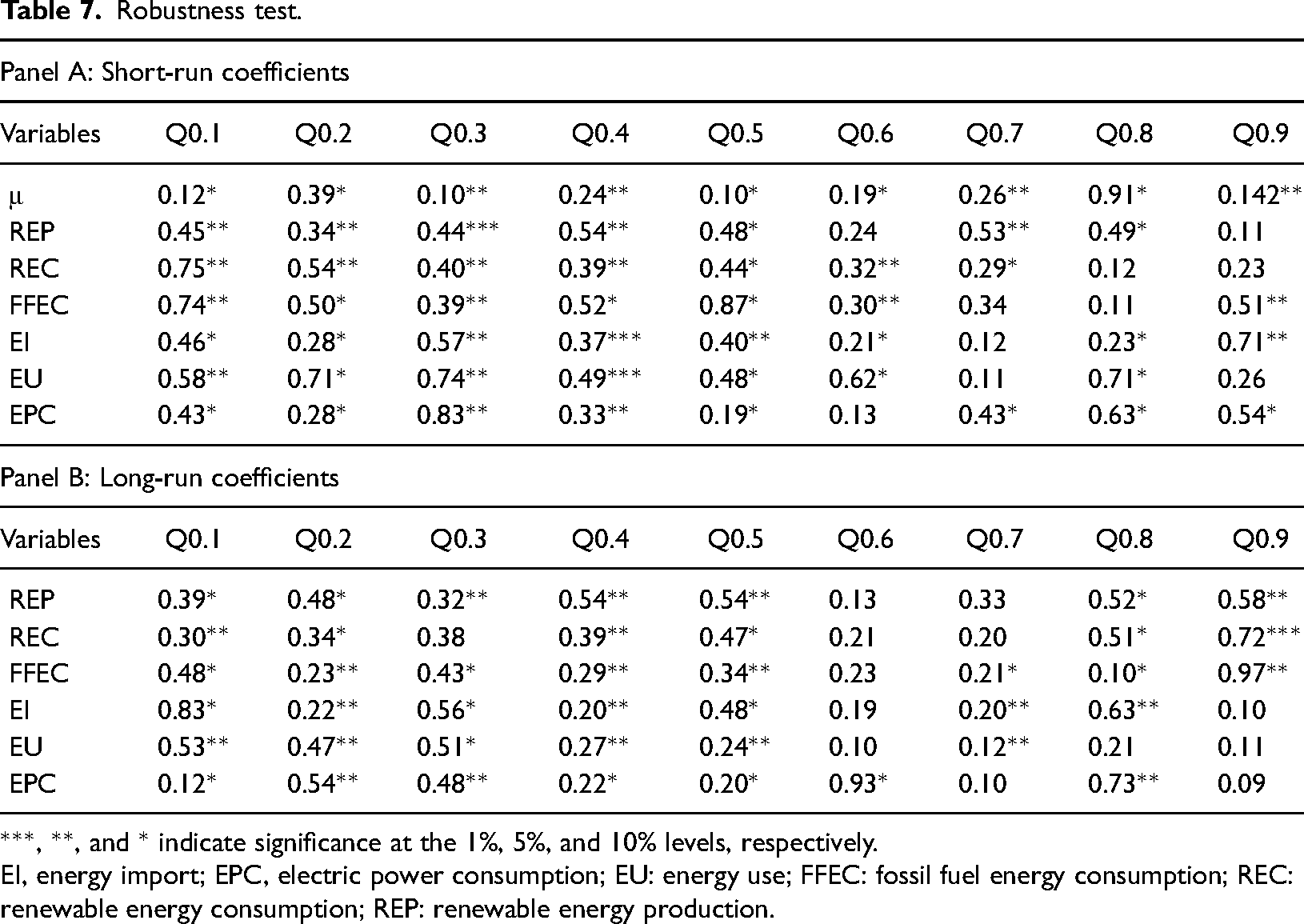
***, **, and * indicate significance at the 1%, 5%, and 10% levels, respectively.
EI, energy import; EPC, electric power consumption; EU: energy use; FFEC: fossil fuel energy consumption; REC: renewable energy consumption; REP: renewable energy production.
Discussions
The findings revealed a positive connection between RE production and economic development. The results show that the production of RE for meeting the domestic and commercial energy requirements minimizes the focus of the government and privately regulated firms on the production of renewable energy, which increases the toxic gases in the environment. Thus, the RE production by assuring a clean environment improves the health of the living beings and enhances the human capital leading to sustainable economic development. These results are supported by Pata, 73 who claims that the production of energy from renewable resources assists in the persistent availability of energy. This allows the firm's management to make the business plans and apply them at the right time. This enhances the production and marketing of goods and services. So, RE production enhances sustainable development. These results also agree with Kirsanova et al., 74 which analyze the role of RE production in accelerating economic development. This study proclaims that RE production provides clean energy that has minimal environmental impacts. Therefore, the RE production enables the firms to arrange a clean environment for the laborers to work, where they can better learn, concentrate, and perform; so, it leads to sustainable economic development. These results acknowledge the study of Bamisile et al., 36 which highlights that the increase in the REW energy production, cleans the environment, enhances nature resilience, and protects natural resources. These all put the country on the way to sustain economic development. So, there is positive link between RE production and economic development.
The results show that since RE is produced from natural things, including the heat, wind, crops, etc., and it consists of no chemicals or contaminating substances while they are being used during businesses, they release no chemicals, gases, or other substances. Consequently, a clean environment with quality resources provides for sustainable economic development. These results match with Abbas et al. 75 study about the RE impacts on economic development. The study proclaims that a gap occurs between the business practices when the traditional energy sources are insufficient and are likely to collapse after a specific period of time. The firm management can remove this economic gap as it provides energy for many of those appliances or technologies which require a limited voltage power. The consistency in the business practices adds to the production level, creates jobs, and enhances the living standard of the people, which denotes economic development. These results show consistency with He et al., 45 which posits that when business units and individuals are encouraged to utilize REW energy such as wind power, hydroelectricity, geothermal power, etc., there is fluency in the economic activities. So, the country has high economic development. These results also match with Haseeb et al., 76 which examines the RE consumption role in accelerating economic development. The results stated that the countries where government enforces the RE consumption along with the non renewable energy consumption within the businesses motivate the companies to invent advanced technology and create novel business processes which are energy efficient and utilize RE. These advancements are a sign of economic development.
The results indicated that fossil fuel energy production has a positive impact on economic development. The results show that fossil fuels are considered the traditional source of energy. These have high potential power and can provide energy to individuals and businesses to utilize the electric appliances and different sorts of technologies that require high voltage power for giving higher outcomes. So, fossil fuel energy consumption is an effective tool to accelerate ED. The results are consistent with Kåberger, 77 which highlights that the countries which are rich in fossil fuel resources and utilize them in business organizations improve the working of the infrastructure, help maintain the quality of the work environment, and make it comfortable, and helps run the production technologies. The use of fossil fuel energy increases productivity provides employment opportunities for new labor, and increases the living being of the countrymen. These results are also in line with Oakleaf et al., 78 which implies that when the firms have the ability to use fossil fuel energy, the different departments can show effective performance, agility, and accuracy in their business activities, letting the firms contribute a lot to the country's GDP which shows economic development. These results are supported by Jia et al., 79 which highlights that with the increase in consumption of fossil fuels, the use of technologies, plants, and transportation increase contributing to the productivity of factors of production which lead to high economic development.
The results indicated that energy import and economic development are linked in positive manner. The results imply that in the countries where the people have the facility to purchase energy from foreign countries whenever they require it, the businesses can implement strategies to improve business agility and responsiveness, which is dependent on the efficiency and speed of the technologies used. Energy import helps accelerate economic development. These findings acknowledge the study of Shafiei et al., 80 which examine the energy imports’ role in sustaining economic development. The contracts with the foreign entities for acquiring the energy or the resources used for energy generation allow the domestic firm to apply clean energy in the business operation and provide a healthy atmosphere to the public. The healthy residents serve as active human resources for the economy and sustainable economic development. These results are also supported by Du et al., 81 which highlight that in case the business firms can import the energy and keep on carrying out their activities, they maintain the jobs for the residents. This sustains the living standard of residents, which represents the increasing economic development. These results acknowledge Alvarado et al.’s 31 findings, which highlights that sometimes a particular country may have limited energy resources and is unable to meet the energy requirement at economic level. The import of energy enables the country to maintain the energy sources and thus, sustain the economic growth rate.
The results indicated that EU shares positive connection with economic development. The results mean that primarily the business processes are performed through infrastructure, different types of technologies, and transportation vehicles. For all these, energy is required in a significant amount. In the countries where there is the use of a large amount of energy, business firms have a strong position to step toward ED. The findings acknowledge the study of Liu and Hao, 82 which analyze the role of energy consumption in achieving high economic development. This study posts that the firms which have the capacity to utilize the energy resources optimally and in a safe manner, they can make better performance both economically and environmentally. These performances develop sustainability in economic development. The findings are consistent with Tang et al., 83 which show that the increased use of energy increases the use of technologies in business processes. The use of updated technologies facilitates the undertaking of business processes, increases the overall production of goods and services, and increases profitability. So, there is high performance. The results indicated that electric power consumption and economic development are linked positively. These results agree with Belaïd and Zrelli, 84 which show that the use of electric power encourages industrial activities and services (medical, teaching, and so on) even in remote areas because electricity through the grid reaches there. Hence, electricity power consumption enhances the opportunities for economic development. These results also agree with Zhang et al., 85 which claims that with the increase in electric power consumption, the economic activities are run even in remote areas and the economic growth tends to be increased.
Implications
The study makes several theoretical contributions. The study investigated RE consumption, RE production, energy import, fossil fuel energy consumption, energy use, and electric power consumption and checks their relation to economic development. This study addresses both renewable and non-renewable energy's role in achieving high economic development. Whereas, as in the prior literature, either the impact of renewable energy or non-renewable energy on economic development has been checked. So, the present study extends the economic-based literature. Moreover, the selection of the economy of China to investigate the impacts of RE consumption, RE production, energy import, fossil fuel energy consumption, energy use, and electricity power consumption on economic development is also an extension of literature. This study is a theoretical guideline for future researchers on how they should act in future research. They may check the influences of both RE consumption and RE production on economic development. They must also consider in future research about energy and economic development that all forms of energy like RE consumption, RE production, energy import, fossil fuel energy consumption, energy use, and electric power consumption contribute to economic development. The study has much empirical significance in the fast-emerging economies, which have a large number of renewable and non-renewable energy resources. This study guides the individuals or entities which are somehow interested in the economic development of the country on how they can accelerate the rate of development through effective policies or strategies. The government should make policies by which they form the bodies of persons who take care of the production and consumption of both renewable and non-renewable energy within the country. The government must also encourage energy import and efficient consumption of energy. The economists or individual business firms themselves must also encourage the use of renewable and non-renewable energy in an efficient manner so that economic development, including social, environmental, and financial development, can be achieved. The study guides the regulators in establishing the regulations related to economic development through renewable and non-renewable energy. This study motivates individuals or business firms to benefit from electric power consumption and energy imports so that they can save themselves from energy monopoly and can promote businesses even in remote areas. Overall, the study suggests that with the proper use of different forms of energy resources, economic development can be accelerated. According to this study, RE consumption and RE production make an as large contribution to economic development as energy import, fossil fuel energy consumption, energy use, and electric power consumption does to economic development. This study recommends to the scientific community that they must invent technologies that give maximum productivity with minimum non-renewable energy and technologies which utilize non-renewable energy.
Conclusions
China, despite its large area or wide economy, is still facing many social, environmental, and financial problems which come in the way to fast economic developments. The country is making rapid economic growth, but it is failing to sustain economic development. The country is rich in geographical elements and many naturally found resources, and it is open to international trade, so the researchers must present some study that shows the approximate uses of the Chinese geographical features and natural resources for accelerating economic development. So, the authors decided to throw light on various energy roles in accelerating a country's economic development. The aim of the study was to explore the influences of RE consumption, RE production, energy import, fossil fuel energy consumption, energy use, and electricity power consumption on economic development. The authors collected information regarding RE consumption, RE production, EI, FFEC, EU, and EPC and their relation to the economic development of the Chinese economy with the help of Working Bank Indicators. The results on the basis of this information with the help of the NARDL technique showed that RE consumption, RE production, energy import, fossil fuel energy consumption, energy use, and electric power consumption are positively connected to economic development. The results stated that the RE utilization hinders the firms from just reliance on traditional energy resources and helps the firms improve the quality of products and enhances the total production. So, it contributes to economic development. The results also revealed that RE production gives rise to the production of goods of need for humans, cleans the air to breathe in, and provides the environment where they can perform their functions. So, the rise in human capital increases economic development. When businesses can employ fossil fuel energy, many departments can demonstrate effective performance, agility, and accuracy in their business activities, allowing businesses to contribute significantly to the country's GDP, indicating economic growth. In the countries where there is more use of energy, businesses with fluent and improved performance lead to sustainable economic development. As electric power consumption rises, more activity is conducted in all economic sectors, contributing to an increase in economic development. Technology is used more frequently in corporate operations because of increased energy consumption. Hence, it is easier to carry out commercial operations, boosts the overall production of goods and services, and improves profitability. As a result, economic development is high.
Limitations
The present study has some limitations and requires more attention and effort from scholars to remove these limitations. First, the present study analyzes only energy factors like RE consumption and production, energy import, fossil fuel energy consumption, energy import, energy use, and electric power consumption for determining economic development. In economic development determination, many factors other than energy like finance, geographical elements, and government policies are essential to consider. It is up to the scholars to expand the scope of the study with some suitable addition to these essential factors for examining economic development. Moreover, this study chooses a single country like China that is much efficient in the production of both type of energy production for analyzing the energy impact on economic development. The study conducted in a single economy cannot be applicable to a broad level. So, it is the duty of the researchers and scholars to do research for analyzing the nexus between renewable energy consumption and production, energy import, fossil fuel energy consumption, energy import, energy use, and electric power consumption and economic development in multiple countries.
Footnotes
Declaration of conflicting interests
The authors declared no potential conflicts of interest with respect to the research, authorship, and/or publication of this article.
Funding
The authors received no financial support for the research, authorship, and/or publication of this article.
