



Abstract
The role of exports as a catalyst for income growth necessitates the utilization of energy resources in manufacturing industries. Consequently, major exporting nations are embracing a dual approach, employing both renewable and non-renewable energy sources, to enhance export promotion while addressing environmental concerns. In this study, we examine the intricate relationship between export diversification and disaggregated energy consumption, specifically focusing on renewable and non-renewable energy, within the framework of the BRICS countries from 1990 to 2020. Notably, our investigation contributes significantly to the understanding of the moderating influence of environmental degradation, employing the Markov Chain Monte Carlo (MCMC) panel quantile regression method. Our findings reveal that initially, export diversification exerts a negative impact on renewable energy consumption. However, as countries attain a comparative advantage in diversification, this relationship transitions into a positive correlation. Additionally, we observe a significant positive association between export diversification and non-renewable energy consumption, which subsequently turns negative once the level of comparative advantage is reached. Moreover, we uncover that CO2 emissions, serving as a proxy for environmental degradation, partially moderate the link between export diversification and renewable energy consumption, while fully moderating the relationship with non-renewable energy consumption. Furthermore, we identify heterogeneous effects of outward foreign direct investment (FDI), innovation, human capital, and institutional quality on the disaggregated levels of energy consumption across the BRICS economies. In light of these findings, we propose the adoption of a prudent approach towards energy resource utilization, taking into account environmental safety considerations within the BRICS countries.
Keywords
Introduction
The energy consumption scenario in BRICS countries has attracted attention due to significant carbon dioxide (CO2) emissions. Between 1990 and 2015–16, CO2 emissions increased from 5.34 to 6.49 kg/oil equivalent.1,2 Besides, energy consumption per person also grew from 2090 to 2401.43 kg/oil equivalent during this period. Export trade in BRICS countries requires practical energy usage, leading to a focus on renewable energy sources. BRICS nations’ industrial exports expanded at an annual rate of 15.9%, compared to global export growth of 8.8%. They have diversified their export baskets with both traditional and high-tech items. The export bills for high technology increased from $272 billion to $775.14 billion in 2015. The diversification of domestic markets has contributed to steady high GDP growth in BRICS countries.3,4 However, this trade-driven income expansion is energy-intensive. Given these factors, our research question focuses on the impact of trade flow, particularly export diversification, on disaggregate energy consumption (renewable and non-renewable), in the context of CO2 emissions and environmental degradation in BRICS economies.
The reasons for conducting this study are multifaceted. First, the BRICS nations have shown dedication to sustainable development goals in response to increased energy consumption and pollution. This aligns with COP27's message on the urgent need for action to address the climate crisis and the recognition of the need for a rapid transformation to clean and resilient energy systems. These nations are increasingly focusing on renewable energy infrastructure instead of relying on non-renewable sources like coal, oil, and natural gas.5,6 Achieving SDG-13 (sustainable and clean environment) is challenging without SDG-7 (cheaper and cleaner energy). Renewable energy solutions already account for 36% of total energy consumed in BRICS countries, and they are projected to demand 50% of global energy consumption by 2040. However, transportation, industrial production, and household activities still heavily rely on fossil fuels, indicating the need for a complete shift to renewable energy.7,8 The growth in exports and income has led to increased fossil fuel energy consumption, but the BRICS countries are making efforts to transition towards renewable energy production and consumption.
Second, the country-specific energy consumption scenario highlights the export-based industrialization of the BRICS countries. These economies have established a dominant position in the international market through industrialization, financialization, and liberal trade flows. In 2019, Brazil, Russia, India, China, and South Africa had per capita incomes of $11079.71 (US), $11729.08 (US), $2100.80 (US), $7752.55 (US), and $7433.61 (US) respectively, showing a twofold increase on average between 1990 and 2019.1,9 China and India experienced even greater increases in per capita income during this period, with 11- and 4-times growth, respectively. The rising exports of manufactured goods from the BRICS nations, such as spacecraft, electrical equipment, telecommunications equipment, and pharmaceutical products, demonstrate their efforts to enhance their industrial infrastructure and sustain economic momentum. The growth strategy of the BRICS countries primarily focuses on exports and requires significant energy consumption.
Third, the BRICS nations face limitations in finance, geography, society, and technology, often leading to reliance on fossil fuels. For example, Brazil saw a 60% reduction in hydroelectricity output in 2014 due to drought, while Russia's scientific and governance challenges led to decreased subsidies for renewable energy until its first solar power plant was established in 1994. Russia heavily depends on non-renewable energy sources, accounting for 80–85% of its total consumption, but has the potential to enhance renewable energy utilization with financial support. India stands out with its large population and increasing energy demand, primarily relying on coal, oil, and gas, but its renewable energy capacity falls below global averages. India established the Department of Non-Conventional Energy Sources in 1982, achieving some progress, yet its production remains insufficient, increasing reliance on non-renewable sources and jeopardizing long-term economic growth.3,10
Fourth, China's growing economy has increased the demand for coal and oil, potentially contributing to increased carbon emissions. The timeline of renewable energy installation in China shows progress, with hydroelectric projects constructed between 1949 and 1979. 11 From 1980 to 1989, energy conservation efforts led to increased production of renewable energy, including hydroelectric power plants, wind farms, and solar panel manufacturing. Government investments resulted in an installed renewable energy capacity of 866.470 MW by 2020, but coal consumption in China rose significantly from 1 billion tonnes in 1990 to 4.65 billion tonnes in 2018. Additionally, In South Africa, political unrest and isolation hindered the energy drive prior to 1994. The government started investing in renewable energy production in the late 1990s and early 2000s, but inadequate progress led to coal supplying one-third of the total energy demand in 2016. However, attention towards renewable energy increased after 2014, with 9.639 GW of installed renewable energy production achieved by 2020.3,12
Finally, the body of literature emphasises the possibilities of export production-induced energy consumption from the viewpoints of many nations. In order to increase their portfolio of export-oriented activities and trade openness, as well as to link faster with the internationalisation process for long-term development, developing nations enhance their policy domain.13,14 There is a reversal effect of trade openness on the energy intensity, according to some works of literature, which highlighted the export or import portfolios as the significant indicators of energy demand and energy intensity.15,16,17 According to certain studies,18,19 trade openness is a positive factor in encouraging energy intensity. Other investigations20,21 reported negative, 18 or equivocal22,23 results in evaluating the influence of competition, technology, factor pricing, and infrastructure roles. Additionally, Samargandi 21 highlighted the importance of innovation and trade openness as key factors in reducing energy intensity. According to study, 24 high-tech export has a sizable influence on CO2 emissions in developed nations. However, from a worldwide standpoint, the correlation between international commerce and renewable energy sources is weaker. 25 Our issue with the literature described above is that it primarily focused on how various countries’ energy usage was influenced by international commerce (export and import). However, the prior work, which mostly covers the BRICS nations, falls short in capturing the effect of export diversification in the breakdown of energy (renewable and non-renewable) consumption.
Our research goal is to examine the effects of export sophistication and diversification on energy consumption in the BRICS nations from 1990 to 2019, considering the moderating effect of CO2 emissions. We also explain disaggregate energy consumption caused by exports, considering external and internal processes such as FDI, innovation, human capital, and institution quality as control variables. Using the MCMC regression technique, we analyse heterogeneity among cross-sectional entities over different time horizons. Our research shows that export diversification encourages both renewable and non-renewable energy consumption in the BRICS nations. Specifically, export diversification has a positive effect on renewable energy above the fifth quantile and a negative effect below it. Besides, the BRICS economies benefit from export diversification's impact on non-renewable energy.
Our study makes a significant contribution to the existing body of literature by introducing novel insights. (i) We have developed the export diversification index as our primary independent variable, enabling us to examine its effects on both renewable and non-renewable energy consumption. (ii) We approach the dynamics of energy consumption by segregating it into the use of renewable and non-renewable energy, treating them as our dependent variables. (iii) We explore the moderating impact of CO2 emissions, a novel addition to the energy-growth literature, serving as a metric for environmental deterioration. By employing the quantile-on-quantile regression approach, which constitutes a substantial advancement in research on export-laden energy, we investigate the influence of various predictors on the predicted variables across different time horizons or quantiles. (iv) Our data unveil the intricate relationship between the export diversification process and the utilization of non-renewable and renewable energy. This knowledge can assist policymakers in BRICS economies in comprehending the environmental risks associated with the manufacturing and diversification of export commodities.
Theoretical framework
The theoretical underpinning of this study posits that export diversification is intricately linked to energy use and CO2 emissions. The direction and magnitude of this relationship are pivotal factors in determining the environmental impact of economic growth driven by exports. This section provides a thorough exploration of these connections, supported by relevant literature. The surge in demand for fossil fuel energy resources is a well-documented consequence of substantial export activities, often leading to exceptional economic growth.26,27 This phenomenon can be attributed to the multifaceted nature of export diversification. As economies diversify their export portfolio, they invariably aggregate a broader range of raw materials and export goods. This aggregation process significantly amplifies the requirement for energy resources. 28 Moreover, export diversification extends beyond the variety of exportable goods. It also encompasses targeting diverse nations as the final destinations for these goods. The expansion of export destinations is accompanied by heightened energy demands during both the production processes within industries and the transportation of products to these target nations. 28
The substantial reliance on traditional energy sources in export-oriented industries often results in elevated carbon dioxide (CO2) emissions. 29 This environmental consequence, when unchecked, contributes to a host of ecological challenges, including climate change and other forms of environmental deterioration. Conversely, the economic expansion catalyzed by robust export growth serves as a driving force for the advancement of technological innovation. This innovation, in turn, plays a pivotal role in consolidating the foundation for the production and integration of renewable energy sources.30,31 The adoption of renewable energy technologies offers a pathway towards mitigating the detrimental effects of CO2 emissions and environmental deterioration.32,33 The inclusion of CO2 emissions as a moderator variable in this study is rooted in the concept of moderation, as articulated by Baron & Kenny, 34 Holmbeck, 35 and James & Brett. 36 A moderator effect arises when the influence of an explanatory variable on the dependent variable is contingent on the level or presence of a moderator variable.
In our study, CO2 emissions are introduced as a moderator variable to assess their impact on the fundamental relationship between export diversification and the utilization of renewable energy sources (see Figure 1). By examining the coefficients of both export diversification and CO2 emissions, we aim to determine whether CO2 acts as a partial moderator in this foundational relationship. A significant interaction suggests that export diversification has a direct effect on renewable energy consumption in the absence of CO2 emissions, with CO2 subsequently altering the strength of this relationship. To validate these moderator effects, we draw upon the guidance of Baron & Kenny 34 and Cohen et al. 37 We employ post-hoc probing interactions as recommended by Cohen et al., 37 given the one-way nature of moderation in this study, coupled with the use of an index-dependent variable. This method allows for a comprehensive exploration of moderation effects while preserving the robustness of the analytical model.
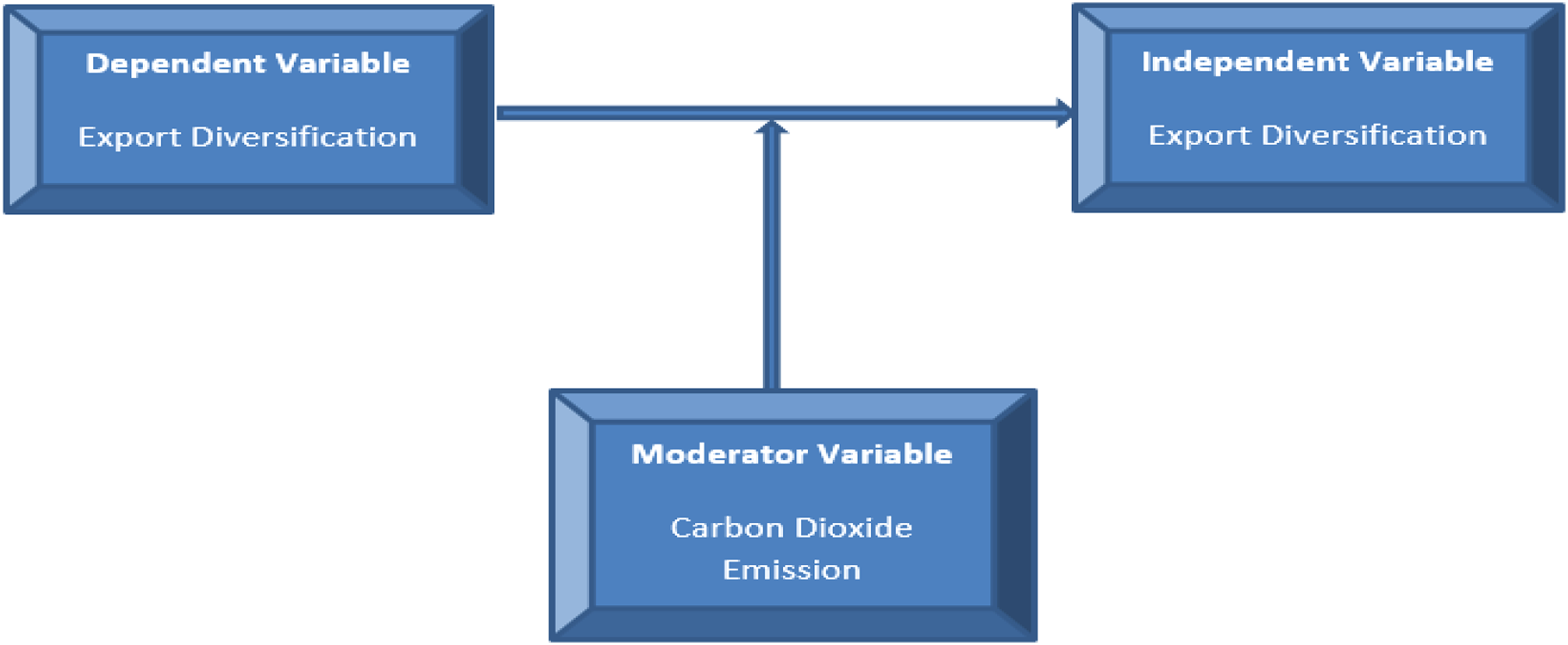
CO2 emissions as a moderator.
In conclusion, this comprehensive theoretical framework delves into the intricate relationships between export diversification, energy utilization, and CO2 emissions. It underscores the dual role of export diversification in fueling both energy demand and environmental impact, while highlighting the potential for economic growth driven by exports to either exacerbate environmental deterioration or pave the way for renewable energy solutions. The inclusion of CO2 emissions as a moderator allows for a nuanced examination of these relationships, promising valuable insights into the complex dynamics of economic growth, energy consumption, and environmental sustainability.
Constructing the export diversification (ED) index
The export diversification index is created using both extensive and intense export margins. Growth in new exports to new markets is represented by the first index's low value, while growth in traditional exports to traditional and modern markets is represented by the second index's low weight. Both sorts of exports have increased, which accounts for the poor value of export diversification. Theil index may be used to determine a country's export product diversification.


Variables descriptions and data sources
This study employs export diversification as a dependent variable. Several prior studies have utilized export diversification and sophistication as regressors, including the works of Rehman and Islam 10 ; Rehman et al.23,30
The primary explanatory variables in this study are disaggregated energy sources, categorized into renewable and non-renewable energy. Renewable energy encompasses energy generated from sources such as solar, geothermal, wind, biomass, and hydropower, expressed as a percentage of a country's total energy consumption. Non-renewable energy, scaled similarly to renewable energy, comprises energy derived from fossil fuels, including coal, oil, petroleum, and natural gas products. Prior research has also employed these categories of renewable and non-renewable energy, as evidenced in studies by Rehman et al. 23
The dataset used in this study spans from 1990 to 2020. Additionally, we incorporate outward foreign direct investment, institutional quality, patent activity, and human capital as control variables (Table 1).
Variables description and data sources.

Empirical methods
This paper has a dual objective: first, to estimate the fundamental impact of export diversification on disaggregated energy, and second, to examine whether the level of CO2 acts as a moderator, influencing the strength and even the direction of this fundamental relationship. This analysis unfolds in two phases. In the initial phase, we apply a simple panel quantile regression estimator to data from BRICS countries. In the subsequent phase, we extend the model to consider the moderating effect of CO2 by introducing an interactive term with export diversification.
Quantile regression (QR), as opposed to traditional least squares estimation, allows us to estimate conditional quantiles, including the median, of the response variable. This approach is particularly valuable when the assumptions of linearity and normality do not hold for the dataset. QR offers several advantages, with its robustness against outliers being especially noteworthy. This robustness becomes particularly appealing to researchers when examining conditional quantile functions. QR is recommended in cases where the relationship between variables is weak or nonexistent, or when the interaction term takes the form of an index, as suggested in the literature. 38
Furthermore, our dataset exhibits heterogeneity, necessitating estimation that considers the overall data distribution rather than just mean values. As depicted in Figures A1, A2, A5, A6, A9, and A10, the distribution of our dependent variables—renewable energy and non-renewable energy—deviates from normality. Consequently, given the nature of our dataset, panel quantile regression emerges as the most suitable estimation technique. The concept of quantile regression was initially introduced by Koenker & Bassett
38
and subsequently extended to panel quantile regression by Koenker,
39
Lamarche,
40
and Galvao
41
with the following functional form:



Results and discussion
Table 2 presents descriptive statistics for the variables under consideration. The average level of renewable energy stands at 25.7, with a standard deviation (SD) of 18.48, indicating a high level of efficacy and relatively low variability across the selected years and economies in our sample. In contrast, the mean for non-renewable energy is 84.39, with a standard deviation of 10.49, signaling increased fluctuation over the years within our chosen sample.
Descriptive statistics.
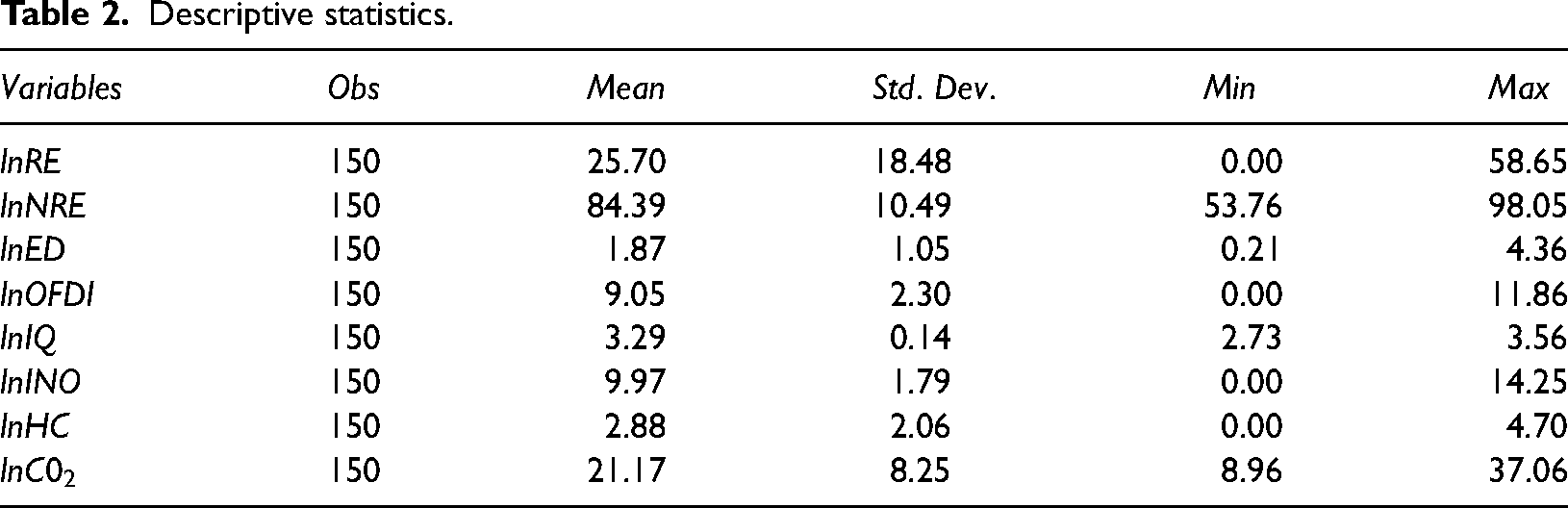
For export diversification, the mean value is 1.87, and the standard deviation is 1.05, suggesting less variability among the sampled nations and economies. The median value for outward foreign direct investment (OFDI) is 9.05, with a standard deviation of 2.30, indicating relatively limited variation in OFDI levels across the sample nations and years.
The institutional quality index, on average, scores 3.29 with a standard deviation of 0.14, suggesting limited variation in institutional quality across the selected years and sample. In contrast, the mean value for the innovation index (INO) is 9.97, with a standard deviation of 1.79, indicating considerable variation among the chosen nations.
Human capital, measured by secondary school attendance, has a mean of 2.88 and a standard deviation of 2.06, reflecting relatively consistent levels of secondary education enrollment over the chosen years and nations. However, the mean value of CO2 emissions (CO_2) is 21.17, with a standard deviation of 8.25, suggesting substantial variability in carbon emissions levels across both the sample economies and years. The standard deviations for all major variables included in the analysis appear to be relatively small. Table 3 displays the findings of the correlation matrix.
Correlation matrix.
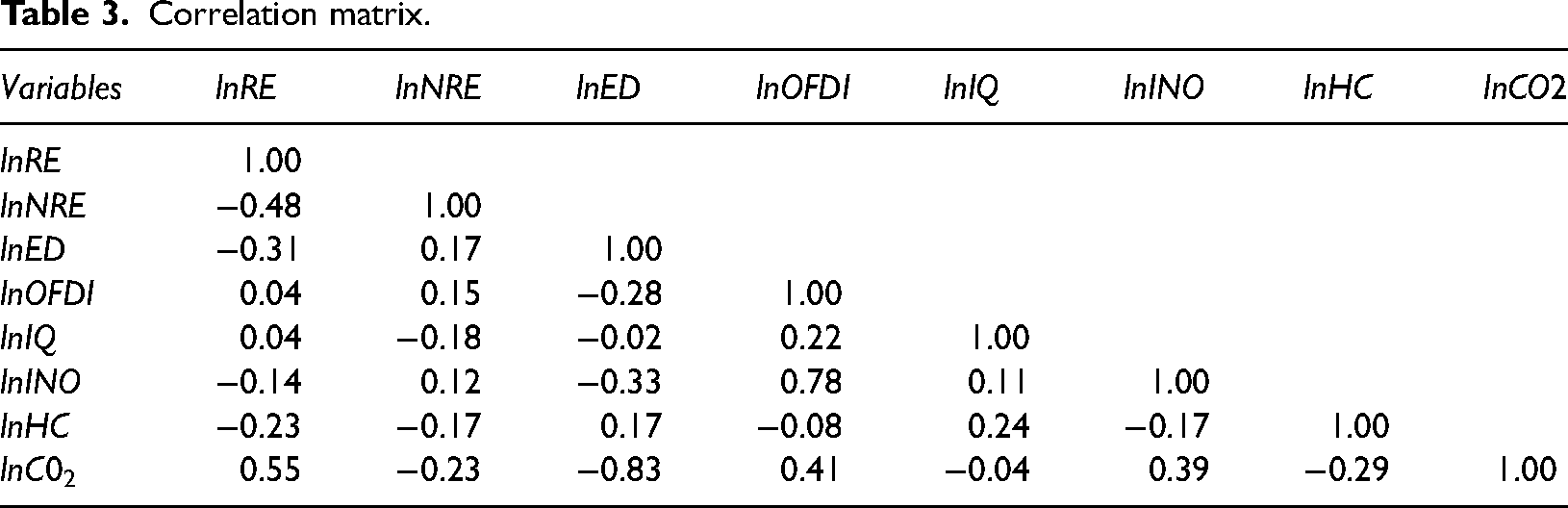
Regarding export diversification (ED), it exhibits a negative association with renewable energy and a positive correlation with non-renewable energy. Conversely, export diversification and CO2 emissions display positive correlations with renewable energy and negative correlations with non-renewable energy, respectively.
The results of the quantile regression show that the effect of export diversification on renewable energy is negative until the fifth quantile and positive above the fifth quantile. This indicates that if a country diversifies its export bundle to stabilize fluctuations in export revenue, the demand for renewable energy will initially decrease, but then the relationship becomes positive (Table 4). The positive coefficient of the square of export diversification indicates that, after reaching a certain limit, a diversified export bundle with a comparative advantage increases renewable energy consumption.
Panel quantile with MCMC optimization export diversification & renewable energy.
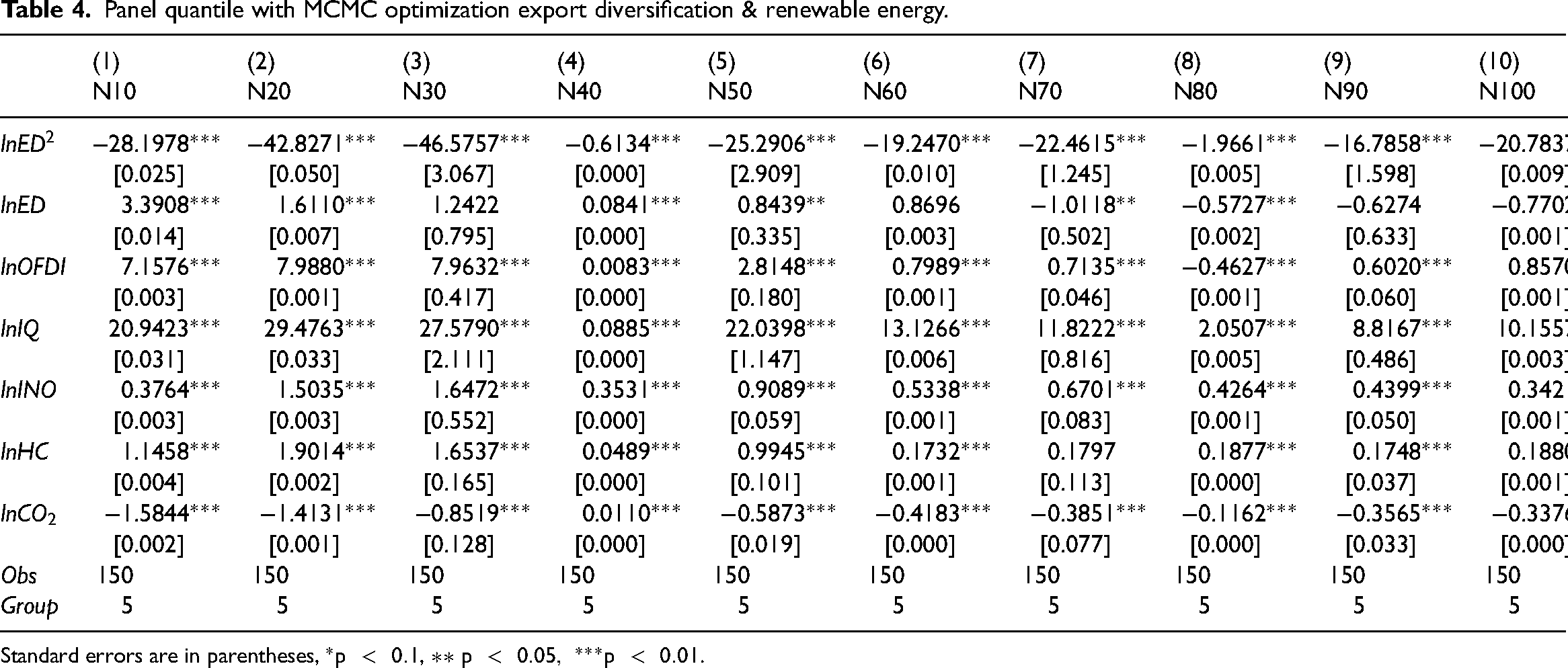
Standard errors are in parentheses, *
The authors predict that a more diversified export bundle would comprise significantly differentiated intra-industry commodities and a broader variety of inter-industry commodities in a country's exports. This composition will be determined by the quantity and quality of inputs as well as the level of technology. Consequently, diversified production activities will require increased energy consumption, both in the form of renewable and non-renewable energy, as well as other inputs. However, the production of renewable energy will necessitate greater technological advancement, highly skilled human resources, efficient financial resources, and awareness of the environmental degradation risks. Alternatively, a country will increase its demand for non-renewable energy if it has a comparative disadvantage in the production of renewable energy. Although the current literature on renewable energy demand has not addressed this issue, research studies such as Frondel et al. 42 and Connolly et al. 43 have demonstrated that economies with more efficient renewable energy resources tend to have a higher export volume because their exports encompass a wider range of commodities. They discovered that, on one hand, renewable energy consumption as a percentage of total energy consumption in Germany, France, China, Norway, and Denmark was 20 percent, 19.6 percent, 25 percent, 80 percent, and 69.4 percent in 2020, respectively, compared to 12 percent, 13 percent, 10 percent, 40 percent, and 32 percent a decade ago. This indicates that these countries have a comparative advantage in renewable energy. On the other hand, the average export diversification in these countries increased from 0.5 to 0.7 . This implies that diversification at a time when a country has a comparative advantage will increase the demand for renewable energy. The shift to renewable energy is driven not only by the lower average cost of production but also by the negative externalities of non-renewable energy in terms of environmental degradation. 44
The diversification of the export bundle requires specialized technology across various sectors. This enables a country to introduce diversified sources of energy consumption and reduce its sole dependency on a single source of energy production. Cohen et al. 45 found that between 2010 and 2020, the European Union's reliance on Russia for energy product imports remained relatively stable, with a slight increase from 54 percent to 57 percent. Member countries of the European Union, however, surpassed the expected 2020 renewable energy target of 20 percent with a 22.1 percent share of total energy consumption and are aiming for a 32 percent target by 2030. During the same decade, European countries also witnessed a remarkable 30 percent increase in their export volume.
For the BRICS economies, the impact of export diversification on non-renewable energy is significantly positive, as shown in Table 5. One possible explanation could be that, except for Brazil, which is highly self-sufficient in renewable energy, BRICS economies have not yet reached a stage of comparative advantage in renewable energy. The aggregated average cost of producing renewable energy is 30 percent higher than that of non-renewable energy. This forces these economies to meet their high energy demands through diversified exports from non-renewable sources of energy. Furthermore, as mentioned by Dudin et al., 46 BRICS economies face several challenges in financing renewable energy, including a lack of financing channels for small and medium-sized businesses and ineffective government reforms. However, these economies collectively represented 17 percent of world exports, 30 percent of the increase in global output, 41 percent of the world population, and 24 percent of world output in 2020. Therefore, the most viable alternative source of energy for these economies to meet the increasing export demand is the use of non-renewable energy. 47
Panel quantile with MCMC optimization export diversification & non-renewable energy.
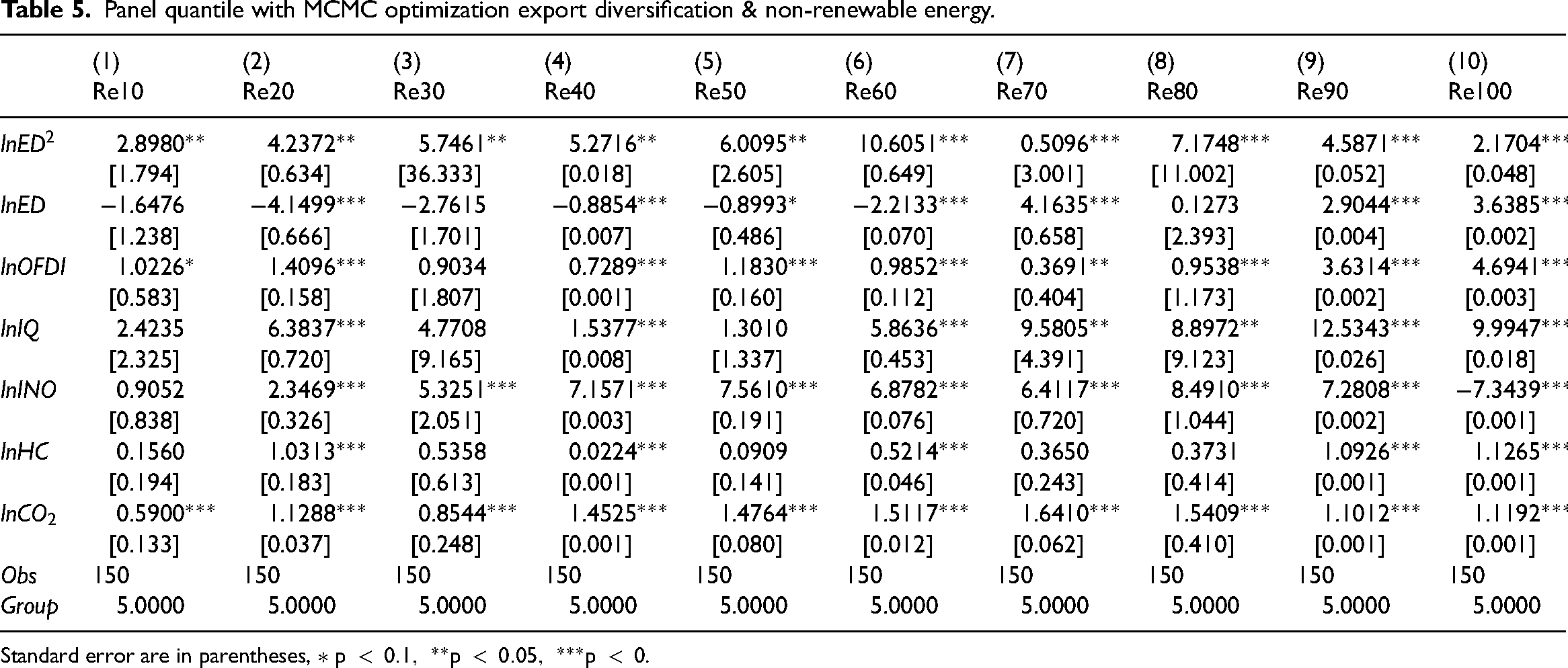
Standard error are in parentheses,
Human capital (education quality), innovation, and institutional quality, in addition to diversification strategies, have been identified as key variables influencing overall energy demand, particularly renewable energy. This is evident from the higher magnitude coefficients of these variables in the regression analysis of renewable energy. A country's intuition and human capital significantly impact its inclination and ability to adopt cleaner and renewable energy sources, which can contribute to sustainable growth, environmental protection, and improved public health. Our findings align with those of China and other developing countries.48,49 Foreign direct investment exerts a considerable positive influence on non-renewable energy but does not show statistical significance in the regression analysis of renewable energy, consistent with the findings of Sarkodie et al. 50
Overall, the data suggests that export diversification policies promote renewable energy demand in BRICS nations. Based on these findings, the current study recommends that policymakers in BRICS nations should expand their focus beyond income and economic complexity. To achieve this, BRICS countries may need to compete for breakthrough technology and new machinery that produce fewer pollutants. This can be made possible through the expansion of capital markets, financing services, and the implementation of build-operate-transfer and build-own-operate projects. Additionally, a financial participation model similar to those used by France, Norway, Germany, and the European Union Emissions Trading System (EU ETS) should be adopted. This model could involve private enterprises and individuals investing in renewable energy through equity, aligning with the concept of a financial citizen participation paradigm.
Moderation analysis of export diversification, renewable and non renewable energy
The t-values are significant for both the direct influence of export diversification and the moderating effect of CO2 on renewable energy, suggesting that CO2 serves as a partial moderator in the basic relationship between export diversification and renewable energy use. While the t-value is small for the direct effect of export diversification on non-renewable energy, it is significant for the moderating influence of CO2 (CO2*Export Diversification) in the basic relationship and hence CO2 plays a complete moderator role in the effect on non-renewable energy.
The result of the moderation analysis can be interpreted as follows: diversification of export bundles increases renewable energy consumption while CO2 emissions increase the positive effect of export diversification on renewable energy, and diversification leads to higher non-renewable energy consumption if a country already has high CO2 emissions (see Figure 2). This means that a nation with a competitive advantage in export diversification will boost renewable energy consumption, and such a country will grow renewable energy demand even more if CO2 emissions are high above average in the country. This appears to be rational since a country with comparative advantage is more likely to achieve sustainable growth while limiting environmental degradation. According to Leonidou et al., 51 increased export efficiency and market access enable a country to shift to environmentally friendly industrial processes, resulting in technological diffusion through positive externality and specialization in domestic technology. The findings are consistent with studies such as Green & Stern, 52 who argue that international norms to regulate carbon dioxide emissions are based on environmental policymakers and world organizations, and that this induces countries with comparative advantages in diversification to divert and rely on renewable energy sources to regulate carbon dioxide emissions. Such inducement towards renewable energy is rational as several hundred bilateral and multilateral international environmental agreements attempt to promote clean development and climate, requiring trading economies to reduce carbon footprints. 53 For example, the World Trade Organization (WTO) monitors possible trade protectionism, has an enforcement mechanism, a toolkit of regulations, and expanding case law in the environment sector, all of which contribute to a supportive framework for sustainable development and the green economy. 54
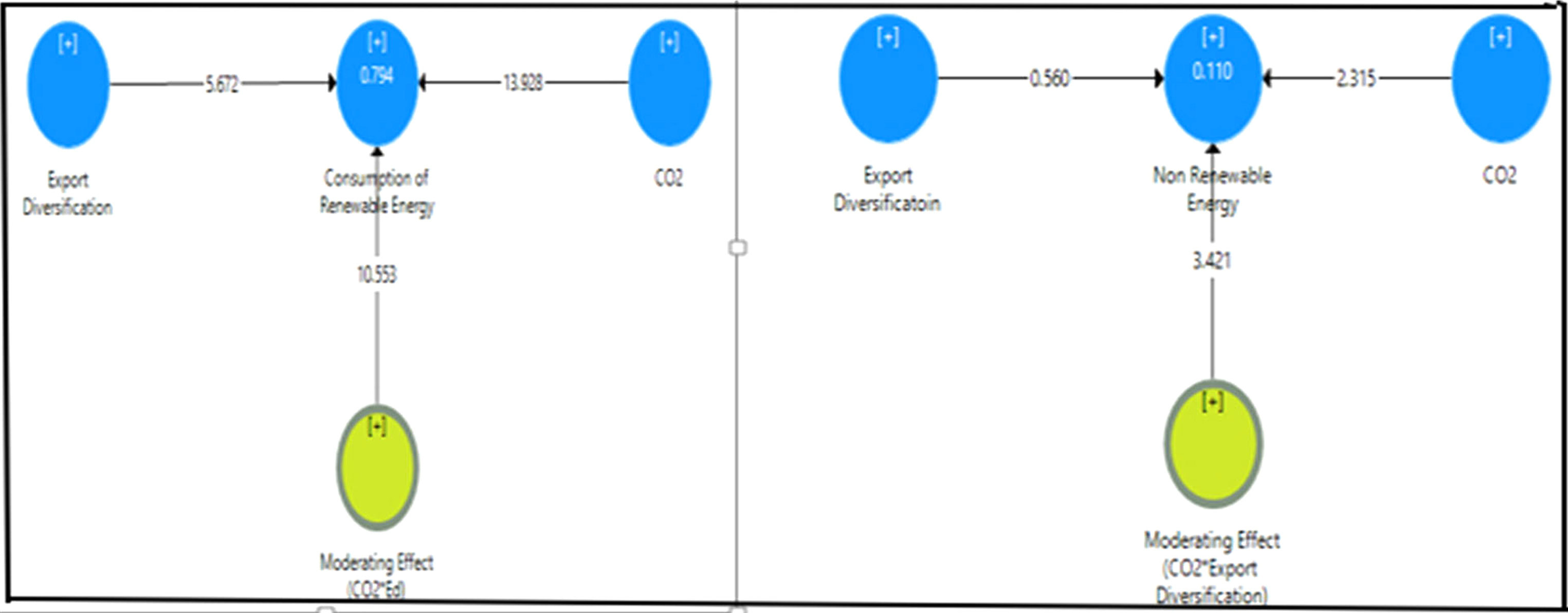
Moderating effect of CO2 emission on renewable and non-renewable energy. Note: The t-values in the arrows reflect path coefficient t-values, whereas the values in the circle representing the dependent variable (renewable energy) show the overall moderation effect. The + sign in the circle of export diversification and CO2 indicates that they have a positive impact on renewable energy, while the same + sign in the circle of moderating effect indicates that higher CO2 emissions strengthen the fundamental positive relationship between export diversification and renewable energy consumption.
Lin et al. 55 make a similar argument in support of the current study's findings, claiming that nations with minimal export restrictions are more likely to increase export volume, finding that a 25% effective tariff would cut export volume by 32.5 percent. They also discovered that a 6.3 percent rise in carbon dioxide emissions results with a 25% reduction in exports, with the result being more consistent in developing parts of the world. In view of the foregoing facts, shifting to renewable energy sources will allow economies to better manage CO2 emissions, lowering tariffs and hence export volume. As a result, a nation with a diverse export portfolio and minimal negative environmental externalities by focusing on renewable energy sources may effectively increase its export volume. In this aspect, a nation with a more diverse export portfolio is more likely to control CO2 emissions by enacting regulations that encourage the use of renewable energy in the manufacturing process.
Figures 3 and 4 provide a critical insight into the role of CO2 emissions (CO2) as a moderating factor in the relationship between export diversification and both renewable and nonrenewable energy usage. The interpretation below is enriched with empirical evidence and real-world examples.
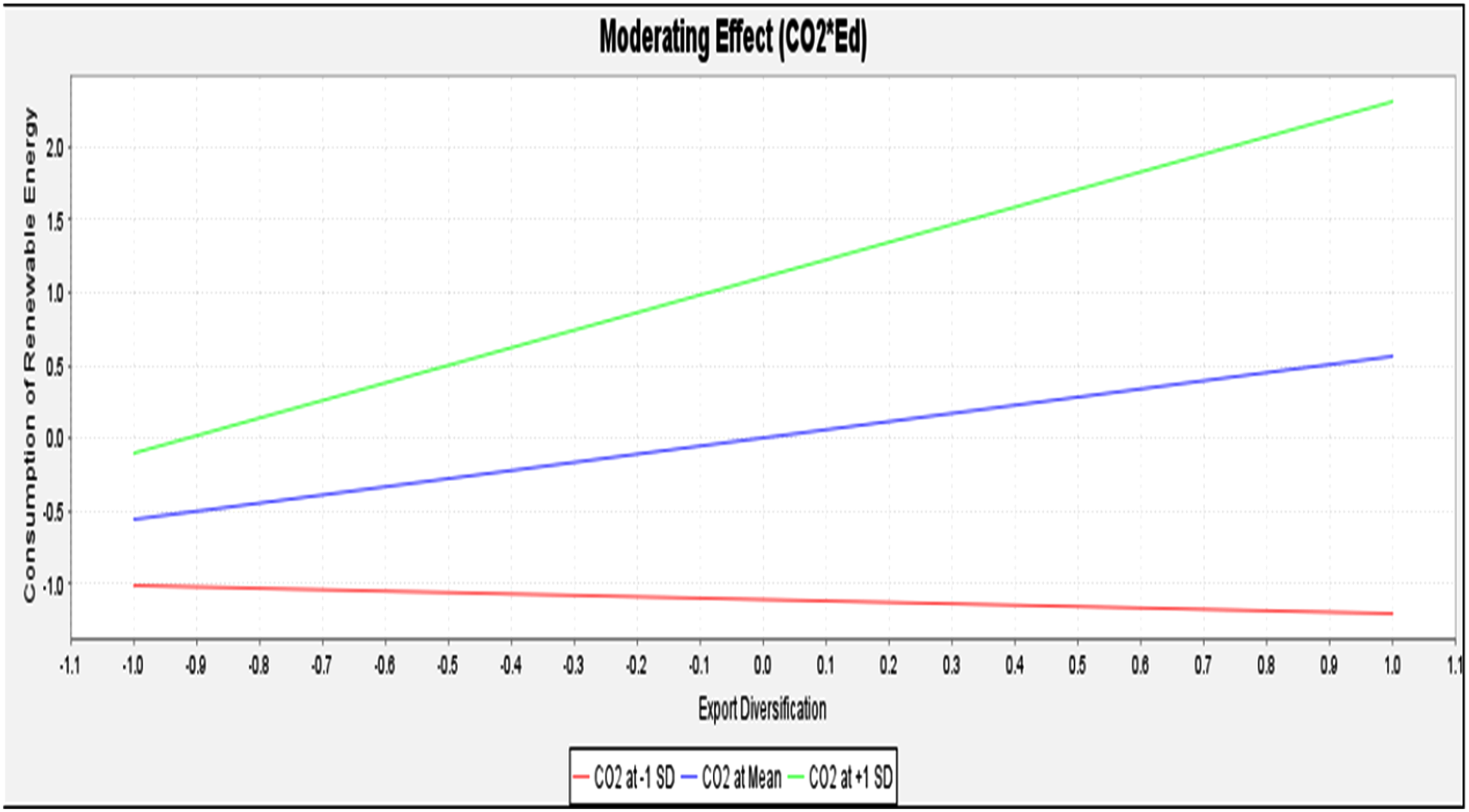
CO2 as a moderating factor.
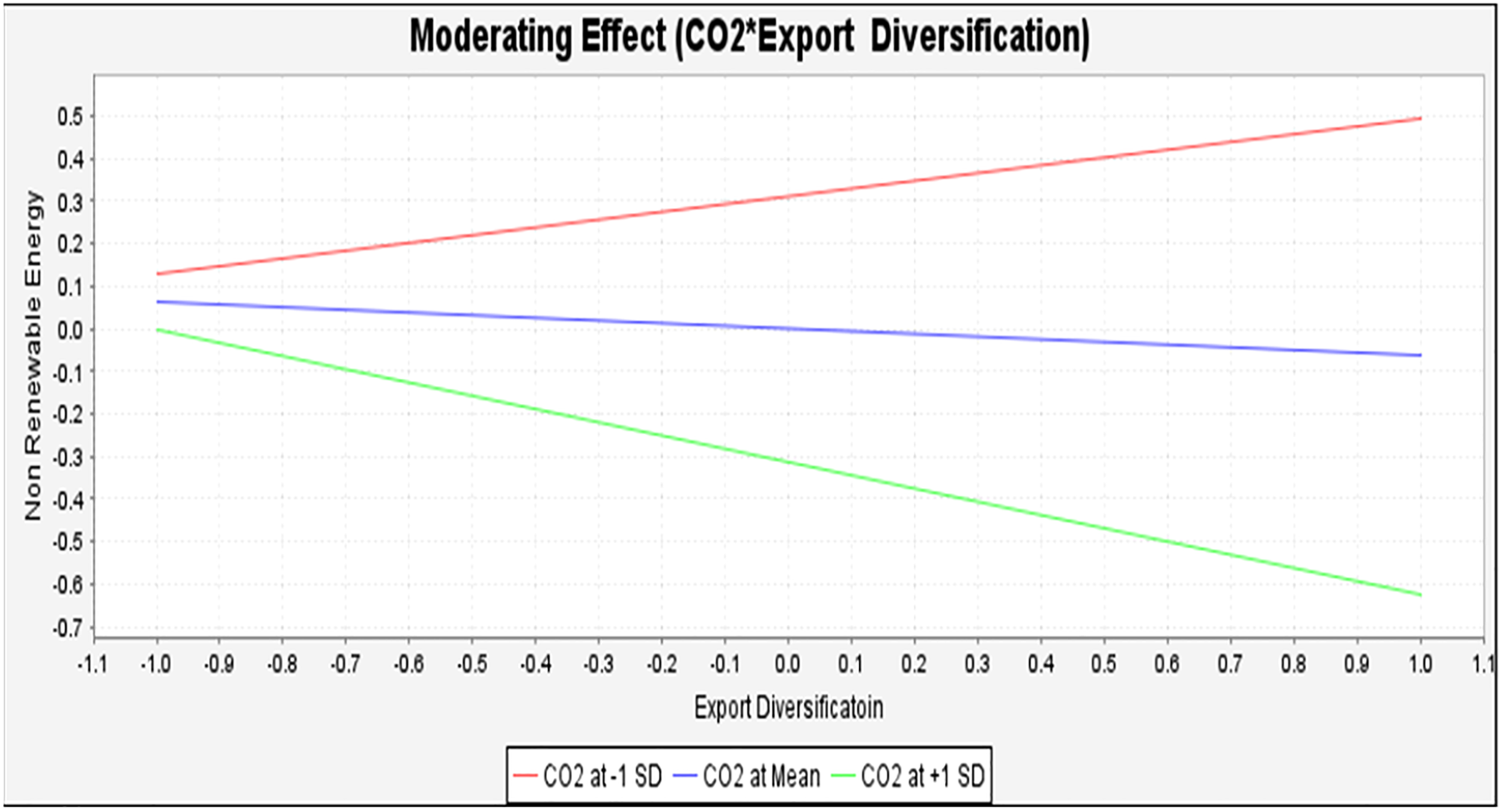
Moderating factor.
Moderation of export diversification and renewable energy usage
Figure 3 illustrates the underlying relationship between export diversification and renewable energy usage at various levels of CO2 emissions. The blue line represents this relationship when CO2 levels are held constant at the mean value. In this context, the relationship indicates a positive but insignificant trend.
Empirical studies, such as the research conducted by Jiang et al., 32 support the notion that nations increasingly prioritize renewable energy sources to reduce their carbon emissions. In this light, the red line, which represents the scenario of CO2 levels below one standard deviation from the mean, aligns with this empirical trend. Countries with lower carbon footprints are more likely to exhibit a positive but still insignificant relationship between export diversification and renewable energy usage.
However, it is the green line that offers a compelling insight. This line illustrates the relationship when CO2 levels are above the mean, and it is not only positive but also statistically significant. This observation suggests that countries with higher CO2 emissions have a stronger incentive to embrace renewable energy sources as a means of mitigating their carbon footprint and adhering to international environmental standards. 32
Consider the case of China, a nation characterized by high export diversification but also a substantial carbon footprint due to its reliance on fossil fuels. The blue line in Figure 3 represents the initial state of affairs, indicating a positive but insignificant link between export diversification and renewable energy usage. However, as depicted by the green line in Figure 3, this strategic shift aligns with the observed trend, where higher CO2 levels correspond to a statistically significant positive relationship between export diversification and renewable energy usage. 29
Moderation of export diversification and non-renewable energy usage
Similar trends are observed in the context of non-renewable energy usage, as illustrated in Figure 4. The blue line suggests a negligible positive effect of export diversification on non-renewable energy usage at constant mean CO2 levels, with an insignificant t-value. However, when CO2 levels are reduced by one standard deviation (as indicated by the red line), the relationship between export diversification and non-renewable energy usage becomes negative, though still insignificant. It is the green line that holds significance, showcasing that increasing CO2 levels by one standard deviation from the mean transforms the relationship into a positive and statistically significant one.
Empirical studies, such as those conducted by Kyophilavong et al., 26 have consistently established that higher export diversification tends to lead to increased energy consumption, especially in the context of nonrenewable energy sources. This empirical foundation supports the idea that nations may prioritize non-renewable energy when facing lower carbon emissions. However, as CO2 emissions rise, the imperative to shift toward cleaner energy sources becomes apparent, thereby making CO2 a crucial moderating factor. 26
In summary, Figures 3 and 4 not only illustrate but also validate the moderating role of CO2 emissions in the relationships between export diversification and both renewable and non-renewable energy usage. These findings align with empirical evidence and shed light on the real-world strategies adopted by nations to navigate the complex interplay between economic diversification, energy consumption, and environmental responsibility.
Conclusion policy implications, limitation, and future direction
Conclusion
The BRICS nations are under pressure to consume energy resources, both renewable and non-renewable, as a result of the export-driven flow of revenue development. In the context of the BRICS nations, we examine the link between export diversification and aggregate energy consumption (renewable and non-renewable energy) while taking into consideration the moderating effect of CO2 emissions as a proxy for environmental degradation. Our contribution focuses on the quantile-on-quantile regression approach's analysis of the moderating impact of CO2 emissions on the relationship between export diversification and disaggregated energy use.
We explore some motivating and intuition-focused findings. First, the study discovers that, at the initial stage, export diversification negatively impacts renewable energy consumption, but after a comparative advantage in diversification is achieved, the relationship turns positive. We also find that export diversification has a significant positive impact on non-renewable energy consumption, which turns negative once the comparative advantage is attained. This finding implies that diversification induces clean energy only when the comparative advantage is achieved.
Second, the major association between export diversification and renewable energy sources is partially moderated by environmental deterioration. It suggests that a country with a competitive edge in export diversification increases the usage of renewable energy. If the CO2 emissions are significantly above average, such a country increases its demand for renewable energy even more. Additionally, the essential link between CO2 emissions and non-renewable energy is totally moderated in the case of non-renewable energy by CO2 emissions. This condition suggests that increasing CO2 emissions are linked to the high demand for non-renewable energy.
Third, the use of renewable and non-renewable energy in the BRICS nations is greatly increased by outbound FDI. The employment created by FDI exports to other nations aids in importing energy-dependent technology. Fourth, both the usage of renewable and non-renewable energy is favorably impacted by the invention. The invention boosts the economic growth of energy-intensive businesses.
Fifth, human capital significantly boosts renewable and non-renewable energy consumption in the long run and short run. Human capital's potentiality and renovation in the commercial sectors increase energy consumption size. Finally, institutional quality has a positively significant contribution to spurring both renewable and non-renewable energy consumption in the long run and short run. Institutional quality promotes energy consumption through implementing legislation on the resource mobilization process.
Policy implications
The findings of this study hold profound implications for policymakers in BRICS countries. Firstly, it is crucial for these nations to prioritize the diversification of energy sources. This policy implication stems from our observation that as countries attain a comparative advantage in export diversification, their demand for renewable energy increases. By reducing their reliance on non-renewable energy and investing in renewable energy infrastructure, BRICS countries can bolster their energy security, mitigate environmental degradation, and stimulate economic growth. Diversifying energy sources is not only a strategic imperative but also a sustainable pathway towards long-term prosperity.
Furthermore, this study underscores the critical importance of strengthening environmental regulations and enforcement mechanisms. Policymakers should take proactive measures to ensure strict adherence to emissions standards and sustainable practices. Such regulations play a pivotal role in safeguarding air and water quality, protecting public health, and fostering innovation in industries. Beyond domestic benefits, robust environmental regulations enhance a nation's global reputation and attractiveness for sustainable investments, reinforcing its commitment to environmental protection and international cooperation.
Additionally, our research highlights the significance of promoting energy efficiency across industries, transportation, and households. Implementing policies and incentives to improve energy efficiency not only conserves valuable resources but also translates into cost savings for businesses and households. This cost-effectiveness contributes to economic stability and affordability while concurrently reducing carbon emissions. Energy efficiency measures should be an integral component of BRICS countries’ sustainable energy strategies.
In light of our findings, fostering international collaboration on renewable energy emerges as a key policy implication. BRICS nations should actively engage in knowledge sharing, technology transfer, and joint investments in renewable energy projects. This collaborative approach accelerates the development and adoption of cutting-edge renewable energy technologies, optimizes the utilization of renewable resources, and positions BRICS countries as global leaders in the transition to renewable energy. By pooling their expertise and resources, these nations can harness the full potential of sustainable energy sources.
Finally, investing in capacity building and education is imperative for the successful implementation of sustainable energy policies. A skilled workforce is essential for driving innovation in renewable energy technologies and facilitating the transition to cleaner energy sources. Moreover, a well-informed and trained workforce is crucial for effective environmental management. By prioritizing capacity building and education programs, BRICS countries can cultivate human capital capable of advocating for and implementing sustainable policies, ultimately bolstering their global influence in environmental diplomacy and solidifying their commitment to a greener and more sustainable future.
Limitations
Data availability and quality
One limitation of this study may be related to data availability and quality, particularly when examining variables across multiple BRICS countries over a significant time frame (1990–2020). Data inconsistencies or gaps in certain regions or years could impact the accuracy of the findings. Addressing this limitation would require further efforts to improve data collection and verification.
Generalization beyond BRICS
While the study focuses on BRICS countries, the generalizability of findings to other nations or regions may be limited. BRICS nations have unique economic and geopolitical characteristics, which could affect the relationships between export diversification, energy consumption, and environmental factors differently compared to other countries. Future research should consider extending the analysis to a broader set of countries for more comprehensive insights.
Complexity of moderation effects
The study highlights the moderating role of CO2 emissions on the relationships between export diversification and energy consumption. However, the complexity of moderation effects can present challenges in interpretation. Further exploration of the specific mechanisms through which CO2 emissions influence these relationships, such as policy interventions or technological advancements, could provide deeper insights.
Temporal dynamics
The study covers a substantial time frame from 1990 to 2020. However, economic and environmental dynamics evolve continuously, and the study's findings may not fully capture recent developments and shifts in policy or technology that could influence the relationships examined. Researchers should consider updating the analysis to account for more recent data and trends.
Future directions
Building on the temporal limitation, future research could adopt a longitudinal approach, continuously tracking the relationships between export diversification, energy consumption, and environmental factors. This would allow for a more dynamic understanding of how these relationships evolve over time and help identify emerging trends and patterns.
To enhance the generalizability of findings, conducting a comparative analysis between BRICS countries and other regions or groups of nations would be valuable. This approach would facilitate a more comprehensive assessment of the impact of export diversification and energy policies on economic growth and environmental sustainability.
Future research could delve deeper into the policy implications of the study's findings. Specifically, evaluating the effectiveness of different policy measures in promoting renewable energy adoption, environmental protection, and economic growth within BRICS countries would offer practical insights for policymakers. By addressing these limitations and pursuing these future directions, our research can continue to contribute meaningfully to the field of economics, energy economics, and environmental studies, providing valuable insights for policymakers and researchers alike.
Footnotes
Declaration of conflicting interests
The author declared no potential conflicts of interest with respect to the research, authorship, and/or publication of this article.
Funding
This work was funded by the Researchers Supporting Project No. (RSP2023R363), King Saud University, Riyadh, Saudi Arabia.

Appendicies
Below the figures A1 and A2 show the association of explanatory variables with dependent variables i.e., renawable energy and non-renewable energy. We see that majority of associations are significant allowing us to consider these variables for model specification.