



Abstract
Economic growth is contingent upon the financial sector expansion. A solid and well-developed financial industry can improve business opportunities. The financial sector has a decisive role to play in mitigating damage to the environment. Despite extensive research on sustainability, more needs to be accomplished in terms of pinpointing the keys to a world free of environmental degradation. The study aims to illuminate the relationship between CO2 emissions and variables such as non-renewable energy consumption, GDP growth, FDI, and information and communication technologies. Time series data for Pakistan from 1985 to 2021 is employed with the linear autoregressive distributed lag (ARDL) method, highlighting the underlying relationship between the variables. Moreover, the econometric model is derived from the STRIPAT function based on carbon as an environmental variable, while energy utilization and communication technology are population affluent. According to the empirical results of the current study, there is a negative connection between financial development and CO2. However, foreign direct investment, information and communication technologies, and non-renewable energy sources are positively associated with CO2. The study findings suggest that policymakers should promote more financial investment in greener technologies and digitization, and the government should also revamp its energy mix and emphasize alternate energy sources.
Keywords
Introduction
An upsurge in atmospheric carbon dioxide could be an essential factor contributing to global warming. Scientists and academics agree that rising atmospheric carbon dioxide levels majorly contribute to climate change, and urgent action is required to decarbonize environmental pollution. 1 Experts in economics and related fields from numerous nations employed various proxies, periods, and primary and secondary techniques to differentiate this problem.2,3 Greenhouse gas emissions in Pakistan rose 8.5% between 2012 and 2017 (not including forestry), as reported in the Climate Transparency Report. GHGs emissions are mainly caused by CO2 emanations, which are released when fuels are ignited. After a decade of relatively constant levels, CO2 emissions in Pakistan due to energy use have risen since 2018. With 32%, manufacturing is the most critical sector, followed by 28%, transportation and energy. The results of climate changes include shifts in rainfall patterns, droughts, abnormally high temperatures, and water shortages. 4 In 2018, the government of Pakistan claimed that temperatures have risen by 0.6°C on average over the past century, with carbon dioxide emissions significantly contributing to the worldwide heating phenomenon.5,6
Similarly, B.P. (British Petroleum) reported that global CO2 emissions have skyrocketed over the preceding three decades, increasing sharply from 11207.7 million tons in 1965 to 34,169 million tons in 2019. 7 In its Nationally Determined Contribution (NDC), Pakistan predicted that the cost of adapting to climate change-induced extreme events like heat waves, floods, and droughts would range from 7 billion to 14 billion USD per year. The number of incidents measured the damage that severe weather caused to lives and money in 2018. The released CO2 molecules have the most substantial adverse repercussion on the environment of all the GHGs. Over 121,000 residents of Pakistan yearly suffer from air pollution-related ailments, including cerebral infarction, cardiac arrest, cancer of the lungs, and chronic respiratory infections.
Over the past four decades, energy demand has contributed immensely to global economic growth. There are environmental repercussions of the escalating energy demand that endorses the expanding economy.8,9 According to a published “German Watch” report, Pakistan is one of the top 10 countries most in danger from climate change. Further, the country's GDP stands to lose 0.53% points as a result, as calculated by the “Global Climate Risk Index.” 10 Fossil fuels account for around 60% of Pakistan's energy mix, including power, heat, and transportation fuels. Over the past decade, which will end in 2019, the proportions of fossil fuels and technologies that emit no carbon in the country's overall energy mix have virtually remained unchanged. During that same period, there was also a 15% increase in carbon intensity, which can be attributed to the country's growing overall energy supply. The proportion of fossil energies in the world's prime energy supply must decrease to 67% by 2030 and 33% by 2050, and far lower carbon capture and storage levels still need to be implemented.
National Energy Production and Regulatory Authority (NEPRA) 2021 annual report states that out of Pakistan's total installed power generation capacity of 39,772 MW, 60% comes from thermal (fossil fuels), 29% comes from other sources (including), 9% comes from renewable (wind, solar, and biomass), and 3% comes from nuclear. The various parts of Pakistan's energy system are shown in Figure 1.
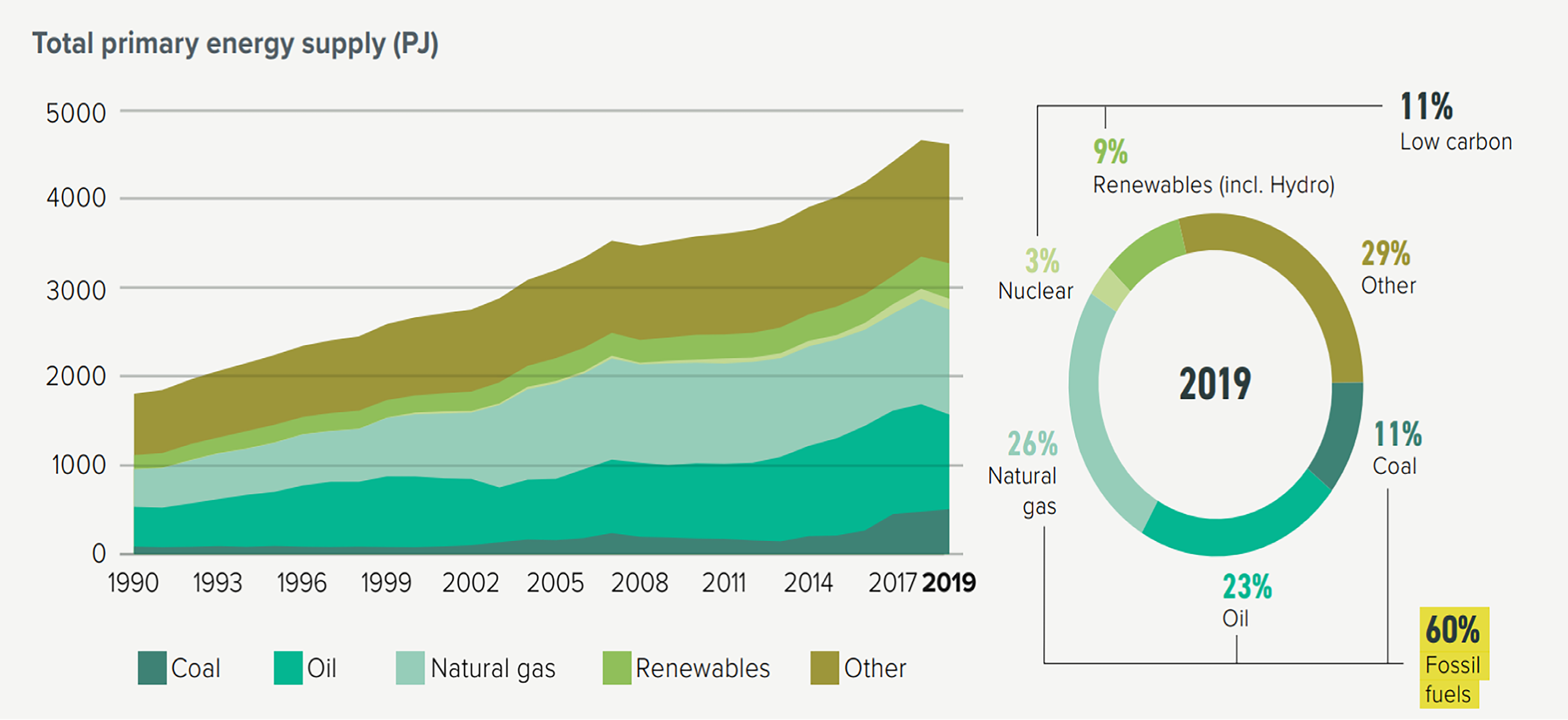
Energy production mechanism. Source: Climate Transparency Report.
Stock market enlargement, lubricant oil utilization, FDI, and monetary growth manipulate constructive affiliation with CO2 emission and cause environmental deterioration.11–14 In Pakistan, conventional energy emits carbon dioxide, which exerts inverse ramifications on the environment and human health.15,16
Scholars worldwide investigated financial development (F.D.) affiliation and influence on CO2 emissions and inferred ambiguous and diverse fallouts.17,18 According to the tie between globalization, financial progress, and CO2 emissions, globalization increases F.D. and energy efficiency, which primes to an intensification in CO2 emissions, as supported by other researchers.18,19 Some researchers have initiated contradictory evidence, arguing that F.D. causes an increase in green energy automation that help reduce CO2 emanations.18,20 The F.D. program improves the quality of the environment by encouraging businesses and governments to embrace environmentally friendly technology, hence reducing carbon dioxide emissions. 21 Some studies found a positive association between F.D. and CO2 emissions.22–24 F.D. is eminent in enhancing carbon dioxide emissions. 6 Increased global trade is a widely accepted result of F.D.25,26 Economic growth directly results from a more developed financial sector, which spurs expansion in the country's business sector, but these gains do not come without cost. 26
Similarly, FDI has amplified speedily over the last decades and has become a salient environmental phenomenon. 27 FDI and its possible implications on environmental quality in recipient countries are sensitive topics in light of the catastrophic rise in pollution in recent years, caused mainly by the GHG upshot, deforestation, and the loss of biodiversity.28–30 The two main theories that describe the effects of FDI on the environment worldwide are the Pollution Haven and Pollution Halo hypotheses. The PHH holds that FDI increases the CO2 levels of the host state because of lax environmental regulations.31,32
In parallel, rapid development and expansion of the information communication with technology (ICT) sector have improved the quality of life. The industry is now widely recognized as a preeminent influence on modern culture. 33 Rising ICT demand has fueled economic expansion and globalization but at a high price—a deteriorating natural environment. 34 Approximately 2% of all worldwide CO2 emissions are attributed to ICT, and this industry is also responsible for significant environmental damage.35,36 There might be direct, indirect, or retaliatory links between ICT and the environment.36,37 The utilization of ICT can substantially influence the advancement of environmental sustainability in developing countries such as Pakistan. Several fundamental ways exist in which ICT can actively contribute to promoting and maintaining environmental sustainability. 38 One illustrative application of Geographic Information Systems (GIS) involves using this technology to effectively map and monitor various aspects of the environment, such as land use, water resources, and biodiversity. This information possesses the potential to facilitate decision-making processes that effectively reconcile economic development objectives with conservation goals.
Information and communication technology (ICT) also contributes to environmental sustainability by helping with climate change adaptation and mitigation, environmental education and awareness, eco-friendly farming and production, waste management, and species protection. The widespread belief is that ICT is the most important component in drastically lowering carbon emissions and boosting economic growth.
39
More than 152 million people in Pakistan now have access to cellular networks, and an additional 60 million have access to third or fourth generation mobile internet. This figure is projected to surge in the coming centuries as data and smartphone prices continue to drop.40,41 Mobile revenues in Pakistan hopped by 3.7% in 2016 compared to 2015, and as a percentage of total telecommunications revenues, they surged from 69% to 77%.
42
The trends of the studied variables are presented in Figures 2 to 5. Further, the present research incorporates the integrated research questions given below.
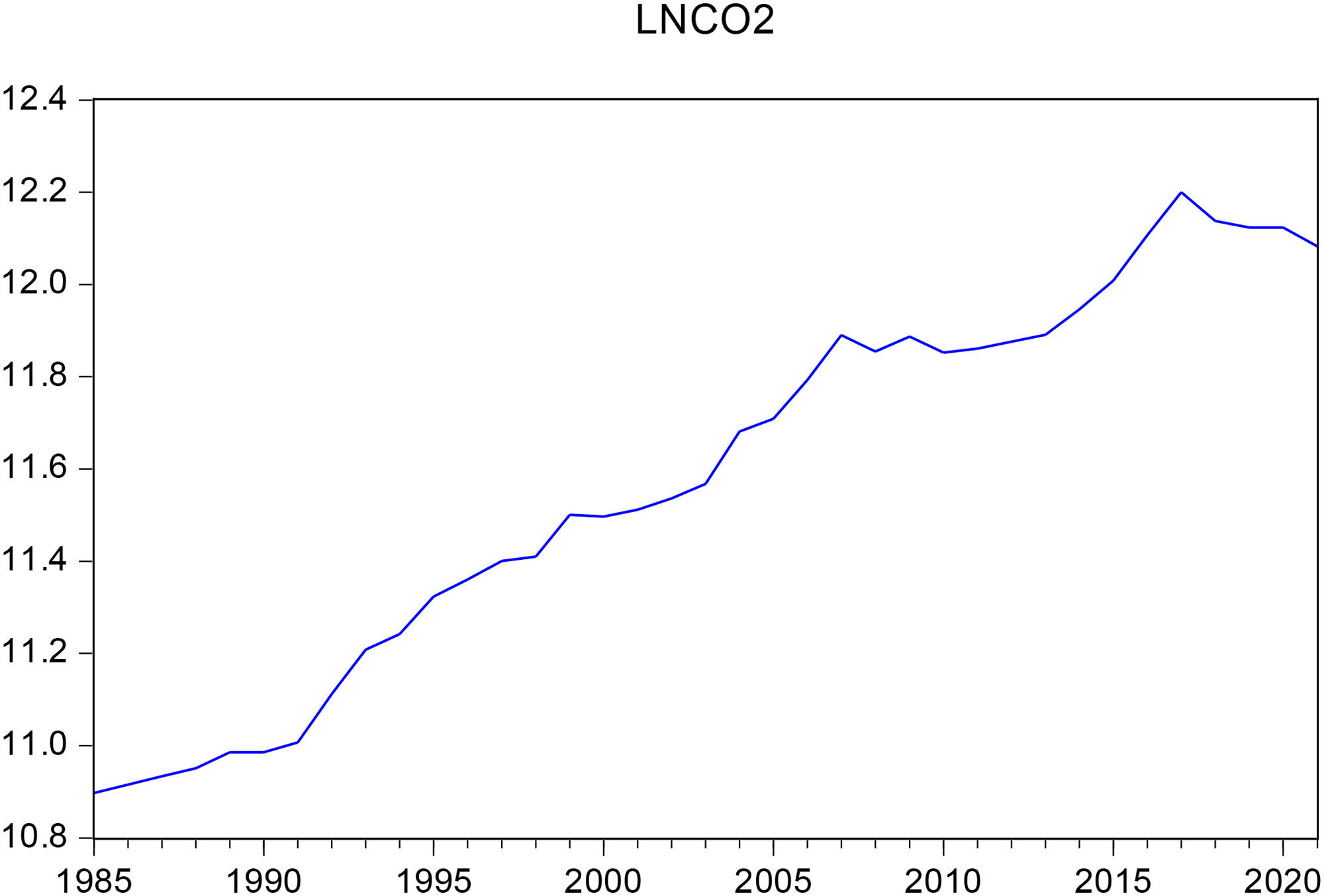
Carbon emissions.
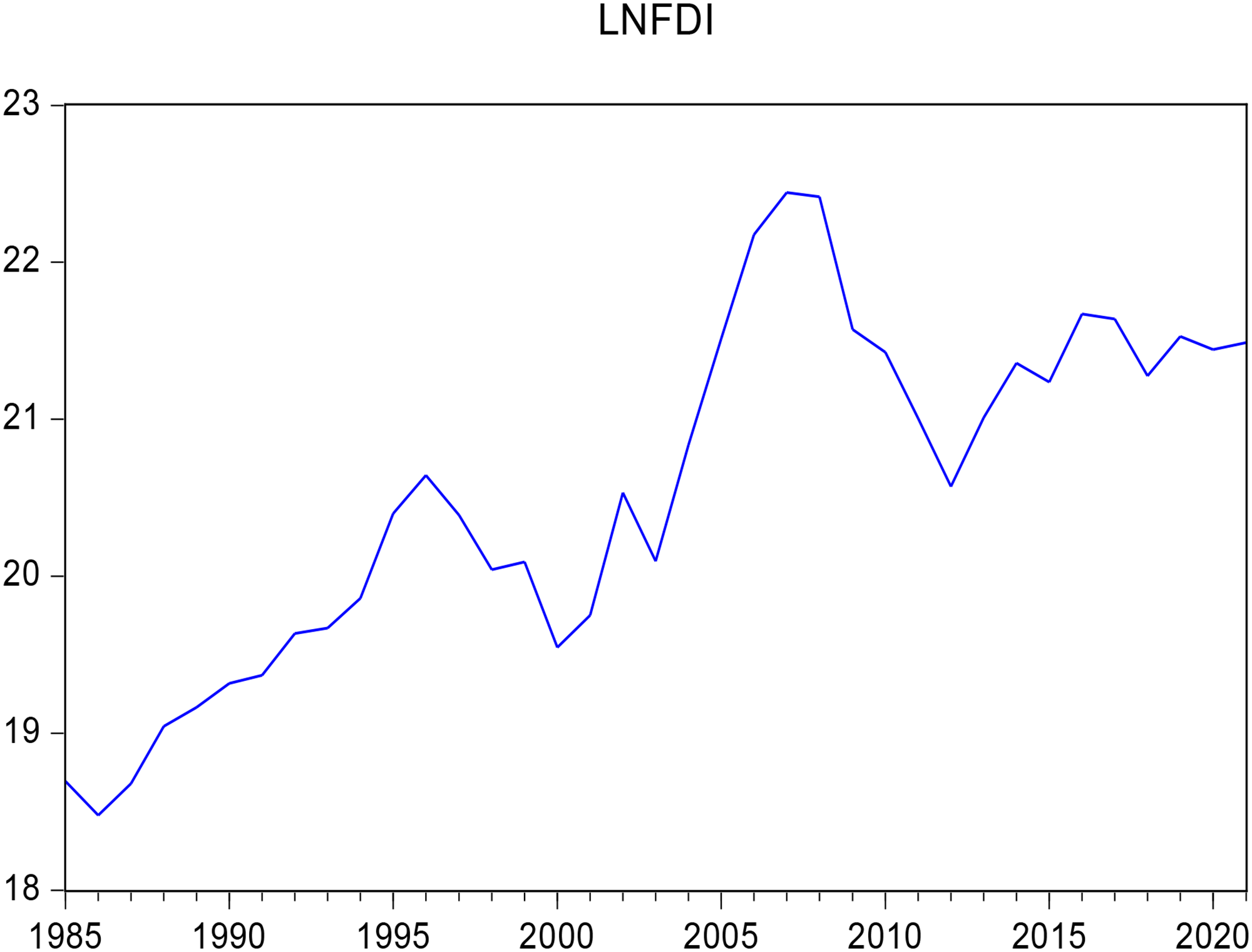
Foreign direct investment.

Information communication and technology.
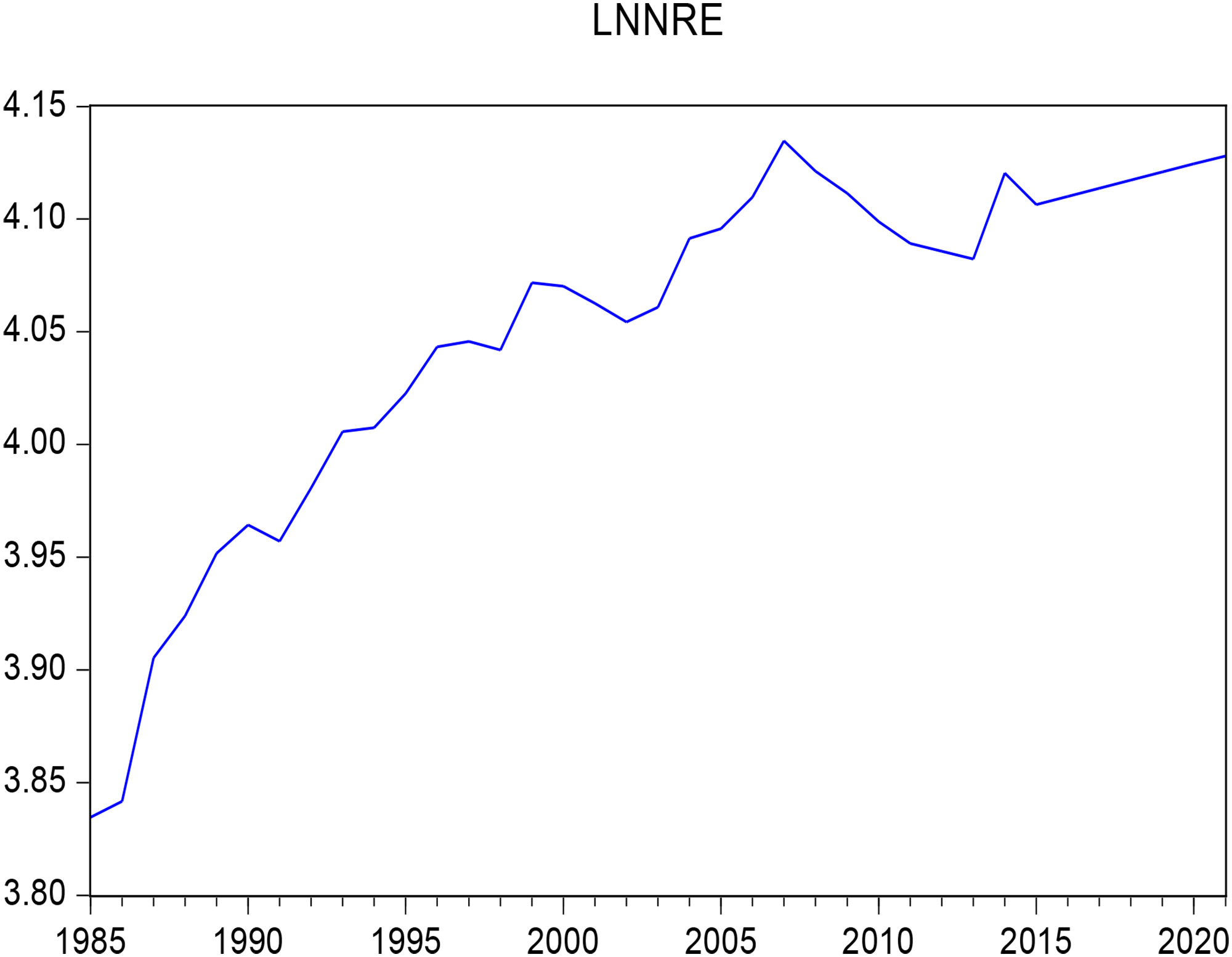
Non-renewable energy consumption.
The present research claims a modern idea to scrutinize the connection between information communication and technology with environmental sustainability. However, the previous studies do not focus much on the role of technology and environmental concerns.43,44 Supplementary, the same model does not address the protagonist of ICT, F.D., and fossil energy ingesting. Hence, prior literary studies focused on the impact of financial inclusion, manufacturing, and transportation sectors, but ICT's role is least attended.1,9,45,46 However, information communication and technology have a profound impact on environmental sustainability. Therefore, against this backdrop, our research takes part in the prevailing literature in many ways. First, our investigation tried to verify the energetic association between technology and environmental sustainability. Secondly, our study applied the latest econometric techniques like structural break analysis and Granger causality for robustness. Thirdly, trends like F.D., foreign investment inflow, and non-renewable energy (NRE) utilization are critically inspected to find the gap in adopting environmental sustainability. Fourthly, in the theoretical support, we discussed the Tragedy of the common's theory in linkage with energy usage and environmental sustainability. Fifthly, our research carried a fundamental Stochastic Impact by Regression on Population, Affluence, and Technology (STIRPAT) pattern for deriving the econometric model. However, the dynamic autoregressive distributive lag technique discusses the long-term and short-term outcomes. Finally, the existing analysis briefly discusses Pakistan's existing energy mix and provides practical implications and policies for government personnel.
Pakistan's geographical location is significant in examining environmental sustainability, trade, ICT, and F.D. Firstly, Pakistan is a pivotal link connecting South Asia, Central Asia, and the Middle East. The geographical location of this entity near significant markets such as China, India, Iran, and the Arabian Gulf renders it a crucial participant in regional and international trade. Secondly, Pakistan possesses two prominent deep-sea ports, namely Karachi and Gwadar. The significance of these ports lies in their role in promoting business and enhancing connectivity within the region, particularly in light of the CPEC, which connects Gwadar on the way towards China's western areas. Thirdly, undersea fiber optic cables facilitate global ICT infrastructure and data transmission. In summary, Pakistan holds a key position for sustainable development. The Economic Survey of Pakistan (ESP) 10 indicated some facts for 2020, like economic growth of 3.50%, foreign direct investment (FDI) inflows of 0.80%, research and development expenditure of 0.20%, and mobile subscription (per 100) people is 79.51%. Hence, Pakistan is the most feasible and appropriate study selection among the developing nations.
In continuation, our research is segregated into five parts. After the introduction, the next part focused on the literature assessment, fleetingly demonstrating the related judgment from the earlier study. The third segment, “Pragmatic methodology and data foundations,” explains the data sources and the methodology applied for analysis; the fourth share is empirical results and argument, which explains the practical outcomes and discussions. Moreover, lastly, the concluding remarks and suggestions” explain the policy implications and conclusion.
Literature review
The existing study discusses the inspiration of F.D., FDI, ICT, and energy utilization on the environment. However, environmental deprivation is the prime concern of our research.
Tragedy of the commons theory and energy usage
In economics and social science, the notion known as “the tragedy of the commons” first gained widespread attention after it was presented by Garrett Hardin in a paper published in 1968 and given the same name. It refers to a scenario in which individuals, motivated solely by their self-interest, work to the detriment of the community by depleting a shared resource or common property to serve their needs better. 47 This idea demonstrates the conflict that can arise when individual and group interests compete over utilizing shared resources. The Tragedy of the Commons essay also applies to shared or community-owned energy sources. Overuse and depletion of energy resources, including fossil fuels and alternatives like sunshine and wind, can occur when people are motivated only by self-interest. 48 The Tragedy of the commons can be shown in the following examples of energy consumption: Common pool energy resources, self-interest in energy utilization and misuse of the energy resources, collective action problems, and adverse properties of energy usage on the environment. Concerning energy usage, addressing the Tragedy of the commons is crucial for ensuring the availability of energy resources for current and future generations while mitigating the environmental and economic risks associated with unsustainable consumption. Hence, in developing nations like Pakistan, where energy resources are minimal, they need to be imported from other economies at the rate of environmental degradation with upsurge transaction charges. 49
Energy usage and environment
In order to attract the attention of policymakers and governmental authorities: various authors probed into the affiliation between NRE and CO2 releases as Wang et al., 50 Tanveer et al. 1 for Pakistan, Wang et al. 18 for OECD countries, Shen et al. 51 for China, and Rahman et al. 52 for Pakistan. Tanveer et al. 1 assessed the relationship between unemployment, energy absorption, economic development, FDI, globalization, and CO2 emissions in their study. The researchers employed the ARDL approach to inspect this association. The research used data sourced from Pakistan spanning the time frame of 1975 to 2014. The analysis outcomes revealed a significant and enduring adverse affinity between unemployment rates and CO2, CH4, and ecological footprint levels. These findings indicate the existence of a Philips environmental curve in Pakistan. On the other hand, energy consumption, greenhouse gas emissions, and ecological impact are all positively correlated. Increases in GDP are associated with reductions in carbon dioxide (CO2) and methane (CH4) emissions, as well as smaller ecological footprints. In comparison, Rahman et al. 52 verified the connection between F.D., GDP, energy consumption, and CO2 emissions. In Pakistan, data were gathered beginning in 1970 and continuing through 2016. According to the results of the study's experiments, CO2 in Pakistan were favorably influenced by GDP and energy consumption. Still, they were shown to be adversely impacted by F.D. and the square of GDP. Both contacts were significant. 53
Moreover, Adebayo et al. 54 explored the affiliation amongst GDP, coal utilization, F.D., and CO2 emission by utilizing the NARDL, DOLS, and frequency domain causality tests. In the instance of South Africa, the research gathered information from 1980 up until 2017. The scientific results of the research demonstrate that F.D. harms CO2 emissions. Despite this, globalization, the usage of coal, and GDP all pointed to a favorable impact on CO2 secretion. Using the ARDL approach, Usman et al. 6 demonstrated a connection between several factors, including trade openness, GDP growth, NRE, GDP growth, F.D., and carbon dioxide emissions. The research looked at information collected in Pakistan from 1990 up to 2017. The hypothesized findings suggest a negative connection between carbon dioxide emissions, fossil fuel consumption, and renewable energy sources. On the other side, Pakistan's rising reliance on fossil fuels, expanding economy, and liberalized trade policies all contribute to an increase in the country's CO2 emissions. In the short run, the use of renewable energy had a positive impact on CO2. In contrast, in the long run, the openness of trade and the use of NRE both had positive impacts. 53
During the same period, Khan et al.13,14 used the ARDL model to experiment with the haphazard connection between the utilization of renewable energy sources, economic development, and carbon dioxide emissions. The research included information collected from Pakistani sources between 1965 and 2015. The estimated results show that greater levels of carbon dioxide emissions have been caused by the ingesting of energy and the expansion of the Pakistani economy. The present study employed Al-Mulali and Sab
55
by a panel data methodology to assert the interrelationship among energy deployment, CO2 emissions, F.D. growth, and GDP expansion. The report was constructed using data from 19 countries, spanning the time from 1980 to 2008. The investigation's findings revealed that an escalation in energy consumption adversely affected economic growth, F.D., and environment. The research findings show a positive association between F.D. radiations and CO2 radiations in the long term. The Granger causality test provided evidence of causal relationships between the variables under investigation in both directions.
Information and communication technology and environment
The reverberation of ICT on environment can be seen in three separate ways. To begin, the “use effect” is relevant to the complete ICT production cycle, which includes manufacturing, assembly, processing, operations, distribution, and recycling of electronic trash. 56 Both point out that this effect drastically raises energy usage, increasing CO2 emissions. Next, there's the “substitution effect,” described by Ref. 57 as a change in manufacturing processes marked by dematerialization, decarbonization, and demobilization. When authentic goods and services are replaced with virtual ones, we should expect a dramatic drop in energy usage and carbon dioxide emissions. Email, e-books, and e-magazines are becoming more popular as alternatives to traditional methods of communication that are easier on the environment, such as reading printed materials and sending letters. The necessity for physical presence and mobility is reduced by virtual alternatives, including online meetings, telecommuting, online banking, e-government, e-commerce, and virtual learning. 56 Lastly, there is the “cost effect,” which happens when other goods and services become more popular due to lower pricing brought about by ICT advances. According to Shabani and Shahnazi, 56 there will likely be a rise in CO2 emissions due to this increased demand.
The bond between ICT and CO2 emission is the most debatable topic nowadays. This relationship is grabbed by several authors like Awan et al. 39 for emerging countries, Shahzad et al. 41 for Pakistan, Bhujabal et al. 58 for Asia Pacific countries. Shahzad et al. 41 explored the impression of ICT and FDI on CO2 emission by applying the NARDL technique. Information was collected for the study from 1990 to 2018 in Pakistan. According to the observed estimation, FDI's positive shocks benefit ecology and ICT. The study found that trade negatively impacted carbon emissions and the unfavorable shocks of FDI. Arshad et al. 59 used cluster analysis to underscore the bond between ICT, commerce, energy usage, economic growth, F.D., and CO2 emissions. Information on South and Southeast Asian economies. An estimated favorable ramification on CO2 emissions from F.D. and ICT was found in the study. F.D., on the other hand, decreased CO2 emissions in developed nations. The empirical findings also validated the two-way causality among F.D., ICT, and CO2 emissions. Raheem et al. 52 used the PMG method to find a correlation between F.D., ICT, GDP growth, and CO2 emissions. The study compiled data from the Group of Seven countries (G7) from 1990 to 2014. The findings indicated a long-term, positive relationship between ICT and CO2 emissions. When taken as a whole, ICT and F.D. suggested a protective impact against CO2 emissions.
To examine the connection between F.D., trade, GDP, internet use, and CO2 secretions, Park et al. 60 used a pool mean group (PMG) and Granger causality test, FMOLS, and DOLS. We used data from a subset of European Union (E.U.) countries between 2001 and 2014. Preliminary results indicate that in European Union countries, CO2 is favorably connected with internet usage and energy consumption and negatively associated with F.D., economic growth, and trade. F.D. was found to be causally related to elevated levels of carbon dioxide emissions and electrical consumption. In addition, the long-term relationship between renewable energy, ICT, and CO2 emissions was determined using the Panel unit root, panel co-integration, FMOLS, DOLS, and Driscoll Kraay approach Awan et al. 39 Ten developing countries’ worth of data were gathered between 1996 and 2015. According to the study's statistical estimation, urbanization and FDI improved ecological conditions. However, evidence shows that using technology and renewable energy reduces carbon dioxide emissions. They were using Driscoll-Kraay panel-adjusted estimators Haldar and Sethi 61 investigated the effects of ICT on greenhouse gas emissions, renewable energy, commerce, innovation, and F.D. From 2000 to 2018, information was collected for the study from 16 developing nations. The estimated outcomes verified the adverse effect of trade, rising ICT use, and the use of renewable energy on CO2 output.
NRE, conversely, has a notable beneficial upshot on CO2 output. Increased mobile use in conjunction with commerce, renewable energy, innovation, and F.D. also negatively impacted CO2 emissions, in addition to innovation and Internet use alone. Using PMG and Dumitrescu-Hurlin panel causality, Bhujabal et al.
58
determined that FDI and ICT affect emissions. This study uses information gathered from Asian and Pacific nations between 1990 and 2018. It was determined through statistical research that FDI and ICT have a detrimental impact. ICT and FDI were shown to have bidirectional causality by Dumitrescu-Hurlin.
Financial development and environment
As Chen et al. 62 point out, different opinions exist on how the country's financial system affects energy consumption and environmental quality. One school of thought holds that there are three separate ways in which F.D. might affect these factors. Firstly, the direct effect channel that intensifies CO₂ emissions is an improved financial system that makes it easier for consumers to get loans at lower rates, encouraging the purchase of energy-intensive goods like cars, homes, and electric appliances. 53 Secondly, when the financial system is well-established, companies may have easy and affordable access to cash, which allows them to grow. Companies may ramp up their expansionary operations and CO₂ emissions due to this business effect, which is made possible by better financial markets. Thirdly, increased stock market activity influences company and consumer confidence through a wealth effect. When people are more optimistic about the economy, they use more energy, which increases carbon dioxide emissions. Research conducted by63–67 provides credence to this viewpoint. On the other hand, there's an argument that state governments and organizations can invest in green projects with more inexpensive additional cash made available by a better-developed financial system. Companies and organizations in a financially stable environment are more likely to spend extensively on R&D, which in turn encourages the adoption of innovative technologies68–70 all lend credence to this viewpoint.
Many researchers focus on the affiliation between F.D. and CO2emissions, like Haseeb et al. 8 for the BRICS panel Zhao and Yang 71 for China, like Raza et al. 72 for Pakistan, in parallel Neog and Yadava 73 for India, carrying forward Habiba and Xinbang 74 for African countries; Shahbaz et al. 29 in France, Khan and Ozturk 75 for 88 developing republics. GDP growth, financial growth, trade liberalization, industrialization, energy ingesting, and CO2 emissions were all determined to be interrelated using the STIRPAT and EKC frameworks by Nasir et al. 76 Data was collected from Australian institutions and organizations between 1980 and 2014. Based on the data, the researchers postulated that energy use, industrialization, stock market growth, economic expansion, and CO2 emissions were all interconnected. 53 Reduced CO2 emissions were found to be a side consequence of increasing energy efficiency, unrestricted trade, and forest cover. Energy consumption, GDP, fixed investment, trade openness, and environment were all studied by Ali et al., 77 who also employed the ARDL method. Data were collected in Nigeria between 1971 and 2010 for this investigation. It was established through empirical investigation that GDP growth, energy consumption, fixed-direct-energy ingesting, and CO2 emissions all had a positive and statistically meaningful link. Trade openness, on the other hand, was significantly linked to reduced CO2 emissions.
Zhao and Yang 71 used multiple approaches, including the group mean, PECM, DOLS Granger interconnectivity test, FMOLS, and PVAR model, to investigate the correlation between F.D. and CO2 emissions. Multiple provinces in China were surveyed for the study between 2001 and 2015. The results confirmed that F.D. reduced CO2 emissions. Long-term, two-way causality was established between the variables in the study. Guo et al. 24 studied the effect of F.D. on CO2 emissions using a modified STIRPAT model. Information was gathered from China from 1997 to 2015. The experimental findings confirmed that F.D. was successful in lowering CO2 emissions. Estimates were calculated with and without utilizing subsample panels, as well as with and without using full sample panels. The results were different for some Panels.
Abbasi et al.
16
used ARDL simulation and frequency Domain causality (FDC) methodologies to investigate the connection between energy consumption, technical innovation, economic globalization, F.D., and carbon emissions. Information for Pakistan from 1990 to 2019 was compiled for the study. The estimated results of the investigation revealed the stimulating effect of F.D. and economic development and the positive inspiration of energy utilization on carbon emanations. The emission of carbon dioxide has been positively affected by economic globalization. Even so, technological progress impacted emission levels negatively. Using ARDL and the principle component technique, Raza et al.
72
argue that economic growth is linked to energy consumption, final demand, and carbon dioxide emissions. From 1972 to 2014, data were collected for this study from Pakistan. All of the variables used were found to affect CO2 emission positively in Pakistan, as determined by the calculated results. Neog and Yadava.
73
used NARLD econometric techniques to find a link between remittances, F.D., and CO2 releases. The research used information gathered in India from 1980 to 2014. The results demonstrated that F.D. reduced CO2 emissions. Both positive and negative remittance shocks affected CO2 emissions. The analysis in this study also confirmed the existence of long-term relationships between variables.
Foreign direct investment and environment
There is widespread discussion about the environmental impacts of FDI on host nations as it flows into emerging economies. This is why there are conflicting theoretical explanations for the link between FDI and pollution in the natural world. One school of thought holds that developing nations’ loose environmental rules attract FDI and that higher FDI levels will worsen environmental conditions in the economies that already suffer from them. Copeland and Taylor 78 put forth the pollution haven hypothesis (PHH), the foundation for this perspective. PHH proposes that when trade and investment become more open, polluting industries may relocate to economies with lax regulations. While lowering environmental requirements, developing nations compete for FDI. Where pollution-oriented industries are located is directly related to how lax a region's environmental regulations are. According to Copeland and Taylor, 79 a dirty business might move from an economy with strict regulations to one with laxer rules due to environmental legislation. According to the Pollution Halo Hypothesis, which was put forth by Mert and Caglar, 80 environmental gains may occur if foreign investors use cleaner technologies than local companies. In addition, FDI usually brings energy-efficient technology, which has an excellent environmental impact, according to Eskeland and Harrison. 81 It is worth noting, too, that trade can serve as an instrument for specialization; polluting businesses tend to cluster in nations with lax laws, whereas cleaner industries tend to cluster in countries with strict ones. Copeland and Taylor 82 put it this way: this dynamic could change the mix of sectors in an economy.
Numerous scholars have investigated the correlation between FDI and CO2 secretions Tanveer et al. 44 for Pakistan Khan et al. 12 for Pakistan, Salahuddin et al. 83 in Kuwait, Abdo et al. 84 for BRI countries, grabbing more Rafique et al. 85 related for BRICS republics, Farooq 86 for Asian countries, in parallel Christoforidis and Katrakilidis 30 for central and Eastern European countries, and Shinwari et al. 32 for China and BRI countries. Using a dynamic ARDL simulation model, Khan et al. 12 investigated the correlation between CO2 emissions and GDP growth, international commerce, FDI, urbanization, technological advancement, etc. The study used data gathered from 1971 to 2016 in Pakistan. The data show that energy use, F.D., trade openness, and FDI all favorably impact CO2 emissions in Pakistan. In contrast, long-term CO2 outflow was influenced negatively by economic expansion, urbanization, and innovation. Positive effects of energy, urbanization, F.D., and globalization on CO2 emissions were seen in the short term of the study. In contrast, short-term CO2 emissions are negatively impacted by trade, innovation, and FDI.
Shahbaz et al.
29
used an ARDL and a novel unit root test to verify the link between FDI, F.D., energy innovation, GDP growth, energy ingesting, and CO2 emissions. The study used data collected from 1955 through 2016 regarding France. The results show that in France, FDI and energy innovation favorably affect CO2 emissions. The actual data from the study revealed a negative relationship between F.D. and CO2 emissions. The present investigation employed Khan et al.13,14 ARDL model to investigate the tie between macroeconomics, F.D., and CO2 emanations. The investigation utilized data collected in Pakistan from 1982 to the present. It was projected that in Pakistan, the upward trajectory of stock prices, GDP, energy consumption, and FDI would positively impact CO2 emissions. Nevertheless, domestic funding had a detrimental effect on carbon dioxide (CO2) emissions.
The literature summarized that a few studies focused on theoretical support for energy and the environment. Hence, the present study supported a fascinating theory, “the tragedy of the commons theory,” for energy and environment, while such theoretical support is missing in the prior literature review. Furthermore, the econometric model derivation is based on the Stochastic Impacts by Regression on Population, Affluence, and Technology (STIRPAT) model, which was given less attention in the previous studies. Additionally, the dynamics of the technology and environment with essential links to energy ingesting and F.D. need to be more critical, which is contributed by our research.
Methodology and research techniques
As a dependent variable, CO2 emissions are linked to this study's independent variables of FD, FDI, ICT, and NRE. The recenter search scrutinized the Pakistani time series frame of data from 1985 to 2021. The World Bank indicator WDI 87 provides data for statistical estimation. In Table 1, we describe the variables. To ensure reliability, it is common practice to logarithm data from variables.
Variables explanation.

Econometric strategy utilizing mathematical models
The STIRPAT approach stance for “Stochastic Impacts by Regression on Population, Affluence, and Technology” is a statistical technique used in environmental research to investigate the connection between human actions and environmental consequences. Before its expansion, the STIRPAT model was known as the “IPAT model” in ecology and environmental economics. It originated from various scholars’ writings and was designed as a framework for comprehending the processes influencing environmental effects. The origins of the model lie in the late 1960s and early 1970s. Some important people and events in the history of the STIRPAT or IPAT model are listed below. Moreover, the STIRPAT model aids researchers in identifying and quantifying the most important drivers of environmental change. To achieve this goal, it analyzes the connections between demographic and economic changes, technological innovations, energy consumption, and environmental impacts such as carbon emanations, deforestation, water pollution, and others.
By synthesizing the ideas of Ehrlich and Holdren
88
and others, the STIRPAT approach was developed to quantitatively analyze the variables at play in environmental impacts.
89
proposed its usefulness in analyzing the effects of rising populations, rising incomes, and new technologies on environmental sustainability. GIS has become an indispensable tool in environmental research and policy analysis. The mathematical form for STIRPAT is given in below equation 1.
Equation (1) gives the statistical intercept value, α, β, γ by statistical values, and (t) time gives the model dated. In addition, I represent the environmental factor, namely CO2 production, P represents the population that consumes NRE resources, A represents affluence, which is energy affluence, and T represents ICT. At the same time, e represents the residual term in the mathematical equation. The basic econometric model originated and works for estimating the symmetric relationship of the exogenous and endogenous using the ARDL model.

The difference estimators and residual terms are represented by the mathematical Equation (3). The long-term estimates are represented by the coefficients (i = 1…5) in the Equation, whereas the short-term effects are revealed by the coefficients (i = 1…5).
Pesaran et al.
92
established the concept of critical values, commonly called upper and lower-bound criteria. The computation of co-integration findings involves the substitution of the F-statistic value for both the higher (I (1)) and lower (I (0)) crucial values. For co-integration to be considered legitimate, the F-statistic must exceed the upper critical constraint. When the F-statistics value falls within the range of the minimum and maximum values, the results can be considered inconclusive. The ideas are designed for more extensive samples than the 25–40 years used by Narayan
93
critical values. Inter-variable co-integration causes the long-run estimate equation to be
Equation (4)'s long-run estimations, denoted by (i = 1… 5), correspond to the error value in the Equation. Error correction terms (ECTs) confirm a causal link between two variables. The ECT Equation is as follows: the econometric model requires a negative and statistically significant outcome.

The
Granger causality test
If two or more time-series are co-integrated, there must be Granger causality between them, either one-way or in both directions. Granger 94 stated that assessing the correlation between variables is insufficient for fully comprehending the link between two or more time series. Some relationships may be misleading and unhelpful due to the potential presence of an unaccounted third variable. Moreover, correlation alone does not establish causation between variables. If our series are co-integrated, we must verify our causality results. Rejecting the null hypothesis indicates the presence of Granger causality.
Empirical results and discussion
The illustration of variables and their estimates are described in Table 2. The table determined that LICT has the uppermost (15.0)mean worth, and F.D. has the lowest (3.145) mean value. The standard deviation for ICT is the highest (3.778) and lowest (0.080) for NRE. Other estimates include the maximum value for LICT (18.92) and the lowest for LFDI (3.39). In continuation, the highest kurtosis value is shown by L_NRE (3.17) and the lowest for LICT (1.67). In the same way, LICT indicated the largest value (3.77)for standard deviation and the lowest for L_NRE (0.080). Hence, all the evaluated criteria, such as skewness, probability, kurtosis, and standard deviation, showed white-sound results.
Descriptive statistics.

Stationarity tests
Unit root tests are essential in econometrics for evaluating the stationarity of time series data, a fundamental assumption in various economic models. The Augmented Dickey-Fuller (ADF) test and the Phillips-Perron (PP) test are often used for this purpose. The ADF test assesses the presence of a unit root in a time series dataset to determine if it is non-stationary. Rejecting the null hypothesis of a unit root indicates that the series is stationary. The PP test, a non-parametric substitute for the ADF test, offers comparable insights into stationarity through a modified Dickey-Fuller regression.
Both tests are essential for econometricians working with time series data, notably economic variables. The tests assist researchers in identifying the long-term patterns of variables to evaluate if they display trends or random fluctuations. These tests are essential because they help analysts choose suitable models and verify the stability of their results by establishing the stationarity of the data being analyzed. Accurate parameter estimates and reliable hypothesis testing are crucial in econometric studies to enhance the credibility and validity of economic analyses and policy recommendations. The present research uses Augmented Dicky Fuller (ADF) and Philips Peron (P.P.) to investigate whether the variables listed in Table 3 are stationary. The unit root test's statistical estimates revealed a confusing ranking of co-integration among the determined variables. Studied constructs are fixed at the zeroth order (I(0)), and the first difference (I(1)) is specified at the second order (I(2)), but not the variables.
Unit root results from ADF, PP, and ZA.

A significant level of 1% is indicated by three asterisks (***), 5% by two asterisks (**), and 10% by one asterisk (*).
Furthermore, Table 3 shows that CO2, F.D, and FDI are not stationary at levels both in ADF and PP. They are stationary at I(1), while ICT is not at ADF levels but PP. Lastly, NRE is static at levels and I(1) in ADF and PP. Additionally, the present research focused on the advanced unit root test by Zivot and Andrews 95 that gives the structural breaks analysis. However, the prior literature concentrateson the conventional unit root test. The structural break analysis showed unit roots with structural breaks.
F-bound statistics
Table 4 lists the specified limits. The F-statistics are more incredible than I (0), and I(I) is significant at the 5% level, confirming the criterion of. 93 This proves that the variables under study are co-integrated.
Bound test estimates.

Linear ARDL empirical findings
Table 5 displays the statistical outcomes over the long and short term. F.D. has astonishingly unfavorable and considerable short- and long-term effects on Pakistan's environment. For Pakistan, the findings are consistent with those of Usman et al. 6 and Rahman et al., 52 and for China, those of Zhao and Yang 71 and Lahiani, 96 for Kuwait with those of Salahuddin et al., 83 for the Group of Seven (G7), with those of Raheem et al., 85 and for developing nations with those of Khan and Ozturk. 75 These findings imply that a 1 unit rise in F.D. is responsible for −16.71% decrease in environmental pollution.
Long run estimation (ARDL).

A significant level of 1% is indicated by three asterisks (***), 5% by two asterisks (**), and 10% by one asterisk (*).
The t-statistic is represented by the symbol {}, whereas the standard error is shown by the value in square brackets [].
As per the Akaike Information Criterion (AIC), the ARDL specification with lags (1, 0, 0, 0, 0) is chosen.
Fantastically, the CO2 emission revealed positive findings with FDI inflows (FDI) for perspectives of short and long levels in Pakistan. Both in the long and short, findings are positive and significant. The statistical results are homogeneous with Khan et al. 12 and Khan et al.13,14 for Pakistan, Salahuddin et al. 83 for Kuwait, and Farooq 86 for Asian republics, and Awan et al. 39 for emerging nations. The results of this study corroborate the pollution haven hypothesis, which states that the host country may suffer due to FDI because of its lax environmental regulations. Since 1990, it has been popularly admitted that FDI fosters economic activities that boost CO2 secretions, particularly in emerging economies. FDI can have a noteworthy impression on carbon output in emerging parsimonies, but the nature of that impact and how much of an effect it has varies significantly by circumstance. However, there are a few reasons why FDI may cause emerging economies to produce extra greenhouse gases: FDI can boost production in developing countries despite a lack of environmental rules and an unfavorable energy mix to the host country. It's a common misconception that FDI automatically leads to more pollution. FDI has several potential benefits for developing economies, including promoting greener technology, increased energy efficiency, and support for expanding renewable power sources. Increases or decreases in carbon emissions through FDI are possible, depending on the policies of the congregation country's government and the objectives of the multinational corporations investing in developing nations. 44
Astonishingly, CO2 emission indicated a positive association with ICT in Pakistan's long rapports and short terms. The findings are consistent with Haini 97 for ASEAN unity, Qayyum et al. 98 related to South Asian economies, including Pakistan, Bangladesh, Sri Lanka, and India, and Raheem et al. 85 for G7 republics. Several interrelated causes contribute to environmental degradation in emerging countries as technology advances. The increased use and disposal of electronic gadgets directly result from the technological boom. Toxic chemicals and heavy metals can be released into the environment through improper e-waste disposal and recycling. The results of developed ICT infrastructure are the rise in the economy, trade expansion, well-developed economic structure, and expansion of globalization. All these factors are behind environmental degradation. ICT is considered the prime contributor to economic growth and development. ICT has notably influenced several economic and social sectors of the economy such as business, entertainment, education, trade, FDI, and capital growth. ICT has become an essential component in society by improving the standard of living. After 2005, an increase in the usage of ICT was observed globally. There has been an extreme upward rise in mobile cellular telephone subscriptions. Currently, 51.2% of people use the internet globally, confirming the increase in broadband services.
In contrast, some research studies proved the negative link between environmental concerns with Tanveer et al. 1 for Pakistan's transportation sector, and Ulucak et al. 99 determined the BRICS parsimonies. The results differ due to different data spans and sample countries. Furthermore, few developing countries have the same environmental legislation, economic situations, or technological adoption rates, contributing to various unique issues. To solve these complex concerns and promote sustainable development, efforts to reduce environmental pollution in developing countries generally combine technological advancements, legislative reforms, public awareness campaigns, and international cooperation.
The long- and short-term correlation between Pakistan's carbon dioxide pollution and NRE sources was weak and inconclusive. For Pakistan, the findings match those of Refs.44,72 For Nigeria, they match those of Ali et al., 77 and for the 19 chosen, they match those of Ref. 55 Pakistan is experiencing a severe energy crisis despite its increasing energy production due to its burgeoning industrial and population needs. Natural gas, oil, coal, and fossil fuels are crucial to energy production and are necessary for Pakistan to meet energy demands. Each year, fossil fuels provide more and more of Pakistan's energy needs. Moreover, Pakistan faces intense monetary pressure to rely on imports of fossil fuels from other countries.
Scholars can use the Tragedy of the commons idea to examine the unsustainable extraction of fossil fuels and its environmental, economic, and social repercussions. This framework encourages the examination of policy interventions, regulatory frameworks, and international cooperation methods to reduce the excessive use of fossil energy from an academic standpoint. It motivates scholars to explore the intricacies of resource management, highlighting the significance of identifying solutions that harmonize human interests with the enduring sustainability of this crucial global resource.
Diagnostic test estimations
The findings of the appropriate diagnostic tests for this investigation are listed in Table 6. The value of R2 is (0.99). The modified R-value comes out to be 0.98. Even more convincingly, the Durbin-Watson value is (2.24), demonstrating that the values are not erroneous. In addition, the Jarque-Bera test, the Histogram normality test, the Serial lag range multiplier (L.M.), the Heteroskedasticity test, and the Ramsay reset test are all passed by the current model. The visual inspection is conducted to assess the stability statistics of the calculated model. Figures 6 and 7 employ the cumulative sum (CUSUM) and the cumulative sum of squared (CUSUMSQ) to validate the stability of the mathematical model. Blue lines in the red dot range represent the normative charts on the stability graph. All the diagnostic and stability estimates appear valid according to the criteria used.

CUSUM.

CUSUMQ.
Diagnostic tests (ARDL).

Granger causality test
We analyzed the long-term relationship between the variables and then applied the Granger causality test to establish causality between them. Co-integration among the variables suggests the possibility of either unidirectional or bidirectional causality between the series. We determined the causal links amongst F.D., FDIs, NRE sources, carbon dioxide production, information, and communication technologies. Table 7 indicates the causality results with the decision and direction of causality.
Granger causality analysis.

The findings in Table 7 showed the Granger causality results. The causality results for F.D. with CO2 showed a bidirectional causality. It portrays that increase or decrease in F.D. effects the environmental sustainability. While FDI does not showed causal relationship with carbon releases. Moreover, ICT causes the production of environmental pollution, in a unidirectional way. In parallel, NRE showed a unidirectional linkage with CO2 productions. In contrast FDI and F.D. indicated a neutral linkage with each other. Furthermore, F.D. indicated a unidirectional linkage with nonrenewable energy.
Concluding comments and policy propositions
Our investigation scrutinized the linear impact of F.D. and the environment in Pakistan using FDI, ICT, and NRE consumption from 1985 to 2021. Our research makes a peculiar endeavor to investigate the linear impacts of F.D., FDI, ICT, with NRE on the environmental performance of Pakistan, besides prior studies that have limited attention to F.D., FDI, ICT, and NRE. Astonishingly, the estimated results of the ARDL model displayed a significant negative association between F.D. and CO2 emission in the short and long run. The outcomes recommend that Pakistan develop a financial sector to recover environmental excellence. Hence, the Government of Pakistan must formulate policies and frameworks aimed at promoting the adoption of advanced and environmentally friendly technology. Additionally, establishing stringent regulations about the importation of products contributing to pollution would be crucial.
We recommend that institutions like the government of Pakistan establish goals for renewable energy and increase incentives for environmentally friendly projects with low-interest rates. The government of Pakistan could also consider exclusively importing environmentally friendly industrial machinery to help boost the country's economy and environmental standards. The government of Pakistan should include lessons in its required curriculum on the importance of maintaining a healthy ecosystem and strategies for doing so. Carbon dioxide (CO2) discharge is positively correlated with FDI in both the short and lengthy term. There are significant implications. The government of Pakistan is urged to adopt strong environmental protection laws and regulations that consider Halo theory and encourage carbon output to be reduced, and this can only be done if governments allow the use of environmentally sustainable and ecologically conscientious technologies. It is suggested that the government open up to low-energy-demand technology and FDI to reduce the harmful effects of carbon dioxide output.
NRE showed an insignificant positive association with CO2 in Pakistan. This proclamation indicates a crucial requirement for modification from NRE perspectives to renewable sources, including wind, biomass, hydro, nuclear, and photovoltaic energy in Pakistan. An increasing trend of NRE is observed in Pakistan. The Pakistan government must actively encourage the adoption of environmentally sustainable and ecologically sound technology, not solitary within the manufacturing domain but also within the agricultural subdivision. The results of our study indicate a notable and statistically significant correlation between the use of ICT and CO2 emissions in Pakistan. This relationship is concerning as it can lead to the generation of electronic waste due to conventional production methods. Consequently, there is a pressing need for Pakistan to embrace advanced technologies modern production techniques, and implement stringent environmental regulations. Additionally, developing robust policies to reduce the manufacturing of environmentally harmful ICT goods is crucial in mitigating CO2 emissions in the country.
Policy implications and limitations
In light of thefindings, the present research designed some policies that will be helpful for the government and policymakers to reduce environmental pollution. Firstly, on the one hand, developing nations consume more fossil energy and, on the other hand, make many promises at international conferences to attain environmental sustainability that are not justifiable. Through F.D., policymakers should encourage green investments, environment-friendly infrastructure development, finance for entrepreneurs, and develop monitoring departments. Further, the government should propose the implementation of tax incentives and grants to inspire firms and entities to capitalizeon environmentally affordable technologies, renewable energy sources, and sustainable agricultural practices. One potential strategy to incentivize private sector investment in environmental projects is the establishment of green bonds and other financial instruments. These instruments can be designed to specifically target and attract investments towards initiatives that promote environmental sustainability.
Improving environmental conditions in developing countries using ICT requires a holistic approach that addresses specific challenges and leverages the potential of ICT to advance sustainable development. The subsequent pragmatic policy proposals exemplify ingenuity: intelligent energy management, environmental consciousness, electronic data management, and monitoring. Nevertheless, this study is subject to several confines that could be discussed in future research endeavors. The research is conducted using time series data, while panel data can also be subjected to analysis. Furthermore, alternative analytical approaches such as square equation models (SEM) and multi-criteria decision-making analysis (MCDM) can be employed instead of econometric methods to promote environmental sustainability. The recent study is constrained to the analysis of time series data; however, future research endeavors may involve collecting primary data through questionnaires and interviews.
Footnotes
Authors contributions
Yue Wei performed supervision and conceptualization. Liuyin Ji did software working, econometric modelling, methodology, references verification, and proofreading. Dr Muhammad Faheem performed conceptualization, software working, and verification of the analysis. Ms Asma Nousheen did conceptualization, complete writing, data analysis, software working, econometric modelling, methodology, and references verification.
Declaration of conflicting interests
The authors declared no potential conflicts of interest with respect to the research, authorship, and/or publication of this article.
Ethical consent
It is declared that our manuscript is only submitted in Energy and Environment.
Funding
The authors received no financial support for the research, authorship, and/or publication of this article.
