



Abstract
The increasing urgency for sustainable development in the face of climate change necessitates a deeper understanding of the interactions between corporate governance, environmental policies, and energy efficiency. Despite extensive research on corporate social responsibility (CSR) and sustainability, there remains a critical gap in assessing how these factors collectively influence ecological well-being in G20 nations. This study fills this gap by analyzing the relationships among ecological footprint (EFP), energy efficiency (EE), environmental patents (ENP), policy coherence (PC), economic growth (EG), and corporate governance (ESG and CSR) from 2000 to 2023. Utilizing advanced econometric techniques, including MMQR, FGLS, and Granger causality analysis, the findings provide significant insights. The results reveal that energy efficiency and environmental patents contribute to reducing ecological degradation, confirming their role in sustainable environmental outcomes. However, policy coherence does not exhibit a statistically significant impact on EFP, suggesting gaps in regulatory effectiveness. Moreover, CSR is negatively correlated with ecological degradation, indicating its beneficial role in improving environmental sustainability. Meanwhile, ESG practices demonstrate a significant positive relationship with ecological degradation, suggesting that current ESG strategies may not effectively contribute to environmental sustainability and may require stricter enforcement to prevent greenwashing. Additionally, economic growth (EG) is found to significantly reduce ecological degradation, highlighting that economic expansion in G20 nations might be linked to improved energy efficiency, technological innovation, or more effective environmental policies. These findings underscore the need for stronger environmental regulations, targeted energy policies, and corporate accountability to ensure meaningful sustainability progress. Policymakers must integrate enforceable sustainability measures into governance frameworks and enhance policy coherence to achieve tangible environmental benefits. Strengthening cross-sectoral collaboration and global partnerships will be crucial for aligning G20 nations with Sustainable Development Goals (SDGs), particularly in climate action and responsible consumption. This study contributes to the literature by offering a critical reassessment of how corporate governance, economic growth, and environmental policies influence sustainability, providing actionable insights for policymakers and stakeholders.
Introduction
The urgent challenge of achieving sustainable development has risen to the forefront of global discourse in the twenty-first century, especially among G20 nations, which are crucial in shaping both the global economy and environmental policy. 1 As these countries navigate the complexities of rapid industrialization and urbanization, they face significant dilemmas in reconciling economic growth with environmental sustainability. This study investigates the intricate relationships among corporate governance, measured by Environmental, Social, and Governance (ESG) criteria, corporate social responsibility (CSR), environmental patents (ENP), energy efficiency (EE), and policy coherence (PC) concerning ecological footprints (EFP) across the G20 from 2000 to 2023.
Comprising approximately 80% of the global GDP and a substantial share of greenhouse gas emissions, the G20 nations play a pivotal role in the international effort to combat climate change. 2 The rapid pace of industrialization and evolving consumption patterns within these countries have resulted in increased carbon footprints, prompting urgent policy discussions centered on sustainable practices.3–5 In response to these challenges, governments are increasingly implementing policies aimed at fostering environmental stringency and coherence. 6 However, the efficacy of these initiatives is often undermined by a lack of alignment with corporate practices, highlighting the necessity for a cohesive strategy that integrates ESG considerations into corporate decision-making. 7
ESG factors have gained prominence as a critical component of corporate governance, reflecting a firm's commitment to environmental stewardship, social responsibility, and sound governance practices. In G20 countries, ESG practices have been increasingly adopted in response to global initiatives like the Paris Agreement and the UN Sustainable Development Goals (SDGs). 8 Studies by 9 and 10 emphasize that firms with robust ESG frameworks tend to exhibit better environmental performance, ultimately contributing to national and global sustainability efforts.
CSR represents a firm's voluntary commitment to social, environmental, and economic well-being. In the G20 context, CSR practices vary significantly owing to disparate regulatory frameworks, economic structures, and societal expectations. According to 11 and, 12 CSR initiatives in developed G20 nations tend to align with strategic business goals, whereas developing economies often emphasize community engagement and social welfare.
Environmental patents serve as indicators of a nation's commitment to green innovation and technological advancement. G20 countries, particularly those with high levels of industrial activity like the United States, China, and Germany, have witnessed a surge in ENP filings in response to environmental challenges.13,14 The promotion of green patents not only addresses environmental concerns but also stimulates economic growth by fostering technological innovation. 15
EE is a crucial factor in mitigating carbon emissions and boosting energy security. The G20 countries have implemented various EE measures, ranging from technological upgrades in manufacturing to policy-driven initiatives aimed at reducing energy consumption in residential sectors. 16 Research by 17 indicates that improving EE is essential for achieving long-term environmental goals, particularly in energy-intensive industries.
Policy coherence refers to the systematic alignment of various policy domains to achieve overarching goals. In the context of G20 nations, PC is vital for harmonizing environmental policies with economic and social objectives. 18 Studies by 19 and 6 highlight that inconsistent policy frameworks can undermine environmental initiatives, resulting in suboptimal outcomes.
As the G20 grapples with these multifaceted challenges, this study seeks to bridge the existing gap in the literature by elucidating how the interplay among these variables influences ecological sustainability. Utilizing advanced econometric methodologies, the research aims to uncover causal relationships and offer actionable insights for policymakers and stakeholders. Ultimately, this study aspires to enrich the global dialogue on sustainable development, proposing strategies that facilitate a more harmonious balance between economic growth and environmental integrity within G20 nations.
This study will address several key inquiries, including: How do environmental patents (ENP) influence ecological footprints in G20 nations? What is the relationship between ESG and CSR in promoting sustainability? How does EE affect ecological degradation across different G20 countries? What role does PC play in harmonizing corporate practices with environmental goals? Are there significant causal relationships between these variables, and how do these relationships vary across different quantiles? Lastly, how can the findings inform policy recommendations for achieving sustainable development within the G20 context?
The remainder of the paper is organized in this manner. In Section 2, the relevant literature on environmental economics is summarized. Section 3 covers the main instruments used to compare global warming and environmental deterioration. Section 3 presents the data, and introduces the econometric model, and Section 4 presents our key insights. Conclusion and recommendations are provided in Section 5.
Literature review
This part is split into two primary segments: the first covers the theoretical background, and the second evaluates the relevant empirical literature.
Theoretical background
The theoretical background of this study centers on the complex interactions among economic growth, environmental sustainability, and corporate social responsibility (CSR), with particular attention to environmental, social, and governance (ESG) factors. The Environmental Kuznets Curve (EKC) hypothesis serves as a foundational framework, positing that environmental degradation initially increases with economic growth but later declines as income reaches a certain threshold, leading to enhanced environmental quality. 20 This dynamic underscores the need for transitioning from polluting industries to sustainable practices, especially as economies mature.21,22
In this context, CSR emerges as a crucial element influencing both corporate behavior and environmental outcomes. By prioritizing sustainable practices, businesses can align their operations with broader societal goals, thereby mitigating their ecological footprints. 11 CSR initiatives often integrate ESG considerations, which evaluate a business's performance in terms of social responsibility, environmental stewardship, and governance systems. These factors have gained traction among investors and consumers alike, emphasizing the importance of transparency and accountability in achieving sustainability goals. 7
Furthermore, the role of environmental technology and innovation cannot be overlooked. Investments in R&D and the adoption of clean technologies are essential for enhancing ecological performance and reducing emissions. 23 The presence of environmental patents reflects a country's capacity for innovation, enabling the diffusion of sustainable technologies that can significantly reduce ecological footprints. 24
This study aims to explore these theoretical frameworks to understand how economic growth, CSR, ESG factors, and technological innovation interconnect, particularly in the context of G20 nations, where the imperative for sustainable development is increasingly critical.25,26 Ultimately, integrating these dimensions can provide valuable insights into achieving environmental sustainability while fostering economic development.
Empirical evidence
The empirical study that has evaluated the influences of environmental patents, EE, economic expansion, CSR, and ESG on GHG emissions in the backdrop of emerging countries is compiled sequentially in the following subsection.
Association between environmental quality and environmental patents
Lawmakers and ecological academics throughout the the globe are becoming increasingly aware of environmental innovation, thus it is critical to comprehend its unique characteristics when creating regulations.27,28 Environmental new technologies are widely debated in the literature today concerning their potential to avoid pollution and safeguard environmental health.
Prior studies have focused on how people perceive the effects of the environment and how technology might help reduce CO2 emissions. 29 Various factors, such as population expansion and technological progress, can lead to the deterioration of the environment.30–32
Research by 33 asserts that patents should be granted for novel pollution-reduction techniques. A study by 34 illustrated the impact of carbon emissions and other levels of greenhouse gases within a country on patents and inventions about technologies addressing global warming. The volume of GHG production in a country influences the advancement and patenting of technologies connected to climate change. Brands serve as a crucial instrument for the production of technology and innovative products, representing the most effective approach to enhance these items. 35 Similarly, 36 assessed the favorable and substantial impacts of adaption technology and sustainable energy on eco-friendly quality in G8 countries over the period from 1990 to 2020.
The development and implementation of environmental patents reduce environmental degradation in G20 nations.
The connection between environmental quality and EE
Research by37,38 examined the potential harm that energy use could have caused to the natural world in the G7 nations between 1970 and 2015. They found that while renewable energy reduces CO2 emissions, expansion and EE increase them. Similarly, 5 previously discovered that EE increases the release of CO2 for the G7 countries while EE, institutional quality, and foreign direct investment (FDI) shorten contamination. They did this using the generalized method of moments (GMM) approach on data covering the years 1980–2014. The research conducted by 39 also demonstrated that FDI significantly enhances renewable energy use over the long run in China for the period from 1990 to 2021. Policies that incentivize and promote FDIs in renewable energy projects are crucial for enhancing the utilization of green energy and advancing toward more sustainable and ecologically benign energy sources.
On the other hand, 40 discovered that EE helped lower Egypt's ecological footprint levels based on annual data from 1971 to 2014. Comparably, 41 also noted that the Belt and Road Initiative countries’ long-term carbon footprints have decreased as a result of efficient energy use. Similarly, 42 said that because developing nations’ ecological laws and regulations are ineffective at preventing filthy foreign direct investment inflows, energy utilization raises greenhouse gas emissions statistics in these nations.
EE has a mixed impact on environmental quality in G20 nations, with potentially increasing environmental degradation.
Relationship between environmental quality and PC
According to previous research, policy coherence is believed to lower carbon emissions by incentivizing businesses and consumers to select eco-friendly products and lifestyles. 43 inspected the same relationship and found that carbon footprints and stringent environmental regulations are negatively correlated. Additionally, 44 uses a variety of seventy-seven regions of the Russian Federation to demonstrate the importance of stringent environmental legislation in lowering carbon emissions. An intriguing study conducted by 45 examined seven emerging countries and discovered an imbalanced relationship between carbon emissions and stringent environmental rules. The research conducted by 46 employing second-generation panel data methodologies and panel quantile regression demonstrated that natural resources augment carbon dioxide emissions in G-7 nations from 1990 to 2020. The combination of natural resources and strict environmental regulations markedly decreases emissions across many quantiles. Their results indicated that implementing stringent environmental rules is essential for attaining sustainable development goals (SDGs) associated with economic growth, innovation, sustainable urbanization, responsible resource consumption, and climate action.
PC improves ecological quality in G20 countries.
Nexus between environmental quality and CSR
Assert that corporate social responsibility (CSR) allows companies to secure bank loans at reduced interest rates and extended loan durations. 47 CSR refers to an organization's ability to engage in socially responsible actions that promote the growth and development of its surrounding environment or community. 48
The relationship between CSR and ecological viability has become increasingly significant as businesses seek to balance profitability with environmental stewardship. CSR refers to a company's ethical commitment to sustainable practices that benefit society and the environment. Conversely, ecological viability entails maintaining ecosystem functions, biodiversity, and resource sustainability. Research indicates that CSR positively impacts environmental performance. For instance, a study by 49 argues that integrating CSR into corporate strategies enhances both competitive advantage and environmental sustainability. Additionally, 50 found a strong correlation between CSR engagement and reduced ecological footprints, suggesting that firms committed to responsible practices tend to perform better environmentally.
The triple bottom line (TBL) framework underscores this connection, emphasizing the importance of social, environmental, and economic outcomes in assessing corporate success. 51 Firms that prioritize CSR are more likely to adopt environmentally friendly technologies, enhancing their ecological viability.52,53 further suggest that CSR initiatives, especially those focused on environmental issues, improve corporate credibility and stakeholder trust, fostering an environment conducive to sustainable practices.
Despite this growing body of literature, gaps remain in understanding the contextual factors that affect CSR's effectiveness across various industries and regions. Future research should explore these dynamics to provide deeper insights into how CSR can enhance ecological viability.
There is a favorable correlation between Corporate Social Responsibility (CSR) and ecological viability, indicating that higher CSR engagement correlates with improved environmental performance.
Nexus between environmental quality and ESG
The current literature on corporate ESG performance predominantly emphasizes the financial implications of ESG initiatives. 54 aggregated data from more than 2000 studies examining the correlation between ESG variables and corporate financial performance. Approximately 90% of the studies indicated a positive correlation between ESG characteristics and a company's financial performance. This illustrates the significance of sustainability issues for a company's enduring success. According to, 55 strong ESG performance can function as a safeguard, mitigate legal issues, and enhance profitability, consequently reducing bond spreads and corporate financial risk. They observed that firms with elevated ESG ratings are more inclined to reveal high-quality information, therefore reducing information asymmetry and bond spreads. 56 found that the effectiveness of labor investment in China might be augmented by higher ESG performance. Favorable ESG performance alleviates both excessive and insufficient investment in labor. Organizations demonstrating strong ESG performance can reduce human capital waste and alleviate labor shortages.
ESG would collaborate on environmental quality in the G20 nations.
Literature gaps and contributions
This study's originality and significance stem from its thorough examination of the interconnections among ESG standards, CSR, environmental patents, EE, policy consistency, and ecological footprints in G20 nations from 2000 to 2023. This study addresses a critical deficiency in the current literature by providing a comprehensive examination of the interplay between corporate governance, environmental innovation, and policy coherence in their aggregate impact on ecological sustainability in leading global economies.
This study employs a holistic approach, contrasting with previous research that typically examines these issues in isolation, so offering a more nuanced comprehension of the interplay between business and policy-driven sustainability programs. The study examines the significant disparity between business behavior and national environmental policies, highlighting the necessity for cohesive solutions to attain sustainable ecological equilibrium. This gives essential insights into how corporate governance and environmental innovation might promote sustainable development.
This study's primary innovation is in its utilization of sophisticated econometric tools, including MMQR, AMG, CCEMG, and FE models, to analyze both cross-sectional and temporal fluctuations in the data. The application of MMQR specifically facilitates the analysis of variable effects across several quantiles, uncovering heterogeneous consequences sometimes neglected by conventional mean-based models. This methodological improvement strengthens the findings and provides a more thorough knowledge of the links being examined.
Moreover, the study's emphasis on G20 nations enhances its originality, as these countries jointly account for a significant share of global GDP and carbon emissions, rendering the findings universally pertinent. This paper presents empirical evidence regarding the efficacy of policy coherence and corporate accountability in promoting ecological sustainability, offering practical insights for politicians, corporate executives, and researchers seeking to encourage sustainable development.
This work addresses deficiencies in the current literature and establishes a basis for future research to investigate analogous processes in other economic situations, especially in emerging economies where environmental and governance policies are swiftly advancing.
Data, model formulation, and approach
Data
This study analyzes annual panel data from 2000 to 2023 to examine the short- and long-term relationships between ecological footprint (EFP), environmental patents (ENP), policy coherence (PC), EE, ESG policies, CSR, and economic growth (EG) in G20 countries, excluding Argentina and Saudi Arabia due to data limitations in table 1. The focus on G20 nations stems from their significant global economic influence and contribution to environmental degradation. The study emphasizes the impact of ESG, CSR, EE, EG, and ENP on CO2 emissions, with EFP serving as the dependent variable. Data sources include the World Development Indicators (WDI) and OECD.
The descriptive statistics in Table 2 indicate substantial variation across the variables. EFP has a mean of 4.328, with a maximum value of 10.927 and a minimum of 0.084, suggesting a broad distribution. EG shows significant fluctuations, ranging from −10.624 to 13.636, with a relatively high standard deviation of 3.366. ENP exhibits the highest variability, with values spanning from 0 to 83.084, implying diverse environmental innovation levels across observations. PC and EE maintain moderate dispersion, while ESG and CSR display values near zero in mean and median, indicating a balance between positive and negative observations. The skewness and J-B statistics confirm non-normality in most variables, justifying the need for robust econometric techniques.
Variables and the data source.
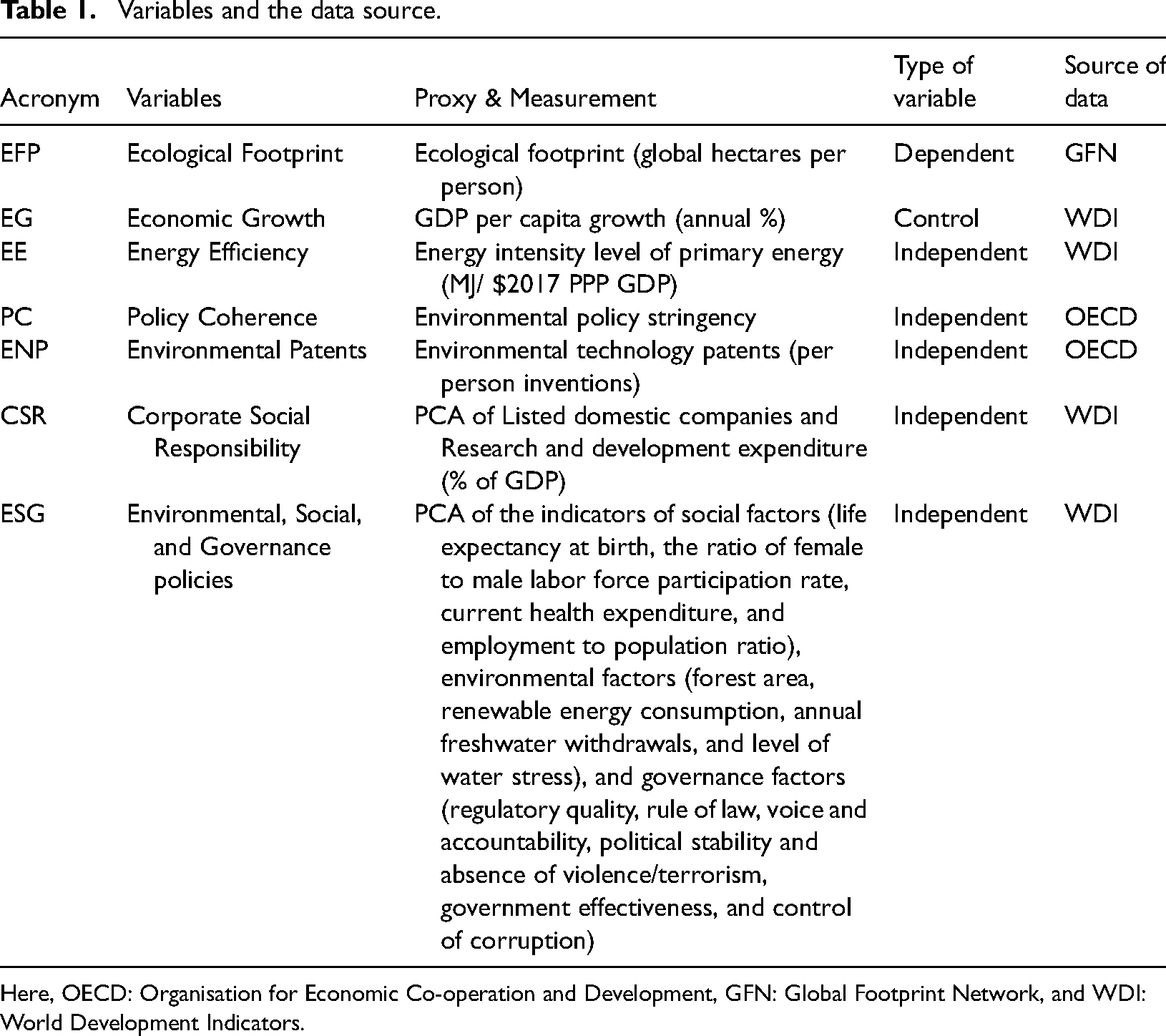
Here, OECD: Organisation for Economic Co-operation and Development, GFN: Global Footprint Network, and WDI: World Development Indicators.
Results of descriptive statistics.
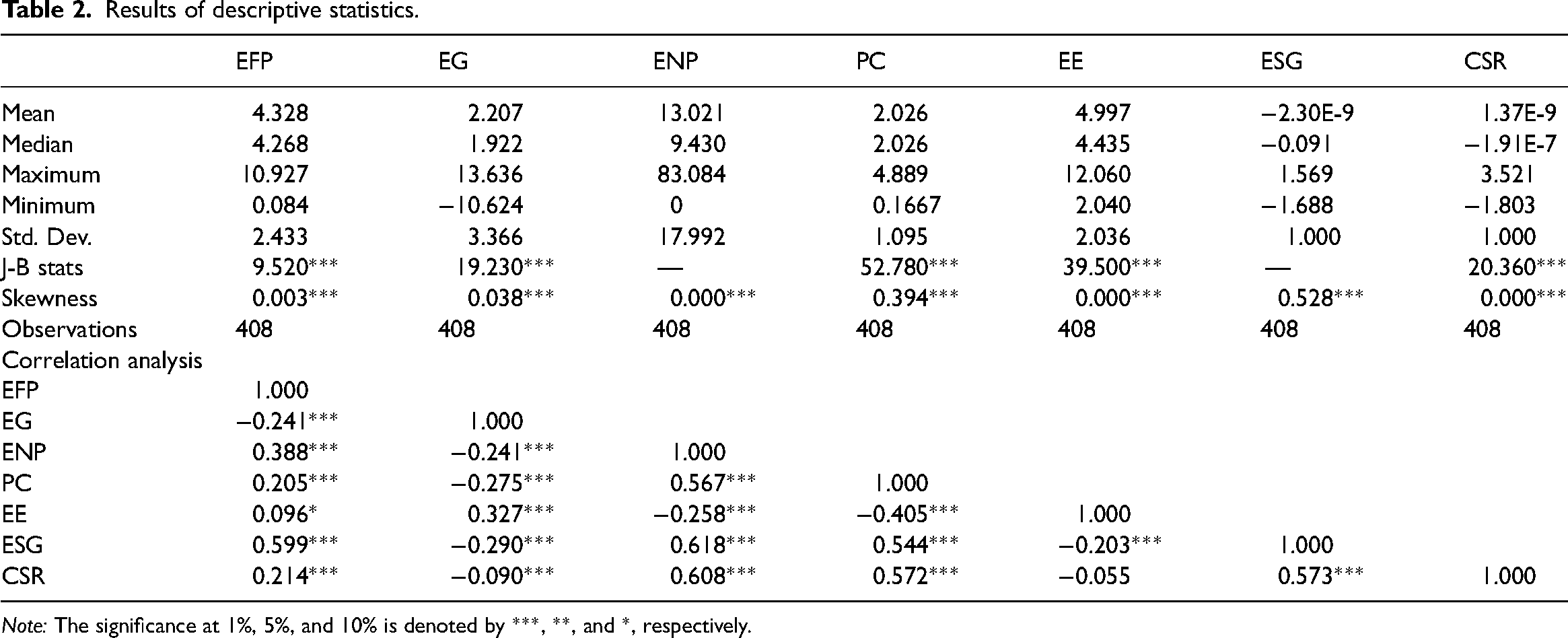
Note: The significance at 1%, 5%, and 10% is denoted by ***, **, and *, respectively.
The correlation analysis reveals several notable relationships. EFP negatively correlates with EG (−0.241), implying that higher economic growth may contribute to environmental degradation. ENP and PC are positively associated (0.567), suggesting that increased environmental innovation aligns with stronger policy coherence. Similarly, ESG and CSR share a strong correlation (0.573), indicating a complementary role in corporate sustainability strategies. The positive relationship between ENP and EFP (0.388) suggests that environmental innovations contribute to ecological sustainability. However, the negative correlation between EG and PC (−0.275) signals potential trade-offs between economic expansion and policy coherence. EE exhibits a weak correlation with EFP (0.096), indicating that efficiency improvements alone may not significantly drive environmental performance. These findings highlight the complex interplay between sustainability factors and reinforce the need for integrated policy approaches.
Model formulation
Ecological footprints serve as the environmental degradation indicator in this research. The model adopted for this research is as follows:
The model examines the intricate linkages among essential economic and environmental variables and their influence on environmental degradation in G20 countries from 2000 to 2023. This study utilizes known theoretical frameworks to elucidate the interaction of these elements and their impact on environmental outcomes. The EKC hypothesis asserts an inverted U-shaped correlation between economic expansion and ecological degradation. Initially, environmental degradation escalates with economic expansion owing to industrialization; but, when attaining a specific income threshold, environmental quality is enhanced as societies adopt cleaner technology and enforce stronger laws. This theory advocates for the incorporation of the model to evaluate its differential effects on ecological footprints at various growth phases.
57
Moreover, the notion of innovation and technology dissemination supports the incorporation of environmental patents. Technological advancements, especially green technology, are essential for alleviating environmental degradation by enhancing manufacturing efficiency and diminishing emissions. The existence of patents indicates a nation's dedication to environmental sustainability and its capacity for innovation.
58
Institutional theory emphasizes the influence of regulatory frameworks on business and national conduct. Policy coherence is used to signify the efficacy of environmental policies in promoting sustainable practices. This hypothesis posits that nations with robust and cohesive environmental policies are more effective in diminishing ecological footprints.
59
EE is essential for mitigating environmental degradation through the optimization of energy consumption. This hypothesis posits that enhancements in energy intensity can substantially reduce carbon emissions while maintaining economic growth, consistent with the neoclassical growth model.
60
Freeman's stakeholder theory
61
advocates for the incorporation of CSR and ESG factors. Companies using responsible practices consider the interests of diverse stakeholders, such as consumers, investors, and regulators, resulting in improved environmental outcomes.62,63 CSR encompasses business efforts for societal benefit, whereas environmental, social, and governance (ESG) denotes a wider spectrum of practices related to environmental stewardship, social responsibility, and governance standards. The RBV theory supports the incorporation of knowledge assets, like as patents, by highlighting their strategic significance in achieving competitive advantage. Environmental innovation, as assessed by ENP, reflects a company's dedication to sustainable practices that can impact national environmental performance.
64
The theoretical discoveries result in the subsequent empirical model:
The study strikes a compromise between complexity and clarity by retaining all variables in their original form. The degree of flexibility numbers β1, β2, β3, β4, β5, and β6 show the strength and direction of the relationship, whereas β0 indicates the magnitude of the intercept.
Methodological approach
Principle component analysis (PCA)
The principal component analysis (PCA) is employed to create a composite index by combining multiple indicators into a single measure.
65
Here is a step-by-step explanation of the PCA process for the construction of CSR and ESG:
Standardizing the Variables: All variables are normalized to possess a mean of zero and a standard deviation of one to ensure comparability. The formula for standardization is: Computing the Covariance Matrix: A covariance matrix is computed to analyze the interrelationships among the variables. The covariance between two variables X and Y is computed as: Eigenvalue and Eigenvector Calculation: Eigenvalues and eigenvectors are obtained from the covariance matrix. Eigenvalues represent the extent of variation elucidated by each principal component, whilst eigenvectors delineate the orientation of these components.
where X is the original value, μ is the mean, and σ is the standard deviation.


The equation for eigenvalues is: Selecting Principal Components: Components with eigenvalues greater than 1 are retained. Computing the Principal Component Scores: Scores are determined by multiplying the standardized variables by their respective eigenvectors. The score for the ith component is defined as follows: Index Construction: The composite index is formulated as a weighted sum of the chosen primary components, with weights reflecting the variance attributed to each component:


This PCA method guarantees a strong, data-driven strategy for index creation, yielding credible insights into the environmental performance of G20 nations.
Slope homogeneity test
The slope homogeneity test was used to determine whether the slope coefficients of the cointegration equation are homogenous. The test was first developed by,
66
but
67
expanded it and used it to obtain two statistics:

Slope homogeneity test

Note: The significance is shown as ***, **, and * at 1%, 5%, and 10%, respectively.
Cross-sectional dependence test
The CD test proposed by 68 can be used to approximate the cross-sectional measure of reliance on remains. This test enables us to determine the most appropriate panel unit root tests for examining the stationarity measures of the variables. The second-generation panel unit root analysis is appropriate if the calculated values of the residuals’ CD statistic are statistically more meaningful.
The CD assessment's equational form is presented below.
Second-generation unit root test
The G20 panel data were taken into account in this investigation. Panel data may also seem nonstationary, much like time-series data does. To avoid making inaccuracies in regressions, unit root analysis is crucial. Consequently, the CIPS and CADF tests from
68
are used in this investigation. Given is the CADF test.
Meanwhile, the CIPS is displayed as follows in Equation (5):
According to these tests, the unit root test is repeated after calculating the variable's initial difference if one or more variables are not stationary. Precise testimony of cross-sectional dependency and heterogeneity is produced by these tests.
Quantile regression method
Developed the quantile-based technique to concentrate on the fixed effect in the scientific procedure, taking into account the many benefits of the MMQR.69,70 The output generated by the quantile-based linkages between predictors and the dependent variables is represented by Equation (8) as the quantiles exposed to 
The vectors shown in Equation (13) are thought to be known and further developed by Z, which stands for the transformation that is thought to happen as a result of differentiation and likewise has the modules l. It is important to keep in mind that 

The importance of employing the MMQR method is in its capacity to encapsulate heterogeneity across various quantiles of the conditional distribution of the dependent variable. This is especially critical within the framework of the G20 nations, where environmental and economic dynamics can differ markedly among various countries and phases of development. Utilizing MMQR, the study may discern the differential effects of explanatory variables on ecological footprint across several quantiles, so offering a more refined comprehension of these associations. The study's brief duration, spanning from 2000 to 2023, renders MMQR especially pertinent as it can reveal distributional heterogeneities and short-term fluctuations that conventional mean-based approaches may neglect. A study by 71 also examined the influence of environmental taxes, green finance, natural resources, human capital, and economic growth on environmental pollution in G20 nations from 2000 to 2022, using MMQR and other methodologies.
Robustness test
This study utilizes feasible generalised least squares (FGLS) as a robustness check to confirm the dependability of the findings. FGLS is especially adept at mitigating heteroskedasticity and autocorrelation problems prevalent in panel data analysis, rendering it a superior option for estimating models characterized by cross-sectional dependency. This method yields efficient and impartial estimates, even in the presence of heterogeneity or correlation in error terms across time and entities. In contrast to AMG and CCEMG, which emphasize unobserved common factors, FGLS addresses potential panel-level heteroskedasticity and adjusts standard errors accordingly, hence improving the accuracy of the computed coefficients. This work used FGLS to corroborate the major findings and assure robustness in assessing the correlations among EG, ENP, EE, CSR, ESG, PC, and EFP, due to its advantages over traditional fixed effects estimation.
The choice of these methodologies is also predicated on their capacity to address cross-sectional dependence and heterogeneity in panel data, which are essential factors due to the varied economic and environmental attributes of G20 nations. During the brief interval from 2000 to 2023, these methodologies effectively mitigate structural breaks, cross-sectional dependence, and potential endogeneity concerns, so assuring dependable inferences despite the constrained duration.
Granger causality test
One of the most well-known methods for determining whether or not there is a causative relationship between two variables in a panel data environment is the Granger-causality test, which was initially introduced by. 72 Granger causality evaluations in panel data are useful for determining the trajectory of causality between variables across cross-sections (such as states or territories) with time. Granger causality is a method that investigates whether the past values of one variable may predict the current value of another variable while controlling for the previous values of the variable that is anticipated. This is in contrast to simple correlation, which merely displays the degree and direction of a link. When dealing with panel data, this is of utmost significance because it takes into consideration the heterogeneity that exists between units and dynamics over time.
By applying this test, the study can identify whether changes in ESG practices, EE improvements, or environmental patenting activities precede shifts in ecological footprints, thereby informing the development of more targeted and effective policy interventions. For short-term data, this test is crucial as it captures dynamic interactions and immediate causal effects that provide timely insights for policymakers.
Results and discussions
The results of the slope heterogeneity test in Table 3 show that both the
The outcomes of the CD test in Table 4 indicate significant cross-sectional dependence among most variables, confirming that economic, environmental, and corporate sustainability factors are interconnected across the 17 G20 countries included in this study. The high CD values and p-values of 0.000 for EFP, EG, ENP, PC, EE, and CSR suggest strong interdependencies across G20 nations, implying that sustainability, corporate governance, and environmental policies are interconnected globally. Interestingly, ESG shows a negative CD value (−2.110) with a p-value of 0.034, indicating weaker but still statistically significant cross-sectional dependence. These findings justify the use of robust panel estimation techniques like FGLS, which account for cross-sectional dependence to ensure more reliable results.
Cross-section dependence (CD).
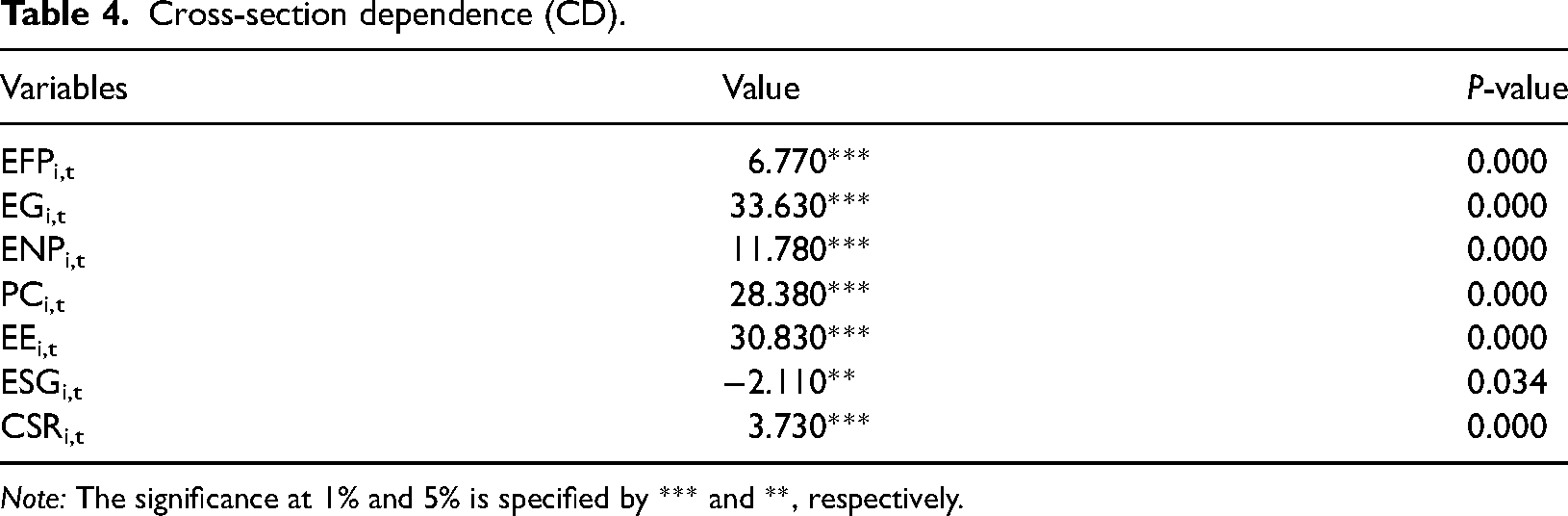
Note: The significance at 1% and 5% is specified by *** and **, respectively.
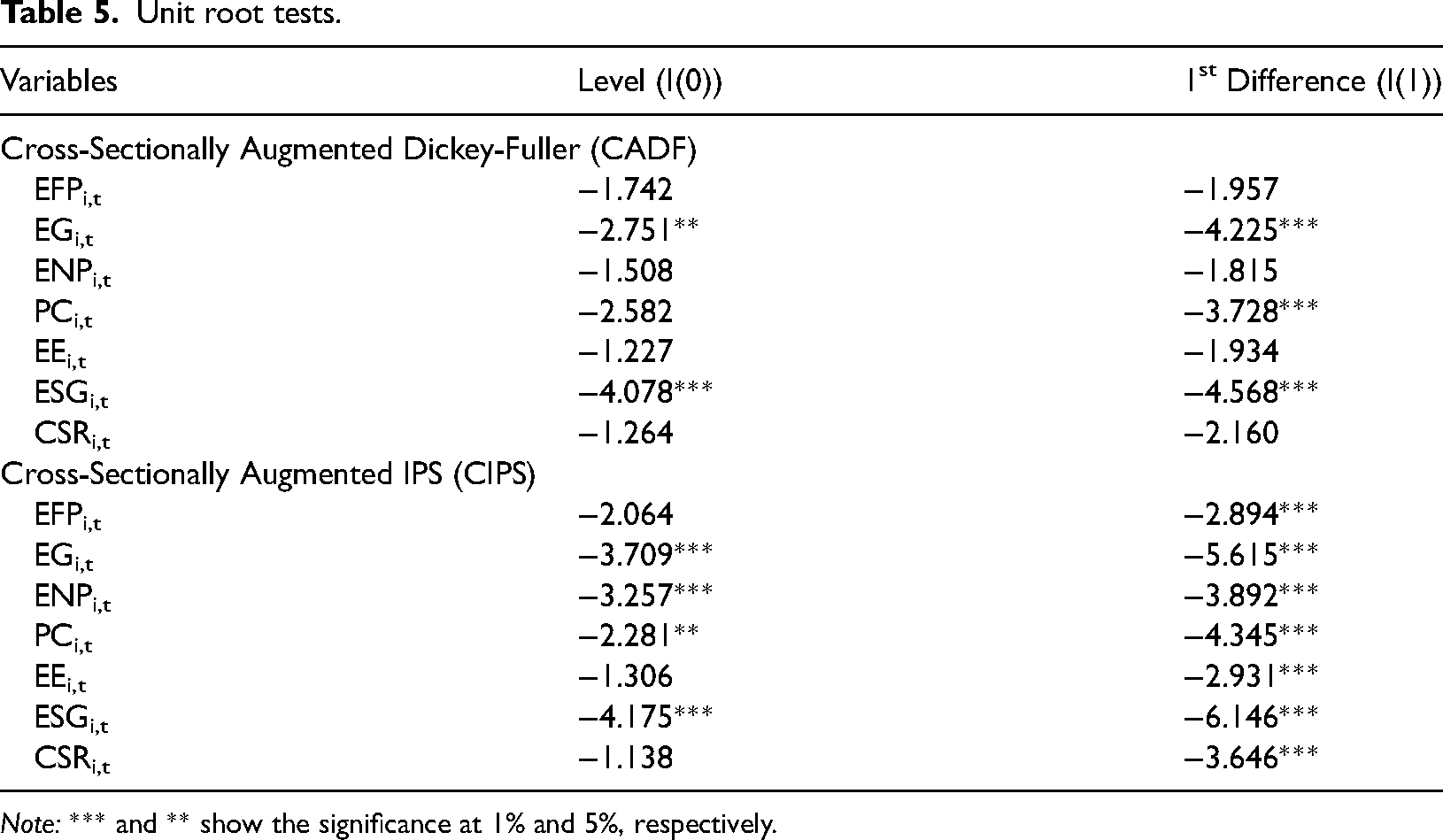
The unit root test results using CADF and CIPS methods reveal mixed stationarity properties across variables, indicating the necessity for first-difference transformation in most cases.
In table 5, For the CADF test, variables EG (−2.751) and ESG (−4.078) are stationary at level (I(0)) at the 5% and 1% significance levels, respectively, implying their mean-reverting nature without differencing. However, EFP (−1.742), ENP (−1.508), PC (−2.582), EE (−1.227), and CSR (−1.264) are non-stationary at level (I(0)), necessitating first-differencing for stationarity. After first differencing, EG (−4.225), PC (−3.728), and ESG (−4.568) become highly significant at 1%, confirming their stationarity at I(1). However, EFP (−1.957), ENP (−1.815), EE (−1.934), and CSR (−2.160) remain non-stationary even after first-differencing, indicating possible structural breaks or cross-sectional dependencies influencing these variables.
For the CIPS test, EG (−3.709), ENP (−3.257), and ESG (−4.175) are stationary at level (I(0)) at 1% significance, showing no need for differencing. In contrast, EFP (−2.064), PC (−2.281), EE (−1.306), and CSR (−1.138) are non-stationary at level but achieve stationarity at I(1) with significant values after differencing. The higher absolute t-values at the first difference (e.g., EG −5.615, ESG −6.146) confirm strong stationarity at I(1). This behavior corresponds with the literature, including, 68 which emphasizes the necessity of first differencing in macroeconomic datasets to attain stationarity.
Overall, these results indicate that EG and ESG are consistently stationary at I(0) across both tests, while EFP, PC, EE, and CSR require first-differencing for stationarity under CIPS but not under CADF. The persistence of non-stationarity in EFP, ENP, EE, and CSR under CADF suggests potential heterogeneity or structural factors affecting their stochastic properties, which must be addressed through appropriate panel estimation techniques like FGLS to ensure reliable inferences.
In table 6, Westerlund's 73 cointegration test examines whether a long-run equilibrium relationship exists among the study variables. The test statistics Gt (−1.649), Ga (−16.297), Pt (−5.133), and Pa (−6.382) indicate weak evidence of cointegration. However, the high Z-values (e.g., Gt: 5.092, Pt: 5.100) and insignificant P-values (all > 0.05, with some reaching 1.000) strongly suggest that the null hypothesis of no cointegration cannot be rejected.
This means that despite potential long-run relationships, the data does not provide sufficient statistical evidence to confirm strong panel cointegration among the variables. The high P-values (e.g., Gt: 1.000, Pt: 1.000) imply that short-term fluctuations may dominate over long-term equilibrium trends, potentially due to structural breaks, cross-sectional dependencies, or heterogeneity in the panel. These findings also suggest that alternative estimation methods should be employed to address potential heteroskedasticity and cross-sectional dependence, ensuring robust long-run inference despite weak cointegration signals.
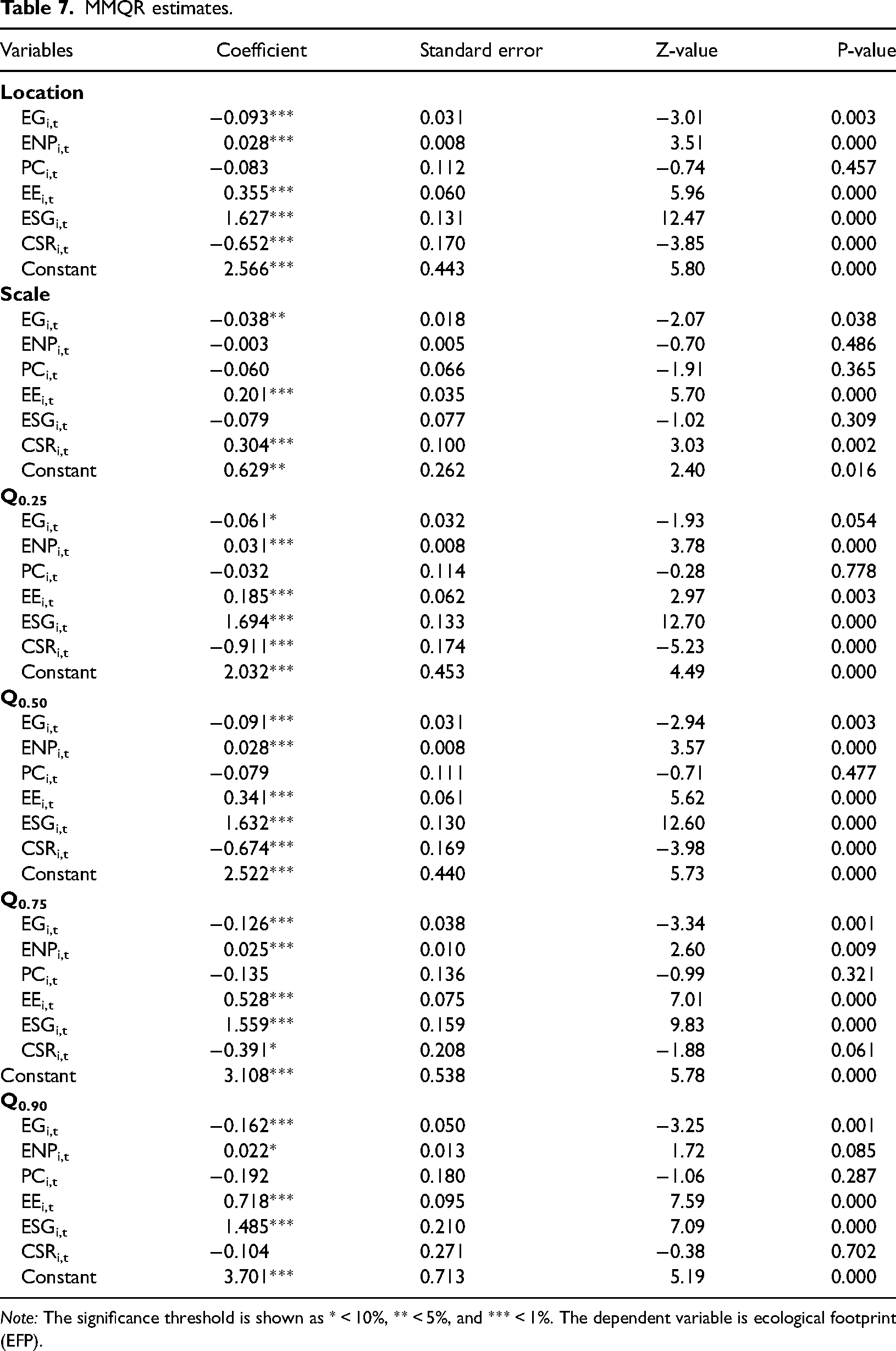
The MMQR estimates in Table 7 provide critical insights into the relationship between economic growth (EG) and ecological footprint (EFP) across different quantiles. The negative and statistically significant coefficient of EG in the location estimates (−0.093 at 1%) suggests that economic growth reduces EFP on average, supporting the Environmental Kuznets Curve (EKC) hypothesis, 57 which argues that economic expansion initially worsens environmental quality but later leads to improvements through better policies and technological advancements. Additionally, the scale parameter (−0.038 at 5%) indicates that EG also affects the variability of EFP across quantiles (see Figure 1).
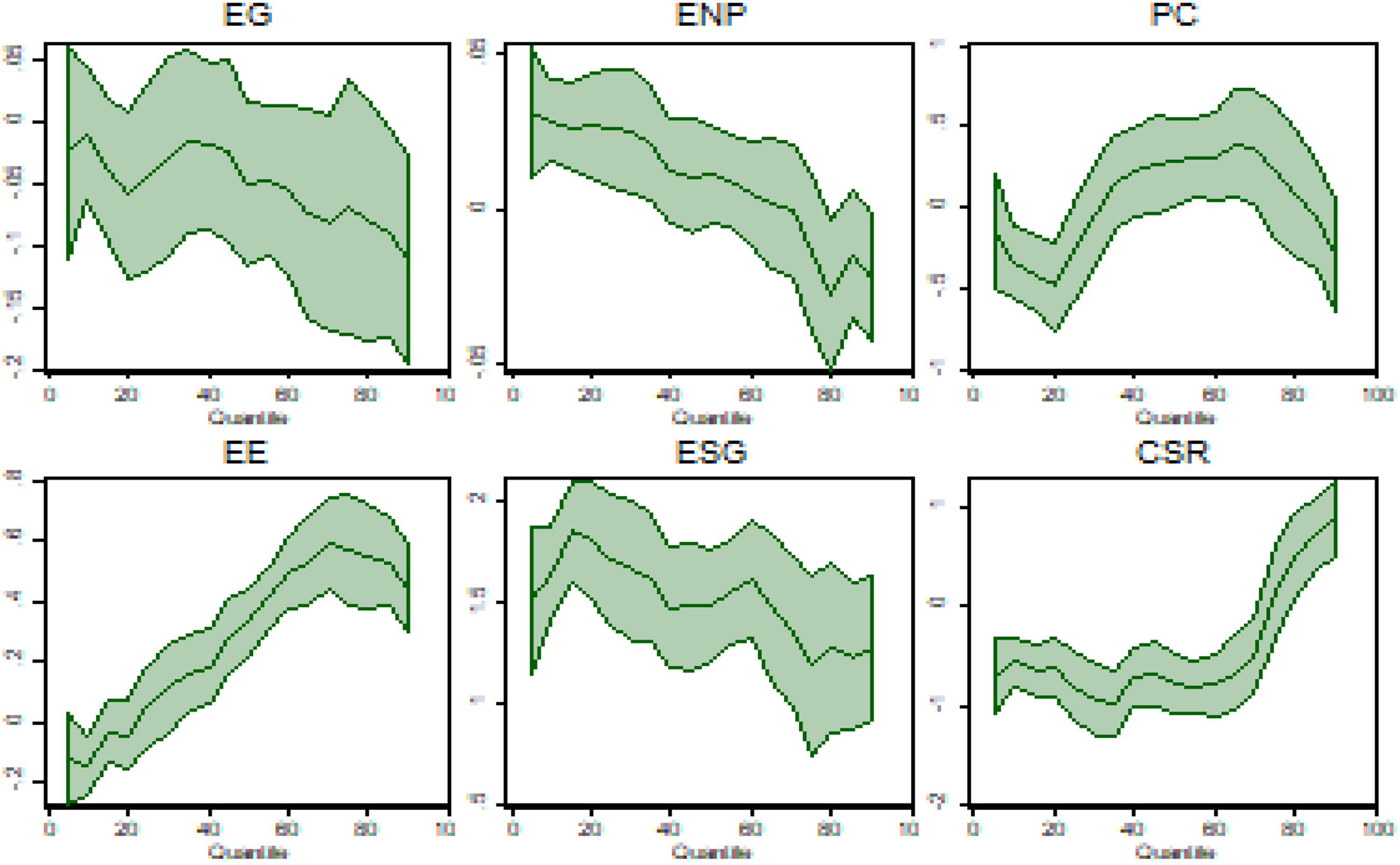
Graphical representation of MMQR.
Unit root tests.
Note: *** and ** show the significance at 1% and 5%, respectively.
Cointegration test.

MMQR estimates.
Note: The significance threshold is shown as * < 10%, ** < 5%, and *** < 1%. The dependent variable is ecological footprint (EFP).
At the lower quantiles (Q0.25 and Q0.50), EG maintains a weaker but still negative impact (−0.061 at 10% and −0.091 at 1%), implying that in economies with lower ecological footprints, economic growth has a mild role in reducing environmental pressures. However, at higher quantiles (Q0.75 and Q0.90), the negative effect strengthens (−0.126 and −0.162, both at 1%), suggesting that in high ecological footprint economies, growth significantly contributes to environmental relief, possibly due to sustainable technological transitions.
Regarding policy coherence (PC), its impact remains statistically insignificant across all quantiles, indicating that government policy interventions may not have a direct influence on EFP. The location coefficient (−0.083, p = 0.457) and scale parameter (−0.060, p = 0.365) suggest that PC does not significantly alter ecological footprint outcomes. Similarly, its quantile estimates remain non-significant, reinforcing that existing policy measures may lack the effectiveness needed to drive substantial environmental changes.
Other variables exhibit meaningful effects on EFP. ENP (0.028), EE (0.355), and ESG (1.627) positively impact EFP, highlighting that environmental patents, energy use, and environmental governance shape ecological trends. This finding of ENP opposes, 36 who underscored the importance of green technologies in addressing environmental issues. EE's finding aligns with, 74 who examined the rebound effects linked to EE initiatives. Conversely, CSR (−0.652) significantly reduces EFP, underscoring the role of corporate responsibility in environmental sustainability. These findings confirm that economic and environmental dynamics are highly quantile-dependent, requiring targeted policies for different ecological footprint levels. This discovery corresponds with, 7 who emphasized the significance of corporate governance policies in promoting environmental sustainability. CSR indicators demonstrate a minimal adverse effect across all quantiles, suggesting that corporate social responsibility initiatives may necessitate more focused execution to achieve substantial ecological advantages, as indicated by. 11
The MMQR results in Figure 1 illustrate the heterogeneous impacts of key variables on ecological degradation across different quantiles. Economic growth (EG) exhibits a declining trend across quantiles, indicating that its mitigating effect on ecological degradation is more pronounced at higher pollution levels. Environmental patents (ENP) show a strong negative impact across all quantiles, with a steeper decline at upper quantiles, reinforcing their role in environmental sustainability. Policy coherence (PC) follows an inverted U-shape, initially increasing degradation at lower quantiles but reducing it at higher quantiles, suggesting its effectiveness strengthens in severely degraded environments. EE consistently shows a positive impact, with its effect amplifying at higher quantiles, highlighting its crucial role in pollution reduction. ESG practices (ESG) exhibit a positive association with ecological degradation, indicating potential inefficiencies or weak enforcement in environmental governance, especially at upper quantiles. Lastly, corporate social responsibility (CSR) demonstrates a rising negative impact at higher quantiles, implying that CSR initiatives become more effective in heavily polluted contexts. These findings emphasize the necessity for quantile-specific policies tailored to varying levels of ecological degradation.
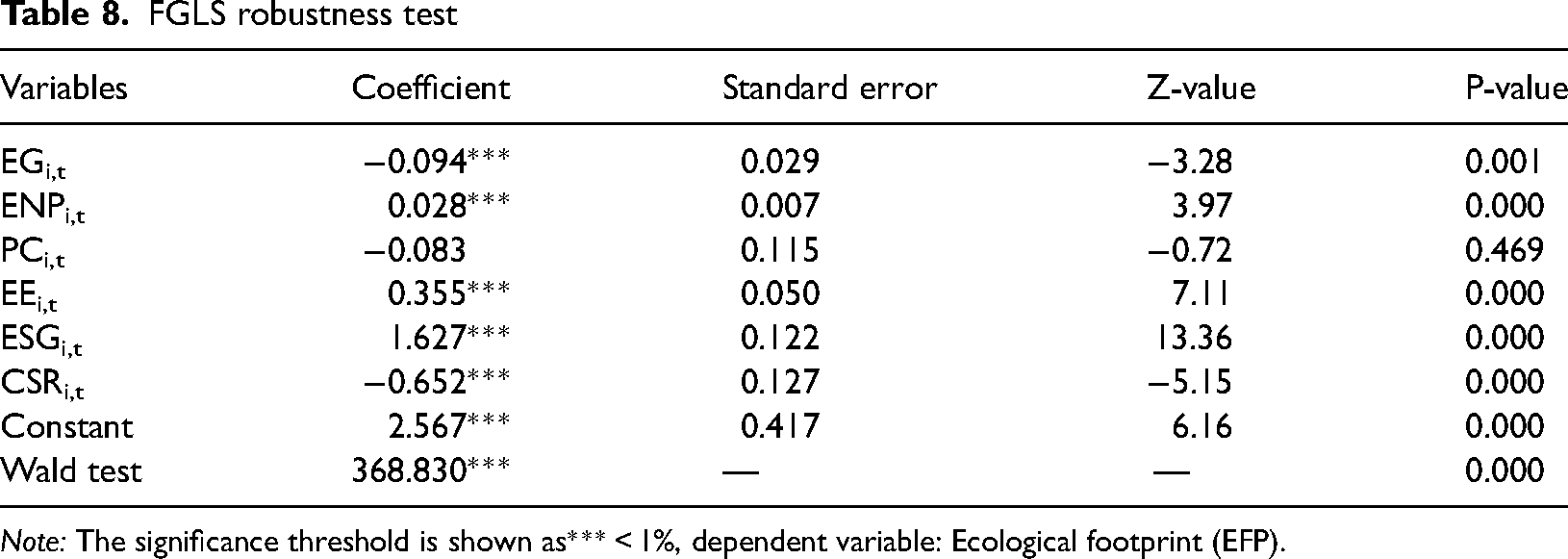
The Feasible Generalized Least Squares (FGLS) results in Table 8 confirm the MMQR estimates, reinforcing the robustness of the findings. The negative and significant coefficient of EG (−0.094 at 1%) further supports the Environmental Kuznets Curve (EKC) hypothesis, indicating that economic growth contributes to reducing the ecological footprint (EFP), likely through sustainable policies and technological advancements in higher-growth economies. Similarly, ENP (0.028 at 1%) positively impacts EFP, aligning with previous results that suggest energy production increases environmental stress.
FGLS robustness test
Note: The significance threshold is shown as*** < 1%, dependent variable: Ecological footprint (EFP).
The insignificance of PC (−0.083, p = 0.469) remains consistent with MMQR, indicating that policy controls may not have a substantial direct impact on EFP. This aligns with the argument that policy interventions may be ineffective or insufficiently enforced to drive significant ecological improvements.
The positive effect of EE (0.355 at 1%) indicates that EE plays a crucial role in influencing environmental outcomes, supporting theories that energy-intensive economies face greater ecological burdens. Likewise, the strong significance of ESG (1.627 at 1%) confirms that environmental, social, and governance factors directly shape sustainability trends, mirroring the MMQR results. The negative impact of CSR (−0.652 at 1%) further validates corporate social responsibility's role in mitigating environmental degradation.
The highly significant Wald test (368.830, p = 0.000) suggests the overall model is strongly explanatory. Given that FGLS mitigates heteroskedasticity and autocorrelation issues, these findings solidify the robustness of the MMQR conclusions, emphasizing the consistency of the economic and environmental relationships identified in this study.
The study's empirical findings provide mixed support for the proposed hypotheses. H1, which posits that environmental patents (ENP) reduce environmental degradation, is not supported. The results indicate a positive relationship between ENP and EFP, suggesting that rather than mitigating environmental degradation, increased environmental patents may be associated with higher ecological footprints. This could be due to the lag effect of patent implementation, where innovations take time to yield tangible environmental benefits, or the possibility that patents are being used more for economic gains than for genuine sustainability improvements. H2, which suggests that EE has a mixed impact on environmental quality, is supported. The findings reveal that EE is positively associated with EFP across different quantiles, implying that while EE improvements are intended to reduce environmental harm, they may lead to rebound effects where increased efficiency results in greater energy consumption, ultimately exacerbating environmental degradation. This aligns with prior research suggesting that efficiency gains alone are not sufficient to ensure ecological improvements. H3, which hypothesizes that policy coherence (PC) improves environmental quality, is not supported. The results show that PC does not have a significant impact on environmental degradation, indicating that greater alignment between policies does not necessarily lead to ecological improvements. This contradicts the theoretical expectation that coherent policies would enhance sustainability by integrating environmental goals into economic and social policies. The lack of significance may suggest weak enforcement mechanisms, conflicting policy objectives, or the need for stronger institutional frameworks to ensure effective implementation.
H4, which states that CSR improves environmental performance, is not supported. The results reveal a negative relationship between CSR and EFP, implying that higher corporate social responsibility engagement does not necessarily lead to better environmental outcomes. This may be due to ineffective CSR initiatives, greenwashing, or a focus on social and governance aspects over concrete environmental actions. H5, which argues that ESG promotes environmental quality, is not supported. The findings indicate a positive relationship between ESG and EFP, suggesting that rather than enhancing environmental sustainability, higher ESG commitments may be linked to increased environmental degradation. This could reflect weak enforcement of ESG policies, an overemphasis on governance and social aspects at the expense of environmental priorities, or ineffective environmental management practices within ESG frameworks. Overall, these findings highlight that while environmental policies and corporate strategies aim to improve ecological conditions, their real-world impact is often complex and may not always align with theoretical expectations. While EE and environmental patents hold potential for sustainability, their current implementation may not be effectively addressing environmental degradation in G20 nations.
The Granger causality analysis in Table 9 provides key insights into the directional relationships between EFP and its potential determinants. The results show that EE Granger causes EFP (F = 3.163, p = 0.043), suggesting that changes in EE significantly influence environmental degradation. However, the reverse causality is not observed (F = 0.506, p = 0.603), indicating that environmental degradation does not impact EE. Similarly, environmental patents (ENP) Granger-cause EFP (F = 4.513, p = 0.012), meaning that shifts in environmental patent activities contribute to environmental degradation, but EFP does not influence ENP (F = 0.904, p = 0.406).
Granger-causality analysis.
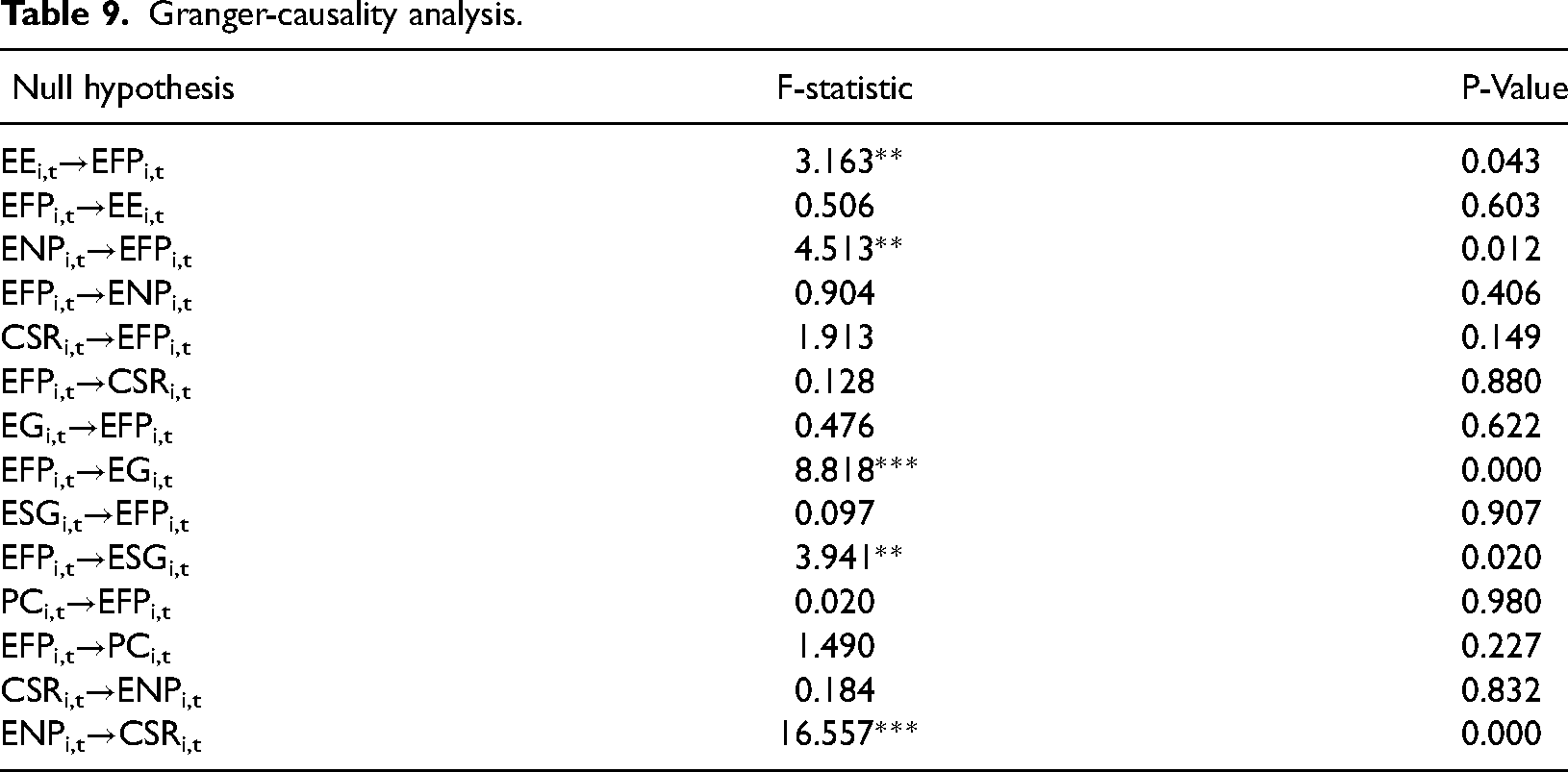
Interestingly, EFP Granger-causes economic growth (EG) (F = 8.818, p = 0.000), but EG does not Granger-cause EFP (F = 0.476, p = 0.622), implying that worsening environmental degradation may drive economic activities rather than the other way around. A unidirectional causality is also observed from EFP to ESG (F = 3.941, p = 0.020), meaning that environmental degradation influences ESG commitments, potentially indicating a reactive approach by businesses and policymakers rather than proactive environmental governance.
No significant causal relationships are found between CSR and EFP, suggesting that CSR activities do not directly influence environmental degradation (F = 1.913, p = 0.149) and vice versa (F = 0.128, p = 0.880). Similarly, policy coherence (PC) shows no significant causality with EFP in either direction. However, a strong causal link is found from ENP to CSR (F = 16.557, p = 0.000), suggesting that environmental patent activities significantly shape CSR engagement, possibly due to regulatory requirements or stakeholder expectations.
These findings indicate that technological and policy-related factors, such as EE and ENP, play crucial roles in driving environmental degradation, while economic and corporate governance aspects seem to respond to worsening environmental conditions rather than proactively influencing them.
Conclusion
This study investigates the interplay between environmental policies, EE, corporate social responsibility, and ecological footprints in G20 nations, excluding Argentina and Saudi Arabia, from 2000 to 2023. Employing various econometric techniques, including MMQR, FGLS, and Granger causality, the study aims to provide a comprehensive understanding of these relationships. The MMQR results indicate that EE exacerbates EFP, contradicting expectations, while environmental patents (ENP) significantly contribute to increased ecological footprints rather than reducing them. Policy coherence (PC) shows no significant impact, failing to support its hypothesized role in improving ecological sustainability. Corporate social responsibility (CSR) negatively affects environmental quality, suggesting that CSR efforts may be insufficient or ineffective in curbing environmental degradation.
Conversely, ESG factors (ESG) demonstrate a positive effect on EFP, indicating that increased ESG engagement does not necessarily lead to environmental improvements. The FGLS robustness tests further validate these findings, with EE consistently showing a significant positive effect on ecological footprints, reinforcing the notion that improvements in energy use do not necessarily translate into better environmental quality.
The Granger causality analysis highlights that EE and ENP drive ecological degradation rather than mitigate it. Additionally, EFP Granger causes ESG commitments, indicating that worsening environmental conditions prompt ESG engagement rather than ESG proactively reducing degradation. A unidirectional causality from EFP to economic growth (EG) suggests that environmental degradation may stimulate economic activities rather than the other way around. Overall, the study underscores the unexpected adverse effects of EE and environmental innovation on ecological degradation and the reactive nature of ESG and corporate responsibility efforts. These insights provide valuable considerations for policymakers and stakeholders in refining environmental policies and corporate sustainability strategies.
Policy implications
This study's findings offer critical policy implications for promoting sustainable development in G20 nations and beyond. To achieve meaningful environmental progress, policymakers must adopt a data-driven approach aligned with the United Nations Sustainable Development Goals (SDGs) while addressing the unintended consequences of certain sustainability strategies identified in this research.
First, EE policies need reassessment, as findings indicate that increased EE is linked to greater ecological degradation rather than its reduction. This suggests the potential for a rebound effect, where efficiency gains lower costs and leads to increased energy consumption. Policymakers should introduce demand-side management policies, carbon pricing mechanisms, and stricter efficiency standards that discourage excessive energy use. Additionally, integrating renewable energy sources with efficiency measures is crucial to ensuring actual environmental benefits, contributing to SDG 7 (Affordable and Clean Energy).
Second, environmental innovation through patents (ENP) does not currently yield the expected ecological benefits, as it appears to be associated with increasing environmental degradation rather than its reduction. Policymakers must evaluate the nature and implementation of environmental patents, prioritizing genuinely sustainable innovations over patents that promote efficiency without reducing emissions. Strengthening green patent approval criteria, increasing direct funding for breakthrough clean technologies, and ensuring technology transfer to industries with high environmental impact can better align with SDG 9 (Industry, Innovation, and Infrastructure).
Third, policy coherence (PC) was found to have no significant impact on ecological footprints, suggesting that current policy frameworks may lack effective enforcement or integration. To enhance environmental governance, inter-ministerial coordination, cross-sectoral environmental policies, and legally binding sustainability targets should be established. Governments should regularly assess policy effectiveness and eliminate regulatory contradictions that hinder environmental progress, supporting SDG 13 (Climate Action).
Fourth, corporate social responsibility (CSR) has a negative relationship with environmental quality, indicating that voluntary corporate actions alone are insufficient to drive sustainable outcomes. Policymakers should enforce stricter corporate environmental regulations, introduce mandatory sustainability reporting standards, and link CSR initiatives to measurable ecological impact. Establishing green tax incentives tied to verifiable reductions in ecological footprints can enhance CSR's effectiveness, aligning with SDG 12 (Responsible Consumption and Production).
Fifth, ESG (Environmental, Social, and Governance) factors, contrary to expectations, show a positive association with ecological degradation (EFP), suggesting that ESG commitments may be reactive rather than proactive in improving environmental quality. Policymakers should introduce standardized ESG regulations, eliminate greenwashing, and ensure that ESG investments prioritize tangible environmental improvements. Strengthening accountability mechanisms for ESG-driven corporate actions can enhance their contribution to sustainability, supporting SDG 17 (Partnerships for the Goals).
Lastly, international cooperation must be expanded beyond voluntary agreements. G20 nations should lead binding climate commitments, technology-sharing agreements, and financial support for transitioning economies to adopt sustainable technologies. Establishing global regulatory frameworks for corporate sustainability disclosures and carbon trading mechanisms can create a more effective international environmental strategy. Collaboration with global institutions like the UN and World Bank remains critical for advancing SDG 17.
To ensure these policies are effective, systematic monitoring, data-driven adjustments, and stringent enforcement mechanisms must be implemented. G20 nations must take a leadership role in setting higher environmental standards, creating a global precedent for sustainable and resilient development.
Limitations and future directions
The study acknowledges several limitations. Firstly, the focus is exclusively on G20 countries, excluding nations like Argentina and Saudi Arabia due to data unavailability, which may affect the generalizability of the findings. Secondly, while the analysis utilizes robust econometric techniques, the reliance on available data may introduce measurement errors or biases, particularly in self-reported metrics like corporate social responsibility (CSR). Additionally, the study covers the period from 2000 to 2023, potentially limiting insights into recent developments and emerging trends in sustainability practices.
Future research directions should consider expanding the geographical scope beyond G20 nations to include developing and smaller economies, offering a more holistic understanding of ecological policies’ impact on sustainability across diverse economic landscapes. Longitudinal studies can provide valuable insights into the dynamic relationships between EE, environmental patents, and corporate governance practices over time. Additionally, integrating qualitative approaches, such as case studies and expert interviews, can deepen the contextual understanding of how policy frameworks and corporate strategies shape environmental outcomes. From a methodological perspective, future research should explore additional robustness checks by employing techniques like Ordinary Least Squares (OLS), Generalized Method of Moments (GMM), and Panel Vector Autoregression (PVAR) to validate findings further and address potential endogeneity issues. Incorporating these techniques will complement the already applied AMG, CCEMG, and fixed-effects models, ensuring a more comprehensive and resilient analysis. Finally, investigating the synergies between technological innovations, climate change policies, and sustainability indicators can offer actionable insights for policymakers striving to achieve Sustainable Development Goals (SDGs) effectively.
Footnotes
Credit authorship contribution statement
PEI pei: Writing – review & editing, Writing – original draft, Methodology, Data curation.
Xinxue Chang : Writing – review & editing, Writing – original draft, Methodology, Data curation.
Declaration of conflicting interests
The authors declared no potential conflicts of interest with respect to the research, authorship, and/or publication of this article.
Funding
The author(s) disclosed receipt of the following financial support for the research, authorship, and/or publication of this article This work was supported by National Natural Science Foundation of China (71872040) and the National Social Science Foundation of China under Grant [National Office for Philosophy and Social Sciences] (19ZDA097).
National Social Science Foundation of China under Grant [National Office for Philosophy and Social Sciences], National Natural Science Foundation of China, (grant number 19ZDA097, 71872040).
