




Abstract
This study aims to reconstruct the hydro-climatic variations over the last 1000 years in Haiti using mineralogical and geochemical composition of well dated lacustrine sediment core retrieved from Lake Azuei. The results show changes in sedimentological processes linked to environmental and climatic variations. The general pattern suggests a wetter Medieval Climate Anomaly (MCA), drier Little Ice Age (LIA), high climate variability during the MCA-LIA transition and more anthropogenic impacts that dominate natural climate during the Current Warm Period (CWP). The MCA period (~1000–1100 CE) thus appears marked by increase sedimentation rate supported by higher terrigenous input linked to erosive events particularly increases in precipitation. During the LIA, particularly from ~1450 to 1600 CE, there is a great variation toward a decrease of terrigenous input, which is related to a decrease on sedimentation rate and increase Mg-calcite precipitation, suggesting less precipitation and high evaporation respectively during dry climate conditions. The MCA-LIA transition (~1200–1400 CE) is characterized by variations between terrigenous input, Mg-calcite formation and organic matter deposition, which indicate succession of dry and humid conditions. The CWP (1800–2000 CE) shows a progressive increase on sedimentation rate and decrease of gray level, which indicate more organic matter sedimentation as consequence of anthropogenic activities in the surrounding basin of the lake. High-resolution gray level analysis, which reflects principally variations in terrigenous input, carbonate mineral formation and organic matter deposition, shows that the AMO, NAO, PDO and ENSO are the principal modes affecting the hydro-climatic changes in Haiti during the last millennium. In addition, temporal correlation of other Caribbean paleoclimate records with our geochemical and mineralogical data, suggests that trends observed in Lake Azuei were controlled by regional climate, likely associated with shifts in the position of the ITCZ.
Introduction
The climate of the Caribbean region is subject to the influences of synoptic features of both tropical Atlantic and Pacific basins. Reconstructions of Caribbean climate during the last millennia offer a basis for understanding these influences, and better predicting future global climate. Some studies (Mann et al., 2009; Tierney et al., 2015) have shown that climate modes, particularly the Atlantic Multidecadal Oscillation (AMO) and North Atlantic Oscillation (NAO), the Pacific Decadal Oscillation (PDO), and El Niño-Southern Oscillation (ENSO), have influenced the hydro-climate changes during the last millennium. At the multidecadal timescale various studies (Apaéstegui et al., 2014; Knudsen et al., 2011; Mann et al., 2009) have shown that the tropical climate variability is driven by the interplay between AMO and PDO. In addition to these climate modes, the NAO affects rainfall patterns in the Caribbean through its influence on the strength and position of the North Atlantic Subtropical High (NAH) (Cook and Vizy, 2010; Wang, 2007) and consequently the Caribbean Low Level Jet (CLLJ) (Burn and Palmer, 2014). Mean annual precipitation in the northeastern Caribbean has also been shown to be synchronous with variations in the NAO, at least since 1914 (Malmgren et al., 1998). Furthermore, the amount of rainfall and their variability are also strongly modulated by changes in the Pacific climate mode including ENSO phenomenon (Ashby et al., 2005; Chen et al., 1997; Gamble et al., 2008; Giannini et al., 2000; Taylor et al., 2002). Superimposed on those climate modes, which dominate the interannual variations observed over the last decades, Black et al. (2004) has shown that solar variability plays a role in influencing the hydrologic balance of the circum-Caribbean region.
In inter-tropical regions, variations in the hydrological cycle have more consequences than variations in temperature on physical ecosystems and systems such as lakes (Goosse and Klein, 2021) which are particularly sensitive to changes in hydro-climatic conditions. These impacts therefore leave important signals in the paleoclimatic records that allow us to reconstruct indices characterizing wet or dry conditions. The lacustrine sediments preserve several markers (organic, inorganic) which provide valuable information about the history of the surrounding basin’s lake, its current state and its environment and consequently climate changes. The inorganic sedimentation process is therefore influenced by hydrological factors as erosion which can be linked to changes in precipitation and human activities (agriculture, industrial wastewater, and mining activity) and mineral formation under different physico-chemical conditions. Mineralogical elements composition and concentrations in sediments can vary depending on natural abundance, intensity of precipitation and physico-chemical lacustrine water conditions, morphology of lake surrounding basin and land use practices. Indeed, inorganic elements (Al, Fe, Ti, Zr, K) and calcites can be used as indicators of detrital and lake water temperature respectively.
Curtis and Hodell (1993) and Higuera-Gundy et al. (1999), using pollen and isotopic compositions of a sediment core from Lake Miragoâne in southwest Haiti, documented climatic and environmental changes in Haiti during the last 10,500 years, and in particular, changes in the precipitation regime. The results of geochemical evaluation of sediment of Lake Azuei indicated also there were changes in the precipitation regime during the last century (Eisen-Cuadra et al., 2013). However, climate modes haven’t been proposed to elucidate these changes. In addition, to date, no detailed study has been done on climate variability during the past millennium in Haiti. Therefore, more temporal and spatial data are needed to constrain Haiti climate change.
To date, few studies have addressed climate variability in the northern Caribbean, (except for the few references from the team of Dave Hodell team: Curtis and Hodell, 1993; Curtis et al., 2001; Higuera-Gundy et al., 1999). Instead, most of the focus has been on the southern Caribbean (Haug et al., 2001; Lin et al., 1997; Peterson and Haug, 2006; Schneider et al., 2014; Tedesco and Thunell, 2003) and eastern Central America (Andrade-Velázquez et al., 2021; Appendini et al., 2019; Brenner et al., 2003; Haug et al., 2003; Hodell et al., 2005; Leyden et al., 1994).
Here, we aim to reconstruct the climatic variability in Haiti during the last millennium and discuss how climate mechanisms and modes such as AMO, NAO, PDO and ENSO may have influenced this variability. To that purpose, we carefully analyzed an 84 cm-long core collected from Lake Azuei. Analytical techniques applied include inorganic compositional analysis, mineralogical analysis, and organic carbon analysis which was carried out on discrete samples collected every 2 cm down the core. Indeed, inorganic analysis can inform on variations in terrigenous input to the lake and, by proxy, on variations in surface runoff and riverine inflow. Mineralogical compositional analysis, such as the measurements of Ca-calcite anomalies versus Mg-calcite anomalies, are used to determine past variations in water temperatures and are thus used as proxies for lake evaporation. Lastly, our analysis includes continuous measurements of gray levels down the core, which provides a higher resolution of sedimentological variability than discrete samples. Indeed, continuous measurements of gray levels reveal the presence of small bands and laminae structures whose periodicity may then be compared to that of climatic modes
Study site
The sediment core LA17BCO2 was collected in January 2017 from Lake Azuei, also known as “Étang Saumâtre” (Figure 1). This Lake, which is the largest lake in Haiti and the second largest lake in Hispaniola, is located in the Cul-de-Sac watershed, around 29 km east of Port-au-Prince. Its area has experienced a remarkable increase since the end of the 20th century.
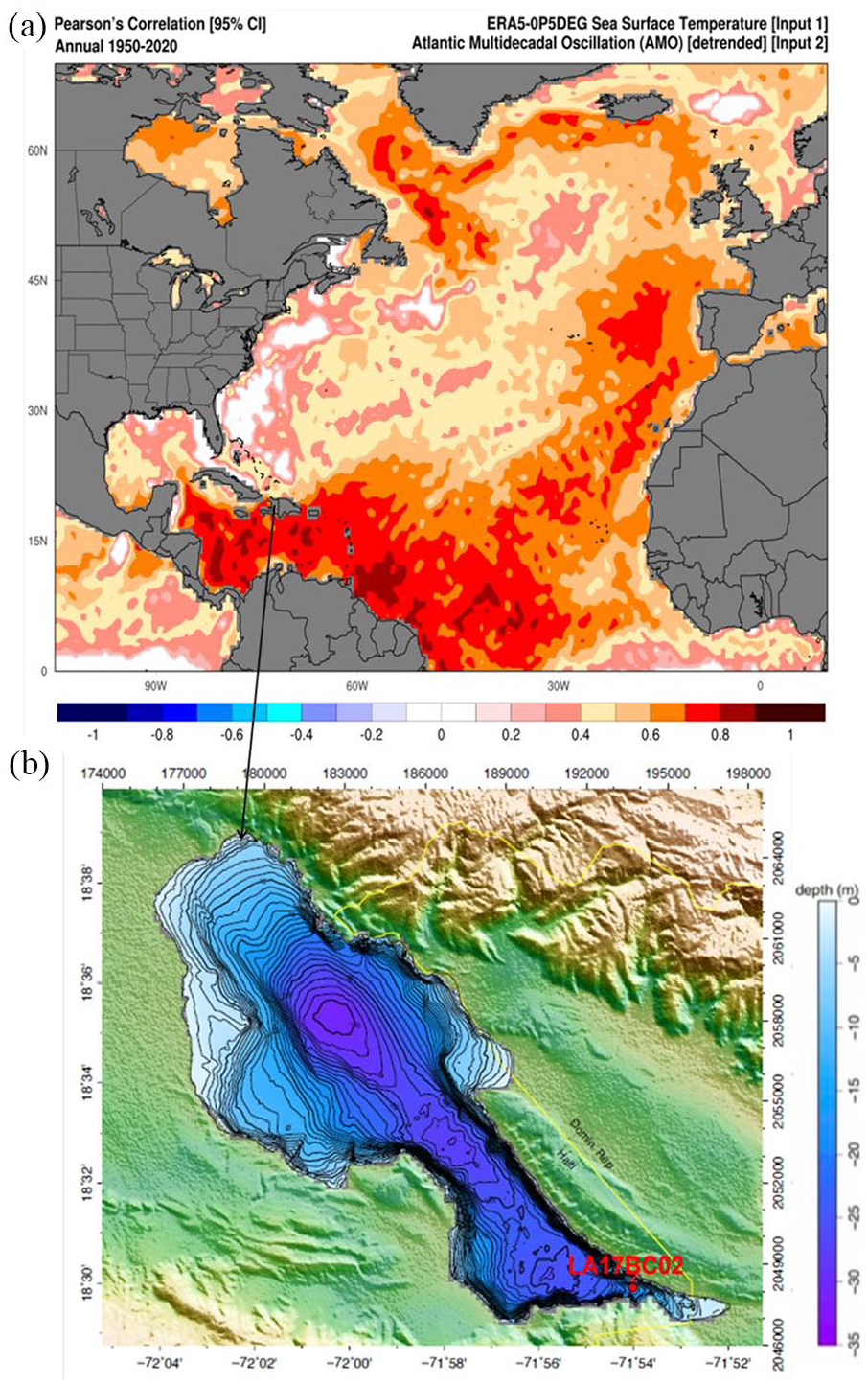
(a) Spatial correlation between instrumental AMO and Sea Surface Temperature (SST) from ERA5-OP5DEG from 1950 to 2020. (b) Bathymetric chart compiled from depth soundings collected between 2013 and 2017 (Cormier et al., 2018). Contour interval is 1 m. Yellow line indicates the Haitian-Dominican border.
Lake Azuei is 22 km long, from northwest to southeast; its maximum width is 12 km and it measures 30 m at its deepest (James et al., 2019). It is located in one of the driest regions of the country (Moron et al., 2015) due to the Cordillera Central rain shadow effect. The lake is endorheic, which means that its level is extremely sensitive to variations in precipitation. It is located in an alluvial plain (Cul-de-Sac) bordered by mainly carbonate mountain. It lies across the Enriquillo-Plantain Garden Fault, part of a system of faults that mark the complex boundary between the North American and Caribbean plates (Mann et al., 1995).
Materials and method
Lake sediment coring
Coring system used was provided by the NSF National Facility “LacCore” at the University of Minnesota-Minneapolis. The core LA17BCO2, 84 cm length, was collected at 19.8 m of water depth using the Bolivia corer which is a piston rod corer. Its GPS coordinates are 18 ° 30.0931′N, 71°54.0302″W. The core sub-sampling was carried out at the Graduate School of Oceanography, United States. The samples were taken every 2 cm, except in some level where samples had already been taken for radio-isotope dating. In total, 32 samples were taken from the core for the geochemical and mineralogical analysis.
Dating
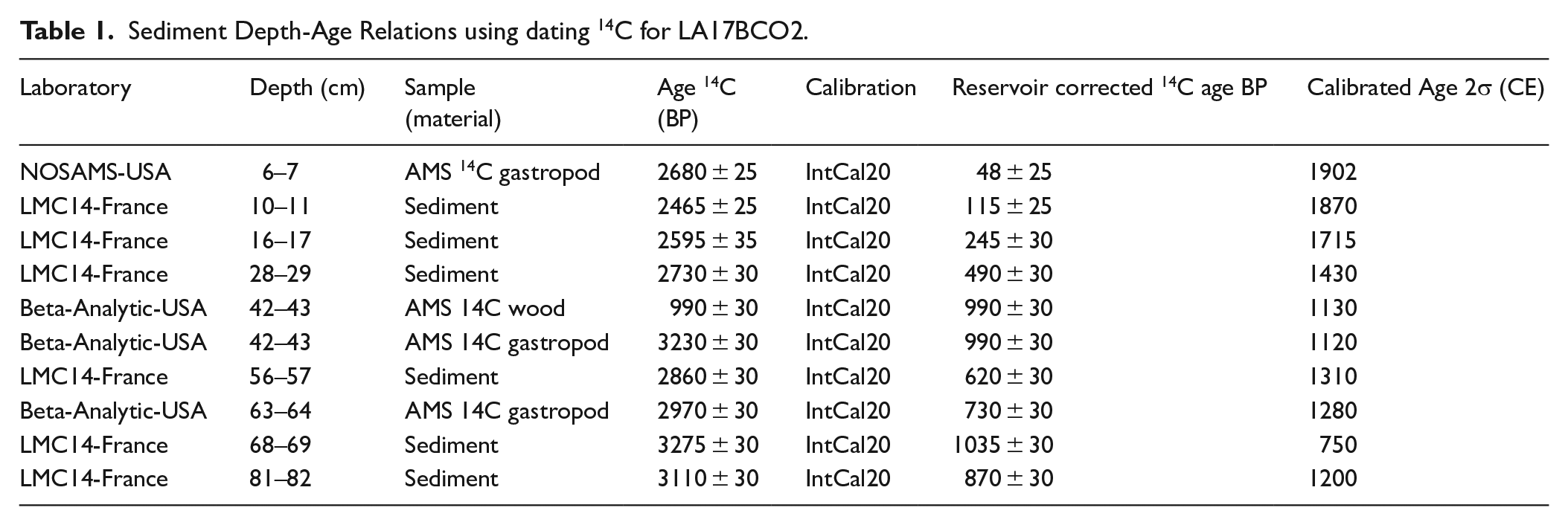
Ten 14C measurements by AMS were made on three samples consisting of gastropod shells, one wood sample, and six bulk sedimentary organic carbon samples. Dating of gastropod shells and wood was performed in the U.S.A at the Beta Analytical Laboratory, Miami, Florida, and at the NOSAMS facility in Woods Hole, Massachusetts. Dating of bulk organic matter sediment was carried out at the LMC14 laboratory, Saclay, Paris, France. To date the upper part of the core more precisely, activities of 210Pbxs (unsupported Pb) were carried out at the University of Rhode Island every centimeter over the upper 10 cm. Sedimentation rates were estimated by applying the constant initial concentration (CIC) model of 210Pb. Because atmospheric radiocarbon production has varied over geologic time, radiocarbon ages have been calibrated to provide dates in years CE. Thus, calibrated ages (two sigma) in “approximate calendar” years were obtained from Stuiver et al. (1998) by means of the calibration program CALIB 8.2 software (Stuiver et al., 2022).
Lithology, gray level, and wavelet analyses
Physical characteristics such as sediment color, bands and laminae structures, were determined both at the macroscopic and microscopic scales. Gray levels were measured using Image software on a high resolution photo of the core taken at the University of Rhode Island. The image software, ImageJ, is a Java-based image processing program developed at the National Institutes of Health and the Laboratory for Optical and Computational Instrumentation (LOCI, University of Wisconsin). The gray level was set from 0 to 255. Larger numbers imply brighter colors (Cortijo et al., 1995).
Wavelet analysis is used to study the frequency composition and to visualize variability of some periodicities (Torrence and Compo, 1998). It was applied in our study to the high-resolution gray level measurements to extract the dominant frequencies embedded in the fine-scale sediment layers.
Inorganic compositional analyses
Major and trace (Ca, Al, Fe, K, Ti, Zr) element concentrations were analyzed by ICP-MS (Agilent 7500 cx) at IRD, LOCEAN, Bondy, after acid digestion following the methodology used by Valdés et al. (2014) : (1) samples weighing 20–25 mg into savilex vessel were treated with a combination of nitric acid (HNO3) and hydrofluoric acid (HF), followed by heating at 150°C for 48 h; (2) HF and perchloric acid (HClO4) solution was added and digested at 150°C for 24 h; (3) HNO3 attack was done twice at 150°C to evaporate all acid from the samples; (4) the resulting material was brought to 35 mL with HNO3. The analytical procedure was controlled by the routine replicate analysis, target material, and MESS-3 certified reference material. The analytical validation data showed accuracy with a relative error that did not exceed 5%.
Mineralogical analyses
The mineralogical composition was determined by X-ray diffraction (XRD) at IRD, LOCEAN, Bondy, using a PANalytical X’Pert powder diffractometer with Ni-filtered CuKα at 40 kV and 40 mA, equipped with a PIXcel detector. Samples, previously ground with an agate mortar were prepared as randomly oriented powder mounts and scanned from 2° to 70° (2θ) with a step size of 0.0131 °2θ. Mineral identification was performed using the High score 3.0 software (PANalytical©) and two databases: ICSD (Inorganic Crystal Structure Database) and COD (Crystallography Open Database) (Gražulis et al., 2009).
Estimation of the contribution of the main detected minerals was achieved by using the integrated peak area of the most intense diffraction peak of calcite (d 104 , 3.03 Å), Mg-calcite (d 104 , at 2.99 Å), aragonite (d 111 , 3.40 Å), quartz (d 101 , 3.34 Å) and clays (represented by a common diffraction peak at 4.50 Å). The relative contribution of each mineral, expressed as a percentage of the sum of all the measured peak areas, does not represent a mass percentage but allow following the variability of the mineralogical composition along the core.
Organic carbon analyses
Organic carbon content (Corg) was measured with an elemental analyzer Flash 2000HT from Thermo Fischer Scientific coupled to a thermal conductivity detector (TCD) at LOCEAN, Bondy, France. Each sample was weighted in a precision balance and placed in tin capsules. Prior to the analyses, carbonates were removed with hydrochloric acid 10% (Antonio Nava-Fernández et al., 2022).
Results
Chronology and sedimentation rate
The 14C measurements and 210Pb dating are represented in Tables 1 and 2, respectively.
Sediment Depth-Age Relations using dating 14C for LA17BCO2.
210Pb measurements performed on the upper core. Regression through these measurements indicates a sedimentation rate of 0.134 cm/year.

Lake Azuei is a hard-water lake varying in hardness between 525 and 2260 mg/l of CaCO3 (Matthes, 1988). Consequently the radiocarbon dates of shells and bulk sedimentary organic carbon are subjected to errors resulting from the dilution of 14C by “old” carbon (i.e. 14C-free) which is derived from the dissolution of calcareous bedrock; this is called “hard – water – lake error (HWLE).” Taking into account the dates of 210Pb and the gastropods for the 6–7 cm interval and those of wood and gastropods for the 42–43 cm interval, three corrections of hard water effect can be estimated. In the upper part (6–7 cm), a HWLE of 2630 years BP was removed from the 14C date. From 10 to 17 cm, a HWLE of ~2350 years BP was removed from the 14C dates, assuming a constant sedimentation rate between 6 cm and 42 cm. Below 28 cm, they are subtracted from 2240 years BP based on the dating of the wood sample.
210Pb and radiocarbon dates were combined to form a Bayesian age-depth model using the rBacon package within R (Blaauw and Christen, 2011). Mean ages were extracted from the model and used for the representation and interpretation of the proxy data. Observing the graphical representation of the age-depth used to establish the chronology (Figure 2a).

(a) Bayesian age-depth model for core LA17BCO2 generated using rBacon for R, displaying 14C dates corrected for HWLE. The jagged blue error bars display the 14C age probability distribution for each sample; the dotted red line follows the mean ages. In detail at the top from left to right; number of iterations, sedimentation rate and memory, this is interpreted as the dependence of the accumulation rate between neighboring depths. (b) Sedimentation rate (cm/year) calculated from age-depth model. Average sedimentation rate in sediment core determined with the age-depth model (Figure 2b), was 0.128 ± 0.079 cm/year. The higher values are observed between: 84 to76 cm (1000 to1150 CE), 68–41 cm (1100–1250 CE) and 10–0 cm (1900–2000 CE). From 38 to 10 cm (1300 to 1900 CE) we observed a trend to decrease of sedimentation rate.
Lithology and gray level
Based on the visual characteristics of the sediments, different stratigraphic levels could be identified for LA17BCO2 (Figure 3, core image). The different levels were characterized either by the clay facies or by frequent alternation of organic matter within clayey to homogeneous silty levels or by less frequent alternation of organic matter and a more silty level. The upper levels have a much darker color, therefore much richer in organic matter. The macrofauna is mainly composed of gastropods. In the middle of the core there is a particularly high concentration of gastropods. Microscopic observation of some samples indicates that the sediment facies contain fine grains of authigenic limestone. Amorphous and fluorescent organic matter is also present. Some plant debris were observed.
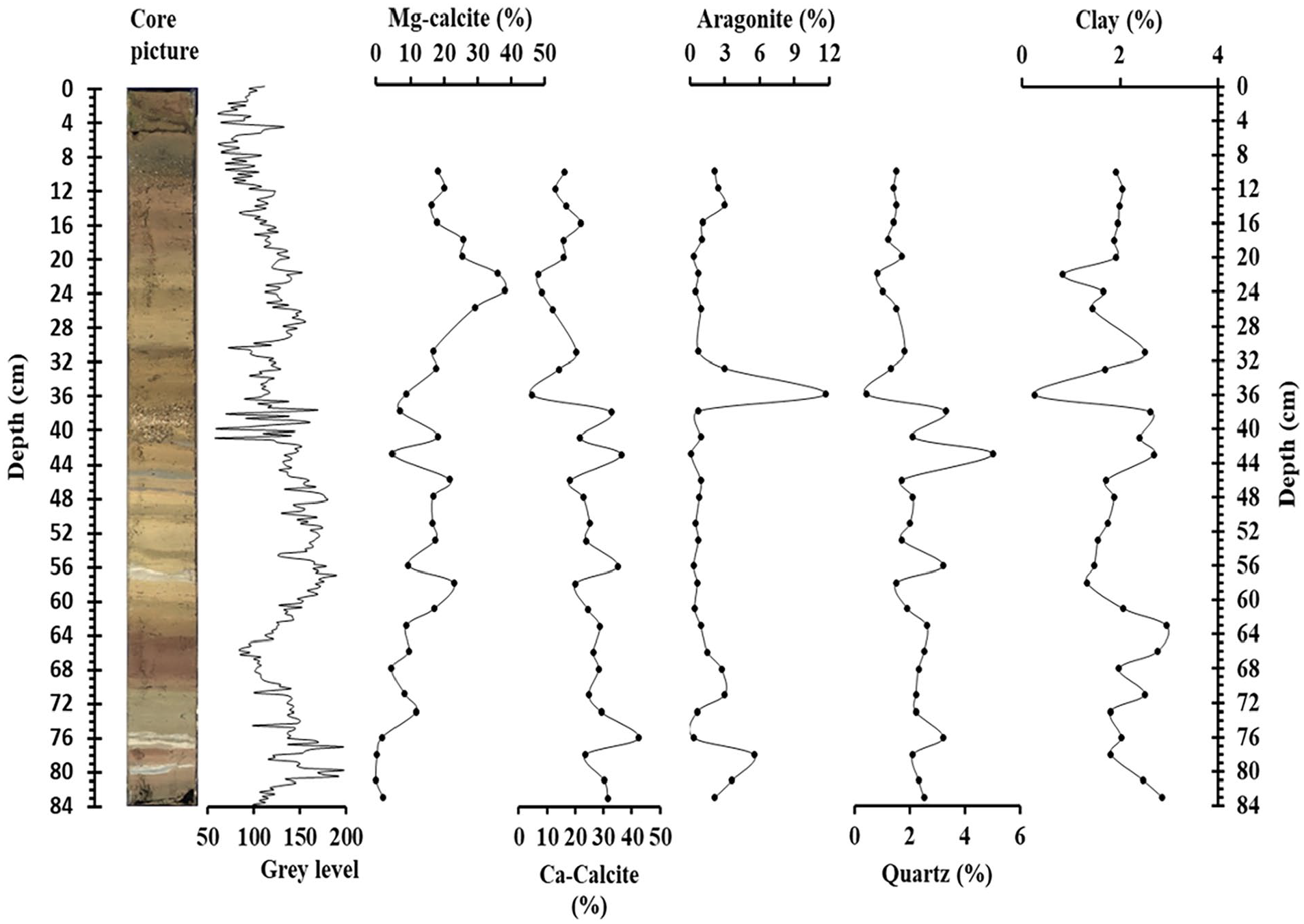
Core picture; lithological profile, gray level variation, and distribution of the mineral content expressed as a peak area percentage of the core LA17BCO2 are plotted against depth.
The observed gray level values varied between 32 (darker) and 240 (brighter). The gray level data exhibit high variations in different level of the core (Figure 3). Brighter colors were found in the lower part of the core than in the upper part. Highest values are recorded for two intervals, between 80 and 72 cm, and 60 and 48 cm. From 42 to 36 cm gray level show high fluctuations between low and high gray level values. Finally, a tendency toward a decrease of gray level values was observed from 28 cm and reaches the minimum between 12 cm and the top of the cores.
Variation of the mineralogical composition
The mineralogical composition of the different samples is homogeneous. The most prominent mineral phase throughout the core consists of carbonates: Calcite (CaCO3, called here Ca-calcite), Mg-calcite (MgxCa1-xCO3) and aragonite (CaCO3). The peak area percentages of Ca-calcite, Mg-calcite, aragonite, quartz and clays are shown in Figure 3. Ca-calcite, quartz and clays have the same behavior and and strongly positively correlated (Figure 3, Table 3). By contrast, Mg-calcite has an exact opposite behavior as quartz, clays, and Ca-calcite. For aragonite, there is almost no variation in its proportions in the different levels except a slight increase in the 36 cm.
Pearson’s correlation coefficient matrix between metals and mineral compositions.

Variation of the geochemical composition
The most abundant major element in the lake sediments is Ca, in agreement with the high calcite (Ca-calcite and Mg-calcite) content (Figure 3). Following in order of abundance are Al, Fe, K, Ti and Zr. Indeed, the average percentages of the elements analyzed: Ca, Al, Fe, K, Ti, Zr, are, respectively, 32.48 ± 5.06%, 1.21 ± 0.31%, 1.05 ± 0.22%, 0.23 ± 0.04%, 0.12 ± 0.03%, and 0.0016 ± 0.00004%; with a maximum value at 43 cm and a minimum values at 36 cm. Variations in concentrations Al, Fe, K, Ti, and Zr are correlated as confirmed by the coefficient of Pearson (Figure 4, Table 3). The greatest amplitude of the variation in the concentrations of elements is observed between 46 and 22 cm. Ca concentrations vary in opposition to Al, Fe, K, Ti and Zr concentrations in the upper half of the core: From 48 to 10 cm, where Ca concentrations increase, there is decrease in Al, Fe, K, Ti, and Zr concentrations.
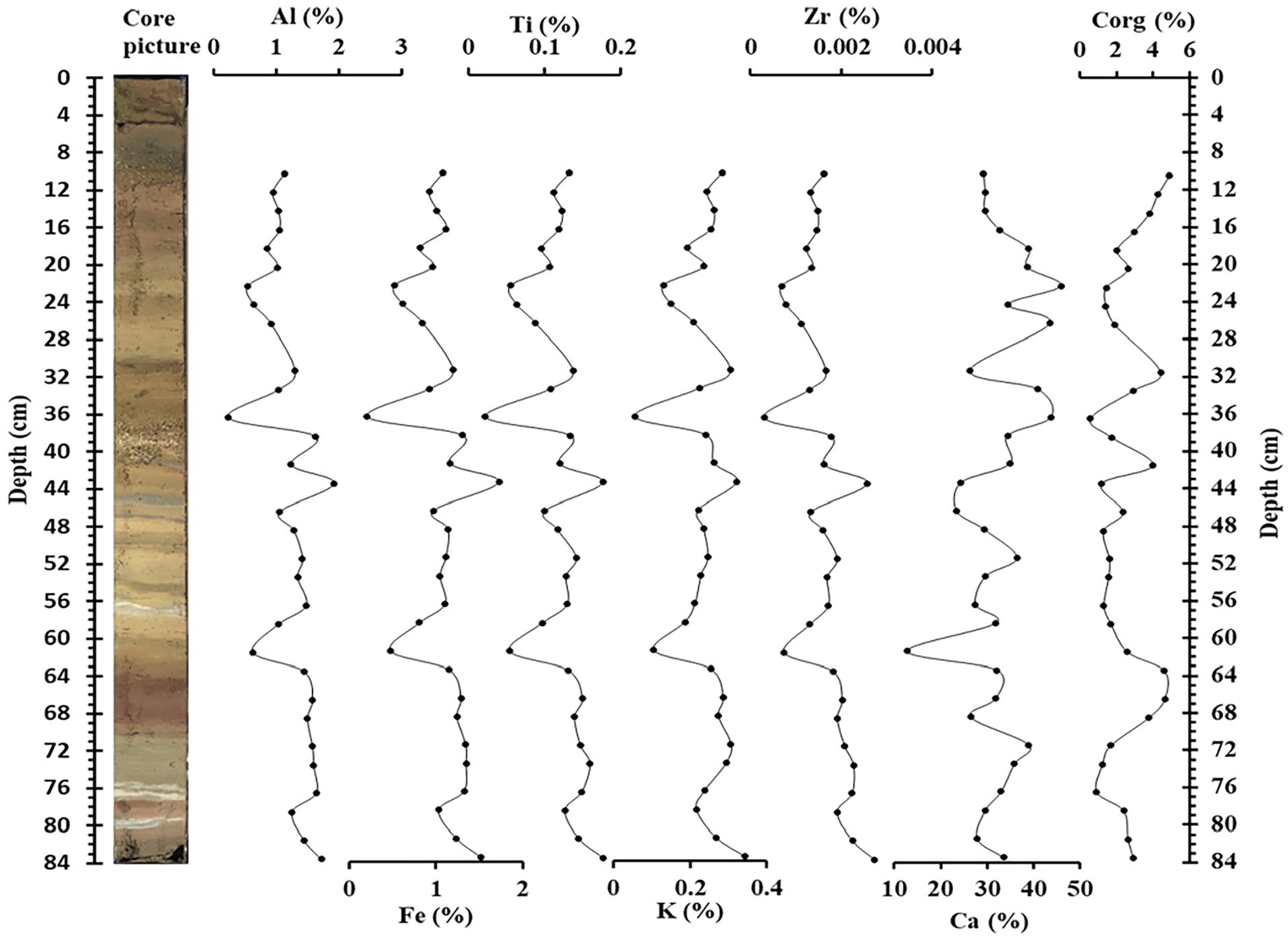
The temporal variations of the geochemical composition (core LA17BCO2) of Lake Azuei.
The organic carbon content, Corg, varies in a narrow range from 0.6% to 4.9% (average of 2.5 ± 1.22%). It is highly variable and trend to increase in the topmost sediments. Corg varies in an opposite trend to Ca (Figure 4).
Discussion and interpretation
The results are discussed and interpreted according to three major periods that have marked the climate during the last millennium: Medieval Climate Anomaly (MCA, 1000–1100 CE), the Little Ice Age (LIA, 1450–1800 CE) and the Current Warm Period (CWP, from 1850 CE to present) (Bird et al., 2011).
Terrigenous input (Detrital input)
A Pearson correlation analysis (Table 3) confirms a positive correlation between the terrigenous fractions (Al, Fe, Ti, K, and Zr), and their negative correlation with Ca. Indeed, Al, Fe, Ti, K, and Zr correlate well with each other indicating that all those elements are from the same source area. They also show similar variations (Figure 4), suggesting that the variation of water balance components (surface runoff, riverine inflow) through the watershed affect the input of these elements into the lake. K, Ti, and Zr are significantly correlated to Al and Fe confirming their common and crustal origin. In addition, Al, Fe, Ti, K, and Zr are strongly correlated with the Ca-calcite content (Figure 5, Table 3) and the detrital minerals (clays and quartz) (Table 3), suggesting their common origin, and negatively correlated with the Mg-calcite content. Lower Mg-calcite contents correspond to higher proportion of the other minerals (Figure 3).
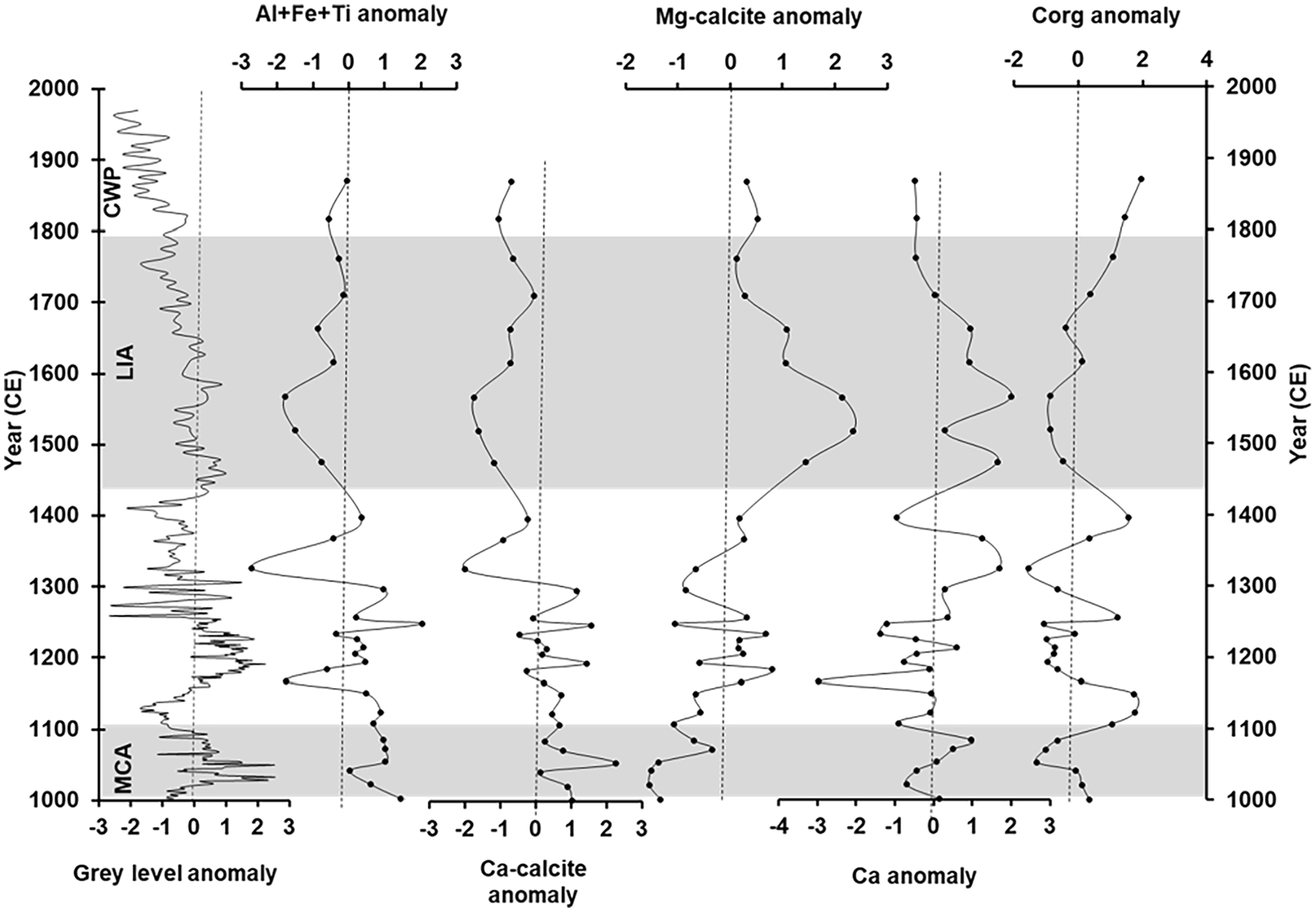
Temporal variations in gray level intensity, terrigenous input (% Al + % Fe + % Ti), Ca-calcite, Mg-calcite, Ca and Corg in sediment core LA17BCO2. The time scale along the vertical axis is derived from the age-depth model displayed in Figure 2a.
One of the first parameters that can strongly influence the concentrations of elements independently of the redox conditions or the productivity of the environment at the time of deposition is terrigenous input. Indeed, parts of the elements of most sediment are of detrital origin (Tribovillard et al., 2006). The impact of detritus on the concentrations of the studied elements would be verified if their concentrations were correlated to that of aluminum (Böning et al., 2004; Calvert and Pedersen, 1993; Hild and Brumsack, 1998; Tribovillard et al., 2006), as is indeed the case for our measurements (Table 3). These elements are therefore mainly of detrital origin and can be used to interpret the depositional conditions. Al, Fe, Ti, K, and Zr variations in the Lake Azuei are not diagenetically controlled, and can be interpreted to reflect changes in terrigenous inputs and the pedogenic processes occurring in the surrounding basin. The variations of Al, Fe, Ti, K and Zr content in the sediment will thus be interpreted as a proxy of soil erosion, with low concentrations indicating less transport and, conversely, high concentrations indicating more transport to the lake. Indeed, the MCA period (1000–1100 CE) is characterized by positive anomalies of terrigenous input (Figure 5), related to detrital input in the lake. The MCA-LIA transition (1200–1400 CE) is characterized by variations between positive and negative anomalies of terrigenous input. However, the LIA (1400–1800 CE) period is characterized by negative anomalies of terrigenous input (Figure 5), related to less detrital input in the lake. Additionally, some periods characterized by positive (negative) anomalies for the sum of Al, Fe, and Ti, display negative (positive) anomalies of Ca (Figure 5). The negative anomalies of Ca may be the result of increased dilution by terrigenous particles derived from erosion (Baumann et al., 1993). On the other hand, the positive anomalies of Ca are linked to precipitations of calcium carbonates when there is a decrease in terrigenous elements (negative anomalies of sum Al, Fe, and Ti).
Calcite formation
Several studies have explained the formation and sedimentation processes of calcium carbonate in lakes (Dean et al., 2009; Effler and Johnson, 1987; Elfil and Roques, 2001; Gal et al., 2002; Last, 1982; Last and Deckker, 1990; Morse et al., 2007; Müller and Wagner, 1978; Müller et al., 1972; Queralt et al., 1997; Solotchina and Solotchin, 2014; Tompa et al., 2014). Various calcium carbonate minerals may occur in the aquatic environment either as primary carbonates or as the results of diagenetic processes in the sediments. Lake water temperature and its concentration in Mg/Ca ratio are the two main factors that determine the composition and crystallographic variety of precipitated calcium carbonate: Ca-calcite, aragonite, Mg-calcite (Dean et al., 2009; Kelts and Hsü, 1978; Morse et al., 2007; Müller et al., 1972). Temperature not only affects biogenic factors but also the solubility of CO2 in water (Schwoerbel, 1999). Also, through temperature-dependent evaporation the total volume of water influencing the ion concentration within the lake is modified. Calcite is the most stable crystalline variety of calcium carbonate at ambient temperature and pressure, with aragonite being stable at high pressure (Cölfen, 2003; Nan et al., 2007). Last (1982) showed that the incorporation of significantly higher amounts of Mg in the calcite lattice to form Mg-calcite is associated with increased water temperature. In addition, the little different atomic radius of the Ca2+ and Mg2 + cations, the identical crystalline structure of their carbonate (rhombohedral), their charges and their similar electronegativities are all factors favorable to the formation of Mg-calcite instead of calcite (Ca-calcite) with an increase in water temperature (Last and Deckker, 1990; Morse et al., 2007; Müller et al., 1972; Queralt et al., 1997). The opposite variations of Ca-calcite and Mg-calcite in the Lake Azuei sediments (Figure 5) can be used to interpret changes in water temperature, and thus used as a proxy of water lake evaporation. During the LIA period (1400–1800 CE), we observed positive anomalies for the Mg-calcite and negative anomalies for the Ca-calcite, indicating that the lake water was warmer than during the MCA period (1000–1100 CE), which is characterized by negative and positive anomalies for Mg-calcite and Ca-calcite, respectively. The MCA-LIA transition (1200–1400 CE) is characterized by variations between negative and positive anomalies of Mg-calcite.
Gray level correlation with proxies
The gray level reflects the combination of all materials (organic as well as inorganic) present in the core sediment. Thus, its variation depends on the variations of these materials according to their sedimentation conditions. Indeed, the gray level intensities exhibit a somewhat similar variability to that of the terrigenous elements and calcite formation (Figure 5). The lighter (darker) colors coincide with more (less) terrigenous input. The agreement between gray level and inorganic input is supported by a negative correlation between gray level and Corg (r = −0.6, Figure 6), suggesting that their variations may be controlled by the same environmental parameters.
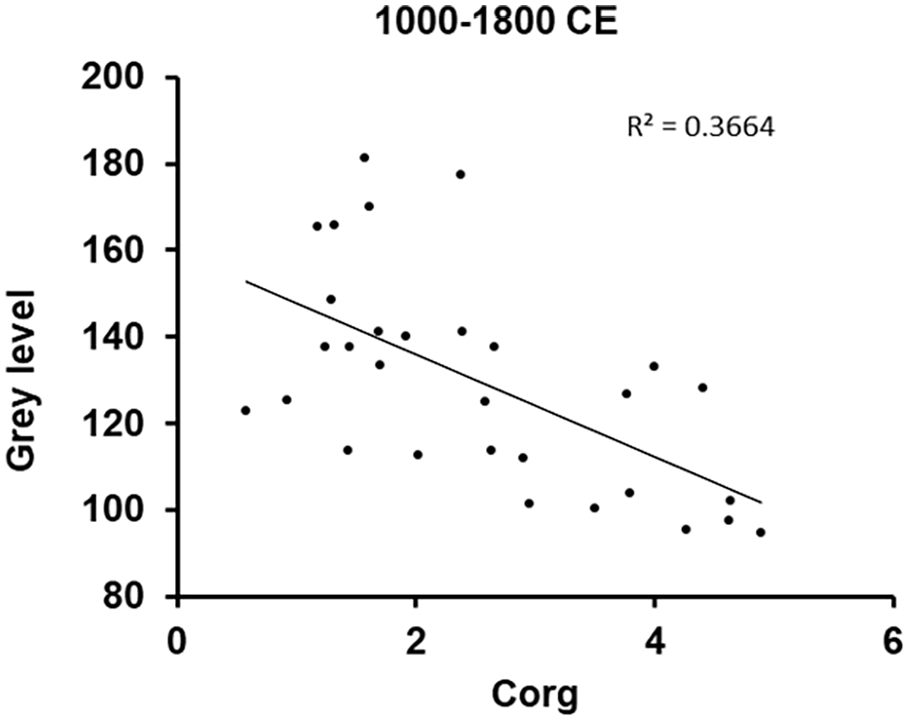
Correlation between gray level and organic carbon from 1000 to 1870 CE.
Hydroclimate interpretation and comparison with other regional records
In order to gain insights into the dynamical link between the climate and the dominant modes of variability, we applied wavelet analysis (Figure 7j). This analysis reveals interannual, decadal and multi-decadal spectral wavelets which could be associated with ENSO, PDO and AMO, respectively. In addition a spectral analysis of average wavelet power of our record indicate an oscillation with periods in ~20, ~64, ~128 years which could be related to PDO, AMO and some multi-decadal variability respectively (Figure 8).
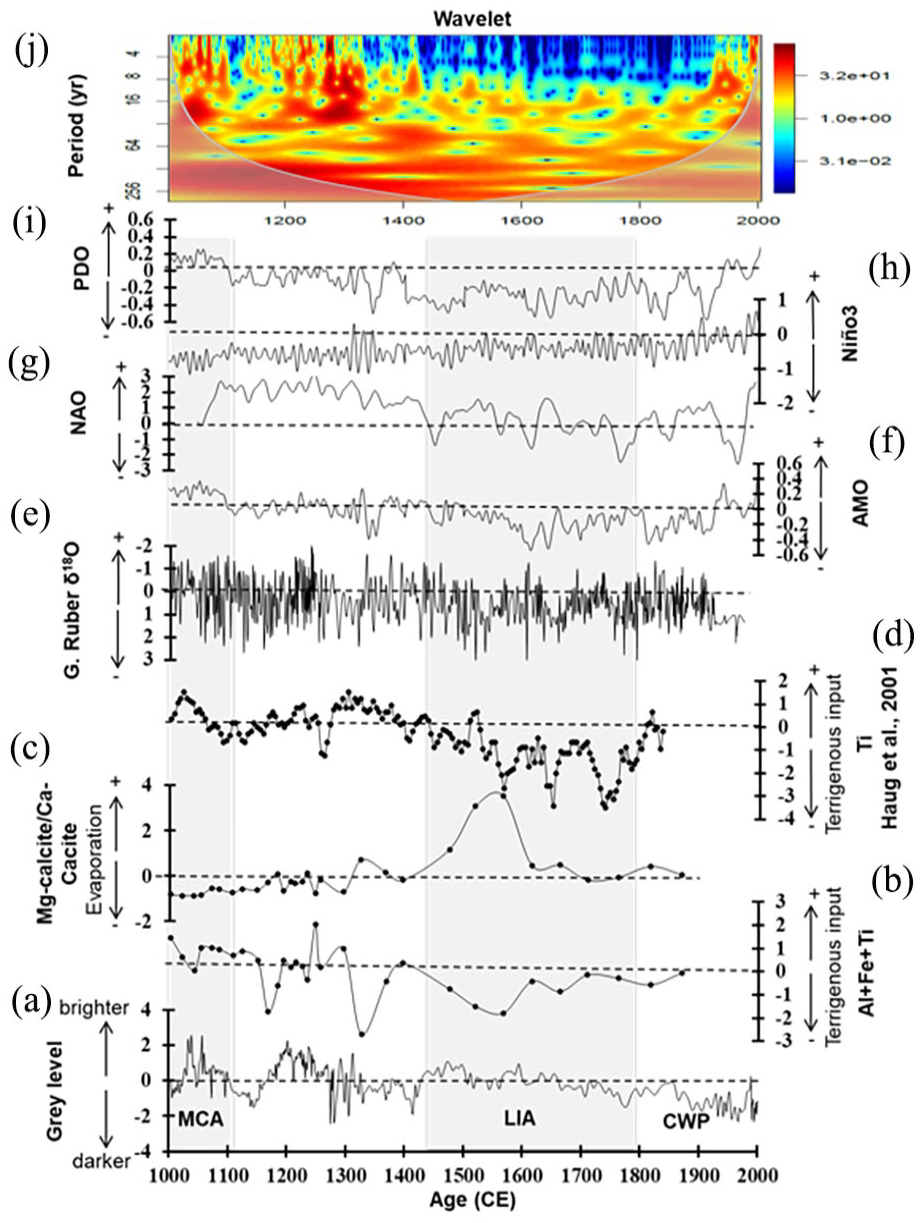
Comparison of gray scale analysis of the sediment core and sum % Al, Fe, and Ti composition and Mg-calcite/Ca-calcite ratio (this study, (a–c) with sediment titanium composite on representing continental runoff through time (Haug et al., 2001, (d), and G. ruber δ18O that reflect sea surface temperature (SST) and Intertropical Convergence Zone (ITCZ) precipitation-related salinity variations over the Caribbean and tropical North Atlantic (Black et al., 2004, (e), AMO index representing sea surface temperature (SST) anomalies (°C) averaged over the North Atlantic ocean (Mann et al., 2009, (f), Niño-3 temperature anomaly representing SST anomalies in the eastern Pacific ocean (Mann et al., 2009, (g), NAO index (Trouet et al., 2009, (h), PDO temperature anomaly representing SST anomalies in the eastern Pacific ocean (Mann et al., 2009, (i) and wavelet power spectrum: The smooth white line marks the cone of influence; results below that line are unreliable. The color bar indicates the range of wavelet power in the wavelet power spectrum, with hotter colors corresponding to the maximum peaks in wavelet power (j).
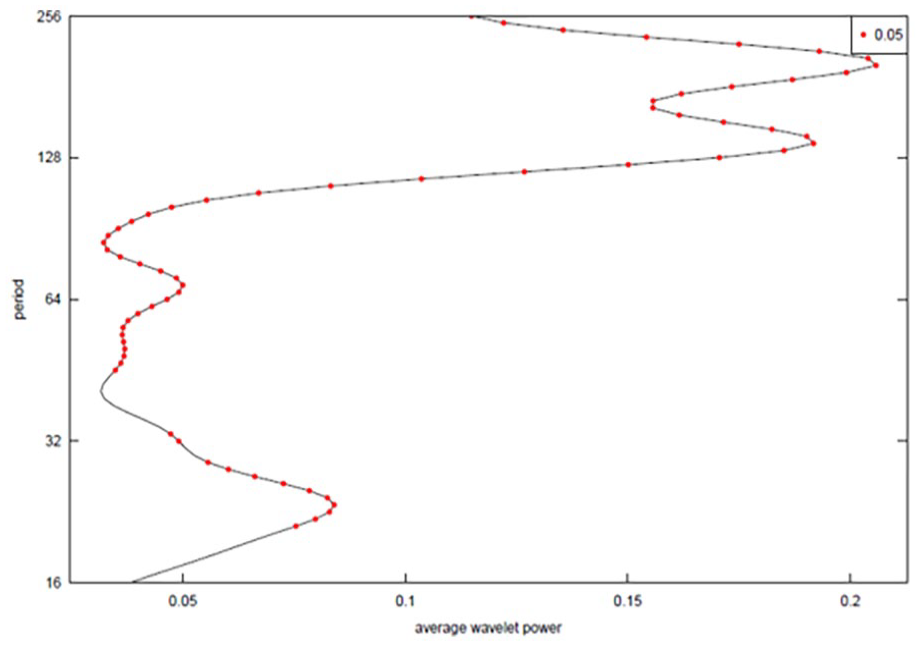
Spectral analyses of the average wavelet power spectrum of the Figure 7i.
Trend toward negative anomalies for both terrigenous inputs (Figure 7a) and gray levels (Figure 7b) and positive anomalies for Mg-calcite/Ca-calcite ratio (Figure 7c) in sediment of Lake Azuei from 1000 to 1800 CE suggests a progressive decrease in precipitation in Haiti over this period. Indeed, proxy indicators suggest trends to dry conditions. Results from other studies in the circum-Caribbean region contain also evidence for this trend. The oxygen isotope and Sr/Ca records from Lake Miragoâne (Haiti) reveal a trend toward higher salinity conditions during the last millennium, which is linked to an increase in the E/P ratio and therefore to dry conditions (Curtis and Hodell, 1993). The sediment titanium composition from the Cariaco Basin (Venezuela) (Haug et al., 2001, Figure 7d) show also a trend to more negative anomalies, related to a decrease in precipitation patterns. The higher-resolution G. ruber δ18O record spanning the last 2000 years from the Cariaco Basin show a trend toward more positive values that reflect a decrease SSTs and an increase SSSs over the Caribbean and tropical North Atlantic (Black et al., 2004, Figure 7e). Indeed, the δ18O value of foraminiferal calcite is a function of temperature and salinity, whereby an increase in δ18O is associated with a decrease of SST and an increase of SSS, and vice versa. These studies thus indicate a decreasing precipitation over the circum-Caribbean that may be associated with a southward migration of the ITCZ during this period. Indeed, Lechleitner et al. (2017) have shown a trend to more southerly mean annual position of ITCZ from 1000 to 1800 CE. Thus, in Haiti the precipitations at secular scale are also controlled by the migration of the ITCZ. The overall correlation between the terrigenous inputs in Lake Azuei, the G. ruber δ18O record (Black et al., 2004) and the sediment titanium composition from the Cariaco Basin (Haug et al., 2001) show that the Caribbean region observed a common climate pattern over the past millennium.
The MCA period appears marked by positive anomalies for terrigenous input linked to positive anomalies for gray level (Figure 7a and b), which have been confirmed by increase in sedimentation rate (Figure 2b). This tendency was likely related to the pattern of rainfall and runoff from the surrounding watershed and suggests an environment characterized by wet conditions. The negative Mg-calcite/Ca-calcite ratio anomaly recorded during this period (Figure 7c), indicates a low Mg-calcite concentration in sediment which related to a low evaporation of the lake water. This is consistent with other proxy records from the northern tropical Americas, including the Yucatan (Hodell et al., 2005), the Gulf of Mexico (Richey et al., 2007), lowland Venezuela (Curtis et al., 1999), and the Cariaco Basin (Black et al., 2004; Haug et al., 2001), and the Las Lagunas (Castilla, Felipe, Clara, Salvador) in Dominican Republic (Lane et al., 2009). The Las Lagunas sediment records provide evidence of a relatively wet MCA in the eastern Caribbean (Lane et al., 2009). Black et al. (2004) document a negative shift in mean isotopic values of G. ruber (foraminifera) occurred between ~1000 and 1100 CE in Cariaco Basin (Figure 7e). This negative shift suggests that the Caribbean and tropical North Atlantic were warmer during the MCA. During the early MCA a positive anomaly of Ti also occurs in the Cariaco basin (Haug et al., 2001; Figure 7d), which is indicative of increased sediment transport by runoff during periods of increased precipitations, characterizing wet conditions. The latter are related to more northerly mean position of ITCZ during this period (Lechleitner et al., 2017). Gray level and wavelet power analysis of the sediment core from Lake Azuei during the MCA period show multidecadal variations, suggesting that multidecadal mode of climate variability, such as AMO, may indeed affect the hydro-climatic conditions in Haiti. Multi-decadal mode variability was observed also in the South American regions during MCA (Apaéstegui et al., 2014; Vuille et al., 2012). In addition, the MCA period coincides with positive anomalies of AMO, NAO and PDO (Mann et al., 2009, Figure 7f, g and i); which reflects a warm sea surface temperature and is related to wets conditions.
The MCA-LIA transition (~1200–1400 CE) corresponds to high climate variability conditions, related to alternations between wet and dry conditions, underlined by the high fluctuations between terrigenous input which correlated with a large variation in the sedimentation rate, Mg Calcite precipitation and organic carbon deposition. The wavelets power analysis of gray level during this period highlights interannual variability, which probably corresponds to Niño-3, conditions (Figure 7g). Even if we note a chronological phase shift of 50 years between our record and Niño-3 index estimated by Mann et al. 2009, which could be due to the errors of extrapolations of our age models during this period, we think that dry conditions during the MCA-LIA transition have been largely influenced by El Niño.
During the LIA, from ~1450 to ~1800 CE, unlike MCA, more negative anomalies of terrigenous input are recorded (Figure 7b). This reduced transport of terrigenous elements to the lake is related to a decrease in sedimentation rate (Figure 2b), suggesting a decrease in rainfall patterns. On the other hand, we observed more positive anomalies for Mg-calcite/Ca-calcite ratio during this period (Figure 7c). Thus, there is formation of Mg-calcite which is a consequence of evaporation related to dry conditions. Other studies have reported evidence of dry conditions in the region during the LIA (Haug et al., 2001; Hodell et al., 2005; Lane et al., 2011; Peterson and Haug, 2006). The Lagunas Castilla and Salvador records provide further evidence that the LIA may have been, on average, one of the most arid periods in the circum-Caribbean in the last 2000 years (Lane et al., 2009). In the Cariaco basin (Haug et al., 2001), drier conditions are suggested for the LIA by decreased Ti content in core linked to decreased detritus from local rivers (Figure 7d). The coincident increase in aridity in the geographically distinct locales of the Yucatan Peninsula (Hodell et al., 2005), Panama (Linsley et al., 1994), northern South America (Haug et al., 2001; Peterson and Haug, 2006), Puerto Rico (Nyberg et al., 2001), along the southern slope of the Cordillera Central of the Dominican Republic (Lane et al., 2009, 2011) and Lake Azuei in Haiti (this study) provides evidence that the ITCZ in the Caribbean was located at a more southerly mean annual position during the LIA. The hydroclimate records discussed by Lechleitner et al. (2017) confirmed also a southward ITCZ shift broadly synchronous with the LIA period. LIA dry conditions are consistent to multidecadal mode highlighted by wavelet analysis of gray level, which corresponds to negative phase of AMO and PDO index (Mann et al., 2009, Figure 7f and h) and trend to more negative NAO index than MCA period (Trouet et al., 2009, Figure 7g). Thus, these negative phases reflect a cold sea surface temperature and are related to dry conditions.
The study lacks indirect data on the last five decades. Then, we didn’t have data for inorganic analysis related to the CWP and new studies need to be done with more evidence. However, there was a trend to increase of sedimentation rate (Figure 2b). In addition, the lithology profile shows the sediments linked to this period consists of dark brownish clay with a large amount of OM (Figure 4). This could be due to the input of sediments and organic matter into the lake during rainy periods.
Conclusions
We use a combination of geochemical and mineralogical data supported by statistical analysis from a core taken in Lake Azuei, to reconstruct hydro-climatic variations in Haiti during the last millennium. The terrigenous elements in the sediments of the lake display a long-term trend toward decreasing content, which is related to a decrease on sedimentation rate and increase Mg-calcite precipitation, particularly from 1000 to 1600 CE. These trends suggest progressively drier conditions in Haiti over this period related to a southward shift of the ITCZ. Therefore the MCA period was characterized by more wet conditions in contrast to the LIA period. The MCA-LIA transition was characterized by more unstable conditions, with alternating wet and dry conditions. The CWP is characterized by an increase of sedimentation rate, which is linked to the input of more material into the lake by erosion processes in the lake’s catchment as consequence of anthropogenic activities. This study demonstrates also that links exist between precipitations in Haiti and mean changes in the Atlantic and Pacific Oceans through AMO, NAO, PDO, and ENSO. In addition temporal correlation of other Caribbean paleoclimate records with our geochemical and mineralogical data, suggests that trends observed in Lake Azuei were controlled by regional climate, likely associated with shifts in the position of the ITCZ. This record provide new detailed information on hydroclimate variations in Haiti during the last millennium and exhibits trends that are similar to regional patterns identified in other proxy records from the Caribbean and northern tropical Americas. Future studies should focus on other records with higher resolution to better understand interannual and decadal variability.
Footnotes
Acknowledgements
We gratefully acknowledge the three anonymous reviewers and the editor for their valuable comments. The acquisition of the cores and their initial analysis was funded through U.S. National Science Foundation grants EAR-1624583 and EAR-1624556. These initial activities involved significant contributions from C.W. Heil, C.K. Hearn, and A.N. Murray. We are especially grateful to our colleagues at the State University of Haiti, D. Boisson, K. Guerrier, and R. Momplaisir for all their help with field logistics and also Eric Calais for supporting this work. The navigation skills and resourcefulness of J. Roy from Pegasus Diving & Services were also key to the success of the coring operations. The participation of Francisco Briceño-Zuluaga in this study is the result of the academic exercise as professor at the Nueva Granada Military University. Francisco Briceño-Zuluaga was also supported by CHARISMA Project (JE0ECCHARI, JEAI-IRD). Geochemical and mineralogical analyses were performed on the ALYSES facility (IRD-SU) that was supported by grants from Région Ile de-France. We would like to thank also LMC14 laboratories for the support in 14C dating.
Funding
The author(s) disclosed receipt of the following financial support for the research, authorship, and/or publication of this article: The research was supported by the National Science Fundation (NSF), Agence Universitaire de la Francophonie (AUF)”and “Projets structurants de formation au Sud” de l’IRD (PSF-CLIMACTS).
