



Abstract
Fiber technology, crucial to human societies for millennia, encompasses cordage and textiles. The development of fiber crops and the production of fiber-based clothing are significant components of the Neolithic Revolution. Despite China being an independent center for agriculture, the role of fiber technology in this context remains largely unexplored. In this project, we employed a comprehensive approach that combines microfossil analysis and use-wear examinations to study tools from the Peiligang site in North China. This site uniquely spans the Upper Paleolithic and early Neolithic periods, offering an ideal setting for investigating the evolution of fiber production. Our results reveal that some Paleolithic blades and scrapers were associated with fiber production, which coincided with ostrich eggshell beads and hematite during the cold and dry Last Glacial Maximum period. Responding to climatic fluctuations, fiber production played a significant role in subsistence and ritual activities. In the early Neolithic, advanced fiber production is evident. Two adjacent burials yield tools and microfossil remains representing a toolkit for fiber and possible textile production, including harvesting, retting, pounding, scraping, and sewing. Fibers recovered from human bones provide potential evidence of textile production and use. Dyeing with blue, black, and red colorants was common for textiles, cordages, and strings. These grave goods suggest the involvement of the deceased in craft production with bast fibers, possibly embodying the earliest specialization in fiber craft 8000 years ago in Neolithic China.
Introduction
Fiber technology, encompassing cordage and textiles, has been a pivotal aspect of human societies for millennia; and its production, application, and exchange have been a focus of research in archeology (Barber, 1991; Gilligan, 2010; Kuhn, 2000; Sabatini and Bergerbrant, 2020; Schier and Pollock, 2020). One area of the research in the development of fiber technology is the correlation between the advancement of fiber-based textile production and the shift toward agriculture. It has been recognized that the development of fiber crops was a significant component of the Neolithic Revolution in the Near East (Bar-Yosef, 2020; Childe, 1936; Zohary et al., 2012). Furthermore, the production of fiber for woven cloth may have been driven by the transition to warmer and moister climate conditions during the early to middle Holocene (Gilligan, 2023).
China stands out as one of the independent centers where agriculture flourished, characterized by the emergence of sedentism, the domestication of broomcorn millets (Setaria italica), foxtail millet (Panicum miliaceum), rice (Oryza sativa), and pigs (Sus domesticus), as well as the development of pottery and polished stone tools ca. 10,000–8000 years ago (Liu and Chen, 2012; Lu, 2023; Zhao et al., 2021). Despite these significant developments, however, the role of fiber technology has remained largely unexplored within this context. This is mainly because fibers are seldomly preserved in prehistoric contexts due to their tendency to decay rapidly in normal environmental conditions.
Our knowledge of early fiber technology in ancient China is limited to a few findings of actual bast fiber materials, predominantly unearthed from water-logged conditions in the Yangzi River region. (Liu et al., 2023a). The existing evidence provides little insight into bast fiber production prior to ca. 8000 BP and the textile production prior to ca. 6000 BP (See Supplemental Material text, section 1).
In contrast to the scarcity of early fiber remains, microfiber remnants appear to be more resilient and have been found in soil and on artifacts. The studies of such micro-particles, often described as a type of Non-Pollen Palynomorph (NPP), have demonstrated a great potential for the reconstruction of human activities (Henry, 2020; O’Keefe et al., 2021; Shumilovskikh and Geel, 2020). Notable discoveries of microfibers from soil, artifacts and human calculus include those from Dzudzuana Cave in Georgia (ca. 30,000 cal. BP) (Kvavadze et al., 2009, 2010a), Shizitan Locality 29 in north China (ca. 28,000–13,000 cal. BP) (Song et al., 2017), Raqefet Cave (ca. 13,700–11,700 cal. BP) (Liu et al., 2018) and Tel Tsaf (ca. 7200–6700 cal BP) (Liu et al., 2022) in Israel, and the site of Gricignano d’Aversa in Italy (ca. 4500–3800 BP) (Sperduti et al., 2018). This method also helped identification of funerary clothing in Late Bronze Age burials in Georgia (15th–14th centuries BC) (Kvavadze et al., 2010b).
Following this line of investigation, the current study explores the possibilities offered by microfiber analysis at the Peiligang site (PLG) in Xinzheng County, Henan Province, North China. This site presents a unique opportunity as it contains deposits from both the Upper Paleolithic and early Neolithic periods, providing an ideal setting for investigating the emergence of fiber production.
Archeological background
The PLG site (34°26′14″N, 113°39′2″E) is in a hilly countryside, about 500 m north of the Shuangji River. The site comprises a Paleolithic occupation covering approximately 3 ha and a Neolithic settlement spanning an area of 5–6 ha. A wetland area was in the southeast, likely connected to an ancient river system. The site was excavated three times in the 1970s, exposing an early Neolithic settlement, comprising more than 100 burials, residential remains, storage pits, pottery kilns, and numerous artifacts (Kaifeng Bureau of Cultural Relics Management, 1978; Li, 1979; Zheng, 1984). An ongoing, new excavation project has been conducted at the site since 2018, additionally revealing Upper Paleolithic deposits as well as more Neolithic materials (Figure 1a, Supplemental Figure S1: 1,2) (Li et al., 2020).
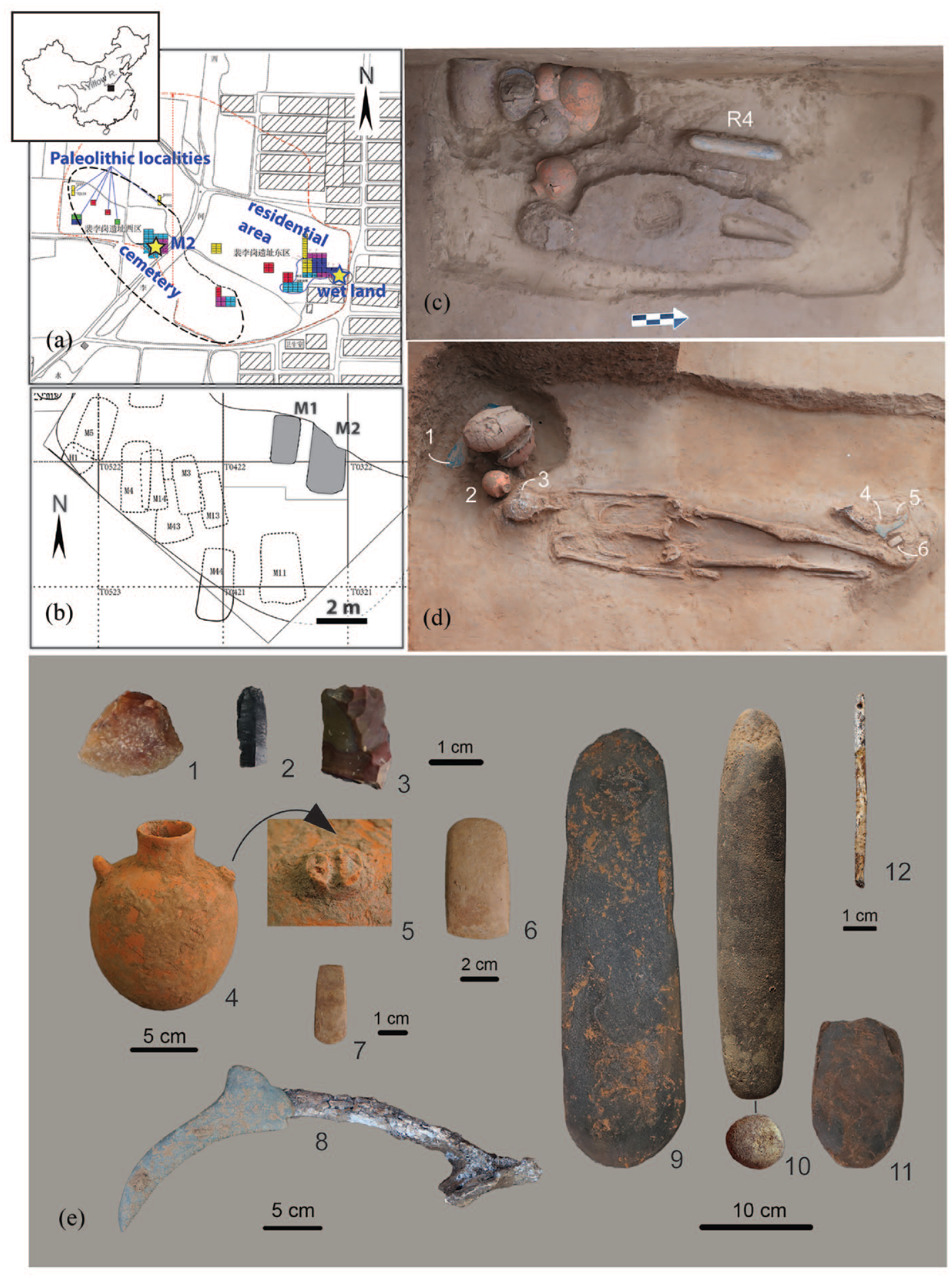
The Peiligang site and artifacts analyzed. (a) Peiligang site and locations of artifacts analyzed. (b) Location of burials M1 and M2; (c) Burial M1 and the roller (R4) analyzed; (d) Burial M2 and artifacts analyzed (1: spade; 2: globular jar; 3: needle; 4: sickle with the antler handle; 5: small chisel; 6: scraper). (e) Artifacts analyzed; 1–3: SCP1, MB7, MB8; 4: globular jar (POT4); 5: the broken handle on the jar; 6: scraper (SCP2); 7: chisel (CH1); 8: sickle (SK1) with antler handle; 9: spade (SP1); 10: pestle/roller (R4); 11: spade (SP2), control sample; 12: bone needle (ND1).
The Paleolithic deposits, covering an area of 3 ha and measuring a thickness of over 7 m, are situated in the western part of the site (Figure 1a). They date to ca. 30,000–12,000 cal BP, representing a long period inclusive of the Last Glacial Maximum (LGM). The recovered artifacts include a diverse range of items such as quartz and chert lithic artifacts, ostrich eggshell beads, burnt bones, clamshells, hematite, and charcoal. The array of material remains suggests that hunter-gatherers possibly used the site as a relatively long-term camp, visiting it repeatedly.
The Neolithic occupation (8000–7600 cal. BP) included a cemetery in the southwest and a residential area in the northeast (Li et al., 2020) (Figure 1a). This settlement coincided with a subtropical environment in the mid-Holocene, as revealed by pollen analysis (Zhang et al., 2007). In this setting, people resided in a sedentary or semi-sedentary village, burying their dead near the residential area. They practiced broad-spectrum subsistence strategies, combining foraging and food production. Domesticated staples such as rice, broomcorn millet, and foxtail millet played a crucial role in their diet (Li et al., 2020; Wang et al., 2023). Notably, rice also served as a primary ingredient for brewing beer used in ritual events, including mortuary practices (Liu et al., 2023b). This site provides compelling evidence of food domestication, prompting inquiries into the production of fiber – an essential aspect in the agricultural communities.
In China, it is a traditional practice to harvest bast fiber-producing plants as the primary materials for producing textiles, cordages, and baskets. These plants include hemp (Cannabis sativa), ramie (Boehmeria nivea), kudzu vine (Pueraria montana), velvetleaf (Abutilon theophrasti), paper mulberry (Broussonetia papyrifera), and flax (Linum spp.) (Chen, 1984; Kuhn, 2000: 1−59; Liu et al., 2011) (Supplemental Figure S1: 4−9). Notably, the seeds from the paper mulberry tree were found in the PLG Neolithic deposits (Li et al., 2020). This tree and velvetleaf, both employed as sources for bast fiber production, continue to thrive at the PLG site (Supplemental Figure S1: 7; Figure 2: 4) Additionally, a carbonized hemp seed was discovered at a Peiligang Culture site in Zhuzhai near Zhengzhou (ca. 7900-7600 cal. BP), about 11 km north of PLG. The seed measures 3.6 mm long and 3.0 mm wide, slightly larger than the typical wild hemp seed, which ranges from 2.5 to 3.5 mm in length. However, its status as a wild or domesticate plant remains unclear (Bestel et al., 2017).
Materials and methods
Our methodology involved a comprehensive microfossil analysis of fibers, starch, phytoliths, and fungi on various artifacts and associated with the skeleton in a burial, complemented by use-wear observations on stone tools.
Paleolithic and Neolithic materials
We examined eight flaked stone tools recovered from the PLG Paleolithic layer, dating to ca. 26,000 cal BP and coinciding with the onset of the LGM. Among these tools, one scraper (SCP1) and two microblades (MB7, MB8) displayed a high polish and/or a relatively elevated quantity of microfibers (Figure 1e: 1–3).
We also examined grave goods from two adjacent Neolithic burials (M1 and M2) in the cemetery (Figure 1b). The poorly preserved skeleton in M1, except for the teeth, suggests an individual aged 18−20 years. The better-preserved skeleton in M2 is identified as an adult male, around 45 years of age. M1 was buried with grave goods, including seven pottery vessels near the head, and a stone roller/pestle and a decayed antler tool near the left leg. M2 had 10 grave goods, also organized into two clusters. One cluster, positioned near the head, included a long stone spade (SP1), a bone needle (ND1), and three pottery vessels. The second cluster, near the left leg, featured a denticulate stone sickle (SK1) together with an antler − possibly initially hafted onto the sickle as a handle − a scraper (SCP2), and a small chisel (CH1). We conducted analyses on six tools and one globular jar, examining both use-wear and microfossil remains. Additionally, we examined sediments from the surfaces of the right arm and both legs of the M2 skeleton (M2 arm, M2 L leg, M2 R leg) for residue analysis (Figures 1c and d; Supplemental Figure S1: 3; Supplemental Table S1). Our primary focus on tools aimed to reconstruct their functions (which we thought might be potentially related to fiber production processes), while analyzing sediments on human bones was designed to test for the presence of remnants potentially indicative of clothing.
To assess potential post-depositional contaminations, we analyzed four control samples: Contl 1, a soil sample from Layer 3 of the Paleolithic locality, where the flaked stone tools were excavated; Contl 2, Residues and use-wear traces on a short stone spade (SP2) unearthed from elsewhere at the site; Contl 3, residues on the interior surface of the globular jar from M2 (POT4-IN) to help reveal the function of the vessel; Contl 4, a soil sample from M2 (M2 soil) to be compared with the sediment samples from human skeleton (Supplemental Table S1).
Methods
Sample collection and analysis
All artifacts remained unwashed after excavation and each was sealed in a clean plastic bag in the field before relocation to the lab, to prevent contamination. We analyzed residues on the working edges of the stone tools and those adhering to the interior surface of the hole in a loop-shape handle on the globular jar from M2 (POT4-HD) as such handles may have been designed to string a rope through for carrying the vessel. The sediment samples from M2 were collected during excavation.
While microfibers found on artifacts are likely linked to their specific functions, it is important to note that some airborne fibers may originate from fiber products associated with human activities in nearby areas. In the latter scenario, despite their external origin, these fibers probably remain mostly anthropogenic and likely date back to the time prior to the artifacts being buried, establishing them as a legitimate source for archeological analysis. The control samples also help to test for potential contamination.
Residue samples were collected and processed for microfossil remains (fibers, starch, phytoliths, and fungi) using standard protocols (Liu et al., 2018), and the identification of microfossil remains relied on comparative data generated at the Stanford Archeology Center, supplemented by published materials (see Supplemental Material text, section 2).
Traditional bast fiber production process
Ethnographic and textual records of traditional bast fiber production in East Asia serve as invaluable sources of information for us to comprehend ancient fiber technology. The production processes vary in different regions, but the major stages are similar, as follows: (1) Harvesting plant stalks: This task may involve various methods and tools depending on plant types, such as cutting stalks and trimming leaves when harvesting hemp and ramie with sickles, digging up velvetleaf plants with hoes or spades, cutting branches from the paper mulberry tree with axes for peeling off bark strips, and uprooting flax plants by hand. (2) Retting the stalks in water or in the field to aid in separating the fibers. (3) Pounding the fibers with stone or wooden tools to enhance their softness, strength, and ease of twisting. (4) Removing the epidermis and coarse fibers using scrapers: This is a typical step in preparing for textile production, but it is frequently skipped when making cordage, according to our observations in North China. (5) Splitting the fiber into narrower strips and splicing them together by hand to create continuous, long fiber strings. (6) Spinning the fibers by hand or employing other mechanisms to facilitate thread production. These fibers can then be utilized to create strings, cordages, containers, and textiles, which may also undergo dyeing processes (Clarke, 1995, 2006, 2010a, 2010b; Hamilton and Milgram, 2007; Liao and Yang, 2016; Milgram, 2007; Thuy, 2007; Xiao, 2015; Zoucun, 2022; Figure 2: 1–3).

Bast fiber production in China and experimental study of fiber processing. Textual record (1-3). 1: illustration of sickle for cutting bast fiber plants in ancient Chinese text; 2: illustration of retting pond in ancient Chinese text; 3: two ways of splicing strings (Chen 1984: Figure 14-2-3). Experimental fiber processing (4-7). 4: experimental cutting velvetleaf stems with a sandstone knife; 5: scraping wet hemp ribbon with a chert flake; 6: scraping wet hemp ribbon with a sandstone knife (the green PVS peel on the knife edge is shown in the lower right tool); 7: scraping retted bast fiber with a sandstone tool. Usewear analysis of experimental tools (8-11). 8: scraping wet hemp ribbon with chert by hand, 30 min; 9: cutting and scraping velvetleaf plants in field with a sandstone knife by hand, 1 hour; 10: scraping wet hemp ribbon with a sandstone knife, 30 min; 11: a fiber (pointed by red arrows) adhering to the chert flake near a polished area after scraping wet hemp ribbon, 30 min. 12: flattening reeds with a stone mill, Erlitou, yanshi Henan (photos by Li Liu).
In the spectrum of tools used for fiber production, the sickle (MB7, MB8; SK1), spade (SP1), pounding stone (R4), and scraper (SCP1; SCP2) were identified at PLG Paleolithic and Neolithic assemblages. Notably, based on ethnographic observations, scrapers appear to be specifically linked to the preparation of fine fiber strings essential for textile manufacturing (Stage 4).
Experimental study of fiber processing
Hypothetically, if stone tools are used to perform certain tasks during fiber production, diagnostic use-wear patterns and associated fiber remains may be found on the tool surfaces. To test this proposition, we conducted an experimental study of bast fiber processing, using stone tools. These experiments revealed three observations: (1) Processing unrated bast fibers with stone tools results in a notably high polish with or without fine striations on the working area of the tools; (2) microfibers tend to adhere to the tools after fiber processing; and (3) a stone scraper is effective in removing the epidermis from retted fibers (Supplemental Material text section 3; Figure 2: 4–11).
Bast fiber identification
Bast fibers are commonly identified by their segmented structure with transverse dislocations and cross markings. A dislocation refers to the ring-shaped, slightly thicker area with a joint-like angle of variable degree that may alter the course of the fiber, whereas a cross marking appears as transverse striation on the surface of the fiber without interfering with the overall structure (Haugan and Holst, 2014; Suomela et al., 2018). However, it is not easy to identify different types of bast fibers (Houck, 2009). Researchers have used several morphological features to distinguish different bast fibers, but results are not conclusive (Bergfjord and Holst, 2010; Goodway, 1987). Among many features, the observation of fibrillar orientation by applying the red plate test method appears to be the most effective one (Bergfjord and Holst, 2010; Haugan and Holst, 2013); however, this method is not applicable to dyed and very damaged fibers, as encountered in our project.
A previous study on Chinese indigenous bast fibers has provided key variables for fiber identification (Liu et al., 2023a). Accordingly, in the current project we particularly focus on five variables: (1) Fibrillar orientation: The red plate testing method has revealed that ramie and flax have S-twist, while hemp, kudzu, paper mulberry, and velvetleaf show Z-twist; (2) Segmented structure: hemp and flax have the most frequent and pronounced dislocations and cross markings, while velvetleaf has the least; (3) Damaged form: hemp exhibits the most frequent twisted ribbon forms, followed by flax and ramie, while this feature is absent in other fiber types; (4) Lumen: velvetleaf has wide lumen, while all others have narrow ones; (5) Fiber width: it is the least diagnostic feature, but still can be used for general comparison (Supplemental Table S2; Supplemental Figure S2: 1−9). Taking multiple variables into consideration allows for more precise identification of fiber types.
Results
We recorded use-wear traces on stone tools, and analyzed various microfossil remains (fibers, starch grains, phytoliths, and fungi) from stone tools, a pottery vessel, and human bones.
Use-wear analysis
Paleolithic stone tools
SCP1 (scraper; quartzite): Under low magnifications, the edge is clearly rounded and has continuous feathered small scars. Under high magnifications, a highly polished area is evident on the ventral surface near the edge. The polished area appears to be uneven in topography and the polish distribution is reticulated. Striations are observable, with varying directions, mainly diagonal to the edge. These characteristics are consistent with the processing of soft plant materials, indicating the scraper’s intended function (Figure 3: 1,2).
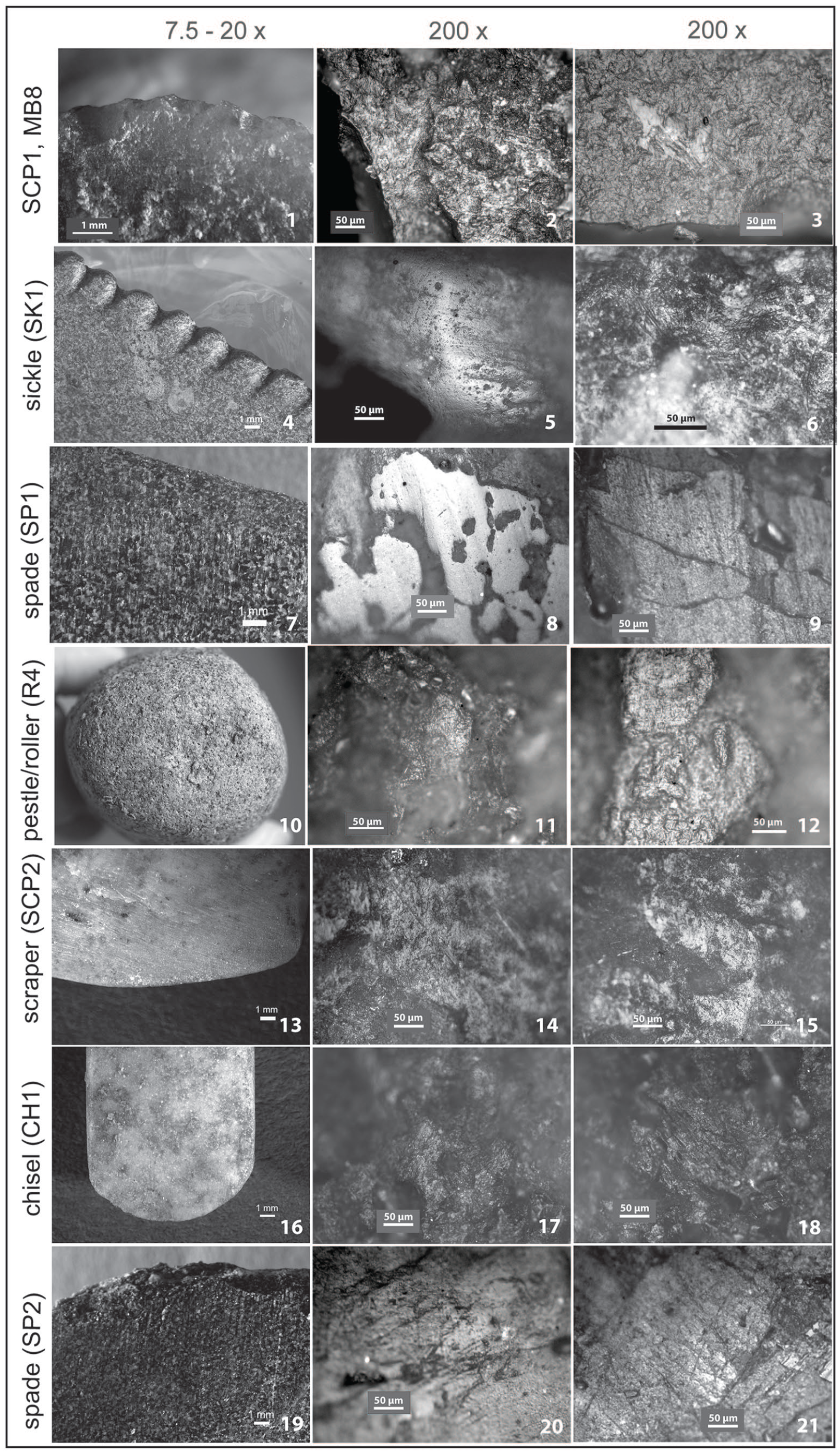
Use-wear traces on PLG stone tools. 1: Scraper (SCP1) edge; 2: high polish with horizontal striations on SCP1’s edge; 3: high polish on microblade (MB8); 4: sickle (SK1) denticulation; 5: polish with horizontal striations on SK1’s denticulation; 6: vertical striations on sickle’s side; 7: spade (SP1) edge; 8: high polish near SP1’s edge; 9: vertical striations near SP1’s edge; 10: pestle/roller (R4) distal end; 11: pitting and medium polish on R4’s end; 12: high polish on R4’s longitudinal side; 13: scraper (SCP2) edge; 14,15: polish with vertical striations on SCP2’s edge; 16: chisel/scraper (CH1) edge; 17: pitting on CH1’s edge; 18: vertical and diagonal striations on CH1’s edge; 19: short spade (SP2, Contl 2) edge; 20,21: polish with multidirectional sleek and furrow striations.
MB7 (microblade; black chert): Under low magnifications, tiny scarring with observable rounding is evident on the working edge. The left edge lacks distinct traces and no diagnostic adhesive residues for hafting, but it exhibits a single bent scar, possibly associated with hafting. At high magnifications, a low polished area without diagnostic striations is observed. These indications imply that the microblade was probably employed in processing soft materials and might not have been used extensively.
MB8 (microblade, brown chert): Under low magnifications, small, feathered scars coexist with rounding edge on the dorsal surface of the left edge. At high magnifications, a distinctly polished area was observed in the same region as the scars. The polish exhibits a relatively flat topography, suggesting that this microblade was likely used for processing materials with soft to medium hardness (Figure 3: 3).
Neolithic stone tools
We discuss the tools in the sequence that they potentially served in the fiber production process. All lithic types of these tools measure 6–7 in hardness on the Mohs scale.
SK1 (Denticulate sickle; igneous rock, possibly porphyry): Under low magnifications, the denticulations on the sickle edge are clearly rounded and polished, apparently caused by a long use time. At high magnifications, the highly polished areas are very common on the denticulations and on both sides near the edge. The polished areas appear domed in topography. Fine striations are present, and those appearing on the denticulations are mostly horizontal to the edge, while some on the sides exhibit vertical orientation. These traces suggest that the tool was mainly used in two directional movements (slicing and scraping), and the worked materials were siliceous plants (Figure 3: 4–6).
SP1 (Long spade): Under low magnifications, vertical striations are visible. At high magnifications, most areas on the tool surfaces show long sleek and furrow striations, vertical to the edge. Some articulated and highly polished areas are also present, and the polished areas are rather flat in topography. This spade was probably multi-functional, used for processing siliceous plants as well as harder materials, such as digging soil (Figure 3: 7–9).
R4 (pestle/roller): One distal end was used, and the flat surface shows evidence of pitting and polishing. Under high magnification, medium-level polishing with fine striations is observed on high plateaus, indicating that the tool end functioned as a pestle for grinding and pounding soft plants. The longitudinal side displays highly polished areas without striations, suggesting its use in processing siliceous soft plants (Figure 3: 10–12).
SCP2 (scraper): Under low magnifications, small scars concentrating on the center of the edge are visible, and long striations in a low-angle diagonal orientation cover both sides of the tool. Because this scraper is a ground stone tool (Figure 1e: 6), these striations are likely related to tool manufacture, such as polishing the tool. At high magnifications, sleek striations are very common, running mainly vertical and diagonal to the edge, and some medium-level polished areas are also present. These use-wear traces are consistent with scraping soft plants (Figure 3: 13–15).
CH1 (Small chisel/scraper): Under low magnifications, there are small scars along the edge, as well as long and very fine striations vertical to the edge. At high magnifications, medium to low polished areas and sleek striations (mainly vertical but also diagonal) are visible. The polish level and sleek striations on this tool are quite similar to those on SCP2, suggesting that it was likely used as a chisel and scraper to process soft plant materials (Figure 3: 16–18).
SP2 (Short spade; Contl 2): Under low magnifications, continuous large scars on the edge are visible and vertical striations are present. At high magnifications, the tool surfaces are covered with long sleek and furrow striations, running in multiple directions, and the surfaces are flat in topography. SP2 is likely to have been in contact with hard materials, such as digging soils, and movements were multi-directional (Figure 3: 19–21). These use-wear traces are clearly different from those on SP1.
Summary
Three Paleolithic flaked tools display use-wear traces consistent with working of soft plant materials, as evidenced by the presence of polish and fine striations. These traces manifest on the artifacts with differing degrees of clarity, indicating potential variations in the extent of use among the tools.
All five Neolithic stone tools also show use-wear traces resembling work with mainly soft plants, indicated by high polish and fine striations. In particular, the sickle (SK1), the long spade (SP1), and the roller (R4) exhibit extensive high polish, similar to so-called “sickle gloss” (Anderson, 1999; Fullagar, 1991; Unger-Hamilton, 1999), or identified as Stages 3 and 4 polish (Hayes et al., 2021), caused by processing siliceous plants.
To gain insights into the specific functions of these tools, we turn our attention to residue analysis.
Microfiber remains
A total of 321 microfibers were found in the samples, mostly identifiable as bast fibers (n = 296). Twenty-five fibers (7.8%) are not identifiable (UNID) due to severe damage or lack of diagnostic features. We found two synthetic fibers in the entire assemblage, indicating an extremely low level of modern fiber contamination (0.6%). These two fibers were excluded from the analysis. In China, most modern clothes are made of cotton, wool, or synthetic fibers, and no fieldworker wore bast fiber clothing during the PLG excavation. Thus, it is unlikely that these microfibers in the PLG samples are significantly contaminated by modern fibers.
Fibers on Paleolithic tools
Among the eight flaked lithic tools analyzed, three (SCP1, MB7, MB8) yielded relatively high numbers of fibers (n = 6,7,9, respectively), given the very small size of these tools. Among the total of 22 fibers recorded, 19 (86.4%) show characteristics of bast fiber, while the remaining three fibers are unidentifiable (UNID) due to severe damage. The cross-section size range of bast fibers is 5.35−29.79 µm, with an average of 16.52 µm. This size range includes hemp, ramie, flax, paper mulberry, and velvetleaf, but greater than kudzu. Among other morphological characteristics, 59.1% of the fibers show segmented features, and 36.4% exhibit twisted ribbon form. These features are typical of hemp. In addition, 9.1% of the fibers show wide lumen, like velvetleaf. When examining the fibrillar orientation with red plate test, all observed fibers (n = 6) exhibit Z-twist, which is consistent with hemp and velvetleaf (Figure 4: 1,5; Supplemental Tables S2 and S4).
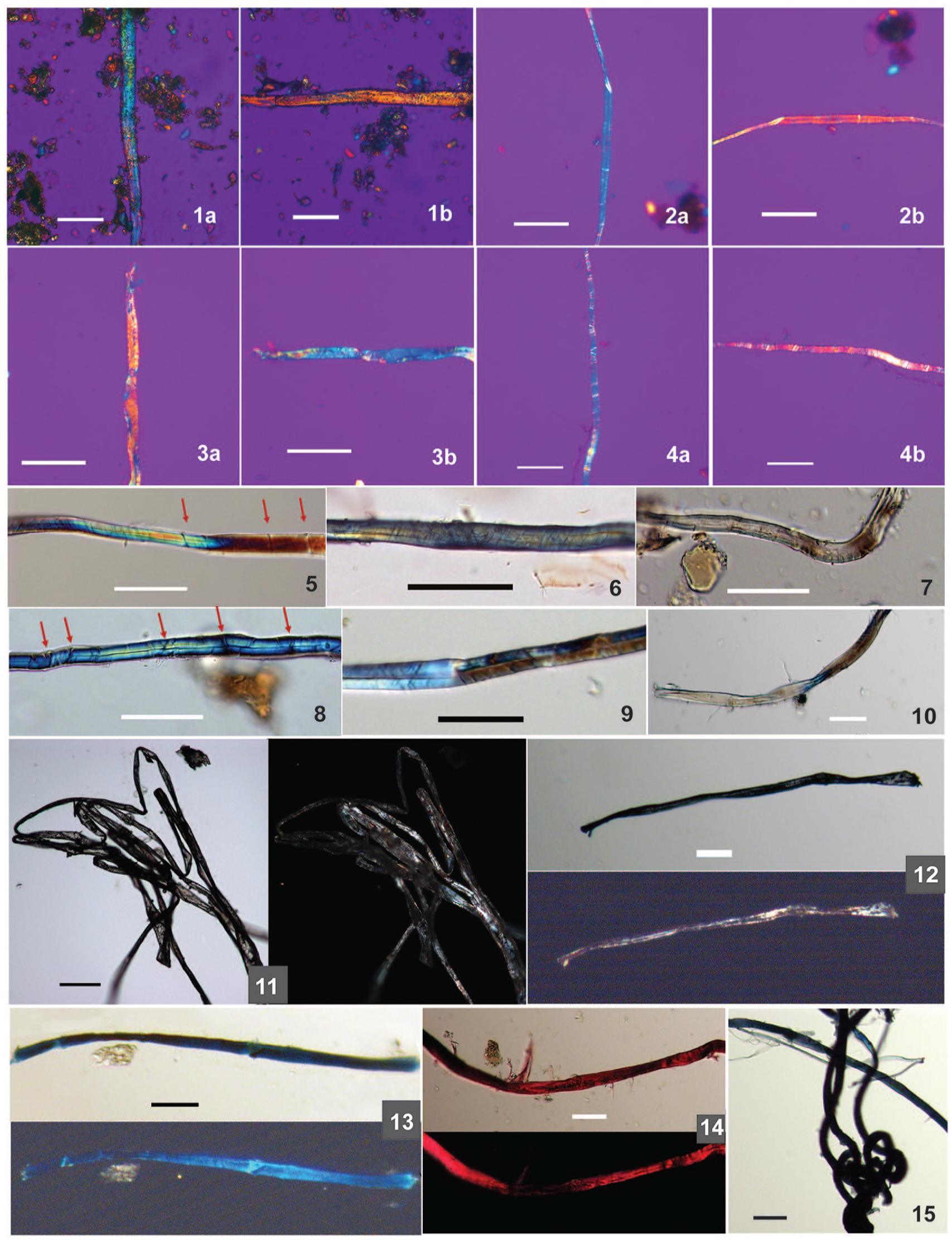
Examples of PLG Paleolithic and Neolithic fibers. 1–4. Red plate testing for fibrillar orientation. Z-twist: Changing color from blue at 0º in a to red at 90º in b, showing in 1: MB8, 2: M2 arm, 4: SK1; S-twist: Changing color from red at 0º in a to blue at 90º in b, showing in 3: M2 leg. 5–10. Fiber morphology. 5: MB4, showing prominent cross markings (pointed by arrows); 6: SK1, showing S-twist pattern; 7: SP1, showing wide lumen; 8: SCP2, showing prominent dislocations (pointed by arrows); 9: POT4 handle, showing narrow lumen and Z-twist pattern; 10: SCP2, showing twisted ribbon form due to damage. 11–15. Dyed fibers. 11: ND1, black; 12: M2 leg, black, showing twisted ribbon form, consistent with hemp; 13: M2 leg, blue; 14: SP1, red; 15: R4, black and blue. (Scale 1–4: 100 µm, 5–14,15: 50 µm; 12–14: each fiber image shown in bright field and polarized views).
These Paleolithic lithic tools date to the beginning of the LGM period. In such cold and dry conditions, potential fiber plants may have included hemp, flax, and velvetleaf. Exclusion of flax is supported by the absence of S-twist fibrillar in the samples. Consequently, the fiber residues on the Paleolithic tools are likely derived primarily from hemp, possibly with a minor contribution from velvetleaf.
Fibers on Neolithic materials
A total of 299 fibers were recovered from the Neolithic stone tools, bone needle, the handle on POT4 jar, and the surface of the arm and leg bones. The great majority (n = 274; 91.6%) exhibit characteristics of bast fiber in morphology. Their size range (5.36−32.2 µm with an average of 14.83 µm) is similar to that of Paleolithic fibers, overlapping with hemp, ramie, flax, velvetleaf, and paper mulberry. Most fibers show segmented features (n = 208; 69.6%), including prominent dislocations (25.8%) and cross markings (42.8%), and 17.7% of fibers appear in twisted ribbon form. These features are most consistent with hemp, but also comparable with ramie and paper mulberry. Some fibers show wide lumen without segmented features (9.4%), similar to velvetleaf. Supporting these observations, the red plate test shows that most analyzed fibers are Z-twist (n = 46; possibly from hemp, velvetleaf, and paper mulberry), while a small number is S-twist (n = 11), likely from ramie (Figure 4; Supplemental Tables S2 and S4).
We exclude flax as a suitable candidate for PLG Neolithic fiber remains since flax, typically best suited to temperate climate zones (Muir and Westcott, 2003), is unlikely to adapt well to the subtropical mid-Holocene environment in our study area. The two control samples (SP2 and M2 soil) revealed negligible numbers of fibers (n = 1,2), in sharp contrast to those from residue samples (Supplemental Table S4).
Dyed fibers
Dyed and undyed fibers exhibit different colorations microscopically based on our modern reference database. Undyed natural fibers normally appear polychromatic in both brightfield and polarized views (Supplemental Figure S2: 1−9). When fibers are dyed, the same color is almost uniformly exhibited in both brightfield and polarized views, closely resembling the color on actual dyed fiber (Supplemental Figure S2: 10,11).
Within the PLG fiber assemblage, 66 fibers (22.1%) show indications of dyeing. This comprises 35 (11.7%) black and 25 (8.4%) blue fibers from the Paleolithic and Neolithic assemblages, while six fibers (2.0%) display reddish hues, found only in the Neolithic samples (Figure 4: 11–15; Supplemental Table S4).
Starch remains
Among the nine stone tools analyzed, four yielded a total of 23 starch grains. The Paleolithic SCP1 yielded 10 Triticeae-type granules, suggesting that this tool might have been multifunctional, potentially utilized for processing both fiber and food plants. Three Neolithic stone tools (SP1, R4, and SCP2) revealed limited starch remains (n = 13), identified as Panicoideae, Triticeae, and unidentifiable (UNID) (some are gelatinized) (Figure 5: 1,2; Supplemental Table S5). The low frequencies or absence of starch grains on these tools suggest that their primary function may not be the processing of starch-rich plants.
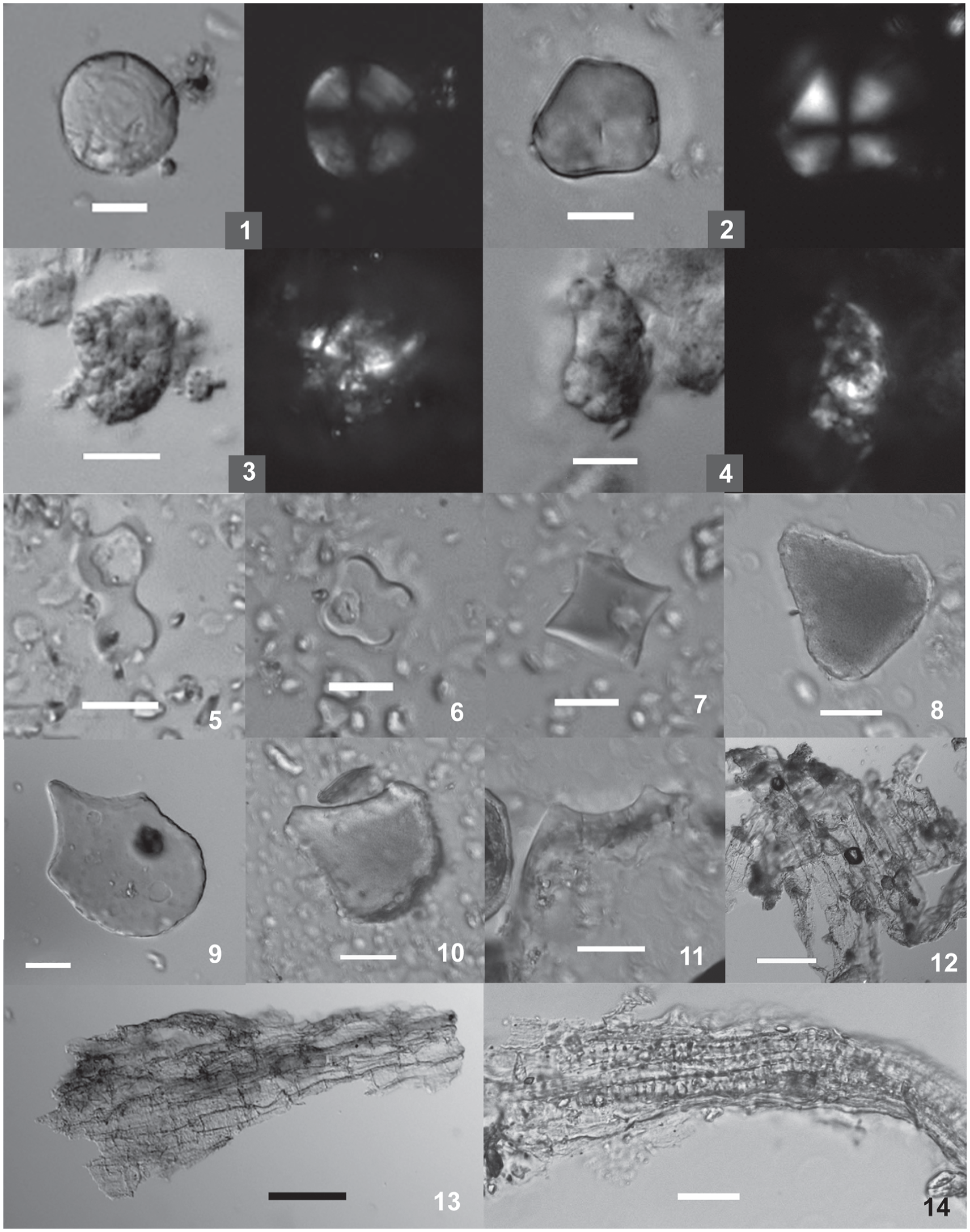
PLG Starch and phytolith remains. Starch 1–4. 1: Triticeae; 2: Panicoideae; 3: foxnut; 4: rice. Phytoliths and silicified tissues 5–14. 5: bilobate; 6: cross; 7: rondel; 8: common bulliform; 9: reed bulliform; 10: rice bulliform; 11: rice double picked; 12: epidermis (POT4 handle).13: epidermis (M2 leg); 14: Tracheid (SP1) (scale, 1–7: 10 µm; 8–11,14: 20 µm; 12,13: 100 µm).
In contrast, the interior surface of the jar POT4 (Contl 3), serving as a comparative sample, yielded very different types of starches (n = 8). These were identified as rice and fox nut, all displaying characteristics of damage caused by fermentation, such as faint birefringence (Supplemental Table S5; Figure 5: 3,4). Positioned near the head of the M2 skeleton, we suggest this jar may have contained an alcoholic beverage as an offering to the deceased, a mortuary practice commonly observed in PLG culture burials (Liu et al., 2023b).
The SP2 spade (Contl 2) revealed two Triticeae starch granules and four heavily gelatinized starch masses. This spade was likely used as a soil working tool based on use-wear analysis; thus, the presence of a low frequency of starch grains on this tool is unlikely to be related to its intended primary function. No starch was found in the soil from M2 (Contl 4).
Phytolith remains
Phytoliths (n = 57) were recovered from eight residue samples. Silicified tissues, including tracheids and epidermal tissues (n = 4, 4), were found in six samples (Figure 5: 5–14; Supplemental Table S6). Tracheids and epidermal tissues typically exist in the outer layer of fiber plant stems, often not providing diagnostic taxonomic information. However, when they coincide with abundant fibers in the same samples, a close connection between the two elements is likely.
Rondels (n = 2), elongates (n = 7), and bulliforms (n = 34), likely originating from Poaceae stems and leaves, were discovered on four tools. A noteworthy phenomenon is the exceedingly high number of common and Phragmites (reed) bulliforms (n = 31) from the longitudinal side of the roller (R4). This tool also displays very high polish on the longitudinal side, suggesting that it was in contact with plant leaves and stems, including reeds.
In sharp contrast, the Contl 3 spade (SP2) revealed an abundance of phytoliths (n = 177), predominantly derived from Poaceae plants, including elongates, rice double-peak, rice bulliform, Oryzoideae scooped bilobate, bilobate, cross, and common bulliform (Figure 5: 5–11; Supplemental Table S6). These diverse phytoliths may originate from the soil, supporting the use-wear traces which point to a soil-working tool.
Fungal remains
A total of 242 fungal elements were identified on four Neolithic tools, with high concentrations on the long spade (SP1; n = 112) and the scraper (SCP2; n = 127). They are primarily hyphae and mycelia (n = 152,29), mostly aseptate and colorless, with some being brown in color (Figure 6: 4–6). Sporangia or conidial heads (n = 50) are present, with some showing morphological features consistent with Aspergillus niger (Figure 6: 1,2; compared with 11,12), but mostly unidentifiable (Figure 6: 3). SP1 also revealed two Monascus cleistothecia and nine yeast cells. Some yeast cells appear in the budding process, as indicated by the presence of small protrusions on the mother cells (Figure 6: 7, for yeast; Figure 6: 8,9 compared with 10,13 for Monascus; Supplemental Table S7). These molds may have been associated with the bast fiber retting process.
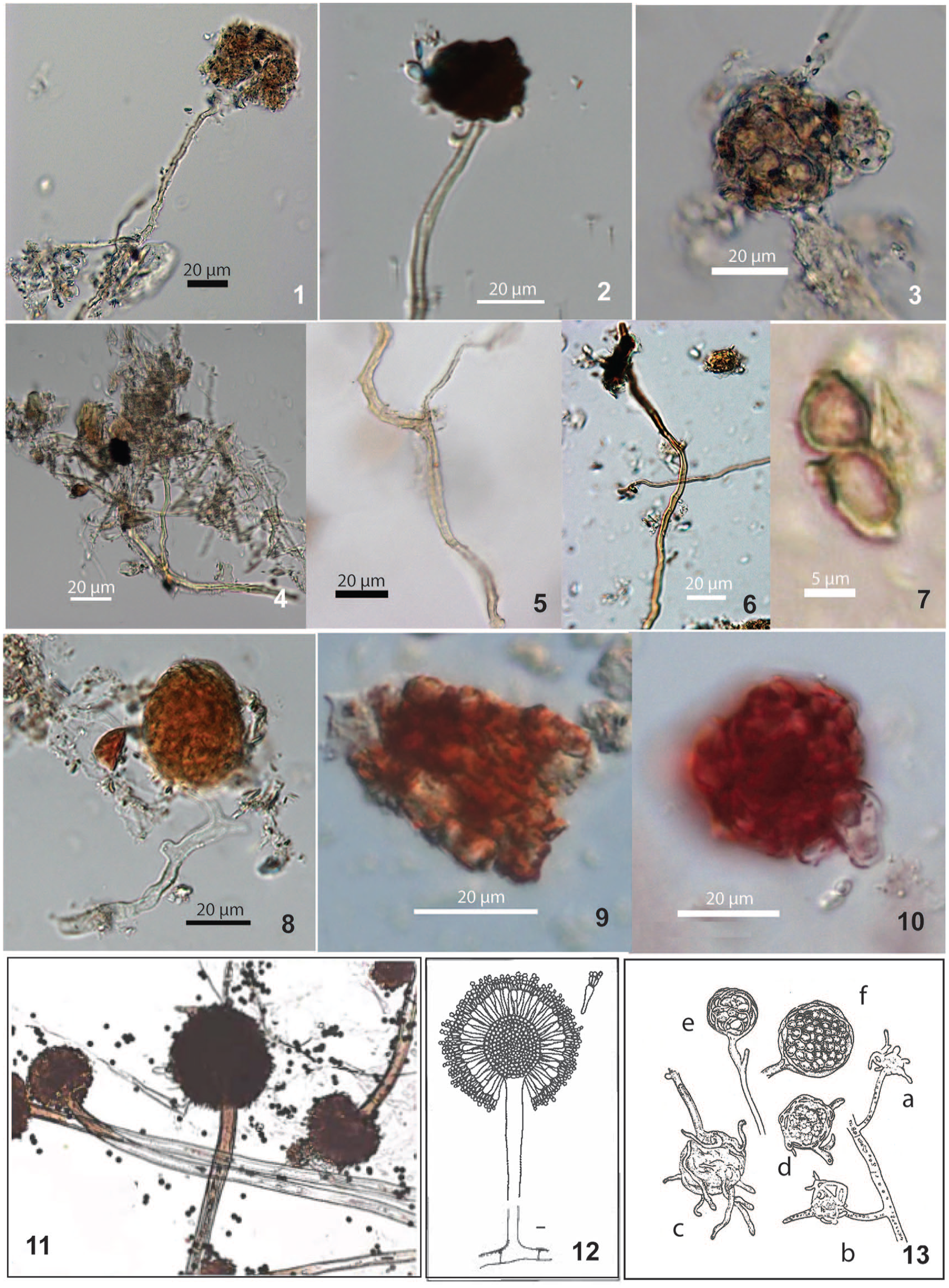
Fungi recovered from PLG artifacts compared with modern reference. 1,2: conidial head similar to Aspergillus niger (SCP2); 3: UNID sporangium (SP1); 4: mycelium; 5,6: hyphae in different colors; 7: budding yeasts (SP1); 8,9: complete and fragmentary cleistothecia similar to Monascus; 10: Monascus cleistothecia, modern reference; 11,12: Aspergillus niger, modern reference; 13: cleistothecium in various development states (a-c: ascogenous; d,e: immature; f: mature). References, 11,12: after St-Germain and Summerbell, 2011: Figure 15.1, 15.3; 13: after Bao and Zhou, 2007: Figure 4–6).
Retting is the process used to soften harvested plant stems for fiber extraction, which can be accomplished either by soaking them in water (water retting) or by exposing them to moisture, such as dew or leaving them in the field (field-retting). During these processes, various microorganisms, including pectinolytic enzymes naturally secreted by microflora, bacteria, molds, and yeasts, play a role in breaking down pectin and other substances binding the fibers to the plant material. One of the commonly found molds is Aspergillus niger (Summerscales, 2021). The presence of abundant fungal elements (yeast cells and molds resembling Aspergillus niger and Monascus sp.) on the spade and scraper suggests that these microorganisms were indigenous fungi in the general environment, which may have played a role in the retting process. If these tools were involved in working with retted bast fibers, they would have been in contact with related fungal elements.
The jar POT4 IN sample yielded very different fungal assemblage. It has abundant fungal elements (n = 50), predominantly identified as cleistothecia from Monascus sp. (n = 40). Monascus cleistothecia are spherical or oval, normally orange or red in color, developed from hyphae, and containing asci which consist of ascospores. The cleistothecia from POT4 IN are mostly fragmentary, but still showing round asci and elongated hyphae inside, which are comparable with those in development stages of this mold (Figure 6: 8,9 compared with 10,13). Monascus mold has traditionally been used for preparing the rice-based qu compound starter to brew fermented alcoholic beverages in China, so-called hongqujiu, red rice beer (Bao and Zhou, 2007). A previous study of globular jars from the PLG burials has revealed microfossil evidence of the red rice beer (Liu, 2021). The presence of Monascus mold together with fermented rice starch in POT4 IN supports the scenario that this jar once contained a fermented alcoholic beverage. Interestingly, although this mold existed in the general environment, it appeared in high concentration only within fermentation vessels.
Discussion
Drawing on evidence from use-wear patterns and microfossil remains (including fibers, starch, phytoliths, and fungi), combining the information from ancient texts and ethnographic accounts, we summarize the findings and reconstruct the function of each tool in relation to the potential production process of bast fibers.
PLG bast fibers
The Paleolithic and Neolithic tools examined demonstrate distinct signs of bast fiber processing, evident through high polish, fine striations, and notably elevated microfiber quantities on the tools. These tools also exhibit a deficiency in starch and phytoliths, except for the roller (R4) which displays high counts of bulliform phytoliths. In sharp contrast, the soil-working spade (SP2; Cont1) yielded abundant phytoliths derived from Poaceae plants (Figure 7).
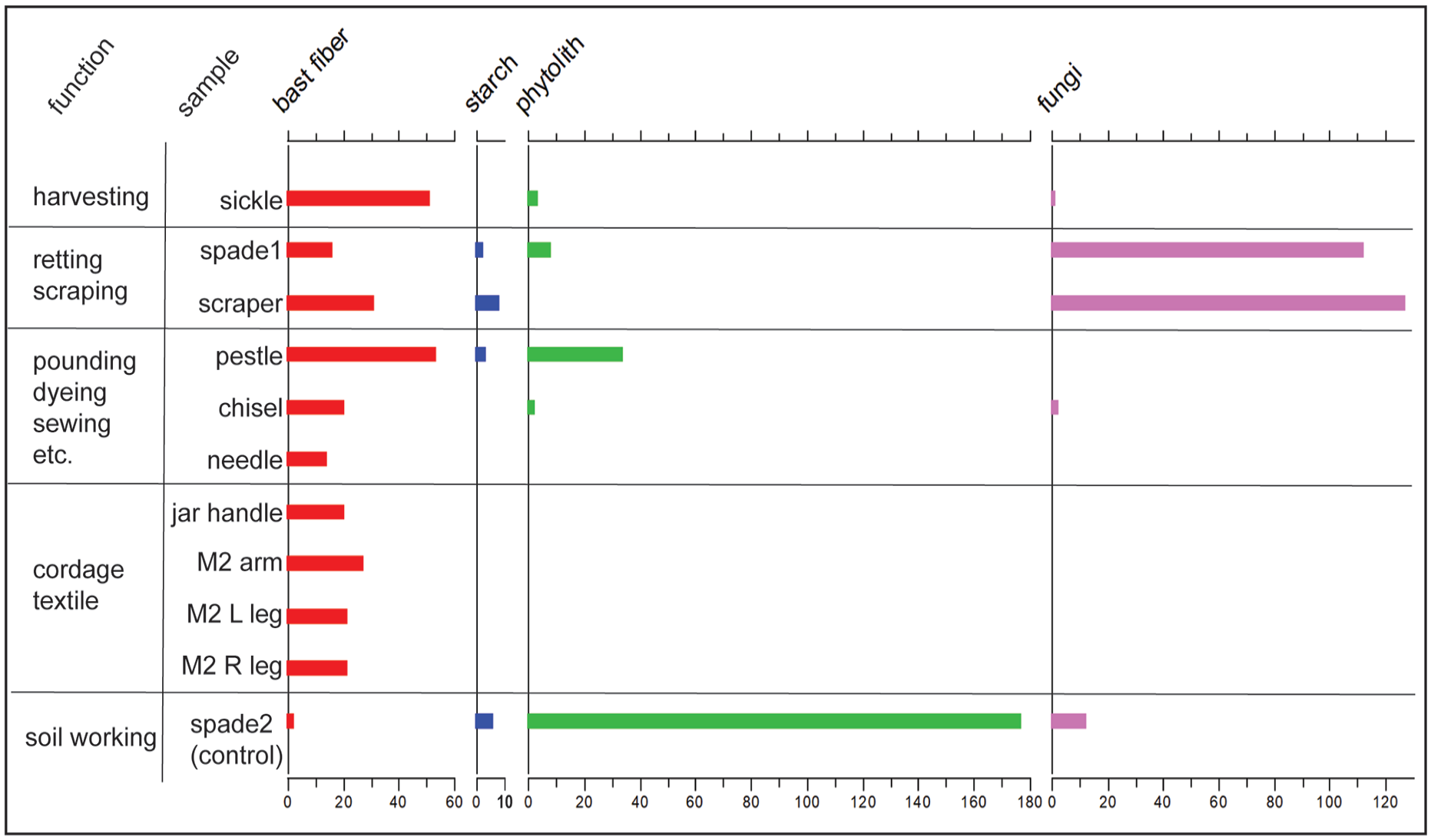
Comparison of microfossil remains on PLG Neolithic tools and human skeleton.
The PLG people may have harvested locally growing plants to produce bast fibers in Upper Paleolithic and early Neolithic times. Hemp and velvetleaf may have been the main fiber plants utilized during the cold and dry LGM period. In contrast, more diverse fiber plants may have become available during the wet and warm mid-Holocene Neolithic period. These plants possibly include hemp, ramie, velvetleaf, and paper mulberry, which are known to have been used for fiber production in ancient China. Hemp, ramie, and paper mulberry particularly produce high-quality, fine fibers suitable for making clothes (Chen, 1984: 41−43; Li, 2007; Zhu et al., 2014), while velvetleaf has often been used for making cordage (Guan et al., 2003).
Fiber production and products
The three PLG Paleolithic flaked tools appear to have served multiple purposes, including cutting and scraping plants, especially fiber plants. As scraping retted fiber ribbons is commonly used in textile production, the presence of fiber-working scrapers raises an intriguing question about the potential production of fiber-based textiles or clothing during this period.
The Neolithic tools unearthed from M1 and M2 collectively form a toolkit that likely functioned as specialized implements for fiber production, probably involving textiles. This hypothesis gains support from the abundant presence of fiber remains on the human arm and leg bones, suggesting a likely connection to clothing production.
The sickle (SK1) features a denticulate and curved edge, associated with high polish with fine striations and abundant fibers. The tool’s working motions (horizontal and vertical) match the activities of cutting stalks and trimming leaves when harvesting hemp and ramie as shown in ethnographic observations (Clarke, 1995: Figure 1). In ancient Chinese texts, hemp and ramie were harvested by cutting their stalks with sickles or knives, as described in Nongsang Jiyao (Meng, 1273). The book on agriculture technology, Wang Zhen Nongshu, illustrates the sickle used for harvesting bast-fiber plants in north China (Wang, 1313), and its shape closely resembles that of SK1 (Figure 1e: 8; compared with Figure 2: 1; Figure 3: 4–6).
The long spade (SP1) displays fine striations and exceptionally high polish on the working edge, along with the presence of abundant fibers and fungal elements. Its likely use involved working with siliceous plants and soil, potentially encompassing tasks such as the bast fiber retting process (Figure 1e: 9; Figure 3: 7–9), as explained below.
Water retting fiber plants in pond near the residential area was recorded in Shijing (Classic of Poetry; ca. the fifth century BC): “the pond east to the gate can be used for retting hemp”; “the pond east to the gate can be used for retting ramie.” This method has been commonly practiced in North China. In Tai’an of Shandong, for example, after harvesting hemp, the partially dried stalks were bundled and immersed in a pond in the village for 1−3 days for retting, and the bundles are turned twice a day in ponds (Clarke, 1995: Figure 2). The retting water is usually 23º−30ºC, with warm water temperature facilitating the growth of microorganisms for degumming process. After retting, the stalks were partially dried, and their fibers were stripped by hand. Small bundles of these bast fiber ribbons are then tied together near the basal end and dried on lines in the sun (Clarke, 1995). A retting pond was also illustrated in Wang Zhen Nongshu (Figure 2: 2) (Wang, 1313).
Drawing on these observations, the long spade associated with high polish and fungal elements was likely related to turning and shoveling stalks during retting process, as the retted stalks contained high contents of phytoliths and silicified epidermal tissues, as well as abundant fungi as the result of the retting process. A low-lying area in the southeast part of the PLG site has been identified as a wetland, perhaps a pond, based on phytolith evidence (Wang et al., 2023) (Figure 1a). This pond may have been used for retting fiber stalks by ancient PLG populations. The location of this pond is consistent with the retting pond being situated in the east of the settlement, as mentioned in Shijing.
The pestle/roller (R4) likely served multiple purposes, revealing 56 fibers (27 dyed blue and black), 31 bulliform phytoliths (including reed type), and exhibiting pitting and medium polish on the tool end but high polish on the longitudinal side. It probably functioned as a pestle for pounding fibers at its distal end, a common technique in fiber production. This tool probably also played a role in the dyeing process, evident from the unusually high proportion of dyed fibers (n = 27, 48% of the total fiber on the tool). However, the specific way the roller was employed for this task remains unclear. Additionally, it may have been employed as a roller for crafting reed mats, an ancient tradition with early evidence found at the Tianluoshan site in Zhejiang (6775−6645 cal. BP) (Zhang et al., 2016). In contemporary North China, the process of making reed mats in rural areas involves splitting stems into narrow strips and flattening them by rolling with a stone mill (Figure 2: 12). The roller (R4) could have been used for this purpose of flattening reed strips.
The scraper (SCP2) displays fine striations in vertical and diagonal orientations, along with 127 fungal elements and 33 fibers. It may have been used to scrape off remaining barks and impurities from fiber ribbons after retting. This procedure is commonly applied in the preparation for textile production, and is still practiced in many places in East Asia. Scrapers used in contemporary Korea and Japan (Clarke, 2006; UNESCO, 2009) share a similar form with SCP1 (Figure 1e: 6).
The chisel (CH1) is notably small, likely to have been hafted with a handle. Its edge exhibits pitting and fine vertical striations, with 23 fibers found on it. This tool likely served for delicately handling tasks related to fibers, although its precise function remains unclear.
The needle (ND1) was likely used for sewing textiles, as suggested by the 15 fibers found in the needle eye. One damaged fiber is very long (Figure 4: 11), and six fibers dyed blue, red and black. The needle was discovered on the left side of the deceased’s face, with its tip missing at the time of excavation. This scenario suggests that its final use was probably as a pin securing the funerary clothing of the deceased.
The globular jar (POT4 IN) likely once contained fermented beverages, indicated by the presence of 50 fungal elements (mostly Monascus cleistothecia) and fermented rice starches in the residues. Therefore, its final purpose was to offer rice-based red beer to the deceased in M2, a mortuary practice which is consistent with other PLG burials (Liu et al., 2023b). The jar handles were adorned with cordage, partially dyed blue and black.
A total of 76 fibers were recovered from three samples collected from human arm and leg bones (n = 31, 23, 22), of which 14 were dyed blue, red, and black. The high concentration of fibers on human bones, likely remnants of funerary clothing, sharply contrasts with the single fiber found in the soil sample near the skeleton (Contl 4) (Supplemental Table S4).
In summary, most fibers discovered on artifacts and human bones at PLG likely indicate their intended functions. Fibers on the stone tools are linked to harvesting and processing fiber plants. Those on the jar handle and needle’s eye may have originated from string or thread associated with artifacts. Both Paleolithic and Neolithic tool kits include scrapers with evidence of fiber processing, suggesting a refined procedure for fiber production. Fibers extracted from Neolithic human bones likely originated from funerary clothing or textiles. A parallel scenario is evident in the microfiber remains found in Late Bronze Age burials in Georgia (15th−14th centuries BC) (Kvavadze et al., 2010b), indicating a comparable use of textiles in burial practices. The presence of microfibers on human bones in M2 potentially signifies the earliest known evidence of bast fiber clothing in mortuary contexts in China.
Dyeing fibers
The presence of two black fibers on the Paleolithic scraper SCP1 at PLG echoes the finding of dyed microfibers (black, gray, blue, and pink) uncovered from the Upper Paleolithic site at Shizitan 29 in Shanxi (ca. 28,000–13,000 cal. BP) (Song et al., 2017). Considering that PLG and Shizitan 29 are the only Paleolithic locations which have been subjected to microfiber examinations by archeologists, the practice of dyeing fibers may have been more common in the Paleolithic than previously thought. Fibers from Neolithic objects at PLG appear to have been dyed in blue, black, or red colors, suggesting a dyeing technology continued from the Paleolithic times in the region.
The dye materials may have been extracted from various plants, as recorded in ancient Chinese texts. For instance, the root of madder (qiancao, Rubia cordifolia), associated with dyed clothing, was mentioned in the chapter “Zheng Feng” in Shijing. This plant is known for producing a range of reddish dyes. Chinese indigo (liaolan, Polygonum tinctoria Ait.), commonly used to extract blue dye from its leaves, was first mentioned as a cultivated plant in Xia Xiao Zheng, and believed to have recorded agricultural activities in the Henan area (Tan, 2009; Wu and Raven, 2003: 290). Acorn caps from Quercus oak (zaodou), utilized to produce black dye, were a tributary item demanded by the Zhou dynasty court, as recorded in the Rites of Zhou. All these texts date to around the fifth century BC (Chen, 1984: 78−82; Tan, 2009; Zhang and Zhang, 2015). Additionally, carbonized acorns have also been found at the PLG site (Li et al., 2020). Therefore, PLG people may have utilized these locally available dye plants to color their fiber materials.
Splicing versus Spinning in bast fiber production
Archeologists have often relied on the presence of spindle whorls to infer textile production and related cultural connections in cases where actual textiles are absent from the archeological record (Cameron, 2013; Cameron and Sun, 2022; Nelson et al., 2020). A spindle whorl facilitates draft spinning, involving both twisting and drawing out the fibers into a thread. However, an alternative method is splicing, which is to join fibers individually by hand to make long threats (Barber, 1991; Chen, 1984: 16–17) (Figure 2: 3). Archeological evidence suggests that the first bast fiber technology in the world was splicing (Gleba and Harris, 2019), and this method has continued to be practiced in China, Korea, and Japan (Clarke, 2006; Hamilton and Milgram, 2007; Murai and Murai, 2014), as well as among Australian aboriginals (Roth, 1901).
Notably, only three spindle whorls have been unearthed at the PLG Neolithic deposits. They are small (3.2−3.6 cm in diameter) and made of pottery sherds, and none of them were found in burials (Li et al., 2020; Zheng, 1984). Given its paucity at the site, it is likely that spindle whorl was not a crucial tool for fiber and textile production at PLG. Thus, splicing may have been the main method for making cordages and textiles.
Development of fiber production and emergence of fibrecraft specialization
At the PLG site, Paleolithic blades and scrapers associated with evidence of fiber production coincided with the appearance of ostrich eggshell beads and hematite during the LGM period. A similar phenomenon has been observed at several contemporary Paleolithic localities in North China; and in these cases, the presence of beads almost certainly implies the use of strings, and hematite was often used as red pigment for various ritual activities, including coloring the beads (Song et al., 2022). Therefore, fiber production likely played a significant role not only in subsistence requirements, such as wearing extra layers of clothing (Gilligan, 2019), but also in facilitating decorative needs for collective social events.
In comparison, fiber production appears to have become more advanced in the early Neolithic period. The tools in M1 and M2 represent a toolkit that facilitated a significant portion of the fiber and textile production process. This process included harvesting fiber plants with a sickle, retting stalks with a long spade to move the plants, removing impurities from retted fiber ribbons with a scraper, pounding ribbons to make them soft with a pestle, and sewing fiber/textile products with a bone needle. The fibers found on the jar handle suggest cordage making, while those on human arm and leg bones serve as potential evidence of textile production. Blue, black, and red colorants, likely obtained from local plants, were used for dyeing textiles, cordages, and strings. The stone roller may have been involved in the dyeing process and, in addition to bast fiber production, could have been used in making reed mats.
Figure 7 illustrates the correlations between tool types and microfossil remains associated with the fiber production process, ranging from harvesting to the final cordage and textile products. While fibers are associated with all tools, fungi only appear in high counts on the tools associated with the retting process. The residue assemblage of fiber-related samples also sharply contrasts with that of the soil-working spade, which is predominantly composed of phytoliths.
Given that burials M1 and M2 were situated in proximity, it is plausible that the occupants were related. The grave goods likely mirror their lifeways, indicating involvement in craft production utilizing bast fibers and reeds. If this proposition holds, these two individuals could embody the earliest specialization in fiber craft 8000 years ago in early Neolithic China.
Conclusion
The results of this study shed new light on the deep history of fiber technology in North China. Fiber technology, involving flaked tools used for processing hemp and velvetleaf to make cordages, as well as dyeing fiber products, can be traced back to at least 26,000 years ago. In the future, other scientific methods such as aDNA analysis may be applied to study the specific species of the fiber sources.
In the early Neolithic, the production of textiles and clothing may have become part of fiber technology by 8000 years ago, if not earlier. Some individuals were more specialized in these skills than others. This scenario leads us to the question of the origins of domestication of bast fiber plants, particularly hemp and ramie, as well as some dye plants. Given that millets and rice were domesticated species at PLG and a hemp seed was found at Zhuzhai, it is plausible that the cultivation of plants for making fiber products may have already been underway as part of the Neolithic Revolution. While this hypothesis is not tested in the current study, it warrants further research in the future.
Supplemental Material
sj-docx-1-hol-10.1177_09596836241266422 – Supplemental material for Emergence of fibrecraft specialization 8000 years ago in early Neolithic North China
Supplemental material, sj-docx-1-hol-10.1177_09596836241266422 for Emergence of fibrecraft specialization 8000 years ago in early Neolithic North China by Li Liu, Yongqiang Li, Ran Chen, Yinzhi Cui, Xingcan Chen and Wanfa Gu in The Holocene
Supplemental Material
sj-pdf-2-hol-10.1177_09596836241266422 – Supplemental material for Emergence of fibrecraft specialization 8000 years ago in early Neolithic North China
Supplemental material, sj-pdf-2-hol-10.1177_09596836241266422 for Emergence of fibrecraft specialization 8000 years ago in early Neolithic North China by Li Liu, Yongqiang Li, Ran Chen, Yinzhi Cui, Xingcan Chen and Wanfa Gu in The Holocene
Footnotes
Acknowledgements
We extend our appreciation to the following individuals and institutions: Jiajing Wang for her contribution to collecting residue samples from the human skeleton, Yahui He for her assistance in conducting experiments on fiber processing, and Facheng Wang for his participation in cutting velvetleaf plants. Two external reviewers provided extremely constructive comments.
Author contributions
Funding
The author(s) disclosed receipt of the following financial support for the research, authorship, and/or publication of this article: The fiber research project receives support from the Min Kwaan Chinese Archeology Program at the Stanford Archeology Center, Stanford University. The Peiligang excavation is supported by the Project of Excavation and Research at the Peiligang site, collaboratively conducted by the Institute of Archeology, Chinese Academy of Social Sciences and the Institute of Cultural Relics and Archeology in Zhengzhou City, China.

Supplemental material
Supplemental material for this article is available online.
References
Supplementary Material
Please find the following supplemental material available below.
For Open Access articles published under a Creative Commons License, all supplemental material carries the same license as the article it is associated with.
For non-Open Access articles published, all supplemental material carries a non-exclusive license, and permission requests for re-use of supplemental material or any part of supplemental material shall be sent directly to the copyright owner as specified in the copyright notice associated with the article.
