



Abstract
The aim of the present study is to identify the extent of the validity of the application of the Association of College and Research Libraries 2011 guidelines for academic librarians. In order to achieve this, the researchers conducted a survey using a questionnaire distributed to the study population. The population consisted of male and female librarians in six Saudi university libraries: Umm Al Qura University, Tiba University, King Abdulaziz University, Taif University, Princess Noura University, and the University of Dammam. The number of respondents to the questionnaire was 88. All standards received high approval rates. Values relating to professional responsibilities received the highest rating, followed by governance, then leave and research funds followed by compensation, and finally grievance. Among the indicators that received the highest average scores were: providing the librarians with the opportunity to complete their studies while working and therefore improve their salaries, engaging them in developing the policies and regulations of the library, and enabling them to participate in conferences and seminars. There were no statistically significant differences in the degrees of Saudi librarians’ approval rates of the application of any of the ACRL guidelines with regard to years of experience, qualifications, gender, specialization, and place of work.
Introduction
Over the past 40 years, academic education in the kingdom of Saudi Arabia has developed significantly in all fields. Library and Information Science (LIS) education was part of this development and has witnessed a great deal of advancement. The first LIS department in Saudi Arabia was started in 1973 at King Abdelaziz University. Currently there are seven academic departments offering Bachelor’s degrees in the field, and the eighth one will be inaugurated in 2017 at King Faisal University. Three of the universities offer graduate degrees (MSc and PhD): the LIS departments at King Saud University, King Abdulaziz University, and University of Imam Muhammad bin Saud. These academic departments provide information institutions in Saudi Arabia with qualified librarians.
Al-Qublan (2010) argues that in spite of having several departments graduating numerous professionals, there remains a shortage in the number of library employees in Saudi Arabia and a weakness in their professional skills. Her study (Al-Qublan, 2010) indicates that the reason for this is the lack of an accurate characterization of the functions of workers in the field of librarianship. In addition, their employees do not realize the importance of the role of the library within the university. We refer to librarians in this paper as people who hold a degree in Library and Information Science. But, due to weak characterization of the functions of workers in the field of libraries as mentioned above, and the conditions of labor and staff hiring in Saudi Arabia, not all library staff are LIS graduates. They might have another degree, or a diploma that is not related to the field. They are called non-librarians or accidental librarians (Khurshid, 2013).
Generally, human resources have become a vital element in terms of fulfilling objectives and gaining competitive advantage in any organization. In a rapidly changing and competitive work environment (such as the environment of information institutions), it is important to reinforce employees’ strengths to motivate them and to make them more satisfied with their work through the creation of effective training programs to achieve their own goals and those of the organization.
For this reason, issues such as development, training and rights, which are facing staff in information institutions, can be regarded as major challenges confronting such institutions. In response to these challenges, many universities have taken the initiative to develop the roles of information specialists so that they enjoy the same rights and perform commensurate duties as faculty members.
The importance of the study
The importance of this study stems from the scarcity of scientific research studies which have focused on applying international standards for Saudi librarians. The study aims to explore the views and perspectives of staff in Saudi university libraries of the international standards and their role in improving their current situation. In addition, the study aims to identify the extent of the validity of the application of ACRL guidelines for academic librarians in Saudi Arabian universities.
Hopefully the findings and recommendations of this study will help to provide information for officials concerned with university libraries in Saudi Arabia, enabling them to better plan for the improvement of the necessary and ongoing professional development for librarians and information specialists.
Standards
The Association of College and Research Libraries (ACRL), is a branch of the American Library Association (ALA). It is a well-known professional association for academic librarians and other interested individuals. It aims to promote the ability of academic librarians and employees working in the field of information to serve the needs of higher education and to improve learning, teaching and research. ACRL develops guidelines, standards, and frameworks for academic and research libraries (ACRL, 2011a, 2011b, 2011c, 2011d, 2011e). It published the first standards for college libraries in 1959; this was followed by subsequent editions in 1986, 1995 and 2000. Following the recommendations of the academic libraries team concerning results evaluation, the Association’s Council commissioned a committee to study the inclusion of assessment results in order to issue unified and comprehensive standards for use in all academic and technical libraries. During the public sessions of the Association’s conferences in Toronto in 2003, and in San Diego in 2004 and 2011, ACRL released a new edition of library standards for higher education (ACRL, 2011e).
Standards and guidelines in the Arab world have been addressed by professional associations in the field in several countries like Egypt, Saudi Arabia, Syria, Iraq, and Qatar. But the most notable efforts in creating standards is the work done by the Arabic Federation for Libraries and Information (AFLI). AFLI has contributed effectively to the field of standards and guidelines. Its standards have been widely accepted by Arab nations. It has issued several Arabic standards, including: AFLI Indicators for Library Performance Measurement: National, Academic, and, Public Libraries (Abdel Ati et al., 2013), Arab Unified Standard for School Libraries and Learning Resource Centers (Younis et al., 2013), Arab Unified Standard for Public Libraries (Qmouh et al., 2013), Unified Arab Standards of Information Literacy: Guidelines for Public, School and Academic Libraries (Al-Arabi and Bassiouni, 2013).
Finally, AFLI published the Arab Unified Standard for University Libraries (Shaheen et al., 2013). These standards were created to ensure quality and academic accreditation in the Arab States and include: financial and managerial organization, membership of professional associations, building design, safety systems and crisis management, collection building and development, technical processing, automated systems, traditional services, digital services, marketing policies, and Web presence.
Despite having these Arab standards, we were not able to use them in our study since none of them deal with library staff. However, ACRL has published Standards for Academic Librarians without Faculty Status (ACRL, 2011b), and Standards for Faculty Status for Academic Librarians (ACRL, 2011c). These standards include: professional responsibilities, governance, contracts, compensation, promotion and salary increases, leave and research funds, academic freedom, dismissal, grievance, college and university governance, and tenure. Out of these standards, the authors selected those that could apply to Saudi university librarians and formulated a questionnaire (see Methodology section).
Related studies
There are numerous research papers that have studied librarians’ working conditions. Several Arabic studies (Abdul Hadi, 2002; Al-Omran, 2010; Basqr, 2007; Hassan, 2006; Rezouki, 2003) have addressed the issue of library staff. These papers had a mainly theoretical approach, identifying current trends in library services, and the new challenges facing librarians in providing quality information services in the digital era. None of them have looked into the current working conditions of library staff.
McCallips (2008) reviewed his experience of working in many libraries. He discussed the reasons why many university library staff were keen to be part of the cadre of faculty members. The study found that the main reason behind this was the environment of academic libraries. The researcher proposed a number of recommendations including: paying special attention to professional development, pursuing continuous learning, offering special access to literature and modern trends in the field, and communicating with other libraries on campus.
With regard to the impact of incentives on the staff in the libraries of Jordan, Shawabkeh (2011) conducted a survey of 255 staff in 10 government university libraries in Jordan. He was trying to identify the degree of use of different incentives in libraries, as well as to discover statistical differences in the degree of use of these incentives in accordance with gender, job, experience, educational qualifications, and salary. Shawabkeh concluded that the use of different incentives from the perspective of staff varied depending on the job, experience and salary, but that there was no difference concerning the gender and educational qualifications.
Khurshid (2013) defines non-librarians, or accidental librarians, or non-degreed librarians in Saudi Arabia. He also tries to determine their categories according to the nature of their jobs, and whether they are suitable for managerial positions or not. He discusses the position of the Deans of Library Affairs at state university libraries in Saudi Arabia, and whether they are capable of carrying out the duties of such a high profile job. Non-librarian Deans having no library credentials face a lot of difficulties in managing libraries as efficiently as a librarian dean would have done. The management styles of non-librarian deans are also discussed to present how much they differ from those of librarian deans. He suggests that the university administration should prepare a group of highly motivated librarians and send them with scholarships to library schools famous for their doctoral programs in North America and Europe. Once they get their PhD degree, they should return and replace all non-librarians as he suggests that the current practice of appointing non-librarian is affecting libraries negatively.
With regard to applying ACRL standards on librarians, Carpenter (1981) conducted a quantitative analysis of 1977 HEGIS (The Higher Education General Information Surveys of Academic Libraries) data bearing on college libraries in terms of the ACRL (1975) Standards for College Libraries. He concluded that most of the libraries do not meet the standards’ criteria for collection size and development, staff, and budget. The staff section of the study focused on the number needed for each library and the actual number available, and the number of professional librarians and support staff in the libraries he studied. Also, he stated that more detailed surveys of library characteristics and fuller financial support for library operations are needed to enhance both this kind of analysis and libraries and their standards in the future.
Crawford and White (1999) conducted a study to implement ACRL standards on a group of college libraries to see whether these standards could be adopted by them or not. They used formulas from the Standards for College Libraries to compare the recommended collection size and number of professional librarians with the actual size of the collections and number of librarians for a random sample of Baccalaureate I and II colleges. Results revealed that significant numbers of the institutions studied did not meet the standards in these areas. The number of working librarians was less than the expected 30%. The results also indicated that the libraries studied fulfilled only 60%–74% of the requirements set out in the standards. The study recommended an increase in the budgets of university libraries to support groups and to increase the number of staff.
Ashour (2002) prepared an evaluation study of Saudi university libraries using ACRL standards to reveal the problems and obstacles that were hindering Saudi university libraries from carrying out their missions. With regard to the application of the ACRL standards for professional librarians, the researcher found that that there was a significant shortfall in the number of librarians at Umm Al Qura University, King Abdul Aziz, and the Islamic University. On the other hand, the libraries in the universities of Imam Muhammad bin Saud, King Saud, and King Fahd recorded an increased number of librarians.
Matouk (2008) applied the staff section of the 2004 ACRL standards to measure the efficiency of staff in Saudi university libraries in dealing with information technology. Using a questionnaire with a sample that consisted of six Deans for Library Affairs in Saudi universities, the study found that information technology had the highest rating among staff skills, followed by Internet services, and database searching, and document delivery services. Librarians with the highest level of skills were from King Fahd University, King Abdul-Aziz University, and King Saud University. The responses varied with respect to training budgets and the limited number of training courses attended by staff.
Methodology
To achieve the objectives of the current study and to answer the questions raised, the researchers adopted a descriptive approach. In order to collect the data, we developed a questionnaire based on the ACRL guidelines for academic librarians. The authors picked five main standard elements that could apply to Saudi university librarians and constructed 22 questions based on them. The main areas covered were:
Professional responsibilities (4 questions);
Governance (5 questions);
Compensation (5 questions);
Leaves and research funds (4 questions);
Grievance (4 questions).
In addition, the questionnaire included a section collecting demographic information about the study’s population.
Participants
The study participants were a sample of Saudi librarians from the following six universities:
King Abdulaziz University in Jeddah
Princess Noura University in Riyadh (women only)
Taif University in Taif
Tiba University in Madina
Umm Al Qura University in Mecca
University of Dammam in Dammam (women only)
Data collection
The authors used a questionnaire created with Google Forms to collect the necessary data for the paper. It was distributed to the population of the study from February 2015 until June 2015. The population of the study was approached by email messages which included the link to the Google Form to complete the questionnaire. The emails were gathered by either contacting the Dean of Library Affairs in each university or taking the librarians’ emails from the library website. The response rate for all six universities was 18.3% (as shown in Table 2). Library staff at Umm Al Qura University, Taif University, and King Abul Aziz University were contacted personally by the first author since all three of them are within the Mecca district.
Results
Validity and reliability of the questionnaire
The Pearson Correlation Coefficient was employed to measure the relationship between each phrase and the standard to which it belongs, as well as between each standard and the total score of the questionnaire. As shown in Table 1, the correlation coefficients between each standard and the total score of the questionnaire were positive and statistically significant at a level of significance less than 0.01. This confirmed that all the phrases of the questionnaire were valid in terms of measuring the set goals.
Pearson Correlation Coefficient and Cronbach’s Alpha reliability coefficient of each standard and the total score of the questionnaire.
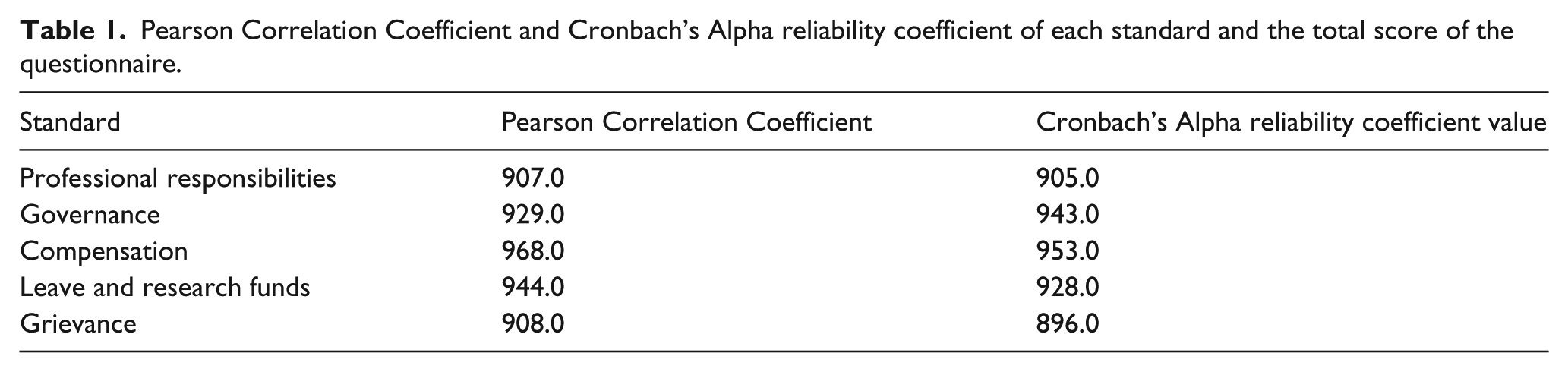
To check the reliability of the questionnaire, Cronbach’s Alpha reliability coefficient was employed for each standard of the questionnaire and for the questionnaire as a whole, as indicated in the same table. The values for the questionnaire’s standards and the questionnaire as a whole are high which assured the high level of reliability of the questionnaire.
Demographics
The researchers present in the above Figures (1,2) the general characteristics of the study sample. The number of respondents to the questionnaire totaled 90 persons; only two answers were excluded because they were incomplete. Therefore, the final number of responses analyzed was 88 (18.3%). Table 2 indicates the distribution of the responses according to the universities, plus the gender distribution. The largest response was from King Abul Aziz University, and Umm Al Qura University and the lowest were from University of Dammam and Tiba University. The table also shows that the responses were equal from male and female librarians.
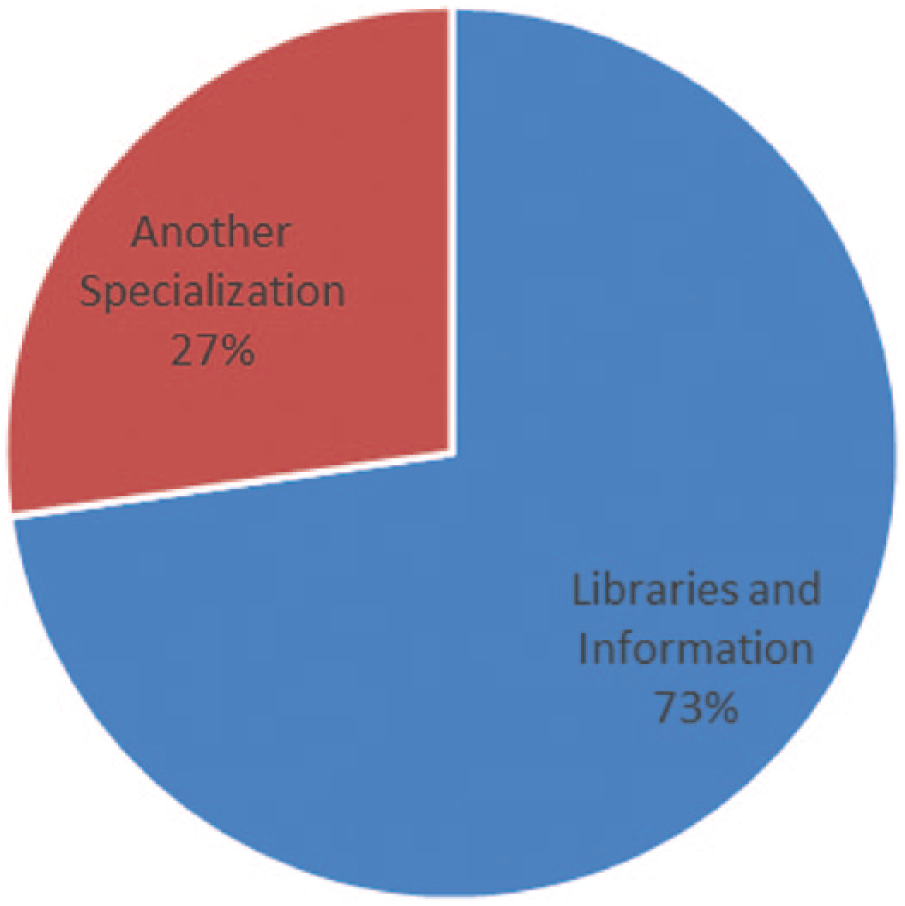
Distribution of librarians by specialization.

Distribution of the librarians by qualifications.
The distribution of the librarians according to university and gender.
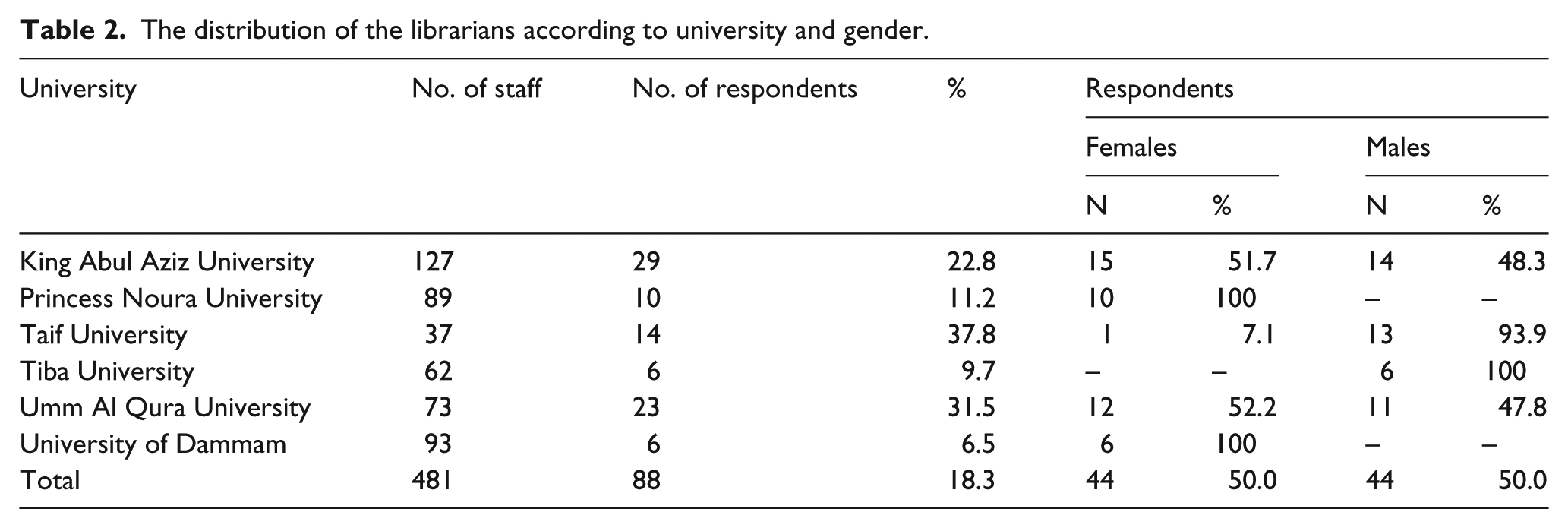
Figure 1 indicates the distribution of the responses according to specialization. Library Science professionals numbered 64 librarians (73%), and the rest, 24, were non-librarians (27%) from different backgrounds.
Figure 2 indicates the distribution of the responses according to the qualifications of the employees. Most of them had a BA degree, followed by MLIS, Diploma holders, and finally PhD holders.
Analysis
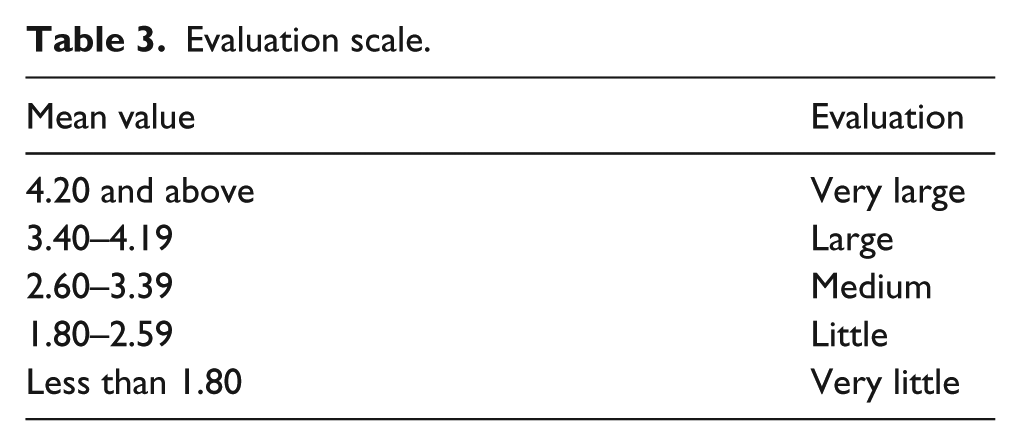
The study set out to explore the views of staff in Saudi university libraries regarding the validity of the ACRL standards for academic librarians and their need to apply them. The researchers prepared a simple questionnaire with multiple questions on each standard in the guidelines. Respondents were asked to rate their answer on a scale of five levels: strongly agree, agree, somewhat agree, disagree, and strongly disagree. Based on their answers the following gradients (Table 3) were used to calculate the averages of the responses.
Evaluation scale.
Approval rates of the standards
Standard 1: Professional responsibilities
Table 4 reveals the degree of the librarians’ approval or disapproval of the indicators of the first standard, professional responsibilities. The mean values ranged between 4.06 and 4.35, with questions 1 and 2 receiving a very large approval rate, the first standard receiving the most. Opportunities to complete studies while working received the highest mean value of 4.35. The existence of a written and a declared policy to provide scholarships received the lowest mean value of 4.06. The overall mean value was 4.19.
Professional responsibilities statistics.
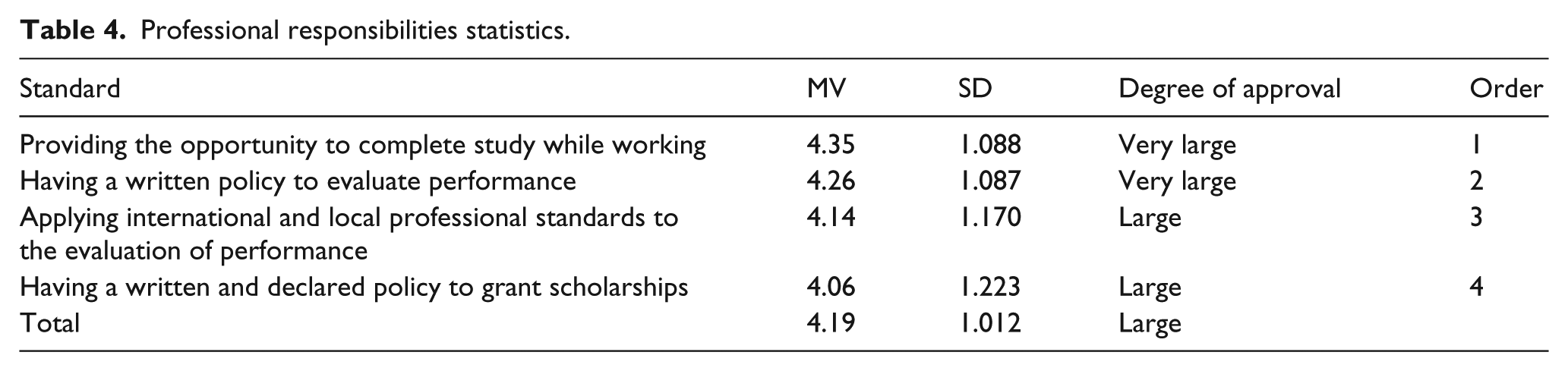
These results may suggest that the librarians’ ambition to complete their studies may stem from their need to increase their salaries. This ambition may also be ascribed to a desire to gain further knowledge in their field. Here it should not be ignored that some of the staff wished to continue their studies, especially for post-graduate qualifications (e.g. MLIS, PhD) in order to move on to more academic work in LIS: that is, they wished to move from administrative staff positions to academic staff positions. Some might also work to gain additional educational certificates to qualify them to move to other jobs outside the university. This trend had led some of the Deans of Library Affairs to approve reductions in staff scholarships for postgraduate studies, whether internally or externally. However, some librarians have refused to accept academic jobs (as demonstrators or lecturers) offered annually by the university administration.
Standard 2: Governance
Table 5 indicates the degree of the librarians’ approval of this standard. The mean values for this standard ranged between 3.97 and 4.43: engaging librarians in providing policies and regulations for the library received the highest mean value of 4.43. The fifth question, the existence of librarians in the advisory board of the university, received the lowest mean value of 3.97, with an overall mean value of 4.15.
Governance statistics.
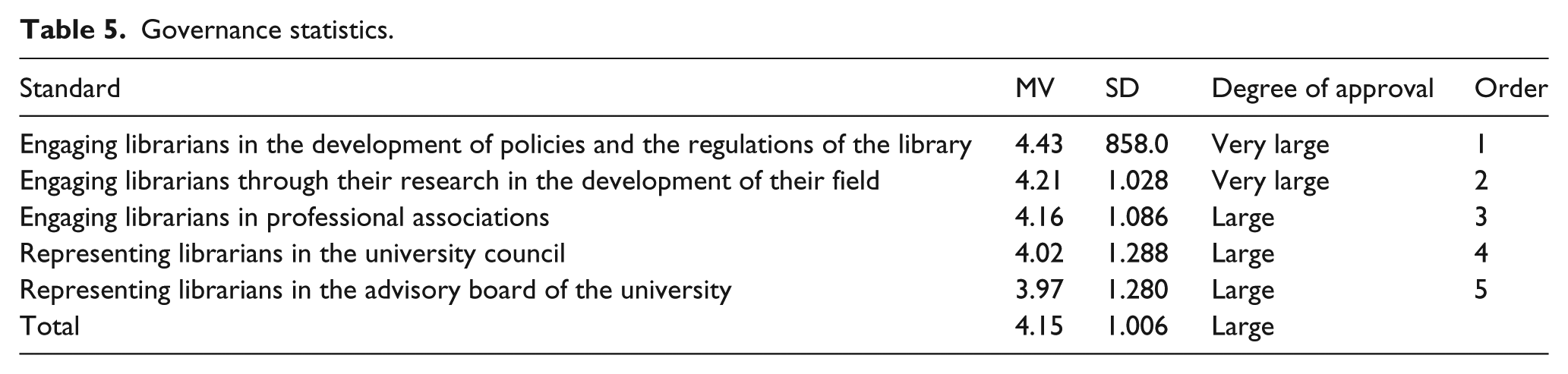
According to the researcher’s current knowledge, there is, as yet, no representation for library staff on any of the councils (e.g. the University Council, the advisory board) in any of the information institutions in Saudi universities although the Dean of Library Affairs or his representative can attend these councils as a member according to their regulations. In this regard, the researchers do not see the dean as a representative of the staff because this post is granted for a period of only two years, and is subject to renewal. In addition, at several universities, the dean is not a specialist and is not one of the working staff of the library. Participation must be granted to the staff themselves so that they can work to respond to their needs and participate in decision-making with regard to their work.
Standard 3: Compensation
Table 6 uncovers the degree of the librarians’ approval of this standard. The mean values ranged between 3.78 and 4.12, indicating a large degree of approval. The first question, providing the opportunity for librarians to improve their salaries through the completion of their studies, received the highest mean value of 4.12 while the fifth question, equality between librarians and faculty members in allowances, received the lowest mean value of 3.78, with an overall mean value of 3.97.
Compensation statistics.
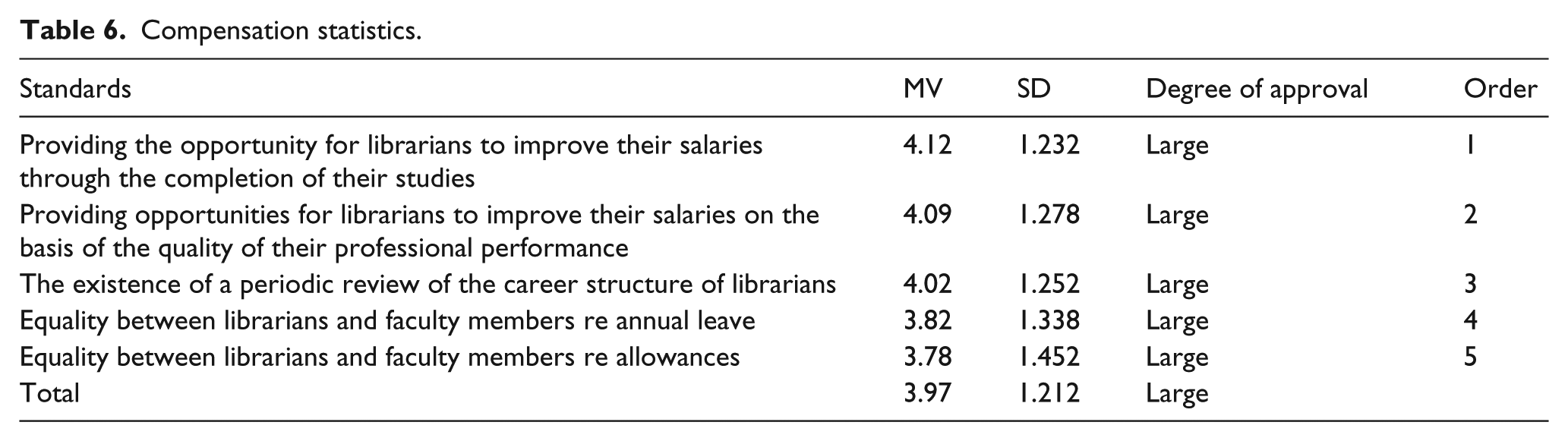
The researchers believe that this standard is not systematically applied by the Deans of Library Affairs in Saudi. The annual assessment accredited by the Ministry of the Civil Service is a model used by heads of department or directors of administration, and accredited by the Dean of Library Affairs. The familiarity of employees with their annual assessment varies from one library to another despite the fact that employees are informed of its procedures.
Standard 4: Leave and research funds
Table 7 shows the degree of approval of the librarians with this standard. The mean values ranged between 3.96 and 4.32, all showing a large degree of approval. The first question, providing opportunities for librarians to participate in conferences and seminars, achieved the highest mean value (4.32) while the fourth question, encouraging faculty members to collaborate with librarians in conducting joint research, was the lowest at 3.96. The overall mean value of this standard was 4.09.
Leave and research funds statistics.
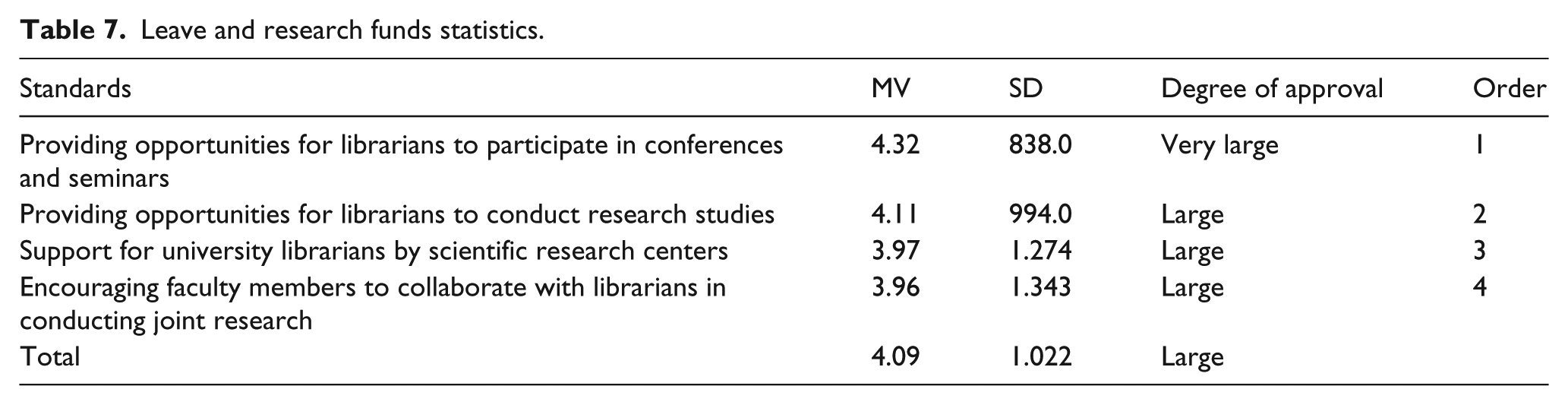
Saudi universities limit funding attendance for scientific conferences and seminars to faculty members. Library staff do not have that right. However, if a library staff member does attend a conference (as the researcher noted on a number of occasions), it is only if one of the library vendors or companies offers an opportunity for an employee or two to be nominated to have his/her travel and accommodation provided. In such circumstances, the staff member is present only as a listener; he/she cannot submit a working paper to the conference.
With regard to scientific research centers in universities that support librarians to conduct research studies, the regulations of scientific research institutes in Saudi universities state that the main researcher should be a member of the teaching staff in a scientific department. In this sense, such centers do not support library staff to conduct scientific research studies.
Standard 5: Grievance
The degree of approval of librarians to the grievance questions are shown in Table 8. The mean values ranged between 3.58 and 4.07, all indicating a large degree of approval. The first standard, applying the rules and regulations of the civil service to librarians, gained the highest mean value of 4.07; the fourth standard, treating university librarians (by the legal authorities in the university) in terms of working hours as university teaching staff, received the lowest mean value of 3.58. The overall mean value of this standard was 3.89.
Grievance statistics.

It should be noted that the Civil Service system (Ministry of the Civil Service, 2015) in the Kingdom allows employees to raise a claim or grievance with the authorities concerned. A government employee in a university has three means of voicing a grievance. The first is the legal department in the university, the second is with the Ministry of the Civil Service, and the third is through the Grievance Board. This Grievance Board which was established in 2008. It is: “an independent judiciary body that strives to establish justice, fairness and effective judicial monitoring of the work of the administration, through the claims in front of him to ensure the proper application of the rules and regulations as well as the development of the mechanisms of communication with the administration areas.” (Grievance Board, 2015)
Further analysis of approval rates
This section of the study elaborates on the librarians’ approval rates of the ACRL standards, and their need or desire to apply them. The analysis is based on the gender, specialization, workplace, and qualifications.
Approval rates by gender
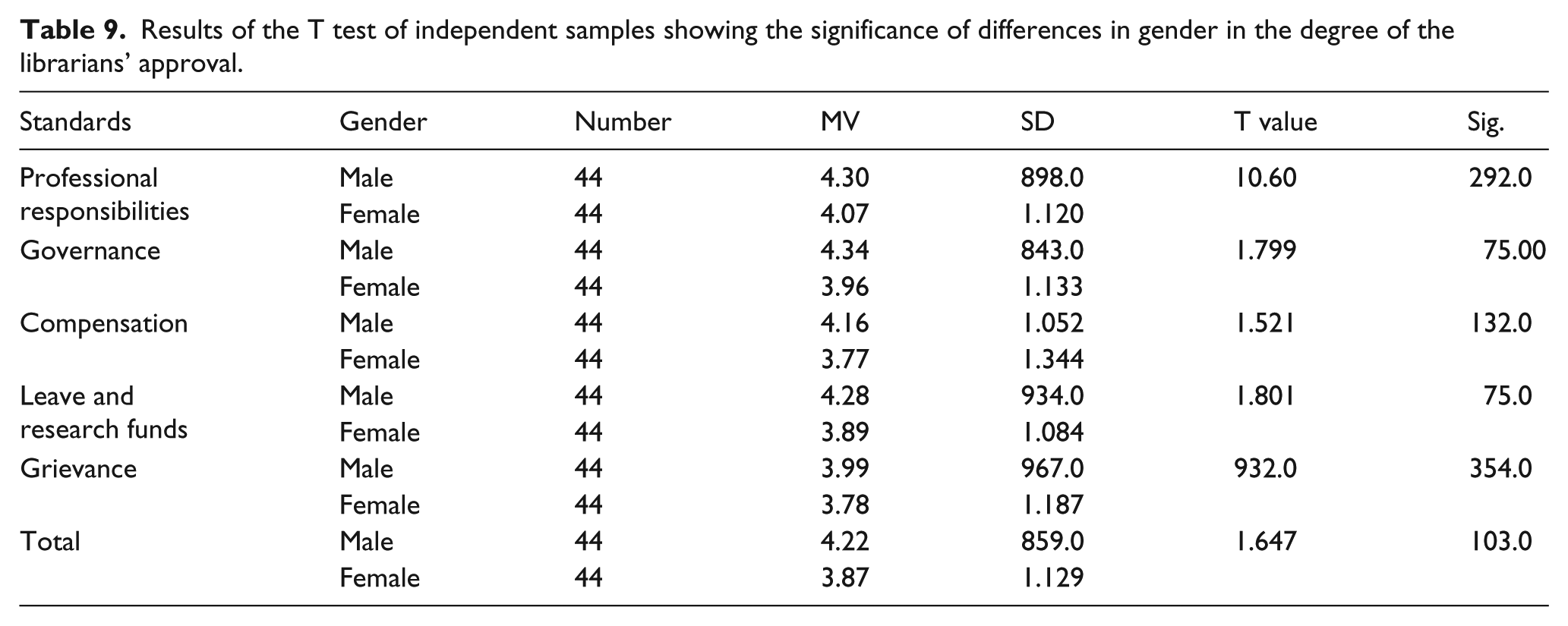
Using T test, Table 9, shows that there were no statistically significant differences between genders in the degrees of approval of librarians in Saudi universities to apply any of the ACRL standards. This shows the similarity of the views of both male and female librarians in Saudi universities regarding the need to apply the ACRL standards.
Results of the T test of independent samples showing the significance of differences in gender in the degree of the librarians’ approval.
Approval rates by specialization
Using a T test, Table 10, shows that there were no statistically significant differences in the degrees of approval of Saudi librarians towards the ACRL standards by specialization. However, to interpret this result further, it must be noted that job appointments in Saudi university libraries do not relate to specializations as graduates from other disciplines can be appointed.
Results showing the significance of differences in specialization in the degree of approval of the study sample.

It can be seen in Figure 1 that 24 respondents from the total sample of the study were not Library and Information specialists. The reason for this is that the job description for librarians does not stipulate that the candidate’s specialism must be LIS as it is thought that this can be compensated for by subject expertise. On the other hand, in cases of promotion, jobs in libraries are commonly shared among all university staff. Therefore, there are no differences between the sample’s members according to their specialization because non-specialists can be employed in the libraries. However, the standards need to apply here in the same way as for specialist colleagues.
Approval rates by workplace
The Kruskal-Wallis test was administered to identify the significance of the differences, in terms of workplace variable, on the degrees of librarians’ approval and need to apply the ACRL standards. Table 11 shows that there were no statistically significant differences at a level of significance that was less than 0.05. The views of librarians in all Saudi university libraries were similar because they approved of applying the standards whatever their place of work.
Results of the Kruskal-Wallis to denote differences in the degrees of approval of the study sample based on the workplace variable.
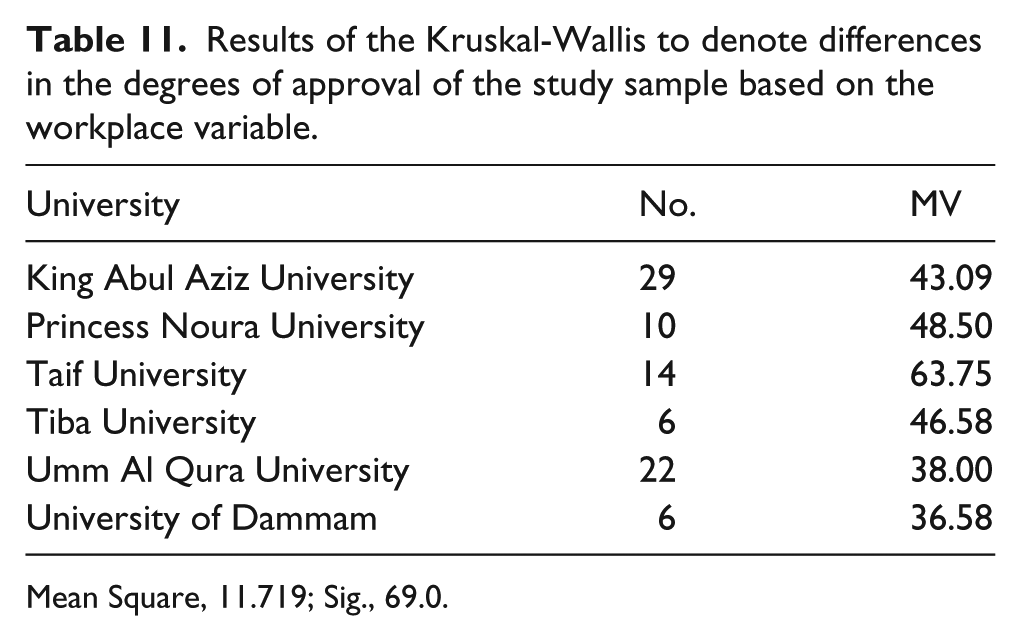
Mean Square, 11.719; Sig., 69.0.
Approval rates by qualifications
The Kruskal-Wallis test was administered to identify the significance of differences in the librarians’ need to apply ACRL standards in terms of their qualifications. There were no statistically significant differences at a level less than 0.05. Table 12 reveals that the views of librarians in Saudi universities regarding the need to apply the ACRL standards were very similar, regardless of their qualifications.
Results to denote differences in the degrees of the librarians’ approval based on the variable of qualifications.
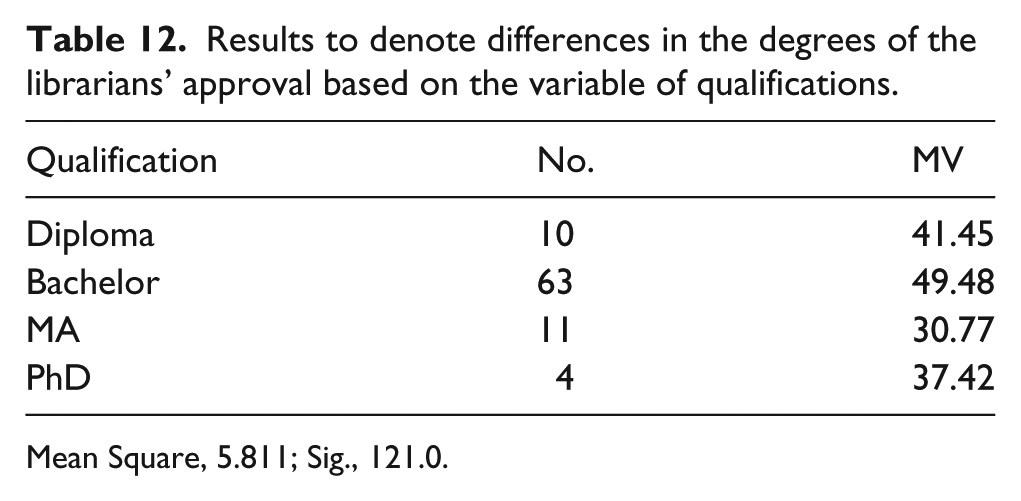
Mean Square, 5.811; Sig., 121.0.
Discussion
Based on the results above, and comparing these findings with those of previous studies, this study concludes with recommendations which the researcher hopes will be noted at the levels of the Ministry of Higher Education and by the Deans of Library Affairs at Saudi universities. It is important that the Ministry of Higher Education adopts a greater role in the development and improvement of the staff in Saudi university libraries, as it does with other sectors.
Staff working at information institutions in Saudi Arabia, specifically academic libraries, have suffered from being classified as second grade employees who lack many advantages in terms of salaries, allowances, and equality when compared with faculty members. Al-Namla (1984) and Tashkandi (1985) have addressed this issue extensively. They indicate that librarians are usually denied equal promotional opportunities and even lack librarian jobs in general. Sometimes jobs are taken from the library in favor of other departments in the university.
Based on direct observations of the authors, the result of these inequalities is the migration of librarians and library workers from the library to other jobs, even if they hold a degree in LIS. One example is a friend who left the library to work in the financial department for a higher salary and faster-paced promotion. Another has left the library to pursue his graduate studies just to leave the frustrations and the demeaning attitude towards him and his job. In order to avoid such inequalities, to have equal job opportunities, and to ensure equal rights for all employees including librarians, Al-Namla (1984) and Tashkandi (1985) state that there is a need to adjust Saudi librarians’ professional status and level. Such adjustments should include making their salaries and incentives equal to those of faculty members, or forming a career cadre of their own. Provision should also be made to give them the opportunity to complete their studies in order to improve their situation, whether through scholarships abroad or by moving from being classed as administrative staff to being classed as faculty. This is an important factor that explains why many people are reluctant to work in information institutions and why most of those who do are frustrated.
Deans of Library Affairs in Saudi universities should hold a degree in LIS. The reason for this is that it simply makes him/her able to understand the library operations and services and understand differences in job levels and requirements. It is also important for the Saudi Library and Information Association to study the current situation of librarians, and organize workshops and specialized seminars in which librarians can participate. Librarians’ awareness must be raised and they should be encouraged to organize forums or seminars to discuss their requirements and needs.
Librarians should participate in professional activities in the field at all levels in order to improve their skills and capabilities. They should participate in specialized councils at each university (e.g. the University Council, the advisory body, college boards and department councils). This should make them a part of the decision-making process which can positively influence their work. Also faculty members at the universities should take advantage of the practical experience of library staff, and cooperate with them to conduct joint studies. Scientific research centers in the Saudi universities should be urged to support librarians to present research projects without the requirement that the main researcher must be one of the faculty members.
AFLI published the Arab Unified Standard for University Libraries (Shaheen et al., 2013). As mentioned above, these standards were created to ensure quality and academic accreditation in the Arab States. However, these standards did not deal with the library staff at any level. We recommend that AFLI adopts a standard for library staff. A standard that characterizes the job, defines it, its requirements, its levels and identifies the rights and duties of Saudi librarians.
Conclusion
The ACRL (2011) guidelines and standards are the focal point for this study which is a systematic and quantitative assessment of university librarians’ perceptions towards these guidelines. The data for the study are derived from a survey collected by the researchers from six Saudi universities.
All standards received strong levels of approval with values relating to the professional responsibilities of librarians gaining the greatest support. This was followed by the governance standards, then the standards relating to leave and research funds, and the standards relating to compensation. The standards concerning grievance came in fifth place. Among the indicators that achieved the highest mean value were: providing opportunities to complete studies while working, librarians participating in developing library policies and regulations, providing opportunities for librarians to improve their salaries through the completion of their studies, providing opportunities for librarians to participate in conferences and seminars, and applying the rules and regulations of the civil service to librarians. There was overall agreement in the views of librarians in Saudi universities regarding the need to apply the ACRL standards based on the variables of years of experience, qualifications, gender, and place of work. In terms of all these variables, there were no statistically significant differences at a level of significance less than 0.05.
Footnotes
Declaration of Conflicting Interests
The author(s) declared no potential conflicts of interest with respect to the research, authorship, and/or publication of this article.
Funding
The author(s) received no financial support for the research, authorship, and/or publication of this article.