



Abstract
Integrated Management of Acute Malnutrition or POSHAN Phase 2.0 was implemented in 20 districts of Rajasthan in 2018. After 12 weeks of outpatient therapeutic care of children with Severe Acute Malnutrition (SAM), 70.4% children were cured, 12.2% defaulted and 17.4% were non-recovered and referred to Malnutrition Treatment Centres for facility treatment. The research study attempts to (a) study the sociocultural factors at the family level responsible for varying numbers of cured, defaulted and non-recovered SAM children at different localities; (b) explore the probability of the SAM children staying healthy post successful treatment at community settings without any external intervention; and (c) explore the possible approaches beyond the emergency medical response to develop a long-term strategy to address malnutrition in children. The insights and cues gained from the phenomenology of individual experiences help us understand the structural elements that undergird a healthy living. It was observed that irrespective of socio-demographic characteristics and food basket of a family, all the SAM children had a troubled medical history and/or low birth weight. The research findings also point out that a rise in income alone does not automatically lead to increased nutritional food intake. It is also important to see the issue of malnutrition in the larger context of the agrarian crisis that has cast its shadow over the rural landscape. For sustainable and lasting solutions, it is essential to shift to and promote farming practices that facilitate indigenous, locally produced and culturally acceptable nutrition from supplementary foods.
Keywords
Introduction
There is no denying the fact that India has a huge burden of malnutrition, especially in the early childhood age of up to 5 years. There are two major types of malnutrition in children—acute malnutrition (wasting and/or severe wasting) and chronic malnutrition (stunting) (De Onis & Blössner, 1997). Further, acute malnutrition is categorised into Severe Acute Malnutrition (SAM) (severe wasting) and Moderate Acute Malnutrition (MAM) (wasting) (De Onis & Blössner, 1997). SAM is the most extreme condition of malnutrition which if not treated on time, leads to the death of a child (De Onis & Blössner, 1997). MAM is the moderate malnutrition, less severe but may lead to SAM if not treated. SAM and MAM are attributed to extreme poverty, poor maternal health, low birth weight, poor breastfeeding and poor dietary intake by the child (De Onis & Blössner, 1997). As per the Global Nutrition report (2018), three countries were hosting almost half (47.2%) of all stunted children in the world (Development Initiatives, 2018). India was one of them with a figure of 46.6 million followed by Nigeria and Pakistan. India also has a very large number of wasted children with a figure of 25.5 million (Development Initiatives, 2018). It is, therefore, not surprising that India ranked 102 nd among 117 countries in The Global Hunger Index (von Grebmer et al., 2019). World Health Organization (WHO) report on child nutrition states that globally 21.9% (149 million) U-5 children are stunted, 7.3% (49 million) U-5 children are wasted and 5.9% (40 million) U-5 children are overweight (The United Nations Children’s Fund [UNICEF] et al., 2019). According to the National Family Health Survey (NFHS-4), the percentage of wasted and severely wasted children has increased from 19.8% and 6.4% in NFHS-3, 2005–2006 to 21% and 7.5% in 2015–2016 (International Institute for Population Sciences [IIPS] and ICF, 2017; IIPS & Macro International, 2007). Especially states such as Jharkhand (29%), Gujarat (26.4%), Karnataka (26.1%), Madhya Pradesh (25.8%), Maharashtra (25.6%), Rajasthan (23%), Chhattisgarh (23.1%) and Haryana (21.1%) contribute to the major burden of wasting in India (IIPS & ICF, 2017).
Malnutrition thus has been an endemic challenge in India, especially in the young population, as entailed by globally visible and accepted data sets (Development Initiatives, 2018; IIPS and ICF, 2017; United Nations Children’s Fund (UNICEF) et al., 2019; von Grebmer et al., 2019). In response to the rising burden of malnutrition, several health schemes were implemented for U-5 year age children by the National Health Mission (NHM) and Integrated Child Development Services (ICDS) programmes (Ministry of Women and Child Development, 2017). One such scheme is the Supplementary Nutrition Programme implemented through ICDS, where it delivers Take Home Ration to children between 6 and 36 months and hot cooked meals for children of 3–6 years (Ministry of Women and Development, 2017). The Government of India later adopted inpatient facility-based treatment (as per WHO guidelines) for SAM children (Ministry of Health and Family Welfare (MoHFW) & Government of India, 2011). In 2011, operational guidelines for the inpatient treatment facility for SAM was developed (Ministry of Health and Family Welfare (MoHFW) & Government of India, 2011). The inpatient treatment facilities are called Malnutrition Treatment Centres (MTC) or Nutrition Rehabilitation Centres (NRC) and are established at the block and district levels. Assessment of data from MTCs and NRCs from different studies show that recovery rate of SAM children lies between 37.1% and 65% which is less than the international standard (>75%) (Aguayo et al., 2013; Dasgupta et al., 2014; Patel et al., 2010). The defaulter rate was found to be between 18.4% and 57%, which again is higher than the International standard of less than 15% (Aguayo et al., 2013; Dasgupta et al., 2014; Patel et al., 2010). Notably, it was found that accessibility to MTC or NRC was a challenge in rural areas.
At the household level, families are not aware that the children are SAM and require immediate medical attention (Aguayo et al., 2013; Swaminathan et al., 2019). A few state governments adopted the Community Management of Acute Malnutrition (CMAM) model as per WHO recommendations. As per the WHO guidelines, SAM children without medical complications can be treated at community settings through therapeutic care (World Health Organization et al., 2007). The community-based approach allows for timely detection of SAM and treatment using Ready to Use Therapeutic Food (RUTF)1 or Energy Dense Nutrition Supplement (EDNS).
In 2015, CMAM was implemented in 10 high priority and 3 tribal districts of Rajasthan by the NHM as POSHAN (Positive and Optimum care of children through a Social Household Approach for Nutrition) (National Health Mission & Government of Rajasthan, 2018, 2019b). The project observed that around 88% of SAM children were cured to normal nutritional status after 12 weeks of outpatient therapeutic care using EDNS2 (National Health Mission & Government of Rajasthan, 2016). With this background in the year 2018, Integrated Management of Acute Malnutrition (IMAM), POSHAN Phase 2 was implemented in 20 districts of Rajasthan. After 12 weeks of treatment, 70.4% SAM children were cured, 12.2% defaulted and 17.4% were non-recovered and referred to MTC for further treatment (National Health Mission & Government of Rajasthan, 2019a). Though it has been largely successful in its immediate task of saving the severely wasted children, the very success of the programme raises incisive questions about cured, defaulted and non-recovered children and the nutritional sustainability of cured children post-treatment. The SAM children who were treated in IMAM POSHAN 2.0, nearly hail from the similar community and household backgrounds. Though they seem to be from the similar communities, the variation between children that got cured, defaulted and did not recover from SAM indicate some critical aspects of the project and other factors that affected the results. Technically, it was found that children who were cured consumed EDNS regularly as per the prescribed quantity as compared to the non-recovered cases. Despite follow up by frontline health workers, family members of defaulted children showed a lukewarm response towards the intervention. Also, the household settings and feeding habits post the successful treatment of the SAM children implies a sceptical view towards nutritional sustainability, especially in the absence of the food supplements. With this background, the research study attempts to find possible answers for three research areas. First, what are the sociocultural behaviours at the family level which lead to varying numbers of cured, defaulted and non-recovered SAM children? Second, to explore the probabilities of the cured SAM children staying healthy post-treatment without any intervention. Third, investigating the macro picture of malnutrition and possible approaches beyond the emergency mode, which could frame a credible strategy to prevent the onset of malnutrition.
Study Methodology
A qualitative research method was followed to collect field data. The 20 programme districts were divided into 5 zones based on geography, culture, socio-economic variations in coverage and performance. From each zone, one programme district was selected randomly. Further, one programme block was targeted in each district for data collection. Data collection was carried out in Ajmer, Baran, Udaipur, Rajsamand and Jaisalmer during the follow-up phase (post-treatment). In-depth interviews (IDI) were conducted with the mothers of cured, defaulted and non-recovered SAM children. Focus Group Discussions (FGD) was conducted to understand the programmatic difference of opinion in mothers of cured, non-recovered and defaulted SAM children. During IDI, the interviewer spent a whole day with the SAM child’s family to understand the household characterises, socio-economic status, availability of food, cultural influence towards their food choices, eating habits and belief towards food and nutrition. IDIs were also conducted with POSHAN Prahari’s (ASHA workers) of few programme villages to understand the perception towards food and nutrition at the community level. Around 12 to 15 of such intense interactions through IDI and FGD’s in five districts were analysed and written up as ‘thick description’ to bring forward some of the fundamental challenges in the everyday lives of people in rural Rajasthan that may lead to the malnutrition in the younger population.
The Sociocultural Context of SAM Children: IMAM POSHAN 2.0
Socio-demographic Characteristics
Around 47% of enrolled SAM children were aged 12–23 months followed by 21.3% aged 24–35 months, 14.3% aged 6–11 months, 10.2% aged 36–47 months and 7.4% aged 48–59 months. Socio-demographic analysis of mothers or caregiver shows that 30.9% of women were aged 15–24 years, 60.8% aged 25–34 years and 8.3% aged 35 years and above. It was found that 89% (N = 983) and 11% (N = 122) belonged to Hindu and Muslim regions, respectively. Majority of enrolled SAM children belonged to the scheduled tribe (39.7%) and other backward classes (38.9%) followed by scheduled caste (16.5%). Annual family income was less than Rs. 50,000 for 46.2% of families, 35.3% of families earn between 50,000 to one lakh and 18.4% of families earn more than one lakh per year. Around 55% of mothers had no school education followed by 23.3% with primary education and 21.4 with secondary and higher education.
Given the context sketched above, what does the field settings signify? What is the occupation profile of people in areas where the POSHAN programme was implemented and evaluated for impact? What are the living conditions and dietary habits in the field? What more insights could be gathered with a sociocultural perspective? To come to grips with the situation, it is imperative to look at the success stories, defaulted cases and those who were referred to the medical treatment centres. The field yields some glimpses on patterns and cohesion in personalities of rural households.
We exited the state highway into the by lanes the heat and dust of India. The by-lane is the first foretaste of the seeming chaos and a signifies a different rhythm of things to come. From the glint and order on the highways to dust and shanties, roadside eateries and small mom and pop stores. It is a space full of men, women and children eagerly waiting and eternally patient, almost yogic in their stoic acceptance to the reality around them. Some anecdotes from the field:
A. Her home, a structure made of stones nicely painted with red and white was right between the vast harvested fields with perpetual dry and hot winds. It was situated at the end of the village, where we reached navigating through a maze of alleys and identical stone houses. It was small and covered with a metal sheet for a roof, had one room and a veranda with the cooking area. Everyone sleeps on the floor and the family does not have any farming land or livestock. Their clothes were torn, ragged and covered in dust. However, the mother bathes the children daily. The older children had runny noses and did not attempt to clean themselves. They were all seated on the floor and appeared to have dirty soiled nails. 3
B. By caste, the family belongs to OBC category. The head of the household ‘Rakesh’ is a grandfather of ‘Sonu’. He has a small shop outside their home and has studied till high school and works as a tailor. His earnings are not very significant—about ₹ 200 a day. Grandmother takes care of the household chores. Sonu’s father—Bharati is about 30 years of age, studied till high school and works in a mine for about eight hours per day. He earns hourly and manages about ₹ 17,000 per month. Bharti had taken a loan of about ₹ 1.5 lakh for marriage and has been repaying it for a while. The monthly instalments come to about ₹ 8,000 which Bharti has to pay. He gets his salary on 7th of every month and immediately the money goes for repayment. The expenses of food and all are managed with the income of Ramesh.
C. Villagers of the Sahariya tribe do have financial difficulties which is why they usually migrate in search of work and to earn their wages. The families generally have two or three children and, in some cases, more than four. Some of the women have got their sterilisation done, which indicates the progressive nature of society. However, interbirth spacing is still an issue. In June−July during rains and when the crops are harvested, the families generally migrate and return only after Diwali in October.
Younger children go to Aanganwadis, while the elder ones go to school. When families migrate for work, the elder children stay behind to attend the school, but the younger ones skip Anganwadi and migrate with their parents. During the follow-up phase of POSHAN 2.0, most families had migrated for work. 4
D. Pinkie’s grandparents who are illiterate, work in fields only during monsoon. In the absence of any irrigation source, the farming is limited to monsoons only. The usual crops grown are urad and groundnuts. They sell some of their production locally. Pinki’s father, Manoj, has studied till high school and works as a painter. The family does not migrate for work and the father but commutes from home daily. He earns ₹ 400 as daily wage. Pinkie’s mother, Shanti, is illiterate and contributes to farming during monsoon. 5
E. Banjaras keep travelling. They come during the agricultural season here. It is mainly the men who migrate, women generally do not. MGNREGA related work is also available in the village; there is plenty of work for everyone with decent remuneration. The general ownership of farming land is limited to 1–2 bigha. The main crops are wheat and rice. Rice is mainly cultivated towards Garda, where there is a pond. However, the natives still migrate for agricultural labour. Availability of water becomes a major issue at times, last year they could not even get the wheat crop.6
F. Vidu’s husband is about 28 years old. His name is Tuli and has studied till 5th. He earns the livelihood for the family through daily wage labour in a masonry. He leaves for work at around nine in the morning and returns by seven in the evening. There is no fixed employment and every day is a search for a new opportunity. There are days when he must sit idle at home due to no work. He earns a daily wage of ₹ 400 if gets food from home and ₹ 300 if he eats food provided by the employer. Tuli does not commute to distant locations or migrate for work. He can get the work within or nearby his village. However, he only gets employment for 5–10 days in a month. The maximum he can usually work is in winters for about 15–20 days, and least during summer as it gets quite difficult for them to work in high temperatures.7
As the spectrum widens, we observe the upper caste families, other backward classes, the nomads and importantly the tribal groups engaged in a various range of occupations: self-employed, governmental service, agricultural labour, daily wage labour and a combination of the two along with local agriculture activities. Importantly, we do find however that these livelihoods have either common roots in the agrarian (farm labour, agriculture activity) or rather in the failure of the agrarian activities that is forcing people to seek work outside. Another extremely striking feature is income.
Overall, the families of SAM children could be favourably categorised into two cohorts. Families under the first cohort were mostly Below Poverty Line who earned around ₹ 2,000 to ₹ 2,500 per month. Broadly, they belonged to Scheduled Tribe or Scheduled Caste. Their houses were primarily made of stone and mud. The location of these houses was in the peripheries of the village. There was no toilet facility in their house. Most mothers were illiterate. There were not much in terms of basic amenities except for handmade chullah and few utensils for cooking. In the second cohort, families earned around ₹ 5,000 in a month. Most of them belonged to Other Backward Caste (OBC) or general caste. They live in a mix of Kachha and pucca houses. Few had toilets at home, but these were mostly not functional or not used by the family; houses were located within the reachable premises of the village; almost every house had two-wheeler for transportation; women were educated till up to 8th class and few were able to read and write. The houses have a rope cot, plastic chair, plastic mat, kitchen with gas stove and plenty of utensils. Primarily there was no such significant difference observed in the aforementioned dimensions among the cured, non-recovered and defaulted SAM children.
Food Basket of the Family
The food basket that got routinely described across the spectrum in the field area is discussed below.
What is interesting to note is that there is not much of a difference between the food baskets of ‘cured’ and ‘defaulted’. This could be a function of geography, nature of market, agriculture and the overall everyday life. However, it is important to answer whether the sum and substance of the food basket would provide adequate nutrients for the parents, especially the mother, and for the children.
For the first cohort mentioned above, it was observed that EDNS favourably supplemented with the regular meals for the children during the treatment phase, at the household setting. Post-treatment phase, the families reported for the regular dietary intake as per their routine. A few families of cured children reported that they started feeding rice halwa or sooji to the child after they were enrolled under POSHAN 2.0. Mother expressed awareness about handwashing practices.
The mothers of non-recovered children reported that the child was not consuming food properly from birth. Anything was given to the child, he/she always refused to eat. Besides, they did not consume EDNS with interest.
The mothers of defaulted children did not take interest to feed regular food or EDNS to the child. They were indifferent towards the programme as well as dietary intake of the child.
The families of SAM children who fall under the second cohort consume a variety of food such as green vegetables (okra, bitter gourd, bottle gourd, tinda and spinach) and vegetables (potatoes, pumpkin), pulses (urad dal, moong dal, chana dal and masoor dal), chapati and occasionally rice. Curd and buttermilk were a part of their daily food intake. Milk was consumed in the form of tea twice a day. The SAM children of these families have a troubled medical history by birth, irrespective of cured, non-recovered and defaulted status under the programme. Along with EDNS consumption, their recovery process was highly dependent on the severity of their medical history. As the child was showing medical symptoms such as diarrhoea, vomiting and fever from birth, the women under this cohort were quite worried usually quoting ‘My child was always sick.’
G. The household mainly consumes a vegetarian diet. Consumption of non-vegetarian food (mainly meat or fish) is occasional, that is, once in 2–3 months or so. The mother said that she wishes to be able to consume non-vegetarian food when her children grow up and become capable of affording it. It costs up to ₹ 170. Usually, every day the family consumes 500 ml of milk that costs ₹ 20, which is used to make tea only; they have roti for all three meals with dal, potatoes, cauliflower, etc.8
H. Amongst the participants very few were non-vegetarian. Their staple food basket includes roti, sabzi, dal, and rice 2–3 times a week. Milk is not usually a part of their diet. None of them has livestock. Amongst vegetables, potato, onion, okra and cauliflower are more common, rest they consume whatever is available in the market without any preference of knowledge of nutrition while making their food choices.9
I. The family is vegetarian. The general food basket includes chapatti, different curries and pulses (all that is present in the market); curd, buttermilk and ghee; two meals a day – brunch at 11 in the morning and dinner at 6–7 in the evening. They would have tea twice a day—one in the morning and one during the day. Consumption of rice is not very usual; it is consumed in the form of khichdi once in 5–6 days. Consumption of fruits is within 2–3 days, whenever they go to the nearby market or the bus station. Fruits generally consumed are grapes and oranges. The family does not consume milk. As they don’t have any livestock, it is not possible to get the regular supply of milk and purchasing it from the market every day is too costly. There is no consideration for nutrition in their food choices.10
J. The diet of the household is vegetarian. All the ration and food items are procured from the market. The family takes two meals a day—brunch and dinner. In between, they consume tea once a day. The food basket generally includes curries and chapatti. The vegetables include all that is present in the market such as unripe mango, okra, bottle gourd, pumpkin, spinach, fenugreek, etc. 11
K. Amongst pulses, the usual ones are urad, moong, chana, masur, etc. Both gas and stove are used for cooking. Chapatti of both kinds- the thick one (Millet based) and the thin (Wheat based) one is prepared, as different members of the family have different taste. Rice is usually not consumed in the household 12
Discussion
Integrated or Community Management of Acute Malnutrition (IMAM/CMAM) through POSHAN strategy has no doubt has been successful in treating the severely malnourished children in Rajasthan. In the process of retrieving SAM children from mortality, the programme safely concludes that after 12 weeks of treatment, 70.4% of SAM children are reversed back to a normal state (National Health Mission & Government of Rajasthan, 2019a). The sociocultural study attempted to understand the locale of SAM children and to study everyday practices that are culturally embedded and may be the reason behind the varied nutritional status of children enrolled under the same programme. The IDI and FGD along with the field observations imply that there was no significant difference observed in socio-demographic characteristics of cured, non-recovered and defaulted SAM children.
The non-recovered SAM children were in families with monthly earnings of ₹ 2,000 or less as well as in those earning around ₹ 5,000 per month or more. Cured, non-recovered and defaulted SAM children were observed in a wide spectrum of upper caste, backward caste, nomads and tribal groups who were engaged in a range of occupations such as self-employment, low governmental service, agricultural labour, daily wage labour and combination of these. Interestingly, families of cured, non-recovered and defaulted children did not fall under any specific pattern of the food basket. It was observed that SAM cases were found in families where children were fed mostly with vegetarian food such as chapati, dal, potatoes and occasionally rice. There was a lack of or no intake of green vegetables and fruits at all. Children barely consumed milk or any dairy products.
SAM children were also found in the families where the food basket included roti, green vegetables (okra, bitter gourd, bottle gourd, tinda and spinach), vegetables (potatoes, pumpkin), pulses (urad dal, moong dal, chana dal and masoor dal), curd, buttermilk, milk in the form of tea and occasionally rice.
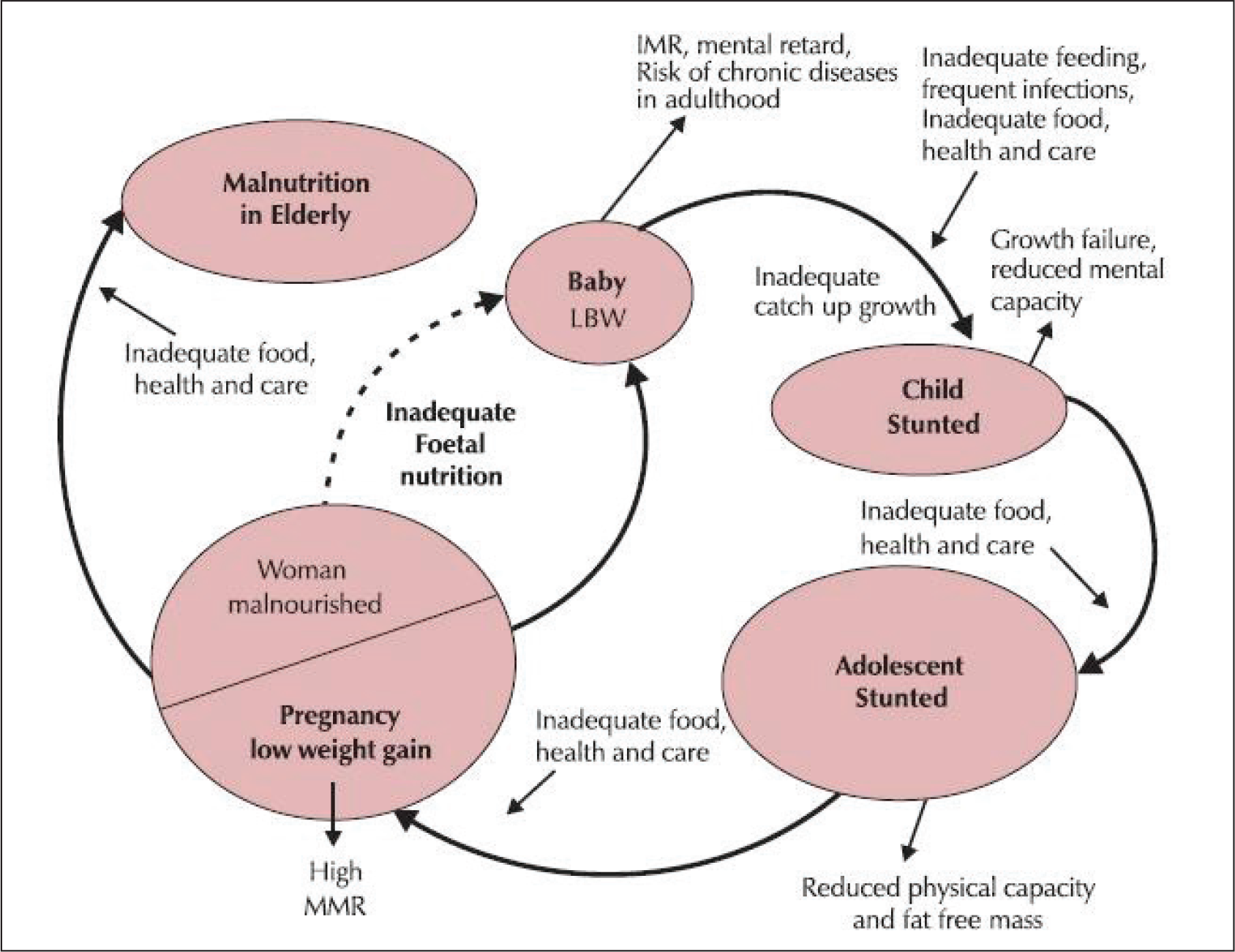
Irrespective of socio-demographic characteristics and food basket of the family, all the SAM children had a troubled medical history and/or low birth weight and lack of appetite by birth. Most importantly, during interviews, it was evidential that mothers of almost all the SAM children had compromised and undernourished health status during their pregnancy and childbirth. The mothers reported for extremely low levels of haemoglobin (as low as 5.5 g/dl) and or stillbirths and or history of previous child deaths. They believed that they were not undernourished during their pregnancy and lactation period so could not fathom any effects on their child. While the fact is that they were not even aware of proper nutrition for mothers and lacked understanding of birth spacing and its effect on children. Women are aware of sterilisation but not from the perspective of a child’s health and nutrition. In POSHAN 2.0 most of the non-recovered children were observed to have medical history by birth. Though mothers fed EDNS to the children but due to the severity of malnutrition and medical history, their recovery was not as fast as others. Apart from health services, food security—availability and accessibility with adequate choices in the food basket is essential to break the vicious cycle of generational malnourishment (Figure 1).
Condition of extreme starving is one of the causes of SAM. SAM arises in a condition where the child has less or no appetite which contributes to severe reduction of muscle mass. Based on these observations, is it not a mystery that SAM children exist in households with minimum to moderate food choices. In this study, the household characteristics of the enrolled children were explained in two groups. The first cohort where household income is extremely low, poor food choices and lack of accessibility and availability of health services, whereas the other cohort has moderate to low income, food choices are limited with minimum to moderate accessibility and availability to health services.
The percentage of beneficiaries distributed with supplementary nutrition through ICDS has increased from 26.3% (NFHS-3, 2005–2006) to 48.1% (NFHS-4, 2015–2016) (IIPS & ICF, 2017; International Institute for Population Sciences and Macro International, 2007) (Table 1). In contrast, wasted (MAM) and severely wasted (SAM) children U-5 years have increased from 19.8% and 6.4% (NFHS-3, 2005–2006) to 21% and 7.5% (NFHS-4, 2015–2016) (IIPS & ICF, 2017; International Institute for Population Sciences and Macro International, 2007) (Table 2). Especially in Rajasthan, poverty headcount ratio has reduced from 35.8% (2004–2005) to 7.7% (2011–2012) and distribution of supplementary nutrition has increased from 17.3% (NFHS-3, 2005–2006) to 32.4% (NFHS-4, 2015–2016) (IIPS & ICF, 2017; International Institute for Population Sciences and Macro International, 2007; Reserve Bank of India, n.d.). Unfortunately, wasting in Rajasthan has increased from 20.4% (NFHS-3, 2005–2006) to 23% (NFHS-4, 2015–2016) and severe wasting (SAM) has increased from 7.3 (NFHS-3, 2005–2006) to 8.5% (NFHS-4, 2015–2016) (IIPS & ICF, 2017; International Institute for Population Sciences and Macro International, 2007) (Table 2). Paradoxically, the mean per capita consumption of calories and protein intake has almost remained stagnant for the past two decades from 1993–1994 to 2010–2011 (Reserve Bank of India, n.d.) (Table 3).
Percentage Received Food Supplements (ICDS) Under Six Years.

Percentage of Severe Wasting and Wasting in India.

Mean Per Capita Consumption of Calories, Protein and Fat Per Person Per Day.

Income is one of the important determinants of food intake, but the research findings point out clearly that that rise in income alone does not automatically lead to increased nutritional food intake. Research works show that there has been a reduction in the calorie’s intake with increasing wealth Index in both rural and urban areas (Jose, 2016; Srivastava & Chand, 2017). There has also an increasing shift to non-cereal food consumption in both rural and urban areas (Jose, 2016). The increase in household income does not necessarily correlate with the spending of the household towards food (Ghosh, 2018). The percentage of total expenditure spent on food has been declining in both rural and urban areas. In rural areas, it is due to the lack of awareness towards nutrition, less accessibility and availability of food choices whereas in urban areas it is due to the poor food choices due to changing lifestyle, squeezing out food budget for non-food requirements, etc. (Basole & Basu, 2015; Jose, 2016; Srivastava & Chand, 2017).
As IMAM POSHAN-II was dominantly implemented in the rural context, it is essential to understand the perceptions and willingness of rural women towards ‘nutrition’. It was observed that mothers (cured/non-recovered/defaulted children) were indifferent to the concept of nutrition if a child is walking and playing around. The mothers of cured and non-recovered children were equally content and happy as their children are active now whereas before POSHAN 2.0 children were comparatively less active. If we look from the eyes of rural women, if a child is playing and walking around actively, they assume that child is healthy. They are neither aware nor bothered about SAM or MAM or underweight nutritional status. They also strongly believe that ‘If one of my children will die, I will accept it as fate and give birth to another to compensate the loss.’ This indifferent attitude and lack of understanding towards dietary intake and growth raise the question of post-discharge nutritional sustainability of the cured SAM children.
It is critical to see the issue of malnutrition in the larger context of the agrarian crisis that has cast its shadow over the rural landscape. As per Census 2011, 96 million cultivators enumerated farming as their main occupation, down from 103 million in 2001 and 110 million in 1991. Still, 38% of the workforce is working full-time in farmlands. Even with this decline, 57% of the population is engaged in generating 14% of the gross domestic product from the agricultural sector. It has been estimated that the size of the operational holding for marginal and small farmers has now shrunk to around 1.13 hectares (Agriculture Census in India, 2011) an unviable proposition for sustaining livelihood on agriculture alone. Marginal and smallholdings constitute almost 90% of our total agriculture holdings (Agriculture Census in India, 2011). These figures should bring home the true nature of population and employment burden on agriculture. They also suggest that the economic trajectory is so ranged against the agrarian economy that the sector is no longer in a position to bear a burden of the large mass of people, which then is resulting in a major distress migration. To top it all, low capital formation, minimal credit and investments, depressed prices for farmers to recover the cost of production and fragmented holdings is turning the agrarian fields in a lunar landscape.
These problems are further compounded by a new reality and have further complicated the already complex situation—Indian agriculture, along with the country, has run out of water. Today for more than ever, the issue of water or the lack of it and the survival of the agrarian system is intertwined closely. The larger question, however, is about the use of water and its availability for food production. As has been pointed out by Mihir Shah Committee, India is on the verge of exhausting its groundwater due to over-exploitation of aquifers and unless we fundamentally rethink our policy of managing surface and groundwater along with the rejuvenation of our rivers, we are now looking at the point of no return.
Lastly, everyday life patterns of rural communities suggest that there is an urgent need to think of addressing the root causes of malnutrition. There is an urgent need to link food production at the family level to nutritional intake especially of women and children. There is a policy need for recalibrating the lens of livelihood and nutrition programmes. Leaving food choices and nutritional intake to market-driven production and consumption adds burden to the already distressed rural and urban populace.
If the enigma of the silent and creeping hold of malnutrition has to be sustainably responded, it is essential to shift to and promote region-specific farming practices that can diversify food baskets and can potentially revitalise nutrient-rich and culturally acceptable food intake.
Footnotes
Acknowledgement
We thank Dr Deepti Gulati, GAIN for providing technical assistance for the research conducted. The expertise of Dr Deepti in nutrition have improved the quality of the research study. We express our gratitude to Mr Laxman Sharma, IIHMR University for implementation of field work. Ms. Kannika, Consultant conducted IDI and FGD for the study. Dr Diana, Intern, IIHMR University assisted Ms. Kannika in field data collection. We thank Ms. Kannika and Dr Diana for their immense contribution to the research work.
Declaration of Conflicting Interests
Funding
The author disclosed receipt of the following financial support for the research, authorship and/or publication of this article: The sociocultural study was funded by the Global Alliance for Improved Nutrition (GAIN) [grant Number: 2018104962], New Delhi.