



Abstract
After the global economic downturn in 2007–2008, India’s export of principal commodities such as ores and minerals, engineering goods, projects goods and handicrafts products showed insignificant growth rate. The handicrafts sector has been given focal attention in the study due to its worrying insignificant growth and to exploit opportunities for exporters in the global market. This article, in an attempt to examine structural changes in exports of handicrafts product, performed the Chow breakpoint test by setting a break-up year to see if there has been a break in demand. This study contemplates and reflects how Indian handicrafts sector has surpassed its reputation among the diverse consumers in the global market after the global economic crisis and how government interventions have liberated the sector from middling growth to become a major contributor to world consumption. To make the subject more content and lucid to understand, this study has thoroughly accrued, reviewed and analysed several reports and trade data, and it culminates with some policy implication and suggestions to policymakers and entrepreneurs.
Introduction
Indian handicrafts exports have featured in the country’s economy since the 1960s and play a significant role in generating economy with substantial export share (Taneja & Sharma, 1995). The sector has witnessed rapid growth in the past two decades with income elasticity internationally. The demands of these products are directly related to the overall economic climate and artistic taste of global customers. Today, the handicrafts that are manufactured and exported from India are much sought in the global market, having established unsurpassable reputation with annual growth rate of 7 per cent since 2001–2002 (India Brand Equity Foundation [IBEF], 2018). This is primarily attributed to change in trend among the consumers. However, due to the open economy, Indian Micro, Small and Medium Enterprises (MSMEs) continue to face stiff competition from global players even in the domestic market with better products at cheaper price tag (Jamir & Natarajan, 2014).
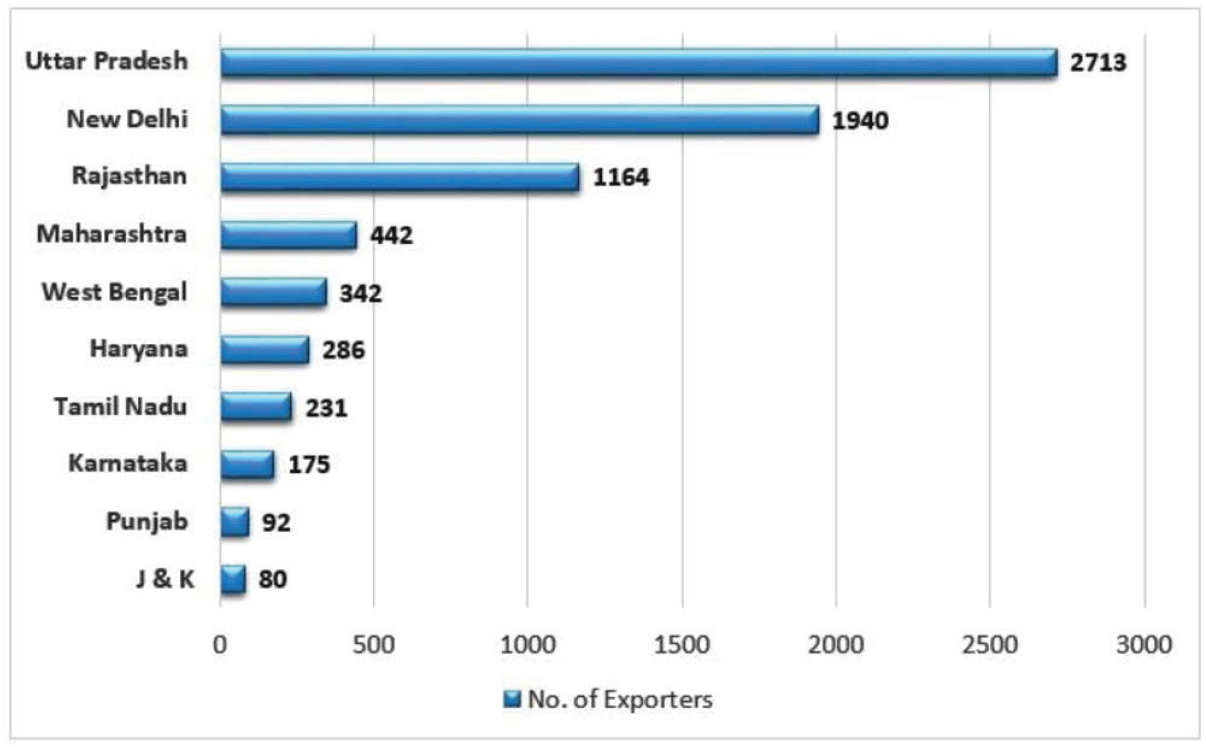
To keep competitive pace with the changing scenario in the global market demand, there is a need to explore the market through better policy measures to compete in the international markets as well as sustain the livelihood of over 7 million craftsmen and more than 67,000 exporters and export houses promoting craftsmanship for both domestic and global markets (IBEF, 2016). Keeping this in mind and in response to the demand from developed markets, the government has initiated an export drive to give dual advantages of foreign exchange earnings and employment generation, which many from developing countries are also tempted, particularly South and Southeast Asian nations, to export their products in the global markets. The sector has great potential not only for sustaining millions of craftsmen and artisans but also in helping the country’s economy.
However, after the global economic crisis, which originated in the USA in the summer of 2007, markets like the USA and Europe witnessed a devastating effect, leading to bankruptcies and credit crisis. This has led to a major global recession in terms of export collapse, reversal of capital flows and weakening market confidence, especially among developing countries (Roy & Chatterjee, 2013). Moreover, Asia's trade pattern and production structure build to export goods to advanced countries have also been affected severely. Even though the magnitude of impact on the Indian economy was slow, it was intransigent in weakening the country’s trade by decelerating export growth rate. In the aftermath, several principal commodities (including handicrafts products) exported from India were affected due to sluggishness in demand, especially in the US and European markets.
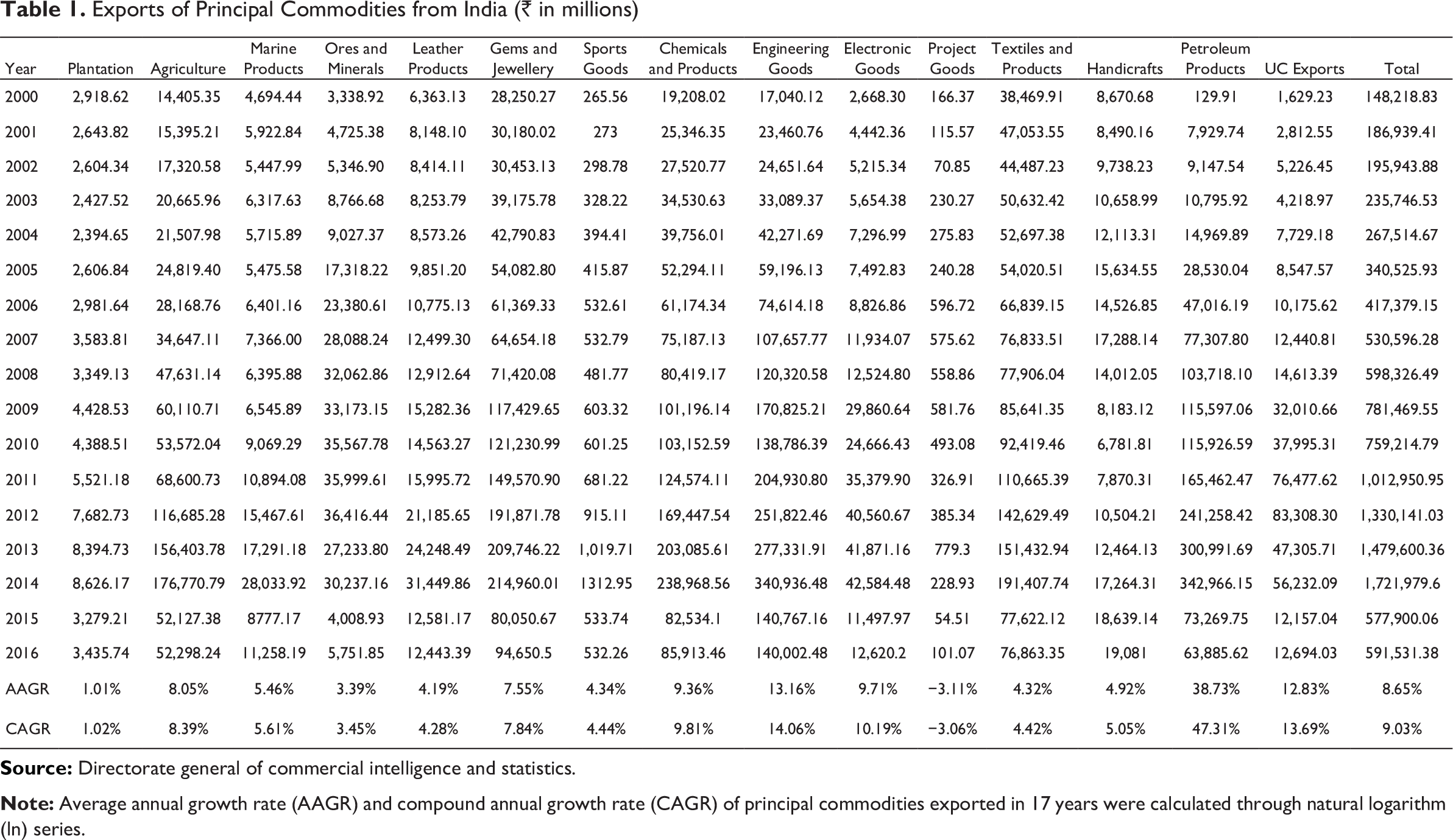
This study tries to examine the trade patterns of principal commodities exported from India (see Table 1) with special focus on handicrafts exports before and after the era of global financial crisis. In order to estimate structural changes, a breakpoint was set to analyse changes in demand and exports during pre- and post-crisis. The second section presents existing literature review pertaining to the context. The third section discusses objectives, and the fourth section illustrates the rationale of the study. The fifth section discusses the theoretical framework of the study. The sixth section reflects on the data and methodology. The seventh section focuses on the analysis and discussion. The eight section discusses challenges, government support schemes and future prospects. The ninth section concludes the article. The tenth section highlights the policy recommendations, while the eleventh section discusses the limitation and future research.
Review of Literature
Global Trade Pattern and Financial Crisis
Since the past few decades, countries have witnessed significant changes to international trade by reducing trade barriers, leading to increased return to scale (Bastos & Cabral, 2007). This has enabled firms to seek better opportunities by shifting focus from domestic to global markets. However, time and again financial crunches has brought great hindrances to industries worldwide from smooth exchanges of goods and services. Studies conducted by Banik and Yoonus (2012) and Boz (2014) stated that global economic recession has adversely affected countries’ macroeconomic variables, causing trade decline globally.
The 2007–2009 global financial crisis is an example that led to the collapse of export markets, especially among developing countries (Roy & Chatterjee, 2013). The decline in trade has been reported (Hoekman, 2015) worldwide, resulting in a sharp drop in the global demand. During this period, global trade was estimated to have dropped over 15 per cent (Freund, 2009), leading to a difficult recovery even after the crisis. The growth of global trade continued to slow down (Constantinescu et al., 2015) in a way well below the pre-crisis average of 7 per cent (1987–2007). The most notable include diminished incentives to expand trade, changes of global demand and increased protectionism (Francis & Morel, 2015). However, middle-income countries were affected the most in comparison to high-income countries. South Asia witnessed ‘Great Trade Collapse’ (Broll & Jauer, 2014) and East Asia recorded the largest elasticity in demand, affecting trade linkages in the region. Hence, many nations witnessed adverse shock, causing systematic banking crises despite significant policy interventions (Laeven & Valencia, 2010).
Export Patterns of Indian Handicrafts
Prior to independence, India’s exports comprised mostly of raw materials and plantation crops (Bhat, 2011). But the system has undergone a sea change in terms of composition of commodities since independence, transforming itself from predominant exporters of primary goods to non-primary items. Handicrafts products were one of the fastest growing commodities since the 1970s (Nayyar, 1976) that rose from ₹276 million in 1965–1966 to ₹803 million in 1974–1975. Nearly 75 per cent of these handicrafts were sold to America and Western Europe during this period. Since then, there has been a gradual change in the economic indicators, but exports have continued to play a significant role, covering a wide range of both traditional and non-traditional products (Bhat, 2011). Hence, India did not see much structural changes in exports during the pre-reform period.
However, in the post-reform period, trade liberalization and economy have not succeeded in bringing far-reaching changes in the commodity structure of India’s foreign trade (Lall, 1999). Import rate grew faster than export, leading to trade deficits (Bhat, 2011), although the share of India’s manufactured items (including handmade jewellery) in total exports were more than 70 per cent since 1990–1991 (Akrani, 2011). These exports were highly concentrated to Organization for Economic Cooperation and Development (OECD) countries until the government implemented ‘Look East Policy’, in which Asia’s share in total export has increased substantially up to 55 per cent. India’s global trade potential for all exports were maximum in the Asia-Pacific region followed by the USA and Europe (Batra, 2004), though the USA still holds the largest market for Indian handicrafts products.
Fast forward, the global recession shrunk the global demand, interrupting both the process of economic growth and planning (Agarwal & Ghosh, 2015). Among others, the handicrafts sector was affected critically with a decrease of 22 per cent trade with the USA alone, contracting an overall 10 per cent globally (Khan, 2016). This impact was felt by almost all Indian handicrafts exporters, leading to a closure of several small industries. Since a large segment of this sector is export oriented, the growth fell by 54.62 per cent between April 2008 and February 2009 as compared to the same period of previous financial year. However, the sector continued to revive in slow pace with the intervention of government schemes. The export figure now stands at ₹265.90 billion for 2018–2019, an increase of 15.46 per cent from the previous fiscal year (Export Promotion Council for Handicrafts [EPCH], 2019).
While considerable studies on trade patterns and structural breaks are available, literature that focuses on principal commodities exported from India during and after the global financial crisis is very scarce. Most studies related to export patterns of India were focused on issues of growth rate rather than analysing the structural changes. Hence, this study is an attempt to address this gap and contribute towards developing further knowledge in this field.
Objective
There are 15 major commodities 1 exported from India to the global market, which contribute massively towards the country’s economy since the 1960s. However, after the global economic downturn, certain principal commodities exported from India witnessed steep decline in demand in the global market. Handicrafts products were one among those commodities that showed insignificant growth rate due to market sluggishness in the USA and Europe. The main question examined in this study is the kind of break that took place in the national exports after the financial recession. Therefore, the objective is to examine structural break and the impact of global financial crisis on Indian handicrafts exports.
Rationale of the Study
Exports constantly play an important role in contributing to a nation’s economic prosperity. It can directly or indirectly increase domestic production, maintain healthy economic growth as well as reduce the burden of unemployment rate. Exports also generate foreign exchange earnings to meet the import costs. However, the global economic crisis has led to financial imbalance, affecting major export commodities from developing countries. Though the magnitude of impact on Indian economy was slow during the recession, it, indeed, weakened India’s global trade, especially the handicrafts sector (see Figure 1), which gradually decelerated export growth. Several principal commodities exported from India were affected during this period and the handicrafts sector was one of them.
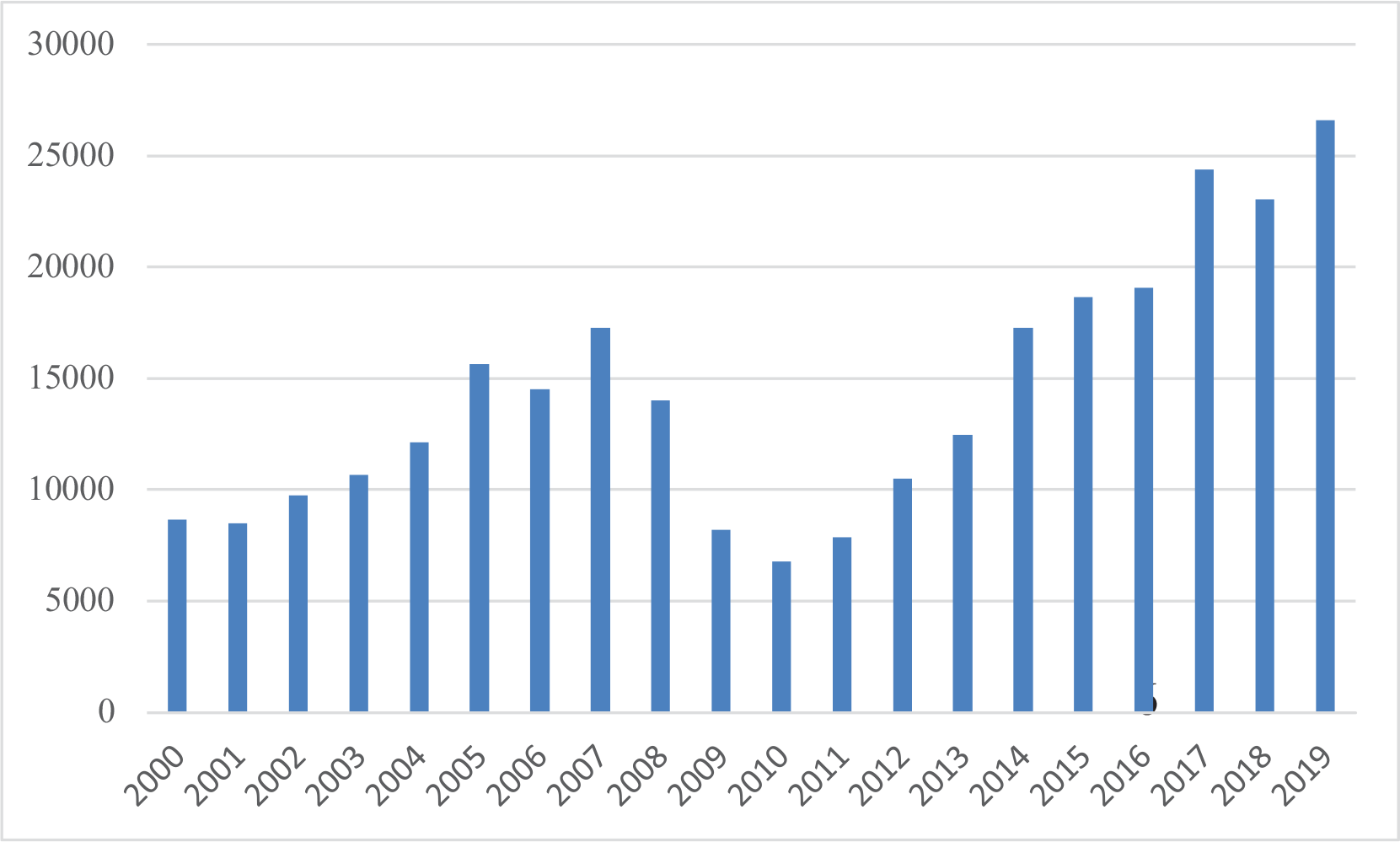
Since then, to keep pace with the changing global trade scenario and to meet the continuous demand of the export market, the Government of India has been intervening with different policy measures and schemes to exporters to match rival competitors in the global platform. Meanwhile, e-commerce portals are playing a major role as the best medium to tap the consumers. Several handicrafts exporters have collaborated with e-commerce companies like Flipkart and Snapdeal to market their products in domestic platform (Press Trust of India [PTI], 2015). Entrepreneurs are also tied up with stores like Westside and Big Bazaar to focus on local markets. Besides this, inspired by Prime Minister Narendra Modi’s ‘Make in India’ campaign, there are several online platforms, such as iShippo.com, Engrave.in, Fabfurnish.com, Craftsvilla.com, Handicraftshop.in and Shop.gaatha.com to name a few that promote handcrafted ‘Make in India’ products and cultural heritage by creating a sustainable way of doing business.
However, trade liberalization has not brought much changes to the country’s economic structure, followed by global economic recession, which collapsed export markets. Hence, a study on examining the impact of the global economic crises on trade elasticity of handicrafts products at the global market scenario is inevitably important from the Indian setting. Furthermore, due to its insignificant growth shown post-financial crises, it is important to examine the structural changes to facilitate the exporters with some insight knowledge on growth structure.
Theoretical Framework
Keynesian economic theory (Keynes, 1936) states that economic recession is strongly influenced by aggregate demand. His theory argues that the level of economic activity of a country is highly dependent on aggregate demand, and that if demand slows down, it results in recession and high unemployment. Sugarda and Tambunan (2009) further suggested that if an economic crisis originates from outside, other than home country, the crisis will mainly affect the host country through trade and investment channels. Thus, the recession will lead to decline in per capita income of home country, which will ultimately reduce demand for goods exported from host country and the rest. This phenomenon thus leads to structural breaks in global trade pattern.
Moreover, theoretical interest on estimating structural breaks has a years of experience from previous studies. Structural breaks can be estimated through (a) regression models or (b) Chow test (Antonov, 2019). On the basis of a review and synthesis of prior research, this study uses Chow test, an econometric test proposed by Chow (1960), to assess structural break. However, this test is not suitable if the timing of the break is unknown (Caceres et al., 2010). When the break date is unknown a priori, the problem becomes complicated such that the chi-square critical value that seeks the break date develops nuisance parameter (Riddell, 1978) or values used in the standard Chow test become inappropriate. The fact to consider a known break date implies two choices: (a) to pick an arbitrary break date or (b) to pick a break date based on some known feature of date series (Jouini & Boutahar, 2004). In this study, break date has been determined based on exogenous occurrence like when the global financial crisis was at its peak (Gironés et al., 2013; Muthuramu & Maheswari, 2019).
Hence, the result of effects on handicrafts exports is highly dependent on how the global financial crisis affects individual firms in the industry. If an enterprise manages to cope with the major challenges, there is less chances of industry being affected by the crisis (Sugarda & Tambunan, 2009). Otherwise, firms will be affected by changes in economic condition, either through changes in demand or supply or both.
Data and Methodology
Date Source
The study covers period from 2000 to 2019. To measure structural changes on exports of handicrafts, data pertaining to principal commodities exported from India were collected from Directorate General of Commercial Intelligence and Statistics (DGCIS) and Export Promotion Council for Handicrafts. Annual trade data of exports of principal commodities in ₹ millions were collected. The selection of the starting year 2000 indicates period of handicrafts industry’s market performance at the global platform prior to the global financial crisis.
Estimating Structural Break in Chow Test
The Chow test has been used by many researchers on different phenomenon to estimate structural break in a time series data. Jouini and Boutahar (2004) analysed structural change of US time series and obtained significant results since the breaks coincide with the important economic events. Li (2012) identified changes in New Zealand’s housing prices, indicating a break during the first quarter of 2008 global financial crisis. Ndirangul et al. (2014) determined the timing of structural changes on Kenya’s macroeconomic variables and identified that the break coincides with economic and political shocks. Sadat and Akhter (2014) conducted the Chow test to see structural break on agricultural production of Bangladesh and indicate a break on multiple crops. Luitel and Mahar (2015) provided evidence of structural break in the US GDP data, which were reported from two different sources of data reporting system. Structural break time on Ethiopian GDP was also conducted by Allaro (2018) using time series data, suggesting a shift in the country’s economy in 2003. Ogbonnaya and Otta (2018) also investigated structural breaks in Nigeria’s macroeconomic data and the results exhibited breaks in interest rate, inflation and exchange rates over the period of study.
Method
This study used annual time series data of all principal commodities. Prior to structural break testing, the parameters for econometric model were estimated through the ordinary least squares (OLS) method. OLS linear regression was used to examine the significance of growth rate among principal commodities. Chow breakpoint test was employed to determine structural changes (if any) on exports of handicrafts products during the global financial recession. The year 2008 was selected as the break-up year for conducting the Chow test because of the global financial crisis at its peak. Hence, trade from 2000 to 2008 is categorized as the first group (before break) and trade from 2009 to 2019 is categorized as the second group (after break).
Ordinary Least Squares Linear Regression

Exports of Principal Commodities from India (₹ in millions)
Chow Test
In this case, major principal commodity, handicrafts exports was tested separately in an attempt to determine structural changes in the level of series.

Analysis and Discussion
OLS regression result (see Table 2) of all principal commodities exported indicates that commodities such as ores and minerals (0.088), engineering goods (0.545), projects goods (0.484) and handicrafts products (0.055) show insignificant growth over the years with a sluggish demand in the global market primarily due to the economic crisis.
OLS Linear Regression Result of Principal Commodities Exported from India

Diagnostic Test for Commodity: Handicrafts Products
Autocorrelation
Since the first-order Durbin–Watson test detected high autocorrelation at 0.427, further testing through serial correlation Lagrange multiplier (LM) test (at lags 2) was checked to see any autocorrelation. Serial correlation LM test result showed the chi-square value of 0.001, indicating autocorrelation in the model. To remove the presence of autocorrelation in the model, a modification was done in the data set by including one-period lag of dependent variable as independent variable with the equation L growth = growth (−1). The results showed chi-square value of 0.182 (see Table 3), which is above 5 per cent and Durbin–Watson test value at 2.114 (see Table 4) that is within the acceptable range of 1.5 and 2.5 (Behrouz, 2016). Hence, the alternative hypothesis cannot be accepted, and it can be concluded that there is no autocorrelation in the model.
Heteroscedasticity
Serial Correlation LM Test

Autocorrelation Test

Heteroscedasticity Test

Normality
To check whether residuals are normally distributed or not, normality test was conducted. Since the probability value was 0.455, which was greater than 5 per cent, the result indicated that residuals are normally distributed in the model.
Chow Test Result
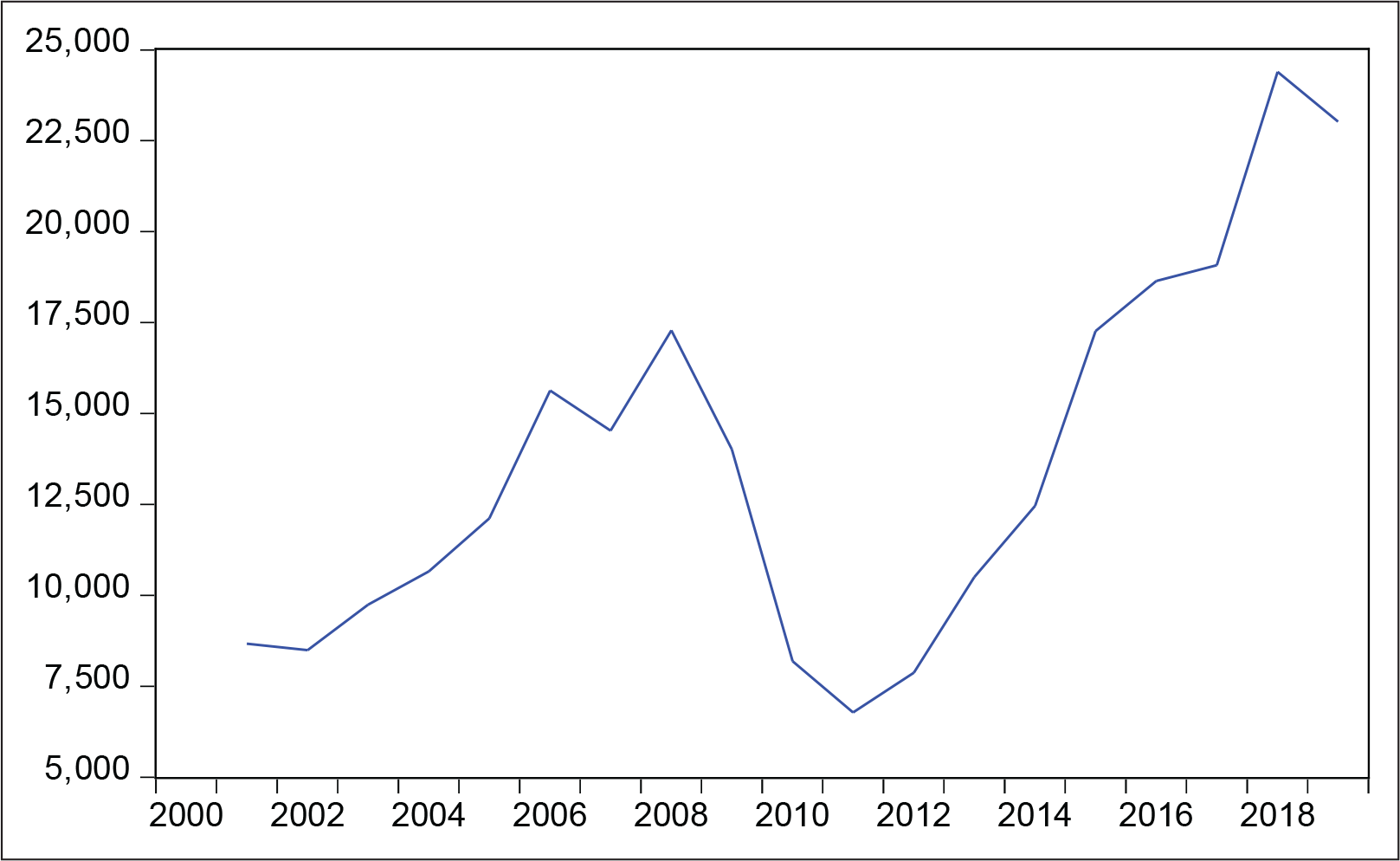
From Figure 2, it is understood that handicrafts exports saw a sudden drop in demand after 2008, followed by sharp decline for three consecutive years till 2011.
Chow Test Result of Handicrafts Exports
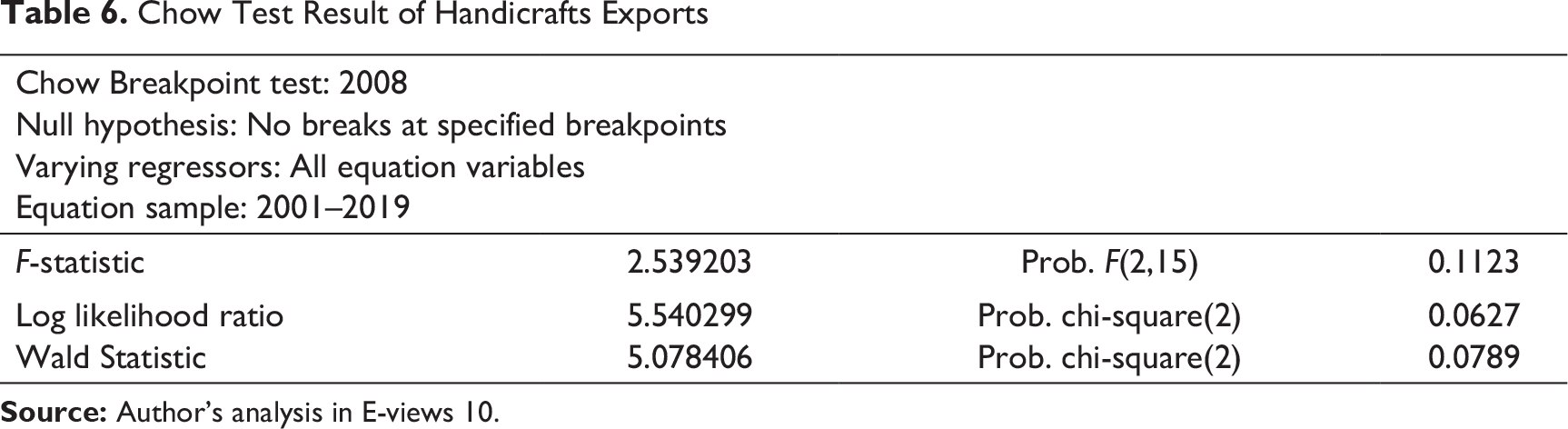
Chow test result (see Table 6) of handicrafts exports shows F-statistic value of 2.539, indicating no break in demand. Log likelihood ratio of 5.54 indicates goodness of fit of two competing statistical models. Wald statistic of 5.07 indicates that explanatory variables are significant in the model. Since the probability value at two degrees of freedom is 0.112, which is greater than 5 per cent, the alternative hypothesis cannot be accepted, and it can be concluded that there were no structural breaks at any specified breakpoint after the global economic crisis.
Growth Rate of Indian Handicrafts Exports
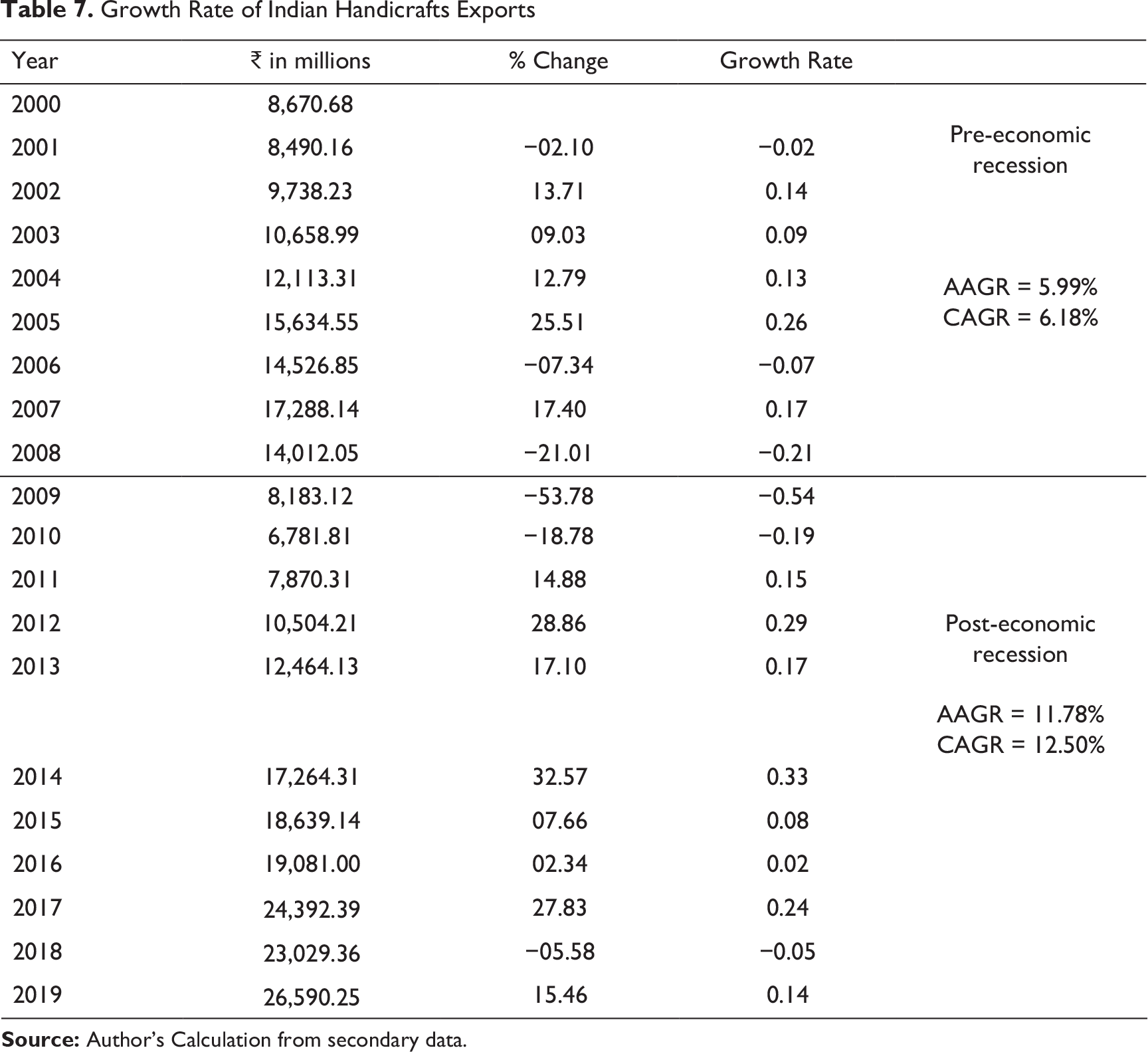
Through Table 7, it is understood that due to the global economic crisis in 2007–2008, there has been an adverse impact in demand of handicrafts products. The export growth dropped to huge negative for three consecutive years from 2008 to 2010. However, the sector has recovered in the subsequent years by picking up promising development from 2011 onwards, surpassing the highest annual growth recorded before the recession. The average annual growth rate (AAGR) before and after the recession is 5.99 per cent and 11.78 per cent, respectively, while compound annual growth rate (CAGR) before and after the recession is 6.18 per cent and 12.50 per cent, respectively. In brief, the rate at which the market has grown post-recession is relatively better compared to that in the pre-recession period. This indicates a good market prospect for Indian handicrafts products at the global platform.
Key Export Market Destinations
Emerging Global Markets for Indian Handicrafts by Region wise
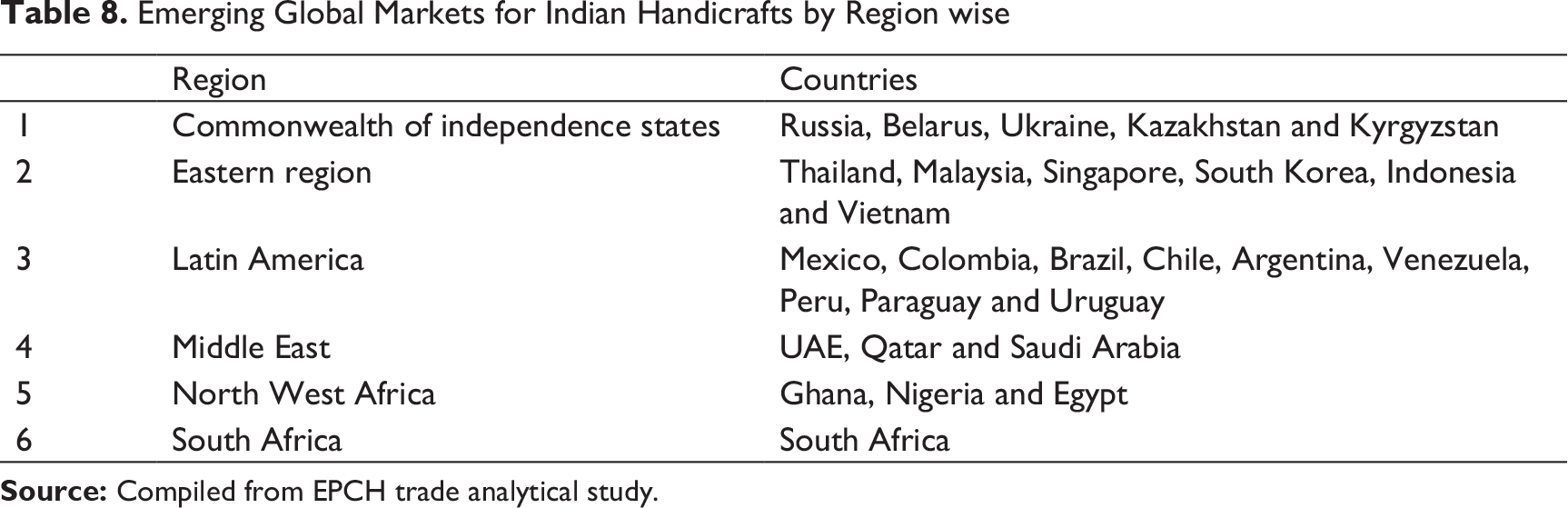
Lately, emerging markets have played a key role in contributing towards the growth of handicrafts exports. According to Trade Analytical Study, the current value of exports of handicrafts to the Middle Eastern region stands at US$487.6 million, exhibiting a CAGR of 25 per cent from 2010 to 2015. UAE is the leading importer from the Middle East, accounting nearly 79 per cent of the total imports. Exports to East Asian nations is in the range of US$74.55 million, with Malaysia being the leading importer standing at 77 per cent. Exports to LAC also stands at US$64.7 million, exhibiting a CAGR of 7 per cent, while Brazil (37%) being the leading importer, followed by Chile (17%) and Mexico (14%). The export to CIS region stands at US$34.3 million, exhibiting a CAGR of 21 per cent over the same period with Kazakhstan and Russia being the leading importers, accounting for 93 per cent of total imports to the CIS region. Nevertheless, total exports to the African region stands at US$97.97 million, exhibiting a CAGR of 9 per cent with Nigeria as the largest importer, accounting nearly 50 per cent from India alone (Market Insight Consultants, 2016).
Challenges, Government Support Schemes and Future Prospects
There are several challenges and complications faced by the exporters in this sector. Some of the major challenges are product standardization and marking–labelling–packaging (MLP). Many countries are adherent to the WTO ‘Standards Code’ and MLP in accordance to the international guidelines and certification (Dun & Bradstreet, 2005). Moreover, country like US restrict foreign exporters from exhibiting their work unless they utilize the services of American citizen in handling centralized process of sales order and hence, failure for non-compliance attract heavy penalties. Other issues associated with handicrafts exports are limited opportunity in finance, technological setback for production and quality issues (Dey, 2018; Jamir, 2014). This sector has also been facing challenges due to the motivated propaganda regarding involvement of child labour and various other labour problems, which affect marketing and exports of handicrafts within India and abroad. In the greater interest of the industry, there is a need to eradicate these problems and challenges by taking up certain measures in providing awareness, information and education to the importers and implementing other welfare measures related to the issue (Jamir, 2014). The sector also suffers from insufficient market network and distribution channels. These problems can be overcome by setting up of showrooms, warehouses and direct marketing and trade promotion methods (Frost & Sullivan, 2005).
However, this sector has shown a remarkable progress in terms of employment generation and economic growth. Thus, compelling the government to sensibly focus on several schemes to ensure continuous development of the handicrafts industry. During 2012–2013, six generic central sector schemes 2 were implemented under the National Handicrafts Development Programme (Press Information Bureau [PIB], 2013) for holistic growth and development of the handicrafts sector in the country. Several measures in its foreign trade policy (Director General of Foreign Trade [DGFT], 2009) have been undertaken with an objective to double its share in the global market trade by 2020. To meet this, a mix of policy measures are being followed since 2009 such as fiscal incentives, institutional changes, procedural rationalization, enhanced market access across the world and export market diversification. Furthermore, to provide confidence to exporters even during the period of stress to maintain their market presence, the government is providing a special thrust to employment-intensive sectors, especially in the field of handicrafts, leather and textiles. Recent developments saw the incentive rates increase from 5 per cent to 7 per cent for handicrafts items under Merchandise Export from India Scheme, which is aimed at facilitating exporters to recover from input cost to lead competitive pricing (IBEF, 2019).
Hence, there lies a vast prospect in this sector if the government continuously re-visits its role and improve the schemes. In the recent Foreign Trade Policy 2015–2020, the government has also added several measures to nudge and procure capital goods from indigenous manufacturers under the Export Promotion Capital Goods (EPCH) scheme by reducing specific export obligation to 75 per cent of the normal export obligation. This initiative will promote the domestic capital goods manufacturing industry to develop their production capacity for both domestic and global consumption. The benefits to exporters from Special Economic Zones (SEZs) are also being extended to boost their exports since inevitable challenges continue to exist despite witnessing phenomenal growth (DGFT, 2015). Moreover, Directorate General of Foreign Trade (DGFT) is also mentoring new and potential exporters through ‘Niryat Bandhu Scheme’ to stimulate and achieve the objectives of ‘Skill India’.
Conclusion and Looking Forward
This article is an attempt to examine the impact of global financial crisis on the export of handicrafts products from India for the period 2000–2019 and to see any structural changes using break-point analysis. The OLS regression results indicated that commodities such as ores and minerals, engineering goods, project goods and handicrafts products showed insignificant growth rate. Further examination with the Chow test confirmed that there were no structural breaks at any specified breakpoint on handicrafts exports after the global economic crisis. The global financial crises of 2007–2008 has, indeed, affected India’s handicrafts exports in terms of demand from overseas market; however, the impact was limited due to the robust government policy measures.
This experience suggests that exports will continue to play a significant role in the Indian economy, and export dependence may not have a major negative impact on growth during the global economic slowdown. The article thus concludes that during the economic crisis, unusual structural changes may worry a lot of industries, showing a decline in the economy, but the handicrafts sector was quick to show positive development, registering an AAGR of more than 12 per cent annually post crisis, surpassing the previous rate of 6 per cent before recession (see Table 7).
Though India’s economic growth in recent years is highly dominated by the capital-intensive sectors (Papola, 2012) with more efficient use of technology, an export-led growth is highly unlikely to improve the employment intensity. Hence, the labour-intensive sector like handicrafts and textile can ensure a high rate of employment growth by emphasizing greater domestic orientation of production because global market potential for Indian handicrafts products is very high. Nonetheless, exporters in this sector are likely to be benefited from the Chinese government’s decision to focus more on the capital-intensive sector rather than on the labour-intensive sector (PTI, 2013b). This creates an opportunity for the Indian exporters to increase their global market share.
Moreover, East and Southeast Asian region and Latin American countries are new markets where the products are gaining popularity since the past few years (PTI, 2013a). The Government of India has also considered strategic significance (DGFT, 2015) for small- and medium-scale enterprise for employment generation and manufacturing sector by identifying ‘MSME clusters’ based on the export potential of a product and density of industries for focused interventions to boost exports, which will specifically help in increasing exports from the MSME sectors.
Considering all these factors, India is tipped as one of the fastest growing e-commerce markets after China in the Asia-Pacific region, and this provides an additional platform and opportunities for the entrepreneurs when the global economic situation is not in a favourable state. The major handicrafts products that can be sold in this platform are home textiles, bamboo goods, houseware, fashion jewellery, lamp and lighting, etc. Hence, the sector’s market share in the country is estimated at around US$5 billion annually with an increase in exports by 6.44 per cent during the period 2018–2019. Often considered as cottage industry, this sector has outgrown its image and reputation both at the domestic and at the international level. The picture which this industry presents today is far different from what it used to be over few decades ago.
Suggestions and Policy Recommendations
To ensure sufficient returns, the government should emphasize on quality control and efficient marketing mechanisms in the long run, since the scope for development of micro and small enterprises is bounded by several constraints such as low capital formation, lack of technical skills and professional manpower, deficiencies of technical education and training facilities and geographical isolation with limited market (Jamir & Sridharan, 2014). The cost of credit has also become a big worry for entrepreneurs; hence, the government should increase the interest subvention rate up from 2 per cent to 5 per cent while extending the scheme to at least 5 years. Meanwhile, entrepreneurs should continue to participate in workshops and training programmes to tap the opportunities quickly when they are made available.
Despite uncertainty in the European market, at times, due to the decline in intra-trade and sluggish demand, the sector has the potential of increasing its growth at least by 20 per cent annually if the government comes up with effective and supportive policy measures, while reconstructing the Foreign Trade Policy. The government needs to take several steps to boost the growth of the sector both domestically and globally by meeting the expectation of the exporters and apex body like EPCH. This can be achieved by imparting skill development programmes, enhancing quality and the standards of products and including more overseas markets since the USA and Europe together account for more than 60 per cent of the country’s total handicrafts exports.
It is also advocated that the government should expand the list of inputs covered in the duty-free import certificate by revising the list from time to time, which allows the entrepreneurs to import certain inputs on duty free. This can be achieved by establishing a steering committee that would re-look at the policy and revise accordingly as per the market situation and demand of the products. Craft education should also be promoted by introducing them at the undergraduate and postgraduate programme level through a formal recognition. The division of khadi, handicrafts, handloom, etc., should be brought under one common compartment sector by focusing principally on a unified ‘Handmade in India’. Recognition of women workers as contributors should be highlighted owing to their capacity and capabilities as well as strengthening social welfare schemes.
Limitation and Future Research
This study covers only the period from 2000–2019. Further, an extended study on this sector is advisable since global value chains have been adversely affected due to the Novel Coronavirus Disease 2019, also known as COVID-19 outbreak, leading to restriction of business and trade.
Footnotes
Acknowledgement
The author is grateful to the anonymous referees of this article for their extremely useful suggestions to improve the quality of the article. Usual disclaimers apply.
Declaration of Conflicting Interests
The authors declared no potential conflicts of interest with respect to the research, authorship and/or publication of this article.
Funding
The authors received no financial support for the research, authorship and/or publication of this article.