



Abstract
The current study explores boundary conditions and underlying mechanisms through which commitment and transformational leadership (TFL) affects customer service representatives (CSRs) performance in the telecom sector. Additionally, it investigates how and why the engagement of employees mediates the relationship of commitment and leadership with the productivity of employees. Data collected from the CSRs of telecom companies were analyzed through SmartPLS. The results revealed a positive relationship between leadership style, organizational commitment, and employees performance. This research also found the complementary mediation of employee engagement. Therefore, this research provides evidence regarding effective management style and the requirement of a conducive work environment that nurtures engagement and commitment within CSRs. Furthermore, it stresses the need for a psychological bond between leaders and employees, which fosters productivity with the help of engagement. Organizational efforts directed to enhance performance would be fruitful in a culture that promotes TFL style, commitment, and engagement of employees as performance is largely dependent on these attributes.
Introduction
Globalization, increasing competition, and the use of updated technology by competitors are incessantly promoting the need for higher performance, especially in the service sector. Frontline employees’ performance is considered crucial because of their direct interaction with customers (Eliyana et al., 2019). Therefore, scholars are actively engaged and interested to unearth predictors of employees’ performance (Arar & Abu Nasra, 2019). Customer service representatives (CSRs) are constantly engaged with customers as they are contacted by customers whenever there is some problem or need for information. CSRs are like the faces of telecom companies, and the company’s image largely depends on them. Moreover, their performance is vital for the success of the organization. Call center workers perform in a noisy environment and under tremendous stress (Mustosmäki et al., 2013). They are required to process complex information promptly (Brown & Maxwell, 2002). CSRs experience difficulty in pleasing their customers and at the same time achieving the organizational goals (D’Cruz & Noronha, 2012). Therefore, this stressful working environment promotes negative attitudes among the employees which may become the reason for declining performance (Shemueli et al., 2020). Many researchers have focused their attention on detecting precursors of negative outcomes such as turnover intention, absenteeism, and bad performance. However, few studies have identified the antecedents which may lead towards high commitment and improved performance among CSRs (Mustosmäki et al., 2013).
Effective leadership style along with employees’ emotional attachment to the firm can serve as a performance booster. Kim et al. (2013) argued that good supervisory support is essential for better performance. The success of the service industry (e.g., the telecom sector, hospitality industry) largely depends on the performance of managers (Terglav et al., 2016), as they influence the way employees to interact with customers (Wallace et al., 2013). However, the correct blend of leadership styles and behaviours required to achieve positive performance from employees has not been analyzed in contemporary literature (Lee & Ding, 2020).
Transformational leadership (TFL), defined by (Pieters et al., 2009), is a ‘style of leadership that transforms followers to rise above their self-interest by altering their morale, ideals, interests, and values, motivating them to perform better than initially expected’ (p. 610). A Leader’s role is considerably enhanced for the accomplishment of organizational success (Gökhan & Cemil, 2019). Currently, TFL is one of the major extensively accepted leadership literature paradigms (Judge & Piccolo, 2004). Besides, employees’ commitment to organizations serves as a contributing factor towards improved performance. Employers are more concerned about having a committed workforce. A committed staff consistently outperform and plays a significant role in organizational growth (Kristina & Thomas, 2014).
Previous research (Al-Amin, 2017; Eliyana et al., 2019; Judge & Piccolo, 2004) reported a positive relationship between performance and TFL. Future research is required, however, to understand boundary conditions and mechanisms under which TFL improves performance (Holten et al., 2018; Patiar & Wang, 2016). Similarly, we have responded to the call for research by Jiatong et al. (2022) as they have stressed checking the impact of affective commitment on job performance. Consequently, this study focuses on providing new insights regarding how and why TFL and affective commitment promotes the performance of frontline employees. For this purpose, the current study includes TFL, performance, affective commitment, and employee engagement (EE), especially in the context of the Pakistani telecom industry.
This study contributes to leadership literature in multiple ways. Firstly, this research combines leadership style along with affective commitment, which further enhances the understanding of both concepts. Secondly, there are minimal studies that applied this kind of model in the context of the Pakistani telecom industry. Therefore, it would provide new insights to HR practitioners which enables them to devise effective leadership training programs to enhance employees’ performance. Furthermore, this study responded to the call for research by Eva et al. (2019), who stressed the need to include multiple competing variables alongside leadership styles. This research will provide new insights to HR managers regarding effective leadership styles coupled with ways to make their employees more committed, engaged, and high performers. Lastly, the current study would answer the following research questions:
How does TFL affect employess’ performance through the EE?
How does affective commitment affect employees’ performance through the EE?
Literature Review
Social Exchange Theory
Drawing on social exchange theory (SET), this research explores how psychological bond mediates and reciprocate the relationship between employee and organization with the inclusion of EE as a mediator. This bonding can be a triggering factor in exhibiting positive behavioural outcomes. That sense of belongingness leads towards improved engagement with the organization. Recently, Chandni and Rahman (2020) reported that EE could influence customer engagement, which is best for service organizations to increase loyal customers. According to Schaufeli et al. (2002), EE is ‘a positive, fulfilling, work-related state of mind that is characterized by vigor, dedication, and absorption’ (p. 72). Scholars have identified EE as one of the main contributors to success, particularly in service organizations (Bakker & Demerouti, 2008; Buil et al., 2019; Nazir & Islam, 2017; Slåtten & Mehmetoglu, 2011). However, several researchers have recently identified the need to further explore EE across different service sectors (Buil et al., 2019; Karatepe & Olugbade, 2016; Lee & Ok, 2016). To respond to the research gap, this research tries to empirically validate the effect of EE on performance with the presence of TFL and affective commitment. Ition, current research further explores whether both affective commitment and TFL lead towards better employees performance through the enhancement of their engagement level.
Transformational Leadership and Employees’ Job Performance
Transformational leadership (TFL) leads towards increased job performance of employees (Longenecker, 2010). Al-Amin (2017) conducted a study on SMEs in Bangladesh and found that TFL creates a positive impact on employees’ job performance. There is ample evidence of positive relationships in different research conducted to explore the relationship between TFL and job performance. For example, Advani and Zuhair Abbas (2015) used a sample of 172 banking employees to check the effect of TFL and job performance. The study found that employees were extremely satisfied with the leadership style used by their supervisors and hence they performed exceptionally well. A study conducted by Naeem and Khanzada (2018) found that the employees’ performance was affected by the adopted style (i.e., transformational leadership) of their supervisors. TFL style makes the call center workers realize that their contribution is highly valued and it improves their performance at the workplace (Bartram & Casimir, 2007).
Holten et al. (2018) identified that the TFL style increases the job performance of workers. It was identified that the TFL promotes positive job characteristics through the support mechanism from the organizational leaders (Mishra & Upadhyay, 2022). However, no direct impact on job performance and TFL was found when the organizational commitment was used as an intervening variable (Eliyana et al., 2019). Piccolo and Colquitt (2006) argued that TFL increased the intrinsic motivation among employees, which produced positive work behaviour. The task performance of employees was predicted by TFL (Pan & Lin, 2015). In light of the above-mentioned arguments, we hypothesize,
Affective Commitment and Job Performance
Commitment generates positive thoughts among employees, which produces positive behavioural outcomes, including high performance (Kim et al., 2018). Employees’ Commitment contributes heavily towards organizational success as the employees work to achieve the organizational goals. Moreover, the commitment of employees produces the best results for organizations (Kristina & Thomas, 2014). According to Morrow (1993), commitment is a ‘multidimensional construct’; one of its effects is high-level performance (Xiu et al., 2019). Besides, one study conducted on employees working in sports centres found that affective commitment has a positive influence on job performance (Chiu et al., 2020).
Commitment among employees is regarded as a significant factor for organizational success (Wallace et al., 2013). Once it is created, this can become a competitive advantage for the firm. In a study, a significant positive correlation was established between the commitment and performance of workers (Hendri, 2019). Affective commitment promotes a sense of belongingness and attachment to the organization (Yousaf et al., 2015). Therefore, workers with a high-level affective commitment tend to outperform those who are less committed (Ribeiro et al., 2020). Delić et al. (2017) suggested that high affective organizational commitment produces a predisposition among employees to become better performers. Hence, we can hypothesize as follows.
Transformational Leadership and Employee Engagement
Kahn (1990) defined EE as ‘harnessing of organizational members’ selves to their work roles; in engagement, people employ and express themselves physically, cognitively, and emotionally during role performances’ (p. 695). Empirical research (e.g., Avolio et al., 2008; Gözükara & Şimşek, 2015) have shown a positive relationship between TFL and EE. Leaders using the transformational style usually give autonomy to employees in completing challenging tasks (Avolio et al., 2008). Idealized influence used by transformational leaders creates trust among employees. Bass (1974) argued that TFL develops loyalty with employees and is less concerned with their self-interest. Therefore, followers also reciprocate by working beyond expectations and producing favourable outcomes for an organization. TFL promotes EE through the use of charisma (Mozammel & Haan, 2016). When leaders show care and empathy towards their followers, it considerably enhances employees’ sense of engagement with the organization (Zhu et al., 2009). TFL through the use of individualized consideration behaviour gives rise to subordinates’ engagement at work (Saks, 2006). Based on the literature, this study hypothesizes as under:
Affective Commitment and Employee Engagement
Scholars have focused attention towards studying organizational commitment (Macedo et al., 2016; Steers, 1977). Buchanan (1974) defined commitment as a bond between an organization and employees. Three forms of organizational commitment are; affective, normative, and continuance commitment (Thomsen et al., 2016). In the present study, following the conceptualization of Mowday et al. (1979), only affective commitment is used as organizational commitment. Affective commitment is an employee’s identification and emotional attachment to the organization. Affective commitment is related to favourable behavioural outcomes such as high performance, engagement, and less turnover intention (Powell & Meyer, 2004). As compared to the other two forms of commitment, affective commitment directly influenced the performance of workers.
Drawing on the social exchange theory, when leaders fulfil their obligations, then employees reciprocate, which is based on mutual trust and commitment. Workers who are emotionally attached to an organization tend to outperform those who work only because of the contractual agreements (Lee et al., 2010; Malhotra et al., 2013). Committed employees are more inclined towards long-lasting relationships. Schaufeli and Bakker (2004) found that committed workers become more engaged at work. There are minimal studies related to employee engagement and organizational commitment, especially in the Pakistani telecom sector. The telecom sector has been experiencing massive turnover, and there is a requirement for committed and engaged staff. Furthermore, a positive relationship between affective commitment and engagement has been found in other sectors such as dentists (Hakanen et al., 2008) and nursing (Cho et al., 2006). Therefore, the following hypothesis is proposed.
Employee Engagement and Employees’ Job Performance
Ismail et al. (2019) conducted a study in Lebanon and found a positive relationship between job performance and EE. Byrne (2014) defined employee engagement as ‘when employees are in a state of engagement, they employ and combine varying levels of their emotional and cognitive selves as they transform their work tasks and specific activities into meaningful accomplishment’ (p. 17). Highly engaged workers tend to become passionate about their work, and this contributes towards a high level of performance. Stairs and Galpin (2009) found that a high level of EE produced a significant influence on job performance. Previous studies reported a positive association between performance and engagement. Bakker and Bal (2010) conducted a multi-level analysis on 54 Dutch teachers and concluded that their weekly job performance and weekly EE were positively related to each other. It was empirically established that EE promotes innovative work behaviours among employees with the help of leadership (Mansoor et al., 2021). There was a positive and significant effect of EE on performance in a study conducted by Anitha (2014). Therefore, the following hypothesis is proposed.
The Mediation Effect of EE between Transformational Leadership Style, Affective Commitment, and Job Performance
In academic literature, there is ample evidence available regarding the usage of EE as a mediator. Dastgeer and Waheed (2019) conducted a study on employees working in advertising agencies and found EE as a significant mediator between proactive personality and creativity. Similarly, Nazir and Islam (2017) reported mediation of EE in the relationship between perceived organizational support, affective commitment, and job performance. Buil et al. (2019) used a sample of 323 frontline hotel employees and tried to uncover the mediation effect of EE. The relationship between transformational leadership, organiz- ational citizenship behaviours, and job performance was mediated by EE. Transformational leaders exhibit indivi- dualized consideration by paying special attention to employees’ needs. Drawing on the social exchange theory, employees feel obligated towards their leaders and try to repay in terms of becoming more engaged workers. TFL and affective commitment influence EE, which is reported by many researchers. There is an integral relationship between TFL, affective commitment, and job performance. Hence, the current study proposes EE as a mediator between the previously mentioned relationship. Based on the above-presented arguments, the following hypotheses are proposed.
The conceptual model of the study is depicted in Figure 1. We used TFL style and affective commitment as independent variables; whereas, EE was proposed as a mediating variable. Moreover, the job performance of employees was the dependent variable.

Methodology
A convenient sampling technique was used due to the accessibility and proximity of participants. Besides, it is an inexpensive and easy-to-use method to collect data from employees (Torlak & Kuzey, 2019). Furthermore, the data were collected through questionnaires and a cross-sectional research design was applied. Participants were contacted by human resource managers of their companies. They were ensured that the data collected from them would only be used for academic purposes and that responses would be kept anonymous. Participation in this research was voluntary.
Sample and Data Collection
The population is a set of similar items which is of interest to any researcher for experimental purposes (Sekaran, 2000). A sample was taken from CSRs working in Pakistani cellular companies namely Telenor, Ufone, and Mobilink. In this study, we obtained data from the call receivers only. CSRs provided their perception regarding the leadership style used by their supervisors. The study has the main focus on the deterioration of the performance of front-line employees working in cellular firms in Pakistan. The problem associated with the employee’s performance can be addressed by using appropriate leadership styles and increased organizational commitment. That is why employees are the best source of finding information about the problems they are facing. Hence, the underlying problem can be examined by asking the individuals themselves.
300 questionnaires were distributed and 223 participants responded. 34 questionnaires contained inadequate information, hence these were excluded from the study. Responses from 189 CSRs working in call centers were included in the final analysis.
Research Measures
Scales used in this study are validated in terms of availability and extensive applicability in the literature. Four scales were adopted in this study, namely the TFL scale (Carless et al., 2000), the affective commitment scale (Meyer & Allen, 1997), and the job performance scale (Babin & Boles, 1998). EE was measured through Utrecht Work and Engagement Scale (Schaufeli et al., 2002).
The TFL scale was used in this study to assess employees’ perceived transformational leadership styles exhibited by leaders. It was measured on a 5-point scale: 5—‘Frequently, if not always’, 4—‘Fairly often’, 3—‘Some time’, 2—‘One in the while’, 1—‘Not at all’. The scale identifies and measures key aspects of TFL behaviour. The respondents were required to judge how frequently the behaviour described in the statement is exhibited. The scale used to measure affective commitment was developed by Meyer and Allen (1997). The scale comprised six items. The sample item is ‘I would be very happy to spend rest of my career with this organization’. There is a 5-point response dimension.
Job performance was measured by the scale developed by Babin and Boles (1998) having seven items on a 5-point Likert scale. It is the participants’ self-report scale. It was developed to measure employees performance in the service industry. Nine items (UWES-9) developed by Schaufeli et al. (2002) were used to assess EE. The sample item includes ‘My job inspires me’. It was divided into three sub-categories: absorption, vigour, and dedication. Respondents were asked to rate their responses on a 7-point scale, ranging from ‘never’ to ‘always’.
Common Method Variance
Since the data were collected from a single source, therefore, issues related to common method variance (CMV) must be effectively assessed. To control CMV, we applied both procedural and statistical measures. To start with procedural measures, questionnaires along with a formal cover letter were distributed, which explained the purpose of the study and ensured the confidentiality of responses provided by employees (Podsakoff et al., 2003). Furthermore, complicated syntax and double-barrelled questions were avoided. Vague and ambiguous items create problems in the comprehension stage of response (Tourangeau et al., 2000). Therefore, concise, specific, unambiguous, and simple questions were used to mitigate CMV (Podsakoff et al., 2011). Considering statistical measures, following Kock’s (2015) recommendations, a full collinearity test was implemented based on variance inflation factors (VIFs). According to this adopted procedure, the value of VIF must remain less than 3.3 (Kock, 2015). A value greater than 3.3 depicts collinearity, which shows the presence of CMV. Estimations of VIF showed a value range from 1.768 to 2.079, which suggested there is no pervasive issue of CMV in this research.
Data Analysis
The Partial least square (PLS) technique was used to test the hypothesized relationship due to its predictive nature (Hair et al., 2017; Sarstedt et al., 2014). Hypotheses testing was done through bootstrapping procedure of structural equation modelling (Chin, 1998). Moreover, Henseler et al. (2015) argued that it is less demanding when there is a smaller sample size. Smart PLS software version 3 was used for data analysis. As per the recommendations of Hair et al. (2017), we tested the measurement model before the structural model.
Results
Demographic Profile of the Sample
Table 1 showed that 69.8% of respondents were male and 30.2% of females were included in the sample.
Gender.
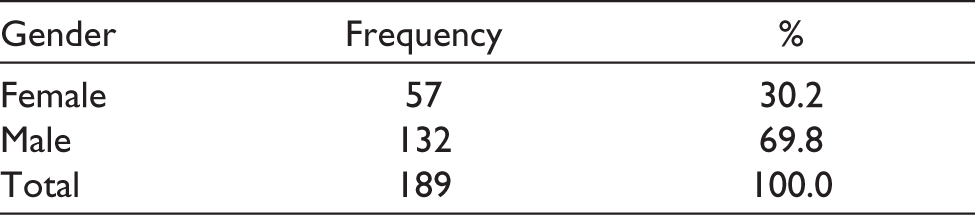
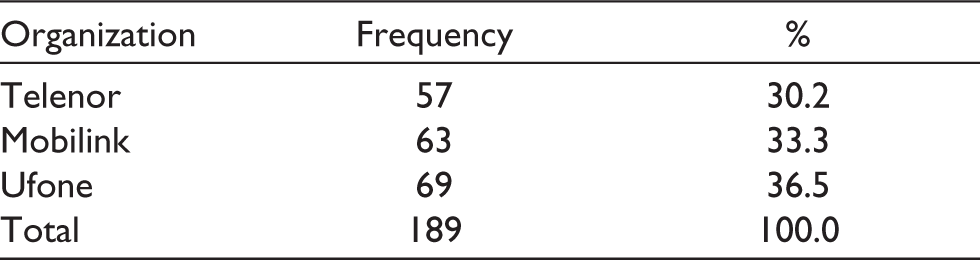
Table 2 presented the frequencies of respondents to their organizations. Three organizations were used in this research. The majority of respondents 69 were from Ufone, whereas, 63 and 57 respondents represented Mobilink and Telenor, respectively.
Organizational Frequency.
Measurement Model
Following Hair et al. (2017) suggestions, all variables used in this research have composite reliability with convergent and discriminant validity. Table 3 depicts that the values of Cronbach’s alpha are greater than 0.70, which is above the recommended value of Fornell and Larcker (1981). The values of composite reliability (CR) are between 0.7 to 0.9. Hair et al. (2019) mentioned that values between 0.7 to 0.9 are ‘good’. Convergent validity can be established through the values of Average variance extracted (AVE). Thus, AVE values are above the 0.5 threshold level set by Fornell and Larcker (1981) so, it establishes the convergent validity of the model.
Construct Reliability and Convergent Validity.
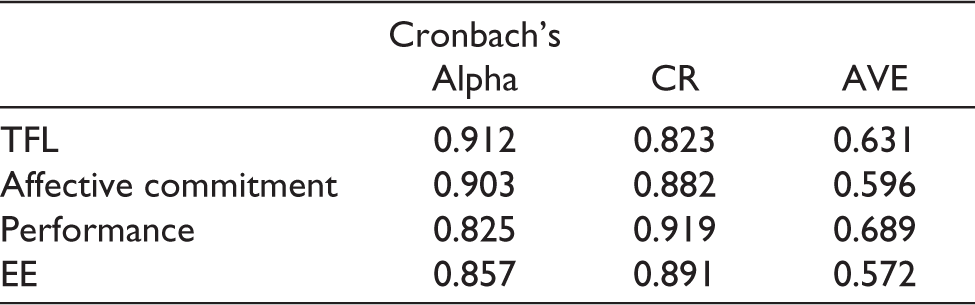
Table 4 depicts the value of the Heterotrait-Monotrait ratio of correlation (HTMT) ratio which is used to establish discriminant validity. Henseler et al. (2015) suggested that the value of the HTMT ratio must be below 0.85. Hence, the discriminant validity of the model is also established.
Heterotrait–Monotrait Ratio of Correlation (HTMT).
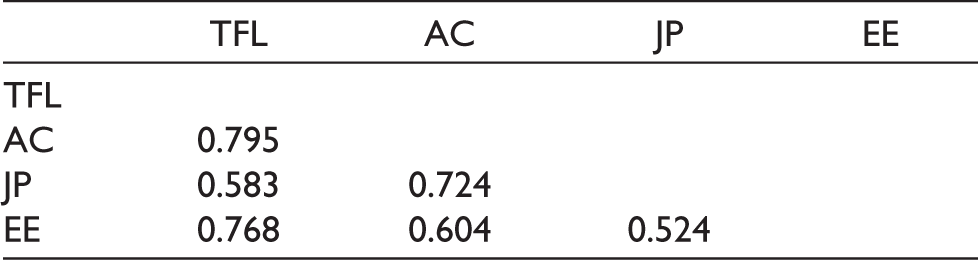
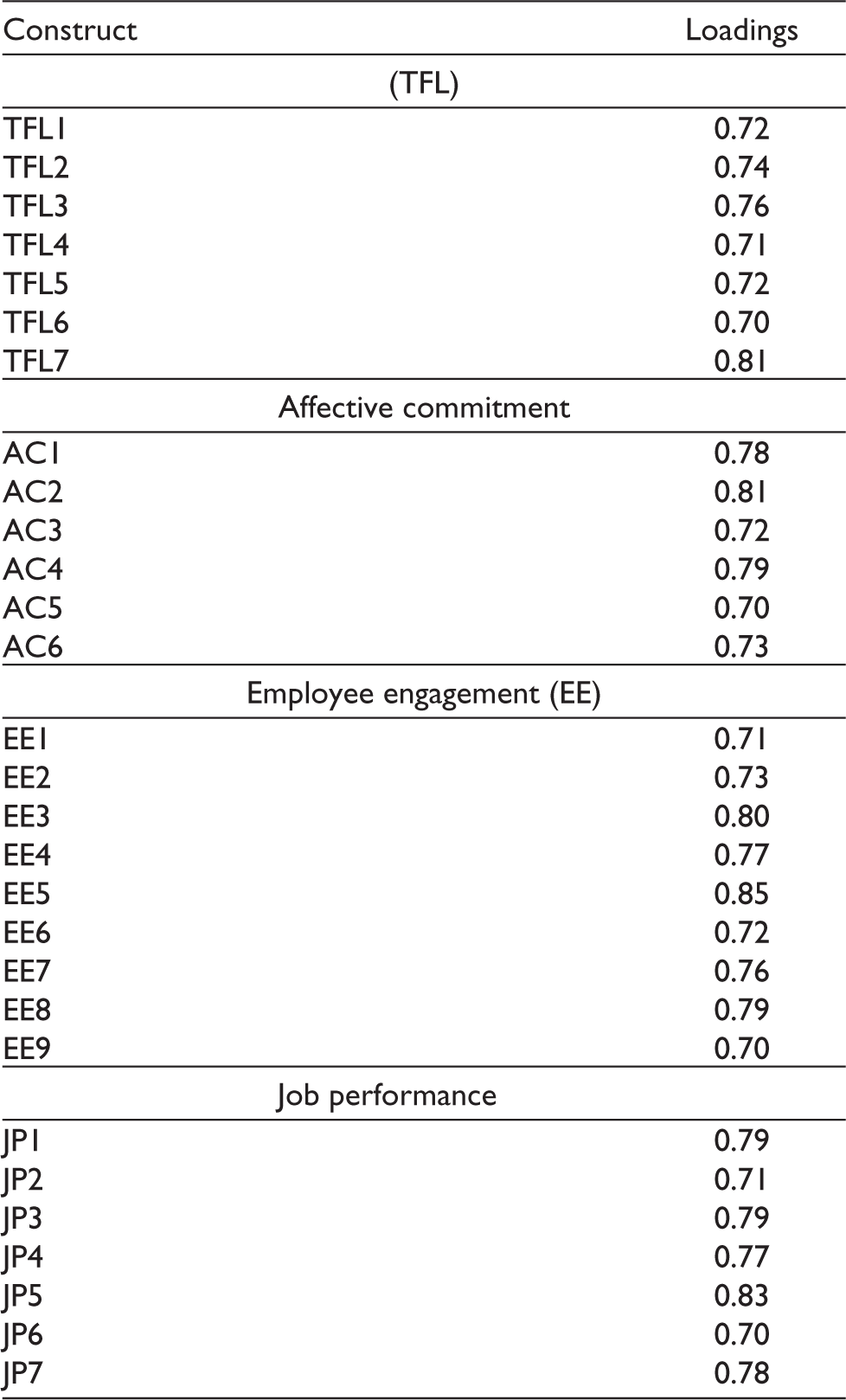
Table 5 depicted the values of factor loadings which are above 0.70. Therefore, it established both convergent validity and goodness of fit of our model.
Factor Loadings.
Testing of Hypotheses
A Test of hypotheses was conducted after establishing the reliability and validity of the measurement model. As it was mentioned before that VIF values range from 1.768 to 2.079 which are below the 3.3 threshold level suggested by Kock (2015). Hence, no collinearity issue was present. The next step was to assess the significance level of hypothesized relationship. For the intended purpose, a bootstr-apping technique was applied. From the table of path coefwficient (Table 6), it can be observed that both TFL and affective commitment are significantly positively associated with job performance, and hence it supported H1 and H2 of this study. TFL and affective commitment were also positively related to EE. Therefore, H3 and H4 of the study were also accepted. Furthermore, H5 postulated a positive relationship between EE and employees’ job performance and found support in the results.
Hypotheses Testing.

Mediation Effect
To ascertain whether EE mediates the relationship between TFL, affective commitment, and job performance, this research followed the steps recommended by Nitzl et al. (2016). Since the direct effects of TFL and affective commitment with dependent variable were positive and indirect effects of TFL and affective commitment with job performance through EE were also significantly positive. Therefore, according to Nitzl et al. (2016), the only condition which establishes the mediation effect is the significant relationship between indirect effects. As shown in Table 6, variables in indirect effects are significantly related to endogenous variables and in the same direction (i.e., positive). This result suggested that there is complementary mediation of EE exists between independent variables and job performance. Zhao et al. (2010) explained complementary mediation as there might be an omitted mediator in the direct path. However, it also reflects that the hypothesized intervening variable is consistent with the theoretical framework (Zhao et al., 2010). Hence, in light of the above-mentioned arguments and results of the current study, hypotheses related to the mediation of EE also found support.
Discussion
The current study focused on the job performance of the employees to TFL, EE, and affective commitment. TFL and affective commitment were found to be positively related to the performance of employees. In addition, EE showed a positive relationship with work performance. The mediating effect of EE was also confirmed in this study. This research contributes to the existing literature in several ways. It included affective commitment with TFL to provide a more holistic view regarding the job performance of employees. Although extensive research has been done on leadership styles. However, few researchers have introduced this blend of leadership style and affective commitment, specifically in the telecom sector of Pakistan. The inclusion of competing variables with leadership style was stressed by Eva et al. (2019). Therefore, the present study has contributed to the existing literature through the inclusion of affective commitment along with a leadership style.
Moreover, the mediation effect of EE on job performance provides new insight for HR practitioners. The mediation effect of EE makes it a very important variable with the linkage of TFL and job performance. It can also be inferred that EE as a mediator directs the underlying mechanism in the relationship between transformational leaders and their subordinates’ behaviour. Furthermore, the current study reinforces the idea that leaders exhibiting transformational style promote EE among their followers. Those engaged employees serve the employer with greater enthusiasm which may result in improved performance.
In addition, a positive relationship between independent variables and performance sheds light on the aspect that both affective commitment and effective leadership styles are needed to keep the CSR’s performance high. Leadership style coupled with affective commitment can produce better outcomes, which lead towards committed staff and resultant high profits. CSRs are frontline employees who interact directly with customers. Highly motivated CSRs can make customers delight and satisfy them beyond expectations. Therefore, an effective leadership style, a high level of affective commitment, and EE are crucial for having a productive workforce.
Theowretical Implications and Limitations
This study showed a positive relationship between TFL, affective commitment, and job performance of CSRs. It explored underlying mechanisms that link leadership style, affective commitment, and EE with frontline employees’ performance in the telecom sector of Pakistan. Several studies reported a positive relationship between TFL and affective commitment with performance (Arar & Abu Nasra, 2019; Buil et al., 2019; Chiu et al., 2020; Soomro & Shah, 2019). However, Muhammed and Khalid (2020) reported that TFL was more effective in contributing towards high performance as compared to transactional leadership. In addition, leadership literature is further extended through the result that the combined effect of high-level commitment, and employees’ perceived TFL style can promote EE, which makes employees more productive.
Apart from TFL theory, this research examined social exchange theory (SET). SET assumptions are also enhanced with the inclusion of affective commitment and EE with leadership style. The extent of the exchange relationship between leaders and their followers can be enhanced by several other positive factors such as EE. Employees’ perception of the TFL style makes them engage with their organization. Therefore, they try to reciprocate with high-standard performance. This reciprocal relation was also identified by other scholars (e.g., Buil et al., 2019; Ismail et al., 2019; Nazir & Islam, 2017; Sungu et al., 2019). Furthermore, extant literature revealed that TFL predicts employees’ performance through multiple mediators, such as organizational identification (Buil et al., 2019), LMX (Wang et al., 2005), creativity (Ismail et al., 2019), trust, and role ambiguity (MacKenzie et al., 2001).
Considering SET, current research extends the previous findings and showed the importance of CSRs’ engagement in telecom companies. This research also contributes in terms of validation of western theories like SET in non-western countries. The application of these theories can be validated in Asian societies with further research.
Managerial Implications
Hyper competition led organizational leaders to adopt effective leadership styles to ascertain employee productivity. Employees’ performance is needed in the telecom sector as CSRs have a direct influence on the satisfaction of customers. Therefore, leadership training must be provided to make the supervisors effective because styles of leadership contribute towards the performance of employees. Furthermore, current research focused on employees’ perceptions of leadership styles. Therefore, leaders must understand their followers and provide them with sufficient resources to create positive perceptions. Top management can use the findings of this study to formulate policies related to the application of the TFL style within the organization to improve the performance of employees. HR managers of telecom companies must consider TFL while promoting and recruiting their managers. Managers should adopt the TFL style to promote healthy competition among employees.
Customers’ perception plays the most important role, particularly in the service sector such as telecom, hospitality, and tourism industry (Viglia et al., 2014). As CSRs are frontline employees and work as a bridge between telecom companies and their customers. Therefore, creating commitment among employees is quite necessary for producing desirable behavioural outcomes such as performance. So, there is a need for telecom companies’ managers to create a positive work environment that stimulates employees’ commitment to their organization. People who have switched previous organizations frequently can describe their employment nature as ‘nomadic’. Therefore, individuals having longer stints of employment must be given preference. HR managers should establish a mechanism of reward for a performance that enhances the commitment of employees. Besides, focusing on non-monetary benefits could also decrease the intention to quit and promote identification with the organization. The right combination of leadership styles and a conducive work environment could bring success to organizations. Companies in the telecom sector should provide ample opportunities for learning to make their employees committed and less prone to quit their jobs.
This study demonstrated the positive effects of EE on employees’ job performance. Managers must foster EE through TFL and other managerial practices. To exemplify, extant literature revealed that performance feedback, freedom at work, and developmental opportunities are antecedents of EE. Additionally, corporate managers are advised to focus on the career development of employees to make them more engaged with work. Jobs with higher autonomy, ongoing feedback, ample learning opportunities, creative tasks, and greater variety are regarded as exciting jobs. Indeed, exciting jobs lead towards more engagement and high commitment among employees. All organizational efforts directed to enhance performance must be within a culture that fosters TFL style, the commitment of employees, and EE as performance is also dependent on these attributes.
Limitations and Future Research Suggestions
Like all research, the current study has some limitations. The results presented in this study are based on cross-sectional research. Therefore, appropriate caution is advised while considering the results. There is a need for longitudinal and experimental research to get a thorough understanding of the model used in this research. Second, current research used self-report measures only from employees. Although self-reported measures are widely used and considered perfectly valid in research (Wall et al., 2004), future research may consider a dyadic perspective for getting both employees’ and managers’ responses. Third, it is advised to include more objective measures of employees’ performance such as service quality, productivity, and units sold.
Furthermore, this study has included affective commitment only. It is, therefore, recommended to use the other two types of commitment (normative and continuance) as to whether similar results are obtained or otherwise. The current research focused on telecom sector employees of Pakistan only. To alleviate doubts related to generalizability, the current research model should be replicated with the inclusion of more countries and samples from multiple arrays of professions. Additionally, the homogeneity of the sample could result in effect reductions. Therefore, heterogeneous samples may be used to achieve stronger effects. Advocates of heterogeneous samples believe that these can unearth new conclusions and questions which can lead towards innovative models (Melamed, 1996). Lastly, this study found complementary mediation of EE, which is a reflection of the fact that independent variables are mediated by other variables as well (Zhao et al., 2010). It is recommended that future research may use other intervening variables in a proposed relationship.
Despite the limitations, however, current work revealed the conditions, supervision, and organizational environment related to the high performance of CSRs. This research also enables policymakers in the telecom sector to formulate an employee-friendly mechanism and develop a culture that nurtures engagement among employees. Moreover, the present study provides information related to effective leadership style, which could affect employees’ performance. Thus, TFL style and affective commitment promote outcomes of workers through employee engagement.
Footnotes
Declaration of Conflicting Interests
The authors declared no potential conflicts of interest with respect to the research, authorship and/or publication of this article.
Funding
The authors received no financial support for the research, authorship and/or publication of this article.