



Abstract
Since 2001, India has pursued a non-military, non-coercive and co-optive (soft power) policy towards Afghanistan. India’s soft power approach of forging economic (aid), humanitarian, capacity building and institutional links vis-à-vis Afghanistan tried to win the hearts and minds of the Afghan government (pre-August 2021) and the ordinary Afghans. The data reveal that India has impacted and generated goodwill by spending billions of dollars on infrastructure. The method used in this study is primarily analytical and explanatory. The research for this study is based on both primary and secondary sources, collected from both archival and online resources. The focus of this article is to comprehensively study and evaluate the usefulness of India’s soft power policy in Afghanistan since 2001.
Introduction
Nye (2004a, 2004b) has defined soft power as the ability to get things done through attraction rather than force/‘sticks’ (coercion) or ‘carrots’/payments (economic sanctions). He argues that when we can get others in our direction, we do not have to rely on ‘sticks’ and ‘carrots’. Instead, Nye (2004a, pp. x, 6, 2004b, p. 256) remarks, ‘it is the ability to establish preferences tends to be associated with intangible assets such as an attractive personality, culture, political values and institutions, and policies that are seen as legitimate or having moral authority’. Soft power is an attractive power that comes from a country’s policies (both domestic and foreign), political ideals, and culture. Nye (2004c) contends that soft power is enhanced when others see our domestic or foreign policies as legitimate. Nye further argues that sometimes we can affect the conduct or attitude of others without imposing it. If they believe that our objectives are legitimate, we may be able to influence them without relying on hard power. For example, in world politics, a country may get the desired outcomes because others might want to follow it as they admire its values, imitate it as an example and aspire to its prosperity and openness. Nye (2004a, 2008a, 2008b) argues that exercising power by attracting others into your direction and getting things done through attraction co-opts others rather than threatens them. Soft power consists of those aspects of society like literature, movies, fashion or food that appeal to others and make them better inclined towards that society (Hall, 2012; Hall & Smith, 2013). Soft power works when it affects how the target population and their governments behave. If a country is attractive, foreigners act favourably towards a given country without relying on threats, payments or coercion (Hall & Smith, 2013).
Soft power was the cornerstone of American foreign policy; however, now its scope has broadened as other countries, especially India, are trying to enhance their influence through soft power. The focus of this article is to evaluate the usefulness of India’s soft power policy in Afghanistan since 2001. Why is India pursuing a soft power strategy in Afghanistan? And has India won the hearts and minds of the ordinary Afghans? These are the questions discussed in this article.
Methodology
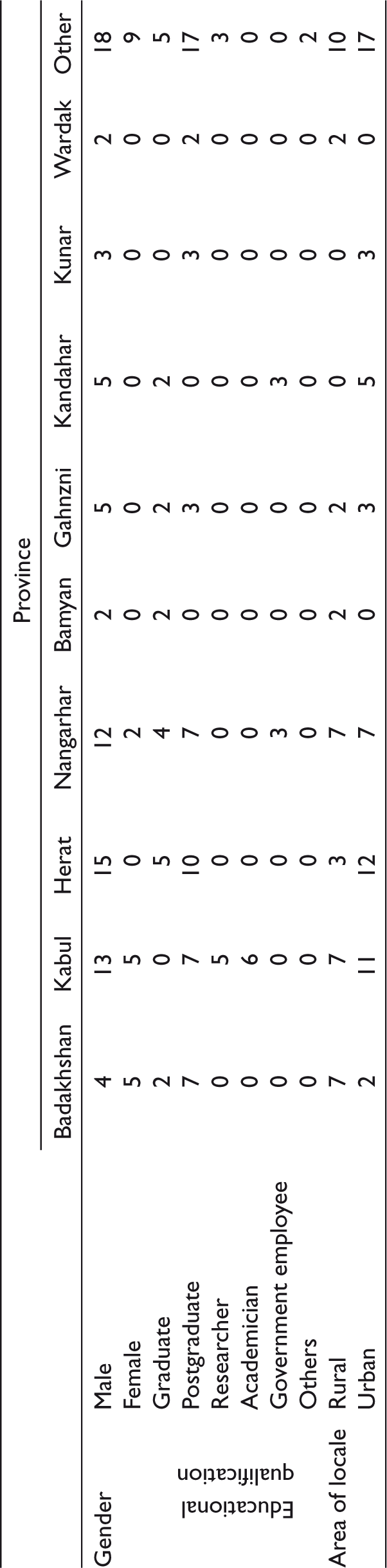
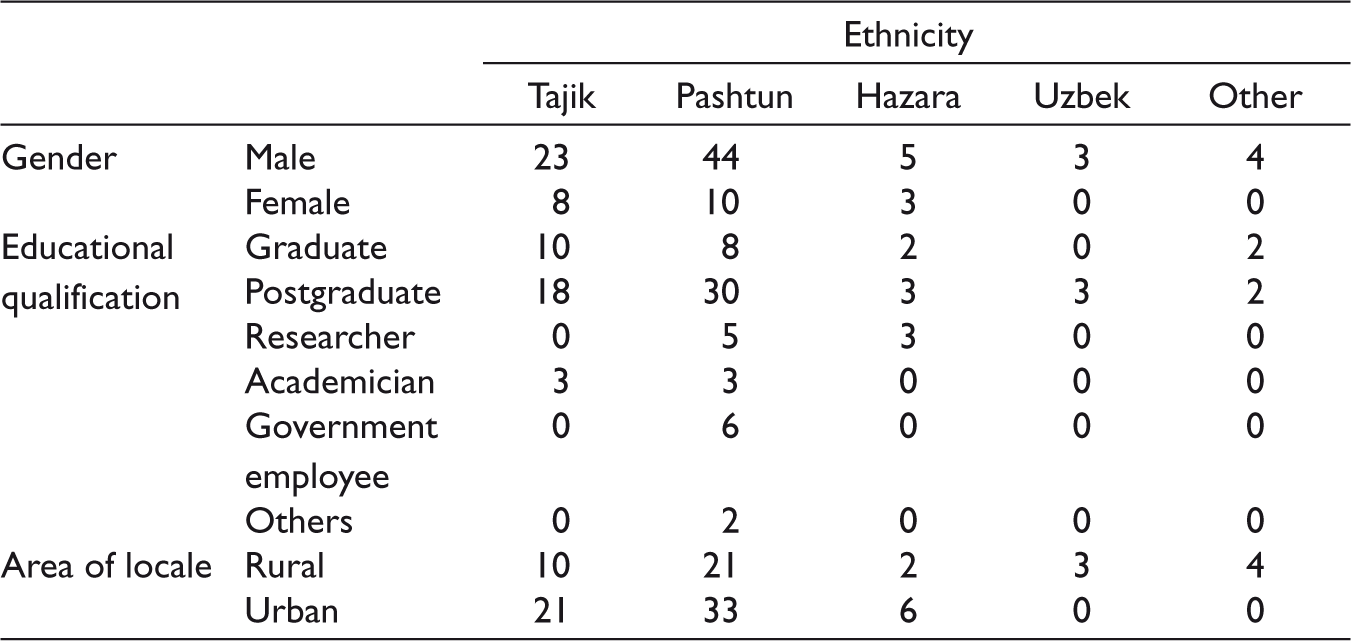
The research for this study is based on both primary and secondary sources collected from both archival and online resources. Primary data were collected through discussions with experts, official sources and questionnaires. The secondary data were collected from journals, books, magazines and other publications. The Google Form technique selected 100 participants for the quantitative part. In the collection of items/questions, existing literature and discussion with the field experts were used. For the content validity of the questionnaire, five purposively chosen professionals/experts working in the field were approached to review the draft of items/questions (Lynn, 1986). They were asked to rate the item/question in terms of relevance on four-point Likert scale ranging from (1 = Not relevant, 2 = Somewhat relevant, 3 = Relevant, 4 = Very relevant). After that, these questions were administered to the participants. They were asked to rate each item on five-point Likert scale ranging from (Strongly disagree = 1; Disagree = 2; Neutral = 3; Agree = 4; Strongly agree = 5). Due care was also given that the item/question should be simple and not ambiguous. Before administering the questionnaire, the researcher explained the purpose of the research in detail on Google Forms. Participants were assured that their responses would remain confidential and used for research purposes only. Descriptive statistics such as frequency, percentage and mean were used to analyse and interpret the data. The sample characteristics are shown in Tables 1 and 2.
Sample Characteristics (Province).
Sample Characteristics (Ethnicity).
India’s Soft Power Policy in Afghanistan
Many scholars have described India’s Afghan policy as India’s soft power policy. For example, Pant (2010a, 2013) highlights that since 2001, India has significantly invested in reconstruction and developmental projects, humanitarian assistance, capacity building and national-building activities in Afghanistan by adopting a soft power approach. Likewise, Ved (2010) points out that India enjoys a considerable amount of goodwill in Afghanistan in contrast to Pakistan because of its soft power policy. Similarly, Yadav and Barwa (2011) argue that since 2001, India has been involved in Afghanistan’s reconstruction and stabilisation through the policy of co-optive means. Furthermore, Price (2013) argues that India’s relationship with Afghanistan includes providing scholarships to thousands of Afghan students studying in India. Likewise, Destradi (2014) highlights that since 2001, India has been involved and engaged in a wide range of soft power activities in Afghanistan. Similarly, D’Souza (2014a) argues that since 2001, India has adopted a ‘soft power’ approach in the reconstruction process of war-ravaged Afghanistan.
The pertinent question is whether India’s Afghan policy is a soft power policy or not. The answer is that since Joseph Nye coined the term soft power, academicians and scholars have extended its definition and included many facets to its scope. For instance, Kugiel (2012) argues that it could also include foreign aid to generate goodwill and long-lasting relationships in other countries. Likewise, Ragavan (2011) argues that soft power is almost anything besides military power such as exchange programmes, financial assistance and aid during emergencies. Also, Wagner (2010) discusses that economic assets have a middle position and are sometimes related to either hard or soft power policies depending on the circumstances and the cases. So, in the context of the extended definition of soft power, we can safely argue that India’s policy vis-à-vis Afghanistan since 2001 falls in the domain of soft power.
India’s Post-2001 Afghan Policy
The Indian government’s (Ministry of External Affairs [MEA], 2018a) stand is that under its Neighbourhood First Policy, the Indian government is developing friendly and mutually beneficial relations with Afghanistan. India’s Afghan policy is to enhance economic and development partnerships and support the people and Government of Afghanistan to build a peaceful, stable and secure nation (MEA, 2016, 2018a, 2018b). Hanauer and Chalk (2012) argue that Indian policy is to integrate Afghanistan into regional economic structures and is optimistic about winning the hearts and minds of Afghans through the policy of soft power by providing extensive developmental assistance. Likewise, Tellis and Mukharji (2010) argue that the aim is to stabilise Afghanistan, and India can contribute best to achieve the goal by building institutions, investing in human capital and strengthening the capacity of the Afghan state to provide for the welfare and security of its citizens. Similarly, Ghosh (2012) argues that India thus follows a policy of rebuilding war-torn Afghanistan into a more secure, prosperous and democratic nation.
Furthermore, Kugiel (2016) rightly points out that Afghanistan is the best example of India’s soft power as it chose a low-profile approach based on solid diplomatic support for the new Afghan government (pre-August 2021), civilian engagement, reconstruction, rebuilding and rehabilitation of Afghanistan. Similarly, as observed by Hymans, quoted by Kugiel (2016, p. 142), ‘Afghanistan became the first case study of complex soft power strategy in Indian foreign policy’. Likewise, Pant (2010a, 2010b) and Hanauer and Chalk (2012) argue that it is in India’s interest to ensure that anti-India militant groups are prevented from gaining a solid foothold in Afghanistan.
India’s Soft Power Projects in Afghanistan
These are discussed below in detail.
Large-scale Infrastructure Projects
India has heavily invested in various large-scale high visibility projects, including infrastructure development, roads, irrigation, railways and electricity transmission lines in Afghanistan. These projects aimed to increase Afghanistan’s regional connectivity, trade and transit (D’Souza, 2016). Some of these projects are discussed in the following sub-sections.
Other projects include upgrading telephone exchanges in 11 provinces and expanding the national television (TV) network through communication systems (D’Souza, 2016). In addition, India has also agreed to build the 600-km-long Bamiyan–Herat rail link. It will connect the Hajigak mines to Herat and the Iranian port of Chabahar via the Delaram–Zaranj highway. The objective of the rail links is to explore coal, steel and iron-ore mines in the region (Kumar & Sharma, 2015; Nair, 2015).
Small Developmental Projects
Pai (2011, p. 8) quotes D’Souza that ‘most of the international aid to Afghanistan is directed at short-term high-visibility projects that are implemented by bypassing the Afghan Government. In contrast, Indian projects maintain low-visibility and involve active Afghan participation’. D’Souza (2016) argues that while maintaining low visibility, Indian small developmental projects (SDPs) provided essential services and increased people’s participation and ownership at the community and government levels (pre-August 2021). For example, in remote border districts where the reach of the Afghan government (pre-August 2021) was limited, India has built health clinics and schools. She further argues that Indian SDPs can help ensure a positive and visible impact on Afghanistan’s social reconstruction and economic revival. These tools are very useful in bringing about change at the grassroots level. Similarly, Samuel (2016, p. 17) rightly points out that ‘the scheme focuses on community-based projects in vulnerable border areas in agriculture, rural development, education, health and vocational training involving local ownership and management’. Abdali (2016) observes that Indian SDPs aimed to create a sense of partnership and ownership in the local communities to help them in development and bring visible changes in their lives. These act as boosters in negating any potential unpleasantness between the two countries. Furthermore, under the SDPs programme, India has assisted Afghan women groups in Herat and Balkh provinces through self-employment generation schemes and capacity building. D’Souza (2013, 2016) points out that Indian policy aimed to promote women’s participation in microeconomic sectors such as marketing, food processing, nursery plantation and garment making.
Humanitarian Assistance
Since 2001, India has launched a broad assistance programme in Afghanistan and pledged over 2 billion dollars for reconstruction efforts. The reconstruction aid covered many humanitarian and infrastructure projects, including health and rural development (Pant, 2010b). For example, under humanitarian assistance, India has been able to reopen the Indira Gandhi Children’s Hospital in Kabul and send in medical missions to support humanitarian work in other parts of Afghanistan. Similarly, India donated hundreds of city buses for public transit facilities (D’Souza, 2016). Likewise, under a ‘school feeding programme’ administered by the World Food Programme, across Afghanistan, India on daily basis provided food assistance of 1 million MT of wheat in the form of High Energy Biscuits distributed to approximately 2 million school children (Kumar & Palkar, 2014). In addition, Kugiel (2016, p. 144) observes that ‘India is famous in Afghanistan for its modern hospitals and availability of medicines. Thousands of Afghans have availed this opportunity, constituting almost half of all travelling to India’.
Similarly, Pant (2010b) highlights that India has agreed to adopt 100 villages in Afghanistan by introducing solar electrification and rainwater technologies to promote rural development. Furthermore, MEA (2017), Pai (2011) and Pant (2010b, 2012, 2014) highlight that India has invested in rebuilding the institutional capacity of Afghan society by providing training and support to various Afghan professionals, diplomats, teachers, judges, doctors, paramedics, lawyers, women entrepreneurs and public officials. Finally, D’Souza (2013) observes that the aim was to shore up Afghanistan’s administrative and governance capacity.
Agreement on Strategic Partnership
In October 2011, the former President of Afghanistan, Hamid Karzai, signed the ‘Agreement on Strategic Partnership (ASP)’ between India and Afghanistan. The agreement was an affirmation of India’s positive and constructive role in the reconstruction and future commitment, which was essential to the development and self-sufficiency of the war-ridden country. (D’Souza, 2014b, 2016). As rightly observed by Raiphea (2013, p. 1),
Afghanistan views strategic partnership agreement is to support, to reconstruct Afghanistan and future commitment at a time when other countries are talking of downsizing or even complete withdrawal. The Government and the common people in Afghanistan view the Agreement on Strategic Partnership with India as a reiteration of the strong traditional bonds between the two nations that have existed for centuries. Afghanistan sees India in a better position to play a more constructive role in rebuilding the shattered economy of Afghanistan.
Democracy Promotion
Cartwright (2009) argues that although it is challenging to find a clear example of India’s regional support for democracy promotion, Afghanistan has received significant public support from India for its post-Taliban (after 2001) democracy. Indian support vis-à-vis democracy in Afghanistan included constructing the new Afghan parliament building, training Afghan parliamentarians and material support for Afghan elections like voting machines. However, Cartwright (2009) cautions that considering India’s policy vis-à-vis Afghanistan as purely motivated only by democratic idealism is a mistake. In reality, Indian democracy assistance to Afghanistan was the desire to improve stability in a weak state. Likewise, Blarel (2012) argues that historically India had shied away from democracy promotion internationally; however, since 2001, India has been able to link its developmental assistance with projects of democracy promotion in Afghanistan.
Scholarships and Training to Afghan Students
India significantly contributes to the Afghan education system and provides various scholarships to Afghan students. India helped to establish the Afghanistan National Agricultural Sciences and Technology University (ANASTU) in Kandahar and, in 2010, introduced new master’s and doctorate programmes in agricultural sciences for Afghan students. Under the Indian Council for Agricultural Research (ICAR) administered scheme, agriculture scholarships for graduate, postgraduate and doctorate programmes have been made available to Afghan students (Kumar & Palkar, 2014). In addition, India granted aid to Habiba School worth $1 million for the next 10 years. India also provides technical and vocational training to the students in tailoring, masonry, welding and plumbing. Furthermore, Indian Council for Cultural Relations (ICCR) offers numerous scholarships for graduate, postgraduate and doctorate studies in India (D’Souza, 2013, 2016). Similarly, the Indian Technical and Educational Cooperation (ITEC) provided annual short-term training scholarships to train middle-level Afghan government and semi-government officials (D’Souza, 2016). Shamika Ravi (2014, p. 23) remarks, ‘Education … can also be an instrument of soft power for a nation like India by raising its cultural and political, especially democratic, attractiveness for others’. Das (2016) argues that by supporting and investing in educational initiatives, India’s soft power approach has created a positive image of India among ordinary Afghans.
Cricket
The Afghanistan Cricket Board (ACB) was also seeking technical support from the Board of Control for Cricket in India (BCCI) to implement a substantial multilevel project designed to develop the technical capacity of national and junior cricket teams in Afghanistan. The aim was to provide technical support to enhance skills, build capacity, train, imbibe professionalism and improve the performance of Afghanistan’s National, National A, Under 19 and 16 cricket teams. The ACB seeks to make cricket an essential and effective tool that can contribute to peace, national unity and development in the country. Moreover, this partnership could unite both nations and strengthen their relationship (Abdali, 2016).
Analysis of India’s Soft Power Policy in Afghanistan
Scholars and academicians rely on public or opinion polls to measure and evaluate the effectiveness of a country’s soft power. Kugiel (2016, p. 25) points out that ‘polls are a first good approximation of how attractive a country appears’. The study relied on both qualitative and quantitative data. The data revealed that India’s soft power policy has won the Afghans’ hearts and minds and has generated enormous goodwill.
Positive Aspects of India’s Soft Power Policy in Afghanistan
India has been able to achieve the objectives discussed in the following sub-sections.
India’s Image in Afghanistan
Several scholars (Hanauer & Chalk, 2012; Nair, 2015; Peter, 2010) observe that the tangible measures and non-military approach taken by the Indian government have contributed to the positive image of India. Similarly, Pattanaik (2012) argues that India’s soft power approach has been able to win the goodwill of the Afghan population, which could translate into political capital, allowing India to deal with future regimes in Afghanistan. In addition, Malhotra (2015) observes that ‘a significant example of Indian soft power at work here is the immense goodwill and positive image that Afghans have towards India’.
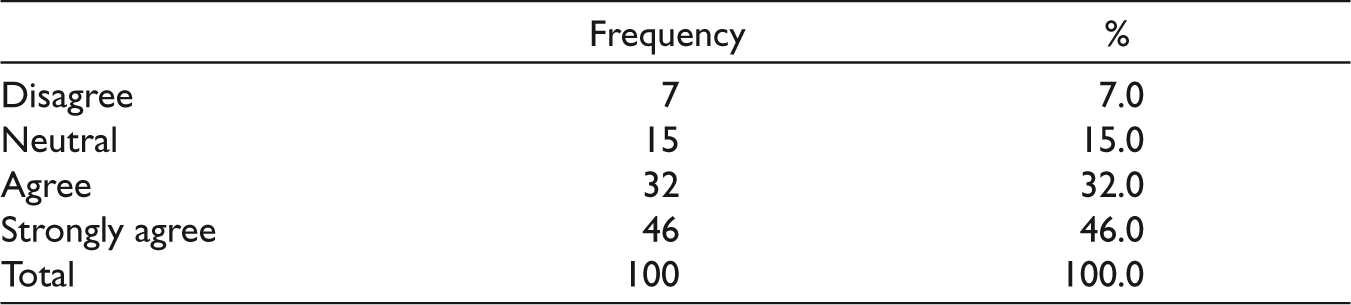
In addition, Table 3 shows that 46% of the population strongly agrees with the statement, ‘I have a favourable opinion of India’. In addition, 32% agree with the idea.
Similarly, in various polls and surveys like the Gallup poll of 2010 and the BBC poll, 74% of Afghans viewed India favourably (D’Souza, 2016; Hanauer & Chalk, 2012; Kugiel, 2016; Nanda, 2016). Similarly, Hall (2012, p. 1109) observes that ‘one recent ABC News poll found that 74% of Afghan respondents had a favourable view of India’. Similarly, a ‘random national survey’ conducted in January 2009 showed that 74% of the participants had a favourable view of India (Scott, 2011). As Sharma (2011, p. 112) points out, ‘it is, as Joseph Nye puts it, the side with the better story in the battle for hearts and minds in Afghanistan’.
I Have a More Favourable Opinion of India.
Reconstruction and India’s Image in Afghanistan
Frogh (2012) and Destradi (2014) observe that as a result of India’s reconstruction efforts in Afghanistan, India’s positive image among ordinary Afghans has improved over the years. The common Afghans appreciate the role India plays in reconstructing Afghanistan. For many Afghans, India is a favourable neighbour as they understand and acknowledge India’s reconstruction efforts in their country. In addition, Gupta et al. (2012) observe that India’s reconstruction efforts in Afghanistan, including in Pashtun areas, have been well received and appreciated by the Afghan population. Likewise, Abdali (2016) observes that India’s reconstruction and developmental projects have generated enormous goodwill among ordinary Afghans. Similarly, Nair (2015) and D’Souza (2011) argue that the Afghan population has received India’s policy well.
Table 4 shows that 56% of the Afghans strongly agree about appreciating India’s reconstruction and developmental assistance. The data further reveal that 40% of the Afghan population agrees about the same.
In addition, Table 5 shows that most Afghans are satisfied with the Indian policy towards Afghanistan.
Furthermore, Table 6 reveals that most Afghans agree that India’s Afghan policy positively affects their country.
Indian Culture and Bollywood in Afghanistan
Afghans are overwhelmed and influenced by the Indian cultural ethos such as democracy, secularism and religious tolerance of India. Table 7 reveals that the majority of Afghans admire these values.
I Appreciate India’s Development and Humanitarian Assistance to Afghanistan.

I am Satisfied with India’s Policy Towards Afghanistan.
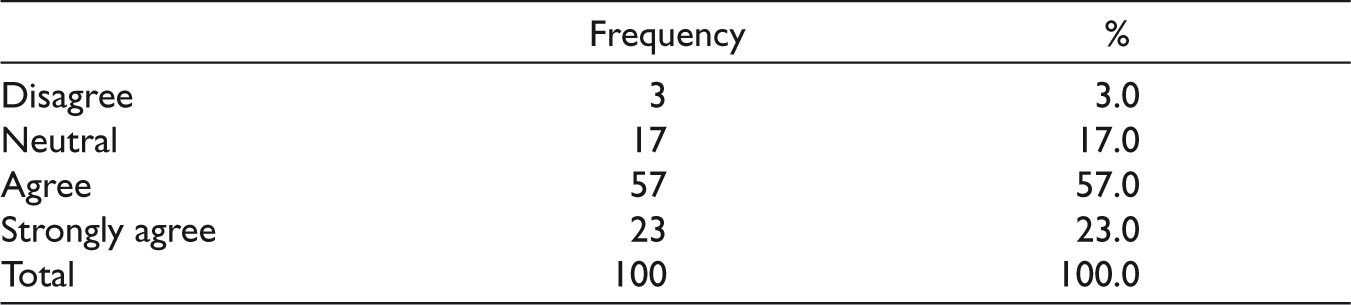
Indian Foreign Policy Has a Positive Effect on Our Country.
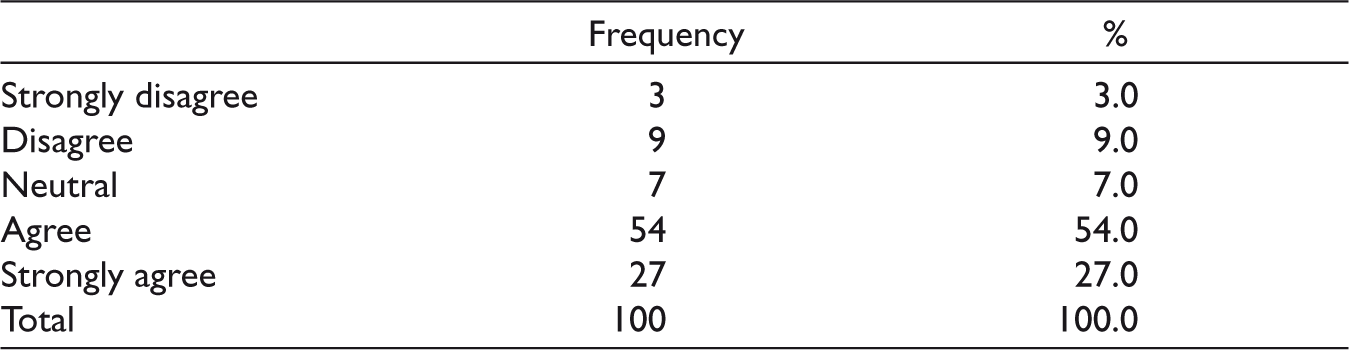
I Admire India’s Values of Secularism and Religious Tolerance.
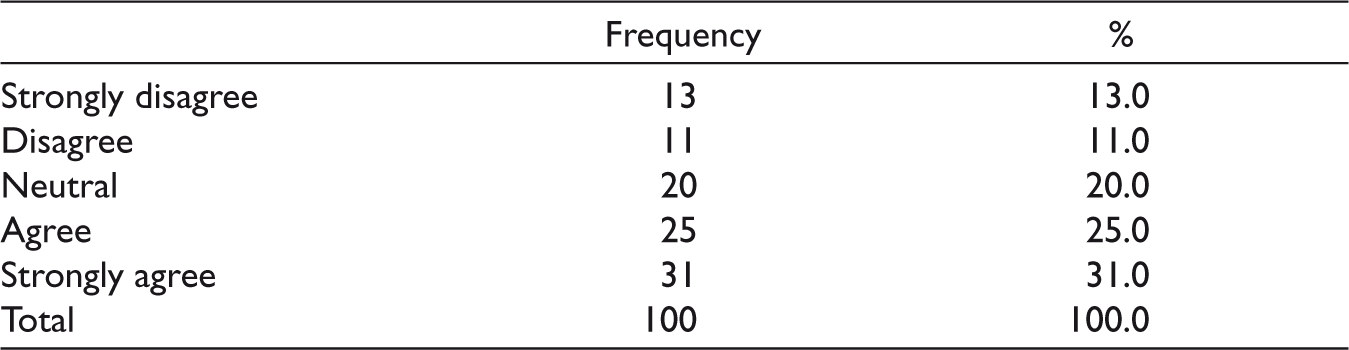
Table 8 reveals that 34% strongly love Indian movies and TV serials. The data further show that 31% of Afghans agree with the same.
Many scholars (Gupta, 2017; Hanauer & Chalk, 2012; Hanif, 2010; Lahiri, 2017; Price, 2013; Scott, 2011) argue that in terms of soft power assets, Indian music, movies and TV shows are very popular in Afghanistan and contribute to building a positive image for India. Similarly, Frogh (2012) observes that Indian cinema has become a source of motivation for many civil rights movements in Afghanistan.
I Love Indian Movies and Dramas (TV Serials).
Afghans Want India to Play More Role
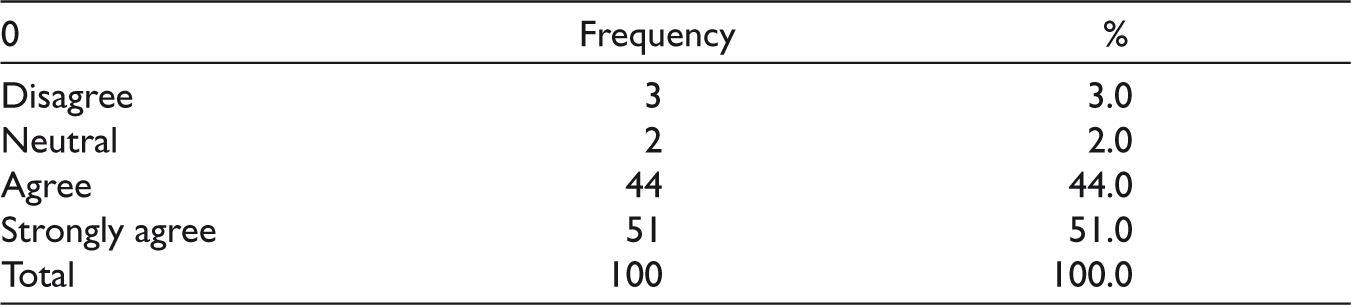
Frogh (2012) highlights that with the growing expectations, Afghans want India to play a more active role in stabilising their country. Table 9 shows that 51% ‘strongly agree’ while 44% ‘agree’ with this suggestion.
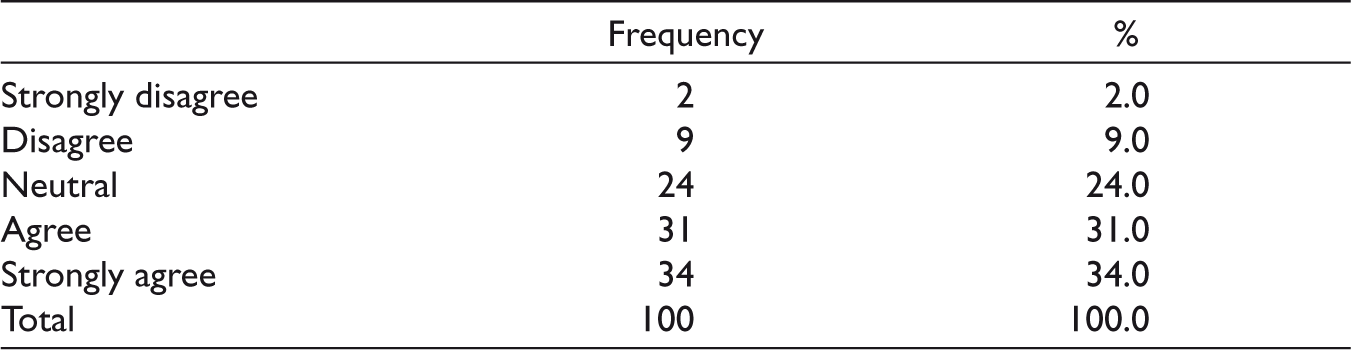
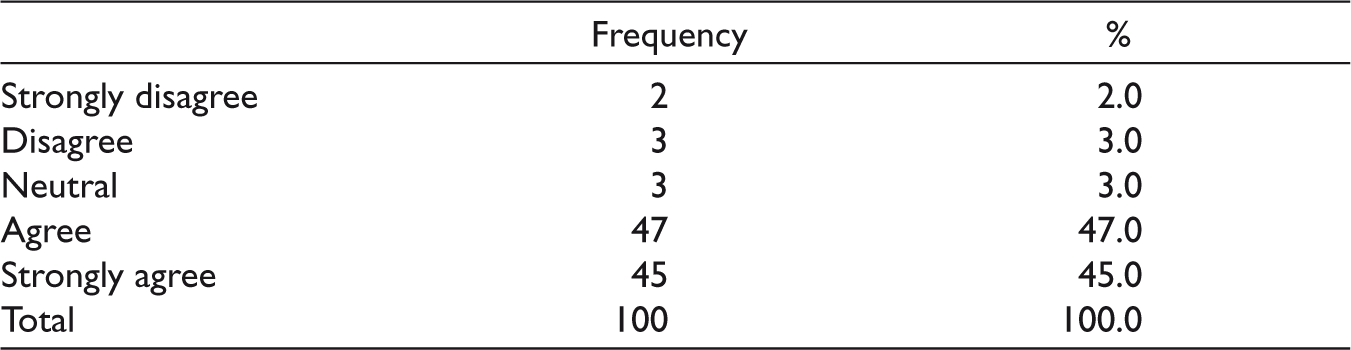
Similarly, Table 10 reveals that most Afghans agree that Indo-Afghan relations should remain as close as it is now.
Afghans Visiting India
Frogh (2012) highlights that since 2001, Afghans are increasingly visiting India, and there has been an increase in visitors to India for healthcare, education and tourism. Table 11 reveals that the majority of Afghans have visited India.
Furthermore, Table 12 shows that most Afghans who have been to India agree that they want to visit again.
In addition, Table 13 shows that most Afghans who have been to India agree that they will recommend their friends to visit India once.
Discussion and India’s Policy Options
The above results show that India’s soft power policy has successfully generated enormous goodwill and support from ordinary Afghans. However, in August 2021, the Taliban’s sudden and shocking takeover of Kabul (and the subsequent overthrow of the pro-India establishment) resulted in the closure/halting of India’s presence in Afghanistan which might be seen by some as the unsuccessfulness of India’s soft power in Afghanistan.
India Can Play a More Significant Role in the Reconstruction and Development of Afghanistan.
The Partnership Between India and Afghanistan Should Remain as Close as It Is Now.

I Have Been to India (Visited).
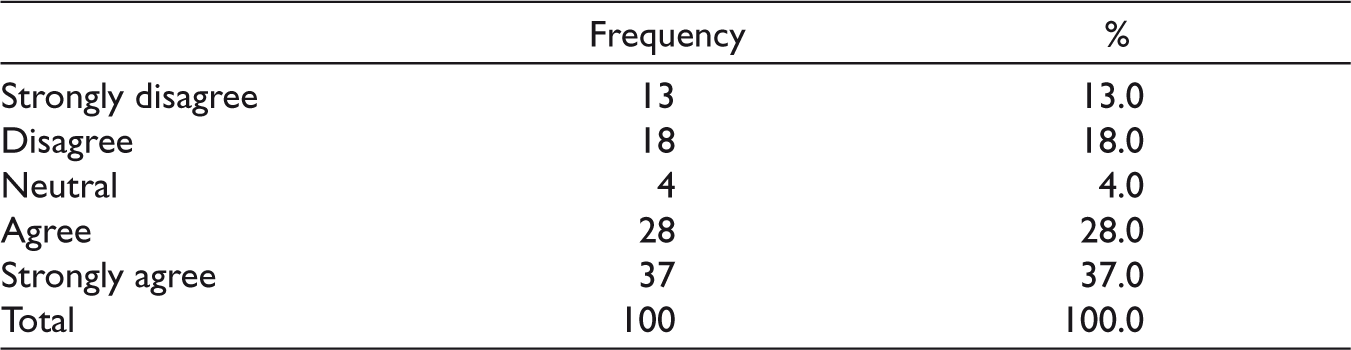
If Yes, I Want to Revisit India.
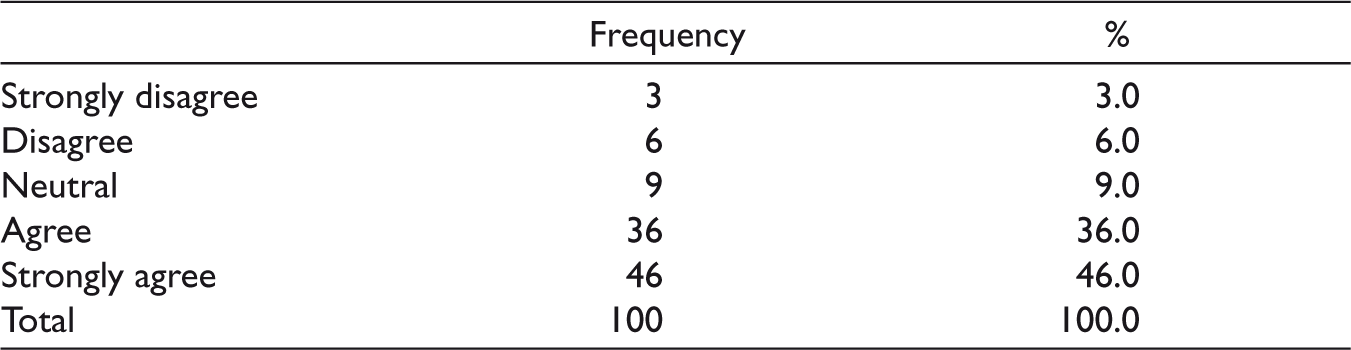
I Will Recommend My Friends to Visit India Once.
The study argues that for India’s soft power policy in Afghanistan, the target audiences were the ordinary Afghans and the Afghanistan government (pre-August 2021), not the Taliban. It is not the failure of India’s soft power policy that it could not prevent the Taliban from coming back to power. Instead, the negligence, mismanagement and mishandling of the US-led coalition forces and the Afghan government led to the current situation in Afghanistan. However, the study argues that to get the results that India wants in Afghanistan, it has to wait and watch the effectiveness of its soft power policy vis-à-vis Afghanistan. Compared to hard power, soft power works indirectly, and its results are durable, long-lasting and materialised over a long period. The study argues that the generated soft power and multi-faceted ties give India a certain edge that no other regional players can count on in their relations with Afghanistan. It can be used in the future for stronger cooperation when domestic and regional circumstances improve. Nye argues that as soft power means getting things done by other means (without relying on sticks and carrots), India’s Afghan policy has been successful in this regard. The ordinary Afghans have been receptive to the Indian non-military assistance and have a very positive image of India.
Furthermore, the study argues that even if the Taliban is currently in power in Afghanistan, the positive image that India has achieved in Afghanistan is still there, and India must harness that. However, after the Taliban took control of Afghanistan (in August 2021), the passive and cautious approach that India adopted will lead to eroding the positive image that India enjoyed in Afghanistan. In addition, the Indian absence in Afghanistan is unsuitable for its interests. It also gives an impression that India has abandoned and does not care for ordinary Afghans.1 It is against the basic principle of soft power, that is, the policies should be seen as legitimate by the target audience (in this case, the ordinary Afghans and the international community). The Afghans should not feel abandoned, left alone and discriminated against merely because a non-favourable entity (Taliban) is in power in Afghanistan.
In addition, the study argues that despite some recent uncertainties, the case of Afghanistan shows that India’s soft power strategy can bring tangible and strategic benefits. First, India is formidably popular among the Afghan population because of its soft power and the affinities developed between the two countries. Second, the return of the Taliban does not mean that Pakistan will be able to contain the Indian presence in Afghanistan like in the 1990s. Things have changed, and the Taliban will probably appreciate the balancing influence of India. After taking control of Kabul (August 2021), the Taliban indicated they wanted normal and friendly relations with all the neighbours, especially India. The Taliban have even asked India to resume direct flights to Kabul (resumed) and scholarships to Afghan students. In addition, the Taliban have also announced that they will not allow Afghan soil to be used against any other country. Keeping in view the positive image India enjoys in Afghanistan, it would be challenging for the Taliban to ignore or go against the interests of India. However, this will depend on how India will behave vis-à-vis the Taliban and vice-versa. If India continues the passive and non-engagement policy towards Afghanistan (under the Taliban), the Taliban will act differently. In the past, the Taliban had alleged India being anti-Taliban in its approach (because of India’s non-involvement, non-supportive and anti-Taliban stance in pre-2001, when the Taliban was in power in Afghanistan) (Pattanaik, 2012). So, it is essential for India to engage with the Taliban, not to remain a non-player in Afghanistan and not to give other players space and a vacuum to exploit to their advantage.
Policy Options for India
So, what are the policy options for India in this new emerging situation? The study argues in favour of India’s continuation of its soft power policy vis-à-vis Afghanistan and its engagement with the Taliban because of the following reasons:
First, the Taliban is the reality and has emerged as a more potent force than before. Using military force or disengagement with the Taliban will give more legitimacy to the narrative of India being an anti-Taliban and pro-Northern Alliance (NA) actor. Before August 2021, the Taliban has been critical of India’s pro-NA (previous Afghan government) and anti-Taliban stance. For instance, in an interview, the Taliban spokesman Zabihullah Mujahid said, ‘India, on the other hand, backed anti-Taliban forces of the Northern Alliance (NA) and refused to do business with our government… Our complaint is India backed the NA (Northern Alliance), and is now supporting the Karzai government’ (Times of India, 2010). He was also critical when asked about Indian projects; he said, ‘If India were so fond of the Afghan people, why did it not undertake development projects under Taliban rule (previous)?’ (Times of India, 2010). Therefore, India needs to continue its policy of soft power vis-à-vis Afghanistan and should finish the stalled projects in Afghanistan. That will give legitimacy to India’s sincere efforts of soft power engagement that it has pursued since 2001. It will further strengthen India’s positive image among the Afghans and help lessen the anti-India stance of the Taliban. It is the best among the worst options.
Second, supporting the resistance/rebel groups (militarily) will be detrimental to India’s long-term security interests. Providing military support to the rebel groups in Afghanistan is not the best option for India because:
the resistance group is not as strong as it was in the 1990s as most of its leaders are in self-exile or hiding. The nature, as well as the intensity of the resistance, is not as much as it was in the 1990s. That is why none of the regional or major powers has openly declared their support for the resistance. supporting the resistance would mean more violence, bloodshed or civil war in the worst-case scenario. In addition, the presence of ‘ISK’ in Afghanistan would further complicate the situation as they could exploit it more in their favour. That could trigger the trauma of the previous civil war of the 1990s, and Afghans are worried about such a case. That would be disastrous for the region in general and Afghanistan in particular. Also, the history of the Afghan conflict shows us that Afghans are wary of any foreign interference (Pattanaik, 2012). For India, it would mean the loss of the positive image that it earned since 2001 in the eyes of the Taliban and the ordinary Afghans.1 that would further alienate the Taliban from India, and the Taliban would be left with no choice but to have closer relations with Pakistan. That is a win-win situation for Pakistan as this will force the Taliban (even though, in recent months, the Taliban has raised some observations vis-à-vis Pakistan) to go in Pakistan’s direction and minimise India’s role in Afghanistan. The Taliban have shown interest in having a cordial relationship with India (even acknowledged India’s humanitarian contribution) and urged India to restart its projects or open its embassy. India needs to respond positively, and it has. To balance the influence of Pakistan, the Taliban needs to have cordial relations with India as much as India needs non-hostile ties with the Taliban.
Third, India should continue its soft power engagement vis-a-vis Afghanistan. The complete closure of its operations in Afghanistan (since 15 August 2021) was shocking and unexpected to ordinary Afghans. Furthermore, the non-issuance of visas, particularly for medical, education or visiting (meeting and uniting with the family), further discouraged the Afghans. It left them with no other option than to look towards either Pakistan or Iran for medical, educational or settlement purposes. India’s opening of its operations (embassy) is a welcome step in the right direction as it will help ordinary Afghans, especially students and patients. Moreover, it will help India to maintain its positive image among ordinary Afghans.
Fourth, in the education sector, India should offer complete assistance, particularly for girls’ education in Afghanistan. It will further enhance India’s image in the eyes of ordinary Afghans.
Fifth, the communication channels (non-military) with the resistance group should remain open. Also, India needs to extend and continue its soft power policy in the resistance areas.
Sixth, after signing the Doha Agreement, the Taliban followed the agreement to a large extent (particularly vis-à-vis the USA). The Taliban refrained from an offensive approach against the US-led coalition forces. The study argues that India also needs to find a way to formulate an agreement (Doha Agreement pattern) with the Taliban to secure its interests (security concerns emanating from Afghanistan). The blame will be on the Taliban if they violate the deal. The study argues that the Taliban as an organisation follow the commands of their senior leaders, and they usually follow and abide by the agreement if they sign any. As India’s soft power engagement in Afghanistan is acknowledged even by the Taliban, it would be easy for India to convince them regarding its security concerns.
Lastly, India needs to reach out to prominent and influential leaders (tribal and religious), particularly Pashtun, to gain support for India’s security concerns emanating from Afghanistan.
Conclusion
Since 2001, India has adopted the soft power approach towards Afghanistan and has been involved in various capacity building, reconstruction, humanitarian and developmental projects in Afghanistan. India diligently stayed away from any military approach and instead preferred to be involved in attaining its objectives through soft power. As a result, the policy of economic engagement to build a stable, prosperous, democratic, non-hostile and peaceful Afghanistan emerged as a primary policy option for India. The objective was to generate political capital and shape Afghan society’s capacity building. India pursued a multi-pronged approach of engaging in different activities to boost economic development and promote peace and stability in Afghanistan. The study reveals that India’s soft power policy has successfully generated enormous goodwill and support from ordinary Afghans. In addition, all the developmental activities in Afghanistan help India to project itself in the region, and the political message of these activities is more significant than any military or political involvement in the country. These and other reconstruction initiatives have provided India with a medium through which it has been able to win the hearts and minds of the Afghan people. The study reveals that Afghanistan broadly supports the Indian regional role and interests. To get the results that India wants in Afghanistan, it has to wait and watch the effectiveness of its soft power policy in Afghanistan. First, India must continue with its soft power policy in Afghanistan and engage with the Taliban.
Further, keeping in mind the sensitivity of the Taliban and Afghan society (vis-à-vis girls’ education), India should announce its full support for girls’ education in Afghanistan. Based on a public–private partnership, India may consider opening a university in Afghanistan which would be helpful for India–Afghanistan relations in the longer term. India needs to manage blasphemy incidents in the country, as the Taliban and the Afghans are sensitive towards such (religious) issues. Otherwise, that could trigger religious sentiments in Afghanistan and undermine India’s hard-earned positive image in Afghanistan.
Footnotes
Declaration of Conflicting Interests
The author declared no potential conflicts of interest with respect to the research, authorship and/or publication of this article.
Funding
The author disclosed receipt of the following financial support for the research, authorship, and/or publication of this article: Peerzada Tufail Ahmad is a recipient of the Indian Council of Social Science Research (ICSSR) Doctoral Fellowship (2018 -2019). His article is largely an outcome of his doctoral work sponsored by ICSSR. However, the responsibility for the facts stated, opinions expressed and conclusions drawn is entirely that of the author.