



Abstract
Background:
This study analyzes the role of factors such as gender, age, and work experience on occupational accidents and the sectoral variations in Turkey with official statistics.
Objective:
The specific aim of this study is to provide an epidemiological basis for gender, age, sector, and professional experience-specific work-related accident prevention programs.
Methods:
Turkish Social Security Institution's official secondary dataset was considered for 2013 and later because of a change in the official calculation method of the Institution in 2013. Trend analysis was used by using the Mann-Kendall Test to determine the trend in occupational accidents based on time and work experience (month-year).
Results:
In the eight sectors considered between 2013 and 2020, including construction, manufacturing, transport, mining, communication, health, electricity, and agriculture, 82% of injured workers were men, with the most accidents occurring in the 25–34 age group (33%). Manufacturing had the highest number of accidents (58.5%), followed by construction (19.4%). Occupational diseases were most common in manufacturing, affecting 73% of men and 63% of women. Accidents occurred mainly in men aged 25–34 (34.2%) and women aged 35–44 (29.3%). Occupational diseases showed a positive, statistically significant trend as work experience increased (p < 0.05). A positive and statistically significant trend was detected in occupational accidents from 2013 to 2020 (Tau = 0.786, p = 0.009).
Conclusions:
In countries like Turkey, where informal employment obscures occupational accidents, trend analysis helps increase their visibility. However, discovering that gender, age, and work experience are key factors in sector-specific accidents is crucial for improving safety and developing prevention programs.
Keywords
Introduction
Occupational accidents are essential not only in terms of threatening human life but also in terms of the quality and sustainability of working life. Factors such as inadequate occupational safety culture, the prevalence of precarious jobs, inadequacy of legal regulations, low education level of employees, and unregistered employment in developing countries increase the risk and number of occupational accidents.1–3 Apart from socio-cultural factors primarily related to occupational safety awareness and culture, there are also factors such as gender, age, work experience, and risk level of the sector, regardless of the development level of the countries.
One of the most significant negative consequences of a lack of occupational safety awareness and culture is the inability to establish a healthy database on occupational accidents and diseases. In this way, the visibility of the accidents is hidden, and the fighting process becomes more difficult. The International Labor Organization (ILO) ‘s recommendation that accurate occupational accident registration and statistical analysis is one of the most critical tools in implementing preventive strategies draws attention to the importance of the subject. 4 However, the unregistered employment and the concentration of small and medium-sized workplaces, which are difficult to control and reluctant to take adequate measures, prevent a significant portion of occupational accidents from being reflected in the statistics.5,6
In addition, the disorganization of the legislation in the Occupational Health and Safety (OHS) field in Turkey and the constant change in the regulation make the audits difficult and hide the actual numbers of occupational accidents and occupational diseases. For all these reasons, the obligation of national legislation to comply with the EU's occupational health and safety directives necessitated enacting a new and unique law. 7 However, despite the protective regulations and measures to prevent occupational accidents, fatal ones are constantly increasing, especially in underdeveloped and developing countries. According to the ILO data 2021, although the density is in underdeveloped and developing countries, approximately 2.3 million people (about 6300 people per day) yearly die from work-related causes.
According to the fatal occupational accidents statistics for 2021, regardless of sector, by the last data of Eurostat, Turkey is at a level of approximately three times the EU average (1.76), with 5.7 fatal occupational accidents per 100 thousand people (Figure 1). According to this data, Turkey has the highest rate of fatal occupational accidents among EU countries.

Occupational accident death statistics, (2021) (per 100 thousand people).
After Turkey (5.7), the country with the highest number of fatal occupational accidents is Latvia, with 4.29, followed by Lithuania, with 3.75 people per 100 thousand people. Iceland and the Netherlands have the lowest number of minor fatal occupational accidents, with 0 and 0.6. However, on average, Turkey's fatal occupational accidents are nearly 25% higher than in its closest followers, Latvia and Lithuania.
The sector with the highest number of occupational accidents in the world is the construction sector. In the EU-27, more than a fifth of all fatal occupational accidents are in the construction sector. Similarly, in Turkey, deaths due to occupational accidents are primarily seen in the construction sector. As of 2022, 422 (27,8%) of 1517 people died due to occupational accidents in the construction sector in Turkey. 8 Although fatal occupational accidents are primarily seen in the construction sector, the sector with the highest number of occupational accidents is manufacturing. The high incidence of occupational accidents in the manufacturing sector is not limited to Turkey. Globally, manufacturing sectors are characterised by high rates of occupational accidents, often involving hazardous working conditions and the use of dangerous machinery.9–14
The agriculture sector is among the most risky sectors in terms of occupational accidents and occupational diseases. However, the prevalence of unregistered employment in the agricultural sector, especially in developing countries, prevents the data from reflecting this reality.15–17 On the other hand, field studies in the literature reveal the real situation of accidents in the agricultural sector.18–20
In addition, age, gender, and professional experience have been shown to influence occupational accidents in various studies in the literature. However, more studies were needed for Turkey in 2013 and later, when the official calculation method for occupational accidents and diseases changed.
In this study, the outlook of occupational accidents and occupational diseases in Turkey was analyzed by taking the period after the change in the official calculation method of the Social Security Institution as a reference. In addition, in the analysis using secondary data, the effect of age, gender, sector, and professional experience variables on occupational accidents was considered and evaluated. The research's fundamental question was, “What kind of a relationship is there between occupational accidents and gender, age, sector, and work experience?”. Furthermore, the specific objective of this study is to provide an epidemiological basis for gender, age, sector, and professional experience-specific work-related accident prevention programs.
Materials and methods
A flowchart is shown in Figure 2 to illustrate the steps followed throughout the research process, including data collection, screening, and analysis. The flowchart begins with a comprehensive literature review, which informs the development of specific research objectives. Following this, data collection was conducted, focusing on secondary data from eight sectors, with variables such as age, gender, work experience, and the timeframe from 2013 to 2020. Despite the low quality and limited scope concerns, occupational health and safety analytical studies in occupational epidemiology have traditionally been conducted with secondary data from official records.21,22 The collected data was then analyzed using the Mann-Kendall test to identify trends. Subsequently, the occupational accident trends were visualized by sector, culminating in the conclusions drawn from the research.
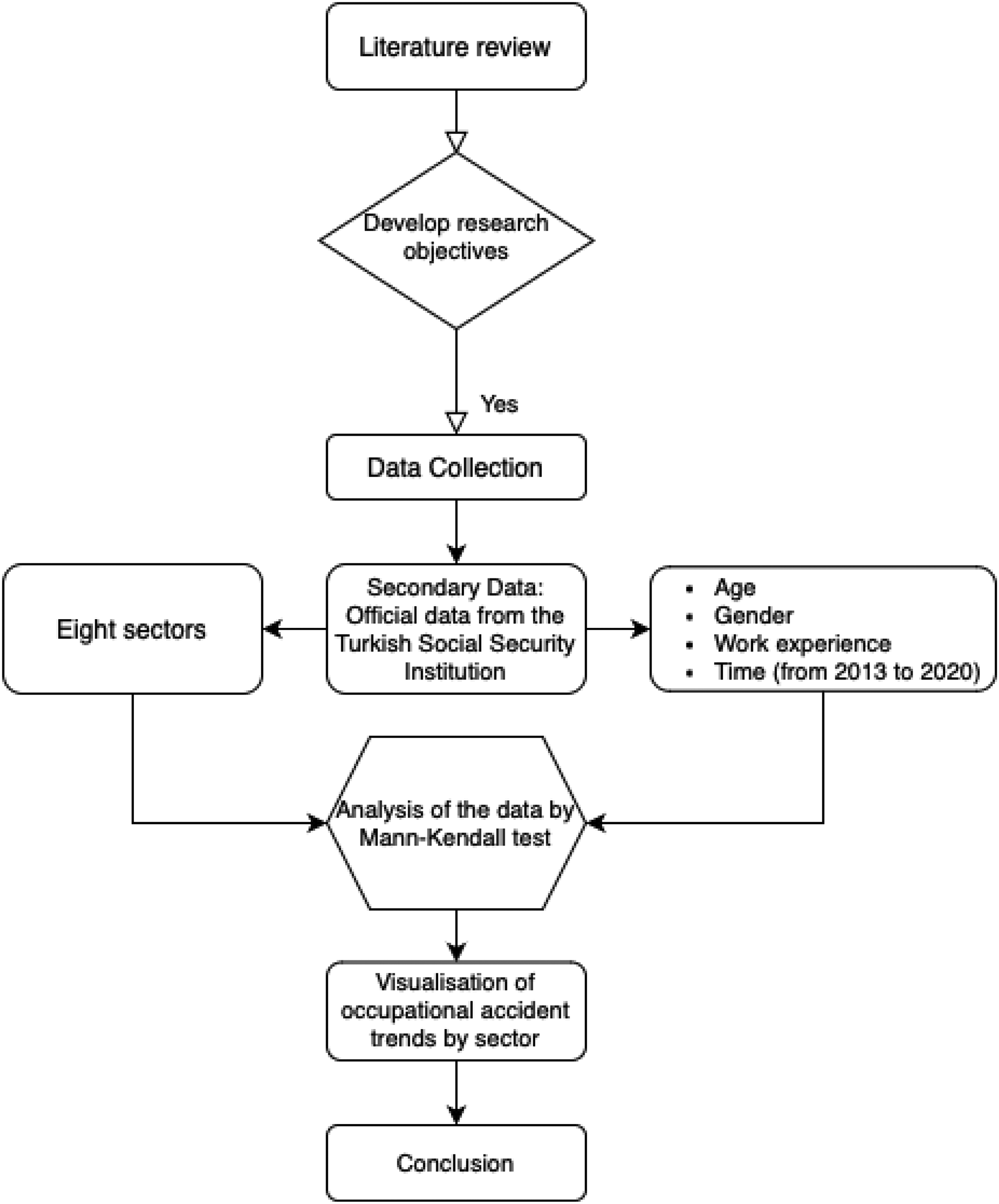
The flowchart of the research.
The data set used in this study was created using secondary data obtained from the official statistics of the Social Security Institution (sgk.gov.tr) regarding occupational accidents in Turkey. Occupational accidents by gender in eight sectors (construction, manufacturing, transport, storage and communication, mining and quarrying, human health, and social work activities, agriculture, forestry and fishing, electricity, gas and water, and other services) based on the data set and the distribution of occupational diseases were examined. In addition, the numbers of those who had occupational accidents and diseases were analyzed according to age and gender, work experience with the last employer, and the event that caused the accident.
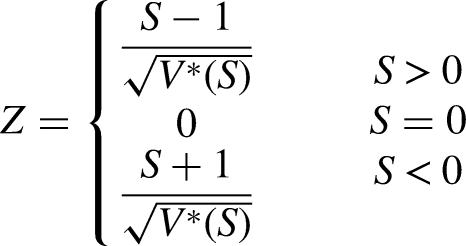
The Mann-Kendall Test was utilized to determine the change and trend in occupational accidents against time and years of work experience. The Mann-Kendall (MK) test 23 aims to statistically evaluate whether the variable under consideration has a monotonous increase or decrease over time. Regression analysis requires that the residuals from the regression line are normally distributed; however, this assumption is unnecessary for the MK test. Therefore, the MK test is non-parametric. On the other hand, data obtained as time series are affected mainly by serial autocorrelation. Thus, a modified Mann-Kendall test has been proposed for trend detection when data change over years or periods and are affected by autocorrelation. 24 This method used the variance correction approach to solve the trend analysis autocorrelation problem.
The method mainly provides three types of information.
The Kendall Tau (or Kendall rank correlation coefficient) measures the monotony of the slope. Kendal's Tau coefficient ranges from −1 to +1. It is positive when the trend increases and negative when the trend decreases. Sen's slope estimates the time series's overall slope (magnitude and direction). It is the median of all slopes passing between pairs of distinct x and y coordinates. Positive values are indicative of an increasing trend and vice-versa. These values correspond to the rate of change in the time series. The significance represents the cut-off for the hypothesis that no trend is accepted. The trend will be statistically significant if the p-value is less than 0.05.
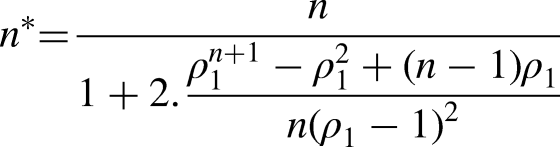
They could limit the effect of serial correlation by modifying the variance using the effective sample size (ESS) shown in (1).
25


Results
Between 2013 and 2020 in Turkey, the total number of occupational accidents was reported as 2537733, the whole occupational disease was 5683, and deaths from occupational accidents were 11195.
Table 1 shows the numbers and percentage distributions of work injuries in the eight specific sectors in 2013–2020. In these eight sectors considered in the study, the total number of occupational accidents was 1888359, and the total number of occupational diseases was 3604.
Numbers and percentage distributions of 1888359 work injuries in this study, 2013–2020.
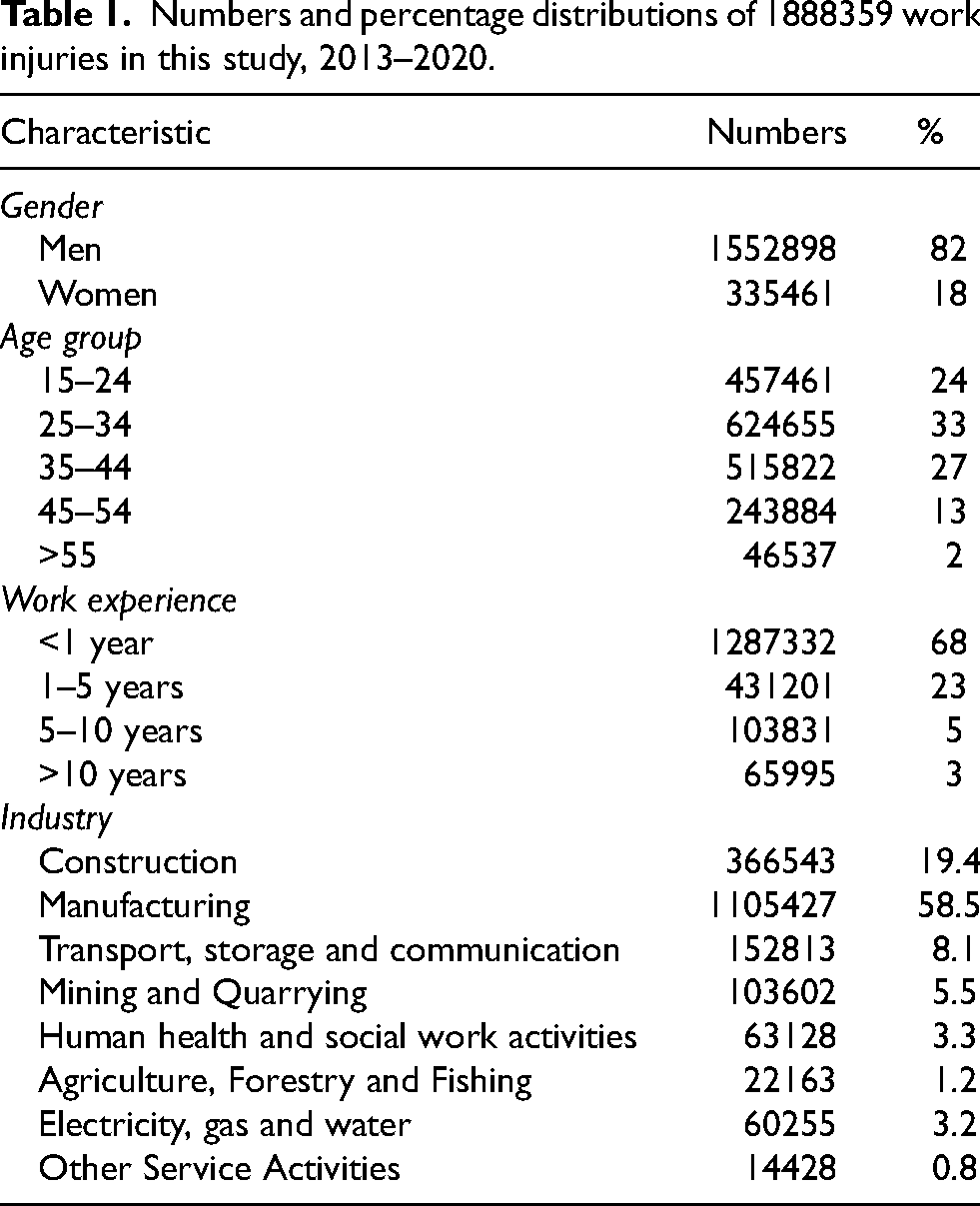
82% (total 1552898) of those who had occupational accidents are men. While 84% of occupational accidents are seen in the age group of 44 and lower, most occupational accidents were seen in the 25–34 age group (33%). While the chance of an occupational accident is 68% for those with work experience <1 year, this rate is 23% between 1–5 years. Considering the distribution of occupational accidents according to sectors, manufacturing at 58.5%; construction at 19.4%; transport, storage, and communication at 8.1%; mining and quarrying at 5%; human health and social work activities at 3.3%, electricity, gas, and water with 3.2% and agriculture, forestry and fishing with 1.2% are listed.
The distribution of occupational accidents and diseases by both sectors and gender is given in Table 2. Manufacturing (58%), construction (21%), transport, storage, and communication (9%) are the sectors in which men have the most occupational accidents. In contrast, for women, manufacturing ranks first with 68%, human health, and social activities in second place with 17%, and transport, storage, and communication with 10% in the last ranking. Considering occupational diseases, it is seen that men are ranked the most in the manufacturing sector (73%), the mining and quarrying sector (15%) in the second place, and the construction sector in the third place with a rate of 5%. Occupational diseases in women are followed by manufacturing with 63%, human health and social work activities (24%) in the second place, and transport, storage, and communication in the third place with 8%.
Total number of occupational accidents and occupational diseases in gender and sectors in Turkey, 2013–2020.
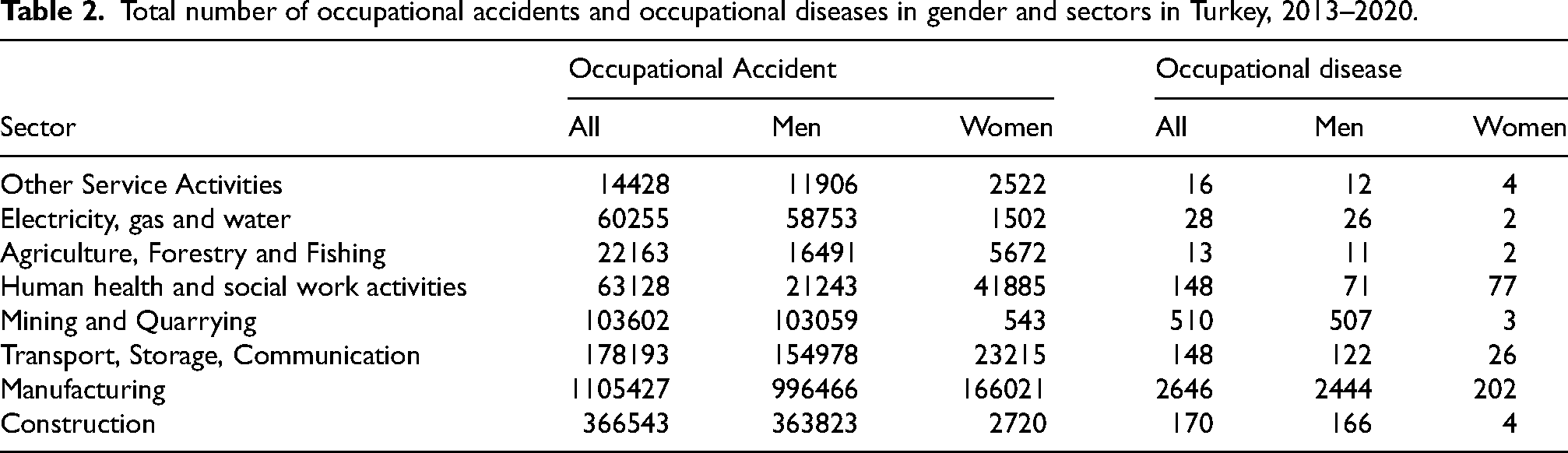
The manufacturing industry had the highest number of work injuries, followed by the construction, transport, storage, and communication sectors. On the other hand, the manufacturing industry had the highest number of work injuries, followed by mining, quarrying, and construction.
Table 3 compares the difference between age groups and gender in terms of both occupational accidents and occupational diseases. According to the result, a significant difference was found between the age groups of women and men in occupational accidents and diseases (p < 0.001). Occupational accidents are most seen in the 25–34 age group, with 34.2% in men. In comparison, in women, most occupational accidents are seen in the 35–44 age group, with 29.3%. The highest rates of occupational diseases in men were observed between the ages of 35–44 and 45–54, respectively, whereas in women, it was observed between the ages of 35–44 and 25–34, respectively.
Comparison of occupational accident and occupational disease based on gender and age.
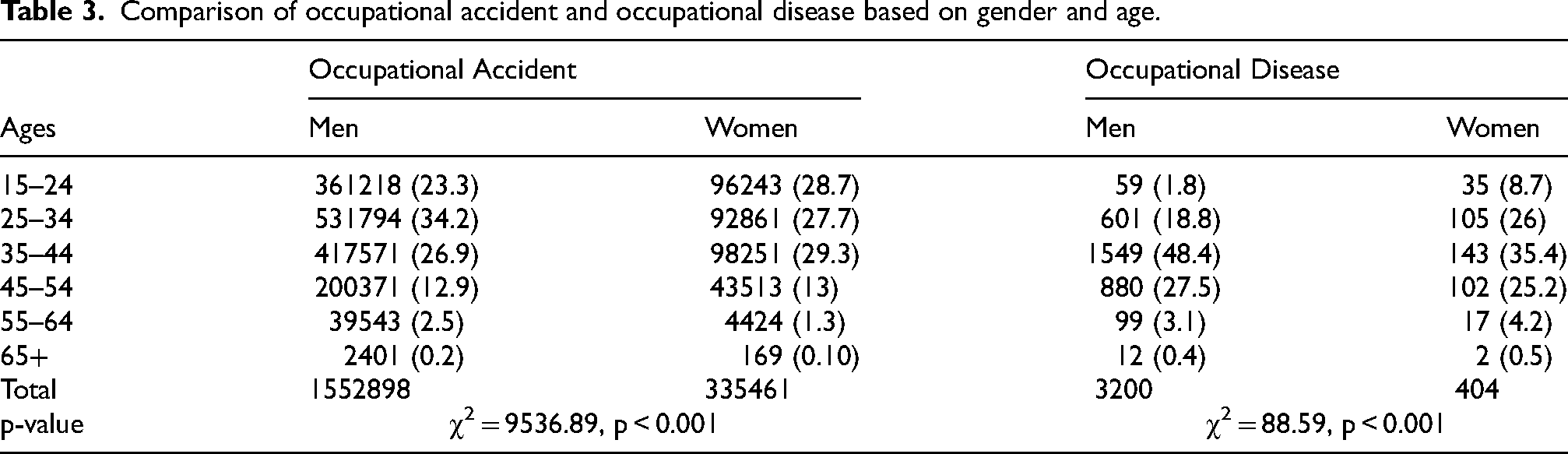
Table 4 presents the distribution and trend analysis findings of insured people who had occupational accidents and diseases and lost their lives due to occupational accidents between 2013 and 2020. According to the results, positive and statistically significant trends were detected in both occupational accidents (Tau = 0.785, p < 0.001) and occupational disease (Tau = 0.857, p < 0.001) from 2013 to 2020. However, although deaths from occupational accidents showed a negative trend, this trend was not statistically significant (Tau = -0.214, p = 0.143). Trend analyses were also carried out according to the duration of work experience in the last work of the employees (Table 5). The data on the employees’ working time with the previous employer was available between 2013 and 2020. However, since it would take up a lot of space to analyze the data from all years and the trend of increase in the data is very similar, only 2020 was taken as the most up-to-date data. As the work experience increased, there was no significant trend in occupational accidents for women and men (p ≥ 0.05). According to Sen's slope coefficients, although a positive (like 5626.85) increase was observed from one time period to the next for occupational accidents, the weak Tau coefficients (Tau = 0.277 for all) and the nominal p values revealed that there was no significant trend according to work experience. However, there was a periodic increase in occupational accidents for up to two years and a decrease after two years. Occupational diseases, on the other hand, showed a positive and statistically significant trend among men (Tau = 0.667, p < 0.001), women (Tau = 0.583, p < 0.001), and in total (Tau = 0.722, p < 0.001) as work experience increased. According to the slope value of Sen, from one time period to the next, an average of 12.75 male workers, 2.75 female workers, and 16 workers suffer from occupational disease.
Distribution of the insured who had an occupational accident had an occupational disease and died due to an occupational accident in 2013–2020.
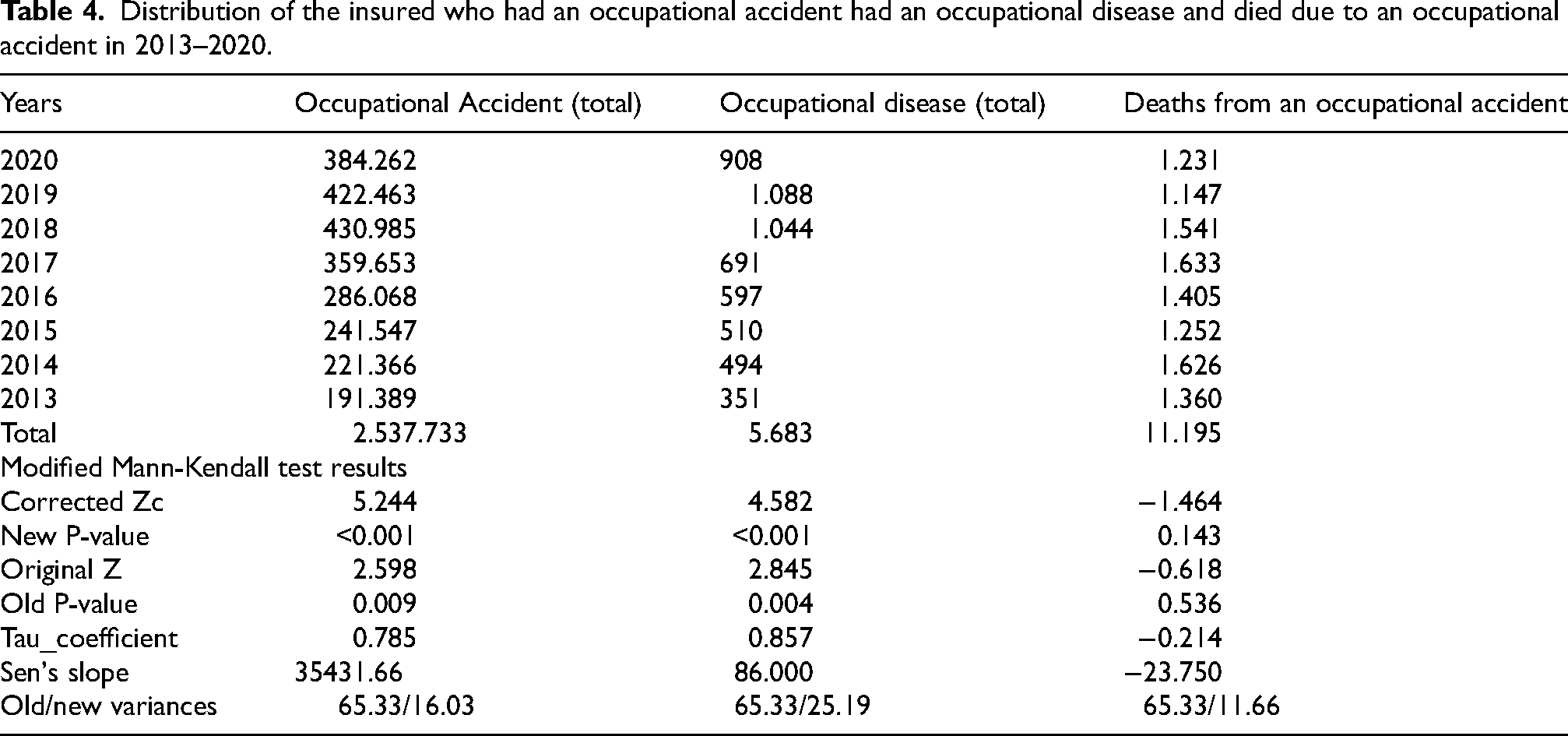
Trend analysis results according to the work experience of those who had occupational accidents and occupational diseases in 2020.
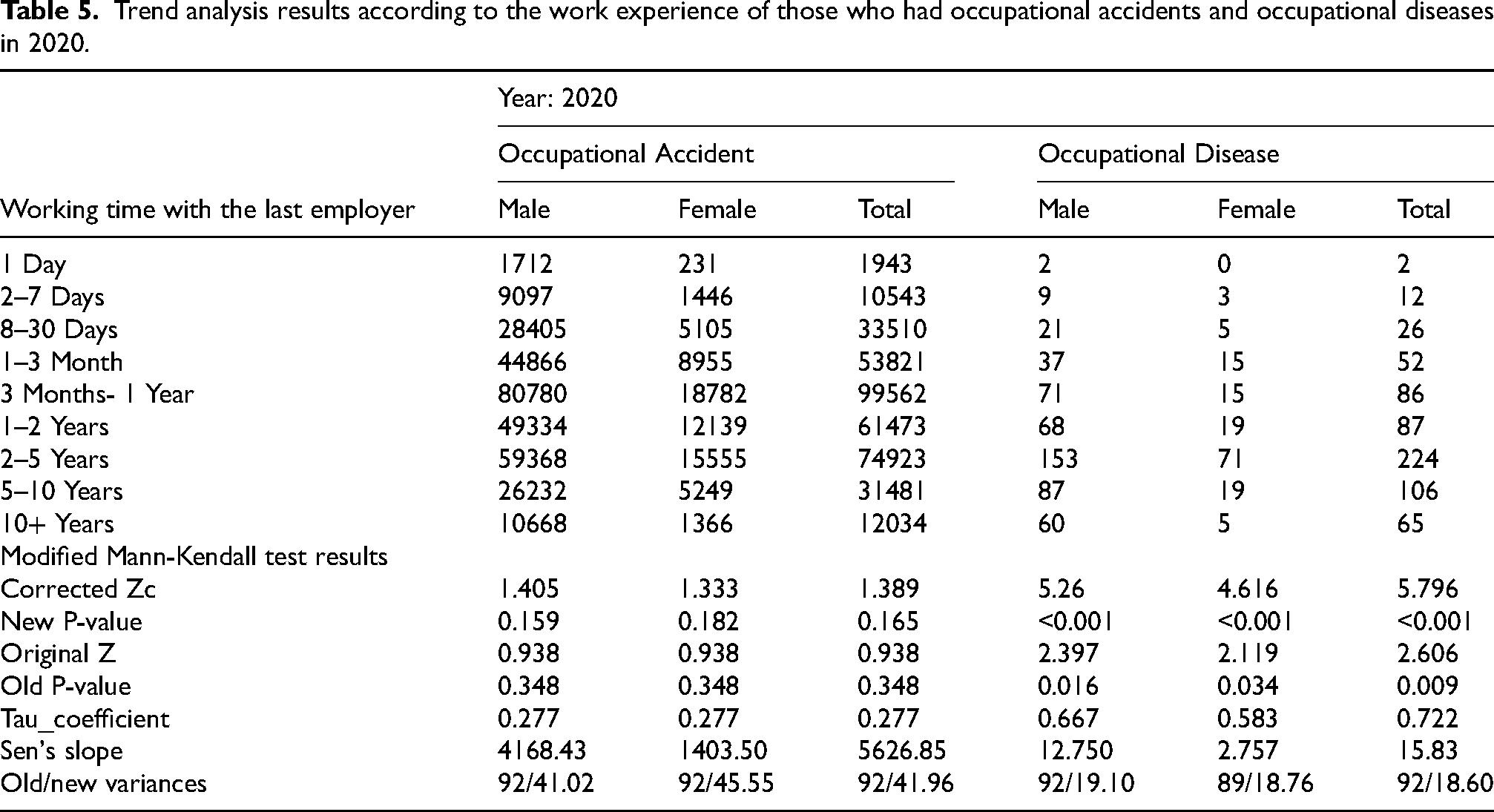
Figure 3 shows the trend of occupational accidents in 8 sectors between 2013 and 2020. The highest increasing trend (Tau = 1, p < 0.001) was seen in the human health and social work activities sector. The second highest trend was observed in the transport, storage, and communication sectors (Tau = 0.905, p = 0.006), and the third highest trend was observed in the electricity, gas, and water sectors (Tau = 0.857, p < 0.001). According to the p values obtained by considering the effect of autocorrelation, it has been determined that there is a positive and increasing trend in occupational accidents in the manufacturing sector and agriculture, forestry, and fishing sectors (with Tau = 0.785, p < 0.001 for both). In addition, there was a positive and statistically significant trend in the construction sector with Tau = 0.571, p = 0.012. However, it was concluded that there was only no significant trend in the mining and quarrying sector with a weak Tau coefficient and insignificant p-value (Tau = 0.07, p = 0.809).
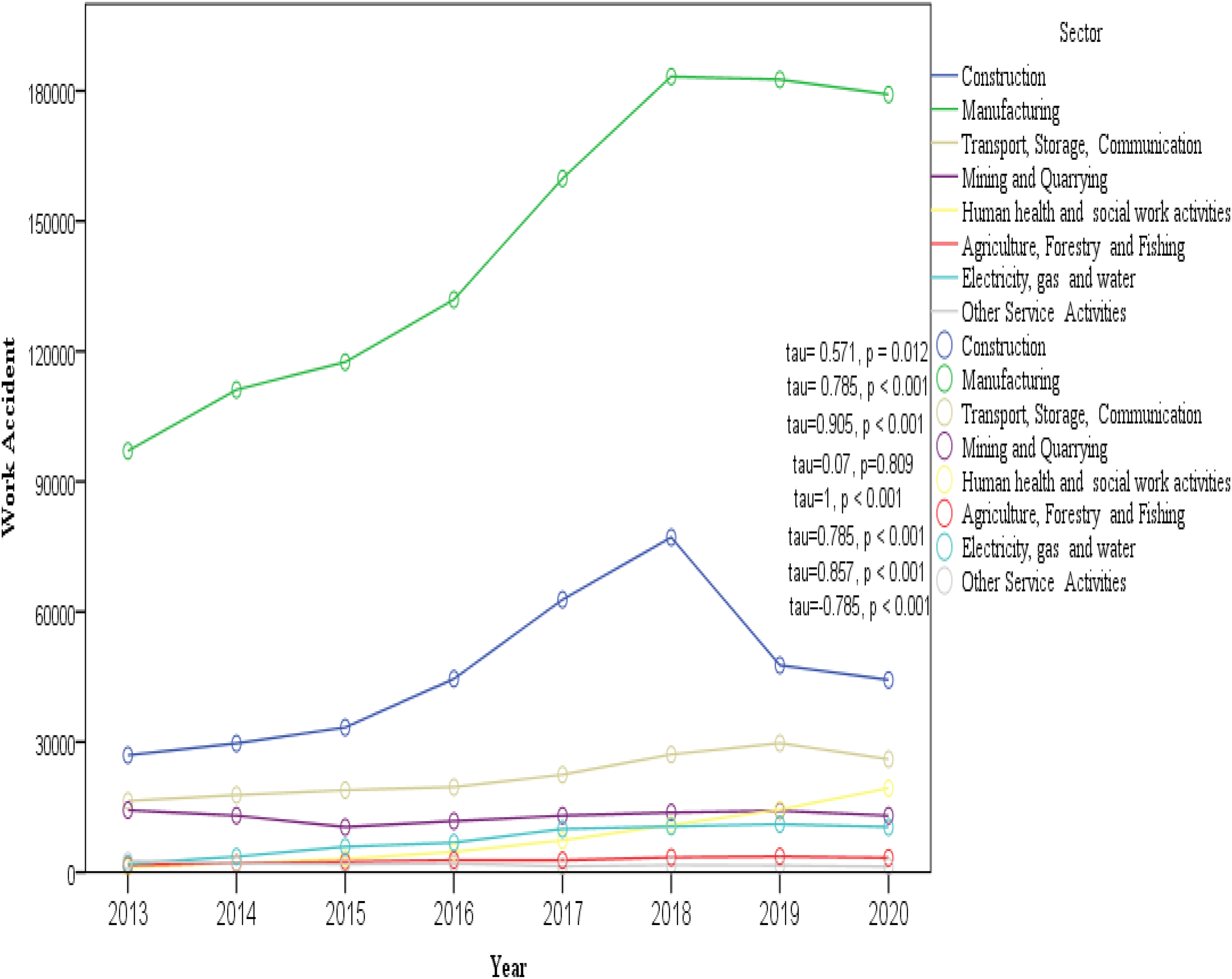
Occupational accident trends in eight sectors based on time, 2013–2020.
Frequencies and modified trend analysis results of the events causing the occupational accident by years are shown in the Appendix. According to the trend analysis findings, occupational accident reasons such as electric current, heat, contact with hazardous materials (Tau = 0.786, p = 0.009), a horizontal or vertical blow to a fixed object (with the casualty in motion) (Tau = 0.786, p = 0.009), collision with a moving object (Tau = 0.714, p = 0.018), contact with a sharp or rough material tool (Tau = 0.786, p = 0.009) accident scores showed a positive and statistically significant trend. There was a significant decrease in the number of deaths from occupational accidents due to suffocation, burying, and cuddling (tau = -0.667, p = 0.032). A significantly decreasing trend was detected in those who had occupational accidents by being crushed (Tau = −0.786, p = 0.009), physical or mental pressure (Tau = −0.857, p = 0.004), biting, kicking, etc. (by animal or human) (Tau = −0.857, p = 0.004) and other reasons.
Discussion
In the study, which evaluates the sectoral view of occupational accidents in Turkey with the basic factors of age, gender, and work experience, 2013 and later periods were taken as a reference due to the change in the occupational accident case calculation and registration system. Due to the difference in the calculation method, there appears to be a sudden increase in occupational accidents compared to the period before 2013 (According to SGK records, In the 2008–2012 period, the annual average number of occupational accident cases was around 72 thousand, and it was seen that there were 191.389 cases in 2013). According to the research results, in the eight sectors considered between 2013 and 2020, the total number of occupational accidents is 1888359, and the total number of occupational diseases is 3604.
The sectors with the highest number of occupational accidents were manufacturing and construction. Regarding occupational diseases, the increase in the human health and social work activities sector in the 2019–20 period draws attention. This increase can be attributed to the COVID-19 pandemic, where the level of risk for healthcare workers has increased.
Although the construction sector ranks second after manufacturing in total occupational accidents, fatal accidents are seen mainly in the construction sector. The study of Zengin 27 determined the accident frequency rate in the construction sector by the number of occupational accidents occurring every 1,000,000 working hours; the accident frequency rate in Turkey was calculated as 17.12 in the construction sector in 2018 and 9.95 in all other sectors. Although most deaths occur in the construction sector, studies show that the measures and legal regulations are insufficient for this sector in Turkey.28,29 Although the ratio of women employed in the manufacturing sector, where the highest number of occupational accidents is experienced, is approximately one-fourth (26.4%) of men, manufacturing is the first sector among the total occupational accidents among women.
In most industrialized countries, female labour force participation has increased steadily in recent years as women have begun to enter traditionally male-dominated occupations due to economic reasons and organizational changes in the workplace. 30 However, the fact that women are more fragile in fulfilling specific duties due to their physical characteristics necessitated legally positive discrimination regulations. Occupations involving vibration exposure or heavy lifting and operating machinery are more likely to injure. 31 In contrast, several types of research have shown that the rate of occupational death and injury in men is typically much higher than in women.32,33 Conversely, Root and Daley 34 reported that male and female workers have approximately equal occupational accident rates. Some researchers have documented a higher risk of occupational accidents or injuries in female workers.35–38 These conflicting results suggest that gender differences in work-related deaths and injuries remain unclear. Similar to the studies of Chi and Wu 32 and Lindqvist et al., 33 in this study, it has been determined that the rate of men in total occupational accidents in Turkey is much higher than women.
Although the rate of men in total occupational accidents is much higher than women, the age group with the highest number of occupational accidents in men has been determined as 25–34. In the study of Kaplan and Calli Kaplan, 39 in which they analyzed the demographic characteristics of those who had an occupational accident between 2007 and 2011, it was determined that male employees had occupational accidents 21 times more than female employees. In addition, it was concluded that the highest number of occupational accidents in terms of age groups was seen in the 25–34 age group. In congruence with past studies, in young workers aged 15–24 men, occupational accidents are more than three times higher than in women. It is seen that the difference between 25–34-year-old men and women of the same age increases to approximately 5.5 times. Occupational accidents, which have a decreasing trend for both men and women at 35 and beyond, declined to the closest level for both genders in the 55–64 age group. In the over-65 age group, it was observed that occupational accidents reached the lowest level for both genders with the effect of the retirement factor, and the gender difference was almost non-existent.
Decreased mental and physical capacities of workers with advancing age make them more prone to accidents.40,41 Some studies showed older workers are more vulnerable than younger workers. 42 However, it is claimed that young people have a higher rate of occupational accidents due to inexperience than other age groups.43,44 The findings of this study regarding age groups are similar to studies showing age-group accident association in Iran 45 and Taiwan. 31 In some studies in the literature, Although older workers reported that they are more prone to accidents due to their reduced mental and physical capacities,40–42 our research findings, which have similar results to some studies, 44 suggested that younger workers have a higher rate of occupational accidents than other age groups.
When evaluated independently of the age factor, it is suggested that the frequency of occupational accidents decreases as the level of experience at work increases. In particular, it is claimed that employees with a seniority of 3 months to one year have a significantly higher rate of occupational accidents than employees with less or more experience. 46 Some studies have determined that the risk of occupational accidents is 25% less for employees with one year or more experience.47,48 Several studies have suggested that new and inexperienced workers have more risk of occupational accidents32,49–51 due to the effects of subcontracted work, labour turnover, and short-term and part-time employment. 44 In this study, the finding that most occupational accidents occurred during the first year of employment was consistent with previous findings. Despite the partial increase in those with 2–5 years, it was observed that there is a decreasing trend in occupational accidents in those with one year or more of work experience.
Furthermore, the increasing trend in occupational diseases tends to decrease in those with five years or more of work experience. This result is consistent with the findings in the literature that employees with one year or more of experience have a 25% less risk of occupational accidents.47,48 This situation can be explained by the fact that the factors that cause occupational diseases result from long-term exposure, unlike occupational accidents. While occupational accidents occur as a result of a momentary event and are recorded, it may take years for an occupational disease to appear.
Our study is among the first in Turkey to examine occupational accidents, occupational diseases, and deaths from occupational accidents between the years 2013–2020 by comparing them with various demographic factors and, creating valuable data tables regarding these factors, and visualizing the trends over time by testing them with statistical trend analysis.
Conclusion
It has been determined that occupational accidents and diseases are common in men aged 25–34 in manufacturing and construction and women aged 35–44 in the manufacturing and health and social services sectors. In addition, according to the trend analysis results made regardless of age category, the highest and most significant trend coefficient revealed that for 2013–2020, occupational accidents in the health and social service sector increased with a higher slope than other sectors. In these sectors, it is recommended that health and safety measures be taken to target the relevant age groups and improve the existing standards. Within the scope of EU harmonization efforts in Turkey, the Occupational Health and Safety Law was first enacted in mid-2012. Then, the official case calculation and registration system for occupational accidents and diseases were changed. The increased official data on occupational accidents and diseases reflected these significant changes. Therefore, our study is essential in filling a gap. However, no study has revealed the current outlook of occupational accidents and diseases in Turkey, with trend analysis for the post-2013 period when the relevant changes in the literature are reflected in the data.
Limitations
This study has some limitations. First of all, due to the prevalence of unregistered employment, some accidents may not appear in the official records of the social security institution. Furthermore, primarily when evaluated on a sectoral basis, due to the high rate of unregistered employment in the construction sector, the occupational accident data related to the construction sector may not fully reflect the truth. Another limitation is that many minor accidents may not be recorded.
Supplemental Material
sj-docx-1-wor-10.1177_10519815241300297 - Supplemental material for Trend analysis of occupational accidents during 2013–2020 based on various characteristics in Turkey
Supplemental material, sj-docx-1-wor-10.1177_10519815241300297 for Trend analysis of occupational accidents during 2013–2020 based on various characteristics in Turkey by Volkan Isik and Selen Yilmaz Isikhan in WORK
Footnotes
Acknowledgements
We would like to extend our sincere gratitude to Karen Jacobs, our editor, and the anonymous reviewers for their insightful and constructive comments, which significantly contributed to the refinement of the manuscript.

Ethical approval
This study used the official secondary data set from the Turkish Statistical Institute and the Social Security Institution. Therefore, ethical approval is not applicable.
Informed consent
This study used the official secondary data set from the Turkish Statistical Institute and the Social Security Institution. Therefore, informed consent is not applicable.
Funding
The authors received no financial support for the research, authorship, and/or publication of this article.
Declaration of conflicting interests
The authors declared no potential conflicts of interest with respect to the research, authorship, and/or publication of this article.
Data availability statement
The data that support the findings of this review are openly available in the Social Security Institution Data Repository Social Security Institution (sgk.gov.tr).
Supplemental material
This content on research proforma has been supplied by the author(s).
References
Supplementary Material
Please find the following supplemental material available below.
For Open Access articles published under a Creative Commons License, all supplemental material carries the same license as the article it is associated with.
For non-Open Access articles published, all supplemental material carries a non-exclusive license, and permission requests for re-use of supplemental material or any part of supplemental material shall be sent directly to the copyright owner as specified in the copyright notice associated with the article.
