Abstract
The objective of this research was to examine the reliability and effectiveness of the Self-Appraisal Questionnaire (SAQ) for use with South African offenders. A total of 986 male offenders, with a mean age of 30.6 years (SD = 9.83) and who were incarcerated in different correctional centers in South Africa, participated in the study. Approximately 75% of the participants were convicted of violent crimes. The Cronbach’s α reliability coefficient for the total SAQ was .92 and subscale coefficients varied between .32, which are consistent with previous international results. Most of the inter-subscale correlations are statistically significant and of moderate strength (r = .4–.7) or small relationships (r = .2–.4). With a single exception, all the items-subscale correlations were above .30 and consistent with the results of prior research conducted in Australia, Canada, England, Singapore, and the United States of America.
“Murder, rape, sexual assault: Brutal, angry reality of life in SA unpacked—crime stats” (Cameron, 2019). A typical media announcement reminding the South African society of the stark reality of the high crime levels in their country. The official crime situation in South Africa (SA) is summarized in Table 1, which reflects that violent contact crime (36.9%) represents the most crimes recorded in a single crime category. Together with the contact-related crime category (7%), it is representative of 43.9% of all recorded crime (South African Police Services, 2019).
The Official Crime Situation in South Africa.
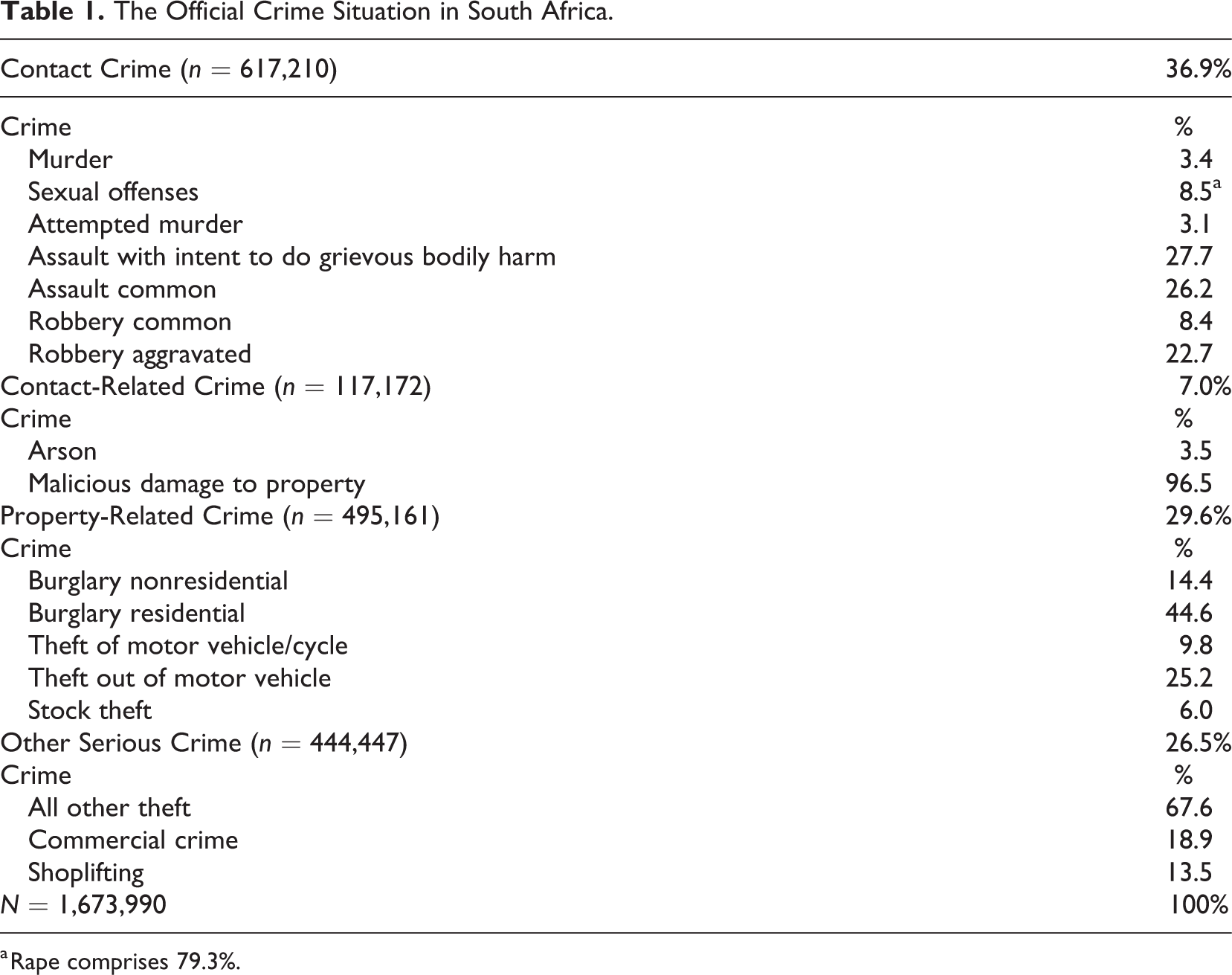
a Rape comprises 79.3%.
Since 2011, the murder rate in SA increased from 29.8 per 100,000 of the population to 35.9 in 2017 (Macrotrends, 2020). In 2019, the murder rate was reportedly 36.4 per 100,000 persons, averaging 58 murders per day, which is more than six times higher than that of the United States of America (USA; Vecchiatto & Cohen, 2019). SA has the highest reported incidence of rape in the world, measuring 132.4 incidents per 100,000 people (World Population Review, 2020), even though the underreporting of sexual offenses is a common event (Ogola, 2019; Thorpe, 2017).
According to data provided by the latest National Victims of Crime Survey 2018/2019, (Statistics South Africa, 2019), the underreporting of sexual offenses measured 12%. This tendency is quite strange in terms of international trends (cf. Van Dijk et al., 2008) which indicated that only 28% of sexual assaults were reported to the police. Previous research in sub-Sahara Africa showed that although more than half of all victims regarded their sexual victimization as very serious, only about 14% of these offenses were reported to the police. SA reflected the highest incidence of rape but the lowest reporting rate (cf. Naudé et al., 2006). According to the Rape, Abuse, & Incest National Network (2017), one out of every four sexual assaults is reported. Lehner (2017) estimated that between 5% and 33% of rape victims reported their victimization to the police.
The underreporting of other serious crimes indicated in the National Victims of Crime Survey 2018/2019 (Statistics South Africa, 2019) were theft of motor vehicle (13.7%), house robberies (40.1%), assault (50%), malicious damage to private property (50.2%), burglary (51.8%), and street robberies (65.3%).
The governmental position on violent crime is that substance misuse is the cause of it. Social disagreements and conflict between acquaintances are exacerbated by weekend substance abuse: You pick up many dead bodies around shebeens [taverns] come three o’clock in the morning, come two o’clock, four o’clock in the morning…[rape victims] report cases after coming from a tavern “and everybody that [is] raped is from the tavern.” (Chester, 2020, p. 1)
A pertinent source of the overcrowding problem is the recidivism rate in SA (“White Paper on Corrections in South Africa,” 2005). The “White Paper on Corrections in South Africa” (2005) provides a key policy redirection, emphasizing that prisons need to be transformed into correctional centers of rehabilitation. This is to be accomplished through the identification of violent predators as well as their criminogenic needs and the delivery of appropriate risk and needs-based services, within a holistic sentence planning context (“White Paper on Corrections in South Africa,” 2005). Therefore, the imperative is to manage future violent recidivism as an important public safety concern (Andreu-Rodriguez et al., 2016).
Violent Recidivism and Criminogenic Needs
An available measure that can be applied to predict future violent recidivism can be found in the Self-Appraisal Questionnaire (SAQ), which is a self-administered multidimensional scale designed for the assessment of offenders and the prediction of violent and nonviolent recidivism. The SAQ has been developed in response to the predominant factors associated with recidivism to identify offenders’ criminogenic needs and to inform the selection of appropriate institutional security levels. Furthermore, it directs individual intervention programs as well as the assessment of rehabilitative prognosis to assist with educated decision making for releasing offenders based on their probability of recidivism (Andreu-Rodriguez et al, 2016; Loza, 2018). Intervention should be based upon the risk-need-responsivity (RNR) principle, meaning that the amount of treatment needed to reduce recidivism increases to the same extent as the accumulation of identified criminogenic needs (Loza & Dhaliwal, 2005). The RNR model is contextualized within the framework of a general personality and cognitive social learning theory applied to offending behavior (Bonta & Andrews, 2007). The model is based upon the following three core principles summarized below (Bonta & Andrews, 2007). The risk principle has two components. The first component deals with the need for evidence-based risk instruments and the reliable prediction of recidivism. The second component focuses on the need to align the level of service to the offender’s risk level. Phrased differently, the amount of treatment needed to reduce recidivism needs to increase proportionately to the risk level. The focus of the need principle is on the treatment of dynamic risk factors directly linked to criminal behavior (criminogenic needs). Unlike static risk factors that are unchangeable, criminogenic needs are amenable to treatment intervention. Although offenders may have many treatment needs, priority must be given to those associated with criminal behavior. The responsivity principle necessitates the offender’s ability to learn from a rehabilitative intervention through cognitive behavioral treatment in relation to the learning style, motivation, abilities, and strengths of the offender. The responsivity principle comprises of general and specific responsivity. According to Bonta and Andrews (2007), general responsivity focuses on generic cognitive social learning methods that are effective to influence behavior irrespective of the type of offender, while specific responsivity entails the modification of the cognitive behavioral intervention, considering individual strengths, learning style, personality, motivation, and biosocial characteristics of the individual.
Approximately half of the 72 items incorporated into the SAQ, focus on dynamic risk factors or criminogenic needs that may increase or diminish their risk (Towl et al., 2008). Static risk factors are historical in nature that cannot be changed. However, significant static predictors of the long-term risk of violent recidivism are factors such as the early age of onset of violent behavior, the incidence of past violent behaviors; history of childhood behavioral problems such as enuresis, pyromania, cruelty to animals, hyperactivity, stealing, and lying; child-rearing practices such as harsh or erratic parental discipline; cruel, passive, or neglecting parental attitude or exposure to parental aggression; and trait characteristics such as psychopathy. (Loza & Dhaliwal, 2005, p. 189)
Dynamic predictors, which are amenable to change, are indicators of treatment needs which can reduce the risk of violent recidivism, such as antisocial feelings, attitudes, and beliefs, that “are considered central factors to major theories of criminality and prediction of violence” (Loza & Dhaliwal, 2005, p. 189). Other significant dynamic predictors are negative social ties in the community (instability of interpersonal relationships, negative peer associates); poor educational and employment achievement; substance abuse; poor coping skills and mechanisms to address stressors; and high-risk situational factors such as availability of means to commit violence (e.g., weapons) and availability of a potential victim. (Loza & Dhaliwal, 2005, p. 189; also see Towl et al., 2008)
Based on the individual’s risk level, case management professionals are provided with dynamic indicators that may be used in follow-up cognitive therapy sessions in relation to antisocial feelings, attitudes, beliefs, and conduct. The focus on content areas related to violent recidivism adds specific significance to the SAQ, while endorsement of some of the SAQ’s statements could assist clinicians in the diagnoses of antisocial personality disorder (APD), a history of conduct disorder, and substance abuse (Loza, MacTavish, & Loza-Fanous, 2007).
Multiple studies have demonstrated the validity and utility value of the SAQ (see, e.g., Andreu-Rodriguez et al, 2016; Loza, 2018). The objective of this research was to examine the reliability of the SAQ on a sample of South African prisoners.
Method
Participants
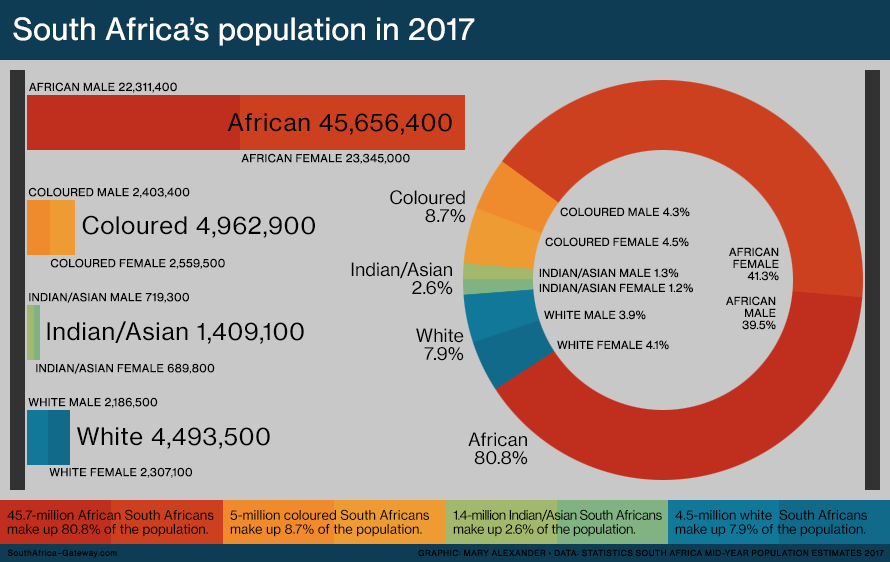
As indicated in Table 2, 986 male offenders, with a mean age of 30.6 years (SD = 9.83) and who were incarcerated in different correctional centers in SA participated in the study. Most of the participants were Black Africans (77.4%), followed by Coloreds (18.1%), Whites (4.1%), and Asians (0.4%). Of the 56,521,900 South Africans (South African Population, 2017), 48.9% were male. The representation per population group was Black Africans 80.8%, Colored 8.7%, Whites 7.9%, and Asians 2.6%. Even though the participants represent a nonrandom purposive sample, it appears that colored participants are overrepresented in terms of the national benchmark.
Demographics of the Participants.
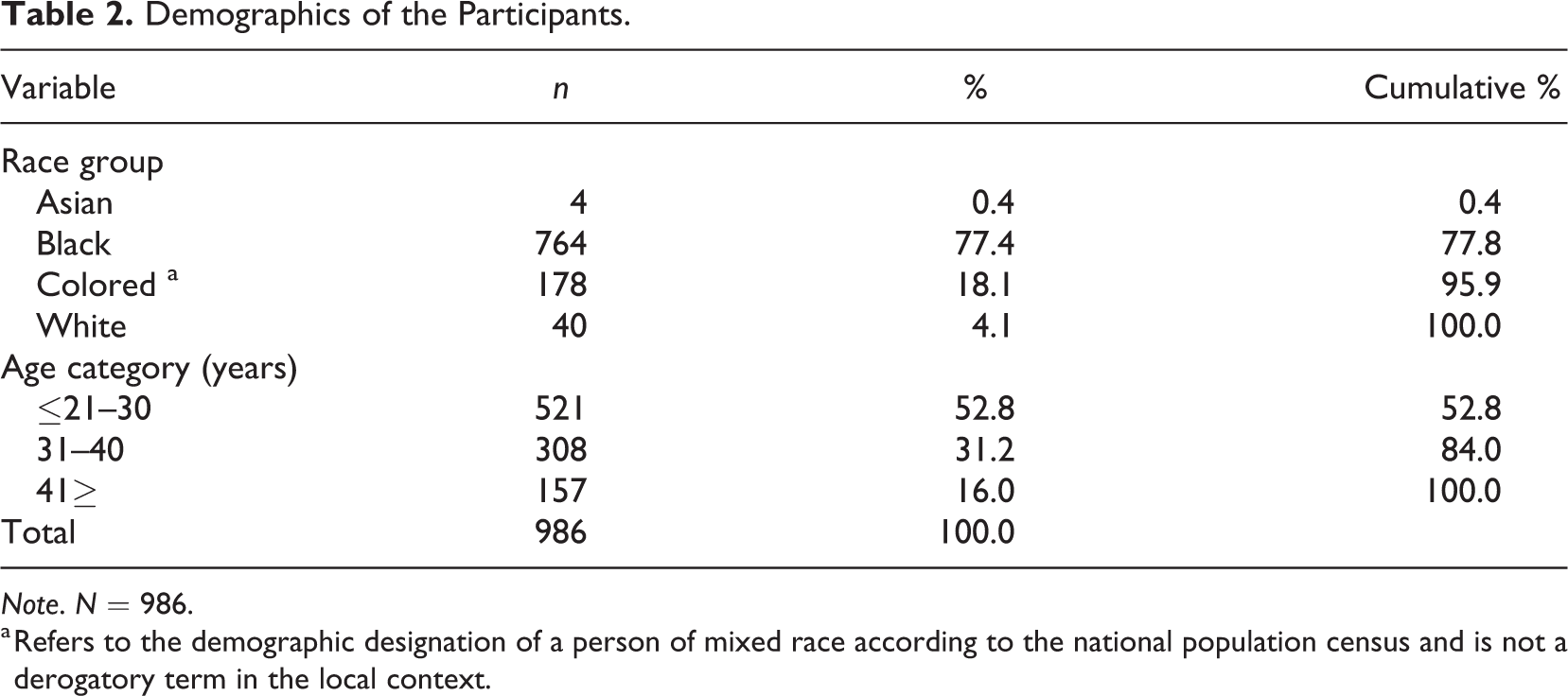
Note. N = 986.
a Refers to the demographic designation of a person of mixed race according to the national population census and is not a derogatory term in the local context.
The crimes for which the participants were convicted are reflected in Table 3. Approximately 75% of the participants were convicted of violent crimes, that is, rape, murder, aggravated robbery, common robbery, aggravated assault, indecent assault, arson, kidnapping, and statutory rape. The offenses of culpable homicide and illegal possession of firearms can arguably also be added to this list. Common robbery, which is basically theft by means of violence, is distinguished from aggravated robbery, which involves a firearm or other kind of dangerous weapon (Snyman, 2015).
Crimes for Which the Respondents are Serving Sentences.

Note. N = 986.
Statutory rape is the sexual intercourse with a child older than 12 but younger than 16 years of age (Snyman, 2015).
Participants were serving custodial sentences ranging from 12 months (1.1%) to more than 20 years (18.3%). Almost 8% (7.7%) of the participants served sentences of 2 or less years, and 37% served sentences of 3–9 years. More than 55% of the participants (55.3%) served sentences of more than 10 years. The effect of the introduction of lengthy mandatory minimum sentences for certain serious crimes by the Criminal Law Amendment Act of 1997 is clearly visible in terms of the 18.3% of offenders who served sentences of 20 or more years. For example, the Act prescribes life imprisonment for murder committed under certain circumstances. If no substantial and compelling circumstances to justify a departure from the prescribed minimum sentence can be found, an accused convicted of murder will be sentenced to 15 years for a first conviction, 20 years for a second conviction, and 25 years for a third conviction.
Measures
The SAQ comprises 72 items which measures the following subscales (Loza, 2005, 2018): Criminal Tendencies: These are the antisocial attitudes, beliefs, behaviors, and feelings associated with a criminal lifestyle. Antisocial Personality Problems: These involve characteristics similar to those used to diagnose APD which has been the psychiatric diagnosis traditionally used to predict recidivism. Conduct Problems: These are childhood behavioral problems that are among the best predictors of later offending and the development of a criminal career. Criminal History: Past criminality is a robust predictor of future offending behavior. Alcohol and Drug Abuse: The association between substance abuse and crime and violence is a common case and furthermore correlates with recidivism. Antisocial Associates: These deal with family as well as extrafamilial associates as one of the most significant risk indicators of recidivism. Anger: An assessment of the offender’s reaction to anger assists in the identification of treatment needs but is not included in the SAQ’s total score because of the controversial relationship between anger and recidivism.
The main purposes of the SAQ are (cf. Loza, 2018, p. 166) the following: prediction of postrelease adjustment such as violent and nonviolent recidivism, parole violations, and probability of being convicted of a new offense; prediction of institutional adjustment and the assignment of offenders to institutional security levels; assignment of offenders to treatment programs such as substance abuse, anger management, cognitive skills, and programs dealing with antisocial attitudes, antisocial behavior, antisocial feelings, antisocial beliefs, insight, and similar types of programs; provision of information that may assist with diagnosing substance abuse, conduct problems, and APD; and as a pre- and posttreatment measure to assess the effect of treatment and determine changes in offenders’ attitudes and attributions, particularly those related to criminal tendencies.
Prior research by Loza (2018) provided evidence that the SAQ as a self-report is not at significant risk to be affected by self-biases, lying, or deception (also see Loza, Loza-Fanous, and Heseltine, 2007; Mills et al., 2003).
Several studies have demonstrated the reliability and concurrent, construct, and predictive validities of the SAQ (Loza et al., 2004; Loza & Dhaliwal, 2005; Loza et al., 2000; Loza & Green, 2003; Loza & Loza-Fanous, 2000, 2001, 2003; Loza, MacTavish, & Loza-Fanous, 2007; Loza et al., 2005).
Procedure
Minimal training is required for forensic practitioners to administer the SAQ (see Loza, 2018), which is clearly explained in the Technical Manual of the SAQ (Loza, 2005). An experienced researcher who previously worked in the correctional milieu and skilled to work with correctional clients was briefed in the administration of the SAQ. The completed questionnaires were verified for completeness by the author who also interpreted the outcomes prior to electronic capturing.
Correctional centers across the country were visited and available incarcerated offenders were invited to participate in the study. Inclusion criteria were literacy in English and voluntary participation in the group sessions. The facilitator administering the SAQ explained the purpose of the research, after which each participant completed the SAQ individually. All ethical principles were observed and adhered to by gaining informed consent, encouraging voluntary participation, assuring confidentiality, anonymity and privacy, showing respect to all participants, and ensuring that no physical harm and distress comes to the participants (see De Vos et al., 2011).
Ethical approval was obtained from the Department of Correctional Services and the UNISA College Research Ethics Review Committee. Participants were made aware of their individual right to choose to participate in the study and were guaranteed anonymity. No promises for any rewards were made to any participant and it was explained that they would derive no direct benefits as a result of their participation in the project.
Results and Discussion
Elevated scores in any of the subscales are indicators of risk factors, but more importantly treatment requirements. Each subscale has a calculated range of scores. An elevated score exceeds the median score in any particular subscale (Loza, 2005). Antisocial personality problems (52.6%) emerged as a primary risk, combined with substance abuse (50.3%). Substantial percentages of participants emerged at risk due to conduct problems (38.6%), antisocial associates (36.4%), and anger issues (35.6%). About 24.3% of the participants presented elevated scores in the criminal history and 21.6% in the Criminal Tendencies subscale.
The objectives of the SAQ pertaining to risk level (placement), extent of treatment needs, and probability for future violent and nonviolent recidivism are classified as low, low moderate, high moderate, and high. Based on these risk levels, 7.2% of the research participants were classified as low risk, 32.4% as low moderate risk, 46.7% high moderate, and 13.7% as high risk. More than 60% (60.4%) of the participants resort in the high moderate or high probability levels, which is a clear indication of how they should be managed.
The internal consistency for the SAQ as a risk scale in the South African context and the different subscales were assessed. The Cronbach’s α reliability coefficient for the total scale was .92 and subscale coefficients varied between .32 (antisocial associates) and .84 (conduct problems). The coefficients of the remaining scales were .77 for the Criminal Tendencies, .61 for Antisocial Personality Problems, .64 for Criminal History, .76 for Alcohol and Drug Abuse, and .72 for Anger subscales.
The Cronbach’s α coefficient for the Antisocial Associates subscale is much lower than for the other subscales and should therefore be treated as exploratory. Cronbach’s α is a measure that depends on the number of items and covariances between items. The low α for the Antisocial Associates subscale can therefore be explained by the fact that the subscale comprises of only three items.
The relative strength of these statistics in SA compared to previous research conducted in the USA, Canada (CA), Australia (AUS), England (ENG), Singapore (SING), and Spain (cf. Loza, 2018, p. 169) is reflected in Table 4.
Comparative Cronbach’s α Reliability Coefficient for the Self-Appraisal Questionnaire.
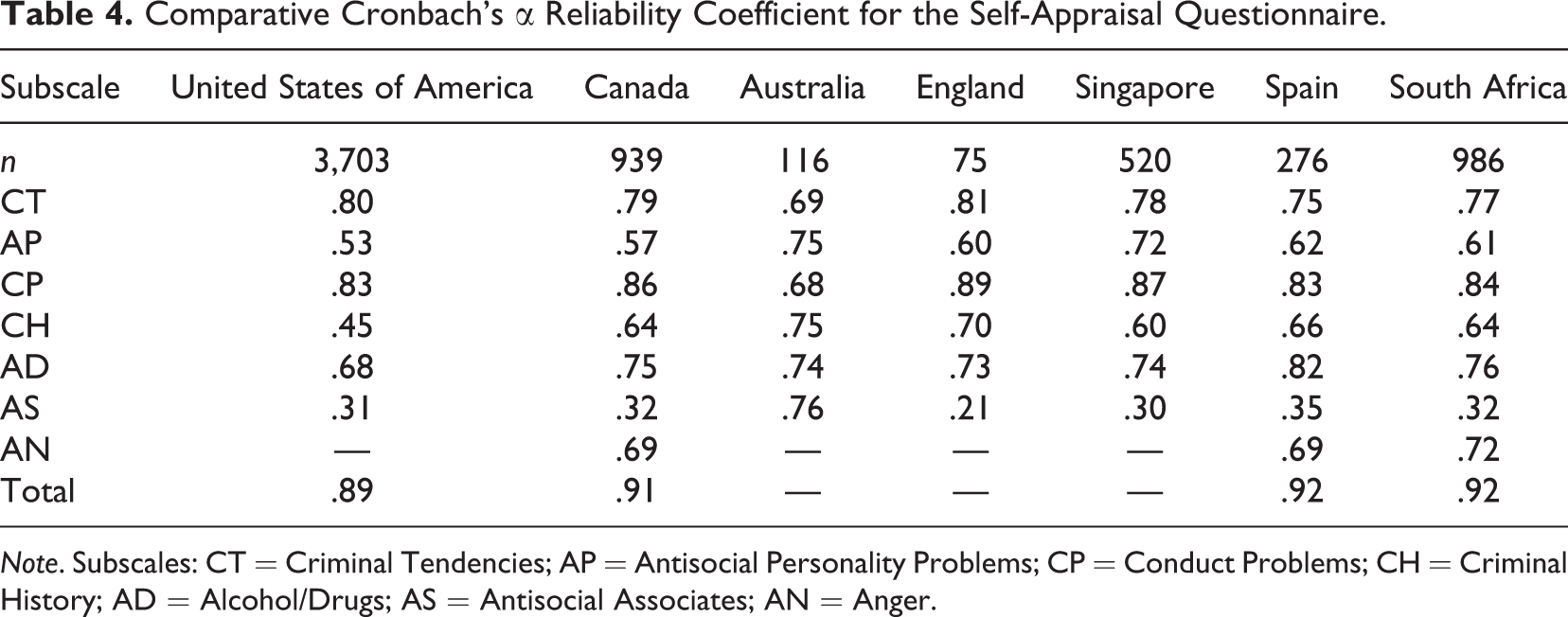
Note. Subscales: CT = Criminal Tendencies; AP = Antisocial Personality Problems; CP = Conduct Problems; CH = Criminal History; AD = Alcohol/Drugs; AS = Antisocial Associates; AN = Anger.
Table 4 indicates that the statistics generated by this research (SA) compares well with and are consistent with previous results. The statistical results follow the same statistical trends as the international measures, despite the unique multicultural context of SA.
Pearson product-moment correlation statistics were used to measure the strength and direction of any statistical relationships between the subscales.
As can be observed from Table 5, most of the inter-subscale correlations are statistically significant and of moderate strength (r = .4–.7; or small relationships (r = .2–.4). With a single exception, all the items-subscale correlations were above .30. The strongest correlations emerged between the following subscales: Antisocial Personality and Conduct Problems (r = .67), Conduct Problems and Criminal Tendencies (r = .53), Criminal Problems and Substance Abuse (r = .48), Criminal Tendencies and Anger (r = .48), and Conduct Problems and Antisocial Associates (r = .48).
Pearson Inter-Subscale Correlations.
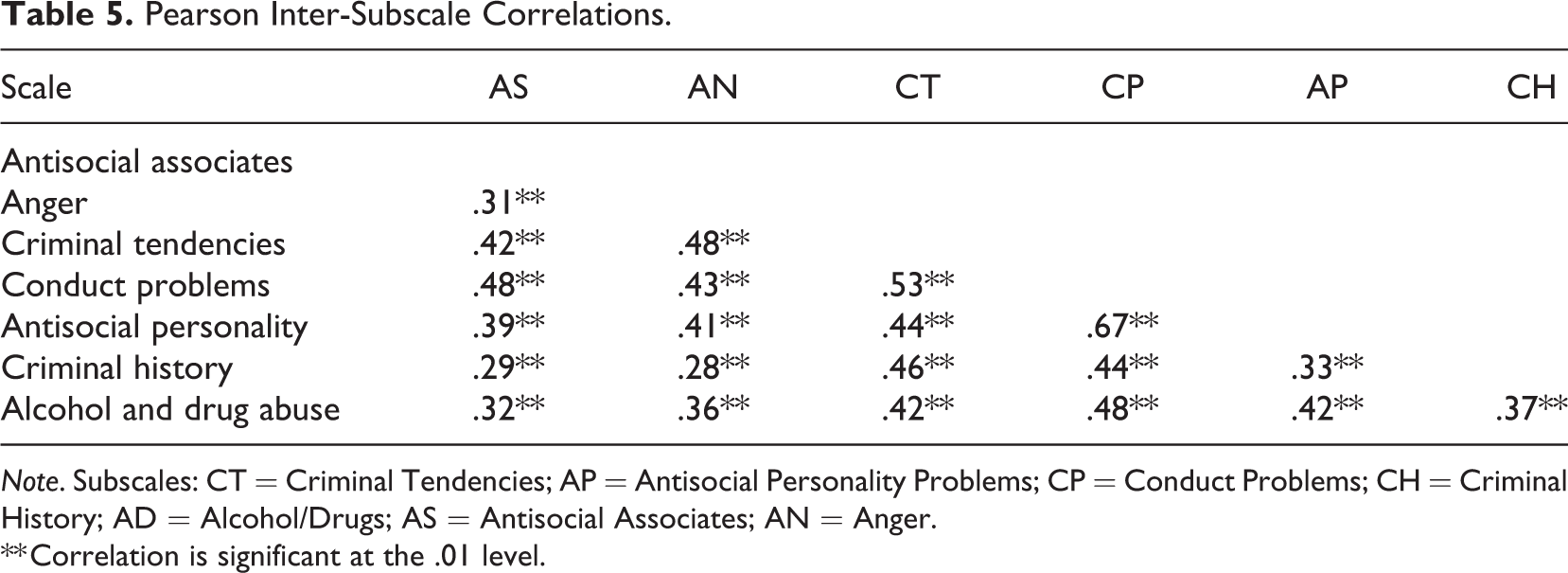
Note. Subscales: CT = Criminal Tendencies; AP = Antisocial Personality Problems; CP = Conduct Problems; CH = Criminal History; AD = Alcohol/Drugs; AS = Antisocial Associates; AN = Anger.
** Correlation is significant at the .01 level.
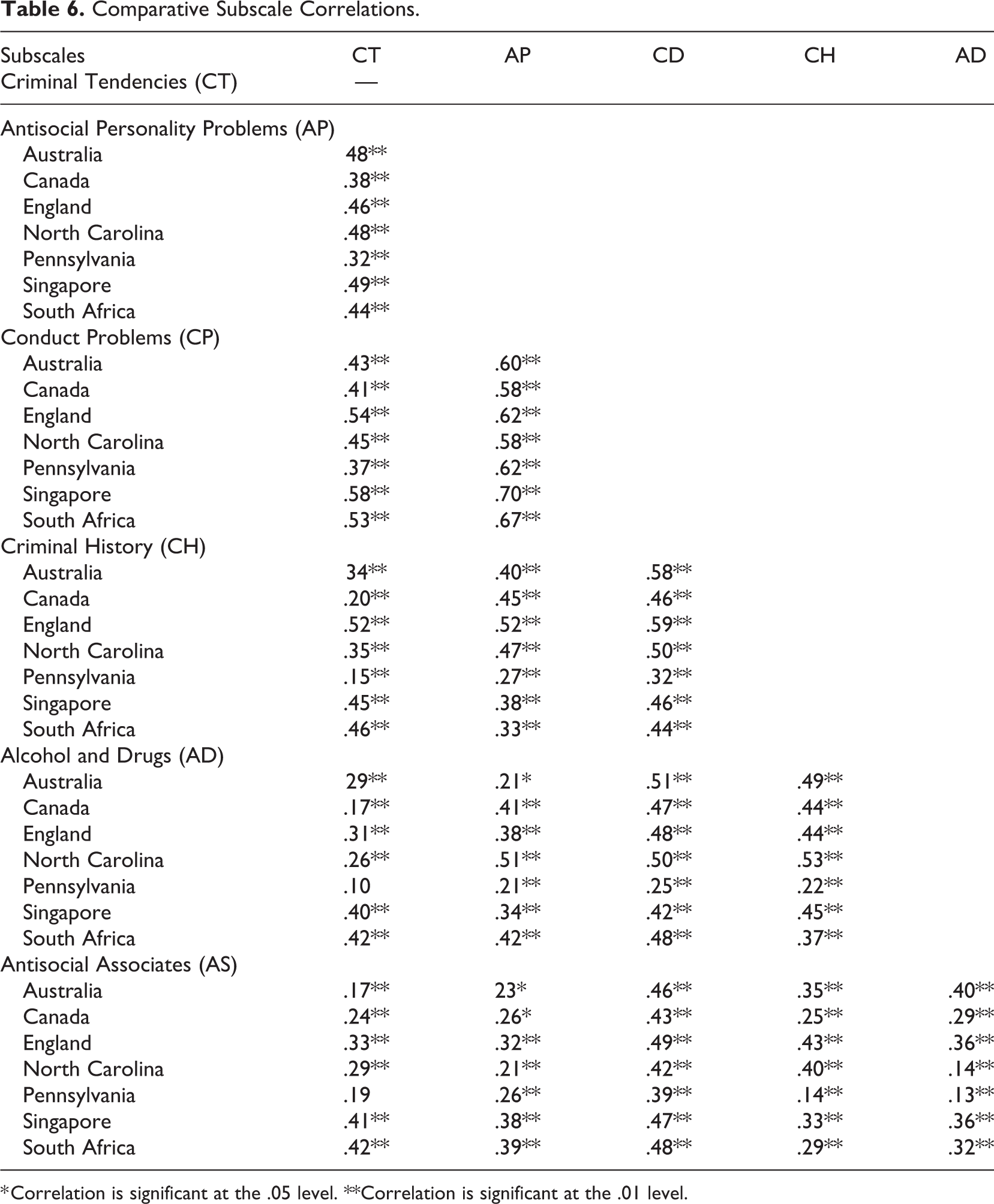
SAQ subscale correlation coefficient measures emanating from research conducted in AUS, CA, ENG, SING, and USA (cf. Loza et al., 2004) are summarized for comparison in Table 6, which show internal consistency across the various samples.
Comparative Subscale Correlations.
* Correlation is significant at the .05 level. **Correlation is significant at the .01 level.
Table 6 indicates that the statistics generated by this research (SA) are consistent with the results of previous studies and follow the same statistical trends as the other countries mentioned. The abovementioned correlational techniques are bivariate in nature, involving two variables only. Multiple linear regression is a technique through which the direct, as well as collective relationships of several independent variables to the variation of a dependent variable, can be observed (Terre Blanche et al., 2006). It is used to build statistical models to predict the scoring of the outcome variable based on scores from the predictor (independent) variable (Keller, 2016, p. 132).
According to Loza (2005), there is a tendency for offenders with high SAQ (total) scores to also score in the elevated range on the Criminal Tendencies subscale. A multiple linear regression model to compare the collective relationships of the subscales was created, vide Table 7. Except for the Antisocial Personality subscale, which was marginal, the model is significant (r = .66, r 2 = .428).
Predictive Regression Model.
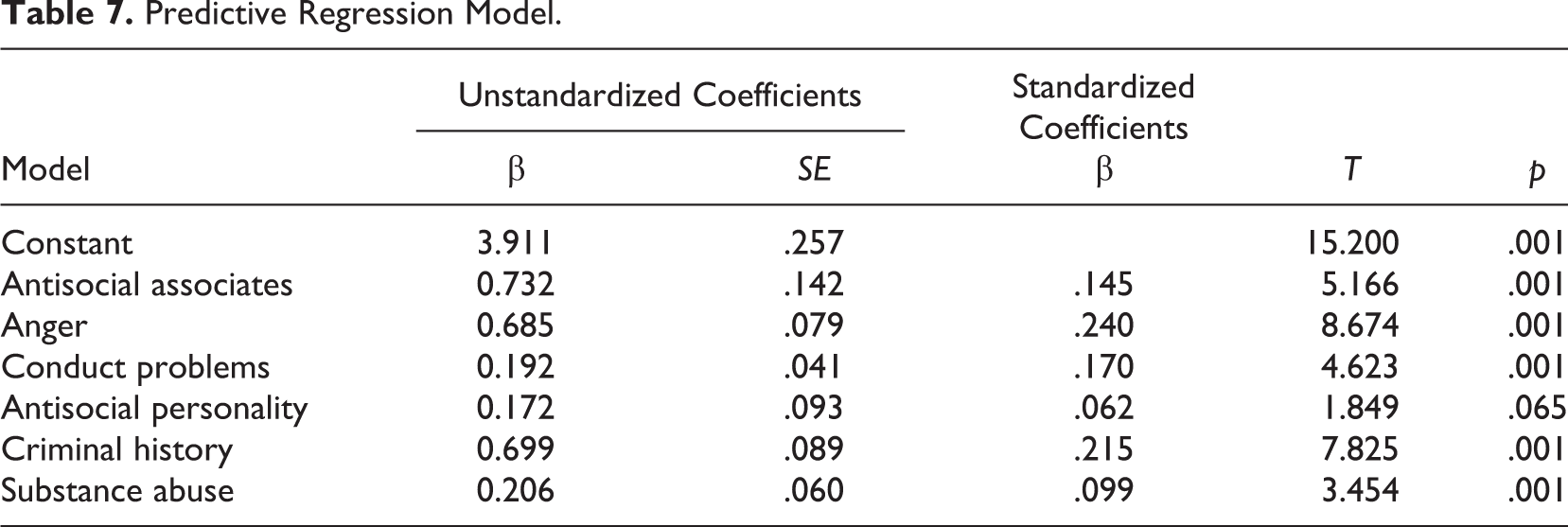
Multiple linear regression analysis confirmed the predictive significance of criminal tendencies in itself, coinciding with the Antisocial Associates, Anger, Conduct Problems, Criminal History, and Substance Abuse subscales.
The results of this study confirm that the Internal Consistency subscale coefficients and substantial inter-construct relationships in this sample. Comparison with the Cronbach’s α and correlational coefficient results from international studies conducted in North America, ENG, Europe, SING, and AUS confirm the internal consistency in diverse conditions and circumstances. This confirms the effectiveness of the SAQ in confirming the indicators of risk and the management of recidivism in the South African multicultural context. Anger issues emerged to be substantially associated with criminal tendencies, conduct problems, and antisocial personality problems in the South African context. This study confirms previous research that the SAQ can be reliably utilized to manage recidivism through the assessment of criminogenic needs or dynamic risk factors.
Limitations
Like with all studies, the empirical results of this study should be considered in the light of probable limitations.
Many offenders do not have a working knowledge of English and were consequently excluded from the study. The researchers did not have access to the personal information of the offenders, and therefore no information such as their qualifications and prior offenses could be confirmed. This made the distinction between perpetrators of violence and nonviolent offenders untrustworthy as far as their offending histories are concerned. Although the research results provided some evidence of the cross-cultural applicability of the SAQ in the current study, the research participants comprise of a nonprobability sample. Subsequently, the wider application of these results is limited and should not be interpreted beyond the scope of the research group in question. The geographical conditions within which the research was conducted as well as financial constraints did not allow for the test of consistency of measurement based on test–retest metrics.
Hopefully, the results of this study will open up avenues for follow-up research, free of these limitations.
Footnotes
Acknowledgment
I would like to thank Professor Thabiso Mashaba who collaborated in the empirical data collection.
Declaration of Conflicting Interests
The author declared no potential conflicts of interest with respect to the research, authorship, and/or publication of this article.
Funding
The author received no financial support for the research, authorship, and/or publication of this article.