



Abstract
Previous studies revealed that an alarming number of family therapists exclude children from family therapy, largely because they lacked comfort with children and perceived that their training, especially in play therapy, was inadequate. Implementing findings from one earlier study, a child-focused course was designed to address these issues. This current study examined students’ perceptions of the efficacy of this course in developing their knowledge and skills to treat children individually and in family sessions. Following institutional review board approval, 43 out of the 44 students enrolled in the child course over five semesters agreed to participate. A qualitative content analysis was utilized to explore participants’ written responses to open-ended questions on a questionnaire administered in the last class. Four overall themes emerged from the data: (1) training, (2) skills, (3) impact of training, and (4) knowledge. Frequency counts revealed the three subthemes/topics with the most comments: (1) the benefits of hands-on training, (2) students plan to continue child-focused training, and (3) general comments about the training in play interventions. Many reported increased comfort with children, and that they were more likely to work with children. Students’ comments reflect a significant increase in their perceived ability to work effectively with children and families. The findings indicate that many students experienced personal growth and significant development of their child-related knowledge, skills, and use of play therapy techniques. Included are a description of the course, recommendations, and limitations of the study.
Keywords
In recent years, there has been a clamor for family-based treatment services for young children in order to address the significant and distressing mental health needs of children (Miller & McLeod, 2001). However, according to Miller and McLeod, the “the majority of family practitioners work from an individual perspective” (p. 375). While family therapists may feel more comfortable working with adults, Montalvo and Haley (1973) emphasized a danger in focusing too much on the parents and “losing the child in the process” (p. 234). Some believe that change in the parents will trickle down to the children (Wachtel, 1991), but children’s needs often go unaddressed and their problems are not always eliminated when family or couple issues are resolved. Wachtel (1991) stated, “Despite being relieved of his or her role as symptom-bearer for the family, a child may remain troubled” (p. 46). Yet many of the founders of family therapy (e.g., Ackerman, 1970; Keith & Whitaker, 1981; Minuchin, 1974; Montalvo & Haley, 1973; Satir, 1964) considered it vital to include and playfully engage children and families because children reveal much about the family structure, relationships, and interactional patterns. So why are family-friendly services lacking in the treatment of children?
Literature Review
Several studies explored the widespread practice of excluding or marginalizing children from family sessions (e.g., Cederborg, 1997; Hines, 1996; Johnson & Thomas, 1999; Korner & Brown, 1990; Lund, Zimmerman, & Haddock, 2002; Stith, Rosen, McCollum, Coleman, & Herman, 1996). For example, in a study of 173 family therapists, Korner and Brown (1990) found that 86% of participants included children in less than 25% of family sessions and 40% never included them. Of those who did include children, 31% did not actively involve them in therapy. Johnson and Thomas (1999) found about half of their subjects excluded children based on personal comfort; those who were more comfortable were more likely to include them. While play therapy has been shown to be effective, especially when parents are involved (Bratton, Rhine, & Jones, 2005), participants in the Johnson and Thomas study felt their child-focused training, especially in play therapy, was inadequate. The perceived level of competence with children predicted inclusion practices and mediated the relationship between actual training and the inclusion of children in family sessions.
Korner and Brown (1990) concluded that exclusion was directly related to the amount of sole-focused course work, supervision, and therapists’ perceived adequacy of their training. Johnson and Thomas (1999) recommended sole-focus child training in the manner of a workshop (e.g., hands-on training). Both Hines (1996) and Johnson and Thomas highlighted the need for guidelines for more effective child-focused training for family practitioners.
Delphi Study
In response to the need for child-inclusive training guidelines, Sori and Sprenkle (2004) conducted a modified Delphi study. This study utilized a carefully selected, diverse (from various theoretical orientations and backgrounds) panel of experts on child- and family-focused training and treatment. Panelists communicated anonymously through a series of questionnaires and ultimately reached consensus on numerous items (see Stone Fish & Busby, 1996).
The panel was asked to make recommendations on (a) when children should be excluded from family therapy, (b) content areas, (c) readings, (d) important skills, (e) training methods to increase trainee comfort, and (f) play techniques to integrate in family sessions. The Delphi method was modified to include alternating rounds of questionnaires followed by interviews to clarify, thicken, and explore any discrepancies in the data (Sori & Sprenkle, 2004). This panel of experts reached consensus on numerous recommendations on designing a child-focused course. These findings informed the design, content, and training methods in the child course that is the focus of this current investigation. The findings are summarized below.
Inclusion and topics
According to panelists, children generally should be included in family sessions unless a sensitive topic (such as sex) is being discussed, or parents are deciding how to share sensitive information. Topics should include child development; family therapy, play therapy, and the history of both; play activities; integrating play and family therapy; research; practical methods to engage both children and adults; attachment; parenting; ethics; and family-focused treatment for childhood problems (Sori, 2000; Sori & Sprenkle, 2004, p. 484).
Skills
Important skills panelists identified included being playful and creative. They should use humor, like children, and be able to join and build rapport. Also important is the ability to engage both children and adults and to allow children’s voices to be heard. Therapists should know how to talk to children of all ages and be able to facilitate positive parent–child interactions (Sori & Sprenkle, 2004, p. 488).
Training to increase comfort
Panelists believed that comfort with children comes through experience, training, and supervision. Trainees should first observe and then do the interventions themselves. They need to find their spontaneous, playful, and creative parts and then coach parents to interact playfully with their children (Sori & Sprenkle, 2004).
The training methods identified to increase trainees’ comfort and skills in working with children and families were (a) lecture (to give theory, rationale, research, etc.), (b) followed by demonstration (live or video), (c) followed by practice (role played), (d) followed by actual practice (with children), (e) followed by individual skill feedback, (f) use of training videos to demonstrate methods, and (g) use of an apprenticeship model (Sori & Sprenkle, 2004, p. 489).
Play
This diverse panel reached consensus for only two specific play therapy techniques: the use of nonverbal therapeutic art techniques and the family mural drawing. However, many agreed on additional items, including the use of child-centered (e.g., Axline) nondirective play therapy; directive play techniques with children and families; puppets, art supplies, clay, and dollhouse; sandplay to help children express symbolically what is difficult to verbally articulate; and specific art techniques to use with children and families (Sori & Sprenkle, 2004).
Readings
After generating an extensive list of possible readings, expert panelists reached consensus on only 1 item (Chasin & White, 1989). This presumably reflected panelist diversity. However, numerous experts recommended additional items, including works by Combrinck-Graham (1989), Gil (1994), Johnson and Thomas (1999), Keith and Whitaker (1981), and Schaefer and Carey (1994; see Sori & Sprenkle, 2004, p. 487).
Design of Child-Focused Course
The above findings from the Sori and Sprenkle (2004) Delphi study were implemented in the design of a sole child-focus course. In addition, the course utilized Johnson and Thomas’s (1999) suggestion to use workshop-like, hands-on training. An overview of the course follows.
Training
The course utilized all of the training methods recommended by the Delphi panel (lecture, demonstrations, practice, individual feedback, and training videos; Sori & Sprenkle, 2004). Hands-on training provided opportunities for students to gain confidence in their skills by doing the activities themselves and in role-plays before attempting them outside the classroom. Students received written feedback on their skills from their peers, volunteers, and the instructor. Training videotapes/DVDs (e.g., Gil; Oaklander; Steiner; VanFleet) were used to illustrate activities and deepen students’ understanding of various theoretical approaches.
Topics and readings
Students discussed the assigned readings on blackboard to allow more class time for experiential activities. The topics followed the recommendations from Sori and Sprenkle (2004) listed above. The readings evolved over time as new materials emerged in the literature. In addition to those recommended in Sori and Sprenkle, we found many texts and articles useful, including references on treating adolescents and using play. Depending on the theoretical orientation of the instructor and course objectives, there are many to consider (e.g., Axline, 1964; Bailey, 2005; Berg & Steiner, 2003; Gallo-Lopez & Schaefer, 2005; Gil, 2014; Gil & Sobol, 2005; Malchiodi, 2012; Oaklander, 1988; Schaefer, 2011; Schaefer & Carey, 1994; Sori, 2006; Sori & Hecker, 2003; Sori, Hecker, & Bachenberg, 2015; VanFleet, 2014). This list includes seminal works by renowned authors and more recent items that reflect the breadth and depth of the literature on child therapy and family play therapy.
Interventions
This class emphasized activities recommended in Sori and Sprenkle (2004). These included the play genogram, family puppet interviews, sandtrays, art for individuals and families, and clay. Additional methods were included to engage children, families, and teens; to train parents in Filial therapy; and to address emotions and specific issues. The majority of activities could be used with children individually or in family sessions and in clinical and school settings.
Assignments
Assignments included online discussions of the readings, practicing activities (e.g., art, play genogram, family puppet interviews, family aquariums, and sandtray) in and outside of class, analyzing the classic book Dibs in Search of Self (Axline, 1964), conducting healthy family interviews, and a group project to create playful unique interventions for children and/or families. Several of students’ original interventions have been published, and this course was highlighted in the Psychotherapy Networker (Cooper, 2005).
Research
The current study assessed graduate students’ views on the efficacy of a child-focused course developed from the findings in Sori and Sprenkle (2004). This research took place in a Council for Accreditation of Counseling and Related Educational Programs (CACREP)-accredited counseling program at a Midwestern university. The course was designed to train students to become more comfortable with children and confident in their ability to integrate play therapy methods in the treatment of children and families. The overarching goal was to address the widespread exclusion of children in family therapy and to increase children’s participation in ways that are meaningful and beneficial to all family members.
Method
The study used purposive sampling (White & Marsh, 2006) of students enrolled in the child-focused course who, following institutional review board (IRB) approval, consented to participate. At the end of the last class, subjects answered open-ended questions designed to assess their experiences in the course. Data were collected over five consecutive semesters. Using a qualitative content analysis, comments with the same words/meaning were categorized to condense the data. Two coders independently analyzed the data until agreement was reached on the overall themes and topics.
Participants
Consent was obtained and fully explained by a research assistant (RA) in accordance with IRB and ethical guidelines. Students were free to choose to participate or not, with no impact on their grade. RAs administered all forms and questionnaires and assigned random numbers to maintain subject anonymity. All raw data and student information were kept confidential in a locked file to which only the RAs had access.
Forty-three (98%) of the 44 students enrolled in the child class over the course of this study (five semesters) agreed to participate. Of those who provided demographic information, 19 (50%) were in the mental health track, 11 (29%) were in the school track, and 8 (21%) were in the marriage and family track in a graduate counseling program. Thirty-five of the students were female, five were male, and the mean age was 32.22 years. This was a heterogenic group with 19 students self-identifying as Caucasian, 15 as African American, 4 as Hispanic Latino Spanish, 1 as Asian, and 1 as biracial. The course was taught by the primary investigator or another well-qualified instructor with specialized training who had taught the course both with the primary investigator and independently for several years. Instructors used the same syllabi, readings, content, assignments, and teaching methods.
Data Collection
The questionnaire was designed by the primary investigator for this project and contained six open-ended questions given to participants at the last class. The questions asked students to reflect on their experiences in the course and to comment on the following: (a) the three most important things they learned in the course, (b) what they liked best, (c) what were the best training methods, (d) favorite activity, (e) the overall impact of the course and whether now they are more likely to work with children, and (f) changes they would suggest.
Qualitative Content Analysis
Qualitative content analysis involves systematic investigation of written, verbal, or visual information (Elo & Kyngas, 2007). It is “a process of identifying, coding, and categorizing the primary patterns in the data” (Patton, 1990, p. 381). Content analysis can reduce a large amount of data into categories, allowing patterns and themes to emerge. Content analysis is time-consuming and rigorous, and while there are no clear-cut steps, the researchers followed the recommendations of several authors (e.g., Elo & Kyngas, 2007; Gambrel & Butler, 2013; Weber, 1990; Kondracki, Wellman, & Amundson, 2002). For example, the authors described the selection of participants, data collection, and analysis to increase external validity (Elo & Kyngas, 2007). During analysis, the researcher must code data to condense the words or phrases into fewer categories with the same content and meaning. In this study, the themes and categories emerged from coders’ repeated analysis of the data.
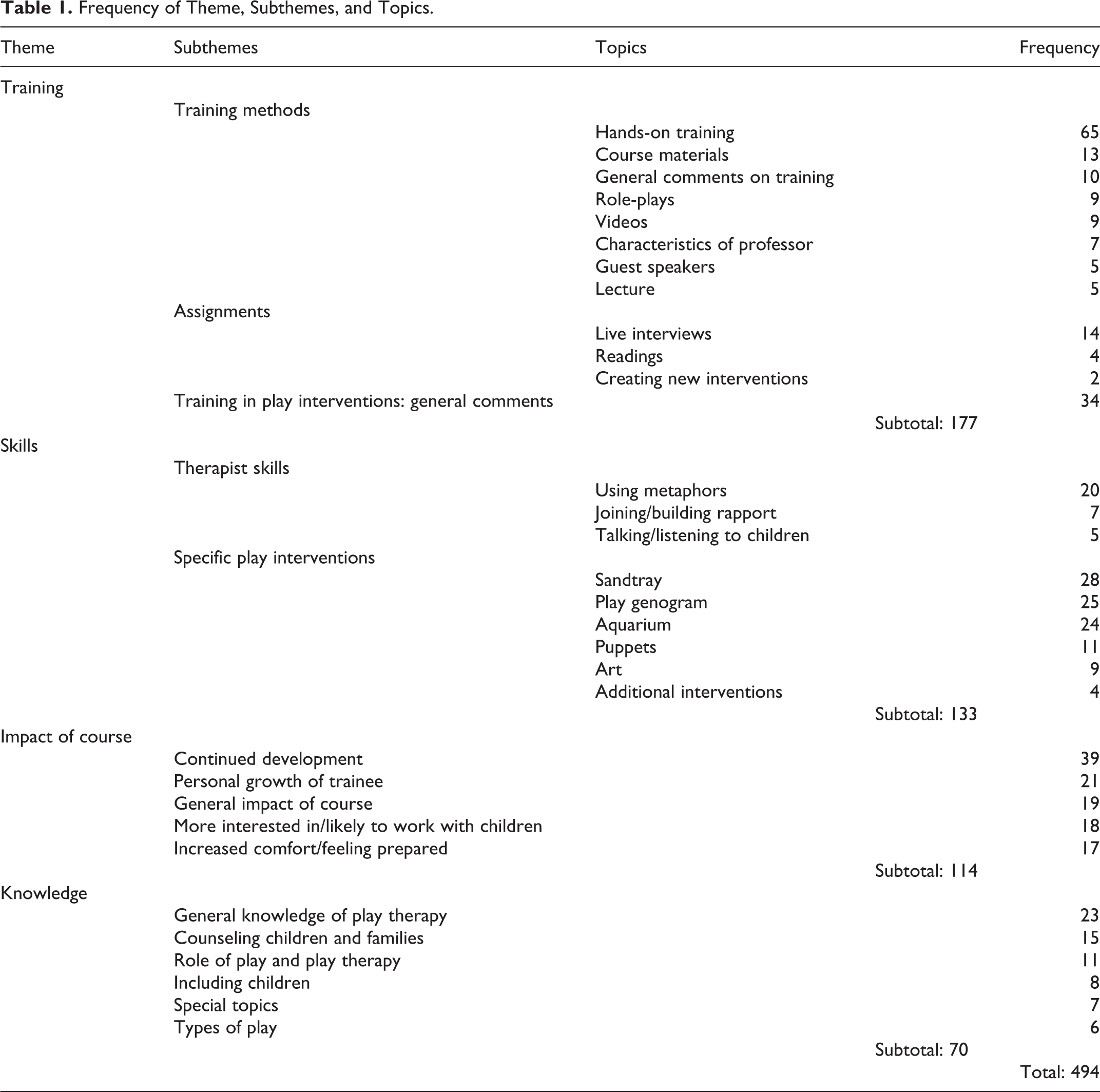
According to Weber (1990), reliability is important for readers “to make valid inferences from the text,” and that “it is important that the classification procedure be reliable in the sense of being consistent: different people should code the same text in the same way” (p. 12). In this study, the other instructor of the course (who was not part of the research team) became the second reviewer and independently coded the data. Coders discussed discrepancies until they reached agreement on categorizing 95% of the items. This process was repeated a few weeks later, until coders reached consensus on all themes, subthemes, and topics, which increased interrater reliability. The primary investigator conducted a final review of the data, and no changes were indicated. This process increased intrarater reliability and followed the consensual qualitative research model of Hill, Thompson, and Williams (1997) (cited in Priester et al., 2008). While frequencies should not determine the merit of a study, they add another dimension to the findings, since items most mentioned are thought to be most important. The authors utilized an “absolute topic frequency” approach (see Schilling, 2006), resulting in 494 responses that fit the themes, subthemes, and topics discussed below (see Table 1).
Frequency of Theme, Subthemes, and Topics.
Results
The qualitative content analysis yielded four overarching themes: (a) training, (b) skills, (c) impact of class, and (d) knowledge. All major themes (e.g., skills), subthemes (e.g., skills in specific play interventions), topics (e.g., skills with play genogram), and frequencies are listed in Table 1. The most frequently reported topics were (a) hands-on training (65), (b) continue to develop skills (39), and (c) general comments on training in play interventions (34). Elo and Kyngas (2007) warn not to summarize the findings without including numerous excerpts or “the richness of the original data disappears” (pp. 113–114). Thus, samples of student comments are included.
Theme I: Training
This course utilized the training methods endorsed by panelists in the 2004 Delphi study by Sori and Sprenkle (lecture, demonstration, practice using role-plays, practice outside class with children, individual skill feedback, and training videos to demonstrate methods), with an emphasis on hands-on training (Johnson & Thomas, 1999). Training was the theme with the most responses (177; 36% of total), and subjects provided a plethora of positive comments.
Training methods
By far the topic that was most reported in the study was the effectiveness of hands-on training (65 responses). Students overwhelmingly believed that doing the activities themselves was the best approach to learning, and in understanding how children and families would experience the process. This is evident by comments such as: This class had a powerful impact on me. It was less about papers, quizzes, and discussion of theorists and more about hands-on counseling and intervention. I wish more classes were like this because you learn in doing.
Under general comments on training, one wrote, “All the activities we did in class helped me learn more than in any other class I have taken.” Another commented, “The application piece was essential in causing me to ‘believe in’ the validity of play therapy.” Students also emphasized role-plays, training videos, discussions, and live supervision during activities.
Assignments
Students highlighted three assignments: live interviews, readings, and creating a new intervention. Fourteen discussed the value of the live interviews, where they utilized play activities with a healthy child/family after first practicing them in and outside of class. One reported learning “an abundance of information” from the live interview, and many wrote how valuable it was to practice using the play techniques with mock clients.
Training in play interventions: General comments
In the study by Johnson and Thomas (1999), many subjects reported their child-focused training was inadequate, especially in play therapy. This subtheme/topic had the second highest number of responses (34) in the study. Students learned the importance of play therapy, when to use it, and how to select and process activities. One wrote, “This class was able to bring the techniques and processes to life so I better understood.” The high number of positive comments reflects the overall effectiveness of the training methods and supports the recommendations of Sori and Sprenkle (2004).
Theme II: Skills
There were 133 comments (27% of total), and this theme had second highest number in the study. There were two subthemes, therapist skills and specific play interventions. The topics within each subtheme with highest frequencies are discussed below (see Table 1).
Therapist skills
The topic with the most responses (20) was the Use of Metaphors, a vital skill in play therapy. Numerous students listed “staying in the metaphor” as one of the most important skills they learned. One stated, “I was really able to understand the importance of staying in the metaphor and how imperative it can be in the counseling process.” This is significant because using the objects a child creates or selects as metaphors is a difficult skill to master. Other students highlighted the significance of joining, building rapport with children and families, and knowing how to talk and listen to children.
Skills with specific play interventions
This subtheme had 101 student comments. Several of the activities students emphasized (see Table 1) were recommended by expert panelists in Sori and Sprenkle (2004). Activities with high frequencies are discussed below.
Many listed sandtray as their favorite activity. Students saw them as creative, versatile, and very therapeutic. One wrote a sandtray “gives a sneak preview of underlying issues.” Another reflected on personal benefits, “… because the professor pulled so much of my life from the sandbox. It was remarkable.”
Another favorite was the play genogram (Gil, 2003; 2014; Gil & Sobol, 2005). Several commented on the personal benefit of sandtray, and that students had a new perspective on their families. One student reflected, “The family genogram was my favorite because it presented a lot unconsciously that helped me further understand why I chose certain figurines.” Many also favored the family aquarium (Gil, 2014; Gil & Sobol, 2005) because of how much meaning was revealed and because students gained insight into their own families. These comments speak to the clinical value and personal benefits of these activities. It indicates that the course was largely successful in teaching important skills, especially in play therapy.
Theme III: Impact of Course
Within this theme were 114 (23%) comments, the third highest in the study. There were five subthemes found within impact of course (see Table 1). Below are examples of student comments that reflect how they were impacted by the course.
Continued development
Of the 43 subjects, 39 (90%) reported that they planned to continue to learn about counseling children. This subtheme had the second highest number of responses in the study. Numerous students described their desire to continue to develop their child-related skills, especially in play therapy. Some were already reading beyond course materials and were collecting miniatures. In the words of one, “This was one of the best classes I have ever had. I will definitely continue.” The number of responses and the strength of the comments make this an important finding.
Personal growth of trainee
Many highlighted a newfound ability to be creative and to find their own “playfulness.” Others enjoyed play more, had more fun, gained insight about their own families, and developed a greater appreciation for working with children. One noted: Learning to play with children expanded my vision to work with children …. Since I started this course I have been playing more with children and I talk to them. In fact, I do not miss an opportunity to connect with a child since I started this course.
The authors believe this personal growth and expanded vision will motivate students to continue to utilize play techniques in their professional careers.
More interested in/likely to work with children
This was a major goal of the course. Given the strength of the comments above, it is not surprising that many participants stated they were more likely to work with children. This subtheme included some of the strongest comments in the study, and many who had not previously planned to work with children had changed their minds. According to one student, “The impact this class had on me was extensive. I am really interested in working with kids now and using some of the techniques learned in class.” In the words of another student: My passion before this class was to work with adult female survivors of trauma and abuse. Since this class, I have a much bigger desire to learn more about child’s play and to work with children. I’m even considering changing my track ….”
Increased comfort/feeling prepared
Johnson and Thomas (1999) found that therapists in their study made inclusion decisions based largely on their comfort level and perceived competence with children. Therefore, these became major goals of the course, and many students did report an increase in their comfort and preparedness. This is an important finding, suggesting that the course was quite effective with many students. One wrote, “The class has made me far more comfortable with working with small children. I feel as though I know enough techniques and interventions to explore the world of a child.” Another commented that “Overall, this class has enlightened me and allowed me to step out of my comfort zone. I never welcomed change like this and I’m excited about the idea of working with children. Awesome class!”
Theme IV: Knowledge
This theme contained six subthemes listed in Table 1. There were a total of 70 responses (14% of total) under knowledge. These are highlighted with student responses that reflect the knowledge students gleaned in this course.
General knowledge of play therapy
Twenty-three students highlighted their knowledge of various play therapy techniques (e.g., sandtrays, play genograms, and family aquariums), and the meaning behind them. Several indicated they would use this knowledge when they counsel children. Many also recognized that both children and adults can engage in play therapy. This reflects a good deal of knowledge accumulated in just one semester.
Counseling children and families
Many learned the importance of respecting children and including them in family sessions, helping their voices to be heard, and incorporating play in family therapy. Integrating play and family therapies was another goal of this course, and all these were items that reached consensus among expert panelists in Sori and Sprenkle (2004).
Trainees’ Suggestions
Responses to the open-ended question “What would you change about this course?” were analyzed separately due to the uniqueness of the question. Eight said they would change nothing about the course. However, this course was reading intensive, and eight students, almost all who took the course in the summer, suggested fewer readings. Others proposed extending the course, reflected in the words of one student, “I think it [the course] should be extended. It is an important course for all counselors and another section of this subject would be beneficial.” The requests for a follow-up course and the recommendations to change nothing taken together with the positive comments reported above, reflect how much students valued the course overall.
Discussion
The training methods used in this child-centered course engaged students in a unique manner different from classes that relied more heavily on lecture, quizzes, and tests. The topics, content, and methods were based on the findings of Sori and Sprenkle (2004) and also included recommendations of Johnson and Thomas (1999) for a sole-focus child course that uses hands-on training methods. A striking number of the current findings had been identified in Sori and Sprenkle. Students learned by doing the activities, and this hands-on training was the most cited topic in the entire study and seemed to have made the biggest impact on them. They reported it engaged them in the course and gave them firsthand knowledge of how clients would experience the interventions. They learned by doing, especially in the live interviews where they implemented activities from class with healthy children and/or families. The workshop-like training appears to have been a key in promoting student learning, increasing comfort, and building confidence.
As students became familiar with play materials (e.g., sandtrays, miniatures, puppets, and art materials), they developed new skills and confidence in their ability to use the materials effectively. These training methods engaged students who then became comfortable engaging children and parents using the materials and activities learned in this class. The activities most favored were those that brought about personal growth and fostered insight in trainees (e.g., sandtray and play genogram) and that encouraged trainees to find their playfulness within themselves. Students grew in their own creative abilities and appreciated the creative processes that often occur when play is used with children individually and in family sessions.
One of the most encouraging findings was that students overwhelmingly reported they would continue their child-focused training. Follow-up training, practice, and supervision with children and families will continue to increase students’ comfort and confidence. Thus, they may become even more likely to treat children and include them in family sessions.
This study is an important step in determining best practices in training graduate students to work effectively with children and adolescents both individually and in a family context. The implications are that the course led to positive effects for graduate students, which increased their desire to work with children and utilize play therapy. The results indicate that this type of training can change students’ attitudes about working with children and help them develop the knowledge and skills to do so effectively. These findings offer a model of a sole-focus child course that should be an important part of any counseling or family therapy curriculum.
Limitations of the Study
This study had a relatively small sample size; however, according to Patton (1990), “There are no rules for sample size in qualitative inquiry” (p. 184) because it is a “trade-off between breadth and depth” (p. 184). This sample reflects the total number of participants across five semesters of data collection. Because this was a quasi-experimental design that used a purposive sample and not random assignment of subjects, the generalizability of the results to other populations is questionable. However, the transparency in the data analysis process and the efforts to boost both interrater and intrarater reliabilities add to the veracity of the results. These findings reflect the views of students from one institution within a particular culture and context. Other conclusions may have occurred if different samples or multiple institutions had been used.
Recommendations
A child-focused course such as this should be part of an overall curriculum to expand students’ skills, knowledge, and comfort treating children and integrating play therapy in individual and family counseling. The authors suggest assigning two live interviews with healthy volunteers to develop students’ comfort and skills before seeing clients. Follow-up practicum and internship courses that offer live or videotape supervision can foster further competence and comfort with this population. In addition, using play techniques in supervision can promote personal and professional growth in supervisees. For example, supervisors may invite supervisees to do a countertransference activity such as drawing or sandtray as they reflect on a difficult session or case (Gil & Rubin, 2005). The authors hope that others will use this information to design similar courses and interpolate these training methods. Then replication studies may determine if similar results are obtained.
Footnotes
Acknowledgments
The authors wish to thank Dr. Shannon Dermer, Division of Psychology and Counseling, Governors State University, and David Nalbone, Division of Psychology, Purdue University Calumet, for reviewing this manuscript and Dr. Volker Thomas for his expertise and for sharing his syllabus.
Declaration of Conflicting Interests
The author(s) declared no potential conflicts of interest with respect to the research, authorship, and/or publication of this article.
Funding
The author(s) received no financial support for the research, authorship, and/or publication of this article.