




Abstract
This study introduced an individual difference construct of willingness to compromise and examined its implications for understanding and predicting career-related decisions in work settings. In Study 1 (N = 53), critical incidents of career decisions were analyzed to identify commonalities across different types of career-related compromises. In Study 2 (N = 171), an initial 17-item scale was developed and revised. In Study 3 (N = 201), the convergent and criterion-related validity of the scale was examined in relation to specific personality traits, regret, dealing with uncertainty, career adaptability, and a situational dilemma task. Willingness to compromise was negatively related to neuroticism, and positively related to dealing with uncertainty, openness to experience, and career adaptability; it also predicted responses to the situational dilemma task. Results provided support for the reliability and validity of the scale.
Organizational reality is such that many career-related decisions need to be made within the course of one’s work career. Significant changes in labor markets and organizational structures (e.g., downsizing or expansion), as well as one’s personal circumstances and goals necessitate decisions that require trade-offs among specific aspects of the decision alternatives. Within the context of a career-related decision, compromise is typically defined as accepting an alternative that is inferior on some aspect compared to a desired alternative (Gati, 1993; Ginzberg, Ginsburg, Axelrad, & Herma, 1951). Specific career-related trade-offs (e.g., work–family issues) have been extensively studied in the past two decades because they predict consequential personal and organizational outcomes. For example, individuals who reported having compromised also report lower life satisfaction and well-being (Carr, 1997), and greater intention to quit their jobs (Oceansey, 2000).
This article seeks to make two contributions to the literature on career decision making. First, the literature in disparate domains is briefly reviewed and an argument is made for a general attitudinal construct termed willingness to compromise. It is argued that a general construct such as willingness to compromise allows us to understand and make predictions about compromise decisions across a range of career contexts. Second, a scale was developed to measure willingness to compromise. Initial validation efforts provided evidence that the scale was reliable and predicted responses to situational dilemmas involving compromise decisions.
Specific situations in which career compromises have been studied include research looking at how people choose between interests versus pragmatic concerns (e.g., Armstrong & Crombie, 2000; Heckhausen & Tomasik, 2002), work versus family time (e.g., Hayman, 2009; Lambert, Marler, & Gueutal, 2008; Rothbard, Phillips, & Dumas, 2005; Shockley & Allen, 2010), staying in one’s current location versus relocating (e.g., Boies, & Rothstein, 2002; Brett, Stroh, & Reilly, 1993; Tharenou, 2008), and choosing to be underemployed (Maynerd, Joseph, & Maynerd, 2006; Watt & Hargis, 2010; Wilk, Desmarais, & Sackett, 1995).
Although an approach focused on specific behaviors within narrow domains has some merit, this article argues for an approach wherein these behaviors qualify as instances of career-related compromise. As there are likely commonalities among different types of compromise regardless of the specific situation within which the compromise occurs, a general construct of willingness to compromise could explain behavior across a range of research domains. As stated elsewhere (Hanisch, Hulin, & Roznowski, 1998), matching narrow attitudes to specific behaviors yields impressive practical utilities (e.g., Fishbein & Ajzen, 1975). However, a benefit to studying broad constructs is that it allows us to theorize about a family of related thoughts, feelings, and behaviors, rather than just behaviors that result from a specific decision (e.g., relocation or academic choice). Second, specific career decisions remain low base rate events that may result in badly skewed distributions. Using a broad construct rather than a narrow intention for specific behaviors, we can circumvent problems associated with badly skewed distributions.
Despite having theories and empirical findings supporting the fact that people are frequently required to compromise across organizational contexts (Fouad & Bynner, 2008; Savickas, 2007), the concept of compromise has had less impact on organizational psychology than might be expected (Greenhaus, 2003; Pryor, 1987). This omission is significant because individual differences in willingness to compromise are potentially related to organizational outcomes such as work attitudes and behavior (Gottfredson, 2005; Heinz, 2003), as well as experienced affect and psychological well-being (Carr, 1997; Oceansey, 2000). One possible reason that a broad construct of willingness to compromise has not been studied in relation to organizational phenomena might be that a reliable and valid measure of the construct does not currently exist. Thus, the purpose of this research is to explore the construct of willingness to compromise and to outline some first steps toward the development of a reliable and valid measure of the construct.
Willingness to Compromise and Related Concepts
Willingness to compromise is defined as the propensity to accept an alternative career-related option that was not one’s initially desired option. Such a compromise might involve accepting an option that is inferior to one’s desired option because of some internal or external barrier, or accepting an option that is different from one’s desired option because of some perceived trade-off between different aspects of the two options. For example, one might choose an alternative option because the desired option required too much effort to obtain (internal barrier), required relocation to a different state or country (external barrier), or provided very exciting work but insufficient pay to maintain a particular standard of living (perceived trade-off).
Although each decision is constrained by its unique situation, a broad construct of willingness to compromise should transcend situational determinants. Willingness to compromise is conceptualized as a reasonably stable individual difference that describes how a person interprets and responds to various career-related decisions. As such, it should provide the ability to predict outcomes, in this case behavioral responses to particular career-related choices, in novel or different situations (Funder, 2001).
Maximizing and Satisficing
Normative decision theories have longed assumed rational decision makers that seek to maximize their outcomes, given complete information and perfect computational accuracy in determining the utility of each option. Because complete information is seldom attainable, and because it is cognitively effortful to determine the optimal choice, Simon (1955) suggested that most people simply seek a “good enough” option. Maximizing may thus be defined as a tendency to utilize resources such as time, cognitive effort, or money in an attempt to obtain an incrementally better outcome (Diab, Gillespie, & Highhouse, 2008). And satisficing may be defined as a tendency to accept an outcome once it has satisfied some minimum standard of acceptability. Although Simon (1955) conceived of satisficing as a universal tendency, Schwartz et al. (2002) have provided evidence that there are reliable individual differences in people’s tendency to maximize versus satisfice. It is important to note that Schwartz et al. conceptualized the maximizing tendency as a unidimensional construct, with maximizing and satisficing anchoring the ends of the continuum. Thus, one cannot be both a maximizer and a satisficer simultaneously.
Given these definitions, it seems reasonable that satisficing and willingness to compromise are closely related concepts. Whereas satisficing is about choosing a good enough option, compromising is about foregoing a desired option for one that is deemed less desirable (on at least one aspect). Although both satisficing and compromising may lead to choosing the same option, nothing guarantees that this is so. Compromise assumes that there is some (however ill-defined) version of an ideal or optimal decision that one considers in making the choice. Maximizers are individuals that seek the optimal outcome. Necessarily then, maximizers should be unwilling to compromise. Satisficers would be willing to compromise to the extent that the alternative option is a good enough option.
Dissonance and Regret
Dissonance arises when there is a conflict between a person’s attitude and behavior (Festinger, 1957; Janis & Mann, 1977), causing psychological discomfort and arousal. The discomfort motivates individuals to reduce the dissonance (Elliot & Devine, 1994), and hence dissonance theory predicts that making a decision increases the attractiveness of the chosen option over the alternative options; individuals seek to reduce postdecision dissonance by convincing themselves that they have chosen a good option and forsaken an inferior option. Thus, dissonance theory may also predict one’s willingness to compromise in particular situations.
For instance, suppose Michael desires a medical career. However, he is enrolled in pharmacy because he did not achieve grades competitive enough to obtain a spot in medical school. Dissonance results because a conflict exists between his attitude and behavior. Dissonance theory predicts that he attempts to restore consonance by focusing on the positive aspects of pharmacy (e.g., overlapping subject areas with medicine, good career prospects) and the negative aspects of medicine (e.g., no work–life balance, extremely difficult course work). If he succeeds, he experiences satisfaction with his choice, and is likely to perceive that he successfully adapted to the situation.
If however, Michael focuses on the salient aspects that differentiate medicine and pharmacy as career options, but is unable to reconcile himself with the chosen option, then he is likely to experience regret (Festinger, 1964); regret is an emotion experienced when an individual attempts to reduce dissonance, but is unable to do so (Brehm & Wicklund, 1970). Schwartz et al. (2002) provided evidence consistent with this idea. They found that maximizers were more susceptible to regret than satisficers because maximizers were always on the lookout for the best possible option. Because satisficers simply looked for something that was good enough, additional options did not necessarily affect their decision process; they were less inclined to experience regret when a better option became available.
According to dissonance theory, people who achieve consonance do so by focusing on the positive aspects of the option that was chosen. In a related body of work, robust evidence exists that people’s preferences are highly labile (for a brief review, see Slovic, 1995), with preference shifts occurring due to subtle differences in how the question is framed. This implies that the normative assumption that rational choice should be based on maximizing one’s outcome is untenable, even if one wanted to pursue such a strategy. A somewhat novel implication of such a finding is that preferences (one’s desired options vs. other options) could be managed for one’s benefit (Slovic, 1995). By reconstructing one’s goals and aspiration levels to suit the changing situation, one could be satisfied with whichever option was chosen.
Adaptability
The ability to reconstruct one’s preferences may be viewed as the skill and competence of an adaptable individual. An adaptable individual is one who is willing and able to change one’s self (or one’s environment) in response to anticipated, perceived, or actual changes in the environment. Within the careers literature, Savickas’s (2002, 2005) theory of career construction appears to provide the most elaborated exposition on career adaptability. Specifically, career adaptability deals with how an individual constructs a career, and it is defined as “an individual’s readiness and resources for coping with current and anticipated tasks of vocational development” (Savickas, 2005). Although Savickas (1997) originally highlighted that career adaptability involved readiness to cope with “the unpredictable adjustments prompted by changes in work and working conditions,” the four adaptability dimensions of concern, control, curiosity, and confidence described within career construction theory (Savickas, 2002) do not make salient the necessity of dealing with unplanned for changes in the environment. In contrast, willingness to compromise highlights the attitudes and beliefs that an individual holds when faced with a gap between his or her objective reality and planned for goals. Thus, although both willingness to compromise and career adaptability require cognitive and behavioral flexibility in responding to one’s environment, their focus is different. They are related but distinct constructs.
Current Study
The purpose of this study was to create a reliable and valid measure of willingness to compromise using the advice provided by DeVellis (2003) and Clark and Watson (1995). Results of this research are presented in three studies. In Study 1, self-reports were obtained of how people make career-related decisions when trade-offs were involved. This information, in conjunction with the literature review, was used to develop an initial scale. In Study 2, the scale’s psychometric properties were examined and the scale was revised accordingly. In Study 3, the convergent and criterion-related validity of the revised scale was examined.
Study 1
The purpose of Study 1 was to determine whether there was sufficient similarity across compromise decisions to propose a general willingness to compromise construct. The critical incident technique (Flanagan, 1959) was used to investigate how participants perceived a difficult career-related decision that they had made. If there was sufficient similarity across incidents even though distinct types of trade-offs were described, then this would provide support for a general willingness to compromise construct. Secondarily, because there is potential ambiguity in postdecision evaluation of choice (Janis & Mann, 1977), additional questionnaire items focused on whether participants evaluated their decisions outcomes positively or negatively.
Method
Participants and Procedure
Participants (N = 53; 62% female) were recruited via the university subject pool and through personal contacts. The sample comprised of 32 working adults and 21 students. Participants formed a convenience sample recruited in Singapore, a modern city in Southeast Asia where the predominant ethnic group is Chinese, but the language of instruction is English. Participants received either research credit or cash for participation.
Participants described a difficult career-related decision requiring a choice between a desired and an alternative option, and any thoughts and feelings they had during the decision process. A desired option was defined as “an option you would most like to have if you had no restraints and were completely free to make any career-related decision you wanted.” An alternative option was defined as “an option that is chosen because we are sometimes unable to do what we want due to various other factors such as financial concerns, family objections, societal stereotypes, or feasibility concerns.” Participants stated whether they selected the desired or alternative option, whether they perceived this choice to be a compromise, and whether they would select the same option again if given the choice to do so.
Coding Process
Two independent coders read and coded each incident to confirm that it described a choice between a desired and an alternative career-related option. Next, coders categorized the nature of the trade-off described in the incident. Using the literature review as a starting point, each option was categorized into one of the following categories: interest, pragmatics (practicality), financial, security, family or significant others, and not otherwise defined. After categorizing the incidents, coders discussed options initially labeled as not otherwise defined, and based on this discussion, two categories were added: status and work environment. Security concerns were relabeled as certainty/stability of prospects to more closely reflect the nature of the concerns encountered. Using these categories, coders separately categorized the trade-offs between desired and alternative options. Interrater agreement on trade-off categorization was 92% (49 of the 53 incidents). For the remaining trade-offs, disagreements were discussed until a consensus was reached.
Finally, coders read participants’ description of their decision process as they made distinct types of trade-offs (e.g., trade-offs between interest and practicality vs. trade-offs between interest and family considerations) to see if the thoughts, feelings, and actions described were similar. Specifically, each incident was coded for words that described thoughts (e.g., doubts, confusion), feelings (e.g., frustrated, disappointed), and actions (e.g., talk to others, pray). Coders independently made a qualitative judgment about the similarity of the decision process across trade-offs and met to discuss their judgment. There was no disagreement.
Results and Discussion
Job-related decisions (n = 29) included selecting a particular profession or organization, taking on an internship, or quitting a current job; school and academic decisions (n = 22) included selecting a university or academic major, or deciding to pursue graduate studies. The remaining decisions (n = 2) were unclassified because insufficient detail was provided to make a classification. Trade-offs were categorized as follows: (i) interest versus practicality (n = 32); (ii) self-focused versus other-focused (n = 10); (iii) uncertain versus certain/stable prospects (n = 6); (iv) status versus practicality (n = 3); and (v) work environment versus monetary concerns (n = 2). However, the thoughts, feelings, and actions described by participants across these specific decisions were similar. Generally, participants indicated that they attempted to obtain more information (action), weighed the pros and cons of each option against the other (thought), and described feeling anxious, frustrated, and uncertain (feeling) while trying to make up their minds.
Across the various trade-offs, 63% (n = 32) of the participants reported having chosen the alternative option. Among those that had chosen the alternative option, 72% (n = 23) indicated that they would choose the alternative option again if given the choice to do so. As theorized, one potential reason for this was that most participants (72%) reported a positive experience of the decision outcome. The other participants reported either that there were both positive and negative aspects to the outcome of the decision (19%) or that the outcome was negative (9%). Thus, most participants (77%; n = 41) reported that they would be willing to compromise on their decision if required to do so. This was because participants who chose the alternative option tended to report experiencing little compromise. Instead, they perceived their decision to be a reasonable response to the situation and described their decision to select the alternative option in a positive light. This was despite acknowledging that the alternative option was inferior to their desired option on a particular career-related aspect. Instead, they switched their focus to another career-related aspect on which the alternative option was not necessarily inferior to the desired option.
Based on these results and a closer examination of the explanations of how participants went about making their decision, it was concluded that a general willingness to compromise construct could describe participants decisions despite the breadth of the trade-offs that were reported. It was also concluded that compromise decisions could be viewed both positively and negatively, and thus the decision was made to include positively and negatively focused items, stressing adaptability in addition to willingness to compromise.
Study 2
Study 1 indicated that there was a fair amount of similarity across participants’ thoughts, feelings, and actions regarding their career-related decisions, even though a wide variety of specific trade-offs were described. This provided initial support for a broad construct of willingness to compromise; there were commonalities across the various domains in which compromise decisions were made. In addition, even though compromise frequently had negative connotations in the literature, participants in Study 1 often described their selection of the alternative option in a positive light. Specifically, they described their actions as being willing to make changes depending on the situation. Because both compromising and adapting are fundamentally related to cognitive and behavioral flexibility, the decision was made to include some willingness to compromise items that had positive connotations and some items that had negative connotations. In this study, the psychometric properties (i.e., scale homogeneity and factor structure) of the items generated were examined.
Method
Participants and Procedure
A convenience sample of individuals residing in Singapore was collected. Participants (N = 171; 67% female) were recruited via the university subject pool and through personal contacts. They received either research credit or cash for their participation. Approximately half of the 171 participants worked full-time and the rest were students. Employed participants came from diverse occupational backgrounds (e.g., sales associate, operations manager, and accountant). Participants completed the initial willingness to compromise scale.
Willingness to Compromise Scale
Items were generated based on a review of the literature and on the content analysis of the critical incidents. Based on the literature review, Schwartz et al.’s (2002) maximization scale was identified as potentially relevant to willingness to compromise and considered for inclusion in the measure. However, examination of the items indicated that the scale had little face validity for work-related contexts (i.e., items assessed channel surfing, renting videos, and other nonwork behaviors). Two items in Diab, Gillespie, and Highhouse’s (2008) maximizing tendency scale were also identified: “I don’t like having to settle for good enough” and “I will wait for the best option, no matter how long it takes.” These items were adapted for the work context. Based on the critical incidents, items were generated to assess willingness to compromise in terms of both compromising (e.g., I would pursue my career goals even if there were only a small chance that I could achieve it. [reverse-coded]) and adapting (e.g., I tend to consider how feasible my career goals are, and then I make plans accordingly). Items were rated on a 5-point Likert-type scale that ranged from strongly disagree (1) to strongly agree (5).
Analytic Strategy
One of the most important decisions to be made in scale development is to correctly determine the number of factors to retain (Hayton, Allen, & Scarpello, 2004). Retaining too few factors results in information loss and retaining too many factors results in trivial differences; both produce misleading and unreproducible results. Therefore, two methods commonly identified as providing accurate results were used to determine the number of factors to retain (Zwick & Velicer, 1986): parallel analysis (Horn, 1965) and the minimum average partial criterion (MAP, Velicer, 1976). In a parallel analysis, the correct number of factors to retain is determined using a Monte Carlo simulation. Given that factors from real data should have a valid underlying structure, they should also have larger Eigenvalues than factors generated from random data. Random data sets are created with the same numbers of observations and variables as the original data, and factors with Eigenvalues greater than those obtained based on the simulations are retained. The MAP criterion is based on the squared average partial correlations between variables after successively removing the effect of the factor. The number of factors that should be retained minimizes this criterion; that is, the minimal number of factors that provide maximally distinct item groups.
Next, hierarchical cluster analysis (Revelle, 1979) was used to determine the number of internally consistent and independent subsets in the data. This alternative procedure was chosen because the use of exploratory factor techniques together with a measure of internal consistency (i.e., coefficient α) may lead to indeterminate factors with scales that are not truly unidimensional. Additionally, hierarchical cluster analysis has been shown to be somewhat resistant to method effects (Cooksey & Souter, 2006).
Results and Discussion
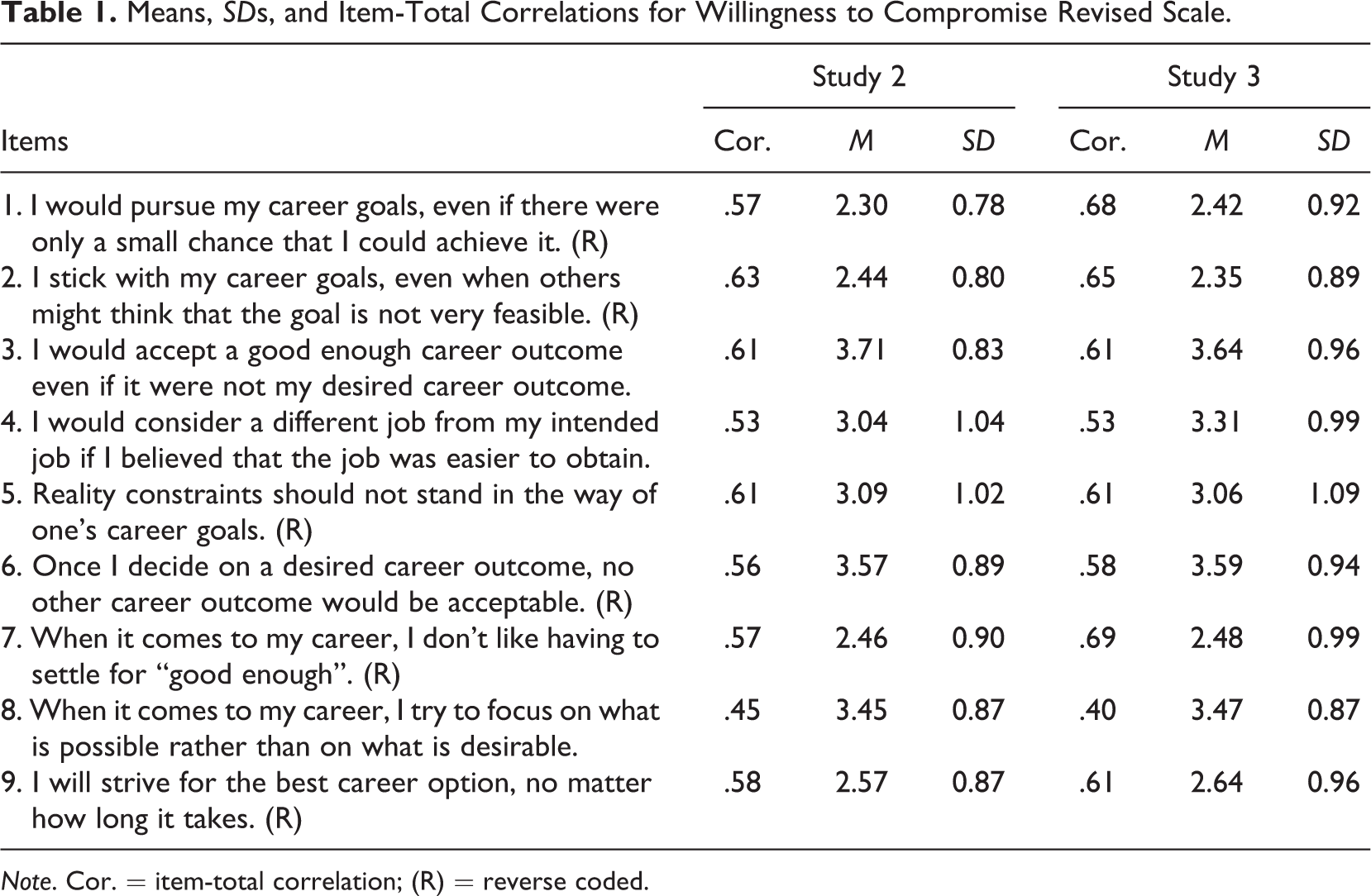
Two items with highly skewed and unbalanced distributions were removed because such items convey little information (Clark & Watson, 1995). Focal analyses were conducted in R (R Development Core Team, 2011) using the psych package (Revelle, 2011). Parallel analysis indicated a two component solution with Eigenvalues of 3.18 and 1.73, respectively, whereas the MAP criterion identified a one factor solution (MAP criterion = .02). The item–item relationships were examined using a hierarchical clustering technique. Results indicated a one-factor solution, although some items loaded poorly (< .30) on the underlying cluster. These items were removed and the remaining 9 items were reanalyzed. These 9 items were retained for the revised scale. Reanalysis of the revised scale using parallel analysis and the MAP criterion indicated that a one-factor solution was appropriate. The items demonstrated acceptable internal consistency (α = .73), with a mean interitem correlation of .24. The item contents and the item-total correlations for the revised scale are presented in Table 1.
Means, SDs, and Item-Total Correlations for Willingness to Compromise Revised Scale.
Note. Cor. = item-total correlation; (R) = reverse coded.
Study 3
Part of developing the nomological network around the construct of willingness to compromise is to examine its relationship with other constructs (Campbell & Fiske, 1959). Regret, dealing with uncertainty, agreeableness, neuroticism, openness to experience, and career adaptability were examined for their potential relationships with willingness to compromise as measured by the revised 9-item scale. As a first step toward predicting behavioral responses to various career-related situations, a situational dilemma task was developed, and the predictive validity of the willingness to compromise scale was examined. In this section, the theorized relationship between willingness to compromise and each construct is briefly reviewed.
As highlighted earlier, regret occurs when an individual’s behavior (i.e., chosen option) cannot be reconciled with their attitude toward the chosen option (i.e., dislike or dissatisfaction). Satisficers have been shown to be relatively insensitive to regret because they accept a good enough outcome and do not actively seek out the best possible outcome (Schwartz et al., 2002). Given that satisficing and compromising are closely related concepts, individuals who are willing to compromise are similarly expected to be satisfied with the decisions that they made, even when a better outcome is possible. This is because they are hypothesized to view each decision outcome as a good enough outcome, and by doing so focus on aspects of the decision alternative that are positive rather than negative. Therefore, individuals scoring high on willingness to compromise are expected to experience little negative emotion regarding their decisions, and willingness to compromise is hypothesized to be negatively related to regret (Hypothesis 1).
A core aspect of decision making is the ability to deal with incomplete information and uncertain outcomes. Individuals who can deal with uncertainty in their environments exhibit the ability to respond to new and changing situations by shifting their focus and taking appropriate action (Pulakos, Dorsey, & White, 2006). Such individuals are hypothesized to be more willing to compromise because they view the compromise option in a positive light (by shifting their focus), and they view their response as an appropriate action given the changing environment (i.e., the desired option was unfeasible). Therefore, willingness to compromise is hypothesized to have a positive relationship with dealing with uncertainty (Hypothesis 2).
Willingness to compromise is construed as a relatively stable individual difference, and therefore, it should demonstrate moderate but predictable relationships with even broader dispositional constructs, that is, personality traits. Personality traits are defined as describing “an individual’s characteristic pattern of thought, emotion, and behavior, together with the psychological mechanisms—hidden or not—behind those patterns” (Funder, 2001).
Agreeable individuals tend to be cooperative, concerned with the well-being of others, and likely to consider how their choices impact those they care about (McCrae & Costa, 1997). Therefore, when making career-related decisions, they should be more likely to consider options endorsed by important others even when these options are not their desired options. Such consideration should be more likely to increase the propensity of choosing the alternative option despite their personal preference. That is, agreeable individuals should be more willing to compromise. Savickas, Briddick, and Watkins (2002) provide some evidence for this in a related study where they found that Vector 2 of the California Personality Inventory (Gough, 1996; akin to agreeableness in Big Five terms) was positively and significantly related to career adaptability variables such as planning and exploration attitudes—attitudes that require an individual to consider social expectations (e.g., thoughts and feelings of significant others and a larger community) in addition to personal expectations. Therefore, willingness to compromise is hypothesized to have a positive relationship with agreeableness (Hypothesis 3).
Neuroticism refers to an individual’s general tendency to experience negative emotions such as fear, sadness, and anger hostility; people reporting high levels of neuroticism tend to describe themselves as prone to worry and self-doubt, and being highly affected by their emotions, especially in stressful situations (McCrae & Costa, 1997). Highly neurotic individuals are thus expected to focus mostly on negative rather than positive emotions and information. In a potential compromise situation, it is expected that they would pay attention to the negative aspects of the compromise option and the negative emotions that it is likely to generate. Therefore, it is predicted that from a subjective point of view, the alternative option becomes even less appealing making it less likely that neurotic individuals would choose the alternative option. Therefore, willingness to compromise is hypothesized to have a negative relationship with neuroticism (Hypothesis 4).
Individuals high on the trait of openness to experience are imaginative, curious, and open-minded to new and unconventional ideas (Barrick & Mount, 1991). Although openness to experience is not known to predict one’s decision quality per se, it may predict one’s adaptability when making decisions (Le Pine, Colquitt, & Erez, 2000). This is because individuals high on openness to experience are more likely to be flexible, creative, and willing to try new ideas when the environment has changed, and are thus expected to be more adaptable. In the context of career decisions, we would expect individuals high on openness to engage in more exploration and to be more receptive to alternative options such as new events or environments, and therefore to be both more adaptable and more willing to compromise. Therefore, willingness to compromise is hypothesized to be positively related to openness to experience (Hypothesis 5).
As highlighted earlier, willingness to compromise is theorized to relate to adaptability because both deal with cognitive and behavioral flexibility in the face of a changing environment. Whereas career adaptability emphasizes the positive aspects of coping with current and anticipated career tasks (Savickas, 2002), willingness to compromise emphasizes the less positive aspects of accepting and dealing with changes that one might not have foreseen or particularly liked. The degree to which one is willing to adjust and perceive adjustment as a normal and healthy part of a career should be related to the degree that one is willing to consider alternatives that are not one’s desired option. Willingness to compromise is hypothesized to be positively related to career adaptability (Hypothesis 6).
Finally, willingness to compromise is hypothesized to predict behavioral responses to various work- and career-related situations, such that individuals higher on willingness to compromise should pick behavior responses that demonstrate a greater willingness to accept an alternative option that is inferior to a more desired option (Hypothesis 7).
Method
Participants and Procedure
Participants were 201 individuals recruited through Amazon’s Mechanical Turk platform in exchange for $0.60 in cash. Participants ranged in age from 18 to 66 (M = 33.57, SD = 11.67) and 52% (n = 104) of the sample were female. Participants came from diverse occupational backgrounds, although 19% of the sample were either unemployed (n = 14) or did not hold a traditional job (20 students and 5 homemakers). Participants completed the willingness to compromise scale, in addition to the measures described below. All measures, except the situational dilemma task, used a 5-point Likert-type scale that ranged from strongly disagree (1) to strongly agree (5).
Regret Scale
Regret was measured using Schwartz et al.’s (2002) 5-item scale. An example item would be “Once I make a decision, I don’t look back (reverse-coded).”
Dealing With Uncertainty Scale
Dealing with uncertainty was measured using an 8-item subscale of Ployhart and Bliese’s (2006) I-ADAPT measure. An example item is “I perform well in uncertain situations.”
Personality Traits
Items for agreeableness, neuroticism, and openness to experience were obtained from the International Personality Item Pool website (Goldberg, 1999). Each trait was measured with 10 items. An example item for agreeableness is “Feel little concern for others (reverse-coded).” For neuroticism, an example item is “Get stressed out easily,” and for openness to experience an example item is “Have a vivid imagination.”
Career Adaptability Scale
Career adaptability was measured using the 11-item subscale in Rottinghaus, Day, and Borgen’s (2005) Careers Futures Inventory. An example item is “I tend to bounce back when my career plans don’t work out quite right.”
Situational Dilemma Task
Four situational dilemmas were posed, each offering three options. One option was represented by the compromise option, where individuals were willing to forego a more desired option for a less desired one. The other option was represented by the unwilling to compromise option, where individuals refuse to forgo the desired option for a less desired one. The third (and middle) option usually represented a minor compromise. Participants indicated which options they were most likely and least likely to choose. The situational judgments were scored using the procedure outlined by Oswald, Schmidt, Kim, Ramsay, and Gillespie (2004): Participants received 1 point if they chose the compromise option as most likely, 0 points if they chose the minor compromise option as most likely, and −1 point if they chose the no compromise option as most likely. Scores were reversed for the least likely option. Therefore, higher scores indicated greater willingness to compromise.
The following is an example of a situational dilemma: “You have recently been offered a very exciting opportunity in a remote location in China. However, your partner/spouse will not be able to find a suitable job there.” The options are (i) turn down the offer [compromise option], (ii) turn down the offer, but start to seek out other potential opportunities [minor compromise option], and (iii) take the job offer; your partner/spouse will have to understand that this is a once in a lifetime opportunity for you [no compromise option]. If option (i) was chosen as most likely and option (iii) was chosen as least likely, then the participant received a total score of +2 for this item. Conversely, if option (ii) was chosen as most likely and option (i) was chosen as least likely, then the participant received a total score of −1.
Results and Discussion
Psychometric properties of the revised 9-item scale were analyzed. Both parallel analysis and the MAP criterion identified a one factor solution (Eigenvalue = 2.64; MAP criterion = .04). The item–item relationships were examined using a hierarchical clustering technique. Results indicated a one-factor solution, with the items demonstrating acceptable internal consistency (α = .77), with a mean interitem correlation of .28. The item-total correlations are presented in Table 1 and show a very similar pattern to that obtained for Study 2.
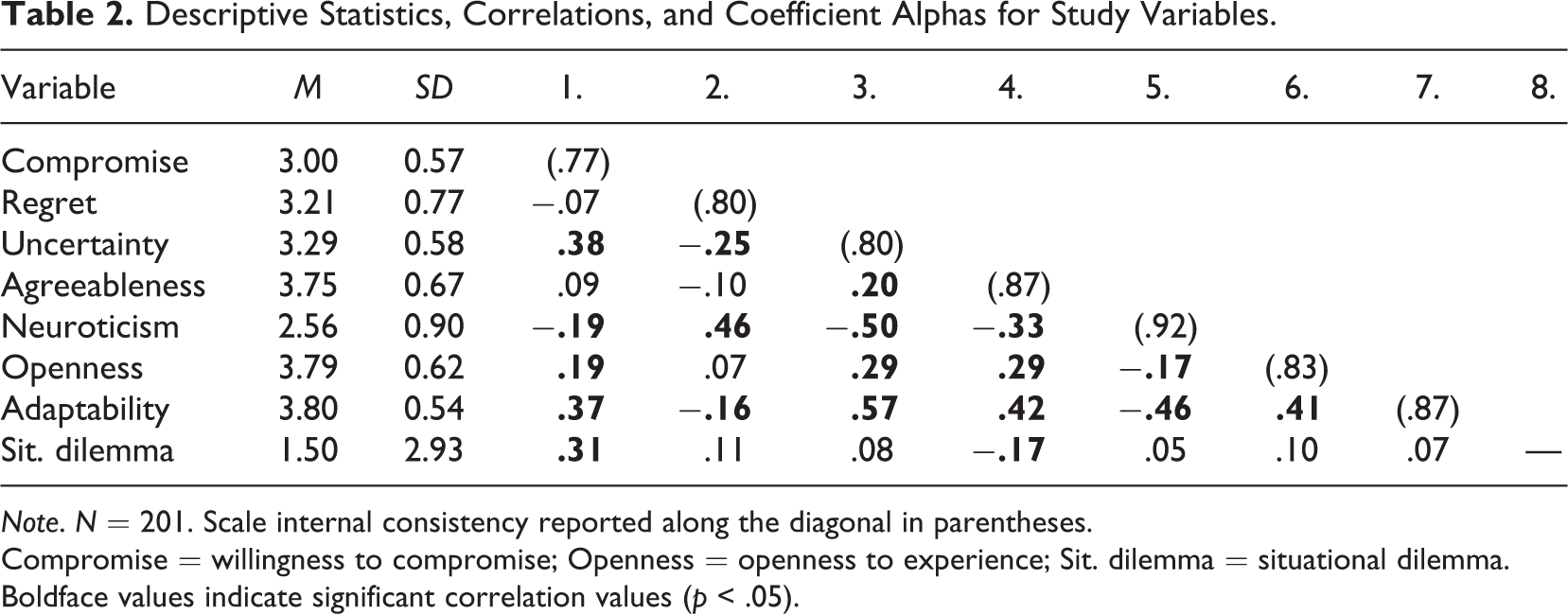
Part of developing the nomological network around the willingness to compromise construct is to examine its relationship with other similar and dissimilar constructs (Campbell & Fiske, 1959). As can be seen in Table 2, the pattern of results obtained was generally supportive of the theorized relationships. As hypothesized, willingness to compromise was negatively correlated with neuroticism (r = −.19, p < .05; Hypothesis 4), and positively correlated with dealing with uncertainty (r = .38, p < .05; Hypothesis 2), openness to experience (r = .19, p < .05; Hypothesis 5), and career adaptability (r = .37, p < .05; Hypothesis 6). Contrary to expectations, compromise was not significantly related to regret (r = −.07, p > .05; Hypothesis 1) or agreeableness (r = .09, p > .05; Hypothesis 3), although both relationships were in the expected direction. Also as hypothesized, willingness to compromise positively predicted responses on the situational dilemma task (r = .31, p < .05; Hypothesis 7), and it was a better predictor of situational dilemma responses than was career adaptability (r = .07, p > .05).
Descriptive Statistics, Correlations, and Coefficient Alphas for Study Variables.
Note. N = 201. Scale internal consistency reported along the diagonal in parentheses.
Compromise = willingness to compromise; Openness = openness to experience; Sit. dilemma = situational dilemma.
Boldface values indicate significant correlation values (p < .05).
General Discussion
Despite widespread recognition that career-related compromises are the norm rather than the exception, the concept of compromise is seldom explicitly tested in an organizational setting. The purpose of this study was to determine if a broad attitudinal construct was able to capture the variance in different types of career-related compromises and to develop a reliable and valid measure to assess such a construct. With such a measure, it is hoped that disparate domains studying career-related compromises can begin to articulate a common theoretical framework that discusses the similarities and differences across different kinds of compromise decisions.
In this study, it was established that a general willingness to compromise construct was useful in describing the similarities across different types of decisional trade-offs (Study 1) and that the measure developed exhibited reasonable psychometric properties (Study 2). This measure was validated on an independent sample, and the pattern of its relationships with other constructs within its nomological network was generally consistent with the hypothesized relationships (Study 3).
Implications
Results from Study 3 indicated that willingness to compromise significantly predicted behavioral responses chosen in the situational dilemma task (r = .31) and that it did so better than career adaptability (r = .07). It also highlights the distinction between willingness to compromise and career adaptability. Although they were moderately correlated with one another (r = .37), they had distinct relationships with the three personality traits and situational dilemma task; relationship differences were in magnitude not direction. Specifically, willingness to compromise was more strongly related to situational responses and less strongly related to personality as compared with career adaptability. This pattern of relationships suggests that career adaptability, at least as measured by Rottinghaus et al.’s (2005) Career Futures Inventory, is more strongly related to dispositional traits, and that the willingness to compromise scale may provide a broad measure that is still able to predict a range of behavioral responses.
Taken together, these results provide support for the usefulness of studying willingness to compromise as a broad attitudinal construct, and research can begin to examine the antecedents and consequences of willingness to compromise for both organizational and counseling settings. As a start, willingness to compromise should be examined in relation to organizationally consequential outcomes such as job satisfaction and engagement, as well as organizational commitment. The relationship between organizational commitment and willingness to compromise is not expected to be either simple or straightforward, as many other variables are expected to mutually influence their relationship (e.g., locus of control, self-efficacy).
Constructing a career requires one to determine reasonable goals to achieve and to strive toward them. Behavioral and cognitive flexibility are required to construct a meaningful career because both one’s self-concept and the work context are constantly evolving (Savickas, 2005). With further validation efforts it is hoped that willingness to compromise may provide a complementary measure to help counsel individuals as they seek to enact their self-concept within the world of work. Insufficient willingness to compromise results in behavioral rigidity and likely an inability to capitalize on opportunities as they arise. Excessive willingness to compromise results in inability to achieve set goals and likely an inability to construct a coherent career narrative.
Limitations and Suggestions for Future Research
However, two major limitations must be noted. First, a relatively small sample was used for this initial validation. It is likely that there was insufficient power to detect some results and that selection of items might be unduly influenced by random variations in these particular samples. Results should be interpreted as preliminary, and more data are currently being collected in another independent sample. Scale validation is an iterative process, and this is but the first attempt to delineate the nomological network of willingness to compromise. Second, the situational dilemma task represents an approximation of people’s behavioral responses, but it is not their actual behavior. A hypothetical situational dilemma task provided a good measure for initial validation efforts because several compromise decisions could be presented to each individual, circumventing problems associated with relatively low-base rates in reality. The next step, however, should be to obtain behavioral reports of actual compromise decisions.
Additional research should continue to refine the willingness to compromise scale and to relate it to other work-relevant constructs. Importantly, an initial scale could be used to relate willingness to compromise to actual behavioral reports of compromise in various situations. Given that dispositional factors are more likely to exert themselves in a weak situation rather than a strong situation, it might be expected that willingness to compromise provides stronger prediction of behavior when there is ambiguity in the situation.
Footnotes
Declaration of Conflicting Interests
The author declared no potential conflicts of interest with respect to the research, authorship, and/or publication of this article.
Funding
The author disclosed receipt of the following financial support for the research, authorship and/or publication of this article: This work was funded through a research grant from the Office of Research, Singapore Management University [grant number 10-C242-SMU-019].