



Abstract
Although many cross-cultural studies have used nations as the units of analysis, the concept of national culture has been challenged on various grounds. One objection is that there may be significant cultural diversity within some countries and similarities across national borders, compromising the concept of national culture. This objection has little empirical support. We used latest World Values Survey data and found that 299 in-country regions from 28 countries in East and Southeast Asia, sub-Saharan Africa, Latin America, and the Anglo world overwhelmingly cluster along national lines on basic cultural values, cross-border intermixtures being relatively rare. This is true even of countries like Malaysia and Indonesia, or Mexico and Guatemala, despite their shared official languages, religions, ethnic groups, historical experiences, and various traditions. Even the regions of neighboring African nations, such as Ghana, Burkina Faso, and Mali, do not intermix much when they are clustered on the basis of cultural values.
Using nations as units of analysis in cross-cultural studies is a controversial approach. Some political scientists and economists strongly defend this method: “Despite globalization, the nation remains a key unit of shared experience and its educational and cultural institutions shape the values of almost everyone in that society” (Inglehart & Baker, 2000, p. 37). According to Parker (1997), national culture is viewed as a “critical factor affecting economic development, demographic behavior and general business policies” (p. 1). The use of nations as units of cross-cultural analysis has also been defended by leading cross-cultural psychologists, for instance, Smith (2004).
Other authors have expressed more cautious views: national borders may not be an inadequate way to delineate cultural boundaries because many countries have large subcultures (House & Javidan, 2004). Lenartowicz and Roth (2001) echoed similar concerns. Tung (2008) pointed out that intranational variations can often be as significant as cross-national differences. Boyacigiller, Kleinberg, Phillips, and Sackman (2007) referred to various cases in which nations had disintegrated. This means that nations are somewhat arbitrary political formations that are not necessarily formed along stable cultural lines. In retrospective, speaking of a Yugoslav or Soviet culture may not have been justified even when Yugoslavia and the Soviet Union existed as single political entities.
A third group of authors have openly challenged the meaningfulness of the concept of national culture (Baskerville, 2003; McSweeney, 2002). For example, Baskerville (2003) refers to an Encyclopedia of World Cultures in which the Middle East is said to have 14 nations and 35 different cultures (p. 6): an argument against the concept of national culture.
Is national culture a meaningful concept? The issue is extremely important because many cultural indices in cross-cultural psychology, cross-cultural management, and other fields are provided for nations as if they were single entities, not only politically but also culturally. In recent years, Cross-Cultural Research—a journal of comparative anthropology—has also published articles that present national cultural indices. However, if it is not justifiable to speak of national culture, there is little point in cultural comparisons of nations.
Peterson and Smith (2008) identified three main types of critiques of the use of nations as units of cross-cultural comparisons:
Studies of individuals show significant within-nation variance;
Nations have regional, ethnic, or other subcultures;
Structural theories in general have been challenged.
We will leave out the third of these critiques as it is purely theoretical. The first is grounded in correct empirical findings but it is logically flawed. When national cultures are compared, it does not matter whether individual differences are large and whether they are larger or smaller than national differences. Saying that groups, such as nations or ethnic groups, should not be studied because the individuals that they consist of are much more heterogeneous than the groups that they make up is like saying that individuals need not be studied because the cells that they are made of are much more diverse than the human beings on our planet.
The existence of intranational subcultures is a more serious argument against using nations as a unit of cross-cultural analysis. One might wonder if the cultures of large countries, such as China, India, and Indonesia, or even those of far smaller but seemingly diverse nations, such as Belgium, Spain, and Switzerland, are homogeneous enough to be studied as single entities.
For instance, some countries have sizable subcultures that appear so different from the other subcultures in the same countries that they should probably be viewed as distinct from them. However, some of these national subcultures may show similarities across national borders. A case in point are the Balkan Gypsies (Roma, Sinti, Manush, so called “Egyptians,” etc.) that are found throughout the peninsula and beyond.
The question of whether there are transnationally shared cultures, of which Gypsy culture may be an example, has not been studied sufficiently. However, even if one could demonstrate the existence of a Gypsy culture that is markedly different from the cultures of the majority populations of Bulgaria, Romania, Serbia, or Slovakia, that would not mean that those countries do not have mainstream cultures, shared by the majority populations of ethnic Bulgarians, Romanians, Serbs, or Slovaks, that can be viewed as national cultures.
There are a number of countries that are different from Bulgaria, Romania, Serbia, and Slovakia as they do not have a dominant ethnic population. For example, the two largest ethnic groups of Afghanistan are Pashtun (47%) and Tajik (27%); those of Pakistan are Punjabi (45%) and Pashtun (16%; Central Intelligence Agency, 2011). What would a cluster analysis of such ethnic groups show? If a variety of cultural variables were used, would they group the ethnicities of Afghanistan separately from those of Pakistan and Tajikistan? Or would we have a Tajik cluster that groups the Tajiks of Afghanistan and Tajikistan and separates it from the cluster of Pashtuns from Afghanistan and Pakistan? Would there be a transnational Punjabi cluster of Pakistani and Indian Punjabis that is clearly separate from the transnational Pashtun cluster? A large-scale study of this kind, including many ethnicities from Asia, Africa, Latin America, and perhaps even Europe, would be extremely interesting. Unfortunately, we do not have contemporary data that can be used to assess the unifying effect of modern nations on the ethnically diverse populations in them.
Nevertheless, we have data to answer another question that can address the issue of the existence or nonexistence of national culture. What would happen if we used some cultural variables to perform a cluster analysis of in-country regions from one and the same geographic area or one and the same seemingly distinct cultural area (for instance, the Anglo world)? Would these regions cluster along national lines? This is an interesting issue because if one can show that, for instance, the states of the United States and the Canadian territories cannot be sorted out in a cluster analysis on the basis of cultural variables, it would not be justifiable to speak of the U.S. versus Canadian culture. Similarly, if the Brazilian and Mexican states, or the Chinese provinces, or any other in-country regions do not form compact national clusters on important cultural variables, but are scattered among the regions of other countries, there is no basis for speaking of Brazilian, Mexican, or Chinese national culture.
We must note that the goal of our study is not to determine whether in-country regions are good units of cross-cultural analysis or better or worse than nations. Our goal is to address a specific controversial issue in the cross-cultural field: if one compares in-country regions on cultural traits, do they form clusters that largely obscure any national boundaries? If that is so, the notion of national culture would be strongly compromised. However, if there is no national culture and yet in-country regions form clear national clusters without intermixtures, what creates this clear delineation? Regardless of the internal cultural homogeneity or heterogeneity of the in-country regions, we would have to accept that the invisible force that groups together the regions of one nation and separates them from those of other nations is national culture. In fact, we might just as well carve up the populations of adjacent countries, such as France, Germany, Spain, and Italy, into 100 samples each, drawing the boundaries between the samples within each country completely at random. If a cluster analysis sorts out these 400 randomly chosen samples into four nationally homogeneous clusters, the only logical conclusion would be that what creates these clusters is national culture. The question of whether each sample has its own identifiable culture would be irrelevant in this case.
We must also point out that our research topic suggested itself to us by the existing literature. One of the reasons that the notion of national culture is controversial is precisely the existing view, based on empirical findings, that some in-country regions sometimes appear culturally closer to some of the regions of adjacent nations; consequently, the concept of national culture may be useless.
There are a number of studies that compared in-country regions on cultural indicators. The totality of their evidence is inconclusive. Hofstede (1980, 2001) found that, despite sharing a language, Flemish Belgium and the Netherlands had quite different scores on his dimensions and were consequently distinguishable, whereas the German-speaking regions of Switzerland were closer to Germany than to the French-speaking region. A classic study of the values of school teachers and university students by Schwartz (1994) showed that when countries and in-country regions were ranked on cultural dimensions of values, Shanghai in northeastern China and Guangzhou in southern China were wider apart on their aggregate scores on some groups of values than were the United States and Japan. On other groups of values, Shanghai and Guangzhou were farther apart than Hungary and New Zealand or than Brazil and Turkey. Schwartz’s study provided strong evidence that when matched samples (in this case, teachers) from an ethnically homogenous population from different cities in one and the same country are compared, they may be culturally dissimilar.
Peterson, Fanimokun, Mogaji, and Smith (2006) and Peterson and Fanimokun (2008) compared Nigerian ethnic groups, which tend to be geographically localized, and found that they diverged substantially on some World Values Survey (WVS) measures but were close together on other indicators. Lenartowicz, Johnson, and White (2003) reported value differences between national regions in Latin America and similarities across national boundaries. However, Hofstede, Garibaldi de Hilal, Malvezzi, Tanure, and Vinken (2010) compared 27 Brazilian states, using the Hofstede Values Survey Module. Despite the differences between the states, the authors concluded that they had found evidence of a common Brazilian national culture in the sense that Brazil’s states were much more similar to each other than to the other Latin American countries, let alone countries worldwide.
Study Design
We decided to ascertain whether the in-country regions of some groups of countries form distinguishable national clusters. If that is not the case, there would be no basis for speaking of national cultures.
Our selection of in-country regions and countries was determined by several considerations. First, we decided to use data from the latest available WVS files (2005-2008) provided in the organization’s official website (www.worldvaluessurvey.org; wvs2005a_v20090901_spss and wvs2005b_v20090901_spss. Apart from providing most recent data, those files ensure the largest WVS coverage so far of sub-Saharan Africa and Southeast Asia, two regions where many nations emerged relatively soon. For instance, Malaysia celebrated its 50th anniversary in 2007. Does it have a national culture that distinguishes it from, say, neighboring Indonesia?
The WVS files allow for the data to be broken down to in-country regions or cities (henceforth only “regions”) where the interviews with the respondents were taken. The regions are most often administrative units, although other principles seem to have been followed in some cases. For instance, the United States is represented by 12 large geographic areas.
Our second selection principle was to identify groups of countries that seem to form supranational cultural clusters according to the Inglehart-Welzel maps of the world in the WVS official website or according to Project GLOBE (House, Hanges, Javidan, Dorfman, & Gupta, 2004). The Inglehart-Welzel maps are based on WVS data. The GLOBE clusters were identified on the basis of anecdotal evidence but subsequently confirmed through discriminant analysis of GLOBE data (Gupta, Hanges, & Dorfman, 2002). Both Inglehart-Welzel and GLOBE identified an Anglo or English-speaking cluster, a Latin American cluster, a Confucian or East-Asian cluster, and a sub-Saharan African cluster. We decided to concentrate on these four clusters, leaving out Europe as its countries and regions are not adequately represented in the latest WVS files. For instance, Austria is missing whereas Switzerland is represented by only three regions: one German speaking, one French speaking, and one Italian speaking. This makes a reliable comparison of Austrian, German, and Swiss regions impossible.
We decided to analyze the Southeast Asian regions together with those of Confucian Asia. One of the reasons for this is that it is difficult to classify Vietnam categorically as Confucian or Southeast Asian. However, all Southeast Asian and Confucian countries share an important characteristic: they were rice economies for several millennia. It is well known that a society’s prevalent economic activity can have a profound effect on its culture (Inglehart & Baker, 2000). Despite the cultural differences that one can expect between East Asia and Southeast Asia, it is not impossible that some similarities have emerged as well because of their shared economic activities.
We must emphasize at this point that our study has an empirical focus. Regardless of whether the results will support or challenge the concept of national culture, we will not attempt to address the question of why this is so. The unifying or dividing role of languages, religions, political institutions, national school systems, national or regional media, prevalent type of economy, level of economic development, climate, pathogen prevalence, or various historical factors will be left out. Although these issues are extremely interesting, they warrant focused research. We cannot address them in this study as it is much narrower in scope.
Samples
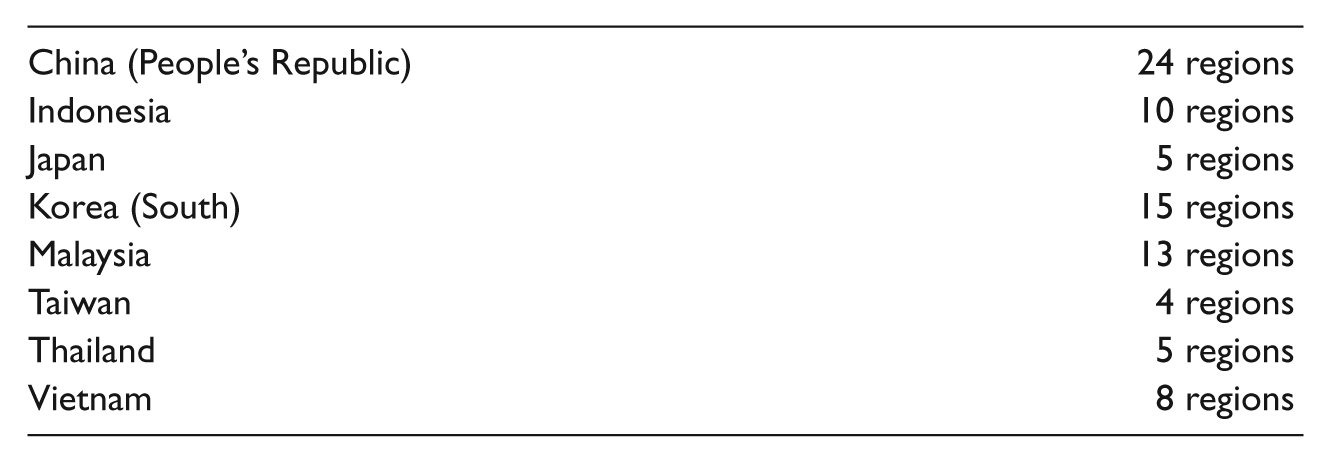
We used the nationally representative WVS data. The eight East and Southeast Asian countries in the 2005-2008 WVS are represented by 84 regions:
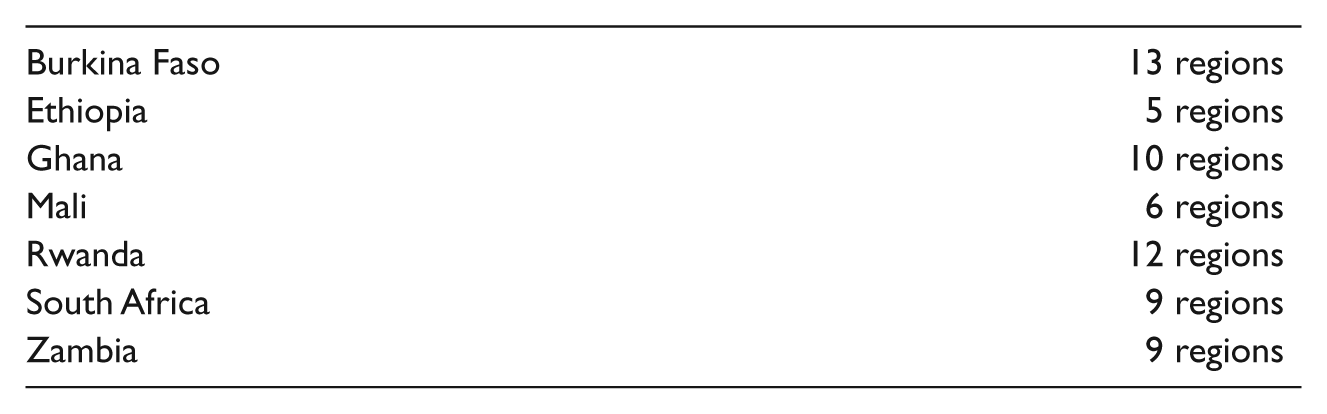
The seven sub-Saharan countries in the 2005-2008 WVS are represented by 64 regions:
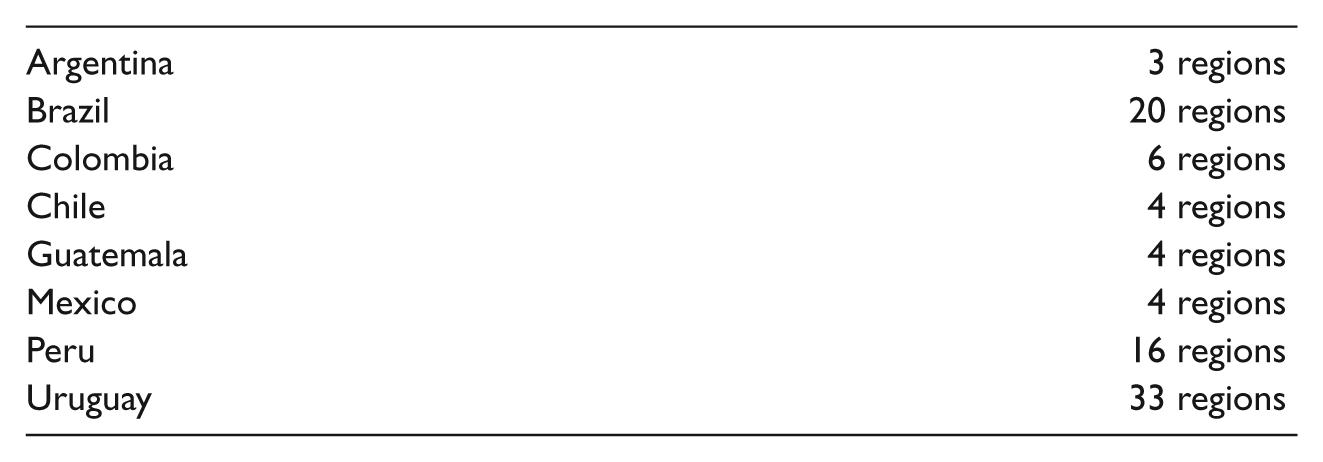
The eight Latin American countries in the 2005-2008 WVS are represented by 90 regions:
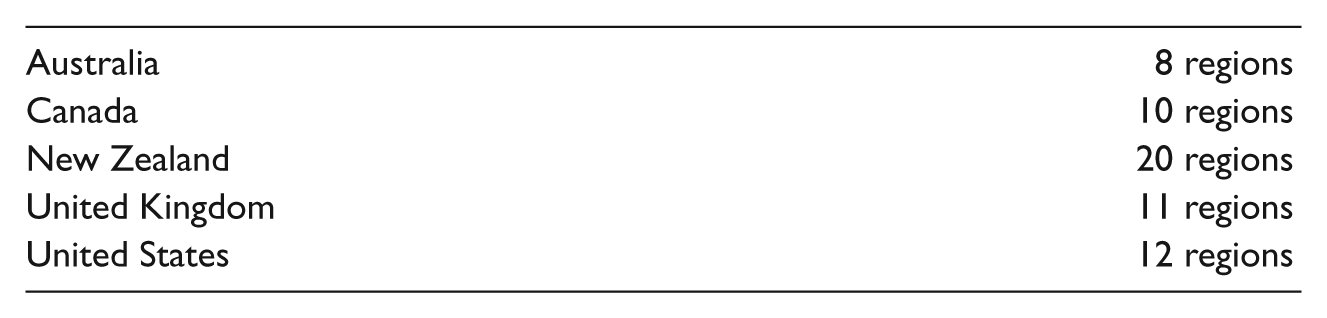
The five Anglo countries in the 2005-2008 WVS are represented by 61 regions:
We had altogether 299 regions from 28 countries.
Method
We decided to cluster the in-country regions on the basis of basic cultural values. We are not of the opinion that culture consists only of values or that a study of values is the best way of studying cultures. Yet we had reason to believe that a comparison of values would produce a clear picture. Several large-scale cross-cultural studies so far were partly based on values (Hofstede, 1980; Inglehart & Baker, 2000) or entirely value based (Chinese Culture Connection, 1987; Schwartz, 1994); they have all produced cultural dimensions that outline recognizable geographic configurations of countries. Thus, we hypothesized that values would also have good discriminant properties with respect to in-country regions. Besides, there is strong evidence that when personal values are aggregated to the societal level, they predict various behavior-related variables at the societal level, such as speed of economic development, educational achievement, suicide rates, road death tolls, female participation in the workforce, female-to-male income ratios, transparency versus corruption practices, and many more (Hofstede, 2001; Minkov, 2011). This makes the study of values crucially important in the cross-cultural field.
The 2005-2008 WVS contains three groups of basic values—the largest available collection of values by that project so far (for details, see the appendix):
6 personal values
10 values for children
10 “Schwartz” values (identified as such by the WVS)
We performed the clustering by means of hierarchical cluster analysis. For each of the four groups of countries in our analysis, we requested a number of clusters that was equal to the number of countries in that group and examined the cluster membership structure. Whenever most regions of more than one nation appeared in one and the same cluster, we relied on the dendrograms that the hierarchical cluster tool provides to identify subclusters that might correspond to nations. Thus, our goal was not to ascertain how close or far the in-country regions of a particular nation are to each other, but to ascertain whether they intermix with regions from other countries or not. We reasoned that even if the regions of a particular country form a very tight cluster, consisting of closely linked regions, whereas the regions of another country are relatively remote from each other, as long as the regions of these two countries form two equally homogeneous clusters (free of intermixtures from other countries), the concept of national culture is not compromised in the case of both nations. One could speak of a tight national culture versus a loose national culture, but that is not the issue that we were interested in. We were interested in the issue of homogeneous national culture versus intermixed or scattered national culture because, in the latter of these two potential scenarios, the concept of national culture would be strongly challenged.
We analyzed the data for each of the four groups of countries in two ways: with the Euclidian distance method and the Pearson method. The Euclidian method (as well as squared Euclidian, block/Manhattan, etc.) measures spatial distances and is not sensitive to correlations between variables. The Pearson method (as well as the Mahalanobis method) is sensitive to correlations and reflects this property by identifying correlation-based patterns; it does not reveal spatial distances between cases but pattern similarities. Which of the two methods should be used is a matter of what a researcher is interested in: spatial distances or pattern similarities. We believed that both would be interesting in our case; therefore, we used both methods.
We always started with the 10 values for children, analyzing them with the Euclidian method (always raw scores) and the Pearson method (always z-standardized scores by variable).
After adding other groups of items to the 10 values for children, we again tried the Euclidian method and the Pearson method; this time, all scores were always z-standardized by variable. The standardization was necessary as these groups of items were not originally scored on the same scale. The Euclidian and the Pearson methods yielded essentially the same results; yet the latter often yielded a slightly clearer picture. Throughout the analysis, we relied on the average linkage (between-groups) method.
We also experimented with other combinations of measurement methods (squared Euclidian and block) and linkage methods (within groups, nearest neighbor, furthest neighbor, and Ward); however, whenever they yielded meaningful results, they were not substantially different from those from the Euclidean and Pearson methods with between-groups linkage.
Results for East and Southeast Asia
We started our analysis with the 10 values for children. The members of the eight clusters that we requested are provided in Table 1.1 (see the appendix for expansions of country name abbreviations); the results are based on the Euclidian method. Dendrogram 1 demonstrates clearly that Cluster 1 can be split into three subclusters along national lines, whereas Clusters 3 and 4 can be split into two national clusters each. However, Clusters 7 and 8, which consist entirely of Thai regions, are closely linked and amount to a single cluster. Dendrogram 1 also shows two distinct supranational clusters: East Asian/Confucian (China, Japan, South Korea, Taiwan, and Vietnam) and Southeast Asian (Indonesia, Malaysia, Thailand). Unsurprisingly, the Malaysian cluster is closely linked to the Indonesian cluster.
Clustering of 84 Regions in 8 East and Southeast Asian Countries on 10 Values for Children
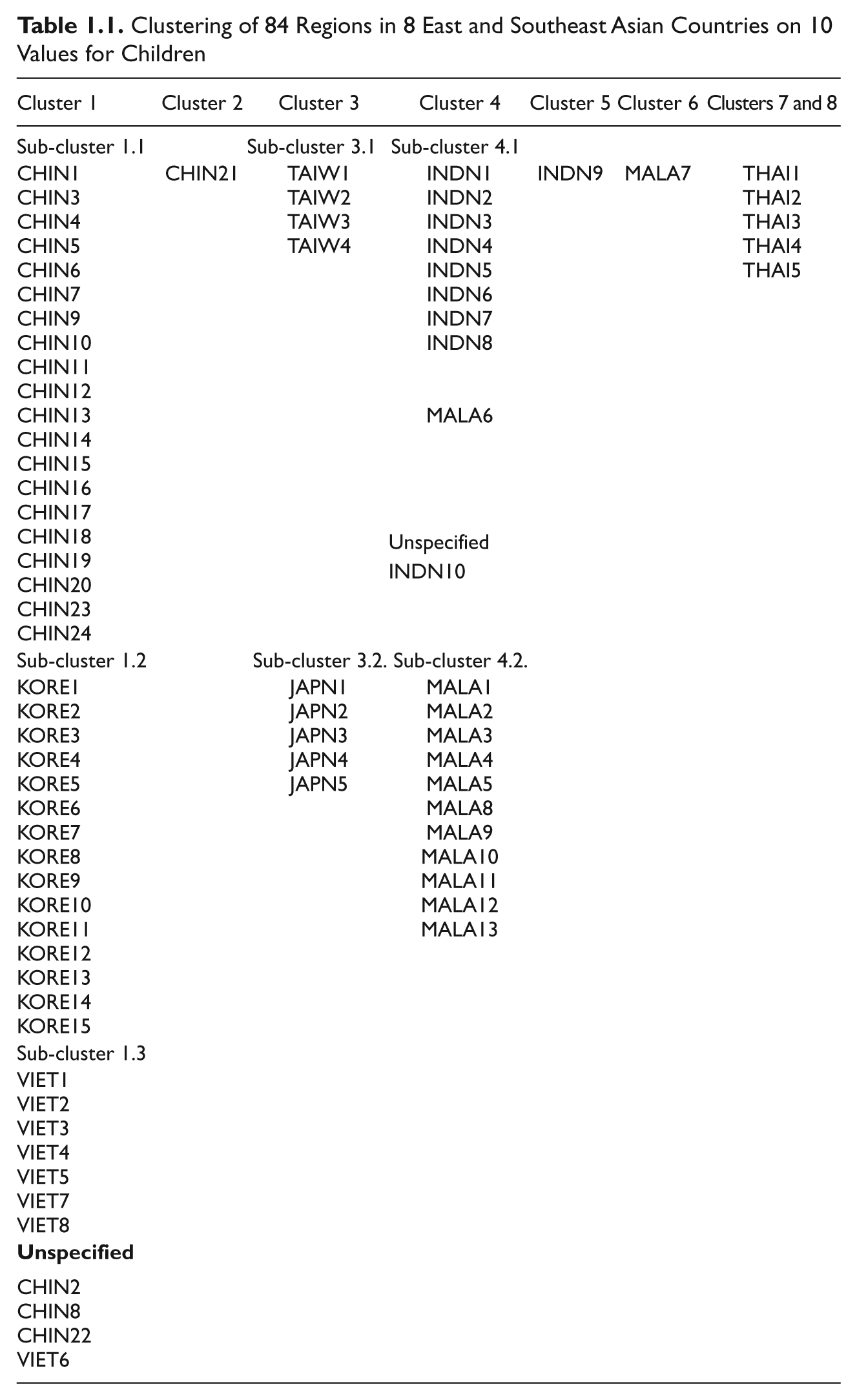
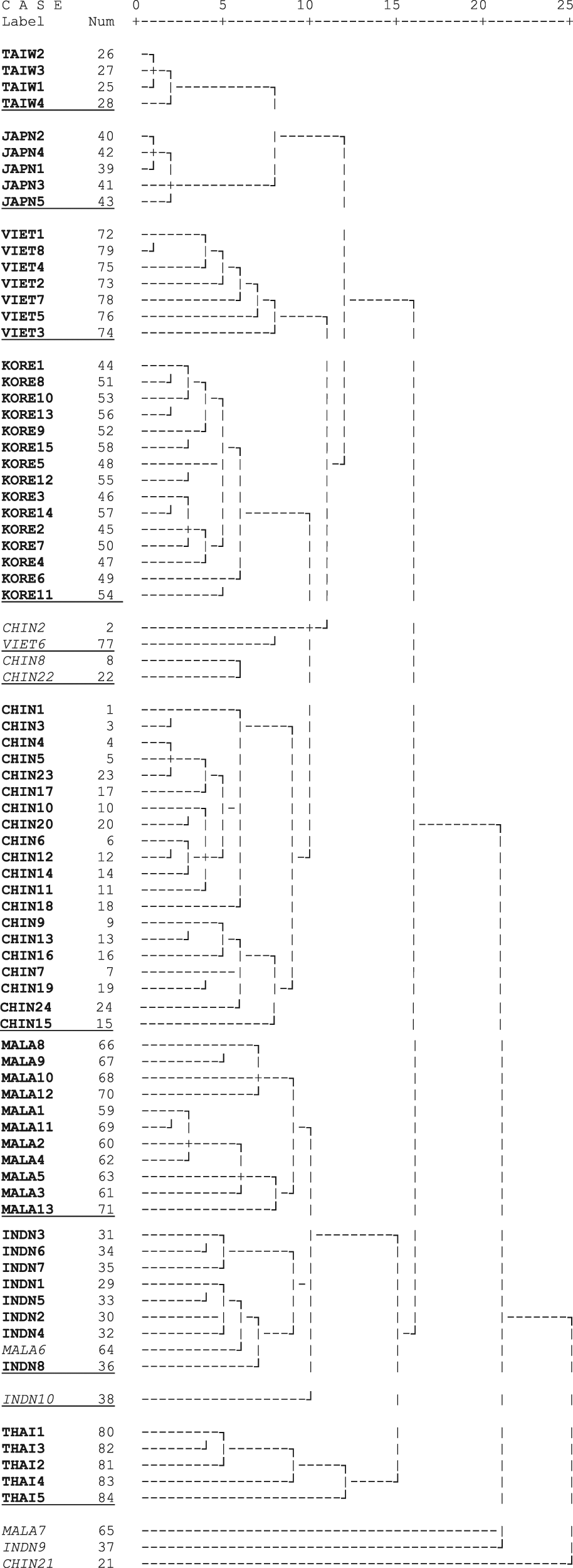
Clustering of 84 regions in 8 East and Southeast Asian Countries on 10 values for children
Adding the six personal values did not produce significant changes, except that MALA6 (Kedah State, Malaysia) no longer clustered amid the nine Indonesian regions, which resulted in a homogeneous nine-region Indonesian cluster.
We also tried Schwartz’s 10 values on their own. Although they produced some clear clusters (Japan and Taiwan), the regions of some other nations were scattered: only four Vietnamese regions formed a cluster, whereas the Malaysian regions clustered with Thai, Chinese, and Vietnamese regions. Obviously, the 10 Schwartz values in the WVS do not discriminate well among some of the national cultures of East and Southeast Asia. The reason for this is outside the scope of our study.
On the basis of the 10 values for children (and the six personal values as far as Indonesia is concerned), our final results for East and Southeast Asia are presented as follows in Table 1.2.
Homogeneous Cultural Clusters in East and Southeast Asia

Thus, 74 of the 84 East and Southeast Asian regions, or 88.1%, clustered together with the other regions of their nation, forming homogeneous national clusters.
Results for Sub-Saharan Africa
The 10 values for children that we started with delineated some national cultures well, but the regions of some other countries, notably Mali, were scattered. The situation did not change appreciably when the six personal values were added. However, after adding Schwartz’s 10 values as well, the Pearson method with z-score standardization by variable outlined the boundaries of the national cultures very clearly as shown in Table 2.1 and Dendrogram 2. As in the case of East and Southeast Asia, a logical supranational cluster was found: the three neighboring West African countries clustered separately.
Clustering of 64 Regions in 7 sub-Saharan African Countries on 10 values for Children, 6 Personal Values and 10 Schwartz Values
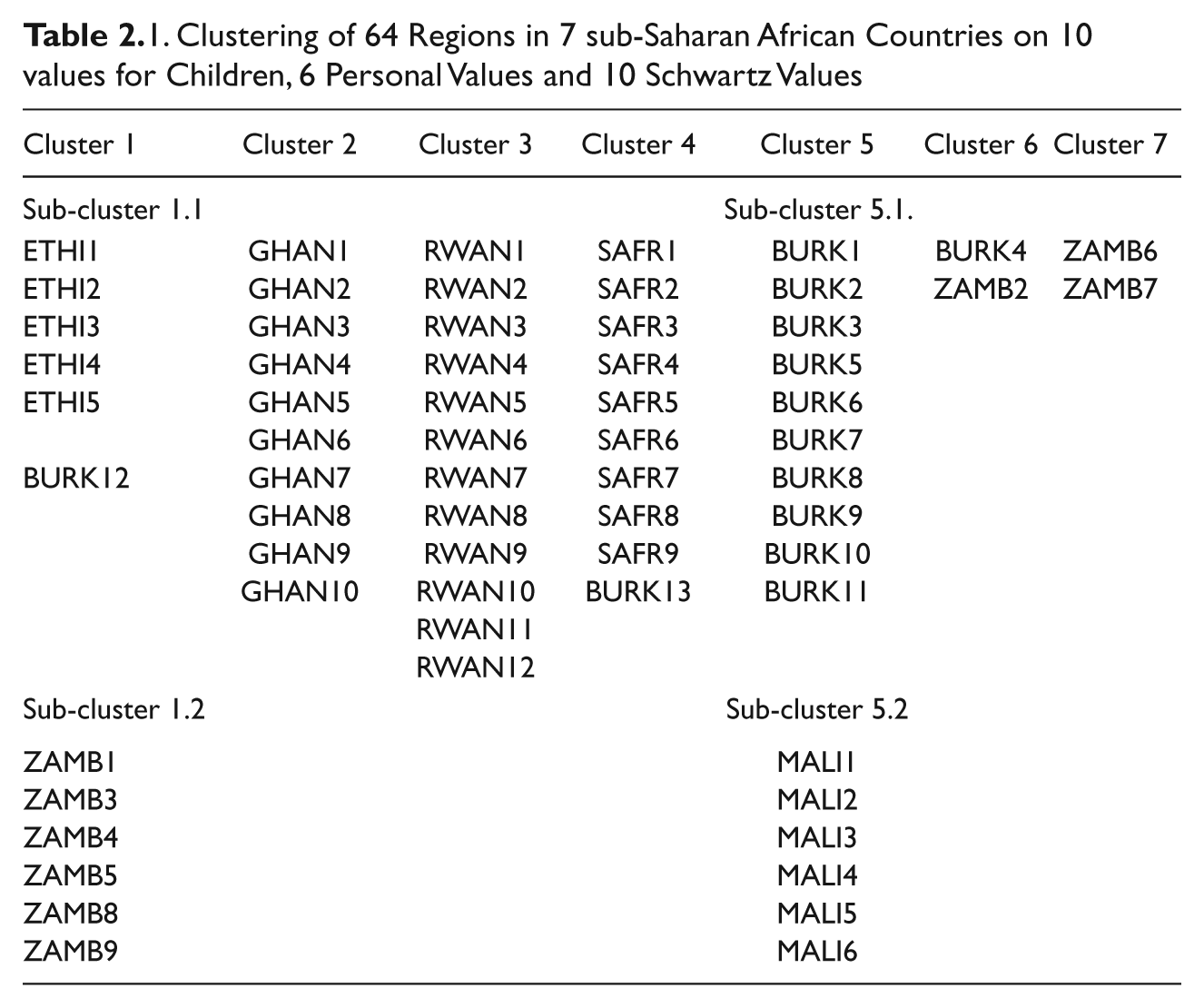
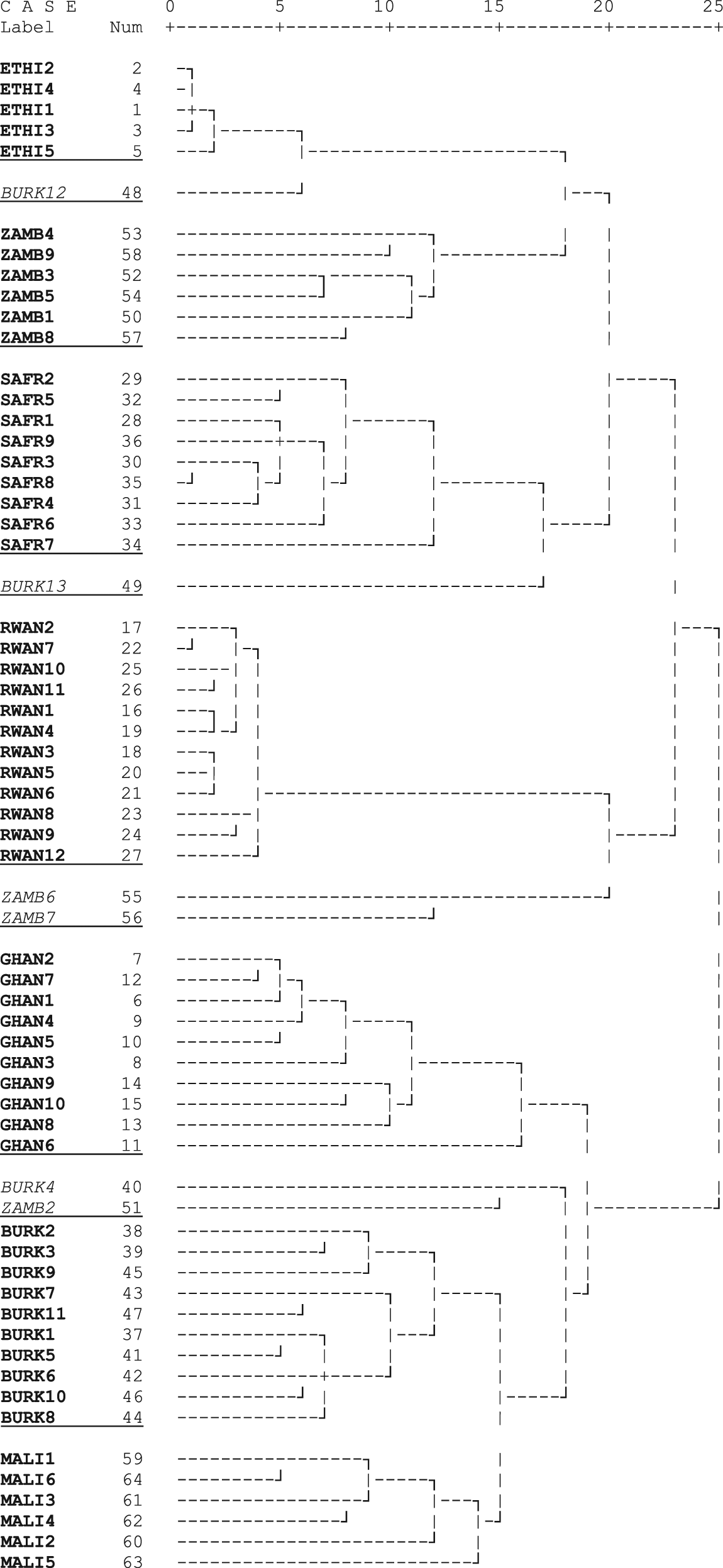
Clustering of 64 regions in 7 sub-Saharan African countries on 10 Values for children, 6 personal values, and 10 Schwartz values
Our results for sub-Saharan Africa, obtained on the basis of 10 values for children, six personal values, and 10 Schwartz values, are summarized in Table 2.2.
Homogeneous Cultural Clusters in sub-Saharan Africa
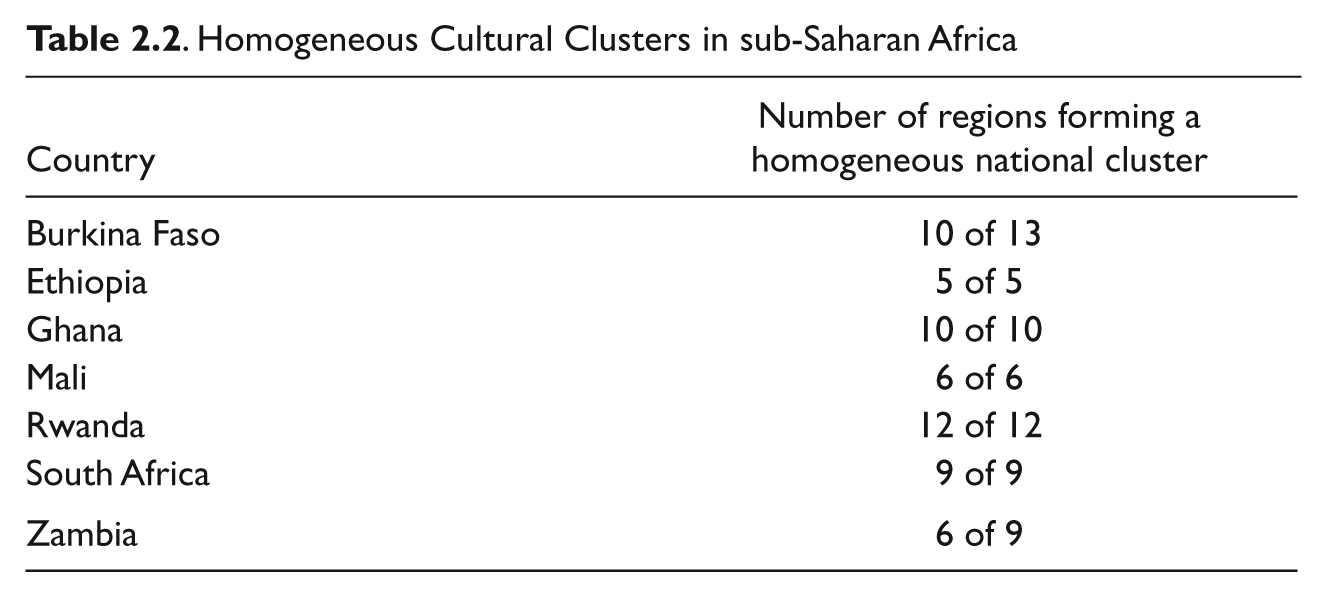
Thus, 58 of the 64 African regions, or 90.6%, clustered together with the other regions of their nation, forming homogeneous national clusters.
Results for Latin America
The 10 values for children produced a somewhat mixed pattern. Still, it is important to note that Dendrogram 3 showed a homogeneous Guatemalan cluster, consisting of all the four regions of that country and without any intermixtures. There was also a separate cluster consisting of five of the six Colombian regions, also without any intermixtures. The remaining Colombian region was grouped with the Mexican cluster. Guatemala and Colombia are not represented on some of the other groups of values in the WVS; however, as we had conclusive results about those countries on the basis of the 10 values for children, we could drop them from the analysis and continue with the rest.
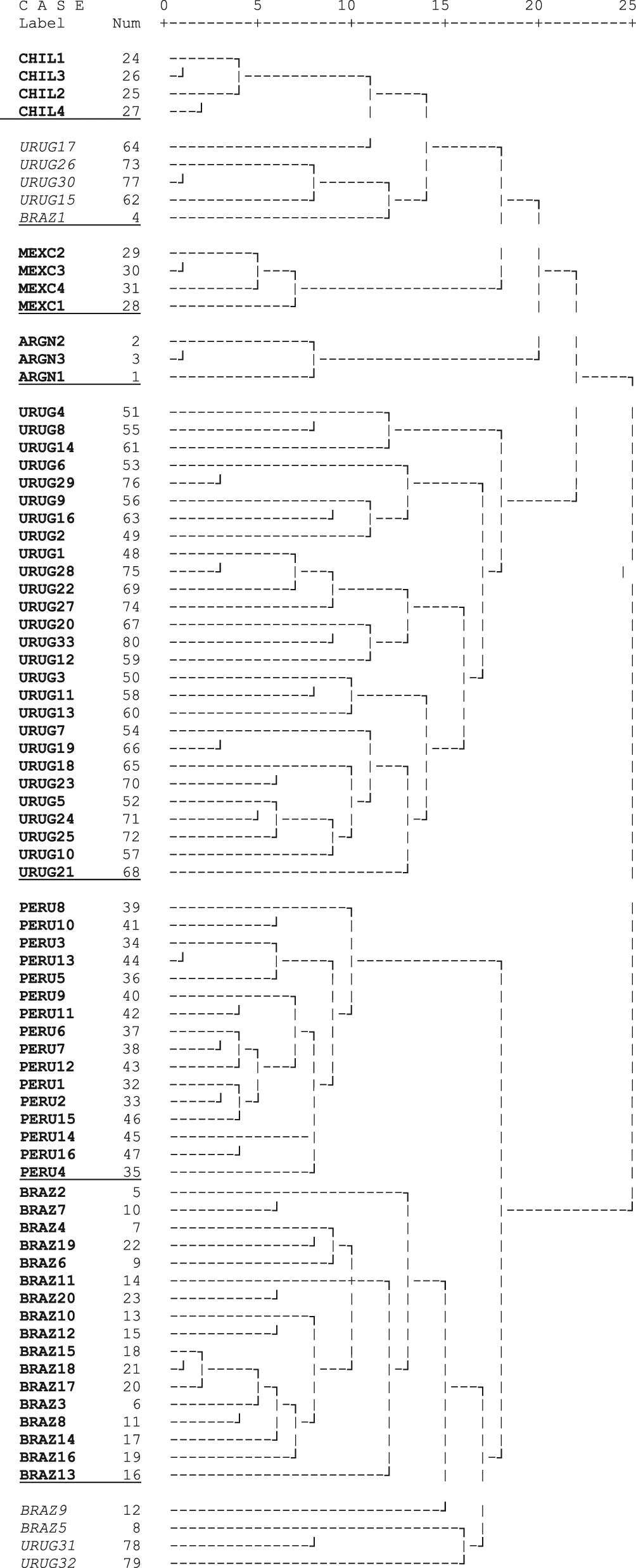
Clustering of 80 Latin American regions in 6 countries on 10 values for children, 6 personal values, and 10 Schwartz values
Adding the six personal values did not alter the results substantially. After adding Schwartz’s values as well, we obtained conclusive results with the Pearson method, presented in Table 3.1 and Dendrogram 3. Although Uruguay’s regions formed two homogeneous clusters rather than one, Dendrogram 3. showed that they were linked together without regions from other countries between them.
Clustering of 80 Latin American Regions in 6 Countries on 10 Values for Children, 6 Personal Values, and 10 Schwartz Values
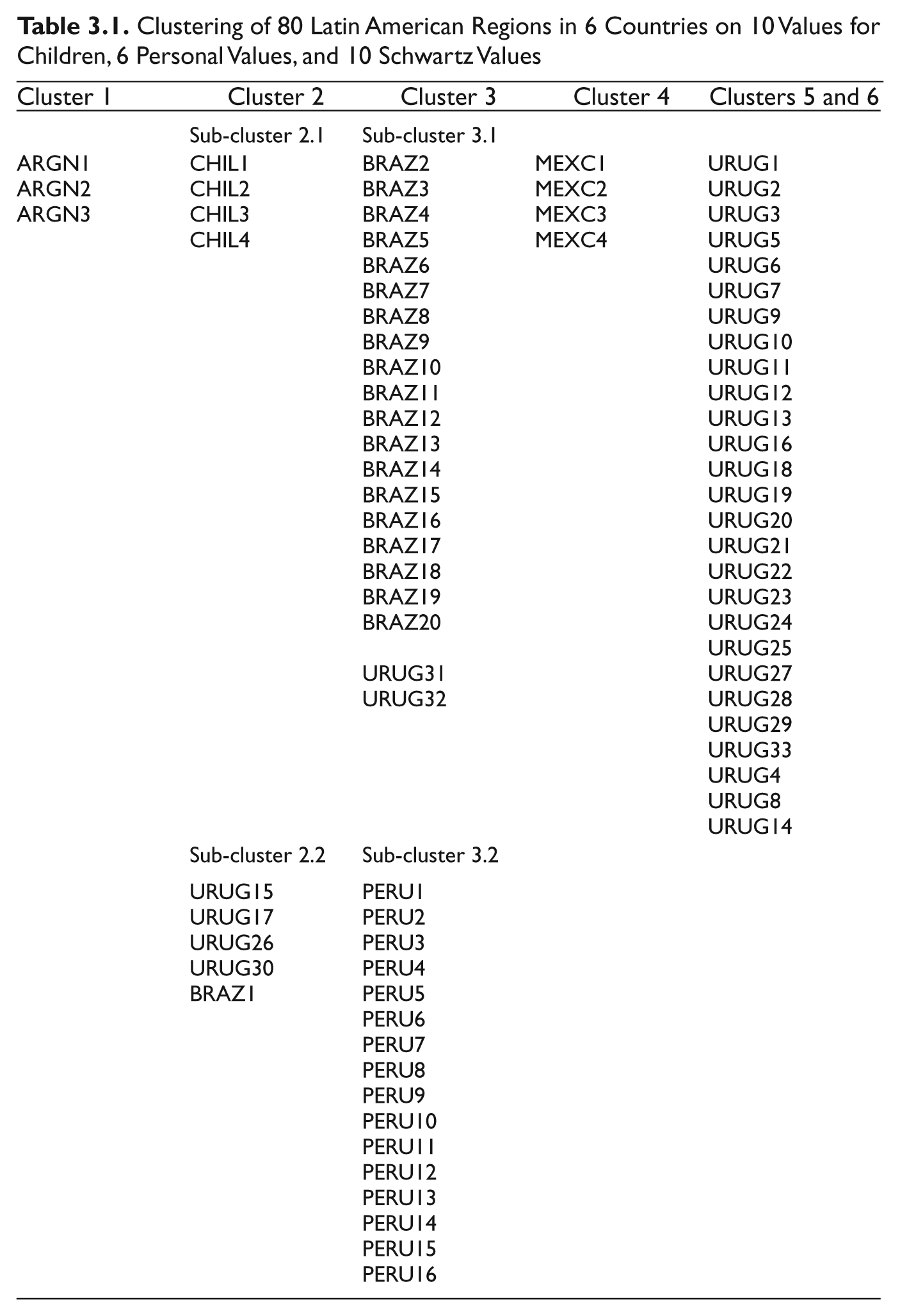
Our results for Latin America are based on 10 values for children, six personal values, and 10 Schwartz values (only 10 values for children in the case of Colombia and Guatemala). They are summarized in Table 3.2.
Homogeneous Cultural Clusters in Latin America

Thus, 87 of the 90 Latin American regions (including those of Guatemala and Colombia), or 96.7%, clustered together with the other regions of their respective nation, forming homogeneous national clusters without any intermixtures.
Results for the Anglo Countries
Starting with the 10 values for children, we obtained a mixed picture. Although more than half of each nation’s regions formed distinguishable clusters, some of these contained intermixtures. For instance, only eight of New Zealand’s 20 regions formed a homogeneous cluster with the Euclidian method; only six with Pearson’s. There was a large 19-region New Zealand cluster with the Pearson method but it contained three Canadian and three Australian regions as well.
Adding the six personal values did not produce an appreciable change. Adding the 10 Schwartz values to the previous 16 items meant that New Zealand would be dropped from the analysis as it is not represented on that part of the WVS questionnaire. Although we requested four clusters for the regions of the remaining four nations, nearly all regions were grouped into a single cluster, with the exception of one Australian and two U.S. regions. Therefore, we do not present the SPSS cluster membership solution. However, Dendrogram 4 showed distinct national subclusters within the single Anglo cluster. The results from the Euclidean method are presented in Dendrogram 4. Once again, we obtained logical supranational clusters: the United States and Canada clustered separately from the United Kingdom and Australia.
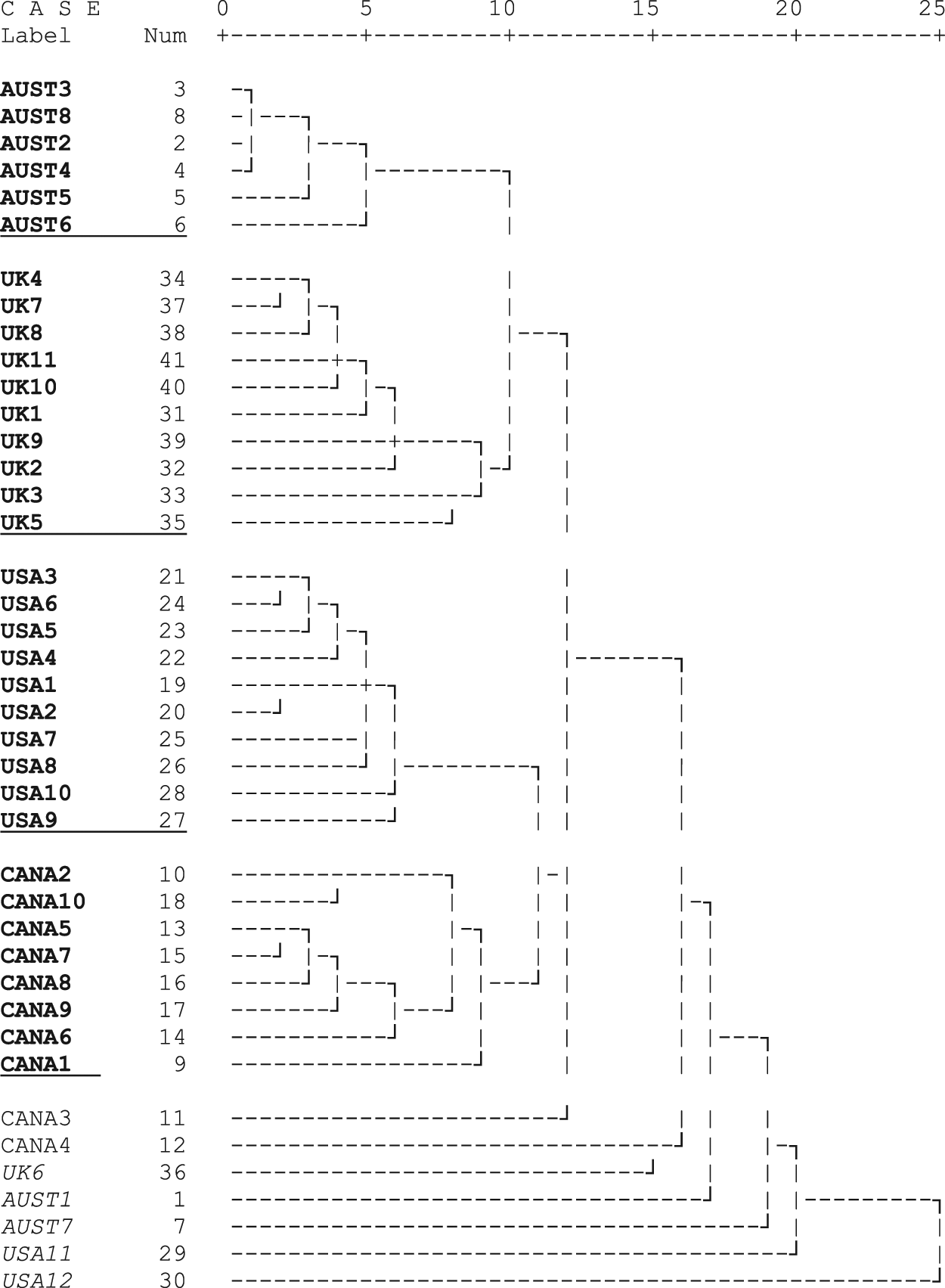
Clustering of 41 regions in 4 Anglo countries on 10 values for children, 6 personal values, and 10 Schwartz values
Our results for the Anglo countries, on the basis of 10 values for children, 6 personal values, and 10 Schwartz values (only 10 values for children in the case of New Zealand), are summarized in Table 4.1.
Homogeneous Cultural Clusters in the Anglo Countries
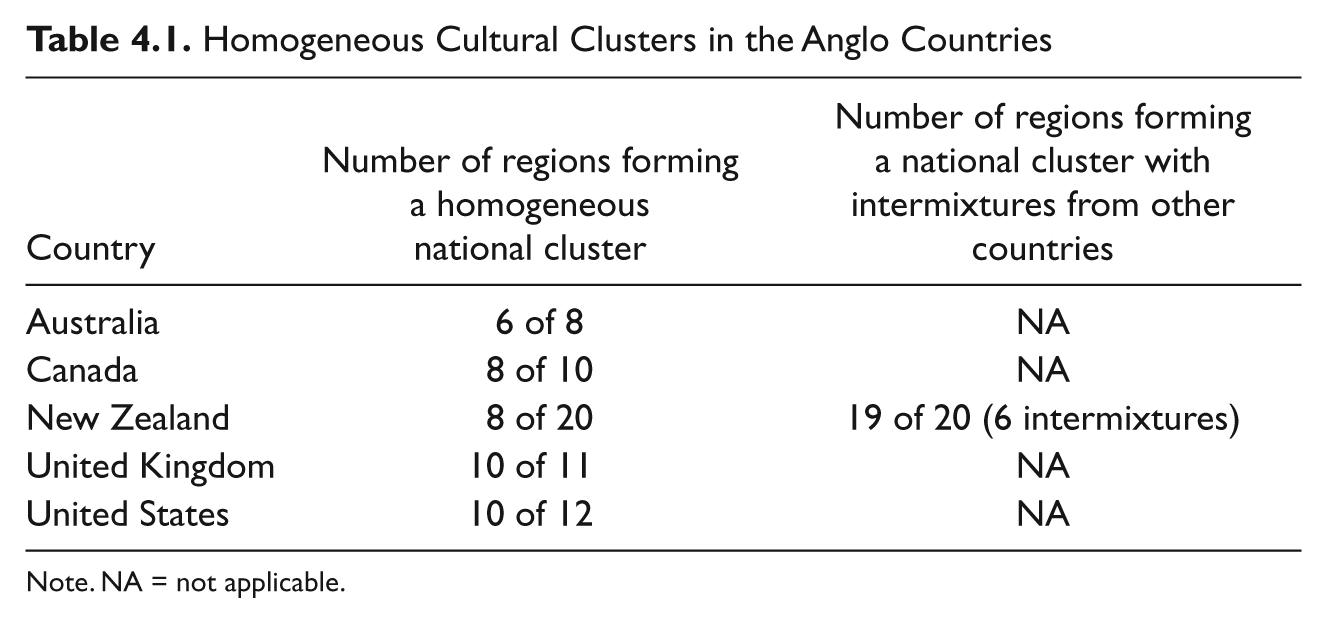
Note. NA = not applicable.
Thus, 53 of the 61 Anglo regions, or 86.9%, clustered together with the other regions of their respective nation, whereas 42 regions, or 68.9%, formed homogeneous national clusters without any intermixtures. If we exclude New Zealand from the count (as it is not represented on the Schwartz values), 34 Anglo regions of 41, or 82.9%, formed homogeneous national clusters.
Discussion
Our study refutes some of the arguments against the concept of national culture. When basic cultural values are compared, in-country regions tend to cluster along national lines rather than be scattered and intermixed with the regions of other countries in the same cultural or geographic area. This is true even in the case of recently emerged nations, such as Malaysia and Indonesia, which share an official language (Malay-Indonesian), a main religion (Islam), a long history of a traditional economy (rice cultivation), and a long national border. It is also true of the African nations that we had in our sample, despite the fact that they were created without any regard for cultural similarities or differences.
However, although we identified a New Zealand cluster, approximately half of that country’s regions do not belong to that cluster but gravitate toward other Anglo clusters. Yet New Zealand is not represented on one of the three groups of values that we used in our analysis. Consequently, any results about the homogeneity of its culture should be guarded.
The fact that the Taiwanese regions formed a subcluster that was joined to the Japanese subcluster and not to that of the People’s Republic apparently demonstrates the impact of economic development on national culture: richer countries have cultures that distinguish them from those of the less economically developed nations. It is also possible that historical factors can explain Taiwan’s specificity: in the past 400 centuries, it has been ruled not only from mainland China but also by Dutch, Japanese, and autonomous local governments. However, we must warn against interpreting our results too literally as different clustering methods will produce different results. It is possible, for example, to choose a combination of methods that will link the Japanese cluster to the Malaysian cluster. Hierarchical cluster analysis can reliably answer general questions, such as whether national regions tend to cluster along national lines. It is a much more controversial tool for answering specific questions, such as whether a particular Chinese region is culturally closer to Chinese culture or to Vietnamese culture.
We also obtained evidence that although the regions that we analyzed have an overwhelming tendency to form fairly distinct national clusters, the latter are not equally tight: the regions of some nations (for instance, Rwanda) form a tighter cluster with closer linkages than the regions of other nations (for instance, Zambia). Why this is so may be an interesting topic for further study.
It is also noteworthy that, according to our study, the Anglo nations are far closer culturally than the countries in any of the other groups that we analyzed. In fact, the Anglo nations are closer to each other than are many regions within Uruguay or Brazil. An interesting question is whether this similarity of Anglo cultures is inherited or a result of economic development, which—as Inglehart (2008) found—tends to bring the cultures of the rich nations closer together. The role of the English language as a cultural unifier is also worth exploring, although our results for Latin America and China/Taiwan suggest that a shared language is not enough to create close cultural similarities.
Another interesting conclusion of our study is that different sets of variables have different discriminant properties in different parts of the world. The 10 values for children in the WVS were enough to outline clear national clusters in East and Southeast Asia but not in the other parts of the world. The Schwartz values in the WVS did not work well on their own anywhere but were a good supplement to other sets of values in some parts of the world, enhancing their discriminant properties. Thus, how clearly a national culture is delineated depends on what combination of variables is used. Strictly speaking, our study does not prove that nations have distinct cultures in an abstract sense. It proves that national cultures can be distinguished if an appropriate selection of cultural indicators is used.
An important topic for further research is the mechanism through which nations create and maintain national cultures. What is the specific role of the state institutions, the school systems, the national nongovernment organizations, and the media? Although it is often assumed that these factors can influence national culture, their role has never been analyzed in detail.
In summary, we hope that our study will support the already existing interest in the topic of national culture and will be followed by studies of other geocultural regions. We also hope that future studies will provide answers to some of the questions that we have outlined.
Footnotes
Appendix
The 10 Values for Children in the 2005-2008 World Values Survey
v12-21: Here is a list of qualities that children can be encouraged to learn at home. Which, if any, do you consider to be especially important? Please choose up to five. (Code five only)
Possible answers:
The Six Personal Values in the 2005-2008 World Values Survey
For each of the following aspects, indicate how important it is in your life. Would you say it is . . .
Possible answers:
The 10 Schwartz Values in the 2005-2008 World Values Survey
Now, I will briefly describe some people. Using this card, would you please indicate for each description whether that person is very much like you, like you, somewhat like you, not like you, or not at all like you? (Code one answer for each description):
Possible answers:
The author(s) declared no potential conflicts of interest with respect to the research, authorship, and/or publication of this article.
The author(s) received no financial support for the research, authorship, and/or publication of this article.