



Abstract
The purpose of this study was to examine whether or not the relationship between perceived parental acceptance and psychological adjustment of Korean children is moderated by parental power and prestige. Two hundred nine children (49% boys) ages 11 through 13 years (M = 11.63) participated in the study. The measures used were the child versions of the Parental Acceptance–Rejection Questionnaire for mothers and fathers, the Parental Power and Prestige Questionnaire, and the child version of the Personality Assessment Questionnaire. Significant gender difference was found in children’s psychological adjustment. Results showed that maternal acceptance and paternal acceptance were significantly correlated with psychological adjustment among both boys and girls. Parental prestige was significantly and negatively correlated with paternal acceptance among girls only. Results of hierarchical regression analyses revealed that neither power nor prestige was uniquely associated with either boys’ or girls’ psychological adjustment. However, these analyses did reveal that children’s perceptions of parental power and prestige moderated the relationship between perceived parental acceptance and children’s psychological adjustment.
Keywords
Introduction from the Editors
In order to avoid unnecessary redundancy across the data-oriented articles in this Special Issue, common issues relevant to all articles are discussed in Rohner’s Introduction (Rohner, 2014). These issues include an introduction to the International Father Acceptance-Rejection Project, of which this article is a part. Common issues also include description of measures used by authors, as well as data analytic procedures employed by all authors. Only information specific to this study is included here.
Method
Participants
Two hundred nine 11- through 13-year-old children in the sixth grade (49% boys) were recruited from one elementary school located in the national capital area of Korea. The mean age of participants was 11.63 years (SD = .58 years). The level of education of their fathers ranged from high school (19%), vocational college (27%), university (50%), through graduate school (4%), and that of their mothers ranged from less than high school (3%), high school (46%), vocational college (23%), university (29%), through graduate school (2%).
Measures
The Parental Power–Prestige Questionnaire (3PQ)
Coefficient alphas in this study were .78 for the power scale, .87 for the prestige scale, and .88 for the total score. As a way to check the validity of 3PQ (Rohner, 2011), factor analysis with Varimax rotation was conducted with the 10 items of the scale. The results of the analysis confirmed that the questionnaire is composed of two clear factors, a power factor and a prestige factor.
Parental Acceptance–Rejection Questionnaire (Child PARQ: father version and mother version)
Short versions of the scales were used (Rohner, 2005). Coefficient alphas in this study were .92 for mothers and .92 for fathers.
Personality Assessment Questionnaire (Child PAQ)
In this study, Cronbach’s alpha for the total score was .86 (Rohner & Khaleque, 2005).
Gender Inequality Scale (GIS)
The index of gender inequality was calculated from a sample of 142 respondents (42% men; mean age = 39.30; SD = 4.26), ranging in age from 31 through 53 years. The mean of the GIS (Rohner, 2012) was 14.35 (SD = 2.17). This score reveals that Korea is characterized by a moderate degree of gender inequality. This was especially true for women, who achieved a mean score of 14.89, whereas men achieved a score of 13.62. The difference between scores was statistically significant (t = −3.59, p < .001). Coefficient alpha in this study was .66. As a way to check the validity of GIS, factor analysis with Varimax rotation was conducted with the GIS’s five items. The results of the analysis confirmed that the scale is composed of a single factor.
Procedure
To collect data on parental acceptance, power, and prestige, as well as on children’s psychological adjustment, the researchers contacted the school principal and received approval to administer the questionnaires. Children filled out the questionnaires in classroom settings. To collect the data on gender inequality, the researchers contacted another school in the same area and recruited participants among school children’s parents. Participants filled out the questionnaires at home and returned them to the school.
Results
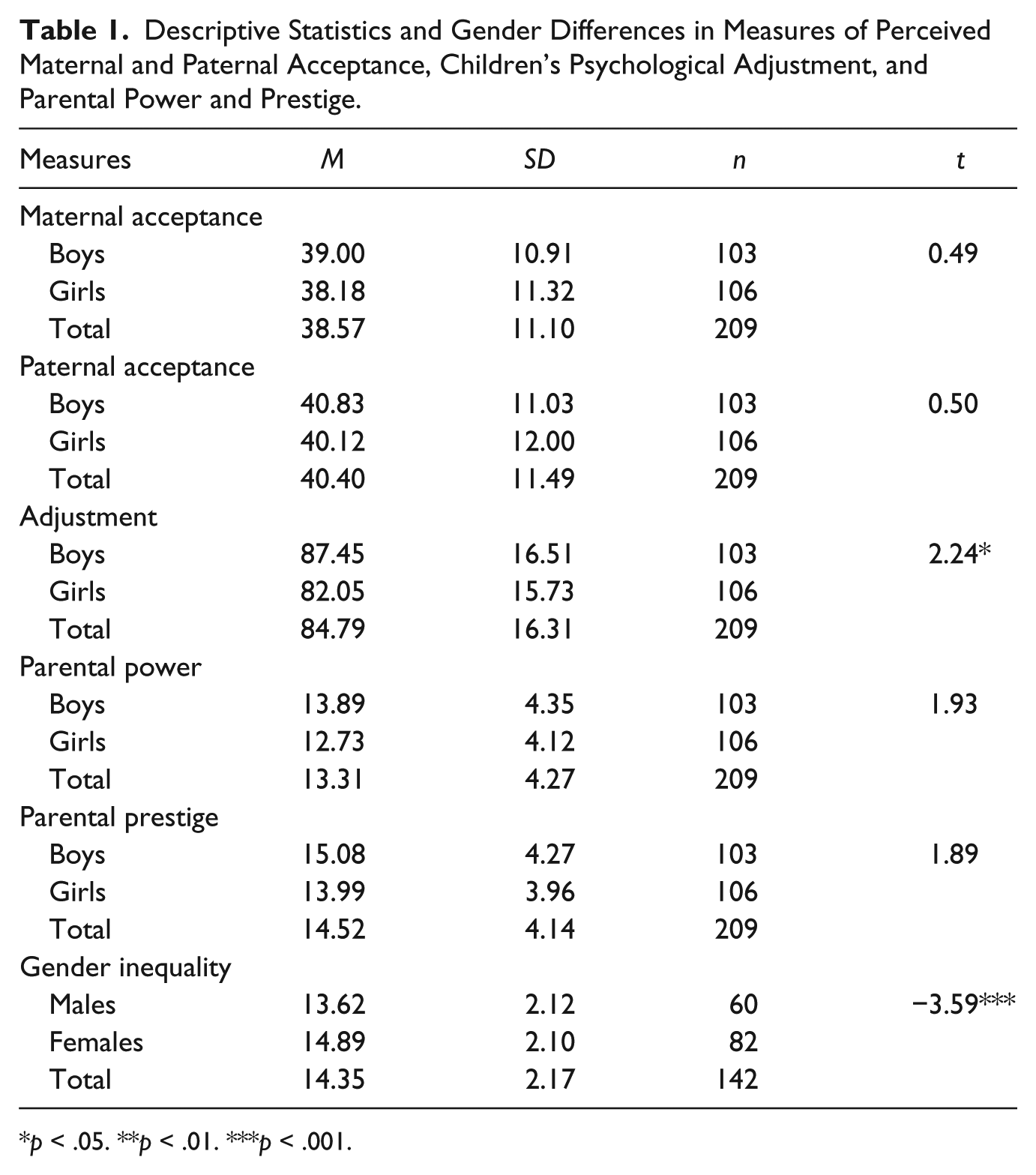
Means and standard deviations of children’s perceptions of paternal and maternal acceptance, perceptions of parental power and prestige, and children’s psychological adjustment are presented in Table 1. As shown in the table, only one significant gender difference was found and that was for children’s psychological adjustment: Boys tended to report themselves to be slightly less well adjusted than did girls, though overall both boys and girls self-reported fair psychological adjustment. Because there was a gender difference in children’s psychological adjustment, all further analyses were performed separately for boys and girls.
Descriptive Statistics and Gender Differences in Measures of Perceived Maternal and Paternal Acceptance, Children’s Psychological Adjustment, and Parental Power and Prestige.
p < .05. **p < .01. ***p < .001.
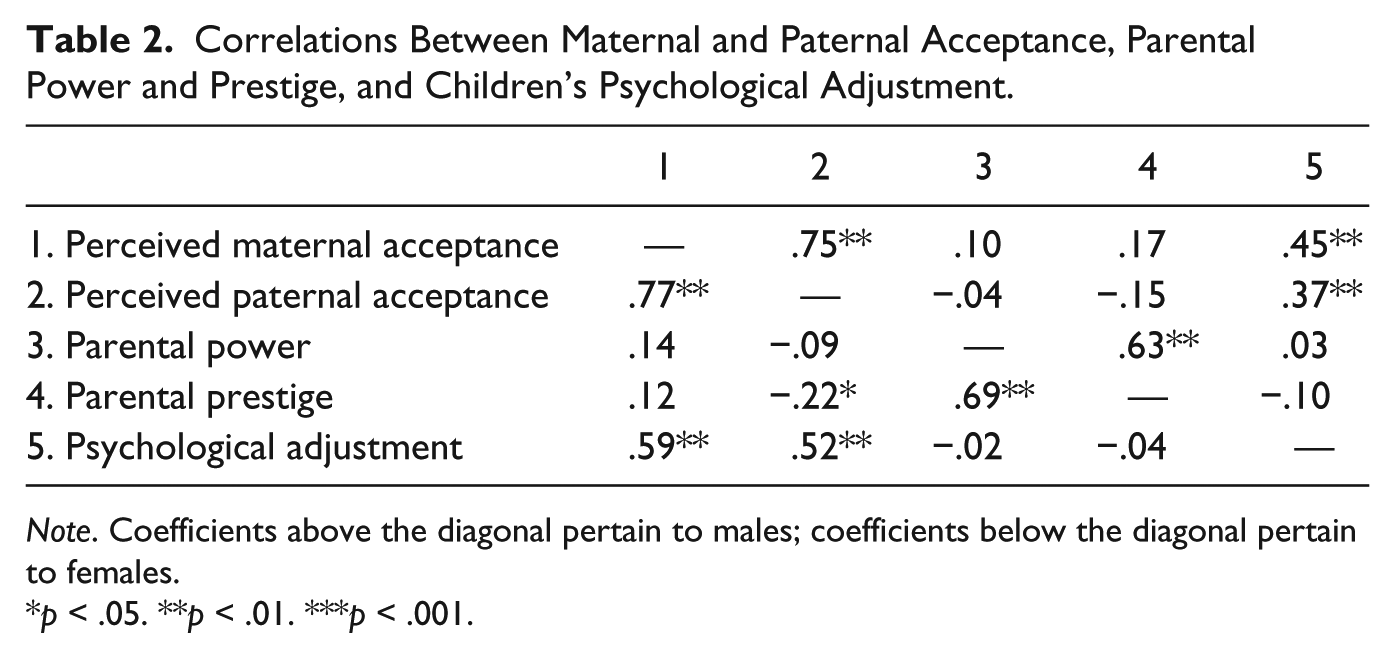
Correlations among all the predictor and outcome variables are presented in Table 2.
Correlations Between Maternal and Paternal Acceptance, Parental Power and Prestige, and Children’s Psychological Adjustment.
Note. Coefficients above the diagonal pertain to males; coefficients below the diagonal pertain to females.
p < .05. **p < .01. ***p < .001.
Here, one can see that maternal acceptance and paternal acceptance were significantly correlated with the psychological adjustment of both boys and girls. In addition, parental prestige was significantly and negatively correlated with paternal acceptance among girls (but not boys).
Hierarchical regression analyses were conducted to examine the main effects and interaction effects of children’s perceptions of maternal acceptance, paternal acceptance, parental power, and prestige on children’s psychological adjustment. Predictor variables were centered to minimize problems due to multicollinearity (Aiken & West, 1991). No control variable was included in Step 1 of the regression equation because even though there was a great variability in the level of parents’ education, parental education was not significantly associated with the children’s psychological adjustment. Therefore, maternal acceptance, paternal acceptance, parental power, and parental prestige were entered in the first step of the analyses. Parental power and prestige were included as two separate variables because the correlation between them was less than .75, which is the criterion suggested by Kline (1998) for combining two separate variables into a single composite variable. In the second step, four interaction terms (maternal acceptance by power, maternal acceptance by prestige, paternal acceptance by power, and paternal acceptance by prestige) were entered to test for possible interaction effects. Hierarchical regression analyses were conducted separately for boys and girls.
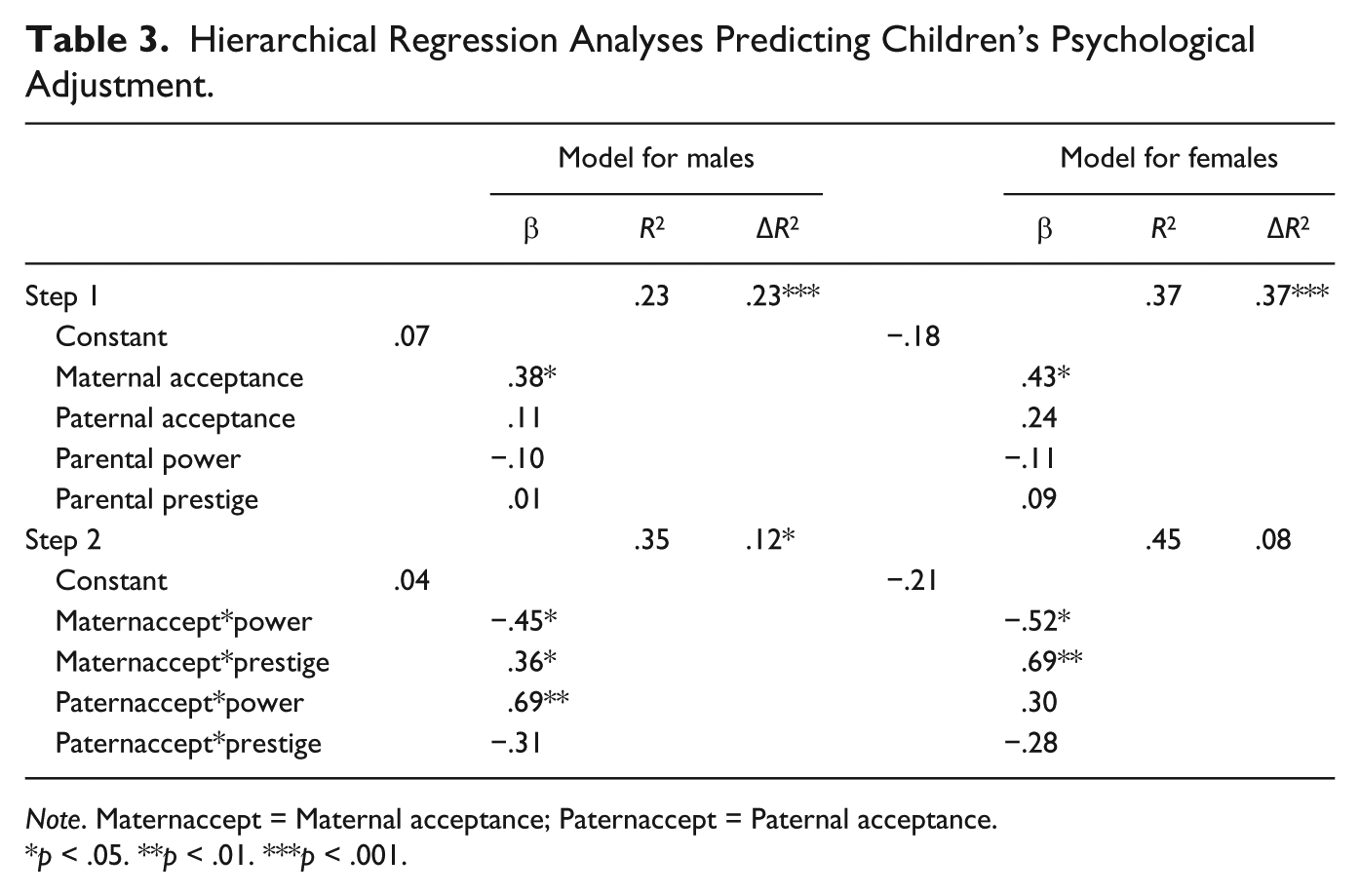
As shown in Step 1 of Table 3, maternal acceptance (but not paternal acceptance) made a unique contribution to the psychological adjustment of both boys and girls. Results of analyses in Step 2, however, show that relationships between perceived maternal acceptance and boys’ and girls’ adjustment were moderated by perceived parental power and parental prestige. However, it should be noted that when the two interaction terms were added in Step 2 the change in R2 for girls was not statistically significant. This suggests that the effect of the interaction terms was minimal, and that the interaction terms did not have a meaningful effect on girls’ psychological adjustment. (This issue is addressed further, below.) The results also show that the relationship between perceived paternal acceptance and boys’ (but not girls’) adjustment was significantly moderated by parental power. To interpret these interactions, regression lines predicting boys’ and girls’ psychological adjustment in relation to perceived maternal or paternal acceptance were plotted at three levels of parental power and prestige (i.e., mean power and prestige as well as +1 SD and −1 SD power and prestige). Statistical significance of the slopes was tested following procedures suggested by Cohen and Cohen (1983) and Aiken and West (1991).
Hierarchical Regression Analyses Predicting Children’s Psychological Adjustment.
Note. Maternaccept = Maternal acceptance; Paternaccept = Paternal acceptance.
p < .05. **p < .01. ***p < .001.
Figure 1 shows that under the condition of +1 SD parental power—where fathers were perceived to have more interpersonal power than mothers (β = .55, p < .001)—and under the condition of mean parental power where both parents shared power equally (β = .46, p < .001), the relationship between perceived maternal acceptance and boys’ psychological adjustment was significant. This relationship was not significant, however, in the −1 SD condition where mothers were perceived to have more parental power than fathers (β = .38, p = .055). These results suggest that the magnitude of the relationship between perceived maternal acceptance and boys’ psychological adjustment intensified the more power fathers were perceived to have relative to mothers. The magnitude of the relationship was not significantly affected, however, when mothers’ power was perceived to be greater than fathers’. In effect, these results show that perceived maternal power buffered (i.e., diminished) the influence of perceived maternal acceptance on boys’ psychological adjustment. Figure 1 also shows that the relationship between perceived maternal acceptance and girls’ psychological adjustment was significant, but the magnitude of the relationship was not significantly different under the three conditions of parental power. These results suggest that maternal power did not significantly moderate the relationship between perceived maternal acceptance and girls’ psychological adjustment.
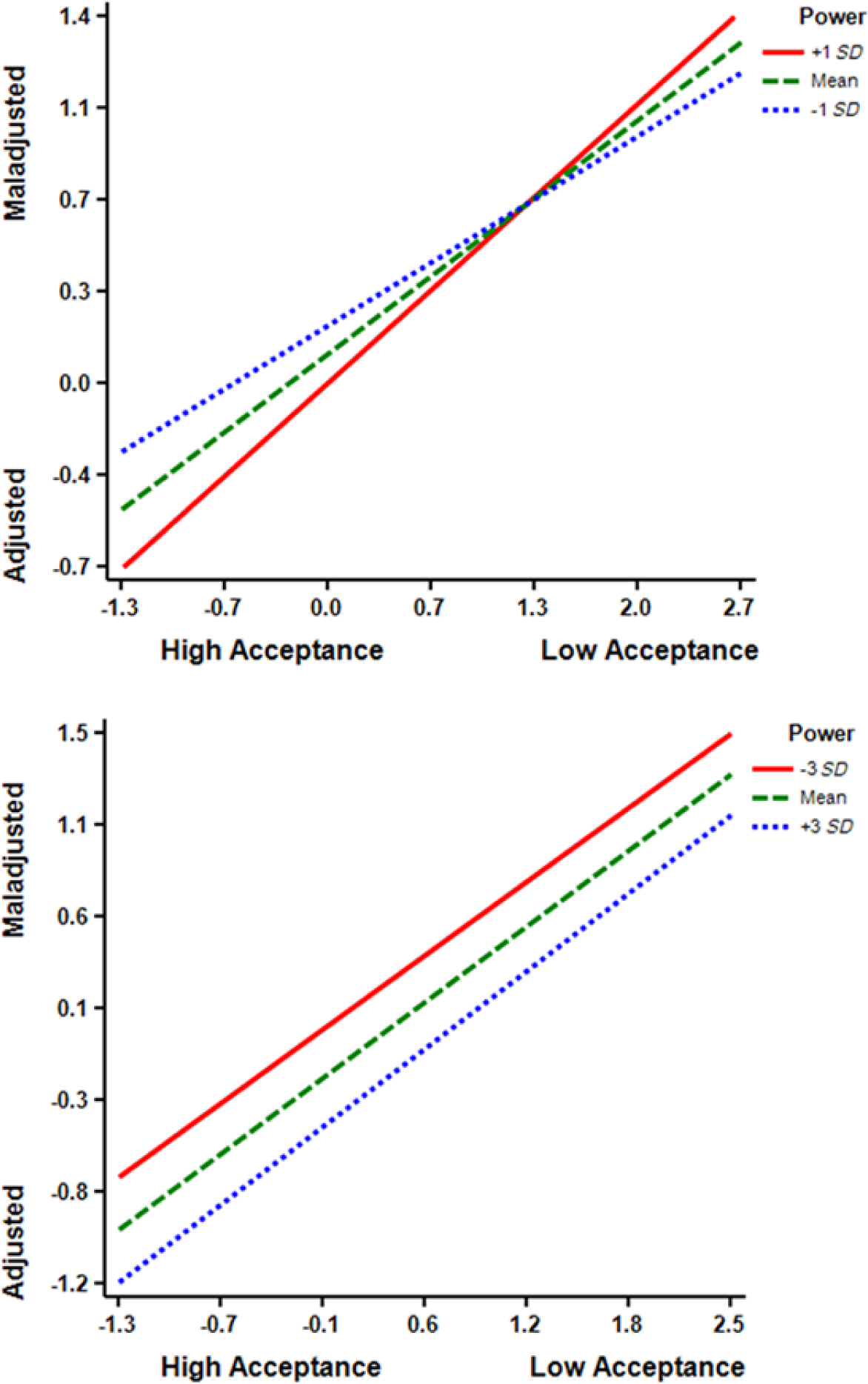
Maternal acceptance predicting boys’ and girls’ psychological adjustment at three levels of parental power.
Figure 2 shows that under the +1 SD parental prestige condition—where fathers were perceived to have more prestige than mothers (β = .57, p < .001 for boys; β = .67, p < .001 for girls)—the relationship between perceived maternal acceptance and children’s (both boys’ and girls’) psychological adjustment was significant. Similarly, under the mean parental prestige condition—where parents shared prestige equally (β = .46, p < .001 for boys; β = .56, p < .001 for girls)—the relationship between perceived maternal acceptance and children’s (both boys’ and girls’) adjustment was significant. However, this relationship was not significant under the −1 SD condition (β = .35, p < .06 for boys; β = .35, p < .17 for girls), where mothers were perceived to have more prestige than fathers. These results suggest that the magnitude of the relationship between perceived maternal acceptance and children’s psychological adjustment intensified the more prestige fathers were perceived to have relative to mothers. The magnitude of the relationship was not significantly affected, however, when mothers’ prestige was greater than fathers’. Again, maternal prestige appears to have buffered the influence of perceived maternal acceptance on the psychological adjustment of children.
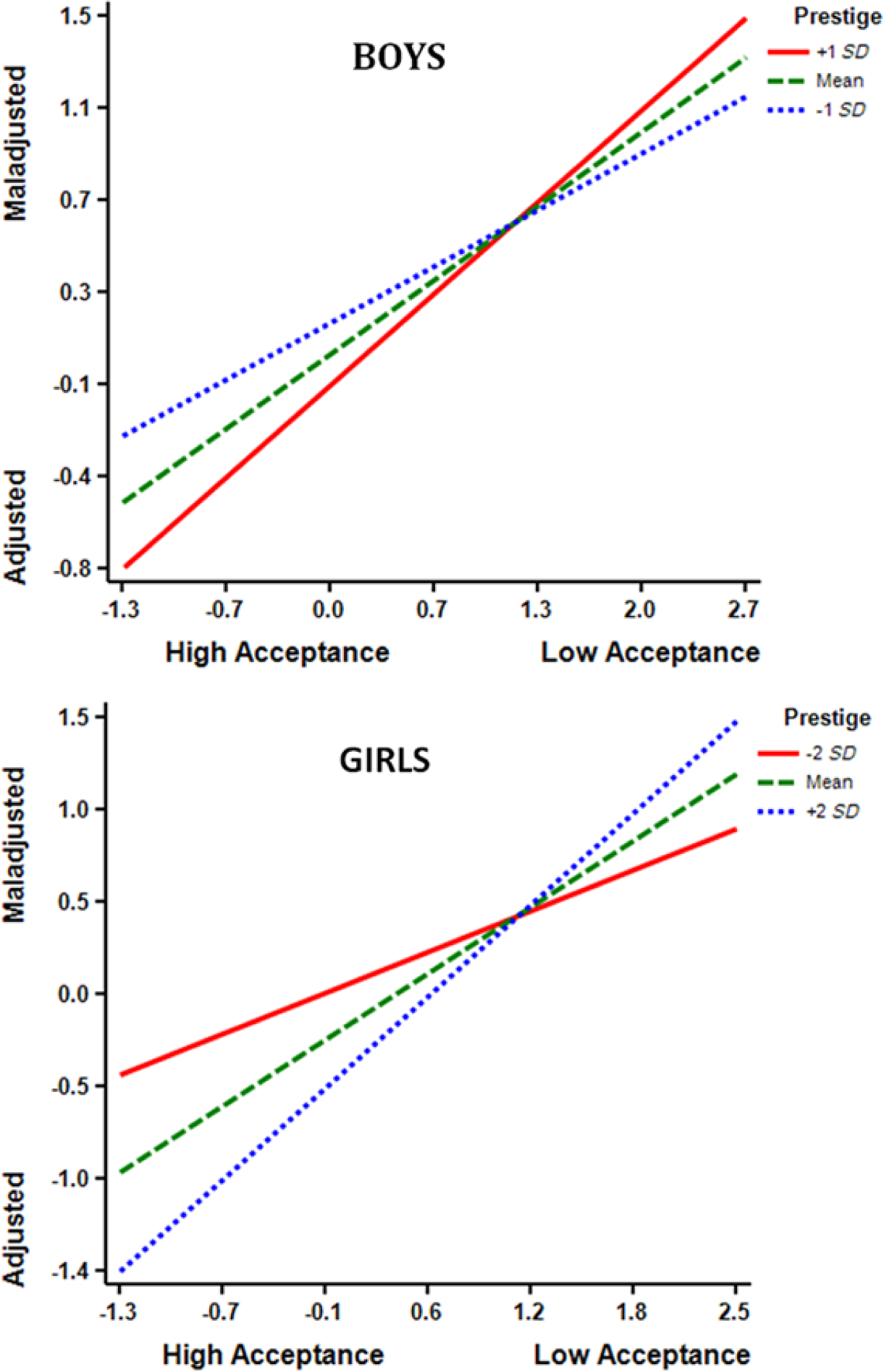
Maternal acceptance predicting boys’ and girls’ psychological adjustment at three levels of parental prestige.
Finally, Figure 3 shows that under the condition of +1 SD parental power—where fathers were perceived to have more interpersonal power than mothers (β = .57, p < .001)—and under the condition of mean parental power, where both parents shared power equally (β = .37, p = .002), the relationship between perceived paternal acceptance and boys’ psychological adjustment was significant. This relationship was not significant, however, under the −1 SD condition where mothers were perceived to have more power than fathers (β = .18, p = .34). These results suggest that the magnitude of the relation between perceived paternal acceptance and boys’ adjustment intensified the more power fathers were perceived to have relative to mothers. The magnitude of the relationship was not significantly affected, however, when mothers were perceived to have more power than fathers.
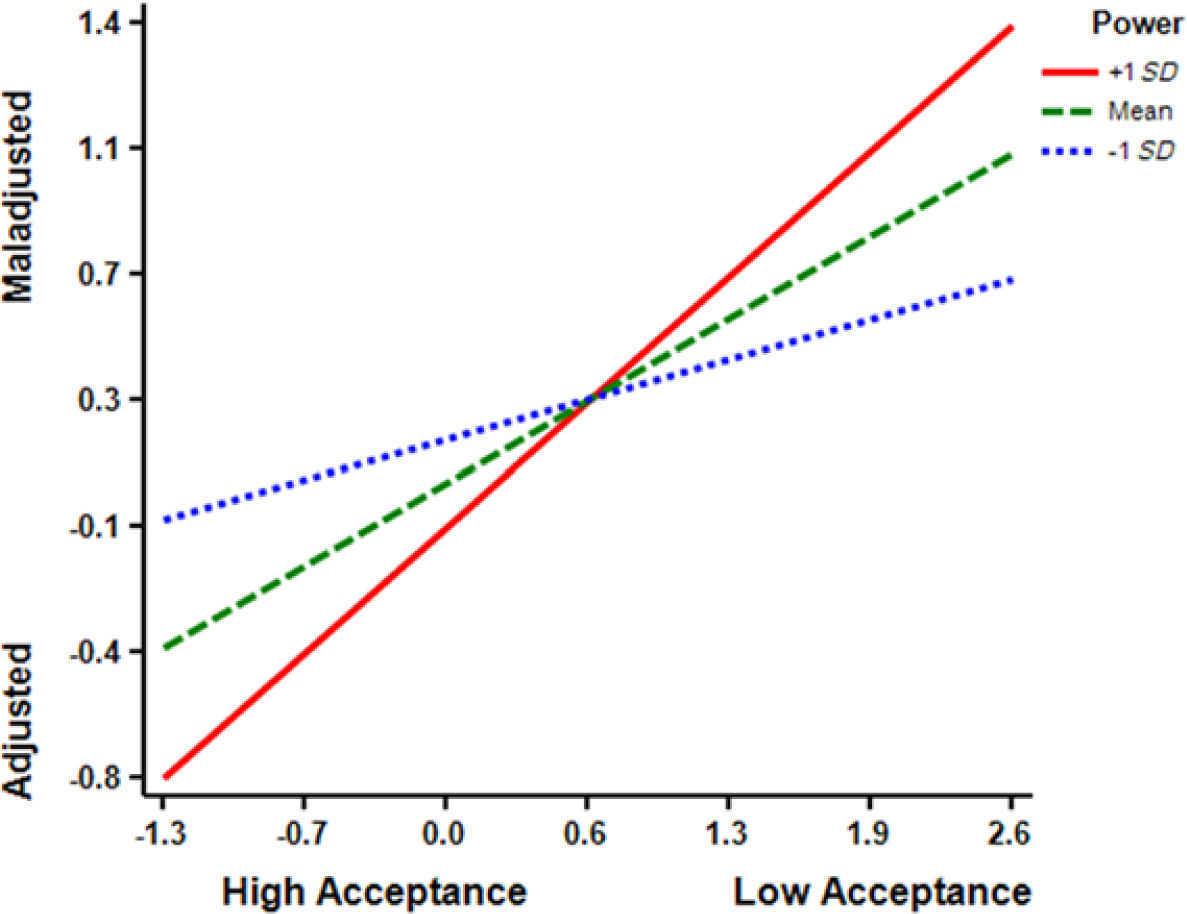
Paternal acceptance predicting boys’ psychological adjustment at three levels of parental power.
Discussion
Both boys and girls perceive their parents (both mothers and fathers) to be loving (accepting). And both sexes of children perceive their parents to be approximately equal in parental power and prestige. Moreover, the children also report fair to good psychological adjustment, though girls self-report significantly better adjustment than do boys.
Both perceived maternal and paternal acceptance are significantly correlated with boys’ and girls’ psychological adjustment. However, results from regression analyses reveal that Korean children’s perceptions of parental power and parental prestige moderate the relationship between their perceptions of parental acceptance and children’s psychological adjustment. More specifically, paternal acceptance becomes a stronger predictor of boys’ psychological adjustment to the degree that fathers’ interpersonal power is perceived to be greater than mothers’. Moreover, perceived maternal acceptance becomes a stronger predictor of both boys’ and girls’ psychological adjustment to the degree that fathers’ prestige is perceived to be greater than mothers’. The latter result is not consistent with the expectation of this study that the relationship between perceived paternal and maternal acceptance and psychological adjustment of children would be affected more by whichever parent children perceive to have higher interpersonal power and/or prestige within the family.
These results have interesting implications in the context of those Korean families, however, where fathers are perceived to have higher power and prestige than mothers. Fathers in such families are probably involved in parenting their children more through interacting with their wives than through direct involvement with their children. These fathers may create a psychological environment where children are more keenly aware of that parent’s indirect influence than of their mothers’ more direct parenting involvement.
Finally, the difference in the quality of parent–child relationships between boys and girls should be noted. That is, because adolescent boys tend to feel less emotional distance from their fathers than do girls (Park, Kim, & Han, 2003), the level of fathers’ power and prestige may be somewhat more important to boys than to girls. Thus, the conclusion that parental acceptance is a stronger predictor of psychological adjustment of Korean children when they perceive their fathers to have more power and prestige relative to mothers seems to have important implications. That is, fathers’ involvement in parenting is an important factor that can make a significant difference in the effect of parental acceptance on Korean children’s psychological adjustment.
Footnotes
Declaration of Conflicting Interests
The authors declared no potential conflicts of interest with respect to the research, authorship, and/or publication of this article.
Funding
The authors received no financial support for the research, authorship, and/or publication of this article.