




Abstract
The study regards attitudes of Russian immigrants in Israel toward wife abuse and corporal punishment. The sample consisted of 1,028 participants, based on a multistage cluster sampling. The study used a questionnaire related to immigration, acculturation, and attitudinal issues. The findings indicate a dual-causal model, in which corporal punishment attitudes contribute to wife abuse attitudes and vice versa. However, the effect of attitudes supporting corporal punishment was stronger than the effect of wife abuse attitudes, indicating that the attitudinal system as a precursor of violent behavior is already merging the two types of violence.
Introduction and Background
Cultural Considerations Regarding Immigrants From the Former Soviet Union (FSU) in Israel
Culture is defined as a web of meanings, a road map to a way of life that is embodied in human actors’ beliefs, values, worldviews, attitudes, and behavioral standards (Geertz, 1973; Saleebey, 1994; Sue, 2006). As such, culture is a central concept in human existence. Immigration as a cultural change is characterized by intensive losses of social and economic status, changes in gender roles, limited access to resources, lack of support from family of origin and community, language barriers, and employment difficulties (Kasturirangan, Krishnan, & Riger, 2004; West, 1998). The greater the gap in norms, values, and familial and social communication patterns between the country of origin and the host country, the greater the pressures of psycho-social-cultural stresses.
Almost one million Jews from the Former Soviet Union (FSU) immigrated to Israel starting in the early 1990s; these immigrants now comprise approximately 15% of the population of Israel (Hadas, Markovitzky, & Sarid, 2008). Immigrants from the FSU are characterized by a tendency to preserve their cultural uniqueness and keep their social network (Lerner, 2011; Litwin & Leshem, 2008). Horowitz (1989) and Lane (1990) emphasize that when it comes to family practices, including gender roles and child rearing, FSU Jews and Russian people in general are the product of the Soviet collectivist norm-socialization and values, rather than individualistic value orientation (Goodwin & Emelyanov, 1995; Lerner, 2011). This was found to be true even following the Perestroika period and its cultural effects. Consequently, the expectation is to raise a family whose members will be socially useful; norm violation is considered as justifying punishment (Shor, 1997). In the process of acculturation to western values regarding child rearing practices and gender relationships, there are many potential gaps and conflicts. The overall gestalt is important in understanding FSU immigrants’ adjustment to a new society, and is critical to develop interventions that are effective and culturally sensitive.
Intimate Violence Among Immigrants From the FSU in Israel
Perceptions of what constitutes violent family behavior and what might not constitute violence, as well as issues of receptivity to societal interventions in such cases, are deeply embedded in cultural norms and their implied assumptions. They may vary according to perceptions of gender and family power relationships, as well as perceptions regarding the role of state–citizen relationships (Kar & Garcia-Moreno, 2009; Kazarian & Kazarian, 1998; Malley-Morrison & Hines, 2004). Thus, attitudes regarding physical punishment toward children have been found to be culturally dependent (e.g., Giovannoni & Becerra, 1979; Korbin, 1991; Straus & Yodanci, 1994). In various societies, there is acceptance toward physical punishment, along with some ambivalence regarding the inclusiveness of the concept of “child abuse” (Straus, 2008, 2010; Tajima, 2000, 2004). For example, Larsen, Kim-Goh, and Nguyen (2008) write that in many Asian countries, there is a widespread acceptance of many types of physical striking of children because it is framed as discipline. A comparative international study of attitudes toward corporal punishment has indicated that among Russians, 56% were exposed to corporal punishment as children, compared with just 22.6% in an Israeli sample (Straus, 2010). For people with a Russian cultural background, “child abuse” may be considered a foreign concept, or one that is viewed as applicable only in cases of severe and excessive physical torture (Goodwin & Emelyanov, 1995). In line with this, Shor (1997) found that regarding issues of neglect, immigrants from the FSU were reluctant to involve outsiders, such as social workers, in situations of child maltreatment. Indeed, immigrants may find themselves caught between two contradicting or clashing sets of norms, the one they adhere to, which is brought from the culture of origin, and the one adhered to in the receiving society
In many cultures, women are also vulnerable inside their families, reflecting conservative cultural values and patriarchal practices (Gondolf, 1998; Kasturirangan et al., 2004; Malley-Morrison & Hines, 2004). This appears to be true for Russian women as well. Stickley, Kislitsyna, Timofeeva, and Vagero (2008) reported that less than half of their Moscow sample considered domestic violence to be a serious problem, and that wife abuse was considered justifiable is certain contexts, especially when the wife had behaved in a way considered “unfaithful.” They found that being young, divorced or widowed, having financial difficulties, and regularly consuming alcohol were associated with attitudes more supportive of violence among men; having a low educational level underpinned supportive attitudes among both men and women.
Domestic violence in the FSU was portrayed as nonexistent until the downfall of the Soviet Union. However, many cultural factors suggest that domestic violence has always been present and pervasive in Russian culture. Within Russian society, domestic violence is considered private, and women may feel responsible for the abuse and obliged to keep the family together (Horne, 1999; Leshem & Sicron, 2004; Stickley, Kislitsyna, et al., 2008; Stickley, Timofeeva, & Sparen, 2008). Russian society has one of the highest recorded rates of lethal violence against women in the world (Leshem & Sicron, 2004; Stickley, Timofeeva, & Sparen, 2008). Along similar lines, a study in a medical primary care center in Israel found that 30.8% of women from the FSU were at high risk for family violence (Grynbaum, Biderman, Levy, & Petasne-Weinstock, 2001). This study may reflect the interactions between attitudes and behaviors that were common in the culture of origin as well as the impact of the stress associated with immigration. Another Israeli study also reflects the impact of immigration on domestic violence. Hadas et al. (2008) examined the psychological and marital risk factors of 322 couples who were originally from the FSU, comparing the general immigrant population and immigrants receiving welfare support. Several socio-demographic variables predicted domestic violence: higher education, lower level of psychological adjustment, and greater familial–cultural gap between the country of origin and Israel. Surprisingly, immigrants who were on welfare reported less spousal violence than members of the regular immigrant population, and the incidence of spousal violence was higher among the more highly educated immigrants compared with the less educated. These findings may be explained in light of the social, economic, and familial losses and frustrations the more highly educated immigrants experience (Hadas et al., 2008).
Immigration creates changes in spousal relationships, especially in the power balance. Immigrant couples find themselves in a new culture that may have different gender role expectations. This can create or intensify distress and spousal conflicts (Hadas et al., 2008). In immigrant families, women are highly vulnerable to spousal violence, as they often become the victims of their partners’ frustration in coping with the inter-cultural transition (e.g., M. Abraham, 2000; S. Abraham & Hamilton, 2006).
The Relationships Between Corporal Punishment, Child Abuse, and Domestic Violence
Corporal punishment has been a subject of controversy, both in public opinion and in scholarly research, for many years (e.g., Benjet & Kazdin, 2003; Straus, 2008). Whereas in the United States corporal punishment is legal in most states (Benjet & Kazdin, 2003; Gershoff & Bitensky, 2007), there is growing momentum toward banning such punishment in schools and at home in many other countries, based on the consistent indication of an association between corporal punishment (or “spanking”) and child abuse (e.g., Benjet & Kazdin, 2003; Crouch & Behl, 2001; Zolotor, Theodore, Chang, Berkoff, & Runyan, 2008), as well as severe behavioral and psychological outcomes for children subjected to corporal punishment (e.g., Gershoff & Bitensky, 2007; Straus, 2010). In 2000, the Israeli Supreme Court declared physical punishment of children illegal and punishable under the penal code, even in cases in which no extreme cruelty or physical harm were involved. Reports that corporal punishment has been used are investigated by the child protection system, although only extreme cases are brought to trial as child abuse cases.
Although researchers have distinguished between corporal punishment and child abuse, in real life any such distinction is blurred and misleading. As Gershoff and Bitensky (2007) eloquently state,
The distinctions between physical punishment and abuse, this argument goes, are arbitrary, as the same behavior (e.g., hitting children to cause pain) is put in one group or another, solely on the basis of degree of force used or amount of pain or injury inflicted upon the child. (p. 240)
Therefore, within the context of the current article, we regard corporal punishment as a form of child abuse, both methodologically and in accordance with Israeli law. Indeed, research on parental attitudes toward corporal punishment and child abuse indicates consistent positive associations between the two (e.g., Gershoff, 2002; Gershoff & Bitensky, 2007).
Research has shown that intimate partner violence and parent-to-child aggression tend to co-occur within the same families (e.g., Kelleher, Barth, & Edleson, 2005; Margolin & Gordis, 2003; Straus, 2008, 2010). It is estimated that the percentage of abused children whose mothers are also victims of intimate violence is between 40- 91% (Folsom, Christensen, Avery, & Moore, 2003; Margolin & Gordis, 2003; Robboy & Anderson, 2011). Stress has been found to be a major predictor of both wife abuse and child abuse (Straus, 2008). Margolin and Gordis (2003) reported on a series of additive interactional models that linked husband-to-wife aggression with husbands’ and wives’ child abuse potential in contexts of financial stress and high parenting stress, but not in a low stress context. Similarly, there is some indication that the relationships between cognitive attitudes and behavior in this context may be moderated by parental stress (Crouch & Behl, 2001). Parental attitudes supporting corporal punishment have been positively and strongly associated with child abuse for parents under high stress, but not for parents who did not suffer stress (Crouch & Behl, 2001). Therefore, we may expect a positive relationship between higher levels of stress and attitudes supporting both corporal punishment and wife abuse.
This article reflects the needs to understand the attitudes of immigrants regarding family violence from a multivariate perspective, and to examine the interrelationships between attitudes toward different forms of family violence—toward women as well as toward children—and in relation to life stressors. From the research on immigrant families, it is known that such families experience high levels of stress in different life domains (Benish-Weisman & Shye, 2011; Jasinskaja-Lahti, Horenczyk, & Kinunen, 2011; Straus, 2008; Tartakovsky, 2010).
Based on the above review, in this article we examine a model assessing attitudes toward wife and child abuse (corporal punishment) and their predictors among FSU immigrants in Israel, as well as the interrelation between attitudes supporting those two types of intimate violence. More specifically, we hypothesized the following:
Socio-Demographic and Stress Variables as Predictors of Family Violence Attitudes
Cultural Norms as Predictors of Family Violence Attitudes
The Interrelation Between Child Abuse Attitudes and Wife Abuse Attitudes
Based on the recurrent finding of correlations between wife abuse attitudes and child abuse (corporal punishment) attitudes and behavior (Straus, 2008, 2010; Tajima, 2000, 2004), we expect that one of these variables may serve as mediator in the relationship between the others. However, being agnostic regarding the direction of such mediation, the possible interrelations between the two sets of attitudes may be expressed in one of three forms, as presented in Hypotheses 3a-3c, serving as alternative hypotheses.
The three alternative Hypotheses 3a-3c, may be expressed visually as models A, B, and AB, respectively, as depicted in Figures 1-3.
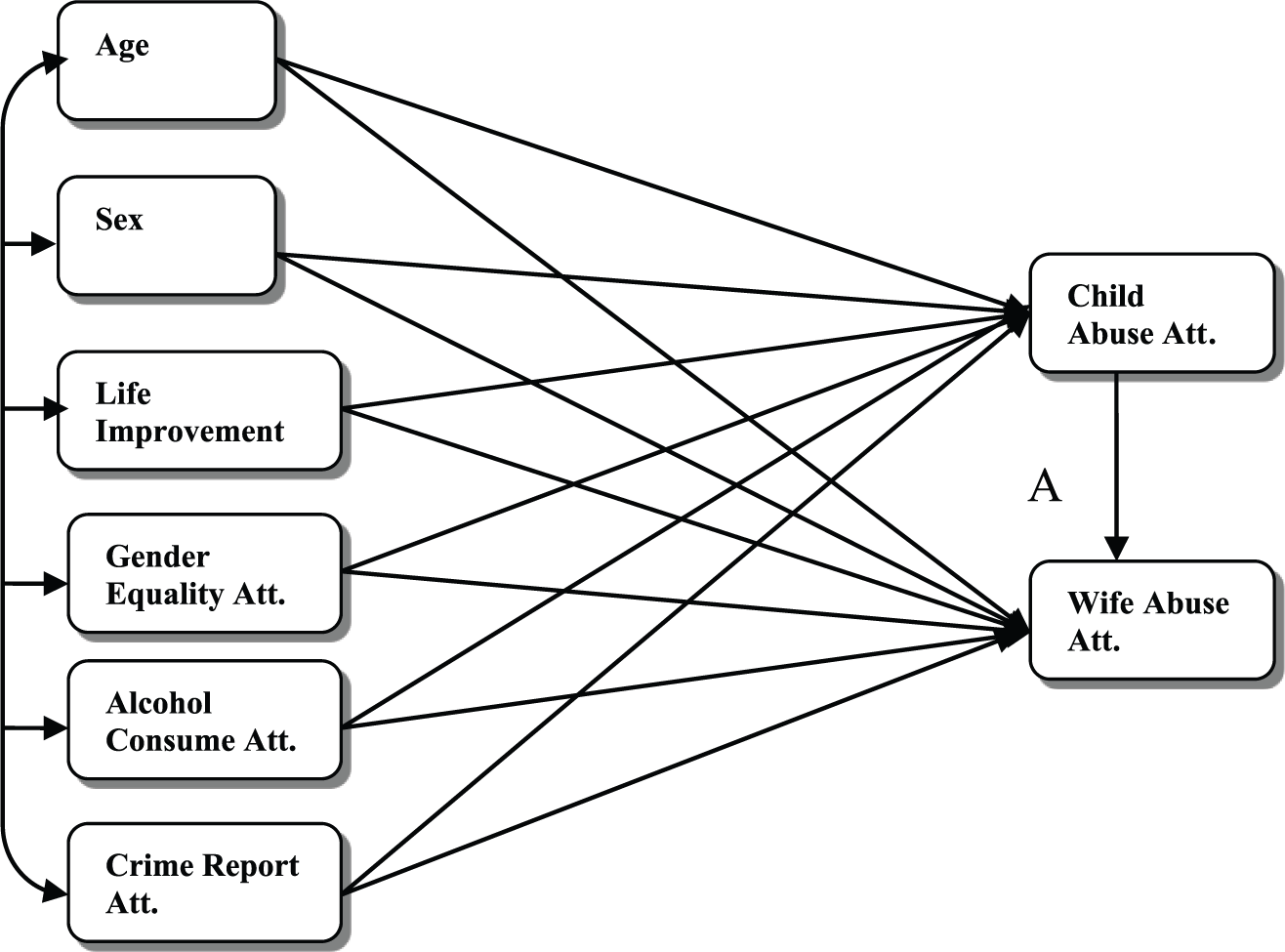
The theoretical A model—Child abuse attitudes as partial mediator for child abuse attitudes.

The theoretical B model—Wife abuse attitudes as partial mediator for child abuse attitudes.
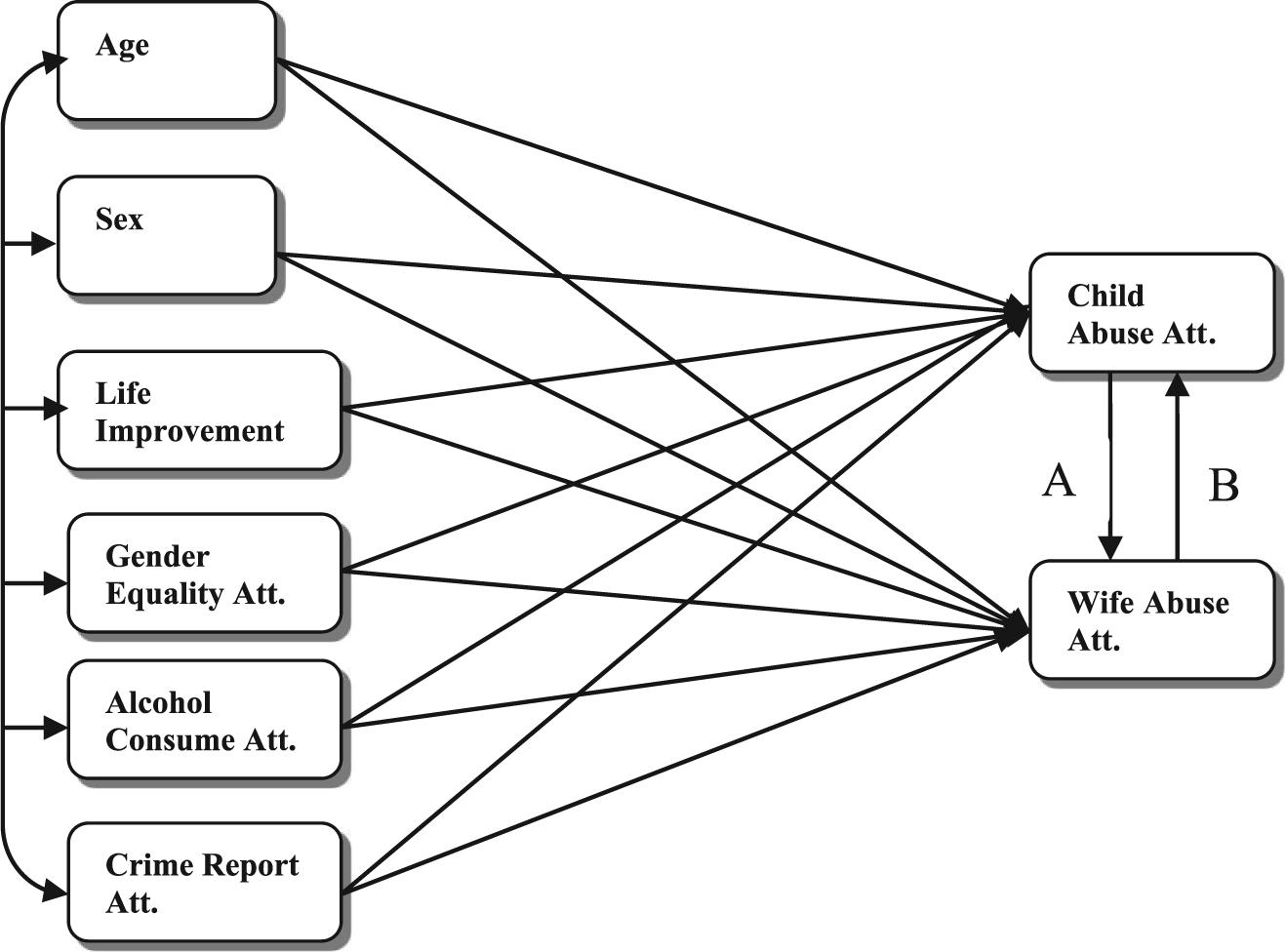
The theoretical AB model—Wife abuse attitudes and child abuse attitudes as mutual partial mediators.
Method
Sampling
Participants in the study were recruited based on multistage cluster sampling. The country was divided into three regions, and within each region, specific municipal and rural communities were selected, based on the relative size of the immigrant population reported in the Israel Central Bureau of Statistics census data. For each household, only one adult was interviewed, representing the entire household. The interview was conducted by Russian-speaking surveyors, using a structured questionnaire consisting of closed-ended questions. Each interview was conducted with the respondent in privacy, assuring no interference by other household members. Descriptive statistics are presented in Table 1. Overall, 1,028 participants took part in the study, 43.8% of whom were males. In terms of age, 21.1% were 18-24 years old, 18.1% were between the ages of 25-29, 20.2% were aged 45-59, and 18.7% were 60 years old and above. In terms of marital status, 35.4% were single, 47.2% were married, and the rest were divorced, separated, or widowed; 35.2% had children aged less than 18. In terms of education, 48% had an academic degree; the rest had up to a high school or professional diploma. All participants were employed at the time of interviewing.
Socio-Demographic Characteristics.

To ascertain the external validity of the current study, the sample was compared with data from national manpower and social surveys conducted by the Israel Central Bureau of Statistics. The distribution of demographic and other content areas was almost identical, indicating that the current sample is highly representative of the target population.
Instruments
Data were collected using a structured, closed-ended survey questionnaire consisting of approximately 150 items. The main goal of the survey was to examine the accommodation and integration of immigrants from the FSU in various life domains. The questionnaire included background information items (age, sex, family status, year of immigration, country of origin, number of children, household structure); level of education, criminal conduct, and criminal attitudes (white collar crimes, violence, substance abuse); and life satisfaction in Israel (both general and by specific domains, such as housing, work and income, security).
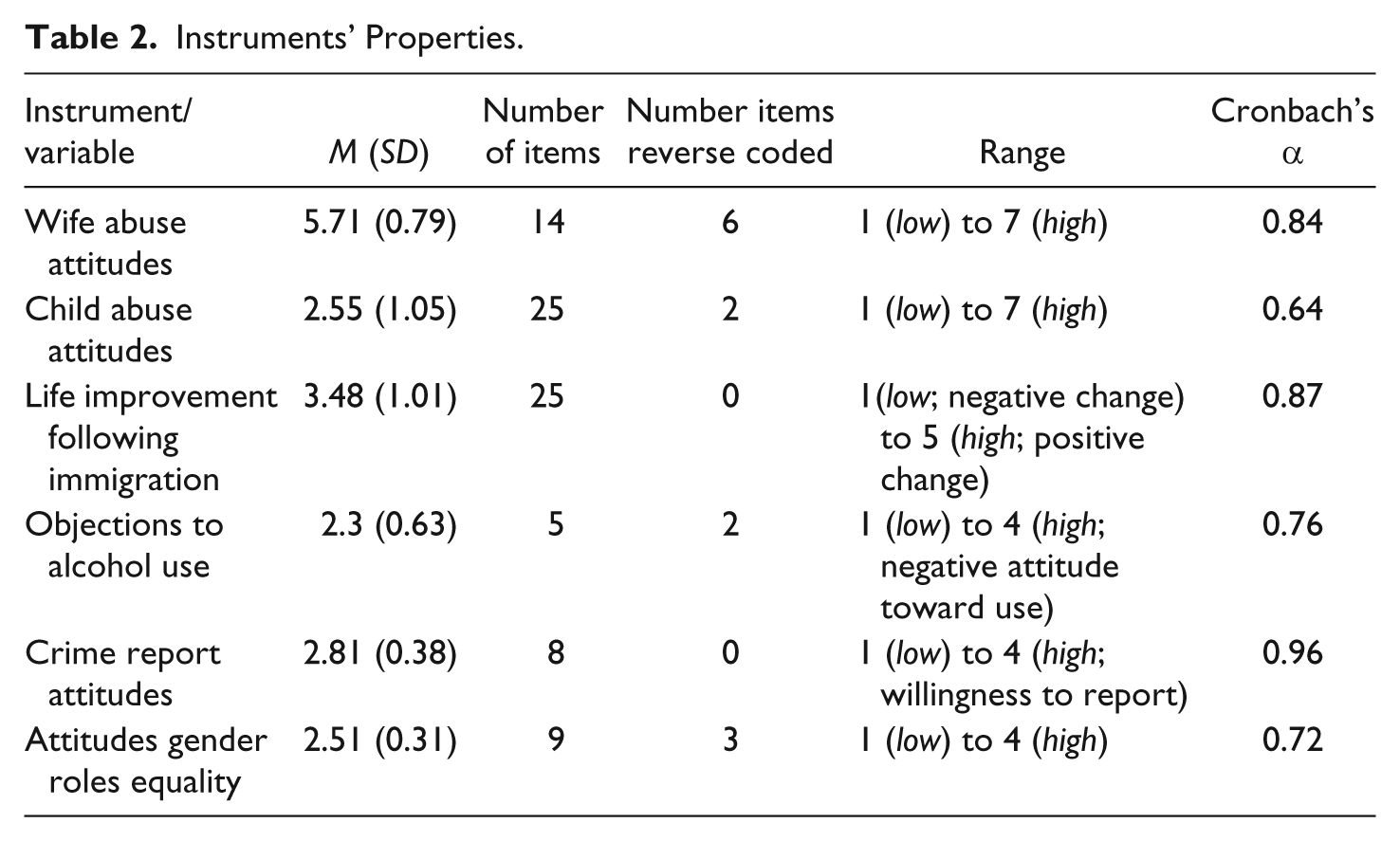
Wife abuse attitudes were measured using 14 items indicating support of wife abuse, such as “abused women are responsible for their beating, they should have foreseen it,” or “female partners are attempting to get abused, so they can gain social support”; as well as items negating wife abuse, such as “there is no justification for wife abuse” or “a wife has to leave her husband if he hits her.”
Corporal punishment attitudes were measured using six items indicating support for corporal punishment, such as “a child that gets beaten by his parents knows that s/he had it coming,” “it is OK to deny children a meal when they behave contrary to what is expected of them,” or “it is sometimes good for a child to get some spanking from his/her father.” Table 2 presents major measures, the measurement range, and reliability (Cronbach’s α) data.
Instruments’ Properties.
Data Collection Process
The questionnaire was written in Hebrew and then translated into Russian and back translated by native Russian speakers, to validate the translation. Russian-speaking interviewers were enlisted and instructed by the principal investigator. Data collection lasted about 6 months. The interviewers met with the respondents and conducted a face-to-face interview, in Russian. Before the interview began, the interviewers explained the purpose of the study to the respondents, and made it clear to them that they were under no obligation to participate and that all the data would be kept confidential, with consent forms stored separately from the questionnaire, to avoid the possibility of identification of a specific respondent. They then conducted the interview, which took 90 min on average to complete. To ascertain that the conduct of the interviewers was proper, about 25% of the respondents were monitored by the researchers following their interview. Within the interview process, telephone numbers were requested from the interviewees, and follow-up calls were conducted to ascertain accuracy of response.
Findings
Support for Wife and Child Abuse (Corporal Punishment)
The two dependent variables were attitudes toward wife abuse and attitudes toward child abuse (use of physical punishment). Overall, about 14% of the men and 12% of the women expressed some support for the physical abuse of women by their partners.
The second dependent variable was attitudes toward child abuse, as expressed in support for corporal punishment. The measure was based on respondents’ attitudes toward the use of physical punishment in response to certain problematic behaviors on the child’s part: 17% suggested that hitting a child is a proper educational tool, whereas 15% considered locking a child in a room for several hours a legitimate response to improper behavior. Thus, one third of parents supported hitting the child. Overall, it is clear that there is substantial support for child abuse, in the form of physical punishment, among the respondents.
Predicting Attitudes Toward Wife and Child Abuse
To examine the first two hypotheses, a structural equation model (SEM) was constructed, using AMOS-17 software (Arbuckle, 2008; see Figures 1-3). To compare Hypotheses 3a-3c, three alternative models were constructed, as depicted in Figures 1-3, respectively.
Figure 1 depicts a SEM model with the possible effects of socio-demographic variables and attitudinal variables on attitudes toward child abuse and wife abuse, with attitudes toward child abuse leading to attitudes toward wife abuse. This model will be termed “The Theoretical A Model—Child Abuse Attitudes as Partial Mediator for Wife Abuse Attitudes.”
Figure 2 depicts a SEM model, which is similar to the one in Figure 1, but with attitudes toward wife abuse leading to attitudes toward child abuse. This model will be termed “The Theoretical B Model—Wife Abuse Attitudes as Partial Mediator for Child Abuse Attitudes.”
Figure 3 depicts a SEM model also similar to the one in Figure 1, but depicts attitudes toward wife abuse and attitudes toward child abuse as affecting each other. This model will be termed “The Theoretical AB Model—Wife Abuse Attitudes and Child Abuse Attitudes as Mutual Partial Mediators.”
To compare the three options, the three models were estimated using the AMOS-17 program. Table 3 depicts the fit measures for each of the models.
Model Comparisons.
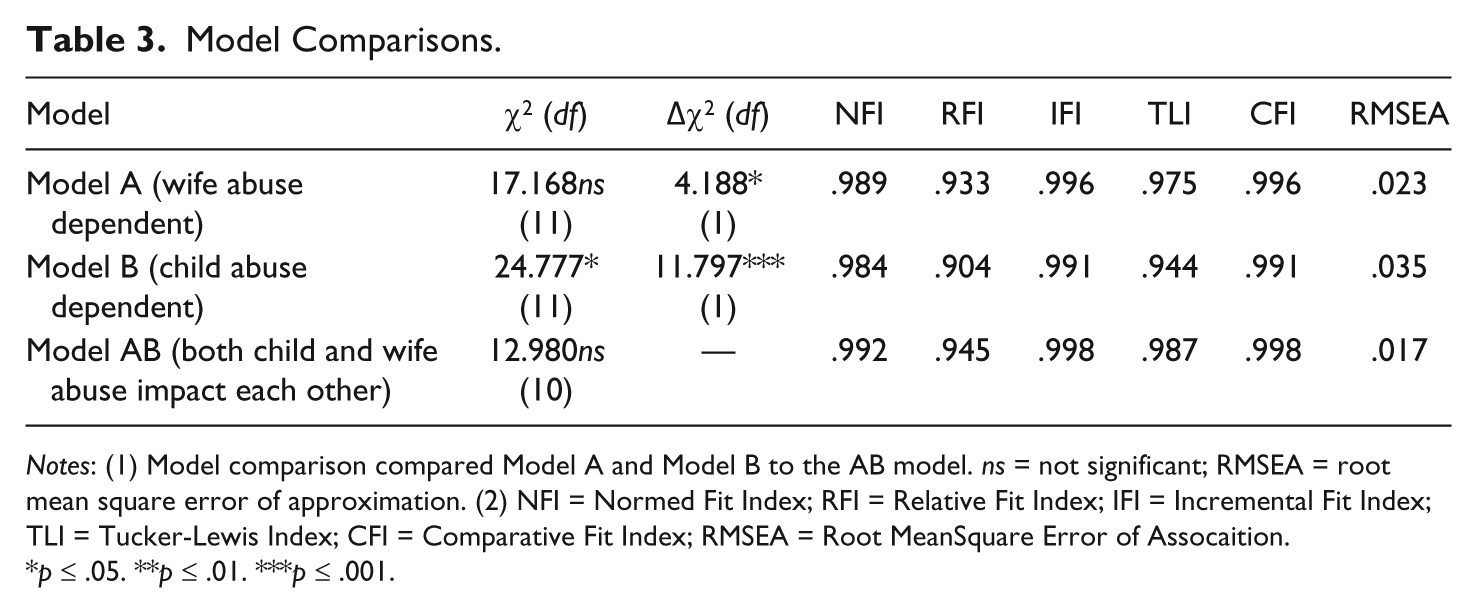
Notes: (1) Model comparison compared Model A and Model B to the AB model. ns = not significant; RMSEA = root mean square error of approximation. (2) NFI = Normed Fit Index; RFI = Relative Fit Index; IFI = Incremental Fit Index; TLI = Tucker-Lewis Index; CFI = Comparative Fit Index; RMSEA = Root MeanSquare Error of Assocaition.
p ≤ .05. **p ≤ .01. ***p ≤ .001.
As can be seen from the table, all three models have an excellent fit to the data, but the AB model has the best fit indices. Furthermore, Model A and Model B are nested within Model AB. Because each is significantly different from the AB model, we are not able to reject the hypothesized mutual impact between wife abuse attitudes and child abuse attitudes. Therefore, Figure 4 depicts the results for the AB model.
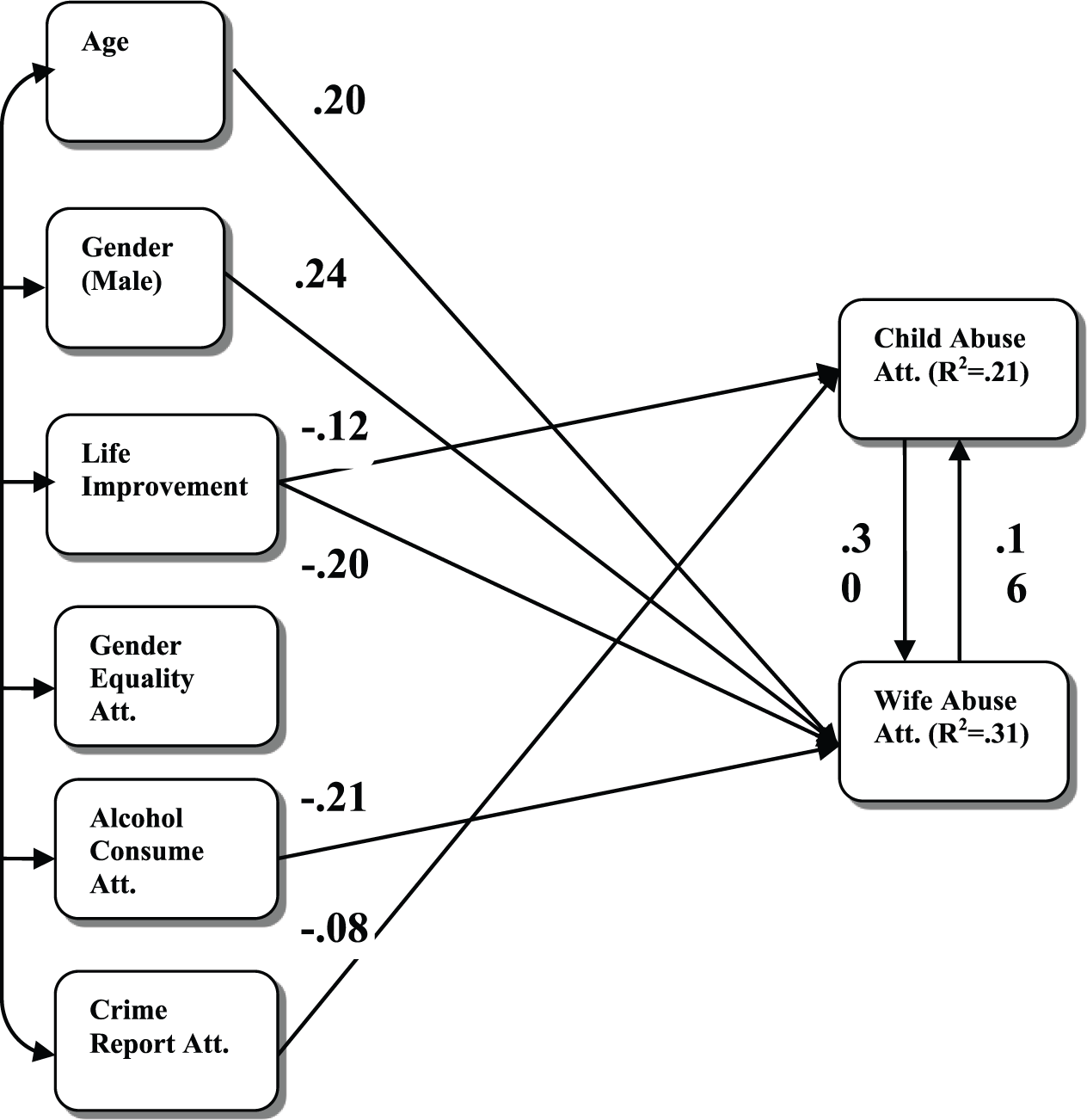
The measured AB model—Wife abuse attitudes and child abuse attitudes as mutual partial mediators.
As can be seen from Figure 4, child abuse attitudes have a negative relationship with the perception of life improvement following immigration to Israel (β = −.12), with attitudes toward crime reporting (β = −.08), and most essentially, it is positively impacted by attitudes supporting wife abuse (β = .16). Attitudes supporting wife abuse are positively related to age (β = .20) and being male (β = .24), and negatively associated with the perception of life improvement following immigration to Israel (β = −.20), and attitudes toward alcohol consumption (β = −.21). Attitudes supporting wife abuse are positively and most strongly impacted by attitudes toward child abuse (β = .30). Overall, the model explains 21% of the variance in attitudes toward child abuse, and 31% of the variance in attitudes toward wife abuse.
Discussion
Attitudes have long been established as major predictors of behavior (e.g., Ajzen, 2011). Thus, it makes sense that if one believes that it is morally acceptable (or tolerable) to use violence to achieve obedience or a desired response from a woman or a child in a certain context (attitude), one would act on such a belief (for a meta-analysis of the relationships between attitudes and family violence, see Stith, Smith, Penn, Ward, & Tritt, 2004). Furthermore, if one holds such attitudes and norms, it makes sense that one would not only act accordingly but also allow coercion directed toward self by others for the same reasons (moral permissibility and social approval). Indeed, a meta-analysis of the links between masculine ideology (i.e., sexist attitudes) and sexual aggression indicated that they are related (Murnen, Wright, & Kaluzny, 2002).
The theory of planned behavior (Ajzen, 2011) encompasses both attitudes and norms in explaining human behavior. The planned behavior model hypothesizes that personal behavior will be the outcome of behavioral intentions, whereas intentions would be affected most by personal attitudes and perceived social norms. When examined in these terms, the two components may be relevant in understanding both victimization and perpetration of violence against women and children (Ajzen, 2011).
When we examine our data, we find that approximately 14% of the men and 12% of the women expressed some support for physical abuse of women by their partners, and more than 30% of the sample expressed support for physical punishment as an acceptable form of educating one’s children. Research focused on the extent of the co-occurrence of wife abuse and child corporal punishment has found high rates of overlap between intimate partner violence and child maltreatment and abuse (Goddard & Bedi, 2010; Straus, 2010). Tajima (2000, 2004) found wife abuse to be a consistent risk factor for all forms of violence against children including abuse, physical punishment, and verbal abuse. Furthermore, Margolin and Gordis (2003) found that the connection between husband-to-wife violence and parental abusive behaviors “. . . is increased under the conditions of cumulative stresses, namely the combination of financial and parenting stress” (p. 252). Thus, families that are characterized by child abuse are also characterized by marital conflicts, mutual negativity, escalating anger, sensitivity to anger, and longer and lasting fights, where the conflict issues are not resolved but rather recycled over and over again (Goddard & Bedi, 2010; Straus, 2010).
Little research has been conducted in an attempt to understand the various components of the dynamics of co-occurring violence. The current study focused on several predictors of attitudes of men and women toward these two types of family violence to understand the relationships between the two, as well as their relationship to immigration, attitudinal factors, and immigration stressors.
The findings indicate a dual-causal model, in which child abuse attitudes contribute to wife abuse attitudes and vice versa. The effect of attitudes supporting physical punishment was stronger (β = .30) than the effect of wife abuse attitudes (β = .16). The common approach to family-based violence views the family as a system in which one type of violence tends to spill over into other types of violence. The current study, however, clearly indicates that as much as attitudes predict behavior, the attitudinal system as a precursor of violent behavior is already merging the two types of violence into each other, and is doing so in very specific ways. Having attitudes supportive of physical punishment increases the likelihood of holding attitudes that support wife abuse, and to a lesser degree, supporting wife abuse increases the likelihood of supporting child abuse.
Although the two types of attitudes feed into each other, they are each affected by separate sets of variables; thus, each type serves as a mediator for the effects of a specific cluster of precursor variables toward the other. More specifically, it was found that attitudes supporting wife abuse are affected by the respondents’ age (β = .20), gender (β(male) = .24), objections to alcohol consumption (β = −.21), and perceived life improvement following immigration (β = −.20). Older males who object to alcohol use and feel their life has degraded since immigration are more supportive of wife abuse. Physical punishment attitudes were predicted by low perceived life improvement following immigration (β = −.12), and more negative attitudes toward reporting crime (β = −.08). Thus, the only common variable predicting support of child abuse and wife abuse is perceived life improvement, which affects both attitudinal outcomes and is only partially mediated by them.
Immigrant couples find themselves in a new culture that may have different gender role expectations than the culture of origin (Malley-Morrison & Hines, 2004; Stickley, Timofeeva, & Sparen, 2008; West, 1998). This can create or intensify distress and spousal conflicts (Hadas et al., 2008). In immigrant families, women are vulnerable to spousal violence, as they often become the victims of their partners’ frustration with coping with the inter-cultural transition (e.g., M. Abraham, 2000; S. Abraham & Hamilton, 2006). Research has shown that attitudes toward physical punishment of children are culturally dependent (e.g., Giovannoni & Becerra, 1979; Korbin, 1991; Straus & Yodanci, 1994). Studies have demonstrated that immigrants who attempt and achieve acculturation are better adapted and better functioning than those who do not; the latter tend to be marginalized and more attuned to the “old ways” (e.g., Jasinskaja-Lahti et al., 2011). Although research about intimate violence in Russian society and Russian subcultures around the world is scarce, there are some indications that for members of Russian culture, domestic violence is considered to be a private matter (Stickley, Kislitsyna, et al., 2008; Stickley, Timofeeva, & Sparen, 2008) and is often blamed on women, who may in turn feel responsible for the abuse (Horne, 1999), while being at high risk of family violence (Grynbaum et al., 2001). Furthermore, the few comparative studies currently available indicate that the rate of intimate violence among Russian couples is almost twice as high when compared with Israeli couples (Chan, Straus, Brownridge, Tiwari, & Leung, 2008).
The findings of the current study suggest that a reduction in life stressors can lessen adherence to attitudes supporting family violence among Russian immigrants. Immigration to a new socio-cultural environment requires individuals to adjust to new ways of thinking, behaving, and coping (Jasinskaja-Lahti et al., 2011). Thus, immigrants may face cultural/normative stressors, such as normative cleavages and language barriers; instrumental stressors, related to the changes in everyday quality of life; and social stressors, related to the relationships of the immigrant with the new social environment. All these stressors may encourage the immigrant to hold on to the attitudes and perceptions learned in the culture of origin. However, perceiving the new culture as one that can improve life can reduce the effects of such stressors and allow immigrants to adopt new approaches and values. In the context of the present investigation, this refers to attitudes opposing domestic violence, child abuse, and corporal punishment.
Limitations
The major limitation of this study is its reliance on cross-sectional data. Thus, although the models offer support for bidirectional mediation, there is no information about temporality, and conclusions should be drawn cautiously. Future research could examine attitudes toward domestic abuse among immigrants using longitudinal designs. Another limitation is related to lack of a measure of acculturation in the analysis. Regarding the data, they are based on the respondents’ self-reports. This might raise concerns as to whether the results are truly representative, as the willingness of the subjects to report on attitudes regarding partner and child-directed violence may have been limited. However, direct observational data on this subject are almost impossible to obtain, and most research on intimate violence is based on self-report questionnaires. Nevertheless, the current study and others similar to it may have been prone to underreporting and a false negative bias. Thus, that we were able to find significant associations between the research variables strengthens the validity of our findings.
Footnotes
Declaration of Conflicting Interests
The author(s) declared no potential conflicts of interest with respect to the research, authorship, and/or publication of this article.
Funding
The author(s) received no financial support for the research, authorship, and/or publication of this article.