



Abstract
The present study examined the effect of offense-based labels on community members’ willingness to volunteer with people convicted for varying offenses and any priming effect of labeling language. Participants (N = 310) were randomly assigned to a label condition or a neutral condition and completed an anonymous online survey about their willingness to volunteer with different groups. The labeling condition utilized labels (e.g., “sex offenders,” “murderers”), whereas the control condition utilized neutral descriptors (e.g., “people who have committed crimes of a sexual nature”). Overall, findings supported the hypothesis that offense-based labels were associated with less willingness to volunteer, with findings most pronounced for the “sex offender” and “child sex offender” labels. Participants in the labeling condition showed greater voluntary use of labels compared with neutral language and were more likely to use labels compared with participants in the neutral condition. Implications for influencing public opinion are discussed.
Keywords
Since the mid-1800s and the development of the penny press, violent crimes have been the bread and butter of media reporting. In more recent years, sexual crimes have gained increased attention and a sensationalized focus in news reporting (Quinn, Forsyth, & Mullen-Quinn, 2004). Technology and mass media advancements have further fueled such sensationalism (Cucolo & Perlin, 2013). Around the world, websites have been established dedicated to sharing information about the “monsters” behind such crimes. There are websites enforced by law, most notably the U.S. National Sex Offender Public Registry (U.S. Department of Justice, 2017). There are also those set up by community groups based on publicly available court documents and media reports in countries without such legislation, including New Zealand (e.g., http://sst.org.nz/offenders-database/). Identified as “sex offenders,” 1 or more animal-like with terms such as “beasts” or “predators,” individuals convicted for sexual offenses are typically depicted as a homogeneous group throughout media reporting and legislation (Sample & Bray, 2006). Given the media’s focus on high-profile sex crimes, the stereotype activated by the “sex offender” label is likely that of a dangerous male with a high risk of reoffending (Pickett, Mancini, & Mears, 2013; Quinn et al., 2004). It is therefore not surprising that community members do not want someone labeled a “sex offender” living in their communities, let to employ them or accept them as part of their social networks (e.g., Burchfield & Mingus, 2008; Craig, 2005; Levenson, D’Amora, & Hern, 2007; Willis, Malinen, & Johnston, 2013). As such, community responses to individuals labeled a “sex offender” often block many opportunities for them to live a safe, stable, and prosocial life (Willis, Levenson, & Ward, 2010). Emerging research has explored attempts to change public attitudes to promote desistance from sexual offending (for a review, see Willis et al., 2010, see also Kleban & Jeglic, 2012; Malinen, Willis, & Johnston, 2014); yet, few studies have investigated whether replacing labels with more neutral language might affect public responses to individuals who have sexually abused, which is the focus of the current study.
Community Reactions to “Sex Offenders”
The negative reaction elicited by sexual crimes is unlike public reactions to other crimes. Community responses are influenced by several factors, including the sensationalized media coverage of sexual crimes (e.g., Cheit, 2003; Kitzinger, 2004), political pressure to keep communities safe from “predators,” and parental anxiety for children in a world perceived as increasingly dangerous (Quinn et al., 2004). As a significant source of information, with the ability to influence how people perceive the world (Surette, 2014), the way sexual crimes are framed in the media is undeniably linked to how the public defines and views “sex offenders.” The media’s focus on high profile but rare cases (e.g., Corabian & Hogan, 2012; Ducat, Thomas, & Blood, 2009; Thakker & Durrant, 2006) becomes a reference point from which community members base their opinion of all individuals who have sexually offended. Indeed, public opinion research shows that people believed that “sex offenders” have a high risk of reoffending and are not amenable to treatment (Brown, Deakin, & Spencer, 2008; Katz-Schiavone, Levenson, & Ackerman, 2008; King & Roberts, 2017; Shackley, Weiner, Day, & Willis, 2014; Thakker, 2012). Without counter-stories of, for example, the more common scenarios of intrafamilial offending and no recidivism (Cheit, 2003), it is not surprising that community reactions are negative.
Research has found that community members do not want “sex offenders” living in their neighborhood (Brown, 1999; Burchfield & Mingus, 2008), landlords are reluctant to rent their property (Brown, 1999; Clark, 2007), and employees are unlikely to hire a “registered sex offender” (Levenson et al., 2007). Individuals with sexual offense convictions often face harassment and lack adequate prosocial support when re-entering the community. Furthermore, their family members are often subject to shame and contempt due to their association with a “sex offender” (Burchfield & Mingus, 2008; Grossi, 2017; Levenson & Cotter, 2005; Tewksbury, 2005; Zevitz & Farkas, 2000). While an understandable reaction to an intolerable crime, research is clear that to reduce the likelihood of reoffending, individuals returning from prison need stable housing, opportunities for employment, and prosocial support (Göbbels, Ward, & Willis, 2012). Yet, in the current social and political context, individuals convicted for sexual offenses often lack these basic, fundamental reintegrative needs. Planning for a safe reintegration is increasingly difficult when access to accommodation, employment, and prosocial support is obstructed.
In Canada, in 1994, a Mennonite pastor recognized this untenable situation and Circles of Support and Accountability (CoSA) was born (Cesaroni, 2001; Wilson & Prinzo, 2002). CoSA is a reintegration framework designed specifically for individuals convicted for sexual offenses who have little or no prosocial support in the community (Wilson & Prinzo, 2002). Within CoSA, these individuals are referred to as “core members” and are supported by a group of community volunteers. Evaluations of CoSA have shown reductions in recidivism for CoSA core members when compared with matched control groups (e.g., Höing, Bogaerts, & Vogelvang, 2013; Wilson, Cortoni, & McWhinnie, 2009) and positive cost versus benefit analyses (e.g., Bates, Williams, Wilson, & Wilson, 2014; Duwe, 2013). However, given the normative negative reaction, it is not surprising that despite CoSA’s growing reputation recruiting volunteers remains a significant challenge (van Rensburg, 2012; Wilson, McWhinnie, Picheca, Prinzo, & Cortoni, 2007).
Volunteer initiatives such as CoSA complement the rehabilitative services offered by the criminal justice system, yet most people want little to do with people who have sexually offended (Burchfield & Mingus, 2008; Grossi, 2017; Travis, 2005). Community responses that support reintegration processes are necessary for both the continuation of initiatives, such as CoSA, and ultimately promoting desistance from sexual offending. The current study aims to explore the impact of the “sex offender” label, and more specifically, whether more neutral language might generate a greater willingness to volunteer with individuals who have sexually abused.
The Problem With Labeling
Labeling theory suggests that labels are counter-productive and can have the unintended consequence of influencing the identity and behavior of the person ascribed the label (Tannenbaum, 1938). Indeed, negative effects of formal labeling by the criminal justice system on the individual labeled have been well-documented (e.g., Braithwaite, 1989; Chiricos, Barrick, Bales, & Bontrager, 2007; Maruna, LeBel, Mitchell, & Naples, 2004; Mingus & Burchfield, 2012; Robbers, 2009; Schultz, 2014). Thus, although a convenient term, the label “sex offender” is laden with negative connotations that are reinforced through continued use.
Beyond media reports and legislation, the “sex offender” label is prevalent within academia and professional settings and might unintentionally reinforce many of the stereotypes that researchers aim to disprove (e.g., Malinen et al., 2014; Quinn et al., 2004; Sanghara & Wilson, 2006). With continued exposure to the term, researchers, professionals, and the general public are likely primed to use the term instead of alternative (e.g., neutral, person-first) nonlabeling language. Priming is the cognitive process that refers to the effect of exposure to a stimulus on a subsequent event (Forster & Davis, 1984). Specifically, repeated exposure to a stimulus allows subsequent experiences of the stimulus to be processed more quickly by the brain (Forster & Davis, 1984; Roskos-Ewoldsen, Roskos-Ewoldsen, & Carpentier, 2009). Therefore, previous exposure to information regarding “sex offenders” can influence how individuals subsequently view the population. Priming is a memory-based model of information processing, as such, information that is most salient contributes to forming attitudes and perceptions (Roskos-Ewoldsen & Roskos-Ewoldsen, 2009; Roskos-Ewoldsen et al., 2009; Scheufele & Tewksbury, 2007; Tversky & Kahneman, 1973). In the context of persons who have sexually offended, the content of news reports establishes the criteria for evaluating information by making certain issues more relevant. Therefore, due to the focus on high-profile cases, the image of a high-risk “predator” is more easily accessed than the scenario of, for example, isolated intrafamilial offending.
Utilizing the label “sex offender” as an umbrella term ignores the heterogeneity between individuals convicted for sexual offenses. By contrast, the use of neutral language (e.g., “person who has sexually offended” or “people who have committed crimes of a sexual nature”) may prime the individual to think of a person, rather than the stereotypical “offender” they have heard about in the media. Few studies have examined the impact of labeling on public responses to persons who have sexually abused. Harris and Socia (2016) investigated the impact of the “sex offender” and “juvenile sex offender” labels on support for sex crime policies and perceptions about amenability to rehabilitation. Respondents (N = 1,000) were randomly assigned to either the experimental condition or the control condition and indicated their level of agreement with seven statements. Statements in both conditions were identical, except for the labeling versus neutral language manipulation. In the labeling condition, statements used the label “sex offender” or “juvenile sex offender” (e.g., “The identity of all sex offenders should be made available to the general public on the Internet,” p. 668). In the control condition, statements used neutral descriptors such as “people who have committed crimes of sexual nature” or “minor youth who committed crimes of a sexual nature” (e.g., “The identity of all people who have committed crimes of a sexual nature should be made available to the general public on the Internet,” p. 668). Overall, findings indicated that labeling was associated with increased levels of support for sex crime policies, with effects particularly salient for the “juvenile sex offender” label (Harris & Socia, 2016).
A similar study conducted by Imhoff (2015) examined the effect of the label “pedophile” and its derivatives (e.g., “pedophilia”) on community members’ (N = 129) perceptions of dangerousness, intentionality, deviance, and punitive attitudes. Participants were randomly allocated to one of two conditions: The experimental condition utilized “pedophile” or “pedophilia” and the control condition replaced “pedophilia” with “sexual interest in (prepubescent) children” and “pedophile” was replaced with “someone with sexual interest in (prepubescent) children” (Imhoff, 2015, p. 37). A 15-item stigma scale was used to assess intentionality (e.g., “pedophilia is something that you choose for yourself,” p. 38), dangerousness (e.g., “pedophilia sooner or later always leads to child sex abuse,” p. 38), and deviance (e.g., “pedophiles are sick,” p. 38). A 13-item scale was also used to examine punitive attitudes (e.g., “pedophiles should be preemptively taken into custody,” p. 38). The results illustrated that while participants’ attitudes were negative toward this population, punitive attitudes were more pronounced when the labels “pedophile” or “pedophilia” were present.
Findings from Harris and Socia’s (2016) and Imhoff’s (2015) research were consistent with labeling theory and provide insight into the effect of labels on punitive attitudes and public support for policies directed at individuals convicted for sexual offenses. The current study aims to extend extant research by exploring the effects of labeling on willingness to volunteer with people who have offended and any priming effect of labels.
Aims and Hypotheses
Using a mixed-methods design, the current study sought to investigate the following aims using a community sample:
Investigate whether labels would influence people’s willingness to volunteer with individuals convicted for varying offenses. It was hypothesized that compared with neutral descriptors, labels would be associated with people being less willing to volunteer with people who had offended. Moreover, it was hypothesized that effects would be especially pronounced for the “sex offender” and related labels compared with labels associated with other offenses (e.g., “murderers”).
Explore reasons why people would consider or not consider volunteering with individuals within the criminal justice system.
Examine any priming effects of offense-based labels by investigating voluntary use of labels in qualitative data generated in relation to Aim 2. It was hypothesized that participants presented with labeling language would use more labels than participants presented with neutral language.
Method
Participants
Participants were recruited via social media; information about the study was posted to New Zealand Facebook community pages (e.g., Mangere Bridge Community Facebook page, Kumeu & Huapai District Facebook page) and Reddit™ pages (e.g., Auckland subreddit, Wellington subreddit).
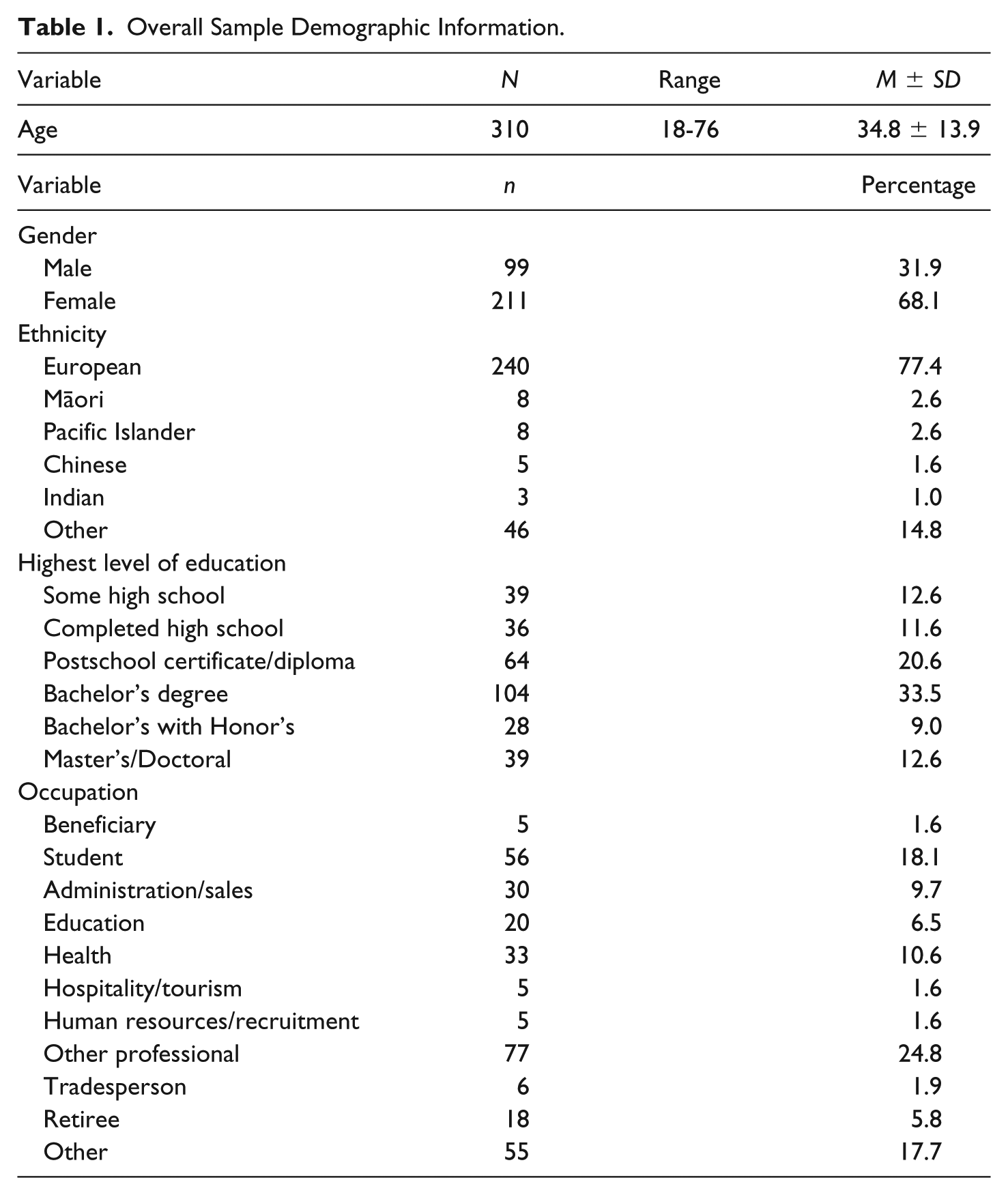
Questionnaire responses were received from 380 New Zealand community members; 70 questionnaires were incomplete (55 completed demographic data only) and were therefore excluded from subsequent analyses. The total sample for analyses was N = 310. Participant characteristics are summarized in Table 1; the participants, ranged in age from 18 to 76 (M = 34.8, SD = 13.9), and the majority of the respondents were female (68.1%) and of New Zealand European descent (77.4%). Education level was skewed toward high levels of educational attainment, with 42.5% of respondents having a Bachelor’s or Honor’s degree, and 12.6% having a Master’s or Doctoral degree. Various occupations were reported, with most respondents selecting “other professional” (24.8%), followed by 18.1% selecting “student,” and 17.7% selecting “other.” Given that the population of people reached through online sampling is unknown (Wright, 2005), it is not possible to calculate a response rate.
Overall Sample Demographic Information.
Materials
Using random assignment, participants responded to one of two versions of an anonymous online questionnaire. In the order questions were presented to participants, the full survey included basic demographic questions, the Community Attitudes Toward Sex Offenders scale (CATSO; Church, Wakeman, Miller, Clements, & Sun, 2008), eight questions developed by the researchers about willingness to volunteer with people with different criminal convictions and two questions about willingness to volunteer with CoSA (see Wilson & Prinzo, 2002). Due to space constraints, the CATSO and CoSA data are not reported in this article. The questionnaires were identical, except one version used labeling language and the other used neutral descriptors (with CATSO questions manipulated for labeling and neutral language, respectively). The questionnaire was developed using Qualtrics (2017), an online survey development tool (Qualtrics, Provo, UT).
Willingness to volunteer with people with different criminal convictions
Seven questions were responded to on a 7-point Likert-type scale ranging from 1 (highly likely/would consider) to 7 (highly unlikely/would not consider at all). In the label condition, the questions included volunteering with “female offenders,” “male offenders,” “theft convicts,” “assault convicts,” “murderers,” “sex offenders,” and “child sex offenders.” In the neutral condition, the questions included volunteering with “females who have offended,” “males who have offended,” “someone convicted for theft,” “someone convicted for assault,” “someone convicted for murder,” “someone who has sexually offended,” and “someone who has sexually offended against children.” The eighth question asked participants to provide an explanation for their answers to the Likert-type scale questions: “Please briefly explain your answers to the previous questions (how likely or unlikely you are to volunteer with the different groups).” The open-ended question was included to gain a richer understanding of participants’ willingness to volunteer with people with different criminal convictions than what is possible using numeric response scales.
Procedure
Potential participants were informed that the researchers were conducting a study on attitudes toward individuals who had committed crimes of a sexual nature using a questionnaire that would take approximately 10 to 15 min to complete. Neutral language was used in the advertisements to avoid priming participants before they saw the questionnaire. Interested people clicked on the survey link which directed them to the questionnaire on the Qualtrics website. Cookies were enabled to prevent multiple responses from the same computer in an attempt to avoid multiple responses from the same person. The first screen of the survey included more detailed information about the study. Potential participants were informed that they must be at least 18 years old and live in New Zealand to participate in the study, that participation was anonymous, and that they could withdraw up until the time they submitted their survey. Participants indicated informed consent by clicking a “consent and proceed” button which confirmed that the participant had read and understood the information. Participants were then randomly assigned to one of the two experimental conditions (a feature made possible using Qualtrics software) and presented with the survey questions. At the end of the questionnaire, participants could opt to go into a draw for one of four US$100 grocery vouchers (contact details for prize draw were stored separately from questionnaire data to ensure anonymity of survey responses). Finally, participants were thanked for their participation. The study was reviewed and approved by a University Human Participants Ethics Committee (the equivalent of a North American Institutional Review Board).
Planned Analyses
A series of independent sample t tests were conducted in SPSS (version 24) to analyze between-group differences in willingness to volunteer with people convicted for varying offense types.
Qualitative data were analyzed using thematic analysis following the procedure outlined in Braun and Clarke (2006). Data were organized in NVivo 11 and analyzed according to the a priori categories “willing to volunteer,” “unwilling to volunteer,” and “mixed responses to volunteering” to better understand the reasons behind the participants’ answers. Subjectivity is inherent in qualitative research (Braun & Clarke, 2006); thus, discussion about developing themes between the authors was used to minimize subjectivity and facilitate reflexivity. Thematic analyses were initially conducted separately for each condition; however, themes identified were similar and data were therefore analyzed collectively for the thematic analyses.
Finally, a content analysis was conducted to examine any priming effect of labels versus neutral descriptors in participants’ answers to the open-ended question about willingness to volunteer. Berelson (1952) defined content analysis as “a research technique for the objective, systematic, and quantitative description of the manifest content of communication” (p. 18). In the current study, the content analysis involved systematically reviewing the qualitative data and recording the use of labeling language and neutral language; 102 units of data were available for analysis in the label condition and 108 units of data in the neutral condition. Participants’ answers were coded for the presence of at least one label (and no neutral descriptors) including “sex offender,” “murderer,” or “pedophile” (e.g., “I have nothing to offer sex offenders”), at least one neutral descriptor (and no labels) such as “people who have committed sexual crimes are still deserving of efforts to rehabilitate,” use of both a label and a neutral descriptor (e.g., “work with adolescents who have sexually offended . . . working exclusively with sex offenders doesn’t appeal to me”), or the absence of both labels and neutral descriptors (e.g., “I don’t have a lot of time to volunteer”). A chi square test for independence was conducted to examine whether there was a significant difference in the use of labels versus neutral language between conditions.
Findings
Randomization Check
Participant demographic characteristics for each condition were consistent with those of the overall sample (see Table 1), indicating that randomization was achieved. In other words, there were no differences in ethnic or gender composition, age, educational attainment, or occupation between participants in the label and neutral conditions.
The Impact of Labels on Volunteering With Different Populations
Multiple independent samples t tests were conducted to examine the effect of labeling on participants’ willingness to volunteer with people convicted of different offenses. Bonferroni corrections were applied to significance tests to reduce the likelihood of Type 1 error (i.e., rejecting the null hypothesis when it is true) which can occur with multiple comparisons; the corrected p value was .007. Table 2 displays results of the multiple comparisons conducted.
Multiple Comparison Tests Examining the Willingness to Volunteer With Different Groups.
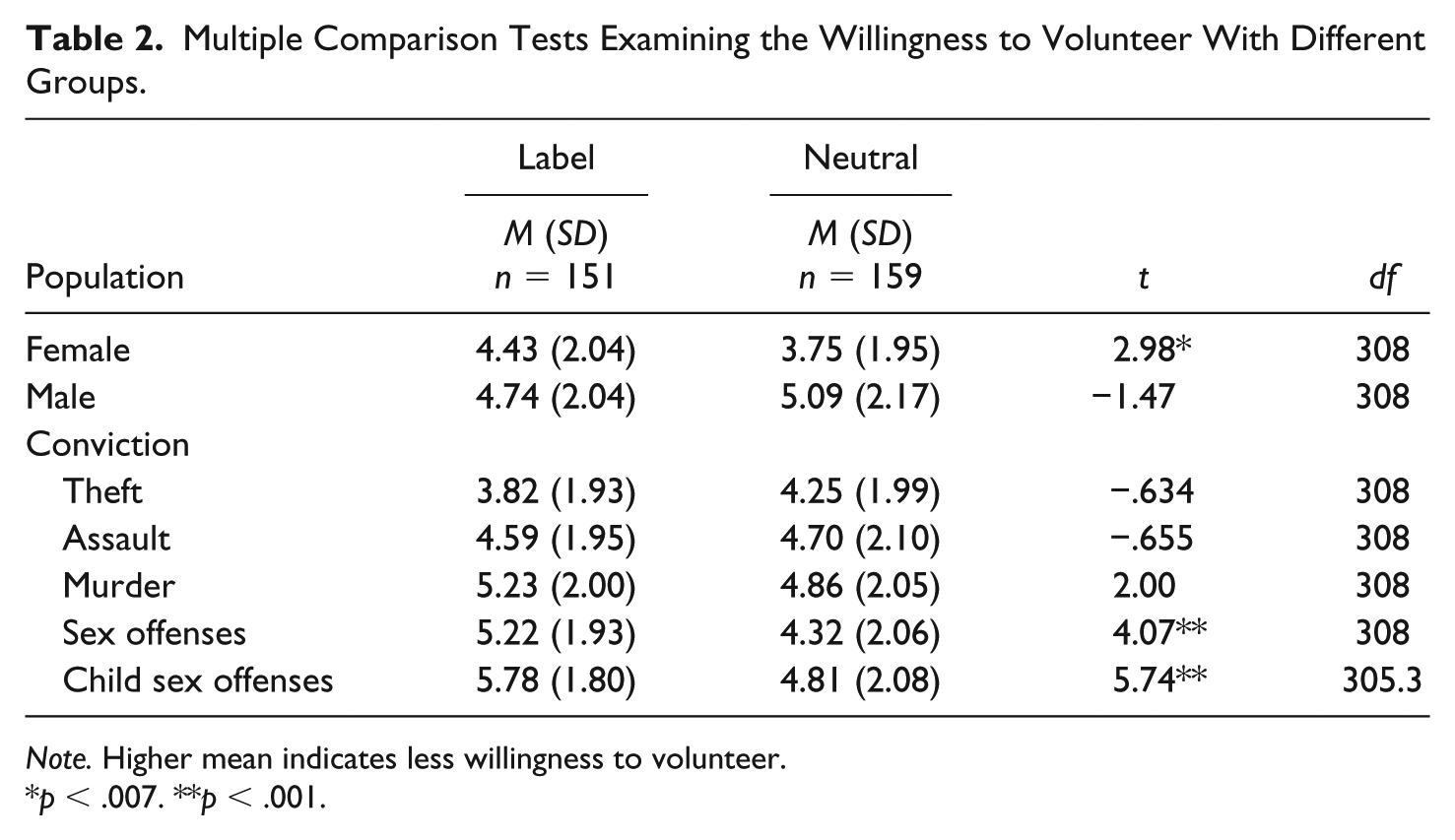
Note. Higher mean indicates less willingness to volunteer.
p < .007. **p < .001.
Overall, participants indicated that they were neutral to somewhat unlikely to consider volunteering with the different groups, regardless of experimental condition. However, variation was observed in participants’ responses with the minimum and maximum values corresponding to the anchor points of the scale (range = 6 on a 7-point Likert-type scale). Of the seven comparisons, significant differences were observed on three. Participants in the label condition were significantly less likely to consider volunteering with “sex offenders” (M = 5.22, SD = 1.93) compared with participants in the neutral condition (M = 4.32, SD = 2.06), t (308) = 4.07, p < .001. Cohen’s effect size (d = .45) was small to moderate. Furthermore, participants in the label condition were significantly less likely to consider volunteering with “child sex offenders” (M = 5.78, SD = 1.80) compared with participants in the neutral condition (M = 4.81, SD = 2.08), t(305.3) = 4.11, p < .001. Cohen’s effect size (d = .50) was moderate. In addition, participants in the label condition were significantly less likely to consider volunteering with “female offenders” (M = 4.43, SD = 2.04) than participants in the neutral condition (M = 3.75, SD = 1.95), t(308) = 2.98, p = .003. Cohen’s effect size (d = .34) was small.
Thematic Analysis of Volunteering With Different Populations
Five themes were identified to explain willingness to volunteer, four themes were identified to explain unwillingness to volunteer, and two themes were identified to explain mixed responses. Descriptions of each theme are explained in the following sections.
Willing to volunteer
Rehabilitation is essential
Many participants viewed rehabilitation as an integral part of the criminal justice system. Many believed that people can change when given appropriate support, treatment, and opportunities to improve their work and life skills. These participants recognized that volunteer programs complement the treatment offered by professionals. The participants explained that prison alone would not support long-term desistance. As such, the role of volunteers as supporting rehabilitative efforts while in prison meant many participants were willing to volunteer. The following quote illustrates the importance of reinforcing the goal of rehabilitation for individuals who had offended: The penal system is altogether backwards if not done with the end-goal of rehabilitation. No effort should be spared in attempting rehabilitation of all persons who have found themselves outcast from society. You cannot simply ignore certain groups, the attempt is to reduce recurrence of all offending so to not volunteer to rehabilitate those who have done the most heinous crimes is only going to ensure that they’re the ones that are re-committed.
Volunteers play an important role in supporting reintegration
Some participants believed that prison sentences have the potential to alienate individuals from their family or friends, particularly if the prison is in another city. Therefore, some participants were willing to volunteer to create a connection between the individual and their community because they viewed the link as fundamental to successful reintegration. The following quote highlights the value of volunteers for providing support for individuals reentering the community, “Without volunteers, none of these groups will ever reintegrate into the community.”
Volunteering can contribute to a greater understanding of the criminal justice system
Some participants stated that volunteering provided the opportunity to learn more about the criminal justice system. They explained that their knowledge of the criminal justice system was limited; as such, volunteering with people who have offended or with different justice orientated programs would be beneficial for their own understanding. In addition, these participants explained that volunteer programs have the potential to contribute to enhancing wider community awareness and education about crime and justice, issues surrounding sexual offending, the importance of prosocial support, and safe reintegration processes: “If volunteering could help with rehabilitation or at least contributes to education around the issue that can be a positive thing.”
Because of my own life experience
Some of the participants shared that they had a history with the criminal justice system, either directly as perpetrators or victims or indirectly through family members or friends. Such a history influenced the participants’ willingness because they had experienced the impact of an offense and were willing to support attempts to reduce reoffending. The following quote illustrates how personal experiences influenced willingness to volunteer: As a person who has been to prison . . . I’m looked at in a different light when people find out I’ve been to prison. After getting to know me…they know what I’ve done and that I’ve hurt many people but I’m trying to change that. That is something that a lot of people don’t realize is . . . yes, they did bad things, but they are still people . . . If we don’t want them hurting people and doing crime then we need to help these people.
They’re people too
Many participants were able to separate the individual from the crime and believed that people deserve a second chance, “At the end of the day they are just people the same as us . . . they have just made some bad decisions . . . it’s not your job to judge.” Some participants described themselves as compassionate people who would help anyone, regardless of their offending history, “I have compassion towards people in prison, they are human beings capable of rehabilitation; their time in prison can be productive for them and our community.” These participants expressed a belief that never letting someone forget the worst thing they have done could have negative consequences for reintegration. As such, many participants would consider volunteering to support reintegration as they believed that people deserve a second chance, especially if they were taking an active part in their own rehabilitation.
Unwilling to volunteer
Of the potential risk to me or my family
The main reason participants were reluctant to volunteer was the perceived risk to themselves, family members, or friends: “It would depend on what I was volunteering to do, and the potential danger to myself both physically and emotionally.” Several participants explained that their safety could not be guaranteed if they volunteered with people who had been willing to offend. The following quote illustrates the notion that while many participants supported justice initiatives, they were not willing to risk harm to themselves or family, “not likely to volunteer with any prisoner groups. This may be selfish, but while I care about social justice, and will vote for prison reforms, I wouldn’t risk putting myself in direct harm.” Furthermore, some participants detailed that there was a scale of risk whereby those convicted for theft were seen as less serious compared with a murder conviction and would thus pose less risk to themselves of family: While theft is bad, it is not as bad as violent or sexual crimes in my opinion. Possessions stolen can usually be replaced, horrible memories or injuries that people get from sexual or violent attacks are not so easily fixed.
While many participants were wary of possible risks posed by volunteering with people who have offended, some understood that not everyone posed the same level of risk. These participants acknowledged that there are vast differences in offenses, triggers, and motivation to commit crime, risk level, relationship to the victim, and level of remorse. The following quote reflects the view that more information was necessary before committing to volunteering with someone, “murder, assault, and unspecified ‘sex offender’ status can all mean wildly different things in context, so I would have to evaluate the person on a case by case basis.”
I would be wasting my time
Some participants did not believe that prisoners can be rehabilitated, and it would be “a waste of time” to volunteer with rehabilitative efforts. The following quote illustrates the view that “offenders” cannot change, particularly those who had committed serious crimes: Sicko’s, if they don’t have the self-control they never will!!! It’s not worth taking the risk! Best thing would to line them all up and shoot them! As a tax payer, why should I work to pay for them to sit around doing nothing?
Many participants stated that they would prefer more punitive options such as longer sentences or stricter parole conditions. Volunteers were viewed as somewhat meaningless in prison and some felt that resources should be directed elsewhere, including primary prevention, victim support, and developing tougher policies.
Of my own life experiences
While personal experiences were associated with willingness to volunteer for some participants, for others, personal experiences were a reason for being unwilling to volunteer. Some participants shared that they had been survivors of childhood abuse (sexual, physical, and/or emotional), knew someone who had been victimized, or knew someone who had committed serious offenses. Living with or seeing the direct effect of a serious crime meant they were unprepared to volunteer with perpetrators of abuse. Some of the participants explained that while they were supportive of rehabilitative efforts, they were not prepared to engage with the criminal justice system.
Of I don’t have the time
Practical considerations were identified as a reason for being unwilling to volunteer including already volunteering with other organizations, participant’s age, or a lack of time. Some of the participants stated that while they supported rehabilitative and reintegrative efforts, they were either not able or interested in volunteering.
Mixed response to volunteering
I wouldn’t volunteer with people with certain convictions
Many participants described that some of the populations would be easier to volunteer with because they could understand the root of the crime, for example, “stealing out of necessity.” That is, many of the participants explained that the more serious the crime, the less likely they were to consider volunteering. While many participants were reluctant to volunteer with someone convicted for murder, there were several participants who stated that murder was often a “one-off” type of crime, and therefore they would potentially consider volunteering.
Sexual offenses were crimes that most of the participants felt they could not understand. The participants described being unable to overlook the seriousness of the crimes and were thus unwilling to volunteer, “I would find it hard to treat them fairly, and a negative attitude or comment would neither be beneficial or constructive towards the offender’s progress. They need support, not criticism from those working to help them.” Furthermore, several participants stated that they would refuse to volunteer or associate with anyone who had hurt a child. The following quotes illustrate the view that participants were least likely to want to associate with individuals who had sexually offended against a child, “I would never consider helping those who have molested a child.,” “I would never give my time up for someone who has assaulted a child,” and, “I cannot relate in any way, shape or form to a sex offender or a child sex offender. I therefore could not possibly have anything positive to contribute by volunteering with them.”
I don’t have the necessary skills
Many participants stated that with adequate training and support they may consider volunteering. However, they were also hesitant as to what they would be able to offer the criminal justice system as a volunteer. Furthermore, while a lot of the participants believed that volunteers were an integral part of the criminal justice system, many also believed that caution should be taken with certain populations. Some participants believed that individuals who committed serious crimes such as murder or sexual offenses had rehabilitative needs that cannot be met by untrained volunteers, “I’m not disturbed by the nature of the offending but I think sex offenders have rehabilitative needs that untrained people like myself are unlikely to be able to help with.” Indeed, some participants believed that volunteers could be counter-productive if they were able to be manipulated: “In my experience . . . people who commit sexual abuse are very sociable, cunning, manipulative, and dangerous. Only professionals should be involved.” As such, many participants expressed a belief that the rehabilitation should be left to professionals and therefore they were not willing to volunteer.
Investigating Any Priming Effects of Labeling and Neutral Language
A content analysis was conducted on the qualitative data to examine any priming effects of labeling language on participants’ own use of labels in their qualitative responses. In the label condition, at least one label (and no neutral descriptor) was used in 37.25% of responses, compared with 14.81% of responses in the neutral condition. Furthermore, at least one neutral descriptor (and no labels) was used in 42.59% of responses in the neutral condition, compared with 29.41% of responses in the label condition. Figure 1 illustrates language used by participants.
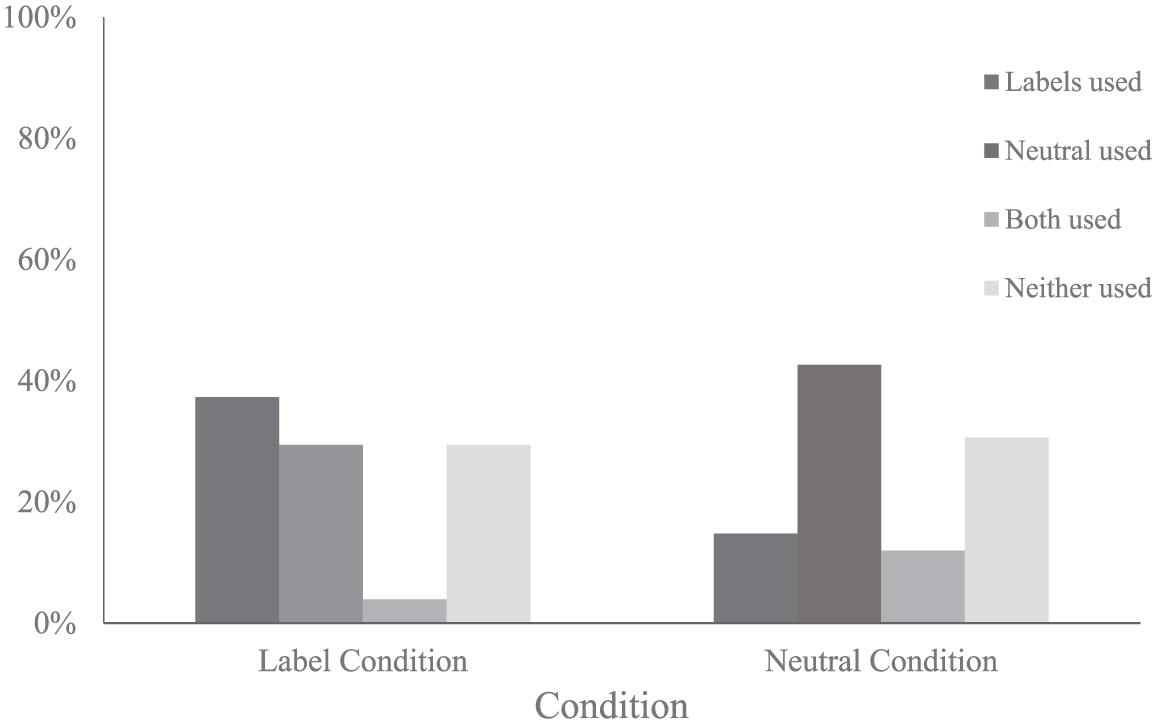
Comparison of language used by the participants in each condition.
A chi square test was conducted to examine whether there were significant differences in the voluntary use of labels and use of neutral descriptors between conditions. A chi square test for independence found a significant between-group difference, χ2(3) = 17.08, p < .001 and Cramer’s V (V = .208) indicated a small to moderate effect size.
Between-group analyses
A z test of proportions was conducted to compare the differences in language use between the label and neutral condition using standard normal approximation formulas. Participants in the label condition were significantly more likely to use one or more labels (and no neutral language) (37.25%) compared with participants in the neutral condition (14.81%), z = 5.385, CI95 = [0.128, 0.321], p < .001. Furthermore, participants in the neutral condition were more likely to use neutral descriptors (and no labels) (42.59%) compared with participants in the label condition (29.41%), z = 2.380, CI95 = [–.023, –.240], p < .05.
Within-group analyses
Within the neutral condition, participants were more likely to use neutral language (42.59%) compared with labels (14.81%), z = 4.761, CI95 = [–0.163, –0.392], p < .001. Within the label condition, there was no significant difference between the number of participants who used only labels (37.25%) versus the number of participants who used only neutral descriptors (29.41%). Table 3 provides the results for all comparisons.
z Test of Proportions Examining the Difference in Language Used by Participants.
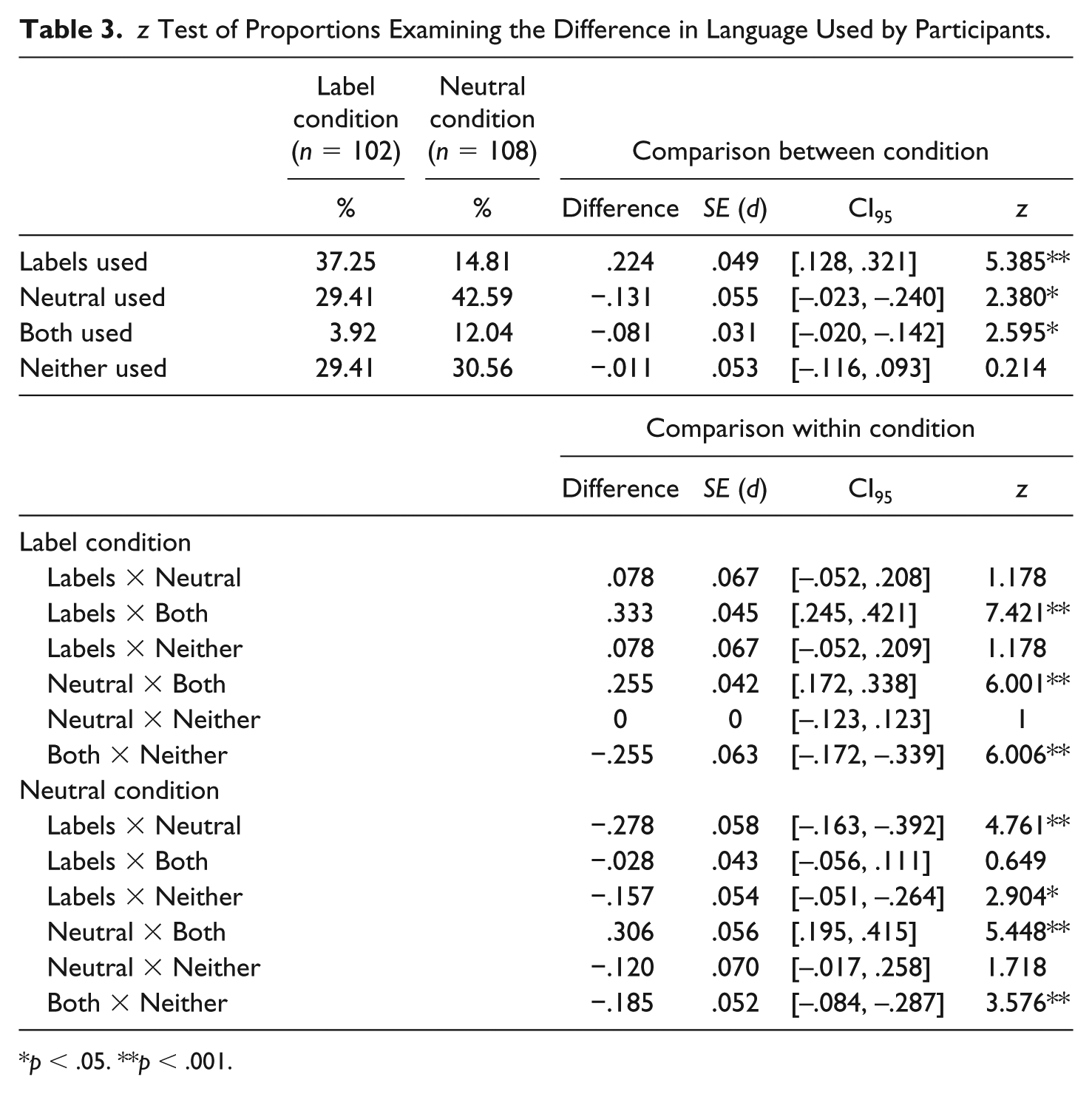
p < .05. **p < .001.
In summary, consistent with a priming effect, participants in the neutral condition were significantly more likely to use neutral descriptors compared with participants in the label condition, and they were also more likely to use neutral descriptors compared with labeling language. Furthermore, participants in the label condition were more likely to use labeling language compared with participants in the neutral condition.
Discussion
The current study aimed to investigate the effects of labeling on willingness to volunteer with people with different convictions and any priming effect of labels on subsequent language use. Overall, findings supported the hypothesis that compared with using neutral descriptors, labeling was associated with less willingness to volunteer. As expected, effects were more pronounced for individuals convicted for sexual offenses versus nonsexual offenses. Findings were therefore consistent with previous research illustrating the negative effect of labels on public opinion and attitudes (Harris & Socia, 2016; Imhoff, 2015). Findings also provided some support for the hypothesis that labeling language primes voluntary use of labels. While each main hypothesis was supported, effect sizes for between-group comparisons were consistently small to moderate, indicating that regardless of label use, the public tends to hold negative attitudes and are generally unwilling to volunteer with people who have sexually offended. Nevertheless, the differences found do support the notion that labels have an impact on willingness to volunteer. Stereotypes associated with the “sex offender” label were likely elicited when the label was used (Pickett et al., 2013; Tversky & Kahneman, 1973). By contrast, neutral language provided the opportunity for participants to form their own assumptions about an “individual who has committed crimes of a sexual nature.”
The Impact of Labels on Willingness to Volunteer
Labeling affected willingness to volunteer with people with different criminal convictions. Labels were associated with less willingness to volunteer with “sex offender,” “child sex offender,” and “female offender” populations, although the effect size for “female offender” was small. There were no significant differences between the label condition and neutral condition for volunteering with people convicted for theft, assault, or murder. The nonsignificant effect could be because theft and assault were not viewed as negatively as sex offenses (Craig, 2005; Levenson et al., 2007) and the labels did not activate negative stereotypes in the same way. Such an explanation is consistent with qualitative findings; that is, the specific conviction was a deciding factor influencing willingness to volunteer. For example, individuals convicted for theft were viewed as posing less risk to the individual volunteering, whereas people convicted for sexual offenses or child sexual offenses were considered the most dangerous. Furthermore, a plausible explanation for the nonsignificant effect for volunteering with someone convicted for murder could be that while a murder conviction results in a longer prison sentence compared with assault or theft, several participants mentioned that they were prepared to volunteer because they considered murder was a “one-off” type of offense. That is, the perception of an offense was central to participants’ willingness/unwillingness to volunteer.
Examining Any Priming Effects of Labeling and Neutral Language
Participants presented with labels were more likely to voluntarily use labels than participants who had been presented with neutral descriptors, and participants presented with neutral descriptors were more likely to voluntarily use neutral language compared with labeling language.
Findings suggested that repeated use of labeling language made labels more salient in participants’ minds, and therefore, more readily available when expanding on their rationale for willingness/unwillingness to volunteer (Roskos-Ewoldsen & Roskos-Ewoldsen, 2009; Tversky & Kahneman, 1973). Within the label condition, participants were more likely to use labels (and not neutral descriptors) compared with using both neutral descriptors and labels. Furthermore, while labels were used more often, there was no significant difference between the use of only labeling language and only neutral descriptors. While the use of labeling and neutral descriptors occurred at a similar rate within the label condition, labels (and not neutral descriptors) were still used more often than only neutral descriptors compared with the neutral condition, providing some evidence of language priming.
Within the neutral condition, participants were more likely to use neutral language than both neutral descriptors and labels; further participants were more likely to not use either (no labels or neutral descriptors), than to use just labels or a mixture of both. Accordingly, while the use of succinct labels allows intuitive, heuristic-driven responses (Harris & Socia, 2016; Imhoff, 2015; Tversky & Kahneman, 1973), neutral descriptors require a greater level of processing because they are not as familiar; therefore, subsequent language use is more varied.
Implications for Influencing Public Opinion
While the effect sizes of the significant findings were small to moderate, the findings are important. The results show the negative effect of labeling on willingness to volunteer. Exploring how researchers can influence public opinion in a way that promotes safe rehabilitation and reintegration cannot be ignored. The labels “sex offender” and “child sex offender” (among other labels) are convenient and succinct. However, language plays a central role in shaping perceptions via a number of mechanisms, including linguistic choices, narratives and framing, inferences, and priming (Scheufele & Tewksbury, 2007). The present research has shown that, in part, labeling can affect how people respond to individuals who have offended and prime the continued use of labeling. Attitudes toward those convicted for sexual offenses play an important role in policy development, social interaction, and clinical contexts. Research has shown that desistance from offending is more likely with access to stable housing, employment, and social support (e.g., Willis & Grace, 2008), whereas the use of labels perpetuates punitive attitudes (Harris & Socia, 2016; Imhoff, 2015) and increases the likelihood of reoffending (Chiricos et al., 2007). Thus, journalists, researchers, and policy makers focused on delivering accurate information and developing effective policies would be advised to anticipate the effects of labeling on public views.
The Publication Manual of the American Psychological Association (2010) states that “a label should not be used in any form that is perceived as pejorative; if such a perception is possible you need to find more neutral terms” (p. 72) and recommends the use of “person-first” language. Indeed, the issue with labeling is that it conflates the act with the individual (e.g., Willis, 2018). While many will argue that individuals who have committed crimes deserve the label, it is assigned indefinitely (particularly for individuals who have committed sexual offenses, e.g., Mingus & Burchfield, 2012; Robbers, 2009). Therefore, the stigmatizing use of labeling extends punishment indefinitely. Maruna and LeBel (2010) remind us that “not only must a person accept conventional society in order to go straight, but conventional society must accept that this person has changed as well” (p. 76). As such, desistance is obstructed if an individual is continually identified by their offense conviction.
Humanizing individuals who have committed crimes may help to facilitate community connections and desistance from crime, as occurs within CoSA. The CoSA model does not refer to individuals convicted for sex offenses as “sex offenders,” but as members of a group (“core member”). Some treatment programs promote humanizing language, for example, community-based treatment agencies in New Zealand refer to their clients as “. . . people who have problematic or concerning sexual behaviors . . .” (Safe Network, 2017) as well as “. . . adolescents and adults who have engaged in harmful sexual behavior” and “children with concerning sexual behaviors” (Stop, 2017). Separating a person from their behavior does not ignore what they have done; rather, it acknowledges their humanity and capacity to change.
Limitations
As with any study, findings of the current research should be interpreted with knowledge of its limitations. We acknowledge a potential sampling bias; for recruitment, the current study utilized convenience and snowball sampling. Community members with a particular interest in the topic might have been more interested and/or invested in participating. As such, the sample in the current study may not be representative of the general public. However, random assignment ensured that demographic differences within the current study were controlled for. In addition, previous research has found that higher levels of educational attainment are associated with less negative attitudes toward individuals who have sexually offended (Willis et al., 2013). However, notwithstanding the level of educational attainment in the current sample, effects of labeling were still observed. Individuals with higher levels of education may rely less on stereotypes; therefore, should the sample have been more representative, perhaps the effects of labeling would have been more pronounced. While collecting more detailed demographic information (e.g., political ideology, religious affiliation, parental status) was beyond the scope of the current study, future research examining the interaction between demographic data and labeling is important for informing community discussion and policy development.
The manipulation used in the current study was limited to the “sex offender” label. However, this label is not the only one used to categorize individuals who have sexually offended, who are also commonly labeled “rapists,” “child molesters,” “predators,” and other similarly derogatory terms (e.g., Willis, 2018). Indeed, participants voluntarily used a range of labels in their qualitative responses, including “rapist,” “sexual predator,” and “pedophile.” Future research examining the use of different labels, their effects on public opinion, and their effects on those being labeled is warranted. Finally, we acknowledge that CATSO items (not reported on in the current study) may have magnified the observed effects through priming participants with labels or neutral language before the questions about willingness to volunteer were presented.
Conclusion
The main goal of the present study was to examine the impact of the “sex offender” label on willingness to volunteer and future language use. Findings highlighted that humanizing the person behind the offense was associated with a greater willingness to volunteer and less voluntary use of offense-related labels. A small change in language has the possibility to affect larger change for both the individual receiving the label and the wider community. If the continued use of labeling language hinders community engagement with the criminal justice system, and potentially obstructs the safe reintegration of people leaving prison, perhaps, it is time to reframe the representation of people who offend.
Footnotes
Declaration of Conflicting Interests
The author(s) declared no potential conflicts of interest with respect to the research, authorship, and/or publication of this article.
Funding
The author(s) received no financial support for the research, authorship, and/or publication of this article.