




Abstract
Race is associated with social relationships among typically developing children; however, studies rarely examine the impact of race on social outcomes for children with autism spectrum disorder. This study examined how race (African American, Latino, Asian, or White) in conjunction with disability status (autism spectrum disorders or typically developing) and grade (grades K–2 or 3–5) affects friendships and social networks. The sample comprises 85 children with autism spectrum disorders and 85 typically developing controls matched on race, gender, age/grade, and classroom (wherever possible). Race, disability, and grade each had an independent effect on friendship nominations, and there was an interaction among the three variables. Specifically, children with autism spectrum disorders who were African American or Latino in the upper elementary grades received fewer friendship nominations than typically developing White children in the lower elementary grades. Only the presence of autism spectrum disorders was associated with social network centrality. Our results also suggested that Latino children with autism spectrum disorders in the upper elementary grades were at the highest risk of social isolation. Implications for re-conceptualizing social skills interventions are discussed.
Friendships and social networks are critical aspects of social development that have meaningful, life-long implications. Friendships are reciprocal and intimate ties that provide companionship, mutual support, and affection (Bauminger and Shulman, 2003; Buhrmester, 1990; Chamberlain et al., 2007; Freeman and Kasari, 2002). Social networks describe how children perceive their affiliations within the classroom and how other children perceive them. These affiliations have been described as the child’s social network centrality, a measure of how central or peripheral children are in the classroom social structure (Cairns and Cairns, 1994; Chamberlain et al., 2007). Children with autism spectrum disorders (ASD) have impaired friendships and social networks compared with typically developing (TD) children, especially as they enter upper elementary grades (Rotheram-Fuller et al., 2010). To date, there are limited studies that examine the effects of child characteristics, such as race, on the friendships and social networks of children with ASD. However, race has been shown to affect the affiliations among TD children (Kawabata and Crick, 2008). The purpose of this study is to examine the extent to which race, disability, and grade affect friendships and social networks for children with and without ASD.
Children with ASD have difficulty establishing and maintaining friendships. Studies have consistently shown that children with ASD make more friendship nominations than they receive (Chamberlain et al., 2007; Locke et al., 2013), have smaller social networks (Kasari et al., 2011), and have fewer reciprocal friendships than their TD peers (Chamberlain et al., 2007; Kasari et al., 2011; Rotheram-Fuller et al., 2010). This has primarily been examined using self- and peer-report (Chamberlain et al., 2007; Locke et al., 2010, 2013; Rotheram-Fuller et al., 2010) but also confirmed using teacher report (Kasari et al., 2011). These studies were conducted with samples of children with ASD that range in age from young children to adolescence (Kasari et al., 2011; Locke et al., 2010) in public (Chamberlain et al., 2007) and non-public schools (Locke et al., 2013). Collectively, results from social network studies suggest that children with ASD are more often on the periphery of their classrooms’ social networks (Chamberlain et al., 2007; Kasari et al., 2011) and are less socially integrated (Locke et al., 2013) than TD children.
Differences in friendships and social networks increase as children age. Rotheram-Fuller et al. (2010) reported that compared to TD children, children with ASD were more likely to be isolated or peripheral to the social relationships within the classroom across elementary grades, and this gap continued to widen in upper elementary grades. When examining social relationships across one academic year, children with ASD had significantly lower social network centrality and received significantly fewer friendship nominations compared to children with a non-ASD disability and TD children (Locke et al., 2013).
Although the impact of disability and the interaction between disability and grade have been examined, one limitation of the social relationships’ literature is that we have limited information on other child characteristics, such as race. Studies of TD children have shown that race is associated with social relationships (Clark and Ayers, 1992). The extant literature has primarily focused on “homophily” or “homophilic affiliation” (Chamberlain et al., 2007; Kandel, 1978; Shrum et al., 1988). Homophily is the tendency for individuals to choose friends and associate with others who have similar characteristics as themselves (Farmer and Farmer, 1996; Kandel, 1978). This theoretical framework suggests that in social relationships, individuals choose partners who are similar to themselves in terms of race, ethnicity, gender, age, developmental level, as well as interests, abilities, experiences, and interactions (Clark and Ayers, 1992; Freeman and Kasari, 2002). In general, similarity allows individuals to establish an initial connection (Aboud and Mendelson, 1996; Matheson et al., 2007), and as similarity increases the likelihood of staying friends increases (Kupersmidt et al., 1995).
Race is one of the most common characteristic friends coalesce around (Aboud and Mendelson, 1996; Clark and Ayers, 1992; Ennett and Bauman, 1996; Kupersmidt et al., 1995; Lee et al., 2007; Matheson et al., 2007). Among TD children, upper elementary African American children had more same-race than cross-race friendships (Graham and Cohen, 1997). A more recent investigation confirmed that White children had a higher frequency of cross-race friendships than African American children. Similar to African American children, Latino children exhibited a lower frequency of cross-race friendships (Kawabata and Crick, 2008). The one study that examined these issues in children with disabilities found that play dates between TD children and peers with Down syndrome occurred most frequently among children from the same race (Freeman and Kasari, 2002). These findings suggest that the pattern of social affiliations may differ for racially diverse children with ASD.
Unfortunately, many randomized controlled trials of social skills interventions fail to mention issues of race or do not examine race in their models (Gantman et al., 2012; Landa et al., 2011), despite calls from several researchers to examine this issue (Chamberlain et al., 2007; Rotheram-Fuller et al., 2010). Recently, researchers have attempted to address this issue by controlling for race and including a high percentage of racially diverse children with ASD in their sample (Kasari et al., 2015). However, the impact of race is still understudied. An examination of three major scientific journals on autism over a 6-year period suggests that this demographic characteristic has not been adequately reported (Pierce et al., 2014).
Understanding the effect of race on friendships and social networks in children with ASD may ultimately lead to racially responsive social skills interventions for the populations most at risk for social isolation.
In summary, there is research on the impact of disability and grade on the social relationships for children with ASD. There is also research on the impact of race on social relationships for TD children. However, there is limited information on how race, disability, and grade interact to impact the social relationships of children with ASD. It is particularly important to examine these constructs in minority groups with ASD in order to inform racially responsive social skills interventions. This study examined whether race (African American, Latino, Asian, or White), disability (ASD or TD), and grade (grades K–2 or 3–5) affect friendships and social networks.
Method
Participants
A total of 170 participants (n = 85 children with ASD and n = 85 TD matched peers) were recruited from 72 classrooms in 32 elementary schools from 11 urban school districts. Because matching took place based on race, gender, age/grade, and classroom, the percentages in each of these categories were equivalent for children with and without ASD. A majority of children were male (88.2%). There were more children in the lower elementary grades (62.4%) than in the upper elementary grades (37.6%). The racial backgrounds of the children were as follows: 32.9% White, 16.5% African American, 22.4% Asian, and 28.2% Latino.
Children were included in the ASD group if they were referred by administrators at their schools and had a diagnosis of ASD from a licensed psychologist, had a documented nonverbal IQ of 65 or higher, and were included in a general education K–5 classroom for at least 80% of the school day. These inclusion criteria were used to ensure children were able to complete the survey instruments about their general education peers. Children with ASD ranged in age between 4 and 12 years, with a mean age of 7.9 (standard deviation (SD) = 1.7) years.
Eighty-five TD children served as a comparison group. TD children were randomly selected using a random-number generated list and first matched on race, followed by gender, age/grade, and classroom (wherever possible) to be in the matched sample. Children were not matched on mental age because intelligence tests were not allowed in the participating schools. TD children ranged in age between 5 and 11 years, with a mean age of 7.9 (SD = 1.6) years. Table 1 provides the background characteristics for children with ASD and their matched peers. No information on socio-economic characteristics or English language (EL) status was obtained.
Demographics characteristics by disability status.
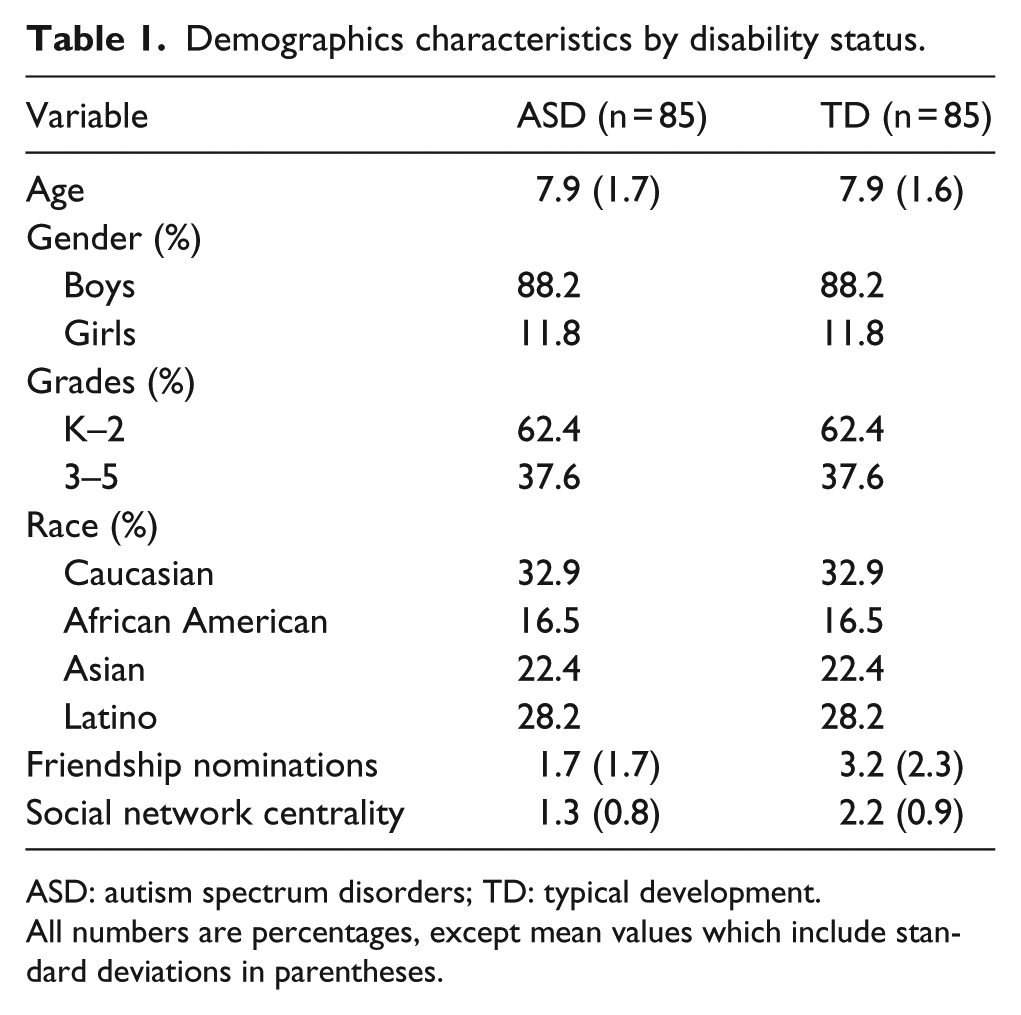
ASD: autism spectrum disorders; TD: typical development.
All numbers are percentages, except mean values which include standard deviations in parentheses.
Procedure
This study was conducted in compliance with the Institutional Review Board (IRB) and corresponding human research participant rights. A letter of collaboration was obtained from each school principal and submitted to the IRB. Recruitment materials were then provided to the school administration to distribute to interested families. The research team met with interested participants to inform them about the study and their role as participants. After informed consent from families of children with ASD was obtained, a member of the research team visited the target students’ classroom and described the study to all children to recruit TD peers. Children were told that this study was about friendships; children with ASD were not identified in any way. Subsequently, general consent forms allowing participation in survey completion were distributed to all children in the classroom. All consented children were given a written assent and a comprehension quiz to ensure their understanding of the study and their rights as research participants. The research team then scheduled a convenient time for the administration of the Friendship Survey.
Measures
Friendship Survey
Children responded to survey questions asking them to identify with whom they like to hang out with (friend nominations). Children were instructed to nominate classmates as their friends using free recall. Children were allowed to nominate as many or few children as they preferred. Additionally, brief demographic information including gender, age, grade, and race were collected on the Friendship Survey. Information were also gathered on social networks within each class, representing students’ perceptions of the social environment of the entire classroom. By aggregating perceptions in this way, a robust picture of the full set of networks emerges (Cairns et al., 1988). On the Friendship Survey, students were asked, “Are there kids in your class who like to hang out together? Who are they?” Children listed groups using free recall without additional prompting, class lists, or pictures. All children were reminded to include themselves in groups as well as students of both genders. Two or three members from the research team administered the Friendship Survey to participating children with and without ASD in groups either in their classroom or in a designated space in the school (e.g. cafeteria, auditorium). A member of the research team individually interviewed children with reading and/or writing difficulty. The Friendship Survey was not adapted for children with ASD for this study, as it has been reliably used with school-aged children with ASD in inclusive settings (see Kasari et al., 2011, 2012; Locke et al., 2010, 2013; Rotheram-Fuller et al., 2010).
Coding friendship nominations
Friendship nominations were coded from the Friendship Survey as the total number of received friendship nominations from peers (e.g. the number of times a specific student was chosen as a friend by his or her peers).
Coding social network centrality
Social network centrality refers to the prominence of each individual in the overall classroom social structure (Cairns and Cairns, 1994; Kasari et al., 2012). Following Cairns and Cairns (1994), social network analyses were conducted from the Friendship Survey to obtain each student’s social network centrality score. Two related scores were calculated to determine a student’s level of involvement in the classroom’s social structure: (1) the student’s “individual centrality” was the total number of nominations to a peer group within the classroom, and (2) the student’s “cluster centrality” was the average of the two most frequently nominated students within the cluster.
Results
Data analysis
To examine the effect of race (White, African American, Asian, or Latino), disability (ASD or TD), and grade (grades K–2 or 3–5) on friendships and social network centrality, we coded each subject on these three variables, creating 16 possible race/disability/grade categories. There were eight groups (delineated below) in grade K–2, with each race having an equal number of children with ASD or TD. The grade K–2 ASD group had 22 White, 5 African American, 10 Asian, and 16 Latino children, as did the matched comparison group. Similarly, there were eight groups in grades 3–5 with each race having an equal number of children with ASD or TD. Grades 3–5 ASD group contained six White, nine African American, nine Asian, and eight Latino children, as did the matched comparison group. Each subject was dummy coded (0 = does not belong to group or 1 = belongs to group) for the 16 groups. The reference group was children who were White, TD, and in grade K–2. Membership in the 15 other groups was included as an independent variable in the ordinary least squares regression analyses. We used the average number of friendship nominations (i.e. the average number of times a specific student was chosen as a friend by his or her peers) as our dependent variable. On average, children with ASD received 1.7 (SD = 1.7) friendship nominations and were rated as peripheral in their social network centrality, 1.3 (SD = 0.8). On average, TD children received 3.2 (SD = 2.3) friendship nominations and were rated as secondary in their social network centrality, 2.2 (SD = 0.9).
The effect of race, disability, and grade on friendships
Race/disability/grade membership and class size predicted 20% of the variation in the number of friendship nominations received (p < 0.01). (We controlled for classroom size to address threats to internal validity.) Table 2 presents the results of this regression. Two groups received significantly fewer friendship nominations compared to the reference group (White, TD, grade K–2; Figure 1). African American children with ASD in grades 3–5 had 1.6 fewer friendship nominations than the reference group (p < 0.05). Latino children with ASD in grades 3–5 had 2.6 fewer friendship nominations than the reference group (p < 0.01).
Multiple regression model predicting friendship nominations and social network centrality.
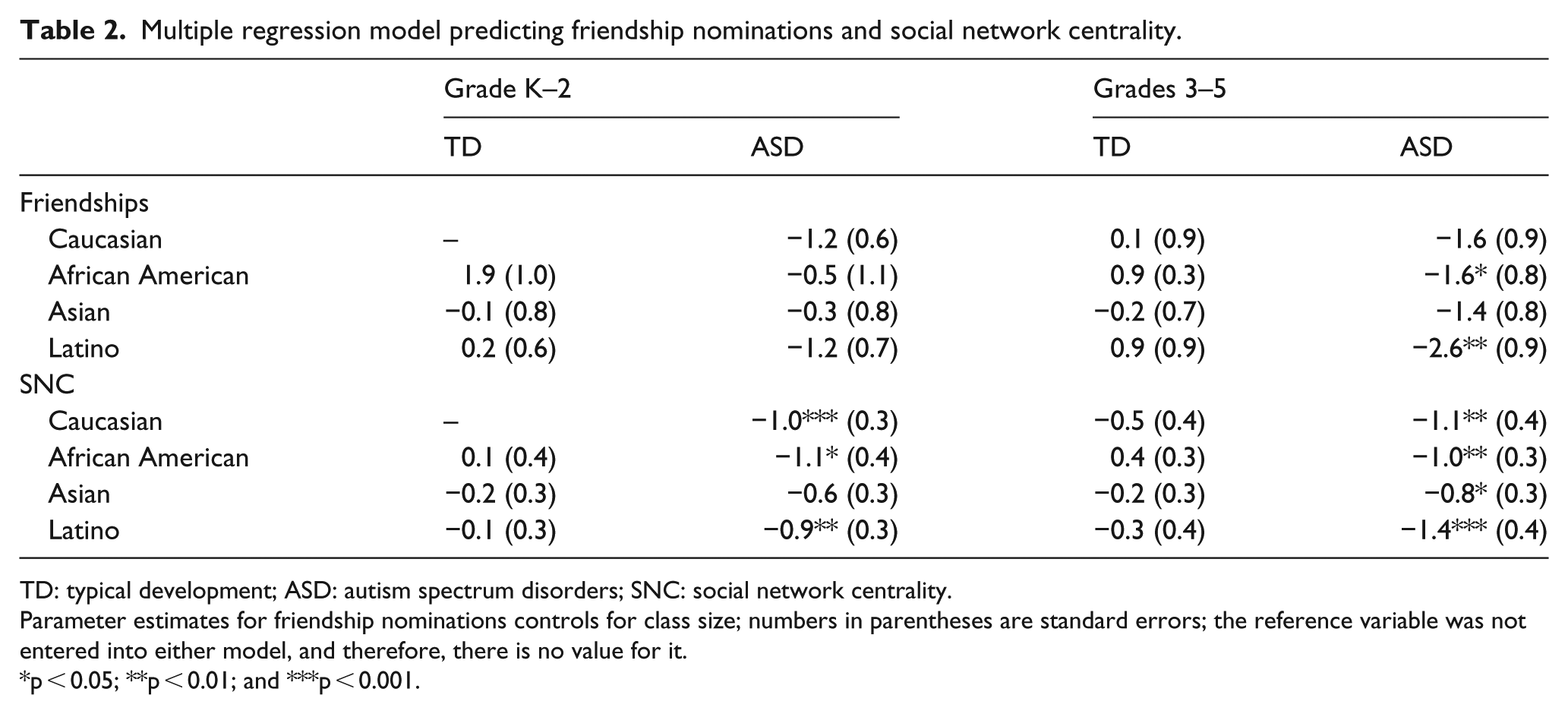
TD: typical development; ASD: autism spectrum disorders; SNC: social network centrality.
Parameter estimates for friendship nominations controls for class size; numbers in parentheses are standard errors; the reference variable was not entered into either model, and therefore, there is no value for it.
p < 0.05; **p < 0.01; and ***p < 0.001.
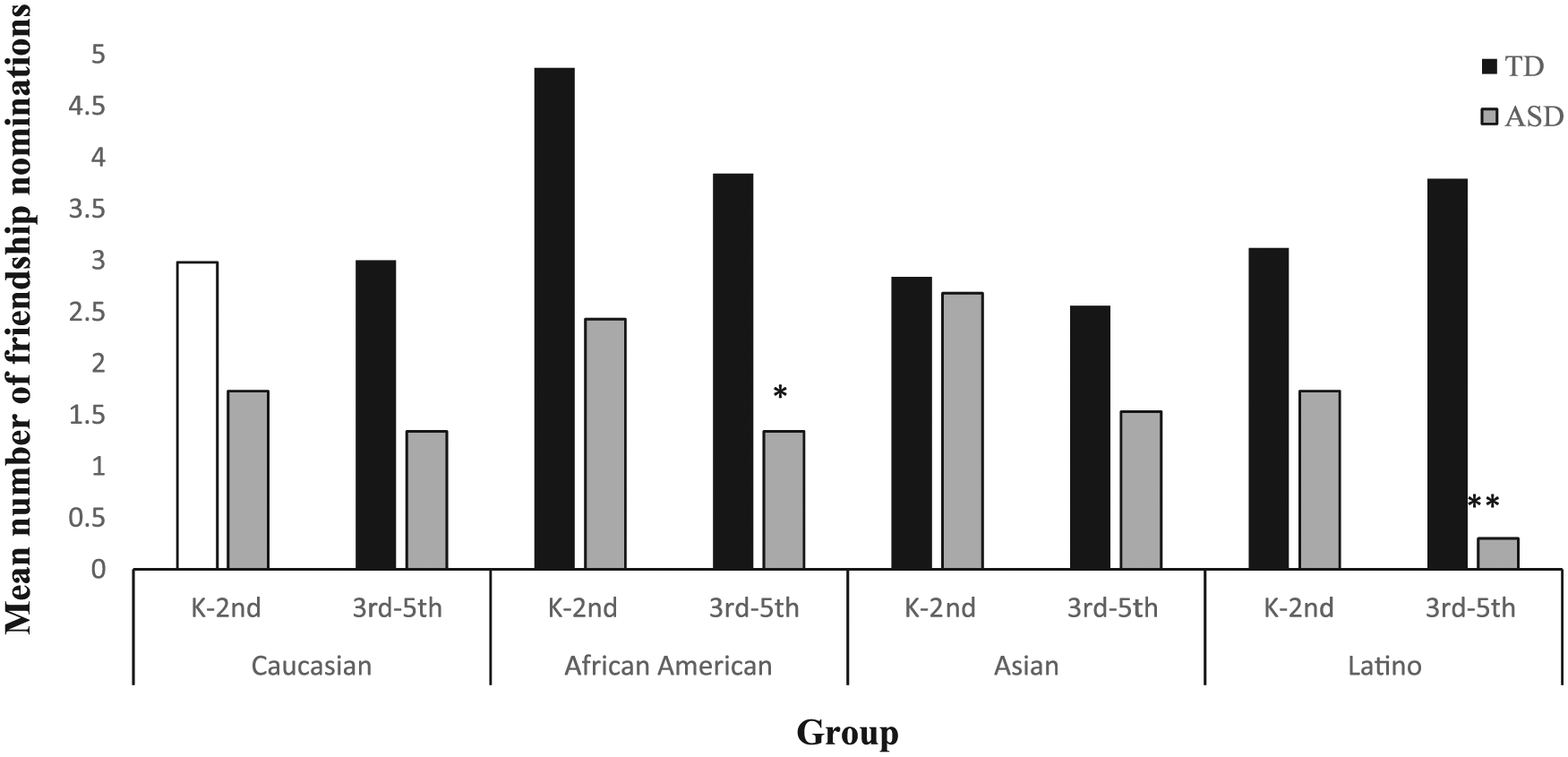
Group differences in the number of friendship nominations.
The effect of race, disability, and grade on social network centrality
Group membership predicted 26% of the variation in social network centrality (p < 0.001). Table 2 presents the results of this regression. There were seven groups that were significantly less integrated in their classroom social networks than the reference group (White, TD, grade K–2; Figure 2). Among those in grade K–2, White children with ASD (1.0; p < 0.001), African American children with ASD (1.1; p < 0.05), and Latino children with ASD (0.9; p < 0.01) were significantly less integrated than children in the reference group. Among grades third–fifth graders, White children with ASD (−1.1; p < 0.01), African American children with ASD (−0.9; p < 0.01), Asian children with ASD (−0.8; p < 0.05), and Latino children with ASD (−1.4; p < 0.001) were significantly less integrated than children in the reference group.
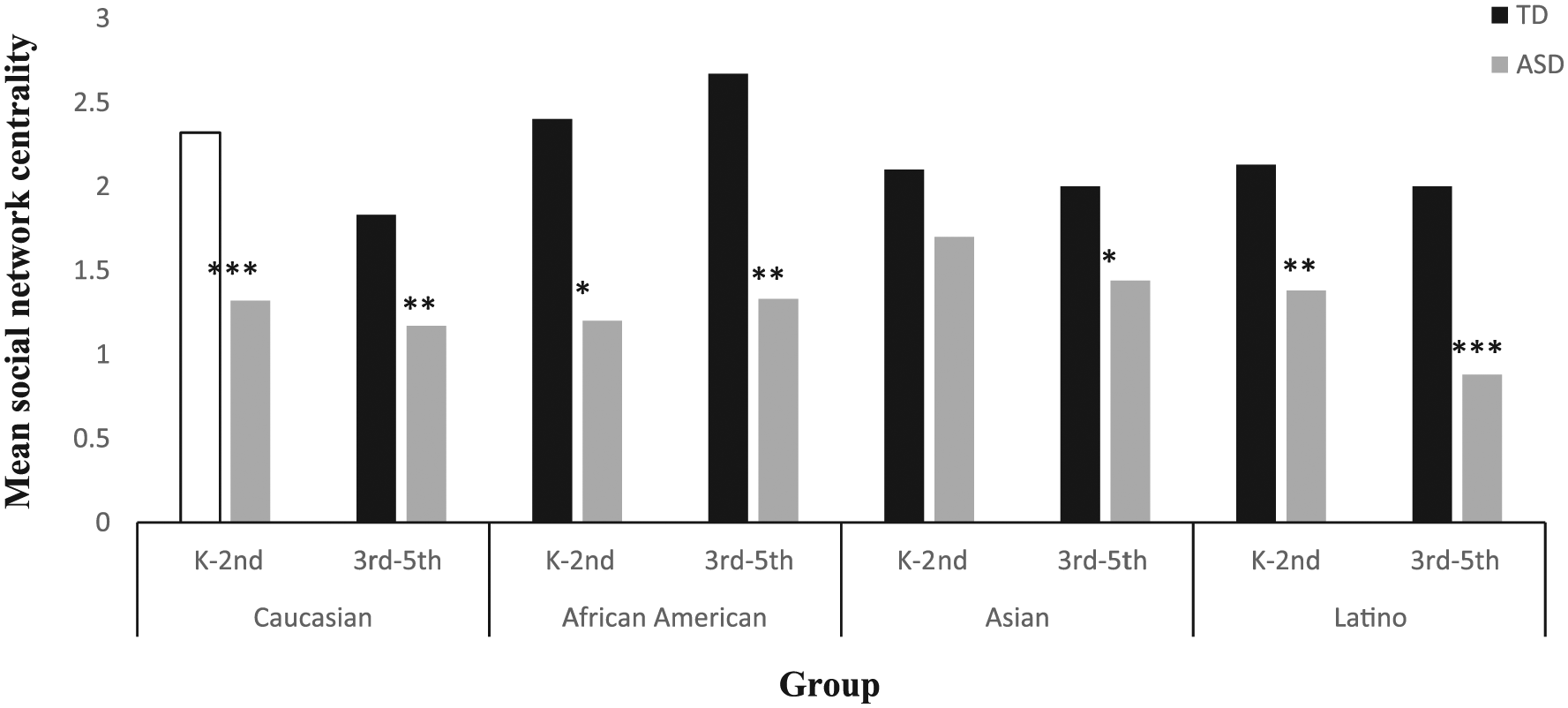
Group differences in social network centrality.
Discussion
Our findings indicated that race, grade, and the presence of ASD all influence the number of friendship nominations that children received in elementary grades; however, only the presence of ASD affected social network centrality. These findings suggest a trifecta, in which children with ASD experience poorer social outcomes that worsen as they age, and that this worsening is exacerbated for racially diverse children.
Our findings regarding the effects of grade on social relationships are similar to previous findings. It is likely that in upper elementary grades, children with ASD have difficulty understanding complex games (Rotheram-Fuller et al., 2010) and the abstract concept of intimacy (Locke et al., 2010), both of which emerge as cornerstones in friendship formation and maintenance in later elementary years. With increasing age, TD children may be less likely to befriend children with ASD as they become cognizant of the differences between them (Locke et al., 2013).
The role of race in social relationships for children with ASD is more challenging to interpret. In our study, race exacerbated the disparity in social outcomes. It was striking that in lower elementary grades, TD African American children received the highest number of friendship nominations. Friendship nominations for African American children with ASD in upper elementary grades declined dramatically, even though the TD children in this racial group had the most nominations in the younger grades. In lower elementary grades, African American children with ASD did not differ from TD White children in their friendship nominations. Of interest, TD Latino children were the only group in which friendship nominations increased from lower to upper elementary grades, yet Latino children with ASD experienced the greatest decline in the number of friendship nominations from younger to older grades.
These findings suggest that TD, racially diverse children may possess social strengths (Crosnoe, 2007) that are negatively affected by disability and grade. For example, studies have shown that Latino children are more competent in social areas such as engagement and self-control than White children (Galindo and Fuller, 2010; Harwood et al., 2002; Reese et al., 1995). Caution is also recommended when considering measures of social success for White children that may not be applicable for children of other races.
African American and Latino children with ASD in grades 3–5 received fewer friendship nominations than TD White children in grade K–2. African American and Latino children traditionally come from family and community-oriented cultures (DuBois and Hirsch, 1990; Martin, 1993) and as a result, they may have friends outside of school (Kawabata and Crick, 2008). Nevertheless, it is important to highlight that these children spend a majority of their school day with far fewer friendships and therefore may miss many opportunities to engage in positive social experiences with peers at school.
This study also examined how race, disability, and grade affect social network centrality. We found that all children with ASD, with the exception of Asian children with ASD in grade K–2, were significantly less integrated in their classrooms’ social network than TD White children in grade K–2. Our results are consistent with prior investigations that have reported lower social network centrality for children with ASD (Chamberlain et al., 2007; Locke et al., 2010, 2013; Rotheram-Fuller et al., 2010). It may be the case that children with ASD connect to their peers based on other characteristics that are not present in their general education class (e.g. other children with ASD; Kasari et al., 2015). Alternatively, there may be limited numbers of children sharing similar characteristics (i.e. by gender and race).
Social networks describe who associates with whom and who is perceived as belonging to particular social groups (Boutot and Bryant, 2005; Farmer and Farmer, 1996; Locke et al., 2010). In contrast to friendships, which have a strong emotional component, social networks consist of patterns of interactions (Chamberlain et al., 2007). It is possible that race and grade do not affect these patterns of interactions but become salient when the social “stakes” are higher, that is, in establishing emotional bonds. Therefore, racially diverse children, regardless of grade, may be connected to the social structure of their classroom. When these children have ASD, their connections become weaker, similar to what is observed for White children with ASD.
Latino children with ASD in the upper elementary grades appeared to experience the greatest social isolation. Other studies have found that Latino children with ASD receive fewer specialty services (Magana et al., 2012), as well as inadequate health care access, utilization, and quality (Parish et al., 2012). The disparity in service utilization is exacerbated by language barriers and immigration status (Weinick and Krauss, 2000; Yu and Singh, 2009). Lack of high-quality services from a young age may affect the trajectory of social development in this population. Latino children with ASD may not acquire the social skills necessary to thrive in the social structure of their classrooms that would lead to friendship development. While those same language barriers and concerns about immigration status may affect friendships and social networks, the disparity was not observed among TD Latino children, suggesting the need for an alternative explanation.
Several study limitations should be noted. The small sample size limited our examination of other variables, such as gender homophily or the racial composition of the classroom, which have been shown to affect social relationships (Graham and Cohen, 1997; Lee et al., 2007). The racial composition of the classroom is a particularly important variable to examine in future studies because it can elucidate the number of opportunities that children have to establish same-race friends. In our study, it is possible that opportunities may have been limited in individual classes. For example, if Latino children were in classrooms with primarily White children, they would have fewer opportunities to make a Latino friend. In the future, it will be imperative for researchers to examine whether Latino children with ASD continue to have the highest risk of social isolation in the presence of other children of the same race.
Another important variable that we were unable to examine is socio-economic status (SES) and EL status. Similar to race, SES has been linked to service utilization (Liptak et al., 2008), therefore may affect social outcomes. Additionally, our data were cross-sectional; therefore, we were unable to examine changes in socialization over time. However, the relatively tight age range of the subjects makes period effects unlikely. Nonetheless, longitudinal studies that can capture the trajectory of social networks and friendships are an important area that warrants future research.
Finally, our measures were designed to only capture friendships and social networks within classrooms. As mentioned previously, other investigators have reported the importance of social relationships outside of school, especially for racially diverse children. For example, Clark and Ayers (1992) reported that TD African American students did not see their friends at school as often as White students. African American students were more likely to live within walking distance from their best friends and spend more time with them outside of school compared to their White counterparts. Future studies should examine social relationships in multiple social ecologies (e.g. extended family, school, and neighborhood) to obtain a comprehensive depiction of friendships and social networks for children in elementary school. Due to these limitations, the results of this study should be interpreted with caution.
Conclusion
The results of this study have important implications for racially diverse children with ASD in elementary grades. African American and Latino children with ASD may need additional supports to establish and maintain friendships, as well as increase their inclusion in peer social networks, especially in the upper elementary grades. These children may benefit from peer buddies who help them cultivate high-quality friendships (Bollmer et al., 2005) and lessen psychological problems (Bagwell et al., 2005).
Our findings also indicated that social network centrality is primarily affected by disability. Thus, children with ASD may need targeted social skills instruction to increase peer engagement, especially at the beginning of the school year since children are just starting to form connections at this time (Locke et al., 2013). Additionally, it may be equally important to engage all children in the classroom. For example, Boutot and Bryant (2005) reported that when other children in the classroom participated in a training session regarding ASD early in the school year, students with ASD had high social preference and social visibility. Since Latino children with ASD in upper elementary grades appeared to be the most at risk, it may be necessary to target this group for early intervention. Awareness, access, and utilization of services to improve social skills may be the first step in reducing the social disparity experienced by these children.
Footnotes
Funding
This work was supported by the National Institute of Mental Health National Research Service Award (F32) (grant number 1-F32-MH101994), the Autism Science Foundation Research Enhancement Mini Grant (grant number REG 14-01), Autism Science Foundation Early Career Award (grant number 13-ECA-01L), FARFund Early Career Award, the National Institute of Mental Health (grant number 5-U54-MH-068172), the Autism Intervention Research Network in Behavioral Health from the Maternal and Child Health Research Program, Maternal and Child Health Bureau (Combating Autism Act Initiative), Health Resources and Services Administration, Department of Health and Human Services (grant number UA3 MC 11055).