



Abstract
Ultra-high performance concrete (UHPC) is a type of cementitious composite, and demonstrates very high compressive strength and good ductility. The favorable ductility and energy dissipation capacity of UHPC material make it possible to achieve excellent seismic performance in all kinds of structural members. The paper reviewed the recent progress on the seismic behavior of UHPC members, including flexural members (beams and plates), compressive members (columns and shear walls), joints (beam-column joints and plate-column joints), strengthening (strengthening for columns, shear walls and joints) and connections (bar lap splice and grout). A series of potential future researches on the seismic behavior of UHPC members were finally suggested for promotion of the application of UHPC in civil engineering.
Introduction
Ultra-high performance concrete (UHPC) is one of the most innovative cement based structural engineering material developed in the last 30 years (Zhou et al., 2018). UHPC could show compressive strength from 150 to 810 MPa, approximately 3 to 16 times as that of conventional concrete. With the addition of steel fiber, the ductility and energy dissipation of UHPC can be 300 times greater than that of high-performance concrete (Krahl et al., 2018; Shi et al., 2015; Wang et al., 2015).
Because of the contained steel fibers, UHPC has the characteristics of high tensile strength and large ultimate strain. These characteristics of UHPC can translate into high bearing capacity, good ductility and excellent energy dissipation capacity at the structural level. On one hand, in the tensile zone of the UHPC flexural members, the bridging effect of the fibers can constrain the crack development (Mahmud et al., 2013). Narrow and closely distributed cracks will occur, which is expected in the engineering (Yang et al., 2010). On the other hand, in the compressive zone of the UHPC flexural members, the confinement effect provided by the fibers will enhance the compressive ductility and residual strength of UHPC, and therefore restrain the concrete spalling and crushing. Moreover, due to the integrity of the concrete matrix around the reinforcing rebars, the bond-slip toughness and energy dissipation capacity of the UHPC flexural members can be increased (Hung and Chueh, 2016).
Applying UHPC in the compressive members can exert its best advantages (Tong and Fang, 2016; Zhao and Yan, 2004). Due to the bridging effect of steel fibers between cracks, the integrity of UHPC could be sustained and concrete spalling or crushing could be eliminated in UHPC compressive members. This allows the longitudinal reinforcement to be utilized to its yield stress without buckling (Huang, 2011; Xu, 2007). Moreover, the specific compressive strength (ratio of compressive strength to density) of UHPC is four times that of normal concrete and two times that of normal steel (Wang et al., 2003). Therefore, the cross section of the UHPC compressive members can be effectively reduced, and the seismic inertia force of the structure will be decreased, as a result of the light weight. Meanwhile, due to the high ductility and toughness of UHPC, the flexibility of the compressive members can be enhanced and lead to a high energy dissipation capacity (Ju et al., 2013).
Joints are the critical area connecting columns and beams or plates, and assembling them into a framework. As a force transferring hub, joints are prone to fail by shear under seismic load, resulting in low ductility and energy dissipation capacity (Nurjannah et al., 2016a). Moreover, the failure of the joints may lead to the overall collapse of the whole structure. Therefore, it is suggested that the bearing capacity of the joints should be higher than that of the components connected to them. Dense reinforcements are usually arranged in the normal concrete joints, and specific construction measures are needed to guarantee the strength and compactness of the concrete. Applying UHPC with high ductility, dense matrix and without coarse aggregates can improve the seismic behavior of the joints and solve the problem of excessive reinforcement (Ju et al., 2015; Wang et al., 2014).
UHPC can not only be used to constitute the main bearing members, it can also be applied to strengthen the normal concrete structural members or retrofit the seismic-damaged structures (Massicotte et al., 2013). Moreover, connections between bars and concrete or between concrete members are usually subject to severe and complicated stress conditions, and will exhibit complex dynamic responses under seismic load (Lampropoulos et al., 2016). UHPC with high compressive and tensile strength is also suitable to be used in the connections (Xu et al., 2018).
Therefore, this review focuses on the seismic behavior of UHPC members, including flexural members, compressive members, joints, strengthening and connections. It is the purpose to summarize the recent progress, to provide some insights and suggestions for further researches, and to facilitate the applications of UHPC.
Flexural members
Beams
In order to take advantages of the high strength and ductility of UHPC, high-strength steel rebars can be used in UHPC flexural members. The application of high-strength steel rebars in normal concrete is generally limited. Due to the high yield strain of high-strength steel rebars, the normal concrete in the compressive zone reaches its ultimate compressive strain before compressive steel rebar yield, causing the brittle failure of the flexural members. Meanwhile, because of the limitation of crack width in the engineering and the relatively low ultimate tensile strain of normal concrete, high-strength steel rebars are not yield in the tension zone of the flexural members before large crack width occurs. Thus, the strength of high-strength steel rebars in normal concrete members cannot be fully developed. However, the combination of UHPC and high-strength steel rebars takes full advantages of both their strength properties. Because of the large ultimate compressive and tensile strain, the crack width can be effectively reduced, and high-strength steel rebars can yield before UHPC crushed, providing enough ductility for UHPC beams. Moreover, the characteristics of the low w/b ratio and the dense matrix of UHPC enable an adequate bond strength between the matrix and the high-strength steel rebars in the flexural members under large displacement reversals (Deng and Wang, 2016).
Seismic behavior of UHPC beams longitudinally reinforced with high-strength steel rebars was studied by Hung and Chueh (2016). Six cantilever beams were tested under displacement reversals, with the variables of different tensile reinforcement ratio (2.0% or 1.4%), volume fraction of steel fiber (2%, 1%, or 0%), steel fiber length (30 mm-long or 60 mm-long hooked steel fibers), and location of steel fiber (in full depth or selectively in the top and bottom sections). All the steel fibers were only used in the plastic hinge region of the beam.
It was observed in the experiment that the failure of UHPC beams under seismic load was dominated by the fracture of high-strength longitudinal steel rebars, as a result of concentrating strains at the localized concrete crack. The addition of steel fibers in UHPC was beneficial in enhancing the damage tolerance, strength capacity, energy dissipation capacity, and stiffness retention of the beam. The UHPC beam with the selective use of fibers in the top and bottom section was found to have almost the same energy dissipation capacity with the beam where steel fibers were distributed in full depth. Although the longer steel fibers can enhance the strength capacity and flexural ductility of the beam, the UHPC beams with shorter steel fibers performed better in facilitating the multiple narrow cracks and increasing the energy dissipation capacity. It can be explained that under the same steel fiber content, UHPC beams with shorter fibers had a larger number of fibers to control the crack width.
In the long-span bridges, super high-rise building or engineering where crack development is strictly limited, the prestressed UHPC beams can be applied. The partial prestress ratio (PPR) and transformed reinforcement ratio of UHPC beams prestressed high-strength rebars are defined by equations (1) and (2), respectively.


where λ and ρ are the prestress degree and trasformed reinforcement ratio, respectively; fpy and Ap are the yield strength and cross-sectional area of prestressed rebar, respectively; fy and As are the yield strength and cross sectional area of non-prestressed rebar, respectively; b is the width of the beam; hs is distance between the gravity center of non-prestressed rebars and the top of the beam.
Deng and Wang (2016) tested the seismic behavior of prestressed UHPC beams. The tested UHPC beams were simultaneously reinforced by prestressed low relaxation steel strands and non-prestressed steel bars. The experimental variables included PPR (0, 0.6, or 0.9) and transformed reinforcement ratio (1.22%, 1.42%, or 2.17%). Reversed cyclic load was applied on the mid-span of the prestressed UHPC beam.
It was found that the existence of prestress could increase the initial flexural stiffness, slow down the stiffness degradation and improve earthquake resilience. The increase of PPR could also decrease the ductility and energy dissipation capacity of UHPC beams. Meanwhile, high transformed reinforcement ratio resulted in large depth of compressive zone and led to low ductility of UHPC beams. The high-strength rebars in UHPC beams with high transformed reinforcement ratio were still in the elastic state when failure of the beam occurs. The energy dissipation capacity decreased with the increase of reinforcement ratio. Therefore, the PPR of UHPC beams prestressed with high-strength steel strands was suggested to be taken as 0.6~0.7, and the transformed reinforcement ratio was suggested to be taken as 1.42%~2.16%. Such UHPC beams can take fully advantages of the excellent crack resistance of prestressed concrete beams, and maintain favorable deformability and energy dissipation capacity at the same time.
Plates
Plate is a kind of two-dimensional flexural members. In order to develop a structural member with less dead load and better seismic performance, one kind of UHPC plate reinforced with steel welded wire meshes was specially designed by Chen et al. (2007). The dimensions of the special designed UHPC plate is presented in Figure 1. The steel fibers in UHPC had the diameter of 0.2 mm and the length of 13 mm. The UHPC plate was reinforced with four layers of steel welded wire meshes with a diameter of 0.8 mm and a square mesh size of 12.7 mm. The fabrication process for such UHPC plats was carefully concerned. Firstly, the UHPC matrix was poured for the first layer. Secondly, a piece of steel welded wire mesh was put on the surface of the UHPC matrix. Then the second layer of the UHPC matrix was poured and the previous steps were repeated to the end.
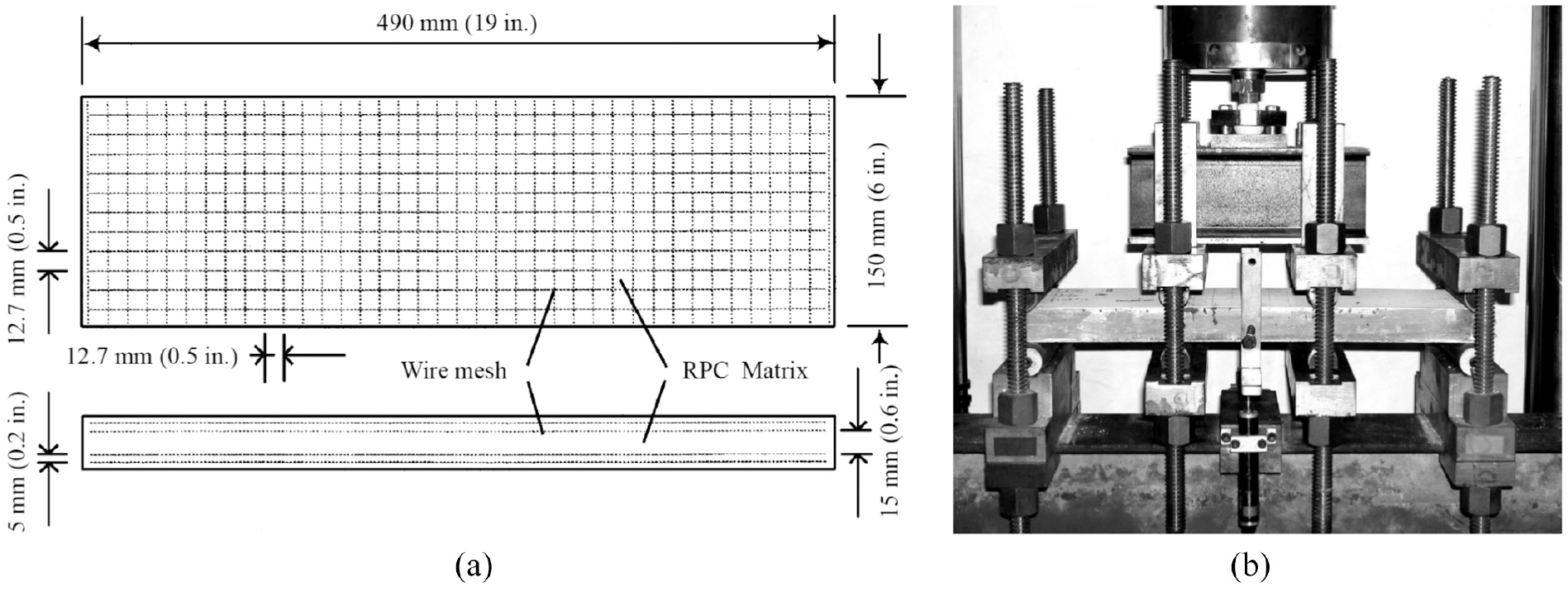
Dimensions and test setup of the special designed UHPC plate (Chen et al., 2007): (a) dimensions of the UHPC plate and (b) test setup.
Due to this special fabrication process of the specimen, steel fibers could be distributed along the thickness of layer uniformly. Moreover, with the special design, the length of steel fiber (13 mm) was greater than the thickness of mesh layers (5 mm to 10 mm) and the mesh size of steel welded wire mesh (12.7 mm). This helped to convert the orientation of fiber distribution from three-dimensional distribution to two-dimensional distribution due to the boundary effect of wire mesh layers. Two-dimensional distribution increased the reinforcing effect of steel fibers about 14% over three-dimensional distribution (Chen et al., 2007).
Eleven UHPC plates with different fiber volume fractions (0%, 1%, 2%, 3%, or 4%) and different mesh layers (0 or 4) were tested under different loading modes (monotonic static load or reversed cyclic load with low or high amplitude). It was observed that the longitudinal steel wires could provide an important effect in uniform stress distribution in the UHPC plates and led to multiple cracking. The transverse steel wires, on the other hand, could help to restrain the development of multiple cracks speedily and eliminated the phenomenon of cracking localization. Steel fibers were pulled out during the loading process, and provided a frictional mechanism to dissipate the seismic energy. The energy dissipated by the frictional process during the pulling out of fibers was raised with the increase of the number of cracks.
Compressive members
Columns
Solid columns
Similar to the UHPC flexural members, the advantages of high-strength steel rebars can also be fully developed in the UHPC compressive members. Seismic behavior of three 1/4-scaled column specimens with different bar grades (SD685 or SD980) and axial loadings (vary or constant) were investigated by Ousalem et al. (2009). It is proved that using SD980 steel in the UHPC columns could induce lower strength degradation, smaller residual deformation and slightly higher ductility. The axial loading type affected the crack development and damage concentration of the UHPC columns.
For normal concrete, the brittleness of the concrete is raised with the increase of compressive strength. Thus, significant amounts of shear reinforcement are usually needed for high-strength concrete columns in the practical engineering, to confine concrete and prevent premature brittle failure. However, UHPC has much higher ductility and energy dissipation capacity than normal concrete. In such case, whether shear reinforcement is still needed in the UHPC columns becomes controversial.
Palacios et al. (2015) argued that the amount of transverse reinforcement could be considerably reduced in the UHPC columns due to the enhanced ductility caused by the addition of steel fibers. Two full-scale columns were tested under reversed lateral load. One of them is made of normal concrete, and the other had UHPC in the bottom part of the column (1.01 m high). The failure of normal concrete column initiated with concrete crushing, but the failure of UHPC column was caused by the fracture of longitudinal bars. No visible concrete damage was observed in the plastic hinge region of UHPC column, which allowed the longitudinal reinforcement to be utilized to its ultimate yielding capacity without buckling. It was found that the strains in shear reinforcement were in the elastic range. Similar conclusions were drawn by Zhao and Yan (2004). Four UHPC columns were tested, and the influences of shear reinforcement ratio (0, 0.11%, 0.22%, or 0.44%) were investigated. No obvious relationship was found between the shear reinforcement ratio and the ductility of the UHPC columns. It was suggested that the shear reinforcement in UHPC columns can be reduced.
Different observations were found by Marchand et al. (2019). Nine UHPC columns and one normal concrete column were tested in the experiment. The variables included constitution of UHPC (with or without polypropylene fibers), shear reinforcement (with or without shear reinforcement), axial compression ratio (σc/fc = 0.16 or σc/fc = 0.09) and loading protocol (repeated or alternate). Compared to the normal concrete column, concrete cover in the UHPC column was relatively less damaged because of the fibers in UHPC, and steel rebars were better protected from buckling. It was found that the dissipation capacities of UHPC columns were quite the same under different loading protocol (repeated or alternate). Although shear reinforcement had little influences on the dissipation capacity of UHPC columns, it seemed to have a positive effect on the ductility of UHPC columns under the low axial compression ratio of 0.09. When the axial compression ratio increased from 0.09 to 0.16, influences of shear reinforcement on the ductility of UHPC columns became less obvious.
However, Ju et al. (2013) found that shear reinforcement could improve the ductility of UHPC columns even under the high axial compression ratio. A series of quasi-static tests of eighteen UHPC columns were conducted in the experiment. Influences of volume fraction of steel fibers (1.0% or 1.3%), design axial compression ratio (0.29, 0.43, 0.58, 0.65, or 0.71), longitudinal reinforcement ratio (1.09%, 2.44%, or 3.32%) and stirrup ratio (0.55%, 0.62%, or 0.65%) on the seismic behavior of UHPC columns were analyzed. The increase of steel fibers was proved to reduce the crack width and increase the number of cracks, resulting in higher ductility and dissipation capacity of UHPC columns. Both ductility and dissipation capacity of UHPC columns were enhanced with the increase of stirrup ratio.
Sugano et al. (2007) also found that UHPC columns with high shear reinforcement ratio could achieve stable seismic behavior under high axial compression ratio. Six UHPC columns with different axial compression ratios (0.3 or 0.6) and shear reinforcement ratios (0.53%, 1.60%, or 2.29%) were tested under cyclic lateral load. The ultimate displacement of the columns significantly increased with the increase of shear reinforcement.
From the above researches, it can be seen that the influence of shear reinforcement ratio on the ductility of UHPC columns may be less obvious compared to that of normal concrete columns. However, although excessive shear reinforcement is not needed in the UHPC columns, shear reinforcement still should not be totally omitted from UHPC structures. When cyclic load was applied, most of the steel fibers at cracks were under the combination of cyclic tension, shear or bending due to their disordered distributions. Steel fibers under these stress conditions were prone to fail (Fang et al., 2013). Even for the steel fibers perpendicular to cracks, they were subjected alternatively to tension and compression under cyclic load. This could generate possible buckling of the steel fibers at wide cracks and accelerated the failure or the pullout of the steel fibers (Palacios et al., 2015). Therefore, a certain amount of shear reinforcement is still needed in the UHPC columns to provide enough shear resistance and guarantee the ductility of the structure.
It also can be known from the aforementioned experiment that the seismic damage of the columns was usually limited to the plastic hinge region. Since UHPC is currently too expensive to be used in the construction of a full bridge column, it could be strategically used in critical regions to improve the seismic performance of the columns with lower costs. It was proved in the experiment conducted by Mohebbi et al. (2018a) that UHPC could effectively reduce the plastic hinge damage. The tested column had moment connections at the top and two-way hinge connections at the bottom. The column was precast and then inserted into the footing pocket, after which the cap beam was placed on the column. It was suggested that the embedment length of the column in the cap beam should be larger than the development length of the longitudinal bars and 1.0 times the columns cross sectional dimension.
Hollow columns
Although frame columns in building structures are usually solid rectangular or square, hollow rectangular columns are normally adopted in the pier and tower of bridge engineering. The differences between UHPC hollow column and solid column with UHPC jacket and reinforced normal concrete core were studied by Ichikawa et al. (2016). It was found that the dissipated energy and equivalent viscous damping for the solid column with UHPC jacket were generally higher than the UHPC hollow column because the former column experienced greater damage. The solid column also had less torsion than the UHPC hollow column.
To explore the seismic behavior of UHPC hollow columns, five 1.7 m tall UHPC hollow columns with the cross-sectional dimension of 400 mm×400 mm and the thickness of 60 mm were tested by Hao et al. (2011). The experimental variables included longitudinal reinforcement ratio (2.96%, 3.94%, or 4.93%) and shear reinforcement ratio (0, 0.73%, or 1.46%). The ductility factor of the UHPC hollow columns increased from 4.0 to 4.8 when the shear reinforcement ratio increased from 0.73% to 1.46%. A restoring force model of UHPC hollow columns was then proposed based on the experimental data. Moreover, the plastic hinge length of UHPC hollow column was studied by Ren et al. (2017). The plastic hinge length of UHPC bridge column was increased with the decrease of axial compression ratio. The plastic hinge length was increased firstly and then decreased with the increase of longitudinal reinforcement ratio.
Furthermore, the direction of horizontal load also had important influences on the seismic performance of rectangular UHPC hollow columns. Three UHPC hollow columns were tested under different load directions by Wang et al. (2012). Best ductility of the column was performed when lateral load was applied on the minor axis of the cross section. When inclined load was applied on the column, the stresses in different reinforcement were distributed unevenly due to their different distances from the central axis. The bond between UHPC and the outermost reinforcement reduced rapidly, and the damage of the column accumulated seriously. The load was reduced fast after reaching the bearing capacity, which led to lower ductility.
Self-centering columns
In recent years, earthquake resilient structure, which is defined as a type of structure that can restore structural function rapidly after a severe earthquake without significant repair, has become a hot topic in the earthquake engineering. It is found that precast segmental bridge columns, not only allow rapid bridge construction, but also present a self-centering capacity when precast segments are integrated with post-tensioning strands. However, concrete at the bottom of the precast segmental bridge columns will be crushed easily under earthquake action, and leads to poor energy dissipation capacity. Therefore, due to the excellent ductility of UHPC, post-tensioned segmental UHPC bridge columns are expected to obtain self-centering capacity and energy dissipation capacity at the same time.
Three segmental hollow columns posttensioned with 15.2-mm diameter unbonded strands were tested by Yang and Okumus (2017). Normal concrete was used in all segments of the first tested column. The second and third column had an UHPC bottom segment with and without the mild steel bars, respectively. It was found that the stiffness and strength of the columns with UHPC bottom segment were higher than those of normal concrete columns due to the elimination of damage in UHPC. The difference in damage to the UHPC segments with and without mild steel bars was negligible, suggesting that steel bars can be eliminated in the UHPC segments.
However, in the experiment conducted by Wang et al. (2018b, 2019b), mild steel bars passing through the bottom two segments were configured as energy dissipation (ED) devices. Seismic performance of three posttensioned UHPC hollow columns with different axial load ratio (0.018 or 0.036) and diameter of the ED bars (16 mm or 22 mm) was studied. Unbonded posttensioning (PT) strands were used to provide self-centering prestressing force (Bu et al., 2015). The addition of ED bars can improve lateral strength and energy dissipation capacity but increase residual drift ratio. It was suggested that the contribution of ED bars to lateral strength of precast segmental UHPC bridge column should not exceed 25%, in order to maintain excellent self-centering capacity and good energy dissipation capacity.
Although self-centering capacity is obtained in the previous precast segmental UHPC bridge columns, concrete crushing is still inevitable when the columns are subjected to large earthquakes. Therefore, based on the previous column, a special designed earthquake resilient UHPC bridge column was proposed to realize rapid repairs for damaged bridge columns after an earthquake, as shown in Figure 2. The bottom segment S1 was considered as the potential plastic hinge region and divided into two parts: the core zone and four surrounding cover plates. The core zone was designed to possess enough resistance to axial loading including gravity and prestressing force. Four surrounding cover plates were allowed to be damaged and provide earthquake resistance during earthquake shock. Replaceable dissipaters, made by mild steel bars with threaded sleeves at two ends were located between the core zone and cover plates, and expected to improve energy dissipation. The core zone and cover plates were connected using horizontal prestressed bars.
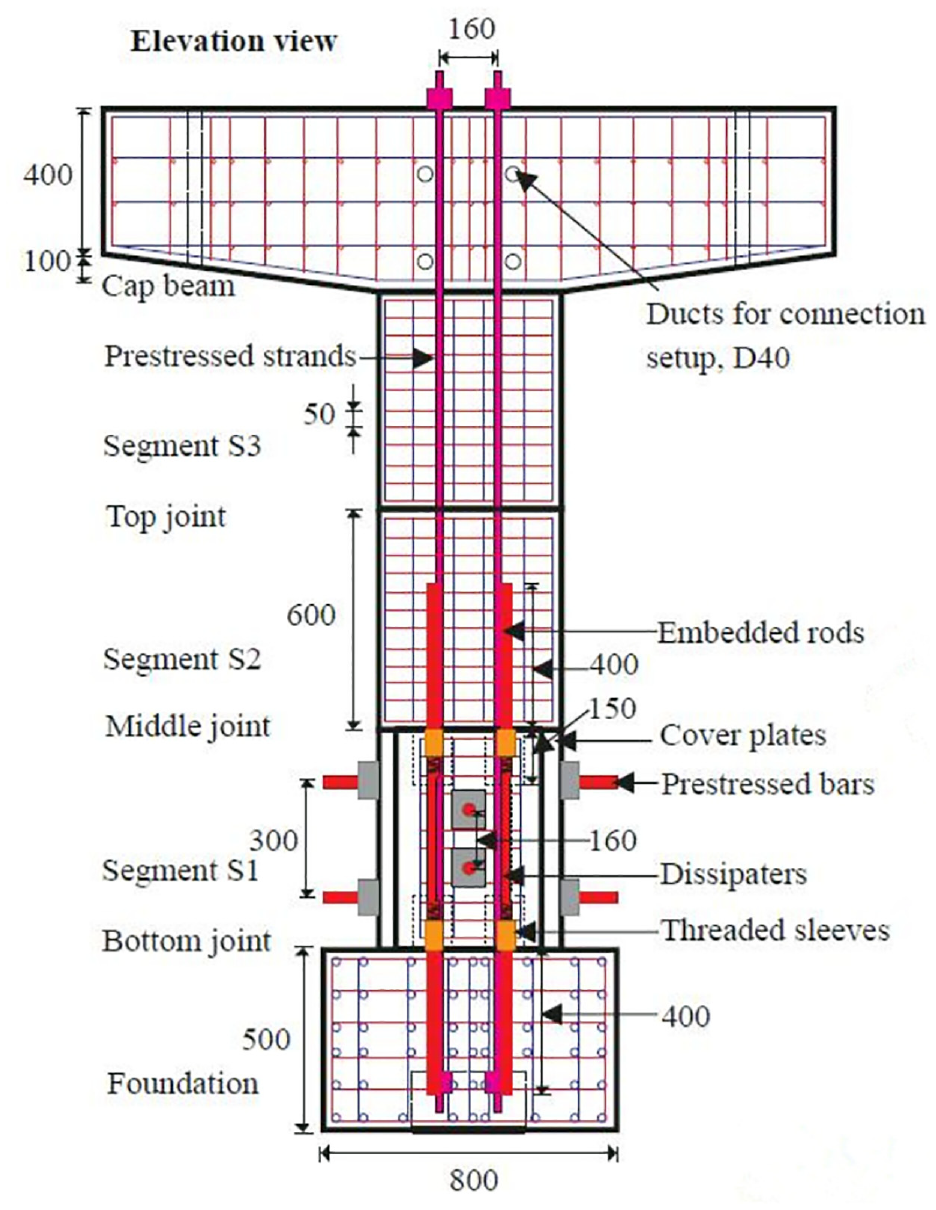
Design details of the posttensioned segmental UHPC bridge columns (units: mm) (Wang et al., 2018c).
Three special designed UHPC bridge columns with different axial load ratio (0.018 or 0.036) and diameter of the replaceable dissipater (22 mm or 32 mm) were tested. It was observed that major damage was focused on the dissipaters and cover plates as expected. The increase of PT force would aggravate dissipater buckling for the proposed bridge columns, which led to higher residual drift. After the seismic load applied until its failure, rapid repairs were conducted for the damaged UHPC bridge column. The rapid repairs included the relaxation of PT strands, the replacement of dissipaters and UHPC cover plates, and re-tension of PT strands. The identical seismic load was applied after the rapid repairs. It was found that the repaired specimens had similar lateral load and displacement capacities compared with the original column. Such UHPC bridge column was proved to maintain excellent self-centering capacity and good energy dissipation capacity, and rapid repairs can be realized for such columns.
Innovative columns
Although PT steel strands and replaceable dissipaters are proved to effectively re-center the bridge columns and realize rapid repairs for the damaged columns after earthquake, corrosion problem is still one of their biggest concerns (Wang et al., 2018c). Fiber-reinforced polymer (FRP) with the advantages of anti-corrosion and high tensile strength capacity provide an attractive alternative.
One properly designed bridge column with UHPC at plastic hinge region and posttensioned with CFRP (carbon fiber-reinforced polymer) tendons was studied by Mohebbi et al. (2018b). The tested column finally failed in rebar rupture under seismic load, and the posttensioned CFRP tendons were proved to eliminate residual drifts of UHPC bridge columns effectively. Moreover, it was observed that debonding the longitudinal bars for 4db (where db is the diameter of longitudinal bars) above and below the footing interface was effective in spreading the plastic deformation of the longitudinal bars and eliminated the strain concentration at the column-footing interface.
The anti-corrosive property of FRP can also help to improve another kind of structure: concrete-filled steel tubular column. Replacing steel with FRP composites can not only has the same advantages as concrete-filled steel tubular columns, including significant enhancement in strength, ductility and energy absorption, but also resolve their disadvantages, such as the premature buckling of steel tube, the initial separation of the two materials, and the corrosion of steel. On the other hand, applying UHPC inside the FRP tube can exert the ultra-high compressive strength of UHPC and may reduce the longitudinal reinforcement in the column.
Therefore, seismic performance of glass fiber-reinforced polymer (GFRP) tubes filled with UHPC (UHPCFFT) was explored by Zohrevand and Mirmiran (2011). Two normal concrete circular columns (with or without GFRP tube) and two circular columns with the UHPC within twice the plastic hinge length (with or without GFRP tube) were tested. The proposed UHPCFFT system demonstrated a reasonable ductility without any internal steel. Thus, seismic behavior of the UHPCFFT with different cross section (column diameter of 219 mm, 323 mm, or 337 mm), thickness of GFRP tube (5 mm, 9 mm, or 16 mm), type of GFRP tube (Red Thread II Pipe or Alphatic Amine Pipe), and amount of longitudinal steel reinforcement (0, 0.5%, or 0.9%) was studied by Zohrevand et al. (2013a). All the tested five UHPCFFTs showed significantly higher flexural strength, initial stiffness, and damping ratio, as compared to reinforced normal concrete columns. The seismic performance of UHPCFFT was further studied by using OpenSees through the simulation analysis of the columns under 1978 Tabas earthquake (Zohrevand et al., 2013b). The simulation results showed that the UHPCFFT had 40% higher peak ground acceleration capacity compared to reinforced normal column.
Shear walls
Shear wall is the most important axial and lateral force resisting component in the high-rise building. The seismic performance of UHPC shear walls with different aspect ratios (1.0, 1.5, or 2.0) were studied by Tong et al. (2016). It was found that the cracks on UHPC shear walls were distributed widely and intensively under seismic load. The UHPC shear wall with high aspect ratio of 2.0 showed good ductility with the ductility factor higher than 3.
The shear wall with low aspect ratio would exhibit shear-dominant behavior, and can be classified as squat shear wall. The shear-critical behavior of squat shear walls caused limited ductility, stiffness and strength retention. Therefore, four UHPC squat shear walls with the aspect ratio of 0.73 were tested by Hung et al. (2017). The top and bottom ends of the precast wall element were finished with jagged edges as shear keys to increase the connection strength between the wall element and concrete block. The study focused on the effects of steel fiber content (0 or 2%), strength of steel bars in the web region of the wall (nominal yielding strength of 420 MPa or 785 MPa), dowel bars (presence or absence) and target shear stress (0.5
It was found that the addition of steel fibers enhanced the strength, confinement, and crack-width control ability of UHPC squat shear walls, allowing the walls to exhibit ductile flexural-dominant behavior, even when the shear stress in the UHPC was 20% higher than the code-specified maximum allowable value (ACI 318, 2014). However, steel fibers in UHPC could not prevent the sliding failure mode when the drift ratio increased to more than 2%. The addition of dowel bars, though, could effectively restrain the sliding mechanism. Moreover, it was also observed in the experiment that the strength capacity of high-strength longitudinal and transverse steel reinforcements installed in the UHPC squat shear walls could be fully exploited under displacement reversals.
Joints
Beam-columns joints
Five exterior and four interior UHPC beam-column joints were tested under reverse cyclic load by Wang et al. (2018a). The experimental variables included joint types (exterior or interior), axial compression load ratio of the column (0.3 or 0.5), nominal yielding strength of longitudinal bars in beam and column (400 MPa or 600 MPa), and volume stirrup ratio in the joint area (0 or 0.25%). It was observed that the integrity of UHPC joints was superior to normal concrete joints at failure. The use of high-strength steel bars could improve the ductility and strength retention capacity of UHPC joints. The shear capacity of the exterior joints was approximately 80%~90% of those of interior joints.
Seismic behavior of four interior UHPC beam-column joints with different steel fiber content (0% or 2% by volume) and development length of longitudinal bars of the beam in the joint (14d or 17d; d is the bar diameter) were investigated by Sugano et al. (2007). All the tested specimens had similar failure process. Longitudinal bars of the beam and lateral reinforcements in the joint yielded, and then the joint failed in shear compression. It was found that steel fibers enhanced the shear strength of the beam-column joints.
To improve the seismic performance of beam-column joints, the addition of longitudinal (mild steel bars and pre-stress strands) and transverse reinforcements can be introduced. Four partially prestress UHPC beam-column joints were tested by Nurjannah et al. (2016b). The polypropylene fibers were used in the UHPC. The experimental variables included joint types (exterior or interior) and partial prestress ratio (PPR) (22.8% or 33.8%). When the PPR increased from 22.8% to 33.8%, the ductility and energy dissipation of the interior UHPC beam-column joint increased by 21% and 26%, respectively. The interior joint with two plastic hinges was proved to obtain much higher bearing capacity and energy dissipation capacity than the exterior joint with one plastic hinge.
Plate-columns joints
A flat plate structural system consists of a plate with uniform thickness supported directly on columns without any beams. It is more economical compared to the normal structures with beams and slabs, which will reduce the height of inter-story floors. However, during an earthquake, the unbalanced moments transferred between slabs and columns can produce significant shear stresses that increase the likelihood of brittle punching failure. Several methods were proposed to solve this problem, such as increasing the thickness of the slab or developing a drop panel. The drop panel can improve the strength and stiffness of the flat plate, but the ductility and energy dissipation capacity are relatively low. Another option is to use shear reinforcement or shear stud surrounding the column. Although it can enhance the hysteretic behavior of flat plate, the use of shear reinforcement and shear stud is uneconomical and causes difficulties in construction. High strength concrete can be used in the flat plate system. Applying the high strength concrete can increase its resistance to punching, but cannot prevent the brittle punching failure in a severe earthquake (Megally and Ghali, 2000). Therefore, UHPC with high strength and ductility can be applied in the plate-column joint, expected to improve its shear strength and ultimate displacement, and lead to more ductile flat plate structures.
Four UHPC plate-column joints with different flexural reinforcement ratio in slab (0.65% or 1.8%) and slab span (2 m or 3 m) were tested by Budiono et al. (2016). The loading of the joint consisted of a combination of gravity and lateral cyclic load. The lateral cyclic load was applied on the top of the column. All the tested UHPC plate-column joints withstood a 5% inelastic drift ratio under stable conditions without any punching shear failures. The energy dissipation of the joint increased with the increase of slab span and flexural reinforcement in slab. It is worth mentioning that ACI 374 (2005) requires the energy dissipation ratio of the third cycle at 2.5% drift ratio to be at least 1/8. All the tested joints satisfied the required energy dissipation ratio.
Strengthening and connections
Strengthening
Strengthen for columns
UHPC with high strength can be applied to strengthen the compressive concrete members after seismic damage. One circular column with the diameter of 420 mm and the height of 1170 mm was tested by Lavorato et al. (2017). The circular column was initially wrapped by two layers of CFRP laminate with each thickness of 0.167 mm. The constant axial vertical load and cyclic lateral load were applied, and the column was strongly damaged at plastic hinge zone.
After the column failure, rapid interventions were conducted to repair the damaged column. The CFRP laminate, damaged concrete and rebars were removed. Fourteen 15-mm-diamter rebars were connected to the undamaged part of the original rebars by steel coupler and welding joints. UHPC was then used to build the concrete jacket. The geometries of the column after repair were identical to that before seismic damage. The same vertical and cyclic lateral load were applied on the repaired column.
It was observed that the repair measures can be performed rapidly on the column. The seismic behavior of the damaged column repaired by UHPC was similar to the undamaged one with CFRP laminate. The bearing capacity of the repaired column was even 1.5% higher than the undamaged column due to the high strength of UHPC. No connection rupture of the rebars was observed in the experiment, which also proved the adequate seismic performance of the rebar connection system.
UHPC can also be used to strengthen the column before seismic damage. Four identical square columns with different strengthening methods were tested by Koo and Hong (2016). After the casting and curing of the four columns, three of them were strengthened with different methods: 30 mm UHPC jacket, 50 mm UHPC jacket and 50 mm UHPC jacket with stirrups. It was found in the experiment that the application of UHPC jacket could change the shear failure mode into flexural shear failure, and consequently improve the ductility of the column. The additional stirrups could prevent large diagonal tension cracks and increase the shear strength and ductility.
Tong et al. (2019, 2020) strengthened “as-built” bridge piers by using UHPC jackets. Five 1:2 scaled columns were tested, and the influences of the strengthening method (enlarging the cross-section or remaining consistency in dimension) and the height of the UHPC jacket (400 mm or 850 mm) were considered. It was found that enlarging the cross-section by using UHPC jackets could increase the flexural strength, and strengthening method of remaining consistency in dimension could mitigate the concrete cracking, spalling and crushing. The 400 mm-height jacket could improve the ductility of the column, and the 850 mm-height jacket could increase the bearing capacity of the column significantly.
Moreover, UHPC can be precast and used to improve the seismic performance of normal concrete columns. Yamanobe et al. (2013) used precast UHPC formwork for the concrete cover at the base of the columns. Two 1:4.25 scaled specimens with different horizontal joints (mortat-jointed UHPC formwork or wire-net-jointed UHPC formwork) were tested. It was found that flexural strength of the specimens could remain stable even under large drift ratio. Column with mortar-jointed UHPC formwork exhibited better ductility and excellent flexural crack distribution performance.
Liu (2016) tested five concrete-filled UHPC tubes (CFRTs) and one normal concrete column. The diameter of the normal concrete column (300 mm) was the same with the external diameter of the UHPC tubes. The thickness of the UHPC tube was 25 mm. The experimental variables included spacing of spiral stirrups in the UHPC tube (20 mm, 40 mm, or 60 mm) and spacing of spiral stirrups in the core column (60 mm, 100 mm, or 150 mm). It was observed that the application of UHPC tube could slow down the stiffness degradation and increase the energy dissipation of the column, due to the confinement effect of UHPC tube. The strain in stirrups in UHPC tube was significantly higher than that in the core column, indicating better confinement effect of the stirrups in UHPC tube.
The seismic performance of the CFRT in the frame structure was studied by Wang et al. (2014). The UHPC tube finally failed in vertical penetrating cracks, due to the transverse expansion force from the core column. The UHPC tube exhibited similar function to the stirrups. The failure characteristic of “strong column and weak beam” was observed, which means that the plastic hinge on the column comes after that on the beam.
Strengthen for other members
UHPC was used to strengthen the shear wall by Yi et al. (2015). It was found that the UHPC panel increased the initial stiffness and ultimate strength of shear wall by 60% and 50%, respectively. The dissipated energy of the strengthened shear wall was always larger than that of the un-strengthened shear wall, indicating the energy dissipation contribution of the UHPC panel.
Method of strengthening beam-column joint with UHPC was proposed by Khan et al. (2018). Four beam-column joints with different strengthening method were tested. Two different strengthening methods were used: (1) sandblasting the normal concrete substrate surface of the joint and in-situ casting of a 30 mm thick UHPC jacket, as shown in Figure 3(a); (2) bonding 30 mm thick precast UHPC plates to seismically deficient joint using epoxy resins and special fillers, as shown in Figure 3(b).

Strengthening process of beam-column joint proposed by Khan et al. (2018): (a) strengthening with in-situ casting UHPC and (b) strengthening with precast UHPC.
It should be noted that the major damage of the joint strengthened with precast UHPC jacket occurred due to detachment of UHPC with the concrete cover. The bond between the concrete substrate surface and UHPC jacket played a key role in improving the seismic performance of the joint. Thus, the strengthening method with in-situ casting UHPC jacket was recommend for rehabilitation of the frame structures, which not only provide the considerable increment in the strength, but also increase the displacement capacity, ductility and energy dissipation capacity significantly.
Connection
Bar lap splice
Bar lap splice is a common design which can be found at several locations in the beams, columns or shear walls. However, structures with such details may be vulnerable in the event of a severe earthquake. Surrounding lapped bars with the high-strength material UHPC can be considered equivalent to bar welding. The maximum tensile stress in the bars of the UHPC connection should be analyzed thoroughly. In a well-designed lap splice, the bars were able to reach their yield strength or even be stressed up to their ultimate strength and break outside the UHPC connection as if the bars were welded (Lagier et al., 2015). The performance of lap splice strengthened with UHPC under seismic load should be studied.
The seismic behavior of six full-scale reinforced concrete beams with a deficient lap splice strengthened with UHPC was investigated by Dagenais and Massicotte (2016). Details of the tested beams are shown in Figure 4. The normal concrete beams were cast first, except for lap-splice zones on both sides. Special attentions were given when placing UHPC for carefully orienting the concrete flow perpendicular to the lapped bars to reproduce the desired fiber orientation in the repair zone. Influences of the diameter of the bar (25 mm or 35 mm), splice length (12db for 25-mm-diameter bar and 18 db for 25-mm-diameter bar) (db is the diameter of the bar), splice arrangement (lateral or radial) and steel fiber content (1%, 2%, or 3% by volume) were considered.
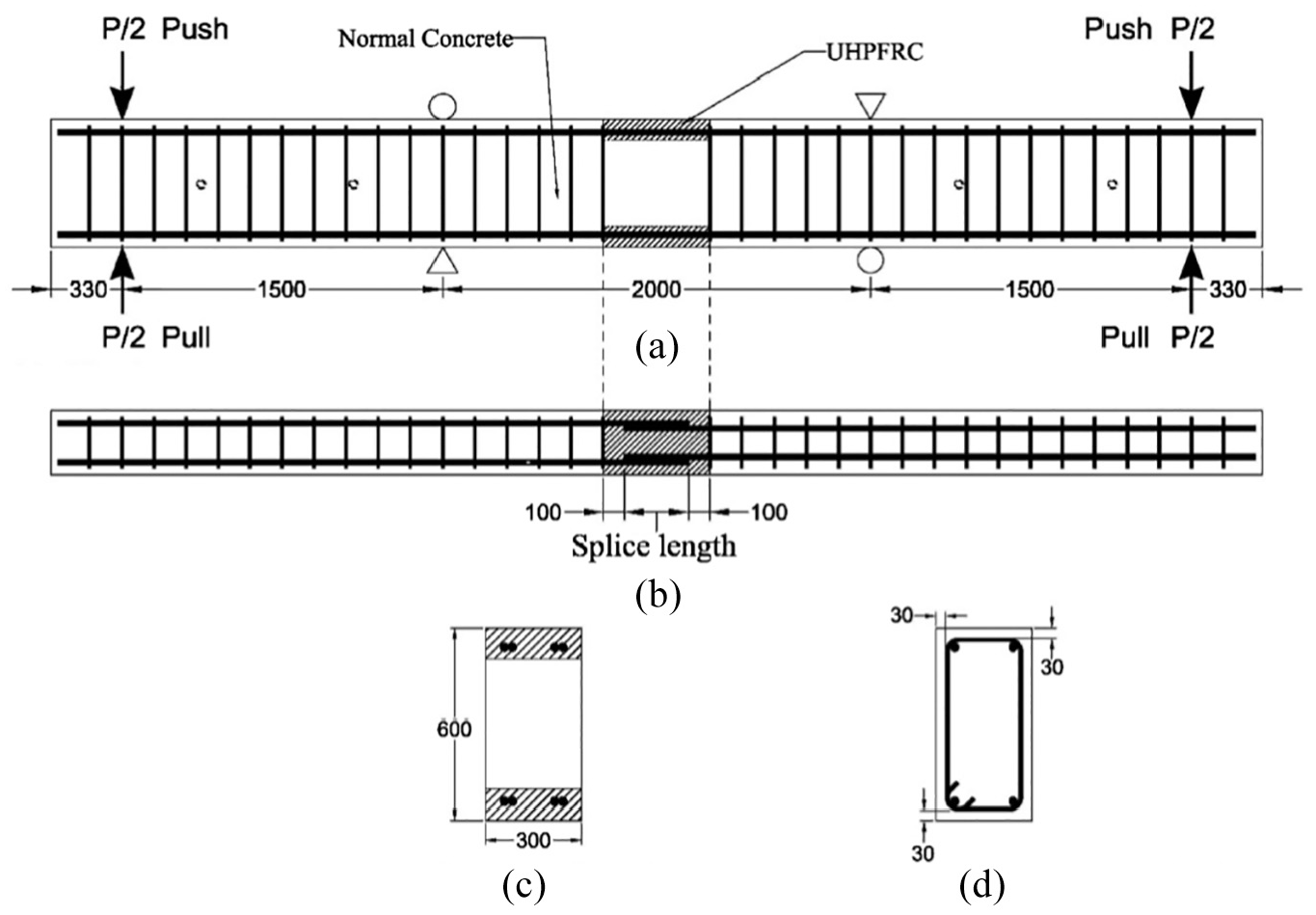
Beams with lap splice strengthened with UHPC (units: mm) (Dagenais and Massicotte, 2016) (a) side view, (b) top view, (c) cross section at midspan, and (d) stirrups and cover details.
The failure of all the tested beams occurred just after longitudinal-splitting cracks formed adjacent to the splice bars. For 25-mm bar lapped over 12 db, the yielding strength of the bar was just reached with 1%-fiber-content UHPC, whereas moderate ductility and slightly higher tensile stress were obtained with 2%-fiber-content UHPC, indicating that a minimum fiber content must be used for structural applications. The tensile stress in the bar, however, was less than the 600 MPa obtained in monotonic loading test (Dagenais and Massicotte 2014). Therefore, it was suggested that a longer lapped length, better UHPC or additional conventional reinforcement (transversely to the lapped bars) would be needed to eliminate the splitting mode of failure in applications where high ductility under cyclic loading is required.
Bar lap splice can also be used in the compressive members. Wang et al. (2019a) tested one precast bridge column specimen with pocket connections using lap-spliced bars and UHPC grout. Based on the experiment, the lapped length was suggested to be taken as 5 times diameter of the longitudinal bars in UHPC grout. The proposed pocket connection with lap-spliced bars and UHPC grout was proved to achieve comparable seismic behavior compared with the monolithic columns. Shafieifar et al. (2017) constructed and tested a connection between precast column and cap beam. UHPC was used in the splice region of the column and was used to connect the column and the cap beam. It was found that no spalling of UHPC was observed, and the cracking in the UHPC section was limited. Bond failure between normal concrete and UHPC was also not observed, indicating adequate adhesive bond between the materials.
The effectiveness of the strengthening method with UHPC jacket in the bridge columns was also investigated by Dagenais et al. (2017). Four columns with different longitudinal reinforcement (diameter of 25 mm, 30 mm, 35 mm, or 45 mm) and corresponding splice length (600 mm, 720 mm, 840 mm, or 1080 mm) were tested. The specimens were fabricated firstly and the normal concrete around the spliced bars was removed using conventional demolition equipment. The UHPC with the steel fiber content of 3% was then poured form above the splice region to maximize a preferential fiber orientation, perpendicular to the bar orientation and parallel to the ring tensile force.
It was observed in the experiment that all the specimen behavior was ductile, and the progressive failure was caused by the tensile rupture of the dowel bar. Bond failure was successfully eliminated on 24db lap splices on four different bar sizes of 25 mm, 30 mm, 35 mm, and 45 mm in diameter. However, the enhancement of the confinement provided by the UHPC cover and existing transverse reinforcement, and their effects on the shear strength, still remains to be studied.
Grout
UHPC can also be used as a grout in the connections between bars and concrete. Two precast columns with UHPC-filled duct connections were tested by Tazarv and Saiidi (2015, 2016). One of the columns was referred to as HCS, a headed reinforcement coupler column with SMA (shape memory alloy), as shown in Figure 5(a). Another was referred to as PNC, a precast column without coupler, as shown in Figure 5(b). The test results were also used to compare with a reference reinforced cast-in-place normal concrete column tested by Haber et al. (2014).
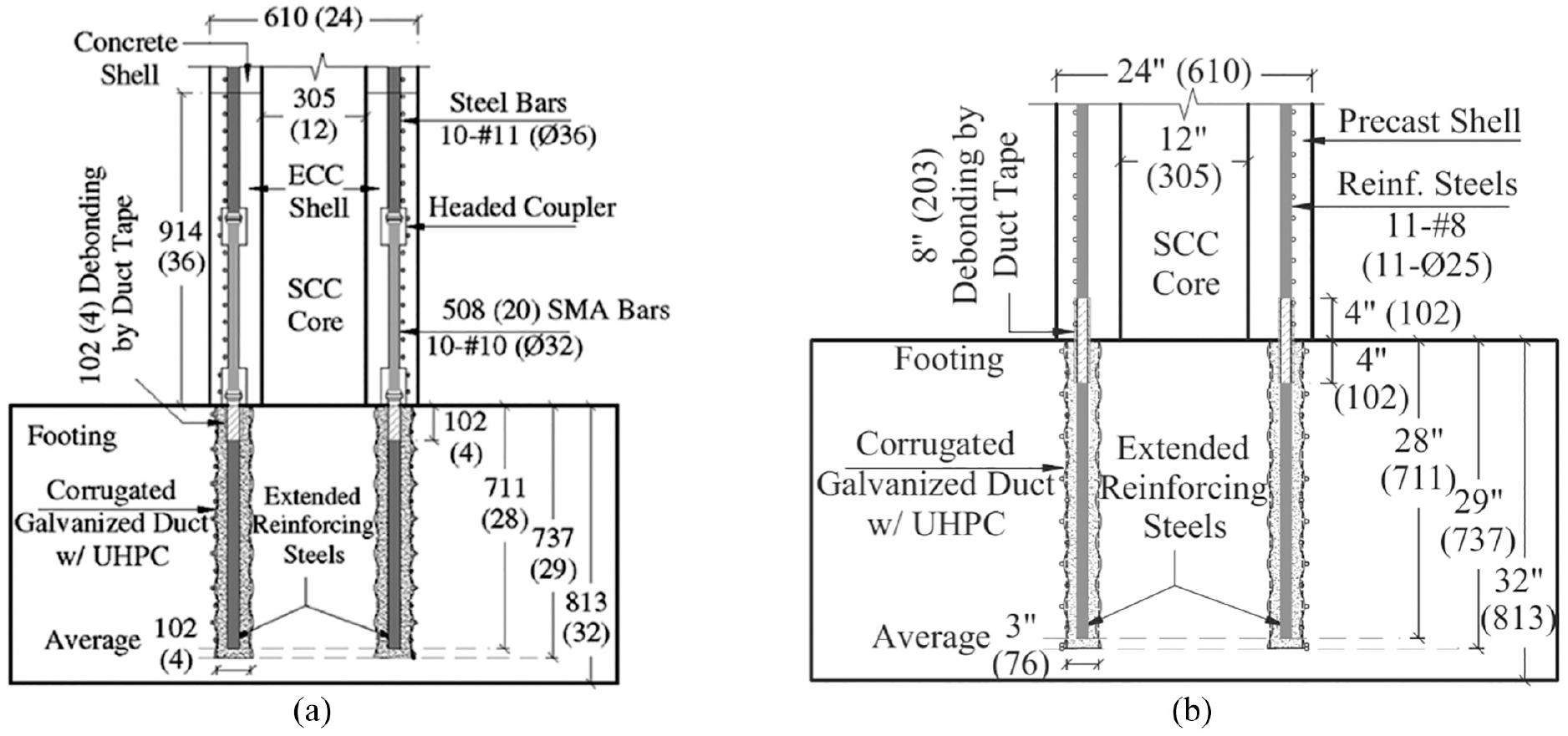
The base of the columns tested by Tazarv and Saiidi (2015, 2016): (a) HCS base connection details (units: mm(in.)) and (b) PNC base connection details (units: in.(mm)).
The UHPC-filled duct connections were emulative of the conventional cast-in-place column-to-footing connection because the ultimate capacities of the columns were developed and high drift ratios were achieved. No UHPC-filled duct connection damage, such as bar pullout, duct pullout or conical failure of the footing concrete, was observed in the HCS and PNC columns. It was concluded that UHPC-filled duct connections are viable precast column connections that are suitable for accelerated bridge construction in high seismic regions.
Conclusion and future needs
Based on the above literature and discussions, the following conclusions can be drawn:
(1) All kinds of UHPC members, including flexural members, compressive members, joints, strengthening and connections, exhibited excellent seismic performance. The characteristics of ultra-high compressive strength, high tensile strength, and large ultimate strain at the material level of UHPC translated into smaller size, high bearing capacity, good ductility and excellent energy dissipation capacity at the structural level. Narrow and closely distributed cracks occurred in the UHPC members, as a result of the bridging effect of the fibers. Concrete spalling or crushing was eliminated in the UHPC members due to the confinement effect provided by the fibers.
(2) The ductility of the UHPC beams can be enhanced with the decrease of the tensile reinforcement ratio and the increase of steel fiber content. UHPC beams with short steel fibers exhibited higher flexural stiffness and energy dissipation than that with long steel fibers. In order to obtain excellent crack resistance and maintain favorable energy dissipation capacity, the PPR (partial prestress ratio) of UHPC beams prestressed with high-strength rebars was suggested to be taken as 0.6~0.7, and the transformed reinforcement ratio was suggested to be taken as 1.42%~2.16%.
(3) One kind of UHPC plate, with the length of steel fiber greater than the mesh size of steel welded wire mesh, was specially designed and was poured by layers. The steel fibers were proved to enhance the energy dissipation ability of UHPC plates, and the steel welded wire meshes were used to convert the orientation of fiber distribution from three-dimensional distribution to two-dimensional distribution, which can help to achieve a better seismic performance.
(4) The application of UHPC can transformed the seismic failure of the columns from concrete crushing to bar fracture. Due to the high ductility of UHPC, excessive shear reinforcement can be avoided in the UHPC columns. However, shear reinforcement still should not be totally omitted from UHPC structures, because of the weak confinement of steel fibers on shear cracks, especially under seismic load.
(5) In the self-centering columns, such as segmental columns integrated with post-tensioning tendons, UHPC can be applied to delay premature concrete crushing at rocking interfaces. Furthermore, one kind of UHPC segmental column with replaceable UHPC cover plates and dissipaters was proposed, where rapid repairs can be achieved to restore structural function after a severe earthquake. Corrosion problems were induced by these self-centering and rapid repair measures, but were hopeful to be solved by using FRP tendons or FRP tubes.
(6) The UHPC shear walls, even with the low aspect ratio of 0.73, exhibited high ductility and favorable energy dissipation capacity. Based on the experimental results, the design axial load ratio of the UHPC shear walls was not suggested to exceed 0.6. Note that the sliding failure mode of the squat shear walls could not be prevented by steel fibers, but can be avoided by the addition of dowel bars.
(7) The interior UHPC joint with two plastic hinges was proved to obtain much higher bearing capacity and energy dissipation capacity than the exterior UHPC joint with one plastic hinges. It was found that PPR (partial prestress ratio) values above the maximum limit of 25%, which is specified in ACI 318 for normal concrete, could still increase the ductility and energy dissipation capacity of the UHPC beam-column joint. The energy dissipation of the UHPC plate-column joint can be enhanced with the increase of reinforcement ratio and span length of the plate, but the influence of the reinforcement ratio was more significant compared to the span length.
(8) UHPC can be used to strengthen the damaged columns or the existing structures before seismic damage, or used as a precast tube to strengthen normal concrete columns in the newly-built structures. UHPC was proved effective to strengthen the bar lap splice and achieve a seismic performance equivalent to bar welding. UHPC can also be used as a grout material to connect bar and concrete or connect two precast members, and exhibit favorable seismic behavior.
Although application of UHPC in many kinds of structural members has been studied as described in the article, some further researches still need to conduct, as follows:
(1) The scope of UHPC needs a rigorous and clear definition. Different nomenclatures, such as ultra-high performance concrete (UHPC), reactive powder concrete (RPC) or ultra-high performance fibre-reinforced concrete (UHPFRC), are used by different researches, while referring to the same kind of concrete. The concept of such concrete should be clarified, and the nomenclature should be uniformed to conduct further researches.
(2) The fabrication process of the UHPC members can be optimized to achieve a better seismic performance. It was known that fiber content and fiber orientation had a significant influence on the seismic performance of the UHPC members. The influence of fiber type, mix proportion and curing condition can be studied, and different casting methods can be investigated to achieve preferential fiber orientation in different kinds of UHPC members. The optimized fabrication process should be suitable for UHPC and aim at excellent seismic performance.
(3) The hysteretic constitutive model of UHPC material can be further investigated. The constitutive model of UHPC under repeated compressive load or repeated tensile load has become a research hotspot. However, obtaining a complete tension-compression hysteretic constitutive model of UHPC is an essential step to reveal the seismic mechanism of UHPC material, and an important foundation to analyze the seismic behavior of UHPC structures.
(4) The bond performance between normal concrete and UHPC or precast concrete and cast-in-place UHPC under seismic load needs further studies. It is well known that UHPC is currently too expensive to be used in the construction of a whole structure. The application of UHPC in the next few years will still focus on the reinforcement engineering or connection between precast members. The interfacial bonds between UHPC and old concrete under seismic load become significant.
(5) The seismic performance of UHPC plates, shear walls and joints need to be further investigated. Existing researches on these members are insufficient to guide practical seismic design or provide references for the establishment of the technical specification for UHPC members. Influences of a wider scope of parameters can be studied, and specific seismic design suggestions, such as axial compression ratio limitation, drift ratio limitation and seismic structural measures, can be proposed.
(6) The structural measures to achieve self-centering capacity of UHPC compressive members can be further explored. Although FRP bars with excellent linear elastic property can reduce the residual deformation of the compressive members, the energy dissipation capacity of such structures is also reduced. Due to the elastic-plastic property of the steel bars and favorable energy dissipation capacity of UHPC material, UHPC compressive members with hybrid reinforcement of FRP bars and steel bars are hopefully to achieve self-centering capacity and maintain energy dissipation capacity at the same time.
(7) The potential of UHPC structures reinforced with high-strength material, such as high-strength steel bars, FRP tendons or laminate, can be further researched. In most of the above experiments, concrete spalling or crushing was eliminated in the UHPC members, and the seismic failure of the members was dominated by the fracture of the reinforcement, indicating that the excellent performance of the UHPC was not fully exploited in these structures. New type of structure can be explored to make full use of both UHPC and reinforcement.
Footnotes
Declaration of conflicting interests
The author(s) declared no potential conflicts of interest with respect to the research, authorship, and/or publication of this article.
Funding
The author(s) disclosed receipt of the following financial support for the research, authorship, and/or publication of this article: Financial supports from National Natural Science Foundation of China (grant number: 51878262), and Ministry of Science and Technology (project No. 2018YFC0705400) are greatly appreciated.
